Billionaire Dennis Tito plans trip around Mars and back with possible 2017 launch

MARS
Orbital Sciences Corp. – Dennis Tito says U.S. should exploit rare alignment of planets to send astronauts to Mars. His organization would use the Orbital Sciences Corporation’s new Cygnus capsule, which recently made a successful trip to the international space station.

By Joel Achenbach

Billionaire Dennis Tito, tired of being told that we can’t send humans to Mars just yet, on Wednesday revealed his scheme for launching two astronauts to the red planet as early as December 2017.

Dubbed “Inspiration Mars,” the flyby mission would exploit a rare alignment of Earth and Mars that minimizes the time and the fuel it would take to get to Mars and back home again. The astronauts would come within 100 miles of the Martian surface before being slung back to Earth.

“It would be a voyage of around 800 million miles around the sun in 501 days,” Tito testified Wednesday at a hearing of the House subcommittee on space. “No longer is a Mars flyby mission just one more theoretical idea. It can be done. Not in a matter of decades, but in a few years.”

Tito is a former engineer who made a fortune in investment management and, in 2001, became the first person to pay his way into space, buying a seat on a Russian rocket. Now he’s pitching Inspiration Mars as a national priority for the United States. Grab this rare chance to go to Mars quickly or risk seeing China or Russia get there first, he told members of Congress.

Tito mentioned a backup plan that would offer Inspiration Mars four more years of development time. Another alignment of planets in 2021 offers a second chance to go to Mars fairly quickly, but the journey would last 80 days longer and require that the astronauts fly much closer to the sun, within the orbit of Venus, in one portion of the trip. That would add to the already considerable radiation hazards.

When Tito broached the idea of Inspiration Mars early this year, he thought he could use primarily private rockets and minimize the need for NASA involvement. But the feasibility study led Tito back to NASA. NASA is building a jumbo rocket, the Space Launch System, that is supposed to be ready for its inaugural, uncrewed test flight in 2017. The second launch, carrying a crew in NASA’s new Orion capsule for the first time, isn’t scheduled until 2021.

Tito’s plan would essentially borrow the SLS for the Mars mission, if NASA agreed. And NASA would have to pay for a lot of this. Tito described Inspiration Mars as a “philanthropic partnership with government.” He said private donors would probably give about $300 million for the mission, and the government would need to provide about $700 million — in addition to the money NASA is already spending, under current programs, on rocket and spacecraft development.

NASA reacted coolly to Tito’s proposal.

“Inspiration Mars’s proposed schedule is a significant challenge due to life support systems, space radiation response, habitats and the human psychology of being in a small spacecraft for over 500 days,” spokesman David Weaver said in a statement. “The agency is willing to share technical and programmatic expertise with Inspiration Mars but is unable to commit to sharing expenses with them. However, we remain open to further collaboration as their proposal and plans for a later mission develop.”

Tito’s Inspiration Mars Foundation released a feasibility study Wednesday that described the proposed mission architecture, which includes using the new Cygnus spacecraft developed by Dulles, Va.,-based Orbital Sciences.

The technological challenges of sending people to Mars, keeping them alive and returning them safely to Earth are considerable, but perhaps the greatest challenge in this case is the timing. There’s virtually no wiggle room for this mission. The Tito plan would require that NASA and the private partners adopt the project immediately and speed up work on certain key components.

The ideal planetary alignment of Mars and Earth happens once every 15 years, and it presents a narrow launch window. The mission would have to begin between Christmas Day 2017 and Jan. 5, 2018, to take advantage of the orbital dynamics of the planets.

“I think it’s totally implausible for 2017,” said John Logsdon, professor emeritus at George Washington University’s Space Policy Institute. He said there’s a slight chance that the 2021 backup mission could happen “if the stars align.”

Two launches would be required for the Mars flyby mission, according to the Inspiration Mars feasibility study. First, the big SLS rocket would launch into low-Earth orbit the empty Cygnus spacecraft, plus other hardware needed for the mission. Then, the two astronauts would blast into orbit on a commercial rocket and spacecraft that have yet to be identified (there is a competition underway among private companies to develop rockets and capsules to ferry NASA astronauts to the international space station).

The astronauts in their commercial capsule would rendezvous with the Inspiration Mars vehicle and climb inside the Cygnus spacecraft. The upper stage of the SLS would then ignite and rocket the Inspiration Mars vehicle to Mars. At the end of the mission, more than a year later, the crew would reenter the Earth’s atmosphere in a “pod” designed to survive the extreme speed and heat of reentry.

“We fully recognize what we’re asking is incredibly challenging. An in­cred­ibly hard thing to do,” Tito said in a conference call with reporters. He repeatedly mentioned the possibility that another country could beat the United States to Mars, saying that would be akin to the Soviet Union’s 1957 launch of the first satellite, Sputnik. “We firmly believe that Inspiration Mars is our last chance to be first in space and stay first in space,” Tito said.

“This will be one of the great historical events of the last 500 years,” he said. “This will, in my view, rock the world.”

http://www.washingtonpost.com/national/health-science/going-to-mars-billionaire-dennis-tito-plans-manned-mission-with-possible-2017-launch/2013/11/20/b859bc76-51e8-11e3-9fe0-fd2ca728e67c_story.html?hpid=z4

Thanks to Kebmodee for bringing this to the attention of the It’s Interesting community.

Desert Farming Experiment Yields First Results

desert farming

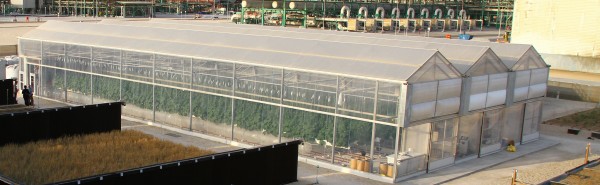
A project to “green” desert areas with an innovative mix of technologies—producing food, biofuel, clean water, energy, and salt—reached a milestone this week in the Gulf state of Qatar. A pilot plant built by the Sahara Forest Project (SFP) produced 75 kilograms of vegetables per square meter in three crops annually, comparable to commercial farms in Europe, while consuming only sunlight and seawater. The heart of the SFP concept is a specially designed greenhouse. At one end, salt water is trickled over a gridlike curtain so that the prevailing wind blows the resulting cool, moist air over the plants inside. This cooling effect allowed the Qatar facility to grow three crops per year, even in the scorching summer. At the other end of the greenhouse is a network of pipes with cold seawater running through them. Some of the moisture in the air condenses on the pipes and is collected, providing a source of fresh water.

One of the surprising side effects of such a seawater greenhouse, seen during early experiments, is that cool moist air leaking out of it encourages other plants to grow spontaneously outside. The Qatar plant took advantage of that effect to grow crops around the greenhouse, including barley and salad rocket (arugula), as well as useful desert plants. The pilot plant accentuated this exterior cooling with more “evaporative hedges” that reduced air temperatures by up to 10°C. “It was surprising how little encouragement the external crops needed,” says SFP chief Joakim Hauge.

The third key element of the SFP facility is a concentrated solar power plant. This uses mirrors in the shape of a parabolic trough to heat a fluid flowing through a pipe at its focus. The heated fluid then boils water, and the steam drives a turbine to generate power. Hence, the plant has electricity to run its control systems and pumps and can use any excess to desalinate water for irrigating the plants.

The Qatar plant has also experimented with other possibilities such as culturing heat-tolerant algae, growing salt-tolerant grasses for fodder or biofuel, and evaporating the concentrated saline the plant emits to produce salt.

The Qatar plant—which is supported by Qatari fertilizer companies Yara International and Qafco—is just 1 hectare in extent with 600 square meters of growing area in the greenhouse. The fact that this small greenhouse produced such good yields, Hauge says, suggests that a commercial plant—with possibly four crops a year—could do even better. SFP researchers estimate that a facility with 60 hectares of growing area under greenhouses could provide all the cucumbers, tomatoes, peppers, and egglants now imported into Qatar. The results “reveal the potential for enabling restorative growth and value creation in arid land,” Hauge says. “I personally think that it is very important that people promote and invest in these ideas. Protected agriculture (I call it “indoor food production”) is an important option for the desert areas, particularly in the Middle East,” says Richard Tutwiler, director of the Desert Development Center at the American University in Cairo. “The big question is economic feasibility. How much did it cost to produce 75 kg of cucumbers per square meter?”

SFP is now engaged in studies aimed at building a 20-hectare test facility near Aqaba in Jordan. “This will be a considerable scaling up from the 1 hectare in Qatar,” Hauge says, and big enough to demonstrate commercial operation.

http://news.sciencemag.org/asiapacific/2013/11/desert-farming-experiment-yields-first-results

Thanks to Kebmodee for bringing this to the attention of the It’s Interesting community.

Two billion planets in our galaxy may be suitable for life

Artist's impression of planets discovered by Kepler spacecraft

Our galaxy probably contains at least two billion planets that, like Earth, have liquid water on their surfaces and orbit around their parent stars in the “habitable zone” for life. The nearest, according to astronomers, could be a mere 12 light years away.

A new study, published on Monday in the Proceedings of the National Academy of Sciences, suggests that Earth-like planets capable of supporting life are far more common than previously thought. Using measurements from Nasa’s Kepler space observatory, scientists led by Erik Petigura at the University of California, Berkeley, estimated that 22% of our galaxy’s sun-like stars have rocky planets circling them in the zone where they get roughly the same amount of light energy as Earth receives from the sun. There are around 100bn stars in our galaxy, of which 10% are like the sun.

So far Kepler has studied more than 150,000 stars and identified more than 3,000 candidate planets, but many of these are “gas giants”, similar to Jupiter, that orbit close to their parent stars. If there is life out there, it is far more likely to have evolved on rocky planets with liquid water on their surfaces, similar to Earth.

To get their results, Petigura’s team looked for planets in Kepler data that had a radius up to double that of Earth. They searched for planets that orbited far enough from their star that liquid water would not evaporate, but not so far that the water would all freeze.

Subhanjoy Mohanty, an astrophysicist at Imperial College London who was not involved with the study, said: “This is the first estimate of the frequency of Earth-like planets around sun-like stars, in orbits large enough to lie in the habitable zone of their stars. The finding that roughly one in five sun-like stars may host such planets is an incredibly important one, probably exceeding the expectations of most cautious astronomers.”

He added that the latest analysis increased the chances that there might be life somewhere among the stars. “Previous analyses of Kepler data had shown that red dwarfs – the most common type of star in the galaxy, making up about 80% of the stellar population – very frequently harbour Earth-size planets, including in their habitable zones. This new study shows that the same is true around stars more like our own sun. This is certainly an added impetus for planned future missions which will study the atmospheres of these potentially habitable planets, enabling us to investigate whether they are in fact habitable or not, and also whether their atmospheres show actual biosignatures of existing life.”

Nasa also announced on Monday that the Kepler probe would be given a new lease of life, following fears that it would have to end its mission after only four years in space. In May 2013, scientists discovered that one of the gyroscopic wheels – known as “reaction wheels” – that kept the probe pointing in the right direction had stopped working and, try as they might, Nasa engineers could not restart it. Unable to point itself at the stars with any accuracy, the probe could no longer be used to collect data about the position of new exoplanets.

But it looks as though there could be a solution that involves reorienting the probe to look along the plane of the galaxy, which will allow it to remain stable with only two of its reaction wheels working. “The old saying ‘necessity is the mother of invention’ has rung true here, with engineers and scientists from Nasa and the spacecraft manufacturers having figured out this way to – we hope – recover much of the performance we thought we had lost. We are very excited,” said Bill Chaplin, an astrophysicist at the University of Birmingham in the UK.

If all goes well, the new Kepler mission – dubbed “K2” – will look for planets around smaller stars than the sun, and will also study the stars themselves. “There are a wealth of fantastically interesting targets for astrophysics that can be observed in the ecliptic plane, which were not accessible in the original Kepler field, notably brighter clusters of stars – where the common origins and distances to these stars make the clusters excellent laboratories for testing our understanding of stars – and young, star-forming regions,” said Chaplin.

http://www.theguardian.com/science/2013/nov/04/planets-galaxy-life-kepler

Thanks to Kebmodee for bringing this to the attention of the It’s Interesting community.

Japanese inventions signal the future changes in human relationships

art-coat-200x0

A Guardian article about Japanese young people no longer being interested in sex and relationships has generated a lot of blogosphere criticism recently, primarily about Western media exoticising “weird” Japanese culture. Those criticisms duly noted, there have also been some recent Japanese innovations that seem to not only support the premise of the article – that technology is taking over the space once occupied by sex and dating – but take it further. Several recent inventions in Japan seem not only likely to disrupt traditional relationships in the way that social media or text messaging has, but to physically replace companionship and affection. A report this week of the physiological benefits of using the Hugvie, a soft doll that simulates a human heartbeat so that the user can “cuddle” with the person on the other end of their phone, is one such case.

Here are some Japanese inventions, like the Hugvie, that may be the most solid proof that Japan is indeed throwing out the idea of relationships and becoming a dystopian future of human loneliness.

The Hugvie is a soft body-fitting pillow with a slot in the head for a smart phone. Users can cuddle with the pillow while talking on the phone, and the pillow’s internal vibrators generate a simulated heartbeat of the caller based on the voice’s tone and volume. In other words, the soft, “blobular” doll transforms a standard phone conversation into a “cuddling” experience with your phone companion. The gizmo was invented by an Osaka University professor who built off of an earlier remote-controlled doll.

A video from the product’s launch last year shows users talking into the phone end and cradling their pillows, and new evidence suggests that the pillow might be as satisfying and soul-warming as the video portrays: a joint study from the University of Sussex and Osaka University that levels of the stress hormone cortisol were reduced in people after using the pillow.

Wine for cats
Earlier this month, a Japanese company took the age-old stereotype of the lonely cat woman and made it a little less lonely with the invention of Nyan Nyan Nouveau, a non-alcoholic feline wine. Masahito Tsurimi, the chief executive of the company behind the wine, told the Wall Street Journal that it was invented in response to requests from cat-owners – despite the fact that only one in 10 cats were willing to taste it.

Tsurimi said he saw a bright future in the “specialty pet-drink business” six years ago when he was worried about where future beverage sales would come from with a shrinking, ageing Japanese population. It was probably just a nice bonus when he read about the country’s sexual aversion and social awkwardness on top of that.

The girlfriend coat
In April of this year, RocketNews 24 reported that a group of engineering students at Tsukuba University created a coat that could hug its wearer and whisper phrases into its ear. Meant to simulate a girlfriend, motors in the coat operate the “arms” that squeeze the wearer when he puts it on. In a pair of headphones he slips on with the coat, he also hears one of a number of programmed phrases: “I’m sorry, were you waiting?” and “Guess who?”

The university students named it the Riajyuu Coat. According to gaming site Kotaku, riajyuu is a mash-up Japanese word that means someone who is pleased with his non-virtual life. Unlike some of the other replacements for human contact, this one appears to have just been a joke between friends, and the inventors have no real plans to release it commercially.

Video game relationships
Japan has cultivated a global reputation for their romantic simulation video games, and for good reason: while some of the games are just bizarre, like a game in which both the player and his mate are pigeons, others mimic relationships down to eerily small details. LovePlus, for instance, a dating simulation game released in Japan in 2009, invites players to choose one girl that they prefer out of three types – a “goodie-goodie”, “sassy”, or “big-sister” type – and then earn “boyfriend power” points by going to the gym or doing homework to become smarter. The girl can get mad at their boyfriends, too: in a 2010 article, LovePlus gamer Shunsuke Kato told the Wall Street Journal he was on the outs with his LovePlus “girlfriend” for being busy at work and only playing the game for 10 minutes a day.

The game has blurred the line between real and virtual to such an extent that a Japanese resort town once known for honeymooning, Atami, launched a promotional campaign in 2010 that relied on recreating the virtual trip to Atami from the game. At Atami’s (real) Hotel Ohnoya, the staff was trained to check in single men as couples, and restaurants created Love Plus-inspired menus for the gaming guests.

If there’s some silver lining to be found in all of this, it’s that a business opportunity will be there to pad the landing when humans do something self-destructive. As Japan has demonstrated, the risk of a plummeting birth rate and the social instability inherent in becoming a society where unmarried people exist in large numbers at least opens up the possibility for bizarre romance-gamer tourism, wine for cats and pillows you can cuddle with.

http://m.smh.com.au/digital-life/digital-life-news/bizarre-japanese-inventions-signal-the-future-of-human-loneliness-20131104-2ww7d.html

Thanks to Kebmodee for bringing this to the attention of the It’s Interesting community.

Texas college turns its football field into an organic farm

texas1

Six years ago, Michael Sorrell made a decision that threatened his reputation and maybe his job. His tenure as president of Paul Quinn College started in 2007 and, shortly thereafter, he opted to cut football in an effort to save money. The response on campus was not pleasant.

“Predictably, we had folks who were, I guess, the reaction was loud,” Sorrell says.

This was in football-nuts Dallas, only seven miles from the heart of the city. Sorrell was not anti-sports, either. He played basketball and loved football. He just felt the sport was “something economically we could not justify.”

Sorrell made an offer to the angry defenders of the sport: Raise $2 million to save football, and he would match it. “To date,” Sorrell says, “no one has raised a dollar.”

College football is dealing with an emerging financial crisis. It’s plaguing programs as large as the University of Tennessee, which was a reported $200 million in debt over the summer, and as small as Grambling, which is begging alums for donations after poor facilities led to a player mutiny earlier this month. Escalating coaches’ salaries and declining attendance have led to real concern that the entire college football complex will become insolvent, leaving only a few schools with thriving programs.

“We are standing on the precipice of an economic day of reckoning in higher education,” Sorrell says. “I think there will be more schools to do this. I think we’re just early.”

Football was eating $600,000 of Sorrell’s budget, and Paul Quinn is a tiny school of only 250 students. How could he continue to educate when so much funding was going to something that wasn’t building an academic reputation? He simply couldn’t. So the field sat vacant.

Sorrell moved on to a much bigger issue: his school is located in a food desert with neither a restaurant nor a grocery store nearby, and many of the students at the oldest historically black college west of the Mississippi are poor. Eighty percent of the students at Paul Quinn are Pell Grant-eligible. There’s a “clothes closet” on campus where students can get business casualwear for free, and money had to be raised so students could afford eyeglasses to read.

A year after the end of football, Sorrell was meeting with a real estate investor named Trammell Crow. They bandied about the idea of devoting a tract of land to producing food for the community. But where?

Sorrell joked that they should just build a farm on the football field. The jest quickly turned into a reality, and the school’s future was changed for the better. Some of the produce grown in full view of the scoreboard would go to local food banks and the surrounding community. Some of it, eventually, could be sold. Crow helped fund the farm, and slowly crops began to yield produce: kale, sweet potatoes, herbs, cilantro. In 2009, two years removed from the end of Paul Quinn College’s football life, a rather famous client struck a deal with the school for its food: Cowboy’s Stadium.

Legends Hospitality is now Paul Quinn College’s largest buyer for the “WE over Me Farm,” and the school has run a surplus of six or seven figures in four of the past five years. The money budgeted for football now goes to academic scholarships. This is a school that had one month’s worth of cash when Sorrell took over in 2007.

A potential disaster has turned into one of the most inspired decisions made at the college level. It’s not like Paul Quinn is SMU – the NAIA school is smaller than a lot of Dallas high schools – but it shows life after football isn’t necessarily bleak.

“We turned our football field into an organic farm,” Sorrell says. “It’s made us a national leader on this issue. There are no regrets. We didn’t have the resources necessary to change and really build a football program in the way we wanted to do it. This is what was right for us.”

Students who work on the farm are paid $10 an hour for overseeing the project, which will produce 17,500 lbs. of food for Cowboys fans this season.

“I’m in love with what we’re doing with the field,” says Shon Griggs, Jr., a legal-studies major who played football at his Atlanta high school. “It’s exciting and I’ve learned so much. I’ve personally gotten more out of the farm than the football field.”

Griggs spends 12 hours a week on the farm, and he considers it “a workout” that has benefits beyond sports.

“When I played football, I was able to strengthen my body,” he says. “Here, we’re impacting community, changing lives, teaching kids, and learning about nature.”
Griggs says the only downside is the coyotes that come around at night and try to break into the chicken coop.

The goalposts are still up at Paul Quinn College, and so are the scoreboard and the ticket booth, but nobody misses the sport much anymore. The treasure everyone guards most is that farm. Asked what would happen if those two acres were razed again, Griggs doesn’t hesitate.

“We would have a problem,” he says. “There would be a revolt. This is big.”

It is big. Those who work on the farm not only have experience and some take-home pay, but a built-in connection to one of the most famous buildings in America. The director of food and beverage at Legends Hospitality at Cowboys Stadium is George Wasai, who went to Paul Quinn College. He played football there.

http://sports.yahoo.com/news/ncaaf–how-one-small-texas-college-made-money-by-saying-no-to-football-065751785.html

Thanks to Kebmodee for bringing this to the attention of the It’s Interesting community.

An army of robot baristas could mean the end of Starbucks as we know it

briggo_temple

By Christopher Mims — October 17, 2013

Starbucks’ 95,000 baristas have a competitor. It doesn’t need sleep. It’s precise in a way that a human could never be. It requires no training. It can’t quit. It has memorized every one of its customers’ orders. There’s never a line for its perfectly turned-out drinks.

It doesn’t require health insurance.

Don’t think of it as the enemy of baristas, insists Kevin Nater, CEO of the company that has produced this technological marvel. Think of it as an instrument people can use to create their ideal coffee experience. Think of it as a cure for “out-of-home coffee drinkers”—Nater’s phrase—sick of an “inconsistent experience.”

Think of it as the future. Think of it as empowerment. Your coffee, your way, flawlessly, every time, no judgments. Four pumps of sugar-free vanilla syrup in a 16 oz. half-caff soy latte? Here it is, delivered to you precisely when your smartphone app said it would arrive, hot and fresh and indistinguishable from the last one you ordered.

In a common area at the University of Texas at Austin, the Briggo coffee kiosk, covered in fake wood paneling and a touch screen and not much else, takes up about as much space as a pair of phone booths. Its external appearance was designed by award-winning industrial designer Yves Behar, with the intention that it radiate authenticity and what Briggo says is its commitment to making coffee that is the equal of what comes out of any high-end coffee shop.

The kiosk at the university is the second version, the one that will be rolling out across the country in locations that are still secret. It needs just 50 square feet (4.6 sq m) of floor space, and it can be dropped anywhere—an airport, a hospital, a company campus, a cafe with tables and chairs and WiFi just like Starbucks. It’s manufactured in Austin.

Inside, protected by stainless steel walls and a thicket of patents, there is a secret, proprietary viscera of pipes, storage vessels, heating instruments, robot arms and 250 or so sensors that together do everything a human barista would do if only she had something like perfect self-knowledge. “How is my milk steamer performing? Am I a half-degree off in my brewing temperature? Is my water pressure consistent? Is there any residue buildup on my brewing chamber that might require me to switch to a backup system?”

The Briggo coffee kiosk knows how to make a perfect coffee because it was “trained” by an award-winning barista, Patrick Pierce. He’s since left the company, but no matter: as in the techno-utopian Singularity, whose adherents believe that some day we will all upload our brains to computers, once a barista’s essence has been captured by Briggo, his human form is just a legacy system.

Besides, baristas, especially the ones at America’s favorite “high end” coffee shop, don’t often stick around long enough to become as good as Pierce. Turnover at Starbucks, which is typical of all demanding retail environments, leads to what Nater calls “variation,” and not the kind that’s exciting—the kind that coffee connoisseurs frown upon, because it means coffee isn’t being extracted from beans in the optimal way.

“What we’ve created is in essence a small food factory that absolutely replicates what a champion barista does,” says Nater. Briggo roasts its own beans—sourced by a pair of coffee supply veterans who between them spent a combined 40 years at Starbucks. “We have calibrated this machine to pull espresso shots to the same specification as an Illy or a Stumptown or an Intelligentsia. We’ve just done it without the human element.”

Ever stood in line at a Starbucks or some other cafe and wondered why, in the year 2013, you can’t just send in your order 10 minutes early via an app on your phone, and pick it up as soon as you walk in? Briggo has such an app. It asks you to log in, so it can memorize your order and payment information, which enables one-click coffee ordering. Or you can order a coffee for a friend. And use the app to check out how long the wait is for a drink. Fifteen minutes? Just complete your order now, while you’re walking across campus—it will be ready by the time you arrive. Hit another button to announce on Facebook that you’ll be at the Briggo kiosk by 9:30, and hey, who wants to meet up?

“What we find at [the University of Texas] is that we have a younger generation of consumers who have no inhibition about ordering remotely and having self service,” says Nater. “Coffee shops are a great social interaction point, but so is social media.”

Had a great experience at Briggo? Why not tweet that? Invented a new combination of syrups and brew temperatures and other elements that yields the perfect drink? Tweet that, too. Briggo will make you an espresso, a latte, even an iced coffee made with a cold-brew process, something even many coffee shops don’t offer because it’s time consuming to produce. Not a coffee drinker? How about a chai latte, an ice chai latte, hot chocolate, or milk steamer?

In 2012, Julian Baggini, a British philosophy writer and coffee aficionado, wondered why dozens of Europe’s Michelin-starred restaurants were serving guests coffee that came out of vacuum-sealed plastic capsules manufactured by Nespresso. So he conducted a taste test on a small group of experts. A barista using the best, freshly-roasted beans went head to head with a Nespresso capsule coffee brewing machine. It’s the tale of John Henry all over again, only now it was a question of skill and grace rather than brute strength.

As the chefs at countless restaurants could have predicted, the Nespresso beat the barista.

Capsule coffee systems make consistent only two steps in the coffee-making process, but they’re the most important ones: Roasting and brewing. Beans roasted in a factory don’t change from the moment they’re vacuum-sealed into a capsule, because oxygen is the agent that causes food to go stale. (By contrast, beans roasted “fresh” are oxidizing continuously, until they’re brewed.) And the coffee-brewing process is complicated enough that achieving its most perfect expression requires a machine free from human interference.

“With a pre-dose capsule, it’s always the right grind,” says Mark Romano, a senior director at Illy coffee, which makes its own line of capsule coffee systems. “And with a self-contained extraction chamber, you can consistently get to 80-90 [out of a quality scale of 100].”

Capsule brewing systems can now control more variables in the brewing process—the relevant ones being temperature, pressure, and the way in which water reaches the ground beans—than even the best machine at an average Starbucks, says Romano.

“In any system you work with, the biggest risk you have to quality is the residual coffee oils that become oxidized, rancid and stale. They are conveying flavors into the next cup,” says Romano. Cleaning these machines properly is hard, and may just replace the problem of residual coffee oils with the problem of residual cleaning products. A capsule system, being disposable, is immune to these problems. It also, claims Illy in its promotional literature, “ensures a complete saturation of all the particles in the capsule,” something traditional brewing systems have trouble achieving.

I ask Romano whether Starbucks would be better off serving its customers coffee brewed from capsules. “I think in many cases they would. Perhaps a large percent of their locations should be using capsules.” Romano also notes that while Illy still employs “baristi” in many of its 240 cafes in Europe, there are only eight Illy cafes in North America, mostly because it’s impossible to find baristi who have been trained to the company’s exacting standards.

I also asked Starbucks if it would ever increase the amount of automation it already uses in its stores. Linda Mills, a spokesperson for the company, would say only that it wouldn’t move in this direction because an automated barista would “diminish what we offer every day.”

What she means, presumably, is the experience of being served by a human being. But is that enough?

Briggo’s leaders assert that they are “fanatical” about coffee, and that automation is primarily an enabler that will, as Nater puts it, “allow us to get large fast.” Their recent hire of Starbucks vets who have backgrounds in sourcing, blending and inventing new and seasonal drinks is, they say, about making something that is the equal of any other “third-wave” coffee shop like Starbucks or Stumptown.

Generally automation in food service has meant first standardizing the foods to be prepared, which means robbing them of their individual character. Currently, Briggo sells only a single blend of beans from three countries. But there’s nothing stopping the kiosk from dispensing single-origin coffees and adjusting its every parameter to accommodate a new crop of beans, says Nater.

The Briggo coffeebot “can measure humidity and shock time and can automatically adjust the grind of the bean to compensate,” he says. “We have visibility with that bean. We track every single shot of espresso. We know if it’s within our quality spec, and we fully control the whole supply chain. We can go well beyond what a high-attrition part-time employee can do.”

Briggo doesn’t have to be better than the best baristas in the world. It just has to be better than the nearest coffee shop. Think of this not as the epic chess showdown between Garry Kasparov and the IBM computer Deep Blue; think of Briggo, rather, as the Redbox video kiosk to Starbucks’ Blockbuster.

Still, there are limits to the Redbox/Blockbuster analogy. Blockbuster went into decline because it couldn’t offer anything that wasn’t offered by video kiosks or, more importantly, online-streaming services like Netflix. But as Romano of Illy points out, a coffee vending machine can’t reproduce the experience of a coffee shop. “Coffee is something social—do you really want to replace the social value of [your barista]?” he asks. And indeed, Nater told Melanie Kaplan of Smartplanet, ”We’re not asking people to stop going to coffee shops.”

But Briggo is hoping to at least displace Starbucks somewhat. Tim Kern, a 22-year veteran of Starbucks who joined Briggo in July, observes that some of the places where the company is scouting locations, like public areas in corporate campuses, are the sort where people might get both their social and their caffeine fix rather than trek to a nearby coffee shop. It’s not unlike the disruption of the PC industry by tablets and smartphones: these mobile devices haven’t replaced the PC, but they certainly reduce the number of occasions when you need one.

For now, a direct replacement for Starbucks—imagine a cafe with a host but no baristas—is not in Briggo’s business plan, though the company’s leaders have discussed it in the past, says Kern. (Romano is skeptical of such ideas: “We could go back to the 50′s, where you could go into the Automat, where you’d have those machines where you could get whatever you wanted, but what is the real value of that experience?” he asks.) The near-term plans are to move into places with bad coffee—think universities, hospitals, airports and corporate cafeterias—and improve the offerings. “With just 50 square feet we can create a barista-quality experience in a location where a coffee shop can’t have the economics to operate,” says Nater.

Barista robots are barely even a thing yet, and already the space is getting crowded. One company aiming for the lower end of the market is Marley Coffee, which in partnership with vending machine manufacturer AVT has developed “an Android-based coffee kiosk that comes with a full touchscreen automated checkout system,” says Joe Menichiello, vice president of sales and marketing at AVT.

One model sports a gigantic, 48-inch (122 cm) touchscreen. “You press the type of coffee you want, and specify how much sugar you want, and you swipe your card, and while it’s being ground and brewed for you, it’s playing Bob Marley music,” says Menichiello. Yes, Marley coffee is named for that Marley. ”Bob Marley is one of the top 10 most recognized names in the world,” says Menichiello. “From a branding standpoint it’s a no-brainer for us.”

AVT’s system isn’t nearly as sophisticated as Briggo’s—there is, for example, no expertly foamed, market-fresh milk here, just the powdered kind—but still, says Menichiello, “we’re grinding the beans individually for each and every customer. Ours will have that crema [the oils from coffee beans] on top that coffee won’t have unless it’s just been ground.” This, he says, “makes it almost better than at any brick-and-mortar coffee shop.”

The parts that go into a Marley Coffee kiosk are at this point standard enough that AVT expects to have plenty of competition. “Coffee is coffee and there are a lot of companies that follow the same model as us,” says Menichiello. “When we were at NAMA—the big vending convention in Las Vegas—I was looking around and there were a lot of machines where you could press a button and they’d do the bean to cup thing where it’s ground fresh for every customer.”

Indeed, one of AVT’s competitors is Starbucks itself. It already has a deal with Redbox to put coffee kiosks everywhere there’s currently a Redbox DVD rental kiosk, under the Seattle’s Best brand that Starbucks owns. These systems are actually built by Coinstar, which owns Redbox, and the machines go by the trade name Rubi.
But there are nonetheless different niches within the market. Starbucks’ kiosks tend to be aimed at convenience stores and supermarkets. Briggo is going after a higher-end customer. Marley Coffee sits somewhere in the middle, and is putting its systems into airports (where Briggo also has ambitions) and university bookstores.

There are two ways for an upstart to disrupt an incumbent like Starbucks: One is to deliver a better experience, which Briggo’s leaders believe they can do through a combination of convenience and technological whiz-bang, and the other is to compete on price. A cup of organic coffee from the Briggo kiosk is $1.40, while a cup of drip (non-organic) coffee at Starbucks is $1.85 in many locations. The difference in price reflects, in part, the difference in the expense structure of the two approaches: Briggo doesn’t have to deal with the overhead of all that human labor, and at present it also doesn’t have to think about the cost of renting all that retail space.

Briggo has raised “in excess of $11 million,” says Nater, and while it has only “about 20 employees,” it has managed to stack its executive suite with with people who have deep experience in building and running technology companies that scale. Briggo founder Charles Studor was formerly the head of the billion-dollar integrated circuit division at Motorola/Freescale. The CIO, John Craparo, was formerly the CIO of GE Capital and Dell Financial Services. Briggo’s VP of engineering spent 25 years leading manufacturing projects at Johnson & Johnson. The Briggo kiosk is designed in collaboration with Deaton Engineering, which has created everything from battle-hardened PCs for the Air Force to industrial waste-bailing systems.

“Our aspirations are to build a global business,” says Nater. “We’ve had interest from the Middle East, North America and Asia. We think this model works very well in Asia where a mobile platform and automated experience has been adopted heavily.”

Two big unknowns loom over Briggo and anyone else trying to follow its lead. The first is whether or not people will, at least some of the time, accept a coffee kiosk as a substitute for a coffee shop, even if the product is the same or better. And the second is whether Briggo’s high-end machines can deliver a cup of coffee so much better that cheaper competitors like Marley and Seattle’s Best can’t crowd them out.

But it’s still early days. Starbucks itself was an example of how an evolving company can take a winding path toward finding its perfect market fit, says Kern. When Kern started at Starbucks, the company was still trying to be a “retail experience” designed to sell coffeemakers and beans. But customers kept coming in demanding a cup of coffee, so eventually it decided to change direction. “What Starbucks turned into is something I could not have conceived when it was just six stores,” says Kern.

It’s also worth noting that in a key sense, Briggo isn’t a coffee company. It would be hard pressed to beat all the others on the quality of its beans. Rather, it’s an automation company, whose special skill is in creating computerized robot systems than can be endlessly refined and elaborated. Which means that if another company were to try to acquire Briggo, rather than a larger coffee conglomerate or a food retailer, why not one that is all about the perfection of automated processes—like Amazon?

http://qz.com/134661/briggo-coffee-army-of-robot-baristas-could-mean-the-end-of-starbucks-as-we-know-it/#

Thanks to Kebmodee for bringing this to the It’s Interesting community.

A language without numbers

no numbers

The Pirahã are an indigenous people, numbering around 700, living along the banks of the Maici River in the jungle of northwest Brazil. Their language, also called Pirahã, is so unusual in so many ways that it was profiled in 2007 in a 12,000-word piece in the New Yorker by John Colapinto, who wrote:

Unrelated to any other extant tongue, and based on just eight consonants and three vowels, Pirahã has one of the simplest sound systems known. Yet it possesses such a complex array of tones, stresses, and syllable lengths that its speakers can dispense with their vowels and consonants altogether and sing, hum, or whistle conversations.

Among Pirahã’s many peculiarities is an almost complete lack of numeracy, an extremely rare linguistic trait of which there are only a few documented cases. The language contains no words at all for discrete numbers and only three that approximate some notion of quantity—hói, a “small size or amount,” hoí, a “somewhat larger size or amount,” and baágiso, which can mean either to “cause to come together” or “a bunch.”

With no way to express exact integers, the obvious question is: How do the Pirahã count? More pragmatically, how do they ask for two of something instead of just one? The answer—according to some of the more recent research on anumeracy, published by anthropological linguist Caleb Everett in the journal Cognitive Science—suggests, almost inconceivably, that they don’t.

Everett, the son of Christian missionaries turned linguists, lived on and off with the Pirahã during his early childhood. His parents, he told me, speak Pirahã as fluently as any Westerners ever have, though for a non-native speaker to master the language is a near impossibility. A couple of years ago, Everett traveled back to the Pirahã villages to run a few very simple experiments.

For one test, he would lay down on a table a line of evenly spaced items, say batteries, and ask the Pirahã to make a second line just like the first. For another, he would show someone a line of items and then hide it from view. Again, he would ask for a second line just like the first. In both cases, no mistakes were made as long as the lines were just two or three items long. But, as Everett wrote in his paper, “The proportion of correct responses generally drops significantly for numbers exceeding 2 or 3.” This was true for all tasks, including a non-visual test that involved clapping. English speakers, on the other hand, make no errors at all, except when a relatively long line of items, say seven or more, is shown quickly and then hidden. We can only count so fast, after all, but the Pirahã appear not to be counting at all—because, well, how could they? Instead, they’re employing what Everett calls an “analog estimation strategy,” which works well for a few items but breaks down beyond that.

If necessity is the mother of invention, then perhaps the Pirahã never needed numbers, either because precise counting is not culturally valued or because that value has a sufficient, anumeric workaround. Nothing about the Pirahã’s self-contained way of life seems to require quantity recognition over three, says Everett, a fact that’s not lost on outsiders, who sometimes take advantage of them when trading goods. Attempts over the years to teach number words and basic arithmetic to the Pirahã have met with little success, in large part because they’re uninterested. In fact, the Pirahã have a term for all languages not their own; it translates as “crooked head,” which is intended as a “clear pejorative,” as Colapinto points out:

The Pirahã consider all forms of human discourse other than their own to be laughably inferior, and they are unique among Amazonian peoples in remaining monolingual.

In our increasingly data-driven culture, where we reincarnate ourselves more and more as spreadsheets, anumeracy is unthinkable. Many fear, amid the “advanced stats” revolution in all aspects of life, that what it means to be and feel human is forever changing, and not for the better. It’s perhaps comforting to know, then, that while we’re busy charting our heart rate and measuring our intake and poring over the wins above replacement values for our fantasy league, the Pirahã, immune to the relentless tyranny of numbers, will simply enjoy the game.

http://www.slate.com/blogs/lexicon_valley/2013/10/16/piraha_cognitive_anumeracy_in_a_language_without_numbers.html

Thanks to Kebmodee for bringing this to the attention of the It’s Interesting community.

New research shows that sleep functions to allow the brain to eliminate toxins that accumulate while we are awake

sleepingbrain_wide-e40290d47221863e13990f78f86b983781d5673e-s40-c85

While the brain sleeps, it clears out harmful toxins, a process that may reduce the risk of Alzheimer’s, researchers say.

During sleep, the flow of cerebrospinal fluid in the brain increases dramatically, washing away harmful waste proteins that build up between brain cells during waking hours, a study of mice found.

“It’s like a dishwasher,” says Dr. Maiken Nedergaard, a professor of neurosurgery at the University of Rochester and an author of the study in Science.

The results appear to offer the best explanation yet of why animals and people need sleep. If this proves to be true in humans as well, it could help explain a mysterious association between sleep disorders and brain diseases, including Alzheimer’s.

Nedergaard and a team of scientists discovered the cleaning process while studying the brains of sleeping mice. The scientists noticed that during sleep, the system that circulates cerebrospinal fluid through the brain and nervous system was “pumping fluid into the brain and removing fluid from the brain in a very rapid pace,” Nedergaard says.

The team discovered that this increased flow was possible in part because when mice went to sleep, their brain cells actually shrank, making it easier for fluid to circulate. When an animal woke up, the brain cells enlarged again and the flow between cells slowed to a trickle. “It’s almost like opening and closing a faucet,” Nedergaard says. “It’s that dramatic.”

Nedergaard’s team, which is funded by the National Institute of Neurological Disorders and Stroke, had previously shown that this fluid was carrying away waste products that build up in the spaces between brain cells.

The process is important because what’s getting washed away during sleep are waste proteins that are toxic to brain cells, Nedergaard says. This could explain why we don’t think clearly after a sleepless night and why a prolonged lack of sleep can actually kill an animal or a person, she says.

So why doesn’t the brain do this sort of housekeeping all the time? Nedergaard thinks it’s because cleaning takes a lot of energy. “It’s probably not possible for the brain to both clean itself and at the same time [be] aware of the surroundings and talk and move and so on,” she says.

The brain-cleaning process has been observed in rats and baboons, but not yet in humans, Nedergaard says. Even so, it could offer a new way of understanding human brain diseases including Alzheimer’s. That’s because one of the waste products removed from the brain during sleep is beta amyloid, the substance that forms sticky plaques associated with the disease.

That’s probably not a coincidence, Nedergaard says. “Isn’t it interesting that Alzheimer’s and all other diseases associated with dementia, they are linked to sleep disorders,” she says.

Researchers who study Alzheimer’s say Nedergaard’s research could help explain a number of recent findings related to sleep. One of these involves how sleep affects levels of beta amyloid, says Randall Bateman, a professor of neurology Washington University in St. Louis who wasn’t involved in the study.

“Beta amyloid concentrations continue to increase while a person is awake,” Bateman says. “And then after people go to sleep that concentration of beta amyloid decreases. This report provides a beautiful mechanism by which this may be happening.”

The report also offers a tantalizing hint of a new approach to Alzheimer’s prevention, Bateman says. “It does raise the possibility that one might be able to actually control sleep in a way to improve the clearance of beta amyloid and help prevent amyloidosis that we think can lead to Alzheimer’s disease.”

http://www.npr.org/blogs/health/2013/10/17/236211811/brains-sweep-themselves-clean-of-toxins-during-sleep

http://m.sciencemag.org/content/342/6156/373.abstract

Thanks to Kebmodee for bringing this to the It’s Interesting community.

New research shows that elephants naturally understand human pointing

elephant

The next time you need to show an elephant where something is, just point. Chances are he’ll understand what you mean.

New research shows elephants spontaneously understand the communicative intent of human pointing and can use it as a cue to find food.

Richard Byrne and Anna Smet of the University of St. Andrews tested 11 African elephants on what’s known as the object-choice task. In this task, a food reward is hidden in one of several containers and the experimenter signals which one by pointing to it.

People understand pointing, even as young children. But the track record of other animals on the object-choice task is mixed. Domesticated animals, such as dogs, cats, and horses, tend to perform better than wild ones. Even our closest relative, the chimpanzee, typically struggles to understand pointing when it’s used by human caretakers.

What’s so remarkable about the elephants’ success on the object-choice task is that they did it spontaneously. Byrne says that in studies of other species, the animals have had the opportunity to learn the task. This is usually during the experiment itself, which consists of a prolonged series of tests over which the animals come to realize they will get rewarded with food if they follow the line of the human’s pointing.

But the elephants performed as well on the first trial as on later tests and showed no signs of learning over the course of the experiments. The elephants Byrne and Smet tested are used to take tourists on elephant-back rides in southern Africa. They were trained to follow vocal commands only, never gestures. Smet recorded the behavior of the elephants’ handlers over several months and found they never pointed their arms for the elephants. What’s more, the elephants’ ability to understand human pointing did not vary with how long they had lived with people, nor with whether they were captive-born or wild-born. “If they have learned to follow pointing from their past experiences, it’s mystery when and how,” Byrne says. “Rather, it seems they do it naturally.”

In the experiment, Byrne and Smet varied several parameters that often affect children’s and animals’ performance on the task: whether the pointing arm was nearest the correct choice or not; whether the pointer’s arm crossed the body or was always on the side of what was pointed at; and whether the arm broke the silhouette from the elephant’s viewpoint or not. None of these made any difference. Even when the experimenter stood closer to the wrong location than the correct location, the elephants performed a little worse but still mostly responded to where her arm was pointing.

The only condition that truly stymied the elephants was when the experimenter simply looked at the correct location without pointing. Byrne says that elephant eyesight is poor compared to our own, and researchers who work with elephants have commented on how bad they are at identifying things by sight. “It would perhaps have been surprising if they had spontaneously responded to the rather subtle movements of a small primate’s head!” Byrne says.

Elephants are only distantly related to humans, which means that the ability to understand pointing likely evolved separately in both species, and not in a shared ancestor. But why would elephants attend to and understand pointing? One thing elephants do share with humans is that they live in a complex and extensive social network in which cooperation and communication with others play a critical role. Byrne and Smet speculate that pointing relates to something elephants do naturally in their society. “The most likely possibility is that they regularly interpret trunk gestures as pointing to places in space,” Byrne says. Elephants do make many prominent trunk gestures, and Byrne and Smet are currently trying to determine if those motions act as “points” in elephant society.

Reference:
Smet, Anna F. and Byrne, Richard W. (2013). African Elephants Can Use Human Pointing Cues to Find Hidden Food. Current Biology http://dx.doi.org/10.1016/j.cub.2013.08.037

http://www.wired.com/wiredscience/2013/10/elephants-get-the-point/

Thanks to Kebmodee for bringing this to the attention of the It’s Interesting community.