Thief distracts staff by squirting her breast milk

A mother in central Germany came up with an unusual tactic to allegedly steal from a pharmacy on Monday. She distracted staff at a pharmacy in Darmstadt, Hesse, by lifting up her top and squirting her breast milk at them.

The mother entered the store at 4.25pm and asked to buy a breast pump, police reported.

But after handing over a €200-note to pay for her €20 purchase, she suddenly uncovered one breast and used her fingers to squirt milk from it at the pharmacist.

She then rummaged through the counter display and went to a second cash register.

Ignoring the pleas of staff and customers to cover herself up, she again rooted through the counter displays and unleashed a fresh spray of milk.

Apparently satisfied with her handiwork, she quickly left the pharmacy, leaving the breast pump behind.

The pharmacists only noticed that €100 was missing from their cash register some time later when counting the day’s takings.

Police believe the woman, who they described as having a “robust” figure, long dark hair tied into a ponytail and speaking an unknown language, stole the cash while customers and staff were distracted by her antics.

Officers described the woman’s antics as “almost unbelievable”.

http://www.thelocal.de/20141028/thief-squirts-her-breast-milk-to-steal-german-pharmacy-darmstadt

Study shows lemurs use communal latrines as information exchange centers

Ein Weißfuß-Wieselmaki (Lepilemur leucopus) in seinem Schlafbaum.

Emily loves Justin – Stop global warming – Two more weeks till I graduate!: The exchange of information in public toilets is widespread. It also occurs in the world of white-footed sportive lemurs. Only instead of writing on the walls, they use scent-marks in order to communicate with their own kind.. In a study published online in Springer’s journal Behavioral Ecology and Sociobiology, Iris Dröscher and Peter Kappeler from the German Primate Center (DPZ) have found that the urine left on latrine trees serves as a method to maintain contact with family members. It also serves as a means to inform an intruder that there is a male that will defend his partner. Latrines thus serve as information exchange centers and promote social bonding in territorial nocturnal animals that do not live in closely-knit groups.

In the animal kingdom, the use of latrines, which serve as specific locations for urination and defecation, is a common occurrence. Because little is known about why primates, in particular, use the same latrines over and over, the researchers set out to investigate this phenomenon among white-footed sportive lemurs (Lepilemur leucopus) in southern Madagascar. Do they hint to others that they want to defend their mate or territory? Or, do they indicate the fertility of the female? Or do they promote exchange of information within a group and support social bonding? To answer these questions, the researchers wanted to establish where such latrines were found, and if they were used differently between seasons and between individuals of different ages and sexes. In the process, Dröscher and Kappeler spent over 1,000 hours watching the toilet habits of 14 radio-collared adult sportive lemurs.

White-footed sportive lemurs are nocturnal tree-dwellers that are found exclusively in southern Madagascar. They live together in families consisting of parents and their offspring. Even though the family members share a common territory, the individuals do not interact much. Neither do pair-partners sleep in the same tree nor do they associate while foraging. But what they have in common are latrines that are located in the core of their territory. All members of the family visit the same latrines for defecation and urination. Dröscher and Kappeler believe the latrines are a way in which to maintain familiarity and social bonding among members of a social unit, who otherwise have very little contact with each other. Such scent signals are picked up from urine that stains the tree trunks rather than feces that accumulate on the ground under the trees.

Males visited the latrines more often during nights when an intruder invaded the territory. In addition, the males placed scent marks from their specialized anogenital glands preferentially in latrines. “This indicates that latrine use in this primate species should also be connected to mate defense,” says Iris Dröscher, a PhD student at the German Primate Center.

“Scent marks transmit a variety of information such as sexual and individual identity and may function to signal an individual’s presence and identity to others,” continues Dröscher. “Latrines therefore serve as information exchange centers of individual-specific information.”

“Especially nocturnal species with limited habitat visibility and low inter-individual cohesion profit from predictable areas for information exchange to facilitate communication,” says Peter Kappeler, head of the Department for Behavioral Ecology and Sociobiology at the DPZ. “The white-footed sportive lemur has found these information centers by means of latrine use.”

More information: Dröscher I, Kappeler PM (2014): “Maintenance of familiarity and social bonding via communal latrine use in a solitary primate (Lepilemur leucopus).” Behavioral Ecology and Sociobiology, DOI: 10.1007/s00265-014-1810-z

http://phys.org/news/2014-10-lemurs-latrines-exchange-centers.html

New research may help explain why curiosity promotes better memory

Everyone knows it’s easier to learn about a topic you’re curious about. Now, a new study reveals what’s going on in the brain during that process, revealing that such curiosity may give a person a memory boost.

When participants in the study were feeling curious, they were better at remembering information even about unrelated topics, and brain scans showed activity in areas linked to reward and memory.

The results, detailed October 2 in the journal Neuron, hint at ways to improve learning and memory in both healthy people and those with neurological disorders, the researchers said.

“Curiosity may put the brain in a state that allows it to learn and retain any kind of information, like a vortex that sucks in what you are motivated to learn, and also everything around it,” Matthias Gruber, a memory researcher at the University of California, Davis, said in a statement. “These findings suggest ways to enhance learning in the classroom and other settings.”

Gruber and his colleagues put people in a magnetic resonance imaging (MRI) scanner and showed them a series of trivia questions, asking them to rate their curiosity about the answers to those questions. Later, the participants were shown selected trivia questions, then a picture of a neutral face during a 14-second delay, followed by the answer. Afterward, the participants were given a surprise memory test of the faces, and then a memory test of the trivia answers.

Not surprisingly, the study researchers found that people remembered more information about the trivia when they were curious about the trivia answers. But unexpectedly, when the participants were curious, they were also better at remembering the faces, an entirely unrelated task. Participants who were curious were also more likley than others to remember both the trivia information and unrelated faces a day later, the researchers found.

The brain scans showed that, compared with when their curiosity wasn’t piqued, when people were curious, they showed more activation of brain circuits in the nucleus accumbens, an area involved in reward. These same circuits, mediated by the neurochemical messenger dopamine, are involved in forms of external motivation, such as food, sex or drug addiction.

Finally, being curious while learning seemed to produce a spike of activity in the hippocampus, an area involved in forming new memories, and strengthened the link between memory and reward brain circuits.

The study’s findings not only highlight the importance of curiosity for learning in healthy people, but could also give insight into neurological conditions. For example, as people age, their dopamine circuits tend to deteriorate, so understanding how curiosity affects these circuits could help scientists develop treatments for patients with memory disorders, the researchers said.

http://www.livescience.com/48121-curiosity-boosts-memory-learning.html

Our Brains Immediately Judge the Trustworthiness of People

Brain, artwork

Even if we cannot consciously see a person’s face, our brain is able to make a snap decision about how trustworthy they are.

According to a new study published in the Journal of Neuroscience, the brain immediately determines how trustworthy a face is before it’s fully perceived, which supports the fact that we make very fast judgments about people.

Researchers at Dartmouth College and New York University showed a group of participants photos of real people’s faces, as well as computer-generated faces that were meant to look either trustworthy or untrustworthy. It’s been shown in the past that people generally think that faces with high inner eyebrows and prominent cheekbones are more trustworthy, and the opposite features are untrustworthy, which the researchers were able to confirm.

In a second part of their experiment, the researchers showed a separate group of participants the same images but for only about 30 milliseconds while they were in a brain scanner. They then did something called “backward masking,” which consists of showing a participant an irrelevant image or “mask” immediately after quickly showing them a face. The procedure makes the brain incapable of processing the face.

Even though the patients were not able to process the faces, their brains did. The researchers focused on activity in the amygdala, a part of the brain responsible for social and emotional behavior, and found that specific areas of the amygdala were activated based on judgments of trustworthiness or non-trustworthiness. This, the researchers conclude, is evidence that our brains make judgments of people before we even process who they are or what they look like.

Thanks to Pete Cuomo for bringing this to the attention of the It’s Interesting community.

http://time.com/?xid=newsletter-brief#3083667/brain-trustworthiness/

A Brief History Of Civilian Planes That Have Been Shot Down

by Greg Myre

plane1
Mourners carry coffins through the streets of Tehran, Iran, on July 7, 1988, during a mass funeral for victims of a downed Iran Air flight. The U.S. Navy shot down the civilian plane in the Persian Gulf, killing all 290 onboard, after mistaking it for an Iranian warplane.

Ukrainian officials say pro-Russian separatists may have shot down the Malaysia Airlines plane that crashed Thursday in eastern Ukraine, killing all 298 people onboard.

It’s rare, but not unprecedented, for civilian airliners to be shot down. In fact, it’s happened before in Ukraine, just 13 years ago.

Back in 2001, the Ukrainian military accidentally shot down a Russian civilian plane while conducting an exercise on the Crimean Peninsula — the very territory that Russia seized earlier this year, prompting the current crisis in Ukraine.

Here’s a list of the deadliest such episodes:

Israel Shoots Down An Errant Libyan Plane: The Libyan Airlines Boeing 727 left the capital, Tripoli, on Feb. 21, 1973, heading east for Cairo when it suffered the double whammy of bad weather and equipment failure. It flew past Cairo and entered the Sinai Peninsula, which was controlled by Israel at the time. Two Israeli warplanes intercepted the Libyan aircraft, and when it refused to land, the Israelis shot it down, killing all but five of the 113 onboard.

plane 2
Men sift through the wreckage of an Air Rhodesia plane shot down by guerrilla fighters in September 1978 in northern Rhodesia (now Zimbabwe). The rebels shot down another Air Rhodesia flight five months later.

Rhodesian Rebels Bring Down Two Planes: During the 1970s civil war in Rhodesia (now Zimbabwe), guerrillas shot down two Air Rhodesia commercial flights in the space of five months. In the first attack, on Sept. 3, 1978, rebels of the Zimbabwe People’s Revolutionary Army shot down a plane going from Kariba to the capital, Salisbury (now Harare). Of the 56 people onboard, 18 survived the crash, but rebels killed 10 of them at the crash site. Then, on Feb. 12, 1979, the same rebel group used another missile to bring down a second Air Rhodesia plane traveling the same route. All 59 people onboard were killed.

Soviets Take Out A Korean Plane Carrying A U.S. Congressman: In a 1983 episode that dramatically raised Cold War tensions, Korean Air Lines Flight 007 strayed off course, apparently because of pilot error, on a flight from Anchorage, Alaska, to the Korean capital, Seoul. After the Boeing 747 entered prohibited Soviet airspace, a Soviet fighter jet blew it out of the sky near the island of Sakhalin, to the east of the Soviet mainland, killing all 269 onboard, including U.S. Rep. Lawrence McDonald of Georgia.


A Korean Airlines official, Suk Jin-ku, examines a piece of aircraft debris in Japan on Sept. 12, 1983. Eleven days earlier, a Soviet warplane shot down a Korean Air Lines plane that had strayed into Soviet airspace. All 269 people onboard were killed, including U.S. Rep. Lawrence McDonald.

U.S. Navy Shoots Down An Iranian Plane Over The Persian Gulf: In a tense time in a volatile region, the USS Vincennes, a guided missile cruiser, was in the Persian Gulf in 1988 to help keep the key oil shipping lane open and to monitor the war between Iran and Iraq. According to the U.S. government, a helicopter from the Vincennes came under warning fire from Iranian speedboats. Such small-scale incidents took place with some regularity at the time.

The Vincennes then entered Iranian territorial waters and spotted an aircraft that it thought was an Iranian F-14 fighter plane. However, it was actually a civilian Iran Air Airbus A300, flying over Iran’s territorial waters on its regular route from Tehran to Dubai in the United Arab Emirates. The Vincennes fired a surface-to-air missile that destroyed the plane, killing all 290 onboard. Under a 1996 agreement at the International Court of Justice, the U.S. agreed to pay Iran $61.8 million.

Ukrainian Military Accidentally Shoots Down A Russian Civilian Plane: The Ukrainian military was carrying out exercises on the Crimean Peninsula on Oct. 4, 2001, when it launched a surface-to-air missile that struck a Siberia Airlines plane as it was traveling from Tel Aviv to Novosibirsk, Russia. All 78 people onboard were killed when the plane disintegrated over the Black Sea.

The episode came less than a month after the Sept. 11 attacks in the United States, and there was immediate speculation that it was a terrorist attack. As suspicion turned to the Ukrainian military, the government initially denied responsibility, but eventually it acknowledged that it was to blame for the accidental hit.

And that brings us to more recent events. Russia seized and annexed Crimea earlier this year, fueling the current crisis, which has included the fighting in eastern Ukraine. The pro-Russian separatists in that region have brought down several Ukrainian military aircraft in recent months.

Thanks to Ray Gaudette for bringing this to the attention of the It’s Interesting community.

http://www.npr.org/blogs/parallels/2014/07/17/332318322/a-brief-history-of-civilian-planes-that-have-been-shot-down

U.S. Patent Office has canceled trademarks belonging to the Redskins football team, saying they are offensive to Native Americans

In a decision released Wednesday, the office’s Trademark Trial and Appeal Board ruled that “these registrations must be canceled because they were disparaging to Native Americans.”

The Patent Office said it will continue to treat the patents as though they are valid while the team appeals the decision. The team has two months to do that, and the whole process could take years.

In the meantime, the Redskins can continue using the logos.

But the decision, if upheld, would make it harder for the team to claim ownership of its brand. If it wants to go to court against a counterfeiter making T-shirts with the team’s logo, for instance, it will be harder to show that the organization owns the brand. The team will have to illustrate that they have always used the logos, rather than relying official trademark registrations.

The decision came in response to a suit brought by five Native Americans.

“We are extraordinarily gratified to have prevailed in this case,” said Alfred W. Putnam, Jr., Chairman of Drinker Biddle & Reath LLP, which represented the five men and women.

The board also canceled the registrations in 1999, but a federal judge overturned that decision in 2003, saying there was no proof that the name was disparaging at the time of registration. Some of the patents date back to the 1960s.

Thanks to Pete Cuomo and Dr. Lutter for bringing this to the attention of the It’s Interesting community.

http://money.cnn.com/2014/06/18/news/companies/patent-office-redskins/index.html

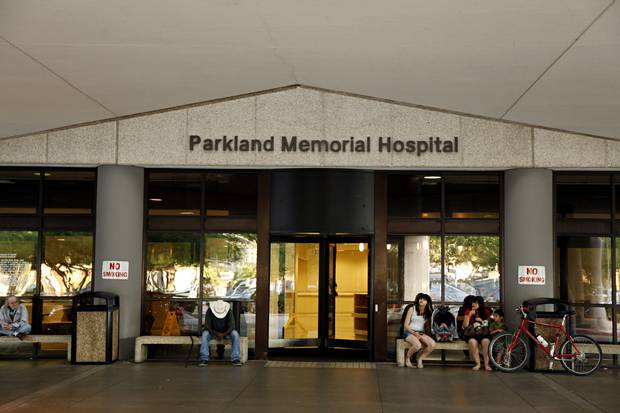
Parkland psych ER is again scene of patient abuse

Parkland Memorial Hospital said the patient-gagging incident in the psychiatric emergency room was discovered on April 8 during a routine review of security video from March 16. Parkland notified the Texas health department within a day, it said, in compliance with regulations.

By MILES MOFFEIT AND BROOKS EGERTON

The psychiatric patient spat at Parkland Memorial Hospital staff as they strapped her into a chair. Then a nurse shoved a toilet paper roll into her mouth, while a co-worker put a sheet over her head.

“Blood stains can be seen on the toilet tissue” after its removal, says a police report that describes security camera footage. A follow-up report says a third employee warned the caregivers that their actions were “illegal.”

Texas health authorities are investigating the March incident — the first abuse in Parkland’s psychiatric emergency room to become public since the hospital hired a new chief executive. One nurse involved in the gagging was also involved in the 2011 restraint of a psych ER patient whose death triggered a federal investigation and virtual takeover of Parkland.

State health regulations prohibit restraint that obstructs a psychiatric patient’s airway or ability to communicate. A prior state enforcement action against Parkland requires hospital managers to report patient abuse within two days of becoming aware of it.

Parkland reported the gagging incident more than three weeks after it occurred. The hospital said managers didn’t know about it initially but acted promptly once they did.

“Employees on site did not elevate this incident appropriately,” Parkland spokeswoman April Foran said. The hospital fired two of five employees who were present during the restraint, she said. Two others resigned, and a fifth “received corrective action.”

Parkland, which collects hundreds of millions of dollars a year from Dallas County taxpayers, would not name the employees. But The Dallas Morning News confirmed the identities of two: Charles Enyinna-Okeigbo, the nurse who forced the toilet paper roll into the patient’s mouth, and Sherwin De Guzman, a supervising nurse.

Authorities have previously investigated both nurses: Enyinna-Okeigbo for domestic violence, and De Guzman in connection with the 2011 death of psych ER patient George Cornell. State and federal regulators found that Cornell was illegally restrained shortly before dying. They cited De Guzman for failing to supervise the technicians who subdued Cornell.

Parkland’s in-house police department investigated the March incident and asked the Dallas County district attorney’s office whether assault charges should be filed. A prosecutor said that the use of force was “unfortunate” but not criminal.

Both nurses declined to comment to The News. Enyinna-Okeigbo told police that he was merely trying to stop the spitting and was not angry with the patient, according to Parkland records.

UT Southwestern Medical Center, whose physicians supervise care at the public hospital, identified the psychiatrist in charge as Dr. Uros Zrnic. He “was not informed or aware of the incident until the videotape was reviewed” in April, UTSW said.

Terrified patient

Experts criticized Parkland after reading police reports on the latest incident at The News’ request.

“When a patient spits, it’s the last resort of a terrified human being, and being restrained like this is terrifying,” said Dr. Peter Breggin, a New York psychiatrist and former consultant for the National Institute of Mental Health.

“Trained mental health workers in this day and age know that spitting is a cause for staff to back off,” he said, adding that forcing objects into patients’ mouths can escalate violence. “There’s no excuse for this abuse.”

Dennis Borel, executive director of the Coalition of Texans with Disabilities, said some Parkland psych workers “still don’t get it.”

“This is pretty outrageous when it was just a few years ago that these kinds of actions were supposed to trigger training and other safe approaches at Parkland,” Borel said. “Everything in the patient’s behavior indicates she was desperately trying to protect herself, and they were making it worse. They failed the patient miserably.”

The state health department hit Parkland in 2012 with a $1 million fine because of Cornell’s death and several other “egregious deficiencies.” It was by far the largest hospital fine in Texas history.

Under a settlement, the hospital paid $750,000. It can avoid paying the rest if, by later this summer, it demonstrates compliance with safety requirements.

Because of the gagging incident, regulators are investigating whether there have been more “significant, egregious deficiencies and a failure to correct them or an attempt to hide them,” said health department spokeswoman Carrie Williams. “It’s an open investigation, and there have been no findings in this case so far.”

Parkland also remains under a 2013 corporate integrity agreement with the U.S. Department of Health & Human Services. It requires periodic reports on patient safety, among other steps.

Compliance with that agreement is a top stated priority of Dr. Fred Cerise, Parkland’s new chief executive. He started work about a week after the March gagging incident.

Cerise and other hospital officials declined to be interviewed for this report. In written responses to questions, Parkland said “the event was discovered” on April 8 during a routine review of security video from March 16. Parkland notified the Texas health department within a day, they said, in compliance with state regulations.

Parkland also said that in addition to taking personnel actions, it now requires video reviews of restraints within 24 hours. But it would not say whether it previously had a schedule for reviewing the security videos, or why it took more than three weeks to detect the gagging incident.

Quick investigation

The criminal investigation lasted less than 48 hours before the case was closed as “unfounded,” police reports show. A News investigation last year found that Parkland police have a history of quickly closing cases in which hospital employees are accused of abuse.

The hospital released nine pages of reports on the investigation, blacking out the names of employees and the patient. It released no information about why the patient was in the psych ER or whether she was injured in the restraint incident. There is no indication in the records that police tried to interview the woman.

When asked, the hospital spokeswoman told The News that “Parkland made multiple attempts to locate the patient” but failed.

The reports contain conflicting versions of what led to strapping the patient to the chair.

Enyinna-Okeigbo told police the woman became “extremely agitated” while in a common area of the psych ER. He said he gave her medication to calm down, but it didn’t work. When staff then directed her toward seclusion rooms, she began to “spit, swing, and kick at the staff,” police wrote, summarizing Enyinna-Okeigbo’s account.

A fellow caregiver who was interviewed “does not recall seeing the patient strike or attempt to strike any staff members,” a police report says. This caregiver also said he didn’t recall seeing the toilet paper roll put into the patient’s mouth or any bleeding. He denied covering the patient’s face with the sheet. The police report noted that “video of the incident contradicts this.”

The reports quote another staffer as saying he saw the bleeding and thought the patient had been “struck by a nurse.” He described the scene as “very chaotic” and said employees lacked training for such situations.

The police description of video footage begins as the patient resists efforts to strap her into a restraint chair: “She appeared to be acting aggressively toward to the medical staff, including spitting on multiple occasions in the direction of the staff.”

Five staffers approached the woman, including one who “immediately placed the roll of toilet tissue over the patient’s mouth,” a report says. “The patient began to resist,” leading Enyinna-Okeigbo to “shove the end of the roll into the patient’s mouth, at one point even appearing to force the patient’s jaw open to completely insert the roll.”

Then another employee secured the sheet around the patient’s head, and the bloody toilet paper was removed from her mouth. Next, a surgical mask was put on the patient. It, too, later showed blood stains.

A Parkland officer met with Assistant District Attorney Craig McNeil on April 10 to discuss potential criminal charges against Enyinna-Okeigbo. “McNeil stated that he felt the culpable mental state exhibited was negligence, and the mental state that has to be met for assault is reckless,” a police report says. “Therefore, McNeil stated that he did not feel that [Enyinna-Okeigbo] met the culpable state to be charged with a crime.”

McNeil told The News he did not know why the hospital didn’t consider charges against the staff member who put the sheet around the patient’s head. Foran, the Parkland spokeswoman, said hospital police gave the DA’s office “complete details” of the incident and noted that prosecutors have “full discretion” about how to proceed.

No assault

The News became aware of the incident on May 28 and asked Parkland for all related police reports. That same day, a Parkland detective asked McNeil for a written explanation of his reasoning, which the hospital gave The News.

“The use of force against a patient in an altered mental state is always unfortunate and should be avoided,” McNeil wrote. But it “does not appear to have been done with the intent to harm the patient.”

In an interview with The News, McNeil identified Enyinna-Okeigbo as the nurse who stuffed the toilet paper roll into the patient’s mouth.

The prosecutor said that spitting could be considered assault because of the potential for disease transmission. In using that term, he said, he did not mean to suggest that the patient should be charged with assault but added: “You have the right to defend yourself.”

McNeil said he could not tell from the video why the patient had blood in her mouth. He said he saw no footage of the patient being struck.

McNeil handled a 2011 case in which security video showed Parkland psychiatric technician Johnny Roberts choking a patient into unconsciousness. The hospital fired Roberts, but grand jurors declined to indict him.

“I was not happy about that,” McNeil said. “I still don’t know why they did that.”

Troubled pasts

The News’ reporting of George Cornell’s death ultimately led to a regulatory crackdown and two years of round-the-clock federal monitoring of Parkland.

The hospital installed security cameras — the same ones that captured the recent gagging incident. It also promised to fire problem employees and retrain others, especially on patient restraints.

Parkland would not say whether Enyinna-Okeigbo or De Guzman received this training.

De Guzman left his job at Parkland at some point after Cornell’s death in February 2011. He returned to work later the same year, according to hospital employment data. Parkland would not explain his departure or return.

Cornell’s death also led to a federal civil rights lawsuit that’s still pending against the hospital, UTSW, De Guzman and other caregivers. In court records, Cornell’s family has noted ways that regulators found fault with De Guzman.

Enyinna-Okeigbo, who was hired at Parkland in 2005, was charged with misdemeanor assault of his wife in 2008.

Dallas County prosecutors initially proposed a deal under which he could plead guilty and serve probation, court records show. Instead, for reasons the records don’t explain, they dismissed the charge in exchange for his completion of an anger management class. He never entered a plea and has no conviction record.

Parkland would not say whether it was aware of the allegations against Enyinna-Okeigbo. The hospital said that before 2011 it conducted criminal background checks only on prospective employees. It said it now checks existing employees, too.

In 2013, Parkland hired privately owned Green Oaks Hospital to manage its psychiatric services. Green Oaks, which receives $1.1 million a year under the deal, declined to comment for this report. Parkland would not discuss the company’s performance.

http://www.dallasnews.com/investigations/20140614-parkland-psych-er-is-again-scene-of-patient-abuse.ece

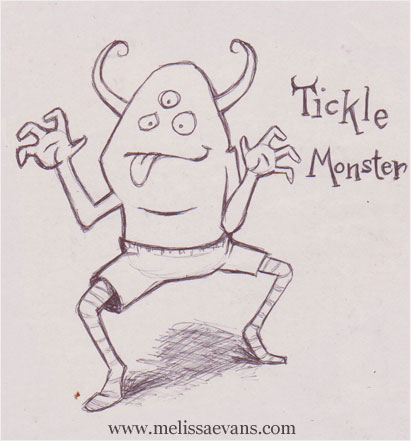
Serial tickler on the loose in Boston

Police in Boston are investigating a number of overnight break-ins in the Brighton neighborhood of Boston early Tuesday morning.

Two homes on Foster Road and one on Kirkwood Road were targeted during the early morning hours.

People living in the neighborhood close to Boston College fear a serial tickler is breaking into homes and targeting men.

In one of the break-ins, David Master said he heard screaming from one of his roommates. “He felt something on his foot and thought it was the cat,” Master said. “He woke up to see a man crouched by his bed.”

Master told the Boston Globe he and his roommates did not pursue the man. The man apparently walked in through their unlocked door.

The first break-in was reported around 3:50 a.m., the Globe reported. Residents in a home on Foster Street said they found a masked man in their home. When they spotted him, he ran in an unknown direction, the Globe reported.

Gino Caligore says his apartment was another target for the tickler. “Apparently the tickler had come in, tickled my roommate, and before my friend could catch him or anything, the guy ran out of the house,” Caligore said.

Boston police asked anyone with information about the crime to contact them.

Read more: http://www.wcvb.com/news/string-of-home-invasions-could-be-tied-to-serial-tickler/26424224#ixzz34cvVuDVp

Arizona store employee discovers brain tumor after he’s pistol-whipped

brain tumor

By Ed Payne and Dave Alsup

Call it a mixed blessing — one that may have saved an Arizona convenience store employee’s life.

When Phoenix Circle K manager Jerimiah Willey was pistol-whipped during a robbery last month, he landed at St. Joseph’s Hospital with a head injury that required eight staples.

“He hit me in the head twice. … and then throughout the whole thing, he was nudging me with the gun,” Willey told CNN affiliate KTVK.

The hospital did a CT scan while he was there and discovered something far worse — a massive and potentially life-threatening brain tumor.

“They said that had this not been found and soon around the time that it was found, that he probably just would have gone to sleep one night and not been able to wake up,” his wife, Alisha Willey, told the affiliate.

He is recovering from the first of what’s expected to be three brain surgeries.

“It’s our understanding, that because of the size, we believe there’s going to be two more surgeries,” his mother-in-law, Rose Gould, told CNN.

The surgery has left him partially paralyzed, with slurred speech and some loss of hearing. He’s undergoing therapy.

Although the road ahead for the Willeys and their three children is uncertain, they’re hopeful that the slow-growing tumor is benign and was caught before it was too late.

A fund has been set up to help pay for the family’s medical expenses.

“It’s hard to be thankful to somebody who was so violent,” Alisha Willey said. “I’m just very blessed that my husband is still alive and that it wasn’t over that morning.”

http://www.cnn.com/2014/06/13/us/arizona-beating-brain-tumor/index.html

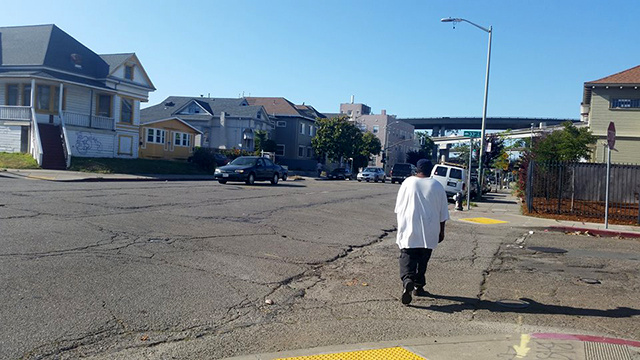
Inner-City Oakland Youth Suffering From Post-Traumatic Stress Disorder

In the inner city, a health problem is making it harder for young people to learn. inner-city kids suffer from post-traumatic stress disorder (PTSD).

“Youth living in inner cities show a higher prevalence of post-traumatic stress disorder than soldiers,” according to Howard Spivak M.D., director of the U.S. Centers for Disease Control and Prevention’s Division of Violence Prevention.

Spivak presented research at a congressional briefing in April 2012 showing that children are essentially living in combat zones. Unlike soldiers, children in the inner city never leave the combat zone and often experience trauma repeatedly.

One local expert says national data suggests one in three urban youth have mild to severe PTSD. “You could take anyone who is experiencing the symptoms of PTSD, and the things we are currently emphasizing in school will fall off their radar. Because frankly it does not matter in our biology if we don’t survive the walk home,” said Jeff Duncan-Andrade, Ph.D. of San Francisco State University.

In 2013, there were 47 recorded lockdowns in Oakland public schools – again, almost all in East and West Oakland.

Students at Fremont High showed where one classmate was shot.

“If someone got shot that they knew or that they cared about… they’re going to be numb,” one student said. “If someone else in their family got shot and killed they will be sad, they will be isolated because I have been through that.”

Gun violence is only one of the traumas or stressors in concentrated areas of deep poverty.

“Its kids are unsafe, they’re not well fed,” Duncan-Andrade said. “And when you start stacking those kids of stressors on top of each other, that’s when you get these kinds of negative health outcomes that seriously disrupt school performance.”

Duncan-Andrade said doctors at Harvard’s School of Public Health have come up with a new diagnosis of complex PTSD, describing people who are repeatedly re-exposed to trauma, which Duncan-Andrade said, would include many inner-city youth.

In Oakland, about two-thirds of the murders last year were actually clustered in East Oakland, where 59 people were killed.

Teachers and administrators who graduated from Fremont High School in East Oakland and have gone back to work there spoke with KPIX 5.

“These cards that (students) are suddenly wearing around their neck that say ‘Rest in peace.’ You have some kids that are walking around with six of them. Laminated cards that are tributes to their slain friends,” said teacher Jasmene Miranda.

Jaliza Collins, also a teacher at Fremont, said, “It’s depression, it’s stress, it’s withdrawal, it’s denial. It’s so many things that is encompassed and embodied in them. And when somebody pushes that one button where it can be like, ‘please go have a seat,’ and that can be the one thing that just sets them off.”

Even the slang nickname for the condition, “Hood Disease,” itself causes pain, and ignites debate among community leaders, as they say the term pejoratively refers to impoverished areas, and distances the research and medical community from the issue.

“People from afar call it ‘Hood Disease,’ – it’s what academics call it,” said Olis Simmons, CEO of Youth UpRising working in what she describes as the epicenter of the issue: East Oakland.

She said the term minimizes the pain that her community faces, and fails to capture the impact this has on the larger community.

“In the real world where this affects real lives, people are suffering from a chronic level of trauma that doesn’t have a chance to heal because they’re effectively living in a war zone within your town,” said Simmons.

“Terms like ‘hood disease’ mean it’s someone else’s problem, but it’s not. That’s a lie. It’s a collective problem, and the question is what are we prepared to do about it?”

Thanks to Kebmodee for bringing this to the attention of the It’s Interesting community.

http://sanfrancisco.cbslocal.com/2014/05/16/hood-disease-inner-city-oakland-youth-suffering-from-post-traumatic-stress-disorder-ptsd-crime-violence-shooting-homicide-murder/