Surprising Diet For Weightlifting Record Setter

Next time you need motivation at the gym, think of Ray Williams.

The 6-foot, 361-pound Williams is a junior college football coach from Demopolis, Alabama. Over the weekend at the Alabama State Powerlifting Championship, he broke the U.S. record in the men’s raw 275-pounds-plus division by squatting 860 pounds. That’s right, 860 pounds.

And it gets better. Williams also put up 905 pounds, but that attempt was disallowed because he took a small jab step during the lift. Williams was pretty disappointed with himself because he wanted to see if he could squat 1,000 pounds.

For those wondering how to build bulk and muscle like Williams, the answer is simple: Cornbread and buttermilk.

“I’ve always been a big dude,” Williams told the website 70sbig. “And one thing my grandma brought us up on was cornbread, collard greens, good down-home southern food — it’s always been a staple of my diet.”

Making Williams’ feat all the more impressive was the fact that this was just his second powerlifting meet.

“I like it,” Williams told AL.com of powerlifting. “Just the fact that no one can say I’m big for no reason. Now, I can put my bigness to use. Plus I’ve always been just naturally strong, and I can refine that through powerlifting.”

http://www.thepostgame.com/blog/training-day/201302/man-produced-crazy-record-breaking-squat

Injection of heat-burning animal cells into people may help burn off body fat


Scientists have developed an injection that could target stubborn spare tyres or double chins without affecting the rest of the body.

The researchers have found they can burn off excess fat in specific areas of the body by injecting tiny capsules filled with a modified type of heat-producing cell commonly found in animals and babies.

The cells release “signals” that alter the surrounding fat tissue so surplus calories are used up by producing body heat rather than being stored as fat.

Tests in animals have shown that injecting the capsules caused obese mice to lose up to 10 per cent of their body weight even when being fed a high calorie diet. The researchers are now planning to begin treating obese dogs later this year. If successful and found to be safe, it is hoped that the treatment could be available for use in humans in around six years.

The researchers believe the capsules, which are around three times the width of a human hair, could be injected into specific fat deposits such as the thighs, buttocks, arms or under the chin to reduce the amount of fat stored there.

It could solve the problem faced by many dieters who find that no matter how much weight they lose or how much they exercise, there are some areas of the body where fat stubbornly refuses to come off.

Dr Ouliana Ziouzenkova, who led the research at the department of human nutrition at Ohio State University, said: “We found the capsules completely remodelled the fat they were put into.

“Our goal was to achieve a way of targeting deleterious visceral fat that increases the risk for diseases like type 2 diabetes and cardiovascular disease.

“We have to prove that this is safe and effective in humans, but we could think about using it for body sculpturing. So if you wanted to remove a small amount of fat under your face like a double chin, or in their arms or legs, you could target these with a single injection.

“We have a grant now to carry out some work with obese dogs as it could also be of great benefit for veterinary purposes as there is a growing problem with obese pets.”

In a study published in the scientific journal Biomaterials, Dr Ziouzenkova and her colleagues used fatlike cells from mice that had been genetically modified to burn off excess energy as body temperature.

They found that by encasing these cells inside plastic-like microcapsules, they could be transplanted without being destroyed by the recipients immune system. Obese mice that received the capsules lost a tenth of their body fat in a month and after 80 days were 20 per cent less fat than mice that received empty capsules.

The cells are thought to cause this change by releasing signals known as thermogenic factors through pores in the capsules into the surrounding unhealthy body fat. These then changed the fat into heat producing cells known as thermocytes.

Thermocytes, sometimes called brown fat, are abundant in many small animals and in human babies where they help maintain body temperature by burning off energy as heat rather than storing it like normal fat. Humans, however, lose these cells as they grow older.

Dr Ziouzenkova believes that by transplanting cells from animals such as mice into adult humans, known as xenotransplantation, it may be possible to increase the number of thermocytes in adults and so help them reduce the amount of body fat they carry.

“Microcapsules are cost effective as it means the same cells can be used for different patients,” she said. “The capsules are like a plastic bag that have pores in them so the immune system cannot enter but the thermogenic factors can escape.

“The cells essentially become invisible to the immune system and so can start to change the fat around them.

“Xenotransplantation will reduce the cost of treatment and cells could be stored to specifically address patients needs. In our preliminary studies in animals, we observed only minor local inflammation caused by degraded capsules with a xenotransplant.

“If implanted cells from animals do not work in humans, however, we aim to modify human cells so they have the same effect.”

http://www.telegraph.co.uk/science/science-news/9591390/Injections-of-animal-cells-may-rid-dieters-of-their-double-chins.html

Study aims to determine why some people hate cilantro

On “I Hate Cilantro” websites and Facebook pages they gripe that the herb tastes like soap, mold, or dirt. Cilantro haters not only despise its flavor, they also detest its smell. Stories in publications as serious as the New York Times, the Wall Street Journal and, yes, even msnbc.com have even covered the sharp divide in taste preferences when it comes to this particular herb.  And when a study of identical twins found an aversion to cilantro stems from a genetic glitch, the herb’s bashers finally had a good reason why they found the leaves of the Coriander plant so offensive.

But who are these people in the anti-cilantro community? No one had a clue — until now.

There has been no attempt to quantify which people hate the herb until two nutrition experts from the University of Toronto took a stab at it. They recently published their findings in the journal Flavour. In the study, they surveyed nearly 1,400 young adults ages 20 to 29 in Canada.

Volunteers completed a 63-item preference checklist in which they rated each food on a 9-point scale from 1 (dislike extremely) to 9 (like extremely). They could also select “never tried” or “would not try.”

Researchers found an aversion to cilantro ranged from a low of 3 percent to a high of 21 percent among six different ethnic groups.

Young Canadians with East Asian roots, which included those of Chinese, Japanese, Korean, Thai and Vietnamese descent, had the highest prevalence of people who disliked the herb at 21 percent. Caucasians were second at 17 percent, and people of African descent were third at 14 percent.

Among the herb’s fans, the group with the fewest number of people who disliked cilantro were those of Middle Eastern background at 3 percent, followed by those of Hispanic and South Asian ancestry at 4 percent and 7 percent respectively.

Exposure to the herb at an earlier age and with greater frequency in Mexican, Asian, and Indian cooking likely helps shape a positive flavor preference. Another possibility is that genetic differences among the cultural groups might influence someone’s taste perception of the herb.

Although researchers have yet to evaluate all 63 items on the food-preference checklist, study author Ahmed El-Sohemy, PhD, is sure of one thing: “Cilantro is perhaps the most polarizing with large numbers either loving it or hating it.” The paper calls this the “unusual divisive nature of cilantro.”

“People who dislike cilantro extremely describe it very, very differently from those who love it,” explains El-Sohemy, an associate professor of nutrition at the University of Toronto. The reason? “These individuals live in very different sensory worlds and are not perceiving the same thing,” he says.

As for El-Sohemy’s opinion of cilantro, count him among the lovers. “I remember loving the taste as a child,” he says. “I distinctly remember my mother’s Egyptian cooking, which used cilantro frequently.”

The study is a first step in determining how widespread a dislike for cilantro is, at least in a sample of young Canadians. It’s unclear whether older Canadians feel similarly or how much the herb is despised by people in other countries.

Eventually, the Toronto scientists hope to pinpoint the genetic basis for why cilantro is an herb some people love to hate.

http://bodyodd.nbcnews.com/_news/2012/05/16/11719087-who-hates-cilantro-study-aims-to-find-out

Thanks to Dr. S.G. for bringing this to the attention of the It’s Interesting community.

New study shows that getting less than 6 hours of sleep a night significantly increases risk of stroke

Getting a good night’s rest continues to be of utmost importance to your health. New data from researchers at the University of Alabama at Birmingham shows too little sleep can increase the risk for stroke symptoms in people with a healthy body-mass index who are at low risk for obstructive sleep apnea and have no history of stroke.

The study, being presented June 11, 2012, at the SLEEP 2012conference in Boston, looked at self-reported sleep data from 5,666 people ages 45 and older who were followed up to a three-year period. In people with a low risk for obstructive sleep apnea and a BMI of 18.5 to 24.99, which is considered optimal, there was a four-time greater risk of stroke symptoms in participants who had fewer than six hours of sleep per night, compared to participants in the same BMI range who got seven to eight hours of sleep per night. The study found no association between short sleep periods and stroke symptoms among overweight and obese participants.

“We adjusted for many possible factors that could explain this increase, including hypertension, high cholesterol, sleep disordered breathing and being overweight or obese,” explains Megan Ruiter, Ph.D., the study’s lead author and a UAB post-doctoral fellow in the Division of Preventive Medicine in the School of Medicine.

“Despite controlling for other known stroke risk factors, we still found the association between sleeping less than six hours and reporting stroke symptoms, like sudden body weakness or numbness or deficits in vision,” says Ruiter. “These participants may be late in the development of a stroke. It is possible they may have had a stroke but it was not verified with a physician.”

Sleep specialist Susan Harding, M.D., who was not involved with this study, says these findings do not surprise her.

“Short sleep duration is already associated with cardiovascular death and other cardiovascular related events,” says Harding, director of UAB’s Sleep/Wake Disorders Center. “What is different with this study is that it specifically looked at people who are at a normal weight, which means they are less likely to have diabetes — which is a stroke risk factor — and found they are still at increased risk of stroke symptoms.”

The study also found a differential risk according to racial group.

“We find that sleep duration might partially explain the relationship between ethnic differences in stroke symptoms,” Ruiter adds. “African-Americans had a greater prevalence of short sleep, and they were more likely to have stroke symptoms.”

Ruiter notes that sleep duration was self-reported by participants, making it a limitation of the study, as recall accuracy can vary.

“We need to see if sleep duration is related to actual stroke events. It would be great to learn more about what it is about sleep duration. Is it actually sleep fragmentation, or perhaps the perception of your sleep and the factors that contribute to its quality rather than sleep duration itself? These are all really important factors that are modifiable through behavioral treatment,” says Ruiter.

Data used for this study comes from the Reasons for Geographic and Racial Differences in Stroke study, led by George Howard, DrPH, of the UAB School of Public Health. REGARDS enrolled 30,239 people ages 45 and older between January 2003 and October 2007, and it continues to follow them for health changes. The study is funded by the National Institute of Neurological Disorders and Stroke.

http://www.uab.edu/news/latest/item/2483-sleep-debt-hikes-risk-of-stroke-symptoms-despite-healthy-bmi

New Bacon Sundae at Burger King

Just when we thought fast food news could not get any more exciting, Burger King announced that it will be offering a bacon sundae throughout the U.S. this summer.

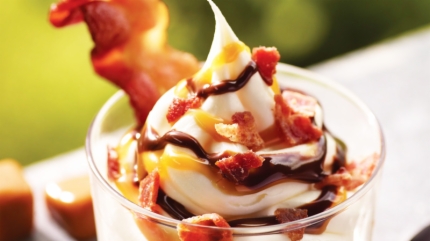
The dessert — a 510 calorie monstrosity featuring both a whole strip of bacon and bacon crumbles atop a fudge and caramel sundae — was released in April in Nashville to reasonable fanfare, but will now receive a wide release as part of Burger King’s expanded summer menu. This move coincides with the world’s second largest hamburger chain’s new strategy to rebrand itself, changing its tagline from “Have It Your Way” to “Taste Is King.” It’s already made several changes to its menu this year, adding new snack wraps and salads and adjusting its recipes for staples like French fries and the Whopper.

(LIST: Top 10 Worst Fast-Food Meals)

Burger King first saw success for its bacon sundae earlier this year when it “took Nashville, TN by storm,” according to a company press release. The cold treat — which boasts 8 grams of fat and 61 grams of sugar — is described in the release as a “sweet and savory dessert [featuring] rich and creamy vanilla soft serve, drizzled with chocolate fudge, caramel and topped with bacon crumbles, complete with a thick-cut, hardwood smoked bacon garnish.”

Bacon garnishes are not the only new development on the BK menu: summer additions also include the Memphis Pulled Pork BBQ sandwich, Carolina and Texas BBQ sandwiches, frozen lemonade and sweet potato fries. These items will be available throughout the summer, or while supplies last.

Read more: http://newsfeed.time.com/2012/06/13/the-bacon-sundae-is-coming/?iid=nf-article-mostpop1#ixzz1xr1krrOL

Skinny jeans may be bad for your health


It’s a fashion trend that we’re seeing everywhere, at the mall, at work, and  at school. We’re talking about skinny jeans.

They can be flattering, but if you’re not careful, they can also be harmful  to your health.

Christine Barnabic is a fan of skinny jeans. She has a collection with  various colors, various fabrics, but they all have a simliar look. She loves how  skinny jeans can spice up her wardrobe.

Barnabic says, “You can wear the boots over them. It’s really nice in the  winter and even during the daytime you can wear them with flats or jazz them up  at night.”

But the one thing Barnabic doesn’t love is how difficult they can be to put  on. She says, “They can be hard to get on because you’re trying to obviously  pull them up.”

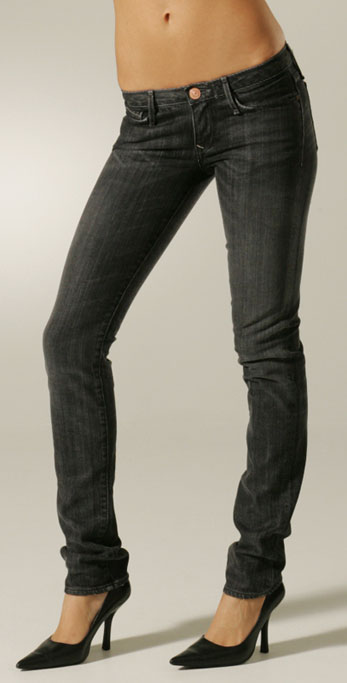
Doctors say you have to be careful and really weigh the price of looking  good, to the price of good health. If they’re too tight, they can cause nerve  damage.

Dr. Karen Boyle with GBMC says, “This disorder is called  meralgia paresthetica and it’s a disorder that occurs when one  of the nerves that runs in the outer part of a thigh gets compressed. The  pressure on it causes symptoms of tingling, numbness and pain in the outer part  of the thigh.”

Dr. Boyle says one woman described it as a floating sensation. She says that  when she was walking. She felt weak and got pain in her thighs. The problem can  be made even worse if your jeans are too tight, and you’re wearing high  heels.

Dr. Boyle says, “When you wear high heels the axis of your pelvis changes and  what happens is your pelvis tilts and your buttocks kind of kick out a little  bit and your legs are longer looking. This is why women like to wear stilettos.  But because the pelvis tilts some, it further accentuates the pressure that’s  caused on those nerves. It can make the symptoms worse.”

To alleviate the pain, doctors suggest you wear jeggings or skinny jeans that  have some stretch in them.

Barnabic says, “I feel like if you try something on, try it in different  sizes up or down to see the best kind of fit and how the looks is. Then, also  take into consideration the whole stretch idea to make it look comfortable and  feel great.”

Dr. Boyle says if you feel tingling and numbness in your leg, stop wearing  skinny jeans and the symptoms should go away. If you ignore the pain and  continue to wear tight jeans, it could lead to more permanent nerve damage.

Read more: http://www.abc2news.com/dpp/news/health/wearing-skinny-jeans-too-tight-can-cause-health-problems#ixzz1wBgZ2SoR


Death by Lap Dance in El Paso


 A man is dead after allegedly suffering from a heart attack at a The Red Parrot Strip Club in east El Paso County Friday night. Our sources say the man most likely suffered from a heart attack while getting a lap dance.

He was taken to the hospital where he later died.

The El Paso Sheriff’s Office says there were no signs of foul play, but they are still investigating.

http://fox8.com/2012/05/14/man-dies-while-receiving-lap-dance/


28 year old Egyptian man declared dead, but then wakes up before funeral.


What should have been a solemn occasion to mark the Egyptian man’s passing rapidly turned into a celebration once everyone got over the shock of him still being alive.

The 28-year-old suffered a heart attack while at work and doctors at a local hospital concluded he had died.

His family took the body back to his home village of Naga al-Simman in the province of Luxor and intended to bury him on Friday evening.

They washed and prepared him for the funeral, but when a local doctor arrived to sign the death certificate, she found something strange – the body was still warm.

A more detailed examination revealed he was still very much alive.

Al-Nubi’s mother fainted after being told the news, but the doctor soon managed to wake both the mum and son, so that they could join in a party with the rest of the funeral guests.

Read more: http://www.metro.co.uk/weird/898938-egyptian-man-declared-dead-but-wakes-up-before-funeral#ixzz1utstaFd8

California Man Sues BMW for Persistent Erection


BMW North America has probably had to deal with plenty of  unusual lawsuits, but one filed last week may be a first — a California man says the seat on his motorcycle has given him an erection he just can’t shake.

Henry Wolf of California is suing BMW America and aftermarket seatmaker Corbin-Pacific claiming his issue began after a four-hour ride on his 1993 BMW motorcycle, with a ridge like seat. Wolf is seeking compensation for lost wages, medical expenses, emotional distress and what he calls “general damage.”

He said he’s had the erection non-stop for 20 months. And it comes with another side effect: The lawsuit says Wolf is “now is unable to engage in sexual activity, which is causing him substantial emotional and mental anguish.”

WWJ Newsradio 950 spoke with Dr. Michael Lutz, at the Michigan Institute of Urology, who said there is no medical data to support the man’s claim. However, “It’s been long-known that compression of the neurovascular supply to the penis —  if it’s compressed for a period of time, whether it be on a bicycle seat or some other device — it can actually cause prolonged numbness of the genitalia,” Lutz said.

“Not only in men, but women can also get numbness in that region if they’re compressing those nervous structures to that region of the body,” he said.

BMW Motorcycles of Southeast Michigan in Canton, Mich., checked out the story and noted the man wasn’t riding a standard BMW motorcycle seat. He was on an after-market seat, which start at about $200. People generally buy them to make the ride more comfortable.

“Sometimes people say it’s more comfortable, sometimes people can get a tall seat or a low seat or they’re shorter or taller, they can come heated,” said Theresa at BMW Motorcycles of Southeast Michigan.

http://detroit.cbslocal.com/2012/04/30/calif-man-sues-bmw-for-persistent-erection/

Thanks to Steven Weihing for bringing this to the attention of the It’s Interesting community.
Tony Pietrantonio Knockout


Tony Pietrantonio was unfortunate enough to be on the receiving end of a knockout punch from Lavarn Harvell during their light heavyweight boxing match in Atlantic City, New Jersey

Pietrantonio, 34, came crashing down on to the canvas in the third round after receiving the blow, which a well-timed photo captured perfectly, conveying the sheer impact of the punch.

The punch was so hard that Pietrantonio’s face became heavily distorted and his mouth looked like it was about to twist off his face. Even his flapping ears appeared to absorb the full force of the blow.

Harvell, 23, said after the fight: “I felt that punch all the way up my shoulder and back, so I knew he wasn’t getting up.”

He was completely right. The devastating blow, delivered after 31 seconds in the third round, gave him the fight. It was his second straight knockout in four weeks.

Pietrantonio, who only agreed to fight three days beforehand, had previously won six of the 17 bouts in his boxing career, but did not stand a chance after the dramatic jab from Harvell.

He was unconscious as he hit the ground, prompting referee David Fields to immediately stop the fight and call for medical assistance.

After a few minutes, Pietrantonio was then able to climb on to the stool in his corner and eventually shook off the injury to leave the ring under his own power.

http://www.ibtimes.co.uk/articles/335019/20120430/tony-pietrantonio-photo-punch-lavarn-harvell-knockout.htm