Bear eats monkey when forced to ride bike at Shanghai Wild Animal Park

A monkey was mauled by a bear after a disturbing circus stunt went wrong.

A video has emerged online of two monkeys and a black bear being forced to ride bicycles around a track in front of a large crowd.

After two laps of the track, one of the monkeys crash and the bear then attacks it as it lies stuck under the bicycle.

The video is believed to have been shot at the Shanghai Wild Animal Park, in China, which has hit the headlines in the past for its ‘Wild Animal Olympics’.

In the video, the audience can be heard cheering and laughing as the animals are sent riding around the small arena.

Circus workers holding sticks push the small bikes off but after a few seconds one monkey and the bear crash.

Staff can be seen desperately trying to force the bear off as it grabs the small monkey in its mouth.

At one stage three workers, dressed in brightly coloured costumes, try to wrestle the bear away, while another leads the second monkey away.

Campaign group Animals Asia said it has previously documented cheetahs, lions, tigers, bears, chimpanzees and an elephant being forced to perform in the ‘Wild Animal Olympics’.

It is not clear when the latest video was taken but Shanghai Wild Animal Park said in 2006 that the Olympic event had been scrapped following complaints and ‘out of consideration for the safety of our visitors.’

Stunts in the show had included making bears box one another and ride bicycles, kangaroos boxing humans and monkeys lifting weights.

Visitors to the park can also pay to have their picture taken with the big cats and other animals.

Animals Asia said some of the creatures had also been declawed.

China Tour Online’s website said the park ‘offers animal performances, showing the charm and skill of the animals and their gift in performing.’

Thanks to Kebmodee for bringing this to the attention of the It’s Interesting community.

Read more: http://www.dailymail.co.uk/news/article-2320745/Bear-forced-ride-bike-sick-circus-stunt-crashes-mauls-monkey-large-crowd.html#ixzz2T1OBSdWz
Follow us: @MailOnline on Twitter | DailyMail on Facebook

Shuttlecock industry threatened by China bird flu-related feather shortage

burd flu

The slaughter and burial of fowl in Zhejiang Province and Anhui Province, the main sources of feathers for the shuttlecock industry in Guangdong Province, has resulted in a feather shortage, triggering a price increase. In some shuttlecock factories, feather inventories can only meet about a month of production demand. If the feather shortage continues to worsen, some factories will have to suspend shuttlecock production.

Sports shops suggest that fans buy shuttlecocks as soon as possible, as prices are expected to continue rising.

http://www.globaltimes.cn/content/777596.shtml

Frozen waterfall after man leaves tap running

icefall

A man at Jilin city in Northeastern China’s Jilin Province left the tap on all winter – creating this spectacular frozen waterfall.

Wen Hsu, 58, had lived on the seventh floor of the property scheduled for demolition to make way for a new shopping centre for 35 years and when developers managed to buy all the other flats in the building – he was left as the only resident. As winter approached and it got colder Hsu was worried that the uninsulated water pipes running up through the unused and unheated flats below him would freeze, leaving him without running water. So in order to keep the temperature of the pipes above freezing he simply switched on the tap – and then diverted the warm water to flow down the side of the building.

He said: “The water running into the pipe is from underground where it is above freezing and that is stopping the water pipes in my house from freezing. If that had happened I really would have had to move out. They want me to move but what they were offering was not enough for me to get another place so I’m refusing to leave. I don’t have anywhere to go anyway.”

The spectacular waterfall has drawn attention to his case in national media and council officials are now urging developers to settle the matter so that the project can move on.

Hsu said: “The weather is warmer now so there is no danger of the pipes freezing – although I think it might take awhile for the waterfall to melt. In any case I understand the developers may be prepared to make me a better offer now – I hope so. It is very lonely here in my apartment with nobody else around.”

http://austriantimes.at/news/Around_the_World/2013-04-17/48067/NO_FOOL_-Ice_Water_Fall_Publicises_Row_With_Developers

New bird flu well-adapted to infect people

130412032821-3-bird-flu-0412-horizontal-gallery

A new variation of bird flu that the WHO says has caused at least 11 deaths in China has genetic characteristics that make it well-adapted to infect people. In a report published late Thursday in the New England Journal of Medicine, samples from three patients — all of whom died — had mutations that have previously been shown to increase transmissibility, and to help the virus grow in a mammal’s respiratory tract. The analysis comes amid a modest but steady stream of human cases since the end of March. Saturday, China reported a 7-year-old Beijing girl is the latest person to become infected with the H7N9 flu strain, bringing the total to 44.

The strain is normally found in birds, and until last month was never known to infect people. “The H7N9 situation is evolving very quickly,” said Nancy Cox, director of the Influenza Division at the U.S. Centers for Disease Control and Prevention. “One thing of concern is the pace at which we are seeing the identification of cases.”

On a more reassuring note, investigators have found no evidence that the virus has passed directly from person to person. More than a thousand “close contacts” of the patients are being monitored by Chinese health officials, according to the World Health Organization. One concerning mutation, known as “Substitution Q226L,” was found in two of the first three victims. Past experiments have shown it to make viruses — including the H5N1 bird flu virus — more likely to infect ferrets, which are commonly used in flu research. The same mutation was also found in the viruses that caused the 1957 and 1968 flu pandemics. A second mutation, known as “PB2 E627K,” was found in all three virus samples. According to Dr. Ron Fouchier, a Dutch virologist, this mutation allows the virus to reproduce at much lower temperatures than a standard avian influenza virus. The change lets it grow in a human respiratory tract, which is cooler than the virus’ natural home: a bird’s gastrointestinal tract. In mice, Fouchier said, the mutation makes the infection as much as 1,000 times more virulent. A number of other mutations were found as well, including changes that are characteristic of viruses found in mammals.

“Known normal bird viruses have to adapt substantially to infect people, but not these,” said Fouchier, who said the changes are enough that he would no longer call the H7N9 strain “bird flu.” The first three patients to be identified are an 87-year-old man and a 27-year-old man from Shanghai, and a 35-year-old housewife from Anhui. The woman had visited a chicken market about a week before falling ill. The younger man was a butcher who worked in a market where live birds were sold, although he did not butcher any birds. The 87-year-old had no known exposure to live birds. All three died after suffering severe respiratory symptoms, including acute respiratory distress syndrome and eventually septic shock and multiple organ failure.

In a commentary that ran with the article, Cox and Dr. Tim Uyeki, a physician with the CDC, noted that patients were not given antiviral medication until their illness became severe. Oseltamivir (Tamiflu) or zanamivir (Relenza) should be administered as soon as possible to patients with a suspected or confirmed H7N9 infection, the two wrote. Cox said it remains unclear whether the severe illnesses are typical of H7N9 infection or simply the tip of a large iceberg in which a large number of mild cases are going unnoticed.

“As surveillance has expanded, we’re also seeing individuals with milder cases,” said Cox. “We’re still seeing very severe disease in some cases, but overall I think it’s somewhat reassuring.” The CDC is in the final steps of refining a diagnostic test to identify H7N9 in patients, and Cox said it should be available for distribution in a matter of days. A widely available diagnostic test would allow faster identification of patients who actually have the infection, and would also help disease detectives zero in on how people are being exposed.

Work has begun on a vaccine, although Cox and others said that even if it is eventually needed, a vaccine likely won’t be available for several months. While the overall picture is concerning, flu experts urged calm. “I wouldn’t say a pandemic is more likely than it was a year ago,” Fouchier said. “The only thing we can do as virologists right now is to point out the interesting characteristics of the virus, try to get to the bottom of this story and try to stop further infections.”

http://www.cnn.com/2013/04/12/health/bird-flu/index.html?hpt=hp_t2

Rare Chinese bowl bought for $3 is sold for more than $2.2 million

chinese bowl

A Chinese bowl that a New York family picked up for $3 at a garage sale turned out to be a 1,000-year-old treasure and has sold at auction for $2.2 million. The bowl — ceramic, 5 inches in diameter and with a saw-tooth pattern etched around the outside — went to a London dealer, Giuseppe Eskenazi, at Sotheby’s auction house in New York on Tuesday. Sotheby’s said the bowl was from the Northern Song Dynasty, which ruled China from 960 to 1127 and is known for its cultural and artistic advances. The auction house said the only other known bowl of similar size and design has been in the collection of the British Museum for more than 60 years. The house had estimated that this one would sell for $200,000 to $300,000. Sotheby’s did not identify the sellers, but said they put the bowl up for auction after consulting with experts. The family bought the bowl in 2007 and had kept it on a mantel in the years since. There weren’t any additional details made public about the garage sale where they had purchased the item.

http://usnews.nbcnews.com/_news/2013/03/20/17385541-picked-up-for-3-bucks-chinese-bowl-goes-for-22-million-at-auction?lite

600 year old Chinese coin discovered on Kenyan island shows trade existed between China and East Africa much earlier than previously thought

130313131900-large
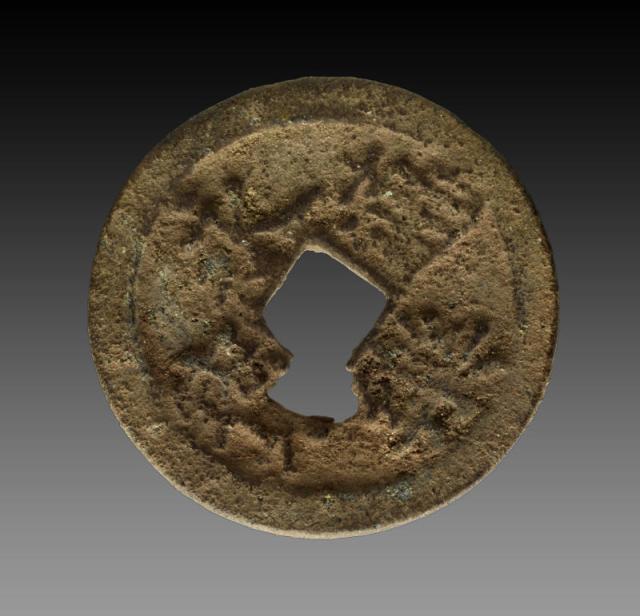
Scientists have unearthed a 600-year-old Chinese coin on the Kenyan island of Manda that shows trade existed between China and east Africa decades before European explorers set sail and changed the map of the world.

A joint expedition of scientists led by Chapurukha M. Kusimba of The Field Museum and Sloan R. Williams of the University of Illinois at Chicago has unearthed a 600-year-old Chinese coin on the Kenyan island of Manda that shows trade existed between China and east Africa decades before European explorers set sail and changed the map of the world.

The coin, a small disk of copper and silver with a square hole in the center so it could be worn on a belt, is called “Yongle Tongbao” and was issued by Emperor Yongle who reigned from 1403-1425AD during the Ming Dynasty. The emperor’s name is written on the coin, making it easy to date. Emperor Yongle, who started construction of China’s Forbidden City, was interested in political and trade missions to the lands that ring the Indian Ocean and sent Admiral Zheng He, also known as Cheng Ho, to explore those shores.

“Zheng He was, in many ways, the Christopher Columbus of China,” said Dr. Kusimba, curator of African Anthropology at The Field Museum. “It’s wonderful to have a coin that may ultimately prove he came to Kenya,” he added.

Dr. Kusimba continued, “This finding is significant. We know Africa has always been connected to the rest of the world, but this coin opens a discussion about the relationship between China and Indian Ocean nations.”

That relationship stopped soon after Emperor Yongle’s death when later Chinese rulers banned foreign expeditions, allowing European explorers to dominate the Age of Discovery and expand their countries’ empires.

The island of Manda, off the northern coast of Kenya, was home to an advanced civilization from about 200AD to 1430AD, when it was abandoned and never inhabited again. Trade played an important role in the development of Manda, and this coin may show trade’s importance on the island dating back to much earlier than previously thought.

“We hope this and future expeditions to Manda will play a crucial role in showing how market-based exchange and urban-centered political economies arise and how they can be studied through biological, linguistic, and historical methodologies,” Dr. Kusimba said.

http://www.sciencedaily.com/releases/2013/03/130313131900.htm

China Ghost Marriages: Grave-Robbers Sold Corpses As Dead Wives

ghost_marriage_rituals_bbssq

Four people have been jailed in China for digging up corpses to sell as brides for traditional “ghost marriages” — where dead single men are buried with a wife for the afterlife — local reports said.

Marriage is an important part of Chinese society and, while the practice is increasingly rare, it is still kept up by some families whose young adult sons pass away before having a chance to wed.

Normally it is agreed between the families of the dead, but the Xian Evening News said the group “stole female corpses and after cleaning them, fabricated medical files for the deceased and sold them for a high price”.

A court in the northern province of Shaanxi sentenced the four to terms between 28 and 32 months, it said, adding they “took advantage” of the “bad tradition” of ghost marriages in parts of Shaanxi and neighbouring Shanxi province.

Citing the court, the report said the gang made a total of 240,000 yuan ($39,000) from the sales of 10 corpses.

http://www.huffingtonpost.com/2013/03/04/china-ghost-marriages_n_2805262.html?utm_hp_ref=world

Couple refuses to leave home, so Chinese government builds highway around them

highway home

It would be a tough sell for any estate agent – great transport links, but the view is admittedly a little uninspiring.

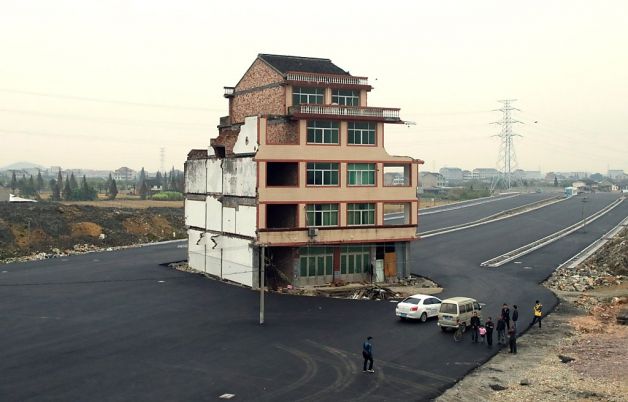
A new motorway in China has been built around a half-demolished building in the city of Wenling, in Zhejiang province, after a family that lives in the building refused to move.

Luo Baogen and his wife, are embroiled in a row over the amount of relocation compensation offered by the government, and are the only remaining residents.

All their neighbours have already left, but to ensure the couple are safe adjacent rooms in the property have been left intact.

The road paved through the Xiazhangyang village leads to the Wenling railway station and is not yet officially open.

Property owners in China that refuse to move for new developments are known as ‘Nail Householders’, in a reference to a nail that is difficult to remove from wood.

Laws in the People’s Republic of China have recently been tightened up and it is now illegal to demolish a property without agreement.

http://www.nzherald.co.nz/world/news/article.cfm?c_id=2&objectid=10849561

Chinese man kept alive for 5 years with homemade ventilator that his family members squeeze 18 times a minute

vent1

vent2

vent3

vent4

vent5

vent6

vent7

vent8

vent9

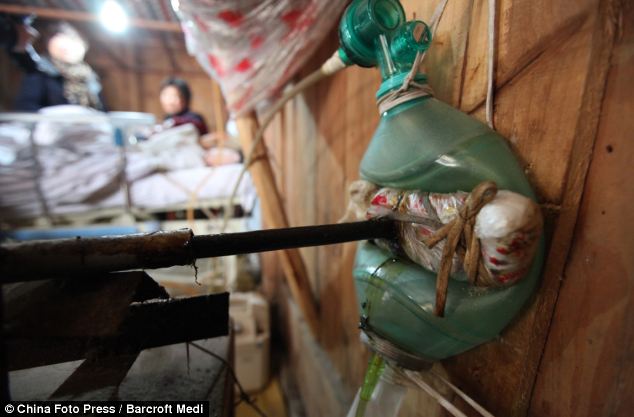
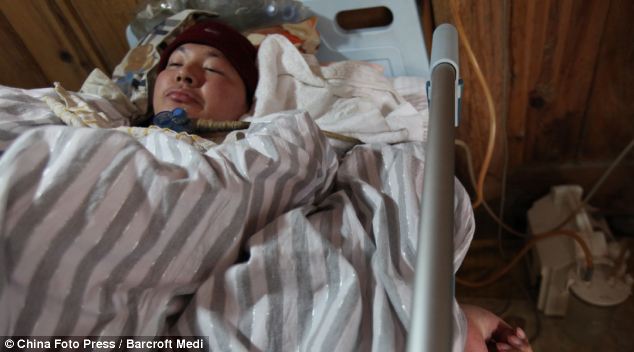
A Chinese man has been kept alive for the last five years thanks to a homemade ventilator that his family have to manually squeeze hundreds of times a day. Fu Xuepeng was 25 when he collided with a car while riding his motorbike to a supermarket. He was diagnosed with severe damage to his nervous system and has been paralysed from the neck down and unable to breathe unaided ever since. Instead, he must rely on a ventilator with a breathing tube in his airway.

But after four months on breathing equipment in Taizhou First People’s Hospital, his parents were forced to bring him home because of the unbearably high medical expenses. Despite receiving 300,000 yuan (£30,0000) in compensation from the driver, it cost more than 10,000 (£1,000) yuan per week to keep Fu on a medical ventilator, according to a report by the website china.org.cn. His mother Wang Lanqin and father Fu Minzu were left with only one option – to remove him from hospital and try to care for him at home. They bought a bag valve mask ventilator and have manually pumped lifesaving oxygen into his lungs by hand ever since. To keep Fu, now, 30, alive, the attached air ball must be squeezed at even intervals to manually pump oxygen into the body.

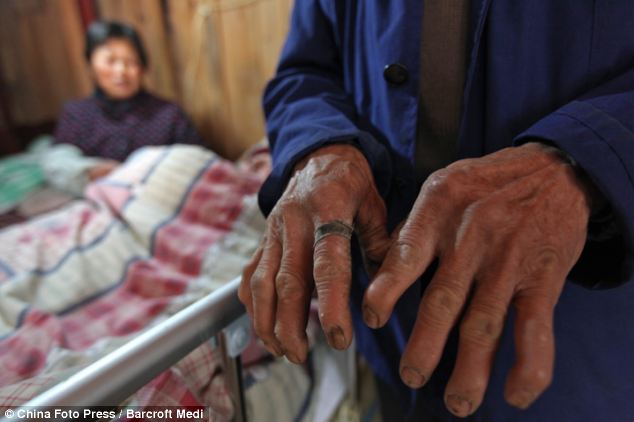
His parents, two sisters and brothers-in-law all take it in turns to squeeze the resuscitator bag 18 times per minute. Incredibly, if they stop for just three minutes Fu would die. As a result of such tireless work, their hands have now been deformed by constantly squeezing the device. Their only break is at night, when a home built DIY ventilator, crafted by Fu’s younger brother in 2009 after watching how to make one on TV, is used. This comprises an electric motor and a pushing pole attaching the device to the bag valve mask. However the high cost of electricity means they cannot use it all day, forcing them to continue their bed side vigils throughout the day.

But the family’s fortunes are now set to change after a blog documenting his heart-wrenching story was spotted by a Chinese company that makes ventilators.
It has now pledged to donate a ventilator to him and other well-wishers have set up a fund to raise money for him. Government staff and doctors from the local hospital are also set to visit the family now its plight has come to light.

Last week MailOnline told the story of Hu Songwen, a Chinese man who has been kept alive by his homemade dialysis machine for 13 years. Hu, who suffers from kidney disease, made it from kitchen utensils and old medical instruments after he could no long afford hospital fees. He was a college student when he was diagnosed in 1993 with kidney disease, which means waste products cannot be removed from his blood. He underwent dialysis treatment in hospital but ran out of savings after six years. His solution was to create his own machine to slash his costs.

Read more: http://www.dailymail.co.uk/health/article-2270178/Chinese-man-kept-alive-years-HOMEMADE-ventilator-family-squeeze-18-times-minute.html#ixzz2KzGBncHK

China Resorting To Canned Air Because Pollution Is So Bad

canned-air

Chinese entrepreneur Chen Guangbiao has launched a line of canned air for the Chinese market, to give people something to breathe that isn’t the smog-filled Beijing air.

Chinese entrepreneur Chen Guangbiao has launched a line of canned air for the Chinese market, to give people something to breathe that isn’t the smog-filled Beijing air. Guangbiao, a billionaire who has become known for his stunts, is selling the product to bring more attention to the problems of pollution in China:

It comes with atmospheric flavours including pristine Tibet, post-industrial Taiwan and revolutionary Yan’an, the Communist Party’s early base area.

Chen said he wanted to make a point that China’s air was turning so bad that the idea of bottled fresh air is no longer fanciful.

“If we don’t start caring for the environment then after 20 or 30 years our children and grandchildren might be wearing gas masks and carry oxygen tanks,” said Chen.

http://www.scientificamerican.com/article.cfm?id=china-resorting-to-canned-air-becau-2013-01