Ebola-like virus identified as cause of inclusion body disease that twists snakes into knots revealed

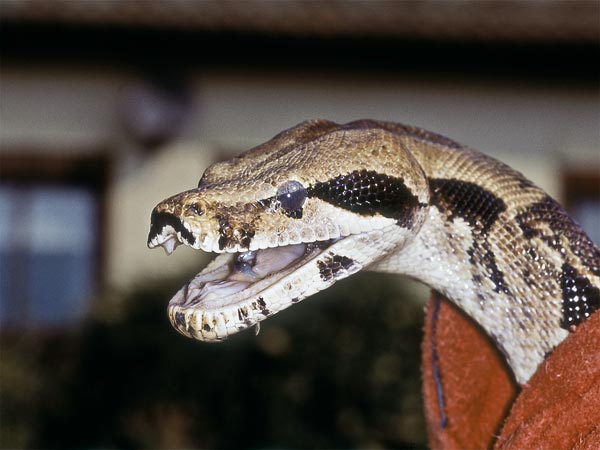
Scientists have finally found the cause of a mysterious disease that makes snakes tie themselves up into knots, stare off into space, and waste away—the reptiles are infected with an Ebola-like virus, a new study says.

The fatal condition known as inclusion body disease (IBD) was first diagnosed in snakes, particularly pythons and boa constrictors, in the 1980s.

Snakes diagnosed with IBD will often exhibit behavioral abnormalities, including an inability to flip over when turned on their backs and “stargazing,” which involves staring off into space and weaving their heads back and forth as if drunk. They are also more likely to contract other diseases, such as bacterial infections in their mouths.

Infected snakes often refuse to eat, or regurgitate their food when they do.

“They begin to waste away,” said study co-author Mark Stenglein, a biochemist at the University of California, San Francisco.

Scientists have long suspected a virus was behind IBD because the disease can be transmitted between snakes and is characterized by the buildup of proteins in cells, a feature of a number of viral diseases, Stenglein said.

But direct proof that a viral agent is responsible has been lacking-until now.

(Also see: “Python Hearts Double in Size—Now We Know Why.”)

Decoding the Snake Virus

Stenglein and his team analyzed the genetic material of snakes infected by IBD at the Steinhart Aquarium in San Francisco during a recent outbreak.

In addition to the known snake genome, they found genetic material belonging to a previously unknown virus. (See snake pictures.)

It appears to be most closely related to a class of viruses known as arenaviruses, that have only been known to infect mammals, namely rodents and people. However, the new virus doesn’t fit into the two categories of arenaviruses-New World and Old World-that are currently known.

The snake virus also contains a gene closely related to one found in the Ebola virus, which belongs to a different class known as filoviruses. Ebola, one of the most contagious known viruses, causes death through severe hemorrhaging when it infects humans.

The fact that that the new snake virus contains aspects of two completely different classes could mean that its origins stretch back tens of millions of years.

If that’s true, the snake virus is at least 35 million years old, said Stenglein, whose study appeared in August in the journal mBio.

Another possibility, the team says, is that the snake virus was created by a more recent merger of an arenavirus and a filovirus.

(See “‘Zombie Virus’ Possible via Rabies-Flu Hybrid?”)

David Sanders, an Ebola researcher at Purdue University in Indiana, called the new discovery “exciting,” but said he does not think the new virus is likely to provide any new information about Ebola, which is itself a very mysterious disease with murky origins. (Read why scientists can’t cure Ebola.)

As for IBD, said Stenglein, there’s still no treatment or cure.

But the new discovery means that vets and zookeepers could soon have a diagnostic test to genetically screen snakes for the disease before introducing them to a collection.

http://news.nationalgeographic.com/news/2012/08/120822-snakes-virus-ibd-ebola-animals-science/
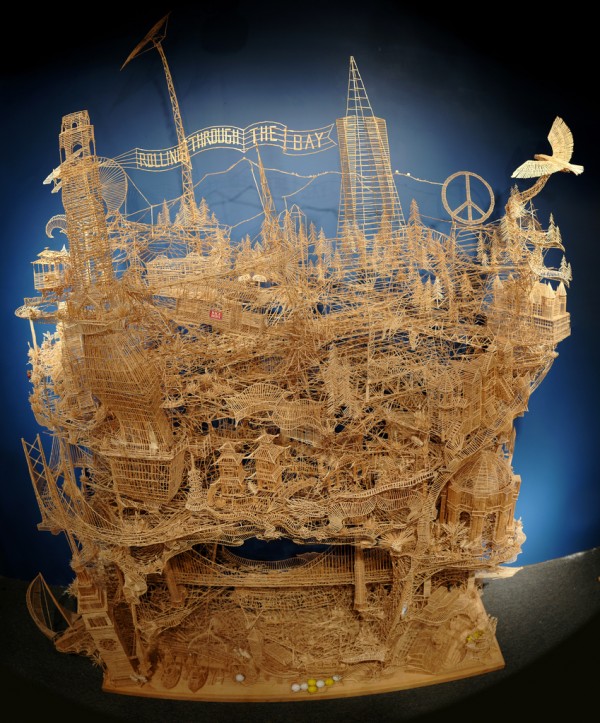
100,000 toothpick kinetic sculpture of San Francisco

Thirty five years ago artist Scott Weaver began work on this complex kinetic sculpture, Rolling through the Bay, that he continues to modify and expand even today. The elaborate sculpture is comprised of multiple “tours” that move pingpong balls through neighborhoods, historical locations, and iconic symbols of San Francisco, all recreated with a little glue, some toothpicks, and an incredible amount of ingenuity. He admits in the video that there are several toothpick sculptures even larger than his, but none has the unique kinetic components he’s constructed. Via his website Weaver estimates he’s spent over 3,000 hours on the project, and the toothpicks have been sourced from around the world:

I have used different brands of toothpicks depending on what I am building. I also have many friends and family members that collect toothpicks in their travels for me. For example, some of the trees in Golden Gate Park are made from toothpicks from Kenya, Morocco, Spain, West Germany and Italy. The heart inside the Palace of Fine Arts is made out of toothpicks people threw at our wedding.

See the sculpture for yourself at the Tinkering Studio through the end of June. Photos courtesy of their Flickr gallery.

Update: Rolling Through the Bay has been moved to the American Visionary Art Museum through September 2012.

http://www.thisiscolossal.com/2011/04/one-man-100000-toothpicks-and-35-years-scott-weavers-rolling-through-the-bay/?src=footer

Thanks to T.L. for bringing this to the It’s Interesting community.

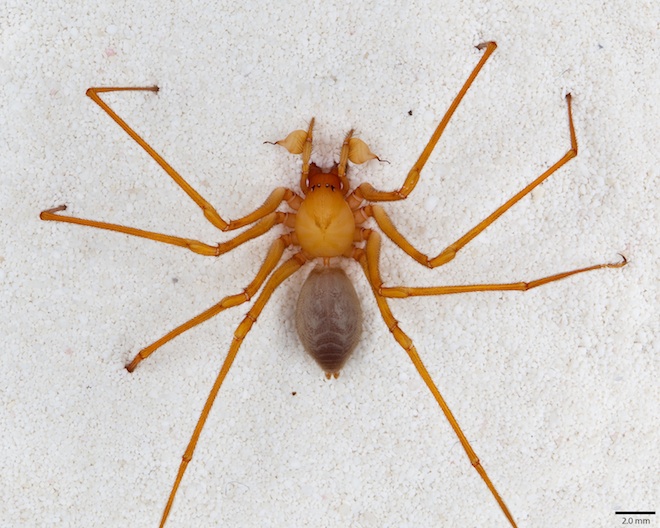
Trogloraptor: new clawed spiders discovered

A cave-dwelling creature named Trogloraptor sounds like the villain of a B horror film, but it’s actually a newly discovered type of spider.

A team of scientists discovered the spindly armed arachnid in caves and old-growth forests of Oregon and California and reported the find today in the journal ZooKeys. Because of its unique evolutionary features, Trogloraptoridae is not just a new species or genus, but a new family of spiders. The name Trogloraptor, meaning “cave robber,” seems a fitting moniker (above).

The spider is about 1.5 inches wide with its legs stretched out, bigger than a half-dollar coin. It was found living in loose strands of web hanging from cave ceilings and under forest debris. It wields a set of lethal-looking claws, but its hunting and fighting behaviors remain to be seen.

Scanning electron micrograph of the claw of the Trogloraptor spider. California Academy of Sciences

It’s probably a close relative of the goblin spiders, Oonopidae, evidence suggests. But its anatomy is a mix of old and new evolutionary features, giving spider scientists food for thought.

Scientists from the California Academy of Sciences, San Diego State University, and citizen scientists from the Western Cave Conservancy all helped discover the spiders. The California Academy of Sciences team led the study to analyze and describe the new arachnid family.

http://www.wired.com/wiredscience/2012/08/new-cave-spider-trogloraptor/

Digital pills enter the marketplace


Digestible microchips embedded in drugs may soon tell doctors whether a patient is taking their medications as prescribed. These sensors are the first ingestible devices approved by the US Food and Drug Administration (FDA). To some, they signify the beginning of an era in digital medicine.

“About half of all people don’t take medications like they’re supposed to,” says Eric Topol, director of the Scripps Translational Science Institute in La Jolla,California. “This device could be a solution to that problem, so that doctors can know when to rev up a patient’s medication adherence.” Topol is not affiliated with the company that manufactures the device, Proteus Digital Health in Redwood City,California, but he embraces the sensor’s futuristic appeal, saying, “It’s like big brother watching you take your medicine.”

The sand-particle sized sensor consists of a minute silicon chip containing trace amounts of magnesium and copper. When swallowed, it generates a slight voltage in response to digestive juices, which conveys a signal to the surface of a person’s skin where a patch then relays the information to a mobile phone belonging to a healthcare-provider.

Currently, the FDA, and the analogous regulatory agency in Europe have only approved the device based on studies showing its safety and efficacy when implanted in placebo pills. But Proteus hopes to have the device approved within other drugs in the near future. Medicines that must be taken for years, such as those for drug resistant tuberculosis, diabetes, and for the elderly with chronic diseases, are top candidates, says George Savage, co-founder and chief medical officer at the company.

“The point is not for doctors to castigate people, but to understand how people are responding to their treatments,” Savage says. “This way doctors can prescribe a different dose or a different medicine if they learn that it’s not being taken appropriately.”

Proponents of digital medical devices predict that they will provide alternatives to doctor visits, blood tests, MRIs and CAT scans. Other gadgets in the pipeline include implantable devices that wirelessly inject drugs at pre-specified times, and sensors that deliver a person’s electrocardiogram to their smartphone.

In his book published in January, The Creative Destruction of Medicine, Topol says that the 2010s will be known as the era of digital medical devices. “There are so many of these new technologies coming along,” Topol says, “it’s going to be a new frontier for rendering care.”

Thanks to Kedmobee for bringing this to the attention of the It’s Interesting community.

http://blogs.nature.com/news/2012/07/digital-pills-make-their-way-to-market.html

Jonah Falcon detained by San Francisco airport security due to supiciously large bulge in his pants

Jonah Falcon was at the San Francisco International Airport  preparing to travel from San Francisco to his home in New York City when he was stopped and questioned by Transportation Security Administration agents because they noticed a large and suspicious bulge in the front of his pants.

The agents questioned Falcon about the contents of his pants, and whether he was hiding something in his pockets.  Falcon told the TSA agents that the only thing he was transporting in his pants was his enormous penis.

From the San Francisco Chronicle

Jonah Falcon, 41, who has been featured in several documentaries about the world’s biggest penises, was returning from a trip in San Francisco on July 9 when he was stopped at security by TSA agents who spotted something out of the ordinary hanging to the left in his pants, he said.

“They wanted to know if I had something in my pockets, and when I said no, they asked if I had some sort of growth,” he said.

When he replied that it was just his penis, they “checked the area around it” but didn’t frisk him too severely, he said. They also wiped his hands to check for explosive powder.

Falcon’s penis is 9.5 inches when flaccid, and 13.5 inches when erect.

https://twitter.com/jonahfalcon?ilink=1


Unabomber updates his Harvard alumni profile

Harvard University alumni attending their 50th class reunion a few weeks ago got updates on classmates, but one person stood out among those sharing news about career moves, retirements and grandkids — Unabomber Ted Kaczynski.

Kaczynski graduated in 1962 and is locked up in the federal Supermax prison in Colorado for killing three people and injuring 23 during a nationwide bombing spree between 1978 and 1995. In an alumni directory, he lists his occupation as “prisoner” and says his awards are “Eight life sentences, issued by the United States District Court for the Eastern District of California, 1998.”

It’s an update the alumni association now regrets.

“While all members of the class who submit entries are included, we regret publishing Kaczynski’s references to his convictions and apologize for any distress that it may have caused others,” the Harvard Alumni Association said in a statement Wednesday evening.

The alumni association said all class members, including Kaczynski, were invited to submit entries for the class report, distributed for reunion activities during commencement week.

A Harvard spokesman said the update was submitted by Kaczynski but could not immediately say how the university confirmed that. A message seeking comment was left with Kaczynski’s attorney.

Kaczynski is a Harvard-trained mathematician who also got master’s and doctoral degrees from the University of Michigan.

He lived as a recluse in a Montana cabin, railed against technology and led authorities on the nation’s longest and costliest manhunt. He was caught in 1996 when his brother recognized his idiosyncratic writings and tipped off authorities.

Kaczynski pleaded guilty two years later to avoid a trial at which his lawyer had planned to offer an insanity defense. The guilty plea also saved him from the death penalty.

Items seized from his cabin were auctioned last year by the U.S. Marshals Service for more than $200,000 to benefit his victims.

http://news.yahoo.com/unabomber-updates-harvard-university-alumni-book-063745283.html

Bear crashes into middle school graduation in California

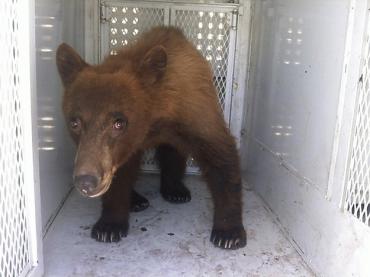
The last day of classes at a California elementary school and a graduation  ceremony at an adjacent middle school were interrupted by an unexpected guest: a  black bear that wandered onto school property.

Kern County Animal Control officers say the young black bear approached Ramon  Garza Elementary School in Bakersfield on Thursday, forcing students who were  outside to return to their classrooms, and surprising students and parents  attending a graduation ceremony at adjacent Sierra Middle School.

A teacher called authorities as the bear approached the schools, but the  animal kept its distance and nobody was in danger.

Within minutes, officers cornered the animal at an apartment complex, hit it  with a stun gun, and loaded it into a truck. They then released it back into the  wild near the Tejon Ranch, 1 1/2 hours southeast of Bakersfield.

Authorities believe the 150-pound, 3-year-old bear followed the Kern River  into town.

Read more: http://www.sfgate.com/cgi-bin/article.cgi?f=/n/a/2012/05/31/national/a195523D37.DTL#ixzz1yCdoqzCx

California Man Sues BMW for Persistent Erection


BMW North America has probably had to deal with plenty of  unusual lawsuits, but one filed last week may be a first — a California man says the seat on his motorcycle has given him an erection he just can’t shake.

Henry Wolf of California is suing BMW America and aftermarket seatmaker Corbin-Pacific claiming his issue began after a four-hour ride on his 1993 BMW motorcycle, with a ridge like seat. Wolf is seeking compensation for lost wages, medical expenses, emotional distress and what he calls “general damage.”

He said he’s had the erection non-stop for 20 months. And it comes with another side effect: The lawsuit says Wolf is “now is unable to engage in sexual activity, which is causing him substantial emotional and mental anguish.”

WWJ Newsradio 950 spoke with Dr. Michael Lutz, at the Michigan Institute of Urology, who said there is no medical data to support the man’s claim. However, “It’s been long-known that compression of the neurovascular supply to the penis —  if it’s compressed for a period of time, whether it be on a bicycle seat or some other device — it can actually cause prolonged numbness of the genitalia,” Lutz said.

“Not only in men, but women can also get numbness in that region if they’re compressing those nervous structures to that region of the body,” he said.

BMW Motorcycles of Southeast Michigan in Canton, Mich., checked out the story and noted the man wasn’t riding a standard BMW motorcycle seat. He was on an after-market seat, which start at about $200. People generally buy them to make the ride more comfortable.

“Sometimes people say it’s more comfortable, sometimes people can get a tall seat or a low seat or they’re shorter or taller, they can come heated,” said Theresa at BMW Motorcycles of Southeast Michigan.

http://detroit.cbslocal.com/2012/04/30/calif-man-sues-bmw-for-persistent-erection/

Thanks to Steven Weihing for bringing this to the attention of the It’s Interesting community.