New studies show men’s sperm quality decreases at age 35

sad-sperm

Men’s sperm quality seems to deteriorate after the age of 35. The proportion of sperm carrying an X chromosome also seems to increase, meaning older dads are more likely to have daughters.

It has been controversial whether the quality and quantity of a man’s sperm deteriorates with age. “However, there is fairly convincing epidemiological evidence that older men do find it harder to conceive a child – regardless of female age – and as men get older their partners are at increased risk of miscarriage,” says Allan Pacey, a fertility specialist at the University of Sheffield, UK. There is also a slightly increased risk of older men fathering children with genetic disorders.

To investigate, Bronte Stone at Reproductive Technology Laboratories in Los Angeles and his colleagues analysed sperm samples from 5081 men aged between 16 and 72. They found a deterioration in sperm quality and quantity after age 35. Some previous studies had suggested that the decline doesn’t start until around five years later (Fertility and Sterility, doi.org/m85).

“Whether it’s 35 or 40, the message from this and other papers is that men should be aware of age-related changes in their reproductive system and if they wish to become fathers they shouldn’t leave it too late,” Pacey says.

The study also found a decrease in the ratio of Y to X-bearing sperm once men hit 55, though it is not clear why.

http://www.newscientist.com/article/mg21929275.500-mens-sperm-quality-decreases-at-age-35.html

People in their 90s are getting smarter

happyoldman

Ninety-somethings seem to be getting smarter. Today’s oldest people are surviving longer, and thankfully appear to have sharper minds than the people reaching their 90s 10 years ago.

Kaare Christensen, head of the Danish Aging Research Center at the University of Southern Denmark in Odense, and colleagues found Danish people born in 1915 were about a third more likely to live to their 90s than those born in 1905, and were smarter too.

During research, which spanned 12 years and involved more than 5000 people, the team gave nonagenarians born in 1905 and 1915 a standard test called a “mini-mental state examination”, and cognitive tests designed to pick up age-related changes. Not only did those born in 1915 do better at both sets of tests, more of them also scored top marks in the mini-mental state exam.

It’s a landmark study, says Marcel Olde Rikkert, head of the Alzheimer’s centre at Radboud University Nijmegen Medical Centre in the Netherlands. It is scientifically rigorous, it invited all over 90-year-olds in Denmark to participate, and it also overturns our ingrained views of old age, he says.

“The outcome underlines that ageing is malleable,” Olde Rikkert says, adding that cognitive function can actually be a lot better than people would assume until a very high age.

“It’s motivating that people, their lifestyles, and their environments can contribute a lot to the way they age,” he says, though he cautions that not everything is in our own hands and help is still needed for those with dementia or those who do experience cognitive decline as they age.

Improved education played a part in the changes, says Christensen. But the study does not disentangle the individual effects of the numerous things that could be responsible for the improvements. “The 1915 cohort had a number of factors on their side – they experienced better living and working conditions, they had radio, TV and newspapers earlier in their lives than those born 10 years before,” he says.

Tellingly, there was no difference in the physical test results between the two groups. The authors say this “suggests changes in the intellectual environment rather than in the physical environment are the basis for the improvement”.

Journal reference: The Lancet, DOI: 10.1016/S0140-6736(13)60777-1

http://www.newscientist.com/article/dn23864-people-in-their-90s-are-getting-smarter.html?cmpid=RSS|NSNS|2012-GLOBAL|online-news#.UeE-56UTPfY

Children with older fathers and grandfathers live longer

_60819372_fatherandbabyspl

Delaying fatherhood may offer survival advantages, say US scientists who have found children with older fathers and grandfathers appear to be “genetically programmed” to live longer.

The genetic make-up of sperm changes as a man ages and develops DNA code that favours a longer life – a trait he then passes to his children. The team found the link after analysing the DNA of 1,779 young adults. Their work appears in Proceedings of the National Academy of Sciences.

Experts have known for some time that lifespan is linked to the length of structures known as telomeres that sit at the end of the chromosomes that house our genetic code, DNA. Generally, a shorter telomere length means a shorter life expectancy. Like the plastic tips on shoelaces, telomeres protect chromosomal ends from damage. But in most cells, they shorten with age until the cells are no longer able to replicate.

However, scientists have discovered that in sperm, telomeres lengthen with age. And since men pass on their DNA to their children via sperm, these long telomeres can be inherited by the next generation. Dr Dan Eisenberg and colleagues from the Department of Anthropology at Northwestern University studied telomere inheritance in a group of young people living in the Philippines.

Telomeres, measured in blood samples, were longer in individuals whose fathers were older when they were born. The telomere lengthening seen with each year that the men delayed fatherhood was equal to the yearly shortening of telomere length that occurs in middle-aged adults. Telomere lengthening was even greater if the child’s paternal grandfather had also been older when he became a father. Although delaying fatherhood increases the risk of miscarriage, the researchers believe there may be long-term health benefits.

Inheriting longer telomeres will be particularly beneficial for tissues and biological functions that involve rapid cell growth and turnover – such as the immune system, gut and skin – the scientists believe. And it could have significant implications for general population health. “As paternal ancestors delay reproduction, longer telomere length will be passed to offspring, which could allow lifespan to be extended as populations survive to reproduce at older ages.”

Prof Thomas von Zglinicki, an expert in cellular ageing at Newcastle University, said more research was needed.

“Very few of the studies that linked telomere length to health in late life have studied the impact, if any, of paternal age. It is still completely unclear whether telomere length at conception (or birth) or rate of telomere loss with age is more important for age-related morbidity and mortality risk in humans. “The authors did not examine health status in the first generation offspring. It might be possible that the advantage of receiving long telomeres from an old father is more than offset by the disadvantage of higher levels of general DNA damage and mutations in sperm,” he said.

http://www.bbc.co.uk/news/health-18392873

Thanks to Kebmodee for bringing this to the attention of the It’s Interesting community.

Flip of a single molecular switch makes an old brain young

green-image

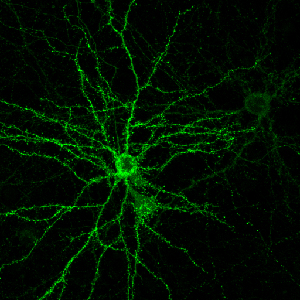
The flip of a single molecular switch helps create the mature neuronal connections that allow the brain to bridge the gap between adolescent impressionability and adult stability. Now Yale School of Medicine researchers have reversed the process, recreating a youthful brain that facilitated both learning and healing in the adult mouse.

Scientists have long known that the young and old brains are very different. Adolescent brains are more malleable or plastic, which allows them to learn languages more quickly than adults and speeds recovery from brain injuries. The comparative rigidity of the adult brain results in part from the function of a single gene that slows the rapid change in synaptic connections between neurons.

By monitoring the synapses in living mice over weeks and months, Yale researchers have identified the key genetic switch for brain maturation a study released March 6 in the journal Neuron. The Nogo Receptor 1 gene is required to suppress high levels of plasticity in the adolescent brain and create the relatively quiescent levels of plasticity in adulthood. In mice without this gene, juvenile levels of brain plasticity persist throughout adulthood. When researchers blocked the function of this gene in old mice, they reset the old brain to adolescent levels of plasticity.

“These are the molecules the brain needs for the transition from adolescence to adulthood,” said Dr. Stephen Strittmatter. Vincent Coates Professor of Neurology, Professor of Neurobiology and senior author of the paper. “It suggests we can turn back the clock in the adult brain and recover from trauma the way kids recover.”

Rehabilitation after brain injuries like strokes requires that patients re-learn tasks such as moving a hand. Researchers found that adult mice lacking Nogo Receptor recovered from injury as quickly as adolescent mice and mastered new, complex motor tasks more quickly than adults with the receptor.

“This raises the potential that manipulating Nogo Receptor in humans might accelerate and magnify rehabilitation after brain injuries like strokes,” said Feras Akbik, Yale doctoral student who is first author of the study.

Researchers also showed that Nogo Receptor slows loss of memories. Mice without Nogo receptor lost stressful memories more quickly, suggesting that manipulating the receptor could help treat post-traumatic stress disorder.

“We know a lot about the early development of the brain,” Strittmatter said, “But we know amazingly little about what happens in the brain during late adolescence.”

Other Yale authors are: Sarah M. Bhagat, Pujan R. Patel and William B.J. Cafferty

The study was funded by the National Institutes of Health. Strittmatter is scientific founder of Axerion Therapeutics, which is investigating applications of Nogo research to repair spinal cord damage.

http://news.yale.edu/2013/03/06/flip-single-molecular-switch-makes-old-brain-young

Pessimism About the Future May Lead to Longer, Healthier Life

Pessimism-vs_-optimism-350x262
Older people who have low expectations for a satisfying future may be more likely to live longer, healthier lives than those who see brighter days ahead, according to new research published by the American Psychological Association.

“Our findings revealed that being overly optimistic in predicting a better future was associated with a greater risk of disability and death within the following decade,” said lead author Frieder R. Lang, PhD, of the University of Erlangen-Nuremberg in Germany. “Pessimism about the future may encourage people to live more carefully, taking health and safety precautions.” The study was published online in the journal Psychology and Aging.

Lang and colleagues examined data collected from 1993 to 2003 for the national German Socio-Economic Panel, an annual survey of private households consisting of approximately 40,000 people 18 to 96 years old. The researchers divided the data according to age groups: 18 to 39 years old, 40 to 64 years old and 65 years old and above. Through mostly in-person interviews, respondents were asked to rate how satisfied they were with their lives and how satisfied they thought they would be in five years.

Five years after the first interview, 43 percent of the oldest group had underestimated their future life satisfaction, 25 percent had predicted accurately and 32 percent had overestimated, according to the study. Based on the average level of change in life satisfaction over time for this group, each increase in overestimating future life satisfaction was related to a 9.5 percent increase in reporting disabilities and a 10 percent increased risk of death, the analysis revealed.

Because a darker outlook on the future is often more realistic, older adults’ predictions of their future satisfaction may be more accurate, according to the study. In contrast, the youngest group had the sunniest outlook while the middle-aged adults made the most accurate predictions, but became more pessimistic over time.

“Unexpectedly, we also found that stable and good health and income were associated with expecting a greater decline compared with those in poor health or with low incomes,” Lang said. “Moreover, we found that higher income was related to a greater risk of disability.”

The researchers measured the respondents’ current and future life satisfaction on a scale of 0 to 10 and determined accuracy in predicting life satisfaction by measuring the difference between anticipated life satisfaction reported in 1993 and actual life satisfaction reported in 1998. They analyzed the data to determine age differences in estimated life satisfaction; accuracy in predicting life satisfaction; age, gender and income differences in the accuracy of predicting life satisfaction; and rates of disability and death reported between 1999 and 2010. Other factors, such as illness, medical treatment or personal losses, may have driven health outcomes, the study said.

The findings do not contradict theories that unrealistic optimism about the future can sometimes help people feel better when they are facing inevitable negative outcomes, such as terminal disease, according to the authors. “We argue, though, that the outcomes of optimistic, accurate or pessimistic forecasts may depend on age and available resources,” Lang said. “These findings shed new light on how our perspectives can either help or hinder us in taking actions that can help improve our chances of a long healthy life.”

http://www.sciencedaily.com/releases/2013/02/130227101929.htm

Oldest marathon runner finishes last race at 101

singh_162476794_620x350

The world’s oldest marathon runner ran his last race on Sunday at the age of 101.

Fauja Singh finished the Hong Kong Marathon’s 10-kilometer (6.25-mile) race in 1 hour, 32 minutes, 28 seconds.

Singh, a Sikh with a saffron turban and a flowing white beard, followed the route along the northern lip of Hong Kong island. He was accompanied by a group from the city’s local Sikh community, joining about 72,000 other runners taking part in the marathon.

The Indian-born runner, nicknamed the Turbaned Torpedo, had said that he would hang up his sneakers after the race in the southern Chinese city, just before his 102nd birthday.

“I will remember this day. I will miss it,” Singh said minutes after crossing the finish line.

Singh, a great-grandfather, became the oldest man to run a full marathon at Toronto in 2011, at the age of 100. His accomplishment was not recognized by Guinness World Records because he doesn’t have a birth certificate to prove his age. Singh has a British passport that shows his date of birth as April 1, 1911, while a letter from Indian government officials states that birth records were not kept in 1911.

“I am feeling a bit of happiness and a bit of sadness mixed together. I am happy that I am retiring at the top of the game but I am sad that the time has come for me to not be part of it,” Singh said in a prerace interview. “And there will always be times in the future where I will be thinking, `Well, I used to do that (running),” the Punjabi-speaking Singh said through his coach and interpreter, Harmander Singh.

Singh took up running at the age of 89 as a way to get over depression after his wife and son died in quick succession in India. The death in 1994 of his son took a particularly hard toll on Singh because of its grisly nature. Singh and his son, Kuldip, both farmers, were checking on their fields in the middle of a storm when a piece of corrugated metal blown by the wind decapitated Kuldip in front of his father’s eyes.

Singh, whose five other children had emigrated, was left all alone. “He didn’t think his life was worth living without his son” following the traumatic incident, coach Harmander Singh said. He went to live with his youngest son in London. That’s where the sports enthusiast Singh attended tournaments organized by the Sikh community and he took part in sprints. He met some Sikh marathon runners who encouraged him to take up long-distance running. One day he saw a marathon on television for the first time and decided that’s what he wanted to do, too.

In 2000, at the age of 89, he ran the London Marathon, his first, and went on to do eight more. His best time was 5 hours and 40 minutes at the 2003 Toronto Marathon.

“From a tragedy has come a lot of success and happiness,” Singh said before the race as he explained how running has changed his life, allowing an illiterate farmer to travel the world, meet dignitaries and stay in five-star hotels.

Following his retirement from racing, he said he hoped “people will remember me and not forget me.” He also wanted people to continue to invite him to events “rather than forget me altogether just because I don’t run anymore.”

http://www.wtop.com/1226/3232650/Oldest-marathon-runner-finishes-last-race-at-101

Daily aspirin may increase risk for age-related blindness

ctm_0321_ASPIRIN_620x350

Many people take aspirin to prevent heart attacks, but new research suggests the added benefits may be coming at the expense of pill-takers’ eyesight.

A 15-year-study published Jan. 22 in JAMA Internal Medicine showed that people taking regular aspirin faced a higher risk for age-related macular degeneration (AMD), one of the leading causes of blindness in older adults. The research also suggests the risk may worsen over time.

AMD commonly affects adults 50 and older, gradually destroying their “macula,” which is a part of the eye that provides sharp, central vision that’s required to see objects clearly. There are two types of the disease: “Dry” AMD is most common and occurs when the light-sensitive cells in the macula slowly break down, gradually blurring central vision while “wet” or neovascular AMD occurs when blood vessels under the macula leak blood and fluid, causing damage. Wet AMD is often more severe but also more rare, affecting about 10 percent of patients with AMD.

People at a high risk for having a heart attack — such as those who have heart disease — are encouraged by the American Heart Association and other medical groups to take a daily low-dose of aspirin.

For the study, Australian researchers tracked nearly 2,400 adults who were given four exams during the 15 year study. More than 250 of these individuals took aspirin regularly because aspirin is thought to prevent clots from forming by “thinning” the blood.

The researchers found an increased risk for wet AMD among aspirin takers, with 1.9 percent of patients having the condition at five years, 7 percent at 10 years and 9.3 percent at 15 years. That compares with 0.8 percent of non-aspirin takers at five years, 1.6 percent at 10 years and 3.7 percent at 15 years.

“Regular aspirin use was significantly associated with an increased incidence of neovascular AMD,” concluded the authors, led by Dr. Gerald Liew of the University of Sydney in Australia.

In December, a study published in JAMA also found that people who used aspirin regularly for 10 years were more likely to have wet AMD, but the overall reported risk was still low.

Liew wrote that the decision to stop taking aspirin is a “complex” one and should be decided on an individual basis. For example, those at a higher risk for AMD such as people with a family history or smokers — who are two times more likely to develop AMD than non-smokers — may want to consider changing their aspirin regimen.

In an accompanying editorial published in the same issue, Dr. Sanjay Kaul and Dr. George A. Diamond, cardiologists at Cedars-Sinai Medical Center, Los Angeles, wrote that the study was observational, and could not prove cause and effect. Therefore, it may be too soon to recommend people curb their aspirin intake.

“In the absence of definitive evidence regarding whether limiting aspirin exposure mitigates AMD risk, one obvious course of action is to maintain the status quo,” they wrote.

Dr. Gregg Fonarow, a spokesman for the American Heart Association and professor of cardiology at the University of California, Los Angeles, added to HealthDay that more rigorous randomized controlled trials have yet to demonstrate any increased risk of blindness from people taking aspirin.

“Individuals prescribed aspirin for high-risk primary prevention or secondary cardiovascular prevention should not be concerned or discontinue this beneficial therapy,” he said.

To reduce your risk for AMD, the National Eye Institute recommends exercising, eating a healthy diet rich in leafy greens and fish, maintaining normal blood pressure and cholesterol, and avoiding smoking.

http://www.cbsnews.com/8301-204_162-57565181/daily-aspirin-may-increase-risk-for-age-related-blindness/

The myth of antioxidants and vitamins?

20081210_antioxidants

The hallowed notion that oxidative damage causes aging and that vitamins might preserve our youth is now in doubt.

•For decades researchers assumed that highly reactive molecules called free radicals caused aging by damaging cells and thus undermining the functioning of tissues and organs.
•Recent experiments, however, show that increases in certain free radicals in mice and worms correlate with longer life span. Indeed, in some circumstances, free radicals seem to signal cellular repair networks.
•If these results are confirmed, they may suggest that taking antioxidants in the form of vitamins or other supplements can do more harm than good in otherwise healthy individuals.

David Gems’s life was turned upside down in 2006 by a group of worms that kept on living when they were supposed to die. As assistant director of the Institute of Healthy Aging at University College London, Gems regularly runs experiments on Caenorhabditis elegans, a roundworm that is often used to study the biology of aging. In this case, he was testing the idea that a buildup of cellular damage caused by oxidation—technically, the chemical removal of electrons from a molecule by highly reactive compounds, such as free radicals—is the main mechanism behind aging. According to this theory, rampant oxidation mangles more and more lipids, proteins, snippets of DNA and other key components of cells over time, eventually compromising tissues and organs and thus the functioning of the body as a whole.

Gems genetically engineered the roundworms so they no longer produced certain enzymes that act as naturally occurring antioxidants by deactivating free radicals. Sure enough, in the absence of the antioxidants, levels of free radicals in the worms skyrocketed and triggered potentially damaging oxidative reactions throughout the worms’ bodies.

Contrary to Gems’s expectations, however, the mutant worms did not die prematurely. Instead they lived just as long as normal worms did. The researcher was mystified. “I said, ‘Come on, this can’t be right,’” he recalls. “‘Obviously something’s gone wrong here.’” He asked another investigator in his laboratory to check the results and do the experiment again. Nothing changed. The experimental worms did not produce these particular antioxidants; they accumulated free radicals as predicted, and yet they did not die young—despite suffering extreme oxidative damage.

Other scientists were finding similarly confounding results in different lab animals. In the U.S., Arlan Richardson, director of the Barshop Institute for Longevity and Aging Studies at the University of Texas Health Science Center in San Antonio, genetically engineered 18 different strains of mice, some of which produced more of certain antioxidant enzymes than normal and some of which produced fewer of them than normal. If the damage caused by free radical production and subsequent oxidation was responsible for aging, then the mice with extra antioxidants in their bodies should have lived longer than the mice missing their antioxidant enzymes. Yet “I watched those goddamn life span curves, and there was not an inch of difference between them,” Richardson says. He published his increasingly bewildering results in a series of papers between 2001 and 2009.

Meanwhile, a few doors down the hall from Richardson, physiologist Rochelle Buffenstein has spent the past 11 years trying to understand why the longest-living rodent, the naked mole rat, is able to survive up to 25 to 30 years—around eight times longer than a similarly sized mouse. Buffenstein’s experiments have shown that naked mole rats possess lower levels of natural antioxidants than mice and accumulate more oxidative damage to their tissues at an earlier age than other rodents. Yet paradoxically, they live virtually disease-free until they die at a very old age.

To proponents of the long-standing oxidative damage theory of aging, these findings are nothing short of heretical. They are, however, becoming less the exception and more the rule. Over the course of the past decade, many experiments designed to further support the idea that free radicals and other reactive molecules drive aging have instead directly challenged it. What is more, it seems that in certain amounts and situations, these high-energy molecules may not be dangerous but useful and healthy, igniting intrinsic defense mechanisms that keep our bodies in tip-top shape. These ideas not only have drastic implications for future antiaging interventions, but they also raise questions about the common wisdom of popping high doses of antioxidant vitamins. If the oxidative-damage theory is wrong, then aging is even more complicated than researchers thought—and they may ultimately need to revise their understanding of what healthy aging looks like on the molecular level.

“The field of aging has been gliding along on this set of paradigms, ideas about what aging is, that to some extent were kind of plucked out of the air,” Gems says. “We should probably be looking at other theories as well and considering, fundamentally, that we might have to look completely differently at biology.”

The Birth of a Radical Theory
The oxidative damage, or free radical, theory of aging can be traced back to Denham Harman, who found his true calling in December 1945, thanks to the Ladies’ Home Journal. His wife, Helen, brought a copy of the magazine home and pointed out an article on the potential causes of aging, which he read. It fascinated him.

Back then, the 29-year-old chemist was working at Shell Development, the research arm of Shell Oil, and he did not have much time to ponder the issue. Yet nine years later, after graduating from medical school and completing his training, he took a job as a research associate at the University of California, Berkeley, and began contemplating the science of aging more seriously. One morning while sitting in his office, he had an epiphany—“you know just ‘out the blue,’” he recalled in a 2003 interview: aging must be driven by free radicals.

Although free radicals had never before been linked to aging, it made sense to Harman that they might be the culprit. For one thing, he knew that ionizing radiation from x-rays and radioactive bombs, which can be deadly, sparks the production of free radicals in the body. Studies at the time suggested that diets rich in food-based antioxidants muted radiation’s ill effects, suggesting—correctly, as it turned out—that the radicals were a cause of those effects. Moreover, free radicals were normal by-products of breathing and metabolism and built up in the body over time. Because both cellular damage and free radical levels increased with age, free radicals probably caused the damage that was responsible for aging, Harman thought—and antioxidants probably slowed it.

Harman started testing his hypothesis. In one of his first experiments, he fed mice antioxidants and showed that they lived longer. (At high concentrations, however, the antioxidants had deleterious effects.) Other scientists soon began testing it, too. In 1969 researchers at Duke University discovered the first antioxidant enzyme produced inside the body—superoxide dismutase—and speculated that it evolved to counter the deleterious effects of free radical accumulation. With these new data, most biologists began accepting the idea. “If you work in aging, it’s like the air you breathe is the free radical theory,” Gems says. “It’s ubiquitous, it’s in every textbook. Every paper seems to refer to it either indirectly or directly.”

Still, over time scientists had trouble replicating some of Harman’s experimental findings. By the 1970s “there wasn’t a robust demonstration that feeding animals antioxidants really had an effect on life span,” Richardson says. He assumed that the conflicting experiments—which had been done by other scientists—simply had not been controlled very well. Perhaps the animals could not absorb the antioxidants that they had been fed, and thus the overall level of free radicals in their blood had not changed. By the 1990s, however, genetic advances allowed scientists to test the effects of antioxidants in a more precise way—by directly manipulating genomes to change the amount of antioxidant enzymes animals were capable of producing. Time and again, Richardson’s experiments with genetically modified mice showed that the levels of free radical molecules circulating in the animals’ bodies—and subsequently the amount of oxidative damage they endured—had no bearing on how long they lived.

More recently, Siegfried Hekimi, a biologist at McGill University, has bred roundworms that overproduce a specific free radical known as superoxide. “I thought they were going to help us prove the theory that oxidative stress causes aging,” says Hekimi, who had predicted that the worms would die young. Instead he reported in a 2010 paper in PLOS Biology that the engineered worms did not develop high levels of oxidative damage and that they lived, on average, 32 percent longer than normal worms. Indeed, treating these genetically modified worms with the antioxidant vitamin C prevented this increase in life span. Hekimi speculates that superoxide acts not as a destructive molecule but as a protective signal in the worms’ bodies, turning up the expression of genes that help to repair cellular damage.

In a follow-up experiment, Hekimi exposed normal worms, from birth, to low levels of a common weed-controlling herbicide that initiates free radical production in animals as well as plants. In the same 2010 paper he reported the counterintuitive result: the toxin-bathed worms lived 58 percent longer than untreated worms. Again, feeding the worms antioxidants quenched the toxin’s beneficial effects. Finally, in April 2012, he and his colleagues showed that knocking out, or deactivating, all five of the genes that code for superoxide dismutase enzymes in worms has virtually no effect on worm life span.

Do these discoveries mean that the free radical theory is flat-out wrong? Simon Melov, a biochemist at the Buck Institute for Research on Aging in Novato, Calif., believes that the issue is unlikely to be so simple; free radicals may be beneficial in some contexts and dangerous in others. Large amounts of oxidative damage have indisputably been shown to cause cancer and organ damage, and plenty of evidence indicates that oxidative damage plays a role in the development of some chronic conditions, such as heart disease. In addition, researchers at the University of Washington have demonstrated that mice live longer when they are genetically engineered to produce high levels of an antioxidant known as catalase. Saying that something, like oxidative damage, contributes to aging in certain instances, however, is “a very different thing than saying that it drives the pathology,” Melov notes. Aging probably is not a monolithic entity with a single cause and a single cure, he argues, and it was wishful thinking to ever suppose it was one.

Shifting Perspective
Assuming free radicals accumulate during aging but do not necessarily cause it, what effects do they have? So far that question has led to more speculation than definitive data.

“They’re actually part of the defense mechanism,” Hekimi asserts. Free radicals might, in some cases, be produced in response to cellular damage—as a way to signal the body’s own repair mechanisms, for example. In this scenario, free radicals are a consequence of age-related damage, not a cause of it. In large amounts, however, Hekimi says, free radicals may create damage as well.

The general idea that minor insults might help the body withstand bigger ones is not new. Indeed, that is how muscles grow stronger in response to a steady increase in the amount of strain that is placed on them. Many occasional athletes, on the other hand, have learned from painful firsthand experience that an abrupt increase in the physical demands they place on their body after a long week of sitting at an office desk is instead almost guaranteed to lead to pulled calves and hamstrings, among other significant injuries.

In 2002 researchers at the University of Colorado at Boulder briefly exposed worms to heat or to chemicals that induced the production of free radicals, showing that the environmental stressors each boosted the worms’ ability to survive larger insults later. The interventions also increased the worms’ life expectancy by 20 percent. It is unclear how these interventions affected overall levels of oxidative damage, however, because the investigators did not assess these changes. In 2010 researchers at the University of California, San Francisco, and Pohang University of Science and Technology in South Korea reported in Current Biology that some free radicals turn on a gene called HIF-1 that is itself responsible for activating a number of genes involved in cellular repair, including one that helps to repair mutated DNA.

Free radicals may also explain in part why exercise is beneficial. For years researchers assumed that exercise was good in spite of the fact that it produces free radicals, not because of it. Yet in a 2009 study published in the Proceedings of the National Academy of Sciences USA, Michael Ristow, a nutrition professor at the Friedrich Schiller University of Jena in Germany, and his colleagues compared the physiological profiles of exercisers who took antioxidants with exercisers who did not. Echoing Richardson’s results in mice, Ristow found that the exercisers who did not pop vitamins were healthier than those who did; among other things, the unsupplemented athletes showed fewer signs that they might develop type 2 diabetes. Research by Beth Levine, a microbiologist at the University of Texas Southwestern Medical Center, has shown that exercise also ramps up a biological process called autophagy, in which cells recycle worn-out bits of proteins and other subcellular pieces. The tool used to digest and disassemble the old molecules: free radicals. Just to complicate matters a bit, however, Levine’s research indicates that autophagy also reduces the overall level of free radicals, suggesting that the types and amounts of free radicals in different parts of the cell may play various roles, depending on the circumstances.

The Antioxidant Myth
If free radicals are not always bad, then their antidotes, antioxidants, may not always be good—a worrisome possibility given that 52 percent of Americans take considerable doses of antioxidants daily, such as vitamin E and beta-carotene, in the form of multivitamin supplements. In 2007 the Journal of the American Medical Association published a systematic review of 68 clinical trials, which concluded that antioxidant supplements do not reduce risk of death. When the authors limited their review to the trials that were least likely to be affected by bias—those in which assignment of participants to their research arms was clearly random and neither investigators nor participants knew who was getting what pill, for instance—they found that certain antioxidants were linked to an increased risk of death, in some cases by up to 16 percent.

Several U.S. organizations, including the American Heart Association and the American Diabetes Association, now advise that people should not take antioxidant supplements except to treat a diagnosed vitamin deficiency. “The literature is providing growing evidence that these supplements—in particular, at high doses—do not necessarily have the beneficial effects that they have been thought to,” says Demetrius Albanes, a senior investigator at the Nutritional Epidemiology Branch of the National Cancer Institute. Instead, he says, “we’ve become acutely aware of potential downsides.”

It is hard to imagine, however, that antioxidants will ever fall out of favor completely—or that most researchers who study aging will become truly comfortable with the idea of beneficial free radicals without a lot more proof. Yet slowly, it seems, the evidence is beginning to suggest that aging is far more intricate and complex than Harman imagined it to be nearly 60 years ago. Gems, for one, believes the evidence points to a new theory in which aging stems from the overactivity of certain biological processes involved in growth and reproduction. But no matter what idea (or ideas) scientists settle on, moving forward, “the constant drilling away of scientists at the facts is shifting the field into a slightly stranger, but a bit more real, place,” Gems says. “It’s an amazing breath of fresh air.”

http://www.nature.com/scientificamerican/journal/v308/n2/full/scientificamerican0213-62.html

Scientists Debunk the IQ Myth: Notion of Measuring One’s Intelligence Quotient by Singular, Standardized Test Is Highly Misleading

iq

After conducting the largest online intelligence study on record, a Western University-led research team has concluded that the notion of measuring one’s intelligence quotient or IQ by a singular, standardized test is highly misleading.

The findings from the landmark study, which included more than 100,000 participants, were published Dec. 19 in the journal Neuron. The article, “Fractionating human intelligence,” was written by Adrian M. Owen and Adam Hampshire from Western’s Brain and Mind Institute (London, Canada) and Roger Highfield, Director of External Affairs, Science Museum Group (London, U.K).

Utilizing an online study open to anyone, anywhere in the world, the researchers asked respondents to complete 12 cognitive tests tapping memory, reasoning, attention and planning abilities, as well as a survey about their background and lifestyle habits.

“The uptake was astonishing,” says Owen, the Canada Excellence Research Chair in Cognitive Neuroscience and Imaging and senior investigator on the project. “We expected a few hundred responses, but thousands and thousands of people took part, including people of all ages, cultures and creeds from every corner of the world.”

The results showed that when a wide range of cognitive abilities are explored, the observed variations in performance can only be explained with at least three distinct components: short-term memory, reasoning and a verbal component.

No one component, or IQ, explained everything. Furthermore, the scientists used a brain scanning technique known as functional magnetic resonance imaging (fMRI), to show that these differences in cognitive ability map onto distinct circuits in the brain.

With so many respondents, the results also provided a wealth of new information about how factors such as age, gender and the tendency to play computer games influence our brain function.

“Regular brain training didn’t help people’s cognitive performance at all yet aging had a profound negative effect on both memory and reasoning abilities,” says Owen.

Hampshire adds, “Intriguingly, people who regularly played computer games did perform significantly better in terms of both reasoning and short-term memory. And smokers performed poorly on the short-term memory and the verbal factors, while people who frequently suffer from anxiety performed badly on the short-term memory factor in particular.”

1.Adam Hampshire, Roger R. Highfield, Beth L. Parkin, Adrian M. Owen. Fractionating Human Intelligence. Neuron, 2012; 76 (6): 1225 DOI: 10.1016/j.neuron.2012.06.022

http://www.sciencedaily.com/releases/2012/12/121219133334.htm

Do Palm Trees Hold the Key to Immortality?

palm

For centuries, humans have been exploring, researching, and, in some cases, discovering how to stave off life-threatening diseases, increase life spans, and obtain immortality. Biologists, doctors, spiritual gurus, and even explorers have pursued these quests — one of the most well-known examples being the legendary search by Ponce de León for the “Fountain of Youth.” Yet the key to longevity may not lie in a miraculous essence of water, but rather in the structure and function of cells within a plant — and not a special, mysterious, rare plant, but one that we may think of as being quite commonplace, even ordinary: the palm.

As an honors botany student at the University of Leeds, P. Barry Tomlinson wrote a prize-winning essay during his final year titled, “The Span of Life.” Fifty years later, Tomlinson (now a Distinguished Professor at The Kampong Garden of the National Tropical Botanical Garden, Miami, FL) teamed up with graduate student Brett Huggett (Harvard University, MA) to write a review paper exploring the idea that palms may be the longest-lived tree, and whether this might be due to genetic underpinnings. Having retained his essay in his personal files, Tomlinson found that it provided an excellent literature background for working on the question of cell longevity in relation to palms. Together, Tomlinson and Huggett published their review in the December issue of the American Journal of Botany.

A component of an organism’s life span that biologists have been particularly interested in is whether longevity is genetically determined and adaptive. For botanists, discovering genetic links to increasing crop production and the reproductive lifespan of plants, especially long-lived ones such as trees, would be invaluable.

In their paper, Tomlinson and Huggett emphasize that in many respects, an organisms’ life span, or longevity, is determined by the period of time in which its cells remain functionally metabolically active. In this respect, plants and animals differ drastically, and it has to do with how they are organized — plants are able to continually develop new organs and tissues, whereas animals have a fixed body plan and are not able to regenerate senescing organs. Thus, plants can potentially live longer than animals.

“The difference in potential cell longevity in plants versus animals is a significant point,” states Tomlinson. “It is important to recognize that plants, which are so often neglected in modern biological research, can be informative of basic cell biological features in a way that impacts human concern at a fundamental level.”

The authors focused their review on palm trees because palms have living cells that may be sustained throughout an individual palm’s lifetime, and thus, they argue, may have some of the longest living cells in an organism. As a comparison, in most long-lived trees, or lignophytes, the main part, or trunk, of the tree is almost entirely composed of dead, woody, xylem tissues, and in a sense is essentially a supportive skeleton of the tree with only an inner ring of actively dividing cells. For example, the skeleton of Pinus longaeva may be up to 3000 years old, but the active living tissues can only live less than a century.

In contrast, the trunks of palms consist of cells that individually live for a long time, indeed for the entire life of an individual.

Which brings up the question of just how long can a palm tree live? The authors point out that palm age is difficult to determine, primarily because palms do not have secondary growth and therefore do not put down annual or seasonal growth rings that can easily be measured. However, age can be quite accurately assessed based on rate of leaf production and/or visible scars on the trunk from fallen leaves. Accordingly, the authors found that several species of palm have been estimated to live as long as 100 and even up to 740 years. The important connection here is that while the “skeleton” of the palm may not be as old as a pine, the individual cells in its trunk lived, or were metabolically active, as long as, or longer than those of the pine’s.

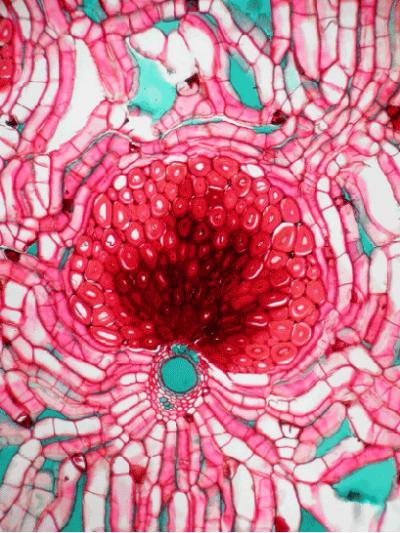
Most plants, in addition to increasing in height as they age, also increase in girth, putting down secondary vascular tissue in layers both on the inner and outer sides of the cambium as they grow. However, palms do not have secondary growth, and there is no addition of secondary vascular tissue. Instead, stem tissues are laid down in a series of interconnected vascular bundles — thus, not only is the base of the palm the oldest and the top the youngest, but these tissues from old to young, from base to top, must also remain active in order to provide support and transport water and nutrients throughout the tree.

Indeed, the authors illustrate this by reviewing evidence of sustained primary growth in two types of palms, the coconut and the sago palm. These species represent the spectrum in tissue organization from one where cells are relatively uniform and provide both hydraulic and mechanical functions (the coconut) to one where these functions are sharply divided with the inner cells functioning mainly for transporting water and nutrients and the outer ones for mechanical support (the sago palm). This represents a progression in specialization of the vascular tissues.

Moreover, there is evidence of continued metabolic activity in several types of tissues present in the stems of palms, including vascular tissue, fibers, ground tissue, and starch storage. Since the vascular tissues in palms are nonrenewable, they must function indefinitely, and Tomlinson and Huggett point out that sieve tubes and their companion cells are remarkable examples of cell longevity as they maintain a long-distance transport function without replacement throughout the life of the stem, which could be for centuries.

Despite several unique characteristics of palms, including the ability to sustain metabolically active cells in the absence of secondary tissues, seemingly indefinitely, unlike conventional trees, in which metabolically active cells are relatively short-lived, the authors do not conclude that the extended life span of palms is genetically determined.

“We are not saying that palms have the secret of eternal youth, and indeed claim no special chemical features which allows cells in certain organisms to retain fully differentiated cells with an indefinite lifespan,” states Tomlinson. “Rather, we emphasize the distinctive developmental features of palm stems compared with those in conventional trees.”

Tomlinson indicates that this reflects the neglect of the teaching of palm structure in modern biology courses. “This paper raises incompletely understood aspects of the structure and development of palms, emphasizing great diversity in these features,” he concludes. “This approach needs elaborating in much greater detail, difficult though the subject is in terms of conventional approaches to plant anatomy.”

Journal Reference:

1.P. B. Tomlinson, B. A. Huggett. Cell longevity and sustained primary growth in palm stems. American Journal of Botany, 2012; 99 (12): 1891 DOI: 10.3732/ajb.1200089

http://www.sciencedaily.com/releases/2012/12/121219092842.htm