The Health Concerns in Wearable Tech

In 1946, a new advertising campaign appeared in magazines with a picture of a doctor in a lab coat holding a cigarette and the slogan, “More doctors smoke Camels than any other cigarette.” No, this wasn’t a spoof. Back then, doctors were not aware that smoking could cause cancer, heart disease and lung disease.

In a similar vein, some researchers and consumers are now asking whether wearable computers will be considered harmful in several decades’ time.

We have long suspected that cellphones, which give off low levels of radiation, could lead to brain tumors, cancer, disturbed blood rhythms and other health problems if held too close to the body for extended periods.

Yet here we are in 2015, with companies like Apple and Samsung encouraging us to buy gadgets that we should attach to our bodies all day long.

While there is no definitive research on the health effects of wearable computers (the Apple Watch isn’t even on store shelves yet), we can hypothesize a bit from existing research on cellphone radiation.

The most definitive and arguably unbiased results in this area come from the International Agency for Research on Cancer, a panel within the World Health Organization that consisted of 31 scientists from 14 countries.

After dissecting dozens of peer-reviewed studies on cellphone safety, the panel concluded in 2011 that cellphones were “possibly carcinogenic” and that the devices could be as harmful as certain dry-cleaning chemicals and pesticides. (Note that the group hedged its findings with the word “possibly.”)

The W.H.O. panel concluded that the farther away a device is from one’s head, the less harmful — so texting or surfing the Web will not be as dangerous as making calls, with a cellphone inches from the brain. (This is why there were serious concerns about Google Glass when it was first announced and why we’ve been told to use hands-free devices when talking on cellphones.)

A longitudinal study conducted by a group of European researchers and led by Dr. Lennart Hardell, a professor of oncology and cancer epidemiology at Orebro University Hospital in Sweden, concluded that talking on a mobile or cordless phone for extended periods could triple the risk of a certain kind of brain cancer.

There is, of course, antithetical research. But some of this was partly funded by cellphone companies or trade groups.

One example is the international Interphone study, which was published in 2010 and did not find strong links between mobile phones and an increased risk of brain tumors. The Centers for Disease Control and Prevention concluded in 2014 that “more research is needed before we know if using cell phones causes health effects.”

Continue reading the main story
Another study, in The BMJ, which measured cellphone subscription data rather than actual use, said there was no proof of increased cancer. Yet even here, the Danish team behind the report acknowledged that a “small to moderate increase” in cancer risk among heavy cellphone users could not be ruled out.

But what does all this research tell the Apple faithful who want to rush out and buy an Apple Watch, or the Google and Windows fanatics who are eager to own an alternative smartwatch?

Dr. Joseph Mercola, a physician who focuses on alternative medicine and has written extensively about the potential harmful effects of cellphones on the human body, said that as long as a wearable does not have a 3G connection built into it, the harmful effects are minimal, if any.

“The radiation really comes from the 3G connection on a cellphone, so devices like the Jawbone Up and Apple Watch should be O.K.,” Dr. Mercola said in a phone interview. “But if you’re buying a watch with a cellular chip built in, then you’ve got a cellphone attached to your wrist.” And that, he said, is a bad idea.

(The Apple Watch uses Bluetooth and Wi-Fi to receive data, and researchers say there is no proven harm from those frequencies on the human body. Wearables with 3G or 4G connections built in, including the Samsung Gear S, could be more harmful, though that has not been proved. Apple declined to comment for this article, and Samsung could not be reached for comment.)

Researchers have also raised concerns about having powerful batteries so close to the body for extended periods of time. Some reports over the last several decades have questioned whether being too close to power lines could cause leukemia (though other research has also negated this).

So what should consumers do? Perhaps we can look at how researchers themselves handle their smartphones.

While Dr. Mercola is a vocal proponent of cellphone safety, he told me to call him on his cell when I emailed about an interview. When I asked him whether he was being hypocritical, he replied that technology is a fact of life, and that he uses it with caution. As an example, he said he was using a Bluetooth headset during our call.

In the same respect, people who are concerned about the possible side effects of a smartwatch should avoid placing it close to their brain (besides, it looks a little strange). But there are some people who may be more vulnerable to the dangers of these devices: children.

While researchers debate about how harmful cellphones and wearable computers actually are, most agree that children should exercise caution.

Continue reading the main story
In an email, Dr. Hardell sent me research illustrating that a child’s skull is thinner and smaller than an adult’s, which means that children’s brain tissues are more exposed to certain types of radiation, specifically the kind that emanates from a cellphone.

Children should limit how much time they spend talking on a cellphone, doctors say. And if they have a wearable device, they should take it off at night so it does not end up under their pillow, near their brain. Doctors also warn that women who are pregnant should be extra careful with all of these technologies.

But what about adults? After researching this column, talking to experts and poring over dozens of scientific papers, I have realized the dangers of cellphones when used for extended periods, and as a result I have stopped holding my phone next to my head and instead use a headset.

That being said, when it comes to wearable computers, I’ll still buy the Apple Watch, but I won’t let it go anywhere near my head. And I definitely won’t let any children I know play with it for extended periods of time.While researchers debate about how harmful cellphones and wearable computers actually are, most agree that children should exercise caution.

In an email, Dr. Hardell sent me research illustrating that a child’s skull is thinner and smaller than an adult’s, which means that children’s brain tissues are more exposed to certain types of radiation, specifically the kind that emanates from a cellphone.

Children should limit how much time they spend talking on a cellphone, doctors say. And if they have a wearable device, they should take it off at night so it does not end up under their pillow, near their brain. Doctors also warn that women who are pregnant should be extra careful with all of these technologies.

But what about adults? After researching this column, talking to experts and poring over dozens of scientific papers, I have realized the dangers of cellphones when used for extended periods, and as a result I have stopped holding my phone next to my head and instead use a headset.

That being said, when it comes to wearable computers, I’ll still buy the Apple Watch, but I won’t let it go anywhere near my head. And I definitely won’t let any children I know play with it for extended periods of time.
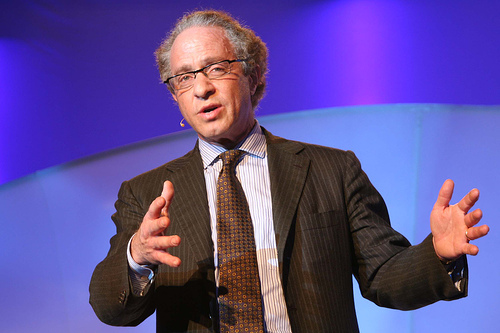
Ray Kurzweil’s Mind-Boggling Predictions for the Next 25 Years

Bill Gates calls Ray, “the best person I know at predicting the future of artificial intelligence.” Ray is also amazing at predicting a lot more beyond just AI.

This post looks at his very incredible predictions for the next 20+ years.

So who is Ray Kurzweil?

He has received 20 honorary doctorates, has been awarded honors from three U.S. presidents, and has authored 7 books (5 of which have been national bestsellers).

He is the principal inventor of many technologies ranging from the first CCD flatbed scanner to the first print-to-speech reading machine for the blind. He is also the chancellor and co-founder of Singularity University, and the guy tagged by Larry Page to direct artificial intelligence development at Google.

In short, Ray’s pretty smart… and his predictions are amazing, mind-boggling, and important reminders that we are living in the most exciting time in human history.

But, first let’s look back at some of the predictions Ray got right.

Predictions Ray has gotten right over the last 25 years

In 1990 (twenty-five years ago), he predicted…

…that a computer would defeat a world chess champion by 1998. Then in 1997, IBM’s Deep Blue defeated Garry Kasparov.

… that PCs would be capable of answering queries by accessing information wirelessly via the Internet by 2010. He was right, to say the least.

… that by the early 2000s, exoskeletal limbs would let the disabled walk. Companies like Ekso Bionics and others now have technology that does just this, and much more.

In 1999, he predicted…

… that people would be able talk to their computer to give commands by 2009. While still in the early days in 2009, natural language interfaces like Apple’s Siri and Google Now have come a long way. I rarely use my keyboard anymore; instead I dictate texts and emails.

… that computer displays would be built into eyeglasses for augmented reality by 2009. Labs and teams were building head mounted displays well before 2009, but Google started experimenting with Google Glass prototypes in 2011. Now, we are seeing an explosion of augmented and virtual reality solutions and HMDs. Microsoft just released the Hololens, and Magic Leap is working on some amazing technology, to name two.

In 2005, he predicted…

… that by the 2010s, virtual solutions would be able to do real-time language translation in which words spoken in a foreign language would be translated into text that would appear as subtitles to a user wearing the glasses. Well, Microsoft (via Skype Translate), Google (Translate), and others have done this and beyond. One app called Word Lens actually uses your camera to find and translate text imagery in real time.

Ray’s predictions for the next 25 years

The above represent only a few of the predictions Ray has made.

While he hasn’t been precisely right, to the exact year, his track record is stunningly good.

Here are some of Ray’s predictions for the next 25+ years.

By the late 2010s, glasses will beam images directly onto the retina. Ten terabytes of computing power (roughly the same as the human brain) will cost about $1,000.

By the 2020s, most diseases will go away as nanobots become smarter than current medical technology. Normal human eating can be replaced by nanosystems. The Turing test begins to be passable. Self-driving cars begin to take over the roads, and people won’t be allowed to drive on highways.

By the 2030s, virtual reality will begin to feel 100% real. We will be able to upload our mind/consciousness by the end of the decade.

By the 2040s, non-biological intelligence will be a billion times more capable than biological intelligence (a.k.a. us). Nanotech foglets will be able to make food out of thin air and create any object in physical world at a whim.

By 2045, we will multiply our intelligence a billionfold by linking wirelessly from our neocortex to a synthetic neocortex in the cloud.

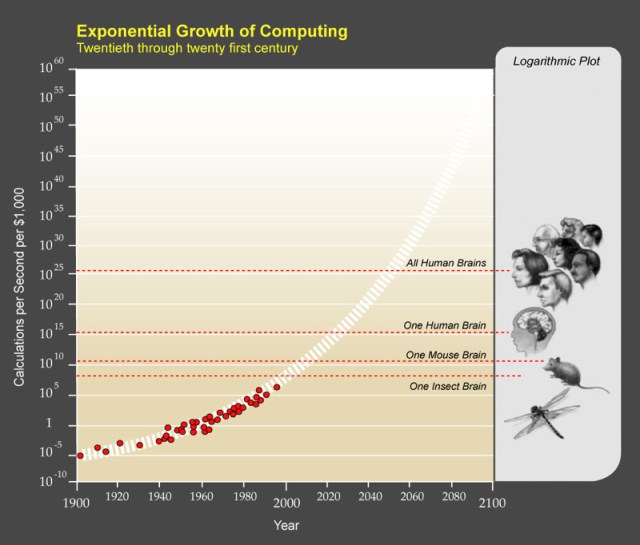
Ray’s predictions are a byproduct of his understanding of the power of Moore’s Law, more specifically Ray’s “Law of Accelerating Returns” and of exponential technologies.

These technologies follow an exponential growth curve based on the principle that the computing power that enables them doubles every two years.

Ray Kurzweil’s Mind-Boggling Predictions for the Next 25 Years

Thanks to Kebmodee for bringing this to the attention of the It’s Interesting community.

Laser-transformed metal repels water

Water often damages metals, causing rust, wear and decay.

Thanks to an innovative laser process, however, metal is getting its revenge.

University of Rochester scientists Chunlei Guo and Anatoliy Vorobyev have developed a technique using extremely precise laser patterns that renders metals superhydrophobic: in other words, incredibly water-repellent.

Imagine a much more powerful Teflon — except that Guo and Vorobyev’s material isn’t a coating but part of the metal itself. Water actually bounces off the surface and rolls away.

The possibilities are many, Guo says. Kitchenware, of course. Airplanes: No more worrying about de-icing, because water won’t be able to freeze on aircraft in the first place.

And sanitation in poor countries, an idea close to the heart of the Bill and Melinda Gates Foundation, which helped fund the project. Thanks to the surface’s repellent properties, it’s essentially self-cleaning.

Ironically, Guo was inspired by a project in which he and a team treated a variety of materials to make them superhydrophilic — that is, water-attracting.

“We worked with a variety of materials — not just metal but semiconductors, glass, other things,” he said. Even on a vertical surface, “the effect was very strong. If I drop a drop of water on the bottom of this surface, it would actually shoot up against gravity, uphill. So that really motivated us to look into this reverse process.”

In their paper, the two compared the surface to that of a lotus leaf, which has “a hierarchical structure containing a larger micro-scale structure” and is superhydrophobic.

“Our structure sort of mimics, in some way, this natural (arrangement) of the lotus leaf,” Guo said.

And like the lotus leaf, because the laser-patterned metal is so water-repellent, it has self-cleaning properties. In an experiment, Guo dumped some household dust from a vacuum cleaner on a treated surface. Just a few drops of water collected the dust, and the metal remained dry.

In their work, the scientists used platinum, titanium and brass as sample metals, but Guo says he believes it could work for a wide variety of metals — not to mention other substances.

The process is still very much of the lab. It took the scientists an hour to treat a 1-inch-by-1-inch sample and required extremely short bursts of the laser lasting a femtosecond, or a millionth of a billionth of a second.

But Guo is optimistic about ramping up the process for industrial use, and he says the goal for the sanitation project is to “really push the technology out” in the next two or three years.

And then?

“I do believe down the line we will be able to make it accessible to everyday life,” he said.

Watch out, water.

The scientists’ paper was published in the Journal of Applied Physics. The project was also funded by the U.S. Air Force Office of Scientific Research.

http://www.cnn.com/2015/01/22/us/feat-metal-repels-water-rochester/index.html

Bill Gates says a new plant that can turn human feces into electricity and clean drinking water can save a huge number of lives.

The plant, called the Omniprocessor, was designed and built by Janicki Bioenergy and backed by the Bill & Melinda Gates Foundation. The facility would try to prevent diseases caused by contaminated water supplies.

A test plant is up and working at Janicki’s headquarters north of Seattle, according to a blog post by Gates. The first operational plant is planned for Senegal.

“The next-generation processor, more advanced than the one I saw, will handle waste from 100,000 people, producing up to 86,000 liters of potable water a day and a net 250 kw of electricity,” he wrote. “If we get it right, it will be a good example of how philanthropy can provide seed money that draws bright people to work on big problems, eventually creating a self-supporting industry.”

Included is a video of him drinking a glass of the water produced by the plant, which he describes as “delicious” and “as good as any I’ve had out of the bottle.”

“Having studied the engineering behind it, I would happily drink it every day. It’s that safe,” he writes on the post.

The feces is heated to 1000 degrees Celsius, or 1,832 degrees Fahrenheit to draw off the water, which is then further treated to make sure it is safe. But the dried out feces can then be burned, producing enough heat to generate electricity needed to extract the water. Excess electricity can be sold to outside users, as can the water.

Gates says diseases caused by poor sanitation kill some 700,000 children every year. The Bill & Melinda Gates Foundation is making an effort to improve sanitation in the developing world.

“Today, in many places without modern sewage systems, truckers take the waste from latrines and dump it into the nearest river or the ocean—or at a treatment facility that doesn’t actually treat the sewage,” he wrote. “Either way, it often ends up in the water supply.”

http://money.cnn.com/2015/01/07/technology/innovationnation/gates-poop-water/index.html

Pizza Hut’s Subconscious Menu Aims to Guess What You Want Before You Know You Do

Pizza Hut incorporating retina tracking into the ordering process, in what it is calling the first Subconscious Menu.

Powered by Tobii, a Swedish company that specializes in eye-tracking technology, Pizza Hut’s new system presents customers with images of ingredients on a screen. Based on how long a customer’s eyes remain on different items, the system generates an order meant to represent what he or she subconsciously wants.

The Subconscious Menu, which has been under development for about six months and is currently being piloted in the U.K., was selected by Pizza Hut as the method that best leverages technology to improve the experience for customers.

Thanks to Kebmodee for bringing this to the attention of the It’s Interesting community.

http://time.com/3613220/pizza-huts-subconscious-menu/#3613220/pizza-huts-subconscious-menu/

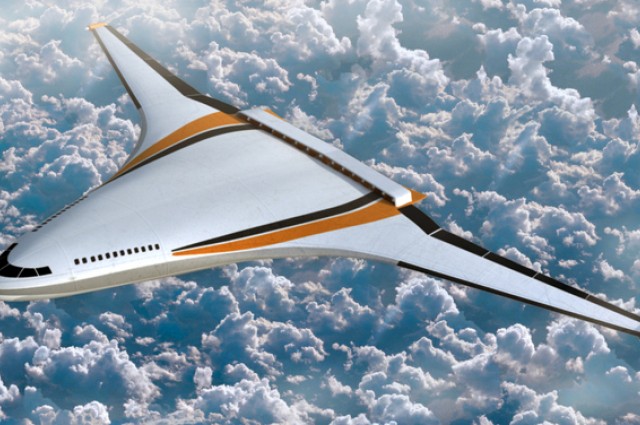
What commercial aircraft will look like in 2050

by Ashley Dove-Jay

The aircraft industry is expecting a seven-fold increase in air traffic by 2050, and a four-fold increase in greenhouse gas emissions unless fundamental changes are made. But just how “fundamental” will those changes need to be and what will be their effect on the aircraft we use?

The crucial next step towards ensuring the aircraft industry becomes greener is the full electrification of commercial aircraft. That’s zero CO2 and NOx emissions, with energy sourced from power stations that are themselves sustainably fuelled. The main technological barrier that must be overcome is the energy density of batteries, a measure of how much power can be generated from a battery of a certain weight.

Tesla CEO Elon Musk has said that once batteries are capable of producing 400 Watt-hours per kilogram, with a ratio of power cell to overall mass of between 0.7-0.8, an electrical transcontinental aircraft becomes “compelling”.

Given that practical lithium-ion batteries were capable of achieving energy-densities of 113Wh/kg in 1994, 202Wh/kg in 2004, and are now capable of approximately 300Wh/kg, it’s reasonable to assume that they will hit 400Wh/kg in the coming decade.

Another aspect is the exponential fall in the cost of solar panels, which have already become the cheapest form of power in most US states. The expected 70% reduction in cost of lithium-ion batteries by 2025, and the rapid rise seen in the cost of kerosene-based jet fuel means that there will be a large and growing disparity in the costs of running aircraft that will greatly favour electrification. As is often the case, the reasons that will slow transition are not technological, but are rooted in the economic and political inertia against overturning the status-quo.

Biofuels while we wait

Considering the average service-life of passenger and freight aircraft are around 21 and 33 years respectively, even if all new aircraft manufactured from tomorrow were fully electric, the transition away from fossil-fuelled aircraft would take two to three decades.

In the meantime, biofuel offers carbon emissions reductions of between 36-85%, with the variability depending on the type of land used to grow the fuel crops. As switching from one fuel to another is relatively straightforward, this is a low-hanging fruit worth pursuing before completely phasing out combustion engines.

Even though a biofuel-kerosene jet fuel blend was certified in 2009, the aircraft industry is in no hurry to implement change. There are minor technological hurdles and issues around scaling up biofuel production to industrial levels, but the main constraint is price – parity with fossil fuels is still ten years away.

The adoption of any new aircraft technology – from research, to design sketches, to testing and full integration – is typically a decade-long process. Given that the combustion engine will be phased out by mid-century, it would seem to make more economic and environmental sense to innovate in other areas: airframe design, materials research, electric propulsion design and air traffic control.

Bringing aircraft to life

In terms of the cost of computational power, computer technology is advancing more each hour today than it did in its entire first 90 years. With this in mind we can project that the equivalent of a US$1,000 computer today will by 2023 be more powerful than the potential brainpower of a human and, by 2045, will surpass the brainpower equivalent to all human brains combined.

The miniaturisation of digital electronics over the past half-century has followed a similar exponential trend, with the size of transistor gates reducing from approximately 1,000 nanometres in 1970 to 23 nanometres today. With the advent of transistors made of graphene showing great promise, this is expected to fall further to about 7 nanometres by 2025. By comparison, a human red blood cell is approximately 6,200-8,200 nanometres wide.

Putting together this increase in computational power and decrease in circuit size, and adding in the progress made with 3D-printing, at some point in the next decade we will be able to produce integrated computers powerful enough to control an aircraft at the equivalent of the cellular level in near real-time – wireless interlinking of nano-scale digital devices.

Using a biologically-inspired digital “nervous system” with receptors arranged over the aircraft sensing forces, temperatures, and airflow states could drastically improve the energy efficiency of aircraft, when coupled to software and hardware mechanisms to control or even change the shape of the aircraft in response.

Chopping the tail

Once electric aircraft are established, the next step will be to integrate a gimballed propulsion system, one that can provide thrust in any direction. This will remove the need for the elevators, rudders, and tailplane control surfaces that current designs require, but which add significant mass and drag.

The wings we are already designing are near their peak in terms of aerodynamic efficiency, but they still do no justice to what nature has achieved in birds. Aircraft design templates are a century old – constrained by the limitations of the day then, but technology has since moved on. We no longer need to build wings as rigid structures with discrete control surfaces, but can turn to the natural world for inspiration. As Richard Feynman said:

I think nature’s imagination is so much greater than man’s, she’s never going to let us relax.

http://www.iflscience.com/technology/what-commercial-aircraft-will-look-2050

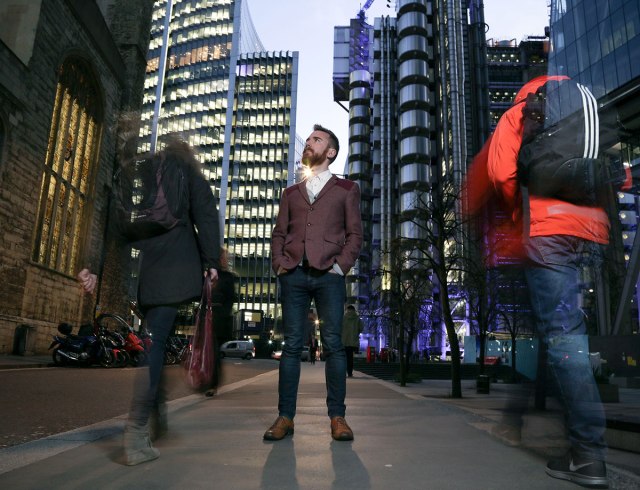
The man who can hear Wi-Fi wherever he walks

Frank Swain has been going deaf since his 20s. Now he has hacked his hearing so he can listen in to the data that surrounds us.

I am walking through my north London neighbourhood on an unseasonably warm day in late autumn. I can hear birds tweeting in the trees, traffic prowling the back roads, children playing in gardens and Wi-Fi leaching from their homes. Against the familiar sounds of suburban life, it is somehow incongruous and appropriate at the same time.

As I approach Turnpike Lane tube station and descend to the underground platform, I catch the now familiar gurgle of the public Wi-Fi hub, as well as the staff network beside it. On board the train, these sounds fade into silence as we burrow into the tunnels leading to central London.

I have been able to hear these fields since last week. This wasn’t the result of a sudden mutation or years of transcendental meditation, but an upgrade to my hearing aids. With a grant from Nesta, the UK innovation charity, sound artist Daniel Jones and I built Phantom Terrains, an experimental tool for making Wi-Fi fields audible.

Our modern world is suffused with data. Since radio towers began climbing over towns and cities in the early 20th century, the air has grown thick with wireless communication, the platform on which radio, television, cellphones, satellite broadcasts, Wi-Fi, GPS, remote controls and hundreds of other technologies rely. And yet, despite wireless communication becoming a ubiquitous presence in modern life, the underlying infrastructure has remained largely invisible.

Every day, we use it to read the news, chat to friends, navigate through cities, post photos to our social networks and call for help. These systems make up a huge and integral part of our lives, but the signals that support them remain intangible. If you have ever wandered in circles to find a signal for your cellphone, you will know what I mean.

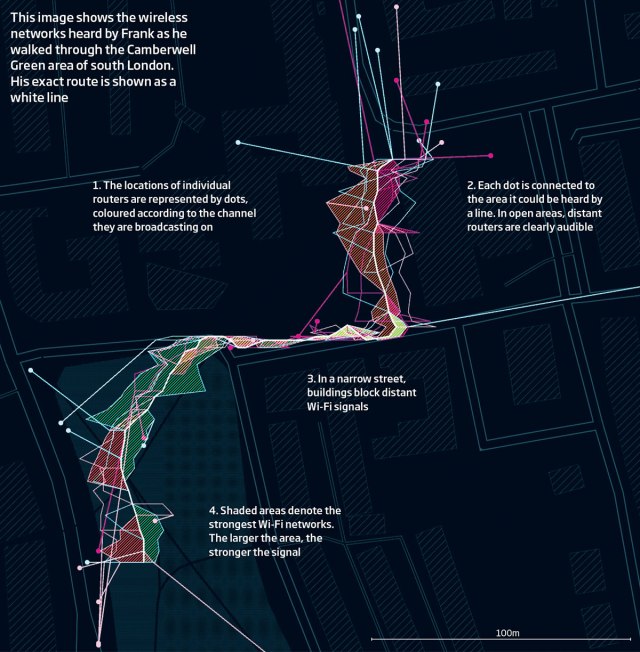
Phantom Terrains opens the door to this world to a small degree by tuning into these fields. Running on a hacked iPhone, the software exploits the inbuilt Wi-Fi sensor to pick up details about nearby fields: router name, signal strength, encryption and distance. This wasn’t easy. Reams of cryptic variables and numerical values had to be decoded by changing the settings of our test router and observing the effects.

“On a busy street, we may see over a hundred independent wireless access points within signal range,” says Jones. The strength of the signal, direction, name and security level on these are translated into an audio stream made up of a foreground and background layer: distant signals click and pop like hits on a Geiger counter, while the strongest bleat their network ID in a looped melody. This audio is streamed constantly to a pair of hearing aids donated by US developer Starkey. The extra sound layer is blended with the normal output of the hearing aids; it simply becomes part of my soundscape. So long as I carry my phone with me, I will always be able to hear Wi-Fi.

Silent soundscape

From the roar of Oxford Circus, I make my way into the close silence of an anechoic booth on Harley Street. I have been spending a lot of time in these since 2012, when I was first diagnosed with hearing loss. I have been going deaf since my 20s, and two years ago I was fitted with hearing aids which instantly brought a world of missing sound back to my ears, although it took a little longer for my brain to make sense of it.

Recreating hearing is an incredibly difficult task. Unlike glasses, which simply bring the world into focus, digital hearing aids strive to recreate the soundscape, amplifying useful sound and suppressing noise. As this changes by the second, sorting one from the other requires a lot of programming.

In essence, I am listening to a computer’s interpretation of the soundscape, heavily tailored to what it thinks I need to hear. I am intrigued to see how far this editorialisation of my hearing can be pushed. If I have to spend my life listening to an interpretative version of the world, what elements could I add? The data that surrounds me seems a good place to start.

Mapping digital fields isn’t a new idea. Timo Arnall’s Light Painting Wi-Fi saw the artist and his collaborators build a rod of LEDs that lit up when exposed to digital signals, and carried it through the city at night. Captured in long exposure photographs, the topographies of wireless networks appear as a ghostly blue ribbon that waxes and wanes to the strength of nearby signals, revealing the digital landscape.

“Just as the architecture of nearby buildings gives insight to their origin and purpose, we can begin to understand the social world by examining the network landscape,” says Jones. For example, by tracing the hardware address transmitted with the Wi-Fi signal, the Phantom Terrains software can trace a router’s origin. We found that residential areas were full of low-security routers whereas commercial districts had highly encrypted routers and a higher bandwidth.

Despite the information gathered, most people would balk at the idea of being forced to listen to the hum and crackle of invisible fields all day. How long I will tolerate the additional noise in my soundscape remains to be seen. But there is more to the project than a critique of digital transparency.

With the advent of the internet of things, our material world is becoming ever more draped in sensors, and it is important to think about how we might make sense of all this information. Hearing is a fantastic platform for interpreting dynamic, continuous, broad spectrum data.

Its use in this way is being aided by a revolution in hearing technology. The latest models, such as the Halo brand used in our project and ReSound’s Linx, boast a specialised low-energy Bluetooth function that can link to compatible gadgets. This has a host of immediate advantages, such as allowing people to fine-tune their hearing aids using a smartphone as an interface. More crucially, the continuous connectivity elevates hearing aids to something similar to Google Glass – an always-on, networked tool that can seamlessly stream data and audio into your world.

Already, we are talking to our computers more, using voice-activated virtual assistants such as Apple’s Siri, Microsoft’s Cortana and OK Google. Always-on headphones that talk back, whispering into our ear like discreet advisers, might well catch on ahead of Google Glass.

“The biggest challenge is human,” says Jones. “How can we create an auditory representation that is sufficiently sophisticated to express the richness and complexity of an ever-changing network infrastructure, yet unobtrusive enough to be overlaid on our normal sensory experience without being a distraction?”

Only time will tell if we have succeeded in this respect. If we have, it will be a further step towards breaking computers out of the glass-fronted box they have been trapped inside for the last 50 years.

Auditory interfaces also prompt a rethink about how we investigate data and communicate those findings, setting aside the precise and discrete nature of visual presentation in favour of complex, overlapping forms. Instead of boiling the stock market down to the movement of one index or another, for example, we could one day listen to the churning mass of numbers in real time, our ears attuned for discordant melodies.

In Harley Street, the audiologist shows me the graphical results of my tests. What should be a wide blue swathe – good hearing across all volume levels and sound frequencies – narrows sharply, permanently, at one end.

There is currently no treatment that can widen this channel, but assistive hearing technology can tweak the volume and pitch of my soundscape to pack more sound into the space available. It’s not much to work with, but I’m hoping I can inject even more into this narrow strait, to hear things in this world that nobody else can.

http://www.newscientist.com/article/mg22429952.300-the-man-who-can-hear-wifi-wherever-he-walks.html?full=true

Wake Forest scientists are growing penises in the lab.

Penises grown in laboratories could soon be tested on men by scientists developing technology to help people with congenital abnormalities, or who have undergone surgery for aggressive cancer or suffered traumatic injury.

Researchers at the Wake Forest Institute for Regenerative Medicine in Winston-Salem, North Carolina, are assessing engineered penises for safety, function and durability. They hope to receive approval from the US Food and Drug Administration and to move to human testing within five years.

Professor Anthony Atala, director of the institute, oversaw the team’s successful engineering of penises for rabbits in 2008. “The rabbit studies were very encouraging,” he said, “but to get approval for humans we need all the safety and quality assurance data, we need to show that the materials aren’t toxic, and we have to spell out the manufacturing process, step by step.”

The penises would be grown using a patient’s own cells to avoid the high risk of immunological rejection after organ transplantation from another individual. Cells taken from the remainder of the patient’s penis would be grown in culture for four to six weeks.

For the structure, they wash a donor penis in a mild detergent to remove all donor cells. After two weeks a collagen scaffold of the penis is left, on to which they seed the patient’s cultured cells – smooth muscle cells first, then endothelial cells, which line the blood vessels. Because the method uses a patient’s own penis-specific cells, the technology will not be suitable for female-to-male sex reassignment surgery.

“Our target is to get the organs into patients with injuries or congenital abnormalities,” said Atala, whose work is funded by the US Armed Forces Institute of Regenerative Medicine, which hopes to use the technology to help soldiers who sustain battlefield injuries.

As a paediatric urological surgeon, Atala began his work in 1992 to help children born with genital abnormalities. Because of a lack of available tissue for reconstructive surgery, baby boys with ambiguous genitalia are often given a sex-change at birth, leading to much psychological anguish in later life. “Imagine being genetically male but living as a woman,” he said. “It’s a firmly devastating problem that we hope to help with.”

Asif Muneer, a consultant urological surgeon and andrologist at University College hospital, London, said the technology, if successful, would offer a huge advance over current treatment strategies for men with penile cancer and traumatic injuries. At present, men can have a penis reconstructed using a flap from their forearm or thigh, with a penile prosthetic implanted to simulate an erection.

“My concern is that they might struggle to recreate a natural erection,” he said. “Erectile function is a coordinated neurophysiological process starting in the brain, so I wonder if they can reproduce that function or whether this is just an aesthetic improvement. That will be their challenge.”

Atala’s team are working on 30 different types of tissues and organs, including the kidney and heart. They bioengineered and transplanted the first human bladder in 1999, the first urethra in 2004 and the first vagina in 2005.

Professor James Yoo, a collaborator of Atala’s at Wake Forest Institute, is working on bioengineering and replacing parts of the penis to help treat erectile dysfunction. His focus is on the spongy erectile tissue that fills with blood during an erection, causing the penis to lengthen and stiffen. Disorders such as high blood pressure and diabetes can damage this tissue, and the resulting scar tissue is less elastic, meaning the penis cannot fill fully with blood.

“If we can engineer and replace this tissue, these men can have erections again,” said Yoo, acknowledging the many difficulties. “As a scientist and clinician, it’s this possibility of pushing forward current treatment practice that really keeps you awake at night.”

http://www.theguardian.com/science/2014/oct/05/laboratory-penises-test-on-men

New invisibility technology


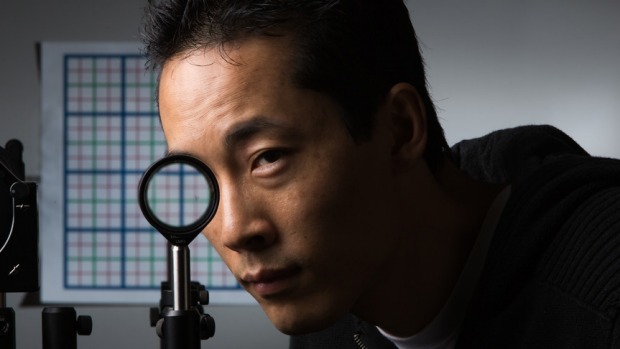
Doctoral student Joseph Choi demonstrates a multidirectional ‘perfect paraxial’ cloak using 4 lenses.


Choi uses his hand to further demonstrate his device.


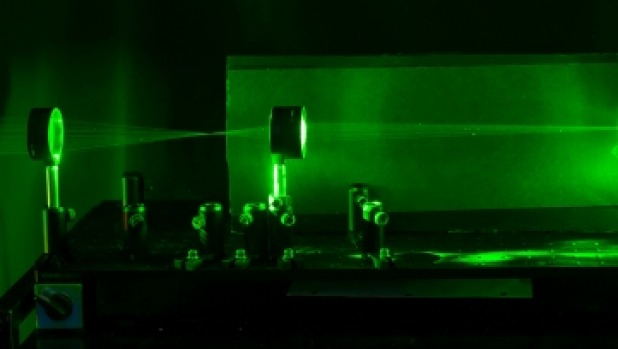
A laser shows the paths that light rays travel through the system, showing regions that can be used for cloaking an object.

Scientists at the University of Rochester have discovered a way to hide large objects from sight using inexpensive and readily available lenses.

Cloaking is the process by which an object becomes hidden from view, while everything else around the cloaked object appears undisturbed.

“A lot of people have worked on a lot of different aspects of optical cloaking for years,” John Howell, a professor of physics at the upstate New York school, said on Friday.

The so-called Rochester Cloak is not really a tangible cloak at all. Rather the device looks like equipment used by an optometrist. When an object is placed behind the layered lenses it seems to disappear.

Previous cloaking methods have been complicated, expensive, and not able to hide objects in three dimensions when viewed at varying angles, they say.

“From what, we know this is the first cloaking device that provides three-dimensional, continuously multidirectional cloaking,” said Joseph Choi, a graduate student who helped develop the method at Rochester, which is renowned for its optical research.

In their tests, the researchers have cloaked a hand, a face, and a ruler – making each object appear “invisible” while the image behind the hidden object remains in view. The implications for the discovery are endless, they say.

“I imagine this could be used to cloak a trailer on the back of a semi-truck so the driver can see directly behind him,” Choi said. “It can be used for surgery, in the military, in interior design, art.”

Howell said the Rochester Cloak, like the fictitious cloak described in the pages of the Harry Potter series, causes no distortion of the background object.

Building the device does not break the bank either. It cost Howell and Choi a little over $US1000 ($1140) in materials to create it and they believe it can be done even cheaper.

Although a patent is pending, they have released simple instructions on how to create a Rochester Cloak at home for under $US100 (114).

There is also a one-minute video about the project on YouTube.

http://www.smh.com.au/technology/sci-tech/scientists-unveil-invisibility-cloak-to-rival-harry-potters-20140927-10n1dp.html

First Transatlantic ‘Scent Message’ Sent From Paris To NYC

The first transatlantic “scent messages” were exchanged June 17 between New York City and Paris, and they smelled like champagne and macaroons.

At the American Museum of Natural History here in Manhattan, co-inventors David Edwards, a Harvard professor, and Rachel Field showcased their novel scent-messaging platform, which involves tagging photographs with scents selected from a palette of aromas, and sending them via email or social networks. The messages are then played back on a new device called an oPhone.

From Paris, collaborators Christophe Laudamiel and Blake Armstrong joined the New York audience via Skype, and emailed a scent-tagged photograph of French delicacies and champagne they had just poured to celebrate the launch of the oPhone. When the oPhone on the New York side picked up the message, the device dissipated a subtle aroma that matched perfectly with the picture.

“OPhone introduces a new kind of sensory experience into mobile messaging, a form of communication that until now has remained consigned to our immediate local experience of the world,” Edwards, who is also the CEO of Vapor Communications, the company behind the scent-messaging platform, said. “With the oPhone, people will be able to share with anyone, anywhere, not just words, images and sounds, but sensory experience itself.”

How it works
The scent messages, called oNotes, are composed in an iPhone app called oSnap, which also launched today. Using oSnap, users can mix and match from 32 primitive aromas to produce more than 300,000 unique scents, Edwards said.

The 32 aromas are placed inside oPhone’s eight “oChips,” which could be thought of as a printer’s ink cartridges. When the device receives an oNote, it releases the corresponding aroma based on the aromatic tags assigned to the image.

Each scent is designed to last roughly 10 seconds, about the same time that people take to sense an aroma, Edwards told reporters in a news briefing today at the American Museum of Natural History. If the photo is tagged with more than one scent, the smells will play one after the other.

A virtual world of aromas
The idea of sharing scents started two years ago in Edwards’ course at Harvard, a class called “How to Create Things and Have Them Matter.” Field, then a mechanical engineering undergrad, and some of her classmates planned to create a virtual world of aroma. They further developed the idea at Le Laboratoire, Edwards’ creative hub in Paris known for conducting experiments at the intersection of science and art.

Edwards’ previous projects are no less imaginative. The engineer has designed air-purifying plants, edible bottles and vaccine technologies to deliver drugs to the lungs to eliminate injections, among other inventions.

In the scent-messaging project, Edwards is focusing on the food space, at least for now. The oPhones will be displayed in cafes in Paris in the coming days, and the idea is to test the devices’ business potential at places where aromas matter, Edwards said.

oNotes are transmitted via email or social media, and can be picked up at hotspots where there are oPhones in place to receive them. The oPhones are available to preorder for $149 as part of the company’s Indiegogo campaign, which started today. The American Museum of Natural History will host the first U.S. hotspot during three weekends in July, where people can try the oPhones and participate in educational activities demonstrating how humans process smell.

Human noses may be able to discriminate between as many as a trillion different odors. However, the olfactory ability has changed over time, making it an important subject in the study of the evolution of species. Throughout the last 55 million years of evolution, primates have lost their sharp sense of smell in a trade-off for better vision, according to current theories.

“We know, based on fossils and reconstruction of the brain on those fossils, that the olfactory system was far more developed than visual and auditory systems in the early stages of the mammalian evolution,” said Michael Novacek, the American Museum of Natural History’s senior vice president and provost for science. “So in a sense, our whole legacy really comes from the olfactory system, and its modifications and refinement, not just the vision and auditory systems.”

http://www.scientificamerican.com/article/world-s-first-scent-message-e-mailed-from-paris-to-new-york/