A protein in skeletal muscles helps mice recover from sleep deprivation.

mice-x

by SUKANYA CHARUCHANDRA

The protein Bmal1, which helps regulate the body’s internal clock, is found in especially high levels in the brain and in skeletal muscles. Mice completely deficient in Bmal1 were known to suffer from sleep impairments, but the specifics at play weren’t clear. At the University of California, Los Angeles, Ketema Paul and colleagues looked to these mice for clues about the role Bmal1 plays in sleep regulation.

MUSCLE PLAY
When Paul’s team restored levels of the Bmal1 protein in the mice’s brains, their ability to rebound from a night of bad sleep remained poor. However, turning on production in skeletal muscles alone enabled mice to sleep longer and more deeply to recover after sleep loss.

SWEET DREAMS
For decades, scientists have thought sleep was controlled purely by the brain. But the new study indicates the ability to catch up on one’s sleep after a bout of sleeplessness is locked away in skeletal muscles, not the brain—at least for mice. “I think it’s a real paradigm shift for how we think about sleep,” says John Hogenesch, a chronobiologist at Cincinnati Children’s Hospital Medical Center who discovered the Bmal1 gene but was not involved in this study.

TARGET LOCKED
Paul’s group also found that having too much of the Bmal1 protein in their muscles not only made mice vigilant but also invulnerable to the effects of sleep loss, so that they remained alert even when sleep-deprived and slept fewer hours to regain lost sleep. “To me, that presents a potential target where you could treat sleep disorders,” says Paul, noting that an inability to recover from sleep loss can make us more susceptible to diseases.

The paper
J.C. Ehlen et al., “Bmal1 function in skeletal muscle regulates sleep,” eLife, 6:e26557, 2017.

https://www.the-scientist.com/the-literature/muscles-hold-a-key-to-sleep-recovery-64685?utm_campaign=TS_DAILY%20NEWSLETTER_2018&utm_source=hs_email&utm_medium=email&utm_content=66141129&_hsenc=p2ANqtz–EaFM3BB6i_l04LL2zbvjlEHCWVwrSrks2D9Aksml-wGa9f88gfOwPhtiPCXEMJRqzu6WG53_vzEvHht0oAGylLgMANQ&_hsmi=66141129

Kill Zombie Neurons to Prevent Alzheimer’s Disease

zombie-neurons-identified-in-alzheimers-brains-309765
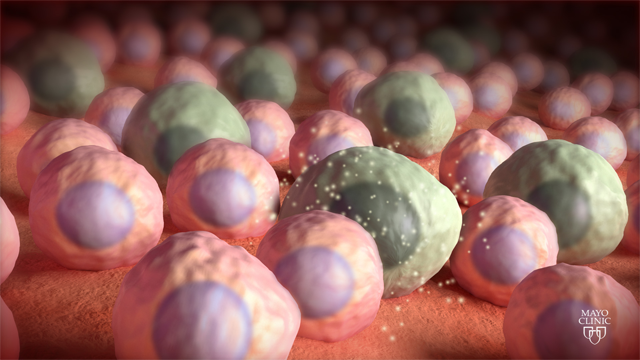
Senescent cells (represented here in green) no longer function but can broadcast inflammatory signals to the cells around them. These cells are implicated in a number of age-related diseases. Credit: The Mayo Clinic

0Q9B6965
Darren Baker, Ph.D., a Mayo Clinic molecular biologist and senior author of the paper, and first author Tyler Bussian, a Mayo Clinic Graduate School of Biomedical Sciences student.

Zombie cells are the ones that can’t die but are equally unable to perform the functions of a normal cell. These zombie, or senescent, cells are implicated in a number of age-related diseases. And with a new letter in Nature, Mayo Clinic researchers have expanded that list.

In a mouse model of brain disease, scientists report that senescent cells accumulate in certain brain cells prior to cognitive loss. By preventing the accumulation of these cells, they were able to diminish tau protein aggregation, neuronal death and memory loss.

“Senescent cells are known to accumulate with advancing natural age and at sites related to diseases of aging, including osteoarthritis; atherosclerosis; and neurodegenerative diseases, such as Alzheimer’s and Parkinson’s,” says Darren Baker, Ph.D., a Mayo Clinic molecular biologist and senior author of the paper. “In prior studies, we have found that elimination of senescent cells from naturally aged mice extends their healthy life span.”

In the current study, the team used a model that imitates aspects of Alzheimer’s disease.

“We used a mouse model that produces sticky, cobweb like tangles of tau protein in neurons and has genetic modifications to allow for senescent cell elimination,” explains first author Tyler Bussian, a Mayo Clinic Graduate School of Biomedical Sciences student who is part of Dr. Baker’s lab. “When senescent cells were removed, we found that the diseased animals retained the ability to form memories, eliminated signs of inflammation, did not develop neurofibrillary tangles, and had maintained normal brain mass.” They also report that pharmacological intervention to remove senescent cells modulated the clumping of tau proteins.

Also, the team was able to identify the specific type of cell that became senescent, says Dr. Baker.

“Two different brain cell types called ‘microglia’ and ‘astrocytes’ were found to be senescent when we looked at brain tissue under the microscope,” says Bussian. “These cells are important supporters of neuronal health and signaling, so it makes sense that senescence in either would negatively impact neuron health.”

The finding was somewhat surprising, explains Dr. Baker, because at the time their research started, a causal link between senescent cells and neurodegenerative disease had not been established.

“We had no idea whether senescent cells actively contributed to disease pathology in the brain, and to find that it’s the astrocytes and microglia that are prone to senescence is somewhat of a surprise, as well,” says Dr. Baker.

In terms of future work, Dr. Baker explains that this research lays out the best-case scenario, where prevention of damage to the brain avoided the disease state. “Clearly, this same approach cannot be applied clinically, so we are starting to treat animals after disease establishment and working on new models to examine the specific molecular alterations that occur in the affected cells,” says Dr. Baker.

In addition to Dr. Baker and Bussian, the other authors are Asef Aziz, a medical student formerly at Mayo Clinic; Charlton Meyer, Mayo Clinic; Barbara Swenson, Ph.D., Mayo Clinic; and Jan van Deursen, Ph.D., Mayo Clinic. Dr. van Deursen is the Vita Valley Professor of Cellular Senescence. Drs. Baker and van Deursen are inventors on patents licensed to Unity Biotechnology by Mayo Clinic, and Dr. van Deursen is a co-founder of Unity Biotechnology.

Funding for this research was provided by the Ellison Medical Foundation, the Glenn Foundation for Medical Research, the National Institutes of Health, the Mayo Clinic Children’s Research Center, and the Alzheimer’s Disease Research Center of Mayo Clinic.

https://newsnetwork.mayoclinic.org/discussion/senescent-cells-found-in-brains-of-mice-prior-to-cognitive-loss/

Young children’s oral bacteria may predict obesity

microbial-activity-in-the-mouth-may-help-identify-autism-in-children

Weight gain trajectories in early childhood are related to the composition of oral bacteria of two-year-old children, suggesting that this understudied aspect of a child’s microbiota — the collection of microorganisms, including beneficial bacteria, residing in the mouth — could serve as an early indicator for childhood obesity. A study describing the results appears September 19 in the journal Scientific Reports.

“One in three children in the United States is overweight or obese,” said Kateryna Makova, Pentz Professor of Biology and senior author of the paper. “If we can find early indicators of obesity in young children, we can help parents and physicians take preventive measures.”

The study is part of a larger project with researchers and clinicians at the Penn State Milton S. Hershey Medical Center called INSIGHT, led by Ian Paul, professor of pediatrics at the Medical Center, and Leann Birch, professor of foods and nutrition at the University of Georgia. The INSIGHT trial includes nearly 300 children and tests whether a responsive parenting intervention during a child’s early life can prevent the development of obesity. It is also designed to identify biological and social risk factors for obesity.

“In this study, we show that a child’s oral microbiota at two years of age is related to their weight gain over their first two years after birth,” said Makova.

The human digestive tract is filled with a diverse array of microorganisms, including beneficial bacteria, that help ensure proper digestion and support the immune system. This “microbiota” shifts as a person’s diet changes and can vary greatly among individuals. Variation in gut microbiota has been linked to obesity in some adults and adolescents, but the potential relationship between oral microbiota and weight gain in children had not been explored prior to this study.

“The oral microbiota is usually studied in relation to periodontal disease, and periodontal disease has in some cases been linked to obesity,” said Sarah Craig, a postdoctoral scholar in biology at Penn State and first author of the paper. “Here, we explored any potential direct associations between the oral microbiota and child weight gain. Rather than simply noting whether a child was overweight at the age of two, we used growth curves from their first two years after birth, which provides a more complete picture of how the child is growing. This approach is highly innovative for a study of this kind, and gives greater statistical power to detect relationships.”

Among 226 children from central Pennsylvania, the oral microbiota of those with rapid infant weight gain — a strong risk factor for childhood obesity — was less diverse, meaning it contained fewer groups of bacteria. These children also had a higher ratio of Firmicutes to Bacteroidetes, two of the most common bacteria groups found in the human microbiota.

“A healthy person usually has a lot of different bacteria within their gut microbiota,” said Craig. “This high diversity helps protect against inflammation or harmful bacteria and is important for the stability of digestion in the face of changes to diet or environment. There’s also a certain balance of these two common bacteria groups, Firmicutes and Bacteroidetes, that tends to work best under normal healthy conditions, and disruptions to that balance could lead to dysregulation in digestion.”

Lower diversity and higher Firmicutes to Bacteroidetes (F:B) ratio in gut microbiota are sometimes observed as a characteristic of adults and adolescents with obesity. However, the researchers did not see a relationship of weight gain with either of these measures in gut microbiota of two-year-olds, suggesting that the gut microbiota may not be completely established at two years of age and may still be undergoing many changes.

“There are usually dramatic changes to an individual’s microbiota as they develop during early childhood,” said Makova. “Our results suggest that signatures of obesity may be established earlier in oral microbiota than in gut microbiota. If we can confirm this in other groups of children outside of Pennsylvania, we may be able to develop a test of oral microbiota that could be used in clinical care to identify children who are at risk for developing obesity. This is particularly exciting because oral samples are easier to obtain than those from the gut, which require fecal samples.”

Interestingly, weight gain in children was also related to diversity of their mother’s oral microbiota. This could reflect a genetic predisposition of the mother and child to having a similar microbiota, or the mother and child having a similar diet and environment.

“It could be a simple explanation like a shared diet or genetics, but it might also be related to obesity,” said Makova. “We don’t know for sure yet, but if there is an oral microbiome signature linked to the dynamics of weight gain in early childhood, there is a particular urgency to understand it. Now we are using additional techniques to look at specific species of bacteria–rather than larger taxonomic groups of bacteria–in both the mothers and children to see whether specific bacteria species influence weight gain and the risk of obesity.”

In addition to Makova, Craig, Paul, and Birch, the research team includes Jennifer Savage, Michele Marini, Jennifer Stokes, Anton Nekrutenko, Matthew Reimherr, and Francesca Chiaromonte from Penn State, Daniel Blankenberg from the Cleveland Clinic, and Alice Carla Luisa Parodi from Politecnico di Milano. INSIGHT (Intervention Nurses Start Infants Growing on Healthy Trajectories) is coordinated through the Penn State Milton S. Hershey Medical Center.

This work is supported by the National Institute of Diabetes and Digestive and Kidney Diseases (NIDDK); the Penn State Eberly College of Science; the Penn State Institute for Cyberscience; the National Center for Research Resources and the National Center for Advancing Translational Sciences of the National Institutes of Health (NIH); and the Pennsylvania Department of Health using Tobacco CURE funds.

http://science.psu.edu/news-and-events/2018-news/Makova9-2018

Scientists Have Detected an Entirely New Visual Phenomenon in The Human Eye

ghosted-images-1_1024

by DAVID NIELD

New research suggests the human eye and brain are capable of seeing ghosted images, a new type of visual phenomenon that scientists previously thought could only be detected by a computer. It turns out our eyes are more powerful than we thought.

The discovery could teach us more about the inner workings of the eye and brain and how they process information, as well as changing our thinking on what we human beings can truly see of the world around us.

Having been developed as a way of low-cost image capture for light outside the visible spectrum, the patterns produced by these ghosted images are usually processed by software algorithms – but, surprisingly, our eyes have the same capabilities.

“Ghost-imaging with the eye opens up a number of completely novel applications such as extending human vision into invisible wavelength regimes in real-time, bypassing intermediary screens or computational steps,” write the researchers.

“Perhaps even more interesting are the opportunities that ghost imaging offers for exploring neurological processes.”

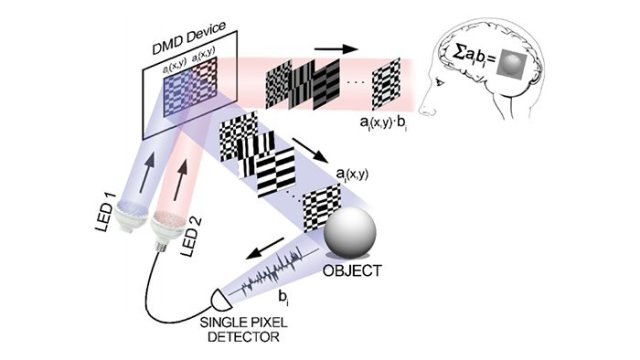
Ghost imaging works using a camera with a single pixel, rather than the millions of pixels used by the sensors inside today’s digital cameras and smartphones. When it comes to capturing light beyond the visible spectrum, it’s even a more cost-effective method.

These single pixel cameras capture light as it reflects from an object – by watching different random patterns of bouncing light, and crunching through some calculations, the camera can gradually build up a picture of something even with just one pixel.

In some setups, the single pixel camera is used in combination with a second light, modulated in response to the first, and beamed back on the original random patterns. The advantage is that fewer patterns are needed to produce an image.

In this case a second camera using some smart algorithms can pick up the image without having looked at the object at all – just by looking at the patterns being cast and the light being produced from them.

That’s the ghosted image that was previously thought to only be visible to computers running specialist software. However, the new study shows the human visual perception can make sense of these patterns, called Hadamard patterns.

This diagram from the research paper should give you an idea of what’s happening:

ghosted-images-2

It’s a little bit like when our eyes and brains look at a series of still images and treat them as a moving picture – the same sort of subconscious processing seems to be going on.

Of the four volunteers who took part in the study, all four could make out an image of Albert Einstein sticking out his tongue from the Hadamard patterns. Interestingly, though, the illusion only appeared when the patterns were projected quickly enough.

If the rate dropped below 200 patterns per 20 milliseconds, the image couldn’t be seen by the study participants.

As the researchers point out, this is potentially hugely exciting – it means we might be able to devise simple systems to see light outside the visible spectrum, with no computer processing required in the middle.

That’s all to come – and this is really preliminary stuff, so we can’t get too carried away. For now, the team of researchers is using the findings to explore more about how our visual systems work, and whether our eyes and brains have yet-undiscovered superpowers for looking at the world around us.

The research has yet to be peer-reviewed, but you can read it on the pre-print resource Arxiv.

https://www.sciencealert.com/human-eye-sees-ghosted-images-reflected-light

Scientists Determine Four Personality Types Based on New Data

Researchers led by Northwestern Engineering’s Luis Amaral sifted through data from more than 1.5 million questionnaire respondents to find at least four distinct clusters of personality types exist — average, reserved, self-centered, and role model — challenging existing paradigms in psychology.

“People have tried to classify personality types since Hippocrates’s time, but previous scientific literature has found that to be nonsense,”said co-author William Revelle, professor of psychology at Northwestern University’s Weinberg College of Arts and Sciences.

“Now, these data show there are higher densities of certain personality types,” said Revelle, who specializes in personality measurement, theory, and research.

The new study appears in Nature Human Behaviour. The findings potentially could be of interest to hiring managers and mental healthcare providers.

Initially, Revelle was skeptical of the study’s premise. The concept of personality types remains controversial in psychology, with hard scientific proof difficult to find. Previous attempts based on small research groups created results that often were not replicable.

“Personality types only existed in self-help literature and did not have a place in scientific journals,” said Amaral, Erastus Otis Haven Professor of Chemical and Biological Engineering at the McCormick School of Engineering. “Now, we think this will change because of this study.”

The new research combined an alternative computational approach with data from four questionnaires, attracting more than 1.5 million respondents from around the world. The questionnaires, developed by the research community over the decades, have between 44 and 300 questions. People voluntarily take the online quizzes, attracted by the opportunity to receive feedback about their own personality.

These data are now being made available to other researchers for independent analyses.

“A study with a dataset this large would not have been possible before the web,” Amaral said. “Previously, researchers would recruit undergrads on campus and maybe get a few hundred people. Now, we have all these online resources available, and data is being shared.”

Average

Average people are high in neuroticism and extraversion, while low in openness. “I would expect that the typical person would be in this cluster,” said Martin Gerlach, a postdoctoral fellow in Amaral’s lab and the paper’s first author. Females are more likely than males to fall into the Average type.

Reserved

The Reserved type is emotionally stable, but not open or neurotic. They are not particularly extraverted but are somewhat agreeable and conscientious.

Role Models

Role Models score low in neuroticism and high in all the other traits. The likelihood that someone is a role model increases dramatically with age. “These are people who are dependable and open to new ideas,” Amaral said. “These are good people to be in charge of things. In fact, life is easier if you have more dealings with role models.” More women than men are likely to be role models.

Self-Centered

Self-Centered people score very high in extraversion and below average in openness, agreeableness and conscientiousness. “These are people you don’t want to hang out with,” Revelle said. There is a very dramatic decrease in the number of self-centered types as people age, both with women and men.

The group’s first attempt to sort the data used traditional clustering algorithms, but that yielded inaccurate results, Amaral said.

“At first, they came to me with 16 personality types, and there’s enough literature that I’m aware of that says that’s ridiculous,” Revelle said. “I believed there were no types at all.”

He challenged Amaral and Gerlach to refine their data.

“Machine learning and data science are promising but can be seen as a little bit of a religion,” Amaral said. “You still need to test your results. We developed a new method to guide people to solve the clustering problem to test the findings.”

Their algorithm first searched for many clusters using traditional clustering methods, but then winnowed them down by imposing additional constraints. This procedure revealed the four groups they reported.

“The data came back, and they kept coming up with the same four clusters of higher density and at higher densities than you’d expect by chance, and you can show by replication that this is statistically unlikely,” Revelle said.

“I like data, and I believe these results,” he added. “The methodology is the main part of the paper’s contribution to science.”

To be sure the new clusters of types were accurate, the researchers used a notoriously self-centered group—teenaged boys—to validate their information.

“We know teen boys behave in self-centered ways,” Amaral said. “If the data were correct and sifted for demographics, they would they turn out to be the biggest cluster of people.”

Indeed, young males are overrepresented in the Self-Centered group, while females over 15 years old are vastly underrepresented.

Along with serving as a tool that can help mental health service providers assess for personality types with extreme traits, Amaral said the study’s results could be helpful for hiring managers looking to insure a potential candidate is a good fit or for people who are dating and looking for an appropriate partner.

And good news for parents of teenagers everywhere: As people mature, their personality types often shift. For instance, older people tend to be less neurotic yet more conscientious and agreeable than those under 20 years old.

“When we look at large groups of people, it’s clear there are trends, that some people may be changing some of these characteristics over time,” Amaral said. “This could be a subject of future research.”

This article has been republished from materials provided by Northwestern University. Note: material may have been edited for length and content. For further information, please contact the cited source.

Reference:

Martin Gerlach, Beatrice Farb, William Revelle, Luís A. Nunes Amaral. A robust data-driven approach identifies four personality types across four large data sets. Nature Human Behaviour, 2018; DOI: 10.1038/s41562-018-0419-z

Bizarre Physics Phenomenon Suggests Objects Can Be Two Temperatures at Once

081616_TO_wormhole_main
A new uncertainty principle holds that quantum objects can be at two temperatures at once, which is similar to the famous Schrödinger’s cat thought experiment, in which a cat in a box with a radioactive element can be both alive and dead.

By Meredith Fore

The famous thought experiment known as Schrödinger’s cat implies that a cat in a box can be both dead and alive at the same time — a bizarre phenomenon that is a consequence of quantum mechanics.

Now, physicists at the University of Exeter in England have found that a similar state of limbo may exist for temperatures: Objects can be two temperatures at the same time at the quantum level. This weird quantum paradox is the first completely new quantum uncertainty relation to be formulated in decades.

Heisenberg’s other principle
In 1927, German physicist Werner Heisenberg postulated that the more precisely you measure a quantum particle’s position, the less precisely you can know its momentum, and vice versa — a rule that would become the now-famous Heisenberg uncertainty principle.

The new quantum uncertainty, which states that the more precisely you know temperature, the less you can say about energy, and vice versa, has big implications for nanoscience, which studies incredibly tiny objects smaller than a nanometer. This principle will change how scientists measure the temperature of extremely small things such as quantum dots, small semiconductors or single cells, the researchers said in the new study, which was published in June in the journal Nature Communications.

In the 1930s, Heisenberg and Danish physicist Niels Bohr established an uncertainty relation between energy and temperature on the nonquantum scale. The idea was that, if you wanted to know the exact temperature of an object, the best and most precise scientific way to do that would be to immerse it in a “reservoir” — say, a tub of water, or a fridge full of cold air — with a known temperature, and allow the object to slowly become that temperature. This is called thermal equilibrium.

However, that thermal equilibrium is maintained by the object and the reservoir constantly exchanging energy. The energy in your object therefore goes up and down by infinitesimal amounts, making it impossible to define precisely. On the flip side, if you wanted to know the precise energy in your object, you would have to isolate it so that it could not come into contact with, and exchange energy with, anything. But if you isolated it, you would not be able to precisely measure its temperature using a reservoir. This limitation makes the temperature uncertain.

Things get weirder when you go to the quantum scale.

A new uncertainty relation
Even if a typical thermometer has an energy that goes up and down slightly, that energy can still be known to within a small range. This is not true at all on the quantum level, the new research showed, and it’s all due to Schrödinger’s cat. That thought experiment proposed a theoretical cat in a box with a poison that could be activated by the decay of a radioactive particle. According to the laws of quantum mechanics, the particle could have decayed and not decayed at the same time, meaning that until the box was opened, the cat would be both dead and alive at the same time — a phenomenon known as superposition.

The researchers used math and theory to predict exactly how such superposition affects the measurement of the temperature of quantum objects.

“In the quantum case, a quantum thermometer … will be in a superposition of energy states simultaneously,”Harry Miller, one of the physicists at the University of Exeter who developed the new principle, told Live Science. “What we find is that because the thermometer no longer has a well-defined energy and is actually in a combination of different states at once, that this actually contributes to the uncertainty in the temperature that we can measure.”

In our world, a thermometer may tell us an object is between 31 and 32 degrees Fahrenheit (minus 0.5 and zero degrees Celsius). In the quantum world, a thermometer may tell us an object is both those temperatures at the same time. The new uncertainty principle accounts for that quantum weirdness.

Interactions between objects at the quantum scale can create superpositions, and also create energy. The old uncertainty relation ignored these effects, because it doesn’t matter for nonquantum objects. But it matters a lot when you’re trying to measure the temperature of a quantum dot, and this new uncertainty relation makes up a theoretical framework to take these interactions into account.

The new paper could help anyone who’s designing an experiment to measure temperature changes in objects below the nanometer scale, Miller said. “Our result is going to tell them exactly how to accurately design their probes and tell them how to account for the additional quantum uncertainty that you get.”

https://www.livescience.com/63595-schrodinger-uncertainty-relation-temperature.html

40,000 Volunteers Needed for Largest Ever Study of the Genetics of Anxiety and Depression

largest-ever-study-of-genetic-links-to-depression-and-anxiety-launched-309700

The NIHR and King’s College London are calling for 40,000 people diagnosed with depression or anxiety to enrol online for the Genetic Links to Anxiety and Depression (GLAD) Study and join the NIHR Mental Health Bioresource.

Researchers hope to establish the largest ever database of volunteers who can be called up to take part in research exploring the genetic factors behind the two most common mental health conditions – anxiety and depression.

[youtube=https://youtu.be/wzgvS8gU2Ss\

The GLAD study will make important strides towards better understanding of these disorders and provide a pool of potential participants for future studies, reducing the time-consuming process of recruiting patients for research.

Research has shown 30-40% of the risk for both depression and anxiety is genetic and 60-70% due to environmental factors. Only by having a large, diverse group of people available for studies will researchers be able to determine how genetic and environmental triggers interact to cause anxiety and depression.

Leader of the GLAD study and the NIHR Mental Health BioResource, Dr Gerome Breen of King’s College London, said: “It’s a really exciting time to become involved in mental health research, particularly genetic research which has made incredible strides in recent years – we have so far identified 46 genetic links for depression and anxiety.

“By recruiting 40,000 volunteers willing to be re-contacted for research, the GLAD Study will take us further than ever before. It will allow researchers to solve the big unanswered questions, address how genes and environment act together and help develop new treatment options.”

The GLAD Study, a collaboration between the NIHR BioResource and King’s College London, has been designed to be particularly accessible, with a view to motivating more people to take part in mental health research.

Research psychologist and study lead Professor Thalia Eley, King’s College London, said: “We want to hear from all different backgrounds, cultures, ethnic groups and genders, and we are especially keen to hear from young adults. By including people from all parts of the population, what we learn will be relevant to everyone. This is a unique opportunity to participate in pioneering medical science.”

https://www.nihr.ac.uk/news/nihr-launches-largest-ever-study-of-genetic-links-to-depression-and-anxiety/9201

Infectious Theory Of Alzheimer’s Disease Draws Fresh Interest

germ_custom-ce83850a07c80ed6e717ea56370b3c5140eb2f3f-s800-c85

by BRET STETKA

Dr. Leslie Norins is willing to hand over $1 million of his own money to anyone who can clarify something: Is Alzheimer’s disease, the most common form of dementia worldwide, caused by a germ?

By “germ” he means microbes like bacteria, viruses, fungi and parasites. In other words, Norins, a physician turned publisher, wants to know if Alzheimer’s is infectious.

It’s an idea that just a few years ago would’ve seemed to many an easy way to drain your research budget on bunk science. Money has poured into Alzheimer’s research for years, but until very recently not much of it went toward investigating infection in causing dementia.

But this “germ theory” of Alzheimer’s, as Norins calls it, has been fermenting in the literature for decades. Even early 20th century Czech physician Oskar Fischer — who, along with his German contemporary Dr. Alois Alzheimer, was integral in first describing the condition — noted a possible connection between the newly identified dementia and tuberculosis.

If the germ theory gets traction, even in some Alzheimer’s patients, it could trigger a seismic shift in how doctors understand and treat the disease.

For instance, would we see a day when dementia is prevented with a vaccine, or treated with antibiotics and antiviral medications? Norins thinks it’s worth looking into.

Norins received his medical degree from Duke in the early 1960s, and after a stint at the Centers for Disease Control and Prevention he fell into a lucrative career in medical publishing. He eventually settled in an admittedly aged community in Naples, Fla., where he took an interest in dementia and began reading up on the condition.

After scouring the medical literature he noticed a pattern.

“It appeared that many of the reported characteristics of Alzheimer’s disease were compatible with an infectious process,” Norins tells NPR. “I thought for sure this must have already been investigated, because millions and millions of dollars have been spent on Alzheimer’s research.”

But aside from scattered interest through the decades, this wasn’t the case.

In 2017, Norins launched Alzheimer’s Germ Quest Inc., a public benefit corporation he hopes will drive interest into the germ theory of Alzheimer’s, and through which his prize will be distributed. A white paper he penned for the site reads: “From a two-year review of the scientific literature, I believe it’s now clear that just one germ — identity not yet specified, and possibly not yet discovered — causes most AD. I’m calling it the ‘Alzheimer’s Germ.’ ”

Norins is quick to cite sources and studies supporting his claim, among them a 2010 study published in the Journal of Neurosurgery showing that neurosurgeons die from Alzheimer’s at a nearly 2 1/2 times higher rate than they do from other disorders.

Another study from that same year, published in The Journal of the American Geriatric Society, found that people whose spouses have dementia are at a 1.6 times greater risk for the condition themselves.

Contagion does come to mind. And Norins isn’t alone in his thinking.

In 2016, 32 researchers from universities around the world signed an editorial in the Journal of Alzheimer’s Disease calling for “further research on the role of infectious agents in [Alzheimer’s] causation.” Based on much of the same evidence Norins encountered, the authors concluded that clinical trials with antimicrobial drugs in Alzheimer’s are now justified.

NPR reported on an intriguing study published in Neuron in June that suggested that viral infection can influence the progression of Alzheimer’s. Led by Mount Sinai genetics professor Joel Dudley, the work was intended to compare the genomes of healthy brain tissue with that affected by dementia.

But something kept getting in the way: herpes.

Dudley’s team noticed an unexpectedly high level of viral DNA from two human herpes viruses, HHV-6 and HHV-7. The viruses are common and cause a rash called roseola in young children (not the sexually transmitted disease caused by other strains).

Some viruses have the ability to lie dormant in our neurons for decades by incorporating their genomes into our own. The classic example is chickenpox: A childhood viral infection resolves and lurks silently, returning years later as shingles, an excruciating rash. Like it or not, nearly all of us are chimeras with viral DNA speckling our genomes.

But having the herpes viruses alone doesn’t mean inevitable brain decline. After all, up to 75 percent of us may harbor HHV-6 .

But Dudley also noticed that herpes appeared to interact with human genes known to increase Alzheimer’s risk. Perhaps, he says, there is some toxic combination of genetic and infectious influence that results in the disease; a combination that sparks what some feel is the main contributor to the disease, an overactive immune system.

The hallmark pathology of Alzheimer’s is accumulation of a protein called amyloid in the brain. Many researchers have assumed these aggregates, or plaques, are simply a byproduct of some other process at the core of the disease. Other scientists posit that the protein itself contributes to the condition in some way.

The theory that amyloid is the root cause of Alzheimer’s is losing steam. But the protein may still contribute to the disease, even if it winds up being deemed infectious.

Work by Harvard neuroscientist Rudolph Tanzi suggests it might be a bit of both. Along with colleague Robert Moir, Tanzi has shown that amyloid is lethal to viruses and bacteria in the test tube, and also in mice. He now believes the protein is part of our ancient immune system that like antibodies, ramps up its activity to help fend off unwanted bugs.

So does that mean that the microbe is the cause of Alzheimer’s, and amyloid a harmless reaction to it? According to Tanzi it’s not that simple.

Tanzi believes that in many cases of Alzheimer’s, microbes are probably the initial seed that sets off a toxic tumble of molecular dominoes. Early in the disease amyloid protein builds up to fight infection, yet too much of the protein begins to impair function of neurons in the brain. The excess amyloid then causes another protein, called tau, to form tangles, which further harm brain cells.

But as Tanzi explains, the ultimate neurological insult in Alzheimer’s is the body’s reaction to this neurotoxic mess. All the excess protein revs up the immune system, causing inflammation — and it’s this inflammation that does the most damage to the Alzheimer’s-afflicted brain.

So what does this say about the future of treatment? Possibly a lot. Tanzi envisions a day when people are screened at, say, 50 years old. “If their brains are riddled with too much amyloid,” he says, “we knock it down a bit with antiviral medications. It’s just like how you are prescribed preventative drugs if your cholesterol is too high.”

Tanzi feels that microbes are just one possible seed for the complex pathology behind Alzheimer’s. Genetics may also play a role, as certain genes produce a type of amyloid more prone to clumping up. He also feels environmental factors like pollution might contribute.

Dr. James Burke, professor of medicine and psychiatry at Duke University’s Alzheimer’s Disease Research Center, isn’t willing to abandon the amyloid theory altogether, but agrees it’s time for the field to move on. “There may be many roads to developing Alzheimer’s disease and it would be shortsighted to focus just on amyloid and tau,” he says. “A million-dollar prize is attention- getting, but the reward for identifying a treatable target to delay or prevent Alzheimer’s disease is invaluable.”

Any treatment that disrupts the cascade leading to amyloid, tau and inflammation could theoretically benefit an at-risk brain. The vast majority of Alzheimer’s treatment trials have failed, including many targeting amyloid. But it could be that the patients included were too far along in their disease to reap any therapeutic benefit.

If a microbe is responsible for all or some cases of Alzheimer’s, perhaps future treatments or preventive approaches will prevent toxin protein buildup in the first place. Both Tanzi and Norins believe Alzheimer’s vaccines against viruses like herpes might one day become common practice.

In July of this year, in collaboration with Norins, the Infectious Diseases Society of America announced that they plan to offer two $50,000 grants supporting research into a microbial association with Alzheimer’s. According to Norins, this is the first acknowledgement by a leading infectious disease group that Alzheimer’s may be microbial in nature – or at least that it’s worth exploring.

“The important thing is not the amount of the money, which is a pittance compared with the $2 billion NIH spends on amyloid and tau research,” says Norins, “but rather the respectability and more mainstream status the grants confer on investigating of the infectious possibility. Remember when we thought ulcers were caused by stress?”

Ulcers, we now know, are caused by a germ.

https://www.npr.org/sections/health-shots/2018/09/09/645629133/infectious-theory-of-alzheimers-disease-draws-fresh-interest?ft=nprml&f=1001

2018 Ig Nobel Prizes

cientific studies on the cleaning power of spit, a lone fruit fly’s ability to spoil wine, and cannibals’ caloric intake garnered top honors at the 28th Ig Nobel Prize ceremony. The seriously silly citations, which “honor achievements that first make people laugh, and then think,” were awarded on Sept. 13 at Harvard University’s Sanders Theatre. Entertaining emcee Marc Abrahams and the savvy satirists of the Annals of Improbable Research produced the ceremony.

The coveted Chemistry Prize went to Portuguese researchers who quantified the cleaning power of human saliva. Nearly 30 years ago, conservators Paula Romão and Adília Alarcão teamed up with late University of Lisbon chemist César Viana to find out why conservators preferred their own saliva to any other solvent for cleaning certain objects—with the goal of finding a more hygienic substitute. Compared with popular solvents, saliva was the superior cleaning agent, particularly for gilded surfaces. The researchers attributed the polishing power to the enzyme α-amylase and suggested solutions of this hydrolase might achieve a spit shine similar to spit (Stud. Conserv. 1990, DOI: 10.1179/sic.1990.35.3.153).

A fruit fly in a glass of wine is always an unwelcome guest. But it turns out that as little as 1 ng of Drosophila melanogaster’s pheromone (Z)-4-undecenal can spoil a glass of pinot blanc. That discovery, from researchers led by Swedish University of Agricultural Sciences’ Peter Witzgall, received the Ig Nobel’s Biology Prize. Only female fruit flies carry the pheromone, so males can swim in spirits without delivering the offending flavor, but the Newscripts gang still prefers to drink wine without flies (J. Chem. Ecol. 2018, DOI: 10.1007/s10886-018-0950-4).

Putting the paleo diet in a new perspective, University of Brighton archaeologist James Cole took home the Nutrition Prize for calculating that Paleolithic people consumed fewer calories from a human-cannibalism diet than from a traditional meat diet. Thus, Cole concludes, Paleolithic cannibals may have dined on their companions for reasons unrelated to their nutritional needs (Sci. Rep. 2017, DOI: 10.1038/srep44707).

A team led by Wilfrid Laurier University psychologist Lindie H. Liang won the Economics Prize “for investigating whether it is effective for employees to use voodoo dolls to retaliate against abusive bosses.” Push in some pins: The findings indicate voodoo doll retaliations make employees feel better (Leadership Q. 2018, DOI: 10.1016/j.leaqua.2018.01.004).

The Newscripts gang previously reported about this year’s winners of the Ig Nobel for medicine, physicians Marc Mitchell and David Wartinger, who found that riding roller coasters can help people pass kidney stones (J. Am. Osteopath. Assoc.2016, DOI: 10.7556/jaoa.2016.128).

The Reproductive Medicine Prize went to urologists John Barry, Bruce Blank, and Michel Boileau, who, in 1980, used postage stamps t
o test nocturnal erections, described in their study “Nocturnal Penile Tumescence Monitoring with Stamps” (Urol. 1980, DOI: 10.1016/0090-4295(80)90414-8).

The Ig Nobel committee also gave out a Medical Education Prize this year, to gastroenterologist Akira Horiuchi for the report “Colonoscopy in the Sitting Position: Lessons Learned from Self-Colonoscopy” (Gastrointest. Endoscopy 2006, DOI: 10.1016/j.gie.2005.10.014).

Lund University cognitive scientists Gabriela-Alina Sauciuc and coworkers claimed the Anthropology Prize “for collecting evidence, in a zoo, that chimpanzees imitate humans about as often, and about as well, as humans imitate chimpanzees” (Primates 2017, DOI: 10.1007/s10329-017-0624-9).

For a landmark paper documenting that most people don’t read the instruction manual when using complicated products, a Queensland University of Technology team led by Alethea L. Blackler garnered the Literature Prize (Interact. Comp. 2014, DOI: 10.1093/iwc/iwu023).

And finally, the Ig Nobel Peace Prize was awarded to a team from the University of Valencia’s University Research Institute on Traffic & Road Safety “for measuring the frequency, motivation, and effects of shouting and cursing while driving an automobile” (J. Sociol. Anthropol. 2016, DOI: 10.12691/jsa-1-1-1).

The Ig Nobel ceremony can be viewed in its entirety at youtube.com/improbableresearch, and National Public Radio’s “Science Friday” will air an edited recording of the ceremony on the day after U.S. Thanksgiving.

https://cen.acs.org/people/awards/2018-Ig-Nobel-Prizes/96/i37

Did Scientists Actually Spot Evidence Of Another Universe?

universe
The detailed, all-sky picture of the infant universe created from nine years of WMAP data. The image reveals 13.77 billion year old temperature fluctuations (shown as color differences) that correspond to the seeds that grew to become the galaxies. The signal from our galaxy was subtracted using the multi-frequency data. This image shows a temperature range of ± 200 microKelvin.CREDIT: NASA/WMAP SCIENCE TEAM

by Jesse Shanahan

In a study published earlier this month, a team of theoretical physicists is claiming to have discovered the remnants of previous universes hidden within the leftover radiation from the Big Bang. Our universe is a vast collection of observable matter, like gas, dust, stars, etc., in addition to the ever-elusive dark matter and dark energy. In some sense, this universe is all we know, and even then, we can only directly study about 5% of it, leaving 95% a mystery that scientists are actively working to solve. However, this group of physicists is arguing that our universe isn’t alone; it’s just one in a long line of universes that are born, grow, and die. Among these scientists is mathematical physicist Roger Penrose, who worked closely with Stephen Hawking and currently is the Emeritus Rouse Ball Professor of Mathematics at Oxford University. Penrose and his collaborators follow a cosmological theory called conformal cyclic cosmology (CCC) in which universes, much like human beings, come into existence, expand, and then perish.

As a universe ages, it expands, and the constituent parts grow farther and farther apart from each other. Consequently, the interactions between galaxies that drive star formation and evolution become rarer. Eventually, the stars die out, and the remaining gas and dust is captured by black holes. In one of his most famous theories, Stephen Hawking proposed that this isn’t the end; black holes might have a way to slowly lose mass and energy by radiating certain particles. So, after many eons, the remaining black holes in the universe would disappear, leaving only disparate particles. Seemingly a wasteland, this end-state eventually mirrors the environment of our universe’s birth, and so, the cycle starts anew.

universe 2
Artist’s logarithmic scale conception of the observable universe with the Solar System at the center, inner and outer planets, Kuiper belt, Oort cloud, Alpha Centauri, Perseus Arm, Milky Way galaxy, Andromeda galaxy, nearby galaxies, Cosmic Web, Cosmic microwave radiation and Big Bang’s invisible plasma on the edge.CREDIT: WIKIPEDIA/PABLO CARLOS BUDASSI

When our universe was very young, before any recognizable components like stars, planets, or galaxies formed, it was filled with a dense, hot soup of plasma. As the universe expanded, it cooled, and eventually, particles could combine to form atoms. Eventually, the interaction and fusion of these atoms resulted in all of the matter that we observe today. However, we can still observe the leftover radiation from that initial, dense period in our universe’s history. This leftover glow, called the Cosmic Microwave Background (CMB), is the oldest electromagnetic radiation, and it fills the entirety of our universe. If the CCC theory were true, then there would be hints of previous universes in our universe’s CMB.

At the end of a universe, when those final black holes dissolve, CCC theory states they should leave behind a signature that would survive the death of that universe and persist into the next. Although not definitive proof of previous universes, detecting that signature would be strong evidence in support of CCC theory. In searching for these “Hawking points”, cosmologists face a difficult obstacle as the CMB is faint and varies randomly. However, Penrose is claiming that a comparison between a model CMB with Hawking points and actual data from our CMB has proven that Hawking points actually exist. If true, this would be the first-ever detection of evidence from another universe.

Unfortunately, as groundbreaking as this discovery seems, the scientific community has largely dismissed it. One of the fundamental characteristics of the CMB is that, although it has patterns, the variations are entirely statistically random. In fact, Penrose’s former collaborator, Stephen Hawking, spotted his own initials in the CMB while others have found a deer, a parrot, and numerous other recognizable shapes in the noise. Similarly, the Wilkinson Anisotropy Microscope Probe that mapped the CMB released an interactive image where you can search for familiar shapes and patterns. An avoidable result of both these random fluctuations and the sheer size of the CMB is that if scientists look hard enough, they can find whatever pattern they need, like the existence of Hawking points, perhaps. Another criticism of Penrose’s claim is that if CCC theory holds true, our universe should have tens of thousands of Hawking points in the CMB. Regrettably, Penrose could find only about 20.

Still, the possibility of alternate universes, whether long-dead or existing in parallel to our own, is tantalizing. Many other theories also claim to find traces of other universes hiding in the patterns of the CMB as well. Although it sounds like science fiction, we are left to wonder: is this just the cosmological equivalent of seeing shapes in random clouds or will scientists one day discover that we are one among many infinite universes?

Jesse Shanahan is an astrophysicist, EMT, and science communicator. For more space and language news, follow her on Twitter here.

https://www.forbes.com/sites/jesseshanahan/2018/08/24/did-scientists-actually-spot-evidence-of-another-universe/#2278663f1425