New heroin vaccine offers promise for treatment

Scientists at The Scripps Research Institute (TSRI) have achieved a major milestone toward designing a safe and effective vaccine to both treat heroin addiction and block lethal overdose of the drug. Their research, published today in the journal Molecular Pharmaceutics, shows how a new anti-heroin formulation that is safe in animal models remains stable at room temperature for at least 30 days. As a result, the vaccine is close to being ready for human testing.

“The heroin vaccine is one step closer to clinical evaluation,” says Candy S. Hwang, PhD, first author of the study and a research associate at TSRI.

According to the National Institute on Drug Abuse, 15,446 Americans died from heroin overdose between 2000 and 2016, and the mortality rates are increasing. Heroin abuse has been further fueled by a rise in prescription opioid abuse—studies show that opioid pain reliever users are 40 times more likely to abuse heroin.

The first formulation of the heroin vaccine was developed in 2013 by a team led by Kim D. Janda, PhD, the Ely R. Callaway Jr. Professor of Chemistry and member of the Skaggs Institute for Chemical Biology at TSRI. It has been shown to be effective—and safe—in both mouse and non-human primate models.

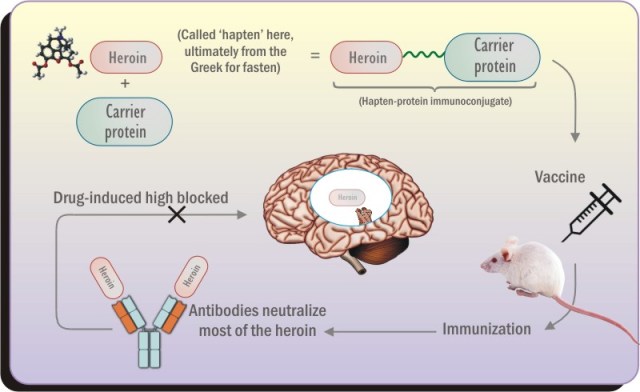
The vaccine works by training the immune system antibodies to recognize and bind to heroin molecules, blocking the drug from reaching the brain to cause a “high.” Researchers believe that blocking the high of heroin will help eliminate the motivation for many recovering addicts to relapse into drug use.

The heroin molecule does not naturally prompt an antibody response, so researchers attach it to a carrier protein that alerts the immune system to start making antibodies. Scientists also add an ingredient called an adjuvant to the vaccine, which boosts the immune response and makes the vaccine more effective.

Hwang says, “Our goal was to prepare a vaccine that could be advanced to clinical trials. As such, we were looking for the best combination of ‘hapten’ (the heroin molecule), carrier protein and adjuvant to keep the vaccine both stable for transport and storage but still efficacious.”

For the new study, the researchers investigated how 20 different carrier protein/adjuvant combinations worked, including shelf stability based on temperature and storage time and whether the formulation was a liquid or powder.

Their experiments in rodent models showed that the best vaccine formulation contained a carrier protein called tetanus toxoid (TT) and adjuvants called alum and CpG ODN. The discovery that alum worked best as an adjuvant was especially significant since alum is one of the few adjuvants used in vaccines already approved by the U.S. Food and Drug Administration. The researchers also found that there was no difference in how well it worked between the liquid and powder versions of this formulation.

Hwang notes that the best vaccine formulation showed protection against lethal doses of heroin. This is particularly important as many heroin addicts have succumb to overdose and death during their attempts to quit the drug.

With this new study, the researchers have shown that the vaccine is safe and effective in animal models, stable under clinical conditions and reliant on an already-approved adjuvant. The next step is to find a producer to make the vaccine on a large scale.

“We believe that a heroin vaccine would be tremendously beneficial for people who have a heroin substance use disorder but have found difficulty in trying to quit,” says Hwang.

In addition to Hwang and Janda, authors of the study, “Enhancing Efficacy and Stability of an Anti-Heroin Vaccine: Examination of Antinociception, Opioid Binding Profile, and Lethality,” were Paul T. Bremer, Cody J. Wenthur, Beverly Ellis and Bin Zhou of The Scripps Research Institute; and Sam On Ho, SuMing Chiang and Gary Fujii of Molecular Express, Inc.

The study was supported by the National Institutes of Health (grants UH3DA041146, F32AI126628, F32DA043323, R42DA040422 and R44AI094770).

https://www.scripps.edu/news/press/2018/20180213janda.html

Potential Drug Target for Bipolar Disease Identified

Bipolar Disorder (BD) is a multifactorial brain disorder in which patients experience radical shifts in mood and undergo periods of depression followed by periods of mania. It has been known for some time that both environmental and genetic factors play important roles in the disease. For instance, being exposed to high levels of stress for long periods, and especially during childhood, has been associated with the development of BD.

Immediate early genes (IEGs) are a class of genes that respond very rapidly to environmental stimuli, and that includes stress. IEGs respond to a stressor by activating other genes that lead to neuronal plasticity, the ability of brain cells to change in form and function in response to changes in the environment. Ultimately, it is the process of neuronal plasticity that gives the brain the ability to learn from and adapt to new experiences.

One type of protein produced by IEGs is the so-called Early Growth Response (EGR) proteins, which translate environmental influence into long-term changes in the brain. These proteins are found throughout the brain and are highly produced in response to environmental changes such as stressful stimuli and sleep deprivation. Without the action played out by these proteins, brain cells and the brain itself cannot appropriately respond to the many stimuli that are constantly received from the environment.

Effective neuronal plasticity also depends on neurotrophins, which are regulatory factors that promote development and survival of brain cells. Brain-derived neurotrophic factor (BDNF) is the neurotrophin mostly found in the brain. It has been extensively investigated in BD patients and has been suggested as a hallmark of BD. Indeed, some studies have shown that the levels of BDNF in the serum of BD patients are reduced whenever patients undergo a period of depression, hypomania, or mania. Other studies have shown that regardless of mood state, BD patients present reduced levels of BDNF. Overall, changes in BDNF levels seem to be a characteristic found in BD patients that may contribute to the pathophysiology of the disease.

Now an international team of researchers from Universidade Federal do Rio Grande do Sul in Brazil, University of Arizona College of Medicine in the United States and McMaster University in Canada have published an article connecting the dots between these two players to explain the impaired cellular resilience observed in BD that in the grand scheme of things may relate to the impaired resilience presented by BD patients to respond to events, including stress.

In a previous study done by the group in 2016, one type of IEG gene known as EGR3, that normally responds to environmental events and stressful stimuli, was found repressed in the brain of BD patients, suggesting that when facing a stressor, the EGR3 in BD patients does not respond to the stimulus appropriately. Indeed, BD patients are highly prone to stress and have more difficulties dealing with stress or adapting to it if compared to healthy individuals. What the research group is now suggesting is that both EGR3 and BDNF may each play a critical role in the impaired cellular resilience seen in BD, and that each of these two genes may affect each other’s expression in the cell. “We believe that the reduced level of BDNF that has been extensively observed in BD patients is caused by the fact that EGR3 is repressed in the brain of BD patients. The two molecules are interconnected in a regulatory pathway that is disrupted in BD patients,” says Fabio Klamt, leading author of the article entitled “EGR3 immediate early gene and the brain-derived neurotrophic factor in bipolar disorder” and published on February 5th in the journal Frontiers in Behavioral Neuroscience.

The authors also add that the fact that EGR3 responds very quickly to environmental stimuli renders the molecule a potential drug target. “It is possible to imagine that EGR3 may be modulated in order to increase its expression and that of BDNF, which may have a positive impact on BD patients,” says Bianca Pfaffenseller, a scientist working at Hospital de Clínicas de Porto Alegre, in Brazil, and the first author of the study.

The idea that mental disorders should be seen as any other chronic disease in which the underlying biology plays an important role has replaced the old descriptions of mental illnesses as the result of bad psychological influences. As Nobel prize laureate Eric Kandel has said, “all mental processes are brain processes and therefore all disorders of mental functioning are biological diseases.” The perspective article authored by Fabio Klamt and colleagues supports this view by offering new insights into the underlying biology of this lifelong and devastating mental disorder affecting millions of people worldwide.

This article has been republished from materials provided by Universidade Federal do Rio Grande do Sul. Note: material may have been edited for length and content. For further information, please contact the cited source.

Reference
Pfaffenseller, B., Kapczinski, F., Gallitano, A., & Klamt, F. (2018). EGR3 immediate early gene and the brain-derived neurotrophic factor in bipolar disorder. Frontiers in Behavioral Neuroscience, 12, 15.

https://www.technologynetworks.com/genomics/news/potential-drug-target-for-bipolar-identified-297204?utm_campaign=Newsletter_TN_BreakingScienceNews&utm_source=hs_email&utm_medium=email&utm_content=60440362&_hsenc=p2ANqtz-89oHJTQFUqboYjSURU_IOr9bzx6r5zFJCMV1mEAzlZHgi02vXuuEgb5JNs196HT9b7QaknWb1xraugbZ8U_bITr6Kw-A&_hsmi=60440362

Huntington’s breakthrough may stop disease


Prof Sarah Tabrizi , from the UCL Institute of Neurology, led the trials

By James Gallagher

The defect that causes the neurodegenerative disease Huntington’s has been corrected in patients for the first time, the BBC has learned. An experimental drug, injected into spinal fluid, safely lowered levels of toxic proteins in the brain. The research team, at University College London, say there is now hope the deadly disease can be stopped.

Experts say it could be the biggest breakthrough in neurodegenerative diseases for 50 years.

Huntington’s is one of the most devastating diseases. Some patients described it as Parkinson’s, Alzheimer’s and motor neurone disease rolled into one.

Peter Allen, 51, is in the early stages of Huntington’s and took part in the trial: “You end up in almost a vegetative state, it’s a horrible end.”

Huntington’s blights families. Peter has seen his mum Stephanie, uncle Keith and grandmother Olive die from it. Tests show his sister Sandy and brother Frank will develop the disease. The three siblings have eight children – all young adults, each of whom has a 50-50 chance of developing the disease.

The unstoppable death of brain cells in Huntington’s leaves patients in permanent decline, affecting their movement, behaviour, memory and ability to think clearly.

Peter, from Essex, told me: “It’s so difficult to have that degenerative thing in you.

“You know the last day was better than the next one’s going to be.”
Huntington’s generally affects people in their prime – in their 30s and 40s
Patients die around 10 to 20 years after symptoms start
About 8,500 people in the UK have Huntington’s and a further 25,000 will develop it when they are older

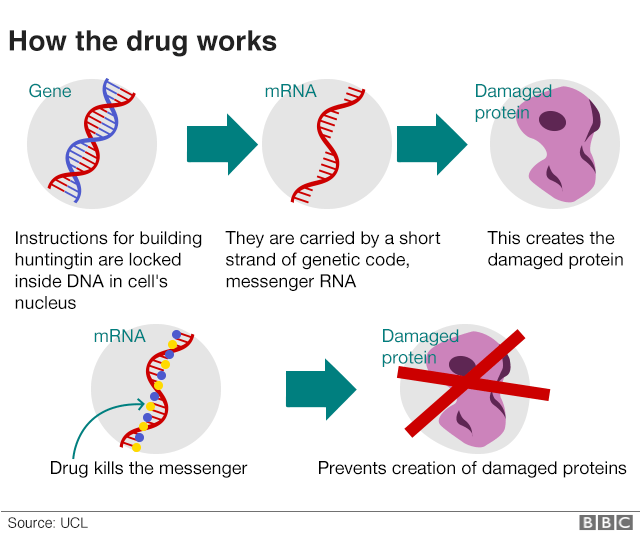
Huntington’s is caused by an error in a section of DNA called the huntingtin gene. Normally this contains the instructions for making a protein, called huntingtin, which is vital for brain development. But a genetic error corrupts the protein and turns it into a killer of brain cells.

The treatment is designed to silence the gene.

On the trial, 46 patients had the drug injected into the fluid that bathes the brain and spinal cord. The procedure was carried out at the Leonard Wolfson Experimental Neurology Centre at the National Hospital for Neurology and Neurosurgery in London. Doctors did not know what would happen. One fear was the injections could have caused fatal meningitis. But the first in-human trial showed the drug was safe, well tolerated by patients and crucially reduced the levels of huntingtin in the brain.

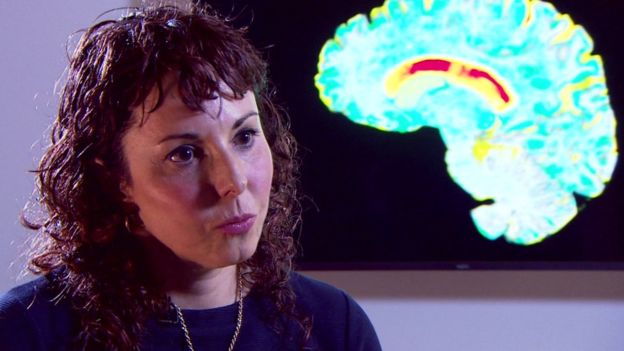
Prof Sarah Tabrizi, the lead researcher and director of the Huntington’s Disease Centre at UCL, told the BBC: “I’ve been seeing patients in clinic for nearly 20 years, I’ve seen many of my patients over that time die. For the first time we have the potential, we have the hope, of a therapy that one day may slow or prevent Huntington’s disease . This is of groundbreaking importance for patients and families.”

Doctors are not calling this a cure. They still need vital long-term data to show whether lowering levels of huntingtin will change the course of the disease. The animal research suggests it would. Some motor function even recovered in those experiments.

Peter, Sandy and Frank – as well as their partners Annie, Dermot and Hayley – have always promised their children they will not need to worry about Huntington’s as there will be a treatment in time for them. Peter told the BBC: “I’m the luckiest person in the world to be sitting here on the verge of having that. “Hopefully that will be made available to everybody, to my brothers and sisters and fundamentally my children.”

He, along with the other trial participants, can continue taking the drug as part of the next wave of trials. They will set out to show whether the disease can be slowed, and ultimately prevented, by treating Huntington’s disease carriers before they develop any symptoms.

Prof John Hardy, who was awarded the Breakthrough Prize for his work on Alzheimer’s, told the BBC: “I really think this is, potentially, the biggest breakthrough in neurodegenerative disease in the past 50 years. That sounds like hyperbole – in a year I might be embarrassed by saying that – but that’s how I feel at the moment.”

The UCL scientist, who was not involved in the research, says the same approach might be possible in other neurodegenerative diseases that feature the build-up of toxic proteins in the brain. The protein synuclein is implicated in Parkinson’s while amyloid and tau seem to have a role in dementias.

Off the back of this research, trials are planned using gene-silencing to lower the levels of tau.

Prof Giovanna Mallucci, who discovered the first chemical to prevent the death of brain tissue in any neurodegenerative disease, said the trial was a “tremendous step forward” for patients and there was now “real room for optimism”.

But Prof Mallucci, who is the associate director of UK Dementia Research Institute at the University of Cambridge, cautioned it was still a big leap to expect gene-silencing to work in other neurodegenerative diseases.

She told the BBC: “The case for these is not as clear-cut as for Huntington’s disease, they are more complex and less well understood. But the principle that a gene, any gene affecting disease progression and susceptibility, can be safely modified in this way in humans is very exciting and builds momentum and confidence in pursuing these avenues for potential treatments.”

The full details of the trial will be presented to scientists and published next year.

The therapy was developed by Ionis Pharmaceuticals, which said the drug had “substantially exceeded” expectations, and the licence has now been sold to Roche.

http://www.bbc.com/news/health-42308341

Small RNA identified that offers clues for quieting the “voices” of schizophrenia


St. Jude Children’s Research Hospital scientists have linked disruption of a brain circuit associated with schizophrenia to an age-related decline in levels of a single microRNA in one brain region

St. Jude Children’s Research Hospital scientists have identified a small RNA (microRNA) that may be essential to restoring normal function in a brain circuit associated with the “voices” and other hallucinations of schizophrenia. The microRNA provides a possible focus for antipsychotic drug development. The findings appear today in the journal Nature Medicine.

The work was done in a mouse model of a human disorder that is one of the genetic causes of schizophrenia. Building on previous St. Jude research, the results offer important new details about the molecular mechanism that disrupts the flow of information along a neural circuit connecting two brain regions involved in processing auditory information. The findings also provide clues about why psychotic symptoms of schizophrenia are often delayed until late adolescence or early adulthood.

“In 2014, we identified the specific circuit in the brain that is targeted by antipsychotic drugs. However, the existing antipsychotics also cause devastating side effects,” said corresponding author Stanislav Zakharenko, M.D., Ph.D., a member of the St. Jude Department of Developmental Neurobiology. “In this study, we identified the microRNA that is a key player in disruption of that circuit and showed that depletion of the microRNA was necessary and sufficient to inhibit normal functioning of the circuit in the mouse models.

“We also found evidence suggesting that the microRNA, named miR-338-3p, could be targeted for development of a new class of antipsychotic drugs with fewer side effects.”

There are more than 2,000 microRNAs whose function is to silence expression of particular genes and regulate the supply of the corresponding proteins. Working in a mouse model of 22q11 deletion syndrome, researchers identified miR-338-3p as the microRNA that regulates production of the protein D2 dopamine receptor (Drd2), which is the prime target of antipsychotics.

Individuals with the deletion syndrome are at risk for behavior problems as children. Between 23 and 43 percent develop schizophrenia, a severe chronic disorder that affects thinking, memory and behavior. Researchers at St. Jude are studying schizophrenia and other brain disorders to improve understanding of how normal brains develop, which provides insights into the origins of diseases like cancer.

The scientists reported that Drd2 increased in the brain’s auditory thalamus when levels of the microRNA declined. Previous research from Zakharenko’s laboratory linked elevated levels of Drd2 in the auditory thalamus to brain-circuit disruptions in the mutant mice. Investigators also reported that the protein was elevated in the same brain region of individuals with schizophrenia, but not healthy adults.

Individuals with the deletion syndrome are missing part of chromosome 22, which leaves them with one rather than the normal two copies of more than 25 genes. The missing genes included Dgcr8, which facilitates production of microRNAs.

Working in mice, researchers have now linked the 22q11 deletion syndrome and deletion of a single Dgcr8 gene to age-related declines in miR-338-3p in the auditory thalamus. The decline was associated with an increase in Drd2 and reduced signaling in the circuit that links the thalamus and auditory cortex, a brain region implicated in auditory hallucination. Levels of miR-338-3p were lower in the thalamus of individuals with schizophrenia compared to individuals of the same age and sex without the diagnosis.

The miR-338-3p depletion did not disrupt other brain circuits in the mutant mice, and the findings offer a possible explanation. Researchers found that miR-338-3p levels were higher in the thalamus than in other brain regions. In addition, miR-338-3p was one of the most abundant microRNAs present in the thalamus.

Replenishing levels of the microRNA in the auditory thalamus of mutant mice reduced Drd2 protein and restored the circuit to normal functioning. That suggests that the microRNA could be the basis for a new class of antipsychotic drugs that act in a more targeted manner with fewer side effects. Antipsychotic drugs, which target Drd2, also restored circuit function.

The findings provide insight into the age-related delay in the onset of schizophrenia symptoms. Researchers noted that microRNA levels declined with age in all mice, but that mutant mice began with lower levels of miR-338-3p. “A minimum level of the microRNA may be necessary to prevent excessive production of the Drd2 that disrupts the circuit,” Zakharenko said. “While miR-338-3p levels decline as normal mice age, levels may remain above the threshold necessary to prevent overexpression of the protein. In contrast, the deletion syndrome may leave mice at risk for dropping below that threshold.”

The study’s first authors are Sungkun Chun, Fei Du and Joby Westmoreland, all formerly of St. Jude. The other authors are Seung Baek Han, Yong-Dong Wang, Donnie Eddins, Ildar Bayazitov, Prakash Devaraju, Jing Yu, Marcia Mellado Lagarde and Kara Anderson, all of St. Jude.

https://www.stjude.org/media-resources/news-releases/2016-medicine-science-news/small-rna-identified-that-offers-clues-for-quieting-the-voices-of-schizophrenia.html

Mechanism of Rapid Antidepressant Effect of Alcohol Elucidated

by Tori Rodriguez, MA, LPC

Individuals with major depressive disorder (MDD) have double the risk of alcohol use disorders (AUDs) and vice versa, and it has previously been proposed that some people with MDD may use alcohol to self-medicate. Though alcohol can become depressant if used chronically, alcohol initially has an antidepressant effect, though the underlying mechanisms have not been identified. Findings reported in September 2016 in Nature Communications begin to elucidate the basis of this action.

Behavioral and molecular evidence of the rapid antidepressant activity of NMDA receptor (NMDAR) antagonists, which have been found to be effective within 2 hours of administration and remain so for 2 weeks, represents a significant advance in depression treatment. Antidepressant efficacy involves the induction phase and the sustained phase.

The sustained phase of rapid antidepressants requires “both new protein synthesis and an increase in protein stability… for the GABABR shift in function necessary to increase” the activity of mTORC1, a mechanistic target of rapamycin complex 1, the authors explained in their paper. Rapamycin (mTOR) is a “serine/threonine kinase essential for messenger RNA translation” and is required for the sustained impact of rapid antidepressants.

Citing previous findings that ethanol (EtOH) also blocks NMDARs in the hippocampus, scientists at the University of Texas at Austin and Wake Forest University School of Medicine in Winston-Salem, North Carolina, aimed to determine whether EtOH and NMDAR antagonists exert rapid antidepressant effects via the same synaptic pathways in rodents. They hypothesized that EtOH “has lasting antidepressant efficacy, shares the same downstream molecular signaling events as rapid antidepressants, and requires de novo protein synthesis.”

First, they found that acute exposure to EtOH led to antidepressant and anxiolytic behaviors in rodents for up to 24 hours. They then discovered that, like NMDAR antagonists, EtOH alters the expression and signaling of GABABR, increases dendritic calcium, and leads to the synthesis of new GABABRs. This synthesis requires fragile-X mental retardation protein (FMRP), an RNA-binding protein of which precise levels are needed for normal neuronal functioning.

The antidepressant effects and the changes in GABABR expression and dendritic calcium were not observed in in Fmr1-knockout (KO) mice, supporting the concept that FMRP has in important role in regulating protein synthesis after EtOH exposure, and thereby facilitating its antidepressant efficacy.

These results point to a shared molecular pathway for the antidepressant activity of EtOH and rapid antidepressants, and highlight a mechanism involved in the initial antidepressant action of alcohol. “A shift in GABABR signaling is observed with both rapid antidepressants and acute EtOH treatment, which may provide insight into the molecular basis for the high comorbidity between major depressive disorder and AUD,” the authors concluded.

http://www.psychiatryadvisor.com/addiction/rapid-antidepressant-effect-of-alcohol/article/567335/?DCMP=EMC-PA_Update_RD&cpn=psych_md%2cpsych_all&hmSubId=&NID=1710903786&dl=0&spMailingID=15723696&spUserID=MTQ4MTYyNjcyNzk2S0&spJobID=881842067&spReportId=ODgxODQyMDY3S0

New research shows that hypnosis alters brain activity in several regions


By scanning the brains of subjects while they were hypnotized, researchers at the School of Medicine were able to see the neural changes associated with hypnosis.

By Sarah C.P. Williams

Your eyelids are getting heavy, your arms are going limp and you feel like you’re floating through space. The power of hypnosis to alter your mind and body like this is all thanks to changes in a few specific areas of the brain, researchers at the Stanford University School of Medicine have discovered.

The scientists scanned the brains of 57 people during guided hypnosis sessions similar to those that might be used clinically to treat anxiety, pain or trauma. Distinct sections of the brain have altered activity and connectivity while someone is hypnotized, they report in a study published online July 28 in Cerebral Cortex.

“Now that we know which brain regions are involved, we may be able to use this knowledge to alter someone’s capacity to be hypnotized or the effectiveness of hypnosis for problems like pain control,” said the study’s senior author, David Spiegel, MD, professor and associate chair of psychiatry and behavioral sciences.

A serious science

For some people, hypnosis is associated with loss of control or stage tricks. But doctors like Spiegel know it to be a serious science, revealing the brain’s ability to heal medical and psychiatric conditions.

“Hypnosis is the oldest Western form of psychotherapy, but it’s been tarred with the brush of dangling watches and purple capes,” said Spiegel, who holds the Jack, Samuel and Lulu Willson Professorship in Medicine. “In fact, it’s a very powerful means of changing the way we use our minds to control perception and our bodies.”

Despite a growing appreciation of the clinical potential of hypnosis, though, little is known about how it works at a physiological level. While researchers have previously scanned the brains of people undergoing hypnosis, those studies have been designed to pinpoint the effects of hypnosis on pain, vision and other forms of perception, and not the state of hypnosis itself.

“There had not been any studies in which the goal was to simply ask what’s going on in the brain when you’re hypnotized,” said Spiegel.

Finding the most susceptible

To study hypnosis itself, researchers first had to find people who could or couldn’t be hypnotized. Only about 10 percent of the population is generally categorized as “highly hypnotizable,” while others are less able to enter the trancelike state of hypnosis. Spiegel and his colleagues screened 545 healthy participants and found 36 people who consistently scored high on tests of hypnotizability, as well as 21 control subjects who scored on the extreme low end of the scales.

Then, they observed the brains of those 57 participants using functional magnetic resonance imaging, which measures brain activity by detecting changes in blood flow. Each person was scanned under four different conditions — while resting, while recalling a memory and during two different hypnosis sessions.

“It was important to have the people who aren’t able to be hypnotized as controls,” said Spiegel. “Otherwise, you might see things happening in the brains of those being hypnotized but you wouldn’t be sure whether it was associated with hypnosis or not.”

Brain activity and connectivity

Spiegel and his colleagues discovered three hallmarks of the brain under hypnosis. Each change was seen only in the highly hypnotizable group and only while they were undergoing hypnosis.

First, they saw a decrease in activity in an area called the dorsal anterior cingulate, part of the brain’s salience network. “In hypnosis, you’re so absorbed that you’re not worrying about anything else,” Spiegel explained.

Secondly, they saw an increase in connections between two other areas of the brain — the dorsolateral prefrontal cortex and the insula. He described this as a brain-body connection that helps the brain process and control what’s going on in the body.

Finally, Spiegel’s team also observed reduced connections between the dorsolateral prefrontal cortex and the default mode network, which includes the medial prefrontal and the posterior cingulate cortex. This decrease in functional connectivity likely represents a disconnect between someone’s actions and their awareness of their actions, Spiegel said. “When you’re really engaged in something, you don’t really think about doing it — you just do it,” he said. During hypnosis, this kind of disassociation between action and reflection allows the person to engage in activities either suggested by a clinician or self-suggested without devoting mental resources to being self-conscious about the activity.

Treating pain and anxiety without pills

In patients who can be easily hypnotized, hypnosis sessions have been shown to be effective in lessening chronic pain, the pain of childbirth and other medical procedures; treating smoking addiction and post-traumatic stress disorder; and easing anxiety or phobias. The new findings about how hypnosis affects the brain might pave the way toward developing treatments for the rest of the population — those who aren’t naturally as susceptible to hypnosis.

“We’re certainly interested in the idea that you can change people’s ability to be hypnotized by stimulating specific areas of the brain,” said Spiegel.

A treatment that combines brain stimulation with hypnosis could improve the known analgesic effects of hypnosis and potentially replace addictive and side-effect-laden painkillers and anti-anxiety drugs, he said. More research, however, is needed before such a therapy could be implemented.

The study’s lead author is Heidi Jiang, a former research assistant at Stanford who is currently a graduate student in neuroscience at Northwestern University.

Other Stanford co-authors are clinical assistant professor of psychiatry and behavioral sciences Matthew White, MD; and associate professor of neurology Michael Greicius, MD, MPH.

The study was funded by the National Center for Complementary and Integrative Health (grant RCIAT0005733), the National Institute of Biomedical Imaging and Bioengineering (grant P41EB015891), the Randolph H. Chase, M.D. Fund II, the Jay and Rose Phillips Family Foundation and the Nissan Research Center.

Stanford’s Department of Psychiatry and Behavioral Sciences and Department of Neurology and Neurological Sciences also supported the work.

Jiang H, White MP, Greicius MD, Waelde LC and Spiegel D. Brain Activity and Functional Connectivity Associated with Hypnosis. Cerebral Cortex. 2016 July 28;[Epub ahead of print].

http://med.stanford.edu/news/all-news/2016/07/study-identifies-brain-areas-altered-during-hypnotic-trances.html

New progress in understanding what may give animals a magnetic sense: a protein that acts as a compass

Quick – can you tell where north is? Animals as diverse as sea turtles, birds, worms, butterflies and wolves can, thanks to sensing Earth’s magnetic field.

But the magnet-sensing structures inside their cells that allow them to do this have evaded scientists – until now.

A team led by Can Xie’s at Peking University in China has now found a protein in fruit flies, butterflies and pigeons that they believe to be responsible for this magnetic sense.

“It’s provocative and potentially groundbreaking,” says neurobiologist Steven Reppert of the University of Massachusetts who was not involved in the work. “It took my breath away.”

There used to be two competing theories about magnetic sense: some thought it came from iron-binding molecules, others thought it came from a protein called cryptochrome, which senses light and has been linked to magnetic sense in birds.

Xie’s group was the first to guess these two were part of the same system, and has now figured out how they fit together.

“This was a very creative approach,” says Reppert. “Everyone thought they were two separate systems.”

Xie’s team first screened the fruit fly genome for a protein that would fit a very specific bill.

The molecule had to bind iron, it had to be expressed inside a cell instead of on the cell membrane and do so in the animal’s head – where animals tend to sense magnetic fields – and it also had to interact with cryptochrome.

“We found one [gene] fit all of our predictions,” says Xie. They called it MagR and then used techniques including electron microscopy and computer modelling to figure out the protein’s structure.

They found that MagR and cryptochrome proteins formed a cylinder, with an inside filling of 20 MagR molecules surrounded by 10 cryptochromes.

The researchers then identified and isolated this protein complex from pigeons and monarch butterflies.

In the lab, the proteins snapped into alignment in response to a magnetic field. They were so strongly magnetic that they flew up and stuck to the researchers’ tools, which contained iron. So the team had to use custom tools made of plastic.

The team hasn’t yet tried to remove the MagR protein from an animal like a fruit fly to see if it loses its magnetic sense, but Xie believes the proteins work the same way in a living animal.

Although this protein complex seems to form the basis of magnetic sense, the exact mechanism is still to be figured out.

One idea is that when an animal changes direction, the proteins may swing around to point north, “just like a compass needle,” says Xie. Perhaps the proteins’ movement could trigger a connected molecule, which would send a signal to the nervous system.

Journal reference: Nature Materials, DOI: 10.1038/nmat4484

https://www.newscientist.com/article/dn28494-animal-magnetic-sense-comes-from-protein-that-acts-as-a-compass

Thanks to Kebmodee for bringing this to the It’s Interesting community.

The Power of Music in Alleviating Dementia Symptoms

by Tori Rodriguez, MA, LPC

As the search continues for effective drug treatments for dementia, patients and caregivers may find some measure of relief from a common, non-pharmaceutical source. Researchers have found that music-related memory appears to be exempt from the extent of memory impairment generally associated with dementia, and several studies report promising results for several different types of musical experiences across a variety of settings and formats.

“We can say that perception of music can be intact, even when explicit judgments and overt recognition have been lost,” Manuela Kerer, PhD, told Psychiatry Advisor. “We are convinced that there is a specialized memory system for music, which is distinct from other domains, like verbal or visual memory, and may be very resilient against Alzheimer’s disease.”

Kerer is a full-time musical composer with a doctoral degree in psychology who co-authored a study on the topic while working at the University of Innsbruck in Austria. She and her colleagues investigated explicit memory for music among ten patients with early-state Alzheimer’s disease (AD) and ten patients with mild cognitive impairment (MCI), and compared their performance to that of 23 healthy participants. Not surprisingly, the patient group demonstrated worse performance on tasks involving verbal memory, but they did significantly better than controls on the music-perceptional tasks of detecting distorted tunes and judging timbre.

“The temporal brain structures necessary for verbal musical memory were mildly affected in our clinical patients, therefore attention might have shifted to the discrimination tasks which led to better results in this area,” she said. “Our results enhance the notion of an explicit memory for music that can be distinguished from other types of explicit memory — that means that memory for music could be spared in this patient group.”

Other findings suggest that music might even improve certain aspects of memory among people with dementia. In a randomized controlled trial published in last month in the Journal of Alzheimer’s Disease, music coaching interventions improved multiple outcomes for both patients with dementia and their caregivers. The researchers divided 89 pairs of patients with dementia and their caregivers into three groups: two groups were assigned to caregiver-led interventions that involved either singing or listening to music, while a third group received standard care. Before and after the 10-week intervention, and six months after the intervention, participants were assessed on measures of mood, quality of life and neuropsychological functioning.

Results showed that the singing intervention improved working memory among patients with mild dementia and helped to preserve executive function and orientation among younger patients, and it also improved the well-being of caregivers. The listening intervention was found to have a positive impact on general cognition, working memory and quality of life, particularly among patients in institutional care with moderate dementia not caused by AD. Both interventions led to reductions in depression.

The findings suggest that “music has the power to improve mood and stimulate cognitive functions in dementia, most likely by engaging limbic and medial prefrontal brain regions, which are often preserved in the early stages of the illness,” study co-author Teppo Särkämö, PhD, a researcher at the University of Helsinki, Finland, told Psychiatry Advisor. “The results indicate that when used regularly, caregiver-implemented musical activities can be an important and easily applicable way to maintain the emotional and cognitive well-being of persons with dementia and also to reduce the psychological burden of family caregivers.”

Singing has also been shown to increase learning and retention of new verbal material in patients with AD, according to research published this year in the Journal of Clinical & Experimental Neuropsychology, and findings published in 2013 show that listening to familiar music improves the verbal narration of autobiographical memories in such patients. Another study found that a music intervention delivered in a group format reduced depression and delayed the deterioration of cognitive functions, especially short-term recall, in patients with mild and moderate dementia. Group-based music therapy appears to also decrease agitation among patients in all stages of dementia, as described in a systematic review published in 2014 in Nursing Times.

n addition to the effects of singing and listening to music on patients who already have dementia, playing a musical instrument may also offer some protection against the condition, according to a population-based twin study reported in 2014 in the International Journal of Alzheimer’s Disease. Researchers at the University of Southern California found that older adults who played an instrument were 64% less likely than their non-musician twin to develop dementia or cognitive impairment.

“Playing an instrument is a unique activity in that it requires a wide array of brain regions and cognitive functions to work together simultaneously, throughout both the right and left hemispheres,” co-author Alison Balbag, PhD, told Psychiatry Advisor. While the study did not examine causal mechanisms, “playing an instrument may be a very effective and efficient way to engage the brain, possibly granting older musicians better maintained cognitive reserve and possibly providing compensatory abilities to mitigate age-related cognitive declines.”

She notes that clinicians might consider suggesting that patients incorporate music-making into their lives as a preventive activity, or encouraging them to keep it up if they already play an instrument.
Further research, particularly neuroimaging studies, is needed to elucidate the mechanisms behind the effects of music on dementia, but in the meantime it could be a helpful supplement to patients’ treatment plans. “Music has considerable potential and it should be introduced much more in rehabilitation and neuropsychological assessment,” Kerer said.

http://www.psychiatryadvisor.com/alzheimers-disease-and-dementia/neurocognitive-neurodegenerative-memory-musical-alzheimers/article/452120/3/

References

Kerer M, Marksteiner J, Hinterhuber H, et al. Explicit (semantic) memory for music in patients with mild cognitive impairment and early-stage Alzheimer’s disease. Experimental Aging Research; 2013; 39(5):536-64.

Särkämö T, Laitinen S, Numminen A, et al. Clinical and Demographic Factors Associated with the Cognitive and Emotional Efficacy of Regular Musical Activities in Dementia. Journal of Alzheimer’s Disease; 2015; published online ahead of print.

Palisson J, Roussel-Baclet C, Maillet D, et al. Music enhances verbal episodic memory in Alzheimer’s disease. Journal of Clinical & Experimental Neuropsychology; 2015; 37(5):503-17.

El Haj M, Sylvain Clément, Luciano Fasotti, Philippe Allain. Effects of music on autobiographical verbal narration in Alzheimer’s disease. Journal of Neurolinguistics; 2013; 26(6): 691–700.

Chu H, Yang CY, Lin Y, et al. The impact of group music therapy on depression and cognition in elderly persons with dementia: a randomized controlled study. Biological Research for Nursing; 2014; 16(2):209-17.

Craig J. Music therapy to reduce agitation in dementia. Nursing Times; 2014; 110(32-33):12-5.
Balbag MA, Pedersen NL, Gatz M. Playing a Musical Instrument as a Protective Factor against Dementia and Cognitive Impairment: A Population-Based Twin Study. International Journal of Alzheimer’s Disease; 2014; 2014: 836748.

Exploring the Biology of Eating Disorders

With the pressure for a certain body type prevalent in the media, eating disorders are on the rise. But these diseases are not completely socially driven; researchers have uncovered important genetic and biological components as well and are now beginning to tease out the genes and pathways responsible for eating disorder predisposition and pathology.

As we enter the holiday season, shoppers will once again rush into crowded department stores searching for the perfect gift. They will be jostled and bumped, yet for the most part, remain cheerful because of the crisp air, lights, decorations, and the sound of Karen Carpenter’s contralto voice ringing out familiar carols.

While Carpenter is mainly remembered for her musical talents, unfortunately, she is also known for introducing the world to anorexia nervosa (AN), a severe life-threatening mental illness characterized by altered body image and stringent eating patterns that claimed her life just before her 33rd birthday in 1983.

Even though eating disorders (ED) carry one of the highest mortality rates of any mental illness, many researchers and clinicians still view them as socially reinforced behaviors and diagnose them based on criteria such as “inability to maintain body weight,” “undue influence of body weight or shape on self-evaluation,” and “denial of the seriousness of low body weight” (1). This way of thinking was prevalent when Michael Lutter, then an MD/PhD student at the University of Texas Southwestern Medical Center, began his psychiatry residency in an eating disorders unit. “I just remember the intense fear of eating that many patients exhibited and thought that it had to be biologically driven,” he said.

Lutter carried this impression with him when he established his own research laboratory at the University of Iowa. Although clear evidence supports the idea that EDs are biologically driven—they predominantly affect women and significantly alter energy homeostasis—a lack of well-defined animal models combined with the view that they are mainly behavioral abnormalities have hindered studies of the neurobiology of EDs. Still, Lutter is determined to find the biological roots of the disease and tease out the relationship between the psychiatric illness and metabolic disturbance using biochemistry, neuroscience, and human genetics approaches.

We’ve Only Just Begun

Like many diseases, EDs result from complex interactions between genes and environmental risk factors. They tend to run in families, but of course, for many family members, genetics and environment are similar enough that teasing apart the influences of nature and nurture is not easy. Researchers estimate that 50-80% of the predisposition for developing an ED is genetic, but preliminary genome-wide analyses and candidate gene studies failed to identify specific genes that contribute to the risk.

According to Lutter, finding ED study participants can be difficult. “People are either reluctant to participate, or they don’t see that they have a problem,” he reported. Set on finding the genetic underpinnings of EDs, his team began recruiting volunteers and found 2 families, 1 with 20 members, 10 of whom had an ED and another with 5 out of 8 members affected. Rather than doing large-scale linkage and association studies, the team decided to characterize rare single-gene mutations in these families, which led them to identify mutations in the first two genes, estrogen-related receptor α (ESRRA) and histone deacetylase 4 (HDAC4), that clearly associated with ED predisposition in 2013 (1).

“We have larger genetic studies on-going, including the collection of more families. We just happened to publish these two families first because we were able to collect enough individuals and because there is a biological connection between the two genes that we identified,” Lutter explained.

ESRRA appears to be a transcription factor upregulated by exercise and calorie restriction that plays a role in energy balance and metabolism. HDAC4, on the other hand, is a well-described histone deacteylase that has previously been implicated in locomotor activity, body weight homeostasis, and neuronal plasticity.

Using immunoprecipitation, the researchers found that ESRRA interacts with HDAC4, in both the wild type and mutant forms, and transcription assays showed that HDAC4 represses ESRRA activity. When Lutter’s team repeated the transcription assays using mutant forms of the proteins, they found that the ESRRA mutation seen in one family significantly reduced the induction of target gene transcription compared to wild type, and that the mutation in HDAC4 found in the other family increased transcriptional repression for ESRRA target genes.

“ESRRA is a well known regulator of mitochondrial function, and there is an emerging view that mitochondria in the synapse are critical for neurotransmission,” Lutter said. “We are working on identifying target pathways now.”

Bless the Beasts and the Children

Finding genes associated with EDs provides the groundwork for molecular studies, but EDs cannot be completely explained by the actions of altered transcription factors. Individuals suffering these disorders often experience intense anxiety, intrusive thoughts, hyperactivity, and poor coping strategies that lead to rigid and ritualized behaviors and severe crippling perfectionism. They are less aware of their emotions and often try to avoid emotion altogether. To study these complex behaviors, researchers need animal models.

Until recently, scientists relied on mice with access to a running wheel and restricted access to food. Under these conditions, the animals quickly increase their locomotor activity and reduce eating, frequently resulting in death. While some characteristics of EDs—excessive exercise and avoiding food—can be studied in these mice, the model doesn’t allow researchers to explore how the disease actually develops. However, Lutter’s team has now introduced a promising new model (3).

Based on their previous success with identifying the involvement of ESRRA and HDAC4 in EDs, the researchers wondered if mice lacking ESRRA might make suitable models for studies on ED development. To find out, they first performed immunohistochemistry to understand more about the potential cognitive role of ESRRA.

“ESRRA is not expressed very abundantly in areas of the brain typically implicated in the regulation of food intake, which surprised us,” Lutter said. “It is expressed in many cortical regions that have been implicated in the etiology of EDs by brain imaging like the prefrontal cortex, orbitofrontal cortex, and insula. We think that it probably affects the activity of neurons that modulate food intake instead of directly affecting a core feeding circuit.”

With these data, the team next tried providing only 60% of the normal daily calories to their mice for 10 days and looked again at ESRRA expression. Interestingly, ESRRA levels increased significantly when the mice were insufficiently fed, indicating that the protein might be involved in the response to energy balance.

Lutter now believes that upregulation of ESRRA helps organisms adapt to calorie restriction, an effect possibly not happening in those with ESRRA or HDAC4 mutations. “This makes sense for the clinical situation where most individuals will be doing fine until they are challenged by something like a diet or heavy exercise for a sporting event. Once they start losing weight, they don’t adapt their behaviors to increase calorie intake and rapidly spiral into a cycle of greater and greater weight loss.”

When Lutter’s team obtained mice lacking ESRRA, they found that these animals were 15% smaller than their wild type littermates and put forth less effort to obtain food both when fed restricted calorie diets and when they had free access to food. These phenotypes were more pronounced in female mice than male mice, likely due to the role of estrogen signaling. Loss of ESRRA increased grooming behavior, obsessive marble burying, and made mice slower to abandon an escape hole after its relocation, indicating behavioral rigidity. And the mice demonstrated impaired social functioning and reduced locomotion.

Some people with AN exercise extensively, but this isn’t seen in all cases. “I would say it is controversial whether or not hyperactivity is due to a genetic predisposition (trait), secondary to starvations (state), or simply a ritual that develops to counter the anxiety of weight related obsessions. Our data would suggest that it is not due to genetic predisposition,” Lutter explained. “But I would caution against over-interpretation of mouse behavior. The locomotor activity of mice is very different from people and it’s not clear that you can directly translate the results.”

For All We Know

Going forward, Lutter’s group plans to drill down into the behavioral phenotypes seen in their ESRRA null mice. They are currently deleting ESRRA from different neuronal cell types to pair individual neurons with the behaviors they mediate in the hope of working out the neural circuits involved in ED development and pathology.

In addition, the team has created a mouse line carrying one of the HDAC4 mutations previously identified in their genetic study. So far, this mouse “has interesting parallels to the ESRRA-null mouse line,” Lutter reported.

The team continues to recruit volunteers for larger-scale genetic studies. Eventually, they plan to perform RNA-seq to identify the targets of ESRRA and HDAC4 and look into their roles in mitochondrial biogenesis in neurons. Lutter suspects that this process is a key target of ESRRA and could shed light on the cognitive differences, such as altered body image, seen in EDs. In the end, a better understanding of the cells and pathways involved with EDs could create new treatment options, reduce suffering, and maybe even avoid the premature loss of talented individuals to the effects of these disorders.

References

1. Lutter M, Croghan AE, Cui H. Escaping the Golden Cage: Animal Models of Eating Disorders in the Post-Diagnostic and Statistical Manual Era. Biol Psychiatry. 2015 Feb 12.

2. Cui H, Moore J, Ashimi SS, Mason BL, Drawbridge JN, Han S, Hing B, Matthews A, McAdams CJ, Darbro BW, Pieper AA, Waller DA, Xing C, Lutter M. Eating disorder predisposition is associated with ESRRA and HDAC4 mutations. J Clin Invest. 2013 Nov;123(11):4706-13.

3. Cui H, Lu Y, Khan MZ, Anderson RM, McDaniel L, Wilson HE, Yin TC, Radley JJ, Pieper AA, Lutter M. Behavioral disturbances in estrogen-related receptor alpha-null mice. Cell Rep. 2015 Apr 21;11(3):344-50.

http://www.biotechniques.com/news/Exploring-the-Biology-of-Eating-Disorders/biotechniques-361522.html

Scientists encode memories in a way that bypasses damaged brain tissue

Researchers at University of South Carolina (USC) and Wake Forest Baptist Medical Center have developed a brain prosthesis that is designed to help individuals suffering from memory loss.

The prosthesis, which includes a small array of electrodes implanted into the brain, has performed well in laboratory testing in animals and is currently being evaluated in human patients.

Designed originally at USC and tested at Wake Forest Baptist, the device builds on decades of research by Ted Berger and relies on a new algorithm created by Dong Song, both of the USC Viterbi School of Engineering. The development also builds on more than a decade of collaboration with Sam Deadwyler and Robert Hampson of the Department of Physiology & Pharmacology of Wake Forest Baptist who have collected the neural data used to construct the models and algorithms.

When your brain receives the sensory input, it creates a memory in the form of a complex electrical signal that travels through multiple regions of the hippocampus, the memory center of the brain. At each region, the signal is re-encoded until it reaches the final region as a wholly different signal that is sent off for long-term storage.

If there’s damage at any region that prevents this translation, then there is the possibility that long-term memory will not be formed. That’s why an individual with hippocampal damage (for example, due to Alzheimer’s disease) can recall events from a long time ago – things that were already translated into long-term memories before the brain damage occurred – but have difficulty forming new long-term memories.

Song and Berger found a way to accurately mimic how a memory is translated from short-term memory into long-term memory, using data obtained by Deadwyler and Hampson, first from animals, and then from humans. Their prosthesis is designed to bypass a damaged hippocampal section and provide the next region with the correctly translated memory.

That’s despite the fact that there is currently no way of “reading” a memory just by looking at its electrical signal.

“It’s like being able to translate from Spanish to French without being able to understand either language,” Berger said.

Their research was presented at the 37th Annual International Conference of the IEEE Engineering in Medicine and Biology Society in Milan on August 27, 2015.

The effectiveness of the model was tested by the USC and Wake Forest Baptist teams. With the permission of patients who had electrodes implanted in their hippocampi to treat chronic seizures, Hampson and Deadwyler read the electrical signals created during memory formation at two regions of the hippocampus, then sent that information to Song and Berger to construct the model. The team then fed those signals into the model and read how the signals generated from the first region of the hippocampus were translated into signals generated by the second region of the hippocampus.

In hundreds of trials conducted with nine patients, the algorithm accurately predicted how the signals would be translated with about 90 percent accuracy.

“Being able to predict neural signals with the USC model suggests that it can be used to design a device to support or replace the function of a damaged part of the brain,” Hampson said.
Next, the team will attempt to send the translated signal back into the brain of a patient with damage at one of the regions in order to try to bypass the damage and enable the formation of an accurate long-term memory.

http://medicalxpress.com/news/2015-09-scientists-bypass-brain-re-encoding-memories.html#nRlv