Ex-prof set up company to re-sell lab equipment to Colorado University at 300% markup


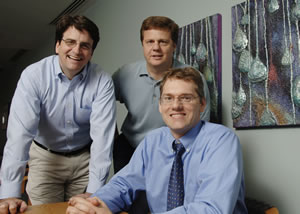
Donald Cooper with scientific colleagues.


Donald Cooper mug shot.

A former University of Colorado professor has been arrested on suspicion of creating a company to sell marked-up lab equipment to the Boulder campus in what prosecutors call a theft “scheme.”

Donald Cooper, 44, was arrested at his home in Boulder on Tuesday afternoon, according to Boulder County District Attorney’s Office officials. It was unclear late Tuesday if Cooper had posted bond, which was set at $5,000.

He is facing a felony charge of theft between $20,000 and $100,000. Prosecutors allege that he created Boulder Science Resource to buy lasers and other lab equipment that he marked up 300 percent and then resold to his university laboratory, according to an arrest affidavit.

The arrangement also benefitted the professor’s father, who received a salary and a car from Boulder Science Resource, according to the arrest affidavit.

In total, CU paid Boulder Science Resource $97,554.03 between Jan. 1, 2009, and April 30, 2013, according to the affidavit.

According to CU’s calculations, Cooper’s markups cost the university $65,036.

Cooper resigned in July 2014 as part of a settlement deal with the university, which had begun the process of firing him on suspicion of fiscal misconduct. He had been director of the molecular neurogenetics and optophysiology laboratory in CU’s Institute for Behavioral Genetics, where he was a tenured associate professor.

After he learned about the university’s internal investigation, Cooper filed a notice of claim in September 2013 seeking $20 million in damages. Any person who wishes to sue a state entity must first file a notice of claim.

Cooper’s attorney Seth Benezra wrote in the notice of claim that Gary Cooper, the professor’s father, was the sole owner of Boulder Science Resource. He also wrote that the company sold CU equipment “at prices that were greatly discounted.”

Donald Cooper also complained that CU investigators had obtained an email about his father’s “alleged mental impairment,” according to the notice of claim.

“(The investigator’s) theory is that Gary Cooper lacks the mental capacity to run (Boulder Science Resource) and so Dr. Cooper must really be in charge,” Benezra wrote. “This assertion was pure speculation based on entirely private information and was rebutted by Dr. Cooper in multiple meetings with investigators.”

Benezra did not return messages from the Daily Camera on Tuesday. It’s unclear who is representing Cooper in the criminal case.

Though Cooper claims that his father was in charge of the company, prosecutors assert that the professor “employed a scheme” to deceive the university for his own gain, according to the affidavit.

“It is alleged that (Boulder Science Resource) was created to defraud the University of Colorado Boulder by acting as a middleman to generate income to employ Gary and to provide personal benefit for Cooper,” wrote Alisha Baurer, an investigator in the District Attorney’s Office.

‘Fake business’

CU was tipped off about Boulder Science Resource by another employee in Cooper’s department, who told investigators that he heard about the arrangement from Cooper’s ex-wife, according to the arrest affidavit.

The ex-wife told the CU employee that Cooper had created a “fake business” using “dirty money” from grants and start-up funds, according to the affidavit.

The financial manager for Cooper’s department told investigators that he never mentioned that his dad owned Boulder Science Resource, and said Cooper only referred to “Gary” by his first name, according to the affidavit.

The DA’s Office determined that Gary Cooper received $23,785.80 from Boulder Science Resource in the form of a salary and a car. They also found that $31,974.89 was paid from the company’s accounts to Donald Cooper’s personal credit card and that $14,733.54 was paid to his personal PayPal account from the business, according to the affidavit.

CU’s internal audit found that Boulder Science Resource had no customers other than the university and Mobile Assay, a company founded by Donald Cooper based on a technology he developed at the university.

Some of the money CU paid to Boulder Science Resource came from federal grants, including $7,220 from the National Institutes of Health and $15,288 from the National Institute on Drug Abuse, according to the internal audit report.

CU’s investigation found that although Cooper claimed his father purchased the lab equipment for Boulder Science Resource, the professor used his university email account to negotiate with the manufacturers.

“It is internal audit’s conclusion that the forgoing acts/failures to act were done with intent to gain an unauthorized benefit,” according to the audit report.

Boulder Science Resource was dissolved in December 2013, according to the Secretary of State’s Office.

Settlement terms

Reached by phone Tuesday afternoon, Patrick O’Rourke, CU’s chief legal officer, said the university was aware of Cooper’s arrest and will cooperate with prosecutors.

CU settled with Cooper last summer after initiating termination proceedings. In exchange for his resignation, the university agreed to provide the professor with a letter of reference “acknowledging his significant achievement in creating a neuroscience undergraduate program,” according to the settlement document.

CU also paid $20,000 to partially reimburse Cooper’s attorney and forgave an $80,000 home loan. CU provides down payment-assistance loans to some faculty members.

Had the university continued the termination process, which is lengthy, Cooper would have continued to receive his full salary of $89,743 and all benefits during the proceedings.

O’Rourke said the university instead opted to accept Cooper’s resignation and saved money with the settlement.

http://www.dailycamera.com/cu-news/ci_28056525/former-cu-boulder-professor-arrested-theft-case
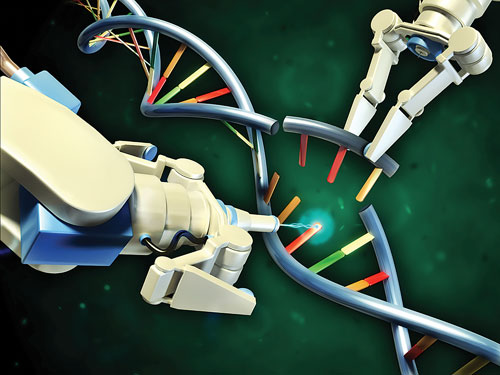
Chinese researchers report first-ever gene editing of human embryos

In an ethically charged first, Chinese researchers have used gene editing to modify human embryos obtained from an in-vitro fertilization clinic.

The 16-person scientific team, based at the Sun Yat-Sen University in Guangzhou, China, set out to see whether it could correct the gene defect that causes beta-thalassemia, a blood disease, by editing the DNA of fertilized eggs.

The team’s report showed the method is not yet very accurate, confirming scientific doubts around whether gene editing could be practical in human embryos, and whether genetically engineered people are going to be born anytime soon.

The authors’ report appeared on April 18 in a low-profile scientific journal called Protein & Cell. The authors, led by Junjiu Huang, say there is a “pressing need” to improve the accuracy of gene editing before it can be applied clinically, for instance to produce children with repaired genes.

The team did not try to establish a pregnancy and say for ethical reasons they did their tests only in embryos that were abnormal.

“These authors did a very good job pointing out the challenges,” says Dieter Egli, a researcher at the New York Stem Cell Foundation in Manhattan. “They say themselves this type of technology is not ready for any kind of application.”

The paper had previously circulated among researchers and had provoked concern by highlighting how close medical science may be to tinkering with the human gene pool.

n March, an industry group called for a complete moratorium on experiments of the kind being reported from China, citing risks and the chance they would open the door to eugenics, or changing nonmedical traits in embryos, such as stature or intelligence.

Other scientists recommended high-level meetings of experts, regulators, and ethicists to debate if there are acceptable uses for such engineering.

The Chinese team reported editing the genes of more than 80 embryos using a technology called CRISPR-Cas9. While in some cases they were successful, in others the CRISPR technology didn’t work or introduced unexpected mutations. Some of the embryos ended up being mosaics, with a repaired gene in some cells, but not in others.

Parents who are carriers of beta-thalassemia could choose to test their IVF embryos, selecting those that have not inherited the disease-causing mutation. However, gene editing opens the possibility of germline modification, or permanently repairing the gene in an embryo, egg, or sperm in a way that is passed onto the offspring and to future generations.

That idea is the subject of intense debate, since some think the human gene pool is sacrosanct and should never be the subject of technological alteration, even for medical reasons. Others allow that germline engineering might one day be useful, but needs much more testing. “You can’t discount it,” says Egli. “It’s very interesting.”

The Chinese team performed the gene editing in eggs that had been fertilized in an IVF clinic but were abnormal because they had been fertilized by two sperm, not one. “Ethical reasons precluded studies of gene editing in normal embryos,” they said.

Abnormal embryos are widely available for research, both in China and the U.S. At least one U.S. genetics center is also using CRISPR in abnormal embryos rejected by IVF clinics. That group described aspects of its work on the condition that it would not be identified, since the procedure remains controversial.

Making repairs using CRISPR harnesses a cell’s own DNA repair machinery to correct genes. The technology guides a cutting protein to a particular site on the DNA molecule, chopping it open. If a DNA “repair template” is provided—in this case a correct version of the beta-globin gene—the DNA will mend itself using the healthy sequence.

The Chinese group says that among the problems they encountered, the embryo sometimes ignored the template, and instead repaired itself using similar genes from its own genome, “leading to untoward mutations.”

Huang said he stopped the research after the poor results. “If you want to do it in normal embryos, you need to be close to 100 percent,” Huang told Nature News. “That’s why we stopped. We still think it’s too immature.”

http://www.technologyreview.com/news/536971/chinese-team-reports-gene-editing-human-embryo/

Thanks to Michael Moore for bringing this to the It’s Interesting community.

Scientists manage to give mice ‘eating disorders’ by knocking out one gene

By Rachel Feltman

If you give a mouse an eating disorder, you might just figure out how to treat the disease in humans. In a new study published Thursday in Cell Press, researchers created mice who lacked a gene associated with disordered eating in humans. Without it, the mice showed behaviors not unlike those seen in humans with eating disorders: They tended to be obsessive compulsive and have trouble socializing, and they were less interested in eating high-fat food than the control mice. The findings could lead to novel drug treatments for some of the 24 million Americans estimated to suffer from eating disorders.

In a 2013 study, the same researchers went looking for genes that might contribute to the risk of an eating disorder. Anorexia nervosa and bulimia nervosa aren’t straightforwardly inherited — there’s definitely more to an eating disorder than your genes — but it does seem like some families might have higher risks than others. Sure enough, the study of two large families, each with several members who had eating disorders, yielded mutations in two interacting genes. In one family, the estrogen-related receptor α (ESRRA) gene was mutated. The other family had a mutation on another gene that seemed to affect how well ESRRA could do its job.

So in the latest study, they created mice that didn’t have ESRRA in the parts of the brain associated with eating disorders.

“You can’t go testing this kind of gene expression in a human,” lead author and University of Iowa neuroscientist Michael Lutter said. “But in mice, you can manipulate the expression of the gene and then look at how it changes their behavior.”

It’s not a perfect analogy to what the gene mutation might do in a human, but the similarities can allow researchers to figure out the mechanism that causes the connection between your DNA and your eating habits.

The mice without ESRRA were tested for several eating-disorder-like behaviors: The researchers tested how hard they were willing to work for high fat food when they were hungry (less, it seemed, so much so that they weighed 15 percent less than their unaltered littermates), how compulsive they were, and how they behaved socially.

In general, the ESRRA-lacking mice were twitchier: They tended to overgroom, a common sign of anxiety in mice, and they were more wary of novelty, growing anxious when researchers put marbles into their cages. They also showed an inability to adapt: When researchers taught the mice how to exit a maze and then changed where the exit was, the mice without ESRRA spent way more time checking out the area where the exit should have been before looking for where it had gone.

The social changes were even more striking: Mice will usually show more interest in a new mouse than one they’ve met before, but in tests the modified mice showed the opposite preference, socializing with a familiar mouse when a new one was also presented.

They were also universally submissive to other mice, something the researchers detected with a sort of scientific game of chicken. Two mice are placed at either end of a tube, and one always plows past the other to get to the opposite side. It’s just the way mice size each other up — someone has to be on top. But every single one of the modified mice let themselves get pushed around.

“100% of the mice lacking this gene were subordinate,” Lutter said. “I’ve never seen an experiment before that produced a 0% verses 100% result.”

The avoidance of fats has an obvious connection to human disorders. But the social anxiety and rigidity are also close analogies to disordered eating in humans.

Now that Lutter and his colleagues know that the gene does something similar in mice, they can start looking for the actual mechanism that’s tripping these switches in the brain. They know that the gene’s pathway is very important for energy metabolism, especially in the breakdown of glucose. It’s possible that mutations in the gene cause some kind of impairment in neurons’ ability to get and process energy, but they can’t be sure yet.

They’ll see if they can pinpoint affected neurons and fix them. They’re also going to test some drugs that are known to affect this gene and its pathways. It’s possible that they’ll land on a treatment that helps calm these negative behaviors in affected mice, leading to treatments for humans with the mutation.

http://www.washingtonpost.com/news/speaking-of-science/wp/2015/04/09/scientists-manage-to-give-mice-eating-disorders-by-knocking-out-one-gene/

Open Access Article here: http://www.cell.com/cell-reports/abstract/S2211-1247(15)00301-0

Guatemalans deliberately infected with STDs sue Johns Hopkins University and Rockefeller Foundation for $1billion dollars


Marta Orellana was experimented on when she was nine. Photograph: Rory Carroll/Guardian

Lawsuit with 800 plaintiffs seeks damages for individuals, spouses and children of people deliberately infected with STDs through US government program.

Nearly 800 plaintiffs have launched a billion-dollar lawsuit against Johns Hopkins University over its alleged role in the deliberate infection of hundreds of vulnerable Guatemalans with sexually transmitted diseases, including syphilis and gonorrhea, during a medical experiment program in the 1940s and 1950s.

The lawsuit, which also names the philanthropic Rockefeller Foundation, alleges that both institutions helped “design, support, encourage and finance” the experiments by employing scientists and physicians involved in the tests, which were designed to ascertain if penicillin could prevent the diseases.

Researchers at Johns Hopkins School of Medicine held “substantial influence” over the commissioning of the research program by dominating panels that approved federal funding for the research, the suit claims.

The lawsuit asserts that a researcher paid by the Rockefeller Foundation was assigned to the experiments, which he travelled to inspect on at least six occasions.

The suit also claims that predecessor companies of the pharmaceutical giant Bristol-Myers Squibb supplied penicillin for use in the experiments, which they knew to be both secretive and non-consensual.

The experiments, which occurred between 1945 and 1956, were kept secret until they were discovered in 2010 by a college professor, Susan Reverby. The program published no findings and did not inform Guatemalans who were infected of the consequences of their participation, nor did it provide them with follow up medical care or inform them of ways to prevent the infections spreading, the lawsuit states.

Orphans, prisoners and mental health patients were deliberately infected in the experiments.

The plaintiffs’ case quotes the correspondence from one of the program’s lead researchers who tells another doctor that if it were discovered by “some goody organization” that the program was testing people who were mentally ill it would “raise a lot of smoke”. The manager continues: “I see no reason to say where the work was done and the type of volunteer.”

Baltimore-based attorney for the plaintiffs Paul Bekman told the Guardian that of the 774 claimants, about 60 were direct survivors of the program. Many have died as a result of deliberate infection and others had passed on disease to family members and partners.

“The people who are responsible [for carrying out the research] now are long dead,” said Bekman “But the records are there, and we have detailed documentation that supports the allegations in our complaint.”

Marta Orellana was a nine-year-old orphan when she was included in the experiments. In an interview with the Guardian in 2011 she recalled being forcibly examined by light-complexioned foreigners and a Guatemalan doctor in the orphanage infirmary.

“They never told me what they were doing, never gave me a chance to say no,” Orellana said. “I’ve lived almost my whole life without knowing the truth. May God forgive them.”

Included within the legal claim are graphic descriptions of some of the methods used by the researchers to infect their subjects:

During the experiments, the following occurred:
1.Prostitutes were infected with venereal disease and then provided for sex to subjects for intentional transmission of the disease;
2.Subjects were inoculated by injection of syphilis spirochaetes into the spinal fluid that bathes the brain and spinal cord, under the skin, and on mucous membranes;
3.An emulsion containing syphilis or gonorrhoea was spread under the foreskin of the penis in male subjects;
4.The penis of male subjects was scraped and scarified and then coated with the emulsion containing syphilis or gonorrhea;
5.A woman from the psychiatric hospital was injected with syphilis, developed skin lesions and wasting, and then had gonorrhoeal pus from a male subject injected into both of her eyes and;
6.Children were subjected to blood studies to check for the presence of venereal disease.

The then secretary of state Hillary Clinton apologised for the programme in 2010 after a presidential bioethics commission investigation found the experiments “involved unconscionable basic violations of ethics”.

A federal lawsuit for damages under the Federal Tort Claims Act failed in 2012 after a judge determined the US government cannot be held liable for actions outside the US. Bekman told the Guardian he believed the new lawsuit stood a greater chance of success as it was lodged in the state court of Maryland and against private entities.

Both Johns Hopkins University and the Rockefeller Foundation have vigorously denied any involvement in the experiments.

A spokeswoman for Johns Hopkins School of Medicine said the institute expressed “profound sympathy” for the victims of the experiments and their families, but added: “Johns Hopkins did not initiate, pay for, direct of conduct the study in Guatemala. No nonprofit university or hospital has ever been held liable for a study conducted by the US government.”

The university stated it would “vigorously defend” the lawsuit.

The Rockefeller Foundation issued a detailed response to the claim online, which it described as seeking to “improperly to assign ‘guilt by association’ in the absence of compensation from the United States federal government”.

The statement continued: “In the absence of a connection to the Rockefeller Foundation, the lawsuit attempts to connect the Foundation to the experiments through misleading characterizations of relationships between the Foundation and individuals who were in some way associated with the experiments.”

A spokeswoman for Bristol-Myers Squibb declined to comment.

http://www.theguardian.com/us-news/2015/apr/02/johns-hopkins-lawsuit-deliberate-std-infections-guatemala

Thank to Kebmodee.

Art informing science: possible medieval remedy for modern day superbugs?

A one thousand year old Anglo-Saxon remedy for eye infections which originates from a manuscript in the British Library has been found to kill the modern-day superbug MRSA in an unusual research collaboration at The University of Nottingham.

Dr Christina Lee, an Anglo-Saxon expert from the School of English has enlisted the help of microbiologists from University’s Centre for Biomolecular Sciences to recreate a 10th century potion for eye infections from Bald’s Leechbook an Old English leatherbound volume in the British Library, to see if it really works as an antibacterial remedy. The Leechbook is widely thought of as one of the earliest known medical textbooks and contains Anglo-Saxon medical advice and recipes for medicines, salves and treatments.

Early results on the ‘potion’, tested in vitro at Nottingham and backed up by mouse model tests at a university in the United States, are, in the words of the US collaborator, “astonishing”. The solution has had remarkable effects on Methicillin-resistant Staphylococcus aureus (MRSA) which is one of the most antibiotic-resistant bugs costing modern health services billions.

The team now has good, replicated data showing that Bald’s eye salve kills up to 90% of MRSA bacteria in ‘in vivo’ wound biopsies from mouse models. They believe the bactericidal effect of the recipe is not due to a single ingredient but the combination used and brewing methods/container material used. Further research is planned to investigate how and why this works.

The testing of the ancient remedy was the idea of Dr Christina Lee, Associate Professor in Viking Studies and member of the University’s Institute for Medieval Research. Dr Lee translated the recipe from a transcript of the original Old English manuscript in the British Library.

The recipe calls for two species of Allium (garlic and onion or leek), wine and oxgall (bile from a cow’s stomach). It describes a very specific method of making the topical solution including the use of a brass vessel to brew it in, a straining to purify it and an instruction to leave the mixture for nine days before use.

The scientists at Nottingham made four separate batches of the remedy using fresh ingredients each time, as well as a control treatment using the same quantity of distilled water and brass sheet to mimic the brewing container but without the vegetable compounds.

The remedy was tested on cultures of the commonly found and hard to treat bacteria, Staphylococcus aureus, in both synthetic wounds and in infected wounds in mice.

The team made artificial wound infections by growing bacteria in plugs of collagen and then exposed them to each of the individual ingredients, or the full recipe. None of the individual ingredients alone had any measurable effect, but when combined according to the recipe the Staphylococcus populations were almost totally obliterated: about one bacterial cell in a thousand survived.

The team then went on to see what happened if they diluted the eye salve – as it is hard to know just how much of the medicine bacteria would be exposed to when applied to a real infection. They found that when the medicine is too dilute to kill Staphylococcus aureus, it interfered with bacterial cell-cell communication (quorum sensing). This is a key finding, because bacteria have to talk to each other to switch on the genes that allow them to damage infected tissues. Many microbiologists think that blocking this behaviour could be an alternative way of treating infection.

Dr Lee said: “We were genuinely astonished at the results of our experiments in the lab. We believe modern research into disease can benefit from past responses and knowledge, which is largely contained in non-scientific writings. But the potential of these texts to contribute to addressing the challenges cannot be understood without the combined expertise of both the arts and science.

“Medieval leech books and herbaria contain many remedies designed to treat what are clearly bacterial infections (weeping wounds/sores, eye and throat infections, skin conditions such as erysipelas, leprosy and chest infections). Given that these remedies were developed well before the modern understanding of germ theory, this poses two questions: How systematic was the development of these remedies? And how effective were these remedies against the likely causative species of bacteria? Answering these questions will greatly improve our understanding of medieval scholarship and medical empiricism, and may reveal new ways of treating serious bacterial infections that continue to cause illness and death.”

University microbiologist, Dr Freya Harrison has led the work in the laboratory at Nottingham with Dr Steve Diggle and Research Associate Dr Aled Roberts. She will present the findings at the Annual Conference of the Society for General Microbiology which starts on Monday 30th March 2015 in Birmingham.

Dr Harrison commented: “We thought that Bald’s eyesalve might show a small amount of antibiotic activity, because each of the ingredients has been shown by other researchers to have some effect on bacteria in the lab – copper and bile salts can kill bacteria, and the garlic family of plants make chemicals that interfere with the bacteria’s ability to damage infected tissues. But we were absolutely blown away by just how effective the combination of ingredients was. We tested it in difficult conditions too; we let our artificial ‘infections’ grow into dense, mature populations called ‘biofilms’, where the individual cells bunch together and make a sticky coating that makes it hard for antibiotics to reach them. But unlike many modern antibiotics, Bald’s eye salve has the power to breach these defences.”

Dr Steve Diggle added: “When we built this recipe in the lab I didn’t really expect it to actually do anything. When we found that it could actually disrupt and kill cells in S. aureus biofilms, I was genuinely amazed. Biofilms are naturally antibiotic resistant and difficult to treat so this was a great result. The fact that it works on an organism that it was apparently designed to treat (an infection of a stye in the eye) suggests that people were doing carefully planned experiments long before the scientific method was developed.”

Dr Kendra Rumbaugh carried out in vivo testing of the Bald’s remedy on MRSA infected skin wounds in mice at Texas Tech University in the United States. Dr Rumbaugh said: “We know that MRSA infected wounds are exceptionally difficult to treat in people and in mouse models. We have not tested a single antibiotic or experimental therapeutic that is completely effective; however, this ‘ancient remedy’ performed as good if not better than the conventional antibiotics we used.”

Dr Harrison concludes: “The rise of antibiotic resistance in pathogenic bacteria and the lack of new antimicrobials in the developmental pipeline are key challenges for human health. There is a pressing need to develop new strategies against pathogens because the cost of developing new antibiotics is high and eventual resistance is likely. This truly cross-disciplinary project explores a new approach to modern health care problems by testing whether medieval remedies contain ingredients which kill bacteria or interfere with their ability to cause infection”.

http://www.nottingham.ac.uk/news/pressreleases/2015/march/ancientbiotics—a-medieval-remedy-for-modern-day-superbugs.aspx

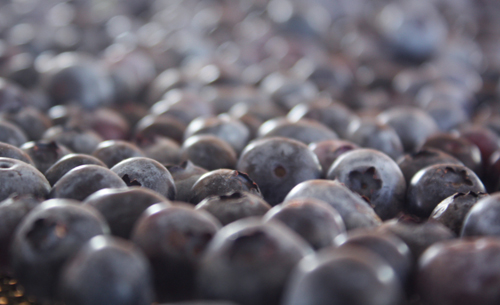
Blueberries may be effective in the treatment for post-traumatic stress disorder (PTSD)

Researchers from Louisiana State University have found that blueberries may be effective in the treatment for post-traumatic stress disorder (PTSD). Findings from the study have been presented at the Experimental Biology Meeting in Boston, MA.

Presently, the only therapy approved by the Food and Drug Administration (FDA) for PTSD is selective serotonin reuptake inhibitors (SSRIs) such as sertraline and paroxetine. Study authors have previously shown that SSRIs increase the level of serotonin (5-HT) and norepinephrine, and that the increased norepinephrine be a possible reason for the reduced efficacy of SSRI therapy.

For this study, the team studied the ability of blueberries to modulate neurotransmitter levels in a rat model of PTSD. Some of the rats received a 2% blueberry-enriched supplement diet and others received a control diet. A third control group consisted of rats without PTSD and received a standard diet without blueberries. Scientists used high-performance liquid chromatography to to measure monoamines and related metabolite levels.

Rats with PTSD who did not receive blueberries showed a predictable increase in 5-HT and norepinephrine level compared with the control group. But rats with PTSD that received blueberries showed a beneficial increase in 5-HT levels with no impact on norepinephrine levels, which suggest that blueberries can alter neurotransmitter levels in PTSD. More studies are needed to understand the protective effects of blueberries and its potential target as a treatment for PTSD.

http://www.empr.com/benefits-of-blueberries-for-post-traumatic-stress-disorder-explored-in-study/article/405810/

Researchers break spinning world record

A team of researchers at the University of St Andrews have made it into the record books by creating the fastest rotating man-made object ever recorded.

Professor Kishan Dholakia, Dr Yoshihiko Arita and Dr Michael Mazilu of the University’s School of Physics and Astronomy, managed to spin a tiny sphere of calcium carbonate 600 million revolutions per minute (rpm) using optical tweezers.

The team, who are leading experts in light technology, used optical tweezers to spin the four micrometre diameter particle inside a vacuum chamber. As the light passed through the sphere the change in polarisation of the light exerted a small torque on the sphere, thus spinning it. The lack of drag and frictional forces allowed a very high rotation rate to be achieved -10 million revolutions per second, or 600 million revolutions per minute, before the sphere left the trap (most likely disintegrating).

Professor Dholakia said: “This has been an exciting team effort to realise this world record. The result is a major breakthrough in our physics understanding of the light-matter interaction. We are planning new advances and even hope to challenge our own record in the near future.”

The research was published in Nature Communications and now the feat has been acknowledged as the fastest rotating man-made object to date, by the Guinness Book of World Records, and appears in the latest edition of the publication.

More broadly, the achievement fits into the work of the team which looks at the interaction of light and matter including, potentially, studies at the boundary between classical physics and quantum physics.

Scientists achieve implantation of memory into the brains of mice while they sleep

Sleeping minds: prepare to be hacked. For the first time, conscious memories have been implanted into the minds of mice while they sleep. The same technique could one day be used to alter memories in people who have undergone traumatic events.

When we sleep, our brain replays the day’s activities. The pattern of brain activity exhibited by mice when they explore a new area during the day, for example, will reappear, speeded up, while the animal sleeps. This is thought to be the brain practising an activity – an essential part of learning. People who miss out on sleep do not learn as well as those who get a good night’s rest, and when the replay process is disrupted in mice, so too is their ability to remember what they learned the previous day.

Karim Benchenane and his colleagues at the Industrial Physics and Chemistry Higher Educational Institution in Paris, France, hijacked this process to create new memories in sleeping mice. The team targeted the rodents’ place cells – neurons that fire in response to being in or thinking about a specific place. These cells are thought to help us form internal maps, and their discoverers won a Nobel prize last year.

Benchenane’s team used electrodes to monitor the activity of mice’s place cells as the animals explored an enclosed arena, and in each mouse they identified a cell that fired only in a certain arena location. Later, when the mice were sleeping, the researchers monitored the animals’ brain activity as they replayed the day’s experiences. A computer recognised when the specific place cell fired; each time it did, a separate electrode would stimulate brain areas associated with reward.

When the mice awoke, they made a beeline for the location represented by the place cell that had been linked to a rewarding feeling in their sleep. A brand new memory – linking a place with reward – had been formed.

It is the first time a conscious memory has been created in animals during sleep. In recent years, researchers have been able to form subconscious associations in sleeping minds – smokers keen to quit can learn to associate cigarettes with the smells of rotten eggs and fish in their sleep, for example.

Previous work suggested that if this kind of subconscious learning had occurred in Benchenane’s mice, they would have explored the arena in a random manner, perhaps stopping at the reward-associated location. But these mice headed straight for the location, suggesting a conscious memory. “The mouse develops a goal-directed behaviour to go towards the place,” says Benchenane. “It proves that it’s not an automatic behaviour. What we create is an association between a particular place and a reward that can be consciously accessed by the mouse.”

“The mouse is remembering enough abstract information to think ‘I want to go to a certain place’, and go there when it wakes up,” says neuroscientist Neil Burgess at University College London. “It’s a bigger breakthrough [than previous studies] because it really does show what the man in the street would call a memory – the ability to bring to mind abstract knowledge which can guide behaviour in a directed way.”

Benchenane doesn’t think the technique can be used to implant many other types of memories, such as skills – at least for the time being. Spatial memories are easier to modify because they are among the best understood.

His team’s findings also provide some of the strongest evidence for the way in which place cells work. It is almost impossible to test whether place cells function as an internal map while animals are awake, says Benchenane, because these animals also use external cues, such as landmarks, to navigate. By specifically targeting place cells while the mouse is asleep, the team were able to directly test theories that specific cells represent specific places.

“Even when those place cells fire in sleep, they still convey spatial information,” says Benchenane. “That provides evidence that when you’ve got activation of place cells during the consolidation of memories in sleep, you’ve got consolidation of the spatial information.”

Benchenane hopes that his technique could be developed to help alter people’s memories, perhaps of traumatic events (see “Now it’s our turn”, below).

Loren Frank at the University of California, San Francisco, agrees. “I think this is a really important step towards helping people with memory impairments or depression,” he says. “It is surprising to me how many neurological and psychiatric illnesses have something to do with memory, including schizophrenia and obsessive compulsive disorder.”

“In principle, you could selectively change brain processing during sleep to soften memories or change their emotional content,” he adds.

Journal reference: Nature Neuroscience, doi:10.1038/nn.3970

http://www.newscientist.com/article/dn27115-new-memories-implanted-in-mice-while-they-sleep.html#.VP_L9uOVquD

Thanks to Kebmodee for bringing this to the attention of the It’s Interesting community.

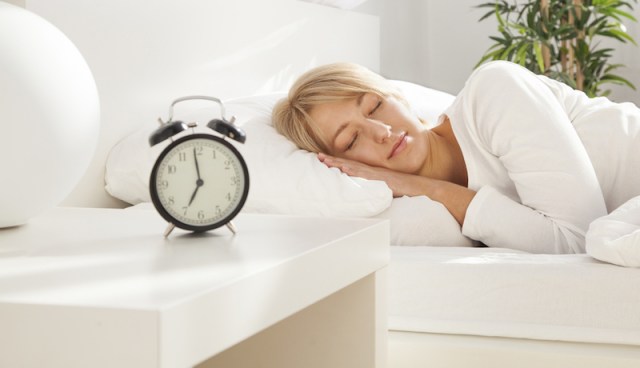
How Much Sleep Should You Get? New Recommendations Released

There are new recommendations for how much time people should spend snoozing.

The new guidelines, released by the National Sleep Foundation, include small changes to the recommended ranges for the amount of sleep that children and teens should get. Most of the new advice recommends wider sleep ranges than before. Now, there are also specific sleep ranges for young and older adults, as well as for middle-age adults. Previously, the National Sleep Foundation had a single sleep recommendation for all adults.

To come up with the recommendations, a panel of experts reviewed more than 300 scientific studies on sleep — including studies of the health effects of getting too little or too much sleep — that were published between 2004 and 2014. Here are the new recommended sleep duration ranges for each age group:

• Newborns (up to 3 months old): 14 to 17 hours a day. (Previously, the recommendation was 12 to 18 hours daily.)
• Infants (4 to 11 months): 12 to 15 hours. (Previously, the recommendation was 14 to 15 hours.)
• Toddlers (ages 1 to 2): 11 to 14 hours. (Previously, the recommendation was 12 to 14 hours.)
• Preschoolers (ages 3 to 5): 10 to 13 hours. (Previously, the recommendation was 11 to 13 hours.)
• School-age children (ages 6 to 13): 9 to 11 hours. (Previously, the recommendation was 10 to 11 hours.)
• Teenagers (ages 14 to 17): 8 to 10 hours. (Previously, the recommendation was 8.5 to 9.5 hours.)
• Younger adults (ages 18 to 25): 7 to 9 hours (new age category)
• Adults (ages 26 to 64): 7 to 9 hours (same recommendation as before)
• Older adults (ages 65 and older): 7 to 8 hours (new age category)

“The National Sleep Foundation Sleep Duration Recommendations will help individuals make sleep schedules that are within a healthy range. They also serve as a useful starting point for individuals to discuss their sleep with their health care providers,” David Cloud, CEO of the National Sleep Foundation, said in a statement.

The panel also acknowledged that some people may naturally sleep for shorter or longer periods than the recommendations call for, without experiencing adverse health consequences. For this reason, the recommendations also include sleep ranges that “may be appropriate for some individuals.”

The panel also acknowledged that some people may naturally sleep for shorter or longer periods than the recommendations call for, without experiencing adverse health consequences. For this reason, the recommendations also include sleep ranges that “may be appropriate for some individuals.”

For example, although the NSF recommends that adults ages 26 to 64 sleep 7 to 9 hours, it may be appropriate for some people to sleep for as little as 6 hours, or as long as 10 hours, the guidelines say.

However, “individuals with sleep durations far outside the normal range may be engaging in volitional sleep restriction, or have serious health problems,” the recommendations say.

Too little sleep has been linked with health problems, including obesity and high blood pressure, as well as decreased productivity and drowsy driving, the NSF says. Too much sleep has been linked with health conditions as well, including heart disease and premature death.

A full chart of the recommendations is available from the National Sleep Foundation. The guidelines were released yesterday Feb. 2, and were published in Sleep Health: The Official Journal of the National Sleep Foundation.

The National Sleep Foundation is a non-profit organization that advocates for sleep-related research and education. It accepts funding from corporations involved in healthcare and consumer products, but the organization says that it accepts such money only on an unrestricted basis, meaning the corporations giving the money do not influence the ideas and content published or promoted by the research.

http://www.livescience.com/49676-new-sleep-recommendations.html

New research shows that listening to sad music helps stabilize mood

A new study published in the journal PLOS One and conducted by researchers at the Free University of Berlin in Germany found that listening to sad music evoked feelings of nostalgia, peacefulness, tenderness and wonder.

“For many individuals, listening to sad music can actually lead to beneficial emotional effects,” the researchers, led by psychologist Liila Taruffi, report. “Music-evoked sadness can be appreciated not only as an aesthetic, abstract reward, but [it] also plays a role in well-being, by providing consolation as well as regulating negative moods and emotions.”

Nostalgia was the most common emotion associated with listening to sad music, not surprisingly, since we know that listening to music can take you back to a time and place long ago.

The study also found that people tend to listen to sad music when they’re feeling sad themselves, though the music doesn’t make them sadder. Instead, it helps regulate their mood. Researchers conjecture that this information could be useful in understanding how music therapy helps treat certain conditions.

“Thus, from a therapeutic perspective, one could reasonably interpret a patient’s decision to select sad music as, apart from an aesthetic preference, an indicator of emotional distress. This might be useful especially in children or adults with autism spectrum disorder or alexithymic individuals, who have a reduced ability to express their emotions verbally,” the researchers said. “By ‘tuning’ their emotions with the ones expressed by the music, patients may feel heard and understood, even in the absence of a specific emotional vocabulary. This empathic connection between the music and the patient may help to relieve distress and to progress in therapy.”

http://www.mnn.com/lifestyle/arts-culture/stories/why-do-we-like-listening-to-sad-music

http://journals.plos.org/plosone/article?id=10.1371/journal.pone.0110490