Did Scientists Actually Spot Evidence Of Another Universe?

universe
The detailed, all-sky picture of the infant universe created from nine years of WMAP data. The image reveals 13.77 billion year old temperature fluctuations (shown as color differences) that correspond to the seeds that grew to become the galaxies. The signal from our galaxy was subtracted using the multi-frequency data. This image shows a temperature range of ± 200 microKelvin.CREDIT: NASA/WMAP SCIENCE TEAM

by Jesse Shanahan

In a study published earlier this month, a team of theoretical physicists is claiming to have discovered the remnants of previous universes hidden within the leftover radiation from the Big Bang. Our universe is a vast collection of observable matter, like gas, dust, stars, etc., in addition to the ever-elusive dark matter and dark energy. In some sense, this universe is all we know, and even then, we can only directly study about 5% of it, leaving 95% a mystery that scientists are actively working to solve. However, this group of physicists is arguing that our universe isn’t alone; it’s just one in a long line of universes that are born, grow, and die. Among these scientists is mathematical physicist Roger Penrose, who worked closely with Stephen Hawking and currently is the Emeritus Rouse Ball Professor of Mathematics at Oxford University. Penrose and his collaborators follow a cosmological theory called conformal cyclic cosmology (CCC) in which universes, much like human beings, come into existence, expand, and then perish.

As a universe ages, it expands, and the constituent parts grow farther and farther apart from each other. Consequently, the interactions between galaxies that drive star formation and evolution become rarer. Eventually, the stars die out, and the remaining gas and dust is captured by black holes. In one of his most famous theories, Stephen Hawking proposed that this isn’t the end; black holes might have a way to slowly lose mass and energy by radiating certain particles. So, after many eons, the remaining black holes in the universe would disappear, leaving only disparate particles. Seemingly a wasteland, this end-state eventually mirrors the environment of our universe’s birth, and so, the cycle starts anew.

universe 2
Artist’s logarithmic scale conception of the observable universe with the Solar System at the center, inner and outer planets, Kuiper belt, Oort cloud, Alpha Centauri, Perseus Arm, Milky Way galaxy, Andromeda galaxy, nearby galaxies, Cosmic Web, Cosmic microwave radiation and Big Bang’s invisible plasma on the edge.CREDIT: WIKIPEDIA/PABLO CARLOS BUDASSI

When our universe was very young, before any recognizable components like stars, planets, or galaxies formed, it was filled with a dense, hot soup of plasma. As the universe expanded, it cooled, and eventually, particles could combine to form atoms. Eventually, the interaction and fusion of these atoms resulted in all of the matter that we observe today. However, we can still observe the leftover radiation from that initial, dense period in our universe’s history. This leftover glow, called the Cosmic Microwave Background (CMB), is the oldest electromagnetic radiation, and it fills the entirety of our universe. If the CCC theory were true, then there would be hints of previous universes in our universe’s CMB.

At the end of a universe, when those final black holes dissolve, CCC theory states they should leave behind a signature that would survive the death of that universe and persist into the next. Although not definitive proof of previous universes, detecting that signature would be strong evidence in support of CCC theory. In searching for these “Hawking points”, cosmologists face a difficult obstacle as the CMB is faint and varies randomly. However, Penrose is claiming that a comparison between a model CMB with Hawking points and actual data from our CMB has proven that Hawking points actually exist. If true, this would be the first-ever detection of evidence from another universe.

Unfortunately, as groundbreaking as this discovery seems, the scientific community has largely dismissed it. One of the fundamental characteristics of the CMB is that, although it has patterns, the variations are entirely statistically random. In fact, Penrose’s former collaborator, Stephen Hawking, spotted his own initials in the CMB while others have found a deer, a parrot, and numerous other recognizable shapes in the noise. Similarly, the Wilkinson Anisotropy Microscope Probe that mapped the CMB released an interactive image where you can search for familiar shapes and patterns. An avoidable result of both these random fluctuations and the sheer size of the CMB is that if scientists look hard enough, they can find whatever pattern they need, like the existence of Hawking points, perhaps. Another criticism of Penrose’s claim is that if CCC theory holds true, our universe should have tens of thousands of Hawking points in the CMB. Regrettably, Penrose could find only about 20.

Still, the possibility of alternate universes, whether long-dead or existing in parallel to our own, is tantalizing. Many other theories also claim to find traces of other universes hiding in the patterns of the CMB as well. Although it sounds like science fiction, we are left to wonder: is this just the cosmological equivalent of seeing shapes in random clouds or will scientists one day discover that we are one among many infinite universes?

Jesse Shanahan is an astrophysicist, EMT, and science communicator. For more space and language news, follow her on Twitter here.

https://www.forbes.com/sites/jesseshanahan/2018/08/24/did-scientists-actually-spot-evidence-of-another-universe/#2278663f1425

An explanation of the Standard Model of Physics

The Standard Model. What dull name for the most accurate scientific theory known to human beings.

More than a quarter of the Nobel Prizes in physics of the last century are direct inputs to or direct results of the Standard Model. Yet its name suggests that if you can afford a few extra dollars a month you should buy the upgrade. As a theoretical physicist, I’d prefer The Absolutely Amazing Theory of Almost Everything. That’s what the Standard Model really is.

Many recall the excitement among scientists and media over the 2012 discovery of the Higgs boson. But that much-ballyhooed event didn’t come out of the blue – it capped a five-decade undefeated streak for the Standard Model. Every fundamental force but gravity is included in it. Every attempt to overturn it to demonstrate in the laboratory that it must be substantially reworked – and there have been many over the past 50 years – has failed.

In short, the Standard Model answers this question: What is everything made of, and how does it hold together?

The smallest building blocks

You know, of course, that the world around us is made of molecules, and molecules are made of atoms. Chemist Dmitri Mendeleev figured that out in the 1860s and organized all atoms – that is, the elements – into the periodic table that you probably studied in middle school. But there are 118 different chemical elements. There’s antimony, arsenic, aluminum, selenium … and 114 more.


But these elements can be broken down further.

Physicists like things simple. We want to boil things down to their essence, a few basic building blocks. Over a hundred chemical elements is not simple. The ancients believed that everything is made of just five elements – earth, water, fire, air and aether. Five is much simpler than 118. It’s also wrong.

By 1932, scientists knew that all those atoms are made of just three particles – neutrons, protons and electrons. The neutrons and protons are bound together tightly into the nucleus. The electrons, thousands of times lighter, whirl around the nucleus at speeds approaching that of light. Physicists Planck, Bohr, Schroedinger, Heisenberg and friends had invented a new science – quantum mechanics – to explain this motion.

That would have been a satisfying place to stop. Just three particles. Three is even simpler than five. But held together how? The negatively charged electrons and positively charged protons are bound together by electromagnetism. But the protons are all huddled together in the nucleus and their positive charges should be pushing them powerfully apart. The neutral neutrons can’t help.

What binds these protons and neutrons together? “Divine intervention” a man on a Toronto street corner told me; he had a pamphlet, I could read all about it. But this scenario seemed like a lot of trouble even for a divine being – keeping tabs on every single one of the universe’s 10⁸⁰ protons and neutrons and bending them to its will.

Expanding the zoo of particles

Meanwhile, nature cruelly declined to keep its zoo of particles to just three. Really four, because we should count the photon, the particle of light that Einstein described. Four grew to five when Anderson measured electrons with positive charge – positrons – striking the Earth from outer space. At least Dirac had predicted these first anti-matter particles. Five became six when the pion, which Yukawa predicted would hold the nucleus together, was found.

Then came the muon – 200 times heavier than the electron, but otherwise a twin. “Who ordered that?” I.I. Rabi quipped. That sums it up. Number seven. Not only not simple, redundant.

By the 1960s there were hundreds of “fundamental” particles. In place of the well-organized periodic table, there were just long lists of baryons (heavy particles like protons and neutrons), mesons (like Yukawa’s pions) and leptons (light particles like the electron, and the elusive neutrinos) – with no organization and no guiding principles.

Into this breach sidled the Standard Model. It was not an overnight flash of brilliance. No Archimedes leapt out of a bathtub shouting “eureka.” Instead, there was a series of crucial insights by a few key individuals in the mid-1960s that transformed this quagmire into a simple theory, and then five decades of experimental verification and theoretical elaboration.

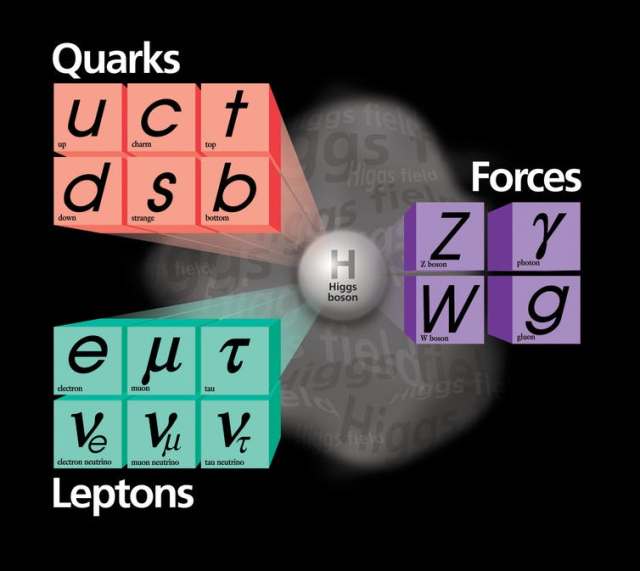
Quarks. They come in six varieties we call flavors. Like ice cream, except not as tasty. Instead of vanilla, chocolate and so on, we have up, down, strange, charm, bottom and top. In 1964, Gell-Mann and Zweig taught us the recipes: Mix and match any three quarks to get a baryon. Protons are two ups and a down quark bound together; neutrons are two downs and an up. Choose one quark and one antiquark to get a meson. A pion is an up or a down quark bound to an anti-up or an anti-down. All the material of our daily lives is made of just up and down quarks and anti-quarks and electrons.


The Standard Model of elementary particles provides an ingredients list for everything around us.

Simple. Well, simple-ish, because keeping those quarks bound is a feat. They are tied to one another so tightly that you never ever find a quark or anti-quark on its own. The theory of that binding, and the particles called gluons (chuckle) that are responsible, is called quantum chromodynamics. It’s a vital piece of the Standard Model, but mathematically difficult, even posing an unsolved problem of basic mathematics. We physicists do our best to calculate with it, but we’re still learning how.

The other aspect of the Standard Model is “A Model of Leptons.” That’s the name of the landmark 1967 paper by Steven Weinberg that pulled together quantum mechanics with the vital pieces of knowledge of how particles interact and organized the two into a single theory. It incorporated the familiar electromagnetism, joined it with what physicists called “the weak force” that causes certain radioactive decays, and explained that they were different aspects of the same force. It incorporated the Higgs mechanism for giving mass to fundamental particles.

Since then, the Standard Model has predicted the results of experiment after experiment, including the discovery of several varieties of quarks and of the W and Z bosons – heavy particles that are for weak interactions what the photon is for electromagnetism. The possibility that neutrinos aren’t massless was overlooked in the 1960s, but slipped easily into the Standard Model in the 1990s, a few decades late to the party.

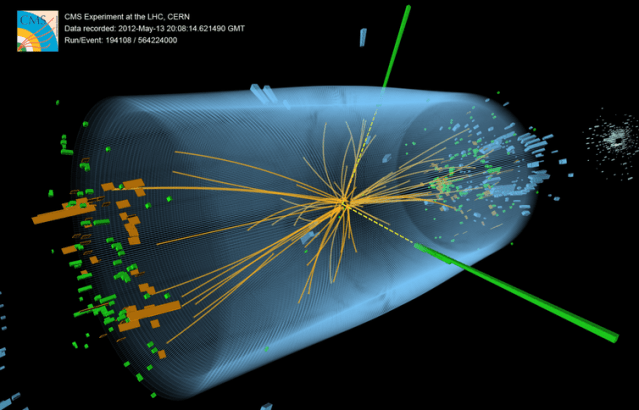
Discovering the Higgs boson in 2012, long predicted by the Standard Model and long sought after, was a thrill but not a surprise. It was yet another crucial victory for the Standard Model over the dark forces that particle physicists have repeatedly warned loomed over the horizon. Concerned that the Standard Model didn’t adequately embody their expectations of simplicity, worried about its mathematical self-consistency, or looking ahead to the eventual necessity to bring the force of gravity into the fold, physicists have made numerous proposals for theories beyond the Standard Model. These bear exciting names like Grand Unified Theories, Supersymmetry, Technicolor, and String Theory.

Sadly, at least for their proponents, beyond-the-Standard-Model theories have not yet successfully predicted any new experimental phenomenon or any experimental discrepancy with the Standard Model.

After five decades, far from requiring an upgrade, the Standard Model is worthy of celebration as the Absolutely Amazing Theory of Almost Everything.

https://theconversation.com/the-standard-model-of-particle-physics-the-absolutely-amazing-theory-of-almost-everything-94700#?utm_source=ls-newsletter&utm_medium=email&utm_campaign=05272018-ls

2 Weeks Before Death, Hawking Submitted a Mind-Melting Paper on Parallel Universes, entitled ‘A Smooth Exit from Eternal Inflation”

Stephen Hawking submitted the final version of his last scientific paper just two weeks before he died, and it lays the theoretical groundwork for discovering a parallel universe.

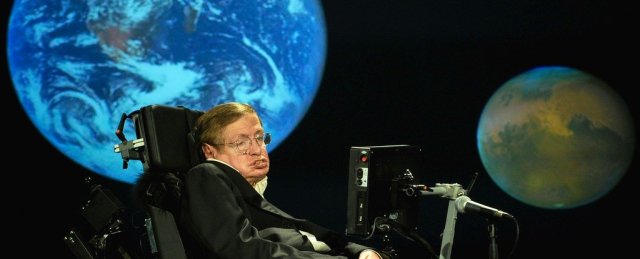
Hawking, who passed away on Wednesday aged 76, was co-author to a mathematical paper which seeks proof of the “multiverse” theory, which posits the existence of many universes other than our own.

The paper, called “A Smooth Exit from Eternal Inflation”, had its latest revisions approved on March 4, ten days before Hawking’s death.

According to The Sunday Times newspaper, the paper is due to be published by an unnamed “leading journal” after a review is complete.

ArXiv.org, Cornell University website which tracks scientific papers before they are published, has a record of the paper including the March 2018 update.

According to The Sunday Times, the contents of the paper sets out the mathematics necessary for a deep-space probe to collect evidence which might prove that other universes exist.

The highly theoretical work posits that evidence of the multiverse should be measurable in background radiation dating to the beginning of time. This in turn could be measured by a deep-space probe with the right sensors on-board.

Thomas Hertog, a physics professor who co-authored the paper with Hawking, said the paper aimed “to transform the idea of a multiverse into a testable scientific framework.”

Hertog, who works at KU Leuven University in Belgium, told The Sunday Times he met with Hawking in person to get final approval before submitting the paper.

https://www.sciencealert.com/stephen-hawking-submitted-a-paper-on-parallel-universes-just-before-he-died

Thanks to Kebmodee for bringing this to the It’s Interesting community.

New research shows Dark Matter could be collapsing into different structures in our universe than previously thought


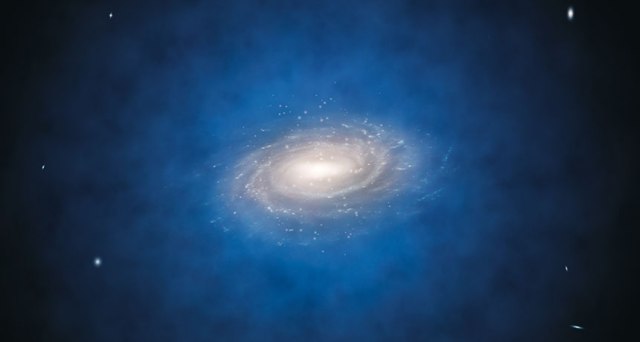
Dark matter is normally thought to form a spherical halo (illustrated in blue) around galaxies like the Milky Way. Two physicists suggest that dark matter could collapse into more complex structures.

BY EMILY CONOVER

Clumps of dark matter may be sailing through the Milky Way and other galaxies.

Typically thought to form featureless blobs surrounding entire galaxies, dark matter could also collapse into smaller clumps — similar to normal matter condensing into stars and planets — a new study proposes. Thousands of collapsed dark clumps could constitute 10 percent of the Milky Way’s dark matter, researchers from Rutgers University in Piscataway, N.J., report in a paper accepted in Physical Review Letters.

Dark matter is necessary to explain the motions of stars in galaxies. Without an extra source of mass, astronomers can’t explain why stars move at the speeds they do. Such observations suggest that a spherical “halo” of invisible, unidentified massive particles surrounds each galaxy.

But the halo might be only part of the story. “We don’t really know what dark matter at smaller scales is doing,” says theoretical physicist Matthew Buckley, who coauthored the study with physicist Anthony DiFranzo. More complex structures might be hiding within the halo.

To collapse, dark matter would need a way to lose energy, slowing particles as gravity pulls them into the center of the clump, so they can glom on to one another rather than zipping right through. In normal matter, this energy loss occurs via electromagnetic interactions. But the most commonly proposed type of dark matter particles, weakly interacting massive particles, or WIMPs, have no such way to lose energy.

Buckley and DiFranzo imagined what might happen if an analogous “dark electromagnetism” allowed dark matter particles to interact and radiate energy. The researchers considered how dark matter would behave if it were like a pared-down version of normal matter, composed of two types of charged particles — a dark proton and a dark electron. Those particles could interact — forming dark atoms, for example — and radiate energy in the form of dark photons, a dark matter analog to particles of light.

The researchers found that small clouds of such dark matter could collapse, but larger clouds, the mass of the Milky Way, for example, couldn’t — they have too much energy to get rid of. This finding means that the Milky Way could harbor a vast halo, with a sprinkling of dark matter clumps within. By picking particular masses for the hypothetical particles, the researchers were able to calculate the number and sizes of clumps that could be floating through the Milky Way. Varying the choice of masses led to different levels of clumpiness.

In Buckley and DiFranzo’s scenario, the dark matter can’t squish down to the size of a star. Before the clumps get that small, they reach a point where they can’t lose any more energy. So a single clump might be hundreds of light-years across.

The result, says theoretical astrophysicist Dan Hooper of Fermilab in Batavia, Ill., is “interesting and novel … but it also leaves a lot of open questions.” Without knowing more about dark matter, it’s hard to predict what kind of clumps it might actually form.

Scientists have looked for the gravitational effects of unidentified, star-sized objects, which could be made either of normal matter or dark matter, known as massive compact halo objects, or MACHOs. But such objects turned out to be too rare to make up a significant fraction of dark matter. On the other hand, says Hooper, “what if these things collapse to solar system‒sized objects?” Such larger clumps haven’t have been ruled out yet.

By looking for the effects of unexplained gravitational tugs on stars, scientists may be able to determine whether galaxies are littered with dark matter clumps. “Because we didn’t think these things were a possibility, I don’t think people have looked,” Buckley says. “It was a blind spot.”

Up until now, most scientists have focused on WIMPs. But after decades of searching in sophisticated detectors, there’s no sign of the particles (SN: 11/12/16, p. 14). As a result, says theoretical physicist Hai-Bo Yu of the University of California, Riverside, “there’s a movement in the community.” Scientists are now exploring new ideas for what dark matter might be.

M.R. Buckley and A. DiFranzo. Collapsed dark matter structures. Physical Review Letters, in press, 2018.

Clumps of dark matter could be lurking undetected in our galaxy

Physicists Actually Create “Impossible” Time Crystals

by Paul Ratner

Time crystals are hypothetical structures proposed by Nobel-Prize winning theoretical physicist Frank Wilczek in 2012. What’s special about them is that they would move without using energy, breaking a fundamental physics law of time-translation symmetry. Such crystals would move while remaining in their ground states, when they are at their lowest energy.

They’ve been deemed “impossible” by most physicists and yet, at the end of August, experimental physicists from University of California, Santa Barbara and Microsoft’s research lab station Q published a notable paper on how time crystals may be feasible and their plan for creating them. What’s also remarkable, if time crystals were actually created, they would re-define the nature of time itself, potentially reconciling the rather weird field of quantum mechanics with the theory of relativity.

Now comes news that scientists from the University of Maryland tried an experiment suggested by Frank Wilczek and actually made a time crystal that works. They created a ring-shaped quantum system of a group of ytterbium ions, cooled off to their ground state. In theory, this system should not be moving at all. But if it was to periodically rotate, that would prove the existence of symmetry-breaking time crystals.

The research scientists used a laser to change the spin of the ions to put them into perpetual oscillation. As reported by MIT Tech Review, they discovered that over time the oscillations eventually happened at twice the original rate. Since no energy was added to the system, the only explanation was that they created a time crystal.

As their paper undergoes the peer-review process, the physicists look for others to repeat their experiment. If their discovery is confirmed, the repercussions of this groundbreaking development are only beginning to be understood. One potential application suggested by the scientists may be in quantum computing, where time crystals may be utilized for quantum memory.

You can read the new paper “Observation of a Discrete Time Crystal” here: https://arxiv.org/abs/1609.08684

Artificial intelligence replaces physicists


Physicists are putting themselves out of a job, using artificial intelligence to run a complex experiment. The experiment created an extremely cold gas trapped in a laser beam, known as a Bose-Einstein condensate, replicating the experiment that won the 2001 Nobel Prize.

Physicists are putting themselves out of a job, using artificial intelligence to run a complex experiment.

The experiment, developed by physicists from The Australian National University (ANU) and UNSW ADFA, created an extremely cold gas trapped in a laser beam, known as a Bose-Einstein condensate, replicating the experiment that won the 2001 Nobel Prize.

“I didn’t expect the machine could learn to do the experiment itself, from scratch, in under an hour,” said co-lead researcher Paul Wigley from the ANU Research School of Physics and Engineering.

“A simple computer program would have taken longer than the age of the Universe to run through all the combinations and work this out.”

Bose-Einstein condensates are some of the coldest places in the Universe, far colder than outer space, typically less than a billionth of a degree above absolute zero.

They could be used for mineral exploration or navigation systems as they are extremely sensitive to external disturbances, which allows them to make very precise measurements such as tiny changes in the Earth’s magnetic field or gravity.

The artificial intelligence system’s ability to set itself up quickly every morning and compensate for any overnight fluctuations would make this fragile technology much more useful for field measurements, said co-lead researcher Dr Michael Hush from UNSW ADFA.

“You could make a working device to measure gravity that you could take in the back of a car, and the artificial intelligence would recalibrate and fix itself no matter what,” he said.

“It’s cheaper than taking a physicist everywhere with you.”

The team cooled the gas to around 1 microkelvin, and then handed control of the three laser beams over to the artificial intelligence to cool the trapped gas down to nanokelvin.

Researchers were surprised by the methods the system came up with to ramp down the power of the lasers.

“It did things a person wouldn’t guess, such as changing one laser’s power up and down, and compensating with another,” said Mr Wigley.

“It may be able to come up with complicated ways humans haven’t thought of to get experiments colder and make measurements more precise.

The new technique will lead to bigger and better experiments, said Dr Hush.

“Next we plan to employ the artificial intelligence to build an even larger Bose-Einstein condensate faster than we’ve seen ever before,” he said.

The research is published in the Nature group journal Scientific Reports.

https://www.sciencedaily.com/releases/2016/05/160516091544.htm

5 reasons we may actually be living in a multiverse

By Clara Moskowitz

The universe we live in may not be the only one out there. In fact, our universe could be just one of an infinite number of universes making up a “multiverse.”

Though the concept may stretch credulity, there’s good physics behind it. And there’s not just one way to get to a multiverse — numerous physics theories independently point to such a conclusion. In fact, some experts think the existence of hidden universes is more likely than not.

Here are the five most plausible scientific theories suggesting we live in a multiverse:

1. Infinite Universes

Scientists can’t be sure what the shape of space-time is, but most likely, it’s flat (as opposed to spherical or even donut-shape) and stretches out infinitely. But if space-time goes on forever, then it must start repeating at some point, because there are a finite number of ways particles can be arranged in space and time.

So if you look far enough, you would encounter another version of you — in fact, infinite versions of you. Some of these twins will be doing exactly what you’re doing right now, while others will have worn a different sweater this morning, and still others will have made vastly different career and life choices.

Because the observable universe extends only as far as light has had a chance to get in the 13.7 billion years since the Big Bang (that would be 13.7 billion light-years), the space-time beyond that distance can be considered to be its own separate universe. In this way, a multitude of universes exists next to each other in a giant patchwork quilt of universes.


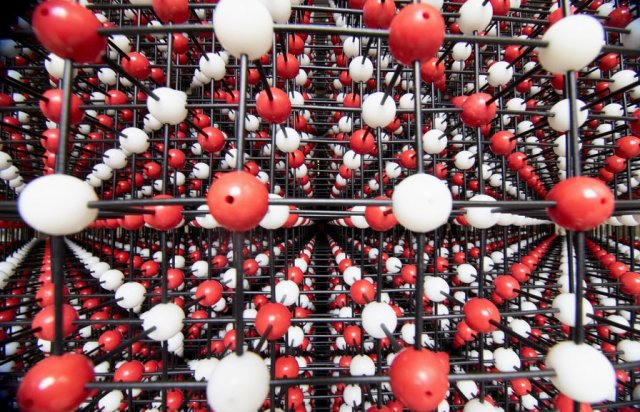
Space-time may stretch out to infinity. If so, then everything in our universe is bound to repeat at some point, creating a patchwork quilt of infinite universes.

2. Bubble Universes

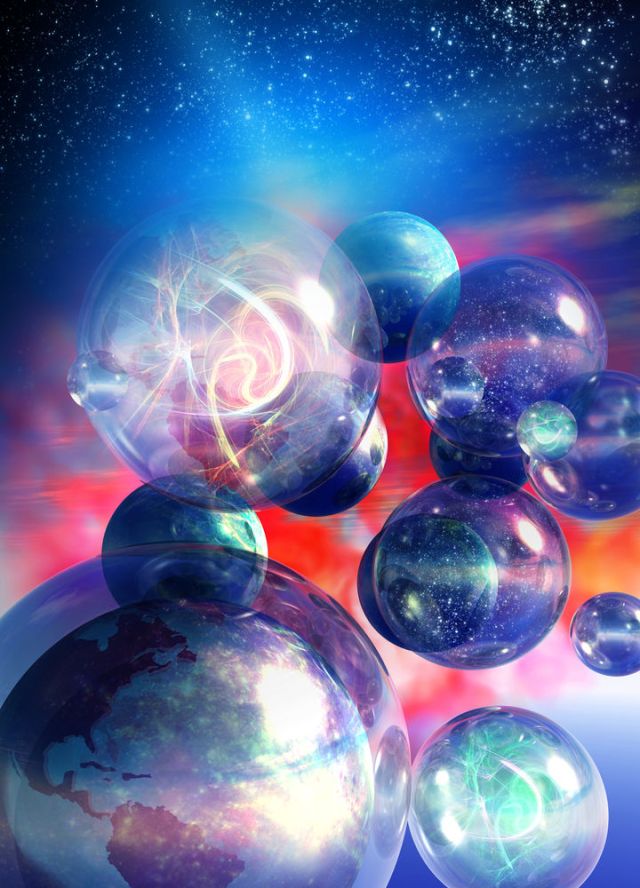
In addition to the multiple universes created by infinitely extending space-time, other universes could arise from a theory called “eternal inflation.” Inflation is the notion that the universe expanded rapidly after the Big Bang, in effect inflating like a balloon. Eternal inflation, first proposed by Tufts University cosmologist Alexander Vilenkin, suggests that some pockets of space stop inflating, while other regions continue to inflate, thus giving rise to many isolated “bubble universes.”

Thus, our own universe, where inflation has ended, allowing stars and galaxies to form, is but a small bubble in a vast sea of space, some of which is still inflating, that contains many other bubbles like ours. And in some of these bubble universes, the laws of physics and fundamental constants might be different than in ours, making some universes strange places indeed.

3. Parallel Universes

Another idea that arises from string theory is the notion of “braneworlds” — parallel universes that hover just out of reach of our own, proposed by Princeton University’s Paul Steinhardt and Neil Turok of the Perimeter Institute for Theoretical Physics in Ontario, Canada. The idea comes from the possibility of many more dimensions to our world than the three of space and one of time that we know. In addition to our own three-dimensional “brane” of space, other three-dimensional branes may float in a higher-dimensional space.

multiverse-art-3
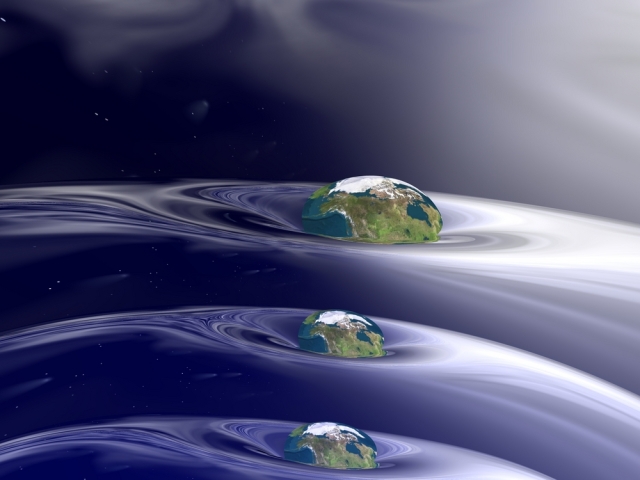
Our universe may live on one membrane, or “brane” that is parallel to many others containing their own universes, all floating in a higher-dimensional space.

Columbia University physicist Brian Greene describes the idea as the notion that “our universe is one of potentially numerous ‘slabs’ floating in a higher-dimensional space, much like a slice of bread within a grander cosmic loaf,” in his book “The Hidden Reality” (Vintage Books, 2011).

A further wrinkle on this theory suggests these brane universes aren’t always parallel and out of reach. Sometimes, they might slam into each other, causing repeated Big Bangs that reset the universes over and over again.


4. Daughter Universes

The theory of quantum mechanics, which reigns over the tiny world of subatomic particles, suggests another way multiple universes might arise. Quantum mechanics describes the world in terms of probabilities, rather than definite outcomes. And the mathematics of this theory might suggest that all possible outcomes of a situation do occur — in their own separate universes. For example, if you reach a crossroads where you can go right or left, the present universe gives rise to two daughter universes: one in which you go right, and one in which you go left.

“And in each universe, there’s a copy of you witnessing one or the other outcome, thinking — incorrectly — that your reality is the only reality,” Greene wrote in “The Hidden Reality.”

5. Mathematical Universes

Scientists have debated whether mathematics is simply a useful tool for describing the universe, or whether math itself is the fundamental reality, and our observations of the universe are just imperfect perceptions of its true mathematical nature. If the latter is the case, then perhaps the particular mathematical structure that makes up our universe isn’t the only option, and in fact all possible mathematical structures exist as their own separate universes.

“A mathematical structure is something that you can describe in a way that’s completely independent of human baggage,” said Max Tegmark of MIT, who proposed this brain-twistin gidea. “I really believe that there is this universe out there that can exist independently of me that would continue to exist even if there were no humans.”

See more at: http://www.livescience.com/25335-multiple-universes-5-theories.html#sthash.KnoSu3sE.dpuf

Dead or Alive, Schrödinger’s Cat Can Be in 2 Boxes at Once, New Research Using Light Particles Reveals

schrodinger-cat-two-boxes

By Tia Ghose

Bizarrely behaving light particles show that the famous Schrödinger’s cat thought experiment, meant to reveal the strange nature of subatomic particles, can get even weirder than physicists thought.

Not only can the quantum cat be alive and dead at the same time — but it can also be in two places at once, new research shows.

“We are showing an analogy to Schrödinger’s cat that is made out of an electromagnetic field that is confined in two cavities,” said study lead author Chen Wang, a physicist at Yale University. “The interesting thing here is the cat is in two boxes at once.”

The findings could have implications for cracking unsolvable mathematicalproblems using quantum computing, which relies on the ability of subatomic particles to be in multiple states at once, Wang said.

Cat experiment

The famous paradox was laid out by physicist Erwin Schrödinger in 1935 to elucidate the notion of quantum superposition, the phenomenon in which tiny subatomic particles can be in multiple states at once.

In the paradox, a cat is trapped in a box with a deadly radioactive atom. If the radioactive atom decayed, the cat was a goner, but if it had not yet decayed, the cat was still alive. Because, according to the dominant interpretation of quantum mechanics, particles can exist in multiple states until they are measured, logic dictated that the cat would be both alive and dead at the same time until the radioactive atom was measured.

Cat in two boxes

The setup for the new study was deceptively simple: The team created two aluminum cavities about 1 inch (2.5 centimeters) across, and then used a sapphire chip to produce a standing wave of light in those cavities. They used a special electronic element, called a Josephson Junction, to superimpose a standing wave of two separate wavelengths of light in each cavity. The end result was that the cat, or the group of about 80 photons in the cavities, was oscillating at two different wavelengths at once — in two different places. Figuring out whether the cat is dead or alive, so to speak, requires opening both boxes.

Though conceptually simple, the physical setup required ultrapure aluminum and highly precise chips and electromagnetic devices to ensure that the photons were as isolated from the environment as possible, Wang said.

That’s because at large scales, quantum superposition tends to disappear almost instantaneously, as soon as these superimposed subatomic particles whose fates are linked interact with the environment. Most of the time, this so-called decoherence would happen so quickly that researchers would have no time to observe the superposition, Wang said. So devices that keep coherence (or keep the particles in superposition) for long periods of time, known as the quality factor, is extremely important, Wang added.

“The quality of these things determines once you put a single excitation into the system, how long does it live, or does it die away,” Wang told Live Science.

If the excitation of the system — the production of the electromagnetic standing wave — is similar to the swing of a pendulum, then “our pendulum swings essentially tens of billions of times before it stops.”

The new findings could make for easier error correction in quantum computing, Wang said. In quantum computing, bits of information are encoded in the fragile superposition states of particles, and once that superposition is lost or corrupted, the data is also corrupted. So most quantum computing concepts involve a lot of redundancy.

“It’s well understood that 99 percent of computation or more will be done to correct for errors, rather than computation itself,” Wang said.

Their system could conceivably get around this problem by encoding the redundancy in the size of the cavity itself rather than in separate, calculated bits, Wang said.

“Demonstrating this cat in a ‘two boxes state’ is basically the first step in our architecture,” Wang said.

See more at: http://www.livescience.com/54890-schrodinger-cat-can-be-in-two-places.html#sthash.X4gB2Mc1.dpuf

Researchers find new phase of carbon, Q-carbon, that is brighter and harder than diamond and can be made easily and inexpensively in less than a second.

Researchers from North Carolina State University have discovered a new phase of solid carbon, called Q-carbon, which is distinct from the known phases of graphite and diamond. They have also developed a technique for using Q-carbon to make diamond-related structures at room temperature and at ambient atmospheric pressure in air.

Phases are distinct forms of the same material. Graphite is one of the solid phases of carbon; diamond is another.

“We’ve now created a third solid phase of carbon,” says Jay Narayan, the John C. Fan Distinguished Chair Professor of Materials Science and Engineering at NC State and lead author of three papers describing the work. “The only place it may be found in the natural world would be possibly in the core of some planets.”

Q-carbon has some unusual characteristics. For one thing, it is ferromagnetic – which other solid forms of carbon are not.

“We didn’t even think that was possible,” Narayan says.

In addition, Q-carbon is harder than diamond, and glows when exposed to even low levels of energy.
“Q-carbon’s strength and low work-function – its willingness to release electrons – make it very promising for developing new electronic display technologies,” Narayan says.

But Q-carbon can also be used to create a variety of single-crystal diamond objects. To understand that, you have to understand the process for creating Q-carbon.

Researchers start with a substrate, such as sapphire, glass or a plastic polymer. The substrate is then coated with amorphous carbon – elemental carbon that, unlike graphite or diamond, does not have a regular, well-defined crystalline structure. The carbon is then hit with a single laser pulse lasting approximately 200 nanoseconds. During this pulse, the temperature of the carbon is raised to 4,000 Kelvin (or around 3,727 degrees Celsius) and then rapidly cooled. This operation takes place at one atmosphere – the same pressure as the surrounding air.

The end result is a film of Q-carbon, and researchers can control the process to make films between 20 nanometers and 500 nanometers thick.

By using different substrates and changing the duration of the laser pulse, the researchers can also control how quickly the carbon cools. By changing the rate of cooling, they are able to create diamond structures within the Q-carbon.

“We can create diamond nanoneedles or microneedles, nanodots, or large-area diamond films, with applications for drug delivery, industrial processes and for creating high-temperature switches and power electronics,” Narayan says. “These diamond objects have a single-crystalline structure, making them stronger than polycrystalline materials. And it is all done at room temperature and at ambient atmosphere – we’re basically using a laser like the ones used for laser eye surgery. So, not only does this allow us to develop new applications, but the process itself is relatively inexpensive.”
And, if researchers want to convert more of the Q-carbon to diamond, they can simply repeat the laser-pulse/cooling process.

If Q-carbon is harder than diamond, why would someone want to make diamond nanodots instead of Q-carbon ones? Because we still have a lot to learn about this new material.

“We can make Q-carbon films, and we’re learning its properties, but we are still in the early stages of understanding how to manipulate it,” Narayan says. “We know a lot about diamond, so we can make diamond nanodots. We don’t yet know how to make Q-carbon nanodots or microneedles. That’s something we’re working on.”

NC State has filed two provisional patents on the Q-carbon and diamond creation techniques.
The work is described in two papers, both of which were co-authored by NC State Ph.D. student Anagh Bhaumik. “Novel Phase of Carbon, Ferromagnetism and Conversion into Diamond” will be published online Nov. 30 in the Journal of Applied Physics. “Direct conversion of amorphous carbon into diamond at ambient pressures and temperatures in air” was published Oct. 7 in the journal APL Materials.

Albert Einstein’s special mark on the universe

By Jeffrey Bennett

It has been exactly 100 years since Albert Einstein presented his theory of general relativity to an audience of scientists on November 25, 1915. While virtually everyone has heard of Einstein and his theory, very few people have any idea of what the theory actually is.

This is a shame, not only because there is a great public thirst for understanding of it, but also because relativity is important, for at least four major reasons.

General relativity provides our modern understanding of space, time and gravity — which means it’s crucial to almost everything we do in physics and astronomy. For example, you cannot understand black holes, the expansion of the universe or the Big Bang without first understanding the basic ideas of relativity. Though few people realize it, Einstein’s famous equation E = mc2 is actually part of the theory of relativity, which means that relativity also explains how the sun shines and how nuclear power works.

A second reason everyone should know about relativity lies in the way it changes our perception of reality. Relativity tells us that our ordinary perceptions of time and space are not universally valid. Instead, space and time are intertwined as four-dimensional space-time.

In our ordinary lives, we perceive only three dimensions—length, width and depth—and we assume that this perception reflects reality. However, in space-time, the four directions of possible motion are length, width, depth and time. (Note that time is not “the” fourth dimension; it is simply one of the four.)

Although we cannot picture all four dimensions of space-time at once, we can imagine what things would look like if we could. In addition to the three spatial dimensions of space-time that we ordinarily see, every object would be stretched out through time. Objects that we see as three-dimensional in our ordinary lives would appear as four-dimensional objects in space-time. If we could see in four dimensions, we could look through time just as easily as we look to our left or right. If we looked at a person, we could see every event in that person’s life. If we wondered what really happened during some historical event, we’d simply look to find the answer.

To see why this is so revolutionary, imagine that you met someone today who deeply believed that Earth is the center of the universe. You would probably feel sorry for this person, knowing that his or her entire world view is based on an idea disproven more than 400 years ago.

Now imagine that you met someone who still believed that time and space are independent and absolute — which, of course, describes almost everyone — even though we’ve known that’s not the case for a century now. Shouldn’t we feel equally sorry for all who hold this modern misconception?

It seems especially unfortunate once you realize that the ideas of relativity are not particularly difficult to understand. Indeed, I believe we could begin teaching relativity in elementary school in much the same way that we teach young children about the existence of atoms, even though few will ever study quantum mechanics.

My third reason for believing relativity is important lies in what Einstein’s discovery tells us about human potential. The science of relativity may seem disconnected from most other human endeavors, but I believe Einstein himself proved otherwise. Throughout his life, Einstein argued eloquently for human rights, human dignity and a world of peace and shared prosperity. His belief in underlying human goodness is all the more striking when you consider that he lived through both World Wars, that he was driven out of Germany by the rise of the Nazis, that he witnessed the Holocaust that wiped out more than six million of his fellow Jews, and that he saw his own discoveries put to use in atomic bombs.

No one can say for sure how he maintained his optimism in the face of such tragedies, but I see a connection to his discovery of relativity. Einstein surely recognized that a theory that so challenged our perceptions of reality might have been dismissed out of hand at other times in history, but that we now live in a time when, thanks to the process that we call science, the abundant evidence for relativity allowed for its acceptance.

This willingness to make judgments based on evidence shows that we are growing up as a species. We have not yet reached the point where we always show the same willingness in all our other endeavors, but the fact that we’ve done it for science suggests we have the potential.

Finally, on a philosophical level, relativity is profound. Only about a month before his death in 1955, Einstein wrote: “Death signifies nothing … the distinction between past, present and future is only a stubbornly persistent illusion.” As this suggests, relativity raises interesting questions about what the passage of time really means.

Because these are philosophical questions, they do not have definitive answers, and you will have to decide for yourself what these questions mean to you. But I believe that one thing is clear. Einstein showed that even though space and time can independently differ for different observers, the four-dimensional space-time reality is the same for everyone.

This implies that events in space-time have a permanence to them that cannot be taken away. Once an event occurs, in essence it becomes part of the fabric of our universe. Every human life is a series of events, and this means that when we put them all together, each of us is creating our own, indelible mark on the universe. Perhaps if everyone understood that, we might all be a little more careful to make sure that the mark we leave is one that we are proud of.

So there you have it. Relativity is necessary to comprehend the universe as we know it, it helps us understand the potential we all share when we put our brains to work for the common good, and if we all understood it we might treat each other a little more kindly.

http://www.cnn.com/2015/11/25/opinions/bennett-einstein-theory-of-relativity/index.html