Finger lengths may indicate risk of schizophrenia in males

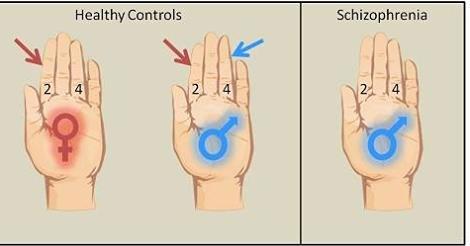
Research suggests that the ratio of the lengths of the index finger and the ring finger in males may be predictive of a variety of disorders related to disturbed hormonal balance. When the index finger is shorter than the ring finger, this results in a small 2D:4D ratio, pointing to a high exposure to testosterone in the uterus.

In a new study of 103 male patients diagnosed with schizophrenia and 100 matched healthy male individuals, investigators found that the 2D:4D ratio may be an effective predictor of schizophrenia — there were significant differences between schizophrenia and control groups concerning the ratio of the lengths of the second digit to the fourth digit, as well as its asymmetry, in both hands.

“Asymmetry index showed moderate discriminatory power and, therefore asymmetry index has a potential utility as a diagnostic test in determining the presence of schizophrenia,” said Dr. Taner Oznur, co-author of the Clinical Anatomy study.

Abdullah Bolu, Taner Oznur, Sedat Develi, Murat Gulsun, Emre Aydemir, Mustafa Alper, Mehmet Toygar. The ratios of 2nd to 4th digit may be a predictor of schizophrenia in male patients. Clinical Anatomy, 2015; DOI: 10.1002/ca.22527

http://www.sciencedaily.com/releases/2015/03/150316134920.htm

World’s oldest psychiatric hospital opens new museum

The world’s oldest psychiatric institution, the Bethlem Royal Hospital outside London, this week opened a new museum and art gallery charting the evolution in the treatment of mental disorders.

The original hospital was founded in 1247 in what is now central London and the name spawned the English word “bedlam” meaning chaos and madness.

In the 18th century visitors could pay to gawk at the hospital’s patients and, three centuries later, stereotypes about mental illness still abound.

“The museum is to do with challenging the stigma around mental health and one of the main ways you can do that is actually get people to walk onto the site and realise that this is not a frightening, threatening and dark place,” Victoria Northwood, head of the Archives and Museum, told AFP.

The bleak period in the history of mental treatment is addressed but not dwelled upon in the museum.

Iron and leather shackles used until the mid-19th century to restrain patients are displayed behind a wall of mirrors so they cannot be seen directly.

A padded cell is deconstructed and supplemented with audio of a patient describing what is was like to be locked inside.

The exhibition is full of interactive exhibits, including a video where the visitor is challenged to decide whether to commit a young woman, in denial about the dangers of her anorexia, to hospital against her will.

The decision is surprisingly difficult and it shows the complexity in diagnosing ailments linked to the brain, which we still know comparatively little.

“We are just getting across that this is not a black and white issue. It is not very easy. Human beings aren’t very easy,” Northwood said.

Art features strongly throughout the space, starting with the imposing 17th century statues “Raving Madness” and “Melancholy Madness” by Caius Gabriel Cibber, which used to stand at the entrance to the Bethlem hospital when it was in central London.

Also included are paintings by current or former patients, like Dan Duggan’s haunting charcoal “Cipher” series of a man’s elongated face—a testament to the 41-year-old’s inner turmoil.

Duggan, who made several suicide attempts and was detained three times under the mental health act including at Bethlem, said art was an instrumental tool in his recovery.

“A lot of the time you spend in hospital, particularly a psychiatric hospital, is very prescribed.

“When you’re engaged in a creative process, you’re able to be free of all of that for a while and the power is back in your hands to do whatever you want to do,” he said.

Visual artist and dancer Liz Atkin grew up in an alcoholic household. She developed dermatillomania or Compulsive Skin Picking from the age of eight as a way to manage the stress.

“I could have ended things in a very different way,” said Atkin, now aged 38.

Atkin received treatment and works with patients at the anxiety unit of Bethlem, which is now located in spacious grounds about one hour south of London.

She said the new museum and gallery is a unique space to encourage healing.

“Making artwork isn’t a complete cure and I personally don’t think that I’m cured, but I think it provides a very powerful outlet for some of those things that are hard to talk about.”

http://medicalxpress.com/news/2015-02-world-oldest-psychiatric-hospital-museum.html

New study shows that use of psychedelic drugs does not increase risk of mental illness

An analysis of data provided by 135,000 randomly selected participants – including 19,000 people who had used drugs such as LSD and magic mushrooms – finds that use of psychedelics does not increase risk of developing mental health problems. The results are published in the Journal of Psychopharmacology.

Previously, the researchers behind the study – from the Norwegian University of Science and Technology in Trondheim – had conducted a population study investigating associations between mental health and psychedelic use. However, that study, which looked at data from 2001-04, was unable to find a link between use of these drugs and mental health problems.

“Over 30 million US adults have tried psychedelics and there just is not much evidence of health problems,” says author and clinical psychologist Pål-Ørjan Johansen.

“Drug experts consistently rank LSD and psilocybin mushrooms as much less harmful to the individual user and to society compared to alcohol and other controlled substances,” concurs co-author and neuroscientist Teri Krebs.

For their study, they analyzed a data set from the US National Health Survey (2008-2011) consisting of 135,095 randomly selected adults from the US, including 19,299 users of psychedelic drugs.

Krebs and Johansen report that they found no evidence for a link between use of psychedelic drugs and psychological distress, depression, anxiety or suicidal thoughts, plans and attempts.

In fact, on a number of factors, the study found a correlation between use of psychedelic drugs and decreased risk for mental health problems.

“Many people report deeply meaningful experiences and lasting beneficial effects from using psychedelics,” says Krebs.

However, Johansen acknowledges that – given the design of the study – the researchers cannot “exclude the possibility that use of psychedelics might have a negative effect on mental health for some individuals or groups, perhaps counterbalanced at a population level by a positive effect on mental health in others.”

Despite this, Johansen believes that the findings of the study are robust enough to draw the conclusion that prohibition of psychedelic drugs cannot be justified as a public health measure.

Krebs says:

“Concerns have been raised that the ban on use of psychedelics is a violation of the human rights to belief and spiritual practice, full development of the personality, and free-time and play.”

Commenting on the research in a piece for the journal Nature, Charles Grob, a paediatric psychiatrist at the University of California-Los Angeles, says the study “assures us that there were not widespread ‘acid casualties’ in the 1960s.” However, he urges caution when interpreting the results, as individual cases of adverse effects can and do occur as a consequence of psychedelic use.

For instance, Grob describes hallucinogen persisting perception disorder, sometimes referred to as “a never-ending trip.” Patients with this disorder experience “incessant distortions” in their vision, such as shimmering lights and colored dots. “I’ve seen a number of people with these symptoms following a psychedelic experience, and it can be a very serious condition,” says Grob.

http://www.medicalnewstoday.com/articles/290461.php

Depression, Behaviour Changes May Start in Alzheimer’s Even Before Memory Changes

Depression and other behaviour changes may show up in people who will later develop Alzheimer’s disease even before they start having memory problems, according to a study published in the January 14, 2015, online issue of the journal Neurology.

“While earlier studies have shown that an estimated 90% of people with Alzheimer’s experience behavioural or psychological symptoms such as depression, anxiety, and agitation, this study suggests that these changes begin before people even have diagnosable dementia,” said Catherine M. Roe, PhD, Washington University School of Medicine, St. Louis, Missouri.

The study looked at 2,416 people aged 50 years and older who had no cognitive problems at their first visit to one of 34 Alzheimer’s disease centres across the country. The participants were followed for up to 7 years. Of the participants, 1,198 people stayed cognitively normal, with no memory or thinking problems, during the study. They were compared with 1,218 people who were followed for about the same length of time, but who developed dementia.

The people who developed dementia during the study also developed behaviour and mood symptoms such as apathy, appetite changes, irritability, and depression sooner than the people who did not develop dementia. For example, 30% of people who would develop dementia had depression after 4 years in the study, compared with 15% of those who did not develop dementia. Those who developed dementia were more than twice as likely to develop depression sooner than those without dementia and more than 12 times more likely to develop delusions than those without dementia.

Dr. Roe said the study adds to the conflicting evidence on depression and dementia.

“We still don’t know whether depression is a response to the psychological process of Alzheimer’s disease or a result of the same underlying changes in the brain,” she said. “More research is needed to identify the relationship between these two conditions.”

http://dgnews.docguide.com/depression-behaviour-changes-may-start-alzheimer-s-even-memory-changes?overlay=2&nl_ref=newsletter&pk_campaign=newsletter

Orthorexia Nervosa – when healthy eating becomes an unhealthy obsession

By Sumathi Reddy

The growing interest in eating healthy can at times have unhealthy consequences.

Some doctors and registered dietitians say they are increasingly seeing people whose desire to eat pure or “clean” food—from raw vegans to those who cut out multiple major food sources such as gluten, dairy and sugar—becomes an all-consuming obsession and leads to ill health. In extreme cases, people will end up becoming malnourished.

Some experts refer to the condition as orthorexia nervosa, a little-researched disorder that doesn’t have an official diagnosis in the Diagnostic and Statistical Manual of Mental Disorders, or DSM, considered the bible of psychiatric illnesses. Often, individuals with orthorexia will exhibit symptoms of recognized conditions such as obsessive-compulsive disorder or end up losing unhealthy amounts of weight, similar to someone with anorexia.

Researchers in Colorado recently proposed a series of criteria they say could help clinicians diagnose orthorexia. The guidelines, published online in the journal Psychosomatics earlier this year, also could serve as a standard for future research of the disorder, they say.

Ryan Moroze, a psychiatry fellow at the University of Colorado Denver School of Medicine and senior author of the study, said more research needs to be done to develop a valid screening instrument for orthorexia, determine its prevalence and differentiate it from other more well-known eating disorders.

“There are people who become malnourished, not because they’re restricting how much they eat, it’s what they’re choosing to eat,” said Thomas Dunn, a psychologist and psychology professor at the University of Northern Colorado in Greeley, Colo., and a co-author of the article.

“It’s not that they’re doing it to get thin, they’re doing it to get healthy. It’s just sort of a mind-set where it gets taken to an extreme like what we see with other kinds of mental illness,” Dr. Dunn said.

Among the proposed criteria: an obsession with the quality and composition of meals to the extent that people may spend excessive amounts of time, say three or more hours a day, reading about and preparing specific types of food; and having feelings of guilt after eating unhealthy food. The preoccupation with such eating would have to either lead to nutritional imbalances or interfere with daily functional living to be considered orthorexia.

Some orthorexia patients are receiving treatments similar to those for obsessive-compulsive disorder. “We’re getting the people who aren’t being treated well under an eating-disorder diagnosis and their disorder is better treated under the OCD dial,” said Kimberley Quinlan, clinical director of the OCD Center of Los Angeles, an outpatient clinic.

The condition seems to start with an interest in living healthy and then, over time, people develop an increased anxiety about eating food that is contaminated or that they deem unhealthy, said Ms. Quinlan. Treatment often involves cognitive behavioral therapy, a type of psychotherapy aiming at behavior modification. “We’ve basically taken a model that we use to treat OCD and applied it to this disorder which is so similar,” she said.

Experts say there is a gray area between striving to eat healthy and going to the extreme, which helps to spur skepticism about orthorexia. “People don’t believe how eating healthy can be a disorder,” said Ms. Quinlan.

Sometimes other illnesses can lead to orthorexia. David Rakel, director of integrative medicine at the University of Wisconsin School of Medicine and Public Health, estimated that 10% to 15% of the patients who come in with food allergies and related problems develop an unhealthy fear of particular foods.

Nutritional therapy often involves elimination diets—stopping to eat certain foods to check if they are contributing to an inflammatory condition, Dr. Rakel said. Under the program, the foods are later gradually reintroduced, but some people continue to avoid them. “People are getting so strict with their health choices that they’re not getting the nutrients that they need,” he said.

Some eating-disorder therapists say many of the orthorexia patients they treat also suffer from anorexia. But other experts say orthorexics often aren’t underweight, which can make it difficult to identify them.

“Someone on paper may be perfectly healthy and their blood work is great and their weight is fine but their behavior has become obsessive with food,” said Marjorie Nolan Cohn, a New York City-based dietitian and national spokeswoman for the Academy of Nutrition and Dietetics, a professional organization.

A red flag is when someone’s eating habits are making them avoid social engagements, Ms. Cohn said. “They may not be able to go out to a restaurant with their friends because they don’t know what’s in the food or it’s not cooked in a certain way or what if it’s not organic olive oil?” she said.

Jordan Younger, 24, of Los Angeles, started a popular Instagram and blog last year to post recipes and pictures from her plant-based vegan diet. Then her daily diet became all-consuming.

“I would wake up in a panic thinking, ‘What am I going to eat today?’ ” said Ms. Younger. “I would go to a juice place or Whole Foods or a natural grocery store and would spend so much time in there looking at everything trying to plan out the whole day. It just began to take over my mind in a way that I started to see was unhealthy,” she said.

Ms. Younger, already slim, said she lost 25 pounds on her restrictive diet. Her skin turned orange and she stopped menstruating. In May, she started seeing an eating-disorder specialist and nutritionist who helped her recover.

Now, Ms. Younger said she doesn’t restrict herself from eating anything except for processed food. Her skin has returned to its normal color, her hair has thickened and grown 5 inches and she has put back on her weight.

“With all these different dietary philosophies, there’s a lot more room for orthorexia to develop,” she said. “It makes it really hard to eat if you’re listening to all these theories and it gives eating and food a ton of anxiety when really food should be enjoyable.”

http://online.wsj.com/articles/when-healthy-eating-calls-for-treatment-1415654737

7 Very Bizarre (and Very Rare) Psychotic Hallucinations

brain

The many documented cases of strange delusions and neurological syndromes can offer a window into how bizarre the brain can be.

It may seem that hallucinations are random images that appear to some individuals, or that delusions are thoughts that arise without purpose. However, in some cases, a specific brain pathway may create a particular image or delusion, and different people may experience the same hallucination.

In recent decades, with advances in brain science, researchers have started to unravel the causes of some of these conditions, while others have remained a mystery.

Here is a look at seven odd hallucinations, which show that anything is possible when the brain takes a break from reality.

1. Alice-in-Wonderland syndrome
This neurological syndrome is characterized by bizarre, distorted perceptions of time and space, similar to what Alice experienced in Lewis Carroll’s “Alice’s Adventures in Wonderland.”

Patients with Alice-in-Wonderland syndrome describe seeing objects or parts of their bodies as smaller or bigger than their actual sizes, or in an altered shape. These individuals may also perceive time differently.

The rare syndrome seems to be caused by some viral infections, epilepsy, migraine headaches and brain tumors. Studies have also suggested that abnormal activity in parts of the visual cortex that handle information about the shape and size of objects might cause the hallucinations.

It’s also been suggested that Carroll himself experienced the condition during migraine headaches and used them as inspiration for writing the tale of Alice’s strange dream.

English psychiatrist John Todd first described the condition in an article published in the Canadian Medical Association Journal in 1955, and that’s why the condition is also called Todd’s syndrome. However, an earlier reference to the condition appears in a 1952 article by American neurologist Caro Lippman. The doctor describes a patient who reported feeling short and wide as she walked, and referenced “Alice’s Adventures in Wonderland” to explain her body image illusions.

2. Walking Corpse Syndrome
This delusion, also called Cotard’s Syndrome, is a rare mental illness in which patients believe they are dead, are dying or have lost their internal organs.

French neurologist Jules Cotard first described the condition in 1880, finding it in a woman who had depression and also symptoms of psychosis. The patient believed she didn’t have a brain or intestines, and didn’t need to eat. She died of starvation.

Other cases of Cotard’s syndrome have been reported in people with a range of psychiatric and neurological problems, including schizophrenia, traumatic brain injury and multiple sclerosis.

In a recent case report of Cotard’s syndrome, researchers described a previously healthy 73-year-old woman who went to the emergency room insisting that she was “going to die and going to hell.” Eventually, doctors found the patient had bleeding in her brain due to a stroke. After she received treatment in the hospital, her delusion resolved within a week, according to the report published in January 2014 in the journal of Neuropsychiatry.

3. Charles Bonnet syndrome
People who have lost their sight may develop Charles Bonnet syndrome, which involves having vivid, complex visual hallucinations of things that aren’t really there.

People with this syndrome usually hallucinate people’s faces, cartoons, colored patterns and objects. It is thought the condition occurs because the brain’s visual system is no longer receiving visual information from the eye or part of the retina, and begins making up its own images.

Charles Bonnet syndrome occurs in between 10 and 40% of older adults who have significant vision loss, according to studies.

4. Clinical lycanthropy
In this extremely rare psychiatric condition, patients believe they are turning into wolves or other animals. They may perceive their own bodies differently, and insist they are growing the fur, sharp teeth and claws of a wolf.

Cases have also been reported of people with delusional beliefs about turning into dogs, pigs, frogs and snakes.

The condition usually occurs in combination with another disorder, such as schizophrenia, bipolar disorder or severe depression, according to a review study published in the March issue of the journal History of Psychiatry in 2014.

5. Capgras delusion
Patients with Capgras delusion believe that an imposter has replaced a person they feel close to, such as a friend or spouse. The delusion has been reported in patients with schizophrenia, Alzheimer’s disease, advanced Parkinson’s disease, dementia and brain lesions.

One brain imaging study suggested the condition may involve reduced neural activity in the brain system that processes information about faces and emotional responses.

6. Othello syndrome
Named after Shakespeare’s character, Othello syndrome involves a paranoid belief that the sufferer’s partner is cheating. People with this condition experience strong obsessive thoughts and may show aggression and violence.

In one recent case report, doctors described a 46-year-old married man in the African country Burkina Faso who had a stroke, which left him unable to communicate and paralyzed in half of his body. The patient gradually recovered from his paralysis and speaking problems, but developed a persistent delusional jealousy and aggression toward his wife, accusing her of cheating with an unidentified man.

7. Ekbom’s syndrome
Patients with Ekbom’s syndrome, also known as delusional parasitosis or delusional infestations, strongly believe they are infested with parasites that are crawling under their skin. Patients report sensations of itching and being bitten, and sometimes, in an effort to get rid of the pathogens, they may hurt themselves, which can result in wounds and actual infections.

It’s unknown what causes these delusions, but studies have linked the condition with structural changes in the brain, and some patients have improved when treated with antipsychotic medications.

http://www.livescience.com/46477-oddest-hallucinations.html

Psychedelic mushrooms put your brain in a “waking dream,” study finds

imrs

Psychedelic mushrooms can do more than make you see the world in kaleidoscope. Research suggests they may have permanent, positive effects on the human brain.

In fact, a mind-altering compound found in some 200 species of mushroom is already being explored as a potential treatment for depression and anxiety. People who consume these mushrooms, after “trips” that can be a bit scary and unpleasant, report feeling more optimistic, less self-centered, and even happier for months after the fact.

But why do these trips change the way people see the world? According to a study published today in Human Brain Mapping, the mushroom compounds could be unlocking brain states usually only experienced when we dream, changes in activity that could help unlock permanent shifts in perspective.

The study examined brain activity in those who’d received injections of psilocybin, which gives “shrooms” their psychedelic punch. Despite a long history of mushroom use in spiritual practice, scientists have only recently begun to examine the brain activity of those using the compound, and this is the first study to attempt to relate the behavioral effects to biological changes.

After injections, the 15 participants were found to have increased brain function in areas associated with emotion and memory. The effect was strikingly similar to a brain in dream sleep, according to Dr. Robin Carhart-Harris, a post-doctoral researcher in neuropsychopharmacology at Imperial College London and co-author of the study.

“You’re seeing these areas getting louder, and more active,” he said. “It’s like someone’s turned up the volume there, in these regions that are considered part of an emotional system in the brain. When you look at a brain during dream sleep, you see the same hyperactive emotion centers.”

In fact, administration of the drug just before or during sleep seemed to promote higher activity levels during Rapid Eye Movement sleep, when dreams occur. An intriguing finding, Carhart-Harris says, given that people tend to describe their experience on psychedelic drugs as being like “a waking dream.” It seems that the brain may literally be slipping into unconscious patterns while the user is awake.

Conversely, the subjects of the study had decreased activity in other parts of the brain—areas associated with high level cognition. “These are the most recent parts of our brain, in an evolutionary sense,” Carhart-Harris said. “And we see them getting quieter and less organized.”

This dampening of one area and amplification of another could explain the “mind-broadening” sensation of psychedelic drugs, he said. Unlike most recreational drugs, psychotropic mushrooms and LSD don’t provide a pleasant, hedonistic reward when they’re consumed. Instead, users take them very occasionally, chasing the strange neurological effects instead of any sort of high.

“Except for some naïve users who go looking for a good time…which, by the way, is not how it plays out,” Carhart-Harris said, “you see people taking them to experience some kind of mental exploration, and to try to understand themselves.”

Our firm sense of self—the habits and experiences that we find integral to our personality—is quieted by these trips. Carhart-Harris believes that the drugs may unlock emotion while “basically killing the ego,” allowing users to be less narrow-minded and let go of negative outlooks.

It’s still not clear why such effects can have more profound long-term effects on the brain than our nightly dreams. But Carhart-Harris hopes to see more of these compounds in modern medicine. “The way we treat psychological illnesses now is to dampen things,” he said. “We dampen anxiety, dampen ones emotional range in the hope of curing depression, taking the sting out of what one feels.”

But some patients seem to benefit from having their emotions “unlocked” instead. “It would really suit the style of psychotherapy where we engage in a patient’s history and hang-ups,” Carhart-Harris said. “Instead of putting a bandage over the exposed wound, we’d be essentially loosening their minds—promoting a permanent change in outlook.”

Thanks to Steven Weihing for bringing this to the attention of the It’s Interesting community.

http://www.washingtonpost.com/news/to-your-health/wp/2014/07/03/psychedelic-drugs-put-your-brain-in-a-waking-dream-study-finds/

Deep brain stimulation treatment for patients with obsessive-compulsive disorder (OCD)

It seems simple: Walk to the refrigerator and grab a drink.

But Brett Larsen, 37, opens the door gingerly — peeks in — closes it, opens it, closes it and opens it again. This goes on for several minutes.

When he finally gets out a bottle of soda, he places his thumb and index finger on the cap, just so. Twists it open. Twists it closed. Twists it open.

“Just think about any movement that you have during the course of a day — closing a door or flushing the toilet — over and over and over,” said Michele Larsen, Brett’s mother.

“I cannot tell you the number of things we’ve had to replace for being broken because they’ve been used so many times.”

At 12, Larsen was diagnosed with obsessive-compulsive disorder, or OCD. It causes anxiety, which grips him so tightly that his only relief is repetition. It manifests in the smallest of tasks: taking a shower, putting on his shoes, walking through a doorway.

There are days when Larsen cannot leave the house.

“I can only imagine how difficult that is to live with that every single living waking moment of your life,” said Dr. Gerald Maguire, Larsen’s psychiatrist.

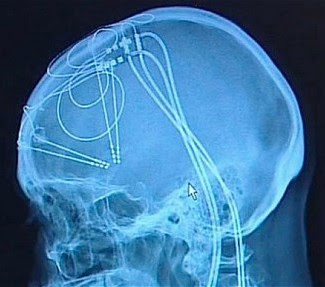
In a last-ditch effort to relieve his symptoms, Larsen decided to undergo deep brain stimulation. Electrodes were implanted in his brain, nestled near the striatum, an area thought to be responsible for deep, primitive emotions such as anxiety and fear.

Brett’s OCD trigger

Brett says his obsessions and compulsions began when he was 10, after his father died.

“I started worrying a lot about my family and loved ones dying or something bad happening to them,” he said. “I just got the thought in my head that if I switch the light off a certain amount of times, maybe I could control it somehow.

“Then I just kept doing it, and it got worse and worse.”

“Being OCD” has become a cultural catchphrase, but for people with the actual disorder, life can feel like a broken record. With OCD, the normal impulse to go back and check if you turned off the stove, or whether you left the lights on, becomes part of a crippling ritual.

The disease hijacked Larsen’s life (he cannot hold down a job and rarely sees friends); his personality (he can be stone-faced, with only glimpses of a slight smile); and his speech (a stuttering-like condition causes his speaking to be halting and labored.)

He spent the past two decades trying everything: multiple medication combinations, cognitive behavioral therapy, cross-country visits to specialists, even hospitalization.

Nothing could quell the anxiety churning inside him.

“This is not something that you consider first line for patients because this is invasive,” said Maguire, chair of psychiatry and neuroscience at the University of California Riverside medical school, and part of the team evaluating whether Larsen was a good candidate for deep brain stimulation. “It’s reserved for those patients when the standard therapies, the talk therapies, the medication therapies have failed.”

Deep brain stimulation is an experimental intervention, most commonly used among patients with nervous system disorders such as essential tremor, dystonia or Parkinson’s disease. In rare cases, it has been used for patients with intractable depression and OCD.

The electrodes alter the electrical field around regions of the brain thought to influence disease — in some cases amplifying it, in others dampening it — in hopes of relieving symptoms, said Dr. Frank Hsu, professor and chair of the department of neurosurgery at University of California, Irvine.

Hsu says stimulating the brain has worked with several OCD patients, but that the precise mechanism is not well understood.

The procedure is not innocuous: It involves a small risk of bleeding in the brain, stroke and infection. A battery pack embedded under the skin keeps the electrical current coursing to the brain, but each time the batteries run out, another surgical procedure is required.

‘I feel like laughing’

As doctors navigated Larsen’s brain tissue in the operating room — stimulating different areas to determine where to focus the electrical current — Larsen began to feel his fear fade.

At one point he began beaming, then giggling. It was an uncharacteristic light moment for someone usually gripped by anxiety.

In response to Larsen’s laughter, a staff member in the operating room asked him what he was feeling. Larsen said, “I don’t know why, but I feel happy. I feel like laughing.”

Doctors continued probing his brain for hours, figuring out what areas — and what level of stimulation — might work weeks later, when Larsen would have his device turned on for good.

In the weeks after surgery, the residual swelling in his brain kept those good feelings going. For the first time in years, Larsen and his mother had hope for normalcy.

“I know that Brett has a lot of normal in him, even though this disease eats him up at times,” said Michele Larsen. “There are moments when he’s free enough of anxiety that he can express that. But it’s only moments. It’s not days. It’s not hours. It’s not enough.”

Turning it on

In January, Larsen had his device activated. Almost immediately, he felt a swell of happiness reminiscent of what he had felt in the OR weeks earlier.

But that feeling would be fleeting — the process for getting him to an optimal level would take months. Every few weeks doctors increased the electrical current.

“Each time I go back it feels better,” Larsen said. “I’m more calm every time they turn it up.”

With time, some of his compulsive behaviors became less pronounced. In May, several weeks after his device was activated, he could put on his shoes with ease. He no longer spun them around in an incessant circle to allay his anxiety.

But other behaviors — such as turning on and shutting off the faucet — continued. Today, things are better, but not completely normal.

Normal, by society’s definition, is not the outcome Larsen should expect, experts say. Patients with an intractable disease who undergo deep brain stimulation should expect to have manageable OCD.

Lately, Larsen feels less trapped by his mind. He is able to make the once interminable trek outside his home within minutes, not hours. He has been to Disneyland with friends twice. He takes long rides along the beach to relax.

In his mind, the future looks bright.

“I feel like I’m getting better every day,” said Larsen, adding that things like going back to school or working now feel within his grasp. “I feel like I’m more able to achieve the things I want to do since I had the surgery.”

Thanks to Da Brayn for bringing this to the attention of the It’s Interesting community.

http://www.cnn.com/2014/06/24/health/brain-stimulation-ocd/?c=&page=0

Parkland psych ER is again scene of patient abuse

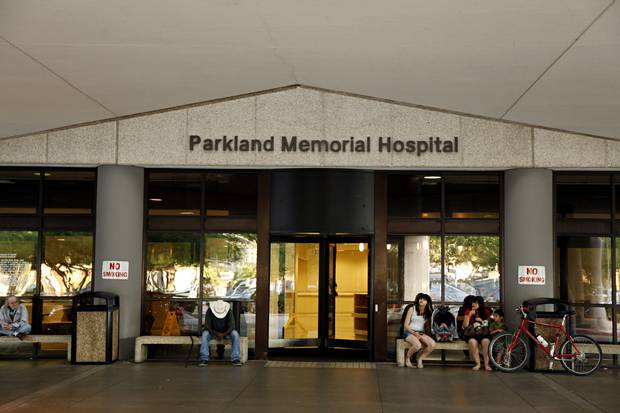
Parkland Memorial Hospital said the patient-gagging incident in the psychiatric emergency room was discovered on April 8 during a routine review of security video from March 16. Parkland notified the Texas health department within a day, it said, in compliance with regulations.

By MILES MOFFEIT AND BROOKS EGERTON

The psychiatric patient spat at Parkland Memorial Hospital staff as they strapped her into a chair. Then a nurse shoved a toilet paper roll into her mouth, while a co-worker put a sheet over her head.

“Blood stains can be seen on the toilet tissue” after its removal, says a police report that describes security camera footage. A follow-up report says a third employee warned the caregivers that their actions were “illegal.”

Texas health authorities are investigating the March incident — the first abuse in Parkland’s psychiatric emergency room to become public since the hospital hired a new chief executive. One nurse involved in the gagging was also involved in the 2011 restraint of a psych ER patient whose death triggered a federal investigation and virtual takeover of Parkland.

State health regulations prohibit restraint that obstructs a psychiatric patient’s airway or ability to communicate. A prior state enforcement action against Parkland requires hospital managers to report patient abuse within two days of becoming aware of it.

Parkland reported the gagging incident more than three weeks after it occurred. The hospital said managers didn’t know about it initially but acted promptly once they did.

“Employees on site did not elevate this incident appropriately,” Parkland spokeswoman April Foran said. The hospital fired two of five employees who were present during the restraint, she said. Two others resigned, and a fifth “received corrective action.”

Parkland, which collects hundreds of millions of dollars a year from Dallas County taxpayers, would not name the employees. But The Dallas Morning News confirmed the identities of two: Charles Enyinna-Okeigbo, the nurse who forced the toilet paper roll into the patient’s mouth, and Sherwin De Guzman, a supervising nurse.

Authorities have previously investigated both nurses: Enyinna-Okeigbo for domestic violence, and De Guzman in connection with the 2011 death of psych ER patient George Cornell. State and federal regulators found that Cornell was illegally restrained shortly before dying. They cited De Guzman for failing to supervise the technicians who subdued Cornell.

Parkland’s in-house police department investigated the March incident and asked the Dallas County district attorney’s office whether assault charges should be filed. A prosecutor said that the use of force was “unfortunate” but not criminal.

Both nurses declined to comment to The News. Enyinna-Okeigbo told police that he was merely trying to stop the spitting and was not angry with the patient, according to Parkland records.

UT Southwestern Medical Center, whose physicians supervise care at the public hospital, identified the psychiatrist in charge as Dr. Uros Zrnic. He “was not informed or aware of the incident until the videotape was reviewed” in April, UTSW said.

Terrified patient

Experts criticized Parkland after reading police reports on the latest incident at The News’ request.

“When a patient spits, it’s the last resort of a terrified human being, and being restrained like this is terrifying,” said Dr. Peter Breggin, a New York psychiatrist and former consultant for the National Institute of Mental Health.

“Trained mental health workers in this day and age know that spitting is a cause for staff to back off,” he said, adding that forcing objects into patients’ mouths can escalate violence. “There’s no excuse for this abuse.”

Dennis Borel, executive director of the Coalition of Texans with Disabilities, said some Parkland psych workers “still don’t get it.”

“This is pretty outrageous when it was just a few years ago that these kinds of actions were supposed to trigger training and other safe approaches at Parkland,” Borel said. “Everything in the patient’s behavior indicates she was desperately trying to protect herself, and they were making it worse. They failed the patient miserably.”

The state health department hit Parkland in 2012 with a $1 million fine because of Cornell’s death and several other “egregious deficiencies.” It was by far the largest hospital fine in Texas history.

Under a settlement, the hospital paid $750,000. It can avoid paying the rest if, by later this summer, it demonstrates compliance with safety requirements.

Because of the gagging incident, regulators are investigating whether there have been more “significant, egregious deficiencies and a failure to correct them or an attempt to hide them,” said health department spokeswoman Carrie Williams. “It’s an open investigation, and there have been no findings in this case so far.”

Parkland also remains under a 2013 corporate integrity agreement with the U.S. Department of Health & Human Services. It requires periodic reports on patient safety, among other steps.

Compliance with that agreement is a top stated priority of Dr. Fred Cerise, Parkland’s new chief executive. He started work about a week after the March gagging incident.

Cerise and other hospital officials declined to be interviewed for this report. In written responses to questions, Parkland said “the event was discovered” on April 8 during a routine review of security video from March 16. Parkland notified the Texas health department within a day, they said, in compliance with state regulations.

Parkland also said that in addition to taking personnel actions, it now requires video reviews of restraints within 24 hours. But it would not say whether it previously had a schedule for reviewing the security videos, or why it took more than three weeks to detect the gagging incident.

Quick investigation

The criminal investigation lasted less than 48 hours before the case was closed as “unfounded,” police reports show. A News investigation last year found that Parkland police have a history of quickly closing cases in which hospital employees are accused of abuse.

The hospital released nine pages of reports on the investigation, blacking out the names of employees and the patient. It released no information about why the patient was in the psych ER or whether she was injured in the restraint incident. There is no indication in the records that police tried to interview the woman.

When asked, the hospital spokeswoman told The News that “Parkland made multiple attempts to locate the patient” but failed.

The reports contain conflicting versions of what led to strapping the patient to the chair.

Enyinna-Okeigbo told police the woman became “extremely agitated” while in a common area of the psych ER. He said he gave her medication to calm down, but it didn’t work. When staff then directed her toward seclusion rooms, she began to “spit, swing, and kick at the staff,” police wrote, summarizing Enyinna-Okeigbo’s account.

A fellow caregiver who was interviewed “does not recall seeing the patient strike or attempt to strike any staff members,” a police report says. This caregiver also said he didn’t recall seeing the toilet paper roll put into the patient’s mouth or any bleeding. He denied covering the patient’s face with the sheet. The police report noted that “video of the incident contradicts this.”

The reports quote another staffer as saying he saw the bleeding and thought the patient had been “struck by a nurse.” He described the scene as “very chaotic” and said employees lacked training for such situations.

The police description of video footage begins as the patient resists efforts to strap her into a restraint chair: “She appeared to be acting aggressively toward to the medical staff, including spitting on multiple occasions in the direction of the staff.”

Five staffers approached the woman, including one who “immediately placed the roll of toilet tissue over the patient’s mouth,” a report says. “The patient began to resist,” leading Enyinna-Okeigbo to “shove the end of the roll into the patient’s mouth, at one point even appearing to force the patient’s jaw open to completely insert the roll.”

Then another employee secured the sheet around the patient’s head, and the bloody toilet paper was removed from her mouth. Next, a surgical mask was put on the patient. It, too, later showed blood stains.

A Parkland officer met with Assistant District Attorney Craig McNeil on April 10 to discuss potential criminal charges against Enyinna-Okeigbo. “McNeil stated that he felt the culpable mental state exhibited was negligence, and the mental state that has to be met for assault is reckless,” a police report says. “Therefore, McNeil stated that he did not feel that [Enyinna-Okeigbo] met the culpable state to be charged with a crime.”

McNeil told The News he did not know why the hospital didn’t consider charges against the staff member who put the sheet around the patient’s head. Foran, the Parkland spokeswoman, said hospital police gave the DA’s office “complete details” of the incident and noted that prosecutors have “full discretion” about how to proceed.

No assault

The News became aware of the incident on May 28 and asked Parkland for all related police reports. That same day, a Parkland detective asked McNeil for a written explanation of his reasoning, which the hospital gave The News.

“The use of force against a patient in an altered mental state is always unfortunate and should be avoided,” McNeil wrote. But it “does not appear to have been done with the intent to harm the patient.”

In an interview with The News, McNeil identified Enyinna-Okeigbo as the nurse who stuffed the toilet paper roll into the patient’s mouth.

The prosecutor said that spitting could be considered assault because of the potential for disease transmission. In using that term, he said, he did not mean to suggest that the patient should be charged with assault but added: “You have the right to defend yourself.”

McNeil said he could not tell from the video why the patient had blood in her mouth. He said he saw no footage of the patient being struck.

McNeil handled a 2011 case in which security video showed Parkland psychiatric technician Johnny Roberts choking a patient into unconsciousness. The hospital fired Roberts, but grand jurors declined to indict him.

“I was not happy about that,” McNeil said. “I still don’t know why they did that.”

Troubled pasts

The News’ reporting of George Cornell’s death ultimately led to a regulatory crackdown and two years of round-the-clock federal monitoring of Parkland.

The hospital installed security cameras — the same ones that captured the recent gagging incident. It also promised to fire problem employees and retrain others, especially on patient restraints.

Parkland would not say whether Enyinna-Okeigbo or De Guzman received this training.

De Guzman left his job at Parkland at some point after Cornell’s death in February 2011. He returned to work later the same year, according to hospital employment data. Parkland would not explain his departure or return.

Cornell’s death also led to a federal civil rights lawsuit that’s still pending against the hospital, UTSW, De Guzman and other caregivers. In court records, Cornell’s family has noted ways that regulators found fault with De Guzman.

Enyinna-Okeigbo, who was hired at Parkland in 2005, was charged with misdemeanor assault of his wife in 2008.

Dallas County prosecutors initially proposed a deal under which he could plead guilty and serve probation, court records show. Instead, for reasons the records don’t explain, they dismissed the charge in exchange for his completion of an anger management class. He never entered a plea and has no conviction record.

Parkland would not say whether it was aware of the allegations against Enyinna-Okeigbo. The hospital said that before 2011 it conducted criminal background checks only on prospective employees. It said it now checks existing employees, too.

In 2013, Parkland hired privately owned Green Oaks Hospital to manage its psychiatric services. Green Oaks, which receives $1.1 million a year under the deal, declined to comment for this report. Parkland would not discuss the company’s performance.

http://www.dallasnews.com/investigations/20140614-parkland-psych-er-is-again-scene-of-patient-abuse.ece