Pupil Response Predicts Depression Risk in Kids

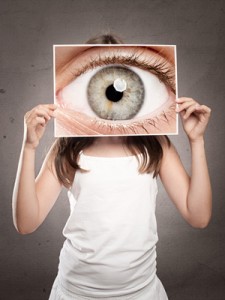
Emerging research suggests pupil dilation in children of depressed mothers when seeing an emotional image can help predict his or her risk of depression over the next two years.

Dr. Brandon Gibb, a professor of psychology at Binghamton University in New York, said the new findings suggest physiological reactivity to sad stimuli can be a potential biomarker of depression risk for some kids.

An important aspect of this finding is that pupillometry is an inexpensive tool that could be administered in family practice or pediatricians’ offices.

The simple test can help identify which children of depressed mothers are at highest risk for developing depression themselves.

“We think this line of research could eventually lead to universal screenings in pediatricians’ offices to assess future depression risk in kids,” said Gibb.

Gibb recruited children whose mothers had a history of major depressive disorder and measured their pupil dilation as they viewed angry, happy, and sad faces.

Follow-up assessments occurred over the next two years, during which structured interviews were used to assess for the children’s level of depressive symptoms, as well as the onset of depressive diagnoses.

Researchers found that a child’s reaction to faces can help predict the risk of developing short-term depression.

Specifically, children exhibiting relatively greater pupil dilation to sad faces experienced higher levels of depressive symptoms during the follow-up period. They also displayed a shorter time to the onset of a clinically significant depressive episode.

Interestingly, the type of emotions displayed by faces were a significant predictor of future depression. That is, the findings were specific to children’s pupil responses to sad faces and were not observed for children’s pupillary reactivity to angry or happy faces.

http://psychcentral.com/news/2015/07/09/new-predictive-test-for-childhood-depression/86632.html

Bullying by peers has even more severe effects on adulthood mental health than mistreatment by adults in childhood

By Ashley Strickland

Bullying can be defined by many things. It’s teasing, name-calling, stereotyping, fighting, exclusion, spreading rumors, public shaming and aggressive intimidation. It can be in person and online. But it can no longer be considered a rite of passage that strengthens character, new research suggests.

Adolescents who are bullied by their peers actually suffer from worse long-term mental health effects than children who are maltreated by adults, based on a study published last week in The Lancet Psychiatry.

The findings were a surprise to Dr. Dieter Wolke and his team that led the study, who expected the two groups to be similarly affected. However, because children tend to spend more time with their peers, it stands to reason that if they have negative relationships with one another, the effects could be severe and long-lasting, he said. They also found that children maltreated by adults were more likely to be bullied.

The researchers discovered that children who were bullied are more likely to suffer anxiety, depression and consider self-harm and suicide later in life.

While all children face conflict, disagreements between friends can usually be resolved in some way. But the repetitive nature of bullying is what can cause such harm, Wolke said.

“Bullying is comparable to a scenario for a caged animal,” he said. “The classroom is a place where you’re with people you didn’t choose to be with, and you can’t escape them if something negative happens.”

Children can internalize the harmful effects of bullying, which creates stress-related issues such as anxiety and depression, or they can externalize it by turning from a victim to a bully themselves. Either way, the result has a painful impact.

The study also concluded with a call to action, suggesting that while the government has justifiably focused on addressing maltreatment and abuse in the home, they should also consider bullying as a serious problem that requires schools, health services and communities to prevent, respond to or stop this abusive culture from forming.

“It’s a community problem,” Wolke said. “Physicians don’t ask about bullying. Health professionals, educators and legislation could provide parents with medical and social resources. We all need to be trained to ask about peer relationships.”

Stopping bullying in schools

Division and misunderstanding are some of the motivations behind bullying because they highlight differences. If children don’t understand those differences, they can form negative associations, said Johanna Eager, director for the Human Rights Campaign Foundation’s Welcoming Schools program.

Programs such as Welcoming Schools, for kindergarten through fifth grade, and Not in Our School, a movement for kindergarten through high school, want to help teachers, parents and children to stop a culture of bullying from taking hold in a school or community.

They offer lesson plans, staff training and speakers for schools, as well as events for parents.

Welcoming Schools is focused on helping children embrace diversity and overcome stereotypes at a young age. It’s the best place to start to prevent damaging habits that could turn into bullying by middle school or high school.

The lesson plans aim to help teachers and students by encouraging that our differences are positive aspects rather than negatives, whether it be in appearance, gender or religion, Eager said. They are also designed to help teachers lead discussions and answer tough questions that might come up.

Teachable moments present themselves in these classrooms daily, and Welcoming Schools offers resources to navigate those difficult moments. If they are prepared, teachers can address it and following up with a question.

They cover questions from “Why do you think it’s wrong for a boy to wear pink?” and “What does it mean to be gay or lesbian?” to “Would you be an ally or a bystander if someone was picking on your friend?” and “Why does it hurt when someone says this?”

Welcoming Schools is present in more than 30 states, working with about 500 schools and 115 districts.

Not in Our School has the same mission to create identity-safe school climates that encourage acceptance. They want to help build empathy in students and encourage them to become “upstanders” rather than bystanders.

Their lesson plans and videos, viewed by schools across the country, include teaching students about how to safely intervene in a situation, reach out to a trusted adult, befriend a bullied child or be an activist against bullying. While the role of teachers, counselors and resource officers will always be important, peer-to-peer relationships make a big difference, said Becki Cohn-Vargas, director of Not in Our Schools.

These positive practices can help build self-esteem and don’t focus on punishing bullies because the emphasis is on restorative justice: repairing harm and helping children and teens to change their aggressive behavior.

But it can’t be up to the schools alone.

“What’s really important is getting the public and the medical world to recognize bullying for what it is — a serious issue,” Cohn-Vargas said.

A global problem

Bullying, the study suggests, is a global issue. It is particularly prevalent in countries where there are rigid class divisions between higher and lower income families, Wolke said.

Dr. Tracy Vaillancourt, a University of Ottawa professor and Canada Research Chair for Children’s Mental Health and Violence Prevention, believes that defining bullying can help in how we address it. Look at it as a behavior that causes harm, rather than normal adolescent behavior, she said.

Role models should also keep a close eye on their own behavior, she said. Sometimes, adults can say or do things in front of their children that mimic aggressive behavior, such gossiping, demeaning others, encouraging their children to hit back or allowing sibling rivalry to escalate into something more harmful.

“We tend to admire power,” Vaillancourt said. “But we also tend to abuse power, because we don’t talk about achieving power in an appropriate way. Bullying is part of the human condition, but that doesn’t make it right. We should be taking care of each other. ”

The study compared young adults in the United States and the United Kingdom who were maltreated and bullied in childhood. Data was collected from two separate studies, comparing 4,026 participants from the Avon Longitudinal Study of Parents and Children in the UK and 1,273 participants from the Great Smoky Mountain Study in the U.S.

The UK data looked at maltreatment from the ages of 8 weeks to 8.6 years, bullying at ages 8, 10 and 13 and the mental health effects at age 18. The U.S. study presented data on bullying and maltreatment between the ages of 9 and 16, and the mental health effects from ages 19 to 25.

http://www.thelancet.com/journals/lanpsy/article/PIIS2215-0366(15)00165-0/abstract

Hip-hop music can improve mental health

by John Haltiwanger

As a musical genre, hip-hop is often denigrated for seemingly condoning misogyny, materialism, violence and crime. But this is an unfair characterization and an overgeneralization.

Yes, there are some rap artists who write songs containing nothing of substance. More often than not, however, hip-hop offers many of us an insightful view into a dark world we’re unfamiliar with: the impoverished inner city.

In this sense, hip-hop has the potential to educate and foster empathy.

To borrow from Jay Z:

I think that hip-hop has done more for racial relations than most cultural icons. Save Martin Luther King, because his dream speech we realized when President Obama got elected.

[Hip-hop] music didn’t only influence kids from urban areas. People listen to this music all around the world, and [they] took to this music.

Once you have people partying, dancing and singing along to the same music, then conversations naturally happen after that.

We all realize that we’re more alike than we’re separate.

Indeed, hip-hop breaches ostensibly impenetrable cultural divides, breeding solidarity among people with disparate backgrounds.

This is precisely why recent albums like Kendrick Lamar’s To Pimp a Butterfly have been widely celebrated and even used by high school teachers to teach lessons about race and oppression.

Beyond enlightening people on race, poverty, the War on Drugs and the inner city, it also appears hip-hop has a hidden benefit as a powerful tool against mental illness.

A study from Cambridge University found that hip-hop is extremely effective in combatting depression, bipolar disorder and addiction.

When you think about the themes hip-hop encompasses, this makes a lot of sense. Many artists rap about overcoming numerous obstacles in the ghetto, from gang violence and poverty to drugs and police brutality.

The overall narrative of hip-hop is one of progress. Artists tell dynamic stories of advancing from deeply oppressive environments to living out their wildest dreams.

Fundamentally, the message of hip-hop is one of hope.

Thus, hip-hop has the effect of “positive visual imagery,” helping people see the light when the whole world feels dark.

In other words, during bipolar episodes or periods of depression, listening to hip-hop can help people visualize or imagine a more positive place and where they’d like to be in the future. In turn, they arrive at a more secure mental state.

The study was conducted by neuroscientist Dr. Becky Inkster and psychiatrist Dr. Akeem Sule.

As Dr. Sule puts it:

Much of hip-hop comes from areas of great socioeconomic deprivation, so it’s inevitable that its lyrics will reflect the issues faced by people brought up in these areas, including poverty, marginalization, crime and drugs.

We can see in the lyrics many of the key risk factors for mental illness, from which it can be difficult to escape.

Hip-hop artists use their skills and talents not only to describe the world they see, but also as a means of breaking free.

We believe that hip-hop, with its rich, visual narrative style, can be used to make therapies that are more effective for specific populations and can help patients with depression to create more positive images of themselves, their situations and their future.

One of the prime examples utilized in the study is that of the Notorious B.I.G.’s “Juicy,” a hip-hop classic.

In the song, Biggie details his rise from deprivation on the harsh streets of Brooklyn to the covers of magazines and a life of affluence. It’s a song about making it against impossible odds.

There are so many other examples like this within the world of hip-hop. From Jay Z’s “On To The Next One” to the more recent Kendrick Lamar track, “i.”

Interestingly enough, not long ago, Lamar stated he penned the song as a form of encouragement and inspiration for prison inmates and suicidal teenagers:

I wrote a record for the homies that’s in the penitentiary right now, and I also wrote a record for these kids that come up to my shows with these slashes on they wrists, saying they don’t want to live no more.

Accordingly, it’s apparent some hip-hop artists are already deliberately attempting to help people with mental illness.

Regardless of the criticism it receives, hip-hop is a form of artistic expression with limitless educative and therapeutic potential.

The rapper Killer Mike has noted there is a commonly held view that hip-hop poses a threat or danger to society, but as he explains:

The kids spending hours per day writing rap songs aren’t a threat to society; they are often trying to escape the threats from society.

People with recurrent depression have significantly smaller hippocampus than healthy individuals

The brains of people with recurrent depression have a significantly smaller hippocampus – the part of the brain most associated with forming new memories – than healthy individuals, a new global study of nearly 9,000 people reveals.

Published in Molecular Psychiatry, the ENIGMA study is co-authored by University of Sydney scholars at the Brain and Mind Research Institute.

The research is the largest international study to compare brain volumes in people with and without major depression. It highlights the need to identify and treat depression effectively when it first occurs, particularly among teenagers and young adults.

Using magnetic resonance imaged (MRI) brain scans, and clinical data from 1,728 people with major depression and 7,199 healthy individuals, the study combined 15 datasets from Europe, the USA and Australia.

Major depression is a common condition affecting at least one in six people during their lifetime. It is a serious clinical mood disorder in which feelings of sadness, frustration, loss, or anger interfere with a person’s everyday life for weeks, months or years at a time.

The key finding that people with major depression have a smaller hippocampus confirms earlier clinical work conducted at the BMRI. In this study, the key finding was largely explained by subjects with recurrent depression.

People with recurrent depression represented 65 per cent of study subjects with major depression.

People with an early age of onset of major depression (before the age of 21 years) also had a smaller hippocampus than healthy individuals, consistent with the notion that many of these young people go on to have recurrent disorders.

However, people who had a first episode of major depression (34 per cent of study subjects with major depression) did not have a small hippocampus than healthy individuals, indicating that the changes are due to the adverse effects of depressive illness on the brain.

“These findings shed new light on brain structures and possible mechanisms responsible for depression,” says Associate Professor Jim Lagopoulos of the University of Sydney’s Brain and Mind Research Institute.

“Despite intensive research aimed at identifying brain structures linked to depression in recent decades, our understanding of what causes depression is still rudimentary.

“One reason for this has been the lack of sufficiently large studies, variability in the disease and treatments provided, and the complex interactions between clinical characteristics and brain structure.”

Commenting on the clinical significance of the findings, Co-Director of the Brain and Mind Research Institute, Professor Ian Hickie says: “This large study confirms the need to treat first episodes of depression effectively, particularly in teenagers and young adults, to prevent the brain changes that accompany recurrent depression.

“This is another reason that we need to ensure that young people receive effective treatments for depression – a key goal of our Centre of Research Excellence in Optimising Early Interventions for Young People with Emerging Mood Disorder.

“This new finding of smaller hippocampal volume in people with major depression may offer some support to the neurotrophic hypothesis of depression,” adds Jim Lagopoulos.

“This hypothesis argues that a range of neurobiological processes such as elevated glucocorticoid levels in those with chronic depression may induce brain shrinkage.

“Clearly, there’s a need for longitudinal studies that can track changes in hippocampal volume among people with depression over time, to better clarify whether hippocampal abnormalities result from prolonged duration of chronic stress, or represent a vulnerability factor for depression, or both,” he said.
http://www.news-medical.net/news/20150630/People-with-recurrent-depression-have-significantly-smaller-hippocampus-than-healthy-individuals.aspx

Scientists manage to give mice ‘eating disorders’ by knocking out one gene

By Rachel Feltman

If you give a mouse an eating disorder, you might just figure out how to treat the disease in humans. In a new study published Thursday in Cell Press, researchers created mice who lacked a gene associated with disordered eating in humans. Without it, the mice showed behaviors not unlike those seen in humans with eating disorders: They tended to be obsessive compulsive and have trouble socializing, and they were less interested in eating high-fat food than the control mice. The findings could lead to novel drug treatments for some of the 24 million Americans estimated to suffer from eating disorders.

In a 2013 study, the same researchers went looking for genes that might contribute to the risk of an eating disorder. Anorexia nervosa and bulimia nervosa aren’t straightforwardly inherited — there’s definitely more to an eating disorder than your genes — but it does seem like some families might have higher risks than others. Sure enough, the study of two large families, each with several members who had eating disorders, yielded mutations in two interacting genes. In one family, the estrogen-related receptor α (ESRRA) gene was mutated. The other family had a mutation on another gene that seemed to affect how well ESRRA could do its job.

So in the latest study, they created mice that didn’t have ESRRA in the parts of the brain associated with eating disorders.

“You can’t go testing this kind of gene expression in a human,” lead author and University of Iowa neuroscientist Michael Lutter said. “But in mice, you can manipulate the expression of the gene and then look at how it changes their behavior.”

It’s not a perfect analogy to what the gene mutation might do in a human, but the similarities can allow researchers to figure out the mechanism that causes the connection between your DNA and your eating habits.

The mice without ESRRA were tested for several eating-disorder-like behaviors: The researchers tested how hard they were willing to work for high fat food when they were hungry (less, it seemed, so much so that they weighed 15 percent less than their unaltered littermates), how compulsive they were, and how they behaved socially.

In general, the ESRRA-lacking mice were twitchier: They tended to overgroom, a common sign of anxiety in mice, and they were more wary of novelty, growing anxious when researchers put marbles into their cages. They also showed an inability to adapt: When researchers taught the mice how to exit a maze and then changed where the exit was, the mice without ESRRA spent way more time checking out the area where the exit should have been before looking for where it had gone.

The social changes were even more striking: Mice will usually show more interest in a new mouse than one they’ve met before, but in tests the modified mice showed the opposite preference, socializing with a familiar mouse when a new one was also presented.

They were also universally submissive to other mice, something the researchers detected with a sort of scientific game of chicken. Two mice are placed at either end of a tube, and one always plows past the other to get to the opposite side. It’s just the way mice size each other up — someone has to be on top. But every single one of the modified mice let themselves get pushed around.

“100% of the mice lacking this gene were subordinate,” Lutter said. “I’ve never seen an experiment before that produced a 0% verses 100% result.”

The avoidance of fats has an obvious connection to human disorders. But the social anxiety and rigidity are also close analogies to disordered eating in humans.

Now that Lutter and his colleagues know that the gene does something similar in mice, they can start looking for the actual mechanism that’s tripping these switches in the brain. They know that the gene’s pathway is very important for energy metabolism, especially in the breakdown of glucose. It’s possible that mutations in the gene cause some kind of impairment in neurons’ ability to get and process energy, but they can’t be sure yet.

They’ll see if they can pinpoint affected neurons and fix them. They’re also going to test some drugs that are known to affect this gene and its pathways. It’s possible that they’ll land on a treatment that helps calm these negative behaviors in affected mice, leading to treatments for humans with the mutation.

http://www.washingtonpost.com/news/speaking-of-science/wp/2015/04/09/scientists-manage-to-give-mice-eating-disorders-by-knocking-out-one-gene/

Open Access Article here: http://www.cell.com/cell-reports/abstract/S2211-1247(15)00301-0

World’s oldest psychiatric hospital opens new museum

The world’s oldest psychiatric institution, the Bethlem Royal Hospital outside London, this week opened a new museum and art gallery charting the evolution in the treatment of mental disorders.

The original hospital was founded in 1247 in what is now central London and the name spawned the English word “bedlam” meaning chaos and madness.

In the 18th century visitors could pay to gawk at the hospital’s patients and, three centuries later, stereotypes about mental illness still abound.

“The museum is to do with challenging the stigma around mental health and one of the main ways you can do that is actually get people to walk onto the site and realise that this is not a frightening, threatening and dark place,” Victoria Northwood, head of the Archives and Museum, told AFP.

The bleak period in the history of mental treatment is addressed but not dwelled upon in the museum.

Iron and leather shackles used until the mid-19th century to restrain patients are displayed behind a wall of mirrors so they cannot be seen directly.

A padded cell is deconstructed and supplemented with audio of a patient describing what is was like to be locked inside.

The exhibition is full of interactive exhibits, including a video where the visitor is challenged to decide whether to commit a young woman, in denial about the dangers of her anorexia, to hospital against her will.

The decision is surprisingly difficult and it shows the complexity in diagnosing ailments linked to the brain, which we still know comparatively little.

“We are just getting across that this is not a black and white issue. It is not very easy. Human beings aren’t very easy,” Northwood said.

Art features strongly throughout the space, starting with the imposing 17th century statues “Raving Madness” and “Melancholy Madness” by Caius Gabriel Cibber, which used to stand at the entrance to the Bethlem hospital when it was in central London.

Also included are paintings by current or former patients, like Dan Duggan’s haunting charcoal “Cipher” series of a man’s elongated face—a testament to the 41-year-old’s inner turmoil.

Duggan, who made several suicide attempts and was detained three times under the mental health act including at Bethlem, said art was an instrumental tool in his recovery.

“A lot of the time you spend in hospital, particularly a psychiatric hospital, is very prescribed.

“When you’re engaged in a creative process, you’re able to be free of all of that for a while and the power is back in your hands to do whatever you want to do,” he said.

Visual artist and dancer Liz Atkin grew up in an alcoholic household. She developed dermatillomania or Compulsive Skin Picking from the age of eight as a way to manage the stress.

“I could have ended things in a very different way,” said Atkin, now aged 38.

Atkin received treatment and works with patients at the anxiety unit of Bethlem, which is now located in spacious grounds about one hour south of London.

She said the new museum and gallery is a unique space to encourage healing.

“Making artwork isn’t a complete cure and I personally don’t think that I’m cured, but I think it provides a very powerful outlet for some of those things that are hard to talk about.”

http://medicalxpress.com/news/2015-02-world-oldest-psychiatric-hospital-museum.html

The Likely Cause of Addiction Has Been Discovered, and It Is Not What You Think

by Johann Hari
Author of ‘Chasing The Scream: The First and Last Days of the War on Drugs’

It is now one hundred years since drugs were first banned — and all through this long century of waging war on drugs, we have been told a story about addiction by our teachers and by our governments. This story is so deeply ingrained in our minds that we take it for granted. It seems obvious. It seems manifestly true. Until I set off three and a half years ago on a 30,000-mile journey for my new book, Chasing The Scream: The First And Last Days of the War on Drugs, to figure out what is really driving the drug war, I believed it too. But what I learned on the road is that almost everything we have been told about addiction is wrong — and there is a very different story waiting for us, if only we are ready to hear it.

If we truly absorb this new story, we will have to change a lot more than the drug war. We will have to change ourselves.

I learned it from an extraordinary mixture of people I met on my travels. From the surviving friends of Billie Holiday, who helped me to learn how the founder of the war on drugs stalked and helped to kill her. From a Jewish doctor who was smuggled out of the Budapest ghetto as a baby, only to unlock the secrets of addiction as a grown man. From a transsexual crack dealer in Brooklyn who was conceived when his mother, a crack-addict, was raped by his father, an NYPD officer. From a man who was kept at the bottom of a well for two years by a torturing dictatorship, only to emerge to be elected President of Uruguay and to begin the last days of the war on drugs.

I had a quite personal reason to set out for these answers. One of my earliest memories as a kid is trying to wake up one of my relatives, and not being able to. Ever since then, I have been turning over the essential mystery of addiction in my mind — what causes some people to become fixated on a drug or a behavior until they can’t stop? How do we help those people to come back to us? As I got older, another of my close relatives developed a cocaine addiction, and I fell into a relationship with a heroin addict. I guess addiction felt like home to me.

If you had asked me what causes drug addiction at the start, I would have looked at you as if you were an idiot, and said: “Drugs. Duh.” It’s not difficult to grasp. I thought I had seen it in my own life. We can all explain it. Imagine if you and I and the next twenty people to pass us on the street take a really potent drug for twenty days. There are strong chemical hooks in these drugs, so if we stopped on day twenty-one, our bodies would need the chemical. We would have a ferocious craving. We would be addicted. That’s what addiction means.

One of the ways this theory was first established is through rat experiments — ones that were injected into the American psyche in the 1980s, in a famous advert by the Partnership for a Drug-Free America. You may remember it. The experiment is simple. Put a rat in a cage, alone, with two water bottles. One is just water. The other is water laced with heroin or cocaine. Almost every time you run this experiment, the rat will become obsessed with the drugged water, and keep coming back for more and more, until it kills itself.

The advert explains: “Only one drug is so addictive, nine out of ten laboratory rats will use it. And use it. And use it. Until dead. It’s called cocaine. And it can do the same thing to you.”

But in the 1970s, a professor of Psychology in Vancouver called Bruce Alexander noticed something odd about this experiment. The rat is put in the cage all alone. It has nothing to do but take the drugs. What would happen, he wondered, if we tried this differently? So Professor Alexander built Rat Park. It is a lush cage where the rats would have colored balls and the best rat-food and tunnels to scamper down and plenty of friends: everything a rat about town could want. What, Alexander wanted to know, will happen then?

In Rat Park, all the rats obviously tried both water bottles, because they didn’t know what was in them. But what happened next was startling.

The rats with good lives didn’t like the drugged water. They mostly shunned it, consuming less than a quarter of the drugs the isolated rats used. None of them died. While all the rats who were alone and unhappy became heavy users, none of the rats who had a happy environment did.

At first, I thought this was merely a quirk of rats, until I discovered that there was — at the same time as the Rat Park experiment — a helpful human equivalent taking place. It was called the Vietnam War. Time magazine reported using heroin was “as common as chewing gum” among U.S. soldiers, and there is solid evidence to back this up: some 20 percent of U.S. soldiers had become addicted to heroin there, according to a study published in the Archives of General Psychiatry. Many people were understandably terrified; they believed a huge number of addicts were about to head home when the war ended.

But in fact some 95 percent of the addicted soldiers — according to the same study — simply stopped. Very few had rehab. They shifted from a terrifying cage back to a pleasant one, so didn’t want the drug any more.

Professor Alexander argues this discovery is a profound challenge both to the right-wing view that addiction is a moral failing caused by too much hedonistic partying, and the liberal view that addiction is a disease taking place in a chemically hijacked brain. In fact, he argues, addiction is an adaptation. It’s not you. It’s your cage.

After the first phase of Rat Park, Professor Alexander then took this test further. He reran the early experiments, where the rats were left alone, and became compulsive users of the drug. He let them use for fifty-seven days — if anything can hook you, it’s that. Then he took them out of isolation, and placed them in Rat Park. He wanted to know, if you fall into that state of addiction, is your brain hijacked, so you can’t recover? Do the drugs take you over? What happened is — again — striking. The rats seemed to have a few twitches of withdrawal, but they soon stopped their heavy use, and went back to having a normal life. The good cage saved them. (The full references to all the studies I am discussing are in the book.)

When I first learned about this, I was puzzled. How can this be? This new theory is such a radical assault on what we have been told that it felt like it could not be true. But the more scientists I interviewed, and the more I looked at their studies, the more I discovered things that don’t seem to make sense — unless you take account of this new approach.

Here’s one example of an experiment that is happening all around you, and may well happen to you one day. If you get run over today and you break your hip, you will probably be given diamorphine, the medical name for heroin. In the hospital around you, there will be plenty of people also given heroin for long periods, for pain relief. The heroin you will get from the doctor will have a much higher purity and potency than the heroin being used by street-addicts, who have to buy from criminals who adulterate it. So if the old theory of addiction is right — it’s the drugs that cause it; they make your body need them — then it’s obvious what should happen. Loads of people should leave the hospital and try to score smack on the streets to meet their habit.

But here’s the strange thing: It virtually never happens. As the Canadian doctor Gabor Mate was the first to explain to me, medical users just stop, despite months of use. The same drug, used for the same length of time, turns street-users into desperate addicts and leaves medical patients unaffected.

If you still believe — as I used to — that addiction is caused by chemical hooks, this makes no sense. But if you believe Bruce Alexander’s theory, the picture falls into place. The street-addict is like the rats in the first cage, isolated, alone, with only one source of solace to turn to. The medical patient is like the rats in the second cage. She is going home to a life where she is surrounded by the people she loves. The drug is the same, but the environment is different.

This gives us an insight that goes much deeper than the need to understand addicts. Professor Peter Cohen argues that human beings have a deep need to bond and form connections. It’s how we get our satisfaction. If we can’t connect with each other, we will connect with anything we can find — the whirr of a roulette wheel or the prick of a syringe. He says we should stop talking about ‘addiction’ altogether, and instead call it ‘bonding.’ A heroin addict has bonded with heroin because she couldn’t bond as fully with anything else.

So the opposite of addiction is not sobriety. It is human connection.

When I learned all this, I found it slowly persuading me, but I still couldn’t shake off a nagging doubt. Are these scientists saying chemical hooks make no difference? It was explained to me — you can become addicted to gambling, and nobody thinks you inject a pack of cards into your veins. You can have all the addiction, and none of the chemical hooks. I went to a Gamblers’ Anonymous meeting in Las Vegas (with the permission of everyone present, who knew I was there to observe) and they were as plainly addicted as the cocaine and heroin addicts I have known in my life. Yet there are no chemical hooks on a craps table.

But still, surely, I asked, there is some role for the chemicals? It turns out there is an experiment which gives us the answer to this in quite precise terms, which I learned about in Richard DeGrandpre’s book The Cult of Pharmacology.

Everyone agrees cigarette smoking is one of the most addictive processes around. The chemical hooks in tobacco come from a drug inside it called nicotine. So when nicotine patches were developed in the early 1990s, there was a huge surge of optimism — cigarette smokers could get all of their chemical hooks, without the other filthy (and deadly) effects of cigarette smoking. They would be freed.

But the Office of the Surgeon General has found that just 17.7 percent of cigarette smokers are able to stop using nicotine patches. That’s not nothing. If the chemicals drive 17.7 percent of addiction, as this shows, that’s still millions of lives ruined globally. But what it reveals again is that the story we have been taught about The Cause of Addiction lying with chemical hooks is, in fact, real, but only a minor part of a much bigger picture.

This has huge implications for the one-hundred-year-old war on drugs. This massive war — which, as I saw, kills people from the malls of Mexico to the streets of Liverpool — is based on the claim that we need to physically eradicate a whole array of chemicals because they hijack people’s brains and cause addiction. But if drugs aren’t the driver of addiction — if, in fact, it is disconnection that drives addiction — then this makes no sense.

Ironically, the war on drugs actually increases all those larger drivers of addiction. For example, I went to a prison in Arizona — ‘Tent City’ — where inmates are detained in tiny stone isolation cages (‘The Hole’) for weeks and weeks on end to punish them for drug use. It is as close to a human recreation of the cages that guaranteed deadly addiction in rats as I can imagine. And when those prisoners get out, they will be unemployable because of their criminal record — guaranteeing they with be cut off even more. I watched this playing out in the human stories I met across the world.

There is an alternative. You can build a system that is designed to help drug addicts to reconnect with the world — and so leave behind their addictions.

This isn’t theoretical. It is happening. I have seen it. Nearly fifteen years ago, Portugal had one of the worst drug problems in Europe, with 1 percent of the population addicted to heroin. They had tried a drug war, and the problem just kept getting worse. So they decided to do something radically different. They resolved to decriminalize all drugs, and transfer all the money they used to spend on arresting and jailing drug addicts, and spend it instead on reconnecting them — to their own feelings, and to the wider society. The most crucial step is to get them secure housing, and subsidized jobs so they have a purpose in life, and something to get out of bed for. I watched as they are helped, in warm and welcoming clinics, to learn how to reconnect with their feelings, after years of trauma and stunning them into silence with drugs.

One example I learned about was a group of addicts who were given a loan to set up a removals firm. Suddenly, they were a group, all bonded to each other, and to the society, and responsible for each other’s care.

The results of all this are now in. An independent study by the British Journal of Criminology found that since total decriminalization, addiction has fallen, and injecting drug use is down by 50 percent. I’ll repeat that: injecting drug use is down by 50 percent. Decriminalization has been such a manifest success that very few people in Portugal want to go back to the old system. The main campaigner against the decriminalization back in 2000 was Joao Figueira, the country’s top drug cop. He offered all the dire warnings that we would expect from the Daily Mail or Fox News. But when we sat together in Lisbon, he told me that everything he predicted had not come to pass — and he now hopes the whole world will follow Portugal’s example.

This isn’t only relevant to the addicts I love. It is relevant to all of us, because it forces us to think differently about ourselves. Human beings are bonding animals. We need to connect and love. The wisest sentence of the twentieth century was E.M. Forster’s — “only connect.” But we have created an environment and a culture that cut us off from connection, or offer only the parody of it offered by the Internet. The rise of addiction is a symptom of a deeper sickness in the way we live — constantly directing our gaze towards the next shiny object we should buy, rather than the human beings all around us.

The writer George Monbiot has called this “the age of loneliness.” We have created human societies where it is easier for people to become cut off from all human connections than ever before. Bruce Alexander — the creator of Rat Park — told me that for too long, we have talked exclusively about individual recovery from addiction. We need now to talk about social recovery — how we all recover, together, from the sickness of isolation that is sinking on us like a thick fog.

But this new evidence isn’t just a challenge to us politically. It doesn’t just force us to change our minds. It forces us to change our hearts.

Loving an addict is really hard. When I looked at the addicts I love, it was always tempting to follow the tough love advice doled out by reality shows like Intervention — tell the addict to shape up, or cut them off. Their message is that an addict who won’t stop should be shunned. It’s the logic of the drug war, imported into our private lives. But in fact, I learned, that will only deepen their addiction — and you may lose them altogether. I came home determined to tie the addicts in my life closer to me than ever — to let them know I love them unconditionally, whether they stop, or whether they can’t.

When I returned from my long journey, I looked at my ex-boyfriend, in withdrawal, trembling on my spare bed, and I thought about him differently. For a century now, we have been singing war songs about addicts. It occurred to me as I wiped his brow, we should have been singing love songs to them all along.

The full story of Johann Hari’s journey — told through the stories of the people he met — can be read in Chasing The Scream: The First and Last Days of the War on Drugs, published by Bloomsbury. The book has been praised by everyone from Elton John to Glenn Greenwald to Naomi Klein. You can buy it at all good bookstores and read more at http://www.chasingthescream.com.

Johann Hari will be talking about his book at 7pm at Politics and Prose in Washington DC on the 29th of January, at lunchtime at the 92nd Street Y in New York City on the 30th January, and in the evening at Red Emma’s in Baltimore on the 4th February.

Thanks to Da Brayn for bringing this to the attention of the It’s Interesting community.

http://www.huffingtonpost.com/johann-hari/the-real-cause-of-addicti_b_6506936.html

New research shows that listening to sad music helps stabilize mood

A new study published in the journal PLOS One and conducted by researchers at the Free University of Berlin in Germany found that listening to sad music evoked feelings of nostalgia, peacefulness, tenderness and wonder.

“For many individuals, listening to sad music can actually lead to beneficial emotional effects,” the researchers, led by psychologist Liila Taruffi, report. “Music-evoked sadness can be appreciated not only as an aesthetic, abstract reward, but [it] also plays a role in well-being, by providing consolation as well as regulating negative moods and emotions.”

Nostalgia was the most common emotion associated with listening to sad music, not surprisingly, since we know that listening to music can take you back to a time and place long ago.

The study also found that people tend to listen to sad music when they’re feeling sad themselves, though the music doesn’t make them sadder. Instead, it helps regulate their mood. Researchers conjecture that this information could be useful in understanding how music therapy helps treat certain conditions.

“Thus, from a therapeutic perspective, one could reasonably interpret a patient’s decision to select sad music as, apart from an aesthetic preference, an indicator of emotional distress. This might be useful especially in children or adults with autism spectrum disorder or alexithymic individuals, who have a reduced ability to express their emotions verbally,” the researchers said. “By ‘tuning’ their emotions with the ones expressed by the music, patients may feel heard and understood, even in the absence of a specific emotional vocabulary. This empathic connection between the music and the patient may help to relieve distress and to progress in therapy.”

http://www.mnn.com/lifestyle/arts-culture/stories/why-do-we-like-listening-to-sad-music

http://journals.plos.org/plosone/article?id=10.1371/journal.pone.0110490

Checking emails less often shown to reduce stress

New research has found that checking email less reduces stress.

It provides further evidence that stepping away from your inbox is a good idea not just for the sake of productivity, but also for the sake of your health.

In an experiment done by Kostadin Kushlev and Elizabeth Dunn, participants were told to change how they dealt with email in two separate weeks.

In one week, a limit was put on the amount they could check email – they were only allowed to check email three times a day.

The other week, they could check their email as much as they liked.

The researchers – from the University of British Columbia, Vancouver – found that in the week when email use was restricted, participants experienced significantly lower daily stress than when they checked email more often.

http://www.sciencedirect.com/science/article/pii/S0747563214005810

Selfies Linked to Narcissism, Psychopathy

Men who post selfies on social media such as Instagram and Facebook have higher than average traits of narcissism and psychopathy, according to a new study from academics at Ohio State University.

Furthermore, people who use filters to edit shots score even higher for anti-social behaviour such as narcissism, an obsession with one’s own appearance.

Psychologists from the University of Ohio sampled 800 men aged 18 to 40 about their photo-posting habits on social media.

As well as questionnaires to test their levels of vanity, they were also asked if they edited their photos by cropping them or adding a filter.

Assistant Professor Jesse Fox, lead author of the study at The Ohio State University, said: ‘It’s not surprising that men who post a lot of selfies and spend more time editing them are more narcissistic, but this is the first time it has actually been confirmed in a study.

‘The more interesting finding is that they also score higher on this other anti-social personality trait, psychopathy, and are more prone to self-objectification” she said.

http://www.timeslive.co.za/lifestyle/2015/01/08/men-who-post-selfies-have-narcissistic-and-psychopathic-tendencies-study