
No votes cast in small-town Iowa school board race

An Iowa farmer who was running unopposed for his local school board failed to earn any votes — not even his own — but he’ll probably still get the job.

Randy Richardson, 42, didn’t find time to vote for himself between his full-time maintenance job at a bean processing plant in Riceville and his chores on his farm near McIntire, The Des Moines Register reported (http://dmreg.co/1KuptW7 ).

Richardson was recruited to run by school staff, and though he said he’s “run paper thin the way it is,” he agreed because he has two kids in the district.

Neighbor Jessie Miller said there wasn’t any key issue to drive her to vote in the school board race.

“I would’ve voted for him!” she said. “He’s an awesome guy.”

Riceville is a farming community of around 500 residents near the Minnesota border. The school board district Richardson was running for is also home to a number of Amish and Mennonite farmers who typically don’t vote.

There are only 122 registered voters who could have voted for Richardson. Across the entire school district, only 36 people voted in the Sept. 8 election.

School board president Karl Fox, who also farms, said the timing of last week’s vote was unfortunate because it’s a busy time of year for fieldwork.

Fox said farmers have a hard time sacrificing a day of nice weather at this time of year, and many people in the area have to drive 50 miles or more to get to work each day.

“It’s hard to get the general public to remember when to vote for president,” Fox said.

But Richardson will likely still get the job on the Riceville School Board because the board probably will appoint him to fill the seat he was running for, Fox said.

New research shows that high salt diet suppresses weight gain in mice on a high fat diet


Dr. Justin Grobe, PhD


Dr. Michael Lutter, MD PhD

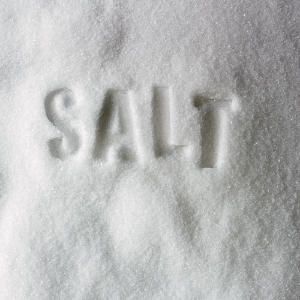
In a study that seems to defy conventional dietary wisdom, University of Iowa scientists have found that adding high salt to a high-fat diet actually prevents weight gain in mice.

As exciting as this may sound to fast food lovers, the researchers caution that very high levels of dietary salt are associated with increased risk for cardiovascular disease in humans. Rather than suggest that a high salt diet is suddenly a good thing, the researchers say these findings really point to the profound effect non-caloric dietary nutrients can have on energy balance and weight gain.

“People focus on how much fat or sugar is in the food they eat, but [in our experiments] something that has nothing to do with caloric content – sodium – has an even bigger effect on weight gain,” say Justin Grobe, PhD, assistant professor of pharmacology at the UI Carver College of Medicine and co-senior author of the study, which was published in the journal Scientific Reports on June 11.

The UI team started the study with the hypothesis that fat and salt, both being tasty to humans, would act together to increase food consumption and promote weight gain. They tested the idea by feeding groups of mice different diets: normal chow or high-fat chow with varying levels of salt (0.25 to 4 percent). To their surprise, the mice on the high-fat diet with the lowest salt gained the most weight, about 15 grams over 16 weeks, while animals on the high-fat, highest salt diet had low weight gain that was similar to the chow-fed mice, about 5 grams.

“We found out that our ‘french fry’ hypothesis was perfectly wrong,” says Grobe, who also is a member of the Fraternal Order of Eagles Diabetes Research Center at the UI and a Fellow of the American Heart Association. “The findings also suggest that public health efforts to continue lowering sodium intake may have unexpected and unintended consequences.”

To investigate why the high salt prevented weight gain, the researchers examined four key factors that influence energy balance in animals. On the energy input side, they ruled out changes in feeding behavior – all the mice ate the same amount of calories regardless of the salt content in their diet. On the energy output side, there was no difference in resting metabolism or physical activity between the mice on different diets. In contrast, varying levels of salt had a significant effect on digestive efficiency – the amount of fat from the diet that is absorbed by the body.

“Our study shows that not all calories are created equal,” says Michael Lutter, MD, PhD, co-senior study author and UI assistant professor of psychiatry. “Our findings, in conjunction with other studies, are showing that there is a wide range of dietary efficiency, or absorption of calories, in the populations, and that may contribute to resistance or sensitivity to weight gain.”

“This suppression of weight gain with increased sodium was due entirely to a reduced efficiency of the digestive tract to extract calories from the food that was consumed,” explains Grobe.

It’s possible that this finding explains the well-known digestive ill effects of certain fast foods that are high in both fat and salt, he adds.

Through his research on hypertension, Grobe knew that salt levels affect the activity of an enzyme called renin, which is a component in the renin- angiotensin system, a hormone system commonly targeted clinically to treat various cardiovascular diseases. The new study shows that angiotensin mediates the control of digestive efficiency by dietary sodium.

The clinical usefulness of reducing digestive efficiency for treating obesity has been proven by the drug orlistat, which is sold over-the-counter as Alli. The discovery that modulating the renin-angiotensin system also reduces digestive efficiency may lead to the developments of new anti-obesity treatments.

Lutter, who also is an eating disorders specialist with UI Health Care, notes that another big implication of the findings is that we are just starting to understand complex interactions between nutrients and how they affect calorie absorption, and it is important for scientists investigating the health effects of diet to analyze diets that are more complex than those currently used in animal experiments and more accurately reflect normal eating behavior.

“Most importantly, these findings support continued and nuanced discussions of public policies regarding dietary nutrient recommendations,” Grobe adds.

http://www.eurekalert.org/pub_releases/2015-06/uoih-hsp061115.php

Scientists manage to give mice ‘eating disorders’ by knocking out one gene

By Rachel Feltman

If you give a mouse an eating disorder, you might just figure out how to treat the disease in humans. In a new study published Thursday in Cell Press, researchers created mice who lacked a gene associated with disordered eating in humans. Without it, the mice showed behaviors not unlike those seen in humans with eating disorders: They tended to be obsessive compulsive and have trouble socializing, and they were less interested in eating high-fat food than the control mice. The findings could lead to novel drug treatments for some of the 24 million Americans estimated to suffer from eating disorders.

In a 2013 study, the same researchers went looking for genes that might contribute to the risk of an eating disorder. Anorexia nervosa and bulimia nervosa aren’t straightforwardly inherited — there’s definitely more to an eating disorder than your genes — but it does seem like some families might have higher risks than others. Sure enough, the study of two large families, each with several members who had eating disorders, yielded mutations in two interacting genes. In one family, the estrogen-related receptor α (ESRRA) gene was mutated. The other family had a mutation on another gene that seemed to affect how well ESRRA could do its job.

So in the latest study, they created mice that didn’t have ESRRA in the parts of the brain associated with eating disorders.

“You can’t go testing this kind of gene expression in a human,” lead author and University of Iowa neuroscientist Michael Lutter said. “But in mice, you can manipulate the expression of the gene and then look at how it changes their behavior.”

It’s not a perfect analogy to what the gene mutation might do in a human, but the similarities can allow researchers to figure out the mechanism that causes the connection between your DNA and your eating habits.

The mice without ESRRA were tested for several eating-disorder-like behaviors: The researchers tested how hard they were willing to work for high fat food when they were hungry (less, it seemed, so much so that they weighed 15 percent less than their unaltered littermates), how compulsive they were, and how they behaved socially.

In general, the ESRRA-lacking mice were twitchier: They tended to overgroom, a common sign of anxiety in mice, and they were more wary of novelty, growing anxious when researchers put marbles into their cages. They also showed an inability to adapt: When researchers taught the mice how to exit a maze and then changed where the exit was, the mice without ESRRA spent way more time checking out the area where the exit should have been before looking for where it had gone.

The social changes were even more striking: Mice will usually show more interest in a new mouse than one they’ve met before, but in tests the modified mice showed the opposite preference, socializing with a familiar mouse when a new one was also presented.

They were also universally submissive to other mice, something the researchers detected with a sort of scientific game of chicken. Two mice are placed at either end of a tube, and one always plows past the other to get to the opposite side. It’s just the way mice size each other up — someone has to be on top. But every single one of the modified mice let themselves get pushed around.

“100% of the mice lacking this gene were subordinate,” Lutter said. “I’ve never seen an experiment before that produced a 0% verses 100% result.”

The avoidance of fats has an obvious connection to human disorders. But the social anxiety and rigidity are also close analogies to disordered eating in humans.

Now that Lutter and his colleagues know that the gene does something similar in mice, they can start looking for the actual mechanism that’s tripping these switches in the brain. They know that the gene’s pathway is very important for energy metabolism, especially in the breakdown of glucose. It’s possible that mutations in the gene cause some kind of impairment in neurons’ ability to get and process energy, but they can’t be sure yet.

They’ll see if they can pinpoint affected neurons and fix them. They’re also going to test some drugs that are known to affect this gene and its pathways. It’s possible that they’ll land on a treatment that helps calm these negative behaviors in affected mice, leading to treatments for humans with the mutation.

http://www.washingtonpost.com/news/speaking-of-science/wp/2015/04/09/scientists-manage-to-give-mice-eating-disorders-by-knocking-out-one-gene/

Open Access Article here: http://www.cell.com/cell-reports/abstract/S2211-1247(15)00301-0

NewLink Genetics in Ames, Iowa is closing in on human trials for Ebola vaccine

The biotech company NewLink Genetics in Ames, Iowa is closing in on human trials for an Ebola vaccine.

“From the laboratory to moving these first human trials has moved faster than I’ve ever seen anything move before in my professional career,” said Charles Link, CEO of NewLink Genetics.

Link said they are just a few days away from human testing. During Phase 1 of testing, healthy volunteers will be given the vaccine. Researchers will test to see how safe the vaccine is and what dosage is necessary for an immune reaction.

“With a dangerous virus, you don’t ever use the dangerous virus. You basically use a little snippet of it,” said Link.

Link said that snippet is a surface protein you get from Ebola and assures us there is no Ebola is in the vaccine.

“If you get an immune reaction to the surface protein an then it sees the real Ebola, it will attack it,” said Link.

Once those tests are complete, the company will move into Phase 2 where tests focus on how effective and useful the vaccine is. Those tests will be done in West Africa.

Link said he’s hoping it’ll take less than a year, but there’s no real way of telling when the vaccine will be ready for distribution until test results start coming in.

“We want to shorten the process as much as humanely possible within the bounds of safety and the ethics that’s required to conduct these sorts of studies in healthy volunteers,” said Link.

The Phase 1 of the tests will be conducted at the National Institute of Allergy and Infectious Disease and the Walter Reed Army Medical Center.
Ames Company Close to Ebola Vaccine Trials

http://www.cbs2iowa.com/news/features/top-stories/stories/ames-company-close-ebola-vaccine-trials-30679.shtml