Laboratory mouse studies suggest that long-term, low dose caffeine worsens anxiety and emotional and cognitive flexibility in people with Alzheimer’s disease, while providing only little benefit to learning and memory.


The study simulated long-term consumption of three cups of coffee a day.

It is well known that memory problems are the hallmarks of Alzheimer’s disease. However, this dementia is also characterized by neuro-psychiatric symptoms, which may be strongly present already in the first stages of the disorder. Known as Behavioural and Psychological Symptoms of Dementia (BPSD), this array of symptoms — including anxiety, apathy, depression, hallucinations, paranoia and sundowning (or late-day confusion) — are manifested in different manners depending on the individual patient, and are considered the strongest source of distress for patients and caregivers.


Coffee and caffeine: good or bad for dementia?

Caffeine has recently been suggested as a strategy to prevent dementia, both in patients with Alzheimer’s disease and in normal ageing processes. This is due to its action in blocking molecules — adenosine receptors — which may cause dysfunctions and diseases in old age. However, there is some evidence that once cognitive and neuro-psychiatric symptoms develop, caffeine may exert opposite effects.

To investigate this further, researchers from Spain and Sweden conducted a study with normal ageing mice and familial Alzheimer’s models. The research, published in Frontiers in Pharmacology, was conducted from the onset of the disease up to more advanced stages, as well as in healthy age-matched mice.

“The mice develop Alzheimer’s disease in a very close manner to human patients with early-onset form of the disease,” explains first author Raquel Baeta-Corral, from Universitat Autònoma de Barcelona, Spain. “They not only exhibit the typical cognitive problems but also a number of BPSD-like symptoms. This makes them a valuable model to address whether the benefits of caffeine will be able to compensate its putative negative effects.”

“We had previously demonstrated the importance of the adenosine A1 receptor as the cause of some of caffeine’s adverse effects,” explains Dr. Björn Johansson, a researcher and physician at the Karolinska University Hospital, Sweden.

“In this study, we simulated a long oral treatment with a very low dose of caffeine (0.3 mg/mL) — equivalent to three cups of coffee a day for a human — to answer a question which is relevant for patients with Alzheimer’s, but also for the ageing population in general, and that in people would take years to be solved since we would need to wait until the patients were aged.”

Worsened Alzheimer’s symptoms outweigh cognition benefits

The results indicate that caffeine alters the behavior of healthy mice and worsens the neuropsychiatric symptoms of mice with Alzheimer’s disease. The researchers discovered significant effects in the majority of the study variables — and especially in relation to neophobia (a fear of everything new), anxiety-related behaviors, and emotional and cognitive flexibility.

In mice with Alzheimer’s disease, the increase in neophobia and anxiety-related behaviours exacerbates their BPSD-like profile. Learning and memory, strongly influenced by anxiety, got little benefit from caffeine.

“Our observations of adverse caffeine effects in an Alzheimer’s disease model, together with previous clinical observations, suggest that an exacerbation of BPSD-like symptoms may partly interfere with the beneficial cognitive effects of caffeine. These results are relevant when coffee-derived new potential treatments for dementia are to be devised and tested,” says Dr. Lydia Giménez-Llort, researcher from the INc-UAB Department of Psychiatry and Legal Medicine, Universitat Autònoma de Barcelona, and lead researcher of the project.

The results of the study form part of the PhD thesis of Raquel Baeta-Corral, first author of the article, and are the product of a research led by Lydia Giménez-Llort, Director of the Medical Psychology Unit, Department of Psychiatry and Legal Medicine and researcher at the UAB Institute of Neuroscience, together with Dr Björn Johansson, Researcher at the Department of Molecular Medicine and Surgery, Karolinska Institutet and the Department of Geriatrics, Karolinska University Hospital, Sweden, under the framework of the Health Research Fund project of the Institute of Health Carlos III.

Long-term caffeine worsens symptoms associated with Alzheimer’s disease

AI can spot signs of Alzheimer’s disease before people do

by Emily Mullin

When David Graham wakes up in the morning, the flat white box that’s Velcroed to the wall of his room in Robbie’s Place, an assisted living facility in Marlborough, Massachusetts, begins recording his every movement.

It knows when he gets out of bed, gets dressed, walks to his window, or goes to the bathroom. It can tell if he’s sleeping or has fallen. It does this by using low-power wireless signals to map his gait speed, sleep patterns, location, and even breathing pattern. All that information gets uploaded to the cloud, where machine-learning algorithms find patterns in the thousands of movements he makes every day.

The rectangular boxes are part of an experiment to help researchers track and understand the symptoms of Alzheimer’s.

It’s not always obvious when patients are in the early stages of the disease. Alterations in the brain can cause subtle changes in behavior and sleep patterns years before people start experiencing confusion and memory loss. Researchers think artificial intelligence could recognize these changes early and identify patients at risk of developing the most severe forms of the disease.

Spotting the first indications of Alzheimer’s years before any obvious symptoms come on could help pinpoint people most likely to benefit from experimental drugs and allow family members to plan for eventual care. Devices equipped with such algorithms could be installed in people’s homes or in long-term care facilities to monitor those at risk. For patients who already have a diagnosis, such technology could help doctors make adjustments in their care.

Drug companies, too, are interested in using machine-learning algorithms, in their case to search through medical records for the patients most likely to benefit from experimental drugs. Once people are in a study, AI might be able to tell investigators whether the drug is addressing their symptoms.

Currently, there’s no easy way to diagnose Alzheimer’s. No single test exists, and brain scans alone can’t determine whether someone has the disease. Instead, physicians have to look at a variety of factors, including a patient’s medical history and observations reported by family members or health-care workers. So machine learning could pick up on patterns that otherwise would easily be missed.


David Graham, one of Vahia’s patients, has one of the AI-powered devices in his room at Robbie’s Place, an assisted living facility in Marlborough, Massachusetts.

Graham, unlike the four other patients with such devices in their rooms, hasn’t been diagnosed with Alzheimer’s. But researchers are monitoring his movements and comparing them with patterns seen in patients who doctors suspect have the disease.

Dina Katabi and her team at MIT’s Computer Science and Artificial Intelligence Laboratory initially developed the device as a fall detector for older people. But they soon realized it had far more uses. If it could pick up on a fall, they thought, it must also be able to recognize other movements, like pacing and wandering, which can be signs of Alzheimer’s.

Katabi says their intention was to monitor people without needing them to put on a wearable tracking device every day. “This is completely passive. A patient doesn’t need to put sensors on their body or do anything specific, and it’s far less intrusive than a video camera,” she says.

How it works

Graham hardly notices the white box hanging in his sunlit, tidy room. He’s most aware of it on days when Ipsit Vahia makes his rounds and tells him about the data it’s collecting. Vahia is a geriatric psychiatrist at McLean Hospital and Harvard Medical School, and he and the technology’s inventors at MIT are running a small pilot study of the device.

Graham looks forward to these visits. During a recent one, he was surprised when Vahia told him he was waking up at night. The device was able to detect it, though Graham didn’t know he was doing it.

The device’s wireless radio signal, only a thousandth as powerful as wi-fi, reflects off everything in a 30-foot radius, including human bodies. Every movement—even the slightest ones, like breathing—causes a change in the reflected signal.

Katabi and her team developed machine-learning algorithms that analyze all these minute reflections. They trained the system to recognize simple motions like walking and falling, and more complex movements like those associated with sleep disturbances. “As you teach it more and more, the machine learns, and the next time it sees a pattern, even if it’s too complex for a human to abstract that pattern, the machine recognizes that pattern,” Katabi says.

Over time, the device creates large readouts of data that show patterns of behavior. The AI is designed to pick out deviations from those patterns that might signify things like agitation, depression, and sleep disturbances. It could also pick up whether a person is repeating certain behaviors during the day. These are all classic symptoms of Alzheimer’s.

“If you can catch these deviations early, you will be able to anticipate them and help manage them,” Vahia says.

In a patient with an Alzheimer’s diagnosis, Vahia and Katabi were able to tell that she was waking up at 2 a.m. and wandering around her room. They also noticed that she would pace more after certain family members visited. After confirming that behavior with a nurse, Vahia adjusted the patient’s dose of a drug used to prevent agitation.


Ipsit Vahia and Dina Katabi are testing an AI-powered device that Katabi’s lab built to monitor the behaviors of people with Alzheimer’s as well as those at risk of developing the disease.

Brain changes

AI is also finding use in helping physicians detect early signs of Alzheimer’s in the brain and understand how those physical changes unfold in different people. “When a radiologist reads a scan, it’s impossible to tell whether a person will progress to Alzheimer’s disease,” says Pedro Rosa-Neto, a neurologist at McGill University in Montreal.

Rosa-Neto and his colleague Sulantha Mathotaarachchi developed an algorithm that analyzed hundreds of positron-emission tomography (PET) scans from people who had been deemed at risk of developing Alzheimer’s. From medical records, the researchers knew which of these patients had gone on to develop the disease within two years of a scan, but they wanted to see if the AI system could identify them just by picking up patterns in the images.

Sure enough, the algorithm was able to spot patterns in clumps of amyloid—a protein often associated with the disease—in certain regions of the brain. Even trained radiologists would have had trouble noticing these issues on a brain scan. From the patterns, it was able to detect with 84 percent accuracy which patients ended up with Alzheimer’s.

Machine learning is also helping doctors predict the severity of the disease in different patients. Duke University physician and scientist P. Murali Doraiswamy is using machine learning to figure out what stage of the disease patients are in and whether their condition is likely to worsen.

“We’ve been seeing Alzheimer’s as a one-size-fits all problem,” says Doraiswamy. But people with Alzheimer’s don’t all experience the same symptoms, and some might get worse faster than others. Doctors have no idea which patients will remain stable for a while or which will quickly get sicker. “So we thought maybe the best way to solve this problem was to let a machine do it,” he says.

He worked with Dragan Gamberger, an artificial-intelligence expert at the Rudjer Boskovic Institute in Croatia, to develop a machine-learning algorithm that sorted through brain scans and medical records from 562 patients who had mild cognitive impairment at the beginning of a five-year period.

Two distinct groups emerged: those whose cognition declined significantly and those whose symptoms changed little or not at all over the five years. The system was able to pick up changes in the loss of brain tissue over time.

A third group was somewhere in the middle, between mild cognitive impairment and advanced Alzheimer’s. “We don’t know why these clusters exist yet,” Doraiswamy says.

Clinical trials

From 2002 to 2012, 99 percent of investigational Alzheimer’s drugs failed in clinical trials. One reason is that no one knows exactly what causes the disease. But another reason is that it is difficult to identify the patients most likely to benefit from specific drugs.

AI systems could help design better trials. “Once we have those people together with common genes, characteristics, and imaging scans, that’s going to make it much easier to test drugs,” says Marilyn Miller, who directs AI research in Alzheimer’s at the National Institute on Aging, part of the US National Institutes of Health.

Then, once patients are enrolled in a study, researchers could continuously monitor them to see if they’re benefiting from the medication.

“One of the biggest challenges in Alzheimer’s drug development is we haven’t had a good way of parsing out the right population to test the drug on,” says Vaibhav Narayan, a researcher on Johnson & Johnson’s neuroscience team.

He says machine-learning algorithms will greatly speed the process of recruiting patients for drug studies. And if AI can pick out which patients are most likely to get worse more quickly, it will be easier for investigators to tell if a drug is having any benefit.

That way, if doctors like Vahia notice signs of Alzheimer’s in a person like Graham, they can quickly get him signed up for a clinical trial in hopes of curbing the devastating effects that would otherwise come years later.

Miller thinks AI could be used to diagnose and predict Alzheimer’s in patients in as soon as five years from now. But she says it’ll require a lot of data to make sure the algorithms are accurate and reliable. Graham, for one, is doing his part to help out.

https://www.technologyreview.com/s/609236/ai-can-spot-signs-of-alzheimers-before-your-family-does/

New Drug Compounds Help Prevent Hearing Loss

Researchers from St. Jude Children’s Research Hospital have discovered that inhibiting an enzyme called cyclin-dependent kinase 2 (CDK2) protects mice and rats from noise- or drug-induced hearing loss. The study, which will be published March 7 in the Journal of Experimental Medicine, suggests that CDK2 inhibitors prevent the death of inner ear cells, which has the potential to save the hearing of millions of people around the world.

According to the World Health Organization, 360 million people worldwide, including 32 million children, suffer from hearing loss caused by congenital defects or other factors. These factors include infectious disease, use of certain medicines, or exposure to excessive noise. Yet, there are currently no FDA-approved drugs to prevent or treat hearing loss.

A team of researchers led by Dr. Jian Zuo screened over 4,000 drugs for their ability to protect cochlear cells from the chemotherapy agent cisplatin. Cisplatin is used to treat a variety of cancers but causes irreversible hearing loss in up to 70% of patients.

Zuo and colleagues identified multiple compounds that protected cochlear cells from cisplatin, several of which are already approved to treat other conditions. Three of the ten most effective compounds were inhibitors of an enzyme called CDK2. One of these CDK2 inhibitors, kenpaullone, was more effective than four other compounds that are currently in clinical trials for treating hearing loss.

Injecting kenpaullone into the middle ear protected both mice and rats from cisplatin-induced hearing loss. Moreover, kenpaullone also protected the hearing of mice to noise as loud as 100 dB. “Given that 100-dB noise is in the range of noise insults commonly experienced by people in our society, kenpaullone could have significant clinical application in treating noise-induced hearing loss,” says Zuo.

In the case of cisplatin-induced hearing loss, kenpaullone appears to protect hair cells by preventing CDK2 from stimulating the production of toxic reactive oxygen species from the cells’ mitochondria.

“The robust protection conferred by one-time local delivery of kenpaullone suggests that CDK2 inhibitors may transform the clinical prevention and treatment of cisplatin- and noise-induced hearing loss in patients,” Zuo says. “Modifications of the treatment regimens, additional optimization of the delivery methods via the use of hydrogels, and structural modifications of the compounds via medicinal chemistry could ensure even better results with CDK2 inhibitors in treating hearing loss in humans.”

https://www.technologynetworks.com/drug-discovery/news/new-drug-compounds-help-prevent-hearing-loss-298358?utm_campaign=Newsletter_TN_BreakingScienceNews&utm_source=hs_email&utm_medium=email&utm_content=61208436&_hsenc=p2ANqtz-9wXzuHgjTCBE-kfjy2aI1t3MUL9sd_5yCjnzo0oJb_R1HQdkMueXmiVXpB290Xv_tYEY8WdZxoDvtPtxyl3ajVpcPK1Q&_hsmi=61208436

Dominant male mammals are particularly at risk of infection by parasites

By Richard Kemeny

According to much of the scientific literature, dominance in social animals goes hand-in-hand with healthier lives. Yet leaders of the pack might not be healthier in all aspects, and according to a study published last week (February 26) in Scientific Reports, they are more at risk of parasite infection.

“While high-ranking animals often have the best access to food and mates, these advantages appear to come with strings attached,” says study coauthor Elizabeth Archie, a behavioral and disease ecologist at the University of Notre Dame, in an email to The Scientist. “These strings take the form of higher parasite exposure and susceptibility.”

Lower social status is usually linked to poorer health, according to previous studies. Animals towards the bottom of hierarchies have to struggle more for resources, and are often subjected to aggressive behavior from their superiors. In many species of birds, mice, and nonhuman primates, for instance, poorer physical condition is more common for subordinates. Female macaques of low social status, for example, have been shown to have lower bone density and an increased risk of developing inflammatory diseases.

Yet the relationship between social subordination and infectious disease risk hasn’t been clearly measured, according Archie and her coauthors. To look at the relationship between social status and one particular malady—parasite infections—they carried out a meta-analysis of 39 studies spanning 31 species, searching for patterns of parasitism.

In the majority of studies, those individuals in dominant positions—in particular, dominant males—were found to be more at risk of being infected. The effect was strongest in mammals, and in ordered hierarchical societies where social status is correlated with sexual activity.

These findings support two previous hypotheses about the links between social status and parasitism. One relates infection risk to resource access: exposure to infection is more common when animals feed and mate more. Dominant reindeer, for example, spend more time eating than subordinate individuals, and are more likely to become infected by nematodes. And greater sexual activity brings more risk of transmitted infections. Take, for instance, dominant feral cats, whose sexual proclivity increases the chances of developing Feline Immunodeficiency Virus.

The other hypothesis proposes a trade-off between reproductive effort and immunity to disease. In other words, those in dominant positions expend more energy on mating, and therefore invest less into costly immune defences.

“When you put it in the context [of these hypotheses], it does make a lot of sense,” says Jennifer Koop, a biologist at the University of Massachusetts-Dartmouth, who was not involved in the study.

Archie doesn’t think that individuals will deliberately opt for lower status in order to avoid infection. “High status comes with so many other advantages that the cost of a few more parasites might not be enough for individuals to shun high social status,” she says.

It’s also conceivable that there are benefits to both parasite and host in this relationship, says Nicole Mideo, an evolutionary biologist at the Univeristy of Toronto, who was not involved in the study. “The parasites are exploiting the resources of the host, so if you have a host that doesn’t get access to much food, then the parasite isn’t going to get access to much food,” she says.

This study mostly focused on parasitic worms, a limitation the researchers want to expand beyond. Additionally, the toll on dominant animals’ health of the increased risk of parasite infections was not explored. Mideo explains that there could be subtle advantages here, as research has shown worms can alter immune systems, and might protect against other infections. “It’s entirely possible that having worm infections does confer some sort of advantage in the context of other potential diseases,” she says.

Habig et al., “Social status and parasitism in male and female vertebrates: a meta-analysis,” Scientific Reports, doi:10.1038/s41598-018-21994-7, 2018.

https://www.the-scientist.com/?articles.view/articleNo/52003/title/Social-Dominance-Comes-At-a-Cost/

Heavy drinking leads to early-onset dementia

Research published in The Lancet Public Health indicated that alcohol use disorder is a major risk factor for dementia, especially early-onset dementia.

“The relationships between alcohol use and cognitive health in general, and dementia in particular, are complex,” Michaël Schwarzinger, MD, of the Translational Health Economics Network, France, and colleagues wrote. “Moderate drinking has been consistently associated with detrimental effects on brain structure, and nearly every review describes methodological problems of underlying studies, such as inconsistent measurement of alcohol use or dementia, or both, and insufficient control of potential confounders. By contrast, heavy drinking seems detrimentally related to dementia risk, whatever the dementia type.”

To determine how alcohol use disorders effect dementia risk, especially among those aged younger than 65 years, researchers conducted a nationwide retrospective cohort of hospitalized adults in France discharged with alcohol-related brain damage, vascular dementia or other dementias between 2008 and 2013. Alcohol use disorder was the primary exposure, and dementia was the main outcome. Using the French National Hospital Discharge database, they studied the prevalence of early-onset dementia and determined whether alcohol use disorders or other risk factors were associated with dementia onset.

In total, 1,109,343 adults discharged from hospital in France were diagnosed with dementia and included in the study. Of those, 35,034 cases of dementia were attributable to alcohol-related brain damage, and 52,625 cases had other alcohol use disorders. Among the 57,353 early-onset dementia cases, 22,338 (38.9%) were attributable to alcohol-related brain damage and 10,115 (17.6%) had an additional diagnosis of alcohol use disorders.

Analysis revealed that alcohol use disorders were linked to a threefold increased risk for all types of dementia and “were the strongest modifiable risk factor for dementia onset” (adjusted HR = 3.34 [95% CI, 3.28–3.41] for women; HR = 3.36 [95% CI, 3.31–3.41] for men). Alcohol use disorders remained associated with an increased risk for vascular and other dementias even after excluding alcohol-related brain damage, according to the findings. Furthermore, chronic heavy drinking was also linked to all other independent risk factors for dementia onset, including tobacco smoking, high blood pressure, diabetes, lower education, depression and hearing loss.

“Our findings suggest that the burden of dementia attributable to alcohol use disorders is much larger than previously thought, suggesting that heavy drinking should be recognized as a major risk factor for all types of dementia,” Schwarzinger said in a press release. “A variety of measures are needed, such as reducing availability, increasing taxation and banning advertising and marketing of alcohol, alongside early detection and treatment of alcohol use disorders.”

Previous research has largely focused on modest alcohol use, and its possible beneficial effect, thus overlooking the effect of heavy alcohol use as a modifiable risk factor for dementia, according to a related comment written by Clive Ballard, MBChB, MRCPsych, and Iain Lang, PhD, of the University of Exeter Medical School, U.K.

“Although many questions remain, several can be answered using existing data, which would provide an opportunity to refine our understanding of the pathways of modifiable risk and develop optimal prevention strategies,” Ballard and Lang wrote. “In our view, this evidence is robust, and we should move forward with clear public health messages about the relationship between both alcohol use disorders and alcohol consumption, respectively, and dementia.” – by Savannah Demko

https://www.healio.com/psychiatry/alzheimers-disease-dementia/news/online/%7B90f5e375-9dd3-4715-9206-7c148d563d80%7D/heavy-drinking-may-increase-risk-for-dementia?utm_source=selligent&utm_medium=email&utm_campaign=psychiatry%20news&m_bt=1162769038120

New heroin vaccine offers promise for treatment

Scientists at The Scripps Research Institute (TSRI) have achieved a major milestone toward designing a safe and effective vaccine to both treat heroin addiction and block lethal overdose of the drug. Their research, published today in the journal Molecular Pharmaceutics, shows how a new anti-heroin formulation that is safe in animal models remains stable at room temperature for at least 30 days. As a result, the vaccine is close to being ready for human testing.

“The heroin vaccine is one step closer to clinical evaluation,” says Candy S. Hwang, PhD, first author of the study and a research associate at TSRI.

According to the National Institute on Drug Abuse, 15,446 Americans died from heroin overdose between 2000 and 2016, and the mortality rates are increasing. Heroin abuse has been further fueled by a rise in prescription opioid abuse—studies show that opioid pain reliever users are 40 times more likely to abuse heroin.

The first formulation of the heroin vaccine was developed in 2013 by a team led by Kim D. Janda, PhD, the Ely R. Callaway Jr. Professor of Chemistry and member of the Skaggs Institute for Chemical Biology at TSRI. It has been shown to be effective—and safe—in both mouse and non-human primate models.

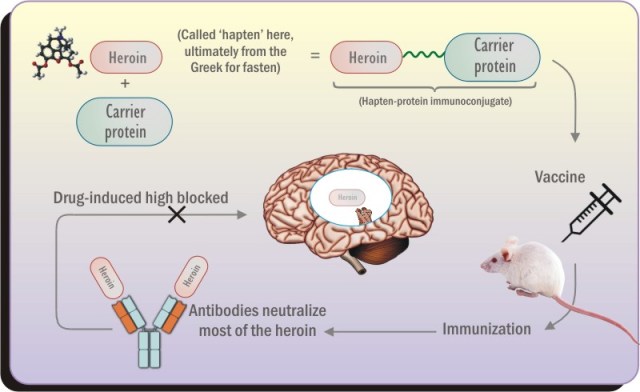
The vaccine works by training the immune system antibodies to recognize and bind to heroin molecules, blocking the drug from reaching the brain to cause a “high.” Researchers believe that blocking the high of heroin will help eliminate the motivation for many recovering addicts to relapse into drug use.

The heroin molecule does not naturally prompt an antibody response, so researchers attach it to a carrier protein that alerts the immune system to start making antibodies. Scientists also add an ingredient called an adjuvant to the vaccine, which boosts the immune response and makes the vaccine more effective.

Hwang says, “Our goal was to prepare a vaccine that could be advanced to clinical trials. As such, we were looking for the best combination of ‘hapten’ (the heroin molecule), carrier protein and adjuvant to keep the vaccine both stable for transport and storage but still efficacious.”

For the new study, the researchers investigated how 20 different carrier protein/adjuvant combinations worked, including shelf stability based on temperature and storage time and whether the formulation was a liquid or powder.

Their experiments in rodent models showed that the best vaccine formulation contained a carrier protein called tetanus toxoid (TT) and adjuvants called alum and CpG ODN. The discovery that alum worked best as an adjuvant was especially significant since alum is one of the few adjuvants used in vaccines already approved by the U.S. Food and Drug Administration. The researchers also found that there was no difference in how well it worked between the liquid and powder versions of this formulation.

Hwang notes that the best vaccine formulation showed protection against lethal doses of heroin. This is particularly important as many heroin addicts have succumb to overdose and death during their attempts to quit the drug.

With this new study, the researchers have shown that the vaccine is safe and effective in animal models, stable under clinical conditions and reliant on an already-approved adjuvant. The next step is to find a producer to make the vaccine on a large scale.

“We believe that a heroin vaccine would be tremendously beneficial for people who have a heroin substance use disorder but have found difficulty in trying to quit,” says Hwang.

In addition to Hwang and Janda, authors of the study, “Enhancing Efficacy and Stability of an Anti-Heroin Vaccine: Examination of Antinociception, Opioid Binding Profile, and Lethality,” were Paul T. Bremer, Cody J. Wenthur, Beverly Ellis and Bin Zhou of The Scripps Research Institute; and Sam On Ho, SuMing Chiang and Gary Fujii of Molecular Express, Inc.

The study was supported by the National Institutes of Health (grants UH3DA041146, F32AI126628, F32DA043323, R42DA040422 and R44AI094770).

https://www.scripps.edu/news/press/2018/20180213janda.html

Improper childhood sleep can increase the chance of obesity and later-life cancer

Is your child having a tough time sleeping properly? You may need to keep a check on his/her body mass index (BMI) as a new research suggests that there is a co-relation between the two and can lead to cancer in adulthood.

“Childhood obesity very often leads to adult obesity. This puts them at greater risk of developing obesity-related cancers in adulthood,” said study lead author Bernard Fuemmeler, Professor and Associate Director for Cancer Prevention and Control at the Virginia Commonwealth University.

For the study, researchers enrolled 120 children, with an average age of eight, whose mothers had participated in the Newborn Epigenetic Study both pre-birth and during early childhood.

To track the sleep-wake cycle, the children wore accelerometers continuously for 24 hours a day for a period of at least five days.

They found that shorter sleep duration, measured in hours, was associated with a higher BMI z-score (body mass index adjusted for age and sex).

Each additional hour of sleep was associated with a .13 decrease in BMI z-score and with a 1.29 cm decrease in waist circumference.

More fragmented rest-activity rhythms and increased intradaily variability — a measure of the frequency and extent of transitions between sleep and activity — were also associated with greater waist circumferences.

The study results, to be presented at Obesity and Cancer: Mechanisms Underlying Etiology and Outcomes, indicate that while sleep duration is important, examining markers of sleep quality may also be useful in designing childhood obesity prevention strategies.

“Today, many children are not getting enough sleep. There are a number of distractions, such as screens in the bedroom, that contribute to interrupted, fragmented sleep. This, perpetuated over time, can be a risk factor for obesity,” Fuemmeler said.

“Because of the strong links between obesity and many types of cancer, childhood obesity prevention is cancer prevention.”

http://indianexpress.com/article/lifestyle/health/proper-sleep-in-children-may-prevent-cancer-later-5040630/

Compound in frog slime discovered to “blow up” the flu virus

by Katie Forster

Powerful new remedies for the flu could be created using a molecule found in frog slime after scientists discovered it destroys the virus.

Mucus from a colourful species of Indian frog contains a compound that kills influenza, according to a new study published in the scientific journal Immunity.

The frog, called hydrophylax bahuvistara, was discovered in 2015. It is a type of fungoid frog that lives in the forests of south west India and has a striking orange stripe on its upper body.

Researchers captured the frog and collected secretions from its skin after delivering a mild electric shock. They then released the amphibians back into the wild and studied the chemicals in their slime.

Joshy Jacob, a scientist at Emory University in Atlanta, who led the study, said they managed to isolate a small structure called a peptide that kills the flu virus but leaves healthy tissue intact.

“This peptide kills the viruses. It kind of blows them up,” Dr Jacob, an associate professor in microbiology, told NBC News. “There’s no collateral damage,”

Dr Jacob and his team decided to name the compound urumin – after an Indian sword called an urumi with a flexible blade that acts like a whip, used in martial arts from the southern city of Kerala.

Mice vaccinated with urumin were protected against a lethal amount of swine flu virus, also known as Influenza A of H1, which caused a pandemic in 2009.

It’s likely the frog produces the flu-fighting substance in its slime by coincidence, as one of a number of compounds that guard against harmful bacteria and fungi.

The scientists hope their discovery will lead to the development of new drugs to stop outbreaks of influenza, which is highly contagious and can be deadly, especially for the elderly and very young.

They will also continue the search for other frog slime compounds that could be used to treat other viral infections such as hepatitis, HIV and Zika.

The difficulty is finding molecules that attack flu but do not harm healthy cells as well – of the four peptides found in the hydrophylax bahuvistara mucus, only urumin did not kill red blood cells.

“In the beginning, I thought that when you do drug discovery, you have to go through thousands of drug candidates, even a million, before you get one or two hits. And here we did 32 peptides, and we had four hits,” said Dr Jacob.

Urumin is thought to target a viral surface protein called haemagluttinin – the H in H1.

“The virus needs the haemagglutinin to get inside our cells,” said Dr Jacob. “What this peptide does is it binds to the haemagglutinin and destabilises the virus. And then it kills the virus.”

http://www.independent.co.uk/news/health/frog-slime-flu-virus-compound-blows-up-kills-influenza-hydrophylax-bahuvistara-immunity-a7690141.html

Why you need to walk at lunchtime

by Mary Jo DiLonardo

A new study finds that lunchtime strolls can immediately improve your mood, increase relaxation, and make you more enthusiastic about your work.

This doesn’t seem like news. After all, we’ve known forever that walking — and exercise — is good for you. But as the New York Times points out, those fitness studies typically looked at the long-term effects of exercise plans. This new study, published in the Scandinavian Journal of Medicine and Science in Sports, looks at changes that happen more quickly, from one day to the next or even hour to hour.

For the study, researchers gathered a group of mostly sedentary office workers in the U.K. and asked them to take 30-minute lunchtime walks, three days a week for 10 weeks. Most of the volunteers were middle-aged women, although a handful of men also agreed to take part. All were out of shape, but otherwise emotionally and physically healthy.

The volunteers installed apps on their phones that allowed them to answer questions on the mornings and afternoons that they walked. The researchers used those answers to assess how the volunteers were feeling at the time about life and work, and to measure their feelings about everything from stress and tension to motivation and fatigue.

When the researchers compared the volunteers’ responses on the afternoons when they walked to the afternoons they didn’t walk, there was quite a difference. On the days after a lunchtime amble, the volunteers said they felt less tense, more enthusiastic, more relaxed and able to cope versus on the days when they didn’t walk and even compared to the mornings before they walked.

Those positive feelings may even translate into better worker productivity.

“There is now quite strong research evidence that feeling more positive and enthusiastic at work is very important to productivity,” lead author Cecile Thogersen-Ntoumani, professor of exercise science at Curtin University in Perth, Australia, told the New York Times. “So we would expect that people who walked at lunchtime would be more productive.”

Not surprisingly, the walkers also reaped some positive health benefits from the experiment, making gains in aerobic fitness, for example.

Unfortunately, the researchers told the Times, many of the volunteers didn’t believe they’d be able to continue walking once the study ended, primarily because they were expected to work through their lunch breaks.

http://www.mnn.com/health/fitness-well-being/stories/why-you-need-walk-lunchtime

Wearable Devices Can Actually Tell When You’re About to Get Sick

Feeling run down? Have a case of the sniffles? Maybe you should have paid more attention to your smartwatch.

No, that’s not the pitch line for a new commercial peddling wearable technology, though no doubt a few companies will be interested in the latest research published in PLOS Biology for the next advertising campaign. It turns out that some of the data logged by our personal tracking devices regarding health—heart rate, skin temperature, even oxygen saturation—appear useful for detecting the onset of illness.

“We think we can pick up the earliest stages when people get sick,” says Michael Snyder, a professor and chair of genetics at Stanford University and senior author of the study, “Digital Health: Tracking Physiomes and Activity Using Wearable Biosensors Reveals Useful Health-Related Information.”

Snyder said his team was surprised that the wearables were so effective in detecting the start of the flu, or even Lyme disease, but in hindsight the results make sense: Wearables that track different parameters such as heart rate continuously monitor each vital sign, producing a dense set of data against which aberrations stand out even in the least sensitive wearables.

“[Wearables are] pretty powerful because they’re a continuous measurement of these things,” notes Snyder during an interview with Singularity Hub.

The researchers collected data for up to 24 months on a small study group, which included Snyder himself. Known as Participant #1 in the paper, Snyder benefited from the study when the wearable devices detected marked changes in his heart rate and skin temperature from his normal baseline. A test about two weeks later confirmed he had contracted Lyme disease.

In fact, during the nearly two years while he was monitored, the wearables detected 11 periods with elevated heart rate, corresponding to each instance of illness Snyder experienced during that time. It also detected anomalies on four occasions when Snyder was not feeling ill.

An expert in genomics, Snyder said his team was interested in looking at the effectiveness of wearables technology to detect illness as part of a broader interest in personalized medicine.

“Everybody’s baseline is different, and these devices are very good at characterizing individual baselines,” Snyder says. “I think medicine is going to go from reactive—measuring people after they get sick—to proactive: predicting these risks.”

That’s essentially what genomics is all about: trying to catch disease early, he notes. “I think these devices are set up for that,” Snyder says.

The cost savings could be substantial if a better preventive strategy for healthcare can be found. A landmark report in 2012 from the Cochrane Collaboration, an international group of medical researchers, analyzed 14 large trials with more than 182,000 people. The findings: Routine checkups are basically a waste of time. They did little to lower the risk of serious illness or premature death. A news story in Reuters estimated that the US spends about $8 billion a year in annual physicals.

The study also found that wearables have the potential to detect individuals at risk for Type 2 diabetes. Snyder and his co-authors argue that biosensors could be developed to detect variations in heart rate patterns, which tend to differ for those experiencing insulin resistance.

Finally, the researchers also noted that wearables capable of tracking blood oxygenation provided additional insights into physiological changes caused by flying. While a drop in blood oxygenation during flight due to changes in cabin pressure is a well-known medical fact, the wearables recorded a drop in levels during most of the flight, which was not known before. The paper also suggested that lower oxygen in the blood is associated with feelings of fatigue.

Speaking while en route to the airport for yet another fatigue-causing flight, Snyder is still tracking his vital signs today. He hopes to continue the project by improving on the software his team originally developed to detect deviations from baseline health and sense when people are becoming sick.

In addition, Snyder says his lab plans to make the software work on all smart wearable devices, and eventually develop an app for users.

“I think [wearables] will be the wave of the future for collecting a lot of health-related information. It’s a very inexpensive way to get very dense data about your health that you can’t get in other ways,” he says. “I do see a world where you go to the doctor and they’ve downloaded your data. They’ll be able to see if you’ve been exercising, for example.

“It will be very complementary to how healthcare currently works.”

Wearable Devices Can Actually Tell When You’re About to Get Sick