$1 billion gift to make Johns Hopkins medical school free for most

By Susan Svrluga

July 8, 2024 at 8:00 a.m. EDT

A $1 billion gift to Johns Hopkins Universityfrom billionaire Mike Bloombergwill make medical school free for most students, and increase financial aid for those enrolled in nursing, public health and other graduate programs.

In a Monday letter in the Bloomberg Philanthropiesannual report, Bloomberg addressed the twin challenges of declining health and education.The gift marks an emphatic endorsement of the value of higher learning at a time when academia has been increasingly under political attack.

“As the U.S. struggles to recover from a disturbing decline in life expectancy, our country faces a serious shortage of doctors, nurses, and public health professionals — and yet, the high cost of medical, nursing, and graduate school too often bars students from enrolling,” wrote Bloomberg, a 1964 graduate of Johns Hopkins and the founder of the Bloomberg business and financial data and news company. “By reducing the financial barriers to these essential fields, we can free more students to pursue careers they’re passionate about — and enable them to serve more of the families and communities who need them the most.”

Starting this fall, Johns Hopkins will offer medical school students free tuition — normally about $65,000 a year for four years — for those whose families earn less than $300,000 a year.

Students from families earning up to $175,000 a year will have living expenses and fees covered as well.

“It’s a full-ride scholarship,” Hopkins President Ronald J. Daniels said. “We see that as a very significant move to ensure that medical education is available to the best and brightest across the country.”

Medical school tuition increases have outpaced inflation at both public and private institutions, said Holly J. Humphrey, president of the Josiah Macy Jr. Foundation, a nonprofit focused on improving the education of health professionals. There has been a shift in who attends, with an increasing share of students from high-income families and dwindling numbers from lower-income homes.

The median debt from medical school for the class of 2023 was $200,000, according to the Association of American Medical Colleges.

Too many students don’t even consider medical school because of the cost, said Sanjay Desai, the chief academic officer at the American Medical Association.

Health outcomes are improved, he said, when physicians reflect the diversity of patients they treat. Studies also suggest that students from lower-income backgrounds are more likely to return to underserved communities as doctors.

There are other troubling gaps. The country needs more primary care doctors, Desai said, but student debt can drive people toward more lucrative specialty fields.

“I hope it inspires others to action,” said Desai, who is also a Johns Hopkins faculty member.

The donation brings total giving from Bloomberg Philanthropies to Johns Hopkins University to a staggering $4.55 billion, an infusion of cash that has allowed the school to vault its aspirations and impact in many areas. Affordability has been one major through-line: In 2018, Bloomberg, a former mayor of New York and presidential candidate, announced a historic $1.8 billion gift for increased undergraduate financial aid and the promise that admissions decisions would be need-blind going forward. That gift helped spur changes in the student body, which now has more low-income students and greater racial diversity.

Stefano Montalvo, who begins medical school at Johns Hopkins in the fall, benefited from that 2018 donation. He didn’t think he could afford college, but when he left track practice at his public high school in New Jersey to check whether he had been accepted into Hopkins, he saw the financial aid offer, with shock: It covered almost the entire cost of attendance.

“I called my mom,” he said, “and we cried on the phone.”

The gift announced Monday is not the first aimed at erasing medical-school tuition costs for students. Earlier this year, abillion-dollar donation to Albert Einstein College of Medicine in New Yorkfrom Ruth Gottesman, the chair of its board of trustees, enabled the school to announce to cheering students that fourth-year students would be reimbursed for their spring tuition and that in the future, tuition would be free. New York University’s Grossman School of Medicine announced in 2018 that it would give full-tuition scholarships to all students regardless of financial need, and a $200 million donation last summer ensured that NYU’s second medical school, NYU Grossman Long Island School of Medicine, will be tuition-free in perpetuity.

At Hopkins,existing aid financing has already diminished the debts its studentscarry. In the past academic year, graduates left with an average debt of $105,000, about half the national average,school officials said.

Monday’s announcement will dramatically change that.

Part of the value of the model is its simplicity, Daniels said: Applicants, or students aspiring to one day apply, can clearly see what their total costs would be based on their family’s income, rather than having to wait for acceptance and a financial-aid package from the school.

The donation alsowill increase graduate financial aid in the Johns Hopkins Bloomberg School of Public Health and School of Nursing. And it will bump up graduate financial aid at the schools of arts and sciences, advanced international studies, education, engineering, business, the Peabody Institute and the forthcoming school of government and policy, which was announced last fall and will be housed in the Johns Hopkins University Bloomberg Center in Washington near the Capitol.

Many students at Johns Hopkins have already benefited from financial aid donations. Albert Holler, who grew up near Chicago, wanted to be a doctor ever since high school, when a classmate with leukemia died. But with a mom working variously as a hairstylist or waitress or cleaner, and his father juggling two jobs to support the family of five, he assumed he would need to take on enormous debt. After applying to medical schools, he woke up one weekend morning in his dorm and, still groggy, opened an email from Hopkins. A dean was offering $90,000 a year in aid, a deal that included the cost of living for four years. Holler texted his dad, wondering if it could be a real offer.

That gift from a donor, he said, “has very much altered the course of my life.”

More students having their costs of medical school covered, he said, would not only help Hopkins attract the best students regardless of their means, but would also be excellent for patient care.

An internal-medicine resident working in Baltimore and planning to become an oncologist, he frequently uses the Spanish he learned from his mother and honed by volunteering in health clinics. Now, with a recent influx of people from Central America to Baltimore, he relies on it to understand his patients’ needs. “It also seems to just let them take a deep breath,” he said, “and then have a little more trust.”

https://www.washingtonpost.com/education/2024/07/08/mike-bloomberg-johns-hopkins-free-medical-school/

Education Does not Improve Adaptability of Brain in Old Age, Study Suggests

By Alejandra Viviescas

A higher level of education is not related to better cognitive reserve — the ability of the adult brain to maintain normal cognitive function in the presence of neurodegeneration — in old age, a study suggests. However, the study, titled “Education and cognitive reserve in old age,” did find that it allowed people to store more information before reaching old age. It was published in the journal Neurology.

Higher education levels are widely associated with a higher cognitive reserve, lower risk of dementia, and delayed cognitive decline — the reduced storage capacity in the brain that usually occurs as a person ages. However, scientific evidence supporting these claims is controversial. Some studies suggest that this association is mostly due to the connection between education and a higher acquisition of knowledge rather than higher adaptability.

To assess the contribution of education to cognitive reserve in old age, researchers from Rush University in Chicago analyzed 2,899 participants (older than 50 years of age; average age of 77.8 years) who participated in two ongoing clinical studies: the Religious Orders Study, which began in 1994 and included older Catholic clergy members from across the U.S.; and the Memory and Aging Project, which began in 1997 and involved older laypeople from the Chicago metropolitan region.

At the time of enrollment, none of the participants had been diagnosed with dementia.

They were followed for an average of eight years; 2,143 (73.9%) were women, and 2,569 (88.6%) were white. All participants took cognitive tests once a year, and data were collected between 1994 and 2018.

Researchers evaluated two subgroups, the first one — the incident dementia subgroup — consisted of 696 participants who developed incident dementia during follow-up over a mean of 10.5 years. The second one — the incident dementia neuropathologically examined subgroup — included 405 individuals who died during follow-up and underwent an autopsy to assess if they had any neurodegenerative conditions.

Participants had a mean of 16.3 years of education, ranging from zero to 30. Higher education was associated with an initial higher rate of global cognition at a younger age but not with more significant cognitive change. This means that more educated people had a high storage capacity at the beginning of the study, but did not show greater cognitive adaptability.

There was a quicker decline in cognition in patients who developed dementia about 1.8 years before diagnosis. The level of education did not alter this decrease.

In the patients who had died, there was a faster cognition decline approximately 3.4 years before death. The level of education did not alter this decline, but researchers noted that in individuals with higher education, this decline started about 0.2 years earlier.

People with higher education were less likely to have areas of dead tissue in the brain. “There have been previous reports linking higher level of education with a lower risk of stroke consistent with the present findings,” according to the researchers. Higher education was not associated with any other neuropathology.

“The results suggest that the contribution of education to cognitive reserve is limited to its association with premorbid cognitive level and does not involve an association with cognitive aging trajectories,” the researchers wrote.

“That education apparently contributes little to cognitive reserve is surprising given its association with cognitive growth and changes in brain structure. However, formal education typically ends decades before old age begins … This implies that influences on cognitive reserve vary over time, with recent experiences more influential than remote experiences such as schooling,” they added.

The researchers noted that most individuals had some level of education, which might underestimate the effects on a non-educated group. Therefore, further studies that evaluate a higher sample of participants with less education would help them better understand the association between education and cognition.

Education Does not Improve Adaptability of Brain in Old Age, Study Suggests

Following an outdoor lesson in nature, children were more engaged with their schoolwork, and their teachers could teach uninterrupted for almost twice as long.

By Conn Hastings

A study recently published in open-access journal Frontiers in Psychology finds that 9-10 year-old children are significantly more attentive and engaged with their schoolwork following an outdoor lesson in nature. This “nature effect” allowed teachers to teach uninterrupted for almost twice as long during a subsequent indoor lesson. The results suggest that outdoor lessons may be an inexpensive and convenient way to improve student engagement in education — a major factor in academic achievement.

Scientists have known for a while that natural outdoor environments can have a variety of beneficial effects on people. People exposed to parks, trees or wildlife can experience benefits such as physical activity, stress reduction, rejuvenated attention and increased motivation. In children, studies have shown that even a view of greenery through a classroom window could have positive effects on students’ attention.

However, many teachers may be reluctant to hold a lesson outdoors, as they might worry that it could overexcite the children, making it difficult for them to concentrate on their schoolwork back in the classroom. Ming Kuo, a scientist at the University of Illinois at Urbana-Champaign, and her colleagues set out to investigate this, and hypothesized that an outdoor lesson in nature would result in increased classroom engagement in indoor lessons held immediately afterwards.

“We wanted to see if we could put the nature effect to work in a school setting,” says Kuo. “If you took a bunch of squirmy third-graders outdoors for lessons, would they show a benefit of having a lesson in nature, or would they just be bouncing off the walls afterward?”

The researchers tested their hypothesis in third graders (9-10 years old) in a school in the Midwestern United States. Over a 10-week period, an experienced teacher held one lesson a week outdoors and a similar lesson in her regular classroom, and another, more skeptical teacher did the same. Their outdoor “classroom” was a grassy spot just outside the school, in view of a wooded area.

After each outdoor or indoor lesson, the researchers measured how engaged the students were. They counted the number of times the teacher needed to redirect the attention of distracted students back to their schoolwork during the observation, using phrases such as “sit down” and “you need to be working”. The research team also asked an outside observer to look at photos taken of the class during the observation period and score the level of class engagement, without knowing whether the photos were taken after an indoor or outdoor lesson. The teachers also scored class engagement.

The team’s results show that children were more engaged after the outdoor lessons in nature. Far from being overexcited and inattentive immediately after an outdoor lesson, students were significantly more attentive and engaged with their schoolwork. The number of times the teacher had to redirect a student’s attention to their work was roughly halved immediately after an outdoor lesson.

“Our teachers were able to teach uninterrupted for almost twice as long at a time after the outdoor lesson,” says Kuo, “and we saw the nature effect with our skeptical teacher as well.”

The researchers plan to do further work to see if the technique can work in other schools and for less experienced teachers. If so, regular outdoor lessons could be an inexpensive and convenient way for schools to enhance student engagement and performance. “We’re excited to discover a way to teach students and refresh their minds for the next lesson at the same time,” says Kuo. “Teachers can have their cake and eat it too.”

Children more engaged and attentive following outdoor lesson in nature

Prison vs. Harvard debate

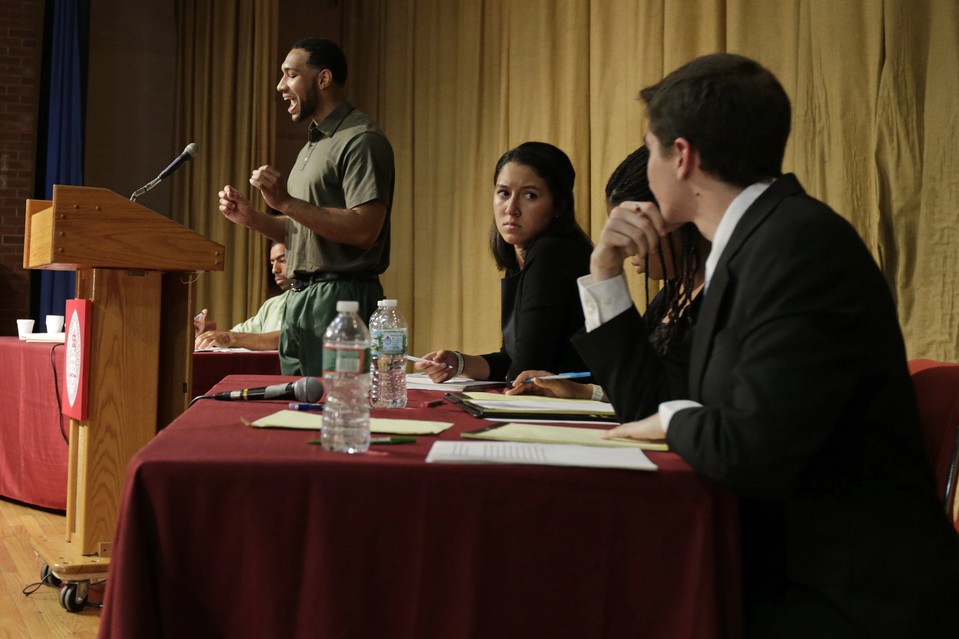
On one side of the stage at a maximum-security prison here sat three men incarcerated for violent crimes.

On the other were three undergraduates from Harvard College.

After an hour of fast-moving debate Friday, the judges rendered their verdict.

The inmates won.

The audience burst into applause. That included about 75 of the prisoners’ fellow students at the Bard Prison Initiative, which offers a rigorous college experience to men at Eastern New York Correctional Facility, in the Catskills.

The debaters on both sides aimed to highlight the academic power of a program, part of Bard College in Annandale-on-Hudson, N.Y., that seeks to give a second chance to inmates hoping to build a better life.

Ironically, the inmates had to promote an argument with which they fiercely disagreed. Resolved: “Public schools in the United States should have the ability to deny enrollment to undocumented students.”

Carlos Polanco, a 31-year-old from Queens in prison for manslaughter, said after the debate that he would never want to bar a child from school and he felt forever grateful he could pursue a Bard diploma. “We have been graced with opportunity,” he said. “They make us believe in ourselves.”

Judge Mary Nugent, leading a veteran panel, said the Bard team made a strong case that the schools attended by many undocumented children were failing so badly that students were simply being warehoused. The team proposed that if “dropout factories” with overcrowded classrooms and insufficient funding could deny these children admission, then nonprofits and wealthier schools would step in and teach them better.

Ms. Nugent said the Harvard College Debating Union didn’t respond to parts of that argument, though both sides did an excellent job.

The Harvard team members said they were impressed by the prisoners’ preparation and unexpected line of argument. “They caught us off guard,” said Anais Carell, a 20-year-old junior from Chicago.

The prison team had its first debate in spring 2014, beating the U.S. Military Academy at West Point, N.Y. Then, it won against a nationally ranked team from the University of Vermont and in April lost a rematch against West Point.

Preparing has its challenges. Inmates can’t use the Internet for research. The prison administration must approve requests for books and articles, which can take weeks.

In the morning before the debate, team members talked of nerves and their hope that competing against Harvard—even if they lost—would inspire other inmates to pursue educations.

“If we win, it’s going to make a lot of people question what goes on in here,” said Alex Hall, a 31-year-old from Manhattan convicted of manslaughter. “We might not be as naturally rhetorically gifted, but we work really hard.”

Ms. Nugent said it might seem tempting to favor the prisoners’ team, but the three judges have to justify their votes to each other based on specific rules and standards.

“We’re all human,” she said. “I don’t think we can ever judge devoid of context or where we are, but the idea they would win out of sympathy is playing into pretty misguided ideas about inmates. Their academic ability is impressive.”

The Bard Prison Initiative, begun in 2001, aims to give liberal-arts educations to talented, motivated inmates. Program officials say about 10 inmates apply for every spot, through written essays and interviews.

There is no tuition. The initiative’s roughly $2.5 million annual budget comes from private donors and includes money it spends helping other programs follow its model in nine other states.

Last year Gov. Andrew Cuomo, a Democrat, proposed state grants for college classes for inmates, saying that helping them become productive taxpayers would save money long-term. He dropped the plan after attacks from Republican politicians who argued that many law-abiding families struggled to afford college and shouldn’t have to pay for convicted criminals to get degrees.

The Bard program’s leaders say that of more than 300 alumni who earned degrees while in custody, less than 2% returned to prison within three years, the standard time frame for measuring recidivism.

In New York state as a whole, by contrast, about 40% of ex-offenders end up back in prison, mostly because of parole violations, according to the New York Department of Corrections and Community Supervision.

http://www.wsj.com/articles/an-unlikely-debate-prison-vs-harvard-1442616928

Carnegie Mellon University mistakenly sends congratulatory acceptance letters to 800 unaccepted applicants

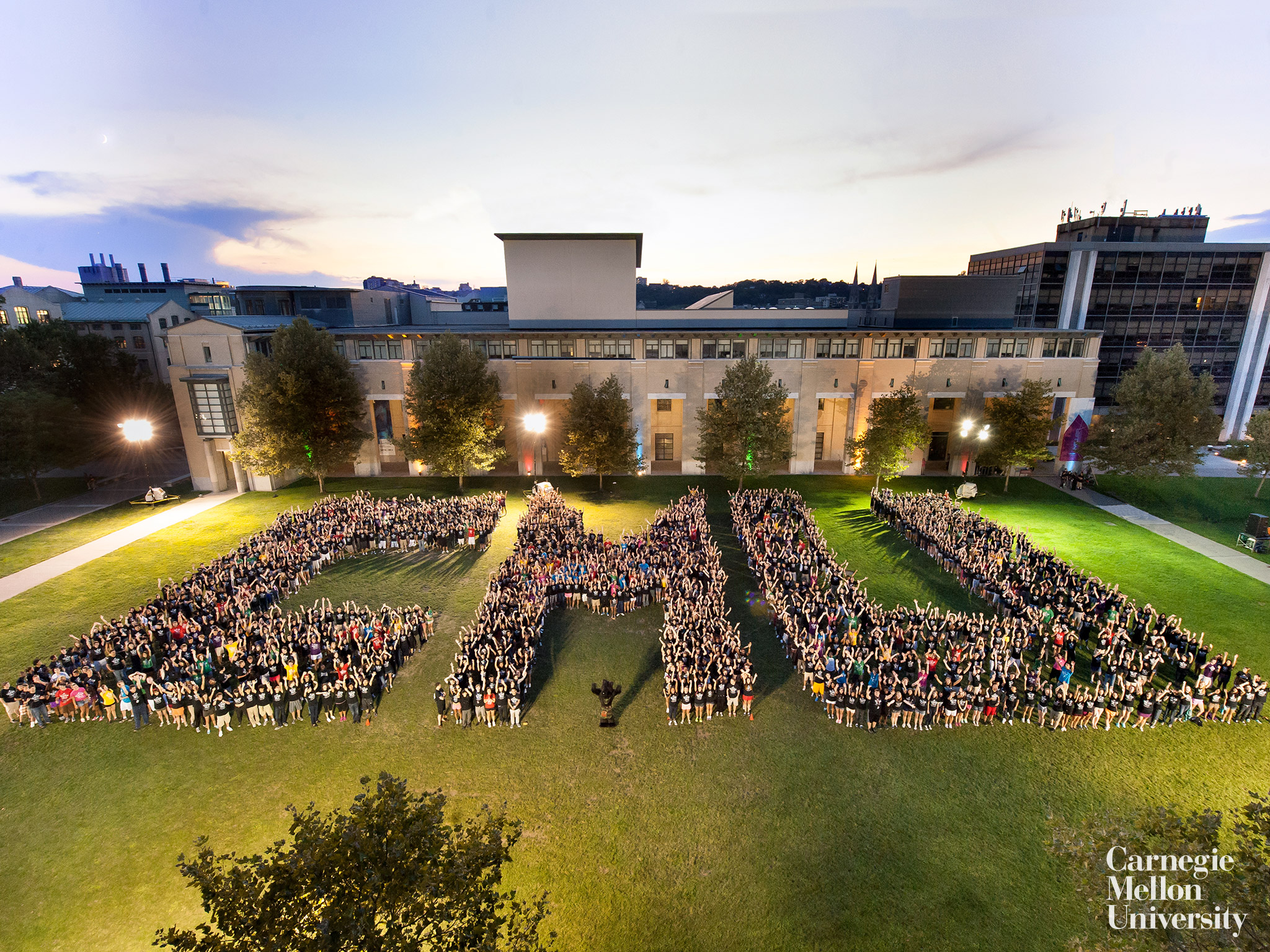
Carnegie Mellon University mistakenly informed about 800 applicants that they had won a place in one of the school’s prestigious computer science programs before retracting the acceptance letters, the school said.

The acceptance letters were sent by email on Monday, according to the Pittsburgh-based school.

Many hours later – enough time for applicants to share what they thought was happy news with family and friends – the school sent out another round of emails telling the applicants they did not get in after all.

“We understand the disappointment created by this mistake,” university spokesman Byron Spice said in a statement on Tuesday.

Carnegie Mellon joins a growing list of American schools that have broken hearts with similar email glitches in the past decade or so, including Cornell University, several branches of the University of California and Johns Hopkins University.

Asked whether the school’s prestigious computer science department had been involved in the design of its email system for notifying applicants, a school spokesman declined to comment.

The blog Gawker, which first reported the error, published a copy of the mistaken acceptance email, which notes that the master of science program in computer science has been ranked the best in the country.

“You are one of the select few,” the congratulatory email said.

Gawker also published the subsequent correction email. “While we certainly appreciate your interest in our program, we regret that we are unable to offer you admission this year,” the email said in part, apologizing for the “miscommunication.”

“PS: Please acknowledge receipt of this retraction,” the email said.

http://www.reuters.com/article/2015/02/18/us-usa-pennsylvania-carnegie-idUSKBN0LM1OG20150218?feedType=RSS&feedName=oddlyEnoughNews&rpc=69