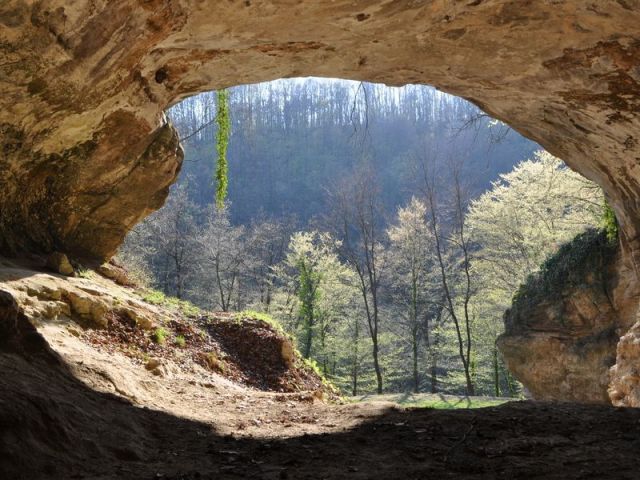
Scientists Extract DNA From Ancient Humans Out of Cave Dirt

by Jason Daley

Fiinding bones from early humans and their ancestors is difficult and rare—often requiring scientists to sort through the sediment floor of caves in far-flung locations. But modern advances in technology could completely transform the field. As Gina Kolta reports for The New York Times, a new study documents a method to extract and sequence fragments of hominid DNA from samples of cave dirt.

The study, published this week in the journal Science, could completely change the type of evidence available to study our ancestral past. Researchers from the Max Planck Institute for Evolutionary Anthropology in Leipzig, Germany, collected 85 sediment samples from seven archeological sites in Belgium, Croatia, France, Russia and Spain, covering a span of time from 550,000 to 14,000 years ago.

As Lizzie Wade at Science reports, when the team first sequenced the DNA from the sediments, they were overwhelmed. There are trillions of fragments of DNA in a teaspoon of dirt, mostly material from other mammals, including woolly mammoth, woolly rhinoceroses, cave bears and cave hyenas. To cut through the clutter and examine only hominid DNA, they created a molecular “hook” made from the mitochondrial DNA of modern humans. The hook was able to capture DNA fragments that most resembled itself, pulling out fragments from Neanderthals at four sites, including in sediment layers where bones or tools from the species were not present. They also found more DNA from Denisovans, an enigmatic human ancestor found only in single cave in Russia.

“It’s a great breakthrough,” Chris Stringer, anthropologist at the Natural History Museum in London tells Wade. “Anyone who’s digging cave sites from the Pleistocene now should put [screening sediments for human DNA] on their list of things that they must do.”

So how did the DNA get there? The researchers can’t say exactly, but it wouldn’t be too difficult. Humans shed DNA constantly. Any traces of urine, feces, spit, sweat, blood or hair would all contain minute bits of DNA. These compounds actually bind with minerals in bone, and likely did the same with minerals in the soil, preserving it, reports Charles Q. Choi at LiveScience.

There’s another—slightly scarier—option for the DNA’s origins. The researchers found a lot of hyena DNA at the study sites, Matthias Meyer, an author of the study tells Choi. “Maybe the hyenas were eating human corpses outside the caves, and went into the caves and left feces there, and maybe entrapped in the hyena feces was human DNA.”

The idea of pulling ancient DNA out of sediments is not new. As Kolta reports, researchers have previously successfully recovered DNA fragments of prehistoric mammals from a cave in Colorado. But having a technique aimed at finding DNA from humans and human ancestors could revolutionize the field. Wade points out that such a technique might have helped produce evidence for the claim earlier this week that hominids were in North America 130,000 years ago.

DNA analysis of sediments might eventually become a routine part of archeology, similar to radio carbon dating, says Svante Pääbo, director of the Evolutionary Genetics department at the Max Planck Institute for Evolutionary Anthropology, in the press release. The technique could also allow researchers to start searching for traces of early hominids at sites outside of caves.

“If it worked, it would provide a much richer picture of the geographic distribution and migration patterns of ancient humans, one that was not limited by the small number of bones that have been found,” David Reich, Harvard geneticist tells Kolta. “That would be a magical thing to do.”

As Wade reports, the technique could also solve many mysteries, including determining whether certain tools and sites were created by humans or Neanderthals. It could also reveal even more hominid species that we have not found bones for, creating an even more complete human family tree.
Read more: http://www.smithsonianmag.com/smart-news/new-technique-pulls-ancient-human-dna-out-cave-soil-180963084/#5gzaxagh8RYmlP6s.99

Ice age bison DNA shows evidence of new route of human migration through the Rocky Mountains

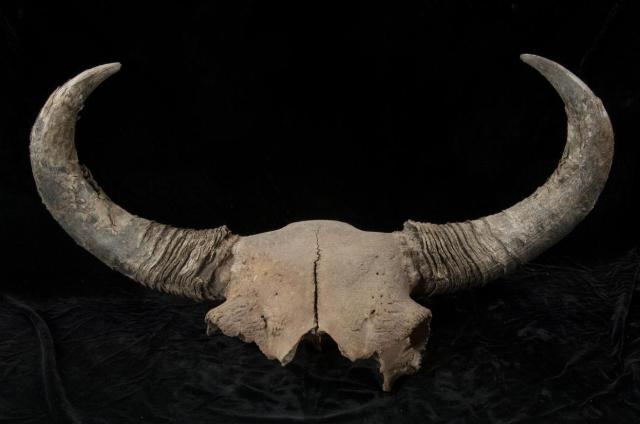
A 13,000-year-old bison fossil has shown the most likely migration route of some of the first native Americans.

DNA from the bison remains has narrowed down when an ice-free corridor opened up along the Rocky Mountains during the late Pleistocene.

That corridor was a vital route for migrations between what is now Alaska and Yukon in the far north and the rest of the North American continent.

Researchers had previously suspected this was the way migrating humans and animals must have travelled, but were unclear about how and when it was used.

But now, a new study published in Proceedings of the National Academy of Sciences, shows the route was fully open by about 13,000 years ago.

While this route was closed when the very first humans moved south of the ice sheets into North America around 15,000 years ago (they probably took a Pacific coastal route), it is thought it later became a well-travelled thoroughfare in both directions.

“The opening of the corridor provided new opportunities for migration and the exchange of ideas between people living north and south of the ice sheets,” said Peter Heintzman, of UC Santa Cruz, who led the DNA analysis.

His coauthor Beth Shapiro, also from UC Santa Cruz, has previously shown that bison populations north and south of the ice sheets were genetically distinct by the time the corridor opened.

So, armed with that knowledge, the researchers have been able track the movement of northern bison southward, and southern bison northward.

“The radiocarbon dates told us how old the fossils were, but the key thing was the genetic analysis, because that told us when bison from the northern and southern populations were able to meet within the corridor,” Heintzman said.

https://cosmosmagazine.com/life-sciences/ice-age-bison-dna-sheds-light-human-migration

Octopus DNA reveals secrets to intelligence

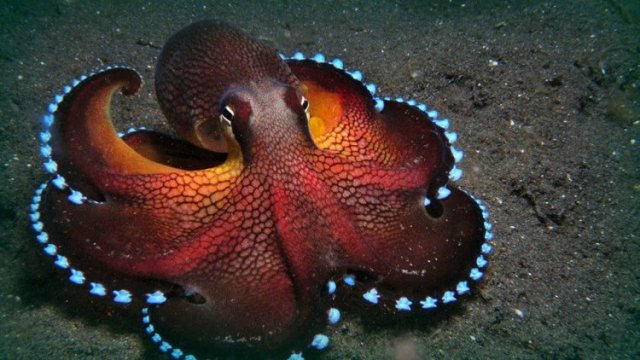
The elusive octopus genome has finally been untangled, which should allow scientists to discover answers to long-mysterious questions about the animal’s alienlike physiology: How does it camouflage itself so expertly? How does it control—and regenerate—those eight flexible arms and thousands of suckers? And, most vexing: How did a relative of the snail get to be so incredibly smart—able to learn quickly, solve puzzles and even use tools?

The findings, in Nature, reveal a vast, unexplored landscape full of novel genes, unlikely rearrangements—and some evolutionary solutions that look remarkably similar to those found in humans.

With the largest-known genome in the invertebrate world—similar in size to that of a house cat (2.7 billion base pairs) and with more genes (33,000) than humans (20,000 to 25,000)—the octopus sequence has long been known to be large and confusing. Even without a genetic map, these animals and their cephalopod cousins (squids, cuttlefishes and nautiluses) have been common subjects for neurobiology and pharmacology research. But a sequence for this group of mollusks has been “sorely needed,” says Annie Lindgren, a cephalopod researcher at Portland State University who was not involved in the new research. “Think about trying to assemble a puzzle, picture side down,” she says of octopus research to date. “A genome gives us a picture to work with.”

Among the biggest surprises contained within the genome—eliciting exclamation point–ridden e-mails from cephalopod researchers—is that octopuses possess a large group of familiar genes that are involved in developing a complex neural network and have been found to be enriched in other animals, such as mammals, with substantial processing power. Known as protocadherin genes, they “were previously thought to be expanded only in vertebrates,” says Clifton Ragsdale, an associate professor of neurobiology at the University of Chicago and a co-author of the new paper. Such genes join the list of independently evolved features we share with octopuses—including camera-type eyes (with a lens, iris and retina), closed circulatory systems and large brains.

Having followed such a vastly different evolutionary path to intelligence, however, the octopus nervous system is an especially rich subject for study. “For neurobiologists, it’s intriguing to understand how a completely distinct group has developed big, complex brains,” says Joshua Rosenthal of the University of Puerto Rico’s Institute of Neurobiology. “Now with this paper, we can better understand the molecular underpinnings.”

Part of octopuses’ sophisticated wiring system—which extends beyond the brain and is largely distributed throughout the body—controls their blink-of-an-eye camouflage. Researchers have been unsure how octopuses orchestrate their chromatophores, the pigment-filled sacs that expand and contract in milliseconds to alter their overall color and patterning. But with the sequenced genome in hand, scientists can now learn more about how this flashy system works—an enticing insight for neuroscientists and engineers alike.

Also contained in the octopus genome (represented by the California two-spot octopus, Octopus bimaculoides) are numerous previously unknown genes—including novel ones that help the octopus “taste” with its suckers. Researchers can also now peer deeper into the past of this rarely fossilized animal’s evolutionary history—even beyond their divergence with squid some 270 million years ago. In all of that time octopuses have become adept at tweaking their own genetic codes (known as RNA editing, which occurs in humans and other animals but at an extreme rate in octopuses), helping them keep nerves firing on cue at extreme temperatures. The new genetic analysis also found genes that can move around on the genome (known as transposons), which might play a role in boosting learning and memory.

One thing not found in the octopus genome, however, is evidence that its code had undergone wholesale duplication (as the genome of vertebrates had, which allowed the extra genes to acquire new functions). This was a surprise to researchers who had long marveled at the octopus’s complexity—and repeatedly stumbled over large amounts of repeated genetic code in earlier research.

The size of the octopus genome, combined with the large number of repeating sequences and, as Ragsdale describes, a “bizarre lack of interest from many genomicists,” made the task a challenging one. He was among the dozens of researchers who banded together in early 2012 to form the Cephalopod Sequencing Consortium, “to address the pressing need for genome sequencing of cephalopod mollusks,” as they noted in a white paper published later that year in Standards in Genomic Sciences.

The full octopus genome promises to make a splash in fields stretching from neurobiology to evolution to engineering. “This is such an exciting paper and a really significant step forward,” says Lindgren, who studies relationships among octopuses, which have evolved to inhabit all of the world’s oceans—from warm tidal shallows to the freezing Antarctic depths. For her and other cephalopod scientists, “having a whole genome is like suddenly getting a key to the biggest library in the world that previously you could only look into by peeking through partially blocked windows.”

http://www.scientificamerican.com/article/octopus-genome-reveals-secrets-to-complex-intelligence/

New genetic evidence for the link between creativity and bipolar disorder / schizophrenia


Results imply creative people are 25% more likely to carry genes that raise risk of bipolar disorder and schizophrenia. But others argue the evidence is flimsy.

The ancient Greeks were first to make the point. Shakespeare raised the prospect too. But Lord Byron was, perhaps, the most direct of them all: “We of the craft are all crazy,” he told the Countess of Blessington, casting a wary eye over his fellow poets.

The notion of the tortured artist is a stubborn meme. Creativity, it states, is fuelled by the demons that artists wrestle in their darkest hours. The idea is fanciful to many scientists. But a new study claims the link may be well-founded after all, and written into the twisted molecules of our DNA.

In a large study published on Monday, scientists in Iceland report that genetic factors that raise the risk of bipolar disorder and schizophrenia are found more often in people in creative professions. Painters, musicians, writers and dancers were, on average, 25% more likely to carry the gene variants than professions the scientists judged to be less creative, among which were farmers, manual labourers and salespeople.

Kari Stefansson, founder and CEO of deCODE, a genetics company based in Reykjavik, said the findings, described in the journal Nature Neuroscience, point to a common biology for some mental disorders and creativity. “To be creative, you have to think differently,” he told the Guardian. “And when we are different, we have a tendency to be labelled strange, crazy and even insane.”

The scientists drew on genetic and medical information from 86,000 Icelanders to find genetic variants that doubled the average risk of schizophrenia, and raised the risk of bipolar disorder by more than a third. When they looked at how common these variants were in members of national arts societies, they found a 17% increase compared with non-members.

The researchers went on to check their findings in large medical databases held in the Netherlands and Sweden. Among these 35,000 people, those deemed to be creative (by profession or through answers to a questionnaire) were nearly 25% more likely to carry the mental disorder variants.

Stefansson believes that scores of genes increase the risk of schizophrenia and bipolar disorder. These may alter the ways in which many people think, but in most people do nothing very harmful. But for 1% of the population, genetic factors, life experiences and other influences can culminate in problems, and a diagnosis of mental illness.

“Often, when people are creating something new, they end up straddling between sanity and insanity,” said Stefansson. “I think these results support the old concept of the mad genius. Creativity is a quality that has given us Mozart, Bach, Van Gogh. It’s a quality that is very important for our society. But it comes at a risk to the individual, and 1% of the population pays the price for it.”

Stefansson concedes that his study found only a weak link between the genetic variants for mental illness and creativity. And it is this that other scientists pick up on. The genetic factors that raise the risk of mental problems explained only about 0.25% of the variation in peoples’ artistic ability, the study found. David Cutler, a geneticist at Emory University in Atlanta, puts that number in perspective: “If the distance between me, the least artistic person you are going to meet, and an actual artist is one mile, these variants appear to collectively explain 13 feet of the distance,” he said.

Most of the artist’s creative flair, then, is down to different genetic factors, or to other influences altogether, such as life experiences, that set them on their creative journey.

For Stefansson, even a small overlap between the biology of mental illness and creativity is fascinating. “It means that a lot of the good things we get in life, through creativity, come at a price. It tells me that when it comes to our biology, we have to understand that everything is in some way good and in some way bad,” he said.

But Albert Rothenberg, professor of psychiatry at Harvard University is not convinced. He believes that there is no good evidence for a link between mental illness and creativity. “It’s the romantic notion of the 19th century, that the artist is the struggler, aberrant from society, and wrestling with inner demons,” he said. “But take Van Gogh. He just happened to be mentally ill as well as creative. For me, the reverse is more interesting: creative people are generally not mentally ill, but they use thought processes that are of course creative and different.”

If Van Gogh’s illness was a blessing, the artist certainly failed to see it that way. In one of his last letters, he voiced his dismay at the disorder he fought for so much of his life: “Oh, if I could have worked without this accursed disease – what things I might have done.”

In 2014, Rothernberg published a book, “Flight of Wonder: an investigation of scientific creativity”, in which he interviewed 45 science Nobel laureates about their creative strategies. He found no evidence of mental illness in any of them. He suspects that studies which find links between creativity and mental illness might be picking up on something rather different.

“The problem is that the criteria for being creative is never anything very creative. Belonging to an artistic society, or working in art or literature, does not prove a person is creative. But the fact is that many people who have mental illness do try to work in jobs that have to do with art and literature, not because they are good at it, but because they’re attracted to it. And that can skew the data,” he said. “Nearly all mental hospitals use art therapy, and so when patients come out, many are attracted to artistic positions and artistic pursuits.”

http://www.theguardian.com/science/2015/jun/08/new-study-claims-to-find-genetic-link-between-creativity-and-mental-illness

Chinese researchers report first-ever gene editing of human embryos

In an ethically charged first, Chinese researchers have used gene editing to modify human embryos obtained from an in-vitro fertilization clinic.

The 16-person scientific team, based at the Sun Yat-Sen University in Guangzhou, China, set out to see whether it could correct the gene defect that causes beta-thalassemia, a blood disease, by editing the DNA of fertilized eggs.

The team’s report showed the method is not yet very accurate, confirming scientific doubts around whether gene editing could be practical in human embryos, and whether genetically engineered people are going to be born anytime soon.

The authors’ report appeared on April 18 in a low-profile scientific journal called Protein & Cell. The authors, led by Junjiu Huang, say there is a “pressing need” to improve the accuracy of gene editing before it can be applied clinically, for instance to produce children with repaired genes.

The team did not try to establish a pregnancy and say for ethical reasons they did their tests only in embryos that were abnormal.

“These authors did a very good job pointing out the challenges,” says Dieter Egli, a researcher at the New York Stem Cell Foundation in Manhattan. “They say themselves this type of technology is not ready for any kind of application.”

The paper had previously circulated among researchers and had provoked concern by highlighting how close medical science may be to tinkering with the human gene pool.

n March, an industry group called for a complete moratorium on experiments of the kind being reported from China, citing risks and the chance they would open the door to eugenics, or changing nonmedical traits in embryos, such as stature or intelligence.

Other scientists recommended high-level meetings of experts, regulators, and ethicists to debate if there are acceptable uses for such engineering.

The Chinese team reported editing the genes of more than 80 embryos using a technology called CRISPR-Cas9. While in some cases they were successful, in others the CRISPR technology didn’t work or introduced unexpected mutations. Some of the embryos ended up being mosaics, with a repaired gene in some cells, but not in others.

Parents who are carriers of beta-thalassemia could choose to test their IVF embryos, selecting those that have not inherited the disease-causing mutation. However, gene editing opens the possibility of germline modification, or permanently repairing the gene in an embryo, egg, or sperm in a way that is passed onto the offspring and to future generations.

That idea is the subject of intense debate, since some think the human gene pool is sacrosanct and should never be the subject of technological alteration, even for medical reasons. Others allow that germline engineering might one day be useful, but needs much more testing. “You can’t discount it,” says Egli. “It’s very interesting.”

The Chinese team performed the gene editing in eggs that had been fertilized in an IVF clinic but were abnormal because they had been fertilized by two sperm, not one. “Ethical reasons precluded studies of gene editing in normal embryos,” they said.

Abnormal embryos are widely available for research, both in China and the U.S. At least one U.S. genetics center is also using CRISPR in abnormal embryos rejected by IVF clinics. That group described aspects of its work on the condition that it would not be identified, since the procedure remains controversial.

Making repairs using CRISPR harnesses a cell’s own DNA repair machinery to correct genes. The technology guides a cutting protein to a particular site on the DNA molecule, chopping it open. If a DNA “repair template” is provided—in this case a correct version of the beta-globin gene—the DNA will mend itself using the healthy sequence.

The Chinese group says that among the problems they encountered, the embryo sometimes ignored the template, and instead repaired itself using similar genes from its own genome, “leading to untoward mutations.”

Huang said he stopped the research after the poor results. “If you want to do it in normal embryos, you need to be close to 100 percent,” Huang told Nature News. “That’s why we stopped. We still think it’s too immature.”

http://www.technologyreview.com/news/536971/chinese-team-reports-gene-editing-human-embryo/

Thanks to Michael Moore for bringing this to the It’s Interesting community.

6 Tools to Help Predict Your Life Expectancy

There’s always the Magic 8 Ball, but when it comes to determining life expectancy, some people want a little more scientific help. Thankfully, there are some useful tests and calculators to help us figure out how many more years we have left — at least until the Fountain of Youth is available in pill form. With that in mind, here are six ways to help predict whether you should keep on working and paying the mortgage or just blow it all on a big beach vacation.

Treadmill test
Want to know if you’ll survive the decade? Hop on a treadmill. Johns Hopkins researchers analyzed more than 58,000 stress tests and concluded that the results of a treadmill test can predict survival over the next 10 years. They came up with a formula, called the FIT Treadmill Score, which helps use fitness to predict mortality.

“The notion that being in good physical shape portends lower death risk is by no means new, but we wanted to quantify that risk precisely by age, gender and fitness level, and do so with an elegantly simple equation that requires no additional fancy testing beyond the standard stress test,” says lead investigator Haitham Ahmed, M.D. M.P.H., a cardiology fellow at the Johns Hopkins University School of Medicine.

In addition to age and gender, the formula factors in your ability to tolerate physical exertion — measured in “metabolic equivalents” or METs. Slow walking equals two METs, while running equals eight.

Researchers used the most common treadmill test, called the Bruce Protocol. The test utilizes three-minute segments, starting at 1.7 mph and a 10 percent grade, which slowly increase in speed and grade.

Researchers analyzed information on the thousands of people ages 18 to 96 who took the treadmill test. They tracked down how many of them died for whatever reason over the next decade. They found that fitness level, as measured by METs and peak heart rate reached during exercise, were the best predictors of death and survival, even after accounting for important variables such as diabetes and family history of premature death.

Sitting test
You don’t need special equipment for this adult version of crisscross applesauce that uses flexibility, balance and strength to measure life expectancy. Brazilian physician Claudio Gil Araujo created the test when he noticed many of his older patients had trouble picking things up off the floor or getting out of a chair.

To try, start by standing upright in the middle of a room. Without using your arms or hands for balance, carefully squat into a cross-legged sitting position. Once you’re settled, stand up from the sitting position — again, without using your arms for help.

You can earn up to 10 points for this maneuver. You get five points for sitting, five for standing, and you subtract a point each time you use an arm or knee for leverage or 1/2 point any time you lose your balance or the movement gets clumsy.

The test seems fairly simple, but Araujo found that it was an accurate predictor of life expectancy. He tested it on more than 2,000 of his patients age 51 to 80, and found that those who scored fewer than eight points were twice as likely to die within the next six years. Those who scored three points or even lower were five times more likely to die within the same time frame.

Araujo didn’t have anyone under 50 try the test, so the results won’t mean the same if you’re younger. As MNN’s Bryan Nelson writes, “If you’re younger than 50 and have trouble with the test, it ought to be a wake-up call. The good news is that the younger you are, the more time you have to get into better shape.”

Test your telomeres

A simple test may help determine your “biological age” by measuring the length of your telomeres. Telomeres are protective sections of DNA located at the end of your chromosomes. They’re sometimes compared to the plastic tips of shoelaces that keep the laces from fraying.

Each time a cell replicates, the telomeres become shorter. Some researchers believe that lifespan can be roughly predicted based upon how long your telomeres are. Shorter telomeres hint at a shorter lifespan for cells. Longer telomeres may mean you have more cell replications left.

Originally offered a few years ago only as an expensive — and relatively controversial — blood test in Britain, telomere testing in now available all over the world, and some companies even test using saliva. The results tell you where your telomere lengths fall in relation to other participants your age.

The link between genetics and longevity has been so embraced that testing companies have since been founded by respected scientists and researchers including Nobel laureate Elizabeth Blackburn of UC San Francisco and George Church, director of Harvard University’s Molecular Technology Group.

The increase in the number of at-home tests is getting the attention of concerned federal regulators and other researchers who question whether the science should stay in the lab.

“It is worth doing. It does tell us something. It is the best measure we have” of cellular aging, aging-researcher and Genescient CEO Bryant Villeponteau told the San Jose Mercury News. But testing still belongs in a research setting, he said, not used as a personal diagnostic tool.

As more people take them, he said, “I think the tests will get better, with more potential to learn something.”

Grip strength

Do you have an iron handshake or a limp fish grasp? Your grip strength can be an indicator of your longevity.

Recent research has shown a link between grip strength and your biological age. Hand-grip strength typically decreases as you age, although many studies have shown links between stronger grip strength and increased mortality.

You can keep your grip strong by doing regular hand exercises such as slowly squeezing and holding a tennis or foam ball, then repeating several more times.

Take a sniff

Does every little smell bug you? People who wear too much perfume? Grilled fish in the kitchen? A sensitive sense of smell is good news for your lifespan.

In a study last fall, University of Chicago researchers asked more than 3,000 people to identify five different scents. The found that 39 percent of the study subjects who failed the smelling test died within five years, compared to 19 percent of those with moderate smell loss and just 10 percent of those with a healthy sense of smell.

“We think loss of the sense of smell is like the canary in the coal mine,” said the study’s lead author Jayant M. Pinto, M.D., an associate professor of surgery at the University of Chicago who specializes in the genetics and treatment of olfactory and sinus disease. “It doesn’t directly cause death, but it’s a harbinger, an early warning that something has gone badly wrong, that damage has been done. Our findings could provide a useful clinical test, a quick and inexpensive way to identify patients most at risk.”

Life expectancy calculator

There are many online calculators that can serve up you estimated last birthday — thanks to some fancy algorithms. Some only take into account a few simple factors such as your age, height and weight. The better ones consider a range of variables including family health history, diet and exercise practices, marital and education status, smoking, drinking and sex habits, and even where you live.

Enter as much data as you can into an online form, like this one from researchers at the University of Pennsylvania, and click to get your results: http://gosset.wharton.upenn.edu/mortality/perl/CalcForm.html

Read more: http://www.mnn.com/health/fitness-well-being/stories/6-tools-to-help-predict-how-long-youll-live#ixzz3WScKjbUW

The eternity drive: Why DNA could be the future of data storage

By Peter Shadbolt, for CNN

How long will the data last in your hard-drive or USB stick? Five years? 10 years? Longer?

Already a storage company called Backblaze is running 25,000 hard drives simultaneously to get to the bottom of the question. As each hard drive coughs its last, the company replaces it and logs its lifespan.

While this census has only been running five years, the statistics show a 22% attrition rate over four years.

Some may last longer than a decade, the company says, others may last little more than a year; but the short answer is that storage devices don’t last forever.

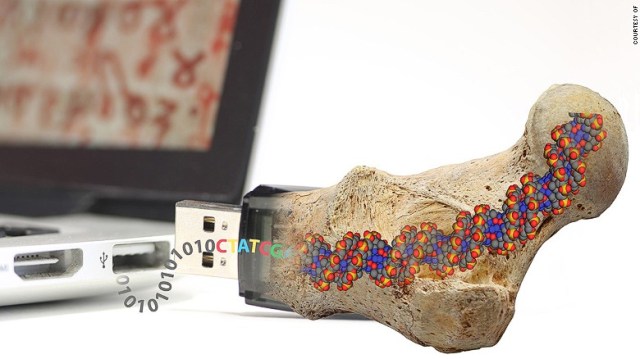
Science is now looking to nature, however, to find the best way to store data in a way that will make it last for millions of years.

Researchers at ETH Zurich, in Switzerland, believe the answer may lie in the data storage system that exists in every living cell: DNA.

So compact and complex are its strands that just 1 gram of DNA is theoretically capable of containing all the data of internet giants such as Google and Facebook, with room to spare.

In data storage terms, that gram would be capable of holding 455 exabytes, where one exabyte is equivalent to a billion gigabytes.

Fossilization has been known to preserve DNA in strands long enough to gain an animal’s entire genome — the complete set of genes present in a cell or organism.

So far, scientists have extracted and sequenced the genome of a 110,000-year-old polar bear and more recently a 700,000-year-old horse.

Robert Grass, lecturer at the Department of Chemistry and Applied Biosciences, said the problem with DNA is that it degrades quickly. The project, he said, wanted to find ways of combining the possibility of the large storage density in DNA with the stability of the DNA found in fossils.

“We have found elegant ways of making DNA very stable,” he told CNN. “So we wanted to combine these two stories — to get the high storage density of DNA and combine it with the archaeological aspects of DNA.”

The synthetic process of preserving DNA actually mimics processes found in nature.

As with fossils, keeping the DNA cool, dry and encased — in this case, with microscopic spheres of glass – could keep the information contained in its strands intact for thousands of years.

“The time limit with DNA in fossils is about 700,000 years but people speculate about finding one-million-year storage of genomic material in fossil bones,” he said.

“We were able to show that decay of our DNA and store of information decays at the same rate as the fossil DNA so we get to similar time frames of close to a million years.”

Fresh fossil discoveries are throwing up new surprises about the preservation of DNA.

Human bones discovered in the Sima de los Huesos cave network in Spain show maternally inherited “mitochondrial” DNA that is 400,000 years old – a new record for human remains.

The fact that the DNA survived in the relatively cool climate of a cave — rather than in a frozen environment as with the DNA extracted from mammoth remains in Siberia – has added to the mystery about DNA longevity.

“A lot of it is not really known,” Grass says. “What we’re trying to understand is how DNA decays and what the mechanisms are to get more insight into that.”

What is known is that water and oxygen are the enemy of DNA survival. DNA in a test tube and exposed to air will last little more than two to three years. Encasing it in glass — an inert, neutral agent – and cooling it increases its chances of survival.

Grass says sol-gel technology, which produces solid materials from small molecules, has made it a relatively easy process to get the glass around the DNA molecules.

While the team’s work invites immediate comparison with Jurassic Park, where DNA was extracted from amber fossils, Grass says that prehistoric insects encased in amber are a poor source of prehistoric DNA.

“The best DNA comes from sources that are ceramic and dry — so teeth, bones and even eggshells,” he said.

So far the team has tested their storage method by preserving just 83 kilobytes of data.

“The first is the Swiss Federal Charter of 1291 — it’s like the Swiss Magna Carta — and the other was the Archimedes Palimpsest; a copy of an Ancient Greek mathematics treatise made by a monk in the 10th century but which had been overwritten by other monks in the 15th century.

“We wanted to preserve these documents to show not just that the method works, but that the method is important too,” he said.

He estimates that the information will be readable in 10,000 years’ time, and if frozen, as long as a million years.

The cost of encoding just 83Kb of data cost about $2,000, making it a relatively expensive process, but Grass is optimistic that price will come down over time. Advances in technology for medical analysis, he said, are likely to help with this.

“Already the prices for human genome sequences have dropped from several millions of dollars a few years ago to just hundreds of dollars now,” Grass said.

“It makes sense to integrate these advances in medical and genome analysis into the world of IT.”

http://www.cnn.com/2015/02/25/tech/make-create-innovate-fossil-dna-data-storage/index.html?utm_source=feedburner&utm_medium=feed&utm_campaign=Feed%3A+rss%2Fcnn_latest+%28RSS%3A+Most+Recent%29

Among New York Subway’s Millions of Riders, a Study Finds Many Mystery Microbes

Have you ever been on the subway and seen something that you did not quite recognize, something mysteriously unidentifiable?

Well, there is a good chance scientists do not know what it is either.

Researchers at Weill Cornell Medical College released a study on Thursday that mapped DNA found in New York’s subway system — a crowded, largely subterranean behemoth that carries 5.5 million riders on an average weekday, and is filled with hundreds of species of bacteria (mostly harmless), the occasional spot of bubonic plague, and a universe of enigmas. Almost half of the DNA found on the system’s surfaces did not match any known organism and just 0.2 percent matched the human genome.

“People don’t look at a subway pole and think, ‘It’s teeming with life,’ ” said Dr. Christopher E. Mason, a geneticist at Weill Cornell Medical College and the lead author of the study. “After this study, they may. But I want them to think of it the same way you’d look at a rain forest, and be almost in awe and wonder, effectively, that there are all these species present — and that you’ve been healthy all along.”

Dr. Mason said the inspiration for the study struck about four years ago when he was dropping off his daughter at day care. He watched her explore her new surroundings by happily popping objects into her mouth. As is the custom among tiny children, friendships were made on the floor, by passing back and forth toys that made their way from one mouth to the next.

“I couldn’t help thinking, ‘How much is being transferred, and on which kinds of things?’ ” Dr. Mason said. So he considered a place where adults can get a little too close to each other, the subway.

Thus was the project, called PathoMap, born. Over the past 17 months, a team mainly composed of medical students, graduate students and volunteers fanned out across the city, using nylon swabs to collect DNA, in triplicate, from surfaces that included wooden benches, stairway handrails, seats, doors, poles and turnstiles.

In addition to the wealth of mystery DNA — which was not unexpected given that only a few thousand of the world’s genomes have been fully mapped — the study’s other findings reflected New York’s famed diversity, both human and microbial.

The Bronx was found to be the most diverse borough in terms of microbial species. Brooklyn claimed second place, followed by Manhattan, Queens and Staten Island, where researchers took samples on the Staten Island Railway.

On the human front, Dr. Mason said that, in some cases, the DNA that was found in some subway stations tended to match the neighborhood’s demographic profile. An area with a high concentration of Hispanic residents near Chinatown in Manhattan, for example, yielded a large amount of Hispanic and Asian genes.

In an area of Brooklyn to the south of Prospect Park that roughly encompassed the Kensington and Windsor Terrace neighborhoods, the DNA gathered frequently read as British, Tuscan, and Finnish, three groups not generally associated with the borough. Dr. Mason had an explanation for the finding: Scientists have not yet compiled a reliable database of Irish genes, so the many people of Irish descent who live in the area could be the source of DNA known to be shared with other European groups. The study produced some less appetizing news. Live, antibiotic-resistant bacteria were discovered in 27 percent of the collected samples, though among all the bacteria, only 12 percent could be associated with disease. Researchers also found three samples associated with bubonic plague and two with DNA fragments of anthrax, though they noted that none of those samples showed evidence of being alive, and that neither disease had been diagnosed in New York for some time. The presence of anthrax, Dr. Mason said, “is consistent with the many documented cases of anthrax in livestock in New York State and the East Coast broadly.”

The purpose of the study was not simply to satisfy scientific curiosity, the authors said. By cataloging species now, researchers can compare them against samples taken in the future to determine whether certain diseases, or even substances used as bioterrorism weapons, had spread.

City and transit officials did not sound grateful for the examination.

“As the study clearly indicates, microbes were found at levels that pose absolutely no danger to human life and health,” Kevin Ortiz, a spokesman for the Metropolitan Transportation Authority, said in an email. And the city’s health department called the study “deeply flawed” and misleading.

Dr. Mason responded by saying he and his team had simply presented their complete results.

“For us to not report the fragments of anthrax and plague in the context of a full analysis would have been irresponsible,” he said. “Our findings indicate a normal, healthy microbiome, and we welcome others to review the publicly available data and run the same analysis.”

Thanks to Kebmodee for bringing this to the attention of the It’s Interesting community.

Protein That Can Edit Other Proteins Without DNA Blueprint Discovered

In our cells, proteins are the tiny machines that do most of the work. And the instructions for making proteins — and for piecing together their building blocks, called amino acids — are laid out by DNA, then relayed through RNA. But now, researchers show for the first time that amino acids can be assembled by another protein — without genetic instructions. These surprising findings were published in Science this week.

If a cell is an automobile-making factory, then ribosomes are the machines on the protein assembly line that links together amino acids in an order specified by DNA and messenger RNA (mRNA), an intermediate template. If something goes awry and a ribosome stalls, the quality control team shows up to disassemble the ribosome, discard that bit of genetic blueprint, and recycle the partially-made protein.

Turns out, that assembly line can keep going even if it loses its genetic instructions, according to a large U.S. team led by University of Utah, University of California, San Francisco, and Stanford researchers. They discovered an unexpected mechanism of protein synthesis where a protein, and not the normal genetic blueprint, specifies which amino acids are added.

“In this case, we have a protein playing a role normally filled by mRNA,” UCSF’s Adam Frost says in a news release. “I love this story because it blurs the lines of what we thought proteins could do.”

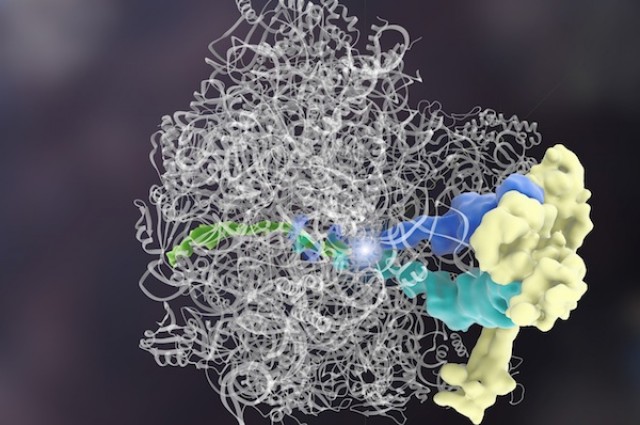
Frost and colleagues found a never-before-seen role for one member of the quality control team: a protein named Rqc2, which helps recruit transfer RNA (tRNA) to sites of ribosomal breakdowns (tRNA is responsible for bringing amino acids to the protein assembly line). Before the incomplete protein gets recycled, Rqc2 prompts the stalled ribosomes to add two amino acids — alanine and threonine — over and over. And that’s because the Rqc2–ribosome complex binds tRNAs that carry those two specific amino acids. In the auto analogy, the assembly line keeps going despite having lost its instructions, picking up whatever it can and attaching it in no particular order: horn-wheel-wheel-horn-wheel-wheel-wheel-wheel-horn, for example.

Pictured above, Rqc2 (yellow) binds tRNAs (blue and teal), which add amino acids (bright sot in the middle) to a partially-made protein (green). The complex binds the ribosome (white). A truncated protein with a seemingly random sequence of alanines and threonines probably doesn’t work properly, and that tail could be a code that signals for the malformed protein to be destroyed.

http://www.iflscience.com/health-and-medicine/protein-directs-protein-synthesis-without-dna-blueprint

Thanks to Kebmodee for bringing this to the attention of the It’s Interesting community.

Rapid-DNA technology that profiles DNA in about 90 minutes for law enforcement


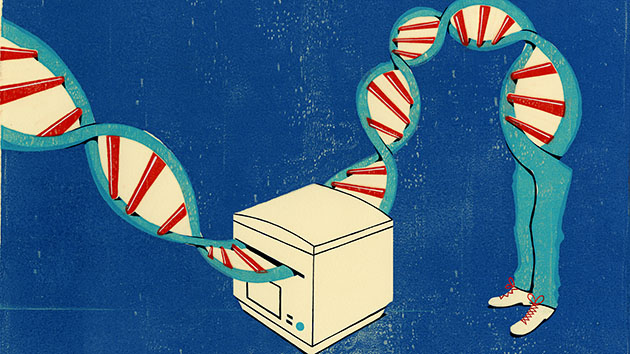
Rapid-DNA technology makes it easier than ever to grab and store your genetic profile. G-men, cops, and Homeland Security can’t wait to see it everywhere.

Robert Schueren shook my hand firmly, handed me his business card, and flipped it over, revealing a short list of letters and numbers. “Here is my DNA profile.” He smiled. “I have nothing to hide.” I had come to meet Schueren, the CEO of IntegenX, at his company’s headquarters in Pleasanton, California, to see its signature product: a machine the size of a large desktop printer that can unravel your genetic code in the time it takes to watch a movie.

Schueren grabbed a cotton swab and dropped it into a plastic cartridge. That’s what, say, a police officer would use to wipe the inside of your cheek to collect a DNA sample after an arrest, he explained. Other bits of material with traces of DNA on them, like cigarette butts or fabric, could work too. He inserted the cartridge into the machine and pressed a green button on its touch screen: “It’s that simple.” Ninety minutes later, the RapidHIT 200 would generate a DNA profile, check it against a database, and report on whether it found a match.

The RapidHIT represents a major technological leap—testing a DNA sample in a forensics lab normally takes at least two days. This has government agencies very excited. The Department of Homeland Security, the Department of Defense, and the Justice Department funded the initial research for “rapid DNA” technology, and after just a year on the market, the $250,000 RapidHIT is already being used in a few states, as well as China, Russia, Australia, and countries in Africa and Europe.

“We’re not always aware of how it’s being used,” Schueren said. “All we can say is that it’s used to give an accurate identification of an individual.” Civil liberties advocates worry that rapid DNA will spur new efforts by the FBI and police to collect ordinary citizens’ genetic code.

The US government will soon test the machine in refugee camps in Turkey and possibly Thailand on families seeking asylum in the United States, according to Chris Miles, manager of the Department of Homeland Security’s biometrics program. “We have all these families that claim they are related, but we don’t have any way to verify that,” he says. Miles says that rapid DNA testing will be voluntary, though refusing a test could cause an asylum application to be rejected.

Miles also says that federal immigration officials are interested in using rapid DNA to curb trafficking by ensuring that children entering the country are related to the adults with them. Jeff Heimburger, the vice president of marketing at IntegenX, says the government has also inquired about using rapid DNA to screen green-card applicants. (An Immigration and Customs Enforcement spokesman said he was not aware that the agency was pursuing the technology.)

Meanwhile, police have started using rapid DNA in Arizona, Florida, and South Carolina. In August, sheriffs in Columbia, South Carolina, used a RapidHIT to nab an attempted murder suspect. The machine’s speed provides a major “investigative lead,” said Vince Figarelli, superintendent of the Arizona Department of Public Safety crime lab, which is using a RapidHIT to compare DNA evidence from property crimes against the state’s database of 300,000 samples. Heimburger notes that the system can also prevent false arrests and wrongful convictions: “There is great value in finding out that somebody is not a suspect.”

But the technology is not a silver bullet for DNA evidence. The IntegenX executives brought up rape kits so often that it sounded like their product could make a serious dent in the backlog of half a million untested kits. Yet when I pressed Schueren on this, he conceded that the RapidHIT is not actually capable of processing rape kits since it can’t discern individual DNA in commingled bodily fluids.

Despite the new technology’s crime-solving potential, privacy advocates are wary of its spread. If rapid-DNA machines can be used in a refugee camp, “they can certainly be used in the back of a squad car,” says Jennifer Lynch, a senior staff attorney at the Electronic Frontier Foundation. “I could see that happening in the future as the prices of these machines go down.”

Lynch is particularly concerned that law enforcement agencies will use the devices to scoop up and store ever more DNA profiles. Every state already has a forensic DNA database, and while these systems were initially set up to track convicted violent offenders, their collection thresholds have steadily broadened. Today, at least 28 include data from anyone arrested for certain felonies, even if they are not convicted; some store the DNA of people who have committed misdemeanors as well. The FBI’s National DNA Index System has more than 11 million profiles of offenders plus 2 million people who have been arrested but not necessarily convicted of a crime.

For its part, Homeland Security will not hang onto refugees’ DNA records, insists Miles. (“They aren’t criminals,” he pointed out.) However, undocumented immigrants in custody may be required to provide DNA samples, which are put in the FBI’s database. DHS documents obtained by the Electronic Frontier Foundation say there may even be a legal case for “mandating collection of DNA” from anyone granted legal status under a future immigration amnesty. (The documents also state that intelligence agencies and the military are interested in using rapid DNA to identify sex, race, and other factors the machines currently do not reveal.)

The FBI is the only federal agency allowed to keep a national DNA database. Currently, police must use a lab to upload genetic profiles to it. But that could change. The FBI’s website says it is eager to see rapid DNA in wide use and that it supports the “legislative changes necessary” to make that happen. IntegenX’s Heimburger says the FBI is almost finished working with members of Congress on a bill that would give “tens of thousands” of police stations rapid-DNA machines that could search the FBI’s system and add arrestees’ profiles to it. (The RapitHIT is already designed to do this.) IntegenX has spent $70,000 lobbying the FBI, DHS, and Congress over the last two years.

The FBI declined to comment, and Heimburger wouldn’t say which lawmakers might sponsor the bill. But some have already given rapid DNA their blessing. Rep. Eric Swalwell, a former prosecutor who represents the district where IntegenX is based, says he’d like to see the technology “put to use quickly to help law enforcement”—while protecting civil liberties. In March, he and seven other Democratic members of Congress, including progressive stalwart Rep. Barbara Lee of California, urged the FBI to assess rapid DNA’s “viability for broad deployment” in police departments across the country.

Thanks to Kebmodee for bringing this to the attention of the It’s Interesting community.

The FBI Is Very Excited About This Machine That Can Scan Your DNA in 90 Minutes