Artificial Intelligence Can Predict Your Personality By Simply Tracking Your Eyes


Researchers have developed a new deep learning algorithm that can reveal your personality type, based on the Big Five personality trait model, by simply tracking eye movements.

t’s often been said that the eyes are the window to the soul, revealing what we think and how we feel. Now, new research reveals that your eyes may also be an indicator of your personality type, simply by the way they move.

Developed by the University of South Australia in partnership with the University of Stuttgart, Flinders University and the Max Planck Institute for Informatics in Germany, the research uses state-of-the-art machine-learning algorithms to demonstrate a link between personality and eye movements.

Findings show that people’s eye movements reveal whether they are sociable, conscientious or curious, with the algorithm software reliably recognising four of the Big Five personality traits: neuroticism, extroversion, agreeableness, and conscientiousness.

Researchers tracked the eye movements of 42 participants as they undertook everyday tasks around a university campus, and subsequently assessed their personality traits using well-established questionnaires.

UniSA’s Dr Tobias Loetscher says the study provides new links between previously under-investigated eye movements and personality traits and delivers important insights for emerging fields of social signal processing and social robotics.

“There’s certainly the potential for these findings to improve human-machine interactions,” Dr Loetscher says.

“People are always looking for improved, personalised services. However, today’s robots and computers are not socially aware, so they cannot adapt to non-verbal cues.

“This research provides opportunities to develop robots and computers so that they can become more natural, and better at interpreting human social signals.”

Dr Loetscher says the findings also provide an important bridge between tightly controlled laboratory studies and the study of natural eye movements in real-world environments.

“This research has tracked and measured the visual behaviour of people going about their everyday tasks, providing more natural responses than if they were in a lab.

“And thanks to our machine-learning approach, we not only validate the role of personality in explaining eye movement in everyday life, but also reveal new eye movement characteristics as predictors of personality traits.”

Original Research: Open access research for “Eye Movements During Everyday Behavior Predict Personality Traits” by Sabrina Hoppe, Tobias Loetscher, Stephanie A. Morey and Andreas Bulling in Frontiers in Human Neuroscience. Published April 14 2018.
doi:10.3389/fnhum.2018.00105

Artificial Intelligence Can Predict Your Personality By Simply Tracking Your Eyes

Global Warming Linked to Higher Suicide Rates across North America

Suicide rates and temperatures are both on the rise, but are these two occurrences connected? A new study suggests maybe so. The research revealed hotter-than-average months corresponded to more deaths by suicide—and the effect isn’t limited to the summer, even warmer winters show the trend.

In the study, published in Nature Climate Change, the investigators looked at all of the suicides that occurred in the U.S. and Mexico over several decades (1968 to 2004 for the U.S. and 1990 to 2010 for Mexico), comprising 851,088 and 611,366 deaths, respectively. They then observed how monthly temperature fluctuations over these periods in every county or municipality in both countries correlated to the suicide rates for that region. They discovered that for every 1-degree Celsius (1.8-degree Fahrenheit) rise in temperature, there was a 0.7 percent increase in suicide rates in the U.S. and a 2.1 percent increase in Mexico, averaging a 1.4 percent increment across both countries. That is, over the years, a given county would see more deaths by suicide in warmer-than-average months.

Notably, the average temperature of the county did not matter; for example, Dallas and Minneapolis saw a similar rise in suicide rates. The effect did not depend on the month either—it made no difference whether it was January or July. There was also no difference between gender, socioeconomic status, access to guns, air-conditioning and whether it was an urban or rural region. Across the board, when temperatures rose in a given place, so did the number of suicides.

“A lot of times when you hear about climate change and climate change impacts, you hear this catch phrase ‘climate change is going to generate winners and losers,’” says study author Marshall Burke. “Some people could benefit from climate change, the idea being if you live in a really cold location, sometimes things improve when you warm it up a little bit. We do not find that for suicide.” He continues, “Climate change in terms of suicide is not going to generate winners and losers, it’s just going to generate losers. Everyone, as far as we can tell—no matter whether you live in a cold place or live in a hot place—everyone is going to be harmed in terms of suicide risk when we increase the temperature.”

If climate change continues on its current trajectory with an estimated temperature increase of 2.5 degrees C (4.5 degrees F) by 2050, Burke, who is an assistant professor of earth system science at Stanford University, projects suicide rates would rise by 1.85 percent, resulting in an additional 21,770 deaths by suicide across the U.S. and Mexico. For comparison, economic recession is thought to increase suicide rates by 0.8 percent whereas news of celebrity suicides accounts for a 4.6 percent bump in rates.

Not everyone is convinced by these projections, though. Jill Harkavy-Friedman, vice president of research at the American Foundation for Suicide Prevention, says, “I think it’s an interesting and provocative idea. These two things may be co-occurring. You know, it’s possible that the rate of suicide is going up as the temperature is going up. But we don’t know that there’s anything causal about that.”

In their study the researchers speculate there could be some biological effect linked to temperature regulation in the brain that alters mental health and could underlie the correlation. In an attempt to connect mental well-being with temperature change more generally, they examined more than 600 million Twitter posts for depressive language over a 14-month period. The researchers again found hotter months corresponded to a higher probability of using depressive language. Prior work by the researchers also saw a similar trend in interpersonal conflict, with a 4 percent rise in violence attributed to climate change.

Burke acknowledged suicide is a complex phenomenon and temperature is certainly not the only or even the most important factor affecting mental health: “What studies like ours contribute is just saying on average, as you increase temperature, what’s going to happen to suicide rates? So that won’t tell you with utmost certainty what’s going to happen in specific locations, but it will tell you okay on average this is what we should expect. Our view is it would be foolhardy to ignore the evidence,” he notes.

Radley Horton, an associate research professor at Columbia University who was not involved in the research, says the study is a good reminder of how fundamental temperature is and how widespread its impacts are. “The deeper we look, the more likely we are to uncover ways that temperature directly impacts things we care about,” he says. “Climate uncertainty is not our friend. The further we push things, the greater the risk.”

https://www.scientificamerican.com/article/global-warming-linked-to-higher-suicide-rates-across-north-america/

Giant neurons in the brain may play similarly giant role in awareness and cognition, and uniquely control their own blood supply.


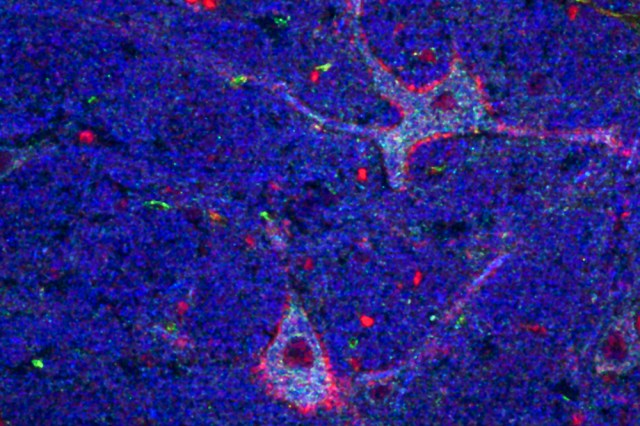
Researchers believe that large cells called nucleus gigantocellularis neurons, pictured here, modulate blood flow by releasing nitric oxide.

There is no shortage of wonders that our central nervous system produces—from thought and language to movement to the five senses. All of those dazzling traits, however, depend on an underappreciated deep brain mechanism that Donald Pfaff, head of the Laboratory of Neurobiology and Behavior at The Rockefeller University, calls generalized arousal, or GA for short. GA is what wakes us up in the morning and keeps us aware and in touch with ourselves and our environment throughout our conscious hours.

“It’s so fundamental that we don’t pay attention to it,” says Pfaff, “and yet it’s so important that we should.”

Pfaff and his team of researchers certainly do. Now, in a series of experiments involving a particular type of brain cell, they have advanced our understanding of the roots of consciousness. Their work may potentially prove relevant in the study of some psychiatric diseases.

The big cells in the black box

The findings, published this month in Proceedings of the National Academy of Sciences, shed light on an area of the brainstem that is so little understood the first author of the paper, Inna Tabansky, a research associate in Pfaff’s lab, calls it “the black box.” That term is certainly simpler than its actual name—the nucleus gigantocellularis (NGC), which is part of a structure called the medullary reticular formation.

In her work, using mice, Tabansky focused on a subtype of extremely large neurons in the NGC with links to virtually the entire nervous system, including the thalamus, where neurons can activate the entire cerebral cortex. “If you just look at the morphology of NGC neurons, you know they’re important,” Pfaff says. “It’s just a question of what they’re important for. I think they’re essential for the initiation of any behavior.”

To discover what role the NGC neurons might play in GA, Tabansky and her colleagues, including Joel Stern, a visiting professor in the Pfaff lab, began by identifying the genes that these neurons express. They used a technique known as “retro-TRAP,” developed in the lab of Rockefeller scientist Jeffrey Friedman.

To Tabansky’s surprise, the NGC neurons were found to express the gene for an enzyme, endothelial nitric oxide synthase (eNOS), which produces nitric oxide, which in turn relaxes blood vessels, increasing the flow of oxygenated blood to tissue. (No other neurons in the brain are known to produce eNOS.) They also discovered that the eNOS-expressing NGC neurons are located close to blood vessels.

In Pfaff’s view, the neurons are so critical for the normal functions of the central nervous system that they have evolved the ability to control their own blood supply directly. ‘“We’re pretty sure that if these neurons need more oxygen and glucose, they will release nitric oxide into these nearby blood vessels in order to get it,” he says.

The circumstances that would prompt such a response were the subject of further experiments. The scientists found evidence that changes in the environment, such as the introduction of novel scents, activated eNOS in the NGC neurons and produced increased amounts of nitric oxide in mice.

“There is some low level of production when the animal is in a familiar setting,” says Tabansky, “which is what you expect as they maintain arousal. But it is vastly increased when the animal is adapting to a new environment.” This activation of the NGC neurons supports the case for their central role in arousal, Tabansky says.

From cells to psychiatry

Going forward, Tabansky says she’s interested in exploring if their findings might help fill a gap in the understanding of certain disorders, such as bipolar disorder, suicidality, and ADHD. Some genetic research has implicated a role for the neurons she studied in these diseases, but the mechanism behind this link is not known.

“By showing that this gene and its associated pathways have a particular role, at least in the rodent brain, that relates to a fundamental function of the nervous system, is a hint about how this gene can cause psychiatric disease,” she says. “It’s very preliminary, and there is a lot more work to be done, but it potentially opens a new way to study how this gene can alter an individual’s psychology.”

https://www.rockefeller.edu/news/23275-giant-neurons-in-the-brain-may-play-similarly-giant-role-in-awareness-and-cognition/

Life Is Short After Dementia Diagnosis, No Matter Your Age

Your age doesn’t determine how long you’ll live after a dementia diagnosis, new research contends.

“These findings suggest that, despite all efforts, and despite being younger and perhaps physically ‘healthier’ than older people, survival time in people with young-onset dementia has not improved since 2000,” said study author Dr. Hanneke Rhodius-Meester, from VU University Medical Center, in Amsterdam, the Netherlands.

For the study, Dutch researchers looked at nearly 4,500 people with early onset dementia. Median survival time was six years, but it varied depending on the type of dementia: 6.4 years for frontotemporal lobe degeneration; 6.2 years for Alzheimer’s disease; 5.7 years for vascular dementia; 5.1 years for dementia with Lewy bodies; and 3.6 years for rarer causes of dementia.

But survival times were similar among patients of all ages, whether they were younger or older than 65, the investigators found.

Previous research had suggested survival times after dementia diagnosis ranged between three and 12 years.

The latest findings were to be presented Sunday at the Alzheimer’s Association annual meeting, in Chicago. Such research is considered preliminary until published in a peer-reviewed journal.

“While these results still need to be replicated and confirmed, they do highlight the urgency of the need for better treatments and effective prevention strategies,” Rhodius-Meester said in a meeting news release.

New research shows a mechanism by which tau may be toxic in Alzheimer’s disease

New evidence suggests a mechanism by which progressive accumulation of Tau protein in brain cells may lead to Alzheimer’s disease. Scientists studied more than 600 human brains and fruit fly models of Alzheimer’s disease and found the first evidence of a strong link between Tau protein within neurons and the activity of particular DNA sequences called transposable elements, which might trigger neurodegeneration. The study appears in the journal Cell Reports.

“One of the key characteristics of Alzheimer’s disease is the accumulation of Tau protein within brain cells, in combination with progressive cell death,” said corresponding author Dr. Joshua Shulman, associate professor of neurology, neuroscience and molecular and human genetics at Baylor College of Medicine and investigator at the Jan and Dan Duncan Neurological Research Institute at Texas Children’s Hospital. “In this study we provide novel insights into how accumulation of Tau protein may contribute to the development of Alzheimer’s disease.”

Although scientists have studied for years what happens when Tau forms aggregates inside neurons, it still is not clear why brain cells ultimately die. One thing that scientists have noticed is that neurons affected by Tau accumulation also appear to have genomic instability.

“Genomic instability refers to an increased tendency to have alterations in the genetic material, DNA, such as mutations or other impairments. This means that the genome is not functioning correctly. Genomic instability is known to be a major driving force behind other diseases such as cancer,” Shulman said. “Our study focused on a new possible causal connection between Tau accumulation within neurons and the resulting genomic instability in Alzheimer’s disease.”

Enter transposable elements
Previous studies of brain tissues from patients with other neurologic diseases and of animal models have suggested that the neurons not only present with genomic instability, but also with activation of transposable elements.

“Transposable elements are short pieces of DNA that do not seem to contribute to the production of proteins that make cells function. They behave in a way similar to viruses; they can make copies of themselves that are inserted within the genome and this can create mutations that lead to disease,” Shulman said. “Although most transposable elements are dormant or dysfunctional, some may become active in human brains late in life or in disease. That’s what led us to look specifically at Alzheimer’s disease and the possible association between Tau accumulation and activated transposable elements.”

Shulman and his colleagues began their investigations by studying more than 600 human brains from a population study run by co-author Dr. David Bennett at Rush University Medical Center in Chicago. This population study follows participants throughout their lives and at death, allowing the researchers to examine their brains in detail postmortem. One of the evaluations is the amount of Tau accumulation across many brain regions. In addition, co-author Dr. Philip De Jager at the Broad Institute and Columbia University comprehensively profiled gene expression in the same brains.

“With this large amount of data, we looked to identify signatures of active transposable elements, but this was not easy,” Shulman said. “We therefore reached out to Dr. Zhandong Liu, a co-author in this study, and together we developed a new software tool to detect signatures of active transposable elements from postmortem human brains. Then we conducted a statistical analysis in which we compared the amount of active transposable elements signatures with the amount of Tau accumulation, brain by brain.” Liu also is assistant professor of pediatrics – neurology at Baylor and a member of the Dan L Duncan Comprehensive Cancer Center.

The researchers found a strong link between the amount of Tau accumulation in neurons and detectable activity of transposable elements.

“We identified individual transposable elements that were active when Tau aggregates were present. Surprisingly, we also found evidence that the activation of transposable elements was quite broad across the genome,” Shulman said.

Other research has shown that Tau may disrupt the tightly packed architecture of the genome. It is believed that tightly packed DNA limits gene activation, while opening up the DNA may promote it. Keeping the DNA tightly packed may be an important mechanism to suppress the activity of transposable elements that lead to disease.

“The fact that Tau aggregates can affect that architecture of the genome may be one possible mechanism by which transposable elements are activated in Alzheimer’s disease,” Shulman said. “However, our studies in human brains only establish an association between Tau accumulation and activation of transposable elements. To determine whether Tau accumulation could in fact cause transposable element activation, we conducted studies with a fruit fly model of Alzheimer’s disease.”

In this fruit fly model of the disease, the researchers found that triggering Tau changes similar to those observed in human brains resulted in the activation of fruit fly transposable elements, strongly suggesting that Tau aggregates that disrupt the architecture of the genome can potentially mediate the activation of transposable elements and ultimately cause neurodegeneration.

“We think our experiments reveal new and potentially important insights relevant for understanding Alzheimer’s disease mechanisms,” Shulman said. “There is still a lot of work to be done, but by presenting our results we hope we can stimulate others in the research community to help work on this problem.”

https://www.bcm.edu/news/neurology/research-links-tau-aggregates-cell-death

Our brains need silence to make sense of things

by CHRISTIAN COTRONEO

The mind may seem to thrive on stimuli — the honking horns, the pixels percolating on this screen at this very moment, or even the way the keyboard feels under your fingers at any given time of day.

But, in fact, it may be what lies between — the time between honks, if you will — when the brain focuses on encoding the information, according to a new study from Neuroscience Research Australia (NeuRA) and the University of New South Wales.

Of course, we’ve long known that silence is golden — especially when it comes to mental health and dealing with stress. But the new research points to the absence of stimulation as a window when the brain has a chance to learn from its environment.

Think of it as a micro-breather for the mind, allowing it to grasp and distill what it’s experiencing.

To reach that conclusion, researchers Ingvars Birznieks and Richard Vickery developed a unique way to control the neural information that’s presented to the brain. Essentially, they delivered short mechanical taps to the fingertips of study subjects.

Birznieks and Vickery ensured that each tap generated a corresponding nerve impulse to a neuron in the brain. By triggering the sense of touch — which the brain registers from vibrations along the ridge of our fingertips — the scientists were able to monitor how nerve impulses encoded the information.

The thing is, the frequency of those neuron bursts didn’t match the frequency of taps.

“Instead, it was the silent period between bursts that best explained the subjects’ experiences,” Birznieks noted in the NeuRA blog.

Prevailing theories had it that every vibration or tap would have a corresponding nerve impulse, or the brain would be able to detect a periodic regularity in the impulse patterns.

“We were hoping to disprove one of the two competing theories, but showing they were both incorrect and finding a completely new coding strategy totally surprised us,” Birznieks added.

The brain just kept ticking along to its own beat, independent of how often those fingertips were stimulated.

For neuroscience, the findings could be a game-changer. A better understanding of how the brain fields daily neural impulses could pave the way for more efficient interfaces between brain and machine.

And for the rest of us, it suggests that in a increasingly noise-addled society — where every sense seems in danger of over-stimulation — it may do a body good to give the brain a breather.

https://www.mnn.com/green-tech/research-innovations/stories/silence-brain-study-touch-stimulation

Scientists are now able to make human neurons from white blood cells


Fresh or frozen human blood samples can be directly transformed into patient-specific neurons to study disorders such as schizophrenia and autism, Stanford researcher Marius Wernig has found.

Human immune cells in blood can be converted directly into functional neurons in the laboratory in about three weeks with the addition of just four proteins, researchers at the Stanford University School of Medicine have found.

The dramatic transformation does not require the cells to first enter a state called pluripotency but instead occurs through a more direct process called transdifferentiation.

The conversion occurs with relatively high efficiency — generating as many as 50,000 neurons from 1 milliliter of blood — and it can be achieved with fresh or previously frozen and stored blood samples, which vastly enhances opportunities for the study of neurological disorders such as schizophrenia and autism.

“Blood is one of the easiest biological samples to obtain,” said Marius Wernig, MD, associate professor of pathology and a member of Stanford’s Institute for Stem Cell Biology and Regenerative Medicine. “Nearly every patient who walks into a hospital leaves a blood sample, and often these samples are frozen and stored for future study. This technique is a breakthrough that opens the possibility to learn about complex disease processes by studying large numbers of patients.”

A paper describing the findings was published online June 4 in the Proceedings of the National Academy of Sciences. Wernig is the senior author. Former postdoctoral scholar Koji Tanabe, PhD, and graduate student Cheen Ang are the lead authors.

Dogged by challenges

The transdifferentiation technique was first developed in Wernig’s laboratory in 2010 when he and his colleagues showed that they could convert mouse skin cells into mouse neurons without first inducing the cells to become pluripotent — a developmentally flexible stage from which the cells can become nearly any type of tissue. They went on to show the technique could also be used on human skin and liver cells.

But each approach has been dogged by challenges, particularly for researchers wishing to study genetically complex mental disorders, such as autism or schizophrenia, for which many hundreds of individual, patient-specific samples are needed in order to suss out the relative contributions of dozens or more disease-associated mutations.

“Generating induced pluripotent stem cells from large numbers of patients is expensive and laborious. Moreover, obtaining skin cells involves an invasive and painful procedure,” Wernig said. “The prospect of generating iPS cells from hundreds of patients is daunting and would require automation of the complex reprogramming process.”

Although it’s possible to directly convert skin cells to neurons, the biopsied skin cells first have to be grown in the laboratory for a period of time until their numbers increase — a process likely to introduce genetic mutations not found in the person from whom the cells were obtained.

The researchers wondered if there was an easier, more efficient way to generate patient-specific neurons.

‘Somewhat mind-boggling’
In the new study, Wernig and his colleague focused on highly specialized immune cells called T cells that circulate in the blood. T cells protect us from disease by recognizing and killing infected or cancerous cells. In contrast, neurons are long and skinny cells capable of conducting electrical impulses along their length and passing them from cell to cell. But despite the cells’ vastly different shapes, locations and biological missions, the researchers found it unexpectedly easy to complete their quest.

“It’s kind of shocking how simple it is to convert T cells into functional neurons in just a few days,” Wernig said. “T cells are very specialized immune cells with a simple round shape, so the rapid transformation is somewhat mind-boggling.”

The resulting human neurons aren’t perfect. They lack the ability to form mature synapses, or connections, with one another. But they are able to carry out the main fundamental functions of neurons, and Wernig and his colleague are hopeful they will be able to further optimize the technique in the future. In the meantime, they’ve started to collect blood samples from children with autism.

“We now have a way to directly study the neuronal function of, in principle, hundreds of people with schizophrenia and autism,” Wernig said. “For decades we’ve had very few clues about the origins of these disorders or how to treat them. Now we can start to answer so many questions.”

Other Stanford co-authors are postdoctoral scholars Soham Chanda, PhD, and Daniel Haag, PhD; undergraduate student Victor Olmos; professor of psychiatry and behavioral sciences Douglas Levinson, MD; and professor of molecular and cellular physiology Thomas Südhof, MD.

The research was supported by the National Institutes of Health (grants MH092931 and MH104172), the California Institute for Regenerative Medicine, the New York Stem Cell Foundation, the Howard Hughes Medical Institute, the Siebel Foundation and the Stanford Schizophrenia Genetics Research Fund.

http://med.stanford.edu/news/all-news/2018/06/human-blood-cells-transformed-into-functional-neurons.html

Researchers discovery an independent role for astrocytes in cognition

The majority of the cells in the brain are no neurons, but Glia (from “glue”) cells, that support the structure and function of the brain. Astrocytes (“start cells”) are star-shaped glial cells providing many supportive functions for the neurons surrounding them, such as the provision of nutrients and the regulation of their chemical environment. Newer studies showed that astrocytes also monitor and modulate neuronal activity. For example, these studies have shown that astrocytes are necessary for the ability of neurons to change the strength of the connections between them, the process underlying learning and memory, and indeed astrocytes are also necessary for normal cognitive function. However, it is still unknown whether astrocytic activity is only necessary, or is it may also be sufficient to induce synaptic potentiation and enhance cognitive performance.

In a new study published in Cell, two graduate students, Adar Adamsky and Adi Kol, from Inbal Goshen’s lab, employed chemogenetic and optogenetic tools that allow specific activation of astrocytes in behaving mice, to explore their role in synaptic activity and memory performance. They found that astrocytic activation in the hippocampus, a brain region that plays an important role in memory acquisition and consolidation, potentiated the synaptic connections in this region, measured in brain slices. Moreover, in the intact brain, astrocytic activation enhanced hippocampal neuronal activity in a task-dependent way: i.e. only during when it was combined with memory acquisition, but not when mice were at their home cage with no meaningful stimuli. The ability of astrocytes to increase neuronal activity during memory acquisition had a significant effect on cognitive function: Specifically, astrocytic activation during learning resulted in enhanced memory in two memory tests. In contrast, direct neuronal activation in the hippocampus induced a non-selective increase in activity (during learning or in the home cage), and thus resulted in drastic memory impairment.

The results suggest that the memory enhancement induced by astrocytic activation during learning is not simply a result of a general increase in hippocampal neuronal activity. Rather, the astrocytes, which sense and respond to changes in the surrounding neuronal activity, can detect and specifically enhance only the neuronal activity involved in learning, without affecting the general activity. This may explain why general astrocytic activation improves memory performance, whereas a similar activation of neurons impairs it.

Memory is not a binary process (remember/don’t remember); the strength of a memory can vary greatly, either for the same memory or between different memories. Here, we show that activating astrocytes in mice with intact cognition improves their memory performance. This finding has important clinical implications for cognitive augmentation treatments. Furthermore, the ability of astrocytes to strengthen neuronal communication and improve memory performance supports the claim that astrocytes are able to take an active part in the neuronal processes underlying cognitive function. This perspective expands the definition of the role of astrocytes, from passive support cells to active cells that can modulate neural activity and thus shape behavior.

Link: https://www.cell.com/cell/pdf/S0092-8674(18)30575-0.pdf

https://elsc.huji.ac.il/content/article-month-june-2018-goshens-lab

Superslow Brain Waves May Play a Critical Role in Consciousness


Signals long thought to be “noise” appear to represent a distinct form of brain activity.

By Tanya Lewis

Every few seconds a wave of electrical activity travels through the brain, like a large swell moving through the ocean. Scientists first detected these ultraslow undulations decades ago in functional magnetic resonance imaging (fMRI) scans of people and other animals at rest—but the phenomenon was thought to be either electrical “noise” or the sum of much faster brain signals and was largely ignored.

Now a study that measured these “infraslow” (less than 0.1 hertz) brain waves in mice suggests they are a distinct type of brain activity that depends on an animal’s conscious state. But big questions remain about these waves’ origin and function.

An fMRI scan detects changes in blood flow that are assumed to be linked to neural activity. “When you put someone in a scanner, if you just look at the signal when you don’t ask the subject to do anything, it looks pretty noisy,” says Marcus Raichle, a professor of radiology and neurology at Washington University School of Medicine in St. Louis and senior author of the new study, published in April in Neuron. “All this resting-state activity brought to the forefront: What is this fMRI signal all about?”

To find out what was going on in the brain, Raichle’s team employed a combination of calcium/hemoglobin imaging, which uses fluorescent molecules to detect the activity of neurons at the cellular level, and electrophysiology, which can record signals from cells in different brain layers. They performed both measurements in awake and anesthetized mice; the awake mice were resting in tiny hammocks in a dark room.

The team found that infraslow waves traveled through the cortical layers of the awake rodents’ brains—and changed direction when the animals were anesthetized. The researchers say these waves are distinct from so-called delta waves (between 1 and 4 Hz) and other higher-frequency brain activity.

These superslow waves may be critical to how the brain functions, Raichle says. “Think of, say, waves on the water of Puget Sound. You can have very rough days where you have these big groundswells and then have whitecaps sitting on top of them,” he says. These “swells” make it easier for brain areas to become active—for “whitecaps” to form, in other words.

Other researchers praised the study’s general approach but were skeptical that it shows the infraslow waves are totally distinct from other brain activity. “I would caution against jumping to a conclusion that resting-state fMRI is measuring some other property of the brain that’s got nothing to do with the higher-frequency fluctuations between areas of the cortex,” says Elizabeth Hillman, a professor of biomedical engineering at Columbia University’s Zuckerman Institute, who was not involved in the work. Hillman published a study in 2016 finding that resting-state fMRI signals represent neural activity across a range of frequencies, not just low ones.

More studies are needed to tease apart how these different types of brain signals are related. “These kinds of patterns are very new,” Hillman notes. “We haven’t got much of a clue what they are, and figuring out what they are is really, really difficult.”

https://www.scientificamerican.com/article/superslow-brain-waves-may-play-a-critical-role-in-consciousness1/

New research shows a map of neuronal activity that gets encoded in the hippocampus with learning


by Nicolas Scherger

Dr. Thomas Hainmüller and Prof. Dr. Marlene Bartos of the Institute of Physiology of the University of Freiburg have established a new model to explain how the brain stores memories of tangible events. The model is based on an experiment that involved mice seeking a place where they received rewards in a virtual environment. The scientific journal “Nature” has published the study.

In the world of the mouse’s video game, the walls that depict a corridor four meters long are made up of green and blue patterned blocks. The floor is marked with turquoise dots. A short distance away, there’s a brown disc on the floor that looks like a cookie. That’s the symbol for the reward location. The mouse heads for it, gets there, and the symbol disappears. The next cookie promptly appears a bit further down the corridor. The mouse is surrounded by monitors and is standing on a styrofoam ball that is floating on compressed air and turns beneath the mouse when it runs. The ball makes it possible to transfer of the mouse’s movements to the virtual environment. If the mouse reaches the reward symbol, a straw is used to give it a drop of soy milk and stimulate it to form memories of its experiences in the virtual world. The mouse learns when, and at which location, it will receive a reward. It also learns how to locate itself and discriminate between different corridors in the video game.

Viewing the brain with a special microscope

“As the mouse is getting to know its environment, we use a special microscope to look from the outside into its brain and we record the activities of its nerve cells on video,” explains Thomas Hainmüller, a physician and doctoral candidate in the MD/PhD program of the Spemann Graduate School of Biology and Medicine (SGBM) of the University of Freiburg. He says that works because, in reality, the head of the mouse remains relatively still under the microscope as it runs through the virtual world of the video game. On the recordings, the mice’s genetically-manipulated nerve cells flash as soon as they become active. Hainmüller and Marlene Bartos, a Professor of Systemic and Cellular Neurobiology are using this method to investigate how memories are sorted and retrieved. “We repeatedly place the mouse in the virtual world on consecutive days,” says Hainmüller. “In that way, we can observe and compare the activity of the nerve cells in different stages of memory formation,” he explains.

Nerve cells encode places

The region of the brain called the hippocampus plays a decisive role in the formation of memory episodes – or memories of tangible experiences. Hainmüller and Bartos published that the nerve cells in the hippocampus create a map of the virtual world in which single neurons code for actual places in the video game. Earlier studies done at the Freiburg University Medical Center showed that nerve cells in the human hippocampus code video games in the same way. The cells become activated and flash when the mouse is at the respective place, otherwise they remain dark. “To our surprise, we found very different maps inside the hippocampus,” reports Hainmüller. In part, they provide an approximate overview of the position of the mouse in the corridor, yet they also consider time and context factors, and above all, information about in which of the corridors the mouse is located. The maps are also updated during the days of the experiment and as a result can be recognized as a learning process.

Better understanding of memory formation

The research team summarizes, saying that their observations provide a model that explains how activity of the nerve cells in the hippocampus can map the space, time and and context of memory episodes. The findings allow for better understanding of the biological processes that effect the formation of memory in the brain. Hainmüller says, “In the long term, we would like to use our results to contribute to the development of treatments to help people with neurological and psychiatric illnesses.”

Original publication
Thomas Hainmüller and Marlene Bartos (2018): Parallel emergence of stable and dynamic memory engrams in the hippocampus. In: Nature. doi: 10.1038/s41586-018-0191-2

https://www.pr.uni-freiburg.de/pm-en/online-magazine/research-and-discover/maps-made-of-nerve-cells