Anxiety may be an early indicator of Alzheimer’s disease

lzheimer’s disease is a neurodegenerative condition that causes the decline of cognitive function and the inability to carry out daily life activities. Past studies have suggested depression and other neuropsychiatric symptoms may be predictors of AD’s progression during its “preclinical” phase, during which time brain deposits of fibrillar amyloid and pathological tau accumulate in a patient’s brain. This phase can occur more than a decade before a patient’s onset of mild cognitive impairment. Investigators at Brigham and Women’s Hospital examined the association of brain amyloid beta and longitudinal measures of depression and depressive symptoms in cognitively normal, older adults. Their findings, published today by The American Journal of Psychiatry, suggest that higher levels of amyloid beta may be associated with increasing symptoms of anxiety in these individuals. These results support the theory that neuropsychiatric symptoms could be an early indicator of AD.

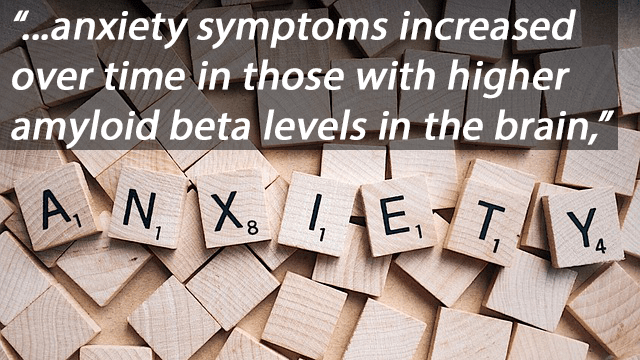
“Rather than just looking at depression as a total score, we looked at specific symptoms such as anxiety. When compared to other symptoms of depression such as sadness or loss of interest, anxiety symptoms increased over time in those with higher amyloid beta levels in the brain,” said first author Nancy Donovan, MD, a geriatric psychiatrist at Brigham and Women’s Hospital. “This suggests that anxiety symptoms could be a manifestation of Alzheimer’s disease prior to the onset of cognitive impairment. If further research substantiates anxiety as an early indicator, it would be important for not only identifying people early on with the disease, but also, treating it and potentially slowing or preventing the disease process early on.” As anxiety is common in older people, rising anxiety symptoms may prove to be most useful as a risk marker in older adults with other genetic, biological or clinical indicators of high AD risk.

Researchers derived data from the Harvard Aging Brain Study, an observational study of older adult volunteers aimed at defining neurobiological and clinical changes in early Alzheimer’s disease. The participants included 270 community dwelling, cognitively normal men and women, between 62 and 90 years old, with no active psychiatric disorders. Individuals also underwent baseline imaging scans commonly used in studies of Alzheimer’s disease, and annual assessments with the 30-item Geriatric Depression Scale (GDS), an assessment used to detect depression in older adults.

The team calculated total GDS scores as well as scores for three clusters symptoms of depression: apathy-anhedonia, dysphoria, and anxiety. These scores were looked at over a span of five years.

From their research, the team found that higher brain amyloid beta burden was associated with increasing anxiety symptoms over time in cognitively normal older adults. The results suggest that worsening anxious-depressive symptoms may be an early predictor of elevated amyloid beta levels – and, in turn AD — and provide support for the hypothesis that emerging neuropsychiatric symptoms represent an early manifestation of preclinical Alzheimer’s disease.

Donovan notes further longitudinal follow-up is needed to determine whether these escalating depressive symptoms give rise to clinical depression and dementia stages of Alzheimer’s disease over time.

Paper cited: Donovan et al. “Longitudinal Association of Amyloid Beta and Anxious-Depressive Symptoms in Cognitively Normal Older Adults” The American Journal of Psychiatry DOI: 10.1176/appi.ajp.2017.17040442


Psilocybin Study Results Hailed as Potentially Groundbreaking Treatment for Anxiety and Depression

Two new randomized and controlled trials show that just one dose of psilocybin—the compound in psychedelic mushrooms—can produce dramatic and long-lasting improvements in depression and anxiety symptoms.

The findings, published in The Journal of Psychopharmacology, are being hailed as unprecedented and potentially transformative for the treatment of psychiatric disorders.

“These findings, the most profound to date in the medical use of psilocybin, indicate it could be more effective at treating serious psychiatric diseases than traditional pharmaceutical approaches, and without having to take a medication every day,” said George R. Greer, MD, Medical Director of the Heffter Research Institute, which funded and reviewed the studies.

Psych Congress Steering Committee member Andrew Penn, RN, MS, NP, CNS, APRN-BC, said that if the findings can be replicated in larger studies, “we may be living witnesses to an event in psychiatry that is no less significant than when Alexander Fleming discovered penicillin.”

“These studies represent a new dawn of hope for our profession and our ability to help some of our most desperate patients, those whose lives are disrupted not only by cancer, but by the existential distress of dying, not only find relief from their suffering, but to find meaning in their illness,” said Penn, Psychiatric Nurse Practitioner at Kaiser Permanente in Redwood City, California.

The 2 studies were led by researchers at Johns Hopkins University School of Medicine in Baltimore, Maryland, and the New York University (NYU) Langone Medical Center in New York City. The participants in both trials had life-threatening cancer diagnoses and related mood disturbances.

Fifty-one adults participated in the double-blind Johns Hopkins study. They received a capsule of psilocybin in what is considered a moderate or high dose (22 or 30 mg/70 kg) during 1 of 2 treatment sessions. At the other session, they received a low dose of psilocybin as a control.

Researchers reported they had considerable relief from their anxiety or depression symptoms for up to 6 months. About 80% of the participants continued to show clinically significant decreases in symptoms 6 months after the final treatment session.

“The most interesting and remarkable finding is that a single dose of psilocybin, which lasts four to six hours, produced enduring decreases in depression and anxiety symptoms, and this may represent a fascinating new model for treating some psychiatric conditions,” says Roland Griffiths, PhD, professor of Behavioral Biology in the Departments of Psychiatry and Behavioral Sciences and Neuroscience at the Johns Hopkins medical school.

The NYU double-blind crossover study involved 29 participants, who all received tailored counseling, a 0.3 mg/kg dose of psilocybin at one of 2 treatment sessions, and a vitamin placebo at the other session. Eighty percent of the participants experienced relief for more than 6 months, researchers reported.

“That a drug administered once can have this effect for so long is unprecedented. We have never had anything like it in the psychiatric field,” said Stephen Ross, MD, principal investigator of the NYU study and director of substance abuse services in the Department of Psychiatry at the Langone Medical Center.

Psych Congress co-chair Charles Raison, MD, said he has “had the privilege of being involved in the next stages of the work to explore whether psilocybin holds true potential for treating depression and anxiety.”

“This has given me an insider’s view of this area of research and from that perspective I think there is a very good chance that psychedelic medicines—which were abandoned long ago by psychiatry—may hold promise as some of the more powerful treatments for emotional disorders that we will identify in the 21st century,” said Dr. Raison, Professor of Human Development and Family Studies and of Psychiatry at the University of Wisconsin-Madison.

The Journal of Psychopharmacology published 11 commentaries with the study results, which generally support the research into psilocybin and its use in a clinical setting, according to a Johns Hopkins statement.

Penn noted that “few mental health professionals trained in the last 4 decades know anything about these drugs, beyond their use as an intoxicant.”

“When the sun set on psychedelic drug research amidst the hysteria of the ‘drug war’ begun in the 1960s, the promise of these compounds, including psilocybin, was almost lost to history,” Penn said.

– Terri Airov

http://www.psychcongress.com/article/psilocybin-study-results-hailed-potentially-groundbreaking

Weighted blankets may help treat anxiety

tress, anxiety, and insomnia affect millions of people worldwide, and to alleviate the symptoms, there are a variety of routes one can take, including the ever-popular pharmaceutical pills. But as our world continues to break through the madness of synthetic options and expose each other to holistic options derived from both ancient teachings as well as present-day healers, it’s important we keep our eyes and ears open for our own good.

Anyone who suffers from the above disorders knows the word “simple” doesn’t quite fit with how they feel. In fact, it seems to be very much the opposite: a complex feeling that can barely be put into words. So, how can something as simple as sleeping with weighted blankets be a plausible solution to stress, anxiety, insomnia, and more?

Called deep pressure touch stimulation, (or DPTS), this type of therapy is similar to getting a massage. Pressure is exerted over the body and provides both physical and psychological benefits. Deep touch pressure, according to Temple Grandin, Ph.D., “is the type of surface pressure that is exerted in most types of firm touching, holding, stroking, petting of animals, or swaddling.” In comparison to very light touching, which has been found to alert the nervous system, deep pressure proves to be relaxing and calming.

Weighted blankets have been traditionally used by occupational therapists as a means to help children with sensory disorders, anxiety, stress, or issues related to autism, and research continues to support this practice. One study, using the Grandin’s Hug Machine device, which allows administration of lateral body pressure, investigated the effects of deep pressure as a tool for alleviating anxiety related to autism. The researchers found “a significant reduction in tension and a marginally significant reduction in anxiety for children who received the deep pressure compared with the children who did not.”

Of weighted blankets specifically, occupational therapist Karen Moore says in psychiatric care, “weighted blankets are one of our most powerful tools for helping people who are anxious, upset, and possibly on the verge of losing control.”

One study, published in Occupational Therapy in Mental Health in 2008, showed that weighted blankets helped with anxiety, and another study published in Australasian Psychiatry in 2012 confirmed this.

Weighted blankets are like warm hugs. They mold to your body to provide pressure that aids in relaxing the nervous system. Think of it like a baby being swaddled — the weight and pressure work to comfort and provide much-needed relief, encouraging the production of serotonin in order to uplift your mood. This same chemical naturally converts to melatonin, which signals your body to rest and relax. Weighted blankets are perfect for anyone looking to try out a non-drug therapy that is both safe and effective.

To weigh the blankets down, plastic poly pellets are typically used, being sewn into compartments throughout the blanket for even weight distribution. The weight of the blanket serves as a deep touch therapy, stimulating deep touch receptors all over your body that promote a more grounded and safe feeling to the individual.

Though the weight of the blanket depends on your size and personal preference, a standard weight for adults ranges from 15 to 30 pounds. It is recommended to speak with a doctor or occupational therapist regarding using one if you are suffering from a medical condition. It is also strongly advised not to use a weighted blanket should you be suffering from a respiratory, circulatory, or temperature regulation problem.

As for where you can buy them, there are many websites you can purchase them from, providing you with different weights, fabrics, colors, and sizes to personalize your experience. You can even make your own as well.

http://www.collective-evolution.com/2016/05/20/how-weighted-blankets-are-helping-people-with-anxiety/

Meditating in a tiny Iowa town to help recovery from war

By Supriya Venkatesan

At 19, I enlisted in the U.S. Army and was deployed to Iraq. I spent 15 months there — eight at the U.S. Embassy, where I supported the communications for top generals. I understand that decisions at that level are complex and layered, but for me, as an observer, some of those actions left my conscience uneasy.

To counteract my guilt, I volunteered as a medic on my sole day off at Ibn Sina Hospital, the largest combat hospital in Iraq. There I helped wounded Iraqi civilians heal or transition into the afterlife. But I still felt lost and disconnected. I was nostalgic for a young adulthood I never had. While other 20-somethings had traditional college trajectories, followed by the hallmarks of first job interviews and early career wins, I had spent six emotionally numbing years doing ruck marches, camping out on mountaintops near the demilitarized zone in South Korea and fighting someone else’s battle in Iraq.

During my deployment, a few soldiers and I were awarded a short resort stay in Kuwait. There, I had a brief but powerful experience in a meditation healing session. I wanted more. So when I returned to the United States at the end of my service, I headed to Iowa.

Forty-eight hours after being discharged from the Army, I arrived on campus at Maharishi University of Management in Fairfield, Iowa. MUM is a small liberal arts college, smack dab in the middle of the cornfields, founded by Maharishi Mahesh Yogi, the guru of transcendental meditation. I joked that I was in a quarter-life crisis, but in truth my conscience was having a crisis. Iraq left me with questions about the world and grappling with my own mortality and morality.

Readjustment was a sucker punch of culture shock. While on a camping trip for incoming students, I watched girls curl their eyelashes upon waking up and burn incense and bundles of sage to ward off negative energy. I was used to being in a similar field environment but with hundreds of guys who spit tobacco, spoke openly of their sexual escapades and played video games incessantly. Is this what it looked like to be civilian woman? Is this what spirituality looked like?

Mediation was mandatory for students on campus, and the rest of the town was composed mainly of former students or longtime followers of the maharishi. Shortly after arriving, I completed an advanced meditator course and began meditating three hours a day — a habit that is still with me five years later. Every morning, I went to a dome where students, teachers and the people of Fairfield gathered to practice meditation. In the evening, we met again for another round of meditation. During my time in Fairfield, even Oprah came to meditate in the dome.

I was incredibly lucky to have supportive mentors in the Army, but Fairfield embraced me in a maternal way. I cried for hours during post-meditation reflection. I released the trauma that is familiar to every soldier who has gone to war but is rarely discussed or even acknowledged. I let go, and I blossomed. I was emancipated of the unhealthy habits of binge-drinking and co-dependency in romantic interludes, as well as a fear that I didn’t know controlled me.

Suicide and other byproducts of post-traumatic stress disorder plague the military. In 2010, a veteran committed suicide every 65 minutes. In 2012, there were more deaths by suicide than by combat. In Iraq, one of my neighbors took his M16, put it in his mouth and shot himself. Overwhelmed with PTSD-related issues from back-to-back deployments and with no clear solution to the problem, in 2012, the Defense Department began researching meditation practices to see whether they would affect PTSD. The first study of meditation and the military population, done with Vietnam veterans in 1985, had shown 70 percent of veterans finding relief, but meditation never gained in popularity nor was it offered through veterans’ services. Even in 2010, when I learned TM, the military was alien to the concept.

But today, the results of the studies showcase immense benefits for veterans. According to the journal Military Medicine, meditation has shown a 40 percent to 55 percent reduction in symptoms of PTSD and depression among veterans. Furthermore, studies show that meditation correlates with a 42 percent reduction in insomnia and a 25 percent reduction in the stress hormone cortisol in the veteran population. To complement meditation, yoga has also been embraced as a tool for treatment by the military. With the growing acceptance of holistic approaches, psychological wounds are beginning to heal.

The four-day training course to learn TM is now available at every Veterans Affairs facility for those who have PTSD or traumatic brain injury. Even medical staff and counselors who help veterans at the VA are offered training in both TM and mindfulness meditation. Additionally, Norwich University, the oldest military college in the country, has done extensive research on TM and incoming cadets, and many military installations have integrated meditation programs into their mental health services. When I had first learned to meditate, many of my active-duty friends found it a bit too crunchy. But with the military’s recent efforts at researching meditation and funding it for all veterans, the stigma is gone, and my battle buddies see meditation as a tool for building resilience.

For me, meditation has created small but significant changes. One day, while going for a walk downtown, I stopped and patted a dog. A few minutes later, I came to a halt. I realized what I had done. While in Iraq, during a month when we were under heavy mortar attack, a bomb-sniffing K-9 had become traumatized and attacked me. This, coupled with a life-long fear of dogs, had left me guarded around the canines. I touched the scar on my elbow from where the K-9 had latched on and could no longer find the fear that had been there. Soon I was shedding all the things that held me back from living my life in an entirely unforeseen way.

For the first time in my life, I found forgiveness for those who had wronged me in the past. I literally stopped to smell the flowers on my way to work every day. And I smiled. All the freaking time. I even felt smarter. Research shows that meditation raises IQ. I’m not surprised. After graduation, I went on to complete my master’s at Columbia University.

Fairfield is also home to generations of Iowans who are born there, brought up there and die there. Many of these blue-collar Midwesterners have had animosity toward the meditators. Locals felt as if their town had been overtaken. They preferred steak to quinoa, beers at the bar to yoga and pickup trucks to carbon-reducing bicycles. And with MUM having a student body from more than 100 countries, the ethnic differences were a challenge. However, things are changing. Meditators and townspeople now fill less stereotypical roles. And with the economic boom that meditating entrepreneurs have provided the town, the differences are easier to ignore.

It was strange for me to live removed from the local Iowans. When I went shopping at the only Walmart the town had, I’d see the “Wall of Heroes” — a wall of photos of veterans from Fairfield. One day, I noticed a familiar face — a soldier from my last assignment. Fairfield and other socioeconomically depressed areas are where most military recruits come from. Here I was living among them, but not moving in step with them. Having that synchronous experience made me come back full circle. When I had first learned to meditate, my teacher had asked me what my goal was. I told her, “I want to be in the world, but not of it.” And that’s exactly what I got.

For me, this little Iowan town provided a place of respite and rejuvenation. It was easy for me to trade one lifestyle of order and discipline for another, and this provided me with nourishment and an understanding of self. Nowhere else in America can you find an entire town living and breathing the principles of Eastern mysticism. It goes way beyond taking a yoga class or going to the Burning Man festival. I continue my meditation practice and am grateful for the gifts it has provided me. But in the end, my time had come, and I had to leave. As residents would say, that was just my karma.

https://www.washingtonpost.com/posteverything/wp/2016/04/06/how-meditating-in-a-tiny-iowa-town-helped-me-recover-from-war/

Bullying by peers has even more severe effects on adulthood mental health than mistreatment by adults in childhood

By Ashley Strickland

Bullying can be defined by many things. It’s teasing, name-calling, stereotyping, fighting, exclusion, spreading rumors, public shaming and aggressive intimidation. It can be in person and online. But it can no longer be considered a rite of passage that strengthens character, new research suggests.

Adolescents who are bullied by their peers actually suffer from worse long-term mental health effects than children who are maltreated by adults, based on a study published last week in The Lancet Psychiatry.

The findings were a surprise to Dr. Dieter Wolke and his team that led the study, who expected the two groups to be similarly affected. However, because children tend to spend more time with their peers, it stands to reason that if they have negative relationships with one another, the effects could be severe and long-lasting, he said. They also found that children maltreated by adults were more likely to be bullied.

The researchers discovered that children who were bullied are more likely to suffer anxiety, depression and consider self-harm and suicide later in life.

While all children face conflict, disagreements between friends can usually be resolved in some way. But the repetitive nature of bullying is what can cause such harm, Wolke said.

“Bullying is comparable to a scenario for a caged animal,” he said. “The classroom is a place where you’re with people you didn’t choose to be with, and you can’t escape them if something negative happens.”

Children can internalize the harmful effects of bullying, which creates stress-related issues such as anxiety and depression, or they can externalize it by turning from a victim to a bully themselves. Either way, the result has a painful impact.

The study also concluded with a call to action, suggesting that while the government has justifiably focused on addressing maltreatment and abuse in the home, they should also consider bullying as a serious problem that requires schools, health services and communities to prevent, respond to or stop this abusive culture from forming.

“It’s a community problem,” Wolke said. “Physicians don’t ask about bullying. Health professionals, educators and legislation could provide parents with medical and social resources. We all need to be trained to ask about peer relationships.”

Stopping bullying in schools

Division and misunderstanding are some of the motivations behind bullying because they highlight differences. If children don’t understand those differences, they can form negative associations, said Johanna Eager, director for the Human Rights Campaign Foundation’s Welcoming Schools program.

Programs such as Welcoming Schools, for kindergarten through fifth grade, and Not in Our School, a movement for kindergarten through high school, want to help teachers, parents and children to stop a culture of bullying from taking hold in a school or community.

They offer lesson plans, staff training and speakers for schools, as well as events for parents.

Welcoming Schools is focused on helping children embrace diversity and overcome stereotypes at a young age. It’s the best place to start to prevent damaging habits that could turn into bullying by middle school or high school.

The lesson plans aim to help teachers and students by encouraging that our differences are positive aspects rather than negatives, whether it be in appearance, gender or religion, Eager said. They are also designed to help teachers lead discussions and answer tough questions that might come up.

Teachable moments present themselves in these classrooms daily, and Welcoming Schools offers resources to navigate those difficult moments. If they are prepared, teachers can address it and following up with a question.

They cover questions from “Why do you think it’s wrong for a boy to wear pink?” and “What does it mean to be gay or lesbian?” to “Would you be an ally or a bystander if someone was picking on your friend?” and “Why does it hurt when someone says this?”

Welcoming Schools is present in more than 30 states, working with about 500 schools and 115 districts.

Not in Our School has the same mission to create identity-safe school climates that encourage acceptance. They want to help build empathy in students and encourage them to become “upstanders” rather than bystanders.

Their lesson plans and videos, viewed by schools across the country, include teaching students about how to safely intervene in a situation, reach out to a trusted adult, befriend a bullied child or be an activist against bullying. While the role of teachers, counselors and resource officers will always be important, peer-to-peer relationships make a big difference, said Becki Cohn-Vargas, director of Not in Our Schools.

These positive practices can help build self-esteem and don’t focus on punishing bullies because the emphasis is on restorative justice: repairing harm and helping children and teens to change their aggressive behavior.

But it can’t be up to the schools alone.

“What’s really important is getting the public and the medical world to recognize bullying for what it is — a serious issue,” Cohn-Vargas said.

A global problem

Bullying, the study suggests, is a global issue. It is particularly prevalent in countries where there are rigid class divisions between higher and lower income families, Wolke said.

Dr. Tracy Vaillancourt, a University of Ottawa professor and Canada Research Chair for Children’s Mental Health and Violence Prevention, believes that defining bullying can help in how we address it. Look at it as a behavior that causes harm, rather than normal adolescent behavior, she said.

Role models should also keep a close eye on their own behavior, she said. Sometimes, adults can say or do things in front of their children that mimic aggressive behavior, such gossiping, demeaning others, encouraging their children to hit back or allowing sibling rivalry to escalate into something more harmful.

“We tend to admire power,” Vaillancourt said. “But we also tend to abuse power, because we don’t talk about achieving power in an appropriate way. Bullying is part of the human condition, but that doesn’t make it right. We should be taking care of each other. ”

The study compared young adults in the United States and the United Kingdom who were maltreated and bullied in childhood. Data was collected from two separate studies, comparing 4,026 participants from the Avon Longitudinal Study of Parents and Children in the UK and 1,273 participants from the Great Smoky Mountain Study in the U.S.

The UK data looked at maltreatment from the ages of 8 weeks to 8.6 years, bullying at ages 8, 10 and 13 and the mental health effects at age 18. The U.S. study presented data on bullying and maltreatment between the ages of 9 and 16, and the mental health effects from ages 19 to 25.

http://www.thelancet.com/journals/lanpsy/article/PIIS2215-0366(15)00165-0/abstract

Should psychedelics be declassified in order to examine their therapeutic potential in some forms of mental illness?

Psychedelics were highly popular hallucinogenic substances used for recreational purposes back in the 1950s and 1960s. They were also widely used for medical research looking into their beneficial impact on several psychiatric disorders, including anxiety and depression. In 1967, however, they were classified as a Class A, Schedule I substance and considered to be among the most dangerous drugs with no recognized clinical importance. The use of psychedelics has since been prohibited.

Psychiatrist and honorary lecturer at the Institute of Psychiatry, Psychology and Neuroscience, at Psychiatrist and honorary lecturer at the Institute of Psychiatry, Psychology and Neuroscience, at King’s College London, James Rucker, MRCPsych, is proposing to reclassify and improve access to psychedelics in order to conduct more research on their therapeutic benefits. He believes in the potential of psychedelics so much that late last month he took to the pages of the prestigious journal the BMJ to make his case. He wrote that psychedelics should instead be considered Schedule II substances which would allow a “comprehensive, evidence based assessment of their therapeutic potential.”

“The Western world is facing an epidemic of mental health problems with few novel therapeutic prospects on the horizon,” Rucker told Psychiatry Advisor, justifying why studying psychedelics for treating psychiatric illnesses is so important.

Rucker recognizes that the illicit substance may be harmful to some people, especially when used in a recreational and uncontrolled context. He cited anecdotal reports of the substance’s disabling symptoms, such as long-term emotionally charged flashbacks. However, he also believes that psychedelic drugs can have positive outcomes in other respects.

“The problem at the moment,” he argued, “is that we don’t know who would benefit and who wouldn’t. The law does a good job of preventing us from finding out.”

From a biological perspective, psychedelics act as an agonist, a substance that combines with a receptor and initiates a physiological response to a subtype of serotonin known as 5HT2a. According to Rucker, this process influences the balance between inhibitory and excitatory neurotransmitters.

“The psychedelics may invoke a temporary state of neural plasticity within the brain, as a result of which the person may experience changes in sensory perception, thought processing and self-awareness,” Rucker speculated. He added that psychedelic drugs can act as a catalyst that stirs up the mind to elicit insights into unwanted cycles of feelings, thoughts and behaviors.

“These cycles can then be faced, expressed, explored, interpreted, accepted and finally integrated back into the person’s psyche with the therapist’s help,” he explained. Reclassifying psychedelics could mean that the mechanism by which these substances can help with anxiety, depression and psychiatric symptoms could be studied and understood better.

Several experts in the field of drug misuse have disagreed strongly with Rucker’s proposals in this area, and are quick to refute his findings and recommendations. Nora Volkow, MD, director of the National Institute on Drug Abuse (NIDA), emphasized the fact that psychedelics can distort a person’s perception of time, motion, colors, sounds and self. “These drugs can disrupt a person’s ability to think and communicate rationally, or even to recognize reality, sometimes resulting in bizarre or dangerous behavior,” she wrote on a NIDA webpage dealing with hallucinogens and dissociative drugs.

“Hallucinogenic drugs are associated with psychotic-like episodes that can occur long after a person has taken the drug,” she added. Volkow also says that, despite being classified as a Schedule I substance, the development of new hallucinogens for recreational purposes remains of particular concern.

Rucker has several suggestions to help mediate the therapeutic action of the drug during medical trials, and thereby sets out to rebut the concerns of experts such as Volkow. When a person is administered a hallucinogen, they experience a changed mental state. During that changed state, Rucker points out, it is possible to control what he describes as a “context,” and thereby make use of the drug more safe.

According to Rucker, the term “context” is divided into the “set” and the “setting” of the drug experience. “By ‘set,’ I mean the mindset of the individual and by ‘setting’ I mean the environment surrounding the individual,” he explained.

To prepare the mindset of the person, Rucker said that a high level of trust between patient and therapist is essential. “A good therapeutic relationship should be established beforehand, and the patient should be prepared for the nature of the psychedelic experience,” he suggested. The ‘setting’ of the drug experience should also be kept closely controlled — safe, comfortable and low in stress.

It is also necessary to screen participants who undergo the drug experience in order to minimize the risk of adverse effects. Rucker suggested screening patients with an established history of severe mental illness, as well as those at high risk of such problems developing. It is also important to screen the medical and drug history of participants.

“The action of psychedelics is changed by many antidepressant and antipsychotic drugs and some medications that are available over the counter, so a full medical assessment prior to their use is essential,” he said.

In order to avoid the danger of addiction, psychedelics should be given at most on a weekly basis. Indeed, for many patients, very few treatments should be required. “The patient may need only one or two sessions to experience lasting benefits, so the course should always be tailored to the individual,” Rucker advised.

If there are any adverse effects during the psychedelic experience, a pharmacological antagonist or antidote to the drug can be administered to immediately terminate the experience. “This underlines the importance of medical supervision being available at all times,” Rucker noted.

Psychedelics are heavily influenced by the environment surrounding the drug experience. Rucker is proposing they be administered under a controlled setting and with a trusted therapist’s supervision. Together with a reclassification of the drug, medical research could generate a better understanding and application of the benefits of psychedelics to mental health.

1.Rucker JJH. Psychedelic drugs should be legally reclassified so that researchers can investigate their therapeutic potential. BMJ. 2015; 350:h2902.

http://www.bmj.com/content/350/bmj.h2902/related

New study shows that use of psychedelic drugs does not increase risk of mental illness

An analysis of data provided by 135,000 randomly selected participants – including 19,000 people who had used drugs such as LSD and magic mushrooms – finds that use of psychedelics does not increase risk of developing mental health problems. The results are published in the Journal of Psychopharmacology.

Previously, the researchers behind the study – from the Norwegian University of Science and Technology in Trondheim – had conducted a population study investigating associations between mental health and psychedelic use. However, that study, which looked at data from 2001-04, was unable to find a link between use of these drugs and mental health problems.

“Over 30 million US adults have tried psychedelics and there just is not much evidence of health problems,” says author and clinical psychologist Pål-Ørjan Johansen.

“Drug experts consistently rank LSD and psilocybin mushrooms as much less harmful to the individual user and to society compared to alcohol and other controlled substances,” concurs co-author and neuroscientist Teri Krebs.

For their study, they analyzed a data set from the US National Health Survey (2008-2011) consisting of 135,095 randomly selected adults from the US, including 19,299 users of psychedelic drugs.

Krebs and Johansen report that they found no evidence for a link between use of psychedelic drugs and psychological distress, depression, anxiety or suicidal thoughts, plans and attempts.

In fact, on a number of factors, the study found a correlation between use of psychedelic drugs and decreased risk for mental health problems.

“Many people report deeply meaningful experiences and lasting beneficial effects from using psychedelics,” says Krebs.

However, Johansen acknowledges that – given the design of the study – the researchers cannot “exclude the possibility that use of psychedelics might have a negative effect on mental health for some individuals or groups, perhaps counterbalanced at a population level by a positive effect on mental health in others.”

Despite this, Johansen believes that the findings of the study are robust enough to draw the conclusion that prohibition of psychedelic drugs cannot be justified as a public health measure.

Krebs says:

“Concerns have been raised that the ban on use of psychedelics is a violation of the human rights to belief and spiritual practice, full development of the personality, and free-time and play.”

Commenting on the research in a piece for the journal Nature, Charles Grob, a paediatric psychiatrist at the University of California-Los Angeles, says the study “assures us that there were not widespread ‘acid casualties’ in the 1960s.” However, he urges caution when interpreting the results, as individual cases of adverse effects can and do occur as a consequence of psychedelic use.

For instance, Grob describes hallucinogen persisting perception disorder, sometimes referred to as “a never-ending trip.” Patients with this disorder experience “incessant distortions” in their vision, such as shimmering lights and colored dots. “I’ve seen a number of people with these symptoms following a psychedelic experience, and it can be a very serious condition,” says Grob.

http://www.medicalnewstoday.com/articles/290461.php

Acceptance and Commitment Therapy (ACT) shows that self-compassion may be more important than self-esteem

Few concepts in popular psychology have gotten more attention over the last few decades than self-esteem and its importance in life success and long-term mental health. Of course, much of this discussion has focused on young people, and how families, parents, teachers, coaches, and mentors can provide the proper psychological environment to help them grow into functional, mature, mentally stable adults.

Research shows that low self-esteem correlates with poorer mental health outcomes across the board, increased likelihood of suicide attempts, and difficulty developing supportive social relationships. Research also shows that trying to raise low self-esteem artificially comes with its own set of problems, including tendencies toward narcissism, antisocial behavior, and avoiding challenging activities that may threaten one’s self-concept.

This division in the research has led to a division amongst psychologists about how important self-esteem is, whether or not it’s useful to help people improve their self-esteem, and what the best practices are for accomplishing that.

In one camp, you have people who believe improving self-esteem is of paramount importance. On the other side of the fence are those who feel the whole concept of self-esteem is overrated and that it’s more critical to develop realistic perceptions about oneself.

But what if we’ve been asking the wrong questions all along? What if the self-esteem discussion is like the proverbial finger pointing at the moon?

New research is suggesting this may indeed be the case, and that a new concept — self-compassion — could be vastly more important than self-esteem when it comes to long-term mental health and success.

Why the Self-Esteem Model Is Flawed

The root problem with the self-esteem model comes down to some fundamental realities about language and cognition that Acceptance and Commitment Therapy (ACT, pronounced all as one word) was designed to address.

The way psychologists classically treat issues with self-esteem is by having clients track their internal dialog — especially their negative self talk — and then employ a number of tactics to counter those negative statements with more positive (or at least more realistic) ones. Others attempt to stop the thoughts, distract themselves from them, or to self sooth.

Put bluntly, these techniques don’t work very well. The ACT research community has shown this over and over again. There are many reasons that techniques like distraction and thought stopping tend not to work — too many to go into all of them here. For a full discussion, see the books Acceptance and Commitment Therapy or Get Out of Your Mind and Into Your Life. For the purposes of our discussion here, we will look at one aspect of this: How fighting a thought increases its believability.

Imagine a young person has the thought, “There is something wrong with me.” The classic rhetoric of self-esteem forces this person to take the thought seriously. After all he or she has likely been taught that having good self-esteem is important and essential for success in life. If they fight against the thought by countering it, however, that means the thought is confirmed. The thought is itself something that is wrong with the individual and has to change. Every time they struggle against it, the noose just gets tighter as the thought is reconfirmed. The more they fight the thought, the more power they give it.

This is a classic example of why in ACT we say, “If you are not willing to have it, you do.”

The simple fact is, we can’t always prevent young people from experiencing insecurity and low self-esteem. Heck, we can’t eliminate those feelings in ourselves. All people feel inadequate or imperfect at times. And in an ever-evolving, ever-more complex world, there is simply no way we can protect our young people from events that threaten their self-esteem — events like social rejection, family problems, personal failures, and others.

What we can do is help young people to respond to those difficult situations and to self-doubt with self-compassion. And a couple of interesting studies that were recently published show that this may indeed offer a more useful way forward not only for young people, but for all of us.

What Is Self-Compassion?

Before we look at the studies, let’s take a moment to define self-compassion.

Dr. Kirstin Neff, one of the premier researchers in this area, defines self-compassion as consisting of three key components during times of personal suffering and failure:
1. Treating oneself kindly.
2. Recognizing one’s struggles as part of the shared human experience.
3. Holding one’s painful thoughts and feelings in mindful awareness.

Given this context, the negativity or positivity of your thoughts isn’t what’s important. It’s how you respond to those thoughts that matters. Going back to the example above — “There is something wrong with me” — instead of fighting against that thought or trying to distract yourself from it, you could notice this thought without getting attached to it (become mindful), understand that it is common to all humans and part of our shared experience as people, and then treat yourself kindly instead of beating yourself up.

Does this approach really work better than simply improving self-esteem?

It seems it does.

A just-published longitudinal study that followed 2,448 ninth graders for a year found that low self-esteem had little effect on mental health in those who had the highest levels of self-compassion. That means that even if they had negative thoughts, those thoughts had minimal impact on their sense of well-being over time as compared to peers who didn’t have self-compassion skills.6

This suggests that teaching kids who suffer from self-esteem issues to be more self-compassionate may have more benefit than simply trying to improve their self-esteem.

The question is: How do we do that?

As it turns out, this is exactly where ACT excels.

Using ACT to Enhance Self-Compassion

Knowing that enhancing self-compassion has been shown not only to mitigate problems with self-esteem, but also impacts other conditions including traumatic stress. Jamie Yadavaia decided to see in his doctoral project if we could enhance self-compassion using ACT.

The results were promising.

A group of 78 students 18 years or older was randomized into one of two groups. The first group was put in a “waitlist condition” which basically means they received no treatment. The other group was provided with six hours of ACT training.

As anticipated, ACT intervention led to substantial increases in self-compassion over the waitlist control post-treatment and two months after the intervention. In this group self-compassion increased 106 percent — an effect size comparable to far longer treatments previously published. Not only that, but the ACT treatment reduced general psychological distress, depression, anxiety, and stress.

At the heart of all these changes was psychological flexibility, this skill seemed to be the key mediating factor across the board, which makes sense. After all, learning how to become less attached to your thoughts, hold them in mindful awareness, and respond to them with a broader repertoire of skills — like self-kindness, for example — has not only been posited in the self-compassion literature as a core feature of mental health but proven time and again in the ACT research as essential for it.

Taken together these studies have an important lesson to teach all of us.

It’s time for us to put down the idea that we have to think well of ourselves at all times to be mature, successful, functional, mentally healthy individuals. Indeed, this toxic idea can foster a kind of narcissistic ego-based self-story that is bound to blow up on us. Instead of increasing self-esteem content what we need to do is increase self-compassion as the context of all we do. That deflates ego-based self-stories, as we humbly accept our place as one amongst our fellow human beings, mindfully acknowledging that we all have self-doubt, we all suffer, we all fail from time to time, but none of that means we can’t live a life of meaning, purpose, and compassion for ourselves and others.

http://www.huffingtonpost.com/steven-c-hayes-phd/is-selfcompassion-more-im_b_6316320.html

7 Very Bizarre (and Very Rare) Psychotic Hallucinations

brain

The many documented cases of strange delusions and neurological syndromes can offer a window into how bizarre the brain can be.

It may seem that hallucinations are random images that appear to some individuals, or that delusions are thoughts that arise without purpose. However, in some cases, a specific brain pathway may create a particular image or delusion, and different people may experience the same hallucination.

In recent decades, with advances in brain science, researchers have started to unravel the causes of some of these conditions, while others have remained a mystery.

Here is a look at seven odd hallucinations, which show that anything is possible when the brain takes a break from reality.

1. Alice-in-Wonderland syndrome
This neurological syndrome is characterized by bizarre, distorted perceptions of time and space, similar to what Alice experienced in Lewis Carroll’s “Alice’s Adventures in Wonderland.”

Patients with Alice-in-Wonderland syndrome describe seeing objects or parts of their bodies as smaller or bigger than their actual sizes, or in an altered shape. These individuals may also perceive time differently.

The rare syndrome seems to be caused by some viral infections, epilepsy, migraine headaches and brain tumors. Studies have also suggested that abnormal activity in parts of the visual cortex that handle information about the shape and size of objects might cause the hallucinations.

It’s also been suggested that Carroll himself experienced the condition during migraine headaches and used them as inspiration for writing the tale of Alice’s strange dream.

English psychiatrist John Todd first described the condition in an article published in the Canadian Medical Association Journal in 1955, and that’s why the condition is also called Todd’s syndrome. However, an earlier reference to the condition appears in a 1952 article by American neurologist Caro Lippman. The doctor describes a patient who reported feeling short and wide as she walked, and referenced “Alice’s Adventures in Wonderland” to explain her body image illusions.

2. Walking Corpse Syndrome
This delusion, also called Cotard’s Syndrome, is a rare mental illness in which patients believe they are dead, are dying or have lost their internal organs.

French neurologist Jules Cotard first described the condition in 1880, finding it in a woman who had depression and also symptoms of psychosis. The patient believed she didn’t have a brain or intestines, and didn’t need to eat. She died of starvation.

Other cases of Cotard’s syndrome have been reported in people with a range of psychiatric and neurological problems, including schizophrenia, traumatic brain injury and multiple sclerosis.

In a recent case report of Cotard’s syndrome, researchers described a previously healthy 73-year-old woman who went to the emergency room insisting that she was “going to die and going to hell.” Eventually, doctors found the patient had bleeding in her brain due to a stroke. After she received treatment in the hospital, her delusion resolved within a week, according to the report published in January 2014 in the journal of Neuropsychiatry.

3. Charles Bonnet syndrome
People who have lost their sight may develop Charles Bonnet syndrome, which involves having vivid, complex visual hallucinations of things that aren’t really there.

People with this syndrome usually hallucinate people’s faces, cartoons, colored patterns and objects. It is thought the condition occurs because the brain’s visual system is no longer receiving visual information from the eye or part of the retina, and begins making up its own images.

Charles Bonnet syndrome occurs in between 10 and 40% of older adults who have significant vision loss, according to studies.

4. Clinical lycanthropy
In this extremely rare psychiatric condition, patients believe they are turning into wolves or other animals. They may perceive their own bodies differently, and insist they are growing the fur, sharp teeth and claws of a wolf.

Cases have also been reported of people with delusional beliefs about turning into dogs, pigs, frogs and snakes.

The condition usually occurs in combination with another disorder, such as schizophrenia, bipolar disorder or severe depression, according to a review study published in the March issue of the journal History of Psychiatry in 2014.

5. Capgras delusion
Patients with Capgras delusion believe that an imposter has replaced a person they feel close to, such as a friend or spouse. The delusion has been reported in patients with schizophrenia, Alzheimer’s disease, advanced Parkinson’s disease, dementia and brain lesions.

One brain imaging study suggested the condition may involve reduced neural activity in the brain system that processes information about faces and emotional responses.

6. Othello syndrome
Named after Shakespeare’s character, Othello syndrome involves a paranoid belief that the sufferer’s partner is cheating. People with this condition experience strong obsessive thoughts and may show aggression and violence.

In one recent case report, doctors described a 46-year-old married man in the African country Burkina Faso who had a stroke, which left him unable to communicate and paralyzed in half of his body. The patient gradually recovered from his paralysis and speaking problems, but developed a persistent delusional jealousy and aggression toward his wife, accusing her of cheating with an unidentified man.

7. Ekbom’s syndrome
Patients with Ekbom’s syndrome, also known as delusional parasitosis or delusional infestations, strongly believe they are infested with parasites that are crawling under their skin. Patients report sensations of itching and being bitten, and sometimes, in an effort to get rid of the pathogens, they may hurt themselves, which can result in wounds and actual infections.

It’s unknown what causes these delusions, but studies have linked the condition with structural changes in the brain, and some patients have improved when treated with antipsychotic medications.

http://www.livescience.com/46477-oddest-hallucinations.html

Psychedelic mushrooms put your brain in a “waking dream,” study finds

imrs

Psychedelic mushrooms can do more than make you see the world in kaleidoscope. Research suggests they may have permanent, positive effects on the human brain.

In fact, a mind-altering compound found in some 200 species of mushroom is already being explored as a potential treatment for depression and anxiety. People who consume these mushrooms, after “trips” that can be a bit scary and unpleasant, report feeling more optimistic, less self-centered, and even happier for months after the fact.

But why do these trips change the way people see the world? According to a study published today in Human Brain Mapping, the mushroom compounds could be unlocking brain states usually only experienced when we dream, changes in activity that could help unlock permanent shifts in perspective.

The study examined brain activity in those who’d received injections of psilocybin, which gives “shrooms” their psychedelic punch. Despite a long history of mushroom use in spiritual practice, scientists have only recently begun to examine the brain activity of those using the compound, and this is the first study to attempt to relate the behavioral effects to biological changes.

After injections, the 15 participants were found to have increased brain function in areas associated with emotion and memory. The effect was strikingly similar to a brain in dream sleep, according to Dr. Robin Carhart-Harris, a post-doctoral researcher in neuropsychopharmacology at Imperial College London and co-author of the study.

“You’re seeing these areas getting louder, and more active,” he said. “It’s like someone’s turned up the volume there, in these regions that are considered part of an emotional system in the brain. When you look at a brain during dream sleep, you see the same hyperactive emotion centers.”

In fact, administration of the drug just before or during sleep seemed to promote higher activity levels during Rapid Eye Movement sleep, when dreams occur. An intriguing finding, Carhart-Harris says, given that people tend to describe their experience on psychedelic drugs as being like “a waking dream.” It seems that the brain may literally be slipping into unconscious patterns while the user is awake.

Conversely, the subjects of the study had decreased activity in other parts of the brain—areas associated with high level cognition. “These are the most recent parts of our brain, in an evolutionary sense,” Carhart-Harris said. “And we see them getting quieter and less organized.”

This dampening of one area and amplification of another could explain the “mind-broadening” sensation of psychedelic drugs, he said. Unlike most recreational drugs, psychotropic mushrooms and LSD don’t provide a pleasant, hedonistic reward when they’re consumed. Instead, users take them very occasionally, chasing the strange neurological effects instead of any sort of high.

“Except for some naïve users who go looking for a good time…which, by the way, is not how it plays out,” Carhart-Harris said, “you see people taking them to experience some kind of mental exploration, and to try to understand themselves.”

Our firm sense of self—the habits and experiences that we find integral to our personality—is quieted by these trips. Carhart-Harris believes that the drugs may unlock emotion while “basically killing the ego,” allowing users to be less narrow-minded and let go of negative outlooks.

It’s still not clear why such effects can have more profound long-term effects on the brain than our nightly dreams. But Carhart-Harris hopes to see more of these compounds in modern medicine. “The way we treat psychological illnesses now is to dampen things,” he said. “We dampen anxiety, dampen ones emotional range in the hope of curing depression, taking the sting out of what one feels.”

But some patients seem to benefit from having their emotions “unlocked” instead. “It would really suit the style of psychotherapy where we engage in a patient’s history and hang-ups,” Carhart-Harris said. “Instead of putting a bandage over the exposed wound, we’d be essentially loosening their minds—promoting a permanent change in outlook.”

Thanks to Steven Weihing for bringing this to the attention of the It’s Interesting community.

http://www.washingtonpost.com/news/to-your-health/wp/2014/07/03/psychedelic-drugs-put-your-brain-in-a-waking-dream-study-finds/