Life-long strategies that may help decrease the risk of developing dementia

There are no instant, miracle cures. But recent studies suggest we have more control over our cognitive health than we might think. It just takes some effort.

When it comes to battling dementia, the unfortunate news is this: Medications have proven ineffective at curing or stopping the disease and its most common form, Alzheimer’s disease. But that isn’t the end of the story. According to a recent wave of scientific studies, we have more control over our cognitive health than is commonly known. We just have to take certain steps—ideally, early and often—to live a healthier lifestyle.

In fact, according to a recent report commissioned by the Lancet, a medical journal, around 35% of dementia cases might be prevented if people do things including exercising and engaging in cognitively stimulating activities. “When people ask me how to prevent dementia, they often want a simple answer, such as vitamins, dietary supplements or the latest hyped idea,” says Eric Larson, a physician at Kaiser Permanente in Seattle and one of a group of scientists who helped prepare the report. “I tell them they can take many common-sense actions that promote health throughout life.”

The Lancet report, distilling the findings of hundreds of studies, identifies several factors that likely contribute to dementia risk, many of which can be within people’s power to control. These include midlife obesity, physical inactivity, high blood pressure, Type 2 diabetes, social isolation and low education levels.

Of course, there are no guarantees. Dementia is a complicated disease that has multiple causes and risk factors, some of which remain unknown. Nevertheless, there is increasing evidence that people—even those who inherit genes that put them at greater risk of developing Alzheimer’s in later life—can improve their chances by adopting lifestyle changes.

“It’s not just about running three times a week,” says Sarah Lenz Lock, executive director of AARP’s Global Council on Brain Health. “Instead, it’s about a package of behaviors, including aerobic exercise, strength training, a healthy diet, sleep and cognitive training.”

Because most neurodegenerative diseases take years, if not decades, to develop, researchers say the best time to focus on brain health is long before symptoms occur—ideally by midlife if not before. Still, they emphasize that it is never too late to start.

What follows is a look at what scientific studies tell us about possible ways to reduce dementia risk.

1. Blood-pressure control

The potential role that cardiovascular health—including blood pressure—plays in dementia has been one of the tantalizing highlights of recent research based on the Framingham Heart Study, which has followed thousands of residents of Framingham, Mass., and their relatives since 1948.

The research found a 44% decline in the dementia rate among people age 60 or older for the period 2004 to 2008, compared with 1977 to 1983. Diagnoses fell to two for every 100 study participants from 3.6 in the earlier period. Over the same roughly 30 years, the average age at which dementia was diagnosed rose to 85 from 80.

Co-author Claudia Satizabal, an assistant professor at UT Health San Antonio, says the research suggests that improvements in cardiovascular health and education levels help explain the trend. Improvements in dementia rates have occurred only in participants “who had at least a high-school diploma,” the study says. And as dementia rates have fallen, the study also says, so have the rates of “stroke and other cardiovascular diseases,” thanks in part to a greater use of blood-pressure medication.

Unlike studies in which participants are randomly assigned to different treatment groups and then monitored for results, the Framingham study and others that analyze population data cannot definitively prove a cause-and-effect relationship. Dr. Satizabal says that while the significant decline in dementia rates since 1977 suggests that management of stroke and heart issues could have contributed, that “is something that needs more research.”

A recent study that randomly assigned participants to different treatment goals offers further evidence for the idea that high blood pressure is a treatable risk factor that leads to dementia.

In 2010, researchers at Wake Forest School of Medicine began enrolling almost 9,400 people age 50 and older with high blood pressure in one of two groups. With the aid of medication, one group reduced its systolic blood pressure—which measures pressure in the arteries when the heart contracts—to less than 120. The other group aimed for less than 140.

The group with lower blood pressures experienced such significantly lower rates of death, strokes and heart attacks that in 2015 the researchers stopped the trial ahead of schedule. The scientists concluded it would be unethical to continue because most people should be targeting the lower blood pressure, says the study’s co-author Jeff Williamson, a Wake Forest medical school professor.

In 2017 and 2018, the researchers performed a final round of cognitive tests on participants and discovered that the lower-blood-pressure group had 19% fewer diagnoses of mild cognitive impairment, often a precursor to dementia, and 15% fewer cases of any type of dementia, mild or otherwise.

Using MRIs, the researchers scanned 673 participants’ brains and, upon follow-up, found less damaging changes in the lower-blood-pressure group.

“This is the first trial that has demonstrated an effective strategy for prevention of cognitive impairment,” says Kristine Yaffe, professor of psychiatry, neurology and epidemiology at the University of California, San Francisco. “That’s pretty big news,” says Dr. Yaffe, who wasn’t involved in the study.

2. Exercise

Several studies that have followed large numbers of people for years suggest that physically active individuals are less likely than inactive peers are to develop dementia, according to a recent World Health Organization report.

Exercise increases the flow of blood to the brain, improves the health of blood vessels and raises the level of HDL cholesterol, which together help protect against cardiovascular disease and dementia, says Laura Baker, a professor at Wake Forest School of Medicine. Exercise can also lead to the formation of new brain synapses and protect brain cells from dying.

Prof. Baker’s studies suggest that aerobic exercise can help improve cognitive function in people with mild memory, organizational and attention deficits, which are often the first symptoms of cognitive impairment.

One recent study conducted by Prof. Baker and several co-authors enrolled 65 sedentary adults ages 55 to 89 with mild memory problems. For six months, half completed four 60-minute aerobic-exercise sessions at the gym each week. Under a trainer’s supervision, they exercised mainly on treadmills at 70% to 80% of maximum heart rate. The other half did stretching exercises at 35% of maximum heart rate.

At the beginning and end of the study, researchers collected participants’ blood and spinal fluid and obtained MRI scans of their brains. Over the six months, the aerobic-exercise group had a statistically significant reduction in the level in their spinal fluid of tau protein, which accumulates in the brains of people with Alzheimer’s. They also had increased blood flow to areas of the brain that are important for attention and concentration, and their scores on cognitive tests improved. The stretching group, in contrast, showed no improvement on cognitive tests or tau levels.

3. Cognitive training

Many population studies suggest that education increases cognitive reserve, a term for the brain’s ability to compensate for neurological damage. The Framingham study, for example, found that participants with at least a high-school diploma benefited the most from declining dementia rates, compared with participants with less education.

In another population study, researchers at Columbia University analyzed data from 593 people age 60 or older, 106 of whom developed dementia. People with clerical, unskilled or semiskilled jobs had greater risk of getting the disease than managers and professionals.

In a separate study, some of the same researchers followed 1,772 people age 65 or older, 207 of whom developed dementia. After adjusting the results for age, ethnic group, education and occupation, the authors found that people who engaged in more than six activities a month—including hobbies, reading, visiting friends, walking, volunteering and attending religious services—had a 38% lower rate of developing dementia than people who did fewer activities.

In yet another study, researchers at institutions including Rush University Medical Center’s Rush Institute for Healthy Aging examined the brains of 130 deceased people who had undergone cognitive evaluations when alive. Among individuals in whom similar levels of Alzheimer’s-related brain changes were seen in the postmortem examinations, the researchers found that those who had more education generally had shown higher cognitive function.

Yaakov Stern, a professor at Columbia University College of Physicians and Surgeons who has written about these studies and the impact of education on dementia, recommends maintaining “educational and mentally stimulating activities throughout life.” This fosters growth of new neurons and may slow the rate at which certain regions of the brain shrink with age. It also promotes cognitive reserve, he says.

4. Diet

Efforts to study the impact of diet on dementia are relatively new, but there are some indications that certain diets may be beneficial in lowering the risk of dementia.

Several population studies, for instance, suggest that people with a Mediterranean diet, which is high in fish, fruits, nuts and vegetables, have lower rates of dementia, according to the World Health Organization.

But a variation on that diet may offer even more protection against the development of Alzheimer’s disease, according to a study released in 2015.

In this study, researchers including Dr. Martha Clare Morris, director of the Rush Institute for Healthy Aging, analyzed data from 923 people ages 58 to 98 who kept detailed food diaries about what they ate from 2004 to 2013.

In total, 158 subjects developed dementia. But among individuals who remained cognitively healthy, a high proportion had consumed a diet heavy in leafy green and other vegetables, nuts, berries, beans, whole grains, fish, poultry, olive oil and wine (in moderation). Their diets were limited in red meat, butter, cheese, sweets and fried and fast foods.

This diet, which researchers named the Mind diet, shares many elements of a Mediterranean diet. But the Mind diet prescribes more foods—including berries and leafy green vegetables—that are associated with lower rates of neurological diseases.

The researchers scored each of the 923 participants on how closely their detailed eating habits followed three diets: Mind, Mediterranean, and Dash diet, designed to reduce high blood pressure. For each diet, researchers ranked the participants based on their scores, subdividing them by the degree to which they followed each diet—closely, partly or little.

This led to several discoveries: First, there were about 50% fewer Alzheimer’s diagnoses among participants who most closely followed either the Mind diet or the Mediterranean diet, compared with those who followed either diet only a little. For the Dash diet, there was a 39% reduction for those who were most faithful to its rules.

Meanwhile, even those who only partly followed the Mind diet saw a 35% reduction in Alzheimer’s diagnoses, while no reduction was seen for those who only partly followed either the Mediterranean or Dash diet.

In contrast to the Mediterranean and Dash diets, “even modest adherence to the Mind diet may have substantial benefits for prevention of Alzheimer’s disease,” says Kristin Gustashaw, a dietitian at Rush.

5. Sleep

No one knows for sure why we sleep. One theory is that sleep helps us remember important information by performing a critical housekeeping function on brain synapses, including eliminating some connections and strengthening others.

Another theory is that sleep washes “toxic substances out of our brains that shouldn’t be there,” including beta amyloid and tau proteins that are implicated in Alzheimer’s, says Ruth Benca, a professor of medicine at the University of California, Irvine.

In a 2015 study, Prof. Benca and others examined 98 participants without dementia ages 50 to 73. Many were at genetic risk for the disease. Brain scans revealed that those reporting more sleep problems had higher levels of amyloid deposits in areas of the brain typically affected by Alzheimer’s.

“Poor sleep may be a risk factor for Alzheimer’s,” says Prof. Benca, who is conducting a study to see whether treating sleep problems may help prevent dementia.

She says sleep—or a lack of it—may help explain why about two-thirds of Alzheimer’s patients are women. Some researchers theorize that during menopause women can become vulnerable to the disease, in part due to increased prevalence of insomnia.

6. Combination

There is a growing consensus that when it comes to preserving brain health, the more healthy habits you adopt, the better.

According to a forthcoming study of 2,765 older adults by researchers at Rush, nonsmokers who stuck to the Mind diet, got regular exercise, engaged in cognitively stimulating activities and drank alcohol in moderation had 60% fewer cases of dementia over six years than people with just one such habit.

A study published in July found that people at greater genetic risk for Alzheimer’s appear to benefit just as much from eating well, exercising and drinking moderately as those who followed the same habits but weren’t at elevated genetic risk for the disease.

The study, by researchers including Kenneth Langa, associate director of the Institute of Gerontology at the University of Michigan, examined data from 196,383 Britons age 60 and older. Over about a decade, there were 38% fewer dementia diagnoses among individuals who had healthy habits and a gene, APOE4, that puts people at higher risk for Alzheimer’s, than there were among people who had the gene and poor habits. The gene increases the risk for Alzheimer’s by two to 12 times, depending on how many copies a person has.

Among participants with low genetic risk for Alzheimer’s, healthy habits were associated with a 40% reduction in the incidence of the disease. The results suggest a correlation between lifestyle, genetic risk and dementia, the study says.

Many point to a recent clinical trial in Finland of 1,260 adults ages 60 to 77 as proof that a multipronged approach can work.

The researchers, from institutions including the Karolinska Institute in Sweden and the National Institute for Health and Welfare in Helsinki, randomly assigned half of the participants, all deemed at high risk for dementia, to regular sessions with nutritionists, exercise trainers and instructors in computerized brain-training programs. The participants attended social events and were closely monitored for conditions including high blood pressure, excess abdominal weight and high blood sugar.

“They got support from each other to make lifestyle changes,” says co-author Miia Kivipelto, a professor at the Karolinska Institute in Sweden.

The other half received only general health advice.

After two years, both groups showed improvements in cognitive performance. But the overall scores of the intensive-treatment group improved by 25% more than the scores for the other group. The intensive-treatment group scored between 40% and 150% better on tests of executive function, mental speed and complex memory tasks, suggesting that a multifaceted approach can “improve or maintain cognitive functioning in at-risk elderly people,” the study says.

“We are studying whether exercise and lifestyle can be medicine to protect brain health as we get older,” says Prof. Baker, who is overseeing a U.S. study modeled on the Finnish trial.

https://apple.news/AzlC5CLNvQJWJrsP-qrJFIw

Tesla’s ‘Bioweapon Defense Mode’ is proving invaluable once more amid CA’s wildfires

By Simon Alvarez

Tesla Model S and Model X owners affected by the ongoing wildfires in CA are thanking the electric car maker once more for their vehicles’ Bioweapon Defense Mode, which allows passengers to breathe clean air inside the cabin despite hazardous air conditions outside.

The state of CA is currently experiencing several blazes. In Southern CA alone, authorities from the Riverside County Sheriff’s Department have confirmed that the Sandalwood Fire in Calimesa has taken the lives of two individuals, an 89-year-old woman in a mobile home and another person that is yet to be identified.

The Sandalwood Fire, which has so far burned 820 acres and was at least 25% contained as of Saturday, is only one of several blazes in the state. The Saddleridge Fire, currently the largest in the state, has burned more than 7,500 acres and destroyed around 31 homes. Amidst these blazes, the South Coast Air Quality Management District has urged residents to protect themselves from heavy smoke and dangerous air conditions.

It is these dangerous air conditions that are being addressed by Tesla’s Bioweapon Defense Mode for the Model S and X, and some electric car owners have taken to social media to share their experiences with the feature. A Tesla Model X owner who goes by the handle @BLKMDL3 on Twitter, for one, mentioned that Bioweapon Defense Mode was a “lifesaver” as he and his passengers were traveling in Los Angeles.

“Thank you Elon Musk and Tesla for helping us with breathing issues during the fires today in Los Angeles due to bad air quality. Bioweapon defense mode is a life saver,” the Tesla owner wrote.

Fellow Tesla enthusiast and r/TeslaMotors subreddit member u/cherrycolasoda shared a similar experience that was briefly captured on film. The Tesla enthusiast mentioned that Bioweapon Defense Mode significantly helped with the air quality in the cabin as they passed through an area that was practically surrounded by fires. The vehicle’s Autopilot system reportedly functioned normally, following lane lines without any difficulties despite the conditions on the road.

Bioweapon Defense Mode is made possible by the extremely large HEPA filter in the Model X (later equipped on the Model S as well). Tesla notes that Bioweapon Defense Mode is “100 times more effective than premium automotive filters, removing at least 99.97% of fine particulate matter and gaseous pollutants, as well as bacteria, viruses, pollen, and mold spores.”

These statements were met with a notable degree of skepticism and dismissal from critics, though Tesla later demonstrated Bioweapon Defense Mode’s capabilities by holding a test on a Model X. During the demonstration, the company placed the all-electric SUV inside a bubble contaminated with extreme levels of pollution (1,000 µg/m3 of PM2.5 vs. the EPA’s “good” air quality index limit of 12 µg/m3). Bioweapon Defense Mode effectively scrubbed the air inside the Model X’s cabin in 2 minutes, and over the next few minutes, the vehicle started cleaning the air around the SUV as well.

Tesla’s ‘Bioweapon Defense Mode’ is proving invaluable once more amid CA’s wildfires

Physicists Claim They’ve Found Even More Evidence of a New Force of Nature

by Mike McCrae

Everything in our Universe is held together or pushed apart by four fundamental forces: gravity, electromagnetism, and two nuclear interactions. Physicists now think they’ve spotted the actions of a fifth physical force emerging from a helium atom.

It’s not the first time researchers claim to have caught a glimpse of it, either. A few years ago, they saw it in the decay of an isotope of beryllium. Now the same team has seen a second example of the mysterious force at play – and the particle they think is carrying it, which they’re calling X17.

If the discovery is confirmed, not only could learning more about X17 let us better understand the forces that govern our Universe, it could also help scientists solve the dark matter problem once and for all.

Attila Krasznahorkay and his colleagues from the Institute for Nuclear Research in Hungary suspected something weird was going on back in 2016, after analysing the way an excited beryllium-8 emits light as it decays.

If that light is energetic enough, it transforms into an electron and a positron, which push away from one another at a predictable angle before zooming off.

Based on the law of conservation of energy, as the energy of the light producing the two particles increases, the angle between them should decrease. Statistically speaking, at least.

Oddly, this isn’t quite what Krasznahorkay and his team saw. Among their tally of angles there was an unexpected rise in the number of electrons and positrons separating at an angle of 140 degrees.

The study seemed robust enough, and soon attracted the attention of other researchers around the globe who suggested that a whole new particle could be responsible for the anomaly.

Not just any old particle; its characteristics suggested it had to be a completely new kind of fundamental boson.

That’s no small claim. We currently know of four fundamental forces, and we know that three of them have bosons carrying their messages of attraction and repulsion.

The force of gravity is carried by a hypothetical particle known as a ‘graviton’, but sadly scientists have not yet detected it.

This new boson couldn’t possibly be one of the particles carrying the four known forces, thanks to its distinctive mass of (17 megaelectronvolts, or about 33 times that of an electron), and tiny life span (of about 10 to the minus 14 seconds … but hey, it’s long enough to smile for the camera).

So all signs point to the boson being the carrier of some new, fifth force. But physics isn’t keen on celebrating prematurely. Finding a new particle is always big news in physics, and warrants a lot of scrutiny. Not to mention repeated experiment.

Fortunately, Krasznahorkay’s team haven’t exactly been sitting on their laurels over the past few years. They’ve since changed focus from looking at the decay of beryllium-8 to a change in the state of an excited helium nucleus.

Similar to their previous discovery, the researchers found pairs of electrons and positrons separating at an angle that didn’t match currently accepted models. This time, the number was closer to 115 degrees.

Working backwards, the team calculated the helium’s nucleus could also have produced a short-lived boson with a mass just under 17 megaelectronvolts.

To keep it simple, they’re calling it X17. It’s a long way from being an official particle we can add to any models of matter.

While 2016’s experiment was accepted into the respectable journal, Physical Review Letters, this latest study is yet to be peer reviewed. You can read the findings yourself on arXiv, where they’ve been uploaded to be scrutinised by others in the field.

But if this strange boson isn’t just an illusion caused by some experimental blip, the fact it interacts with neutrons hints at a force that acts nothing like the traditional four.

With the ghostly pull of dark matter posing one of the biggest mysteries in physics today, a completely new fundamental particle could point to a solution we’re all craving, providing a way to connect the matter we can see with the matter we can’t.

In fact, a number of dark matter experiments have been keeping an eye out for a 17 megavolt oddball particle. So far they’ve found nothing, but with plenty of room left to explore, it’s too early to rule anything out.

Rearranging the Standard Model of known forces and their particles to make room for a new member of the family would be a massive shift, and not a change to make lightly.

Still, something like X17 could be just what we’re looking for.

This research is available on arXiv ahead of peer review: https://arxiv.org/abs/1910.10459

https://www.sciencealert.com/physicists-claim-a-they-ve-found-even-more-evidence-of-a-new-force-of-nature

Surgeon on Flight Drains Bladder of Elderly Passenger to Save His Life

Quick-thinking surgeons on board a flight from southern China had to improvise to save the life of an elderly passenger who had almost a litre of urine trapped in his bladder.

The unnamed passenger ran into trouble around 10 hours into the China Southern Airlines flight to New York on Tuesday, after complaining to cabin crew that he could not urinate.

With six hours to go before landing, Zhang Hong, from the First Affiliated Hospital of Jinan University in Guangzhou, and Xiao Zhanxiang, from Hainan Provincial People’s Hospital in Haikou, responded to a pilot’s call for medical assistance, the South China Morning Post reported, citing local sources.

The passenger was placed on the floor on his side and Zhang said he had to assess the situation quickly. He saw that there was a risk the bladder could rupture, with possibly fatal consequences.

He said: “The pensioner’s abdomen was bloated, he could not sit still and was sweating a lot. He was going into shock and may have suffered a risk to his life if we didn’t tend to him urgently.”

“His family said he had a history of prostate enlargement, so we suspected this was causing urinary retention,” The Mirror reported.

The doctors punctured the passenger’s bladder and improvised a makeshift catheter using a plastic tube from a portable oxygen cylinder, a syringe from the plane’s first-aid kit, a plastic straw from a milk carton and some tape.

However, Zhang discovered the syringe needle was too thin. He then siphoned out the urine using his mouth, sucking most of the fluid over half an hour and then spitting it out into an empty wine bottle.

“It was an emergency situation. I couldn’t figure out another way,” Zhang was quoted as saying.

“When I saw that the man could hardly bear the pain any more, my only thought was how to get the urine out of his bladder,” he added.

The passenger laid down for another half an hour to recover and was examined by a doctor upon landing.

In another dramatic mid-air incident, a drunk passenger tried to open the emergency door on board a plane to Thailand.

The Nordwind flight from Moscow to Phuket had to be diverted to Uzbekistan last month and the man was arrested. However, the second half of the flight saw passengers engage in an alcohol-fueled row and another person smoking in the toilets.

https://www.newsweek.com/china-southern-airlines-doctor-passenger-saved-1473278

Sugars essential to life detected in meteorites, a first


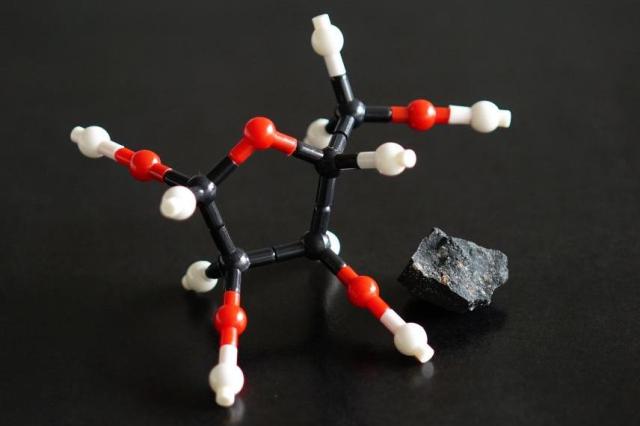
Scientists found three bio-essential sugars, including ribosome, in samples from a pair of meteorites. Photo by Yoshihiro Furukawa

By Brooks Hays

For the first time, scientists have identified sugars essential to life inside meteorites.

The discovery, described this week in the journal PNAS, supports the theory that a bombardment of meteorites provided ancient Earth with the building blocks required for the origin of life.

An international team of scientists identified a trio of bio-essential sugars, including ribose, arabinose and xylose, inside two carbon-rich meteorites.

“Ribose is an essential sugar for present life as a building block of RNA, which could have both stored information and catalyzed reactions in primitive life on Earth,” researchers wrote in their new paper.

Scientists have previously found other biomolecules in meteorites, including amino acids, which form proteins, and nucleobases, the building blocks of DNA and RNA. But until now, scientists hadn’t been able to find sugars.

“The research provides the first direct evidence of ribose in space and the delivery of the sugar to Earth,” Yoshihiro Furukawa, researcher at Tohoku University in Japan, said in news release. “The extraterrestrial sugar might have contributed to the formation of RNA on the prebiotic Earth which possibly led to the origin of life.”

To find the sugars, scientists used gas chromatography mass spectrometry to analyze the chemical components of powdered meteorite samples. The method identifies molecules by measuring their mass and electric charge.

The research team used isotopic analysis to confirm the sugar’s interplanetary origins. Their tests showed a higher concentration of carbon 13 in the sugars. Carbon 13 is a heavier carbon isotope that is less abundant in terrestrial samples.

While planetary scientists continue to search for signs of life on other planets, researchers are still trying to figure out how biology — or the first living organisms — emerged from non-biological chemical processes here on Earth.

While some scientists theorize that RNA and DNA evolved together, or emerged simultaneously, others estimate that RNA came first and evolved DNA. RNA can catalyze chemical reactions, as well as make copies of itself, something DNA can’t do. Some research suggests metabolism preceded both RNA and DNA.

The latest discovery supports the theory that RNA was the initial conductor of life’s assembly.

“The sugar in DNA, 2-deoxyribose, was not detected in any of the meteorites analyzed in this study,” said study co-author Danny Glavin, researcher at NASA’s Goddard Space Flight Center. “This is important since there could have been a delivery bias of extraterrestrial ribose to the early Earth which is consistent with the hypothesis that RNA evolved first.”

Scientists hope to gain additional insights into life’s origins as they probe other meteorite samples for evidence of sugar’s abundance.

https://www.upi.com/Science_News/2019/11/19/Sugars-essential-to-life-detected-in-meteorites-a-first/4421574186445/?sl=1

Ayahuasca compound changes brainwaves to vivid ‘waking-dream’ state

Scientists have peered inside the brain to show how taking DMT affects human consciousness by significantly altering the brain’s electrical activity.

DMT (or dimethyltryptamine) is one of the main psychoactive constituents in ayahuasca, the psychedelic brew traditionally made from vines and leaves of the Amazon rainforest. The drink is typically prepared as part of a shamanic ceremony and associated with unusual and vivid visions or hallucinations.

The latest study is the first to show how the potent psychedelic changes our waking brain waves – with researchers comparing its powerful effects to ‘dreaming while awake’.

The work, led by researchers from the Centre for Psychedelic Research at Imperial College London and published today in the journal Scientific Reports, may help to explain why people taking DMT and ayahuasca experience intense visual imagery and immersive ‘waking-dream’ like experiences.

DMT is a naturally occurring chemical found in miniscule amounts in the human brain but also in larger amounts in a number of plant species around the world.

Accounts from people who have taken DMT report intense visual hallucinations often accompanied by strong emotional experiences and even ‘breakthroughs’ into what users describe as an alternate reality or dimension.

But scientists are interested in using the powerful psychoactive compound for research as it produces relatively short but intense psychedelic experiences, providing a window for collecting data on brain activity when consciousness is profoundly altered.

In the latest study, the Imperial team captured EEG measures from healthy participants in a clinical setting, in a placebo-controlled design.

A total of 13 participants were given an intravenous infusion of DMT at the National Institute for Health Research (NIHR) Imperial Clinical Research Facility.

Volunteers were fitted with caps with electrodes to measure the brain’s electrical activity, before, during and after their infusion, with the peak of the psychedelic experience lasting around 10 minutes.

Analysis revealed that DMT significantly altered electrical activity in the brain, characterised by a marked drop off in alpha waves – the human brain’s dominant electrical rhythm when we are awake. They also found a short-lived increase in brainwaves typically associated with dreaming, namely, theta waves.

In addition to changes in the types of brainwaves, they also found that, overall, brain activity became more chaotic and less predictable – the opposite to what is seen in states of reduced consciousness, such as in deep sleep or under general anaesthesia.

“The changes in brain activity that accompany DMT are slightly different from what we see with other psychedelics, such as psilocybin or LSD, where we see mainly only reductions in brainwaves,” said lead author Christopher Timmermann, from the Centre for Psychedelic Research.

“Here we saw an emergent rhythm that was present during the most intense part of the experience, suggesting an emerging order amidst the otherwise chaotic patterns of brain activity. From the altered brainwaves and participants’ reports, it’s clear these people are completely immersed in their experience – it’s like daydreaming only far more vivid and immersive, it’s like dreaming but with your eyes open.”

Mr Timmermann explains that while it’s unclear as to whether DMT may have any clinical potential at this stage, the group hopes to take the work further by delivering a continuous infusion of DMT to extend the window of the psychedelic experience and collect more data.

The team says future studies could include more sophisticated measurements of brain activity, such as fMRI, to show which regions and networks of the brain are affected by DMT. They believe the visual cortex, the large area towards the back of the brain, is likely to be involved.

Dr Robin Carhart-Harris, head of Centre for Psychedelic Research, said: “DMT is a particularly intriguing psychedelic. The visual vividness and depth of immersion produced by high-doses of the substance seems to be on a scale above what is reported with more widely studied psychedelics such as psilocybin or ‘magic mushrooms’.

“It’s hard to capture and communicate what it is like for people experiencing DMT but likening it to dreaming while awake or a near-death experience is useful.

“Our sense it that research with DMT may yield important insights into the relationship between brain activity and consciousness, and this small study is a first step along that road.”

https://www.eurekalert.org/pub_releases/2019-11/icl-acc111819.php

Intermittent fasting helps promote cardiac health

Routine fasting may reduce the risk of heart failure and death in patients who have cardiac catheterization, a new study suggests.

It included more than 2,000 patients who had cardiac catheterization between 2013 and 2015. They were followed for 4.5 years afterward.

Those who fasted regularly had a higher survival rate during follow-up than those who did not, according to researchers at Intermountain Healthcare Heart Institute in Salt Lake City, Utah. Fasting was a strong predictor of survival and lower risk of heart failure even after lifestyle behaviors, medications, heart risk factors and other health problems were taken into account.

“It’s another example of how we’re finding that regularly fasting can lead to better health outcomes and longer lives,” principal investigator Benjamin Horne said in an institute news release. Horne is the institute’s director of cardiovascular and genetic epidemiology.

Intermittent fasting is a diet method where one skips food or limits calories for up to 24 hours, or limits the time spent eating during the day, such as from 7 a.m. to 3 p.m.

While the study only found an association and does not prove fasting improves survival, the researchers said the findings do suggest that routinely not eating and drinking for short periods may have an effect and warrant further study.

They noted that fasting affects a person’s red blood cell count, as well as levels of hemoglobin and human growth hormone. It also lowers sodium and bicarbonate levels, and activates metabolic processes that contribute to better heart health, they said.

“With the lower heart failure risk that we found, which is consistent with prior mechanistic studies, this study suggests that routine fasting at a low frequency over two-thirds of the life span is activating the same biological mechanisms that fasting diets are proposed to rapidly activate,” Horne said.

Routine fasting over a period of years conditions the body to activate its benefits quicker than usual, the researchers said.

They pointed out, however, that fasting is not for everyone. Women who are pregnant or breastfeeding should not fast, nor should young children or frail older adults.

Fasting is also not an option for organ transplant recipients, people with a suppressed immune system, those with chronic diseases and those with eating disorders.

Those who take medications for diabetes, blood pressure or heart disease should only fast under a doctor’s supervision, the researchers added.

The findings were presented Saturday at the American Heart Association’s annual meeting, in Philadelphia. Research presented at meetings is typically considered preliminary until published in a peer-reviewed journal.

https://consumer.healthday.com/cardiovascular-health-information-20/misc-stroke-related-heart-news-360/fasting-diet-could-benefit-heart-health-study-752187.html

Artist designs phoenix sculpture from donated keys of homes destroyed in the Paradise Camp Fire


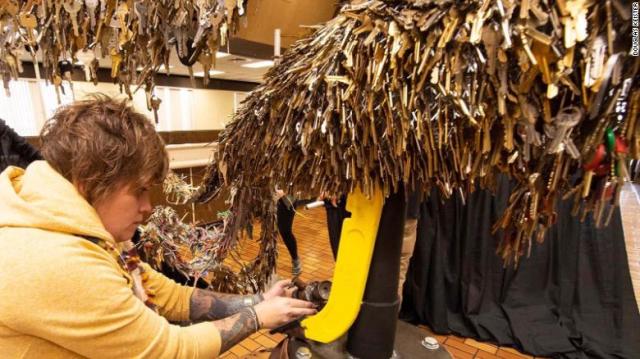
Jessie Mercer created a phoenix sculpture made out of thousands of keys to places that were lost in Paradise, California’s Camp Fire.

By Alaa Elassar

A woman from Paradise, California has created a phoenix sculpture from thousands of donated keys to places destroyed in California’s deadliest wildfire last November.

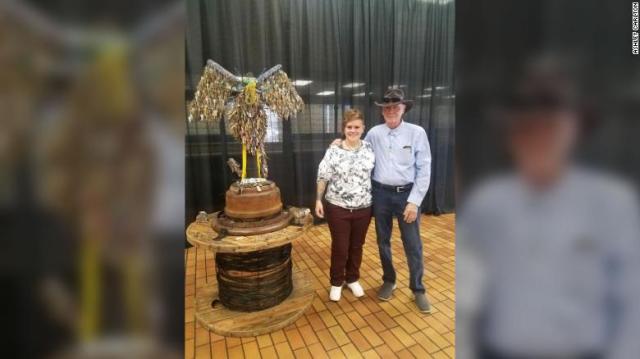
Jessie Mercer, a 34-year-old art therapist and trauma counselor, designed the 800-pound depiction of the mythological bird that rises from ashes. The sculpture holds more than 18,000 keys to homes, churches, schools, businesses and cars, including some that belonged to people who died in the Camp Fire.

The blaze killed 85 people and burned more than 153,000 acres.

When Mercer’s father fled the fire to her apartment in Chico, just 10 minutes outside of Paradise, she saw him pull out the keys to his house.

“In that moment, I kind of realized that he wasn’t alone and thousands of my neighbors were doing that same exact thing,” Mercer told CNN. “Everyone was like, “Wow, I have keys to my shop, my house, my car. And it’s all gone.’ ”

The artist, who was born in Wyoming and moved to Paradise at 15, thought to collect the keys two days after the fire turned Paradise into a pile of ashes.

“I needed to make something to put us back together, and the keys were the only thing we still had in common since we lost everything else.”

Putting the pieces back together

After recovering from severe neurological issues that left her bedridden and suffering from seizures when she was 31, Mercer discovered her love for art. She and her father, a goldsmith, began sharing an art studio, which also burned in the fire.

With her father’s encouragement, Mercer put out a Facebook post asking people to mail her their keys, drop them off at a location, or meet up and give them to her in person.

“I just told people, you don’t have to carry around this totem of sorrow that makes you sad every time you look at it,” Mercer said. “Let me transform it into something comforting.”

And just three days after the fire, she received her first key.

Mercer decided to get on YouTube and teach herself how to weld. After collecting enough metal and keys — and without drawing a sketch or making a plan — Mercer simply “followed her heart” and designed the phoenix.


Jessie Mercer created a phoenix sculpture made out of thousands of keys to places that were lost in Paradise, California’s Camp Fire.

For a year, Mercer spent hours in a small room in her apartment, building the mythical fire bird to help her community heal.

After driving back and forth for 19,000 miles, picking up metals, meeting other victims of the Camp Fire, and collecting keys dropped off at 13 locations across five towns including Paradise, Mercer’s project was finally complete.

Unveiling the art

Exactly one year after the fire devoured the town in a matter of hours, Mercer unveiled her Phoenix Key Project on Friday during a commemoration ceremony at Paradise’s Butte Resiliency Center to a crowd of thousands.

The resiliency and resource center will be transformed into a place designated for the healing and growth of Paradise and its community. There, residents can “get their home plans checked, their surveys done, and rebuild questions answered,” Mercer said.

The sculpture will be displayed at the center. And in honor of her gift to the city, Mercer was presented a key to the town of Paradise.


Jessie Mercer and her father, Tommie Mercer, pose next to Jessie’s phoenix sculpture after the unveiling ceremony.

“It’s the first ever time they’ve ever given the key to anyone,” Mercer told CNN. “It’s so cool. I don’t care about anything else. I have the key to Paradise.”

While Mercer’s idea was to unite the community through her art, she ended up bringing people together back in Paradise.

“It was powerful to know that I bought people back home, even for a day. I was so proud of them for coming. The streets were full, the parking lots. It was thousands of people and the crowds were roaring.”

A year of ‘indescribable emotions’

Mercer said that taking a year to meet other victims of the fire and build the phoenix helped her process her emotions and sense of loss.

“I lost my town, too,” she said. “It was being a part of something, but also being a vessel that created it. We did this, not just me.”

While channeling her pain through art in hopes of finding a way to “balance the pain and anger” that her community was feeling after the tragic annihilation of their town, Mercer said it wasn’t easy.

She called it the hardest year of her life. A year she will never forget.

“Meeting people meant hearing every story,” Mercer told CNN.

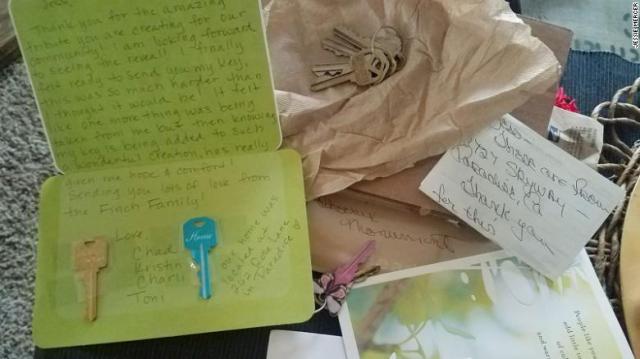
“Getting letters in the mail meant reading their stories. All of them were testaments: ‘Here’s the key to my life. Here’s the key to where I had Thanksgiving for 32 years.’ There’s a gravity to knowing that everything you’re holding is so full of memories and legacies and heartbreak.”


A few of the letters Mercer received from people mailing in their keys.

Mercer became close to many of the donors. She recalls pastors crying while they handed over keys to their churches. One teacher gave her the key to the classroom where she taught for 40 years.

A young girl sent her a key to her diary and told Mercer “to keep her secrets safe.”

“When I got all these keys, when I put them on, I didn’t care about who was who,” Mercer said. “There was no color, there was no age, there was no creed. It was just so transcending to bring people together and take them out of all their stereotypes.”

https://www.cnn.com/2019/11/11/us/camp-fire-phoenix-keys-paradise-trnd/index.html?utm_source=The+Good+Stuff&utm_campaign=2aa589d67e-EMAIL_CAMPAIGN_2019_11_14_08_33&utm_medium=email&utm_term=0_4cbecb3309-2aa589d67e-103653961

Humans placed in suspended animation for the first time

Doctors have placed humans in suspended animation for the first time, as part of a trial in the US that aims to make it possible to fix traumatic injuries that would otherwise cause death.

Samuel Tisherman, at the University of Maryland School of Medicine, told New Scientist that his team of medics had placed at least one patient in suspended animation, calling it “a little surreal” when they first did it. He wouldn’t reveal how many people had survived as a result.

The technique, officially called emergency preservation and resuscitation (EPR), is being carried out on people who arrive at the University of Maryland Medical Centre in Baltimore with an acute trauma – such as a gunshot or stab wound – and have had a cardiac arrest. Their heart will have stopped beating and they will have lost more than half their blood. There are only minutes to operate, with a less than 5 per cent chance that they would normally survive.

EPR involves rapidly cooling a person to around 10 to 15°C by replacing all of their blood with ice-cold saline. The patient’s brain activity almost completely stops. They are then disconnected from the cooling system and their body – which would otherwise be classified as dead – is moved to the operating theatre.

A surgical team then has 2 hours to fix the person’s injuries before they are warmed up and their heart restarted. Tisherman says he hopes to be able to announce the full results of the trial by the end of 2020.

At normal body temperature – about 37°C – our cells need a constant supply of oxygen to produce energy. When our heart stops beating, blood no longer carries oxygen to cells. Without oxygen, our brain can only survive for about 5 minutes before irreversible damage occurs. However, lowering the temperature of the body and brain slows or stops all the chemical reactions in our cells, which need less oxygen as a consequence.

Tisherman’s plan for the trial was that 10 people who receive EPR will be compared with 10 people who would have been eligible for the treatment but for the fact that the correct team wasn’t in the hospital at the time of admittance.

The trial was given the go-ahead by the US Food and Drug Administration. The FDA made it exempt from needing patient consent as the participants’ injuries are likely to be fatal and there is no alternative treatment. The team had discussions with the local community and placed ads in newspapers describing the trial, pointing people to a website where they can opt out.

Tisherman’s interest in trauma research was ignited by an early incident in his career in which a young man was stabbed in the heart after an altercation over bowling shoes. “He was a healthy young man just minutes before, then suddenly he was dead. We could have saved him if we’d had enough time,” he says. This led him to start investigating ways in which cooling might allow surgeons more time to do their job.

Animal studies showed that pigs with acute trauma could be cooled for 3 hours, stitched up and resuscitated. “We felt it was time to take it to our patients,” says Tisherman. “Now we are doing it and we are learning a lot as we move forward with the trial. Once we can prove it works here, we can expand the utility of this technique to help patients survive that otherwise would not.”

“I want to make clear that we’re not trying to send people off to Saturn,” he says. “We’re trying to buy ourselves more time to save lives.”

In fact, how long you can extend the time in which someone is in suspended animation isn’t clear. When a person’s cells are warmed up, they can experience reperfusion injuries, in which a series of chemical reactions damage the cell – and the longer they are without oxygen, the more damage occurs.

It may be possible to give people a cocktail of drugs to help minimise these injuries and extend the time in which they are suspended, says Tisherman, “but we haven’t identified all the causes of reperfusion injuries yet”.

Tisherman described the team’s progress on Monday at a symposium at the New York Academy of Sciences. Ariane Lewis, director of the division of neuro-critical care at NYU Langone Health, said she thought it was important work, but that it was just first steps. “We have to see whether it works and then we can start to think about how and where we can use it.”

Read more: https://www.newscientist.com/article/2224004-exclusive-humans-placed-in-suspended-animation-for-the-first-time/#ixzz65qFgVd3X

Open Source Code Will Survive the Apocalypse in an Arctic Cave

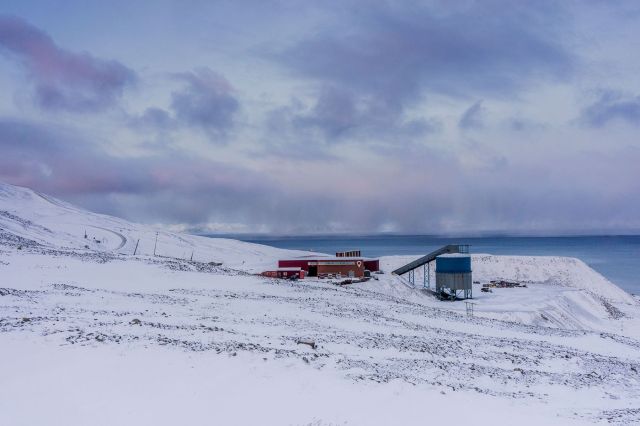
The last stop for civilization before the North Pole is Svalbard, an archipelago north of mainland Norway along the 80th parallel. Most of Svalbard’s old Norwegian and Russian coal mines have shut down, so locals have rebranded their vast acres of permafrost as an attraction to scientists, doomsday preppers, and scientist doomsday preppers. Around Svalbard, things can be hidden from the stresses of the outside world. There’s a treaty in place to keep it neutral in times of war. In other words, it’s an ideal spot for a big global reset button or two.

Pride of place belongs to the Svalbard Global Seed Vault, where seeds for a wide range of plants, including the crops most valuable to humans, are preserved in case of some famine-inducing pandemic or nuclear apocalypse. The seed vault looks like something out of a movie, its entrance a triangular obelisk jutting high out of a blinding white expanse. It sparkles with glowing green lights.

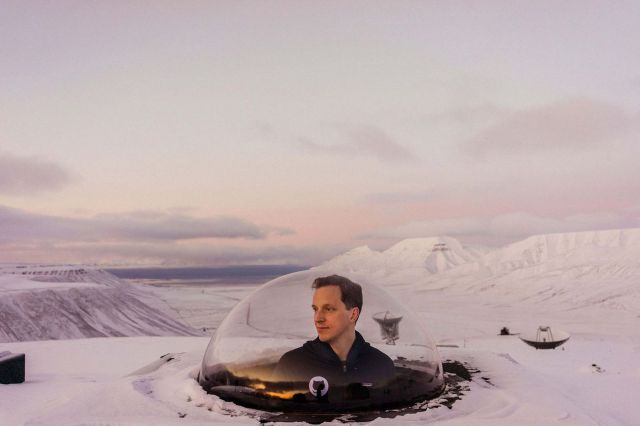
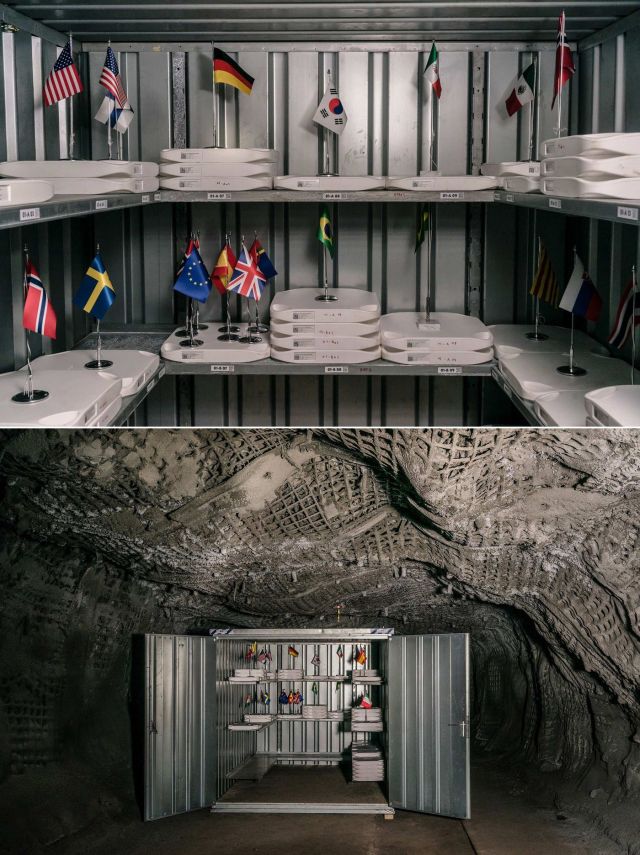
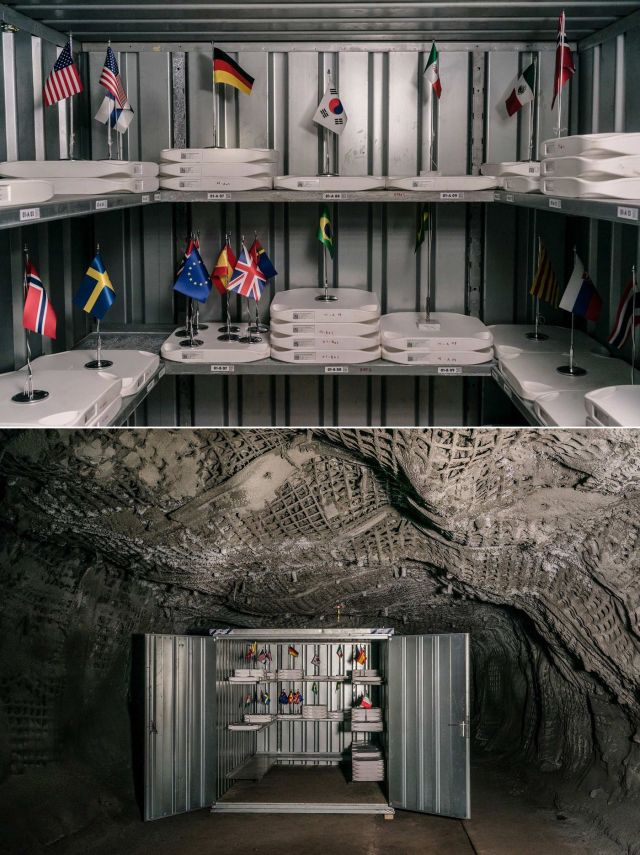
Nat Friedman, however, hasn’t come for the beat-the-apocalypse aesthetics. On Oct. 24, the tall, thin, 42-year-old chief executive officer of GitHub Inc., Microsoft’s world-leading code bank, hops in a van and drives about 15 minutes from his hotel to an abandoned coal mine, where he puts on a miner’s helmet and headlamp. Deep inside one of the mine’s frigid, eerily quiet arteries, Friedman comes to what looks like a metal tool shed. “It’s more mine-y and rustic and raw-hole-in-the-rock than I thought it would be,” he says.

This is the Arctic World Archive, the seed vault’s much less sexy cousin. Friedman unlocks the container door with a simple door key and, inside, deposits much of the world’s open source software code. Servers and flash drives aren’t durable enough for this purpose, so the data is encoded on what look like old-school movie reels, each weighing a few pounds and stored in a white plastic container about the size of a pizza box. It’s basically microfilm. With the help of a magnifying glass, you—or, say, a band of End Times survivors—can see the data, be it pictures, text, or lines of code. A Norwegian company called Piql AS makes the specialized rolls of super-durable film, coated with iron oxide powder for added Armageddon-resistance. Piql says the material should hold up for 750 years in normal conditions, and perhaps 2,000 years in a cold, dry, low-oxygen cave.

Friedman places his reel on one of the archive’s shelves, alongside a couple dozen that include Vatican archives, Brazilian land registry records, loads of Italian movies, and the recipe for a certain burger chain’s special sauce. GitHub, which Microsoft bought last year for $7.5 billion, plans to become by far the biggest tenant. Eventually, Friedman says, GitHub will leave 200 platters, each carrying 120 gigabytes of open source software code, in the vault. The first reel included the Linux and Android operating systems, plus 6,000 other important open source applications.

Yes, this may seem like a stunt, headlamps and all. If the world is ravaged to the point where Svalbard is the last repository of usable wheat and corn seeds, the source code for YouTube will probably rank pretty low on humankind’s hierarchy of needs. Yet to Friedman, it’s a natural next step. Open source software, in his view, is one of the great achievements of our species, up there with the masterpieces of literature and fine art. It has become the foundation of the modern world—not just the internet and smartphones, but satellites, medical devices, scientific tools, robots.

The basic idea of open source is that you write code and share it, giving anyone else a chance to see what you’ve done, and, if they like, to take the code and change it and make their own thing. Over time this vast and expanding body of work is repurposed and improved upon and used to make innumerable software applications. GitHub is where much of the world’s open source software gets developed. About 40 million people, many of them volunteers, refine the projects, log bugs that need fixing, scan for security holes, and track changes. Think of it as a gigantic, meticulously cataloged library of tools that anyone can use.

Open source is the dominant procedure for software development, though it took a revolution to get there. In the 1990s, at the height of the Microsoft Windows empire, Bill Gates’s subordinates described the code-sharing model as “a cancer,” a threat to everything that patent-loving capitalists should hold dear. “If you told someone 20 years ago that in 2020, all of human civilization will depend on and run on open source code written for free by volunteers in countries all around the world who don’t know each other, and it’ll just be downloaded and put into almost every product, I think people would say, ‘That’s crazy, that’s never going to happen. Software is written by big, professional companies,’ ” Friedman says in the vault, which he describes more as a time capsule than a critical insurance policy. “It’s sort of a magical moment. Having a historical record of this will, I think, be valuable to future generations.”

To many in the software trade, the craziest and most magical thing here is a Microsoft executive extolling the importance of open source. The rise of open source has indeed been huge, epochal even. And, like many significant inventions—nuclear power, antibiotics—open source carries risks. Some pretty weird ones, it turns out.

Programmers freely swapped code long before Linus Torvalds wrote the core of the Linux OS at the University of Helsinki in the early 1990s, but his creation was a standard-bearer for what became known as “the free and open source software movement.” Microsoft was making obscene amounts of money through Windows and Office, and closely guarded the source code of these products. As the U.S. Department of Justice began trying to reckon with Microsoft’s influence over innovation and competition, DIY hacker types such as Torvalds argued that the very idea of patented proprietary software stood in opposition to free speech, free access to public goods and knowledge, and progress itself. (This was less radical than it might sound; U.S. law didn’t recognize software as intellectual property until the late ’70s.)

These idealists injected a dose of counterculture spirit into the debate over how much control a few large companies ought to have around technological advances. Linux became the most prominent alternative to Windows, and other coders created a free package of open source Office alternatives called, of course, OpenOffice. Both products struggled to find a mainstream audience, partly because the developers were sometimes more focused on the source code’s purity than on its usability. Yet they gained valuable experience building development tools that made it easier to collaborate and widely distribute software. They could simply put their code online and let word of mouth and network effects do most of the rest. It took a long time—with lots of bitter fights and lawsuits along the way—but eventually, open source became the rule rather than the exception.

Google led the corporate charge in the early 2000s. Instead of buying expensive operating systems, Google ran Linux on the servers in its data centers. Then, it took open source databases and file systems and wrote its own open source applications to fill in the gaps. This reliance on free software made it easier for Google to afford to give away services such as search, email, maps, and others. Facebook, Uber, Netflix, and many others would do the same. Today, open source is the engine of most major computing advances. Amazon.com Inc.’s massive cloud networks rely on Linux and many other free apps to function, which means that the tens of thousands of businesses that buy computing power from Amazon’s data centers are living the open source lifestyle, too. Google has placed Android, a variant of Linux, on more than 1 billion smartphones.

Thousands of people have contributed to Linux’s position at the heart of everything from TVs to cars, but Torvalds, now 49 and living in Oregon, remainsfirst among equals. In addition to writing the core Linux code that undergirds the internet and smartphones, Torvalds wrote a program called Git over a weekend in 2005 to help him manage the development of Linux. Some open source coders took Git and turned it into GitHub.

Torvalds draws a healthy salary from the Linux Foundation, a nonprofit funded by companies such as Google, IBM, Huawei Technologies, Tencent Holdings, and Intel to further develop the operating system. His total annual compensation of about $1.8 million is more than enough for him to buy a nice house in Portland and do as he pleases, which mostly means sitting at home coding. But if he’d been more interested in financial rewards and the daily grind, the guy might well have Bill Gates money. On paper, the company that’s made the most money from Linux is Red Hat Inc., which has created a custom version of the operating system and charges client businesses to keep it updated and secure. IBM acquired Red Hat for $34 billion earlier this year in the biggest-ever software deal. GitHub users can also opt to sponsor coders or projects that interest them, à la Kickstarter or other crowdfunding sites. Often, though, open source coders don’t get paid what they’re worth, and their status as hobbyists complicates the corporate world’s reliance on their work.

About this time last year a 48-year-old software developer in Sweden named Daniel Stenberg received a panicked call one evening from a large German automaker. The car company, which Stenberg declines to name, asked that he fly to Germany immediately because an application Stenberg had written was causing the entertainment system software in 7 million cars to crash. “I had to inform them that, you know, this is a spare-time project for me and that I have a full-time job and can’t just go to Germany for them,” Stenberg says. “They started out pretty demanding, but then switched when they realized the situation they were in.”

This is fairly typical for Stenberg, who since 1998 has been refining a widely used open source tool known as curl. Over the years, curl has found its way into the electronics of almost every new car, as well as software written by the likes of Apple, Instagram, YouTube, and Spotify Technology. On any given day, more than 1 billion people will unknowingly use curl, which helps transfer data between internet-based services. Developers from major companies and startups alike have grabbed curl off GitHub and elsewhere and inserted it into their products in ways that Stenberg could never have field-tested himself, and they’re not shy to send him messages at all hours demanding that he fix bugs promptly.

“Most of the days … I tear my hair when fixing bugs, or I try to rephrase my emails to [not] sound old and bitter (even though I can very well be that) when I once again try to explain things to users who can be extremely unfriendly and whining,” Stenberg writes on his website. “I spend late evenings on curl when my wife and kids are asleep. I escape my family and rob them of my company to improve curl … alone in the dark (mostly) with my text editor and debugger.”

In similar fashion, thousands of labors of love have found their way into software running everything from cash registers to trains. Software tools like GitHub have made this process easier with each passing year. Rather than rewriting every piece of an app from scratch, a developer just searches the vast library of open source code to grab what already exists. The end result is a complex system of interdependencies on thousands of freely available tools and apps. If one of the volunteers responsible for maintaining and improving those tools and apps decides he’s had enough, entire swaths of the internet and our infrastructure can cease to function until someone else steps in with a fix. “It’s a bit crazy,” Stenberg says. “Open source is a huge part of everything now, and I think it’s still growing.”

This isn’t quite the future the hippies wanted. In the beginning, free software zealots were trying to democratize technology, not create a way for powerful corporations to get more power. They wanted to ensure the best computing tools and data wouldn’t be centralized and metered out by corporations. They wanted people to have the freedom to explore technology and ideas away from the watchful eyes of an overlord.

Yeah, well, oops. Google, Facebook, Amazon, and many others have used open source code to create grand, global advertising networks that track and analyze billions of people’s every move, online and off. By comparison, ideological wars about bundling Excel and Internet Explorer with Windows 95 seem downright quaint. “If you don’t have control over the technology that runs your life, the devices and services that run your life, then your life will be run by other people using the computers,” says Eben Moglen, a law professor at Columbia who’s spent decades at the fore of the free software movement. “We made good stuff, and it was turned into ammunition against our dreams.”

Moglen says he appreciates the leveling effect that GitHub can have—it’s one of the best places for a talented 16-year-old programmer in Cambodia or Nigeria to show off her skills and alter the economic course of her life. Still, Moglen is counting on young people to form the core of a greater backlash against big tech companies’ privacy grabs. He’s pitching a hardware-software package called the FreedomBox, which costs about $90. It’s a small computer that uses open source software to replicate many of the common internet services (search, messaging, file-sharing) away from the prying eyes of the tech giants.

Other open source veterans argue that the revolution was worth it. Small teams of scientists can now punch well above their weight thanks to GitHub shortcuts. Cancer researchers, to cite one of many, many examples, frequently borrow from Google’s open source machine-learning work in their hunt for better ways to screen for tumors. “I don’t know who is religious about open source anymore,” says Dave Rosenberg, a veteran software executive and investor. “I don’t think you can achieve the stuff we want without it.”

Friedman, who spent 20 years starting open source companies and working on similar projects at large software makers before Microsoft put him in charge of GitHub, has the future of open source very much on his mind a couple days before the Svalbard trip, in Oxford, England. No true prepper is content with only one backup plan: The Arctic cave is just the first of what GitHub plans to be many repositories of code scattered around the world, holding almost all the code in its data banks rather than just the favorites. At one stop, Friedman climbs a few flights of creaky stairs to visit the head of the Bodleian Library, which keeps 12 million items in its glorious medieval towers. Would Oxford also store some code for safekeeping? As it turns out, sure, they’re game. Torvalds and Shakespeare, together forever.

In the spirit of the Svalbard cave, Friedman’s immediate mission is to tame the existential risks facing open source software. During our time together, he recounts story after story of large companies that have no idea how much open source software they depend on, who wrote it, how old it is, or what security holes might exist in it. He’s hoping that Semmle Ltd., a security research company GitHub recently acquired, can help close those gaps. GitHub is also refining the parts of its user interface that show a business what code it’s using, where that code is from, and when it needs updating. Yet another important step will be the creation of a more formal system for uniting big companies to subsidize volunteer efforts like curl, he says. There should be an easy way that Apple, Spotify, and the unnamed large German automaker can split the cost of a meaningful full-time wage for Stenberg with a few clicks.

“We would be successful if we could create a new middle class of open source developers,” Friedman says. “If you do this right, you create more innovation.”

GitHub’s most existential mission feels more urgent a few hours after we leave the Svalbard code cave. Fires have broken out around Friedman’s family home in Sonoma, Calif., and his wife calls to say that she and their 3-year-old daughter are evacuating. Friedman tells his wife to turn on their Tesla’s Bioweapon Defense Mode, which filters the outside air in extreme fashion. By the time dinner rolls around, he knows his house has been reduced to mostly ash. A photo of his front door archway—all that’s left standing amid the smoking rubble—soon becomes the image most media outlets choose for their coverage. With much of California burning or blacked out, an Arctic reset button starts to make a lot more sense. As Friedman has said several times by now on our trip, “I think the world is fundamentally weirder than it was 20 years ago.”

https://www.bloomberg.com/businessweek