Ancient cave art may depict the world’s oldest hunting scene


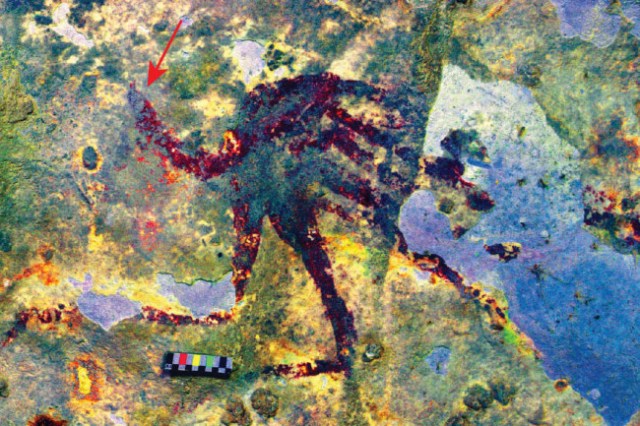
On the walls of a cave in southern Sulawesi, a humanoid figure about five inches wide hovers over the head of a warty pig, its arms connected to a long, spindly object. This figure, interpreted as a hunter in a 44,000-year-old mural, appears to have a stubby tail.

BY MICHAEL GRESHKO

AN INDONESIAN SPELUNKER named Hamrullah was exploring the grounds of a concrete plant on the island of Sulawesi in 2017 when he spotted the unassuming hole in the limestone high above his head. Without a second thought, he shimmied up the rock and tucked himself into the mouth of a small cave, where he clambered through the tunnel’s cool, musty air. He hit the back wall and saw a mural spread out across eight feet of flaking rock, so he pulled out his phone and began snapping pictures.

The painting, described today in the journal Nature, depicts two pigs and four small-bodied relatives of water buffalo, as well as what appear to be eight humanoid figures that are two to four inches tall. Some of the human figures are holding long, spindly objects pointed toward the animals that might be ropes or spears.


The rock art panel extends some eight feet across the back wall of Leang Bulu’ Sipong 4, one of the many caves in Sulawesi’s Maros-Pangkep region.
IMAGE BY ADAM BRUMM

Whether the art depicts a hunt or some other event, it’s likely the oldest known story told through pictures, the researchers say. The mural dates back at least 44,000 years, which makes it about twice as old as most similar cave-art scenes in Europe, such as a 19,000-year-old French mural of a bison charging a bird-headed man. The discovery adds to a growing body of ancient art known in Southeast Asia that changes some long-standing ideas about when and where humans started showing our defining cognitive traits.

“When you do an archaeological excavation, you usually find what people left behind, their trash. But when you look at rock art, it’s not rubbish—it seems like a message, we can feel a connection to it,” says lead study author Maxime Aubert, an archaeologist and geochemist at Australia’s Griffith University.

“Now we’re starting to date it, not just in Europe but in Southeast Asia, and we see that it completely changes the picture of our human journey.”

Finding the time

The mural is the latest major artistic work found in the caves of Sulawesi’s Maros-Pangkep region. Millions of years ago, underground rivers had cut through the limestone here to form a maze of caverns, many of which contain hand stencils and other paintings made by the humans who called the island home tens of thousands of years ago.

Since the 1950s, scholars have documented more than 240 cave art sites on Sulawesi, but for decades, these paintings were assumed to be no older than about 12,000 years. That started to change in 2014, when a team including Aubert and Brumm began finding cave paintings in Indonesia that were at least 40,000 years old, making them at least as old as Europe’s famed cave-art sites, if not older.

“Europe was once thought of as a ‘finishing school’ for humanity, because France in particular was the subject of intense research early on … so for a long time the European rock art record really set the tone for what we expected to see,” University of Victoria archaeologist April Nowell, who wasn’t involved with the research, says in an email. “We have long known this view of Europe as a ‘finishing school’ is no longer tenable, and the richness of the finds from Australia and Indonesia continue to underscore this point.”

The mural is globally significant, says Peter Veth, a University of Western Australia archaeologist who reviewed drafts of the study: “As with the early dates of people voyaging across the sea to Australia and engaging in highly complex art, here we have [Southeast] Asian Indigenes showing human-animal relations before sapiens even got to Europe.”

How do researchers tell the age of a cave painting? One method provides an indirect estimate by revealing when minerals started growing over the finished art. These minerals naturally include trace amounts of radioactive uranium, which decays into thorium at a predictable pace. The older the deposit, the more thorium it’ll have relative to uranium.

For the newfound mural, Aubert and Brumm’s team sampled deposits that grew over parts of the painting and found that the minerals started forming between 35,100 and 43,900 years ago. Since it’s possible that the mural was made even earlier, the researchers are treating these dates as minimums. And because the team thinks that the mural was done in one fell swoop, they are using the oldest date—43,900 years—as the whole mural’s minimum age.

Aubert is confident these dates will hold. For one, the team sampled minerals that clearly formed over the painting’s pigment layer and so were assuredly younger than the painting. The samples don’t seem to have leached uranium over time, which nixes a possible source of error. It’s also clear that Sulawesi’s ancient residents had developed artistic chops; a nearby excavation led by Brumm found 30,000-year-old “crayons” and pieces of jewelry.

Elisabeth Culley, an archaeologist at Arizona State University who specializes in cave art, agrees that the Sulawesi painting is at least as old as the paintings in France’s Chauvet Cave, which date to between 30,000 and 32,000 years ago. She also agrees that the artwork represents a proper scene.

“I don’t think the interpretation is controversial,” she says. “The figures are oriented toward each other, [and] it’s not simply dynamic—there does seem to be some motion.”

Going abstract

But the new mural has more contentious elements for scientists to ponder. The humanoid figures bear unusual features, including one with a stubby tail and another with a birdlike beak. As part of their paper, Aubert’s team claims that the figures might be the oldest human-animal hybrids ever found in a work of art. The oldest accepted one, a lion-headed male figurine, was carved from mammoth ivory in what’s now Germany 39,000 to 40,000 years ago.

If the painting’s figures do in fact blend the human and the non-human, they suggest that the artist behind them could think abstractly and creatively. It’s even possible that the figures hint at an early spirituality or express shamanic beliefs.

“Maybe early people at that time, to them, they saw themselves as an indivisible part of the animal world,” says study coauthor Adam Brumm, an archaeologist at Griffith University. “This special bond between humans and animals was so strong that culturally and philosophically, they might have seen themselves as part-animal, part-human, for all we know.”

Nowell agrees that the artwork might depict an abstract hunting scene: “Given that some of the human-like figures appear to have a tail or beak suggests that it is not a straightforward hunting scene, that there is some mythological quality to it,” she says. Culley also agrees that the artwork is meant to be abstract, since the painting’s humanoid figures are unrealistically tiny. But precisely because it’s abstract, Culley says, the painting could support many interpretations beyond a hunting scene. Perhaps the putative spears are shamanistic “power lines” meant to show energy moving from one object to another.

Regardless of the specifics, Culley says that the scene’s true importance lies in the artist’s attempt at abstraction—a trait that also pops up in France more than 30,000 years ago.

“There’s huge variation in [the two] cultures, there’s a lot of space dividing these traditions … but they’re also very consistent,” she says. “That, to me, is the real take-home: They’re contemporaneous with a very, very similar tradition, which must have some shared origin.”

Protecting the past

Now that researchers have described the painting, they’re racing to find and document more. Hamrullah, who is a study coauthor, and the team’s other Indonesian members routinely find more as-yet unexplored caves as they survey the region. The team is also trying to chart a future for this mural’s cave site. It’s unclear precisely why, but the newfound art has recently started flaking off the cave wall at an accelerating pace.

The bustle of activity around the site may play a role. While the local government and the concrete plant have agreed to protect the cave, nearby mining explosions still rattle the landscape.

“We don’t know how long it’s still going to be there,” Aubert says.

It’s possible that protections for the area will strengthen. In an email, Hamrullah expressed hope that the cave system could be declared a UNESCO World Heritage site. And even though its future is uncertain, Brumm marvels at what the cave has already told us about our shared past.

“You do have this opportunity to sit in this cave where you’re only the fourth person, or fifth or sixth, to have seen this in tens of thousands of years, as far as we’re aware—and then to be privy to this knowledge, this understanding, to know how ancient this is,” he says. “It’s very hard to describe that feeling. But it’s certainly what keeps you going.”

https://www.nationalgeographic.com/science/2019/12/ancient-cave-art-in-indonesia-may-be-worlds-oldest-hunting-scene/#close

Predators may make prey get smart and grow more brain cells

By Chelsea Whyte

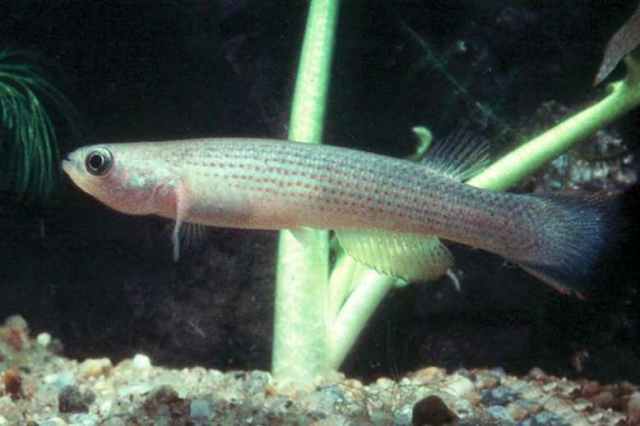
Sometimes stress can be good for a fish. When there are more predators around, killifish in Trinidad grow more brain cells than those that face no predators, and they do so even into adulthood.

“I was surprised to find this because in previous studies, we found that predators inhibit the production of brain cells,” says Kent Dunlap at Trinity College in Connecticut. It seems that killifish swim their own way.

Dunlap and his colleagues examined the brains of a type of wild caught killifish (Rivulus hartii) from three streams on the Caribbean island. In each stream, they gathered about eight adult fish from a location with a high number of predators and about eight from a location with little to no predation. They only used males because previous research on these fish showed that predation affects male but not female brains.

The researchers measured the size of the males’ brains as well as the density of newly grown cells. They found that fish from both spots in each stream had brains similar in size relative to their bodies, but those that had to fight off more predators had nearly double the amount of new brain cells. Dunlap says this may mean that instead of fairly static brains that respond to predators in a timid way, the new brain cells could allow for more responsive behaviour.

To sort out whether this effect is genetic or purely a response to their environment, Dunlap and his team raised fish from each location and then dissected their brains. In the lab, even with an absence of predators, they saw that the increased brain cell growth persisted in fish descended from those that lived in high-predation areas.

“Over evolutionary time, predation has caused the populations to differ genetically, so there’s this intrinsic difference now that’s upheld,” says Dunlap. He adds that this pattern would likely show up in other animals that continue to grow brain cells into adulthood.

“We mammals and birds, once we reach sexual maturation our body and brain don’t grow very much,” he says. “But fish grow throughout their lifetime, as do many other non-birds and non-mammals.”

Journal reference: Royal Society Proceedings B, DOI: 10.1098/rspb.2019.1485

Read more: https://www.newscientist.com/article/2226787-predators-may-make-prey-get-smart-and-grow-more-brain-cells/#ixzz67ovnyDlk

The Unexpected Joy of Repeat Experiences

By Leah Fessler

Scrolling through Instagram can quickly convince you that everyone’s life is more interesting than yours. During a particularly adventurous week on Instagram Stories recently, I saw water skiing in Maui, hiking in Yosemite and swimming with wild pigs in Bermuda. Wild pigs!

Impulsively, I started Googling flights to new places. Then I ordered pho from the same Vietnamese place I eat at every week and … felt bad about not trying somewhere new.

This fear of missing out is rooted in a common psychological tic: Evolutionarily, we’re disposed to find novel experiences more exciting and attention-grabbing than repeat experiences, according to research published in the Journal of Experimental Biology. It’s basically fight or flight psychology — our brains can’t process all the stimuli around us, so we evolved to pay attention to new, flashy and potentially dangerous things more intently than familiar things, which we’ve seen enough to know they’re not dangerous. What’s more, words like “repetition” and “repetitiveness” — unlike “novelty” — tend to be associated with more negative emotions, said Michael Norton, a professor at Harvard Business School.

“Classic research shows that when we think about upcoming experiences, we think about variety,” said Mr. Norton, who specializes in consumer behavior. “If I ask you right now to select a yogurt for each day next week, you’ll pick your favorite flavor — say, blueberry — a few times, but you’ll mix in some strawberry and peach. Because who wants to eat that much blueberry yogurt? Over the longer term, though, as the original experience fades in time and memory, repetition can become more pleasurable.”

He added: “We’re simply more boring than we’d like to admit.”

Our obsession with novelty is also enhanced by the influencer and experience economies, which confer social status based on how many new things you can do, see and buy, as Leah Prinzivalli unpacks in a recent article documenting the rise of Instagram to-do lists. This can be emotionally and financially draining: Few of us have the time or money to regularly indulge new experiences, which can lead us to feel bad about our lives’ monotony. However, recent research published in the Journal of Personality and Social Psychology about repeat and novel experiences suggests we ought to reconsider how we digest those feelings of monotony.

This research centers on hedonic adaptation — when an identical stimulus provides less pleasure the more it’s consumed.

Some previous research has painted a negative picture of repeat experiences, citing that doing the same thing twice can feel inherently less valuable. But Ed O’Brien, a professor of behavioral science at the University of Chicago Booth School of Business, wondered whether behavioral science misconstrued hedonic adaptation, and people actually underestimate how positively they react to repeat experiences. Many of us happily listen to our favorite song on repeat, he noted, or rewatch favorite movies and TV shows. This repetition was the whole point of purchasing music or film before the age of Spotify and Netflix. This conflict is why Mr. O’Brien launched a series of studies on the topic.

“There’s a general belief that if you want to seem like an interesting, cultured person, the best thing you can do is to showcase that you’re open to new experiences,” he said. “That may be true, but I think we take for granted the other value of really digging deep into one domain.”

To test this hypothesis, Mr. O’Brien and his team exposed all participants to the same stimulus once in full (various stimuli were tested, including museum visits, movies and video games). Next, some participants were asked to imagine repeating the experience, while others actually did repeat the experience.

Counter to previous research, Mr. O’Brien found that across the board, repeat experiences were far more enjoyable than participants predicted.

“Doing something once may engender an inflated sense that one has now seen ‘it,’ leaving people naïve to the missed nuances remaining to enjoy,” he wrote in the study.

In other words: You’re far more likely to enjoy something the second time around than you think.

Given that participants experienced the exact situation they imagined repeating, their predictions should’ve been relatively accurate, Mr. O’Brien explains. In reality, participants who repeated experiences found the second time around just as enjoyable as the first.

“Novel experiences are definitely great for enjoyment, and our studies don’t go against this idea,” he said. “In many cases, the novel option is better. But what our studies emphasize is that repeat options also might have high hedonic value and might also come with less costs to acquire than a purely novel option, and people might sometimes overlook this.”

There is joy in repetition partly because every human mind wanders. Consequently, we miss a substantial part of every experience.

“As I’m enjoying a museum or a beer, my mind is also thinking about emails I need to send, phone calls I need to return and the name of my third grade teacher,” Mr. Norton said. “So repeating things can really be seen as another opportunity to actually experience something fully.”

This is especially true when the experience is complex, leaving ample room for continued discovery.

“When an experience has many layers of information to unveil, it’s probably a good bet to repeat it,” Mr. O’Brien said. “The rub is that it’s hard to tell which experiences will be like this, and our studies show that people are too quick to assume that they’ve ‘seen all the layers’ even in those cases where they haven’t.”

In fact, it’s safe to assume there are more explorable layers in any experience, according to Ellen Langer, a professor of psychology at Harvard and the so-called “Mother of Mindfulness.” That’s because the process of looking for new insights in any repeat experience is fulfilling in and of itself. It’s the essence of mindfulness.

“When you’re noticing new things in any experience, neurons are firing, and that’s the way to become engaged,” Ms. Langer said. “Many people look to be engaged, because they’re bored with life and they don’t know what to do. All you need to do is approach whatever task is at hand by searching for the things that you didn’t see in the first time around.”

If you’re unsure how to be more mindful in repeat experiences, Ms. Langer offers three tips.

“First, recognize that everything is always changing, so the second experience is never exactly the same as the first experience,” she said. “Second, if you’re looking for novelty, that’s itself engaging, and that engagement feels good.” And third, you must realize that events are neither positive nor negative. “It’s the way we understand events that makes them positive or negative,” she said. “So that if we look for ways the experience is rewarding, exciting, interesting, we’re going to find evidence for that. Seek and ye shall find.”

Beyond helping us feel excited at the prospect of staying home and strolling around your neighborhood this winter rather than jet-setting to a tropical beach, Mr. O’Brien’s research suggests we should think twice about our cultural obsession with doing and accomplishing as much as humanly possible.

“Coffee will never taste as good as it does if you quit it for a month. So it’s true that novelty is fun, but given enough of a break in between, repeat experiences regain that initial buzz,” Mr. Norton said. “This is why people do seemingly crazy things, like creating time capsules. If you looked at your third-grade report card every day, you’d get sick of it — but if you bury it in a time capsule and unearth it 20 years later, that’s fascinating.”

Lost Ethiopan town from an ancient empire that rivalled Rome

Archaeologists have uncovered an ancient buried town in Ethiopia that was inhabited for 1400 years. The town was part of a powerful civilisation called Aksum that dominated East Africa for centuries and traded with other great powers like the Roman Empire.

“This is one of the most important ancient civilisations, but people [in the Western world] don’t know it,” says Michael Harrower of Johns Hopkins University in Baltimore, Maryland. “Outside of Egypt and Sudan, it’s the earliest complex society or major civilisation in Africa.”

The Empire of Aksum dominated East Africa and parts of Arabia from about 80 BC to AD 825. It was one of the leading powers of the time, alongside Rome, Persia and China. Its capital, also called Aksum, still exists and has many tall, stone obelisks.

Nobody knows how the Aksum civilisation developed. It was preceded by a “pre-Aksumite” society, the name of which is unknown. This earlier civilisation may have been based around Yeha in northern Ethiopia, which has the oldest writing and standing architecture in sub-Saharan Africa. For this reason, Harrower and his colleagues have surveyed the surrounding area.

A vanished town
After discussions with local people, the team began excavating a hill near a village. The researchers found a grid of stone walls: the remains of buildings.

“That’s what’s great about Ethiopia,” says Harrower. “In Greece and Rome, a lot of places have been explored and studied, so there’s not a lot of discoveries of major ancient towns any more.”

The researchers called the town Beta Samati, which means “house of audience” in the local Tigrinya language.

The find is “highly significant”, says Jacke Phillips at SOAS University of London. “Most of our known Aksumite and pre-Aksumite sites are old excavations, hastily conducted and badly published by today’s standards.”

Radiocarbon dates of the site span from 771 BC to AD 645. That means Beta Samati existed during the pre-Aksumite period and was continuously inhabited throughout the rise of Aksum. For Harrower and Phillips, this implies pre-Aksumite settlements weren’t abandoned when Aksum arose, and that there may not have been a sharp political break between the two, as archaeologists previously suspected.

Beta Samati contains many small buildings, either houses or workshops. There is also a large, rectangular building identified as a “basilica”. In the Roman Empire, basilicas were originally used for public administration and courts, and later as places of Christian worship.

Aksum originally had a polytheistic religion, influenced by traditions from the Saba kingdom in what is now Yemen. However, during the 4th century, King Ezana converted Aksum to Christianity, so the basilica may have been built as a Christian church. In line with this, the team has found a stone pendant marked with a Christian cross.

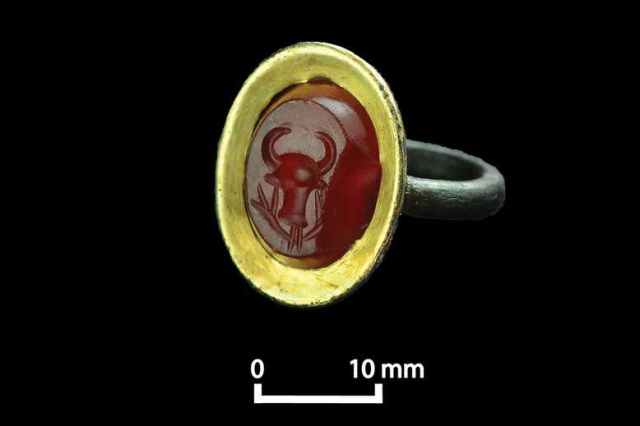
The team also found a ring, made of copper alloy covered with gold leaf, and bearing a red stone called a carnelian engraved with the image of a bull’s head over a vine or wreath. “It looks a lot like a Roman ring, except for the style of the bull insignia,” says Harrower.

It may be that Aksum rulers brought in Roman craftspeople and instructed them to adapt Roman designs to suit Aksum culture, says Harrower. Archaeologists have long known that Aksum was a major trading civilisation, exporting gold, ivory, elephants and baboons.

The trade evidently reached Beta Samati. The team found amphorae, probably used to store wine, which seem to come from Aqaba in what is now Jordan, and a glass bead probably from the eastern Mediterranean.

Journal reference: Antiquity, DOI: 10.15184/aqy.2019.84

Read more: https://www.newscientist.com/article/2226803-lost-ethiopian-town-comes-from-an-ancient-empire-that-rivalled-rome/#ixzz67iSds6o7

They matched on a dating site and got married. He needed a kidney, and they matched again.

By Lauren M. Johnson

It was a match made in heaven, or at least eharmony told them so. But Lisa and Dan Summers didn’t know how compatible they really were.

Before the Summers met and fell in love after meeting online, Dan, who is in his 30’s, had a kidney condition that was discovered in his 20s.

“I knew about 10 years ago that there was going to be some trouble sometime in the future,” Dan told CNN affiliate KTXL. “And they thought it was going to be when I was in my 50s or 60s, and it ended up hitting last year.”

He needed a transplant, and come to find out Lisa was a match. The odds? One in 100,000, doctors said.

“It’s like being next to a stranger on a train, matching them and then also falling in love on top of it, you know,” Lisa said. “There was like this sense that it was going to work.”

On August 22 at UCSF Medical Center near their home in Auburn, California, the transplant was successfully performed, and Lisa’s kidney was accepted by Dan’s body.

A new outlook

Though the Summers are back to normal with their son Jasper, they have a new appreciation for life.

“Being able to see him in front of me just holding my son’s hand or when he lifts him or those fun moments,” Lisa said. “It’s like there’s an extra appreciation to it, that my son gets to have his father growing up, you know.”

The Summers are now also advocating for kidney donation and are firm believers that the sacrifice can go a long way.

“There’s a shortage of donors that are out there right now and there’s a number of people that are in kidney failure. And dialysis is not a fun thing,” Dan said. “On a live donor they can get 10 to 20, sometimes 30 years if the match is really good.”

https://www.cnn.com/2019/12/05/us/wife-is-husbands-kidney-donor-trnd/index.html

Training middle-school educators to identify suicide warning signs


Jane Timmons-Mitchell, senior research associate at the Begun Center for Violence Prevention Research and Education at the university’s Jack, Joseph and Morton Mandel School of Applied Social Sciences


Screenshot of the virtual training taken by more than 33,000 middle-school educators across the nation.

Aside from car crashes, suicide is now the second-leading cause of death among young people in the United States, according to the Centers for Disease Control and Prevention. In Ohio alone, suicide is the leading cause of death for 10- to 14-year-olds, according to new data from the state’s health department.

Experts agree that among the most effective ways to prevent suicide among youth is getting adults to pay attention to the warning signs.

Toward that goal, new research from Case Western Reserve University examined the impact of virtual training on the mental-health and suicide-prevention skills of more than 33,000 mid­dle-school educators. The researchers found, overwhelmingly, that those who completed the training had “higher levels of preparedness” in identifying suicide warning signs than participants at the pre-test evaluation.

“Middle-school educators can play a big role in suicide prevention,” said Jane Timmons-Mitchell, a senior research associate at the Begun Center for Violence Prevention Research and Education at the university’s Jack, Joseph and Morton Mandel School of Applied Social Sciences. “These educators are the gatekeepers. It’s not just teachers—this is everyone in the educational system, from lunch ladies to bus drivers.”

The idea behind the research was to get more educators trained—and to bring more awareness to the importance of the training—in suicide prevention.

“Bus drivers, for example have a great baseline for what a student is usually like, and they’re on the frontlines and are able to watch out for behavior that’s out of the ordinary,” Timmons-Mitchell said.

The virtual training, Kognito At-Risk simulation, is essentially an online role-playing video game that replicates interactions with at-risk youth. The program also covers topics such as bullying, she said.

Timmons-Mitchell, lead evaluator on the research, said that of the 33,703 educators nationally who participated, more than 90% had never received any kind of mental-health training.

“The training by itself, while helpful, is just a part of the system,” she said. “The training helps teach them about the next steps, which includes getting the information to trained professionals such as guidance counselors.”

More than half the states nationally—and a few other countries—already require this type of training, Timmons-Mitchell said.

“There’s a consensus that more people than teachers need to be prepared,” she said. “This is a very straightforward concept. It’s commonly discussed in academia, but there is a real result here in the classrooms, lunchrooms and school buses around the country.”

The research was done with financial support from the Garrett Lee Smith Youth Suicide Prevention and Early Intervention grant program, administered by the U.S. Department of Health and Human Services.

Timmons-Mitchell was joined in the research by Glenn Albright, from Baruch College at City University of New York; Jeremiah McMillan, a doctoral candidate at the University of Georgia; Kristen Shockley, associate professor at the University of Georgia; and Seungjong Cho, a doctoral candidate at the Mandel School at Case Western Reserve.

For more information, contact Colin McEwen at colin.mcewen@case.edu.

Training middle-school educators to identify suicide warning signs

Pig-Monkey Hybrid Engineered in China


This piglet had some cells from a monkey but died within a week of birth
Tang Hai

By Michael Le Page

Pig-primate chimeras have been born live for the first time but died within a week. The two piglets, created by a team in China, looked normal although a small proportion of their cells were derived from cynomolgus monkeys.

“This is the first report of full-term pig-monkey chimeras,” says Tang Hai at the State Key Laboratory of Stem Cell and Reproductive Biology in Beijing.

The ultimate aim of the work is to grow human organs in animals for transplantation. But the results show there is still a long way to go to achieve this, the team says.

Hai and his colleagues genetically modified cynomolgus monkey cells growing in culture so they produced a fluorescent protein called GFP. This enabled the researchers to track the cells and their descendents. They then derived embryonic stem cells from the modified cells and injected them into pig embryos five days after fertilisation.

More than 4000 embryos were implanted in sows. Ten piglets were born as a result, of which two were chimeras. All died within a week. In the chimeric piglets, multiple tissues – including in the heart, liver, spleen, lung and skin – partly consisted of monkey cells, but the proportion was low: between one in 1000 and one in 10,000.

It is unclear why the piglets died, says Hai, but because the non-chimeric pigs died as well, the team suspects it is to do with the IVF process rather than the chimerism. IVF doesn’t work nearly as well in pigs as it does in humans and some other animals.

The team is now trying to create healthy animals with a higher proportion of monkey cells, says Hai. If that is successful, the next step would be to try to create pigs in which one organ is composed almost entirely of primate cells.

Something like this has already been achieved in rodents. In 2010, Hiromitsu Nakauchi, now at Stanford University in California, created mice with rat pancreases by genetically modifying the mice so their own cells couldn’t develop into a pancreas.

Pig-human chimeras

In 2017, Juan Carlos Izpisua Belmonte’s team at the Salk Institute in California created pig-human chimeras, but only around one in 100,000 cells were human and, for ethical reasons, the embryos were only allowed to develop for a month. The concern is that a chimera’s brain could be partly human.

This is why Hai and his team used monkey rather than human cells. But while the proportion of monkey cells in their chimeras is higher than the proportion of human cells in Belmonte’s chimeras, it is still very low.

“Given the extremely low chimeric efficiency and the deaths of all the animals, I actually see this as fairly discouraging,” says stem cell biologist Paul Knoepfler at the University of California, Davis.

He isn’t convinced that it will ever be possible to grow organs suitable for transplantation by creating animal-human chimeras. However, it makes sense to continue researching this approach along with others such as tissue engineering, he says.

According to a July report in the Spanish newspaper El País, Belmonte’s team has now created human-monkey chimeras, in work carried out in China. The results have not yet been published.

While interspecies chimerism doesn’t occur naturally, the bodies of animals including people can consist of a mix of cells. Mothers have cells from their children growing in many of their organs, for instance, a phenomenon called microchimerism.

Journal reference: Protein & Cell, DOI: 10.1007/s13238-019-00676-8

Read more: https://www.newscientist.com/article/2226490-exclusive-two-pigs-engineered-to-have-monkey-cells-born-in-china/#ixzz67RYaU5XS

For the first time, physicists have calculated exactly what kind of singularity lies at the center of a realistic black hole.

by Steve Nadis

In January 1916, Karl Schwarzschild, a German physicist who was stationed as a soldier on the eastern front, produced the first exact solution to the equations of general relativity, Albert Einstein’s radical, two-month-old theory of gravity. General relativity portrayed gravity not as an attractive force, as it had long been understood, but rather as the effect of curved space and time. Schwarzschild’s solution revealed the curvature of space-time around a stationary ball of matter.

Curiously, Schwarzschild noticed that if this matter were confined within a small enough radius, there would be a point of infinite curvature and density — a “singularity” — at the center.

Infinities cropping up in physics are usually cause for alarm, and neither Einstein, upon learning of the soldier’s result, nor Schwarzschild himself believed that such objects really exist. But starting in the 1970s, evidence mounted that the universe contains droves of these entities — dubbed “black holes” because their gravity is so strong that nothing going into them, not even light, can come out. The nature of the singularities inside black holes has been a mystery ever since.

Recently, a team of researchers affiliated with Harvard University’s Black Hole Initiative (BHI) made significant progress on this puzzle. Paul Chesler, Ramesh Narayan and Erik Curiel probed the interiors of theoretical black holes that resemble those studied by astronomers, seeking to determine what kind of singularity is found inside. A singularity is not a place where quantities really become infinite, but “a place where general relativity breaks down,” Chesler explained. At such a point, general relativity is thought to give way to a more exact, as yet unknown, quantum-scale description of gravity. But there are three different ways in which Einstein’s theory can go haywire, leading to three different kinds of possible singularities. “Knowing when and where general relativity breaks down is useful in knowing what theory [of quantum gravity] lies beyond it,” Chesler said.

The BHI group built on a major advance achieved in 1963, when the mathematician Roy Kerr solved Einstein’s equations for a spinning black hole — a more realistic situation than the one Schwarzschild took on since practically everything in the universe rotates. This problem was harder than Schwarzschild’s, because rotating objects have bulges in the center and therefore lack spherical symmetry. Kerr’s solution unambiguously described the region outside a spinning black hole, but not its interior.

Kerr’s black hole was still somewhat unrealistic, as it occupied a space devoid of matter. This, the BHI researchers realized, had the effect of making the solution unstable; the addition of even a single particle could drastically change the black hole’s interior space-time geometry. In an attempt to make their model more realistic and more stable, they sprinkled matter of a special kind called an “elementary scalar field” in and around their theoretical black hole. And whereas the original Kerr solution concerned an “eternal” black hole that has always been there, the black holes in their analysis formed from gravitational collapse, like the ones that abound in the cosmos.

First, Chesler, Narayan and Curiel tested their methodology on a charged, non-spinning, spherical black hole formed from the gravitational collapse of matter in an elementary scalar field. They detailed their findings in a paper posted on the scientific preprint site arxiv.org in February. Next, Chesler tackled the more complicated equations pertaining to a similarly formed rotating black hole, reporting his solo results three months later.

Their analyses showed that both types of black holes contain two distinct kinds of singularities. A black hole is encased within a sphere called an event horizon: Once matter or light crosses this invisible boundary and enters the black hole, it cannot escape. Inside the event horizon, charged stationary and rotating black holes are known to have a second spherical surface of no return, called the inner horizon. Chesler and his colleagues found that for the black holes they studied, a “null” singularity inevitably forms at the inner horizon, a finding consistent with prior results. Matter and radiation can pass through this kind of singularity for most of the black hole’s lifetime, Chesler explained, but as time goes on the space-time curvature grows exponentially, “becoming infinite at infinitely late times.”

The physicists most wanted to find out whether their quasi-realistic black holes have a central singularity — a fact that had only been established for certain for simple Schwarzschild black holes. And if there is a central singularity, they wanted to determine whether it is “spacelike” or “timelike.” These terms derive from the fact that once a particle approaches a spacelike singularity, it is not possible to evolve the equations of general relativity forward in time; evolution is only allowed along the space direction. Conversely, a particle approaching a timelike singularity will not inexorably be drawn inside; it still has a possible future and can therefore move forward in time, although its position in space is fixed. Outside observers cannot see spacelike singularities because light waves always move into them and never come out. Light waves can come out of timelike singularities, however, making them visible to outsiders.

Of these two types, a spacelike singularity may be preferable to physicists because general relativity only breaks down at the point of singularity itself. For a timelike singularity, the theory falters everywhere around that point. A physicist has no way of predicting, for instance, whether radiation will emerge from a timelike singularity and what its intensity or amplitude might be.

The group found that for both types of black holes they examined, there is indeed a central singularity, and it is always spacelike. That was assumed to be the case by many, if not most, astrophysicists who held an opinion, Chesler noted, “but it was not known for certain.”

The physicist Amos Ori, a black hole expert at the Technion in Haifa, Israel, said of Chesler’s new paper, “To the best of my knowledge, this is the first time that such a direct derivation has been given for the occurrence of a spacelike singularity inside spinning black holes.”

Gaurav Khanna, a physicist at the University of Massachusetts, Dartmouth, who also investigates black hole singularities, called the BHI team’s studies “great progress — a quantum leap beyond previous efforts in this area.”

While Chesler and his collaborators have strengthened the case that astrophysical black holes have spacelike singularities at their cores, they haven’t proved it yet. Their next step is to make more realistic calculations that go beyond elementary scalar fields and incorporate messier forms of matter and radiation.

Chesler stressed that the singularities that appear in black hole calculations should disappear when physicists craft a quantum theory of gravity that can handle the extreme conditions found at those points. According to Chesler, the act of pushing Einstein’s theory to its limits and seeing exactly how it fails “can guide you in constructing the next theory.”

https://www.quantamagazine.org/black-hole-singularities-are-as-inescapable-as-expected-20191202/?utm_source=Nature+Briefing&utm_campaign=6cddda34dd-briefing-dy-20191206&utm_medium=email&utm_term=0_c9dfd39373-6cddda34dd-44039353

This Brainless, Single-Celled Blob Can Make Complex ‘Decisions’


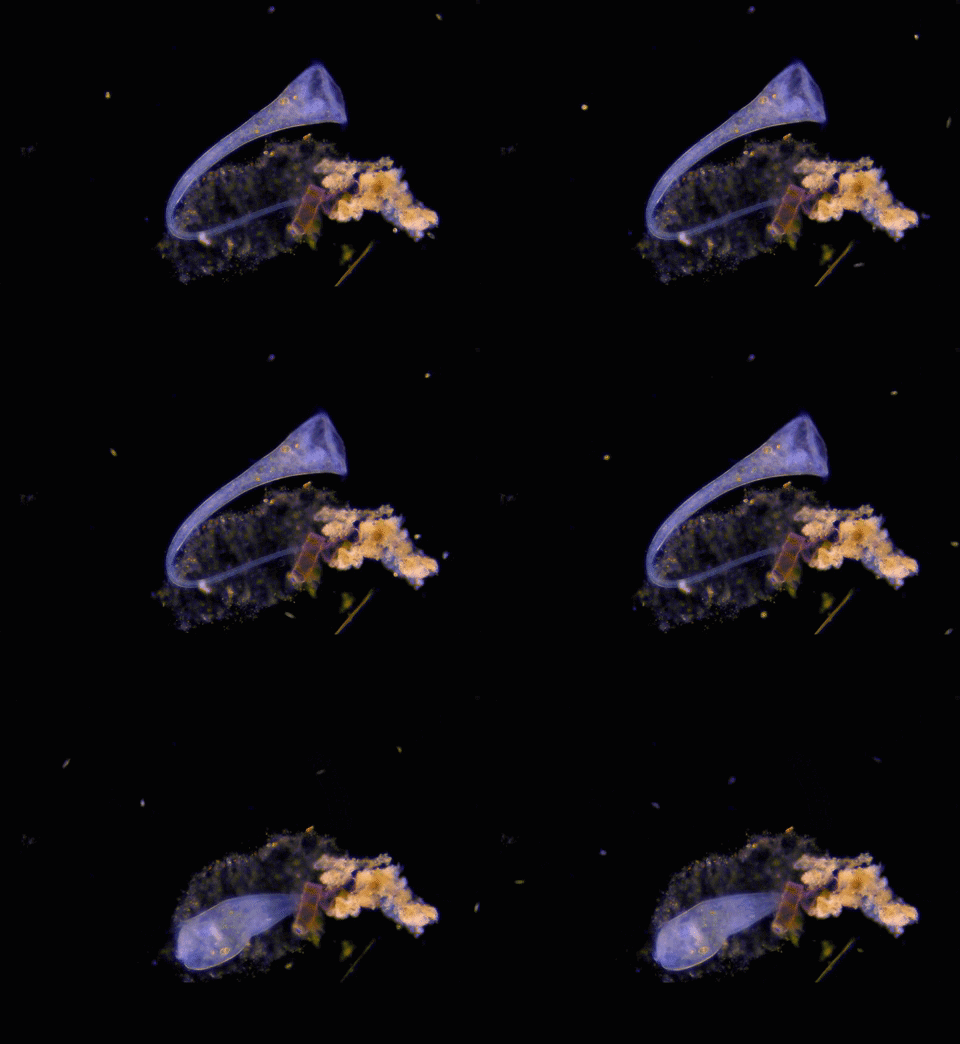
S. roeselii is shown here contracting down to where it’s holding onto a surface.

By Yasemin Saplakoglu

Tiny, brainless blobs might be able to make decisions: A single-celled organism can “change its mind” to avoid going near an irritating substance, according to new findings.

Over a century ago, American zoologist Herbert Spencer Jennings conducted an experiment on a relatively large, trumpet-shaped, single-celled organism called Stentor roeselii. When Jennings released an irritating carmine powder around the organisms, he observed that they responded in a predictable pattern, he wrote in his findings, which he published in a text called “Behavior of the Lower Organisms” in 1906.

To avoid the powder, the organism first would try to bend its body around the powder. If that didn’t work, the blob would reverse the movement of its cilia — hairlike projections that help it move and feed — to push away the surrounding particles. If that still didn’t work, the organism would contract around its point of attachment on a surface to feed. And finally, if all else failed, it would detach from the surface and swim away.

In the decades that followed, however, other experiments failed to replicate these findings, and so they were discredited. But recently, a group of researchers at Harvard University decided to re-create the old experiment as a side project. “It was a completely off-the-books, skunkworks project,” senior author Jeremy Gunawardena, a systems biologist at Harvard, said in a statement. “It wasn’t anyone’s day job.”

After a long search, the researchers found a supplier in England who had collected S. roeselii specimens from a golf course pond and had them shipped over to Gunawardena’s lab. The team used a microscope to observe and record the behavior of the organisms when the scientists released an irritant nearby.

First, they tried releasing carmine powder, the 21st century organisms weren’t irritated like their ancestors were. “Carmine is a natural product of the cochineal beetle, so its composition may have changed since [Jennings’] day,” the researchers wrote in the study. So they tried another irritant: microscopic plastic beads.

Sure enough, the S. roeselii started to avoid the beads, using the behaviors that Jennings described. At first, the behaviors didn’t seem to be in any particular order. For example, some organisms would bend first, then contract, while others would only contract. But when the scientists did a statistical analysis, they found that there was indeed, on average, a similar order to the organisms’ decision-making process: The single-celled blobs almost always chose to bend and alter the direction of their cilia before they contracted or detached and swam away, according to the statement.

What’s more, the researchers found that, if the organism did reach the stage of needing to contract or detach, there was an equal chance that they would choose one behavior over the other.

“They do the simple things first, but if you keep stimulating, they ‘decide’ to try something else,” Gunawardena said. “S. roeselii has no brain, but there seems to be some mechanism that, in effect, lets it ‘change its mind’ once it feels like the irritation has gone on too long.”

The findings can help inform cancer research and even change the way we think about our own cells. Rather than being solely “programmed” to do something by our genes, “cells exist in a very complex ecosystem, and they are, in a way, talking and negotiating with each other, responding to signals and making decisions,” Gunawardena said. Single-celled organisms, whose ancestors once ruled the ancient world, might be “much more sophisticated than we generally give them credit for,” he said.

The findings were published Dec. 5 in the journal Current Biology.

https://www.livescience.com/single-celled-organisms-decisions.html?utm_source=notification

Bionic neurons could enable implants to restore failing brain circuits


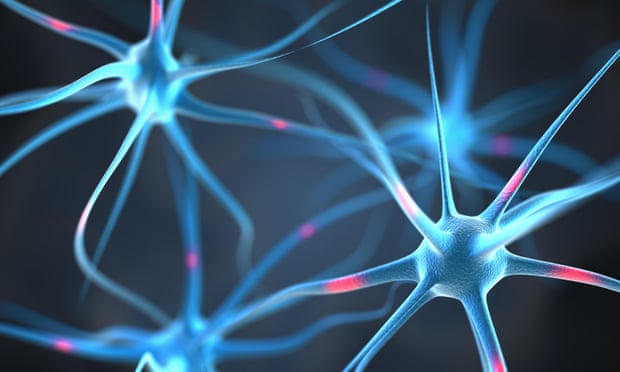
Neurons in the brain. Rather than implanting directly into the brain, the bionic neurons are built into ultra-low power microchips that form the basis for devices that would plug straight into the nervous system.

Scientists have created artificial neurons that could potentially be implanted into patients to overcome paralysis, restore failing brain circuits, and even connect their minds to machines.

The bionic neurons can receive electrical signals from healthy nerve cells, and process them in a natural way, before sending fresh signals on to other neurons, or to muscles and organs elsewhere in the body.

One of the first applications may be a treatment for a form of heart failure that develops when a particular neural circuit at the base of the brain deteriorates through age or disease and fails to send the right signals to make the heart pump properly.

Rather than implanting directly into the brain, the artificial neurons are built into ultra-low power microchips a few millimetres wide. The chips form the basis for devices that would plug straight into the nervous system, for example by intercepting signals that pass between the brain and leg muscles.

“Any area where you have some degenerative disease, such as Alzheimer’s, or where the neurons stop firing properly because of age, disease, or injury, then in theory you could replace the faulty biocircuit with a synthetic circuit,” said Alain Nogaret, a physicist who led the project at the University of Bath.

The breakthrough came when researchers found they could model live neurons in a computer program and then recreate their firing patterns in silicon chips with more than 94% accuracy. The program allows the scientists to mimic the full variety of neurons found in the nervous system.

Writing in the journal Nature Communications, the researchers describe how they fed the program with data recorded from two types of rat neuron, which were stimulated in a dish. The neurons were either from the hippocampus, a region that is crucial for memory and learning, or were involved in the subconscious control of breathing.

Armed with the program, the researchers claim they can now build bionic neurons based on any of the real nerve cells found in the brain, spinal cord, or the more distant reaches of the peripheral nervous system, such as the sensory neurons in the skin.

Because the artificial neurons both receive and send signals, they can be used to make implants that respond to neural feedback signals that are constantly coursing around the body.

“The potential is endless in terms of understanding how the brain works, because we now have the fundamental understanding and insight into the functional unit of the brain, and indeed applications, which might be to improve memory, to overcome paralysis and ameliorate disease,” said Julian Paton, a co-author on the study who holds posts at the Universities of Bristol and Auckland.

“They can be used in isolation or connected together to form neuronal networks to perform brain functions,” he added.

With development, trials and regulations to satisfy, it could be many years before the artificial neurons are helping patients. But if they prove safe and effective, they could ultimately be used to circumvent nerve damage in broken spines and help paralysed people regain movement, or to connect people’s brains to robotic limbs that can send touch sensations back through the implant to the brain.

Despite the vast possibilities the artificial neurons open up, Nogaret said the team was nowhere near building a whole brain, an organ which in a human consists of 86bn neurons and at least as many supporting cells. “We are not claiming that we are building a brain, there’s absolutely no way,” he said.

The scientists’ approach differs from that taken by many other peers who hope to recreate brain activity in computers. Rather than focusing on individual neurons, they typically model brain regions or even whole brains, but with far less precision. For example, the million-processor SpiNNaker machine at the University of Manchester can model an entire mouse brain, but not to the level of individual brain cells.

“If you wanted to model a whole mouse brain using the approach in this paper you might end up designing 100 million individual, but very precise, neurons on silicon, which is clearly unfeasible within a reasonable time and budget,” said Stephen Furber, professor of computer engineering at the University of Manchester.

“Because the approach is detailed and laboriously painstaking, it can really only be applied in practice to smallish neural units, such as the respiratory neurons described above, but there are quite a few critical small neural control circuits that are vital to keeping us alive,” he added.

https://www.theguardian.com/science/2019/dec/03/bionic-neurons-could-enable-implants-to-restore-failing-brain-circuits