Coffee protects from prostate cancer.


According to a recent study out of the Harvard School of Public Health, the more coffee men drink, the lower their chance of developing prostate cancer.

Men who drank six cups of coffee per day had a 60 percent lower risk of developing the most lethal form of prostate cancer — and a 20 percent lower risk of developing any form of the disease.

At a more modest one to three cups of coffee per day, the risk was cut by 30 percent.

The results are indepedent of whether it’s regular or decaf.

http://www.huffingtonpost.com/2011/05/18/coffee-can-cut-prostate-c_n_863472.html

http://jnci.oxfordjournals.org/content/early/2011/05/17/jnci.djr151.abstract
The Optimism Bias – our brains may be hardwired for hope

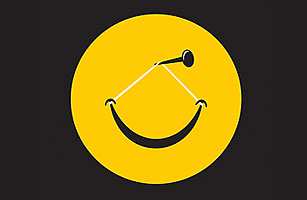
The belief that the future will be much better than the past and present is known as the optimism bias. It abides in every race, region and socioeconomic bracket. A growing body of scientific evidence suggests that an optmistic outlook is hardwired into our brains.  People in good mental health expect the furure to be slightly better than it ends up being.  People with severe depression pessimistically predict things to turn out worse than they actually do.  Interestingly, people with mild depression are actually the most accurate in predicting the outcome of future events.    Read more: http://www.time.com/time/health/article/0,8599,2074067,00.html#ixzz1OMmtmfsW

Moodini


The Great Moodini was injured a few nights ago at the Atlanta Motor Speedway when a stunt he was trying to perform went wrong.

Michael Anthony Mooney, who goes by the stage name “The Great Moodini”, was attempting to perform a Houdini-like stunt in which he was handcuffed and chained to a car. He intended to free himself from the chains before the car sped away.

But, he failed to do so and the car sped away with him still attached.

“I remember feeling the vibration of the chain when the car pulled off, and the vibration got stronger. “Then everything just kind of went black.”

read about it here:  http://www.11alive.com/rss/article/193222/3/Houdini-like-stunt-goes-wrong-at-Atlanta-Motor-Speedway

and watch it here


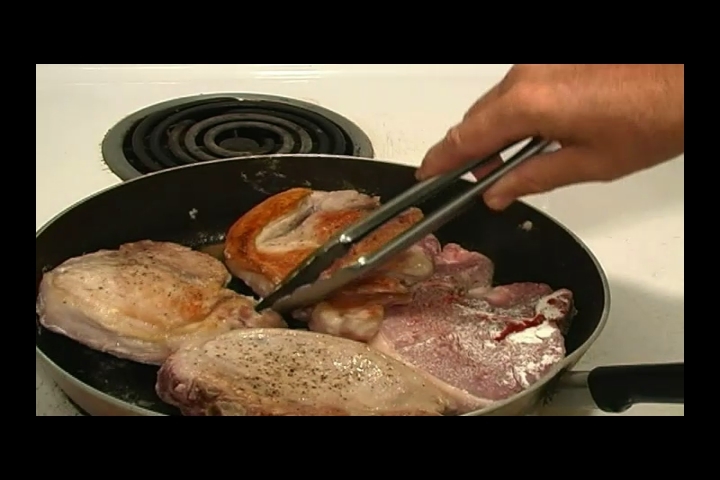
Pork is perfectly safe with cooking at 15 degrees lower than previously thought.


The new USDA guidelines are that pork and other whole cuts of meat only need to be cooked to 145 degrees fahrenheit, in contrast to their decades-old mandate of 160 degrees fahrenheit.

“Our consumer research has consistently shown that Americans have a tendency to overcook common cuts of pork, resulting in a less-than-optimal eating experience,” says Dianne Bettin, a pork producer from Truman, Minn., and chair of the Checkoff’s Domestic Marketing Committee. “The new guidelines will help consumers enjoy pork at its most flavorful, juicy – and safe – temperature.”

All ground meat, however, still needs to be cooked to the standard 160 degrees fahrenheit, for now.

http://www.imperfectparent.com/topics/2011/05/25/pork-cooking-temperature-changed/

Dogs can sniff out colon cancer

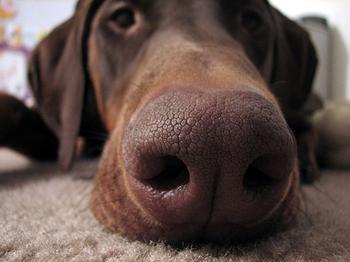
Japanese scientists discovered that a Labrador Retriever could detect a chemical produced by colon cancer cells by smelling human breath, even in the early stages of the disease. 

The dog was almost as accurate as a colonoscopy.

The eight-year-old Labrador completed 74 sniff tests, consisting of sniffing five breath or stool samples at a time in which one was cancerous. The samples came from 48 people with confirmed colorectal cancer and 258 volunteers with no cancer. Half of the comparison samples came from people with bowel polyps, which are benign growths that are thought to be a precursor of colorectal cancer.

The dog correctly identified the cancerous samples in 33 out of 36 of the breath tests and 37 of 38 stool tests.

http://www.livescience.com/11708-dog-sniffs-bowel-cancer.html

Jack Kevorkian Dead at 83


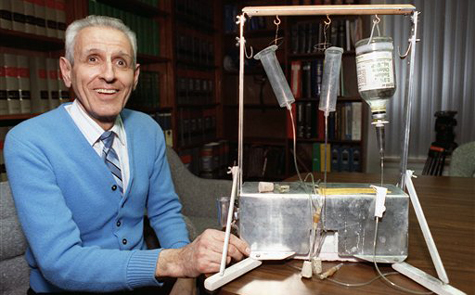
Dr. Jack Kevorkian, the Michigan pathologist who put assisted suicide on the world’s medical ethics stage, died Friday at the age of 83 at Beaumont Hospital in Michigan.   

He had been hospitalized in Michigan for pneumonia and a kidney-related ailment.

The music of Johann Sebastian Bach, Kevorkian’s favorite musician, was put on the intercom so he could hear the music as he was dying.

http://news.blogs.cnn.com/2011/06/03/report-dr-jack-kevorkian-dead/?hpt=hp_t2

Click here to see some of his more well-known interviews:  http://www.cbsnews.com/stories/2011/06/03/national/main20068683.shtml

And click here to read about and view his artwork, siome of which is currently on display at the Armenian Library and Museum of America in Watertown, Massachusettes.

http://www.bostonherald.com/news/regional/view/20110603jack_kevorkian_art_work_displayed_in_mass_museum/srvc=home&position=recent


Fluorescent Silk


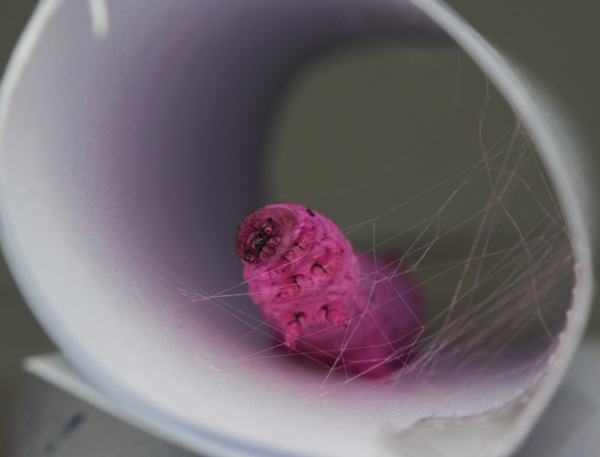
Silkworms can be put on a special diet of mullberries and fluorescent dye to produce fluorescent silk.   According to researchers at the Institute of Materials Research and Engineering (IMRE) in Singapore, the process is “simple and cheap enough to be translated to an industrial scale,” which would be more environmentally friendly by reducing consumption of water and dyes.  This approach could also potentially be adapted to create functional silk with antibacterial, anticoagulant or anti-inflammatory properties for use in wound-dressings.

http://www.newscientist.com/blogs/shortsharpscience/2011/03/silkworms-produce-fluorescent.html

Deep Space Capsule

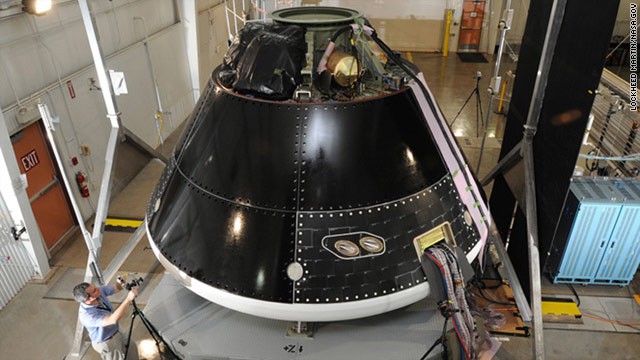
NASA plans a return to yesteryear by developing a space capsule that will carry humans into deep space.

“We are committed to human exploration beyond low-Earth orbit and look forward to developing the next generation of systems to take us there,” NASA Administrator Charles Bolden said.

The new spacecraft, to be built by Lockheed Martin, will be known as the Multi-Purpose Crew Vehicle, or MPCV. It will carry four astronauts and be based on designs originally planned for NASA’s Orion Crew Exploration Vehicle, whose development was canceled by President Barack Obama.

NASA says astronauts would not fly onboard until at least 2016. NASA has not flown astronauts beyond low-Earth orbit since the Apollo program, in the 1970s.

http://www.cnn.com/2011/US/05/24/nasa.new.spacecraft/index.html

14 year old Robert Nay’s Bubble Ball.

An iPhone physics-based puzzle game designed by 14-year-old Utah 8th grader Robert Nay has been downloaded more than 2 million times since its release Dec 29th.

He programmed it in 6 weeks at the public library.

It’s about moving a small blue ball from one side of the screen to the other by navigating shrewdly crafted obstacle fields of metal and wood.

[youtbe=http://www.youtube.com/watch?v=QU6kL9TwtAs&feature=related]

Google Mobile Facial Recognition Application


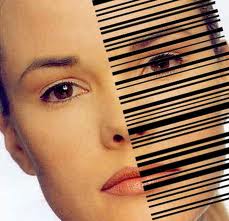
Google has announced plans to introduce a mobile application that would allow users to snap pictures of people’s faces in order to access their personal information.

In order to be identified by the software, people would have to check a box agreeing to give Google permission to access their pictures and profile information.

Google has had the technical capabilities to implement this type of search engine for years, but has delayed its release due to concerns about how privacy advocates might receive the product.

http://www.cnn.com/2011/TECH/mobile/03/31/google.face/index.html?hpt=C2