Floating seascrapers of the future?

Touted as an eco-friendly floating city, the Seascraper (pictured in an artist’s conception) is among a raft of concepts for  sustainable offshore settlements. With more than seven billion people on  the planet, mass migrations to cities, and increased risks of flooding  and sea level rise, more and more architects and innovators seem to be  weighing anchor.

(Related: “Sea Levels Rising Fast on U.S. East Coast.'”)

The  Seascraper—a self-sufficient community of homes, offices, and  recreational space—was designed with the intention of slowing urban  sprawl, according to its designers.

The  vessel’s energy independence would come from underwater turbines  powered by deep-sea currents as well as from a photovoltaic skin that could  collect solar energy. The concave hull would collect rainwater and  allow daylight to reach lower levels. Fresh water would come from  treated and recycled rainwater via an onboard desalination plant.

This  green machine would also help keep marine populations afloat, so to  speak, with a buoyant base that serves as a reef and discharges fish  food in the form of nutrients pumped from the deep sea, the U.S. design  team says.

http://news.nationalgeographic.com/news/2012/07/pictures/120730-future-floating-cities-science-green-environment/

Ebola-like virus identified as cause of inclusion body disease that twists snakes into knots revealed

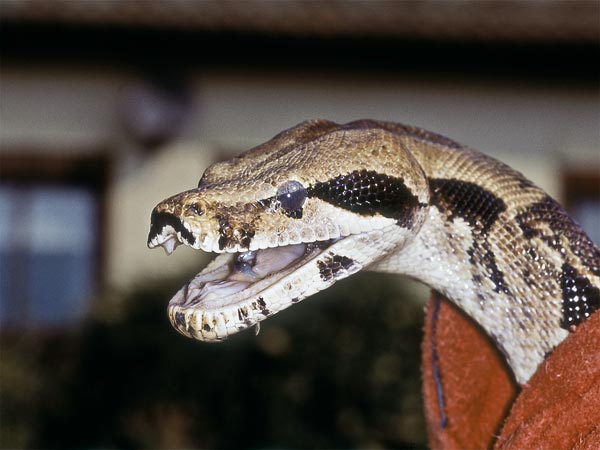
Scientists have finally found the cause of a mysterious disease that makes snakes tie themselves up into knots, stare off into space, and waste away—the reptiles are infected with an Ebola-like virus, a new study says.

The fatal condition known as inclusion body disease (IBD) was first diagnosed in snakes, particularly pythons and boa constrictors, in the 1980s.

Snakes diagnosed with IBD will often exhibit behavioral abnormalities, including an inability to flip over when turned on their backs and “stargazing,” which involves staring off into space and weaving their heads back and forth as if drunk. They are also more likely to contract other diseases, such as bacterial infections in their mouths.

Infected snakes often refuse to eat, or regurgitate their food when they do.

“They begin to waste away,” said study co-author Mark Stenglein, a biochemist at the University of California, San Francisco.

Scientists have long suspected a virus was behind IBD because the disease can be transmitted between snakes and is characterized by the buildup of proteins in cells, a feature of a number of viral diseases, Stenglein said.

But direct proof that a viral agent is responsible has been lacking-until now.

(Also see: “Python Hearts Double in Size—Now We Know Why.”)

Decoding the Snake Virus

Stenglein and his team analyzed the genetic material of snakes infected by IBD at the Steinhart Aquarium in San Francisco during a recent outbreak.

In addition to the known snake genome, they found genetic material belonging to a previously unknown virus. (See snake pictures.)

It appears to be most closely related to a class of viruses known as arenaviruses, that have only been known to infect mammals, namely rodents and people. However, the new virus doesn’t fit into the two categories of arenaviruses-New World and Old World-that are currently known.

The snake virus also contains a gene closely related to one found in the Ebola virus, which belongs to a different class known as filoviruses. Ebola, one of the most contagious known viruses, causes death through severe hemorrhaging when it infects humans.

The fact that that the new snake virus contains aspects of two completely different classes could mean that its origins stretch back tens of millions of years.

If that’s true, the snake virus is at least 35 million years old, said Stenglein, whose study appeared in August in the journal mBio.

Another possibility, the team says, is that the snake virus was created by a more recent merger of an arenavirus and a filovirus.

(See “‘Zombie Virus’ Possible via Rabies-Flu Hybrid?”)

David Sanders, an Ebola researcher at Purdue University in Indiana, called the new discovery “exciting,” but said he does not think the new virus is likely to provide any new information about Ebola, which is itself a very mysterious disease with murky origins. (Read why scientists can’t cure Ebola.)

As for IBD, said Stenglein, there’s still no treatment or cure.

But the new discovery means that vets and zookeepers could soon have a diagnostic test to genetically screen snakes for the disease before introducing them to a collection.

http://news.nationalgeographic.com/news/2012/08/120822-snakes-virus-ibd-ebola-animals-science/

Machine invented that recycles patient’s blood during surgery

The bigger the operation, the more blood gets spilled. In procedures like open heart surgery and major trauma, blood loss can be so great that large quantities need to be replaced.

Blood transfusions are often the preferred option. But in a minority of cases there can be adverse reactions.

And then there is the cost. As Professor Terry Gourlay puts it: “Blood is not cheap”.

End Quote Professor Terry Gourlay Strathclyde University

He is a bioengineer at Strathclyde University in Glasgow, the leader of a team which has produced a new device to recycle blood during major surgery.

Recovering a surgical patient’s blood and putting it back in the body is not a new idea. But autotransfusion, as it is known, is typically a skilled, time-consuming and costly business.

Hemosep, as the Strathclyde process is known, is altogether more straightforward and looks a lot less labour intensive.

There is a small, lightweight machine which agitates the blood to stop it settling. But the key to it is the special plastic bag in which the recovered blood is poured.

Simply put, it is like a chemical sponge that soaks up the unwanted plasma which has diluted the blood during the operation.

The key component is an advanced polycarbonate membrane which lets the plasma through but keeps the important blood components separate. They include important proteins and clotting factors.

These concentrated cells can then be returned to the patient.

According to Professor Gourlay, the medical benefit of that is straightforward: “It’s your blood.”

Hemosep has already been tested successfully in Turkey where it has been used in more than 100 open heart surgery procedures.

The system will now be sold throughout the European Union in a partnership between Strathclyde and the medical device company, Advancis. It has also been approved for sale in Canada.

Professor Gourlay says that in some markets the true cost of a unit of blood can touch $1,600 and blood products constitute a multi-billion dollar worldwide market.

He explained: “Blood is not free, by any measure, and in fact in North America the latest studies suggest that a unit of blood costs upwards of $1,600.”

http://www.bbc.co.uk/news/uk-scotland-glasgow-west-19324077

100,000 toothpick kinetic sculpture of San Francisco

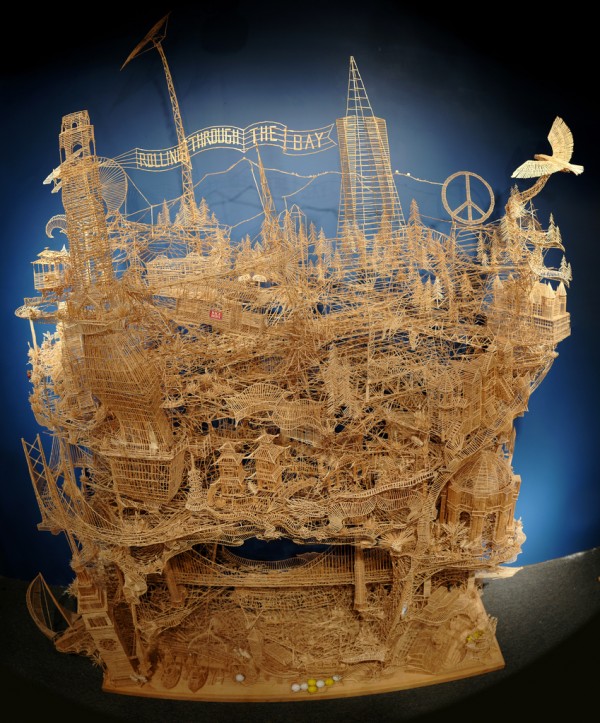
Thirty five years ago artist Scott Weaver began work on this complex kinetic sculpture, Rolling through the Bay, that he continues to modify and expand even today. The elaborate sculpture is comprised of multiple “tours” that move pingpong balls through neighborhoods, historical locations, and iconic symbols of San Francisco, all recreated with a little glue, some toothpicks, and an incredible amount of ingenuity. He admits in the video that there are several toothpick sculptures even larger than his, but none has the unique kinetic components he’s constructed. Via his website Weaver estimates he’s spent over 3,000 hours on the project, and the toothpicks have been sourced from around the world:

I have used different brands of toothpicks depending on what I am building. I also have many friends and family members that collect toothpicks in their travels for me. For example, some of the trees in Golden Gate Park are made from toothpicks from Kenya, Morocco, Spain, West Germany and Italy. The heart inside the Palace of Fine Arts is made out of toothpicks people threw at our wedding.

See the sculpture for yourself at the Tinkering Studio through the end of June. Photos courtesy of their Flickr gallery.

Update: Rolling Through the Bay has been moved to the American Visionary Art Museum through September 2012.

http://www.thisiscolossal.com/2011/04/one-man-100000-toothpicks-and-35-years-scott-weavers-rolling-through-the-bay/?src=footer

Thanks to T.L. for bringing this to the It’s Interesting community.

Bigfoot hoax results in death

A man trying to create a Bigfoot hoax on a highway died after being hit by two cars, officials in Montana said.

Randy Lee Tenley dressed in a Ghillie suit — camouflage designed to resemble heavy foliage — and stepped out onto Highway 93 Sunday night, officials said.

“He probably would not have been very easy to see at all,” said Jim Schneider, a state trooper.

A 15-year-old girl hit him with her car, another car swerved, and a third car driven by a 17-year-old ran him over, CNN affiliate KECI reported.

Tenley was “well into the driving lane,” and according to his companions he was “attempting to incite a sighting of Bigfoot — to make people think they had seen a Sasquatch,” Schneider said in the KECI report.

But authorities received no calls from drivers thinking they had seen Bigfoot, the station reported.

Officials with Montana Highway Patrol District 6, which includes Flathead County where the incident took place, could not be reached for comment Tuesday morning.

http://www.cnn.com/2012/08/28/us/montana-big-foot-accident/index.html?on.cnn=1

Thanks to T.L. for bringing this to the It’s Interesting community.

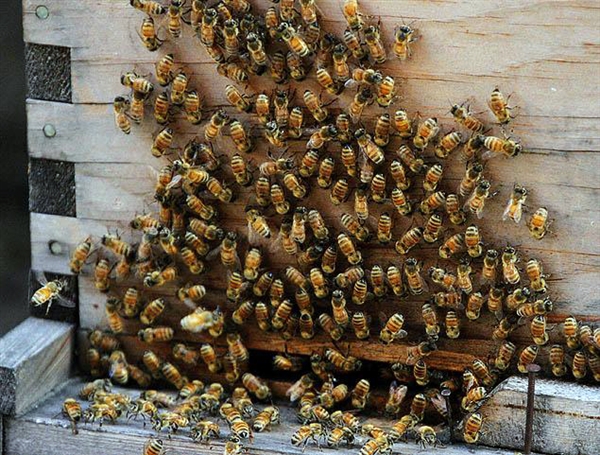
3 million bees removed from home in Queens, New York


Approximately 3 million bees were found swarming around a man’s Queens, N.Y., home on Wednesday night, and were confiscated —  to the relief of his neighbors.

Yi Gin Chen had beehives packed into the backyard — about 45 hives in total, said Andrew Cote, president of the New York City Beekeepers Association. Cote said Chen, a beekeeper in his native China, had contacted the beekeepers’ association earlier in the month for help with the bees because he was trying to sell his Corona, Queens, home.

Chen allegedly started with one hive a couple years ago, and the insects kept multiplying, reported the New York Daily News.

“It’s gotten out of hand,” Chen told The Daily News Wednesday night as New York City Police Department officials and volunteers from the Beekeepers Association collected the bees. “I don’t have the time or resources to do this.”

Cote said Chen’s real estate agent contacted him a few weeks ago and told him that Chen, who only speaks Mandarin, had “four or five hives” that he wanted to sell.

When Cote arrived at the home, he was shocked to find it was actually 45.

“That’s something like 3 million bees, which is more bees than there are people in Queens,” Cote said Thursday from his honey stand at a farmer’s market outside Manhattan’s Rockefeller Center.

“Many of the neighbors were tremendously upset about the bees and fearful to walk out their door because it literally led to three feet from the mouth of an open hive, each of which had approximately 60 to 80,000 bees,” Cote said.

Cote said he advised Chen to immediately register the hives with the city, per local regulations, and also gave him suggestions to make the situation better for his terrified neighbors.

One resident, Louie Socci, told the Daily News he called the city once to complain.

“It’s like a big swarm of a couple million bees. You never seen anything like it in your life,” Socci told The Daily News. “The guy’s nuts. I called the city once and they didn’t do anything.”

Last night, during the four-hour operation to seal up the hives and remove them from the property, Cote discovered that not only were there a lot of bees, but they were also in poor health.

“The bees were in terrible condition. I’ll be surprised if any of them survives the winter. He stripped them of all their honey,” he said. “The average weight of a hive at this time of the year would be at least 180 pounds, and these averaged 40 pounds. He took all of their honey and didn’t leave any for them.”

It’s not clear what Chen was doing with the honey, but Cote suspects based on conversations he has had with other beekeepers in the area that he was selling it.

Beekeeping has been legal in New York since 2010. No license is needed, but if beehive owners don’t register their hives, they can be fined.

It’s not known yet what charges Chen may face. Calls from NBC News to the New York Police Department were not immediately returned.

Anthony Planakis, who heads bee control for the NYPD, told The New York Post of Chen’s home, “Picture 45 dogs in one apartment. It’s cruelty to the bees.”

New York City has ramped up its bee-control efforts recently. Earlier this month, Planakis — who has been fighting stingers since 1995 — was promoted from officer to detective by NYPD Commissioner Ray Kelley, and granted a “bee-mobile” and other equipment, The New York Post reported.

http://usnews.nbcnews.com/_news/2012/08/23/13435771-3-million-bees-seized-from-queens-ny-mans-home?lite/

Study aims to determine why some people hate cilantro

On “I Hate Cilantro” websites and Facebook pages they gripe that the herb tastes like soap, mold, or dirt. Cilantro haters not only despise its flavor, they also detest its smell. Stories in publications as serious as the New York Times, the Wall Street Journal and, yes, even msnbc.com have even covered the sharp divide in taste preferences when it comes to this particular herb.  And when a study of identical twins found an aversion to cilantro stems from a genetic glitch, the herb’s bashers finally had a good reason why they found the leaves of the Coriander plant so offensive.

But who are these people in the anti-cilantro community? No one had a clue — until now.

There has been no attempt to quantify which people hate the herb until two nutrition experts from the University of Toronto took a stab at it. They recently published their findings in the journal Flavour. In the study, they surveyed nearly 1,400 young adults ages 20 to 29 in Canada.

Volunteers completed a 63-item preference checklist in which they rated each food on a 9-point scale from 1 (dislike extremely) to 9 (like extremely). They could also select “never tried” or “would not try.”

Researchers found an aversion to cilantro ranged from a low of 3 percent to a high of 21 percent among six different ethnic groups.

Young Canadians with East Asian roots, which included those of Chinese, Japanese, Korean, Thai and Vietnamese descent, had the highest prevalence of people who disliked the herb at 21 percent. Caucasians were second at 17 percent, and people of African descent were third at 14 percent.

Among the herb’s fans, the group with the fewest number of people who disliked cilantro were those of Middle Eastern background at 3 percent, followed by those of Hispanic and South Asian ancestry at 4 percent and 7 percent respectively.

Exposure to the herb at an earlier age and with greater frequency in Mexican, Asian, and Indian cooking likely helps shape a positive flavor preference. Another possibility is that genetic differences among the cultural groups might influence someone’s taste perception of the herb.

Although researchers have yet to evaluate all 63 items on the food-preference checklist, study author Ahmed El-Sohemy, PhD, is sure of one thing: “Cilantro is perhaps the most polarizing with large numbers either loving it or hating it.” The paper calls this the “unusual divisive nature of cilantro.”

“People who dislike cilantro extremely describe it very, very differently from those who love it,” explains El-Sohemy, an associate professor of nutrition at the University of Toronto. The reason? “These individuals live in very different sensory worlds and are not perceiving the same thing,” he says.

As for El-Sohemy’s opinion of cilantro, count him among the lovers. “I remember loving the taste as a child,” he says. “I distinctly remember my mother’s Egyptian cooking, which used cilantro frequently.”

The study is a first step in determining how widespread a dislike for cilantro is, at least in a sample of young Canadians. It’s unclear whether older Canadians feel similarly or how much the herb is despised by people in other countries.

Eventually, the Toronto scientists hope to pinpoint the genetic basis for why cilantro is an herb some people love to hate.

http://bodyodd.nbcnews.com/_news/2012/05/16/11719087-who-hates-cilantro-study-aims-to-find-out

Thanks to Dr. S.G. for bringing this to the attention of the It’s Interesting community.

Delaware daycare employees arrested for organizing toddler fights


Three Delaware day care employees have been accused of encouraging toddlers to fight each other while the children were under their care.

CBS Philly reported that Tiana Harris, 19, Lisa Parker, 47, and Estefania Myers, 21, employees of the Hands of Our Future Daycare in Dover, were arrested after a cellphone video emerged of them allegedly encouraging two 3-year-olds to fight in an organized battle.

Police said in the video one child is heard yelling, “He’s pinching me!” A day care worker allegedly responded, “No pinching, only punching.”

“It was a difficult video to watch,” Dover Police Capt. Tim Stump told FoxNews.com.  “One of the kids involved ran over to one of the adults for protection, but she turned him around back into the fight.”

The video was taken in March, Stump said. Two of the suspects could be seen encouraging the fight, while the other filmed it with her cellphone camera, he said.

Stump said neither of the toddlers suffered serious injuries, but said it was “painfully clear that they were hurting each other.”

“The bottom line is that the kids were whaling on each other and the adults were doing nothing to stop it,” Stump said. “In fact, they were egging it on.”

Parents of day care students went to a meeting Monday and were informed about the alleged video. Stump said the parents voiced concern, but commended them for their composure.

“It’s very disturbing to think anything like that could go on,” Amy Bickerling, whose 4-year-old son is enrolled at the center, told Delaware Online. “I know these teachers. I go on all the field trips. I’ve never seen anything irregular.”

Stump said a full investigation is under way. There is no evidence yet to suggest these fights occurred more than once, but authorities will be conducting interviews  with some of the students, he said.

He called the suspects “cooperative” and said they posted $10,000 bond.

The three women were charged with assault, endangering the welfare of a child, reckless endangering and conspiracy.

http://www.foxnews.com/us/2012/08/21/daycare-workers-accused-running-toddler-fight-club/

Thanks to D.K. for bringing this to the attention of the It’s Interesting community.

DNA is the future of data storage

A bioengineer and geneticist at Harvard’s Wyss Institute have successfully stored 5.5 petabits of data — around 700 terabytes — in a single gram of DNA, smashing the previous DNA data density record by a thousand times.

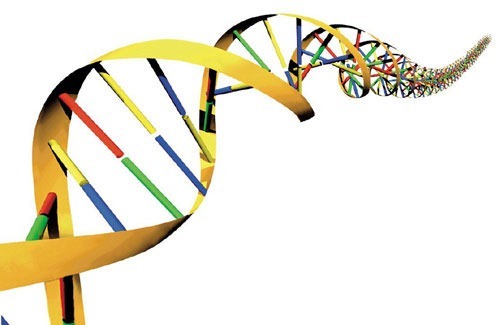
The work, carried out by George Church and Sri Kosuri, basically treats DNA as just another digital storage device. Instead of binary data being encoded as magnetic regions on a hard drive platter, strands of DNA that store 96 bits are synthesized, with each of the bases (TGAC) representing a binary value (T and G = 1, A and C = 0).

To read the data stored in DNA, you simply sequence it — just as if you were sequencing the human genome — and convert each of the TGAC bases back into binary. To aid with sequencing, each strand of DNA has a 19-bit address block at the start (the red bits in the image below) — so a whole vat of DNA can be sequenced out of order, and then sorted into usable data using the addresses.

Scientists have been eyeing up DNA as a potential storage medium for a long time, for three very good reasons: It’s incredibly dense (you can store one bit per base, and a base is only a few atoms large); it’s volumetric (beaker) rather than planar (hard disk); and it’s incredibly stable — where other bleeding-edge storage mediums need to be kept in sub-zero vacuums, DNA can survive for hundreds of thousands of years in a box in your garage.

It is only with recent advances in microfluidics and labs-on-a-chip that synthesizing and sequencing DNA has become an everyday task, though. While it took years for the original Human Genome Project to analyze a single human genome (some 3 billion DNA base pairs), modern lab equipment with microfluidic chips can do it in hours. Now this isn’t to say that Church and Kosuri’s DNA storage is fast — but it’s fast enough for very-long-term archival.

Just think about it for a moment: One gram of DNA can store 700 terabytes of data. That’s 14,000 50-gigabyte Blu-ray discs… in a droplet of DNA that would fit on the tip of your pinky. To store the same kind of data on hard drives — the densest storage medium in use today — you’d need 233 3TB drives, weighing a total of 151 kilos. In Church and Kosuri’s case, they have successfully stored around 700 kilobytes of data in DNA — Church’s latest book, in fact — and proceeded to make 70 billion copies (which they claim, jokingly, makes it the best-selling book of all time!) totaling 44 petabytes of data stored.

Looking forward, they foresee a world where biological storage would allow us to record anything and everything without reservation. Today, we wouldn’t dream of blanketing every square meter of Earth with cameras, and recording every moment for all eternity/human posterity — we simply don’t have the storage capacity. There is a reason that backed up data is usually only kept for a few weeks or months — it just isn’t feasible to have warehouses full of hard drives, which could fail at any time. If the entirety of human knowledge — every book, uttered word, and funny cat video — can be stored in a few hundred kilos of DNA, it might just be possible to record everything.

http://refreshingnews99.blogspot.in/2012/08/harvard-cracks-dna-storage-crams-700.html

Thanks to kebmodee for bringing this to the attention of the It’s Interesting community.

Pupil dilation in response to viewing erotic videos indicates sexual orientation

For the first time, researchers have used a specialized camera to measure pupillary changes in people watching erotic videos, the changes in pupil dilation revealing where the participant is located on the heterosexual-homosexual spectrum. The researchers at Cornell University who developed the technique say it provides an accurate method of gauging the precise sexual orientation of a subject. The work is detailed in the journal PLoS ONE.

Previously, researchers trying to assess sexual orientation simply asked people about their sexuality or used intrusive physiological measures, such as assessing their genital arousal.

“We wanted to find an alternative measure that would be an automatic indication of sexual orientation, but without being as invasive as previous measures. Pupillary responses are exactly that,” says lead researcher Gerulf Rieger. “With this new technology we are able to explore sexual orientation of people who would never participate in a study on genital arousal, such as people from traditional cultures. This will give us a much better understanding how sexuality is expressed across the planet.”

Experimenting with the technique, the researchers found heterosexual men showed strong pupillary responses to sexual videos of women, and little to men. Heterosexual women, however, showed pupillary responses to both sexes. This result confirms previous research suggesting that women have a very different type of sexuality than men.

Interestingly, the new study sheds new light on the long-standing debate on male bisexuality. Previous notions were that most bisexual men do not base their sexual identity on their physiological sexual arousal but on romantic and identity issues. Contrary to this claim, bisexual men in the new study showed substantial pupil dilations to sexual videos of both men and women.

“We can now finally argue that a flexible sexual desire is not simply restricted to women – some men have it, too, and it is reflected in their pupils,” said co-researcher Ritch C. Savin-Williams. “In fact, not even a division into ‘straight,’ ‘bi,’ and ‘gay’ tells the full story. Men who identity as ‘mostly straight’ really exist both in their identity and their pupil response; they are more aroused to males than straight men, but much less so than both bisexual and gay men.”

Thanks to Dr. A.R. for bringing this to the attention of the It’s Interesting community.