Giant hive with a half million killer bees discovered in Richardson, Texas

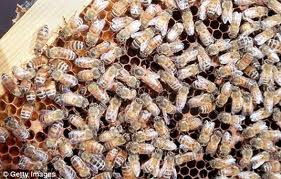
A Richardson Texas neighborhood was all a-buzz Friday morning, after workers discovered a huge four foot tall bee hive filled with killer bees.

“I can still get stung, hopefully not today,” says Kyle Lieb, Beekeeper with Little Giant Beekeepers.  He and his partner, Jefferson Souza, are suiting up for a dangerous job: removing the hive filled with killer bees.

“I’m stung 15-20 times per day,” says Souza.

Because they’re killer bees, they’ve made their last batch of honey. The hybrid bee is more likely to attack than your average honey bee.

“Unfortunately, we have to exterminate them, because no beekeeper will take it, because they’re aggressive.  We don’t want them to spread,” says Lieb.

Beekeepers say they believe the massive hive was filled with as many as 500,000 angry bees.

Neighbors say they believe the hive had to be removed in the interest of public safety. Residents along Clear Lake Circle worried that kids, who play at the end of the cul de sac, could get stung. The city wasn’t going to take that chance.

“If they do attack, they attack in large numbers, like hundreds or thousands.  It can be deadly,” says Lieb.

Workers believe these busy bees have been making the hive the past seven months. There may be as much as 30 pounds of honey inside, which cannot be harvested now that the hive has been sprayed with pesticide.

It took only a few hours to make sure all of the bees died. Workers then removed the hive, so another colony could not move into the vacant “house” in the neighborhood.

http://www.nbcdfw.com/news/local/Massive-Killer-Beehive-Removed-in-Richardson-170715986.html

Thanks to Mr. Cuomo for bringing this to the attention of the It’s Interesting community.

Seagull steals camera and captures sunset over San Francisco Bay


French tourist Nathalie Rollandin was filming the sunset from the beach when the bird snatched her GoPro video camera and flew out over the water.

Luckily for Ms Rollandin, the gull chose to land twenty seconds later on a walkway before dropping the camera. After a few pecks at it, the bird appears to lose interest in its plunder and flies off into the sunset.

After managing to track down her camera – intact and still recording outside a yacht club – Ms Rollardin posted the bird’s footage on YouTube, describing it as “a San Francisco sunset I will hardly forget”.

http://www.telegraph.co.uk/earth/wildlife/9550107/Seagull-steals-camera-and-captures-sunset-over-San-Francisco-Bay.html

$7 Million in gold discovered in home of deceased recluse

Authorities in Carson City recently made an astounding discovery in the home of a local recluse whose body was found in his residence. Walter Samaszko Jr. had left only $200 in his bank account. But hidden throughout the house were other treasures – including gold bars and coins valued at $7 million.

“You never anticipate running into anything like this,” Carson City Clerk-Recorder Alan Glover told the Los Angeles Times. “It was a run-of-the-mill 1,200-square-foot tract home that still had orange shag carpet. This guy was everybody’s next-door neighbor.”

Samaszko, 69, was described by officials as a loner who went about his business and had few friends. He had been dead at least a month when neighbors called authorities. The victim, who suffered from heart trouble, had lived in the house since the 1960s, and his mother lived with him until her death in 1992.

Glover, who also serves as the local public administrator, was tasked with dealing with the effects of a man who had left no will and had no known living relatives. But during the home cleanup, workers struck gold.

“He was a hoarder – there was everything inside that home you could think of,” Glover said. “The workers found a crawl space from the garage. That led to everything else.

“He was apparently buying gold from a local coin dealer. We found it in sealed boxes marked ‘books.’ We also found gold wrapped in tinfoil stored in ammunition boxes,” Glover told The Times. “There was just more and more. We found a family silver set with rolls of U.S. $20s and Mexican five peso coins.”

The gold coins had been minted as early as the 1840s in such countries as Mexico, England, Austria and South Africa, he said.

Based on just the weight of the gold, Glover estimates the value at $7 million. Because some of the coins appear to be collector items, the value could go much higher, he said.

Officials eventually used a metal detector to search the backyard to make sure they had left no coin uncovered. Samaszko also had stock accounts of more than $165,000 and another $12,000 in cash at the house.

Then came the task of finding relatives. Investigators used list of people who attended Samaszko’s mother’s funeral to track down a first cousin who lives in San Rafael, Calif.

“This will be good for her,” Glover said. “She’s a substitute school teacher who lives in an apartment.”

He said the deceased remains an enigma. “He didn’t socialize. He wasn’t exactly a hermit – he shopped for groceries and talked with at least one elderly neighbor. In his garage was a 1968 Mustang he bought new.”

“He didn’t belong to anything. He just went his own way, with all that gold.”

http://www.latimes.com/news/nation/nationnow/la-na-nn-carson-city-gold-20120917,0,5763811.story

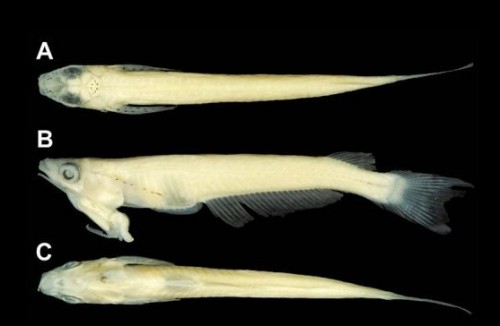
Phallostethus cuulong – fish that has penis on its head discovered in Vietnam

A new fish species belonging to the Phallostethidae family was recently discovered in Vietnam’s Mekong Delta.

Found in the waters of Southeast Asia, these fish are characterized as unusual due to their penises being positioned on their heads.

Phallostethus cuulong, as researchers call it, was reportedly long known about by the people residing in the Mekong Delta area, but the fish was just recently discovered by scientists.

“We have scientifically identified a new penis-head fish in Vietnam,” researcher Tran Dac Dinh from Can Tho University said.

http://www.weirdasianews.com/2012/09/15/researchers-discover-penishead-fish-vietnam/


Scottish wildcat soon to be extinct

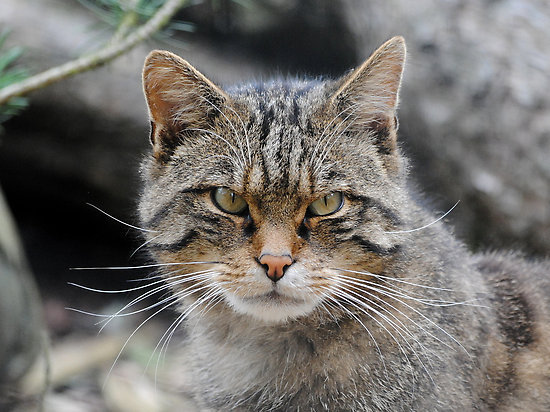
Scottish wildcats may be the next species to be wiped out from the earth, as conservationists say the numbers of pure-bred cats may have fallen to about 35 individuals.

According to the Daily Mail, a team from the Scottish Wildcat Association (SWA) reviewed 2,000 records of camera trap sightings, eyewitness reports and road kills.

The analysis suggested there could be just 35 wildcats – also known as the Highland Tiger.

Other research also estimated there could be less than 400 pure-bred cats.

A report funded by the Scottish Natural Heritage (SNH) estimated there were 150 breeding pairs left.

Disease and inter-breeding with domestic and feral cats are said to be among the main threats to pure-bred wildcats.


The SWA said licensed trapping of the mammals should be allowed so blood samples could be taken in an effort to better understand the state of the population. It has also suggested relocating pure wildcats to areas where there are fewer risks.

http://www.phenomenica.com/2012/09/scottish-wildcats-may-become-extinct-only-35-left.html

Maryland installs cameras to take pictures of cameras


Many people find speed cameras frustrating, and some in the region are taking their rage out on the cameras themselves.

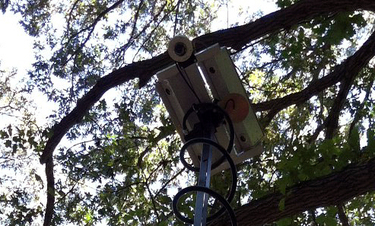
But now there’s a new solution: cameras to watch the cameras.

One is already in place, and Prince George’s County Police Maj. Robert V. Liberati hopes to have up to a dozen more before the end of the year.

“It’s not worth going to jail over a $40 ticket or an arson or destruction of property charge,” says Liberati.

Liberati is the Commander of the Automated Enforcement Section, which covers speed and red-light cameras.

Since April, six people have damaged speed cameras.

On April 6, someone pulled a gun out and shot a camera on the 11400 block of Duley Station Road near U.S. 301 in Upper Marlboro, Md.

Two weeks later, a speed camera was flipped over at 500 Harry S. Truman Drive, near Prince George’s Community College. Police believe several people were involved because of the weight of the camera itself.

Then in May, someone walked up to a camera on Brightseat Road near FedEx Field, cut off one of the four legs, and left.

“I guess that makes a statement, but we were able to just attach another leg,” says Liberati.

But when someone burned down a speed camera on Race Track Road near Bowie State College on July 3, Liberati and his colleagues began to rethink their strategy.

“It costs us $30,000 to $100,000 to replace a camera. That’s a significant loss in the program. Plus it also takes a camera off the street that operates and slows people down. So there’s a loss of safety for the community,” says Liberati

The Prince George’s County Police Department decided it needed to catch the vandals, or at least deter them.

“The roads are choked, there are lots of drivers on them. I think traffic itself is the cause of frustration (towards speed cameras). But, we have a duty to make the roads safe, even if takes a couple extra minutes to get to your destination. Unfortunately, that’s the Washington area, the place we live in,” says Liberati.

Speed cameras themselves can’t be used for security because under Maryland law speed cameras can only take pictures of speeding, says Liberati.

“We’ve taken the additional step of marking our cameras to let people know that there is surveillance.”

Liberati says the cameras aren’t a case of Big Brother nor a cash grab, police are simply trying to keep the public safe from reckless drivers.

http://www.wtop.com/41/3034979/New-cameras-to-watch-cameras-that-watch-you

Traffic ticket paid with 137 origami pigs

A miffed motorist who received a $137 traffic ticket stuck it to the police when he paid the fine with 137 origami pigs made of  $1 bills in a couple of Dunkin’ Donuts boxes.

With a phone propped in his shirt pocket to record the transaction, a man that uses that moniker “Bacon Moose” on YouTube arrived to make a municipal court payment for a ticket that he thought was unfair. The video does not indicate the man’s name, the court jurisdiction or when the fine was paid.

“I got this ticket in a town where the cops (and absurd red light cameras) are pretty much a money trap and that’s it. I decided to pay in an appropriate manner — 137 origami pig $1 bills, put in a pair of dozen Dunkin’ Donuts boxes,” he wrote on YouTube.

In the video, which has now been viewed over 180,000 times on YouTube, “Bacon Moose” approaches the counter, where an office worker tries to accept the payment for the ticket, only to find that it presented in a very unique fashion. He refuses to accept it as “Bacon Moose” insists that its legal tender.

“I understand that, but the way that you have it folded, I’m not going to sit here and unfold all of that,” the employee says.

“Bacon Moose” continued to protest, insisting that his payment be accepted.

“How different is this then if I had crumpled bills in my pocket? I am offering you to pay in cash right now. I would have paid by card, but you offer a 5 percent fee for that,” he said.

The officer worker is baffled.

“Why would you do that? Times are tough. Why would you take the time to fold all of these up?” the employee asks.

Eventually, the clerk brings over a uniformed police officer to assess the situation. That officer quite politely asks “Bacon Moose” to step over to the counter and unfold the bills.

“Bacon Moose” finally agrees. Moments later in the clip, it suddenly dawns on that officer what he is looking at.

“Little piggies in a donut box! I got it, I got it!” he laughs.

Eventually while counting the bills, the officer worker begins to see the humor, particularly as “Bacon Moose” identifies one of the origami pigs as Admiral Ackbacon, the sole survivor of a great pig massacre of 2012.

“I will give you props,” the clerk says. “You have made me laugh for the day. I will give you mad props on you taking your time to do each and every one of these.”

“Bacon Moose” added a title to the clip noting that it took eight minutes to count the money, but it only took three minutes to unfold it.  He notes that he lost track after four hours of how long it took him to fold all the dollar bills.  He documented the process here.


How childhood neglect affects the brain


Science is painting a dramatic picture of how childhood neglect damages developing brains, so stunting them that neglect might be likened to physically violent abuse.

The latest addition to this research narrative comes from a study of mice placed in isolation early in their lives, an experiment that, on its surface, might seem redundant: After all, we already know that neglect is bad for humans, much less mice.

But they key to the study is in the details. The researchers found striking abnormalities in tissues that transmit electrical messages across the brain, suggesting a specific mechanism for some of the dysfunctions seen in neglected human children.

“This is very strong evidence that changes in myelin cause some of the behavioral problems caused by isolation,” said neurologist Gabriel Corfas of Harvard Medical School, a co-author of the new study, released Sept. 13 in Science.


Corfas and his team, led by fellow Harvard Med neuroscientist Manabu Makinodan, put 21-day-old mice in isolation for two weeks, then returned them to their colonies. When the mice reached adolescence, the researchers compared their brains and behavior to mice who hadn’t been isolated.

The isolated mice were antisocial, with striking deficits in memory. Their myelin, a cell layer that forms around neuronal networks like insulation around wires, was unusually thin, especially in the prefrontal cortex, a brain region central to cognition and personality.

Similar patterns of behavior have been seen, again and again, in children raised in orphanages or neglected by parents, as have changes to a variety of brain regions, including the prefrontal cortex. The myelin deficiencies identified by Corfas and Makinodan may underlie these defects.


“This is incredibly important data, because it gives us the neural mechanisms associated with the deleterious changes in the brain” that arise from neglect, said Nathan Fox, a cognitive neuroscientist at the University of Maryland.

Fox was not involved in the new study, but is part of a research group working on a long-term study of childhood neglect that is scientifically striking and poignantly tragic. Led by Harvard Medical School pediatricians Charles Nelson and Margaret Sheridan, the project has tracked for the last 12 years children who started their lives in an orphanage in Bucharest, Romania, a country infamous for the spartan, impersonal conditions of its orphanages.

Among children who spent their first two years in the orphanage, the researchers observed high levels developmental problems, cognitive deficits, mental illness, and significant reductions in brain size. When the researchers measured the sheer amount of electrical activity generated by the brains of children who’d been isolated as toddlers, “it was like you’d had a rheostat, a dimmer, and dimmed down the amount of energy in these institutionalized children,” said Fox.

These problems persisted even when toddlers were later adopted, suggesting a crucial importance for those early years in setting a life’s neurological trajectory. “There’s a sensitive period for which, if a child is taken out of an institution, the effects appear to be remediated, and after which remediation is very, very difficult,” Fox said. The same pattern was observed in Corfas and Makinodan’s mice.

One phenomenon not studied in the mice, but regularly found in people neglected as children, are problems with stress: mood disorders, anxiety, and general dysfunction in a body’s stress responses.

Those mechanisms have been studied in another animal, the rhesus monkey. While deprivation studies on non-human primates — and in particular chimpanzees — are controversial, the results from the monkey studies have been instructive.

Early-life isolation sets off a flood of hormones that permanently warp their responses to stress, leaving them anxious and prone to violent swings in mood.

Isolation is so damaging because humans, especially as infants, literally depend on social stimulation to shape their minds, said psychologist John Cacioppo of the University of Chicago.

“Human social processes were once thought to have been incidental to learning and cognition,” Cacioppo wrote in an e-mail. “However, we now think that the complexities and demands of social species have contributed to the evolution of the brain and nervous system and to various aspects of cognition.”

Corfas and Makinodan’s team linked specific genetic changes to the abnormalities in their mice, and hope they might someday inform the development of drugs that can help reverse isolation’s effects.

A more immediate implication of the research is social. As evidence of neglect’s severe, long-term consequences accumulates, it could shape the way people think not just of orphanages, but policy matters like maternity and paternity leave, or the work requirements of single parents on welfare.

“What this work certainly says is that the first years of life are crucially important for brain architecture,” Fox said. “Infants and young children have to grow up in an environment of social relationships, and experiencing those is critical for healthy cognitive, social and psychological development. As a society, we should be figuring out how to encourage all that to happen.”

Thanks to Kebmobee for bringing this to the attention of the It’s Interesting community.

http://www.wired.com/wiredscience/2012/09/neuroscience-of-neglect/

New monkey species discovered: Cercopithecus Lomamiensis

Scientists are claiming they have discovered a new species of monkey living  in the remote forests of the Democratic Republic of Congo — an animal  well-known to local hunters but until now, unknown to the outside world.

In a paper published Wednesday in the open-access journal Plos One, the  scientists describe the new species that they call Cercopithecus Lomamiensis,  known locally as the Lesula, whose home is deep in central DR Congo’s Lomami  forest basin. The scientists say it is only the second discovery of a monkey  species in 28 years.

In an age where so much of the earth’s surface has been photographed,  digitized, and placed on a searchable map on the web discoveries like this one  by a group of American scientists this seem a throwback to another time.

“We never expected to find a new species there,” says John Hart, the lead  scientist of the project, “but the Lomami basin is a very large block that has  had very little exploration by biologists.”

Hart says that the rigorous scientific process to determine the new species  started with a piece of luck, strong field teams, and an unlikely field sighting  in a small forest town.

“Our Congolese field teams were on a routine stop in Opala. It is the closest  settlement of any kind to the area of forest we were working in,” says Hart.

The team came across a strange looking monkey tethered to a post. It was the  pet of Georgette, the daughter of the local school director.

She adopted the young monkey when its mother was killed by a hunter in the  forest. Her father said it was a Lesula, well-known to hunters in that part of  the forest. The field team took pictures and showed them to Hart.

“Right away I saw that this was something different. It looked a bit like a  monkey from much further east, but the coloring was so different and the range  was so different,” said Hart.

The monkey to the east is the semi-terrestrial owl-faced monkey. Based on the  photos, Hart believed that their shape and size could be similar, but their  morphology or outward appearance was very distinct.

The Lesula had strikingly large, almost human like, eyes, a pink face and  golden mane. Far to the east, across several large river systems, the Owl Face  is aptly named. Its sunken eyes are set deep in a dark face, a white stripe  running down from its brow to its mouth, like a line of chalk on a  blackboard.

To a layman it looks like an open and shut case. But animals are often widely  divergent within a species — humans are an obvious example — so Hart and his  team needed science to prove their gut feeling.

“I got in touch with geneticists and anthropologists to get their advice. I  knew it was important to have a collaborative team of experts,” says Hart.

The exhaustive study took three years.

Hart’s teams set up digital sound recorders in the forests to record the  morning calls of the Owl Face and Lesula monkeys. They analyzed the ecology of  the forest and behavior of the shy and difficult to observe monkey.

Field teams collected Lesula specimens from hunters and monkeys freshly  killed by leopards and once, a crowned eagle (the field worker had to wait for  the eagle to leave its perch, says Hart). The specimens were shipped to two  research centers in the U.S and the data shared with labs across the  country.

Christopher Gilbert, an anthropologist based at Hunter College in Manhattan,  says the difference in appearance between the Lesula and Owl Face was  striking.

“After comparing the skins, we immediately concluded that this was probably  something different that we had seen before,” says Gilbert, an expert in primate  and monkey evolution.

Skulls of the Lesula and Owl Face monkey were measured with calipers and  digitally drawn in 3D. “We looked at the difference in shape and a number of  landmarks in the skulls,” says Gilbert.

While the Owl Face and Lesula had similar sized skulls, he says, the Lesula  had significantly larger orbits and several other small, but statistically  significant, differences in the hard anatomy of the skull.

The anatomical studies are backed up by genetics. Scientists at New York  University and Florida Atlantic University were able trace an ancient common  ancestor. Scientists believe the monkeys evolved separately after a series of  rivers separated their habitats.

“The clincher was that lab and field teams were able to document significant  difference in conjunction with the genetics. The monkeys were different and have  been different for a couple of million years. It demonstrates that there are  places in the world that we do not know much about,” says Gilbert.

The Lesula’s range covers an area of about 6,500 square miles (17,000 square  kilometers) between the Lomani and Tshuapa Rivers. Until recently, it was one of  the Congo’s least biologically explored forest blocks.

Hart hopes that the announcement will bring a renewed effort to save central  Africa’s pristine forests. Under threat by loggers, bush meat hunters, and weak  national governments, the forests are a potential well of important scientific discoveries, and a key linchpin of the earth’s  biodiversity.

Teresa and John Hart’s Lukuru Foundation is working with the Congolese  authorities to establish a national park in the Lomani basin before it loses its  unique biodiversity.

“The challenge now is to make the Lesula an iconic species that carries the  message for conservation of all of DR Congo’s endangered fauna,” says Hart.

And what of the first Lesula they found — Georgette’s pet. After he saw the  pictures, Hart regularly sent a team to keep track of the young Lesula’s  progress. At some point Georgette let the monkey roam free.

“It seems someone captured it,” says Hart, “it probably ended up in the  cooking pot.”

He hopes that with proper protection, the Lesula, and the rest of Lomani’s  incredible animal biodiversity, won’t suffer a similar fate.

Read more: http://www.abc15.com/dpp/news/national/scientists-discover-new-monkey#ixzz26JLXnMcp