Frozen waterfall after man leaves tap running

icefall

A man at Jilin city in Northeastern China’s Jilin Province left the tap on all winter – creating this spectacular frozen waterfall.

Wen Hsu, 58, had lived on the seventh floor of the property scheduled for demolition to make way for a new shopping centre for 35 years and when developers managed to buy all the other flats in the building – he was left as the only resident. As winter approached and it got colder Hsu was worried that the uninsulated water pipes running up through the unused and unheated flats below him would freeze, leaving him without running water. So in order to keep the temperature of the pipes above freezing he simply switched on the tap – and then diverted the warm water to flow down the side of the building.

He said: “The water running into the pipe is from underground where it is above freezing and that is stopping the water pipes in my house from freezing. If that had happened I really would have had to move out. They want me to move but what they were offering was not enough for me to get another place so I’m refusing to leave. I don’t have anywhere to go anyway.”

The spectacular waterfall has drawn attention to his case in national media and council officials are now urging developers to settle the matter so that the project can move on.

Hsu said: “The weather is warmer now so there is no danger of the pipes freezing – although I think it might take awhile for the waterfall to melt. In any case I understand the developers may be prepared to make me a better offer now – I hope so. It is very lonely here in my apartment with nobody else around.”

http://austriantimes.at/news/Around_the_World/2013-04-17/48067/NO_FOOL_-Ice_Water_Fall_Publicises_Row_With_Developers

Builders of Giza pyramids ate more than 4,000 pounds of meat everyday

sphinx-27small

The builders of the famous Giza pyramids feasted on food from a massive catering-type operation, the remains of which scientists have discovered at a workers’ town near the pyramids. The workers’ town is located about 1,300 feet (400 meters) south of the Sphinx, and was used to house workers building the pyramid of pharaoh Menkaure, the third and last pyramid on the Giza plateau. The site is also known by its Arabic name, Heit el-Ghurab, and is sometimes called “the Lost City of the Pyramid Builders.”

So far, researchers have discovered a nearby cemetery with bodies of pyramid builders; a corral with possible slaughter areas on the southern edge of workers’ town; and piles of animal bones. Based on animal bone findings, nutritional data, and other discoveries at this workers’ town site, the archaeologists estimate that more than 4,000 pounds of meat – from cattle, sheep and goats – were slaughtered every day, on average, to feed the pyramid builders, Discovery News reported.

This meat-rich diet, along with the availability of medical care (the skeletons of some workers show healed bones), would have been an additional lure for ancient Egyptians to work on the pyramids.

“People were taken care of, and they were well fed when they were down there working, so there would have been an attractiveness to that,” Richard Redding, chief research officer at Ancient Egypt Research Associates (AERA), a group that has been excavating and studying the workers’ town site for about 25 years, said.

“They probably got a much better diet than they got in their village,” he said.

At the workers’ town, which was likely occupied for 35 years, researchers have discovered a plethora of animal bones.

Although the researchers are still unsure of the exact number of bones, Redding estimates he has identified about 25,000 sheep and goats, 8,000 cattle and 1,000 pig bones, he wrote in a paper published in the book “Proceedings of the 10th Meeting of the ICAZ Working Group ‘Archaeozoology of southwest Asia and adjacent Areas’” (Peeters Publishing, 2013).

About 10,000 workers helped build the Menkaure pyramid, with a smaller work force present year-round to cut stones and complete preparation and survey work, the AERA team estimates.

This smaller work force would have ramped up for a few months starting around July of each year.

“What they would do is, for about four or five months a year, they would bring in a big work force to move blocks, and they would do nothing but move blocks,” Redding, who is also a research scientist at the Kelsey Museum of Archaeology and a member of the faculty at the University of Michigan, said.

Needless to say, pyramid building is hard work. The workers would need at least 45 to 50 grams of protein a day, Redding said.

Half of this protein would likely come from fish, beans, lentils and other non-meat sources, while the other half would come from sheep, goat and cattle, he estimated.

Milk and cheese were probably not consumed due to transportation problems and the cattle’s low milk yield during that time, Redding said.

Combining these requirements and other protein sources with the ratio of the bones (and the amount of meat and protein one can get from an animal), Redding determined about 11 cattle and 37 sheep or goats were consumed each day.

This would be in addition to supplying workers with grain, beer and other products.

In order to maintain this level of slaughter, the ancient Egyptians would have needed a herd of 21,900 cattle and 54,750 sheep and goats just to keep up regular delivery to the Giza workers, Redding said.

http://www.phenomenica.com/2013/04/builders-of-giza-pyramids-ate-more-than-4000-pounds-of-meat-everyday.html

Michigan judge holds himself in contempt of court for his cell phone

bk052

A Michigan judge whose smartphone disrupted a hearing in his own courtroom has held himself in contempt and paid $25 for the infraction. Judge Raymond Voet has a posted policy at Ionia County 64A District Court stating that electronic devices causing a disturbance during court sessions will result in the owner being cited with contempt, the Sentinel-Standard of Ionia and MLive.com reported.

On Friday afternoon, during a prosecutor’s closing argument as part of a jury trial, Voet’s new smartphone began to emit sounds requesting phone voice commands. Voet said he thinks he bumped the phone, and the embarrassment likely left his face red.

“I’m guessing I bumped it. It started talking really loud, saying ‘I can’t understand you. Say something like Mom,'” he said.

Voet has used a Blackberry mobile phone for years, and said he wasn’t as familiar with the operation of the new touchscreen, Windows-based phone.

“That’s an excuse, but I don’t take those excuses from anyone else. I set the bar high, because cellphones are a distraction and there is very serious business going on,” he said. “The courtroom is a special place in the community, and it needs more respect than that.”

Over the years, the judge whose court is about 110 miles northwest of Detroit has taken phones away from police officers, attorneys, witnesses, spectators and friends. During a break in the trial, Voet held himself in contempt, fined himself and paid the fine.

“Judges are humans,” Voet said. “They’re not above the rules. I broke the rule and I have to live by it.”

http://www.wxow.com/story/21977920/judge-holds-self-in-contempt-for-his-smartphone

U.S.Congres insisting on building tanks the the Army says they don’t need

tanks

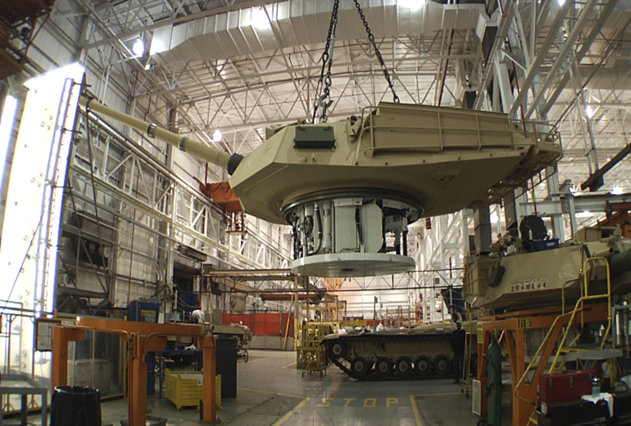
Built to dominate the enemy in combat, the Army’s hulking Abrams tank is proving equally hard to beat in a budget battle.

Lawmakers from both parties have devoted nearly half a billion dollars in taxpayer money over the past two years to build improved versions of the 70-ton Abrams.

But senior Army officials have said repeatedly, “No thanks.”

It’s the inverse of the federal budget world these days, in which automatic spending cuts are leaving sought-after pet programs struggling or unpaid altogether. Republicans and Democrats for years have fought so bitterly that lawmaking in Washington ground to a near-halt.

Yet in the case of the Abrams tank, there’s a bipartisan push to spend an extra $436 million on a weapon the experts explicitly say is not needed.

“If we had our choice, we would use that money in a different way,” Gen. Ray Odierno, the Army’s chief of staff, told The Associated Press this past week.

Why are the tank dollars still flowing? Politics.

Keeping the Abrams production line rolling protects businesses and good paying jobs in congressional districts where the tank’s many suppliers are located.

If there’s a home of the Abrams, it’s politically important Ohio. The nation’s only tank plant is in Lima. So it’s no coincidence that the champions for more tanks are Rep. Jim Jordan and Sen. Rob Portman, two of Capitol’s Hill most prominent deficit hawks, as well as Democratic Sen. Sherrod Brown.

They said their support is rooted in protecting national security, not in pork-barrel politics.

“The one area where we are supposed to spend taxpayer money is in defense of the country,” said Jordan, whose district in the northwest part of the state includes the tank plant.

The Abrams dilemma underscores the challenge that Defense Secretary Chuck Hagel faces as he seeks to purge programs that the military considers unnecessary or too expensive in order to ensure there’s enough money for essential operations, training and equipment.

Hagel, a former Republican senator from Nebraska, faces a daunting task in persuading members of Congress to eliminate or scale back projects favored by constituents.

Federal budgets are always peppered with money for pet projects. What sets the Abrams example apart is the certainty of the Army’s position.

Sean Kennedy, director of research for the nonpartisan Citizens Against Government Waste, said Congress should listen when one of the military services says no to more equipment.

“When an institution as risk averse as the Defense Department says they have enough tanks, we can probably believe them,” Kennedy said.

Congressional backers of the Abrams upgrades view the vast network of companies, many of them small businesses, that manufacture the tanks’ materials and parts as a critical asset that has to be preserved. The money, they say, is a modest investment that will keep important tooling and manufacturing skills from being lost if the Abrams line were to be shut down.

The Lima plant is a study in how federal dollars affect local communities, which in turn hold tight to the federal dollars. The facility is owned by the federal government but operated by the land systems division of General Dynamics, a major defense contractor that spent close to $11 million last year on lobbying, according to the nonpartisan Center for Responsive Politics.

Jordan, a House conservative leader who has pushed for deep reductions in federal spending, supported the automatic cuts known as the sequester that require $42 billion to be shaved from the Pentagon’s budget by the end of September. The military also has to absorb a $487 billion reduction in defense spending over the next 10 years, as required by the Budget Control Act passed in 2011.

The plant is Lima’s fifth-largest employer with close to 700 employees, down from about 1,100 just a few years ago, according to Mayor David Berger. But the facility is still crucial to the local economy. “All of those jobs and their spending activity in the community and the company’s spending probably have about a $100 million impact annually,” Berger said.

Still, said Jordan, it would be a big mistake to stop producing tanks.

“Look, (the plant) is in the 4th Congressional District and my job is to represent the 4th Congressional District, so I understand that,” he said. “But the fact remains, if it was not in the best interests of the national defense for the United States of America, then you would not see me supporting it like we do.”

The tanks that Congress is requiring the Army to buy aren’t brand new. Earlier models are being outfitted with a sophisticated suite of electronics that gives the vehicles better microprocessors, color flat panel displays, a more capable communications system, and other improvements. The upgraded tanks cost about $7.5 million each, according to the Army.

Out of a fleet of nearly 2,400 tanks, roughly two-thirds are the improved versions, which the Army refers to with a moniker that befits their heft: the M1A2SEPv2, and service officials said they have plenty of them. “The Army is on record saying we do not require any additional M1A2s,” Davis Welch, deputy director of the Army budget office, said this month.

The tank fleet, on average, is less than 3 years old. The Abrams is named after Gen. Creighton Abrams, one of the top tank commanders during World War II and a former Army chief of staff.

The Army’s plan was to stop buying tanks until 2017, when production of a newly designed Abrams would begin. Orders for Abrams tanks from U.S. allies help fill the gap created by the loss of tanks for the Army, according to service officials, but congressional proponents of the program feared there would not be enough international business to keep the Abrams line going.

This pause in tank production for the U.S. would allow the Army to spend its money on research and development work for the new and improved model, said Ashley Givens, a spokeswoman for the Army’s Ground Combat Systems office.

The first editions of the Abrams tank were fielded in the early 1980s. Over the decades, the Abrams supply chain has become embedded in communities across the country.

General Dynamics estimated in 2011 that there were more than 560 subcontractors throughout the country involved in the Abrams program and that they employed as many as 18,000 people. More than 40 of the companies are in Pennsylvania, according to Sen. Robert Casey, D-Pa., also a staunch backer of continued tank production.

A letter signed by 173 Democratic and Republican members of the House last year and sent to then-Defense Secretary Leon Panetta demonstrated the depth of bipartisan support for the Abrams program on Capitol Hill. They chided the Obama administration for neglecting the industrial base and proposing to terminate tank production in the United States for the first time since World War II.

Portman, who served as President George W. Bush’s budget director before being elected to the Senate, said allowing the line to wither and close would create a financial mess.

“People can’t sit around for three years on unemployment insurance and wait for the government to come back,” Portman said. “That supply chain is going to be much more costly and much more inefficient to create if you mothball the plant.”

Pete Keating, a General Dynamics spokesman, said the money from Congress is allowing for a stable base of production for the Army, which receives about four tanks a month. With the line open, Lima also can fill international orders, bringing more work to Lima and preserving American jobs, he said.

Current foreign customers are Saudi Arabia, which is getting about five tanks a month, and Egypt, which is getting four. Each country pays all of their own costs. That’s a “success story during a period of economic pain,” Keating said.

Still, far fewer tanks are coming out of the Lima plant than in years past. The drop-off has affected companies such as Verhoff Machine and Welding in Continental, Ohio, which makes seats and other parts for the Abrams. Ed Verhoff, the company’s president, said his sales have dropped from $20 million to $7 million over the past two years. He’s also had to lay off about 25 skilled employees and he expects to be issuing more pink slips in the future.

“When we start to lose this base of people, what are we going to do? Buy our tanks from China?” Verhoff said.

Steven Grundman, a defense expert at the Atlantic Council in Washington, said the difficulty of reviving defense industrial capabilities tends to be overstated.

“From the fairly insular world in which the defense industry operates, these capabilities seem to be unique and in many cases extraordinarily high art,” said Grundman, a former deputy undersecretary of defense for industrial affairs and installations during the Clinton administration. “But in the greater scope of the economy, they tend not to be.”

http://news.yahoo.com/army-says-no-more-tanks-115434897.html

Life quite possibly existed before Earth, claim scientists

origins+of+life

Life existed long before Earth came into being, and may have originated outside our solar system, scientists claim.

Researchers say life first appeared about 10 billion years ago – long before Earth, which is believed to be 4.5 billion years old. Geneticists have applied Moore’s Law – observation that computers increase exponentially in complexity, at a rate of about double the transistors per integrated circuit every two years – to the rate at which life on Earth grows in complexity.

Alexei Sharov of the National Institute on Ageing in Baltimore, and Richard Gordon of the Gulf Specimen Marine Laboratory in Florida, replaced the transistors with nucleotides – the building blocks of DNA and RNA – and the circuits with genetic material. Their findings suggest life first appeared about 10 billion years ago, far older than the Earth’s projected age of 4.5 billion years. Like in the 2012 sci-fi movie Prometheus, as our solar system was forming, pre-existing bacteria-like organisms, or even simple nucleotides from an older part of the galaxy, could have reached Earth by hitching an interstellar ride on comets, asteroids or other inorganic space debris.

However, the calculations are not a scientific proof that life predates Earth – there’s no way of knowing for sure that organic complexity increased at a steady rate at any point in the universe’s history.

“There are lots of hypothetical elements to (our argument) … But to make a wider view, you need some hypothetical elements,” Sharov said.

Sharov said that if he had to bet on it, he’d say “it’s 99 per cent true that life started before Earth – but we should leave one per cent for some wild chance that we haven’t accounted for.”

The theory of “life before Earth,” if found true, challenges the long-held science-fiction trope of the scientifically advanced alien species. If genetic complexity progresses at a steady rate, then the social and scientific development of any other alien life form in the Milky Way galaxy would be roughly equivalent to those of humans, the report said.

“Contamination with bacterial spores from space appears the most plausible hypothesis that explains the early appearance of life on Earth,” researchers said.

http://www.phenomenica.com/2013/04/life-did-exist-before-earth-claim-scientists.html

The Sun has 5 billion years left

here-comes-the-sun

The universe will continue expanding and the objects which it is composed of will move apart faster, causing stars, such as the Sun, to become fainter, although in the case of the Sun this will not happen for “more than 5 billion years”, Nobel laureate in physics Brian Schmidt said.

The US-born astrophysicist, who lives in Australia, won the Nobel Prize in Physics in 2011 along with Adam Riess and Saul Perlmutter for discovering that the universe is accelerating.

The greatest challenge for scientists today is figuring out the “dark energy” of which nearly 70 percent of the universe is made, Schmidt said.

http://www.phenomenica.com/2013/04/sun-has-5-billion-years-left.html

Shark behaviour affected by full moon

grey-reef-shark-moon

Grey reef sharks behave differently depending on the point in the lunar cycle, new research suggests.

THE DIVING BEHAVIOUR OF sharks appears to be influenced by the moon, water temperature and time of day, researchers have revealed.

A study of about 40 grey reef sharks, commonly found on coral reefs in northern Australia and the Indo-Pacific, found they stayed in deep water during a full moon and moved to shallow water with the new moon.

“To our knowledge, this is the first time such patterns have been observed in detail for reef sharks,” says lead researcher Gabriel Vianna, from the University of Western Australia (UWA) in Perth.

The sharks were tagged near Palau, east of the Philippines, and followed for two years. During this time, scientists from UWA and the Australian Institute of Marine Science recorded their movement and diving patterns.

The findings, published this week in the journal PLOS ONE, reveal that sharks descended to greater depths, and used a wider range of depths, around the time of the full moon.

Diving was also affected by seasonal changes, as the group, which mostly consisted of adult females, was recorded diving to an average depth of 35m in winter and 60m in spring.

In winter, the sharks remained closer to the surface, where the water was warmer. During summer, however, the sharks moved to a range of depths.

The researchers suggest that because sharks are cold blooded, they may prefer warmer water to conserve their energy. Warm water may also provide optimal conditions for foraging for food, the study says.

The findings also suggest that the time of day could affect how deeply sharks dive.

“We were surprised to see sharks going progressively deeper during the morning and the exact inverse pattern in the afternoon, gradually rising towards the surface,” says Gabriel, adding that the behaviour may relate to how much light is reflected on the reef at different times during the day.

Better knowledge of shark behaviour could help reduce the risk of sharks coming into contact with locals and tourists fishing, particularly if their diving behaviour can be predicted at certain times of the day.

“In places such as Palau, which relies heavily on marine tourism and where sharks are a major tourist attraction, the fishing of a few dozen sharks from popular dive sites could have a very negative impact on the national economy,” Gabriel says.

http://www.australiangeographic.com.au/journal/sharks-affected-by-full-moon.htm

Fundawear

Fundawear – a prototype conception from Durex Australia – adds an extra dimension to long-distance lovemaking through the use of hi-tech vibrating underwear that can be wirelessly stimulated via a mobile app. The intensity and location of the vibrations can be controlled with a flick of a finger.

To demonstrate, Durex recruited chirpy Bondi couple Nick and Dani to be the first to test it out. They were separated before the trial, and, in their own words, by the time they came to use Fundawear they felt like they hadn’t seen each other for “like, 100 years”.

Tech director Ben Moir, who is featured in the video, remains confident: “Fundawear is a project about transferring touch across vast distances and that really is a first globally,” he says. “People are gonna want this.”

Thanks to Ray Gaudette for bringing this to the attention of the It’s Interesting community.

Ben Affleck will live on food budget of $1.50 per day to raise money and awareness for poverty through Live Below the Line campaign

ben-affleck-argo

Actor Ben Affleck is getting ready to tackle his next project, which is raising money and awareness for global poverty, and that is why he will live on $1.50 per day. Affleck will start the challenge next week, and he will be joining thousands of others who will be doing the same challenge.

The campaign, Live Below the Line, bills itself as a campaign that challenges the way Americans’ think about poverty, and making a huge difference. Recently, the group announced on their Facebook page that Affleck will be taking part in the challenge, which requires those involved to feed themselves on $1.50 or less per day for five days.

Affleck announced on his Twitter profile that he was taking part in the challenge, and he also Tweeted that more than one billion people live on less than $1.50 per day. Affleck is following in the footsteps of fellow actor, Hugh Jackman, who started to work with Live Below the Line two years ago.

This year, stars such as Josh Groban and Tom Hiddleston are also joining the campaign.

Read more: http://www.digitaljournal.com/article/348761#ixzz2RZs9jsU0

Canadian professor intiates study on the health benefits of nose picking and eating

nose

Prof. Scott Napper, an associate professor of biochemistry at the Univ. of Saskatchewan, says it is serious and may be of benefit. Napper says he plans to study nose-picking – and eating. He’s going to put a molecule into noses of volunteers and get half to pick their nose and eat it while the other half will not. Noting that mucus keeps germs from our body, by swallowing it he believes that once inside us, the mucus might train our immune system to do the same thing. He will test the nose-picking and eating half of the study to see if their immune systems have picked up any germ-trapping and killing tips from the mucus.

“I think the challenge would be getting volunteers to participate in this experiment,” he said. “Especially if you didn’t know which group you were going to fall into.”

Read more: http://www.digitaljournal.com/article/348770#ixzz2RZuW54hS