Why music makes our brain sing

music

By ROBERT J. ZATORRE and VALORIE N. SALIMPOOR
Published: June 7, 2013

Music is not tangible. You can’t eat it, drink it or mate with it. It doesn’t protect against the rain, wind or cold. It doesn’t vanquish predators or mend broken bones. And yet humans have always prized music — or well beyond prized, loved it.

In the modern age we spend great sums of money to attend concerts, download music files, play instruments and listen to our favorite artists whether we’re in a subway or salon. But even in Paleolithic times, people invested significant time and effort to create music, as the discovery of flutes carved from animal bones would suggest.

So why does this thingless “thing” — at its core, a mere sequence of sounds — hold such potentially enormous intrinsic value?

The quick and easy explanation is that music brings a unique pleasure to humans. Of course, that still leaves the question of why. But for that, neuroscience is starting to provide some answers.

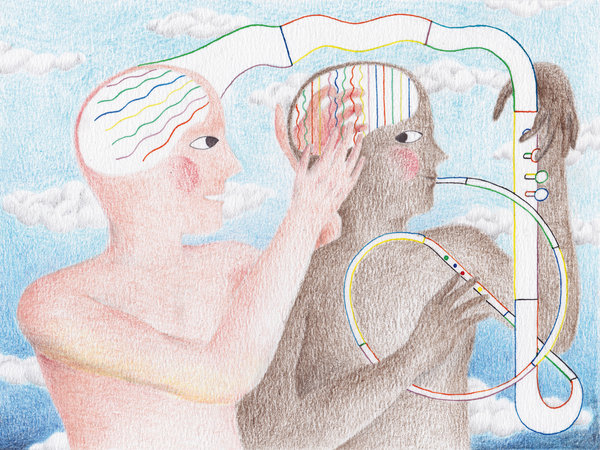
More than a decade ago, our research team used brain imaging to show that music that people described as highly emotional engaged the reward system deep in their brains — activating subcortical nuclei known to be important in reward, motivation and emotion. Subsequently we found that listening to what might be called “peak emotional moments” in music — that moment when you feel a “chill” of pleasure to a musical passage — causes the release of the neurotransmitter dopamine, an essential signaling molecule in the brain.

When pleasurable music is heard, dopamine is released in the striatum — an ancient part of the brain found in other vertebrates as well — which is known to respond to naturally rewarding stimuli like food and sex and which is artificially targeted by drugs like cocaine and amphetamine.

But what may be most interesting here is when this neurotransmitter is released: not only when the music rises to a peak emotional moment, but also several seconds before, during what we might call the anticipation phase.

The idea that reward is partly related to anticipation (or the prediction of a desired outcome) has a long history in neuroscience. Making good predictions about the outcome of one’s actions would seem to be essential in the context of survival, after all. And dopamine neurons, both in humans and other animals, play a role in recording which of our predictions turn out to be correct.

To dig deeper into how music engages the brain’s reward system, we designed a study to mimic online music purchasing. Our goal was to determine what goes on in the brain when someone hears a new piece of music and decides he likes it enough to buy it.

We used music-recommendation programs to customize the selections to our listeners’ preferences, which turned out to be indie and electronic music, matching Montreal’s hip music scene. And we found that neural activity within the striatum — the reward-related structure — was directly proportional to the amount of money people were willing to spend.

But more interesting still was the cross talk between this structure and the auditory cortex, which also increased for songs that were ultimately purchased compared with those that were not.

Why the auditory cortex? Some 50 years ago, Wilder Penfield, the famed neurosurgeon and the founder of the Montreal Neurological Institute, reported that when neurosurgical patients received electrical stimulation to the auditory cortex while they were awake, they would sometimes report hearing music. Dr. Penfield’s observations, along with those of many others, suggest that musical information is likely to be represented in these brain regions.

The auditory cortex is also active when we imagine a tune: think of the first four notes of Beethoven’s Fifth Symphony — your cortex is abuzz! This ability allows us not only to experience music even when it’s physically absent, but also to invent new compositions and to reimagine how a piece might sound with a different tempo or instrumentation.

We also know that these areas of the brain encode the abstract relationships between sounds — for instance, the particular sound pattern that makes a major chord major, regardless of the key or instrument. Other studies show distinctive neural responses from similar regions when there is an unexpected break in a repetitive pattern of sounds, or in a chord progression. This is akin to what happens if you hear someone play a wrong note — easily noticeable even in an unfamiliar piece of music.

These cortical circuits allow us to make predictions about coming events on the basis of past events. They are thought to accumulate musical information over our lifetime, creating templates of the statistical regularities that are present in the music of our culture and enabling us to understand the music we hear in relation to our stored mental representations of the music we’ve heard.

So each act of listening to music may be thought of as both recapitulating the past and predicting the future. When we listen to music, these brain networks actively create expectations based on our stored knowledge.

Composers and performers intuitively understand this: they manipulate these prediction mechanisms to give us what we want — or to surprise us, perhaps even with something better.

In the cross talk between our cortical systems, which analyze patterns and yield expectations, and our ancient reward and motivational systems, may lie the answer to the question: does a particular piece of music move us?

When that answer is yes, there is little — in those moments of listening, at least — that we value more.

Robert J. Zatorre is a professor of neuroscience at the Montreal Neurological Institute and Hospital at McGill University. Valorie N. Salimpoor is a postdoctoral neuroscientist at the Baycrest Health Sciences’ Rotman Research Institute in Toronto.

Thanks to S.R.W. for bringing this to the attention of the It’s Interesting community.

Ancient Irish texts show volcanic link to cold weather

irish volcano

By Matt McGrath

Environment correspondent, BBC News

Researchers have been able to trace the impact of volcanic eruptions on the climate over a 1200 year period by assessing ancient Irish texts.

The international team compared entries in these medieval annals with ice core data indicating volcanic eruptions.

Of 38 volcanic events, 37 were associated with directly observed cold weather extremes recorded in the chronicles.

The report is published in the journal Environmental Research Letters.

In the dim light of the Dark Ages, the Irish literary tradition stands out like a beacon.

At monastic centres across the island, scribes recorded significant events such as feast days, obituaries and descriptions of extreme cold and heat.

These chronicles are generally known as the Irish Annals and in this report, scientists and historians have looked at 40,000 entries in the texts dating from AD431 to 1649.

The researchers also looked at the Greenland Ice Sheet Project (GISP2) ice-core data.

When volcanoes erupt, they produce sulphate aerosol particles which down the centuries have been deposited on and frozen in ice sheets, leaving an extremely accurate temporal record of the event.

Scientists say these particles reflect incoming sunlight and can cause a temporary cooling of the Earth’s surface. In a country with a mild maritime climate like Ireland, these colder events would have a significant impact.

When the weather that is cold enough to allow you to walk over a lake in Ireland, it is pretty unusual,” lead author Dr Francis Ludlow, from Harvard University, told BBC News.

“When it happened, it was remarkable enough to be recorded pretty consistently.”

The scientists in the team identified 48 volcanic eruptions in the time period spanning 1,219 years. Of these, 38 were associated closely in time with extreme weather events identified in the Irish texts.

“These eruptions occur and they override existing climate patterns for a period of two or three years,” said Dr Ludlow.

“And it is clear from the sources that they cause a lot of devastation among societies at the time – whether it was the mass mortality of domestic animals or humans, or indirectly by causing harvest failure.”

The research team believe the texts are accurate as the annals also record solar and lunar eclipses which can be compared with other contemporary sources.

The keen recording of weather though had another motivation.

“A lot of these scribes are working in monasteries, in some time periods they are interpreting these weather events as divine omens or portents as signals of the coming of the last days,” said Dr Ludlow.

“That was one of their motivations so we are able to use the records that were created for a completely different purpose that the scribes would never have conceived.”

The researchers say that one expected effect of volcanic eruptions that occur in tropical regions is to make for milder winters in northern latitudes.

But in this study, they found several instances of these type of eruptions causing extremely cold winters in Ireland. The team believes their work shows the complex nature of volcanic impacts on climate, and they say there are lessons for the future in the ancient texts.

“That tells us a lot about what sort of weather we might expect in the British Isles when the next big eruption goes off,” said Dr Ludlow.

“We might want to buy a bit more salt for the roads.”

http://www.bbc.co.uk/news/science-environment-22786179

Thanks to Kebmodee for bringing this to the attention of the It’s Interesting community.
How technology may change the human face over the next 100,000 years

Faces-of-the-Future-4

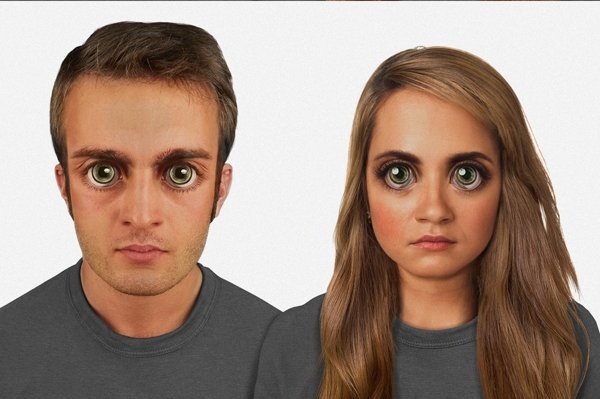
Designer Lamm’s depiction of how the human face might look in 100,000 years

We’ve come along way looks-wise from our homo sapien ancestors. Between 800,000 and 200,000 years ago, for instance, rapid changes in Earth climate coincided with a tripling in the size of the human brain and skull, leading to a flattening of the face. But how might the physiological features of human beings change in the future, especially as new, wearable technology like Google Glass change the way we use our bodies and faces? Artist and researcher Nickolay Lamm has partnered with a computational geneticist to research and illustrate what we might look like 20,000 years in the future, as well as 60,000 years and 100,000 years out. His full, eye-popping illustrations are at the bottom of this post.

Lamm says this is “one possible timeline,” where, thanks to zygotic genome engineering technology, our future selves would have the ability to control human biology and human evolution in much the same way we control electrons today.

Lamm speaks of “wresting control” of the human form from natural evolution and bending human biology to suit our needs. The illustrations were inspired by conversations with Dr. Alan Kwan, who holds a PhD in computational genomics from Washington University.

Kwan based his predictions on what living environments might look like in the future, climate and technological advancements. One of the big changes will be a larger forehead, Kwan predicts – a feature that has already expanding since the 14th and 16th centuries. Scientists writing in the British Dental Journal have suggested that skull-measurement comparisons from that time show modern-day people have less prominent facial features but higher foreheads, and Kwan expects the human head to trend larger to accommodate a larger brain.

Kwan says that 60,000 years from now, our ability to control the human genome will also make the effect of evolution on our facial features moot. As genetic engineering becomes the norm, “the fate of the human face will be increasingly determined by human tastes,” he says in a research document. Eyes will meanwhile get larger, as attempts to colonize Earth’s solar system and beyond see people living in the dimmer environments of colonies further away from the Sun than Earth. Similarly, skin will become more pigmented to lesson the damage from harmful UV radiation outside of the Earth’s protective ozone. Kwan expects people to have thicker eyelids and a more pronounced superciliary arch (the smooth, frontal bone of the skull under the brow), to deal with the effects of low gravity.

The remaining 40,000 years, or 100,000 years from now, Kwan believes the human face will reflect “total mastery over human morphological genetics. This human face will be heavily biased towards features that humans find fundamentally appealing: strong, regal lines, straight nose, intense eyes, and placement of facial features that adhere to the golden ratio and left/right perfect symmetry,” he says.

Eyes will seem “unnervingly large” — as least from our viewpoint today — and will feature eye-shine and even a sideways blink from the re-introduced plica semilunaris to further protect from cosmic ray effects.

There will be other functional necessities: larger nostrils for easier breathing in off-planet environments, denser hair to contain heat loss from a larger head — features which people may have to weigh up against their tastes for what’s genetically trendy at the time. Instead of just debating what to name a child as new parents do today, they might also have to decide if they want their children to carry the most natural expression of a couple’s DNA, such as their eye-color, teeth and other features they can genetically alter.

Excessive Borg-like technological implants would start to become untrendy, though, as people start to increasingly value that which makes us look naturally human. That “will be ever more important to us in an age where we have the ability to determine any feature,” Kwan says.

Wearable technology will still be around, but in far more subtle forms. Instead of Google Glass and iWatch, people will seek discrete implants that preserve the natural human look – think communication lenses (a technologically souped up version of today’s contacts) and miniature bone-conduction devices implanted above the ear. These might have imbedded nano-chips that communicate to another separate device to chat with others or for entertainment.

The bird’s eye view of human beings in 100,000 years will be people who want to be wirelessly plugged in, Kwan says, but with minimal disruption to what may then be perceived as the “perfect” human face.

His Predictions:

In 20,000 years: Humans have a larger head with a forehead that is subtly too large. A future “communications lens” will be manifested as a the yellow ring around their eyes. These lenses will be the ‘Google Glass’ of the future.

In 60,000 years: Human beings have even larger heads, larger eyes and pigmented skin. A pronounced superciliary arch makes for a darker area below eyebrows. Miniature bone-conduction devices may be implanted above the ear now to work with communications lenses.

In 100,000 years: The human face is proportioned to the ‘golden ratio,’ though it features unnervingly large eyes. There is green “eye shine” from the tapetum lucidum, and a more pronounced superciliary arch. A sideways blink of the reintroduced plica semilunaris seen in the light gray areas of the eyes, while miniature bone-conduction devices implanted above the ear work with the communications lenses on the eyes.

Thanks to Ray Gaudette for bringing this to the attention of the It’s Interesting community.
http://news.yahoo.com/human-face-might-look-100-171207969.html

Disney’s Electronic Wristband Illustrates Why Big Companies Push Contactless Wallets

disney

Disney just announced an electronic wristband for visitors to its theme parks that neatly illustrates why companies like Google and cellphone networks are pushing the idea of using contactless technology in phones for payments, tickets, boarding passes and more. The short answer? They want data.

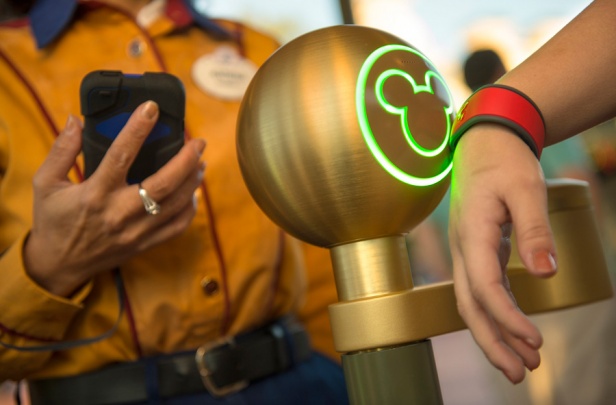
Disney’s MagicBand, an ID tag that uses Bluetooth and contactless NFC technology, is being introduced at Walt Disney World in Florida. It replaces a person’s ticket and can be used to tag into rides and other attractions at the park. It can also be used to open a guest’s hotel door, and to pay in stores at the resort. In the future, the Bluetooth link will make it possible for you to wander up to an attraction or Disney character and be greeted using your first name.

To sum up, a person opting to use a MagicBand could find their stay much more convenient, and perhaps even leave their wallet back at their hotel. It’s a very similar pitch to that made by companies including Google, and the consortium of major cellphone networks, Isis, for contactless “wallets” based on near field communication chips (NFC) built into phones.

However, Disney’s MagicBand program has significant benefits to the company, too. The MagicBand collects valuable data each time it is tagged or used to buy something, providing a new perspective on what Disney’s customers are doing at the resort. It becomes possible to do things like look for relationships between the attractions and rides a person visits, or the characters they meet, and what they spend money on in the gift shop. Disney could look for signs of the social dynamics of groups of people that arrive at the park together.

Disney has plans to install devices that use Bluetooth to log any MagicBand that passes by, said Thomas Staggs, chairman of Walt Disney Theme Parks and Resorts, Wednesday. People will be able to opt out of that part of the data collection he said, but whether data logged when a person actively tags a band would be treated in the same way wasn’t mentioned.

Using a contactless wallet app on your phone could provide similar data harvesting opportunities. A person using one might get to leave their wallet at home, and could pay for stuff or provide tickets and boarding passes with a tap of their phone. The provider of the wallet app would get a detailed feed on where its users went, what they were doing and what they spent money on.

Some people will be wary of such data collection, many more probably won’t care. Putting that issue aside, though, Disney’s MagicBand sounds like it is genuinely useful and thanks to the company’s ability to ensure everything inside its resorts works with the technology, could make your stay at Disney’s resort go more smoothly. The stuttering progress of NFC wallets and the like outside the magic kingdom – despite the hype – is to a large degree because the real world is a much messier place. Neither Google nor the cellphone carriers or other companies pushing their own MagicBand-style wallets can yet offer something that works in every store, with every bank and in every place. For now, the benefits of contactless wallets are much clearer to the providers of them than to consumers.

Thanks to Kebmodee for bringing this to the attention of the It’s Interesting community.

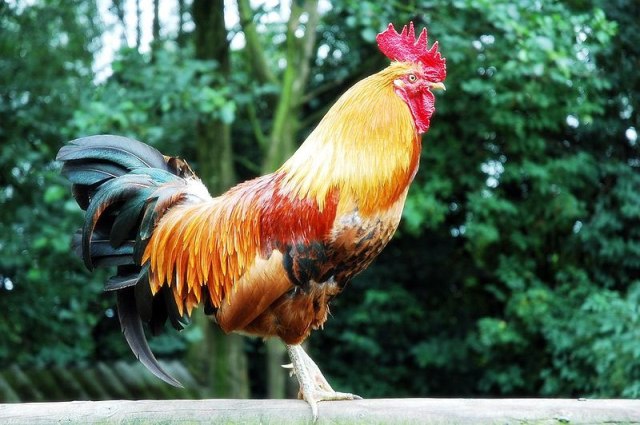
Scientists discover why the chicken lost its penis.

Duck_chicken_penisRooster

Researchers have now unraveled the genetics behind why most male birds don’t have penises, just published in Current Biology.
[Ana Herrera et al, Developmental Basis of Phallus Reduction During Bird Evolution]

There are almost 10,000 species of birds and only around 3 percent of them have a penis. These include ducks, geese and swans, and large flightless birds like ostriches and emus. In fact, some ducks have helical penises that are longer than their entire bodies. But eagles, flamingos, penguins and albatrosses have completely lost their penises. So have wrens, gulls, cranes, owls, pigeons, hummingbirds and woodpeckers. Chickens still have penises, but barely—they’re tiny nubs that are no good for penetrating anything.

In all of these species, males still fertilise a female’s eggs by sending sperm into her body, but without any penetration. Instead, males and females just mush their genital openings together and he transfers sperm into her in a maneuver called the cloacal kiss.

To get to the root of this puzzle, researchers compared the embryos of chickens and ducks. Both types of birds start to develop a penis. But in chickens, the genital tubercle shrinks before the little guys hatch. And it’s because of a gene called Bmp4.

“There are lots of examples of animal groups that evolved penises, but I can think of only a bare handful that subsequently lost them,” says Diane Kelly from the University of Massachusetts in Amherst. “Ornithologists have tied themselves in knots trying to explain why an organ that gives males an obvious selective advantage in so many different animal species disappeared in most birds. But it’s hard to address a question on why something happens when you don’t know much about how it happens.”

That’s where Martin Cohn came in. He wanted to know the how. His team at the University of Florida studies how limbs and genitals develop across the animal kingdom, from the loss of legs in pythons to genital deformities in humans. “In a lab that thinks about genital development, one takes notice when a species that reproduces by internal fertilization lacks a penis,” says graduate student Ana Herrera.

By comparing the embryos of a Pekin duck and a domestic chicken, Herrera and other team members showed that their genitals start developing in the same way. A couple of small swellings fuse together into a stub called the genital tubercle, which gradually gets bigger over the first week or so. (The same process produces a mammal’s penis.)

In ducks, the genital tubercle keeps on growing into a long coiled penis, but in the chicken, it stops around day 9, while it’s still small. Why? Cohn expected to find that chickens are missing some critical molecule. Instead, his team found that all the right penis-growing genes are switched on in the chicken’s tubercle, and its cells are certainly capable of growing.

It never develops a full-blown penis because, at a certain point, its cells start committing mass suicide. This type of ‘programmed cell death’ occurs throughout the living world and helps to carve away unwanted body parts—for example, our hands have fingers because the cells between them die when we’re embryos. For the chicken, it means no penis. “It was surprising to learn that outgrowth fails not due to absence of a critical growth factor, but due to presence of a cell death factor,” says Cohn.

His team confirmed this pattern in other species, including an alligator (crocodilians are the closest living relatives of birds). In the greylag goose, emu and alligator, the tubercle continues growing into a penis, with very little cell death. In the quail, a member of the same order as chickens, the tubercle’s cells also experience a wave of death before the organ can get big.

This wave is driven by a protein called Bmp4, which is produced along the entire length of the chicken’s tubercle, but over much less of the duck’s. When Cohn’s team soaked up this protein, the tubercle’s cells stopped dying and carried on growing. So, it’s entirely possible for a chicken to grow a penis; it’s just that Bmp4 stops this from happening. Conversely, adding extra Bmp protein to a duck tubercle could stop it from growing into its full spiralling glory, forever fixing it as a chicken-esque stub.

Bmp proteins help to control the shape and size of many body parts. They’re behind the loss of wings in soldier ants and teeth of birds. Meanwhile, bats blocked these proteins to expand the membranes between their fingers and evolve wings.

They also affect the genitals of many animals. In ducks and geese, they create the urethra, a groove in the penis that sperm travels down (“If you think about it, that’s like having your urethra melt your penis,” says Kelly.) In mice, getting rid of the proteins that keep Bmp in check leads to tiny penises. Conversely, getting rid of the Bmp proteins leads to a grossly enlarged (and almost tumour-like) penis.

Penises have been lost several times in the evolution of birds. Cohn’s team have only compared two groups—the penis-less galliforms (chickens, quails and pheasants) and the penis-equipped anseriforms (swans, ducks and geese). What about the oldest group of birds—the ratites, like ostriches or emus? All of them have penises except for the kiwis, which lost theirs. And what about the largest bird group, the neoaves, which includes the vast majority of bird species? All of them are penis-less.

Maybe, all of these groups lost their penis in different ways. To find out, Herrera is now looking at how genitals develop in the neoaves. Other teams will no doubt follow suit. “The study will now allow us to more deeply explore other instances of penis loss and reduction in birds, to see whether there is more than one way to lose a penis,” says Patricia Brennan from the University of Massachussetts in Amherst.

And in at least one case, what was lost might have been regained. The cracids—an group of obscure South American galliforms—have penises unlike their chicken relatives. It might have been easy for them to re-evolve these body parts, since the galliforms still have all the genetic machinery for making a penis.

We now know how chickens lost their penises, but we don’t know why a male animal that needs to put sperm inside a female would lose the organ that makes this possible. Cohn’s study hints at one possibility—it could just be a side effect of other bodily changes. Bmp4 and other related proteins are involved in the evolution of many bird body parts, including the transition from scales to feathers, the loss of teeth, and variations in beak size. Perhaps one of these transformations changed the way Bmp4 is used in the genitals and led to shrinking penises.

There are many other possible explanations. Maybe a penis-less bird finds it easier to fly, runs a smaller risk of passing on sexually-transmitted infections, or is better at avoiding predators because he mates more quickly. Females might even be responsible. Male ducks often force themselves upon their females but birds without an obvious phallus can’t do that. They need the female’s cooperation in order to mate. So perhaps females started preferring males with smaller penises, so that they could exert more choice over whom fathered their chicks. Combinations of these explanations may be right, and different answers may apply to different groups.

Thanks to Dr. Lutter for bringing this to the It’s Interesting community.

http://www.oddly-even.com/2013/06/06/how-chickens-lost-their-penises-and-ducks-kept-theirs_/

http://news.yahoo.com/why-did-chicken-lose-penis-165408163.html

Bosnian Shepherd kills brown bear with his bare hands

bear

A shepherd killed a brown bear with his bare hands when it charged him as he tended his flock. Blazo Grkovic gave the beast a ‘bear hug’ and strangled it as it swiped him with its paws and tried to bite him.

‘I grabbed it round the throat and squeezed and squeezed until it collapsed,’ the Bosnian said.

The 48-year-old, from a mountain region near Foča, in Bosnia and Herzegovina, went on to describe how he fought close up with the animal.

He admitted it was a tough battle and he was lucky to get out alive.

‘It bit me, and I hit it until it died. I have injuries everywhere, especially in my left arm where he bit me twice or three times,’ Mr Grkovic said from his hospital bed.

After dispatching the bear, the shepherd managed to call his brother, who turned up with an ambulance. The brave farmer was treated in hospital for cuts.

Shepherd ‘kills brown bear with his bare hands after squeezing its throat’

Ancient Egyptian jewellery carved from a meteorite

Gerzeh-bead

Think iron jewellery is down-to-earth? Not for the ancient Egyptians, it wasn’t. A 5300-year-old necklace bead found in an Egyptian tomb was made with iron from a meteorite.

Evidence for iron smelting in Egypt dates back to the 6th century BC, but archaeologists have found much older iron artefacts in the region, including in Tutankhamun’s tomb. Such artefacts are “pretty much exclusive to high-status tombs”, says Diane Johnson of the Open University in Milton Keynes, UK. Previous analyses of the oldest of these – nine iron beads from a cemetery near the Nile – proved inconclusive on their origins.

Now Johnson and colleagues have taken another look at one of the beads (pictured) and concluded that it is indeed from a meteorite. The surface of the bead had low levels of nickel, but the levels inside were as high as they would be in a meteorite.

But the clincher was evidence of a distinctive crystal structure – known as the Widmanstätten pattern – that only forms when iron and nickel cools very slowly, as it does in meteoroids (Meteoritics & Planetary Science, doi.org/mmb).

It is “very convincing” that the beads come from a meteorite, says Meenakshi Wadhwa of the Center for Meteorite Studies at Arizona State University in Tempe.

http://www.newscientist.com/article/mg21829195.500-ancient-egyptian-jewellery-carved-from-a-meteorite.html?cmpid=RSS|NSNS|2012-GLOBAL|online-news

Daredevil makes record-breaking leap from Mount Everest

The extreme sports enthusiast leaped off Mount Everest to mark 60 years since Edmund Hillary and Tensing Norgay conquered the world’s highest mountain.

Valery Rozov, 48, spent more than two years preparing for the jump, including considerable time devoted to developing a special new wingsuit.

Rozov and his team, which included four sherpas as well as photographers and camera crew, spent nearly three weeks in the Himalayas before the jump on May 5.

The ascent began on the Chinese side on the famous north route. It took Rozov four days to climb from the base camp to the jumping location, which was at an altitude of 7,220 meters.

The initial moments of the leap were the most critical phase as Rozov needed more time than usual in the freezing, thin high-altitude air to transition from freefall to flying.

But after falling for a few seconds, he flew for nearly a full minute at speeds of around 125mph along the north face before landing safely on the Rongbuk glacier – at an altitude of 5,950 meters.

Rozov has made it into headlines around the world in recent years for his spectacular leaps. In 2009 he jumped into an active volcano in the Far East on the Kamchatka Peninsula, in 2010 he leaped from the Ulvetanna in the Antarctic and in 2012 he jumped from the Shivling mountain in the Himalayas.

http://www.telegraph.co.uk/news/worldnews/asia/nepal/10085870/Watch-record-breaking-Everest-base-jump-filmed-on-daredevils-helmet-camera.html

Kettle that looks like Hitler brews trouble for JCPenney

hitler-kettle_2574818b

Trouble is brewing for an American retailer after customers noted that one of its tea kettles bears a striking resemblance to Adolf Hitler.

Bemused motorists took photographs of the huge JCPenney billboard advertising the kettle as they drove past it on the 405 Interstate highway near Culver City in California, one of America’s busiest stretches of roads.

“That Hitler looks like a kettle,” commented one user of Reddit, one of the several websites where the image was posted over the weekend.

“He even has his right arm extended,” wrote another, while a third added: “I’m a little Nazi, short and stout”.

Things that look Hitler have become a popular web meme – with the genre perhaps defined by the house in Swansea that bears an unsettling resemblance to the Nazi Fuhrer.

The kettle – officially the Michael Graves Design Bells and Whistles Stainless Steel Tea Kettle – retails for £35.08 on the JCPenney website, and can be delivered to the UK.

“This stainless steel tea kettle has all the bells and whistles you’ll need – a cool-touch handle, space-saving design and a delightful whistle to let you know when it’s ready to pour,” the website stated.

One reviewer on the website noted that she loved the kettle’s “sleek European design”. “My kids love when it boils and starts to whistle,” she wrote. “I can not say enough good things about this!”

A second reviewer was less enthralled, however, describing the quality of the kettle as “extremely poor”. “Mostly (sic) importantly the kettle’s bell does NOT ring and its whistle volume is extremely low!” the consumer wrote.

When listing pros, however, the same user noted that the appliance “looks beautiful”.

http://www.telegraph.co.uk/news/worldnews/northamerica/usa/10084348/Kettle-that-looks-like-Hitler-brews-trouble-for-JCPenney.html

German man spends 15 years with pencil in head

483047-130530-pencil-in-head

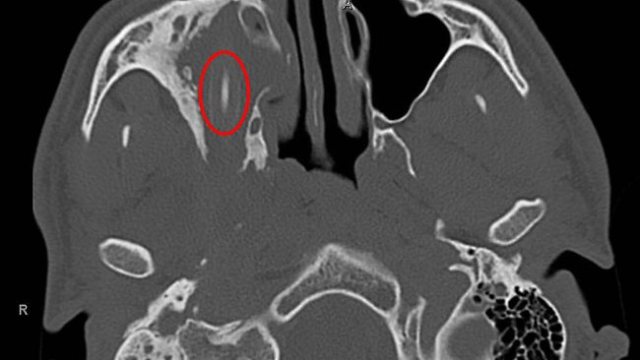
Aachen University Hospital says the 24-year-old man sought help in 2011 after suffering for years from headaches, constant colds and worsening vision in one eye. A scan showed that a four-inch pencil was lodged from his sinus to his pharynx and had injured his right eye socket.

The unnamed man said he did not know how the pencil got there but recalled that he once fell badly as a child.

The German doctors removed the pencil and say the man has recovered.

Hospital spokesman Mathias Brandstaedter said that the case was presented for the first time at a medical conference this week.

In 2007, a German woman plagued by headaches and nosebleeds had a pencil removed from inside her head after more than 50 years.

Margret Wegner, 59, fell over carrying the pencil in her hand when she was four.

“The pencil went right through my skin – and disappeared into my head,” she said at the time.

http://www.telegraph.co.uk/news/worldnews/europe/germany/10086679/German-man-spends-15-years-with-pencil-in-head.html