What commercial aircraft will look like in 2050

by Ashley Dove-Jay

The aircraft industry is expecting a seven-fold increase in air traffic by 2050, and a four-fold increase in greenhouse gas emissions unless fundamental changes are made. But just how “fundamental” will those changes need to be and what will be their effect on the aircraft we use?

The crucial next step towards ensuring the aircraft industry becomes greener is the full electrification of commercial aircraft. That’s zero CO2 and NOx emissions, with energy sourced from power stations that are themselves sustainably fuelled. The main technological barrier that must be overcome is the energy density of batteries, a measure of how much power can be generated from a battery of a certain weight.

Tesla CEO Elon Musk has said that once batteries are capable of producing 400 Watt-hours per kilogram, with a ratio of power cell to overall mass of between 0.7-0.8, an electrical transcontinental aircraft becomes “compelling”.

Given that practical lithium-ion batteries were capable of achieving energy-densities of 113Wh/kg in 1994, 202Wh/kg in 2004, and are now capable of approximately 300Wh/kg, it’s reasonable to assume that they will hit 400Wh/kg in the coming decade.

Another aspect is the exponential fall in the cost of solar panels, which have already become the cheapest form of power in most US states. The expected 70% reduction in cost of lithium-ion batteries by 2025, and the rapid rise seen in the cost of kerosene-based jet fuel means that there will be a large and growing disparity in the costs of running aircraft that will greatly favour electrification. As is often the case, the reasons that will slow transition are not technological, but are rooted in the economic and political inertia against overturning the status-quo.

Biofuels while we wait

Considering the average service-life of passenger and freight aircraft are around 21 and 33 years respectively, even if all new aircraft manufactured from tomorrow were fully electric, the transition away from fossil-fuelled aircraft would take two to three decades.

In the meantime, biofuel offers carbon emissions reductions of between 36-85%, with the variability depending on the type of land used to grow the fuel crops. As switching from one fuel to another is relatively straightforward, this is a low-hanging fruit worth pursuing before completely phasing out combustion engines.

Even though a biofuel-kerosene jet fuel blend was certified in 2009, the aircraft industry is in no hurry to implement change. There are minor technological hurdles and issues around scaling up biofuel production to industrial levels, but the main constraint is price – parity with fossil fuels is still ten years away.

The adoption of any new aircraft technology – from research, to design sketches, to testing and full integration – is typically a decade-long process. Given that the combustion engine will be phased out by mid-century, it would seem to make more economic and environmental sense to innovate in other areas: airframe design, materials research, electric propulsion design and air traffic control.

Bringing aircraft to life

In terms of the cost of computational power, computer technology is advancing more each hour today than it did in its entire first 90 years. With this in mind we can project that the equivalent of a US$1,000 computer today will by 2023 be more powerful than the potential brainpower of a human and, by 2045, will surpass the brainpower equivalent to all human brains combined.

The miniaturisation of digital electronics over the past half-century has followed a similar exponential trend, with the size of transistor gates reducing from approximately 1,000 nanometres in 1970 to 23 nanometres today. With the advent of transistors made of graphene showing great promise, this is expected to fall further to about 7 nanometres by 2025. By comparison, a human red blood cell is approximately 6,200-8,200 nanometres wide.

Putting together this increase in computational power and decrease in circuit size, and adding in the progress made with 3D-printing, at some point in the next decade we will be able to produce integrated computers powerful enough to control an aircraft at the equivalent of the cellular level in near real-time – wireless interlinking of nano-scale digital devices.

Using a biologically-inspired digital “nervous system” with receptors arranged over the aircraft sensing forces, temperatures, and airflow states could drastically improve the energy efficiency of aircraft, when coupled to software and hardware mechanisms to control or even change the shape of the aircraft in response.

Chopping the tail

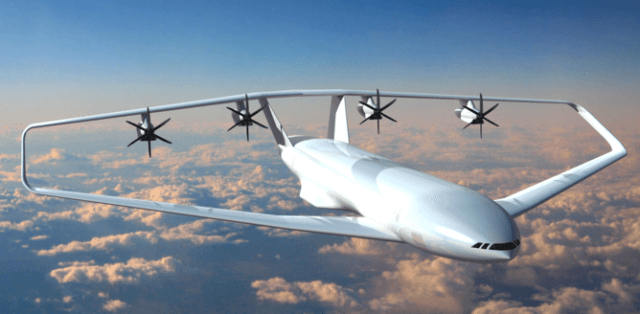
Once electric aircraft are established, the next step will be to integrate a gimballed propulsion system, one that can provide thrust in any direction. This will remove the need for the elevators, rudders, and tailplane control surfaces that current designs require, but which add significant mass and drag.

The wings we are already designing are near their peak in terms of aerodynamic efficiency, but they still do no justice to what nature has achieved in birds. Aircraft design templates are a century old – constrained by the limitations of the day then, but technology has since moved on. We no longer need to build wings as rigid structures with discrete control surfaces, but can turn to the natural world for inspiration. As Richard Feynman said:

I think nature’s imagination is so much greater than man’s, she’s never going to let us relax.

http://www.iflscience.com/technology/what-commercial-aircraft-will-look-2050

Human intelligence is withering as computers do more, but there’s a solution.


Computers are taking over the kinds of knowledge work long considered the preserve of well-educated, well-trained professionals.

By Nicholas Carr

Artificial intelligence has arrived. Today’s computers are discerning and sharp. They can sense the environment, untangle knotty problems, make subtle judgments and learn from experience. They don’t think the way we think—they’re still as mindless as toothpicks—but they can replicate many of our most prized intellectual talents. Dazzled by our brilliant new machines, we’ve been rushing to hand them all sorts of sophisticated jobs that we used to do ourselves.

But our growing reliance on computer automation may be exacting a high price. Worrisome evidence suggests that our own intelligence is withering as we become more dependent on the artificial variety. Rather than lifting us up, smart software seems to be dumbing us down.

It has been a slow process. The first wave of automation rolled through U.S. industry after World War II, when manufacturers began installing electronically controlled equipment in their plants. The new machines made factories more efficient and companies more profitable. They were also heralded as emancipators. By relieving factory hands of routine chores, they would do more than boost productivity. They would elevate laborers, giving them more invigorating jobs and more valuable talents. The new technology would be ennobling.

Then, in the 1950s, a Harvard Business School professor named James Bright went into the field to study automation’s actual effects on a variety of industries, from heavy manufacturing to oil refining to bread baking. Factory conditions, he discovered, were anything but uplifting. More often than not, the new machines were leaving workers with drabber, less demanding jobs. An automated milling machine, for example, didn’t transform the metalworker into a more creative artisan; it turned him into a pusher of buttons.

Bright concluded that the overriding effect of automation was (in the jargon of labor economists) to “de-skill” workers rather than to “up-skill” them. “The lesson should be increasingly clear,” he wrote in 1966. “Highly complex equipment” did not require “skilled operators. The ‘skill’ can be built into the machine.”

We are learning that lesson again today on a much broader scale. As software has become capable of analysis and decision-making, automation has leapt out of the factory and into the white-collar world. Computers are taking over the kinds of knowledge work long considered the preserve of well-educated, well-trained professionals: Pilots rely on computers to fly planes; doctors consult them in diagnosing ailments; architects use them to design buildings. Automation’s new wave is hitting just about everyone.

Computers aren’t taking away all the jobs done by talented people. But computers are changing the way the work gets done. And the evidence is mounting that the same de-skilling effect that ate into the talents of factory workers last century is starting to gnaw away at professional skills, even highly specialized ones. Yesterday’s machine operators are today’s computer operators.

Just look skyward. Since their invention a century ago, autopilots have helped to make air travel safer and more efficient. That happy trend continued with the introduction of computerized “fly-by-wire” jets in the 1970s. But now, aviation experts worry that we’ve gone too far. We have shifted so many cockpit tasks from humans to computers that pilots are losing their edge—and beginning to exhibit what the British aviation researcher Matthew Ebbatson calls “skill fade.”

In 2007, while working on his doctoral thesis at Cranfield University’s School of Engineering, Mr. Ebbatson conducted an experiment with a group of airline pilots. He had them perform a difficult maneuver in a flight simulator—bringing a Boeing jet with a crippled engine in for a landing in rough weather—and measured subtle indicators of their skill, such as the precision with which they maintained the plane’s airspeed.

When he compared the simulator readings with the aviators’ actual flight records, he found a close connection between a pilot’s adroitness at the controls and the amount of time the pilot had recently spent flying planes manually. “Flying skills decay quite rapidly towards the fringes of ‘tolerable’ performance without relatively frequent practice,” Mr. Ebbatson concluded. But computers now handle most flight operations between takeoff and touchdown—so “frequent practice” is exactly what pilots are not getting.

Even a slight decay in manual flying ability can risk tragedy. A rusty pilot is more likely to make a mistake in an emergency. Automation-related pilot errors have been implicated in several recent air disasters, including the 2009 crashes of Continental Flight 3407 in Buffalo and Air France Flight 447 in the Atlantic Ocean, and the botched landing of Asiana Flight 214 in San Francisco in 2013.

Late last year, a report from a Federal Aviation Administration task force on cockpit technology documented a growing link between crashes and an overreliance on automation. Pilots have become “accustomed to watching things happen, and reacting, instead of being proactive,” the panel warned. The FAA is now urging airlines to get pilots to spend more time flying by hand.

As software improves, the people using it become less likely to sharpen their own know-how. Applications that offer lots of prompts and tips are often to blame; simpler, less solicitous programs push people harder to think, act and learn.

Ten years ago, information scientists at Utrecht University in the Netherlands had a group of people carry out complicated analytical and planning tasks using either rudimentary software that provided no assistance or sophisticated software that offered a great deal of aid. The researchers found that the people using the simple software developed better strategies, made fewer mistakes and developed a deeper aptitude for the work. The people using the more advanced software, meanwhile, would often “aimlessly click around” when confronted with a tricky problem. The supposedly helpful software actually short-circuited their thinking and learning.

The philosopher Hubert Dreyfus of the University of California, Berkeley, wrote in 2002 that human expertise develops through “experience in a variety of situations, all seen from the same perspective but requiring different tactical decisions.” In other words, our skills get sharper only through practice, when we use them regularly to overcome different sorts of difficult challenges.

The goal of modern software, by contrast, is to ease our way through such challenges. Arduous, painstaking work is exactly what programmers are most eager to automate—after all, that is where the immediate efficiency gains tend to lie. In other words, a fundamental tension ripples between the interests of the people doing the automation and the interests of the people doing the work.

Nevertheless, automation’s scope continues to widen. With the rise of electronic health records, physicians increasingly rely on software templates to guide them through patient exams. The programs incorporate valuable checklists and alerts, but they also make medicine more routinized and formulaic—and distance doctors from their patients.

In a study conducted in 2007-08 in upstate New York, SUNY Albany professor Timothy Hoff interviewed more than 75 primary-care physicians who had adopted computerized systems. The doctors felt that the software was impoverishing their understanding of patients, diminishing their “ability to make informed decisions around diagnosis and treatment.”

Harvard Medical School professor Beth Lown, in a 2012 journal article written with her student Dayron Rodriquez, warned that when doctors become “screen-driven,” following a computer’s prompts rather than “the patient’s narrative thread,” their thinking can become constricted. In the worst cases, they may miss important diagnostic signals.

The risk isn’t just theoretical. In a recent paper published in the journal Diagnosis, three medical researchers—including Hardeep Singh, director of the health policy, quality and informatics program at the Veterans Administration Medical Center in Houston—examined the misdiagnosis of Thomas Eric Duncan, the first person to die of Ebola in the U.S., at Texas Health Presbyterian Hospital Dallas. They argue that the digital templates used by the hospital’s clinicians to record patient information probably helped to induce a kind of tunnel vision. “These highly constrained tools,” the researchers write, “are optimized for data capture but at the expense of sacrificing their utility for appropriate triage and diagnosis, leading users to miss the forest for the trees.” Medical software, they write, is no “replacement for basic history-taking, examination skills, and critical thinking.”

Even creative trades are increasingly suffering from automation’s de-skilling effects. Computer-aided design has helped architects to construct buildings with unusual shapes and materials, but when computers are brought into the design process too early, they can deaden the aesthetic sensitivity and conceptual insight that come from sketching and model-building.

Working by hand, psychological studies have found, is better for unlocking designers’ originality, expands their working memory and strengthens their tactile sense. A sketchpad is an “intelligence amplifier,” says Nigel Cross, a design professor at the Open University in the U.K.

When software takes over, manual skills wane. In his book “The Thinking Hand,” the Finnish architect Juhani Pallasmaa argues that overreliance on computers makes it harder for designers to appreciate the subtlest, most human qualities of their buildings. “The false precision and apparent finiteness of the computer image” narrow a designer’s perspective, he writes, which can mean technically stunning but emotionally sterile work. As University of Miami architecture professor Jacob Brillhart wrote in a 2011 paper, modern computer systems can translate sets of dimensions into precise 3-D renderings with incredible speed, but they also breed “more banal, lazy, and uneventful designs that are void of intellect, imagination and emotion.”

We do not have to resign ourselves to this situation, however. Automation needn’t remove challenges from our work and diminish our skills. Those losses stem from what ergonomists and other scholars call “technology-centered automation,” a design philosophy that has come to dominate the thinking of programmers and engineers.

When system designers begin a project, they first consider the capabilities of computers, with an eye toward delegating as much of the work as possible to the software. The human operator is assigned whatever is left over, which usually consists of relatively passive chores such as entering data, following templates and monitoring displays.

This philosophy traps people in a vicious cycle of de-skilling. By isolating them from hard work, it dulls their skills and increases the odds that they will make mistakes. When those mistakes happen, designers respond by seeking to further restrict people’s responsibilities—spurring a new round of de-skilling.

Because the prevailing technique “emphasizes the needs of technology over those of humans,” it forces people “into a supporting role, one for which we are most unsuited,” writes the cognitive scientist and design researcher Donald Norman of the University of California, San Diego.

There is an alternative.

In “human-centered automation,” the talents of people take precedence. Systems are designed to keep the human operator in what engineers call “the decision loop”—the continuing process of action, feedback and judgment-making. That keeps workers attentive and engaged and promotes the kind of challenging practice that strengthens skills.

In this model, software plays an essential but secondary role. It takes over routine functions that a human operator has already mastered, issues alerts when unexpected situations arise, provides fresh information that expands the operator’s perspective and counters the biases that often distort human thinking. The technology becomes the expert’s partner, not the expert’s replacement.

Pushing automation in a more humane direction doesn’t require any technical breakthroughs. It requires a shift in priorities and a renewed focus on human strengths and weaknesses.

Airlines, for example, could program cockpit computers to shift control back and forth between computer and pilot during a flight. By keeping the aviator alert and active, that small change could make flying even safer.

In accounting, medicine and other professions, software could be far less intrusive, giving people room to exercise their own judgment before serving up algorithmically derived suggestions.

When it comes to the computerization of knowledge work, writes John Lee of the University of Iowa, “a less-automated approach, which places the automation in the role of critiquing the operator, has met with much more success” than the typical practice of supplanting human judgment with machine calculations. The best decision-support systems provide professionals with “alternative interpretations, hypotheses, or choices.”

Human-centered automation doesn’t constrain progress. Rather, it guides progress onto a more humanistic path, providing an antidote to the all-too-common, misanthropic view that venerates computers and denigrates people.

One of the most exciting examples of the human-focused approach is known as adaptive automation. It employs cutting-edge sensors and interpretive algorithms to monitor people’s physical and mental states, then uses that information to shift tasks and responsibilities between human and computer. When the system senses that an operator is struggling with a difficult procedure, it allocates more tasks to the computer to free the operator of distractions. But when it senses that the operator’s interest is waning, it ratchets up the person’s workload to capture their attention and build their skills.

We are amazed by our computers, and we should be. But we shouldn’t let our enthusiasm lead us to underestimate our own talents. Even the smartest software lacks the common sense, ingenuity and verve of the skilled professional. In cockpits, offices or examination rooms, human experts remain indispensable. Their insight, ingenuity and intuition, honed through hard work and seasoned real-world judgment, can’t be replicated by algorithms or robots.

If we let our own skills fade by relying too much on automation, we are going to render ourselves less capable, less resilient and more subservient to our machines. We will create a world more fit for robots than for us.

Mr. Carr is the author of “The Shallows: What the Internet Is Doing to Our Brains” and most recently, of “The Glass Cage: Automation and Us.”

Thanks to R. Williams for bringing this to the attention of the It’s Interesting community.

http://online.wsj.com/articles/automation-makes-us-dumb-1416589342

Rapid-DNA technology that profiles DNA in about 90 minutes for law enforcement


Rapid-DNA technology makes it easier than ever to grab and store your genetic profile. G-men, cops, and Homeland Security can’t wait to see it everywhere.

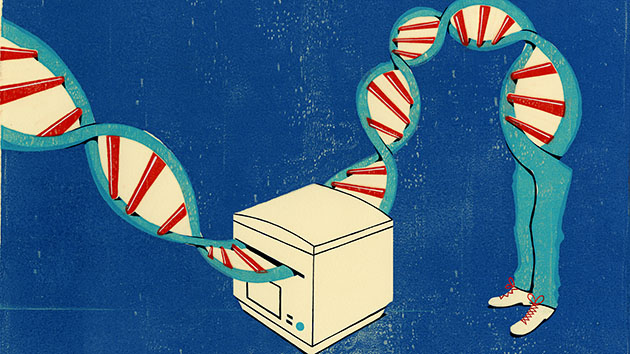
Robert Schueren shook my hand firmly, handed me his business card, and flipped it over, revealing a short list of letters and numbers. “Here is my DNA profile.” He smiled. “I have nothing to hide.” I had come to meet Schueren, the CEO of IntegenX, at his company’s headquarters in Pleasanton, California, to see its signature product: a machine the size of a large desktop printer that can unravel your genetic code in the time it takes to watch a movie.

Schueren grabbed a cotton swab and dropped it into a plastic cartridge. That’s what, say, a police officer would use to wipe the inside of your cheek to collect a DNA sample after an arrest, he explained. Other bits of material with traces of DNA on them, like cigarette butts or fabric, could work too. He inserted the cartridge into the machine and pressed a green button on its touch screen: “It’s that simple.” Ninety minutes later, the RapidHIT 200 would generate a DNA profile, check it against a database, and report on whether it found a match.

The RapidHIT represents a major technological leap—testing a DNA sample in a forensics lab normally takes at least two days. This has government agencies very excited. The Department of Homeland Security, the Department of Defense, and the Justice Department funded the initial research for “rapid DNA” technology, and after just a year on the market, the $250,000 RapidHIT is already being used in a few states, as well as China, Russia, Australia, and countries in Africa and Europe.

“We’re not always aware of how it’s being used,” Schueren said. “All we can say is that it’s used to give an accurate identification of an individual.” Civil liberties advocates worry that rapid DNA will spur new efforts by the FBI and police to collect ordinary citizens’ genetic code.

The US government will soon test the machine in refugee camps in Turkey and possibly Thailand on families seeking asylum in the United States, according to Chris Miles, manager of the Department of Homeland Security’s biometrics program. “We have all these families that claim they are related, but we don’t have any way to verify that,” he says. Miles says that rapid DNA testing will be voluntary, though refusing a test could cause an asylum application to be rejected.

Miles also says that federal immigration officials are interested in using rapid DNA to curb trafficking by ensuring that children entering the country are related to the adults with them. Jeff Heimburger, the vice president of marketing at IntegenX, says the government has also inquired about using rapid DNA to screen green-card applicants. (An Immigration and Customs Enforcement spokesman said he was not aware that the agency was pursuing the technology.)

Meanwhile, police have started using rapid DNA in Arizona, Florida, and South Carolina. In August, sheriffs in Columbia, South Carolina, used a RapidHIT to nab an attempted murder suspect. The machine’s speed provides a major “investigative lead,” said Vince Figarelli, superintendent of the Arizona Department of Public Safety crime lab, which is using a RapidHIT to compare DNA evidence from property crimes against the state’s database of 300,000 samples. Heimburger notes that the system can also prevent false arrests and wrongful convictions: “There is great value in finding out that somebody is not a suspect.”

But the technology is not a silver bullet for DNA evidence. The IntegenX executives brought up rape kits so often that it sounded like their product could make a serious dent in the backlog of half a million untested kits. Yet when I pressed Schueren on this, he conceded that the RapidHIT is not actually capable of processing rape kits since it can’t discern individual DNA in commingled bodily fluids.

Despite the new technology’s crime-solving potential, privacy advocates are wary of its spread. If rapid-DNA machines can be used in a refugee camp, “they can certainly be used in the back of a squad car,” says Jennifer Lynch, a senior staff attorney at the Electronic Frontier Foundation. “I could see that happening in the future as the prices of these machines go down.”

Lynch is particularly concerned that law enforcement agencies will use the devices to scoop up and store ever more DNA profiles. Every state already has a forensic DNA database, and while these systems were initially set up to track convicted violent offenders, their collection thresholds have steadily broadened. Today, at least 28 include data from anyone arrested for certain felonies, even if they are not convicted; some store the DNA of people who have committed misdemeanors as well. The FBI’s National DNA Index System has more than 11 million profiles of offenders plus 2 million people who have been arrested but not necessarily convicted of a crime.

For its part, Homeland Security will not hang onto refugees’ DNA records, insists Miles. (“They aren’t criminals,” he pointed out.) However, undocumented immigrants in custody may be required to provide DNA samples, which are put in the FBI’s database. DHS documents obtained by the Electronic Frontier Foundation say there may even be a legal case for “mandating collection of DNA” from anyone granted legal status under a future immigration amnesty. (The documents also state that intelligence agencies and the military are interested in using rapid DNA to identify sex, race, and other factors the machines currently do not reveal.)

The FBI is the only federal agency allowed to keep a national DNA database. Currently, police must use a lab to upload genetic profiles to it. But that could change. The FBI’s website says it is eager to see rapid DNA in wide use and that it supports the “legislative changes necessary” to make that happen. IntegenX’s Heimburger says the FBI is almost finished working with members of Congress on a bill that would give “tens of thousands” of police stations rapid-DNA machines that could search the FBI’s system and add arrestees’ profiles to it. (The RapitHIT is already designed to do this.) IntegenX has spent $70,000 lobbying the FBI, DHS, and Congress over the last two years.

The FBI declined to comment, and Heimburger wouldn’t say which lawmakers might sponsor the bill. But some have already given rapid DNA their blessing. Rep. Eric Swalwell, a former prosecutor who represents the district where IntegenX is based, says he’d like to see the technology “put to use quickly to help law enforcement”—while protecting civil liberties. In March, he and seven other Democratic members of Congress, including progressive stalwart Rep. Barbara Lee of California, urged the FBI to assess rapid DNA’s “viability for broad deployment” in police departments across the country.

Thanks to Kebmodee for bringing this to the attention of the It’s Interesting community.

The FBI Is Very Excited About This Machine That Can Scan Your DNA in 90 Minutes

New scientific research shows that thinking about their jobs makes bankers dishonest

By SETH BORENSTEIN

The banking industry seems to bring out dishonesty in people, a new study suggests.

A team of Swiss economists tested the honesty of bank employees in a lab game that would pay off in cash if they cheated. When workers at an unnamed bank were asked about their home life, they were about as honest as the general public. But employees who had just been asked about work at the bank cheated 16 percent more.

Bank employees are not more dishonest than others,” said Ernst Fehr of the University of Zurich, author of the study published Wednesday by the journal Nature. But he said when reminded of their job they become more dishonest, so something about the culture of banking “seems to make them more dishonest.”

The American Bankers Association dismissed the study: “While this study looks at one bank, America’s 6,000 banks set a very high bar when it comes to the honesty and integrity of their employees. Banks take the fiduciary responsibility they have for their customers very seriously.”

Researchers studied 128 employees at a single bank (even the country where it is located was not revealed).

They gave them what is a fairly standard honesty test. They were told to flip a coin 10 times; each time they flipped they could earn $20 if it matched what researchers had requested — sometimes heads, sometimes tails. An honest person would report matching the requested flip result about 50 percent of the time. But when workers were asked questions about their work at the bank, placing their work at the forefront in their minds, they self-reported the result that paid off 58 percent of the time.

When researchers repeated the test with more than 350 people not in banking industry, job questions didn’t change honesty levels. Researchers tested 80 employees of other banks and they came up with about the same results as those from the main bank.

Six outside experts in business ethics and psychology praised the study to various degrees. Duke University behavioral economics professor Dan Ariely, author of the book “The Honest Truth About Dishonesty,” said he agreed with the study authors that one possible solution is an honesty oath for bankers, like doctors’ Hippocratic oath.

University of Louisville psychologist Michael Cunningham said while the study is intriguing, it is too broad in its conclusions.

Fehr said recent multi-billion dollar international banking scandals convinced him that he had to test scientifically public perceptions about bankers not being honest.

The study’s findings ring true to Walt Pavlo, though he is not a banker — he was in finance at telecom giant MCI and pleaded guilty to wire fraud and money laundering in a multi-million dollar scheme. Pavlo said before joining his company he had worked in the defense industry where ethics were stressed and wasn’t tempted to cheat. That changed in his new job where he was “paid for performance” and was told to be aggressive.

That culture “influenced me in a way that initially I thought was positive,” but led to prison, said Pavlo, who now teaches business ethics and writes about white-collar crime.

http://www.huffingtonpost.com/2014/11/19/bankers-cheat-study-job_n_6186494.html

Adoptees’ ‘lost language’ from infancy triggers brain response


Chinese children are lined up in Tiananmen Square in 2003 for photos with the overseas families adopting them. The children in the new study were adopted from China at an average age of 12.8 months and raised in French-speaking families.

You may not recall any memories from the first year of life, but if you were exposed to a different language at the time, your brain will still respond to it at some level, a new study suggests.

Brain scans show that children adopted from China as babies into families that don’t speak Chinese still unconsciously recognize Chinese sounds as language more than a decade later.

“It was amazing to see evidence that such an early experience continued to have a lasting effect,” said Lara Pierce, lead author of the study just published in the journal Proceedings of the National Academy of Sciences, in an email to CBC News.

The adopted children, who were raised in French-speaking Quebec families, had no conscious memory of hearing Chinese.

“If you actually test these people in Chinese, they don’t actually know it,” said Denise Klein, a researcher at McGill University’s Montreal Neurological Institute who co-authored the paper.

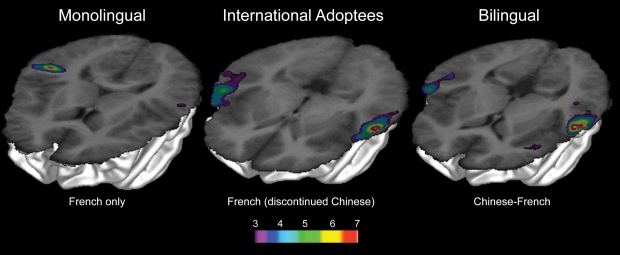
But their brains responded to Chinese language sounds the same way as those of bilingual children raised in Chinese-speaking families.


Children exposed to Chinese as babies display similar brain activation patterns as children with continued exposure to Chinese when hearing Chinese words, fMRI scans show.

“In essence, their pattern still looks like people who’ve been exposed to Chinese all their lives.”

Pierce, a PhD candidate in psychology at McGill University, working with Klein and other collaborators, scanned the brains of 48 girls aged nine to 17. Each participant lay inside a functional magnetic resonance imaging machine while she listened to pairs of three-syllable phrases. The phrases contained either:

■Sounds and tones from Mandarin, the official Chinese dialect.
■Hummed versions of the same tones but no actual words.

Participants were asked to tell if the last syllables of each pair were the same or different. The imaging machine measured what parts of the brain were active as the participants were thinking.

“Everybody can do the task — it’s not a difficult task to do,” Klein said. But the sounds are processed differently by people who recognize Chinese words — in that case, they activate the part of the brain that processes language.

Klein said the 21 children adopted from China who participated in the study might have been expected to show patterns similar to those of the 11 monolingual French-speaking children. After all, the adoptees left China at an average age of 12.8 months, an age when most children can only say a few words. On average, those children had not heard Chinese in more than 12 years.

The fact that their brains still recognized Chinese provides some insight into the importance of language learning during the first year of life, Klein suggested.

Effect on ‘relearning’ language not known

But Klein noted that the study is a preliminary one and the researchers don’t yet know what the results mean.

For example, would adopted children exposed to Chinese in infancy have an easier time relearning Chinese later, compared with monolingual French-speaking children who were learning it for the first time?

Pierce said studies trying to figure that out have had mixed results, but she hopes the findings in this study could generate better ways to tackle that question.

She is also interested in whether the traces of the lost language affect how the brain responds to other languages or other kinds of learning. Being able to speak multiple languages has already been shown to have different effects on the way the brain processes languages and other kinds of information.

http://www.cbc.ca/news/technology/adoptees-lost-language-from-infancy-triggers-brain-response-1.2838001

Facial structure predicts goals, fouls among World Cup soccer players


World Cup soccer players with higher facial-width-to-height ratios are more likely to commit fouls, score goals and make assists, according to a study by a researcher at the University of Colorado Boulder.

The structure of a soccer player’s face can predict his performance on the field—including his likelihood of scoring goals, making assists and committing fouls—according to a study led by a researcher at the University of Colorado Boulder.

The scientists studied the facial-width-to-height ratio (FHWR) of about 1,000 players from 32 countries who competed in the 2010 World Cup. The results, published in the journal Adaptive Human Behavior and Physiology, showed that midfielders, who play both offense and defense, and forwards, who lead the offense, with higher FWHRs were more likely to commit fouls. Forwards with higher FWHRs also were more likely to score goals or make assists.

“Previous research into facial structure of athletes has been primarily in the United States and Canada,” said Keith Welker, a postdoctoral researcher in CU-Boulder Department of Psychology and Neuroscience and the lead author of the paper. “No one had really looked at how facial-width-to-height ratio is associated with athletic performance by comparing people from across the world.”

FWHR is the distance between the cheekbones divided by the distance between the mid-brow and the upper lip. Past studies have shown that a high FWHR is associated with more aggressive behavior, with both positive and negative results. For example, high FWHR correlates with greater antisocial and unethical behavior, but it also correlates with greater success among CEOs and achievement drive among U.S. presidents. However, some previous research has failed to find a correlation between FWHR and aggressive behavior in certain populations.

The new study adds weight to the argument that FWHR does correlate with aggression. Welker and his colleagues chose to look at the 2010 World Cup because of the quality and quantity of the data available. “There are a lot of athletic data out there,” Welker said. “We were exploring contexts to look at aggressive behavior and found that the World Cup, which quantifies goals, fouls and assists, provides a multinational way of addressing whether facial structure produces this aggressive behavior and performance.”

Scientists have several ideas about how FWHR might be associated with aggression. One possibility is that it’s related to testosterone exposure earlier in life. Testosterone during puberty can affect a variety of physical traits, including bone density, muscle growth and cranial shape, Welker said.

Co-authors of the study were Stefan Goetz, Shyneth Galicia and Jordan Liphardt of Wayne State University in Michigan and Justin Carré of Nipissing University in Ontario, Canada. –

See more at: http://www.colorado.edu/news/releases/2014/11/11/facial-structure-predicts-goals-fouls-among-world-cup-soccer-players#sthash.mAvOP9oO.dpuf

Dyslexie: the chubby-ankled font that makes reading easier for people with dyslexia

By weighing down the characters and distorting similar letters, this new typeface pins words firmly to the page.

Watching letters float and twist across a page, flipping and jumbling with gymnastic abandon, can be a daily frustration for readers with dyslexia. But the restless characters might soon be tamed thanks to a new font.

Developed by young Dutch designer Christian Boer, the Dyslexie typeface, currently on show at the Istanbul Design Biennial, has put all 26 letters of the alphabet through a finely-tuned process of adjustment to weigh them down and make it harder for similar letters to be confused.

“When they’re reading, people with dyslexia often unconsciously switch, rotate and mirror letters in their minds,” says Boer, who is dyslexic himself. “Traditional typefaces make this worse, because they base some letter designs on others, inadvertently creating ‘twin letters’ for people with dyslexia.”

To counteract this tendency, Boer has introduced a number of tweaks. First, the letters are weighted towards the bottom, as if the bulk of each character’s body has slumped downwards under accelerated gravitational pressure. This sets a heavy baseline, which makes it harder for the letters to be flipped upside down – and gives the font the look of a chubby-ankled cousin of Comic Sans.

This lowered centre of gravity is joined by specific alterations to differentiate similar letters. In many fonts, the d is the same as a b is the same as a p is the same as a q – a simple hoop on a stick, variously mirrored and rotated to form four different characters. Boer’s typeface distorts each letter, slanting the extenders and descenders and enlarging the openings to make them harder to confuse, in a process of careful anatomical refinement.

http://www.theguardian.com/artanddesign/architecture-design-blog/2014/nov/12/dyslexie-new-font-that-makes-reading-easier-with-dyslexia

Thanks to Dr. Lutter for bringing this to the attention of the It’s Interesting community.

Orthorexia Nervosa – when healthy eating becomes an unhealthy obsession

By Sumathi Reddy

The growing interest in eating healthy can at times have unhealthy consequences.

Some doctors and registered dietitians say they are increasingly seeing people whose desire to eat pure or “clean” food—from raw vegans to those who cut out multiple major food sources such as gluten, dairy and sugar—becomes an all-consuming obsession and leads to ill health. In extreme cases, people will end up becoming malnourished.

Some experts refer to the condition as orthorexia nervosa, a little-researched disorder that doesn’t have an official diagnosis in the Diagnostic and Statistical Manual of Mental Disorders, or DSM, considered the bible of psychiatric illnesses. Often, individuals with orthorexia will exhibit symptoms of recognized conditions such as obsessive-compulsive disorder or end up losing unhealthy amounts of weight, similar to someone with anorexia.

Researchers in Colorado recently proposed a series of criteria they say could help clinicians diagnose orthorexia. The guidelines, published online in the journal Psychosomatics earlier this year, also could serve as a standard for future research of the disorder, they say.

Ryan Moroze, a psychiatry fellow at the University of Colorado Denver School of Medicine and senior author of the study, said more research needs to be done to develop a valid screening instrument for orthorexia, determine its prevalence and differentiate it from other more well-known eating disorders.

“There are people who become malnourished, not because they’re restricting how much they eat, it’s what they’re choosing to eat,” said Thomas Dunn, a psychologist and psychology professor at the University of Northern Colorado in Greeley, Colo., and a co-author of the article.

“It’s not that they’re doing it to get thin, they’re doing it to get healthy. It’s just sort of a mind-set where it gets taken to an extreme like what we see with other kinds of mental illness,” Dr. Dunn said.

Among the proposed criteria: an obsession with the quality and composition of meals to the extent that people may spend excessive amounts of time, say three or more hours a day, reading about and preparing specific types of food; and having feelings of guilt after eating unhealthy food. The preoccupation with such eating would have to either lead to nutritional imbalances or interfere with daily functional living to be considered orthorexia.

Some orthorexia patients are receiving treatments similar to those for obsessive-compulsive disorder. “We’re getting the people who aren’t being treated well under an eating-disorder diagnosis and their disorder is better treated under the OCD dial,” said Kimberley Quinlan, clinical director of the OCD Center of Los Angeles, an outpatient clinic.

The condition seems to start with an interest in living healthy and then, over time, people develop an increased anxiety about eating food that is contaminated or that they deem unhealthy, said Ms. Quinlan. Treatment often involves cognitive behavioral therapy, a type of psychotherapy aiming at behavior modification. “We’ve basically taken a model that we use to treat OCD and applied it to this disorder which is so similar,” she said.

Experts say there is a gray area between striving to eat healthy and going to the extreme, which helps to spur skepticism about orthorexia. “People don’t believe how eating healthy can be a disorder,” said Ms. Quinlan.

Sometimes other illnesses can lead to orthorexia. David Rakel, director of integrative medicine at the University of Wisconsin School of Medicine and Public Health, estimated that 10% to 15% of the patients who come in with food allergies and related problems develop an unhealthy fear of particular foods.

Nutritional therapy often involves elimination diets—stopping to eat certain foods to check if they are contributing to an inflammatory condition, Dr. Rakel said. Under the program, the foods are later gradually reintroduced, but some people continue to avoid them. “People are getting so strict with their health choices that they’re not getting the nutrients that they need,” he said.

Some eating-disorder therapists say many of the orthorexia patients they treat also suffer from anorexia. But other experts say orthorexics often aren’t underweight, which can make it difficult to identify them.

“Someone on paper may be perfectly healthy and their blood work is great and their weight is fine but their behavior has become obsessive with food,” said Marjorie Nolan Cohn, a New York City-based dietitian and national spokeswoman for the Academy of Nutrition and Dietetics, a professional organization.

A red flag is when someone’s eating habits are making them avoid social engagements, Ms. Cohn said. “They may not be able to go out to a restaurant with their friends because they don’t know what’s in the food or it’s not cooked in a certain way or what if it’s not organic olive oil?” she said.

Jordan Younger, 24, of Los Angeles, started a popular Instagram and blog last year to post recipes and pictures from her plant-based vegan diet. Then her daily diet became all-consuming.

“I would wake up in a panic thinking, ‘What am I going to eat today?’ ” said Ms. Younger. “I would go to a juice place or Whole Foods or a natural grocery store and would spend so much time in there looking at everything trying to plan out the whole day. It just began to take over my mind in a way that I started to see was unhealthy,” she said.

Ms. Younger, already slim, said she lost 25 pounds on her restrictive diet. Her skin turned orange and she stopped menstruating. In May, she started seeing an eating-disorder specialist and nutritionist who helped her recover.

Now, Ms. Younger said she doesn’t restrict herself from eating anything except for processed food. Her skin has returned to its normal color, her hair has thickened and grown 5 inches and she has put back on her weight.

“With all these different dietary philosophies, there’s a lot more room for orthorexia to develop,” she said. “It makes it really hard to eat if you’re listening to all these theories and it gives eating and food a ton of anxiety when really food should be enjoyable.”

http://online.wsj.com/articles/when-healthy-eating-calls-for-treatment-1415654737

Landmark 20-Year Study Finds Pesticides Linked to Depression In Farmers

Earlier this fall, researchers from the National Institute of Health finished up a landmark 20-year study, a study that hasn’t received the amount of coverage it deserves. About 84,000 farmers and spouses of farmers were interviewed since the mid-1990s to investigate the connection between pesticides and depression, a connection that had been suggested through anecdotal evidence for far longer. We called up Dr. Freya Kamel, the lead researcher on the study, to find out what the team learned and what it all means. Spoiler: nothing good.

“There had been scattered reports in the literature that pesticides were associated with depression,” says Kamel. “We wanted to do a new study because we had more detailed data than most people have access to.” That excessive amount of data includes tens of thousands of farmers, with specific information about which pesticides they were using and whether they had sought treatment for a variety of health problems, from pesticide poisoning to depression. Farmers were surveyed multiple times throughout the 20-year period, which gives the researchers an insight into their health over time that no other study has.

Because the data is so excessive, the researchers have mined it three times so far, the most recent time in a study published just this fall. The first one was concerned with suicide, the second with depression amongst the spouses of farmers (Kamel says “pesticide applicators,” but most of the people applying pesticides are farmers), and the most recent with depression amongst the farmers themselves.

There’s a significant correlation between pesticide use and depression, that much is very clear, but not all pesticides. The two types that Kamel says reliably moved the needle on depression are organochlorine insecticides and fumigants, which increase the farmer’s risk of depression by a whopping 90% and 80%, respectively. The study lays out the seven specific pesticides, falling generally into one of those two categories, that demonstrated a categorically reliable correlation to increased risk of depression.

The study doesn’t really deal with exactly how the pesticides are affecting the farmers. Insecticides are designed to disrupt the way nerves work, sometimes inhibiting specific enzymes or the way nerve membranes work, that kind of thing. It’s pretty complicated, and nobody’s quite sure where depression fits in. “How this ultimately leads to depression, I don’t know that anyone can really fill in the dots there,” says Kamel. But essentially, the pesticides are designed to mess with the nerves of insects, and in certain aspects, our own nervous systems are similar enough to those of insects that we could be affected, too. “I don’t think there’s anything surprising about the fact that pesticides would affect neurologic function,” says Kamel, flatly.

Kamel speaks slowly and precisely, and though her voice is naturally a little quavery, she answered questions confidently and at one point made fun of me a little for a mischaracterization I’d made in a question. The one time she hesitated was when I asked what she thought the result of the study should be; it’s a huge deal, finding out that commonly used pesticides, pesticides approved for use by our own government, are wreaking havoc on the neurological systems of farmers. Kamel doesn’t recommend policy; she’s a scientist and would only go so far as to suggest that we should cut down on the use of pesticides in general.

Others are going further. Melanie Forti, of a farmer advocacy group based in DC, told Vice, “There should be more regulations on the type of pesticides being used.” With any luck, this study will lead to a thorough reexamination of the chemical weapons allowed by farmers.

These types aren’t necessarily uncommon, either; one, called malathion, was used by 67% of the tens of thousands of farmers surveyed. Malathion is banned in Europe, for what that’s worth.

I asked whether farmers were likely to simply have higher levels of depression than the norm, given the difficulties of the job — long hours, low wages, a lack of power due to government interference, that kind of thing — and, according to Kamel, that wasn’t a problem at all. “We didn’t have to deal with overreporting [of depression] because we weren’t seeing that,” she says. In fact, only 8% of farmers surveyed sought treatment for depression, lower than the norm, which is somewhere around 10% in this country. That doesn’t mean farmers are less likely to suffer from depression, only that they’re less likely to seek treatment for it, and that makes the findings, if anything, even stronger.

Landmark 20-Year Study Finds Pesticides Linked to Depression In Farmers

Thanks to Kebmodee for bringing this to the attention of the It’s Interesting community.