Scientists achieve implantation of memory into the brains of mice while they sleep

Sleeping minds: prepare to be hacked. For the first time, conscious memories have been implanted into the minds of mice while they sleep. The same technique could one day be used to alter memories in people who have undergone traumatic events.

When we sleep, our brain replays the day’s activities. The pattern of brain activity exhibited by mice when they explore a new area during the day, for example, will reappear, speeded up, while the animal sleeps. This is thought to be the brain practising an activity – an essential part of learning. People who miss out on sleep do not learn as well as those who get a good night’s rest, and when the replay process is disrupted in mice, so too is their ability to remember what they learned the previous day.

Karim Benchenane and his colleagues at the Industrial Physics and Chemistry Higher Educational Institution in Paris, France, hijacked this process to create new memories in sleeping mice. The team targeted the rodents’ place cells – neurons that fire in response to being in or thinking about a specific place. These cells are thought to help us form internal maps, and their discoverers won a Nobel prize last year.

Benchenane’s team used electrodes to monitor the activity of mice’s place cells as the animals explored an enclosed arena, and in each mouse they identified a cell that fired only in a certain arena location. Later, when the mice were sleeping, the researchers monitored the animals’ brain activity as they replayed the day’s experiences. A computer recognised when the specific place cell fired; each time it did, a separate electrode would stimulate brain areas associated with reward.

When the mice awoke, they made a beeline for the location represented by the place cell that had been linked to a rewarding feeling in their sleep. A brand new memory – linking a place with reward – had been formed.

It is the first time a conscious memory has been created in animals during sleep. In recent years, researchers have been able to form subconscious associations in sleeping minds – smokers keen to quit can learn to associate cigarettes with the smells of rotten eggs and fish in their sleep, for example.

Previous work suggested that if this kind of subconscious learning had occurred in Benchenane’s mice, they would have explored the arena in a random manner, perhaps stopping at the reward-associated location. But these mice headed straight for the location, suggesting a conscious memory. “The mouse develops a goal-directed behaviour to go towards the place,” says Benchenane. “It proves that it’s not an automatic behaviour. What we create is an association between a particular place and a reward that can be consciously accessed by the mouse.”

“The mouse is remembering enough abstract information to think ‘I want to go to a certain place’, and go there when it wakes up,” says neuroscientist Neil Burgess at University College London. “It’s a bigger breakthrough [than previous studies] because it really does show what the man in the street would call a memory – the ability to bring to mind abstract knowledge which can guide behaviour in a directed way.”

Benchenane doesn’t think the technique can be used to implant many other types of memories, such as skills – at least for the time being. Spatial memories are easier to modify because they are among the best understood.

His team’s findings also provide some of the strongest evidence for the way in which place cells work. It is almost impossible to test whether place cells function as an internal map while animals are awake, says Benchenane, because these animals also use external cues, such as landmarks, to navigate. By specifically targeting place cells while the mouse is asleep, the team were able to directly test theories that specific cells represent specific places.

“Even when those place cells fire in sleep, they still convey spatial information,” says Benchenane. “That provides evidence that when you’ve got activation of place cells during the consolidation of memories in sleep, you’ve got consolidation of the spatial information.”

Benchenane hopes that his technique could be developed to help alter people’s memories, perhaps of traumatic events (see “Now it’s our turn”, below).

Loren Frank at the University of California, San Francisco, agrees. “I think this is a really important step towards helping people with memory impairments or depression,” he says. “It is surprising to me how many neurological and psychiatric illnesses have something to do with memory, including schizophrenia and obsessive compulsive disorder.”

“In principle, you could selectively change brain processing during sleep to soften memories or change their emotional content,” he adds.

Journal reference: Nature Neuroscience, doi:10.1038/nn.3970

http://www.newscientist.com/article/dn27115-new-memories-implanted-in-mice-while-they-sleep.html#.VP_L9uOVquD

Thanks to Kebmodee for bringing this to the attention of the It’s Interesting community.

Laser Weapon Stops Truck — from a Mile Away

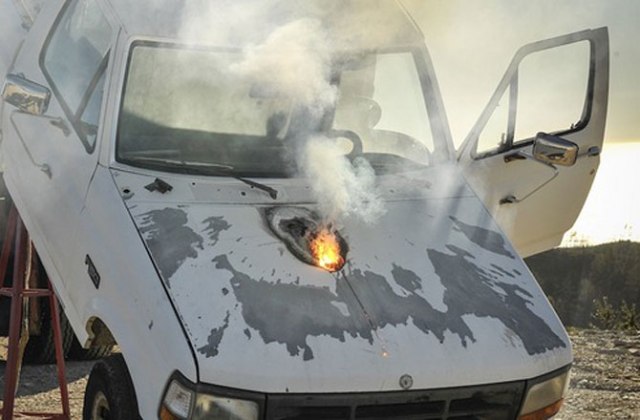
A laser weapon made by Lockheed Martin can stop a small truck dead in its tracks from more than a mile (1.6 kilometers) away, the company announced this week.

The laser system, called ATHENA (short for Advanced Test High Energy Asset), is designed to protect military forces and key infrastructure, Lockheed Martin representatives said. During a recent field test, the laser managed to burn through and disable a small truck’s engine.

The truck was not driving normally; it was on a platform with the engine and drivetrain running, Lockheed Martin representatives said. The milestone is the highest power ever documented by a laser weapon of its type, according to the company. Lockheed is expected to conduct additional tests of ATHENA.

“Fiber-optic lasers are revolutionizing directed energy systems,” Keoki Jackson, Lockheed Martin’s chief technology officer, said in a statement. “This test represents the next step to providing lightweight and rugged laser-weapon systems for military aircraft, helicopters, ships and trucks.”

The ATHENA system could be a boon for the military because the laser can stop ground-based adversaries from interfering with operations long before they reach the front lines, company representatives said.

The laser weapon is based on a similar system called Area Defense Anti-Munitions (also developed by Lockheed Martin), which focuses on airborne threats. The 30-kilowatt Accelerated Laser Demonstration Initiative — the laser in ATHENA itself — was also made by Lockheed.

The recent test was the first time that such a laser was tested in the field, the company said. The Accelerated Laser Demonstration Initiative is a multifiber laser created through a technique called spectral beam combining. Essentially, the system takes multiple lasers and mashes them into one. Lockheed representatives said this beam “provides greater efficiency and lethality than multiple individual 10-kilowatt lasers used in other systems.”

Last year, Lockheed also highlighted laser defense capabilities in a demonstration test between two boats that were located about 1 mile apart. The vessels, described as “military-grade,” were stopped less than 30 seconds after the laser burned through the boat’s rubber hull.

http://www.livescience.com/50064-laser-weapon-stops-truck.html

Thanks to Da Brayn for bringing this to the attention of the It’s Interesting community.

Soon You’ll Be Able to Turn Your Brown Eyes Blue for $5,000

A new treatment has successfully changed the color of people’s eyes in Latin America, but the procedure isn’t approved in the U.S. yet.

For years, a California-based company called Stroma Medical has been publicizing a laser procedure that turns brown eyes blue. Theoretically, this would give brown-eyed individuals the choice to change the tint of their irises, not unlike the way many decide to use surgery to alter the noses or chests they were born with.

Now Stroma Medical claims that it has conducted 37 successful treatments on patients in Mexico and Costa Rica. It also says that it would likely charge about $5,000 for anyone wanting the procedure. That is, of course, only if and when American medical safety regulators give the surgery the green light in the United States.

Company chairman Gregg Homer says the procedure works by disturbing the thin layer of pigment that exists on the surfaces of all brown irises.

“The fundamental principle is that under every brown eye is a blue eye,” Homer told CNN. “If you take that pigment away, then the light can enter the stroma—the little fibers that look like bicycle spokes in a light eye—and when the light scatters it only reflects back the shortest wavelengths and that’s the blue end of the spectrum.”

Although the treatment lasts only 20 seconds, the patient’s eye color isn’t changed right away. Instead, it takes a few weeks for the human body to remove the pigmented tissue, resulting in blue eyes.

Given that light eyes are increasingly rare, with less than a fifth of Americans boasting blue peepers, it’s easy to see how there might be demand for this procedure. A preference for blue eyes in Western societies has been documented in many unscientific ways, though controlled studies suggest that the blue-eyes-are-more-attractive stereotype is more a product of culture than unconscious preference.

Whether or not you feel this procedure is a net good—or bad—thing for society, a bigger concern might be safety.

Though Stroma claims the surgery is safe, at least one ophthalmologist cautioned that the shedding of pigment could clog up drainage channels in the eye, increasing pressure and the risk for glaucoma.

http://time.com/money/3733372/surgery-turn-brown-eyes-blue/

American Bison charging parked SUV at Yellowstone National Park

An American bison being trailed by cars inside Yellowstone National Park took its anger out on a parked SUV in its path, ramming into the car that had two passengers inside.

Tom Carter, a 60-year-old attorney from Texas, was sitting inside a Nissan Xterra with his friend, Suzie Hollingsworth, a Yellowstone tour guide, when they saw a group of bison approaching them head-on.

Carter pulled out his phone just in time to record a video of the bison veering off on its own and ramming their SUV.

“We did everything we could think of to do to avoid problems,” Carter told ABC News. “I figured that they would just keep running right by us at a full gallop but at the last minute it intended to hit us.”

“It was mad,” he said. “It pretty clearly intended to hit us.”

Carter, who spent six summers as a Yosemite tour guide in the 1970s, says the bison were being followed by, “essentially a line of cars that was chasing them into us.” The incident occurred in an area of the park known as Lamar Valley.

Carter says the bison’s angry outburst is likely attributed to the agitation of the cars as well as the mild winter the area of Wyoming in which Yosemite is located has received.

“It’s been a really light winter and the animals are a lot more feisty this winter,” he said. “Normally the winters are so harsh they don’t want to expend any outside fuel.”

The bison caused nearly $2,800 in damages to the SUV, which belongs to Carter’s friend, Hollingsworth. Neither she nor Carter was injured inside the vehicle.

“We turned the engine off which was a good thing because the air bags probably would have deployed,” said Carter, who estimated the bison weighed around 2,000 pounds.

“We were never concerned about safety,” he said. “The buffalo picked on something about its own size. We were laughing about it because it was kind of crazy.”

Carter’s video of the mid-February event has received nearly 400,000 views on YouTube. He later posted a video showing the damage to Hollingsworth’s car.

He says the bison walked away unscathed. “It sort of shook its head and continued along the road,” Carter said.

Secret detention warehouse, Homan Square, used by Chicago police

The Chicago police department operates an off-the-books interrogation compound, rendering Americans unable to be found by family or attorneys while locked inside what lawyers say is the domestic equivalent of a CIA black site.

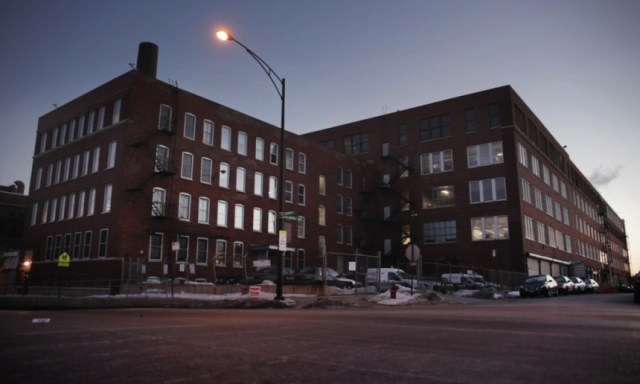
The facility, a nondescript warehouse on Chicago’s west side known as Homan Square, has long been the scene of secretive work by special police units. Interviews with local attorneys and one protester who spent the better part of a day shackled in Homan Square describe operations that deny access to basic constitutional rights.

Alleged police practices at Homan Square, according to those familiar with the facility who spoke out to the Guardian after its investigation into Chicago police abuse, include:

Keeping arrestees out of official booking databases.
Beating by police, resulting in head wounds.
Shackling for prolonged periods.
Denying attorneys access to the “secure” facility.
Holding people without legal counsel for between 12 and 24 hours, including people as young as 15.
At least one man was found unresponsive in a Homan Square “interview room” and later pronounced dead.

Brian Jacob Church, a protester known as one of the “Nato Three”, was held and questioned at Homan Square in 2012 following a police raid. Officers restrained Church for the better part of a day, denying him access to an attorney, before sending him to a nearby police station to be booked and charged.

“Homan Square is definitely an unusual place,” Church told the Guardian on Friday. “It brings to mind the interrogation facilities they use in the Middle East. The CIA calls them black sites. It’s a domestic black site. When you go in, no one knows what’s happened to you.”

The secretive warehouse is the latest example of Chicago police practices that echo the much-criticized detention abuses of the US war on terrorism. While those abuses impacted people overseas, Homan Square – said to house military-style vehicles, interrogation cells and even a cage – trains its focus on Americans, most often poor, black and brown.

Unlike a precinct, no one taken to Homan Square is said to be booked. Witnesses, suspects or other Chicagoans who end up inside do not appear to have a public, searchable record entered into a database indicating where they are, as happens when someone is booked at a precinct. Lawyers and relatives insist there is no way of finding their whereabouts. Those lawyers who have attempted to gain access to Homan Square are most often turned away, even as their clients remain in custody inside.

“It’s sort of an open secret among attorneys that regularly make police station visits, this place – if you can’t find a client in the system, odds are they’re there,” said Chicago lawyer Julia Bartmes.

Chicago civil-rights attorney Flint Taylor said Homan Square represented a routinization of a notorious practice in local police work that violates the fifth and sixth amendments of the constitution.

“This Homan Square revelation seems to me to be an institutionalization of the practice that dates back more than 40 years,” Taylor said, “of violating a suspect or witness’ rights to a lawyer and not to be physically or otherwise coerced into giving a statement.”

Much remains hidden about Homan Square. The Chicago police department did not respond to the Guardian’s questions about the facility. But after the Guardian published this story, the department provided a statement insisting, without specifics, that there is nothing untoward taking place at what it called the “sensitive” location, home to undercover units.

“CPD [Chicago police department] abides by all laws, rules and guidelines pertaining to any interviews of suspects or witnesses, at Homan Square or any other CPD facility. If lawyers have a client detained at Homan Square, just like any other facility, they are allowed to speak to and visit them. It also houses CPD’s Evidence Recovered Property Section, where the public is able to claim inventoried property,” the statement said, something numerous attorneys and one Homan Square arrestee have denied.

“There are always records of anyone who is arrested by CPD, and this is not any different at Homan Square,” it continued.

The Chicago police statement did not address how long into an arrest or detention those records are generated or their availability to the public. A department spokesperson did not respond to a detailed request for clarification.

When a Guardian reporter arrived at the warehouse on Friday, a man at the gatehouse outside refused any entrance and would not answer questions. “This is a secure facility. You’re not even supposed to be standing here,” said the man, who refused to give his name.

A former Chicago police superintendent and a more recently retired detective, both of whom have been inside Homan Square in the last few years in a post-police capacity, said the police department did not operate out of the warehouse until the late 1990s.

But in detailing episodes involving their clients over the past several years, lawyers described mad scrambles that led to the closed doors of Homan Square, a place most had never heard of previously. The facility was even unknown to Rob Warden, the founder of Northwestern University Law School’s Center on Wrongful Convictions, until the Guardian informed him of the allegations of clients who vanish into inherently coercive police custody.

“They just disappear,” said Anthony Hill, a criminal defense attorney, “until they show up at a district for charging or are just released back out on the street.”

Jacob Church learned about Homan Square the hard way. On May 16 2012, he and 11 others were taken there after police infiltrated their protest against the Nato summit. Church says officers cuffed him to a bench for an estimated 17 hours, intermittently interrogating him without reading his Miranda rights to remain silent. It would take another three hours – and an unusual lawyer visit through a wire cage – before he was finally charged with terrorism-related offenses at the nearby 11th district station, where he was made to sign papers, fingerprinted and photographed.

In preparation for the Nato protest, Church, who is from Florida, had written a phone number for the National Lawyers Guild on his arm as a precautionary measure. Once taken to Homan Square, Church asked explicitly to call his lawyers, and said he was denied.

“Essentially, I wasn’t allowed to make any contact with anybody,” Church told the Guardian, in contradiction of a police guidance on permitting phone calls and legal counsel to arrestees.

Church’s left wrist was cuffed to a bar behind a bench in windowless cinderblock cell, with his ankles cuffed together. He remained in those restraints for about 17 hours.

“I had essentially figured, ‘All right, well, they disappeared us and so we’re probably never going to see the light of day again,’” Church said.

Though the raid attracted major media attention, a team of attorneys could not find Church through 12 hours of “active searching”, Sarah Gelsomino, Church’s lawyer, recalled. No booking record existed. Only after she and others made a “major stink” with contacts in the offices of the corporation counsel and Mayor Rahm Emanuel did they even learn about Homan Square.

They sent another attorney to the facility, where he ultimately gained entry, and talked to Church through a floor-to-ceiling chain-link metal cage. Finally, hours later, police took Church and his two co-defendants to a nearby police station for booking.

After serving two and a half years in prison, Church is currently on parole after he and his co-defendants were found not guilty in 2014 of terrorism-related offenses but guilty of lesser charges of possessing an incendiary device and the misdemeanor of “mob action”.

The access that Nato Three attorneys received to Homan Square was an exception to the rule, even if Jacob Church’s experience there was not.

Three attorneys interviewed by the Guardian report being personally turned away from Homan Square between 2009 and 2013 without being allowed access to their clients. Two more lawyers who hadn’t been physically denied described it as a place where police withheld information about their clients’ whereabouts. Church was the only person who had been detained at the facility who agreed to talk with the Guardian: their lawyers say others fear police retaliation.

One man in January 2013 had his name changed in the Chicago central bookings database and then taken to Homan Square without a record of his transfer being kept, according to Eliza Solowiej of Chicago’s First Defense Legal Aid. (The man, the Guardian understands, wishes to be anonymous; his current attorney declined to confirm Solowiej’s account.) She found out where he was after he was taken to the hospital with a head injury.

“He said that the officers caused his head injuries in an interrogation room at Homan Square. I had been looking for him for six to eight hours, and every department member I talked to said they had never heard of him,” Solowiej said. “He sent me a phone pic of his head injuries because I had seen him in a police station right before he was transferred to Homan Square without any.”

Bartmes, another Chicago attorney, said that in September 2013 she got a call from a mother worried that her 15-year-old son had been picked up by police before dawn. A sympathetic sergeant followed up with the mother to say her son was being questioned at Homan Square in connection to a shooting and would be released soon. When hours passed, Bartmes traveled to Homan Square, only to be refused entry for nearly an hour.

An officer told her, “Well, you can’t just stand here taking notes, this is a secure facility, there are undercover officers, and you’re making people very nervous,” Bartmes recalled. Told to leave, she said she would return in an hour if the boy was not released. He was home, and not charged, after “12, maybe 13” hours in custody.

On February 2, 2013, John Hubbard was taken to Homan Square. Hubbard never walked out. The Chicago Tribune reported that the 44-year old was found “unresponsive inside an interview room”, and pronounced dead. After publication, the Cook County medical examiner told the Guardian that the cause of death was determined to be heroin intoxication.

Homan Square is hardly concerned exclusively with terrorism. Several special units operate outside of it, including the anti-gang and anti-drug forces. If police “want money, guns, drugs”, or information on the flow of any of them onto Chicago’s streets, “they bring them there and use it as a place of interrogation off the books,” Hill said.

A former Chicago detective and current private investigator, Bill Dorsch, said he had not heard of the police abuses described by Church and lawyers for other suspects who had been taken to Homan Square. He has been permitted access to the facility to visit one of its main features, an evidence locker for the police department. (“I just showed my retirement star and passed through,” Dorsch said.)

Transferring detainees through police custody to deny them access to legal counsel, would be “a career-ender,” Dorsch said. “To move just for the purpose of hiding them, I can’t see that happening,” he told the Guardian.

Richard Brzeczek, Chicago’s police superintendent from 1980 to 1983, who also said he had no first-hand knowledge of abuses at Homan Square, said it was “never justified” to deny access to attorneys.

“Homan Square should be on the same list as every other facility where you can call central booking and say: ‘Can you tell me if this person is in custody and where,’” Brzeczek said.

“If you’re going to be doing this, then you have to include Homan Square on the list of facilities that prisoners are taken into and a record made. It can’t be an exempt facility.”

Indeed, Chicago police guidelines appear to ban the sorts of practices Church and the lawyers said occur at Homan Square.

A directive titled “Processing Persons Under Department Control” instructs that “investigation or interrogation of an arrestee will not delay the booking process,” and arrestees must be allowed “a reasonable number of telephone calls” to attorneys swiftly “after their arrival at the first place of custody.” Another directive, “Arrestee and In-Custody Communications,” says police supervisors must “allow visitation by attorneys.”

Attorney Scott Finger said that the Chicago police tightened the latter directive in 2012 after quiet complaints from lawyers about their lack of access to Homan Square. Without those changes, Church’s attorneys might not have gained entry at all. But that tightening – about a week before Church’s arrest – did not prevent Church’s prolonged detention without a lawyer, nor the later cases where lawyers were unable to enter.

The combination of holding clients for long periods, while concealing their whereabouts and denying access to a lawyer, struck legal experts as a throwback to the worst excesses of Chicago police abuse, with a post-9/11 feel to it.

On a smaller scale, Homan Square is “analogous to the CIA’s black sites,” said Andrea Lyon, a former Chicago public defender and current dean of Valparaiso University Law School. When she practiced law in Chicago in the 1980s and 1990s, she said, “police used the term ‘shadow site’” to refer to the quasi-disappearances now in place at Homan Square.

“Back when I first started working on torture cases and started representing criminal defendants in the early 1970s, my clients often told me they’d been taken from one police station to another before ending up at Area 2 where they were tortured,” said Taylor, the civil-rights lawyer most associated with pursuing the notoriously abusive Area 2 police commander Jon Burge. “And in that way the police prevent their family and lawyers from seeing them until they could coerce, through torture or other means, confessions from them.”

Police often have off-site facilities to have private conversations with their informants. But a retired Washington DC homicide detective, James Trainum, could not think of another circumstance nationwide where police held people incommunicado for extended periods.

“I’ve never known any kind of organized, secret place where they go and just hold somebody before booking for hours and hours and hours. That scares the hell out of me that that even exists or might exist,” said Trainum, who now studies national policing issues, to include interrogations, for the Innocence Project and the Constitution Project.

Regardless of departmental regulations, police frequently deny or elide access to lawyers even at regular police precincts, said Solowiej of First Defense Legal Aid. But she said the outright denial was exacerbated at Chicago’s secretive interrogation and holding facility: “It’s very, very rare for anyone to experience their constitutional rights in Chicago police custody, and even more so at Homan Square,” Solowiej said.

Church said that one of his more striking memories of Homan Square was the “big, big vehicles” police had inside the complex that “look like very large MRAPs that they use in the Middle East.”

Cook County, home of Chicago, has received some 1,700 pieces of military equipment from a much-criticized Pentagon program transferring military gear to local police. It includes a Humvee, according to a local ABC News report.

Tracy Siska, a criminologist and civil-rights activist with the Chicago Justice Project, said that Homan Square, as well as the unrelated case of ex-Guantánamo interrogator and retired Chicago detective Richard Zuley, showed the lines blurring between domestic law enforcement and overseas military operations.

“The real danger in allowing practices like Guantánamo or Abu Ghraib is the fact that they always creep into other aspects,” Siska said.

“They creep into domestic law enforcement, either with weaponry like with the militarization of police, or interrogation practices. That’s how we ended up with a black site in Chicago.”

http://www.theguardian.com/us-news/2015/feb/24/chicago-police-detain-americans-black-site

Thanks to Kebmodee for bringing this to the attention of the It’s Interesting community.

Perfectly round egg sells on eBay for £480

A “perfectly spherical” chicken egg has sold for an “unbelievable” £480 on the internet auction site eBay.

Kim Broughton found one of her hens – now renamed Ping Pong – had laid the round egg in her garden in Latchingdon, Essex, on 17 February – Pancake Day.

She decided to auction the egg in aid of the Cystic Fibrosis Trust after a friend’s son died from the disease.

Ms Broughton, 44, said she imagined the buyer was interested in preserving, rather than eating, the unusual egg.

The item, laid by a Buff Orpington hen – described as the “Scarlett Johansson of the chicken world” – attracted 64 bids, but the identity of the winner is not yet known.

Ms Broughton said she had been tempted to cook and eat the egg before being told it was “one-in-a-billion”.

She said: “I was literally about to crack it open to make a pancake when a mate saw the photo I put on Facebook and messaged me to say ‘Don’t do it!’

“Apparently somebody had sold one before for more than £90 so I thought ‘Great if I can sell if for that’.

“When it was at £20 I thought ‘Who’d pay that for an egg?’ and then it went through the roof. It’s unbelievable”.

Ms Broughton, who said she was known as “the mad chicken woman”, said she was nervous about sending the egg through the post.

“At the moment it’s safely in my son’s lunchbox padded with kitchen roll – but if I send it in a hard box it should be quite safe,” she said.

Speaking to BBC Essex Ms Broughton said she would be keeping a close eye on future eggs in the hope of raising “a few more quid” for the charity.

http://www.bbc.com/news/uk-england-essex-31668640

Life ‘not as we know it’ possible on Saturn’s moon Titan


Taking a simultaneously imaginative and rigidly scientific view, Cornell chemical engineers and astronomers offer a template for life that could thrive in a harsh, cold world – specifically Titan, the giant moon of Saturn. A planetary body awash with seas not of water, but of liquid methane, Titan could harbour methane-based, oxygen-free cells that metabolise, reproduce and do everything life on Earth does.

Their theorised cell membrane, composed of small organic nitrogen compounds and capable of functioning in liquid methane temperatures of 292 degrees below zero, was published in Science Advances, 27th February. The work is led by chemical molecular dynamics expert Paulette Clancy, the Samuel W. and Diane M. Bodman Professor of Chemical and Biomolecular Engineering, with first author James Stevenson, a graduate student in chemical engineering. The paper’s co-author is Jonathan Lunine, the David C. Duncan Professor in the Physical Sciences in the College of Arts and Sciences’ Department of Astronomy.
Lunine is an expert on Saturn’s moons and an interdisciplinary scientist on the Cassini-Huygens mission that discovered methane-ethane seas on Titan. Intrigued by the possibilities of methane-based life on Titan, and armed with a grant from the Templeton Foundation to study non-aqueous life, Lunine sought assistance about a year ago from Cornell faculty with expertise in chemical modeling. Clancy, who had never met Lunine, offered to help.

“We’re not biologists, and we’re not astronomers, but we had the right tools,” Clancy said. “Perhaps it helped, because we didn’t come in with any preconceptions about what should be in a membrane and what shouldn’t. We just worked with the compounds that we knew were there and asked, ‘If this was your palette, what can you make out of that?’”

On Earth, life is based on the phospholipid bilayer membrane, the strong, permeable, water-based vesicle that houses the organic matter of every cell. A vesicle made from such a membrane is called a liposome. Thus, many astronomers seek extraterrestrial life in what’s called the circumstellar habitable zone, the narrow band around the Sun in which liquid water can exist. But what if cells weren’t based on water, but on methane, which has a much lower freezing point?

The engineers named their theorised cell membrane an “azotosome,” “azote” being the French word for nitrogen. “Liposome” comes from the Greek “lipos” and “soma” to mean “lipid body;” by analogy, “azotosome” means “nitrogen body.”

The azotosome is made from nitrogen, carbon and hydrogen molecules known to exist in the cryogenic seas of Titan, but shows the same stability and flexibility that Earth’s analogous liposome does. This came as a surprise to chemists like Clancy and Stevenson, who had never thought about the mechanics of cell stability before; they usually study semiconductors, not cells.

The engineers employed a molecular dynamics method that screened for candidate compounds from methane for self-assembly into membrane-like structures. The most promising compound they found is an acrylonitrile azotosome, which showed good stability, a strong barrier to decomposition, and a flexibility similar to that of phospholipid membranes on Earth. Acrylonitrile – a colourless, poisonous, liquid organic compound used in the manufacture of acrylic fibres, resins and thermoplastics – is present in Titan’s atmosphere.

Excited by the initial proof of concept, Clancy said the next step is to try and demonstrate how these cells would behave in the methane environment – what might be the analogue to reproduction and metabolism in oxygen-free, methane-based cells.

Lunine looks forward to the long-term prospect of testing these ideas on Titan itself, as he put it, by “someday sending a probe to float on the seas of this amazing moon and directly sampling the organics.”

Stevenson said he was in part inspired by science fiction writer Isaac Asimov, who wrote about the concept of non-water-based life in a 1962 essay, “Not as We Know It.”

Said Stevenson: “Ours is the first concrete blueprint of life not as we know it.”

http://astronomynow.com/2015/03/01/life-not-as-we-know-it-possible-on-saturns-moon-titan/

Thanks to Da Brayn for bringing this to the attention of the It’s Interesting community.

Corpse Bride: Lizard Necrophilia Reported in Brazil

When zoologist Ivan Sazima went for a walk in the park in southeastern Brazil on a warm September day in 2013, he was hoping to find noteworthy animal behavior to study.

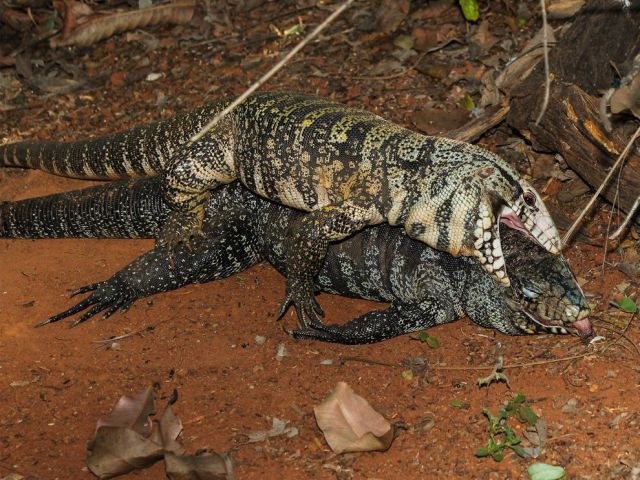
But he did not expect to witness lizard necrophilia. Right in front of him, he saw a male reptile trying to court and mate with a dead female of the same species, Salvator merianae, commonly known as the black-and-white tegu.

“I felt a sense of wonder, because I did not observe this behavior in lizards before, only in frogs,” said Sazima, of the Zoology Museum of the University of Campinas in São Paulo.

Necrophilia occurs in other lizard species, but it’s the first documented instance in black-and-white tegus, one of the most common lizards in South America.

Sazima watched the male lizard flick his tongue at the deceased female—a common courtship behavior—and try to mate with her for about five minutes. Then a group of geese showed up, causing the confused suitor to flee.

The scientist returned to the same spot the next afternoon. By that time, the corpse was bloated and had begun to rot and smell.

But even the stench did not discourage another male black-and-white tegu from attempting to have sex with the dead body—this time for nearly an hour.

During this time, the new male embraced the dead female and bit her head, another courtship behavior. He rested on her body from time to time, taking breaks from the exhausting sexual activity, before finally flicking his tongue on the corpse and leaving, according to the study, published in January in the journal Herpetology Notes.

Sazima’s encounter adds to several reported instances of necrophilia in the animal world.

Henrique Caldeira Costa of the Federal University of Minas Gerais, in Belo Horizonte, Brazil, reported necrophilia in male green ameiva lizards in Brazil in 2010. The female had likely been hit by a vehicle on the road, he wrote in the journal Herpetology Notes.

In another incident, Kamelia Algiers, a biologist at Ventura College in California, described a necrophiliac long-nosed leopard lizard in Nevada, in the western United States.

The animal attempted to copulate with a roadkill female, whose “intestines were sticking out, and there were ants crawling all over it,” said Algiers, who described the event in 2005 in Herpetological Review.

What’s more, mating with the dead isn’t restricted to reptiles and amphibians: Ducks, penguins, sea lions, pigeons, and even ground squirrels have also been caught in the grisly act.

Why Mate With the Dead?

So, what exactly draws some male lizards to female corpses? Despite many scientific observations, “necrophilia in lizards is still poorly understood,” said Costa, who wasn’t involved in the new tegu research.

But as for those amorous black-and-white tegus, the Zoology Museum’s Sazima has a theory: The males may have been simply fooled into thinking the female was alive.

For one, the dead female lizard was still warm: Though dead, her body temperature was probably close to that of the ambient air. And her pheromones, likely still detectable on her body after death, may have allured the male admirers.

Federal University’s Costa agrees this is a valid theory, and suspects that the female’s high body temperature and pheromones might have explained the lizard necrophiliac he described in 2010.

Interestingly, necrophilia seems to be beneficial for at least one species: a small frog in Amazonian Brazil called Rhinella proboscidea.

A 2013 study showed that R. proboscidea males can extract eggs from dead sexual partners and fertilize them, a process called “functional necrophilia.”

http://news.nationalgeographic.com/news/2015/02/150227-necrophilia-lizards-animals-mating-sex-science-brazil/?google_editors_picks=true

Thanks to Da Brayn for bringing this to the attention of the It’s Interesting community.
Moscow Man Wakes Up to Find His Testicles Stolen

testicle

A man in Moscow had the shock of his life when he awoke from an amorous encounter to discover that his testicles had been surgically removed.

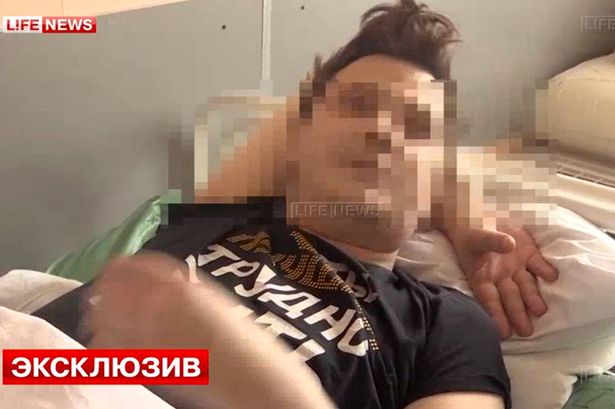
The 30-year-old man was sitting in a bar when a woman approached him and began chatting to him, he told LifeNews news website this week. “We drank beer together, and then she suggested we go to a sauna. We went to the sauna, and after that I don’t remember anything,” he was shown saying from his hospital bed in a video posted by LifeNews.

He woke up early the next morning and at first, the only items he noticed were missing were his cell phone, tablet computer and some money. He felt a pain in his groin, but it was only when he undressed at home that he noticed the incision.

“It was a shock,” said the unidentified victim, who is married.

“I saw an incision, the stitches,” he said.

Even then, the man could not imagine what else had been taken from him during the hazy encounter with the mystery blonde, and it was not until he went to hospital after the pain in his groin became unbearable and swelling appeared that he was told the terrible truth.

The LifeNews video showed a doctor saying that the operation had been carried out by a professional — “by a veterinary doctor at the very least.”

http://www.themoscowtimes.com/news/article/moscow-man-wakes-up-to-find-his-testicles-stolen/516664.html

First human head transplant could happen in two years

head-transplant-rhesus

IT’S heady stuff. The world’s first attempt to transplant a human head will be launched this year at a surgical conference in the US. The move is a call to arms to get interested parties together to work towards the surgery.

The idea was first proposed in 2013 by Sergio Canavero of the Turin Advanced Neuromodulation Group in Italy. He wants to use the surgery to extend the lives of people whose muscles and nerves have degenerated or whose organs are riddled with cancer. Now he claims the major hurdles, such as fusing the spinal cord and preventing the body’s immune system from rejecting the head, are surmountable, and the surgery could be ready as early as 2017.

Canavero plans to announce the project at the annual conference of the American Academy of Neurological and Orthopaedic Surgeons (AANOS) in Annapolis, Maryland, in June. Is society ready for such momentous surgery? And does the science even stand up?

The first attempt at a head transplant was carried out on a dog by Soviet surgeon Vladimir Demikhov in 1954. A puppy’s head and forelegs were transplanted onto the back of a larger dog. Demikhov conducted several further attempts but the dogs only survived between two and six days.

The first successful head transplant, in which one head was replaced by another, was carried out in 1970. A team led by Robert White at Case Western Reserve University School of Medicine in Cleveland, Ohio, transplanted the head of one monkey onto the body of another. They didn’t attempt to join the spinal cords, though, so the monkey couldn’t move its body, but it was able to breathe with artificial assistance. The monkey lived for nine days until its immune system rejected the head. Although few head transplants have been carried out since, many of the surgical procedures involved have progressed. “I think we are now at a point when the technical aspects are all feasible,” says Canavero.

This month, he published a summary of the technique he believes will allow doctors to transplant a head onto a new body (Surgical Neurology International, doi.org/2c7). It involves cooling the recipient’s head and the donor body to extend the time their cells can survive without oxygen. The tissue around the neck is dissected and the major blood vessels are linked using tiny tubes, before the spinal cords of each person are cut. Cleanly severing the cords is key, says Canavero.

The recipient’s head is then moved onto the donor body and the two ends of the spinal cord – which resemble two densely packed bundles of spaghetti – are fused together. To achieve this, Canavero intends to flush the area with a chemical called polyethylene glycol, and follow up with several hours of injections of the same stuff. Just like hot water makes dry spaghetti stick together, polyethylene glycol encourages the fat in cell membranes to mesh.

Next, the muscles and blood supply would be sutured and the recipient kept in a coma for three or four weeks to prevent movement. Implanted electrodes would provide regular electrical stimulation to the spinal cord, because research suggests this can strengthen new nerve connections.

When the recipient wakes up, Canavero predicts they would be able to move and feel their face and would speak with the same voice. He says that physiotherapy would enable the person to walk within a year. Several people have already volunteered to get a new body, he says.

The trickiest part will be getting the spinal cords to fuse. Polyethylene glycol has been shown to prompt the growth of spinal cord nerves in animals, and Canavero intends to use brain-dead organ donors to test the technique. However, others are sceptical that this would be enough. “There is no evidence that the connectivity of cord and brain would lead to useful sentient or motor function following head transplantation,” says Richard Borgens, director of the Center for Paralysis Research at Purdue University in West Lafayette, Indiana.

If polyethylene glycol doesn’t work, there are other options Canavero could try. Injecting stem cells or olfactory ensheathing cells – self-regenerating cells that connect the lining of the nose to the brain – into the spinal cord, or creating a bridge over the spinal gap using stomach membranes have shown promise in helping people walk again after spinal injury. Although unproven, Canavero says the chemical approach is the simplest and least invasive.

But what about the prospect of the immune system rejecting the alien tissue? Robert White’s monkey died because its head was rejected by its new body. William Mathews, chairman of the AANOS, says he doesn’t think this would be a major problem today. He says that because we can use drugs to manage the acceptance of large amounts of tissue, such as a leg or a combined heart and lung transplant, the immune response to a head transplant should be manageable. “The system we have for preventing immune rejection and the principles behind it are well established.”

Canavero isn’t alone in his quest to investigate head transplants. Xiao-Ping Ren of Harbin Medical University in China recently showed that it is possible to perform a basic head transplant in a mouse (CNS Neuroscience & Therapeutics, doi.org/2d5). Ren will attempt to replicate Canavero’s protocol in the next few months in mice, and monkeys.

The essence of you

Another hurdle will be finding a country to approve such a transplant. Canavero would like to do the experiment in the US, but believes it might be easier to get approval somewhere in Europe. “The real stumbling block is the ethics,” he says. “Should this surgery be done at all? There are obviously going to be many people who disagree with it.”

Patricia Scripko, a neurologist and bioethicist at the Salinas Valley Memorial Healthcare System in California, says that many of the ethical implications related to the surgery depend on how you define human life. “I believe that what is specifically human is held within the higher cortex. If you modify that, then you are not the same human and you should question whether it is ethical. In this case, you’re not altering the cortex.” However, she adds that many cultures would not approve of the surgery because of their belief in a human soul that is not confined to the brain.

As with many unprecedented procedures, there may also be concerns about a slippery slope. In this case, it would be whether this would eventually lead to people swapping bodies for cosmetic reasons. However, Scripko – who doesn’t believe the surgery will ever happen – doesn’t think this applies here. “If a head transplant were ever to take place, it would be very rare. It’s not going to happen because someone says ‘I’m getting older, I’m arthritic, maybe I should get a body that works better and looks better’.”

Unsurprisingly, the surgical community is also wary of embracing the idea. Many surgeons contacted by New Scientist refused to comment on the proposed project, or said it sounded “too outlandish” to be a serious consideration.

“This is such an overwhelming project, the possibility of it happening is very unlikely,” says Harry Goldsmith, a clinical professor of neurological surgery at the University of California, Davis, who has performed one of the few surgeries that enabled someone with a spinal cord injury to regain the ability to walk. “I don’t believe it will ever work, there are too many problems with the procedure. Trying to keep someone healthy in a coma for four weeks – it’s not going to happen.”

Nick Rebel, executive director of the US branch of the International College of Surgeons, says that although his organisation, along with the AANOS, is giving Canavero a stage, it is not sponsoring his ideas. “We’re creating a venue for him to launch the project. There will be a lot of top international surgeons at the conference and we shall see whether it is well received or not.”

Mathews is more enthusiastic about the project. “I embrace the concept of spinal fusion,” he says, “and I think there are a lot of areas that a head transplant can be used, but I disagree with Canavero on the timing. He thinks it’s ready, I think it’s far into the future.”

Canavero is philosophical. “This is why I first spoke about the idea two years ago, to get people talking about it,” he says. “If society doesn’t want it, I won’t do it. But if people don’t want it in the US or Europe, that doesn’t mean it won’t be done somewhere else. I’m trying to go about this the right way, but before going to the moon, you want to make sure people will follow you.”

http://www.newscientist.com/article/mg22530103.700-first-human-head-transplant-could-happen-in-two-years.html?full=true