New synthetic chameleon skin could lead to instant wardrobe changes

Technology could lead to the transformation of clothes, cars, buildings and even billboards.

Chameleons are one of the few animals in the world capable of changing their color at will. Scientists have only recently figured out how these shifty creatures perform their kaleidoscopic act, and now they have developed a synthetic material that can mimic the color-changing ability of chameleon skin, reports Gizmodo.

Though it may seem magical, the chameleon’s trick is quite simple. It turns out that chameleons have a layer of nanocrystals in their skin cells that can reflect light at different wavelengths depending on their spacing. So when the skin is relaxed, it takes on one color. But when it stretches, the color changes. Chameleons merely need to flex their skin in subtle ways to alter their appearance.

Learning to mimic this animal’s ability could lead to more than just new forms of advanced camouflage. Imagine if you could change the color of your wardrobe instantly, or if your car could get a new “paint job” at any time. Buildings lined with synthetic chameleon skin could alter their appearance in moments without architectural changes, or billboards could flash new messages at the drop of a hat.

All of these technologies could now be just around the corner thanks to the development of “flexible photonic metastructures for tunable coloration” that essentially work like artificial chameleon skin.

Basically, the material involves tiny rows of ridges that are etched onto a silicon film a thousand times thinner than a human hair. Each of these ridges reflects a specific wavelength of light, so it’s possible to finely tune the wavelength of light that is reflected by simply manipulating the spacing between the ridges.

The technology does not yet have a direct commercial application — it’s still in the beginning stages — but it may not be long before chameleon-like surfaces cover everything around us. More can be read about the technology in the journal Optica, where the new research was published.

Read more: http://www.mnn.com/green-tech/research-innovations/stories/new-synthetic-chameleon-skin-could-lead-to-instant-wardrobe#ixzz3VoTTwf8P

Boeing granted patent for world’s first real-life ‘force field’

The technology is reminiscent of the deflector shields popularized in the world of ‘Star Trek.’

There are several technologies from the world of “Star Trek” that perhaps seem forever relegated to science fiction: transporters, warp drives, universal translators, etc. But if Boeing has its way, you won’t find deflector shields on that list. The multinational corporation has been granted a patent for a real life force field-like defense system that is reminiscent of the Trekkie tech most famous for keeping Enterprise safe from phaser blasts and photon torpedoes, reports CNN.

The patent, originally filed in 2012, calls the technology a “method and system for shockwave attenuation via electromagnetic arc.” Though not exactly the same thing as featured in “Star Trek,” the concept isn’t that far off from its fictional counterpart. Basically, the system is designed to create a shell of ionized air — a plasma field, essentially — between the shockwave of an oncoming blast and the object being protected.

According to the patent, it works “by heating a selected region of the first fluid medium rapidly to create a second, transient medium that intercepts the shockwave and attenuates its energy density before it reaches a protected asset.”

The protective arc of air can be superheated using a laser. In theory, such a plasma field should dissipate any shockwave that comes into contact with it, though its effectiveness has yet to be proven in practice. The device would also include sensors that can detect an oncoming blast before it makes impact, so that it wouldn’t have to be turned on at all times. It would only activate when needed, kind of like how a vehicle’s airbag is only triggered by an impact.

Boeing’s force field would not protect against shrapnel or flying projectiles — it is only designed to guard against a shockwave — so it isn’t an all-encompassing shield. But if it works, it will still offer improved protection against dangers commonly met on modern battlefields.

“Explosive devices are being used increasingly in asymmetric warfare to cause damage and destruction to equipment and loss of life. The majority of the damage caused by explosive devices results from shrapnel and shock waves,” reads the patent.

So the world of “Star Trek” may not be so far off after all. Maybe next, we’ll have subspace communications and Vulcan mind melds. The line between science and science fiction is becoming increasingly blurred indeed.

Read more: http://www.mnn.com/green-tech/research-innovations/stories/boeing-granted-patent-for-worlds-first-real-life-force-field#ixzz3VoQfqOyA

Thanks to Kebmodee and Da Brayn for bringing this to the attention of the It’s Interesting community.

Man Finds Whole Potato In Potato Chip Bag

What came out of Richard Bootman’s potato chip bag is strange, no matter how you slice it.

Actually, it’s weirder because of what wasn’t sliced: a whole uncut and unpeeled potato — no chips.

Bootman, 25, of Mildenhall, UK, found the whole spud Monday morning in a package of Snackrite steak and onion crisps he purchased at an Aldi’s grocery store.

“I picked it up and it was airtight so I didn’t question it,” Bootman told BT.com. “At first I thought it was a ball of soggy crisps. When I realized what it was everyone in the office laughed -– we couldn’t believe it.”

Bootman said the most hilarious part of the experience was when he tipped the bag upside-down.

“This oily potato just fell out onto my desk,” he told the Metro. “I said to a friend, “Maybe you are expected to cook your own crisps these days.'”

http://www.huffingtonpost.com/2015/03/12/richard-bootman-potato_n_6855492.html

Senior citizens pose naked for charity calendar

A charity calendar featuring women in their 80s and 90s from an Ohio assisted living facility is opening more than a few eyes.

The residents of the Pleasant Pointe Assisted Living near Akron decided to show a little skin in calendar. The centerfolds are two women in their 90s appearing to play poker with strategically placed oversize cards.

The 87-year-old Miss February is soaking in a bubble bath and flower petals while another resident in the calendar is covered only by a large exercise ball.

Administrator Teresa Morris said that the residents were giggling and acting like 20-year-olds when the photos were taken.

Money from the $12 calendars goes toward providing shoes for children in the city of Barberton.

http://news.yahoo.com/grandma-centerfold-rest-home-bares-calendar-143349098.html

Researchers break spinning world record

A team of researchers at the University of St Andrews have made it into the record books by creating the fastest rotating man-made object ever recorded.

Professor Kishan Dholakia, Dr Yoshihiko Arita and Dr Michael Mazilu of the University’s School of Physics and Astronomy, managed to spin a tiny sphere of calcium carbonate 600 million revolutions per minute (rpm) using optical tweezers.

The team, who are leading experts in light technology, used optical tweezers to spin the four micrometre diameter particle inside a vacuum chamber. As the light passed through the sphere the change in polarisation of the light exerted a small torque on the sphere, thus spinning it. The lack of drag and frictional forces allowed a very high rotation rate to be achieved -10 million revolutions per second, or 600 million revolutions per minute, before the sphere left the trap (most likely disintegrating).

Professor Dholakia said: “This has been an exciting team effort to realise this world record. The result is a major breakthrough in our physics understanding of the light-matter interaction. We are planning new advances and even hope to challenge our own record in the near future.”

The research was published in Nature Communications and now the feat has been acknowledged as the fastest rotating man-made object to date, by the Guinness Book of World Records, and appears in the latest edition of the publication.

More broadly, the achievement fits into the work of the team which looks at the interaction of light and matter including, potentially, studies at the boundary between classical physics and quantum physics.

NASA plans to give the moon a moon

IT SOUNDS ALMOST like a late ’90s sci-fi flick: NASA sends a spacecraft to an asteroid, plucks a boulder off its surface with a robotic claw, and brings it back in orbit around the moon. Then, brave astronaut heroes go and study the space rock up close—and bring samples back to Earth.

Except it’s not a movie: That’s the real-life idea for the Asteroid Redirect Mission, which NASA announced today. Other than simply being an awesome space version of the claw arcade game (you know you really wanted that stuffed Pikachu), the mission will let NASA test technology and practice techniques needed for going to Mars.

The mission, which will cost up to $1.25 billion, is slated to launch in December 2020. It will take about two years to reach the asteroid (the most likely candidate is a quarter-mile-wide rock called 2008 EV5). The spacecraft will spend up to 400 days there, looking for a good boulder. After picking one—maybe around 13 feet in diameter—it will bring the rock over to the moon. In 2025, astronauts will fly NASA’s still-to-be-built Orion to dock with the asteroid-carrying spacecraft and study the rock up close.

Although the mission would certainly give scientists an up-close opportunity to look at an asteroid, its main purpose is as a testing ground for a Mars mission. The spacecraft will test a solar electronic propulsion system, which uses the power from solar panels to pump out charged particles to provide thrust. It’s slower than conventional rockets, but a lot more efficient. You can’t lug a lot of rocket fuel to Mars.

Overall, the mission gives NASA a chance at practicing precise navigation and maneuvering techniques that they’ll need to master for a Mars mission. Such a trip will also require a lot more cargo, so grabbing and maneuvering a big space rock is good practice. Entering lunar orbit and docking with another spacecraft would also be helpful, as the orbit might be a place for a deep-space habitat, a rendezvous point for astronauts to pick up cargo or stop on their way to Mars.

And—you knew this part was coming, Armageddon fans—the mission might teach NASA something about preventing an asteroid from striking Earth. After grabbing the boulder, the spacecraft will orbit the asteroid. With the added heft from the rock, the spacecraft’s extra gravity would nudge the asteroid, creating a slight change in trajectory that NASA could measure from Earth. “We’re not talking about a large deflection here,” says Robert Lightfoot, an associate administrator at NASA. But the idea is that a similar technique could push a threatening asteroid off a collision course with Earth.

NASA chose this mission concept over one that would’ve bagged an entire asteroid. In that plan, the spacecraft would’ve captured the space rock by enclosing it in a giant, flexible container. The claw concept won out because its rendezvous and soft-landing on the asteroid will allow NASA to test and practice more capabilities in preparation for a Mars mission, Lightfoot says. The claw would’ve also given more chances at grabbing a space rock, whereas it was all or nothing with the bag idea. “It’s a one-shot deal,” he says. “It is what it is when we get there.” But the claw concept offers some choices. “I’ve got three to five opportunities to pull one of the boulders off,” he says. Not bad odds. Better than winning that Pikachu.

http://www.wired.com/2015/03/nasas-plan-give-moon-moon/

Solid Gold: Precious Metals Discovered to be Concentrated in Human Fecal Matter

Instead of flushing millions down the toilet, humans could be mining their poop for gold.

That’s at least what some researchers with the U.S. Geological Survey (USGS) think. They’re looking for ways to squeeze metals like gold and silver out of solid waste.

When poop arrives at a wastewater treatment plant, it is separated into biosolids and treated water. Inevitably about half of the biosolids (3.5 million tons in the United States alone) is sent to landfills or incinerated, while the other half is used as fertilizer.

Kathleen Smith, a USGS geologist, thinks people could make more of these biosolids; they’re full of tiny particles of metals that find their way into waste through beauty products, detergents and even odor-resistant clothing.

There are two good reasons to try to pull these metals out of poop, according to Smith, who’s presenting her research on the subject at an American Chemical Society meeting this week.

“If you can get rid of some of the nuisance metals that currently limit how much of these biosolids we can use on fields and forests, and at the same time recover valuable metals and other elements, that’s a win-win,” Smith explained in a statement.

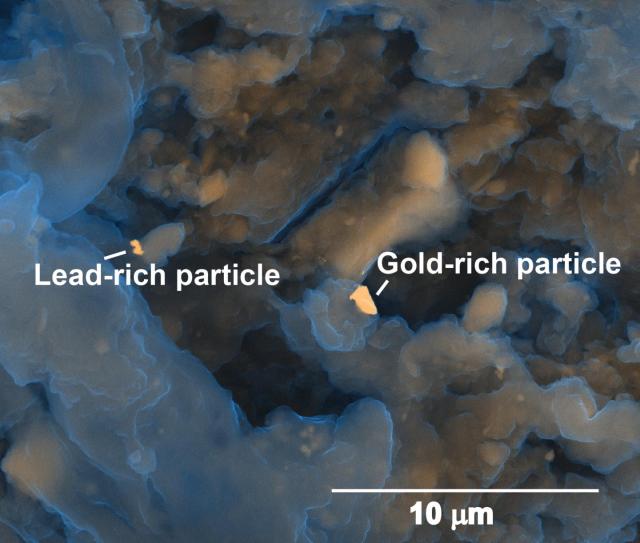
The same chemicals (called leachates) that miners use to pull metals out of rock could be safely used to pull metals from waste, Smith and her colleagues found. The researchers have examined waste samples from small towns in the Rocky Mountains, as well as in rural areas and cities. They detected some sizable concentrations of platinum, silver and gold when they looked at their samples under a scanning electron microscope, they reported.

“The gold we found was at the level of a minimal mineral deposit,” Smith said. In other words, if that level of gold were observed in rock, it would be considered a potential mining prospect.

It’s not just gold that could be mined and sold. Waste contains elements like vanadium and copper that could be used in devices such as cellphones and computers, the researchers said.

The economic value of poop mining is still unclear, but some recent projections have been promising. Earlier this year, another group of researchers published a paper in the journal Environmental Science & Technology, estimating that metals extracted from poop in a population of 1 million people could yield $13 million per year.

http://www.livescience.com/50235-solid-gold-poop-could-yield-precious-metals.html

Jupiter’s Moon Ganymede Has a Salty Ocean with More Water Than Earth


The ocean there is thought to extend to 10 times the depth of Earth’s oceans.

A salty ocean is lurking beneath the surface of Jupiter’s largest moon, Ganymede, scientists using the Hubble Space Telescope have found.

The ocean on Ganymede—which is buried under a thick crust of ice—could actually harbor more water than all of Earth’s surface water combined, according to NASA officials. Scientists think the ocean is about 60 miles (100 kilometers) thick, 10 times the depth of Earth’s oceans, NASA added. The new Hubble Space Telescope finding could also help scientists learn more about the plethora of potentially watery worlds that exist in the solar system and beyond.

“The solar system is now looking like a pretty soggy place,” said Jim Green, NASA’s director of planetary science. Scientists are particularly interested in learning more about watery worlds because life as we know it depends on water to thrive.

Scientists have also found that Ganymede’s surface shows signs of flooding. Young parts of Ganymede seen in a video map may have been formed by water bubbling up from the interior of the moon through faults or cryo-volcanos at some point in the moon’s history, Green said.

Scientists have long suspected that there was an ocean of liquid water on Ganymede—the largest moon in the solar system, at about 3,273 miles (5,268 kilometers) across—has an ocean of liquid water beneath its surface. The Galileo probe measured Ganymede’s magnetic field in 2002, providing some data supporting the theory that the moon has an ocean. The newly announced evidence from the Hubble telescope is the most convincing data supporting the subsurface ocean theory yet, according to NASA.

Scientists used Hubble to monitor Ganymede’s auroras, ribbons of light at the poles created by the moon’s magnetic field. The moon’s auroras are also affected by Jupiter’s magnetic field because of the moon’s proximity to the huge planet.

When Jupiter’s magnetic field changes, so does Ganymede’s. Researchers were able to watch the two auroras “rock” back and forth with Hubble. Ganymede’s aurora didn’t rock as much as expected, so by monitoring that motion, the researchers concluded that a subsurface ocean was likely responsible for dampening the change in Ganymede’s aurora created by Jupiter.

“I was always brainstorming how we could use a telescope in other ways,” Joachim Saur, geophysicist and team leader of the new finding, said in a statement. “Is there a way you could use a telescope to look inside a planetary body? Then I thought, the aurorae! Because aurorae are controlled by the magnetic field, if you observe the aurorae in an appropriate way, you learn something about the magnetic field. If you know the magnetic field, then you know something about the moon’s interior.”

Hunting for auroras on other worlds could potentially help identify water-rich alien planets in the future, Heidi Hammel, executive vice president of the Association of Universities for Research in Astronomy, said during the teleconference. Scientists might be able to search for rocking auroras on exoplanets that could potentially harbor water using the lessons learned from the Hubble observations of Ganymede.

Astronomers might be able to detect oceans on planets near magnetically active stars using similar methods to those used by Saur and his research team, Hammel added.

“By monitoring auroral activity on exoplanets, we may be able to infer the presence of water on or within an exoplanet,” Hammel said. “Now, it’s not going to be easy—it’s not as easy as Ganymede and Jupiter, and that wasn’t easy. It may require a much larger telescope than Hubble, it may require some future space telescope, but nevertheless, it’s a tool now that we didn’t have prior to this work that Joachim and his team have done.”

Jupiter’s moons are popular targets for future space missions. The European Space Agency is planning to send a probe called JUICE—short for JUpiter ICy moons Explorer—to Jupiter and its moons in 2022. JUICE is expected to check out Europa, Callisto and Ganymede during its mission. NASA also has its eye on the Jupiter system. Officials are hoping to send a probe to Europa by the mid-2020s.

NASA will also celebrate the Hubble telescope’s 25th anniversary this year.

“This discovery marks a significant milestone, highlighting what only Hubble can accomplish,” John Grunsfeld, assistant administrator of NASA’s Science Mission, said in the same statement. “In its 25 years in orbit, Hubble has made many scientific discoveries in our own solar system. A deep ocean under the icy crust of Ganymede opens up further exciting possibilities for life beyond Earth.”

http://www.scientificamerican.com/article/jupiter-s-moon-ganymede-has-a-salty-ocean-with-more-water-than-earth/

The Purpose of Our Eyes’ Strange Wiring Is Unveiled


The reverse-wiring of the eyeball has long been a mystery, but new research shows a remarkable structural purpose: increasing and sharpening our color vision.

by Erez Ribak, at the Israel Institute of Technology

The human eye is optimised to have good colour vision at day and high sensitivity at night. But until recently it seemed as if the cells in the retina were wired the wrong way round, with light travelling through a mass of neurons before it reaches the light-detecting rod and cone cells. New research presented at a meeting of the American Physical Society has uncovered a remarkable vision-enhancing function for this puzzling structure.

About a century ago, the fine structure of the retina was discovered. The retina is the light-sensitive part of the eye, lining the inside of the eyeball. The back of the retina contains cones to sense the colours red, green and blue. Spread among the cones are rods, which are much more light-sensitive than cones, but which are colour-blind.

Before arriving at the cones and rods, light must traverse the full thickness of the retina, with its layers of neurons and cell nuclei. These neurons process the image information and transmit it to the brain, but until recently it has not been clear why these cells lie in front of the cones and rods, not behind them. This is a long-standing puzzle, even more so since the same structure, of neurons before light detectors, exists in all vertebrates, showing evolutionary stability.

Researchers in Leipzig found that glial cells, which also span the retinal depth and connect to the cones, have an interesting attribute. These cells are essential for metabolism, but they are also denser than other cells in the retina. In the transparent retina, this higher density (and corresponding refractive index) means that glial cells can guide light, just like fibre-optic cables.

n view of this, my colleague Amichai Labin and I built a model of the retina, and showed that the directional of glial cells helps increase the clarity of human vision. But we also noticed something rather curious: the colours that best passed through the glial cells were green to red, which the eye needs most for daytime vision. The eye usually receives too much blue—and thus has fewer blue-sensitive cones.

Further computer simulations showed that green and red are concentrated five to ten times more by the glial cells, and into their respective cones, than blue light. Instead, excess blue light gets scattered to the surrounding rods.

This surprising result of the simulation now needed an experimental proof. With colleagues at the Technion Medical School, we tested how light crosses guinea pig retinas. Like humans, these animals are active during the day and their retinal structure has been well-characterised, which allowed us to simulate their eyes just as we had done for humans. Then we passed light through their retinas and, at the same time, scanned them with a microscope in three dimensions. This we did for 27 colours in the visible spectrum.

The result was easy to notice: in each layer of the retina we saw that the light was not scattered evenly, but concentrated in a few spots. These spots were continued from layer to layer, thus creating elongated columns of light leading from the entrance of the retina down to the cones at the detection layer. Light was concentrated in these columns up to ten times, compared to the average intensity.

Even more interesting was the fact that the colours that were best guided by the glial cells matched nicely with the colours of the cones. The cones are not as sensitive as the rods, so this additional light allowed them to function better—even under lower light levels. Meanwhile, the bluer light, that was not well-captured in the glial cells, was scattered onto the rods in its vicinity.

These results mean that the retina of the eye has been optimised so that the sizes and densities of glial cells match the colours to which the eye is sensitive (which is in itself an optimisation process suited to our needs). This optimisation is such that colour vision during the day is enhanced, while night-time vision suffers very little. The effect also works best when the pupils are contracted at high illumination, further adding to the clarity of our colour vision.

http://www.scientificamerican.com/article/the-purpose-of-our-eyes-strange-wiring-is-unveiled/

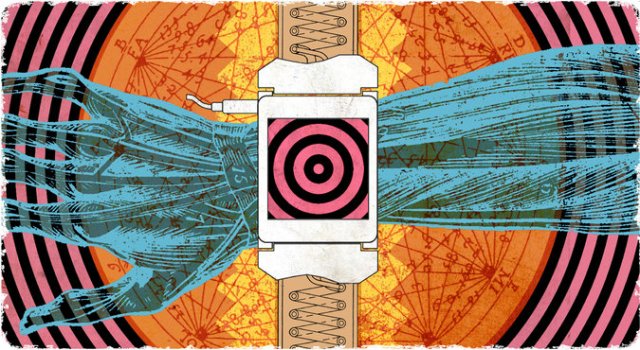
The Health Concerns in Wearable Tech

In 1946, a new advertising campaign appeared in magazines with a picture of a doctor in a lab coat holding a cigarette and the slogan, “More doctors smoke Camels than any other cigarette.” No, this wasn’t a spoof. Back then, doctors were not aware that smoking could cause cancer, heart disease and lung disease.

In a similar vein, some researchers and consumers are now asking whether wearable computers will be considered harmful in several decades’ time.

We have long suspected that cellphones, which give off low levels of radiation, could lead to brain tumors, cancer, disturbed blood rhythms and other health problems if held too close to the body for extended periods.

Yet here we are in 2015, with companies like Apple and Samsung encouraging us to buy gadgets that we should attach to our bodies all day long.

While there is no definitive research on the health effects of wearable computers (the Apple Watch isn’t even on store shelves yet), we can hypothesize a bit from existing research on cellphone radiation.

The most definitive and arguably unbiased results in this area come from the International Agency for Research on Cancer, a panel within the World Health Organization that consisted of 31 scientists from 14 countries.

After dissecting dozens of peer-reviewed studies on cellphone safety, the panel concluded in 2011 that cellphones were “possibly carcinogenic” and that the devices could be as harmful as certain dry-cleaning chemicals and pesticides. (Note that the group hedged its findings with the word “possibly.”)

The W.H.O. panel concluded that the farther away a device is from one’s head, the less harmful — so texting or surfing the Web will not be as dangerous as making calls, with a cellphone inches from the brain. (This is why there were serious concerns about Google Glass when it was first announced and why we’ve been told to use hands-free devices when talking on cellphones.)

A longitudinal study conducted by a group of European researchers and led by Dr. Lennart Hardell, a professor of oncology and cancer epidemiology at Orebro University Hospital in Sweden, concluded that talking on a mobile or cordless phone for extended periods could triple the risk of a certain kind of brain cancer.

There is, of course, antithetical research. But some of this was partly funded by cellphone companies or trade groups.

One example is the international Interphone study, which was published in 2010 and did not find strong links between mobile phones and an increased risk of brain tumors. The Centers for Disease Control and Prevention concluded in 2014 that “more research is needed before we know if using cell phones causes health effects.”

Continue reading the main story
Another study, in The BMJ, which measured cellphone subscription data rather than actual use, said there was no proof of increased cancer. Yet even here, the Danish team behind the report acknowledged that a “small to moderate increase” in cancer risk among heavy cellphone users could not be ruled out.

But what does all this research tell the Apple faithful who want to rush out and buy an Apple Watch, or the Google and Windows fanatics who are eager to own an alternative smartwatch?

Dr. Joseph Mercola, a physician who focuses on alternative medicine and has written extensively about the potential harmful effects of cellphones on the human body, said that as long as a wearable does not have a 3G connection built into it, the harmful effects are minimal, if any.

“The radiation really comes from the 3G connection on a cellphone, so devices like the Jawbone Up and Apple Watch should be O.K.,” Dr. Mercola said in a phone interview. “But if you’re buying a watch with a cellular chip built in, then you’ve got a cellphone attached to your wrist.” And that, he said, is a bad idea.

(The Apple Watch uses Bluetooth and Wi-Fi to receive data, and researchers say there is no proven harm from those frequencies on the human body. Wearables with 3G or 4G connections built in, including the Samsung Gear S, could be more harmful, though that has not been proved. Apple declined to comment for this article, and Samsung could not be reached for comment.)

Researchers have also raised concerns about having powerful batteries so close to the body for extended periods of time. Some reports over the last several decades have questioned whether being too close to power lines could cause leukemia (though other research has also negated this).

So what should consumers do? Perhaps we can look at how researchers themselves handle their smartphones.

While Dr. Mercola is a vocal proponent of cellphone safety, he told me to call him on his cell when I emailed about an interview. When I asked him whether he was being hypocritical, he replied that technology is a fact of life, and that he uses it with caution. As an example, he said he was using a Bluetooth headset during our call.

In the same respect, people who are concerned about the possible side effects of a smartwatch should avoid placing it close to their brain (besides, it looks a little strange). But there are some people who may be more vulnerable to the dangers of these devices: children.

While researchers debate about how harmful cellphones and wearable computers actually are, most agree that children should exercise caution.

Continue reading the main story
In an email, Dr. Hardell sent me research illustrating that a child’s skull is thinner and smaller than an adult’s, which means that children’s brain tissues are more exposed to certain types of radiation, specifically the kind that emanates from a cellphone.

Children should limit how much time they spend talking on a cellphone, doctors say. And if they have a wearable device, they should take it off at night so it does not end up under their pillow, near their brain. Doctors also warn that women who are pregnant should be extra careful with all of these technologies.

But what about adults? After researching this column, talking to experts and poring over dozens of scientific papers, I have realized the dangers of cellphones when used for extended periods, and as a result I have stopped holding my phone next to my head and instead use a headset.

That being said, when it comes to wearable computers, I’ll still buy the Apple Watch, but I won’t let it go anywhere near my head. And I definitely won’t let any children I know play with it for extended periods of time.While researchers debate about how harmful cellphones and wearable computers actually are, most agree that children should exercise caution.

In an email, Dr. Hardell sent me research illustrating that a child’s skull is thinner and smaller than an adult’s, which means that children’s brain tissues are more exposed to certain types of radiation, specifically the kind that emanates from a cellphone.

Children should limit how much time they spend talking on a cellphone, doctors say. And if they have a wearable device, they should take it off at night so it does not end up under their pillow, near their brain. Doctors also warn that women who are pregnant should be extra careful with all of these technologies.

But what about adults? After researching this column, talking to experts and poring over dozens of scientific papers, I have realized the dangers of cellphones when used for extended periods, and as a result I have stopped holding my phone next to my head and instead use a headset.

That being said, when it comes to wearable computers, I’ll still buy the Apple Watch, but I won’t let it go anywhere near my head. And I definitely won’t let any children I know play with it for extended periods of time.