Guatemalans deliberately infected with STDs sue Johns Hopkins University and Rockefeller Foundation for $1billion dollars


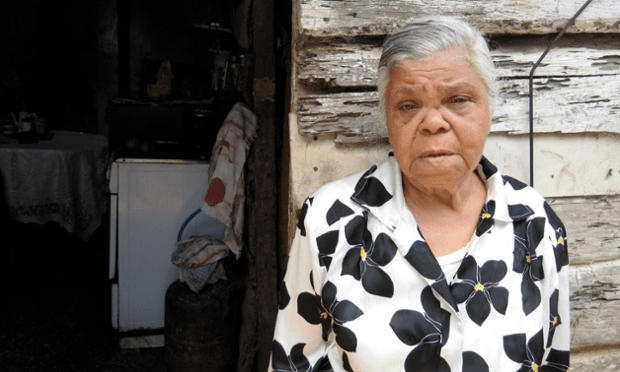
Marta Orellana was experimented on when she was nine. Photograph: Rory Carroll/Guardian

Lawsuit with 800 plaintiffs seeks damages for individuals, spouses and children of people deliberately infected with STDs through US government program.

Nearly 800 plaintiffs have launched a billion-dollar lawsuit against Johns Hopkins University over its alleged role in the deliberate infection of hundreds of vulnerable Guatemalans with sexually transmitted diseases, including syphilis and gonorrhea, during a medical experiment program in the 1940s and 1950s.

The lawsuit, which also names the philanthropic Rockefeller Foundation, alleges that both institutions helped “design, support, encourage and finance” the experiments by employing scientists and physicians involved in the tests, which were designed to ascertain if penicillin could prevent the diseases.

Researchers at Johns Hopkins School of Medicine held “substantial influence” over the commissioning of the research program by dominating panels that approved federal funding for the research, the suit claims.

The lawsuit asserts that a researcher paid by the Rockefeller Foundation was assigned to the experiments, which he travelled to inspect on at least six occasions.

The suit also claims that predecessor companies of the pharmaceutical giant Bristol-Myers Squibb supplied penicillin for use in the experiments, which they knew to be both secretive and non-consensual.

The experiments, which occurred between 1945 and 1956, were kept secret until they were discovered in 2010 by a college professor, Susan Reverby. The program published no findings and did not inform Guatemalans who were infected of the consequences of their participation, nor did it provide them with follow up medical care or inform them of ways to prevent the infections spreading, the lawsuit states.

Orphans, prisoners and mental health patients were deliberately infected in the experiments.

The plaintiffs’ case quotes the correspondence from one of the program’s lead researchers who tells another doctor that if it were discovered by “some goody organization” that the program was testing people who were mentally ill it would “raise a lot of smoke”. The manager continues: “I see no reason to say where the work was done and the type of volunteer.”

Baltimore-based attorney for the plaintiffs Paul Bekman told the Guardian that of the 774 claimants, about 60 were direct survivors of the program. Many have died as a result of deliberate infection and others had passed on disease to family members and partners.

“The people who are responsible [for carrying out the research] now are long dead,” said Bekman “But the records are there, and we have detailed documentation that supports the allegations in our complaint.”

Marta Orellana was a nine-year-old orphan when she was included in the experiments. In an interview with the Guardian in 2011 she recalled being forcibly examined by light-complexioned foreigners and a Guatemalan doctor in the orphanage infirmary.

“They never told me what they were doing, never gave me a chance to say no,” Orellana said. “I’ve lived almost my whole life without knowing the truth. May God forgive them.”

Included within the legal claim are graphic descriptions of some of the methods used by the researchers to infect their subjects:

During the experiments, the following occurred:
1.Prostitutes were infected with venereal disease and then provided for sex to subjects for intentional transmission of the disease;
2.Subjects were inoculated by injection of syphilis spirochaetes into the spinal fluid that bathes the brain and spinal cord, under the skin, and on mucous membranes;
3.An emulsion containing syphilis or gonorrhoea was spread under the foreskin of the penis in male subjects;
4.The penis of male subjects was scraped and scarified and then coated with the emulsion containing syphilis or gonorrhea;
5.A woman from the psychiatric hospital was injected with syphilis, developed skin lesions and wasting, and then had gonorrhoeal pus from a male subject injected into both of her eyes and;
6.Children were subjected to blood studies to check for the presence of venereal disease.

The then secretary of state Hillary Clinton apologised for the programme in 2010 after a presidential bioethics commission investigation found the experiments “involved unconscionable basic violations of ethics”.

A federal lawsuit for damages under the Federal Tort Claims Act failed in 2012 after a judge determined the US government cannot be held liable for actions outside the US. Bekman told the Guardian he believed the new lawsuit stood a greater chance of success as it was lodged in the state court of Maryland and against private entities.

Both Johns Hopkins University and the Rockefeller Foundation have vigorously denied any involvement in the experiments.

A spokeswoman for Johns Hopkins School of Medicine said the institute expressed “profound sympathy” for the victims of the experiments and their families, but added: “Johns Hopkins did not initiate, pay for, direct of conduct the study in Guatemala. No nonprofit university or hospital has ever been held liable for a study conducted by the US government.”

The university stated it would “vigorously defend” the lawsuit.

The Rockefeller Foundation issued a detailed response to the claim online, which it described as seeking to “improperly to assign ‘guilt by association’ in the absence of compensation from the United States federal government”.

The statement continued: “In the absence of a connection to the Rockefeller Foundation, the lawsuit attempts to connect the Foundation to the experiments through misleading characterizations of relationships between the Foundation and individuals who were in some way associated with the experiments.”

A spokeswoman for Bristol-Myers Squibb declined to comment.

http://www.theguardian.com/us-news/2015/apr/02/johns-hopkins-lawsuit-deliberate-std-infections-guatemala

Thank to Kebmodee.

6 Tools to Help Predict Your Life Expectancy

There’s always the Magic 8 Ball, but when it comes to determining life expectancy, some people want a little more scientific help. Thankfully, there are some useful tests and calculators to help us figure out how many more years we have left — at least until the Fountain of Youth is available in pill form. With that in mind, here are six ways to help predict whether you should keep on working and paying the mortgage or just blow it all on a big beach vacation.

Treadmill test
Want to know if you’ll survive the decade? Hop on a treadmill. Johns Hopkins researchers analyzed more than 58,000 stress tests and concluded that the results of a treadmill test can predict survival over the next 10 years. They came up with a formula, called the FIT Treadmill Score, which helps use fitness to predict mortality.

“The notion that being in good physical shape portends lower death risk is by no means new, but we wanted to quantify that risk precisely by age, gender and fitness level, and do so with an elegantly simple equation that requires no additional fancy testing beyond the standard stress test,” says lead investigator Haitham Ahmed, M.D. M.P.H., a cardiology fellow at the Johns Hopkins University School of Medicine.

In addition to age and gender, the formula factors in your ability to tolerate physical exertion — measured in “metabolic equivalents” or METs. Slow walking equals two METs, while running equals eight.

Researchers used the most common treadmill test, called the Bruce Protocol. The test utilizes three-minute segments, starting at 1.7 mph and a 10 percent grade, which slowly increase in speed and grade.

Researchers analyzed information on the thousands of people ages 18 to 96 who took the treadmill test. They tracked down how many of them died for whatever reason over the next decade. They found that fitness level, as measured by METs and peak heart rate reached during exercise, were the best predictors of death and survival, even after accounting for important variables such as diabetes and family history of premature death.

Sitting test
You don’t need special equipment for this adult version of crisscross applesauce that uses flexibility, balance and strength to measure life expectancy. Brazilian physician Claudio Gil Araujo created the test when he noticed many of his older patients had trouble picking things up off the floor or getting out of a chair.

To try, start by standing upright in the middle of a room. Without using your arms or hands for balance, carefully squat into a cross-legged sitting position. Once you’re settled, stand up from the sitting position — again, without using your arms for help.

You can earn up to 10 points for this maneuver. You get five points for sitting, five for standing, and you subtract a point each time you use an arm or knee for leverage or 1/2 point any time you lose your balance or the movement gets clumsy.

The test seems fairly simple, but Araujo found that it was an accurate predictor of life expectancy. He tested it on more than 2,000 of his patients age 51 to 80, and found that those who scored fewer than eight points were twice as likely to die within the next six years. Those who scored three points or even lower were five times more likely to die within the same time frame.

Araujo didn’t have anyone under 50 try the test, so the results won’t mean the same if you’re younger. As MNN’s Bryan Nelson writes, “If you’re younger than 50 and have trouble with the test, it ought to be a wake-up call. The good news is that the younger you are, the more time you have to get into better shape.”

Test your telomeres

A simple test may help determine your “biological age” by measuring the length of your telomeres. Telomeres are protective sections of DNA located at the end of your chromosomes. They’re sometimes compared to the plastic tips of shoelaces that keep the laces from fraying.

Each time a cell replicates, the telomeres become shorter. Some researchers believe that lifespan can be roughly predicted based upon how long your telomeres are. Shorter telomeres hint at a shorter lifespan for cells. Longer telomeres may mean you have more cell replications left.

Originally offered a few years ago only as an expensive — and relatively controversial — blood test in Britain, telomere testing in now available all over the world, and some companies even test using saliva. The results tell you where your telomere lengths fall in relation to other participants your age.

The link between genetics and longevity has been so embraced that testing companies have since been founded by respected scientists and researchers including Nobel laureate Elizabeth Blackburn of UC San Francisco and George Church, director of Harvard University’s Molecular Technology Group.

The increase in the number of at-home tests is getting the attention of concerned federal regulators and other researchers who question whether the science should stay in the lab.

“It is worth doing. It does tell us something. It is the best measure we have” of cellular aging, aging-researcher and Genescient CEO Bryant Villeponteau told the San Jose Mercury News. But testing still belongs in a research setting, he said, not used as a personal diagnostic tool.

As more people take them, he said, “I think the tests will get better, with more potential to learn something.”

Grip strength

Do you have an iron handshake or a limp fish grasp? Your grip strength can be an indicator of your longevity.

Recent research has shown a link between grip strength and your biological age. Hand-grip strength typically decreases as you age, although many studies have shown links between stronger grip strength and increased mortality.

You can keep your grip strong by doing regular hand exercises such as slowly squeezing and holding a tennis or foam ball, then repeating several more times.

Take a sniff

Does every little smell bug you? People who wear too much perfume? Grilled fish in the kitchen? A sensitive sense of smell is good news for your lifespan.

In a study last fall, University of Chicago researchers asked more than 3,000 people to identify five different scents. The found that 39 percent of the study subjects who failed the smelling test died within five years, compared to 19 percent of those with moderate smell loss and just 10 percent of those with a healthy sense of smell.

“We think loss of the sense of smell is like the canary in the coal mine,” said the study’s lead author Jayant M. Pinto, M.D., an associate professor of surgery at the University of Chicago who specializes in the genetics and treatment of olfactory and sinus disease. “It doesn’t directly cause death, but it’s a harbinger, an early warning that something has gone badly wrong, that damage has been done. Our findings could provide a useful clinical test, a quick and inexpensive way to identify patients most at risk.”

Life expectancy calculator

There are many online calculators that can serve up you estimated last birthday — thanks to some fancy algorithms. Some only take into account a few simple factors such as your age, height and weight. The better ones consider a range of variables including family health history, diet and exercise practices, marital and education status, smoking, drinking and sex habits, and even where you live.

Enter as much data as you can into an online form, like this one from researchers at the University of Pennsylvania, and click to get your results: http://gosset.wharton.upenn.edu/mortality/perl/CalcForm.html

Read more: http://www.mnn.com/health/fitness-well-being/stories/6-tools-to-help-predict-how-long-youll-live#ixzz3WScKjbUW

Bass battles blaze: George Mason students invent sound-based fire extinguisher

Two engineering students at George Mason University have created a potentially revolutionary fire extinguisher that uses sound to fight blazes.

The brainchild of engineering seniors Viet Tran and Seth Robertson, the device uses low frequency sound waves to extinguish fires.

According to its makers, the device could be used in a number of settings, from a kitchen stovetop to tackling large infernos. For example, the extinguisher could be attached to a drone for fighting forest and building fires, keeping firefighters out of harm’s way.

Tran and Robertson hold a preliminary patent application for their invention.

http://www.foxnews.com/tech/2015/03/27/bass-battles-blaze-george-mason-students-invent-sound-based-fire-extinguisher/

Should Schizophrenia Be Renamed to Avoid Stigma?

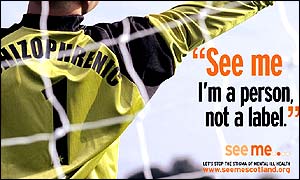
Academia is calling for the abolishment of the term “schizophrenia” in hopes of finding a label that’s less stigmatized. Why people with the medical condition have mixed opinions.
In an article recently published in the academic journal Schizophrenia Research, researchers called for the abolition of the term “schizophrenia.” Renaming the disorder, they argue, could destigmatize the disorder, create greater willingness of people with schizophrenia to pursue treatments, make it easier for doctors to give a diagnosis, and communicate that the prognosis is much less bleak than most people believe.

“Over the last years the term ‘schizophrenia’ has been increasingly contested by patients, families, researchers, and clinicians,” wrote Antonio Lasalvia in an email to The Daily Beast. Lasalvia is one of the study authors and a professor of psychiatry at University of Verona.

“The literature, from both Eastern and Western countries, consistently shows that the term schizophrenia holds a negative stigmatizing connotation. This negative connotation is a barrier for the recognition of the problem itself, for seeking specialized care, for taking full advantage of specialized care. It is therefore useless and sometimes damaging.”

The word “schizophrenia” was coined in the early 20th century, deriving from the Greek word for “split mind.” The term conveyed the idea that people with schizophrenia experienced a splitting of their personality—that they no longer had unified identities.

Considering all the words for mental illness, both those used by medical doctors and those that are cruel slurs used by the general public, it is striking how many of them have connotations of being broken or disorganized: deranged, crazy (which means cracked— itself a derogatory term), unglued, having a screw loose, unhinged, off the wall.

It seems there is some stigma attached to “schizophrenia.” One study showed that most people with schizophrenia (the preferred term is no longer “patients” but “users” or “consumers”) worry that they are viewed unfavorably by others, while some avoid telling people their diagnosis.

Another study examined the use of “schizophrenia” in the news media. Frequently, it is used not to describe a mental disorder, but as a metaphor for inconsistency, or being of a split mind. For example, The Washington Post included an opinion piece that mentioned, “the schizophrenia of a public that wants less government spending, more government services and lower taxes.” It is still socially acceptable—even among many card-carrying progressives—to say that something or someone is “insane,” “crazy,” or “unhinged.”

Christina Bruni, author of Left of the Dial: A Memoir of Schizophrenia, Recovery, and Hope, told me that her experience of stigma has changed over the years. “I used to not want to have ‘schizophrenia’ because I didn’t want people to think I was crazy. After a failed drug holiday, and a failed career in the gray flannel insurance field, I now have a creative job as a librarian,” she wrote in an email. “Ever since I started work as a librarian, I haven’t experienced any stigma in my ordinary life. It’s the people who fall through the cracks, who don’t get help, that the media chronicles, thus reinforcing stereotypes.”

Several people I spoke to noted that the general public confuses schizophrenia with dissociative identity disorder (which used to be known as multiple personality disorder), perhaps because they associate the word schizophrenia with “splitting.” The name change might make the distinction clearer.

There has been precedence for such a move. In addition to dissociative identity disorder, other mental and learning disorders have switched names. For example, “manic-depression” is now widely known as “bipolar disorder,” “mental retardation” is now known as “intellectual and developmental disability.”

“Changing the name can be very successful. What you call something is very important, which is why there is a PR industry,” David Kingdon, professor of psychiatry at the University of Southampton, told The Daily Beast. He has long advocated a change of name for schizophrenia.

Ken Duckworth is the medical director for the National Alliance on Mental Illness. He agrees that a name change has the potential to be powerful, but thinks we need more evidence that it will be effective. “Schizophrenia involves thought, mood, cognition,” he said in an interview. “This is powerful in terms of your identity. It’s not the same as saying you have diabetes. It comes across as something that’s wrong, something that’s negative.”

Kingdon prefers using terms that refer to different forms of psychosis, such as “traumatic psychosis” and “drug-induced psychosis.” “Clients don’t get so excited about it. It gives insight into treatment,” he says. “You can say, ‘Something can be done about this and what can be done is this.’”

Kingdon emphasized that many people feel hopeless upon receiving a diagnosis of schizophrenia when in fact treatments have improved prognoses dramatically in the last 20 years. “Cognitive behavioral therapy, complementary to medical treatment, has been pretty well-demonstrated to be effective,” he pointed out.

In cognitive behavioral therapy, users learn to recognize when they are having disruptive thoughts and are taught techniques for managing them. A recent study which Kingdon co-authored showed that cognitive behavioral therapy reduced both worry and persecutory delusions. “We don’t hear a lot of media stories of people getting better, but they do all the time,” added Duckworth.

Japan has changed the name of schizophrenia. In 2002, it was recommended that seishin-bunretsu-byo (“mind-split-disease”) become togo-shitcho-sho (“integration dysregulation syndrome”). The change was officially adopted by the Japanese Ministry of Health and Welfare by 2005.

Following the change, doctors in Japan became far more likely to disclose to patients that they had schizophrenia. While this shift occurred during a time in which Japanese doctors in general were becoming more willing to deliver difficult diagnoses to patients, it happened at a much more rapid pace with schizophrenia. This suggests that the name change itself increased doctors’ willingness to talk to their patients.

A large majority of Japanese psychiatrists felt, after the name change, better able to communicate information to patients about the disorder, and also that patients were more likely to adhere to treatment plans.

“The first lesson from the Japanese experience is that a change is possible and that the change may be beneficial for mental health users and their careers, for professionals and researchers alike,” said Lasalvia. “An early effect of renaming schizophrenia, as proven by the Japanese findings, would increase the percentage of patients informed about their diagnosis, prognosis, and available interventions. A name change would facilitate help seeking and service uptake by patients, and would be most beneficial for the provision of psychosocial interventions, since better informed patients generally display a more positive attitude towards care and a more active involvement in their own care programs.”

“It’s an empirical question whether it reduces stigma, and we don’t really know the answer yet,” said John Kane, chairman of psychiatry at the Zucker Hillside Hospital in New York. “The data from Japan certainly support the value of doing it. Given that, it is something that should be considered.”

The U.S. and other Western countries, however, are different from Japan in significant ways. In 1999, only 7 percent of clinicians informed patients of their diagnosis (about a third told families but not the patients).

Doctors in the West do tend to be more open with diagnoses in general. In the case of schizophrenia, however, fewer are. One study of Australian clinicians found that while more than half thought one should deliver a diagnosis of schizophrenia, doctors find reasons in practice to delay or avoid doing so. Some wanted to make absolutely sure the diagnosis was 100 percent correct since it was so potentially devastating. Others were concerned about the patient losing hope—many had a patient commit suicide.

While doctors are reluctant to give diagnoses, caregivers are eager to receive them. One study showed that caregivers unanimously preferred a full diagnosis as soon as possible, and their pain was greatly increased by the fact that their doctors—frequently—avoided talking to them about it. It also seems likely that a disorder’s stigmatization can only increase if even one’s doctor is secretive about it or avoids discussing it.

Tomer Levin is a psychiatrist at Memorial Sloan Kettering Cancer Center who studies doctor-patient communication. He first proposed a name change to schizophrenia almost 10 years ago. “Before the 1980s, ‘cancer’ was a stigmatizing term. The same thing was going on with ‘schizophrenia.’ A stigmatizing term doesn’t help the conversation,” he told The Daily Beast. “Our research is figuring out how to train doctors how to communicate. Say your son or daughter has psychotic break, you’re coping with that. Then you get a diagnosis. It should reflect its neurological roots and be a diagnosis that offers hope.”

Levin suggested Neuro-Emotional Integration Disorder to emphasize both its neural basis and its emotional one. He suggested that while clinicians are often focused on symptoms such as delusions, users are focused on how they feel emotionally: withdrawn, alienated, and isolated.

“We want a term that reflects that this is not just one disorder, but includes many different subtypes. A name should de-catastrophize the worst-case scenario so people don’t panic. We could improve people’s desire to access treatment and family support,” Levin continued. “Cognitive behavioral therapy can be very useful to come to terms with it. With a different name, we can link people into psychotherapy by discussing what illness is, hook them into medication by emphasizing its biological basis.”

A change is also already underway in the UK, with more doctors and patients referring to “psychosis” than “schizophrenia.” Kingdon noted that one competitive scholarship was more successful after its name was changed from National Schizophrenia Fellowship to Rethink. Proposed name changes include Kraepelin–Bleuler Disease (after two of the people who first described and delineated schizophrenia), Neuro-Emotional Integration Disorder, Youth onset CONative, COgnitive and Reality Distortion syndrome (CONCORD), or psychosis.

It is startling to read studies on proposed name changes and realize how few studies have canvassed what people with schizophrenia actually think. But the feelings experiences and feelings of users ought to be decisive. It is they who have actually experienced receiving a diagnosis, telling friends and family, informing other health care practitioners.

Elyn Saks is a law professor at the University of Southern California who specializes in mental health law and is a MacArthur Foundation Fellowship winner. She has written about her experience of schizophrenia in a memoir called The Center Cannot Hold. “We need to consult consumer/patients and see what’s least stigmatizing,” she pointed out. “We’re not a group with a big movement which can speak for us. Consumers should be surveyed.”

Duckworth was on the same page as Saks. “The name change should be driven by people with the illnesses saying, ‘We think we need this,’” he said.

“Schizophrenia is a medical condition. The term doesn’t need to be changed. If the term schizophrenia spooks a person living with the illness, they need to examine why they’re upset,” said Bruni. “The only power the diagnosis has over you is the power you give it. You need to have the balls or breasts to say, ‘OK, I have this condition and it’s something I have. That’s all it is.’ The term ‘schizophrenia’ is in my view a valid reference for what’s going on with the illness: Your thoughts and feelings are in a noisy brawl and there’s no calm unity or peace of mind.”

Kane, too, worries that changing the name might be a matter of semantics. “We might ignore underlying factors contribute to the stigmatization. What’s frightening about schizophrenia is our misperceptions and our lack of knowledge. Changing the name is only one dimension.”

Bruni prefers “schizophrenia” to “psychosis,” since “the word psychosis has been co-opted by people who are proud to be psychotic and not take medication. They think psychosis is a normal life experience.”

“The term psychosis to me conveys a terrifying hell. I doubt using the term psychotic to describe yourself is going to help you succeed in life,” she continued. “Employers don’t want to hire individuals who are actively psychotic.”

On the other hand, Lasalvia pointed out, “Any term might be problematic to someone for some reason. However, the most conservative option would be the use of an eponym, since eponyms are neutral and avoid connotations.”

Saks tended to agree with Lasalvia. “A more benign name can be good in terms of people accepting that they have it,” she said. “Kraepelin-Bleuler Disease might be the way to go, on the model of Down syndrome or Alzheimer’s disease. I’d also like to see it called a ‘spectrum disorder’ to emphasize differences in outcome.”

“With the right treatment, therapy, and support, a person living with schizophrenia can have a full and robust life,” said Bruni. “If you’re actively engaged in doing the things that give you joy, the diagnosis will become irrelevant. My take on this is: ‘Schizophrenia? Ha! I won’t let it defeat me.’ And it hasn’t.”

http://www.thedailybeast.com/articles/2015/03/26/stigmatized-schizophrenia-gets-a-rebrand.html

Finger lengths may indicate risk of schizophrenia in males

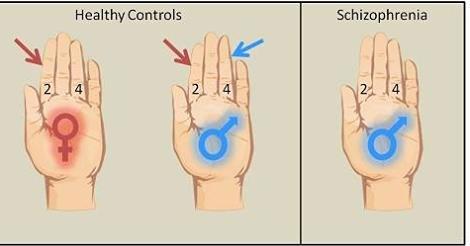
Research suggests that the ratio of the lengths of the index finger and the ring finger in males may be predictive of a variety of disorders related to disturbed hormonal balance. When the index finger is shorter than the ring finger, this results in a small 2D:4D ratio, pointing to a high exposure to testosterone in the uterus.

In a new study of 103 male patients diagnosed with schizophrenia and 100 matched healthy male individuals, investigators found that the 2D:4D ratio may be an effective predictor of schizophrenia — there were significant differences between schizophrenia and control groups concerning the ratio of the lengths of the second digit to the fourth digit, as well as its asymmetry, in both hands.

“Asymmetry index showed moderate discriminatory power and, therefore asymmetry index has a potential utility as a diagnostic test in determining the presence of schizophrenia,” said Dr. Taner Oznur, co-author of the Clinical Anatomy study.

Abdullah Bolu, Taner Oznur, Sedat Develi, Murat Gulsun, Emre Aydemir, Mustafa Alper, Mehmet Toygar. The ratios of 2nd to 4th digit may be a predictor of schizophrenia in male patients. Clinical Anatomy, 2015; DOI: 10.1002/ca.22527

http://www.sciencedaily.com/releases/2015/03/150316134920.htm

Woman who bared her breasts to Google Street View charged with disorderly conduct

Karen Davis was photographed on Google Street View flashing her breasts.
Police reported her for disorderly behaviour and she must report to court.
Police said her ‘actions were the same as someone flashing their genitals.’
SA country town mum hit back at critics saying they are insecure.
She plans to do a topless skydive for her 40th birthday next year.

A woman who notoriously flashed her K-cup breasts on Google Street View has been charged by police with disorderly behaviour.

Karen Davis, from Port Pirie in South Australia, was captured streaking by a camera car for the popular Google Maps app, which allows users to zoom in on certain streets and towns in cities all over the world with a 360-degree view.

Police released a statement alleging the 38-year-old mother ‘pursued’ the Google car to make sure she was captured exposing herself, and that it was an illegal act.

‘The woman’s actions were the same as someone flashing their genitals and the public expectation is that we take action,’ said Superintendent Scott Denny of Port Pirie police.

‘Recently in Port Pirie we arrested a man for exposing himself in public – this incident is no different,’ he said.

‘It is not appropriate for anyone to expose themselves in public places. Our community should be able to expect a bit of decency.’

Ms Davis will be summonsed to appear in the Port Pirie Magistrates Court at a date to be determined.

In the image, Ms Davis can be seen holding her arms up in the air with her T-shirt hunched up around her neck bearing her breasts, as she follows the Google camera cars around the street.

Her sons are playing in the background and an unknown man stands at the fence watching.

Across the road, a neighbour is lounging on her outdoor furniture, watching the whole thing unfold.

The 38-year-old, who plans to skydive topless for her 40th birthday, has hit back at the controversy over her actions, claiming that ‘flat-tittie chicks’ are not confident enough with their own bodies and should focus on how they look.

Speaking to Daily Mail Australia, Ms Davis was in tears over the nasty comments coming from her community after she was branded a ‘bad mother’ and ‘pure filth’ for her raunchy behaviour.

‘They are narrow-minded people who are not happy with their own bodies,’ she said.

Posting on her Facebook account, Ms Davis addressed the fact that she pursued the car through Barry Street in Port Pirie until they got the perfect shot and believes locals are jealous of her antics.

‘Haters hate, you got the guts to do it?’ she posted on Facebook after the photo went public.

‘All the flat-tittie chicks think I am disgusting. Big-boob envy has hit Port Pirie.’

Taking to Facebook, disgusted commenters attacked Ms Davis’ parenting skills after it became clear that her two sons were in the background of the picture.

‘I’m sure your children will be proud of their mother that is probably going to cause them a lot of embarrassment,’ one Facebook commenter said.

‘Oh goodness. Can’t even begin to imagine how her children are feeling,’ another user said.

However a select few came out in support of Ms Davis’s show on Google Maps.

‘Let her go, she’s having some fun, Pirie people need to lighten up a bit. if more lovely ladies would get them out more often the world would be a much happier place,’ one commenter said.

Ms Davis told Daily Mail Australia that she thought the act would be funny and that it was an item she has now ticked off her bucket list.

She also said that she has a friend in the United Kingdom and she thought it would brighten up his day if he saw the image online.

‘I have a friend in the UK. If he looks on there he will smile,’ she said.

Ms Davis wasn’t sure that the photo would make it on to Google Maps but she said she is delighted that it did.

‘I think maybe some need to start their own bucket list and leave mine alone,’ she said.

She also revealed that since the photo has been released she has attracted a whole host of new friend requests on Facebook.

Many young men have tried to befriend her but she has not accepted any of them.

Ms Davis said she has only learnt to embrace her size-K breasts in the last few years after spending her youth hiding them away.

‘I always got picked on and it wasn’t until late in my 20’s that I became confident in myself,’ she said.

She also revealed that she has to buy her bras online from the UK as they do not make size-K bras in Australia.

‘It would be nice if they made my size bra in Australia,’ she said.

Ms Davis said that she would do it all again, even considering the backlash the image has received.

‘It’s my life not theirs,’ she said.

‘When you point your finger at me, you have 4 pointing back at yourself.’

Some people online have suggested that she should be formally charged for her display but she has contacted the police who have confirmed that they have ‘no concerns’.

read more: http://www.dailymail.co.uk/news/article-3020958/Fun-police-gone-far-Woman-exposed-size-k-boobs-Google-street-view-CHARGED-disorderly-behaviour.html#ixzz3W3DG7Vf0

World’s oldest person dies at 117

Misao Okawa, the world’s oldest person according to Guinness World Records, has died at the age of 117.

Okawa passed away Wednesday morning in Osaka, Japan, Tadahi Uchimura, a local official from the city told CNN.

She left behind three children, four grandchildren and six great grandchildren.

Okawa was born on March 5, 1898.

Her family ran a Kimono shop in Osaka, Satoshi Yoshioka, an employee at the nursing home where she had lived since 1997 told CNN.

“She was a person with mild character, and loved to eat so much. Her favorite food was sushi and udon noodles,” Yoshioka said.

“She had eaten a lot of cake for her birthday last March 5. ”

“However, in the last 10 days she stopped eating. I think eating was her motivation to live, and when she lost it, she passed away.”

According to Guiness World Records, the oldest person ever was Jeanne Louise Calment, who died at age 122 in 1997.

http://www.cnn.com/2015/04/01/asia/worlds-oldest-person-dies/index.html

Moon Bison

How will cows survive on the Moon?

One of the most vexing questions asked about space, scientists have spent decades debating this key issue.

Finally, after extensive computer modeling and over a dozen midnight milkings, engineers have designed, built, and now tested the new Lunar Grazing Module (LGM), a multi-purpose celestial bovine containment system.

Happy April Fool’s Day from APOD!

To the best of our knowledge, there are no current plans to launch cows into space. For one reason, cows tend to be large animals that don’t launch easily or cheaply. As friendly as cows may be, head-to-head comparisons show that robotic rovers are usually more effective as scientific explorers. The featured image is of a thought-provoking work of art named “Mooooonwalk” which really is on display at a popular science museum.

http://apod.nasa.gov/apod/ap150401.html

Thanks to Kebmodee for bringing this to the attention of the It’s Interesting community.

Art informing science: possible medieval remedy for modern day superbugs?

A one thousand year old Anglo-Saxon remedy for eye infections which originates from a manuscript in the British Library has been found to kill the modern-day superbug MRSA in an unusual research collaboration at The University of Nottingham.

Dr Christina Lee, an Anglo-Saxon expert from the School of English has enlisted the help of microbiologists from University’s Centre for Biomolecular Sciences to recreate a 10th century potion for eye infections from Bald’s Leechbook an Old English leatherbound volume in the British Library, to see if it really works as an antibacterial remedy. The Leechbook is widely thought of as one of the earliest known medical textbooks and contains Anglo-Saxon medical advice and recipes for medicines, salves and treatments.

Early results on the ‘potion’, tested in vitro at Nottingham and backed up by mouse model tests at a university in the United States, are, in the words of the US collaborator, “astonishing”. The solution has had remarkable effects on Methicillin-resistant Staphylococcus aureus (MRSA) which is one of the most antibiotic-resistant bugs costing modern health services billions.

The team now has good, replicated data showing that Bald’s eye salve kills up to 90% of MRSA bacteria in ‘in vivo’ wound biopsies from mouse models. They believe the bactericidal effect of the recipe is not due to a single ingredient but the combination used and brewing methods/container material used. Further research is planned to investigate how and why this works.

The testing of the ancient remedy was the idea of Dr Christina Lee, Associate Professor in Viking Studies and member of the University’s Institute for Medieval Research. Dr Lee translated the recipe from a transcript of the original Old English manuscript in the British Library.

The recipe calls for two species of Allium (garlic and onion or leek), wine and oxgall (bile from a cow’s stomach). It describes a very specific method of making the topical solution including the use of a brass vessel to brew it in, a straining to purify it and an instruction to leave the mixture for nine days before use.

The scientists at Nottingham made four separate batches of the remedy using fresh ingredients each time, as well as a control treatment using the same quantity of distilled water and brass sheet to mimic the brewing container but without the vegetable compounds.

The remedy was tested on cultures of the commonly found and hard to treat bacteria, Staphylococcus aureus, in both synthetic wounds and in infected wounds in mice.

The team made artificial wound infections by growing bacteria in plugs of collagen and then exposed them to each of the individual ingredients, or the full recipe. None of the individual ingredients alone had any measurable effect, but when combined according to the recipe the Staphylococcus populations were almost totally obliterated: about one bacterial cell in a thousand survived.

The team then went on to see what happened if they diluted the eye salve – as it is hard to know just how much of the medicine bacteria would be exposed to when applied to a real infection. They found that when the medicine is too dilute to kill Staphylococcus aureus, it interfered with bacterial cell-cell communication (quorum sensing). This is a key finding, because bacteria have to talk to each other to switch on the genes that allow them to damage infected tissues. Many microbiologists think that blocking this behaviour could be an alternative way of treating infection.

Dr Lee said: “We were genuinely astonished at the results of our experiments in the lab. We believe modern research into disease can benefit from past responses and knowledge, which is largely contained in non-scientific writings. But the potential of these texts to contribute to addressing the challenges cannot be understood without the combined expertise of both the arts and science.

“Medieval leech books and herbaria contain many remedies designed to treat what are clearly bacterial infections (weeping wounds/sores, eye and throat infections, skin conditions such as erysipelas, leprosy and chest infections). Given that these remedies were developed well before the modern understanding of germ theory, this poses two questions: How systematic was the development of these remedies? And how effective were these remedies against the likely causative species of bacteria? Answering these questions will greatly improve our understanding of medieval scholarship and medical empiricism, and may reveal new ways of treating serious bacterial infections that continue to cause illness and death.”

University microbiologist, Dr Freya Harrison has led the work in the laboratory at Nottingham with Dr Steve Diggle and Research Associate Dr Aled Roberts. She will present the findings at the Annual Conference of the Society for General Microbiology which starts on Monday 30th March 2015 in Birmingham.

Dr Harrison commented: “We thought that Bald’s eyesalve might show a small amount of antibiotic activity, because each of the ingredients has been shown by other researchers to have some effect on bacteria in the lab – copper and bile salts can kill bacteria, and the garlic family of plants make chemicals that interfere with the bacteria’s ability to damage infected tissues. But we were absolutely blown away by just how effective the combination of ingredients was. We tested it in difficult conditions too; we let our artificial ‘infections’ grow into dense, mature populations called ‘biofilms’, where the individual cells bunch together and make a sticky coating that makes it hard for antibiotics to reach them. But unlike many modern antibiotics, Bald’s eye salve has the power to breach these defences.”

Dr Steve Diggle added: “When we built this recipe in the lab I didn’t really expect it to actually do anything. When we found that it could actually disrupt and kill cells in S. aureus biofilms, I was genuinely amazed. Biofilms are naturally antibiotic resistant and difficult to treat so this was a great result. The fact that it works on an organism that it was apparently designed to treat (an infection of a stye in the eye) suggests that people were doing carefully planned experiments long before the scientific method was developed.”

Dr Kendra Rumbaugh carried out in vivo testing of the Bald’s remedy on MRSA infected skin wounds in mice at Texas Tech University in the United States. Dr Rumbaugh said: “We know that MRSA infected wounds are exceptionally difficult to treat in people and in mouse models. We have not tested a single antibiotic or experimental therapeutic that is completely effective; however, this ‘ancient remedy’ performed as good if not better than the conventional antibiotics we used.”

Dr Harrison concludes: “The rise of antibiotic resistance in pathogenic bacteria and the lack of new antimicrobials in the developmental pipeline are key challenges for human health. There is a pressing need to develop new strategies against pathogens because the cost of developing new antibiotics is high and eventual resistance is likely. This truly cross-disciplinary project explores a new approach to modern health care problems by testing whether medieval remedies contain ingredients which kill bacteria or interfere with their ability to cause infection”.

http://www.nottingham.ac.uk/news/pressreleases/2015/march/ancientbiotics—a-medieval-remedy-for-modern-day-superbugs.aspx

Blueberries may be effective in the treatment for post-traumatic stress disorder (PTSD)

Researchers from Louisiana State University have found that blueberries may be effective in the treatment for post-traumatic stress disorder (PTSD). Findings from the study have been presented at the Experimental Biology Meeting in Boston, MA.

Presently, the only therapy approved by the Food and Drug Administration (FDA) for PTSD is selective serotonin reuptake inhibitors (SSRIs) such as sertraline and paroxetine. Study authors have previously shown that SSRIs increase the level of serotonin (5-HT) and norepinephrine, and that the increased norepinephrine be a possible reason for the reduced efficacy of SSRI therapy.

For this study, the team studied the ability of blueberries to modulate neurotransmitter levels in a rat model of PTSD. Some of the rats received a 2% blueberry-enriched supplement diet and others received a control diet. A third control group consisted of rats without PTSD and received a standard diet without blueberries. Scientists used high-performance liquid chromatography to to measure monoamines and related metabolite levels.

Rats with PTSD who did not receive blueberries showed a predictable increase in 5-HT and norepinephrine level compared with the control group. But rats with PTSD that received blueberries showed a beneficial increase in 5-HT levels with no impact on norepinephrine levels, which suggest that blueberries can alter neurotransmitter levels in PTSD. More studies are needed to understand the protective effects of blueberries and its potential target as a treatment for PTSD.

http://www.empr.com/benefits-of-blueberries-for-post-traumatic-stress-disorder-explored-in-study/article/405810/