Lenin’s Body Improves with Age

Russian scientists have developed experimental embalming methods to maintain the look, feel and flexibility of the Soviet Union’s founder’s body, which is 145 years old.

For thousands of years humans have used embalming methods to preserve dead bodies. But nothing compares with Russia’s 90-year-old experiment to preserve the body of Vladimir Lenin, communist revolutionary and founder of the Soviet Union. Generations of Russian scientists have spent almost a century fine-tuning preservation techniques that have maintained the look, feel and flexibility of Lenin’s body. This year Russian officials closed the Lenin Mausoleum in Moscow’s Red Square so that scientists could prepare the body for public display again in time for the Soviet leader’s 145th birthday anniversary today.

The job of maintaining Lenin’s corpse belongs to an institute known in post-Soviet times as the Center for Scientific Research and Teaching Methods in Biochemical Technologies in Moscow. A core group of five to six anatomists, biochemists and surgeons, known as the “Mausoleum group,” have primary responsibility for maintaining Lenin’s remains. (They also help maintain the preserved bodies of three other national leaders: the Vietnamese leader Ho Chi Minh and the North Korean father–son duo of Kim Il-sung and Kim Jong-il, respectively.) The Russian methods focus on preserving the body’s physical form—its look, shape, weight, color, limb flexibility and suppleness—but not necessarily its original biological matter. In the process they have created a “quasibiological” science that differs from other embalming methods. “They have to substitute occasional parts of skin and flesh with plastics and other materials, so in terms of the original biological matter the body is less and less of what it used to be,” says Alexei Yurchak, professor of social anthropology at the University of California, Berkeley. “That makes it dramatically different from everything in the past, such as mummification, where the focus was on preserving the original matter while the form of the body changes,” he adds.

Yurchak has been writing a book describing the history of Lenin’s body, the history of the science that arose around it, and the political role that the body and science have played in the Soviet and post-Soviet eras. Much of his material comes from original interviews with Russian researchers working at the “Lenin Lab” (Yurchak’s nickname for the institute). He has already published a paper on this project in the journal Representations, and previously published a book, “Everything Was Forever, until It Was No More: The Last Soviet Generation.”

When Lenin died in January 1924, most Soviet leaders opposed the idea of preserving his body beyond a temporary period of public display. Many envisioned a burial in a closed tomb on Moscow’s Red Square. But the cold winter kept Lenin’s publicly displayed corpse in fair condition for almost two months as huge crowds waited to pay their respects. That also gave the leaders time to reconsider the idea of preserving the body for a longer period. To avoid any association of Lenin’s remains with religious relics, they publicized the fact that Soviet science and researchers were responsible for preserving and maintaining it.

The leaders eventually agreed to try an experimental embalming technique developed by anatomist Vladimir Vorobiev and biochemist Boris Zbarsky. The first embalming experiment lasted from late March to late July in 1924. Such an effort was complicated by the fact that the physician who carried out Lenin’s autopsy had already cut the body’s major arteries and other blood vessels. An intact circulatory system could have helped deliver embalming fluids throughout the body.

Lenin Lab researchers eventually developed microinjection techniques that used single needles to deliver embalming fluids to certain bodily parts, preferentially places where cuts or scars from past treatments already existed, Yurchak says. They also created a double-layered rubber suit to keep a thin layer of embalming fluid covering Lenin’s body during public display; a regular suit of clothes fits over the rubber suit. The body gets reembalmed once every other year; a process that involves submerging the body in separate solutions of glycerol solution baths, formaldehyde, potassium acetate, alcohol, hydrogen peroxide, acetic acid solution and acetic sodium. Each session takes about one and a half months.

Such painstaking maintenance goes above and beyond common embalming methods used to preserve bodies for funerals and medical education. “Most embalming uses a mix of formaldehyde and alcohol or water, which is called formalin,” says Sue Black, director of the Center for Anatomy and Human Identification at the University of Dundee in Scotland. “This has good preservation qualities and has good antifungal properties. Bodies embalmed in this way have a shelf life of tens of years.”

Both conventional embalmers and the Lenin Lab face several common challenges, Black explains. Bodies must be kept from drying out so that they don’t mummify. Heavy use of formalin can also turn human tissue the color of “canned tuna fish,” which is why funeral embalmers use colorants in their embalming fluids to make the recently deceased look a healthy pink. Funeral embalmers also apply cosmetics for temporary funeral displays prior to burial.

But bodies preserved in formalin become discolored, stiff and fragile over the long run. A modern alternative called the Thiel soft-fix method combines a different mix of liquids—including nitrate salts—to maintain the natural color, feel and flexibility of the tissues. Such a method is useful for medical education and training. “Plastination,” a technique popularized by Body Worlds exhibits around the world, replaces all the liquid in bodies with a polymer to transform bodies into hard, static sculptures frozen in time.

Although such modern approaches were not available to the Lenin Lab, a technique such as plastination would not have been acceptable in any case, because it creates unnatural stiffness in preserved bodies. To maintain the precise condition of Lenin’s body, the staff must perform regular maintenance on the corpse and sometimes even replace parts with an excruciating attention to detail. Artificial eyelashes have taken the place of Lenin’s original eyelashes, which were damaged during the initial embalming procedures. The lab had to deal with mold and wrinkles on certain parts of Lenin’s body, especially in the early years. Researchers developed artificial skin patches when a piece of skin on Lenin’s foot went missing in 1945. They resculpted Lenin’s nose, face and other parts of the body to restore them to their original feel and appearance. A moldable material made of paraffin, glycerin and carotene has replaced much of the skin fat to maintain the original “landscape” of the skin.

At the height of activity from the 1950s to the 1980s, the lab employed up to 200 people who did research on subjects ranging from the aging of skin cells to skin transplantation methods, Yurchak says. The institute temporarily lost government funding in the 1990s after the fall of the Soviet Union, but survived on private contributions until government money returned at more modest levels.

During his book research, Yurchak discovered that the Lenin Lab’s efforts have even led to spinoff medical applications. One technique influenced Russian development of special equipment used to keeping the blood flowing through donor kidneys during transplantation. In another case veteran lab researcher Yuri Lopukhin and several colleagues developed a “noninvasive three-drop test” to measure cholesterol in skin tissue in the late 1980s. The Russian invention eventually received a patent in 2002 and was commercialized by the Canadian company PreVu as “the world’s first and only noninvasive skin cholesterol test” for patient home care. That’s one legacy of Lenin that neither the Soviets nor the West could have imagined a century ago.

Utah’s Strategy for the Homeless: Give Them Homes

By the end of 2015, the chronically homeless population of Utah may be virtually gone. And the secret is quite simple:

Give homes to the homeless.

“We call it housing first, employment second,” said Lloyd Pendleton, director of Utah’s Homeless Task Force.

Even Pendleton used to think trying to eradicate homelessness using such an approach was a foolish idea.

“I said: ‘You guys must be smoking something. This is totally unrealistic,'” Pendleton said.

But the results are hard to dispute.

In 2005, Utah was home to 1,932 chronically homeless. By April 2015, there were only 178 — a 91 percent drop statewide.

“It’s a philosophical shift in how we go about it,” Pendleton said. “You put them in housing first … and then help them begin to deal with the issues that caused them to be homeless.”

Chronically homeless persons — those living on the streets for more than a year, or for four times in three years, and have a debilitating condition — make up 10 percent of Utah’s homeless population but take up more than 50 percent of the state’s resources for the homeless.

The Homeless Task Force reported it costs Utah $19,208 on average per year to care for a chronically homeless person, including related health and jail costs. Pendleton found that to house and provide a case worker for the same person costs the state about $7,800.

“It’s more humane, and it’s cheaper,” Pendleton said. “I call them ‘homeless citizens.’ They’re part of our citizenry. They’re not them and us. It’s ‘we.'”

For six years, Suzi Wright and her sons, DJ and Brian, shuttled among friend’s homes, a van and the Salt Lake City homeless shelter.

After Utah gave Wright a two-bedroom, two-bathroom apartment, she got a job as a cleaning supervisor at her apartment complex.

“It makes you feel a lot better about yourself, just being able to support your family,” Wright said.

Those given apartments under the Housing First program pay rent of 30 percent of their income or $50, whichever is greater.

Army veteran Don Williams had been sleeping under a bush for 10 years when Utah offered him an apartment.

When he realized they weren’t joking, he “jumped for joy,” he said, laughing. “It was a blessing. A real blessing.”

http://www.nbcnews.com/news/us-news/utahs-strategy-homeless-give-them-homes-n352966

New drug approved by U.S. FDA to dissolve chin fat without surgery

The Food and Drug Administration will now let you say bye-bye to nasty neck fat and hello to a jawline that doesn’t jiggle. The agency approved the first drug that can eliminate neck fat in most people without surgery.

The drug, known by its commercial name of Kybella, is a deoxycholic acid made by Californa’s Kythera Biopharmaceuticals. This is the same acid your body produces to help it absorb fat. It takes only a few minutes for a licensed dermatologist to inject it under the jawline right into your fat tissue.

The drug immediately goes to work on your wattle, destroying the cell membrane of what doctors call “submental fat,” causing it to burst and go away permanently. That’s great news for patients seeking improvement in an area many people consider a real problem. About 68% of people surveyed by the American Society for Dermatologic Surgery in 2014 named excess fat under the chin and neck one of their top concerns. Many people say they think a double chin makes them look older than they actually are.

Maybe that will make the pain of getting up to 50 injections in a single treatment go down a little bit easier. The good news is it takes only a few days to heal, and there are no bandages necessary to make you look like a Dickensian Jacob Marley’s ghost. But it may take several sessions to eliminate all your problem areas.

The FDA approved the drug after the manufacturer submitted 19 clinical studies involving nearly 2,600 patients. The tests showed the drug worked to eliminate moderate to severe chin fat. Currently, the only other way to delete your double chin is to have surgery, having the fat removed with traditional liposuction. In the past, a drug called Lipodissolve, also known on the streets of Beverly Hills as “lunchtime lipo,” prompted an FDA warning letter in 2010 that suggested that treatment could cause permanent scarring and skin deformities.

Side effects for a small number of patients in the Kybella drug trials included nerve injury in the jaw that lead to a lopsided smile or facial weakness. It also may cause bruising, swelling, redness and some pain in some patients. Insurance does not cover this treatment.

While this drug may be a success for your neck, don’t expect to see it dissolving fat in other problem places, the FDA warns.

“It is important to remember that Kybella is only approved for the treatment of fat occurring below the chin, and it is not known if Kybella is safe or effective for treatment outside of this area,” Dr. Amy G. Egan, deputy director of the Office of Drug Evaluation III in the FDA’s Center for Drug Evaluation and Research, said in a news release.

The drug should be commercially available in June, the company said.

http://edition.cnn.com/2015/04/30/health/chin-fat-drug-fda-approval/index.html

Agoraphobic woman leaves home for third time in 10 years and falls down manhole

An agoraphobic grandmother who conquered her fear of open spaces and left home for the third time in 10 years only to fall down a manhole.

Janet Faal, 57, was out with a friend in Crawley, West Sussex, as part of her rehabilitation when she moved a wooden pallet to help them reverse and plunged down into the open gap.

She now has two black eyes and a suspected fractured leg after smashing her face on the pallet and was left in a ‘splits’ position as only one of her legs went down the hole when she slipped.

The grandmother-of-four said: ‘I was with a friend helping her reverse out of a car park, and there was this wooden pallet in the way. I moved the pallet out of the way with my foot and I was going to turn around to my friend say “is that far enough?”. I took a step over – never in my life did I think there was a hole underneath, I thought it had just fallen over. The next thing I remember is the pain. It was awful. I fell and smashed my face on the pallet, and I was in the hole with blood all over me and I couldn’t move.’

She reckons she has been set back ‘years’ in her battle with the debilitating condition, which has left her housebound for a decade, and fears she’ll never leave her home again.

Miss Faal, who lives in Crawley, said: ‘It’s hard for me to go anywhere, but I was getting better. Now I’m not so sure.’

She spent nearly an hour waiting in agony on the forecourt of Complete Tyre Services on Friday, April 10, before a paramedic arrived to take her to East Surrey hospital.

Her son Andy MacDonald, 39, a painter and decorator, said: ‘I’m absolutely livid. Whoever owns that manhole should get it fixed and get it fixed right now.

‘It’s ruined my mother’s recovery. I can’t believe it. Whoever owns that manhole has something serious to answer for.

‘I’m self-employed, and I have to take time off work to care for my disabled mum, who has been knocked for six by negligence.

‘If she was smaller she would have gone all of the way down – a slender woman or child could have been very seriously hurt.’

An employee at the company, where Miss Faal’s friend had driven her to get a new tyre for her car, claimed the holes have been reported ‘loads of times’ to the owner of the site.

The site is leased from the owner of JP Supplies, which sells safety clothing to the construction industry in the neighbouring unit.

A spokesman for South East Coast Ambulance Service confirmed its attendance and explained why it took so long for an ambulance to arrive.

He said: ‘When the call came in, with the information provided by the caller, it was classified as a “class C” call. We always do our best to back up the first paramedic as soon as we can but life-threatening calls have to take priority.’

Neither the tyre shop or their landlord JP Supplies are accepting responsibility for fixing the broken manhole.

A worker at the garage said: ‘We have been trying to get the manholes in the forecourt fixed for years, but what’s happened is they were covered with pallets.’

The building owner, who also runs nearby business JP Services, said: ‘They are the tenants, so it’s down to them to fix the manhole cover.
‘I’m the landlord, but they have not spoken to me about it.’

Read more: http://www.dailymail.co.uk/news/article-3046861/Agoraphobic-grandmother-conquers-fears-open-spaces-leave-home-time-10-years-break-leg-nose-falling-manhole.html#ixzz3YnuaxSiR

An axon self-destruct mechanism that kills neurons

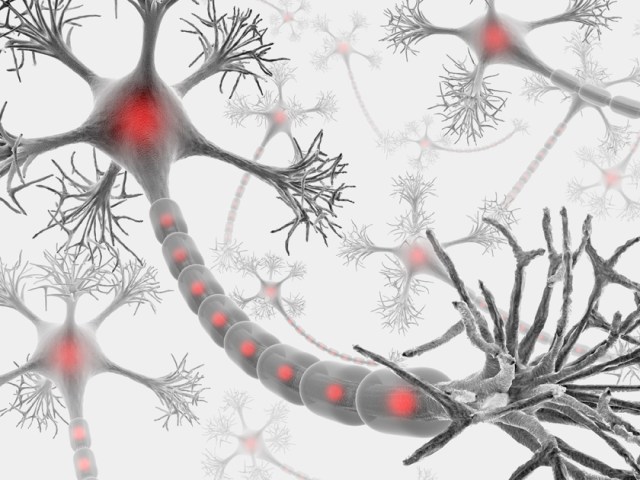
Just as losing a limb can spare a life, parting with a damaged axon by way of Wallerian degeneration can spare a neuron. A protein called SARM1 acts as the self-destruct button, and now researchers led by Jeffrey Milbrandt of Washington University Medical School in St. Louis believe they have figured out how. They report in the April 24 Science that SARM1 forms dimers that trigger the destruction of NAD+. Basic biochemistry dictates that this enzyme cofactor is essential for cell survival.

ARM1 and NAD+ have emerged as key players in the complex, orderly process underlying Wallerian degeneration. Scientists are still filling in other parts of the pathway. SARM1, short for sterile alpha and TIR motif-containing 1, seems to act as a damage sensor, but researchers are not sure how. Recently, researchers led by Marc Tessier-Lavigne at Rockefeller University, New York, found that SARM1 turns on a mitogen-activated protein (MAP) kinase cascade that is involved. Loss of NAD+ may also contribute to axon degeneration, because its concentration drops in dying axons, and Wlds mutant mice that overproduce an NAD+ synthase have slower Wallerian degeneration.

Now, first author Josiah Gerdts confirms that SARM1 is the self-destruct switch. He engineered a version of the protein with a target sequence for tobacco etch virus (TEV) protease embedded in it. Using a rapamycin-activated form of TEV, he eliminated SARM1 from axons he had sliced off of mouse dorsal root ganglion (DRG) neurons. Without SARM1, the severed axons survived.

SARM1 contains SAM and TIR domains, which promote protein-protein interactions. Previously, Gerdts discovered that the TIR domain was sufficient to induce degeneration, even in healthy axons, but it relied on the SAM region to bring multiple SARM1 molecules together. He hypothesized that axonal SARM1 multimerizes upon axon damage. To test this idea, he used a standard biochemical technique to force the SARM1 TIR domains together. He fused domains to one or another of the rapamycin-binding peptides Frb and Fkbp and expressed them in DRG neurons. When he added rapamycin to the cultures, the Frb and Fkbp snapped the TIR domains together within minutes. As Gerdts had predicted, this destroyed axons, confirming that SARM1 activates via dimerization.

Next, the authors investigated what happens to NAD+ during that process. Using high-performance liquid chromatography, Gerdts measured the concentration of NAD+ in the disembodied axons. Normally, its level dropped by about two-thirds within 15 minutes of severing. In axons from SARM1 knockout mice, however, the NAD+ concentration stayed unchanged. In neurons carrying the forced-dimerization constructs, adding rapamycin was sufficient to knock down NAD+ levels—Gerdts did not even have to cut the axons. Ramping up NAD+ production by overexpressing its synthases, NMNAT and NAMPT, overcame the effects of TIR dimerization, and the axons survived. Gerdts concluded that loss of NAD+ was a crucial, SARM1-controlled step on the way to degeneration.

He still wondered what caused the loss of NAD+. It might be that the axon simply stopped making it, or maybe the Wallerian pathway actively destroyed it. To distinguish between these possibilities, Gerdts added radiolabeled exogenous NAD+ to human embryonic kidney HEK293 cultures expressing the forced-dimerization TIR domains. Rapamycin caused them to rapidly degrade the radioactive NAD+, confirming that the cell actively disposes of it.

Gerdts suspects that with this essential cofactor gone, the axon runs out of energy and can no longer survive. He speculated that the MAP kinase cascade reportedly turned on by SARM1 might lead to NAD+ destruction. Alternatively, SARM1 might induce distinct MAP kinase and NAD+ destruction pathways in parallel, he suggested.

“Demonstrating how NAD+ is actively and locally degraded in the axon is a big advance,” commented Andrew Pieper of the Iowa Carver College of Medicine in Iowa City, who was not involved in the study. Jonathan Gilley and Michael Coleman of the Babraham Institute in Cambridge, U.K., predict that there will be more to the story. They note that a drug called FK866, which prevents NAD+ production, protects axons in some instances. Gerdts suggested that FK866 acts on processes upstream of SARM1, delaying the start of axon degeneration. In contrast, his paper only addressed what happens after SARM1 activates. “It will be fascinating to see how the apparent contradictions raised by this new study will be resolved,” wrote Gilley and Coleman.

Could these findings help researchers looking for ways to prevent neurodegeneration? “The study supports the notion that augmenting NAD+ levels is potentially a valuable approach,” said Pieper. He and his colleagues developed a small molecule that enhances NAD+ synthesis, now under commercial development. It improved symptoms in ALS model mice, and protected neurons in mice mimicking Parkinson’s. NAD+ also activates sirtuin, an enzyme important for longevity and stress resistance as well as learning and memory.

However, both Pieper and Gerdts cautioned that they cannot clearly predict which conditions might benefit from an anti-SARM1 or NAD+-boosting therapy. At this point, Gerdts said, researchers do not fully understand how much axon degeneration contributes to symptoms of diseases like Alzheimer’s and Parkinson’s. He suggested that crossing SARM1 knockout mice with models for various neurodegenerative conditions would indicate how well an anti-Wallerian therapy might work.

—Amber Dance

http://www.alzforum.org/news/research-news/axon-self-destruct-button-triggers-energy-woes

An Android robot is urinating on an Apple logo in Google Maps

In the outskirts of Rawalpindi, a Pakistani city less than 10 miles southwest of Islamabad, is what appears to be a park in the shape of an Android robot peeing on an Apple logo.

At least, that’s what shows up if you look up Rawalpindi in Google Maps.

he park is not actually there — it’s an illustration.

It’s not clear how long the image has been there. When you look at “satellite view,” you’ll see a few residential roads, a bit of green space and some hills — nothing that looks remotely like an Android peeing on an apple.

It was discovered Friday by Ahmad Babar, a former Samsung employee living in Lahore, Pakistan.

On Facebook (FB, Tech30), Babar posted that he came across the Android image while looking for a place in Rawalpindi.

Google said the image was not created by an employee. The company has a group of vetted contributors who add to the Maps tool in order to keep Google Maps up to date, and one of those contributors drew the image.

“The vast majority of users who edit our maps provide great contributions, such as mapping places that have never been mapped before,” said Caroline Matthews, a spokeswoman for Google. “We’re sorry for this inappropriate user-created content; we’re working to remove it quickly.”

Google (GOOGL, Tech30) is no stranger to so-called Easter eggs — hidden treasures in its products. Just try typing “tilt,” “do a barrel roll,” “recursion,” “anagram,” “once in a blue moon,” or “answer to life the universe and everything” into Google’s search engine.

In Google Images, type “Atari breakout.” Google Translate has Pirate, Elmer Fudd, Klingon and Pig Latin options.

There are literally dozens of Google Maps Easter eggs in addition to the Android peeing on an Apple (AAPL, Tech30) logo, including a tie-dyed Street View character in Berkeley, California and a “royal carriage” transportation option when asking for directions to Windsor Castle.

A spokeswoman for Apple did not respond to requests for comment.

http://money.cnn.com/2015/04/24/technology/android-peeing-on-apple-google-maps/index.html?iid=TL_Popular

Chinese researchers report first-ever gene editing of human embryos

In an ethically charged first, Chinese researchers have used gene editing to modify human embryos obtained from an in-vitro fertilization clinic.

The 16-person scientific team, based at the Sun Yat-Sen University in Guangzhou, China, set out to see whether it could correct the gene defect that causes beta-thalassemia, a blood disease, by editing the DNA of fertilized eggs.

The team’s report showed the method is not yet very accurate, confirming scientific doubts around whether gene editing could be practical in human embryos, and whether genetically engineered people are going to be born anytime soon.

The authors’ report appeared on April 18 in a low-profile scientific journal called Protein & Cell. The authors, led by Junjiu Huang, say there is a “pressing need” to improve the accuracy of gene editing before it can be applied clinically, for instance to produce children with repaired genes.

The team did not try to establish a pregnancy and say for ethical reasons they did their tests only in embryos that were abnormal.

“These authors did a very good job pointing out the challenges,” says Dieter Egli, a researcher at the New York Stem Cell Foundation in Manhattan. “They say themselves this type of technology is not ready for any kind of application.”

The paper had previously circulated among researchers and had provoked concern by highlighting how close medical science may be to tinkering with the human gene pool.

n March, an industry group called for a complete moratorium on experiments of the kind being reported from China, citing risks and the chance they would open the door to eugenics, or changing nonmedical traits in embryos, such as stature or intelligence.

Other scientists recommended high-level meetings of experts, regulators, and ethicists to debate if there are acceptable uses for such engineering.

The Chinese team reported editing the genes of more than 80 embryos using a technology called CRISPR-Cas9. While in some cases they were successful, in others the CRISPR technology didn’t work or introduced unexpected mutations. Some of the embryos ended up being mosaics, with a repaired gene in some cells, but not in others.

Parents who are carriers of beta-thalassemia could choose to test their IVF embryos, selecting those that have not inherited the disease-causing mutation. However, gene editing opens the possibility of germline modification, or permanently repairing the gene in an embryo, egg, or sperm in a way that is passed onto the offspring and to future generations.

That idea is the subject of intense debate, since some think the human gene pool is sacrosanct and should never be the subject of technological alteration, even for medical reasons. Others allow that germline engineering might one day be useful, but needs much more testing. “You can’t discount it,” says Egli. “It’s very interesting.”

The Chinese team performed the gene editing in eggs that had been fertilized in an IVF clinic but were abnormal because they had been fertilized by two sperm, not one. “Ethical reasons precluded studies of gene editing in normal embryos,” they said.

Abnormal embryos are widely available for research, both in China and the U.S. At least one U.S. genetics center is also using CRISPR in abnormal embryos rejected by IVF clinics. That group described aspects of its work on the condition that it would not be identified, since the procedure remains controversial.

Making repairs using CRISPR harnesses a cell’s own DNA repair machinery to correct genes. The technology guides a cutting protein to a particular site on the DNA molecule, chopping it open. If a DNA “repair template” is provided—in this case a correct version of the beta-globin gene—the DNA will mend itself using the healthy sequence.

The Chinese group says that among the problems they encountered, the embryo sometimes ignored the template, and instead repaired itself using similar genes from its own genome, “leading to untoward mutations.”

Huang said he stopped the research after the poor results. “If you want to do it in normal embryos, you need to be close to 100 percent,” Huang told Nature News. “That’s why we stopped. We still think it’s too immature.”

http://www.technologyreview.com/news/536971/chinese-team-reports-gene-editing-human-embryo/

Thanks to Michael Moore for bringing this to the It’s Interesting community.

New website informs whether you are living in a former meth house

No matter how safe Walter White may have made the cooking of meth look on Breaking Bad, the real life process is dangerous and potentially deadly, even to those not directly involved.

“Chemicals such as acetone, phosphine, hydrochloric acid, lye, sulfuric acid and ammonia are all released into the home during the cooking process,” said Jeremy Shelton, a Certified Microbial Consultant who routinely tests homes across America’s Southeast for exposure. “The chemicals used are extremely dangerous and can cause serious respiratory problems, cancer, and in some cases death.”

Unfortunately, state regulations vary when it comes to the requirements of disclosing the history of former meth houses, as well as the clean up of such homes, so those buying or renting in a residence formerly used as a meth lab might never know about its past.

“I’ve dealt with everything from the unsuspecting homeowner who has unexplained respiratory issues and migraines, to apartment complexes who have had a meth lab in a single unit where we test that unit and the surrounding units,” Shelton said.

But now there is a way for potential renters and buyers to glean some insight into the pasts of their current, or potential residences.

The founders of DiedinHouse.com, which provides reports to homeowners and renters who want to know if someone has died in their home, has now added a new report that allows renters and homeowners to find out if their home was formerly reported as a site for cooking meth.

“It’s important for buyers or renters to know what they are moving into,” said Roy Condrey, founder of DiedinHouse.com.

Consumers can visit the site, input their address and pay $11.99 to get a report that includes details of a death or meth activity having occurred in the home.

It’s still early and Condrey says he has less than 50,000 reports of former meth homes across the US, however, he expects the numbers to continue to grow due to the meth epidemic sweeping the country. From the data reported thus far, Condrey said the top number of reported meth homes are in the following states.

Missouri
Oklahoma
Indiana
Tennessee
Arkansas

The company is also providing a new service for renters and buyers who might want to get a bargain on a formerly “stigmatized” home.

“We can now provide a list of stigmatized addresses to buyers an renters who are looking for a bargain and claim to not care if the property is stigmatized,” Condrey said.

http://hotpads.com/blog/2015/04/living-meth-house/?utm_source=hotwire&utm_medium=email&utm_campaign=hotwire

Thanks to Jody Troupe for bringing this to the It’s Interesting community.

$5 Insanity’: 5 Crazy Facts About Flakka

A new drug that gives people superhuman strength, but leads to violent delusions, is gaining attention.

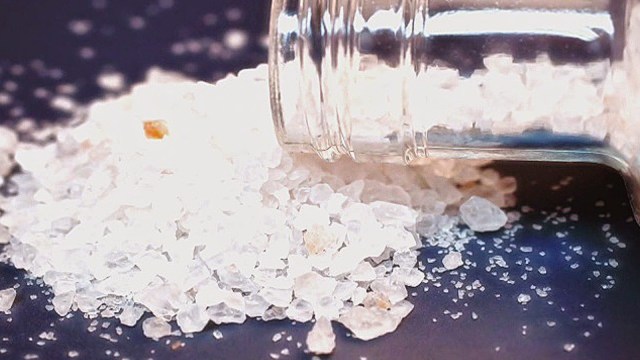
The drug, which has the street name of Flakka, is a synthetic stimulant that is chemically similar to bath salts. Flakka is fast developing a reputation for what seem to be its nasty side effects, including a tendency to give people enormous rage and strength, along with intense hallucinations.”

Even though addicted, users tell us they are literally afraid of this drug,” said James Hall, an epidemiologist at the Center for Applied Research on Substance Use and Health Disparities at Nova Southeastern University in Florida. “As one user recently reported, it’s $5 insanity.”

From what it is to how it may work, here are five facts about Flakka.

1. What is it?

Flakka, which is also called gravel in some parts of the country, is the street name for a chemical called alpha-PVP, or alpha-pyrrolidinovalerophenone. The chemical is a synthetic cathinone, a category that includes the mild natural stimulant khat, which people in Somalia and the Middle East have chewed for centuries. Chemically, Flakka is a next-generation, more powerful version of bath salts. Flakka was banned by the Drug Enforcement Administration in early 2014.

2. What are its effects?

At low doses, Flakka is a stimulant with mild hallucinatory effects.

Like cocaine and methamphetamine, Flakka stimulates the release of feel-good brain chemicals such as dopamine and norepinephrine, Hall said. The drug also prevents neurons, or brain cells, from reabsorbing these brain chemicals, meaning the effects of the drug may linger in the system longer than people anticipate.

3. What are the dangers?

The danger comes from the drug’s incredible potency. A typical dose is just 0.003 ounces (0.1 grams), but “just a little bit more will trigger very severe adverse effects,” Hall told Live Science. “Even a mild overdose can cause heart-related problems, or agitation, or severe aggression and psychosis.”

Because of the drug’s addictive properties, users may take the drug again shortly after taking their first dose, but that can lead to an overdose, Hall said. Then, users report, “they can’t think,” and will experience what’s known as the excited delirium syndrome: Their bodies overheat, often reaching 105 degrees Fahrenheit, they will strip off their clothes and become violent and delusional, he said. The drug also triggers the adrenaline-fueled fight-or-flight response, leading to the extreme strength described in news reports.

“Police are generally called, but it might take four or five or six officers to restrain the individual,” Hall said.

At that point, emergency responders will try to counteract the effects of the drug in the person’s system by injecting a sedative such as the benzodiazepine Ativan, and if they can’t, the person can die, Hall said.

In the last several months, 10 people have died from Flakka overdoses, he said. (Users of PCP, Ecstasy, cocaine and methamphetamine can also experience the excited delirium syndrome.)

4. How is it sold?

According to Hall’s research, alpha-PVP is often purchased online in bulk from locations such as China, typically at $1,500 per kilogram. Doses typically sell on the street for $4 or $5, and because each dose is so tiny, that means dealers can net about $50,000 from their initial investment, as long as they have the networks to distribute the drug.

5. Why are we only hearing about it now?

Evidence suggests the illegal drug has only recently come on the scene. Crime lab reports from seized drugs reveal that seizures of alpha-PVP have soared, from 699 samples testing positive for the drug in 2010, to 16,500 in 2013, according to the Drug Enforcement Administration’s National Forensic Laboratory Information System.

About 22 percent of the drug seizures that tested positive for alpha-PVP came from South Florida, according to the data.

http://www.livescience.com/50502-what-is-flakka.html