Connecticut town’s Boom Box Parade celebrates its 30th year

The town of Willimantic, Connecticut’s annual Independence Day parade once again will include the traditional Little League teams, floats sponsored by local businesses, fire trucks and politicians. But, for the 30th consecutive year, there will be no marching bands.

In what has become an offbeat tradition, the participants and the spectators will instead be carrying radios tuned to the same local station, which will provide traditional marching music.

More than 5,000 people are expected to attend the town’s annual Boom Box Parade, which kicks off at 11 a.m. Saturday.

“I didn’t think the idea would work,” said Wayne Norman, the WILI-AM radio personality who has served as grand marshal for all 30 parades. “I didn’t think people would get the concept. Boy was I wrong.”

The parade dates to 1986, when the town couldn’t find an available marching band for its Memorial Day parade. Organizer Kathy Clark approached the radio station for help. Station officials said it was too late to organize and publicize for that holiday, but they began planning with Clark for July Fourth, and the tradition was born.

Norman said the staging area was empty two hours before the parade but by the time it was ready to start more than 2,000 people were there, all carrying boom boxes.

Norman said there were some evolutionary pains as the portable radios, ubiquitous in the 1980s, went the way of the cassette tape and were replaced by iPods and other portable electronic devices.

He said any radio or device with a speaker and a way to access the radio station is welcome.

“We ask people to please not wear headphones,” he said. “We don’t outlaw them, but it kind of defeats the purpose.”

The parade, he said, celebrates independence in all its connotations. There is no registration to march. Anyone can participate, and people are free to bring signs, promote causes, even advertise for their businesses.

Norman said that in an ironic twist the Windham High School band, which was not around to march in 1986, this year provided a recorded piece that will be played during the parade.

A lot of groups just have fun with the event. That would include the Traveling Fish Head Club of Northeastern Connecticut, which Norman said walks up from the nearby Hop River to join the parade disguised as a giant fish made from wood, wire and papier-mache.

“We don’t have many rules,” Norman said. “We just ask people to wear red, white and blue and bring a flag and a radio.”

Members of the state legislature and Congress and the governor often march in the parade, though Norman said they usually get a bigger turnout of politicians during an election year.

U.S. Sen. Richard Blumenthal shows up every year. He said he loves the parade because it has a spirit that is quintessentially American.

“It’s good old Connecticut ingenuity,” he said. “Let’s use boom boxes if we can’t have a band. Let’s make do. Let’s invent. Our ingenuity will make it happen.”

http://bigstory.ap.org/urn:publicid:ap.org:b9a26103751f484cafc89015e5518bb3

Google’s new app blunders by calling black people ‘gorillas’

google

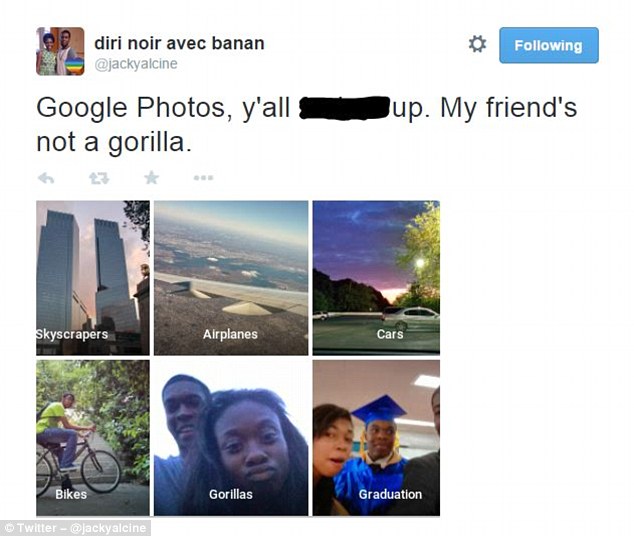
Google’s new image-recognition program misfired badly this week by identifying two black people as gorillas, delivering a mortifying reminder that even the most intelligent machines still have lot to learn about human sensitivity.

The blunder surfaced in a smartphone screen shot posted online Sunday by a New York man on his Twitter account, @jackyalcine. The images showed the recently released Google Photos app had sorted a picture of two black people into a category labeled as “gorillas.”

The accountholder used a profanity while expressing his dismay about the app likening his friend to an ape, a comparison widely regarded as a racial slur when applied to a black person.

“We’re appalled and genuinely sorry that this happened,” Google spokeswoman Katie Watson said. “We are taking immediate action to prevent this type of result from appearing.”

A tweet to @jackyalcine requesting an interview hadn’t received a response several hours after it was sent Thursday.

Despite Google’s apology, the gaffe threatens to cast the Internet company in an unflattering light at a time when it and its Silicon Valley peers have already been fending off accusations of discriminatory hiring practices. Those perceptions have been fed by the composition of most technology companies’ workforces, which mostly consist of whites and Asians with a paltry few blacks and Hispanics sprinkled in.

The mix-up also surfaced amid rising U.S. racial tensions that have been fueled by recent police killings of blacks and last month’s murder of nine black churchgoers in Charleston, South Carolina.

Google’s error underscores the pitfalls of relying on machines to handle tedious tasks that people have typically handled in the past. In this case, the Google Photo app released in late May uses recognition software to analyze images in pictures to sort them into a variety of categories, including places, names, activities and animals.

When the app came out, Google executives warned it probably wouldn’t get everything right — a point that has now been hammered home. Besides mistaking humans for gorillas, the app also has been mocked for labeling some people as seals and some dogs as horses.

“There is still clearly a lot of work to do with automatic image labeling,” Watson conceded.

Some commentators in social media, though, wondered if the flaws in Google’s automatic-recognition software may have stemmed on its reliance on white and Asian engineers who might not be sensitive to labels that would offend black people. About 94 percent of Google’s technology workers are white or Asian and just 1 percent is black, according to the company’s latest diversity disclosures.

Google isn’t the only company still trying to work out the bugs in its image-recognition technology.

Shortly after Yahoo’s Flickr introduced an automated service for tagging photos in May, it fielded complaints about identifying black people as “apes” and “animals.” Flickr also mistakenly identified a Nazi concentration camp as a “jungle gym.”

Google reacted swiftly to the mess created by its machines, long before the media began writing about it.

Less than two hours after @jackyalcine posted his outrage over the gorilla label, one of Google’s top engineers had posted a response seeking access to his account to determine what went wrong. Yonatan Zunger, chief architect of Google’s social products, later tweeted: “Sheesh. High on my list of bugs you never want to see happen. Shudder.”

http://bigstory.ap.org/urn:publicid:ap.org:b31f3b75b35a4797bb5db3a987a62eb2

Gladiator Fights Revealed in Ancient Graffiti


Graffiti discovered in the ancient city of Aphrodisias shows gladiator fights between a retiarius (a gladiator armed with a trident and net) and a secutor (gladiator equipped with a sword and shield).

by Owen Jarus

Hundreds of graffiti messages engraved into stone in the ancient city of Aphrodisias, in modern-day Turkey, have been discovered and deciphered, revealing what life was like there over 1,500 years ago, researchers say.

The graffiti touches on many aspects of the city’s life, including gladiator combat, chariot racing, religious fighting and sex. The markings date to a time when the Roman and Byzantine empires ruled over the city.

“Hundreds of graffiti, scratched or chiseled on stone, have been preserved in Aphrodisias — more than in most other cities of the Roman East(an area which includes Greece and part of the Middle East),” said Angelos Chaniotis, a professor at the Institute for Advanced Study, in Princeton New Jersey, in a lecture he gave recently at Toronto’s Royal Ontario Museum.

“Graffiti are the products of instantaneous situations, often creatures of the night, scratched by people amused, excited, agitated, perhaps drunk. This is why they are so hard to interpret,” Chaniotis said. “But this is why they are so valuable. They are records of voices and feelings on stone.”

The graffiti includes sexual imagery, with one plaque showing numerous penises. “A plaque built into the city wall has representations of phalluses of various sizes and positions and employed in a variety of ways,” Chaniotis said.

Trident man vs. sword man

The graffiti also includes many depictions of gladiators. Although the city was part of the Roman Empire, the people of Aphrodisias mainly spoke Greek. The graffiti is evidence that people living in Greek-speaking cities embraced gladiator fighting, Chaniotis said.

“Pictorial graffiti connected with gladiatorial combat are very numerous,” he said. “And this abundance of images leaves little doubt about the great popularity of the most brutal contribution of the Romans to the culture of the Greek east.”

Some of the most interesting gladiator graffitiwasfound on a plaque in the city’sstadiumwhere gladiator fights took place. The plaque depicts battles between two combatants: a retiarius (a type of gladiator armed with a trident and net) and a secutor (a type of gladiator equipped with a sword and shield).

One scene on the plaque shows the retiarius emerging victorious, holding a trident over his head, the weapon pointed toward the wounded secutor. On the same plaque, another scene shows the secutor chasing a fleeing retiarius. Still another image shows the two types of gladiators locked in combat, a referee overseeing the fight.

“Probably a spectator has sketched scenes he had seen in the arena,” Chaniotis said. The images offer “an insight (on) the perspective of the contemporary spectator. The man who went to the arena in order to experience the thrill and joy of watching — from a safe distance — other people die.”

Chariot-racing rivalry

Chariot racing is another popular subject in the graffiti. The city had three chariot-racing clubs competing against each other, records show.

The south market, which included a public park with a pool and porticoes, was a popular place for chariot-racing fans to hang outthe graffiti shows. It may be “where the clubhouses of the factions of the hippodrome were located — the reds, the greens, the blues,” said Chaniotis, referring to the namesof the different racing clubs.

The graffiti includes boastful messages after a club won and lamentations when a club was having a bad time. “Victory for the red,” reads one graffiti; “bad years for the greens,” says another; “the fortune of the blues prevails,” reads a third.

Three religions

Religion was also depicted in the city’s graffiti. “Christians, Jews and a strong group of philosophically educated followers of the polytheistic religions competed in Aphrodisias for the support of those who were asking the same questions: Is there a god? How can we attain a better afterlife?” said Chaniotis.

Graffiti was one way in which these groups competed. Archaeologists have found the remains of statues representing governors (or other elite persons) who supported polytheistic beliefs. Christians had registered their disapproval of such religions by carving abbreviationson the statues thatmean”Mary gives birth to Jesus,” refuting the idea that many gods existed.

Those who followed polytheistic beliefs carved graffiti of their own.

“To the Christian symbol of the cross, the followers of the old religion responded by engraving their own symbol, the double axe,” said Chaniotis, noting that this object was a symbol of Carian Zeus (a god), and is seen on the city’s coins.

Aphrodisias also boasted a sizable Jewish population. Many Jewish traders set up shop in an abandoned temple complex known as the Sebasteion.

Among the graffiti found there is a depiction of a Hanukkah menorah, a nine-candle lamp that would be lit during the Jewish festival. “This may be one of the earliest representations of a Hanukkah menorah that we know from ancient times,” said Chaniotis.

End of an era

Most of the graffiti Chaniotis recorded dates between roughly A.D. 350 and A.D. 500, appearing to decline around the time Justinian became emperor of the Byzantine Empire, in A.D. 527.

In the decades that followed, Justinian restricted or banned polytheistic and Jewish practices. Aphrodisias, which had been named after the goddess Aphrodite, was renamed Stauropolis. Polytheistic and Jewish imagery, including some of the graffiti, was destroyed.

But while the city was abandoned in the seventh century, the graffiti left by the people remains today. “Through the graffiti, the petrified voices and feelings of the Aphrodisians still reach us, and they still matter,” Chaniotis said.

The lecture by Chaniotis was the keynote address given at the annual meeting of the Classical Association of Canada.

http://www.livescience.com/51203-ancient-graffiti-gladiator-combat-discovered.html

People with recurrent depression have significantly smaller hippocampus than healthy individuals

The brains of people with recurrent depression have a significantly smaller hippocampus – the part of the brain most associated with forming new memories – than healthy individuals, a new global study of nearly 9,000 people reveals.

Published in Molecular Psychiatry, the ENIGMA study is co-authored by University of Sydney scholars at the Brain and Mind Research Institute.

The research is the largest international study to compare brain volumes in people with and without major depression. It highlights the need to identify and treat depression effectively when it first occurs, particularly among teenagers and young adults.

Using magnetic resonance imaged (MRI) brain scans, and clinical data from 1,728 people with major depression and 7,199 healthy individuals, the study combined 15 datasets from Europe, the USA and Australia.

Major depression is a common condition affecting at least one in six people during their lifetime. It is a serious clinical mood disorder in which feelings of sadness, frustration, loss, or anger interfere with a person’s everyday life for weeks, months or years at a time.

The key finding that people with major depression have a smaller hippocampus confirms earlier clinical work conducted at the BMRI. In this study, the key finding was largely explained by subjects with recurrent depression.

People with recurrent depression represented 65 per cent of study subjects with major depression.

People with an early age of onset of major depression (before the age of 21 years) also had a smaller hippocampus than healthy individuals, consistent with the notion that many of these young people go on to have recurrent disorders.

However, people who had a first episode of major depression (34 per cent of study subjects with major depression) did not have a small hippocampus than healthy individuals, indicating that the changes are due to the adverse effects of depressive illness on the brain.

“These findings shed new light on brain structures and possible mechanisms responsible for depression,” says Associate Professor Jim Lagopoulos of the University of Sydney’s Brain and Mind Research Institute.

“Despite intensive research aimed at identifying brain structures linked to depression in recent decades, our understanding of what causes depression is still rudimentary.

“One reason for this has been the lack of sufficiently large studies, variability in the disease and treatments provided, and the complex interactions between clinical characteristics and brain structure.”

Commenting on the clinical significance of the findings, Co-Director of the Brain and Mind Research Institute, Professor Ian Hickie says: “This large study confirms the need to treat first episodes of depression effectively, particularly in teenagers and young adults, to prevent the brain changes that accompany recurrent depression.

“This is another reason that we need to ensure that young people receive effective treatments for depression – a key goal of our Centre of Research Excellence in Optimising Early Interventions for Young People with Emerging Mood Disorder.

“This new finding of smaller hippocampal volume in people with major depression may offer some support to the neurotrophic hypothesis of depression,” adds Jim Lagopoulos.

“This hypothesis argues that a range of neurobiological processes such as elevated glucocorticoid levels in those with chronic depression may induce brain shrinkage.

“Clearly, there’s a need for longitudinal studies that can track changes in hippocampal volume among people with depression over time, to better clarify whether hippocampal abnormalities result from prolonged duration of chronic stress, or represent a vulnerability factor for depression, or both,” he said.
http://www.news-medical.net/news/20150630/People-with-recurrent-depression-have-significantly-smaller-hippocampus-than-healthy-individuals.aspx

Travel company that will strand you on a desert island

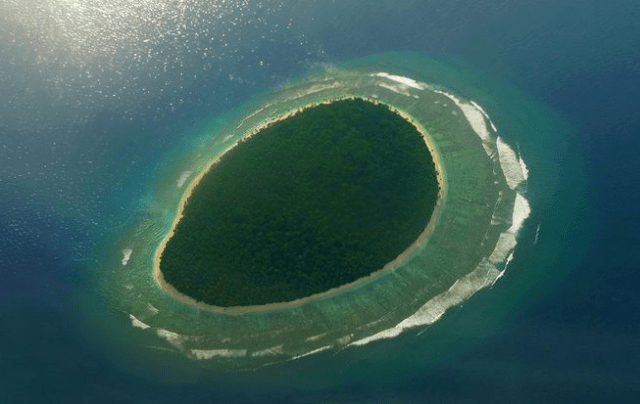
Want to be stranded on a remote tropical island but without having to survive a traumatic shipwreck or plane crash? Enter Docastaway, a travel company that will transform you into a modern day Robinson Crusoe and maroon you on one of a number of pre-selected remote tropical islands.

“We have dedicated several years to exploring the most uninhabited and isolated tropical corners of the planet with the aim of discovering the most remote islands, those which remain a secret and still completely untouched by western influence,” the site states.

To cater to both the survivalist and the vacationer, Docastaway offers two isolation categories, Adventure mode and Comfort mode. With the latter, you’ll still be at one with nature, but there’s likely an eco-resort not to far away to cater to your every need. Adventure mode on the other hand features everything from a simple hut with a modern bathroom to “it’s up to you to find your own food and water.” Take for instance this description for the 15-day excursion on Devil’s Island.

“We must reiterate the fact that this island is only suitable for those who love to experience difficulties and those who don’t mind being totally abandoned during long periods of time,” the site warns. “This island is an ideal destination for those who want to become an authentic castaway, completely alone and without guides. This is probably the most extreme experience that Docastaway has to offer.”

http://www.docastaway.com/pages/adventure-cottages-huts/oceania/devils/devils-main

It’s worth noting that while Docastaway offers communication options for all its stranded clients, in the case of Devil’s Island, help isn’t always just a phone call away.

“Should there be a storm, the castaway will have to wait up to two weeks to be rescued,” they share. “Therefore, much patience will be necessary and also flexible dates.”

Want something a little more tame that your partner won’t hold against you for the rest of your life? Check out the stunning Blue Lagoon option under Comfort mode.

While guides and staff will deliver food and other luxuries daily, you’ll otherwise be completely alone — with no electricity, but plenty of wildlife and gorgeous scenery to entertain you. “There are no villages or towns for many miles and the immediate vicinity of the island is not frequented by fishing boats,” the site states. “The feeling of isolation in The Blue Lagoon is generally maximum.”

Read more: http://www.mnn.com/lifestyle/eco-tourism/stories/travel-company-will-strand-you-desert-island#ixzz3eevC2H3j

Daycare inside a nursing home: Intergenerational Learning Center in Seattle

By Starre Vartan

Some of the most innovative ideas for the future are rooted in the past. Take the Mount Intergenerational Learning Center in Seattle. Within its walls, elderly people are teaching and spending time with preschool students.

But if it also seems odd, that’s because it’s not something you typically see in Western societies. These two groups of people tend to be almost completely isolated from each other, except maybe during holidays. Of course, that wasn’t always the case. When people lived in family groups — and in those places in the world where people still do — this was and is completely normal. And it makes sense, as both the very old and the very young seem to live at a slower, less focused, more in-the-moment state of being.

Here’s what the Mount Center says about its program: “Five days a week, the children and residents come together in a variety of planned activities such as music, dancing, art, lunch, storytelling or just visiting. These activities result in mutual benefits for both generations.”

In one of those moments of kismet, I happen to be reading Marge Piercy’s “Woman on the Edge of Time,” which is an influential feminist-utopian novel written in 1976. One of the characters from the year 2137 explains to a from-the-’70s visitor why the young children in their advanced society are being cared for by the very old: “We believe old people and children are kin. There’s more space at both ends of life. That closeness to birth and death makes makes a common concern with big questions and basic patterns. We think old people, because of their distance from the problems of their own growing up, hold more patience and can be quieter to hear what children want.”

Behind the project is Seattle University adjunct professor Evan Briggs. She told ABC News, that when the children and the residents come together there’s a “complete transformation in the presence of the children. Moments before the kids came in, sometimes the people seemed half alive, sometimes asleep. It was a depressing scene. As soon as the kids walked in for art or music or making sandwiches for the homeless or whatever the project that day was, the residents came alive.”

Like the quote from the book above, Briggs writes on her Kickstarter page that when she first saw what was happening at the Mount, she noticed: “…with neither past nor future in common, the relationships between the children and the residents exist entirely in the present. Despite the difference in their years, their entire sense of time seems more closely aligned.”

Hence the name, “Present Perfect,” for her documentary. It seems like this is an idea that might spread, an idea whose time has come — again.

Read more: http://www.mnn.com/family/family-activities/blogs/a-daycare-inside-a-nursing-home-its-pure-magic#ixzz3eZYE5Ao3

Scientific evidence that same-sex parenting does not harm children

There is no evidence that having same-sex parents harms children in any way, a new comprehensive review finds.

In the new review, Jimi Adams, PhD, an associate professor of health and behavioral studies at the University of Colorado Denver, said he wanted to find out if children suffered any disadvantages simply because their parents were of the same sex.
Adams’ team analyzed data from thousands of studies on the issue. The data overwhelming found that children of same-sex parents do not differ from those of heterosexual or single parents on a range of social and behavioral outcomes.

According to the research, which was published in the journal Social Science Research, by 1990 a consensus between researchers on the issue began to emerge, and by 2000 “overwhelming” consensus had been reached that same-sex parenting does not harm children.

“As same-sex marriage has been debated in courts across the country, there has been the lingering question about the effects of same-sex parenting on children,” Adams said in a university news release. “I found overwhelming evidence that scientists agree that there is not a negative impact to children of same-sex couples,” he said.

Referenc: Adams J and Light R. Scientific consensus, the law, and same sex parenting outcomes. Soc Sci Res. 2015; 53: 300-310.

http://www.sciencedirect.com/science/article/pii/S0049089X15001209

Should psychedelics be declassified in order to examine their therapeutic potential in some forms of mental illness?

Psychedelics were highly popular hallucinogenic substances used for recreational purposes back in the 1950s and 1960s. They were also widely used for medical research looking into their beneficial impact on several psychiatric disorders, including anxiety and depression. In 1967, however, they were classified as a Class A, Schedule I substance and considered to be among the most dangerous drugs with no recognized clinical importance. The use of psychedelics has since been prohibited.

Psychiatrist and honorary lecturer at the Institute of Psychiatry, Psychology and Neuroscience, at Psychiatrist and honorary lecturer at the Institute of Psychiatry, Psychology and Neuroscience, at King’s College London, James Rucker, MRCPsych, is proposing to reclassify and improve access to psychedelics in order to conduct more research on their therapeutic benefits. He believes in the potential of psychedelics so much that late last month he took to the pages of the prestigious journal the BMJ to make his case. He wrote that psychedelics should instead be considered Schedule II substances which would allow a “comprehensive, evidence based assessment of their therapeutic potential.”

“The Western world is facing an epidemic of mental health problems with few novel therapeutic prospects on the horizon,” Rucker told Psychiatry Advisor, justifying why studying psychedelics for treating psychiatric illnesses is so important.

Rucker recognizes that the illicit substance may be harmful to some people, especially when used in a recreational and uncontrolled context. He cited anecdotal reports of the substance’s disabling symptoms, such as long-term emotionally charged flashbacks. However, he also believes that psychedelic drugs can have positive outcomes in other respects.

“The problem at the moment,” he argued, “is that we don’t know who would benefit and who wouldn’t. The law does a good job of preventing us from finding out.”

From a biological perspective, psychedelics act as an agonist, a substance that combines with a receptor and initiates a physiological response to a subtype of serotonin known as 5HT2a. According to Rucker, this process influences the balance between inhibitory and excitatory neurotransmitters.

“The psychedelics may invoke a temporary state of neural plasticity within the brain, as a result of which the person may experience changes in sensory perception, thought processing and self-awareness,” Rucker speculated. He added that psychedelic drugs can act as a catalyst that stirs up the mind to elicit insights into unwanted cycles of feelings, thoughts and behaviors.

“These cycles can then be faced, expressed, explored, interpreted, accepted and finally integrated back into the person’s psyche with the therapist’s help,” he explained. Reclassifying psychedelics could mean that the mechanism by which these substances can help with anxiety, depression and psychiatric symptoms could be studied and understood better.

Several experts in the field of drug misuse have disagreed strongly with Rucker’s proposals in this area, and are quick to refute his findings and recommendations. Nora Volkow, MD, director of the National Institute on Drug Abuse (NIDA), emphasized the fact that psychedelics can distort a person’s perception of time, motion, colors, sounds and self. “These drugs can disrupt a person’s ability to think and communicate rationally, or even to recognize reality, sometimes resulting in bizarre or dangerous behavior,” she wrote on a NIDA webpage dealing with hallucinogens and dissociative drugs.

“Hallucinogenic drugs are associated with psychotic-like episodes that can occur long after a person has taken the drug,” she added. Volkow also says that, despite being classified as a Schedule I substance, the development of new hallucinogens for recreational purposes remains of particular concern.

Rucker has several suggestions to help mediate the therapeutic action of the drug during medical trials, and thereby sets out to rebut the concerns of experts such as Volkow. When a person is administered a hallucinogen, they experience a changed mental state. During that changed state, Rucker points out, it is possible to control what he describes as a “context,” and thereby make use of the drug more safe.

According to Rucker, the term “context” is divided into the “set” and the “setting” of the drug experience. “By ‘set,’ I mean the mindset of the individual and by ‘setting’ I mean the environment surrounding the individual,” he explained.

To prepare the mindset of the person, Rucker said that a high level of trust between patient and therapist is essential. “A good therapeutic relationship should be established beforehand, and the patient should be prepared for the nature of the psychedelic experience,” he suggested. The ‘setting’ of the drug experience should also be kept closely controlled — safe, comfortable and low in stress.

It is also necessary to screen participants who undergo the drug experience in order to minimize the risk of adverse effects. Rucker suggested screening patients with an established history of severe mental illness, as well as those at high risk of such problems developing. It is also important to screen the medical and drug history of participants.

“The action of psychedelics is changed by many antidepressant and antipsychotic drugs and some medications that are available over the counter, so a full medical assessment prior to their use is essential,” he said.

In order to avoid the danger of addiction, psychedelics should be given at most on a weekly basis. Indeed, for many patients, very few treatments should be required. “The patient may need only one or two sessions to experience lasting benefits, so the course should always be tailored to the individual,” Rucker advised.

If there are any adverse effects during the psychedelic experience, a pharmacological antagonist or antidote to the drug can be administered to immediately terminate the experience. “This underlines the importance of medical supervision being available at all times,” Rucker noted.

Psychedelics are heavily influenced by the environment surrounding the drug experience. Rucker is proposing they be administered under a controlled setting and with a trusted therapist’s supervision. Together with a reclassification of the drug, medical research could generate a better understanding and application of the benefits of psychedelics to mental health.

1.Rucker JJH. Psychedelic drugs should be legally reclassified so that researchers can investigate their therapeutic potential. BMJ. 2015; 350:h2902.

http://www.bmj.com/content/350/bmj.h2902/related

5,500 year old fingerprint found on ceramic vessel

Danish archaeologists doing a survey ahead of the construction of the Femern Belt link scheme, an immersed tunnel that will connect the German island of Fehmarn with the Danish island of Lolland, have found a 5,500-year old-ceramic vessel bearing the fingerprint of the artisan who made it.

The vessel is known with the name “funnel beaker,” a kind of ceramics which features a flat bottom with a funnel shaped neck. Such earthenware is characteristic of the Funnel Beaker Culture (4000 – 2800 B.C.), which represents the first farmers in Scandinavia and the north European plain.

It was found in pieces in a former fjord east of Rødby Havn, on the south coast of Lolland, Denmark.

“It is one of three beakers at the site, which originally was deposited whole probably containing some food or liquid presumably as part of some long forgotten ritual,” Line Marie Olesen, archaeologist at the Museum Lolland-Falster, told Discovery News.

At the same site Olesen and colleagues last year found a 5,500-year-old flint axe with the handle still attached. The axe was deliberately jammed into what used to be the seabed during the Stone Age.

As the beaker was brought to the Danish National Museum for conservation, experts noticed a fingerprint on the interior surface.

“It must have been left there while manufacturing the pot,” Olesen said.

According to Olesen, a lot of time and symbolism was put into the manufacture and decoration of the funnel beakers and associated pots.

“From the contexts in which they appear it is obvious that they played an important part in everyday life, be it ritual or profane,” she added.

“The fragile fingerprint, left unintentionally, is an anonymous, yet very personal signature, which somehow brings us a bit closer to the prehistoric people and their actions,” Olesen said.

Last year the same archaeological survey unearthed 5,000-year-old footprints left by people who attempted to save parts of their fishing system before it was flooded and covered in sand.

“An unknown persons gallery is gradually developing before our eyes, of the people who lived by Lolland’s southern coast at the time when agriculture was introduced some 6,000 years ago,” Anne-Lotte Sjørup Mathiesen of the Museum Lolland-Falster, said in a statement.

http://www.livescience.com/51363-ancient-fingerprint-found-on-ceramic-vessel.html?li_source=pm&li_medium=most-popular&li_campaign=related_test

Antechinus mate until the point of death

The antechinus is a small, shrewlike marsupial indigenous to Australia and New Guinea. These animals are best known for their odd practice of having sex until it kills them, but what else does their mating behavior entail?

There are currently 15 known species of antechinus (animals in the Antechinus genus) living in the forests and woodlands of Australia and New Guinea, five of which were discovered since 2012, said Andrew Baker, a mammal ecologist at the Queensland University of Technology in Australia and leader of the group that made the discoveries.

Generally speaking, antechinus are loners that stick to themselves until the breeding season nears.

Antechinus breed during the Australian winter, when their food — small vertebrates and invertebrates — is scarce. This timing ensures their babies will be born in the spring, when food is bountiful.

Interestingly, males stop producing sperm before the mating season begins.

It’s not clear how sexually mature males and females find mates, but Baker suspects scent, and pheromones, are involved. And as with many other species, males likely roam longer and wider in search of sex, he said.

Baker also suspects that male-male fighting is probably common among antechinuses. “They have surging testosterone levels that tend to make them very aggressive,” Baker said.

Antechinus don’t bother wasting time with wooing mates or engaging in courtship rituals. Instead, they prefer to get down to business immediately.

In fact, a male has no issue with resorting to ambush mating, during which he will catch hold of a female from behind and mate with her while grabbing the scruff of her neck with his forepaws and biting her neck.

It’s not uncommon to find females with tufts of fur around the neck area missing, Baker said, adding that females are fine with the rough ambush as long as they have an opportunity to mate with other males afterward.

Both male and female antechinus are promiscuous, and will try to mate with numerous partners throughout the breeding period. However, to increase their chances of fathering offspring, males will mate with females for as long as possible.

Scientists have documented antechinus copulation events lasting for 10, 12 and even 14 hours. “That’s intermittent thrusting between just one male and one female,” Baker said. When not thrusting, the male will guard the female, keeping her from getting away (and looking for other mates) and other males from getting to her.

Anetchinus will mate continuously for the entire breeding period, which lasts, on average, about two weeks. This activity takes a toll on the male’s body.

The sustained high levels of testosterone stop the production of cortisol from being turned off, allowing males to burn more sugar, Baker said. “It frees them from the need to feed as often, but the downside is that cortisol in sustained levels is poisonous,” he said.

Over time, the males will start to behave erratically, bleed internally, lose fur, develop sores and ulcers that don’t heal, become blind, and develop high parasite loads as their immune system shuts down. “They are like a blank slate for every parasite and disease going around,” Baker said.

It’s rare for a male to survive the breeding period.

Females, on the other hand, may die of exhaustion after weaning their litter, which have multiple paternities. Less than 50 percent of females make it to their second breeding season, and only a very small percentage make it to their third, Baker said.

http://www.livescience.com/51371-animal-sex-antechinus.html