New research shows that infants need to be able to freely move their tongues in order to distinguish sounds.

A team of researchers led by Dr Alison Bruderer, a postdoctoral fellow at the University of British Columbia, has discovered a direct link between tongue movements of infants and their ability to distinguish speech sounds.

“Until now, research in speech perception development and language acquisition has primarily used the auditory experience as the driving factor. Researchers should actually be looking at babies’ oral-motor movements as well,” said Dr Bruderer, who is the lead author on a study published in the Proceedings of the National Academy of Sciences on October 12, 2015.

In the study, teething toys were placed in the mouths of six-month-old English-learning infants while they listened to speech sounds – two different Hindi ‘d’ sounds that infants at this age can readily distinguish.

When the teethers restricted movements of the tip of the tongue, the infants were unable to distinguish between the two sounds.

But when their tongues were free to move, the babies were able to make the distinction.

“Before infants are able to speak, their articulatory configurations affect the way they perceive speech, suggesting that the speech production system shapes speech perception from early in life,” the scientists said.

“These findings implicate oral-motor movements as more significant to speech perception development and language acquisition than current theories would assume and point to the need for more research.”

http://www.sci-news.com/othersciences/psychology/science-infants-tongue-movement-speech-sounds-03336.html?utm_source=feedburner&utm_medium=feed&utm_campaign=Feed%3A+BreakingScienceNews+%28Breaking+Science+News%29

Man buys ‘google.com’ domain for 12 dollars and owns it for one minute before Google cancels transaction

An administration oversight allowed US student Sanmay Ved to buy the right to control the domain on 29 September.

The oversight left him in charge of Google.com for about a minute until Google caught on and cancelled the transaction.

Now Mr Ved has been given a cash reward for spotting the error, which he has decided to donate to charity.

Google declined to comment on the story.

Mr Ved detailed his experience in a post on the LinkedIn site saying that he had been keeping an eye on Google-related web domains for some time because he used to work at the search giant. Mr Ved is currently an MBA student at a US college.

In the early hours of 29 September he noticed a for sale sign next to the Google.com name while browsing sites on Google’s own website-buying service.

He used a credit card to pay the $12 fee to grab google.com and got emails confirming he was the owner. Almost immediately he started getting messages intended for Google’s own web administration team.

This was followed by a cancellation message sent by the website buying service which said he could not take over Google.com because someone else had already registered it and his $12 payment was refunded.

Now it has emerged that Mr Ved has been given a “bug bounty” by Google’s security team for revealing the weakness in the domain buying system. The internal emails Mr Ved received while in charge of google.com have been passed to this team.

Mr Ved decided to give the cash to an Indian educational foundation and in response, Google doubled the reward.

http://www.bbc.com/news/technology-34504319

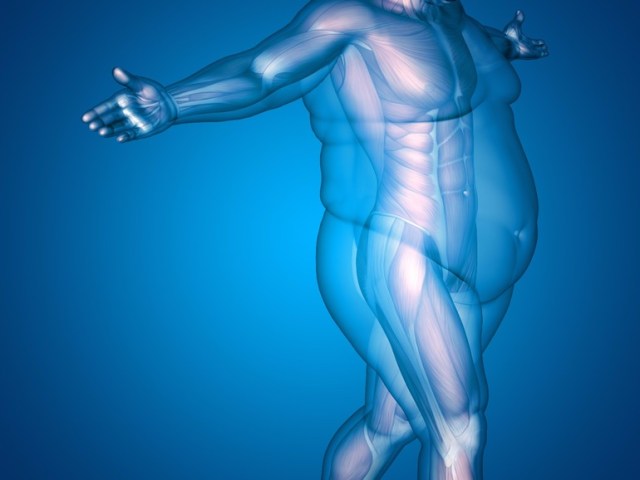
Discovery of fat breakdown trigger opens door for new obesity treatments

While it’s known that the brain is responsible for instructing our fat stores to break down and release energy as we need it, scientists haven’t yet been able to pin down exactly how this process plays out. Leptin, a hormone produced by our fat cells, travels to the brain to regulate appetite, metabolism and energy, but it hasn’t been clear what communication was coming back the other way. New research has now uncovered this missing link for the first time, revealing a set of nerves that connect with fat tissue to stimulate the process in a development that could lead to new types of anti-obesity treatments.

The leptin hormone was identified around 20 years ago as a regulator of the body’s metabolism. Low levels of the hormone serve to boost one’s appetite and slow metabolism, while conversely, high leptin levels dull the appetite and facilitate better fat breakdown. Using a combination of techniques, a research team led by Ana Domingos from Portugal’s Instituto Gulbenkian de Ciência were able to shed light on how leptin behaves when sending signals back to the fat by finding the nerves that meet with white fat tissue to prompt its breakdown.

“We dissected these nerve fibers from mouse fat, and using molecular markers identified these as sympathetic neurons,” explains Domingos. “When we used an ultra sensitive imaging technique, on the intact white fat tissue of a living mouse, we observed that fat cells can be encapsulated by these sympathetic neural terminals.”

But to determine the extent of these neurons’ role in obesity, the team carried out further research on mice. The rodents were genetically engineered so that these neurons could be switched on and off through optogenetics, where brain cells are made to behave differently by exposing them to light. Optogenetics is an emerging technique we have seen explored as a means of treating blindness and altering our pain threshold, among other things.

Domingos’ team found that flicking the switch on the neurons locally triggered the release of a neurotransmitter called norepinephrine, which in turn flooded the fat cells with signals that brought about fat breakdown. The team report that without these sympathetic neurons, leptin was not able to stimulate fat breakdown on its own. Therefore the findings suggest that these sympathetic neurons offer a potential target for obesity treatments other than leptin, which the brains of many obese people have a resistance to.

“This result provides new hopes for treating central leptin resistance, a condition in which the brains of obese people are insensitive to leptin,” says Domingos.

The team’s research was published in the journal Cell.

http://www.gizmag.com/neural-mechanism-fat-breakdown-anti-obesity-therapies/39601/

Scientists encode memories in a way that bypasses damaged brain tissue

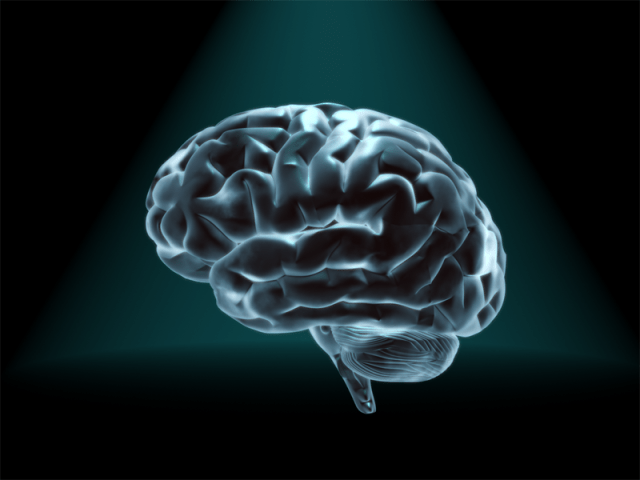
Researchers at University of South Carolina (USC) and Wake Forest Baptist Medical Center have developed a brain prosthesis that is designed to help individuals suffering from memory loss.

The prosthesis, which includes a small array of electrodes implanted into the brain, has performed well in laboratory testing in animals and is currently being evaluated in human patients.

Designed originally at USC and tested at Wake Forest Baptist, the device builds on decades of research by Ted Berger and relies on a new algorithm created by Dong Song, both of the USC Viterbi School of Engineering. The development also builds on more than a decade of collaboration with Sam Deadwyler and Robert Hampson of the Department of Physiology & Pharmacology of Wake Forest Baptist who have collected the neural data used to construct the models and algorithms.

When your brain receives the sensory input, it creates a memory in the form of a complex electrical signal that travels through multiple regions of the hippocampus, the memory center of the brain. At each region, the signal is re-encoded until it reaches the final region as a wholly different signal that is sent off for long-term storage.

If there’s damage at any region that prevents this translation, then there is the possibility that long-term memory will not be formed. That’s why an individual with hippocampal damage (for example, due to Alzheimer’s disease) can recall events from a long time ago – things that were already translated into long-term memories before the brain damage occurred – but have difficulty forming new long-term memories.

Song and Berger found a way to accurately mimic how a memory is translated from short-term memory into long-term memory, using data obtained by Deadwyler and Hampson, first from animals, and then from humans. Their prosthesis is designed to bypass a damaged hippocampal section and provide the next region with the correctly translated memory.

That’s despite the fact that there is currently no way of “reading” a memory just by looking at its electrical signal.

“It’s like being able to translate from Spanish to French without being able to understand either language,” Berger said.

Their research was presented at the 37th Annual International Conference of the IEEE Engineering in Medicine and Biology Society in Milan on August 27, 2015.

The effectiveness of the model was tested by the USC and Wake Forest Baptist teams. With the permission of patients who had electrodes implanted in their hippocampi to treat chronic seizures, Hampson and Deadwyler read the electrical signals created during memory formation at two regions of the hippocampus, then sent that information to Song and Berger to construct the model. The team then fed those signals into the model and read how the signals generated from the first region of the hippocampus were translated into signals generated by the second region of the hippocampus.

In hundreds of trials conducted with nine patients, the algorithm accurately predicted how the signals would be translated with about 90 percent accuracy.

“Being able to predict neural signals with the USC model suggests that it can be used to design a device to support or replace the function of a damaged part of the brain,” Hampson said.
Next, the team will attempt to send the translated signal back into the brain of a patient with damage at one of the regions in order to try to bypass the damage and enable the formation of an accurate long-term memory.

http://medicalxpress.com/news/2015-09-scientists-bypass-brain-re-encoding-memories.html#nRlv

Amazing photo technology

low mag

mag 3

Ever wonder how they ID’d the Boston bombers in a few days? This may help you to understand what the government is looking at. This photo was taken in Vancouver, Canada and shows about 700,000 people.

Hard to disappear in a crowd. Pick on a small part of the crowd click a couple of times — wait – then, click a few more times and see how clear each individual face will become each time. Or use the wheel on your mouse.

This picture was taken with a 70,000 x 30,000 pixel camera (2100 Mega Pixels.) These cameras are not sold to the public and are being installed in strategic locations. The camera can identify a face among a multitude of People.

Place your computer’s cursor in the mass of people and double-click a couple times. It is not so easy to hide in a crowd anymore.

http://www.gigapixel.com/mobile/?id=79995

Thanks to Pete Cuomo for bringing this to the It’s Interesting community.

Man gets married an hour after receiving 40 year prison sentence.

By Rich Cholodofsky

A Monessen man convicted of the robbery and assault of a 91-year-old Rostraver woman was sentenced Thursday to serve up to 40 years in prison. About an hour later, Greg Howard appeared in another Westmoreland County courtroom to marry his girlfriend.

Howard, 47, had nothing to say standing before Judge Rita Hathaway as she ordered that he spend at least 20 years behind bars for the October 2014 home invasion that left Frances Tekavec severely injured and her savings stolen. He was given credit for the time he has served in jail since early November.

“Thank God she is here today and didn’t die in the incident,” Hathaway said.

Howard’s silence was in sharp contrast to his demeanor during the three-day trial in July in which he served as his own lawyer. Howard gave a rambling closing argument during the trial, referencing Santa Claus, the tooth fairy, the Easter bunny and other cultural icons. It took jurors 43 minutes to convict Howard of robbery, aggravated assault and conspiracy.

During the trial, prosecutors said Howard and two other men broke into Tekavec’s home. The men used a Levin’s furniture truck as a ruse to get into the home by asking her to sign a fake delivery receipt, according to trial testimony. Witnesses said they took $13,000 and jewelry and left Tekavec lying on her bed with her ankles and wrists bound.

Tekavec identified Howard as one of her attackers. She made no comment in court on Thursday, but Hathaway read a letter she wrote about the impact of the crime.

In the letter, Tekavec said she is now confined to a wheelchair, and because of the injuries she suffered in the attack, she is in constant pain and is restricted from performing basic personal chores, such as brushing her hair.

“Certainly there are very serious effects she has suffered because of the crime committed against her,” Hathaway said.

Defense attorney Tim Dawson asked that Howard receive concurrent sentences because two other men were more responsible for the violence.

Charges are pending against co-defendants Lamont Dixon, 35, and Branddon Danilchak, 28.

Howard was allowed to wear civilian clothing in court instead of a prison jumpsuit. Deputies said Howard remained shackled during a brief wedding ceremony later in the afternoon presided over by Judge Richard E. McCormick Jr.

The ceremony was attended by five deputies and the bride’s baby, who was born last month.

Read more: http://triblive.com/news/westmoreland/9191589-74/howard-gets-prison#ixzz3nbzLDYFm

Paralyzed man walks again, using only his mind.


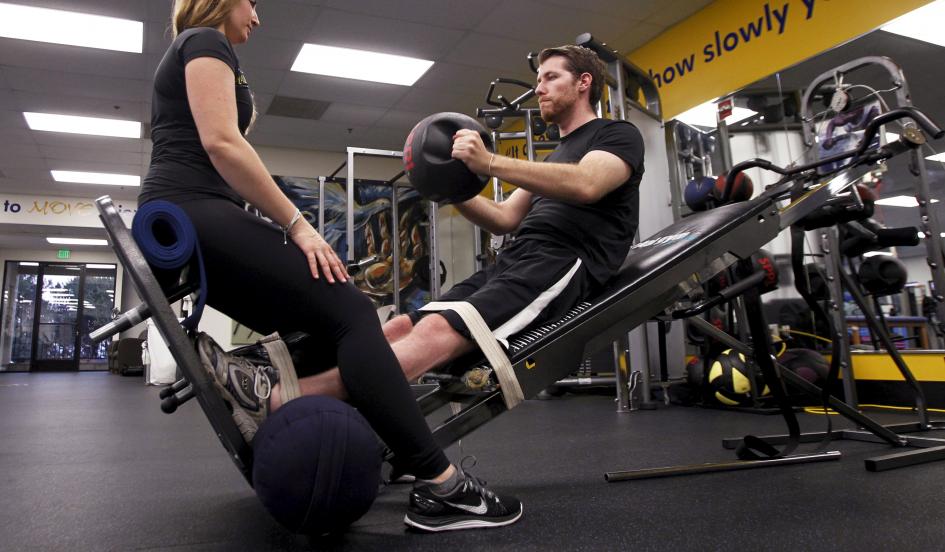
Paraplegic Adam Fritz works out with Kristen Johnson, a spinal cord injury recovery specialist, at the Project Walk facility in Claremont, California on September 24. A brain-to-computer technology that can translate thoughts into leg movements has enabled Fritz, paralyzed from the waist down by a spinal cord injury, to become the first such patient to walk without the use of robotics.

It’s a technology that sounds lifted from the latest Marvel movie—a brain-computer interface functional electrical stimulation (BCI-FES) system that enables paralyzed users to walk again. But thanks to neurologists, biomedical engineers and other scientists at the University of California, Irvine, it’s very much a reality, though admittedly with only one successful test subject so far.

The team, led by Zoran Nenadic and An H. Do, built a device that translates brain waves into electrical signals than can bypass the damaged region of a paraplegic’s spine and go directly to the muscles, stimulating them to move. To test it, they recruited 28-year-old Adam Fritz, who had lost the use of his legs five years earlier in a motorcycle accident.

Fritz first had to learn how exactly he’d been telling his legs to move for all those years before his accident. The research team fitted him with an electroencephalogram (EEG) cap that read his brain waves as he visualized moving an avatar in a virtual reality environment. After hours training on the video game, he eventually figured out how to signal “walk.”

The next step was to transfer that newfound skill to his legs. The scientists wired up the EEG device so that it would send electrical signals to the muscles in Fritz’s leg. And then, along with physical therapy to strengthen his legs, he would practice walking—his legs suspended a few inches off the ground—using only his brain (and, of course, the device). On his 20th visit, Fritz was finally able to walk using a harness that supported his body weight and prevented him from falling. After a little more practice, he walked using just the BCI-FES system. After 30 trials run over a period of 19 weeks, he could successfully walk through a 12-foot-long course.

As encouraging as the trial sounds, there are experts who suggest the design has limitations. “It appears that the brain EEG signal only contributed a walk or stop command,” says Dr. Chet Moritz, an associate professor of rehab medicine, physiology and biophysics at the University of Washington. “This binary signal could easily be provided by the user using a sip-puff straw, eye-blink device or many other more reliable means of communicating a simple ‘switch.’”

Moritz believes it’s unlikely that an EEG alone would be reliable enough to extract any more specific input from the brain while the test subject is walking. In other words, it might not be able to do much more beyond beginning and ending a simple motion like moving your legs forward—not so helpful in stepping over curbs or turning a corner in a hallway.

The UC Irvine team hopes to improve the capability of its technology. A simplified version of the system has the potential to work as a means of noninvasive rehabilitation for a wide range of paralytic conditions, from less severe spinal cord injuries to stroke and multiple sclerosis.

“Once we’ve confirmed the usability of this noninvasive system, we can look into invasive means, such as brain implants,” said Nenadic in a statement announcing the project’s success. “We hope that an implant could achieve an even greater level of prosthesis control because brain waves are recorded with higher quality. In addition, such an implant could deliver sensation back to the brain, enabling the user to feel their legs.

http://www.newsweek.com/paralyzed-man-walks-again-using-only-his-mind-379531

Bigfin Squid in Gulf of Mexico

Meet the bigfin squid, an elusive and frankly quite terrifying cephalopod. This one was spotted in the Gulf of Mexico under 7,800 feet of water.

According to Deep Sea News, little is known about these squid because few have ever been captured.

The first was seen in 1988 and only a handful have been seen since, mostly by cameras on remotely operated vehicles.

New York Jets pack their own toilet paper for Wembley trip

NFL players are tough. But they’re also sensitive souls – and they care deeply about toilet paper.

The New York Jets are at Wembley on Sunday, and they have gone to great – some may say outré – lengths to make sure the players are looked after properly. They have their own clothes washer. Their own private chef. And – get this – they’ve imported 350 rolls of their own toilet paper to, as the New York Times puts it, “replace the thinner version used in England”.

The Times spoke to Aaron Degerness, the Jets’ senior manager of team operations, about what was required for the team’s arduous trek to one of the world’s most inhospitable environments for a few days in one of the world’s most easygoing cities. And people say professional sports stars are pampered.

The details are mind-boggling. Five thousand items – from cereal and extension cords to gauze pads and wrist – have been loaded on to a ship containing supplies for all six NFL teams playing in London this season. (Jacksonville play Buffalo in week seven, and Kansas City take on Detroit the following week. The ship left New York in August) The Jets have spent 11 months planning for about 65 hours overseas, an undertaking that Degerness said involved about 10 times the work that preparing to play in, say, Miami would have required.

An industrial launderer will pick up the players’ dirty practice clothing at one location and deliver it clean to another. A chef at the Jets’ London hotel will be flown in to observe how food is cooked and served at team headquarters.

http://www.theguardian.com/sport/2015/oct/01/new-york-jets-toilet-paper-wembley

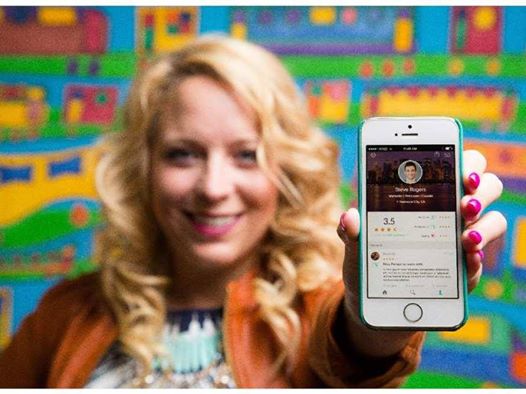
Soon everyone you know will be able to rate you on the new ‘Yelp for people.’

You can already rate restaurants, hotels, movies, college classes, government agencies and bowel movements online.

So the most surprising thing about Peeple — basically Yelp, but for humans — may be the fact that no one has yet had the gall to launch something like it.

When the app does launch, probably in late November, you will be able to assign reviews and one- to five-star ratings to everyone you know: your exes, your co-workers, the old guy who lives next door. You can’t opt out — once someone puts your name in the Peeple system, it’s there unless you violate the site’s terms of service. And you can’t delete bad or biased reviews — that would defeat the whole purpose.

Imagine every interaction you’ve ever had suddenly open to the scrutiny of the Internet public.

“People do so much research when they buy a car or make those kinds of decisions,” said Julia Cordray, one of the app’s founders. “Why not do the same kind of research on other aspects of your life?”

This is, in a nutshell, Cordray’s pitch for the app — the one she has been making to development companies, private shareholders, and Silicon Valley venture capitalists. (As of Monday, the company’s shares put its value at $7.6 million.)

A bubbly, no-holds-barred “trendy lady” with a marketing degree and two recruiting companies, Cordray sees no reason you wouldn’t want to “showcase your character” online. Co-founder Nicole McCullough comes at the app from a different angle: As a mother of two in an era when people don’t always know their neighbors, she wanted something to help her decide whom to trust with her kids.

Given the importance of those kinds of decisions, Peeple’s “integrity features” are fairly rigorous — as Cordray will reassure you, in the most vehement terms, if you raise any concerns about shaming or bullying on the service. To review someone, you must be 21 and have an established Facebook account, and you must make reviews under your real name.

You must also affirm that you “know” the person in one of three categories: personal, professional or romantic. To add someone to the database who has not been reviewed before, you must have that person’s cell phone number.

Positive ratings post immediately; negative ratings are queued in a private inbox for 48 hours in case of disputes. If you haven’t registered for the site, and thus can’t contest those negative ratings, your profile only shows positive reviews.

On top of that, Peeple has outlawed a laundry list of bad behaviors, including profanity, sexism and mention of private health conditions.

“As two empathetic, female entrepreneurs in the tech space, we want to spread love and positivity,” Cordray stressed. “We want to operate with thoughtfulness.”

Unfortunately for the millions of people who could soon find themselves the unwilling subjects — make that objects — of Cordray’s app, her thoughts do not appear to have shed light on certain very critical issues, such as consent and bias and accuracy and the fundamental wrongness of assigning a number value to a person.

To borrow from the technologist and philosopher Jaron Lanier, Peeple is indicative of a sort of technology that values “the information content of the web over individuals;” it’s so obsessed with the perceived magic of crowd-sourced data that it fails to see the harms to ordinary people.

Where to even begin with those harms? There’s no way such a rating could ever accurately reflect the person in question: Even putting issues of personality and subjectivity aside, all rating apps, from Yelp to Rate My Professor, have a demonstrated problem with self-selection. (The only people who leave reviews are the ones who love or hate the subject.) In fact, as repeat studies of Rate My Professor have shown, ratings typically reflect the biases of the reviewer more than they do the actual skills of the teacher: On RMP, professors whom students consider attractive are way more likely to be given high ratings, and men and women are evaluated on totally different traits.

“Summative student ratings do not look directly or cleanly at the work being done,” the academic Edward Nuhfer wrote in 2010. “They are mixtures of affective feelings and learning.”

But at least student ratings have some logical and economic basis: You paid thousands of dollars to take that class, so you’re justified and qualified to evaluate the transaction. Peeple suggests a model in which everyone is justified in publicly evaluating everyone they encounter, regardless of their exact relationship.

It’s inherently invasive, even when complimentary. And it’s objectifying and reductive in the manner of all online reviews. One does not have to stretch far to imagine the distress and anxiety that such a system would cause even a slightly self-conscious person; it’s not merely the anxiety of being harassed or maligned on the platform — but of being watched and judged, at all times, by an objectifying gaze to which you did not consent.

Where once you may have viewed a date or a teacher conference as a private encounter, Peeple transforms it into a radically public performance: Everything you do can be judged, publicized, recorded.

“That’s feedback for you!” Cordray enthuses. “You can really use it to your advantage.”

That justification hasn’t worked out so well, though, for the various edgy apps that have tried it before. In 2013, Lulu promised to empower women by letting them review their dates, and to empower men by letting them see their scores.

After a tsunami of criticism — “creepy,” “toxic,” “gender hate in a prettier package” — Lulu added an automated opt-out feature to let men pull their names off the site. A year later, Lulu further relented by letting users rate only those men who opt in. In its current iteration, 2013’s most controversial start-up is basically a minor dating app.

That windy path is possible for Peeple too, Cordray says: True to her site’s radical philosophy, she has promised to take any and all criticism as feedback. If beta testers demand an opt-out feature, she’ll delay the launch date and add that in. If users feel uncomfortable rating friends and partners, maybe Peeple will professionalize: think Yelp meets LinkedIn. Right now, it’s Yelp for all parts of your life; that’s at least how Cordray hypes it on YouTube, where she’s publishing a reality Web series about the app’s process.

“It doesn’t matter how far apart we are in likes or dislikes,” she tells some bro at a bar in episode 10. “All that matters is what people say about us.”

It’s a weirdly dystopian vision to deliver to a stranger at a sports bar: In Peeple’s future, Cordray’s saying, the way some amorphous online “crowd” sees you will be definitively who you are.

https://www.washingtonpost.com/news/the-intersect/wp/2015/09/30/everyone-you-know-will-be-able-to-rate-you-on-the-terrifying-yelp-for-people-whether-you-want-them-to-or-not/