The world’s first robot-run farm will harvest 30,000 heads of lettuce daily

robot farm

The Japanese lettuce production company Spread believes the farmers of the future will be robots.

So much so that Spread is creating the world’s first farm manned entirely by robots. Instead of relying on human farmers, the indoor Vegetable Factory will employ robots that can harvest 30,000 heads of lettuce every day.

Don’t expect a bunch of humanoid robots to roam the halls, however; the robots look more like conveyor belts with arms. They’ll plant seeds, water plants, and trim lettuce heads after harvest in the Kyoto, Japan farm.

“The use of machines and technology has been improving agriculture in this way throughout human history,” J.J. Price, a spokesperson at Spread, tells Tech Insider. “With the introduction of plant factories and their controlled environment, we are now able to provide the ideal environment for the crops.”

The Vegetable Factory follows the growing agricultural trend of vertical farming, where farmers grow crops indoors without natural sunlight. Instead, they rely on LED light and grow crops on racks that stack on top of each other.

In addition to increasing production and reducing waste, indoor vertical farming also eliminates runoff from pesticides and herbicides — chemicals used in traditional outdoor farming that can be harmful to the environment.

The new farm, set to open in 2017, will be an upgrade to Spread’s existing indoor farm, the Kameoka Plant. That farm currently produces about 21,000 heads of lettuce per day with help from a small staff of humans. Spread’s new automation technology will not only produce more lettuce, it will also reduce labor costs by 50%, cut energy use by 30%, and recycle 98% of water needed to grow the crops.

The resulting increase in revenue and resources could cut costs for consumers, Price says.

“Our mission is to help create a sustainable society where future generations will not have to worry about food security and food safety,” Price says. “This means that we will have to make it affordable for everyone and begin to grow staple crops and plant protein to make a real difference.”

http://www.techinsider.io/spreads-robot-farm-will-open-soon-2016-1

Thanks to Kebmodee for bringing this to the It’s Interesting community.

Research uncovers genetic cause underlying schizophrenia

Excessive activity in complement component 4 (C4) genes linked to the development of schizophrenia may explain the excessive pruning and reduced number of synapses in the brains of patients with schizophrenia, according to a study published in Nature.

The study, co-funded by the Office of Genomics Research Coordination at the National Institute of Mental Health and the Stanley Center for Psychiatric Research at the Broad Institute in Cambridge, Massachusetts, analyzed various structurally diverse versions of the C4 gene.

Led by Steve McCarroll, PhD, of the Broad Institute of Harvard and MIT, researchers analyzed the genomes of 65 000 study participants and 700 postmortem brains, detecting a link between specific gene versions and the biological process that causes some cases of schizophrenia.

The team—including Beth Stevens, PhD; Michael Carroll, PhD; and Aswin Sekar, BBS— determined that C4 genes generate varying levels of C4A and C4B proteins; the more C4A found in a person, the higher his or her risk of developing schizophrenia. The researchers found that during critical periods of brain maturation, C4 identifies synapses for pruning. Overexpression of C4 results in higher amounts of C4A, which could cause excessive pruning during the late teens and early adulthood, “conspicuously corresponding to the age-of-onset of schizophrenia symptoms,” the researchers noted.

“It has been virtually impossible to model [schizophrenic] disorder in cells or animals,” said Dr McCarroll. “The human genome is providing a powerful new way into this disease. Understanding these genetic effects on risk is a way of prying open that black box, peering inside, and starting to see actual biological mechanisms.”

Research suggests that future schizophrenia treatments may be developed to target and suppress excessive levels of pruning, halting a process that has the potential to develop into psychotic illness.

Reference

Sekar A, Bialas AR, de Rivera H, et al. Schizophrenia risk from complex variation of complement component 4. Nature. 2016; doi: 10.1038/nature16549.

Scientists bring back animal that resembles the quagga, which went extinct over a century ago

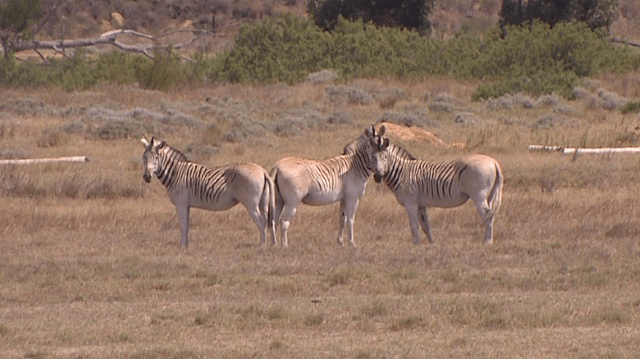
An animal that went extinct over 100 years ago is coming back, thanks to a group of scientists. The creature is called the quagga and while that might not sound familiar, it is a close relative of the zebra.

Just like zebras, the quagga has stripes, but for them they only appear on the front half of their bodies, and they are also brown on the rear half of their bodies. A group of scientists outside of Cape Town, Africa, called The Quagga Project, have bred an animal that looks extremely similar by using DNA and selective breeding.

In the past, the quagga roamed South Africa, but they went extinct around the 1880s after European settlers killed them at an alarming rate. However, CNN reports that after testing remaining quagga skins, which revealed the animal was a sub species of the plains zebra, the scientists hypothesized that the genes which characterized the quagga would be present in zebras and could be manifested through selective breeding.

“The progress of the project has in fact followed that prediction. And in fact we have over the course of 4, 5 generations seen a progressive reduction in striping, and lately an increase in the brown background color showing that our original idea was in fact correct,” Eric Harley, the project’s leader, told CNN.

However not everybody thinks the project was a complete success. There are several critics who believe that the project was all a stunt and that all the scientists did was create a different looking zebra.

“There are a lot of detractors who are saying you can’t possibly put back the same as what was here,” says fellow project leader Mike Gregor to CNN. Adding, “there might have been other genetic characteristics [and] adaptations that we haven’t taken into account.”

The researches say there are only six of the creatures that they now call “Rau quaggas,” (after the project’s originator Reinhold Rau) but when they have 50 of them, they then plan for the herd to live together on one reserve.

Harley tells CNN, “if we can retrieve the animals or retrieve at least the appearance of the quagga, then we can say we’ve righted a wrong.”

http://wtnh.com/2016/01/27/scientists-bring-back-animal-that-went-extinct-over-a-century-ago/

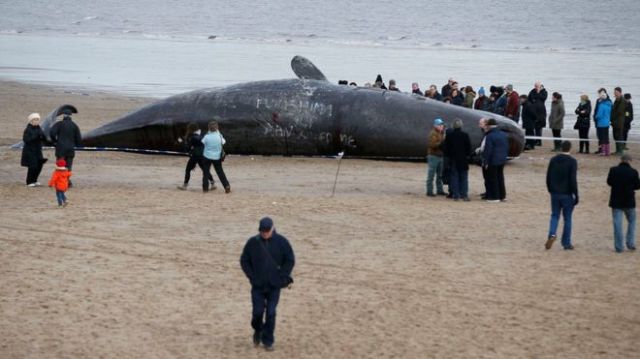
Five sperm whales wash up on the east coast of England

A fifth sperm whale has been washed up on the east coast of England.

It follows the death of a beached whale in Hunstanton, Norfolk, on Friday and the discovery of three carcasses near Skegness over the weekend.

The sperm whales are believed from a pod spotted off the Norfolk coast.

The fifth whale was found at Wainfleet, Lincolnshire, on Monday afternoon, the Maritime and Coastguard Agency reported.

It was found on the site of a former bombing range, and warnings have been issued for people to stay away.

The Lincolnshire Wildlife Trust tweeted: “There is no public access to the area and it is extremely dangerous with tidal creeks and the potential for unexploded ordinance. Many of the lanes to the marshes are private and not accessible.”

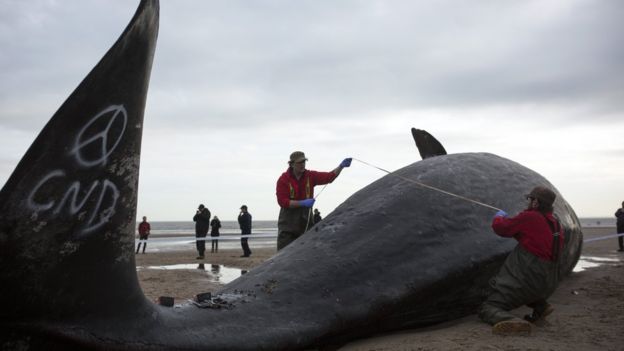
Marine biologists were using a probe to examine one of the Skegness whales earlier on Monday when there was a “huge blast of air”, said BBC reporter David Sykes.

The letters CND had also been spray-painted by someone on the whale’s tail.

CND (Campaign for Nuclear Disarmament) said the action was not carried out by the organisation at a national level.

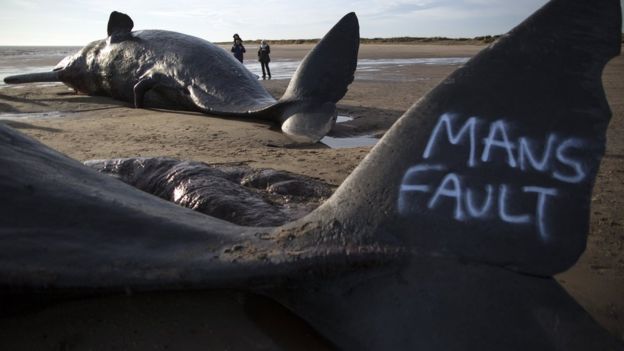
The word “fukushima” – presumably a reference to the stricken Japanese nuclear power station – was also written on the side of the whale’s body.

http://www.bbc.com/news/uk-england-lincolnshire-35400884

Virtual reality journey into a Dali painting

Visitors to a new exhibition at The Dali Museum in St. Petersburg, Florida, won’t just be looking at art. Thanks to virtual reality, they’ll be exploring a Dali painting in a dreamy, three-dimensional world that turns art appreciation into an unforgettable, immersive experience.

The new exhibition, “Disney and Dali: Architects of the Imagination,” tells the story of the relationship between Salvador Dali, the surrealist artist, and Walt Disney, the great American animator and theme-park pioneer.

But the museum exhibition’s highlight comes after visitors have seen the Disney-Dali show’s paintings, story sketches, correspondence, photos and other artifacts. As visitors leave the exhibition area, they’ll be invited to don a headset to try the virtual reality experience.

Called “Dreams of Dali,” the VR experience takes viewers inside Dali’s 1935 painting “Archeological Reminiscence of Millet’s ‘Angelus.'” The painting depicts two towering stone figures along with tiny human figures in a bare landscape with a moody sky. Users can move around inside the painting, using Oculus Rift headsets to navigate a trippy three-dimensional environment that includes motifs from other Dali works like elephants, birds, ants and his “Lobster Telephone” sculpture.

Accompanied by a haunting piano soundtrack punctuated by bird cries, the VR visuals also include a crescent moon, a stone tunnel and even an image of rocker Alice Cooper, whom Dali featured in a hologram he created in 1973.

“You actually have a three-dimensional feeling that you’re inside a painting,” said Jeff Goodby, whose firm Goodby Silverstein & Partners created the VR experience. “It’s not just like you’re inside a sphere with things being projected. It’s actually like there are objects closer and further away and you’re walking amidst them. It’s a vulnerable feeling you give yourself up to. It’s not like anything you’ve ever felt before.” The VR experience was previewed in New York for the media 10 days before its opening Saturday at the Florida museum.

Disney and Dali met in the 1940s in Hollywood, according to museum director Hank Hine. “Their sensibilities were very connected,” Hine said. “They wanted to take art off the palette, out of the canvas and into the world.” The exhibition looks at the castle motif that became a symbol of Disney parks, along with Dali’s “Dream of Venus” pavilion from the 1939 World’s Fair, which some consider a precursor of contemporary installation art.

Disney and Dali also collaborated on a short animated movie, “Destino,” that was eventually completed by Disney Studios. The six-minute movie, which can be found on YouTube, features a dancing girl with long dark hair, a sundial motif and a song with the line, “You came along out of a dream. … You are my destino.” Clips will be played within the gallery for the Disney-Dali exhibition and the full short will be shown at the museum’s theater.

The show also displays the Dali painting that inspired the VR experience, “Archeological Reminiscence of Millet’s ‘Angelus.'” The surrealist work was Dali’s interpretation of a 19th-century painting by Jean-Francois Millet depicting two peasants in a field, heads bowed in prayer. Dali said that his work was a “fantasy during which I imagined sculptures of the two figures in Millet’s ‘Angelus’ carved out of the highest rocks.”

Museum marketing director Kathy Greif said record numbers of visitors attended its last two major shows exploring Dali’s relationships with Andy Warhol and Pablo Picasso. Given the Disney brand’s immense popularity and the VR novelty, attendance expectations for this show are high as well.

Dali “wanted art that took you over,” said Goodby. “He wanted to take you away and do something different with your head and that’s what this does.”

http://bigstory.ap.org/urn:publicid:ap.org:bbb7d86c27c34a5d8a53310f2ece2c98

Octopus DNA reveals secrets to intelligence

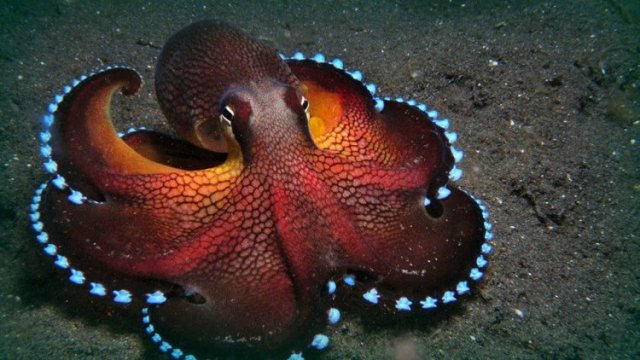
The elusive octopus genome has finally been untangled, which should allow scientists to discover answers to long-mysterious questions about the animal’s alienlike physiology: How does it camouflage itself so expertly? How does it control—and regenerate—those eight flexible arms and thousands of suckers? And, most vexing: How did a relative of the snail get to be so incredibly smart—able to learn quickly, solve puzzles and even use tools?

The findings, in Nature, reveal a vast, unexplored landscape full of novel genes, unlikely rearrangements—and some evolutionary solutions that look remarkably similar to those found in humans.

With the largest-known genome in the invertebrate world—similar in size to that of a house cat (2.7 billion base pairs) and with more genes (33,000) than humans (20,000 to 25,000)—the octopus sequence has long been known to be large and confusing. Even without a genetic map, these animals and their cephalopod cousins (squids, cuttlefishes and nautiluses) have been common subjects for neurobiology and pharmacology research. But a sequence for this group of mollusks has been “sorely needed,” says Annie Lindgren, a cephalopod researcher at Portland State University who was not involved in the new research. “Think about trying to assemble a puzzle, picture side down,” she says of octopus research to date. “A genome gives us a picture to work with.”

Among the biggest surprises contained within the genome—eliciting exclamation point–ridden e-mails from cephalopod researchers—is that octopuses possess a large group of familiar genes that are involved in developing a complex neural network and have been found to be enriched in other animals, such as mammals, with substantial processing power. Known as protocadherin genes, they “were previously thought to be expanded only in vertebrates,” says Clifton Ragsdale, an associate professor of neurobiology at the University of Chicago and a co-author of the new paper. Such genes join the list of independently evolved features we share with octopuses—including camera-type eyes (with a lens, iris and retina), closed circulatory systems and large brains.

Having followed such a vastly different evolutionary path to intelligence, however, the octopus nervous system is an especially rich subject for study. “For neurobiologists, it’s intriguing to understand how a completely distinct group has developed big, complex brains,” says Joshua Rosenthal of the University of Puerto Rico’s Institute of Neurobiology. “Now with this paper, we can better understand the molecular underpinnings.”

Part of octopuses’ sophisticated wiring system—which extends beyond the brain and is largely distributed throughout the body—controls their blink-of-an-eye camouflage. Researchers have been unsure how octopuses orchestrate their chromatophores, the pigment-filled sacs that expand and contract in milliseconds to alter their overall color and patterning. But with the sequenced genome in hand, scientists can now learn more about how this flashy system works—an enticing insight for neuroscientists and engineers alike.

Also contained in the octopus genome (represented by the California two-spot octopus, Octopus bimaculoides) are numerous previously unknown genes—including novel ones that help the octopus “taste” with its suckers. Researchers can also now peer deeper into the past of this rarely fossilized animal’s evolutionary history—even beyond their divergence with squid some 270 million years ago. In all of that time octopuses have become adept at tweaking their own genetic codes (known as RNA editing, which occurs in humans and other animals but at an extreme rate in octopuses), helping them keep nerves firing on cue at extreme temperatures. The new genetic analysis also found genes that can move around on the genome (known as transposons), which might play a role in boosting learning and memory.

One thing not found in the octopus genome, however, is evidence that its code had undergone wholesale duplication (as the genome of vertebrates had, which allowed the extra genes to acquire new functions). This was a surprise to researchers who had long marveled at the octopus’s complexity—and repeatedly stumbled over large amounts of repeated genetic code in earlier research.

The size of the octopus genome, combined with the large number of repeating sequences and, as Ragsdale describes, a “bizarre lack of interest from many genomicists,” made the task a challenging one. He was among the dozens of researchers who banded together in early 2012 to form the Cephalopod Sequencing Consortium, “to address the pressing need for genome sequencing of cephalopod mollusks,” as they noted in a white paper published later that year in Standards in Genomic Sciences.

The full octopus genome promises to make a splash in fields stretching from neurobiology to evolution to engineering. “This is such an exciting paper and a really significant step forward,” says Lindgren, who studies relationships among octopuses, which have evolved to inhabit all of the world’s oceans—from warm tidal shallows to the freezing Antarctic depths. For her and other cephalopod scientists, “having a whole genome is like suddenly getting a key to the biggest library in the world that previously you could only look into by peeking through partially blocked windows.”

http://www.scientificamerican.com/article/octopus-genome-reveals-secrets-to-complex-intelligence/

New study shows that medical marijuana cuts average number of migraine headaches in half

Marijuana may give relief to migraine sufferers, according to research published online in Pharmacotherapy.

The research included 121 patients diagnosed with migraines and treated with medical marijuana between January 2010 and September 2014. Patients in the study used both inhaled marijuana and edible marijuana. The researchers said inhaled marijuana seemed to be preferred for treating current headaches, and edibles seemed to be favored for headache prevention.

The researchers found that 103 study participants said they had a decrease in their monthly migraines. Fifteen patients said they had the same number of migraines, and 3 reported an increase in headaches. Overall, the patients’ number of migraines fell from 10.4 to 4.6 per month, which is statistically and clinically significant.

“There was a substantial improvement for patients in their ability to function and feel better,” senior author Laura Borgelt, PharmD, a professor in the School of Pharmacy and Pharmaceutical Sciences at the University of Colorado Anschutz Medical Campus in Aurora, said in a university news release. “Like any drug, marijuana has potential benefits and potential risks. It’s important for people to be aware that using medical marijuana can also have adverse effects.”

Reference

Rhyne D, Anderson SL, Gedde M, Borgelt LM. Effects of Medical Marijuana on Migraine Headache Frequency in an Adult Population. Pharmacotherapy. 2016;

DARPA program aims to develop an implantable neural interface capable of connecting with one million neurons

A new DARPA program aims to develop an implantable neural interface able to provide unprecedented signal resolution and data-transfer bandwidth between the human brain and the digital world. The interface would serve as a translator, converting between the electrochemical language used by neurons in the brain and the ones and zeros that constitute the language of information technology. The goal is to achieve this communications link in a biocompatible device no larger than one cubic centimeter in size, roughly the volume of two nickels stacked back to back.

The program, Neural Engineering System Design (NESD), stands to dramatically enhance research capabilities in neurotechnology and provide a foundation for new therapies.

“Today’s best brain-computer interface systems are like two supercomputers trying to talk to each other using an old 300-baud modem,” said Phillip Alvelda, the NESD program manager. “Imagine what will become possible when we upgrade our tools to really open the channel between the human brain and modern electronics.”

Among the program’s potential applications are devices that could compensate for deficits in sight or hearing by feeding digital auditory or visual information into the brain at a resolution and experiential quality far higher than is possible with current technology.

Neural interfaces currently approved for human use squeeze a tremendous amount of information through just 100 channels, with each channel aggregating signals from tens of thousands of neurons at a time. The result is noisy and imprecise. In contrast, the NESD program aims to develop systems that can communicate clearly and individually with any of up to one million neurons in a given region of the brain.

Achieving the program’s ambitious goals and ensuring that the envisioned devices will have the potential to be practical outside of a research setting will require integrated breakthroughs across numerous disciplines including neuroscience, synthetic biology, low-power electronics, photonics, medical device packaging and manufacturing, systems engineering, and clinical testing. In addition to the program’s hardware challenges, NESD researchers will be required to develop advanced mathematical and neuro-computation techniques to first transcode high-definition sensory information between electronic and cortical neuron representations and then compress and represent those data with minimal loss of fidelity and functionality.

To accelerate that integrative process, the NESD program aims to recruit a diverse roster of leading industry stakeholders willing to offer state-of-the-art prototyping and manufacturing services and intellectual property to NESD researchers on a pre-competitive basis. In later phases of the program, these partners could help transition the resulting technologies into research and commercial application spaces.

To familiarize potential participants with the technical objectives of NESD, DARPA will host a Proposers Day meeting that runs Tuesday and Wednesday, February 2-3, 2016, in Arlington, Va. The Special Notice announcing the Proposers Day meeting is available at https://www.fbo.gov/spg/ODA/DARPA/CMO/DARPA-SN-16-16/listing.html. More details about the Industry Group that will support NESD is available at https://www.fbo.gov/spg/ODA/DARPA/CMO/DARPA-SN-16-17/listing.html. A Broad Agency Announcement describing the specific capabilities sought will be forthcoming on http://www.fbo.gov.

NESD is part of a broader portfolio of programs within DARPA that support President Obama’s brain initiative. For more information about DARPA’s work in that domain, please visit: http://www.darpa.mil/program/our-research/darpa-and-the-brain-initiative.

http://www.darpa.mil/news-events/2015-01-19

Thanks to Kebmodee for bringing this to the It’s Interesting community.

Head transplant has been successfully done on a monkey, neurosurgeon Sergio Canavero claims

by Andrew Griffin

The scientist who claims to be about to carry out the first human head transplant says that he has successfully done the procedure on a monkey.

Maverick neurosurgeon Sergio Canavero has tested the procedure in experiments on monkeys and human cadavers, he told New Scientist.

Dr Canavero says that the success shows that his plan to transplant a human’s head onto a donor body is in place. He says that the procedure will be ready before the end of 2017 and could eventually become a way of treating complete paralysis.

“I would say we have plenty of data to go on,” Canavero told New Scientist. “It’s important that people stop thinking this is impossible. This is absolutely possible and we’re working towards it.”

The team behind the work has published videos and images showing a monkey with a transplanted head, as well as mice that are able to move their legs after having their spinal cords severed and then stuck back together.

Fusing the spinal cord of a person is going to be key to successfully transplanting a human head onto a donor body. The scientists claim that they have been able to do so by cleanly cutting the cord and using polyethylene glycol (PEG), which can be used to preserve cell membranes and helps the connection recover.

The monkey head transplant was carried out at Harbin Medical University in China, according to Dr Canavero. The monkey survived the procedure “without any neurological injury of whatever kind,” the surgeon said, but that it was killed 20 hours after the procedure for ethical reasons.

It isn’t the first time that a successful transplant has been carried out on a monkey. Head transplant pioneer Robert J White successfully carried out the procedure in 1970, on a monkey that initially responded well but died after nine days when the body rejected the head.

https://en.wikipedia.org/wiki/Robert_J._White

The newly-revealed success is likely to be an attempt to help generate funds for the ultimate aim of giving a head transplant to Valery Spriridonov, the Russian patient who has been chosen to be the first to undergo the procedure. Dr Canavero has said that he will need a huge amount of money to fund the team of surgeons and scientists involved, and that he intends to ask Mark Zuckerberg to help fund it.

While the scientists behind the procedure have published the pictures and the videos, they haven’t yet made any of their work available for critique from fellow scientists. That has led some to criticise the claims, arguing that it is instead “science through PR”, and an attempt to drum up publicity and distract people from “good science”.

Peers have criticised the maverick scientist for making the claims without allowing them to be reviewed or checked out. But Dr Canavero claims that he will be publishing details from the study in journals in the coming months.

http://www.independent.co.uk/news/science/head-transplant-has-been-successfully-done-on-a-monkey-maverick-neurosurgeon-sergio-canavero-claims-a6822361.html

Thanks to Kebmodee for bringing this to the It’s Interesting community.