A cystic fibrosis mystery solved – University of Iowa scientists identify protein that causes problems for CF lungs

New research from the University of Iowa answers a question that has vexed cystic fibrosis (CF) researchers for almost 25 years: Why don’t mice with CF gene mutations develop the life-threatening lung disease that affects most people with CF?

The research team, led by Michael Welsh, discovered an answer to this long-standing scientific puzzle, and in doing so, identified a proton pump that could be a target for new CF therapies. They published their results Jan. 29 in the journal Science.

“Since the first CF mouse was reported in 1992, I have been asked hundreds of times, ‘Why don’t CF mice have respiratory host-defense defects and develop lung infections?’” says Welsh, who is a professor of internal medicine, molecular physiology, and biophysics; a Howard Hughes Medical Institute Investigator; and director of the Pappajohn Biomedical Institute at the UI.

In answering this question, Viral Shah, first author on the study and a student in the Medical Scientist Training Program at the UI Carver College of Medicine, homed in on the thin layer of liquid that covers the mice’s airways, i.e., the tracheal and bronchial passages. Shah and his colleagues studied the liquid’s acidity, the importance of which was revealed in earlier UI studies using pigs with CF. That work showed that the CF pigs had an abnormally acidic airway liquid, and that increased acidity impaired the ability of their airways to fight off infection.

Shah explains that, normally, two opposing processes control airway acidity. The cystic fibrosis transmembrane conductance regulator (CFTR) channel secretes bicarbonate, a base. That process is countered by the secretion of protons—an acid. The balance tightly controls the acidity of liquid in the airways.

In people, pigs, and mice with CF, the CFTR channel is lost, stopping the flow of bicarbonate into the airways. When that happens in people and pigs, their airway liquid becomes more acidic, reducing their ability to fight infection. But in mice, the airway liquid does not become more acidic, and they are not prone to infection. That fact led the scientists to ask what secretes acid into the airways of people and pigs that is missing in the mice. They discovered that a proton pump called ATP12A is responsible.

Shah and his colleagues made the discovery by comparing airway tissue from humans, pigs, and mice. The scientists showed that blocking ATP12A in airway tissue from pigs and humans with CF reduces the acidity of their airway liquid and restores their airways’ defenses against infection. Conversely, putting the ATP12A proton pump into the airways of CF mice increases the acidity of the liquid and predisposes the CF mice to bacterial infections.

“This discovery helps us understand the cause of lung disease in people with CF. It may also identify ATP12A as a new therapeutic target,” Shah says. “We wonder if blocking ATP12A in people with CF could halt the progression of lung disease.”

Shah adds that targeting ATP12A could potentially be helpful for all forms of CF, regardless of a patient’s CFTR mutation, because ATP12A is independent of CFTR.

The CF pig model was developed in 2008 by Welsh and his research team at the UI, with colleagues from the University of Missouri. The CF pig closely mimics human CF disease, including the lung problems absent from CF mice, and has proven very useful in advancing our understanding of CF lung problems.

In addition to Shah and Welsh, the research team on the Science study included David Meyerholz, Xiao-Xiao Tang, Leah Reznikov, Mahmoud Abou Alaiwa, Sarah Ernst, Philip Karp, Christine Wohlford-Lenane, Kristopher Heilmann, Mariah Leidinger, Patrick Allen, Joseph Zabner, Paul McCray, Lynda Ostedgaard, David Stoltz, and Christoph Randak.

The research was funded in part by grants from the National Institutes of Health, the Cystic Fibrosis Foundation, and the Roy J. Carver Charitable Trust.

http://now.uiowa.edu/2016/01/cystic-fibrosis-mystery-solved?utm_source=IANowFaculty&utm_medium=fibrosis&utm_campaign=IANowFaculty-2-2-2016

CIA posts previously classified files on UFOs

By Amanda Jackson

The truth is out there: The CIA has released hundreds of declassified documents detailing investigations into possible alien life.

The Central Intelligence Agency posted documents of reported Unidentified Flying Objects that range in date from the late 1940s to the 1950s. While playing off the hype of the TV show reboot “The X-Files,” the CIA broke down the cases into two categories, whether you side with Agent Mulder or Agent Scully.

For believers in alien life, and those who want to channel your inner Mulder, one case you can choose to investigate is the case of a flying saucer in Germany in 1952.

According to CIA reports, an eyewitness told investigators that an object “resembling a huge flying pan” landed in a forest clearing in the Soviet zone of Germany in 1952. The eyewitness said once he was closer to the area where it landed, he saw two men dressed in shiny metallic clothing. The men were stooped over looking at a large object but were spooked by the eyewitness. The mysterious men jumped into the large flying pan object and it spun out into the sky.

“The whole object then began to rise slowly from the ground and rotate like a top,” the eyewitness told the CIA.

The man told a judge he thought he was dreaming but said there was a circular imprint on the ground where the object had landed.

If that case intrigues you, there are four more listed on the CIA blog post.

But if you are more of a skeptic like Scully, and believe there is a simple explanation for flying saucer sightings, then the documents from the scientific advisory panel on UFOs in 1953 will help you prove your case.

According to the documents, panel members met to discuss the lack of sound data and reasonable explanations in a handful of sightings from 1952. The panel concluded unanimously that there was no evidence of direct threat to national security by the object sightings. Some of the explanations for the “flying saucers” and “balls of light” were determined to be from military aircraft, light reflected from ice crystals, birds and bright sunlight rays.

To investigate the other cases or to learn how to investigate your own, visit the CIA blog: https://www.cia.gov/news-information/blog/2016/take-a-peek-into-our-x-files.html

http://www.cnn.com/2016/01/29/us/cia-releases-x-files-ufo-investigations-irpt/index.html

Donald Trump’s Art of the Fail

By MICHAEL KRUSE

In a boardroom on the 26th floor of Trump Tower, in a meeting in the late 1980s in the offices of the Trump Organization, one of Donald Trump’s deputies had had it. Blanche Sprague earlier in the day had learned of the death of a friend in a car wreck, and Trump was berating one of the people seated at the conference table, and so Sprague angrily stood up. “It just became too much,” she said the other day on the phone from New York, “and I said, ‘I can’t take it anymore,’ and I just walked out.”

She regretted it immediately, thinking surely Trump would fire her. Then her phone rang. It was him. She told him she wanted to write letters of apology to the 20 or so people at the meeting.

Don’t, Trump said.

“He said, ‘No, that would hurt you, possibly change you—I don’t want you to do it,’” Sprague said. “He didn’t want to put me in a position of having to be weakened by my mistake.”

Over these last 40 lime-lighted years, Trump has won a lot, but he has lost a lot, too—four corporate bankruptcies, two failed marriages and a vast array of money-squandering business ventures. He lost his signature Trump Shuttle airline to his lenders. His self-branded casinos in Atlantic City struggled consistently to turn profits. In each case, though, he has heeded a form of the advice he gave that day to Sprague: Never acknowledge failure. Never admit defeat.

“He’s probably the greatest self-promoter and self-spinmeister that’s ever lived,” said Harry Hurt III, the author of Lost Tycoon: The Many Lives of Donald J. Trump. “By claiming victory over and over again, it starts to become a self-fulfilling prophecy.”

“He’s been able to create his own reality,” said Wayne Barrett, the author of Trump: The Deals and the Downfall.

“It’s admirable in a way, how he defines himself as succeeding where others see failure,” said Michael D’Antonio, the author of Never Enough: Donald Trump and the Pursuit of Success. “It’s a remarkable performance, and one he’s been giving all his life.”

“Man is the most vicious of all animals,” Trump told People in 1981, “and life is a series of battles ending in victory or defeat.”

Two years after he said that, he bought the New Jersey Generals of the second-rate United States Football League. It got him in Sports Illustrated and on the back page of the New York City tabloids, adding considerably to his fledgling celebrity. Eager to challenge the National Football League, he wanted the USFL to shift its schedule from the spring to the fall. Most of his fellow owners didn’t want that. TV networks weren’t interested in putting the USFL up against the better quality NFL. Trump sued the NFL and its commissioner, saying the NFL was a monopoly, seeking more than $1 billion in damages. Jurors ruled that the NFL essentially was a monopoly but that the USFL was the cause of its own problems. The NFL was ordered to write a check to the USFL … for $3.76. USFL owners had lost more than $150 million. Trump had lost $22 million. The USFL folded in 1986. Many people blamed Trump.

Trump?

“The sports business is a lousy business,” he told Playboy.

Years later, in an interview with the Buffalo News, he drastically underplayed his role in the decisions that led to the USFL’s demise. “That wasn’t a Trump thing,” he said.

In the late ‘80s, he went on a shopping jag, overpaying for properties with hundreds of millions of dollars borrowed from banks.

He bought for $29-million a 282-foot yacht, which could sleep 52 staff and came with gold doorknobs and a sundeck protected by bulletproof glass. He used it primarily as a trophy. “I’m not even interested in boats,” he told the Chicago Tribune.

He took out a $425 million loan, personally guaranteeing $125 million of it, to buy the Plaza hotel in Manhattan for $407.5 million—the most money ever paid for a hotel—without even doing a careful inspection, according to Gwenda Blair in her book The Trumps. He bought the space for a full-page open letter in the New York Times. “For the first time in my life, I have knowingly made a deal that was not economic—for I can never justify the price I paid, no matter how successful the Plaza becomes.” He said he had purchased “a masterpiece—the Mona Lisa.”

He took out a $400 million loan, personally guaranteeing $100 million of that, to buy the Eastern Air Shuttle for $365 million—even though the company itself had just valued the shuttle at $300 million. Talking to reporters, he compared this, too, to the Mona Lisa. He wanted to decorate the insides of the planes with marble before being told that would make them too heavy to fly.

In 1990, he opened his third casino in Atlantic City, New Jersey—the Trump Taj Mahal joined the Trump Plaza and the Trump Castle—and the launch was chaotic, with underprepared, overburdened staff and malfunctioning slot machines. Trump went on CNN and told Larry King his casino was doing so poorly because his casino was doing so well. The machines, he suggested, simply couldn’t keep up with the demand.

“It would be, like, too much use?” King asked.

“They were virtually on fire,” Trump answered.

But soon it was clear: Trump was more than $3 billion in debt, $900 million of which he had personally guaranteed, and his casinos were struggling, in a city that was struggling, in an economy that was struggling. Trump blamed it on the recession. He blamed it on the invasion of Kuwait by Saddam Hussein, “that madman.” He blamed his employees. In the New York Times, he denigrated the president of one of his casinos, calling him “a Type C personality,” and he said he also was “upset with the people running the Trump Shuttle.” He said the press was “dishonest.” He said people were “jealous.”

Trump’s marriage was crumbling, too, due in part to his infidelity—this was the first of his divorces—but he saw it at least as a publicity victory because the high-profile unraveling made him and his name fixtures on the fronts of well-read tabloids.

“This is great for business,” Trump told John O’Donnell, a president of one of his casinos—not the one with the “Type C personality”—according to a book he wrote later called Trumped! “The way this works is, this’ll bring all the men in,” O’Donnell said Trump told him. “They’re going to want to be with Trump.”

O’Donnell wrote the book after he quit working for Trump. In it, he portrayed Trump as an intemperate, incompetent, self-centered racist. O’Donnell, Trump said, was “a fucking loser.”

In late 1990, in Palm Beach, Florida, banks forced him to hold an auction to get rid of empty, unsold condos in a building of his. Embarrassing? “You know what I think?” he said. “I think there’s something very sophisticated and intelligent about auctions.”

He slipped off the Forbes list of the 400 richest people in the country. After years of angling for higher positions in the rankings—he “constantly calls,” an editor of the magazine told Tim O’Brien for his book, TrumpNation—Trump trashed the publication, calling it “sloppy” and “arbitrary.”

Ultimately, though, the banks gave Trump a break, because they were as tethered to him as he was to them. Trump lost control of the Plaza and the Shuttle—he sold the yacht to a Saudi royal—but the banks loaned him $65 million. They deferred all his payments for three to five years. They put him on an allowance—of $450,000 a month. “It’s a good deal,” Trump told Fortune. In a book he co-wrote that came out that year, titled Surviving at the Top, he said it was “a great victory.”

He also in the book recounted a recent trip to West Point, where he had been “strolling the grounds while talking with some military men,” at which point he came upon a statue of General Douglas MacArthur. He read the inscription of something MacArthur had said: “Your mission remains fixed, determined, inviolable. It is to win wars.”

This made Trump think of himself.

“Just win wars,” he wrote in the book. “The general was talking to soldiers, of course, but I felt that what he said applied to me as well. My main purpose in life is to keep winning.”

The Trump Taj Mahal went bankrupt in 1991.

The Trump Castle and the Trump Plaza went bankrupt in 1992.

Thanks, though, to the gilded, too-big-to-fail reprieve Trump had gotten from the banks, and then loans from his siblings from their inheritances from their father, who had made hundreds of millions of dollars building apartments and homes for middle-class families in Brooklyn and Queens, Trump managed to avoid personal bankruptcy.

He then took his casinos public in the mid-1990s, transferring their debt, hundreds of millions of dollars, to shareholders. He declared it to be “a very good deal.”

In 2000, a Gallup poll ranked Trump as the nation’s most famous businessman, pegging his name recognition just a tick shy of total—98 percent. He toyed with the idea of running for president. He wrote another book. It was called The America We Deserve.

Trump Hotels and Casino Resorts kept not making a profit—it hadn’t in 1995, or 1996, or 1997, or 1998, or 1999, and it didn’t in 2000, and 2001, and 2002, and 2003—and in 2004, corporate bankruptcy loomed again.

In March, he told the New York Times he had a limited role, and that he was but “a major shareholder.”
“This has nothing to do with me,” he said.

In July, after another alarming quarterly report, Trump tried to drown out that news by announcing his intention to erect “the tallest building in Las Vegas.” (Trump Hotel Las Vegas, not the tallest building in Las Vegas, actually was built—four years later.) In August, when the company decided to file for bankruptcy, Trump issued a press release touting a new line of Trump-branded suits.
The banks negotiated with Trump and his representatives to restructure debt and reorganize the company, and here there were echoes of the early 1990s: Trump emerged relatively unscathed, retaining the title of chairman, plus an annual salary of $2 million, with a three-year contract assuring that “Mr. Trump shall not be required to devote any fixed amount of time to the performance of his duties,” according to the Atlantic City Press.

“I don’t think it’s a failure,” Trump told an Associated Press reporter. “It’s a success.”
“Somehow the B-word never caught on very well in this country,” he said to O’Brien, referring to bankruptcy. “But the smartest people in the country call me and say, ‘How the fuck did you pull that off?’”

Out came another book. This one? How to Get Rich.

“If I ever had a weak company that I wanted to make look strong, I’d hire Donald,” Alan Marcus, a business consultant who ran Trump’s public relations from 1994 to 2000, told O’Brien for TrumpNation. “Everything that fails he spins into victory.”

Trump sued O’Brien, calling him “a terrible writer,” for $5 billion—for damaging his brand because O’Brien’s reporting showed Trump to be a millionaire, not a billionaire. In a deposition, Trump admitted that he exaggerated. “I think everybody does,” he said. The judge dismissed the suit.
In 2009, Trump Entertainment Resorts—formerly Trump Hotels and Casino Resorts—filed for bankruptcy, again.

And in 2011, engaged in what had become one of his cyclical, headline-generating flirtations with the presidency, Trump publicly pestered President Barack Obama so much about whether or not he was born in the United States that the White House released his long-form birth certificate. It showed, of course, that Obama had been born in Hawaii, not Kenya. Egg on his face? Trump crowed that he had been the first person to get Obama to give up the document.

“I am very proud of myself,” he told reporters.

By this time, he was seven years into his run as the star of The Apprentice, the reality TV ratings hit, a show that let him play a better, more edited, less complicated version of himself, and without which he could not have mounted a presidential bid that can only be described at this juncture as a startling success.

Even though his record is riddled with defeat.

Last August, in the first Republican debate, way back when everybody thought they knew how this would go, Chris Wallace of Fox News asked Trump a question.

“Mr. Trump,” Wallace said. “You talk a lot about how you are the person on this stage to grow the economy. I want to ask you about your business records. … Trump corporations, casinos and hotels, have declared bankruptcy four times over the last quarter-century. … Question, sir: With that record, why should we trust you to run the nation’s business?”

Trump was ready. He had been asked this before. In 2011, for instance, it came up on ABC’s This Week.

“I never went bankrupt,” he had said then. He never went bankrupt—his companies, though, filed for Chapter 11, the chapter of the bankruptcy code that lets debtors reorganize and restructure in an effort to save a company instead of shutter it. That’s what Trump has done four times. He has used Twitter, too, to stress the distinction. “I never went bankrupt,” he has tweeted over and over.

“Dopey,” he once tweeted at a person with 42 followers, “I never filed for bankruptcy.” So on Fox News, from the debate stage in Cleveland, he unleashed.

“Because,” Trump told Wallace, “I have used the laws of this country, just like the greatest people that you read about every day in business have used the laws of this country, the chapter laws, to do a great job for my company, for myself, for my employees, for my family, et cetera.

“I have never gone bankrupt, by the way,” he said. “I have never.”

Wallace pressed.

Trump talked over him, using his characteristic verbal stop sign. “Excuse me, excuse me …”
“That’s your line,” Wallace said, “but your companies have gone bankrupt.”

“Excuse me …”

Wallace kept trying. “Sir,” he said, “let’s just talk about the latest example, which is Trump Entertainment Resorts, which went bankrupt in 2009. In that case alone, lenders to your company lost over $1 billion, and 1,100 people were laid off.”

“Well, I—,” Trump said.

“Is that the way you’d run our country?” Wallace asked.

“Let me just tell you about the lenders,” Trump said. “First of all, these lenders aren’t babies. These are total killers. These are not the nice, sweet little people that you think, okay? You know, I mean, you’re living in a world of the make believe, Chris, you want to know the truth. And I had the good sense to leave Atlantic City—which, by the way, Caesars just went bankrupt.” He motioned toward Chris Christie, his fellow candidate for president, the governor of New Jersey. “Every company—Chris can tell you—every company virtually in Atlantic City went bankrupt. Every company. And let me just tell you. I had the good sense, and I’ve gotten a lot of credit in the financial pages—several years ago I left Atlantic City before it totally cratered, and I made a lot of money in Atlantic City. And I’m very proud of it. I want to tell you that. Very, very proud of it.”

The crowd in Cleveland laughed and clapped and cheered.

Read more: http://www.politico.com/magazine/story/2016/01/donald-trumps-art-of-the-fail-213578#ixzz3z2HwO1Iq


Why some believe the Iowa caucuses have hijacked democracy

iowa

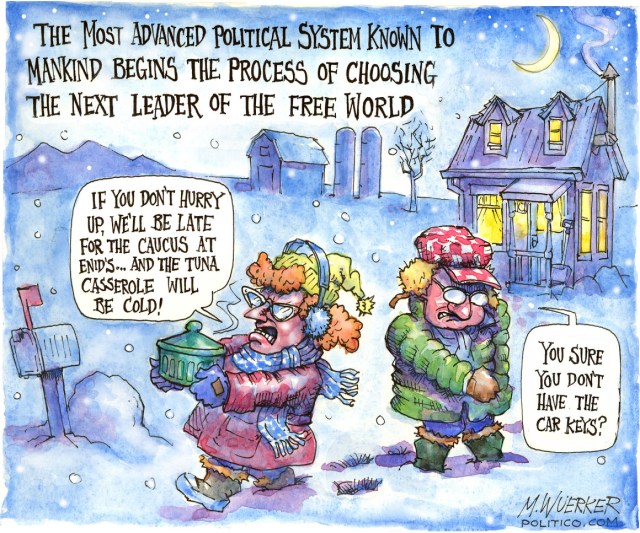
The armies of the media are gathering in the American heartland. With each new poll come shrieks of joy, or panic. When Monday night finally arrives, this first test of the candidates will be treated as an immeasurably consequential event, honored by column-miles of type and pixels, and uncountable hours of analysis—almost all of which will conceal the cold, hard reality: The Iowa caucuses have become a blight on American politics.

For 40 years, a state with an otherwise admirable civic life has been the scene of a quadrennial exercise that is the antithesis of a rational, accessible democratic process. By any measure—participation and representativeness, to mention two—it fails the most basic test of what you would want in an exercise that so dominates the attention and resources of campaigns and the media.

Iowa looks nothing like the rest of the nation, and its wintry, time-consuming caucuses make participation difficult, if not impossible, for much of the citizenry—especially those with limited economic means. The Democratic caucuses in particular take two of the core principles of a free system—the secret ballot and one-person-one-vote—and throw them away.

Indeed, if you look beyond the color and the pageantry, beyond the county fairs and butter cows, and appreciate the real workings and impact of the caucuses, you realize that Iowa is neither a useful bellwether or an important test for candidates. Moreover, there are baleful consequences of the inflated status of Iowa: It distorts the political process and leads to bad public policy.

Iowa survives and flourishes as a political ritual for the same reason that bad people remain in power and bad policies remain in place: those who benefit from it can make the cost of challenging it too high. If there is no hope of unseating the caucuses from their privileged perch, it’s at least worth understanding how we got here—and at what cost.

Iowa isn’t an immutable fact of American political life. It began its rise to outsize importance only a few decades ago, through mere happenstance. In 1968, opponents of the Vietnam War, looking to mount challenges to the policy and to President Lyndon Johnson, discovered in state after state that they were effectively shut out of the process of choosing delegates. Primaries were few, and in many states, delegates had been chosen months before, with little or no public notice. In the wake of the tumultuous, divisive Chicago Democratic National Convention, a commission was formed to propose ways of opening up the process. Many states chose the primary route; Iowa chose a different path.

For decades, Iowa parties had used a multistage caucus process to choose the state’s national convention delegates; part of a system that was also designed to let party members debate and discuss party platforms and other matters. After 1968, with national mandates requiring greater representation, Iowa Democrats changed their calendar to provide more time between each stage. Since the 1972 caucus was scheduled for May 20, that meant the first stage—precinct caucuses—had to be held four months earlier, on January 24. There was no intent to turn these caucuses into a major event on the presidential nominating calendar, but that’s what happened. Suddenly, Iowa was first. And one campaign was quick to see the possibilities.

In 1972, George McGovern, the long-shot antiwar candidate for president, was looking for a way to demonstrate that he had more support than the national polls suggested (3 percent according to a January 1972 Gallup poll). Rallying antiwar Democrats, McGovern managed to win a bit less than a quarter of Iowa’s “delegate equivalents” (a number designed to reflect a candidate’s strength at the next stage of the process, one that still sows confusion four decades later), finishing behind Ed Muskie and “Uncommitted.” Following McGovern’s eventual nomination victory, the potential power of the caucuses drew the attention of the next long-shot contender—and that’s where everything changed.

In the 1976 cycle, the cash-strapped, much-mocked campaign of Jimmy Carter targeted Iowa as the place to demonstrate early, surprising support—and it paid off when Carter won a straw poll at the Jefferson-Jackson Day dinner in Ames. The next day, R.W. “Johnny” Apple, the star political reporter of the New York Times, filed a story headlined “Carter Appears to Hold a Solid Lead in Iowa.” On caucus night, Carter won more “delegate equivalents” than any other candidate at the caucuses. Though he actually finished second, behind “Uncommitted,” he instantly turned from “Jimmy Who?” into the front-runner.

In the decades since, potential candidates have signaled their intentions by visiting Iowa at the pre-larval stage of the election calendar. Rep. Dick Gephardt, a 1988 contender, made his first visit on March 25, 1985—barely two months after Ronald Reagan’s second inaugural. This year’s current Iowa leader, Ted Cruz, made his first trip to Iowa more than two years ago, in August 2013, seven months after taking his seat as a freshman in the U.S. Senate. And unlike in the Carter-era experience, the media are now there to detect the first, faint signs of campaign activity.

For its part, while Iowa did not set out to make itself the 800-pound gorilla of presidential politics, it quickly embraced the benefits—financial, political and otherwise. This is fully understandable. What Iowan wouldn’t want the perks that come from being first? Local party officials are courted for months; local reporters are showcased in and on national media. Tens of millions of dollars pour into local radio and TV stations, hotels, restaurants, car rental offices and retail outlets, always happy to supply foul-weather gear to clueless operatives and media types who seek to navigate the elements in unlined trench coats and loafers. While the defensiveness can be grating, it’s no more so than a Kentuckian’s insistence that coal is a healthy fuel, or a New York hedge-fund big shot embracing the “carried interest” rule. It usually comes with a suggestion that critics of the caucus are contemptuous of smaller “fly-over states,” though they do not explain why the same smaller, fly-over state gets to be first every time.

Well, you might ask, what’s wrong with Iowa as the starting point of the process? It’s a state with a high literacy rate, an exceptionally high turnout rate in general elections, an un-gerrymandered congressional map, and a reputation for clean government. Its population of 3 million-plus and its location put it more or less in the middle of the country by size and site. Doesn’t it make sense to have a venue that doesn’t require millions of dollars’ worth of campaign contributions to be competitive?

To begin with, there’s the uncomfortable fact that Iowa is not really a representative state. The most obvious is demographic: It is 94 percent white, 2.8 percent black and 5.5 percent Hispanic, making it one of the five whitest states in the nation. It’s also the fourth oldest state in the union. This is one reason why a victory by Bernie Sanders in Iowa and then in New Hampshire—another very, very white state—may signal much less about the state of the Democratic Party race than first appears. As longtime Democratic operative Joe Trippi notes, “After Iowa and New Hampshire, the Democratic Primary race the rest of the way is an electorate that is 54 percent white and 46 percent minority.” Thus, a victory in Iowa (and New Hampshire) is about as unreflective a measure of Democratic sentiment as imaginable.

When it comes to the Republican side, Iowa is similarly out of phase. Some 57 percent of GOP caucus-goers consider themselves “evangelicals,” higher than any non-Southern or border state. That goes a long way toward explaining why the Rev. Pat Robertson finished ahead of the sitting vice president of the United States in 1988, why ordained minister Mike Huckabee beat Mitt Romney in 2008, and why Rick Santorum narrowly bested Romney four years ago—all candidates with scant national appeal.

Demographics, however, are the least of it. It’s the process and the timing of the caucuses—particularly the Democrats’ process—that demonstrates why this is so unsuited to the outsize role it has assumed. Together, those two factors combine in a toxic blend.

Adherents of the caucuses extol their open, freewheeling nature, where civic-minded Iowans join with each other in a celebration of democracy. But the central fact about the Iowa caucuses is that they inherently, inevitably, lead to very low turnout. Back in 2008, the last time both parties had contests, the coverage, particularly on the Democratic side, centered on Barack Obama’s ability to draw first-time participants, with much talk about the record-breaking number of participants.

And, after years of focus on Iowa, after a historic effort by the Obama campaign to draw new participants to the caucuses and a major push by evangelicals on the Republican side for Huckabee, what were the numbers? According to Thomas Patterson of the Kennedy School of Government, the combined two-party turnout amounted to just 16.3 percent of the eligible electorate. While the turnout of 350,000 was widely touted as a record-breaking showing, a Harvard Kennedy School study put that figure in context. “In percentage terms, Iowa’s turnout was hardly earthshaking—only 1 in 6 of the eligible adults participated. The Democratic winner, Barack Obama, received the votes of just 4 percent of Iowa’s eligible voters. Mike Huckabee, the Republican victor, attracted the support of a mere 2 percent of Iowa adults,” the study said. By contrast, take a look at the other massively covered early contest: The combined turnout in New Hampshire, the first primary state, was 51.9 percent.

This should surprise no one. In New Hampshire, as in any primary state, the polls are open from morning until night. You can vote on your way to work, on your lunch break, on your way to pick the kids up at school, on or way home from work; and the process will take about 10 minutes. In Iowa, you must attend in person, at night; a night that is usually freezing, if not blanketed in snow, with roads that would make the Michelin tire man quake. If you’re working the night shift—as a firefighter, waitress, nurse, maintenance worker—or if you’re a single parent of limited means, you are effectively shut out of the process. (There are no absentee ballots in a caucus). You must show up and sit through either a half hour of speeches, or—if you’re a Democrat—a process that takes hours. Why is the turnout so low, compared to a primary? Because the people of Iowa are not damned fools. They calculate the cost-benefit ratio, and the overwhelming majority of eligible participants stay home.

After all that attention, all the ads, all the visits, all the massive focus on Iowa, the actual participation rate is, or should be, an embarrassment to both parties. When it comes to the actual process of the caucuses, however, the two parties diverge sharply; and that divergence makes the Democratic Party look particularly bad.

The Republican Party from the outset recognized that the traditional purpose of the caucuses—attending to party matters—had become completely overshadowed by the presidential campaign. So it decided that the caucuses would begin with a straw poll; after listening to speeches on behalf of the candidates, attendees would scribble the name of their favorite on a piece of power, and the results would be phoned into state headquarters. It was sloppy—to this day, there are those who insist that Reagan in fact got more votes than George H.W. Bush in 1980—but it’s how we know that Huckabee outpolled Romney in 2008 by 40,481votes to Romney’s 29,949.

But the Democrats? Ah, nothing so simple, thank you. If you ask anyone, even the most esteemed Iowa expert, how many votes Obama got in 2008, that expert cannot tell you. Nobody can tell you, because the Iowa Democrats don’t count votes. Instead, they break out into candidate support groups. If the chair determines that a candidate does not have 15 percent of the caucus, that candidate is “not viable.” His or her supporters can either leave, or join another candidate’s group, whose backers importune the “non-viables” with offers of food, drink, a slot at the next convention or a bushel of corn. (A recent episode of “The Good Wife” had a colorful rendering of the process.) When the evening ends, the candidates are allotted “state delegate equivalents”—an estimation of how much strength they will have at later stages in the process. That’s why the only numbers you will find in the records of 2008 reveal that Obama got 37.58 percent of “state delegate equivalents,” John Edwards got 29.75 percent and Hillary Clinton got 29.47 percent. Did Clinton actually get fewer “votes” than Edwards, thus consigning her to third place with its attendant shame? No one knows.

Those who’ve studied this ritual are at pains to explain why the Democrats have chosen this bizarre method.

“The Democratic caucuses were never intended to be elections or straw polls,” says Hugh Winebrenner, a Drake University professor who aroused the ire of his fellow Iowans with a 1987 book that concluded that “the public interest is not well-served” by the caucuses. Winebrenner explains today: “Their purpose was to develop platform issues, select precinct officials, and select delegates to the county conventions. When the caucuses emerged as the first nominating event, the Democratic Party had to come up with ‘results,’ but they did not want to turn the event into a straw poll, so they came up with the ‘delegate equivalent’ as an outcome.” Put less kindly, Iowa Democrats lack the Republican Party’s candor in recognizing that the caucus process is not equal to the demands of presidential politics.

For anyone who persists in the Democratic caucuses seriously, three aspects of the process deserve particular scrutiny. First, it does not measure the actual level of support from living, breathing Democrats. If Martin O’Malley somehow managed to win the support of 14 percent of Iowa Democrats at every precinct caucus, he would still remain below the threshold and wind up with, literally, zero “state delegate equivalents.” Second, imagine a caucus that’s been allocated eight delegates. Under the rules, a candidate garnering 85 percent of that caucus’ participants would get all eight delegates. So if, say, 100 people show up and 86 of them back Clinton, she’d get all the delegates. But suppose she’s generating a wave of enthusiasm, and 500 people show up and most of them support her.

That’s a huge difference, but it wouldn’t change the results in the least: Unlike the GOP, there’s no individual head count. If you think this is merely hypothetical, take a look at last week’s POLITICO piece by Gabriel Debenedetti that lays out how Sanders’ huge support in college towns may do him less good than the numbers suggest, because their individual votes won’t be tabulated.

Third, it’s true many caucus-goers find the whole process of standing up for a candidate and beseeching others to join them “exciting and fun,” in the words of one academic study of the process. There are others, however, who might not want to let their political views be known to their boss, or their shop steward, or their overbearing brother-in-law, or the banker who holds their mortgage. Every genuinely free society in the world has solved this problem with a secret ballot. Today, it would be hard to find any political theorist who did not recognize the potentially chilling effect of requiring someone to publicly declare his or her political choice. If you’re an Iowa Democrat, though, you have no choice: Speak up or stay home.

OK, so the Democratic caucuses are a mathematically bizarre, anti-democratic exercise. But surely the Republican caucuses have some value?

Not so fast. For the Democrats, Iowa has had clear political consequences. John Kerry’s first-place finish in 2004 re-righted his campaign, and put him on a path to virtually unbroken primary success. (Howard Dean’s infamous “scream” happened late that night, after his collapse into third place and after he had begun cratering in New Hampshire.) In 2008, Obama’s victory shattered any notion of Clinton’s inevitability. As for the Republicans … here’s the truth that dare not speak its name: The Iowa caucuses have never had had any serious impact on the ultimate outcome.

In 1980, George H.W. Bush’s win over Reagan in Iowa was followed by a Reagan landslide in New Hampshire and then his nomination. In 1988, Bob Dole beat Bush in Iowa—before going down to defeat in New Hampshire and the subsequent nomination. In 2000, George W. Bush’s caucus win in Iowa was eclipsed by John McCain’s New Hampshire win; it took an ugly Bush victory in South Carolina to reset his campaign. And in the past two elections? Those were won by Huckabee and Rick Santorum, candidates whose victories served to demonstrate the outsize power of evangelicals in Iowa, and little more.

This year, however, may reverse the political polarities. Given Clinton’s strength in minority communities, a Sanders win in Iowa—and New Hampshire—may not produce much down the primary road, other than hysteria in some Democratic circles. As Trippi noted, her strength among minorities means that she could well become the second Democrat to lose both early contests and prevail—and the second Clinton as well. As for the Republicans, there may be an analogy to what happened in 2008 with Democrats. The most significant impact of Obama’s victory was that he showed that a black candidate could win in a virtually all-white state.

This year, the remaining skepticism about Donald Trump centers on his supporters: Will they show up? The fact that they will wait for hours in freezing weather to attend his rallies is not necessarily decisive; the question is whether they are also voters. If they turn out in Iowa, a state where logistics and the weather make participation a burden—and if they demonstrate that their intensity equals the evangelical fervor of Cruz’ supporters—that will very likely inspire Trump voters in the primary states, where participation is far less burdensome.

However February’s caucuses change the historical pattern,there is one thing that will not change: The Iowa caucuses will continue to remain the first, deeply flawed stop on the presidential campaign trail. The state could solve its quadrennial weather problem by moving the caucuses to, say, April. But then it wouldn’t be first. It could change to a primary. But then it wouldn’t be first. (Bill Gardner, who has been New Hampshire secretary of state since Daniel Webster was defending Dartmouth College, has in past cycles cheerfully announced he would move his primary to the preceding year to preserve its position.) And being first is worth tens of millions of dollars and the far more significant political benefit to Iowans of being courted for years by potential presidents. Back in 2007, Joe Biden—who did not fare well in Iowa—observed tartly: “This isn’t a caucus—it’s an industry.”

Iowa will retain its privileged position because neither major political party wants the headache of battling for a calendar change, and risking losing the state’s six competitive electoral votes. It will remain a process that persuades potential presidents to bend the knee to corn-based ethanol. (The New York Times suggests this may be changing, but Cruz, despite modifying his opposition by calling for a five-year phaseout, still faces the hostility from Gov. Terry Branstad, who wants him defeated solely on the ethanol issue. Hillary Clinton, who in 2002 called the subsidy “an astonishing new anti-consumer government mandate,” now cheerfully embraces it.) Most important, the Iowa caucuses will continue to be celebrated as a colorful, all-American exercise in democracy—an exercise that in fact is a lot closer to a political Potemkin village.

Read more: http://www.politico.com/magazine/story/2016/01/how-iowa-hijacked-our-democracy-213557#ixzz3z2MteXJL

New research links subgroups of schizophrenia to specific visualized brain anomalies

An international team of researchers has linked specific symptoms of schizophrenia with various anatomical characteristics in the brain, according to research published in NeuroImage.

By analyzing the brain’s anatomy with magnetic resonance imaging (MRI), researchers from the University of Granada, Washington University in St. Louis, and the University of South Florida have demonstrated the existence of distinctive subgroups among patients with schizophrenia who suffer from different symptoms.

These findings could herald a significant step forward in diagnosing and treating schizophrenia.

To perform the study, the researchers conducted the MRI technique “diffusion tensor imaging” on 36 healthy participants and 47 schizophrenic participants.

The researchers found that tests on schizophrenic participants revealed various abnormalities in parts of the corpus callosum, a bundle of neural fibers that connects the left and right cerebral hemispheres and is essential for effective interhemispheric communication.

Different anomalies in the corpus callosum were associated with different symptoms in the schizophrenic participants. An anomaly in one part of the brain structure was associated with strange and disorganized behavior; another anomaly was associated with disorganized thought and speech, as well as negative symptoms such as a lack of emotion; and other anomalies were associated with hallucinations.

In 2014, this same research group proved that schizophrenia is not a single illness. The team demonstrated the existence of 8 genetically distinct disorders, each with its own symptoms. Igor Zwir, PhD, and Javier Arnedo from the University of Granada’s Department of Computer Technology and Artificial Intelligence found that different sets of genes were strongly linked with different clinical symptoms.

“The current study provides further evidence that schizophrenia is a heterogeneous group of disorders, as opposed to a single illness, as was previously thought to be case,” Dr Zwir said in a statement.

While current treatments for schizophrenia tend to be generic regardless of the symptoms exhibited by each patient, the researchers believe that in the future, analyzing how specific gene networks are linked to various brain features and specific symptoms will help develop treatments that are adapted to each patient’s individual disorder.

To conduct the analysis of the gene groups and brain scans, the researchers developed a new, complex analysis of the relationships between different types of data and recommendations regarding new data. The system is similar to that used by companies such as Netflix to determine what movies they want to broadcast.

“To conduct the research, we did not begin by studying individuals who had certain schizophrenic symptoms in order to determine whether they had the corresponding brain anomalies,” said Dr Zwir in a statement. “Instead, we first analyzed the data, and that’s how we discovered these patterns. This type of information, combined with data on the genetics of schizophrenia, will someday be of vital importance in helping doctors treat the disorders in a more precise and effective way.”

Reference
Arnedo J, Mamah D, Baranger DA, et al. Decomposition of brain diffusion imaging data uncovers latent schizophrenias with distinct patterns of white matter anisotropy. NeuroImage. 2015; doi:10.1016/j.neuroimage.2015.06.083.

http://www.psychiatryadvisor.com/schizophrenia-and-psychoses/types-subgroups-schizophrenia-linked-various-different-brain-anomalies-corpus-callosum/article/470226/?DCMP=EMC-PA_Update_rd&cpn=psych_md&hmSubId=&hmEmail=5JIkN8Id_eWz7RlW__D9F5p_RUD7HzdI0&NID=&dl=0&spMailingID=13630678&spUserID=MTQ4MTYyNjcyNzk2S0&spJobID=720090900&spReportId=NzIwMDkwOTAwS0

Kenny Sailors, Credited with Inventing Basketball Jump Shot, Dies at Age 95

By Alec Nathan

Basketball pioneer Kenny Sailors, who has been credited with inventing the modern-day jump shot, died at 95 years old Saturday, the Wyoming Cowboys men’s basketball program announced.

“The University of Wyoming has lost one of its great heroes and ambassadors with the death of Kenny Sailors,” University of Wyoming President Dick McGinity said. “As the entire university community mourns his passing and celebrates his life, we offer our thoughts and prayers to his family.”

A standout at Wyoming, Sailors helped put the school’s basketball program on the map as he led the Cowboys to the 1942-43 NCAA championship while becoming the fifth-ever winner of the Final Four’s Most Outstanding Player Award, according to Basketball-Reference.com.

n a 2015 interview with CBS Sports’ Brad Botkin, Sailors explained that he was motivated to develop the jump shot because his older brother, Bud, was 6’5″ and repeatedly blocked his shots during their individual battles:

So one day, finally, I guess the good Lord just put it in my head that if I jumped up higher than [Bud], and if he didn’t time everything just right and jump up with me, he couldn’t block my shot. So that’s what I did. I ran right up to him and jumped straight out of the dribble, and I shot it one-handed, because I found that I could get more height that way.

Following his historic stretch at Wyoming, the National Collegiate Basketball Hall of Famer went on to play five seasons at the professional level with the Cleveland Rebels, Chicago Stags, Philadelphia Warriors, Providence Steam Rollers, Denver Nuggets, Boston Celtics and Baltimore Bullets.

As he bounced around from team to team from 1946 to 1951, Sailors averaged 12.6 points and 2.8 assists per game. Following the 1948-49 Basketball Association of America campaign, Sailors earned second-team All-BAA honors while posting 15.8 points per contest.

http://bleacherreport.com/articles/2612509-kenny-sailors-credited-with-inventing-jump-shot-dies-at-age-95?utm_source=cnn.com&utm_medium=referral&utm_campaign=editorial

30 years later, NASA engineer speaks about Challenger explosion

Thirty years ago, as the nation mourned the loss of seven astronauts on the space shuttle Challenger, Bob Ebeling was steeped in his own deep grief.

The night before the launch, Ebeling and four other engineers at NASA contractor Morton Thiokol had tried to stop the launch. Their managers and NASA overruled them.

That night, he told his wife, Darlene, “It’s going to blow up.”

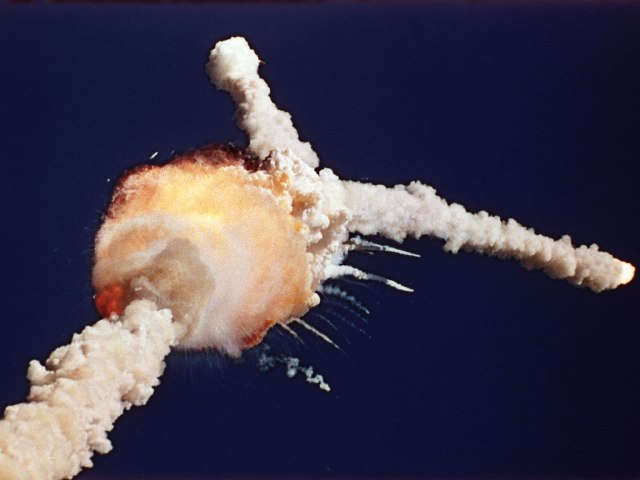
When Challenger exploded 73 seconds after liftoff, Ebeling and his colleagues sat stunned in a conference room at Thiokol’s headquarters outside Brigham City, Utah. They watched the spacecraft explode on a giant television screen and they knew exactly what had happened.

Three weeks later, Ebeling and another engineer separately and anonymously detailed to NPR the first account of that contentious pre-launch meeting. Both were despondent and in tears as they described hours of data review and arguments. The data showed that the rubber seals on the shuttle’s booster rockets wouldn’t seal properly in cold temperatures and this would be the coldest launch ever.

Ebeling, now 89, decided to let NPR identify him this time, on the 30th anniversary of the Challenger explosion.

“I was one of the few that was really close to the situation,” Ebeling recalls. “Had they listened to me and wait[ed] for a weather change, it might have been a completely different outcome.”

We spoke in the same house, kitchen and living room that we spoke in 30 years ago, when Ebeling didn’t want his name used or his voice recorded. He was afraid he would lose his job.

“I think the truth has to come out,” he says about the decision to speak privately then.

“NASA ruled the launch,” he explains. “They had their mind set on going up and proving to the world they were right and they knew what they were doing. But they didn’t.”

A presidential commission found flaws in the space agency’s decision-making process. But it’s still not clear why NASA was so anxious to launch without delay.

The space shuttle program had an ambitious launch schedule that year and NASA wanted to show it could launch regularly and reliably. President Ronald Reagan was also set to deliver the State of the Union address that evening and reportedly planned to tout the Challenger launch.

Whatever the reason, Ebeling says it didn’t justify the risk.

“There was more than enough [NASA officials and Thiokol managers] there to say, ‘Hey, let’s give it another day or two,’ ” Ebeling recalls. “But no one did.”

Ebeling retired soon after Challenger. He suffered deep depression and has never been able to lift the burden of guilt. In 1986, as he watched that haunting image again on a television screen, he said, “I could have done more. I should have done more.”

He says the same thing today, sitting in a big easy chair in the same living room, his eyes watery and his face grave. The data he and his fellow engineers presented, and their persistent and sometimes angry arguments, weren’t enough to sway Thiokol managers and NASA officials. Ebeling concludes he was inadequate. He didn’t argue the data well enough.

A religious man, this is something he has prayed about for the past 30 years.

“I think that was one of the mistakes that God made,” Ebeling says softly. “He shouldn’t have picked me for the job. But next time I talk to him, I’m gonna ask him, ‘Why me. You picked a loser.’ ”

I reminded him of something his late colleague and friend Roger Boisjoly once told me. Boisjoly was the other Thiokol engineer who spoke anonymously with NPR 30 years ago. He came to believe that he and Ebeling and their colleagues did all they could.

“We were talking to the right people,” Boisjoly told me. “We were talking to the people who had the power to stop that launch.”

“Maybe,” Ebeling says with a weak wave as I leave. “Maybe Roger’s right.”

http://www.npr.org/sections/thetwo-way/2016/01/28/464744781/30-years-after-disaster-challenger-engineer-still-blames-himself

Black German woman discovers her grandfather was Nazi Amon Goeth, featured in Schindler’s List

By Moni Basu

Jennifer Teege thought she knew the hard truths of her life: that her German mother left her in the care of nuns when she was 4 weeks old, and that her biological father was Nigerian, making her the only black child in her Munich neighborhood.

But the hardest truth came to her years later on a warm August day in Hamburg when she walked into the central library and picked up a red book with a black-and-white picture of a woman on the cover. It was titled “I Have to Love My Father, Don’t I?”

As Teege, then 38, flipped through the pages, she felt she’d been caught in a furious storm that had suddenly come from nowhere.

She had unearthed the ghastly family secret.

She looked at the names of people and places in the book and realized that the woman on the cover was her biological mother.

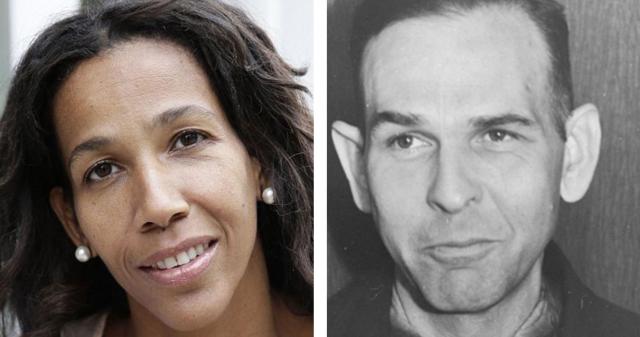
And the father in the title was none other than Amon Goeth, the sadistic Nazi who was commandant of the Plaszow concentration camp in Poland. Many came to know about Amon Goeth through Ralph Fiennes’ portrayal of him in the 1993 movie “Schindler’s List.”

Teege doesn’t know why she was drawn to the book. But on that day, Teege learned that she — a black German woman who’d gone to college in Israel and befriended the descendants of Holocaust survivors, who now had a successful career and a loving family — was the granddaughter of a monster.

It was a moment that cut her life in two. There was the “before,” when she knew nothing of her family’s sinister past, and “after,” when she was forced to live with that truth.

In the library, Teege grew cold knowing she was connected by blood to a man responsible for the deaths of 8,000 Jews. She checked out her mother’s book, lay down on a bench outside and called her husband to come fetch her.

Teege had battled depression all her life and had wondered what was behind her sadness. In fact, she’d gone to the library that day for psychological research.

“I always had this inner feeling that something was wrong,” she says, likening it to being inside a house with many locked doors. “I didn’t know what was behind them.”

She looked in the mirror at herself, saw Amon Goeth’s chin, the same lines between the nose and mouth, and thought: “Do I carry something of him in me?”

After the initial jolt eased, she embarked on a quest to know everything. Eventually, she wrote a book of her own: “My Grandfather Would Have Shot Me: A Black Woman Discovers her Family’s Nazi Past.”

She feels fairly certain that her grandfather would not have hesitated to kill her. She is, after all, far from the Aryan ideal espoused by Amon Goeth, who, according to Teege’s book, went to the gallows saying, “Heil Hitler.”

“It’s a story you can’t take to your grave. It’s exceptional,” Teege says on a recent January day at Atlanta’s Emory University, where she spoke about her identity and her journey to reconcile with it.

She has left her job in advertising and made her personal history her life’s work now. She speaks about how she progressed from her initial fear and guilt to acceptance of her history and knowledge that she is a very different person than her grandfather.

“Today, I am not afraid of him,” she says. “We are two very different people.”

And she talks about how, for a long time before her discovery, she didn’t believe in fate, only in chance. But now she thinks differently. She thinks about the choices she made that took her to Israel and led her to her mother’s book. She believes she made them for a reason.

Some things in life, she says, are predetermined.

Teege’s case was exceptional, thought Peter Bruendl, a Munich psychoanalyst who has treated her and other grandchildren of Nazis.

Teege first had to deal with being a mixed-race child given up for adoption and the feelings that can bring, of being unwanted and worthless, Bruendl says in Teege’s book. And then, when she thought she was settled in life, she suffered again with the discovery of her family history.

“Frau Teege’s experience is heartbreaking,” he says. “Even her conception was a provocation.”

Teege’s mother became pregnant after a brief affair with a Nigerian student. She was working six days a week and battling depression and took the baby to Salberg House, a Catholic home for infants in suburban Munich.

For the first few years of Teege’s life, her mother occasionally came to see her at Salberg House and sometimes took the child to visit her grandmother. A foster family took Teege in when she was 3 and adopted her four years later, insisting that her mother refrain from further contact.

Teege wouldn’t see her mother again until she was 21, after a younger half sister called and re-established contact. Born Monika Goeth, Teege’s mother had since taken her husband’s last name and is now known as Monika Hertwig.

Hertwig had never told her young daughter about their Nazi blood. Nor did she mention it at that meeting.

“She decided not to say anything,” Teege says. “She thought that if I didn’t know, it would be easier for me. I believe her.”

Teege found the book at the library 17 years later.

‘One minute like an entire day’: Remembering Auschwitz 02:56
Just hours after she took the book home on that day in 2008, German television aired a PBS documentary called “Inheritance” in which the filmmaker had taken Teege’s mother and Helen Jonas-Rosenzweig, a Jewish maid subjected to Amon Goeth’s cruelty, back to Plaszow.

Teege, however, did not see the film until later; even then, she could not finish it in one sitting. Beyond the shocking history, it was too much to bear to see intimate details about the mother who’d been absent in her life.

In retrospect, Teege thinks her mother should not have agreed to be filmed in such a vulnerable state. She looked so lost and lonely.

“My mother was fragile then. She wasn’t ready to be on screen,” Teege says.

The film documents awkward moments in which Hertwig is still repeating phrases she heard growing up, that Amon Goeth only shot Jews because they spread infectious diseases.

“Monika, please, stop. Stop right now,” Jonas-Rosenzweig tells her as the two are standing in Goeth’s villa at Plaszow.

At the time, Hertwig was still piecing together the story of her father’s horrors.

No one in post-war Germany spoke of what they knew of the Holocaust. Nobody wanted to talk about what happened to the Jews, Hertwig once said. “They were extinct like the dinosaurs.”

Hertwig’s mother — Ruth Irene Kalder, Goeth’s mistress at his villa in Plaszow — beat her when she asked too many questions. The older woman had always spoken of Goeth as a “war hero,” and Hertwig grew up surrounded by lies, thinking of her father as another victim of the Third Reich.

Hertwig finally learned from her grandmother that Goeth was far from a hero, that he tortured and killed people.

Ruth, who later in life took Goeth’s surname, never showed any remorse except once, according to Hertwig. Shortly before Ruth committed suicide in 1983, she said she should have done more to help people.

After finding Hertwig’s book, Teege knew she had to seek her mother out — not so much for a reckoning, she says, but because she had too many questions swirling in her head. She wanted details that only her birth mother could know.

By then, many months had passed and Teege had already gone to Poland, already seen the places where her mother had also returned to learn the truth. She found Hertwig’s address and went to see her, not knowing whether there would be acceptance or rejection. She had learned so much about her mother through her book, the documentary and online research. Yet she didn’t know her.

They visited Ruth’s grave together, and Hertwig talked about Amon Goeth as though he were at Plaszow only yesterday. Hertwig has said in interviews that speaking ill of her father feels like a betrayal of her mother.

She was living with the dead, Hertwig told her daughter.

Teege says she saw in her mother what she has seen in relatives of other Nazi perpetrators, especially their children. Many cannot bear to live with the sins of their fathers. Others have sterilized themselves, as though a Nazi gene could be passed on through birth.

Teege is thankful she is different than her mother, who Teege says still lives every day with the notion that she has to atone for Goeth’s deeds. Teege has seen this kind of suffering in the children of Holocaust victims as well.

“The second generation had a lot of trouble dealing with the Holocaust,” Teege says. “My generation, we are different. We know the difference between responsibility and guilt.”

Teege doesn’t believe in inherited guilt. Everyone, she says, has the right to his or her own life story.

Teege’s life story is punctuated with ironies and coincidences so great that they prompted her to rethink the concept of fate.

As a young woman, long before her discovery, she attended the Sorbonne in Paris for a year and, in a life drawing class, she met Noa, an Israeli woman. Teege later vacationed in Israel, and on one trip, after sleeping through her 4:30 a.m. alarm and missing her flight back to Germany, she ended up staying. She attended Tel Aviv University, earned a degree in Middle Eastern and African studies and learned to speak Hebrew.

“That I chose Israel … that I missed the flight and stayed — this makes my story more striking,” Teege says. “Destiny.”

Today, I am not afraid of him. We are two very different people.

She was in Israel when “Schindler’s List” opened, and everyone was talking about Steven Spielberg’s Holocaust movie. Teege watched it later on TV in her Tel Aviv flat. It was just a movie to her then, one that she thought had too much of a Hollywood ending.

The subtitle of her mother’s book was, “The Life Story of Monika Goeth, Daughter of the Concentration Camp Commandant in ‘Schindler’s List.’ ” That day in the Hamburg library, Teege’s mind churned to recall the movie. Suddenly, it became deeply personal.

Teege says she does not want to keep secrets from her friends and family. Two years went by before she could reveal her Nazi roots to her friends in Israel, descendants of Holocaust victims and survivors. She didn’t know if any of them were directly connected to Plaszow, and she was afraid how they might react.

But in her book, Teege describes her Jewish friends as being empathetic. “They cried with me.”

She also has spoken with her young sons.

“It was important to me not to keep it a secret,” she says. She doesn’t want them to go through the shock of discovery, which became almost as traumatic for Teege as the truth itself.

“But I have not let them watch ‘Schindler’s List,’ ” she says. “They should be older.”

People assume she has watched the movie many times. They are wrong. She doesn’t feel the need to watch it over and over. She knows her grandfather’s story.

A woman with two lives
It has been more than seven years since Teege learned she was the granddaughter of Amon Goeth. She thinks of her stranger-than-fiction life as a puzzle with many pieces but missing a frame. Her discovery at the Hamburg library helped her put it all together.

“My life is much better than what it used to be,” she says.

She is thankful she had an identity in her “before” years. That’s what she held onto in the “after” years.

Teege’s mother has not called her daughter again since their last meeting. In Teege’s book, Hertwig says she didn’t understand her daughter’s need for reconciliation and felt it was too late to start a relationship.

But Teege’s quest to know her true identity opened other doors. Growing up, she’d never felt a need to find her biological father. But once she had come to terms with her mother’s family, she sought out her father, too. They finally met, and the two remain in contact.

“It’s a nice addition — to know my black heritage,” she says. “And crucial. It’s part of my identity.”

At 45, Teege says she is now a woman with two lives. She is a mother and a teacher. That’s the part she calls normal. The other life is led as the granddaughter of Amon Goeth. She knows she has to keep the two separate.

Most of all, she has learned not to live constantly in the past.

http://www.cnn.com/2016/01/29/world/my-grandfather-would-have-shot-me/index.html

Here’s why you exercise so much and still can’t lose weight

By Carina Storrs

If you are intensifying your running regimen in hopes of losing weight, you might be running around in circles: There is a limit to how many calories we can burn through exercise, a new study suggests.

The grim message comes from a small study of a group of 332 adults living in the United States, Jamaica and Africa, some of them more sedentary and some more active. A team of researchers measured their activity level for seven days using an accelerometer, similar to the kind in the Fitbit and other wearable devices, and also measured the number of calories the participants burned over the week.

The researchers found that the participants who moved more also burned more calories, but only up to a point. The most active people hit a plateau and did not burn any more calories than their less-active peers.

Although the researchers did not look at the specific activities that participants were doing, the level on the accelerometer at which calorie burning peters out would be achieved “if you’re walking a couple miles a day, like to work and back, taking the stairs instead of the elevator and trying to exercise a couple times a week,” said Herman Pontzer, associate professor of anthropology at Hunter College, and lead author of the study, which was published on Thursday in the journal Current Biology.

The study is in step with a growing body of research suggesting that burning a bunch of calories is a less realistic weight loss strategy than we might have thought, or hoped. “We can’t push the calories out [value] around too much,” Pontzer said. “Our bodies work very hard to keep it the same.”

It might be time to shift that standard public health message: To lose weight, simply exercise more.

“We would say that ‘If you want to lose weight, you probably ought to focus on changing your diet and watching how much you eat.’ Exercise can help and it’s really important [for health in general], but they are two different tools,” Pontzer said.

The challenge of trying to lose weight just by exercising more is no secret to some clinicians. “This study actually explains a phenomenon that I see quite commonly,” said Dr. Holly F. Lofton, director of the Medical Weight Management Program at NYU Langone Medical Center.

“I see patients training for a marathon and they ask me, ‘Why am I not losing weight?’ ” even though they are exercising more and eating the same number of calories, Lofton said.

People who are increasing their exercise within a less ambitious range, such as going from being sedentary to walking or going from walking to jogging a few miles a day, will probably increase the number of calories they burn proportionally. But “over time, as you do higher levels of activity, you don’t increase your energy expenditure [or calories burned] in a linear way,” she said.

The phenomenon is also in play on the flipside, in terms of calories we take in. “We tend to think that if [patients] eat less than 800 calories, the body’s metabolism shuts down to a level that weight loss slows down quite a bit,” Lofton said.

There are tricks to ratchet up the calorie burn from your workout if you do fall into that higher level of activity.

“If you run all the time, try biking or swimming, and if you bike, try running or swimming, because using different muscles can increase your energy expenditure again,” Lofton said. “It may also be possible to decrease and then increase your activity again and get an increase [in calorie burning],” she said.

And if you think you can necessarily rely on your Fitbit or other device to tell you how many calories you burned, think again: We probably burn proportionally fewer calories as we exercise above a certain level of intensity.

“Activity monitors are going to be wrong at predicting energy expenditure because they aren’t incorporating this adaptation,” Pontzer said.

There’s a hint of good news from the current study. The plateau in how many calories participants burned was higher for those with more body fat. “Body fat is sort of a long-term signal to the body about how active you have to be and how much food is available, so your body might burn more calories,” Pontzer said.

Each of us probably maxes out at a slightly different calorie-burning plateau, Pontzer said. In addition to body fat, it could depend on metabolism, hormone levels, muscle mass and genetic differences.

Pontzer and his colleagues took a close look at the types of calories the participants in the study were burning. They found that the participants did actually continue to burn more and more so-called activity calories as they exercised more, but above a “breaking point,” Pontzer said, their bodies compensated by burning fewer resting calories, which are used for carrying out basic biological functions.

It is as if we have a set number of calories in the bank that our bodies let us burn. If we blow too much of that allowance doing physical activity, our bodies may keep us from spending too many calories doing things like ramping up our immune system or stockpiling reproductive resources.

This strategy may be pretty primitive. “We think this is a really common evolutionary adaptation that all animals use to keep from outstripping their resources and to keep from starving. Your body is listening to your environment and setting an energy expenditure level it can maintain,” Pontzer said.

Pontzer first started to suspect that a system of checks and balances might be in place to control calorie output when he was studying populations of hunter-gatherers in Tanzania.

“The women walk six miles a day, the men walk 10 miles; they are super, super active. It’s impressive when you’re out there with them, and yet their energy expenditures aren’t any different than folks who live much more cushy, sedentary lifestyles,” he said. Pontzer joined up with Amy Luke at Loyola University Chicago and her team, which carried out all the measurements for the current study, to get a better idea what was going.

If it is true that people and animals have evolved to divvy up our finite calorie balance between physical activity and everything else, “we hypothesize that maybe this is one of the things that makes exercise so healthy,” Pontzer said.

It may keep our bodies from spending too much energy on things such as immune function, which could in turn prevent inflammation from going haywire and leading to problems such as heart disease.

http://www.cnn.com/2016/01/28/health/weight-loss-exercise-plateau/index.html

Signs of Modern Astronomy Seen in Ancient Babylon

28TABLET-COMBO-master1050

By Kenneth Chang

Clay tablets, including one at the left, revealed that Babylonian astronomers employed a sort of precalculus to describe Jupiter’s motion across the night sky relative to distant background stars. They did this 15 centuries earlier than Europeans were first credited with making such measurements.

For people living in the ancient city of Babylon, Marduk was their patron god, and thus it is not a surprise that Babylonian astronomers took an interest in tracking the comings and goings of the planet Jupiter, which they regarded as a celestial manifestation of Marduk.

What is perhaps more surprising is the sophistication with which they tracked the planet, judging from inscriptions on a small clay tablet dating to between 350 B.C. and 50 B.C. The tablet, a couple of inches wide and a couple of inches tall, reveals that the Babylonian astronomers employed a sort of precalculus in describing Jupiter’s motion across the night sky relative to the distant background stars. Until now, credit for this kind of mathematical technique had gone to Europeans who lived some 15 centuries later.

Additional tablets, including this one, show that the Babylonians realized that the area under the curve of a graph of velocity against time represented distance traveled.

“It’s a figure that describes a graph of velocity against time,” he said. “That is a highly modern concept.”

Mathematical calculations on four other tablets show that the Babylonians realized that the area under the curve on such a graph represented the distance traveled.

“I think it’s quite a remarkable discovery,” said Alexander Jones, a professor at the Institute for the Study of the Ancient World at New York University, who was not involved with the research. “It’s really quite clear from the text.”

Ancient Babylon, situated in what is now Iraq, south of Baghdad, was a thriving metropolis, a center of trade and science. Early Babylonian mathematicians who lived between 1800 B.C. and 1600 B.C. had figured out, for example, how to calculate the area of a trapezoid, and even how to divide a trapezoid into two smaller trapezoids of equal area.

For the most part, Babylonians used their mathematical skills for mundane calculations, like figuring out the size of a plot of land. But on some tablets from the later Babylonian period, there appear to be some trapezoid calculations related to astronomical observations.

In the 1950s, an Austrian-American mathematician and science historian, Otto E. Neugebauer, described two of them. Dr. Ossendrijver, in his recent research, turned up two more.

But it was not clear what the Babylonian astronomers were calculating.

A year ago, a visitor showed Dr. Ossendrijver a stack of photographs of Babylonian tablets that are now held by the British Museum in London. He saw a tablet he had not seen before. This tablet, with impressions of cuneiform script pressed into clay, did not mention trapezoids, but it recorded the motion of Jupiter, and the numbers matched those on the tablets with the trapezoid calculations.

“I was certain now it was Jupiter,” Dr. Ossendrijver said.

When Jupiter first appears in the night sky, it moves at a certain velocity relative to the background stars. Because Jupiter and Earth both constantly move in their orbits, to observers on Earth, Jupiter appears to slow down, and 120 days after it becomes visible, it comes to a standstill and reverses course.

In September, Dr. Ossendrijver went to the British Museum, where the tablets were taken in the late 19th century after being excavated. A close-up look of the new tablet confirmed it: The Babylonians were calculating the distance Jupiter traveled in the sky from its appearance to its position 60 days later. Using the technique of splitting a trapezoid into two smaller ones of equal area, they then figured out how long it took Jupiter to travel half that distance.

Dr. Ossendrijver said he did not know the astronomical or astrological motivation for these calculations.

It was an abstract concept not known elsewhere at the time. “Ancient Greek astronomers and mathematicians didn’t make plots of something against time,” Dr. Ossendrijver said. He said that until now, such calculations were not known until the 14th century by scholars in England and France. These mathematicians of the Middle Ages perhaps had seen some as yet unknown texts dating to Babylonian times, or they developed the same techniques independently.

“It anticipates integral calculus,” Dr. Ossendrijver said. “This is utterly familiar to any modern physicist or mathematician.”

Thanks to Kebmodee for bringing this to the It’s Interesting community.