Psychedelic Therapy and Bad Trips


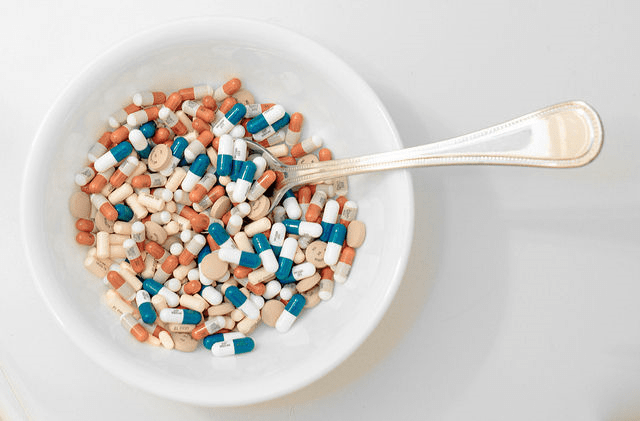
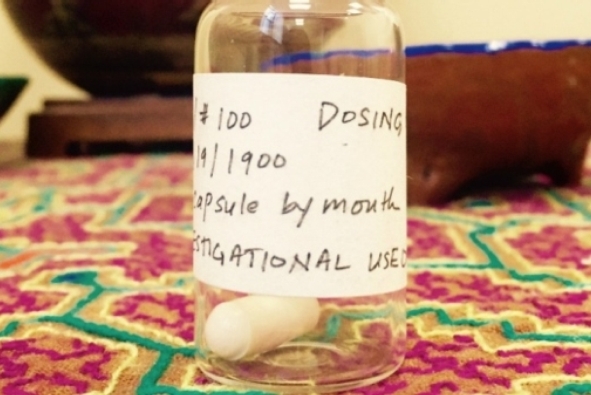
Synthetic psilocybin, a compound found in magic mushrooms, has been administered to cancer patients in a study at New York University. Researcher Anthony Bossis says many subjects report decreased depression and fear of death after their session. Although some patients do not report persistent positive feelings, none report persistent adverse effects. Photo: Bossis, NYU.

By John Horgan

Bossis, a psychologist at New York University, belongs to an intrepid cadre of scientists reviving research into psychedelics’ therapeutic potential. I say “reviving” because research on psychedelics thrived in the 1950s and 1960s before being crushed by a wave of anti-psychedelic hostility and legislation.

Psychedelics such as LSD, psilocybin and mescaline are still illegal in the U.S. But over the past two decades, researchers have gradually gained permission from federal and other authorities to carry out experiments with the drugs. Together with physicians Stephen Ross and Jeffrey Guss, Bossis has tested the potential of psilocybin—the primary active ingredient of “magic mushrooms”–to alleviate anxiety and depression in cancer patients.

Journalist Michael Pollan described the work of Bossis and others in The New Yorker last year. Pollan said researchers at NYU and Johns Hopkins had overseen 500 psilocybin sessions and observed “no serious adverse effects.” Many subjects underwent mystical experiences, which consist of “feelings of unity, sacredness, ineffability, peace and joy,” as well as the conviction that you have discovered “an objective truth about reality.”

Pollan’s report was so upbeat that I felt obliged to push back a bit, pointing out that not all psychedelic experiences—or mystical ones–are consoling. In The Varieties of Religious Experience, William James emphasized that some mystics have “melancholic” or “diabolical” visions, in which ultimate reality appears terrifyingly alien and uncaring.

Taking psychedelics in a supervised research setting doesn’t entirely eliminate the risk of a bad trip. That lesson emerged from a study in the early 1990s by psychiatrist Rick Strassman, who injected dimethyltryptamine, DMT, into human volunteers.

From 1990 to 1995, Strassman supervised more than 400 DMT sessions involving 60 subjects. Many reported dissolving blissfully into a radiant light or sensing the presence of a loving god. But 25 subjects had “adverse effects,” including terrifying hallucinations of “aliens” that took the shape of robots, insects or reptiles. (For more on Strassman’s study, see this link: https://www.rickstrassman.com/index.php?option=com_content&view=article&id=61&Itemid=60

Swiss chemist Albert Hofmann, who discovered LSD’s powers in 1943 and later synthesized psilocybin, sometimes expressed misgivings about psychedelics. When I interviewed him in 1999, he said psychedelics have enormous scientific, therapeutic and spiritual potential. He hoped someday people would take psychedelics in “meditation centers” to awaken their religious awe.

Yet in his 1980 memoir LSD: My Problem Child, Hofmann confessed that he occasionally regretted his role in popularizing psychedelics, which he feared represent “a forbidden transgression of limits.” He compared his discoveries to nuclear fission; just as fission threatens our fundamental physical integrity, so do psychedelics “attack the spiritual center of the personality, the self.”

I had these concerns in mind when I attended a recent talk by Bossis near New York University. A large, bearded man who exudes warmth and enthusiasm, Bossis couldn’t reveal details of the cancer-patient study, a paper on which is under review, but he made it clear that the results were positive.

Many subjects reported decreased depression and fear of death and “improved well-being” after their session. Some called the experience among the best of their lives, with spiritual implications. An atheist woman described feeling “bathed in God’s love.”

Bossis said psychedelic therapy could transform the way people die, making the experience much more meaningful. He quoted philosopher Victor Frankl, who said, “Man is not destroyed by suffering. He is destroyed by suffering without meaning.”

During the Q&A, I asked Bossis about bad trips. Wouldn’t it be awful, I suggested, if a dying patient’s last significant experience was negative? Bossis said he and his co-researchers were acutely aware of that risk. They minimized adverse reactions by managing the set (i.e., mindset, or expectations, of the subject) and setting (context of the session).

First, they screen patients for mental illness, eliminating those with, say, a family history of schizophrenia. Second, the researchers prepare patients for sessions, telling them to expect and explore rather than suppressing negative emotions, such as fear or grief. Third, the sessions take place in a safe, comfortable room, which patients can decorate with personal items, such as photographs or works of art. A researcher is present during sessions but avoids verbal interactions that might distract the patient from her inner journey. Patients and researchers generally talk about sessions the following day.

These methods seem to work. Some patients, to be sure, became frightened or melancholy. One dwelled on the horrors of the Holocaust, which had killed many members of his family, but he found the experience meaningful. Some patients did not emerge from their sessions with persistent positive feelings, Bossis said, but none reported persistent adverse effects.

Bossis has begun a new study that involves giving psilocybin to religious leaders, such as priests and rabbis. His hope is that these subjects will gain a deeper understanding of the mystical roots of their faiths.

http://blogs.scientificamerican.com/cross-check/psychedelic-therapy-and-bad-trips/
Google invents cyborg lenses for our eyes

by David Goldman

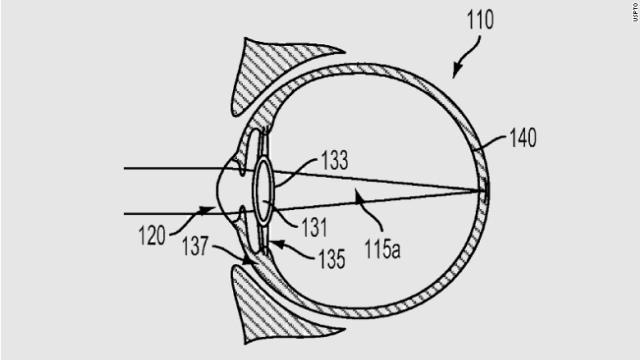
Google has patented a new technology that would let the company inject a computerized lens directly into your eyeball.

The company has been developing smart glasses and even smart contact lenses for years. But Google’s newest patented technology would go even further — and deeper.

In its patent application, which the U.S. Patent and Trademark Office approved last week, Google says it could remove the lens of your eye, inject fluid into your empty lens capsule and then place an electronic lens in the fluid.

Once equipped with your cyborg lenses, you would never need glasses or contacts again. In fact, you might not even need a telescope or a microscope again. And who needs a camera when your eyes can capture photos and videos?

The artificial, computerized lenses could automatically adjust to help you see objects at a distance or very close by. The lenses could be powered by the movement of your eyeball, and they could even connect to a nearby wireless device.

Google says that its patented lenses could be used to cure presbyopia, an age-related condition in which people’s eyes stiffen and their ability to focus is diminished or lost. It could also correct common eye problems, such as myopia, hyperopia, astigmatism.

Today, we cure blurry vision with eyeglasses or contact lenses. But sometimes vision is not correctable.

And there are clear advantages to being a cyborg with mechanical eyes.

Yet Google (GOOGL, Tech30) noted that privacy could become a concern. If your computerized eyes are transmitting data all the time, that signal could allow law enforcement or hackers to identify you or track your movements. Google said that it could make the mechanical lenses strip out personally identifying information so that your information stays secure.

Before you sign up for cyborg eyes, it’s important to note that Google and many other tech companies patent technologies all the time. Many of those patented items don’t end up getting made into actual products. So it’s unclear if Google will ever be implanting computers into your eyes — soon or ever.

http://money.cnn.com/2016/05/04/technology/google-lenses/index.html

New Blood Test for TB Could Save Millions of Lives

As much as one third of the global population is currently infected with the bacterium that causes tuberculosis (TB), a disease typically concentrated in the lungs and characterized by weakness, fever, coughing and chest pain. About 9.6 million new infections occurred in 2014, the most recent year for which numbers are available. Roughly 1.5 million people died of TB that same year. The ability to easily, inexpensively and accurately diagnose TB is of utmost importance, but the most commonly used method fails, at least to some extent, on all three counts. A new blood-based technique might considerably rein in this epidemic.

The conventional TB test scans for bacterial DNA in coughed-up mucus, or sputum. But some children struggle to produce a sample on request. The test also can miss TB in people simultaneously infected with HIV because the telltale bacteria may exist in numbers too low to detect or outside the lungs. In addition, the test costs up to $10, a prohibitive fee in many developing countries. As a result of these constraints, a large percentage of TB cases are diagnosed late or not at all, leaving serious infections untreated and more liable to spread.

Two years ago the World Health Organization put out a call for an improved TB diagnostic. In response, Purvesh Khatri, a Stanford University medical professor, and his colleagues combed through the human genome and found three genes that distinguish active TB from other diseases. The team then developed a way to detect these genes in blood.

According to their study, published in the Lancet Respiratory Medicine, the test is equally sensitive among patients with and without HIV coinfection and correctly detected TB in 86 percent of pediatric cases. Additional points in favor of a blood assay include that it can be performed at a clinic and yield same-day results, unlike the case for a sputum test. That is especially advantageous in the developing world, where showing up for even a single appointment presents a tremendous burden. “You want to be able to initiate treatment immediately,” says Sheela Shenoi, a Yale University professor of medicine focused on AIDS.

The technology has not been used in the diagnosis of new patients and may be difficult to scale up, but in the meantime, Khatri has filed a patent for the test. He thinks it could cost less than half as much as the current one. “If this three-gene signature could be developed into a point-of-care test,” Shinoi says, “it would revolutionize TB diagnostics.”

http://www.scientificamerican.com/article/a-new-blood-test-for-tb-could-save-millions-of-lives/

Princeton University professor posts CV of his failures

BY DIANA BRUK

When we compare ourselves to successful people, it’s easy to assume that they’ve got some sort of success gene that the rest of us don’t have. But the truth is that people who are “successful,” have failed at just as many things as the rest of us–they just know how to get up, brush themselves off, and try again…and again…annnnd again.

To prove this point in a powerful way, Johannes Haushofer, an assistant professor of psychology and public affairs at Princeton University, shared a resume that lists his failures rather than his achievements.

To be clear, Professor Haushofer has a lot of achievements, including getting a B.A. from Oxford and a PhD from Harvard, winning a wide variety of coveted fellowships, getting papers published, and acquiring teaching positions at MIT, Harvard, and Princeton. But he’s also experienced a whole lot of failure and rejection, as this CV shows.

“Most of what I try fails, but these failures are often invisible, while the successes are visible,” he wrote. “I have noticed that this sometimes gives others the impression that most things work out for me. As a result, they are more likely to attribute their own failures to themselves, rather than the fact that the world is stochastic, applications are crapshoots, and selection committees and referees have bad days.”

As Haushofer points out, he’s not the first person to do this, nor is it his original idea. He was inspired by a 2010 article written by Melanie Stefan, a lecturer at the University of Edinburgh. Now that his CV has gone viral, however, it’s inspired other people all over the world to share their own resumes of failure, to remind people that rejection is all just a normal part of the process.

JOHANNES HAUSHOFER
CV OF FAILURES

Most of what I try fails, but these failures are often invisible, while the successes are visible. I have noticed that this sometimes gives others the impression that most things work out for me. As a result, they are more likely to attribute their own failures to themselves, rather than the fact that the world is stochastic, applications are crapshoots, and selection committees and referees have bad days. This CV of Failures is an attempt to balance the record and provide some perspective.

This idea is not mine, but due to a wonderful article in Nature by Melanie I. Stefan, who is a Lecturer in the School of Biomedical Sciences at the University of Edinburgh. You can find her original article here, her website here, her publications here, and follow her on Twitter under @MelanieIStefan.
I am also not the first academic to post their CV of failures. Earlier examples are here, here, here, and here.

This CV is unlikely to be complete – it was written from memory and probably omits a lot of stuff. So
if it’s shorter than yours, it’s likely because you have better memory, or because you’re better at trying things than me.

Degree programs I did not get into
2008 PhD Program in Economics, Stockholm School of Economics
2003 Graduate Course in Medicine, Cambridge University
Graduate Course in Medicine, UCL
PhD Program in Psychology, Harvard University
PhD Program in Neuroscience and Psychology, Stanford University
1999 BA in International Relations, London School of Economics
Academic positions and fellowships I did not get
2014 Harvard Kennedy School Assistant Professorship
UC Berkeley Agricultural and Resource Economics Assistant Professorship
MIT Brain & Cognitive Sciences Assistant Professorship

This list is restricted to institutions where I had campus visits; the list of places where I had
first-round interviews but wasn’t invited for a campus visit, and where I wasn’t invited to
interview in the first place, is much longer and I will write it up when I get a chance. The list
also shrouds the fact that I didn’t apply to most of the top economics departments (Harvard,
MIT, Yale, Stanford, Princeton, Chicago, Berkeley, LSE) because one of my advisors felt they
could not write a strong letter for them.

Awards and scholarships I did not get
2011 Swiss Network for International Studies PhD Award
2010 Society of Fellows, Harvard University
Society in Science Scholarship
University of Zurich Research Scholarship
2009 Human Frontiers Fellowship
2007 Mind-Brain-Behavior Award (Harvard University)
2006 Mind-Brain-Behavior Award (Harvard University)
2003 Fulbright Scholarship
Haniel Scholarship (German National Merit Foundation)

Paper rejections from academic journals
2016 QJE, Experimental Economics
2015 AER x 2
2013 PNAS, Experimental Economics, Science, Neuron
2009 AER
2008 Science, Neuron, Nature Neuroscience, Journal of Neuroscience, Journal of Vision

Research funding I did not get
2016 MQ Mental Health Research Grant
2015 Russell Sage Research Grant (two separate ones)
2013 National Science Foundation Research Grant
2010 University of Zurich Research Grant
Swiss National Science Foundation Research Grant
2009 Financial Innovation Grant
International Labor Organization Research Grant
3ie Research Grant

Meta-Failures
2016 This darn CV of Failures has received way more attention than my entire body of academic
work.

http://www.seventeen.com/life/news/a40055/princeton-professor-resume-of-failures/

Montana trying to dispose of Cold War commode kits

A Montana county plans to dispose of more than three dozen Cold War-era sanitation kits meant to provide makeshift bathroom facilities for fallout shelters.

Forty-two fiberboard drums labeled “SK IV Sanitation Kit” were shipped to Gallatin County in January 1964, the Bozeman Daily Chronicle (http://bit.ly/24mUN5C) reported.

The kits contain a toilet seat, commode liner, 10 rolls of toilet paper that people were cautioned to “USE SPARINGLY,” along with commode chemical. The seat fits on top of the lined drum.

The kits are a reminder of “the subtle but real fear of a nuclear World War III,” said Shane Hope, an archaeologist in the county’s Historic Preservation Board.

After county officials determined they didn’t need the kits any more, they found out the Department of Defense didn’t want them back. The Federal Emergency Management Agency had no use for them, either.

The county has offered some of the kits to museums. The rest may be sold at auction. A value and date haven’t been set.

The kits include instructions for setting up and using the commodes. When the waste reaches “the level of the sanitary fill line on the drum,” users are instructed to put on the included rubber gloves, use the included wire tie to close up the liner and put the lid back on the drum.

“DO NOT REMOVE THE FILLED BAGS FROM THE DRUM,” the instructions caution. And if you need to move the drum, it is preferable to slide it across the floor instead of tilting or lifting.

The drums, which were furnished by the Office of Civil Defense, also included drinking cups and a can opener to open metal cans of food or to pry lids from water-storage drums.

http://bigstory.ap.org/urn:publicid:ap.org:1f20206d04394eb3afca7dd493e07276

This couple quit their jobs and traveled 22,000 miles in a tiny house

by Melia Robinson

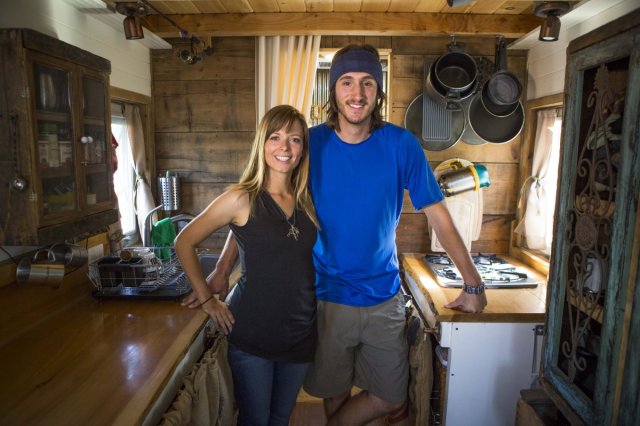
Three years ago, Guillaume Dutilh and Jenna Spesard realized they didn’t want to spend another day chasing careers they didn’t love.

The adventure junkies’ passion for travel journalism led them to quit their jobs and pursue life on the open road. They ditched their homes in Los Angeles and built a tiny house on wheels that now serves as their permanent abode.

A year into their journey, the couple — along with their dog, Salies — has racked up 22,000 miles and visited 34 states and five Canadian provinces. They document their experience on their blog, Tiny House Giant Journey (http://tinyhousegiantjourney.com/), and on their YouTube channel (https://www.youtube.com/user/tinyhousegj).

Dutilh and Spesard shared some memories from their micro-living journey with us.

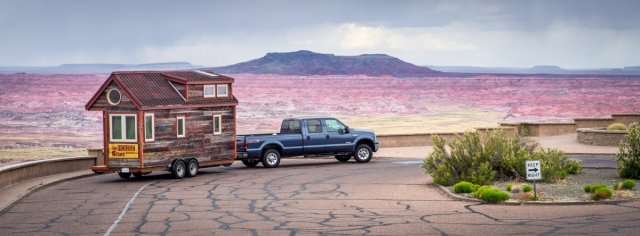
For the last year, Guillaume Dutilh and Jenna Spesard have lived in a mobile tiny house of their own making.

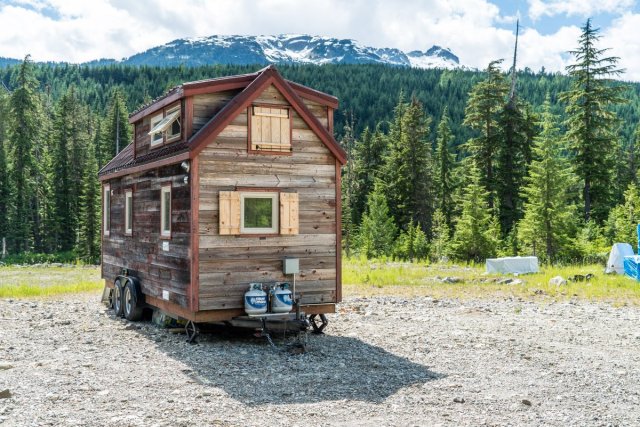
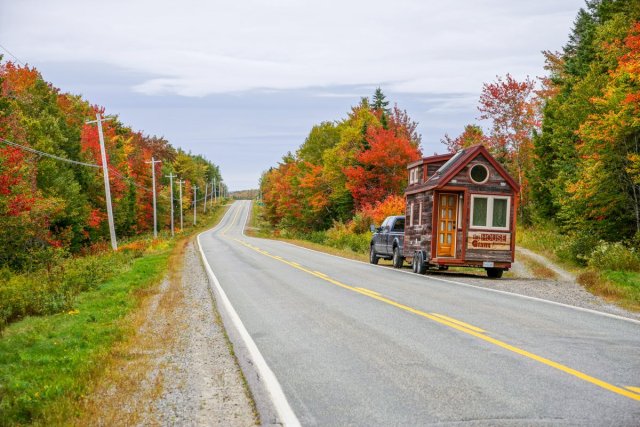
They towed their 125-square-foot home from Florida to Alaska and through eastern Canada, documenting the journey on their blog.


Petrified Forest National Park, Arizona.

Three years ago, Dutilh was an engineer for a motorcycle manufacturer, and Spesard was an executive assistant for a movie studio. They didn’t like their jobs, but the work paid the rent.

They decided they didn’t want to waste more time pursuing anything other than travel journalism. Dutilh stumbled upon the tiny house concept.

“The idea of exploring North America while creating a travel-writing and photography portfolio seemed feasible, and with a tiny house we could do it in a way that hadn’t been done before,” Dutilh says. “We had a little bit of savings and sold almost everything we owned to get the project started.”

Peggys Cove, St. Margarets Bay, Nova Scotia.

The tiny house concept attracted the couple for numerous reasons. “Besides the fact that they are adorable,” the couple says, tiny houses allow homeowners to reduce their carbon footprint and get a higher quality of life without breaking the bank.

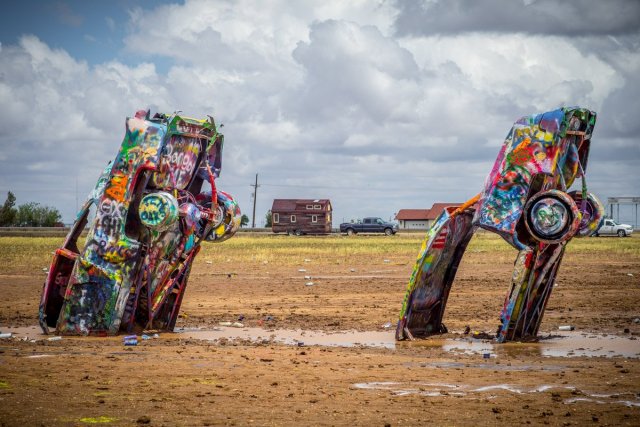
Cadillac Ranch, Amarillo, Texas.

Dutilh attended a tiny house workshop in Seattle, Washington, purchased a set of building plans and a trailer bed, and started hammering.

The couple invested over 1,000 work hours, including research, trips to the hardware store, and cleanup, in building their dream home. Exactly one year after they began construction, they hit the road.

Canadian wilderness.

In the last year, they have dipped their toes in the warm waters by the Florida Keys.

Florida Keys, Florida.

And they have sailed 180 nautical miles on a ferry from Nova Scotia to Maine.

Cape Breton Island, Nova Scotia.

The couple even braved the chaotic streets of New York City — an experience they call “tougher and bouncier than off-roading in California’s Mojave Desert.”

Central Park, New York, New York.

“There were taxis cutting us off, cyclists flying by, and pedestrians jumping in front of our truck,” Dutilh says. “It was as if New Yorkers, when they peeled their eyes off of their phones, were completely unfazed by the sight of our house on wheels in the middle of the skyscrapers.”


New York, New York.

The couple documents their journey with diary-like entries and photos on their blog and YouTube channel, which has garnered almost nine million views.

New Brunswick, New Jersey.

“Tiny friends” (people who live in tiny houses) and the couple’s fans offer their driveways to keep lodging expenses down.

Along the way, Dutilh and Spesard have found ways to make their tiny house feel like home. They customized the build to fit their lifestyle.

Snowboards hang in the mezzanine. The house is insulated to survive harsh winters, but the duo doesn’t want to deal with towing in snow.

They extended the loft area so there is space for their dog, Salies, who often appears on the blog, to sleep by their bed.

Their favorite feature in the home is the tree stump repurposed as window trim. Wood slats cut from an alligator juniper tree fan out like a sunburst.

Dutilh estimates they spend $800 a month on gas, but utilities cost barely anything.

Dalton Highway, Alaska.

They write and take pictures for tiny house websites, host workshops, and generate some income from their YouTube channel.

When they started their journey, Dutilh and Spesard agreed to one year on the road before evaluating their financial situation.

They’re already planning their summer road trip. “If we enjoy the lifestyle on the road and aren’t losing money, then why not explore a little longer?” Dutilh says.

Painted Desert, Arizona.

http://www.techinsider.io/tiny-house-great-journey-2016-4

Lightning storms make it rain diamonds on Saturn and Jupiter

saturn

t sounds like a wacky fantasy, but scientists believe that it rains diamonds in the clouds of Saturn and Jupiter.

Diamonds are made from highly compressed and heated carbon. Theoretically, if you took a charcoal bricket out of your grill and heated it and pressed it hard enough for long enough, you could make a diamond.

On Earth, diamonds form about 100 miles underground. Volcanic magma highways then bring them closer to the surface, providing us with shiny gemstones that we stick in rings and ear studs.

But in the dense atmospheres of planets like Jupiter and Saturn, whose massive size generates enormous amounts of gravity, crazy amounts of pressure and heat can squeeze carbon in mid-air — and make it rain diamonds.

Scientists have speculated for years that diamonds are abundant in the cores of the smaller, cooler gas giants, Neptune and Uranus. They believed that the larger gaseous planets, Jupiter and Saturn, didn’t have suitable atmospheres to forge diamonds.

But when researchers recently analyzed the pressures and temperatures for Jupiter’s and Saturn’s atmospheres, then modeled how carbon would behave, they determined that diamond rain is very likely.

Diamonds seem especially likely to form in huge, storm-ravaged regions of Saturn, and in enormous quantities — Kevin Baines, a researcher at University of Madison-Wisconsin and NASA JPL, told BBC News it may rain as much as 2.2 million pounds of diamonds there every year.

The diamonds start out as methane gas. Powerful lightning storms on the two huge gas giants then zap it into carbon soot.

“As the soot falls, the pressure on it increases,” Baines told the BBC. “And after about 1,000 miles it turns to graphite – the sheet-like form of carbon you find in pencils.”

And the graphite keeps falling. When it reaches the deep atmosphere of Saturn, for example — around 3,700 miles down — the immense pressure squeezes the carbon into diamonds, which float in seas of liquid methane and hydrogen.

Eventually the gems sink toward the interior of the planet (a depth of 18,600 miles), where nightmarish pressure and heat melts the diamonds into molten carbon.

“Once you get down to those extreme depths,” Baines told the BBC, “the pressure and temperature is so hellish, there’s no way the diamonds could remain solid.”

http://www.techinsider.io/diamond-rain-saturn-jupiter-2016-4

New study may explain gene’s role in major psychiatric disorders

A new study shows the death of newborn brain cells may be linked to a genetic risk factor for five major psychiatric diseases, and at the same time shows a compound currently being developed for use in humans may have therapeutic value for these diseases by preventing the cells from dying.

In 2013, the largest genetic study of psychiatric illness to date implicated mutations in the gene called CACNA1C as a risk factor in five major forms of neuropsychiatric disease — schizophrenia, major depression, bipolar disorder, autism, and attention deficit hyperactivity disorder (ADHD). All the conditions also share the common clinical feature of high anxiety. By recognizing an overlap between several lines of research, scientists at the University of Iowa and Weill Cornell Medicine of Cornell University have now discovered a new and unexpected role for CACNA1C that may explain its association with these neuropsychiatric diseases and provide a new therapeutic target.

The new study, recently published in eNeuro, shows that loss of the CACNA1C gene from the forebrain of mice results in decreased survival of newborn neurons in the hippocampus, one of only two regions in the adult brain where new neurons are continually produced – a process known as neurogenesis. Death of these hippocampal neurons has been linked to a number of psychiatric conditions, including schizophrenia, depression, and anxiety.

“We have identified a new function for one of the most important genes in psychiatric illness,” says Andrew Pieper, MD, PhD, co-senior author of the study, professor of psychiatry at the UI Carver College of Medicine and a member of the Pappajohn Biomedical Institute at the UI. “It mediates survival of newborn neurons in the hippocampus, part of the brain that is important in learning and memory, mood and anxiety.”

Moreover, the scientists were able to restore normal neurogenesis in mice lacking the CACNA1C gene using a neuroprotective compound called P7C3-A20, which Pieper’s group discovered and which is currently under development as a potential therapy for neurodegenerative diseases. The finding suggests that the P7C3 compounds may also be of interest as potential therapies for these neuropsychiatric conditions, which affect millions of people worldwide and which often are difficult to treat.

Pieper’s co-lead author, Anjali Rajadhyaksha, associate professor of neuroscience in Pediatrics and the Feil Family Brain and Mind Research Institute at Weill Cornell Medicine and director of the Weill Cornell Autism Research Program, studies the role of the Cav1.2 calcium channel encoded by the CACNA1C gene in reward pathways affected in various neuropsychiatric disorders.

“Genetic risk factors that can disrupt the development and function of brain circuits are believed to contribute to multiple neuropsychiatric disorders. Adult newborn neurons may serve a role in fine-tuning rewarding and environmental experiences, including social cognition, which are disrupted in disorders such as schizophrenia and autism spectrum disorders,” Rajadhyaksha says. “The findings of this study provide a direct link between the CACNA1C risk gene and a key cellular deficit, providing a clue into the potential neurobiological basis of CACNA1C-linked disease symptoms.”

Several years ago, Rajadhyaksha and Pieper created genetically altered mice that are missing the CACNA1C gene in the forebrain. The team discovered that the animals have very high anxiety.

“That was an exciting finding, because all of the neuropsychiatric diseases in which this gene is implicated are associated with symptoms of anxiety,” says Pieper who also holds appointments in the UI Departments of Neurology, Radiation Oncology, Molecular Physiology and Biophysics, the Holden Comprehensive Cancer Center, and the Iowa City VA Health Care System.

By studying neurogenesis in the mice, the research team has now shown that loss of the CACNA1C gene from the forebrain decreases the survival of newborn neurons in the hippocampus – only about half as many hippocampal neurons survive in mice without the gene compared to normal mice. Loss of CACNA1C also reduces production of BDNF, an important brain growth factor that supports neurogenesis.

The findings suggest that loss of the CACNA1C gene disrupts neurogenesis in the hippocampus by lowering the production of BDNF.

Pieper had previously shown that the “P7C3-class” of neuroprotective compounds bolsters neurogenesis in the hippocampus by protecting newborn neurons from cell death. When the team gave the P7C3-A20 compound to mice lacking the CACNA1C gene, neurogenesis was restored back to normal levels. Notably, the cells were protected despite the fact that BDNF levels remained abnormally low, demonstrating that P7C3-A20 bypasses the BDNF deficit and independently rescues hippocampal neurogenesis.

Pieper indicated the next step would be to determine if the P7C3-A20 compound could also ameliorate the anxiety symptoms in the mice. If that proves to be true, it would strengthen the idea that drugs based on this compound might be helpful in treating patients with major forms of psychiatric disease.

“CACNA1C is probably the most important genetic finding in psychiatry. It probably influences a number of psychiatric disorders, most convincingly, bipolar disorder and schizophrenia,” says Jimmy Potash, MD, professor and DEO of psychiatry at the UI who was not involved in the study. “Understanding how these genetic effects are manifested in the brain is among the most exciting challenges in psychiatric neuroscience right now.”

http://www.news-medical.net/news/20160427/Study-reveals-new-function-for-CACNA1C-gene-in-psychiatric-diseases.aspx

The driverless truck is coming, and it’s going to automate millions of jobs.

A convoy of self-driving trucks recently drove across Europe and arrived at the Port of Rotterdam. No technology will automate away more jobs — or drive more economic efficiency — than the driverless truck.

Shipping a full truckload from L.A. to New York costs around $4,500 today, with labor representing 75 percent of that cost. But those labor savings aren’t the only gains to be had from the adoption of driverless trucks.

Where drivers are restricted by law from driving more than 11 hours per day without taking an 8-hour break, a driverless truck can drive nearly 24 hours per day. That means the technology would effectively double the output of the U.S. transportation network at 25 percent of the cost.

And the savings become even more significant when you account for fuel efficiency gains. The optimal cruising speed from a fuel efficiency standpoint is around 45 miles per hour, whereas truckers who are paid by the mile drive much faster. Further fuel efficiencies will be had as the self-driving fleets adopt platooning technologies, like those from Peloton Technology, allowing trucks to draft behind one another in highway trains.

Trucking represents a considerable portion of the cost of all the goods we buy, so consumers everywhere will experience this change as lower prices and higher standards of living.

While the efficiency gains are too real to pass up, the technology will have tremendous adverse effects as well.
In addition, once the technology is mature enough to be rolled out commercially, we will also enjoy considerable safety benefits. This year alone more people will be killed in traffic accidents involving trucks than in all domestic airline crashes in the last 45 years combined. At the same time, more truck drivers were killed on the job, 835, than workers in any other occupation in the U.S.

Even putting aside the direct safety risks, truck driving is a grueling job that young people don’t really want to do. The average age of a commercial driver is 55 (and rising every year), with projected driver shortages that will create yet more incentive to adopt driverless technology in the years to come.

While the efficiency gains are real — too real to pass up — the technology will have tremendous adverse effects as well. There are currently more than 1.6 million Americans working as truck drivers, making it the most common job in 29 states.

The loss of jobs representing 1 percent of the U.S. workforce will be a devastating blow to the economy. And the adverse consequences won’t end there. Gas stations, highway diners, rest stops, motels and other businesses catering to drivers will struggle to survive without them.

The demonstration in Europe shows that driverless trucking is right around the corner. The primary remaining barriers are regulatory. We still need to create on- and off-ramps so human drivers can bring trucks to the freeways where highway autopilot can take over. We may also need dedicated lanes as slow-moving driverless trucks could be a hazard for drivers. These are big projects that can only be done with the active support of government. However, regulators will be understandably reluctant to allow technology with the potential to eliminate so many jobs.

Yet the benefits from adopting it will be so huge that we can’t simply outlaw it. A 400 percent price-performance improvement in ground transportation networks will represent an incredible boost to human well-being. Where would we be if we had banned mechanized agriculture on the grounds that most Americans worked in farming when tractors and harvesters were introduced in the early 20th century?

We often discuss the displacement of jobs by artificial intelligence and robots in the abstract, as something that we’ll have to eventually tackle in the far distant future. But the recent successful demonstration of the self-driving truck shows that we can’t afford to put off the conversation on how we’re going to adapt to this new reality.

The driverless truck is coming, and it’s going to automate millions of jobs

Thanks to Kebmodee for bringing this to the It’s Interesting community.

New irrigation methods mean veggies and fruits serve up used pharmaceuticals

Through vegetables and fruits, the drugs that we flush down the drain are returning to us.

In a randomized, single-blind pilot study, researchers found that anticonvulsive epilepsy drug carbamazepine, which is released in urine, can accumulate in crops irrigated with recycled water—treated sewage—and end up in the urine of produce-eaters not on the drugs. The study, published Tuesday in Environmental Science & Technology, is the first to validate the long-held suspicion that pharmaceuticals may get trapped in infinite pee-to-food-to-pee loops, exposing consumers to drug doses with unknown health effects.

While the amounts of the drug in produce-eater’s pee were four orders of magnitude lower than what is seen in the pee of patients purposefully taking the drugs, researchers speculate that the trace amounts could still have health effects in some people, such as those with a genetic sensitivity to the drugs, pregnant women, children, and those who eat a lot of produce, such as vegetarians. And with the growing practice of reclaiming wastewater for crop irrigation—particularly in places that face water shortages such as California, Israel, and Spain—the produce contamination could become more common and more potent, the authors argue.

“The potential for unwitting exposure of consumers to contaminants via this route is real,” the authors wrote, adding that their study provides real world data that proves exposure occurs.

For the study, researchers recruited 34 healthy adults—excluding vegetarians, vegans, and people who take carbamazepine. The participants were all from Israel, where farmers use reclaimed water for 50 percent of the country’s irrigation needs. California, which grows a large portion of US produce, currently uses reclaimed water for six percent of its irrigation needs, but is looking to increase its usage.

First, the researchers measured what was in each participant’s pee, then randomly assigned them to one of two groups. While each participant got a big basket of produce to eat over one week and another basket for a second week, the contents varied depending on their group. Those in group one unknowingly started off with produce irrigated with reclaimed water and then got a batch irrigated with fresh water for the second week. Group two started with produce irrigated with fresh water, then were switched to crops bought at a local grocery store. (The authors admit that they meant to switch the second group to produce grown with reclaimed water for that second week, but they ran out.) The researchers weren’t sure what type of water was used to grow the grocery store produce, but they assumed it was a mix.

Throughout the two weeks, researchers sampled each participant’s urine, looking for carbamazepine and its metabolites—forms of the drug that have been modified in the human body.

At the start, the participants had mixed levels of carbamazepine in their urine, with ~38 percent having undetectable amounts, ~35 percent having detectable amounts that were too little to quantify, and ~26 having low but quantifiable amounts. After the first week, all of the participants in the first group, which noshed on produce irrigated with reclaimed water, had quantifiable amounts of the drug and its metabolites in their urine—some of the amounts hiked up by more than ten-fold from the start. Those in group two, however, didn’t change from their initial measurements.

In the second week, after the veggie swap, the levels of carbamazepine dropped back down to baseline levels in group one participants. Drug levels in participants in group two stayed about the same in the second week, despite some of the grocery store produce testing positive for carbamazepine.

Both of those findings—that drug levels can quickly drop after exposure and the mixed supermarket food didn’t alter levels—is relatively good news for public health, the authors note. Still, the unintentional drug doses in food are a concern worth more attention by the public health community, the authors conclude. Previous studies have found a variety of drugs in crops, including cholesterol medications, caffeine, and triclosan.

Environmental Science & Technology, 2015. DOI: 10.1021/acs.est.5b06256 (About DOIs).

Thanks to Kebmodee for bringing this to the It’s Interesting community.