America has a cheese glut

By Kelsey Gee in Chicago and Julie Wernau in New York

America has built up a glut of cheese so big that every person in the country would need to eat an extra 3 pounds this year to work it off.

And it isn’t just cheese. The growing stacks of cheddar, which can be kept frozen for years, and other cheeses such as feta, which can be stored for only a couple of months, are just the tip of a surplus of U.S. agricultural products that is swamping markets for grains, meat and milk.

Supplies of cheese, meat and poultry started building as farmers decided to expand their herds and flocks two years ago when prices were high and export markets were hot. Abundant stockpiles of grain made it less risky by pushing down feed costs. But the steady climb in the dollar has deterred major foreign buyers, causing supplies to back up in the U.S. just as production is surging to records. That is sending prices for many goods to their lowest levels in years.

“Farmers have had every reason to expand because of strong global demand,” said Shayle Shagam, livestock analyst with the U.S. Department of Agriculture. “But now we have a lot of products looking for a home in a smaller number of places.”

The USDA said last week that stockpiles of soybeans could fall by almost a quarter this year as export demand picks up. Its outlook for other commodity markets wasn’t as bright. Stockpiles of wheat and corn are expected to grow further. Output of red meat and poultry are forecast to climb 3.1% from last year to 97.6 billion pounds, as farmers continue to expand their operations and grow animals to heavier weights, thanks to the cheap grain prices.

The glut of cheese starts with farmers such as Carla Wardin, a 38-year-old who owns the Evergreen Dairy in St. John, Mich., with her husband, Kris. They expanded from 250 to 400 cows and bought a new barn in 2014 when milk prices were soaring. Nobody is making any money now, she said, but producers respond the same way whether prices are low or high.

“You do the exact same thing,” she said. “You milk more cows.”

America’s dairy farmers are expected to produce 212.4 billion pounds of milk this year, the most in history. Much of it is being sold to cheesemakers who are socking away their output, waiting for demand and prices to rise.

The drop in dairy prices this year poses a new test for the industry, which since the 2012 Farm Bill hasn’t had the cushion of U.S. government stockpiling products to support prices.

Commercial cold-storage freezers held a record-breaking 1.19 billion pounds of cheese at the end of March, the latest month for which data is available, up 11% from the same time last year.

Americans eat an average of 36 pounds of cheese a year apiece, but it isn’t enough to keep up. Prices for block cheddar cheese fell to a six-year low of $1.27 a pound Thursday at the Chicago Mercantile Exchange; they have since risen one cent in the spot market.

Scott Meister, a third-generation cheesemaker who owns Meister Cheese Company LLC in Muscoda, Wis., said his company invested millions of dollars to expand its cheese plant in 2014, when prices were above $2 a pound and the company couldn’t keep up with demand. He had planned to dedicate the extra capacity for the production of specialty cheeses such as habanero jack, but is now using that space to boost output of standard cheddar in a bid to soften the blow of lower prices by selling more.

The glut of cheese and other products marks a dramatic turnaround for the animal agricultural sector, which just a few years ago was battling drought and disease that pinched supplies and sent prices at grocery stores to record highs.

Commodities markets frequently swing from boom to bust because of the long lead time for ramping up new supply. Decisions to expand herds of beef and dairy cattle have to be made far in advance, reflecting a cow’s nine-month pregnancy and the year or more it takes for a calf to mature.

“In all commodities, the pendulum swings hard in both directions,” said Justin Reiter, who operates a farm with his dad and brother in Bernard, Iowa, where they grow corn and feed cattle. His family invested $800,000 in a new barn for cattle in 2013, when supplies were tight and the market was starting to pick up steam.

“Now that the chickens have come home to roost, prices have gotten pretty bad,” he said.

C.J. Morton, who handles business development for Iowa-based Des Moines Cold Storage, said the company is preparing by investing $16 million in a new warehouse in the region to store commodities such as pig feet, beef and other proteins.

“If we were more full, it would be impossible to move around” the existing storage space, he said.

The excess supply should mean relief for shoppers. Retail prices for cheese were down 4.3% in April from a year earlier, according to market-research firm IRI. USDA projects consumer beef prices will fall as much as 2% this year, while pork prices could decline by 0.5%.

The industry needs consumers to take advantage of that.

“Someone is going to eat all of this meat and dairy,” said Mr. Shagam, with the USDA. “How much room do you have in your stomach?”

http://www.wsj.com/articles/a-cheese-glut-is-overtaking-america-1463477403

Dubai uses 3D printer to make an office building

Dubai launches world’s first “functional” 3D printed office building. 3D Printed Building Of 250 square meter structure, Comprises Of A Single Floor With All amenities was printed in 17 days, and assembled in just two days.

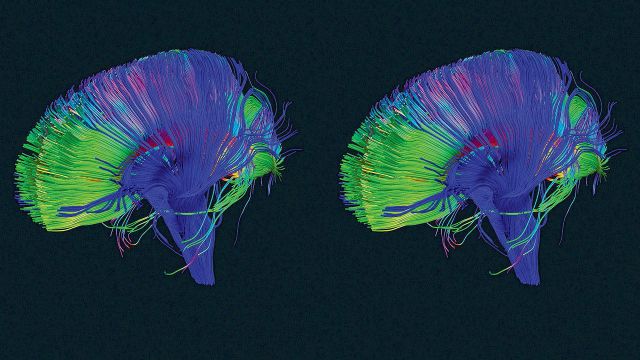
The interesting way that your brain makes space to build new and stronger connections so you can learn more

There’s an old saying in neuroscience: neurons that fire together wire together. This means the more you run a neuro-circuit in your brain, the stronger that circuit becomes. This is why, to quote another old saw, practice makes perfect. The more you practice piano, or speaking a language, or juggling, the stronger those circuits get.

For years this has been the focus for learning new things. But as it turns out, the ability to learn is about more than building and strengthening neural connections. Even more important is our ability to break down the old ones. It’s called “synaptic pruning.” Here’s how it works.

Imagine your brain is a garden, except instead of growing flowers, fruits, and vegetables, you grow synaptic connections between neurons. These are the connections that neurotransmitters like dopamine, seratonin, and others travel across.

“Glial cells” are the gardeners of your brain—they act to speed up signals between certain neurons. But other glial cells are the waste removers, pulling up weeds, killing pests, raking up dead leaves. Your brain’s pruning gardeners are called “microglial cells.” They prune your synaptic connections. The question is, how do they know which ones to prune?

Researchers are just starting to unravel this mystery, but what they do know is the synaptic connections that get used less get marked by a protein, C1q (as well as others). When the microglial cells detect that mark, they bond to the protein and destroy—or prune—the synapse.

This is how your brain makes the physical space for you to build new and stronger connections so you can learn more.

Have you ever felt like your brain is full? Maybe when starting a new job, or deep in a project. You’re not sleeping enough, even though you’re constantly taking in new information. Well, in a way, your brain actually is full

When you learn lots of new things, your brain builds connections, but they’re inefficient, ad hoc connections. Your brain needs to prune a lot of those connections away and build more streamlined, efficient pathways. It does that when we sleep.

Your brain cleans itself out when you sleep—your brain cells shrinking by up to 60% to create space for your glial gardeners to come in take away the waste and prune the synapses.

Have you ever woken up from a good night’s rest and been able to think clearly and quickly? That’s because all the pruning and pathway-efficiency that took place overnight has left you with lots of room to take in and synthesize new information—in other words, to learn.

This is the same reason naps are so beneficial to your cognitive abilities. A 10- or 20-minute nap gives your microglial gardeners the chance to come in, clear away some unused connections, and leave space to grow new ones.

Thinking with a sleep-deprived brain is like hacking your way through a dense jungle with a machete. It’s overgrown, slow-going, exhausting. The paths overlap, and light can’t get through. Thinking on a well-rested brain is like wandering happily through Central Park; the paths are clear and connect to one another at distinct spots, the trees are in place, you can see far ahead of you. It’s invigorating.

And in fact, you actually have some control over what your brain decides to delete while you sleep. It’s the synaptic connections you don’t use that get marked for recycling. The ones you do use are the ones that get watered and oxygenated. So be mindful of what you’re thinking about.

If you spend too much time reading theories about the end of Game of Thrones and very little on your job, guess which synapses are going to get marked for recycling?

If you’re in a fight with someone at work and devote your time to thinking about how to get even with them, and not about that big project, you’re going to wind up a synaptic superstar at revenge plots but a poor innovator.

To take advantage of your brain’s natural gardening system, simply think about the things that are important to you. Your gardeners will strengthen those connections and prune the ones that you care about less. It’s how you help the garden of your brain flower.

http://www.fastcompany.com/3059634/your-most-productive-self/your-brain-has-a-delete-button-heres-how-to-use-it

New Real-Time In-Ear Device Translator By Waverly Labs To Be Released Soon

Language barrier will no longer be a problem around the world as an in-ear device will be the answer to this. The device can translate foreign language to the wearer’s native language and it works real time.

A company called Waverly Labs has developed a device called “The Pilot.” that will do a real-time translation while on the wearer’s ears.

A smart phone app will also let the user choose different foreign languages, currently Spanish, French, Italian and English. Additional languages will be available soon after, which include East Asian, Hindi, Semitic, Arabic, Slavic, African, and more.The device also works only with always-on data connection of the wearer’s smartphone.

To use the device, the earpieces can be shared by two people. While talking in different languages, the in-ear device will serve as the wearers’ translators to understand each other.

The device will cost $129.

Viral and Bacterial Links to the Brain’s Decline


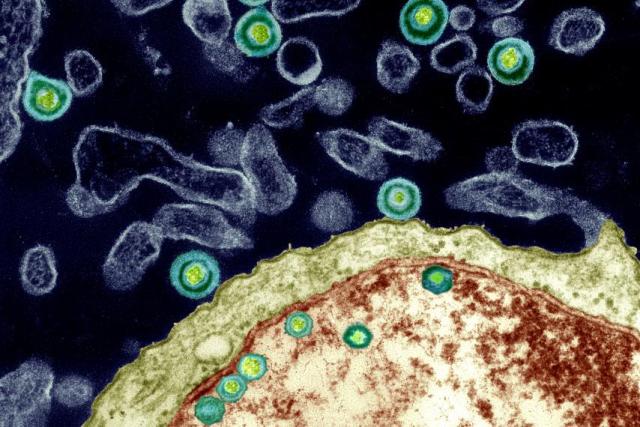
Herpes simplex viruses pass through the outer protein coat of a nucleus, magnified 40,000 times. Dr. Ruth Itzhak’s research published in 1997 revealed a potential link to the presence of HSV-1 (one specific variety of Herpes simplex) and the onset of Alzheimer’s in 60 percent of the cases they studied. However, she has only been able to study a low number of cases since the work has received only a cursory nod from the greater research world and little funding.

By Ed Cara

As recently as the 1970s, doctors stubbornly treated complaints of festering open sores in the stomach as a failing of diet or an inability to manage stress. Though we had long accepted the basic premise of Louis Pasteur’s germ theory—that flittering short bursts of disease and death are often caused by microscopic beings that could be stopped by sanitary food, water and specially crafted drugs—many researchers ardently resisted the idea that they could also trigger more complicated, chronic illnesses.

When it came to ulcers, no one believed that any microorganisms could endure in the acidic cauldron of our digestive system. It took the gumshoe work of Australian doctors and medical researchers Barry Marshall and Robin Warren in the 1980s to debunk that belief and discover the specific bug responsible for most chronic stomach ulcers, Helicobacter pylori. Marshall even went so far as to swallow the germ to prove the link was real and, obviously, became sick soon after. Thankfully, his self-sacrifice was eventually validated when he and Warren were awarded a Nobel Prize in 2005.

But while modern medicine has grown comfortable with the idea that even chronic physical ailments can be sparked by the living infinitesimal, there is an even bolder, more controversial proposition from a growing number of researchers. It’s the idea that certain germs, bugs and microbes can lie hidden in the body for decades, all the while slowly damaging our brains, even to the point of dementia, depression and schizophrenia.

In January 2016, a team led by Shawn Gale, an associate professor in psychology at Brigham Young University, looked at the infection history of 5,662 young to middle-aged adults alongside the results of tests intended to measure cognition. Gale’s rogues’ gallery included both parasites (the roundworm and Toxoplasma gondii ) and viruses (the hepatitis clan, cytomegalovirus, and herpes simplex virus Types 1 and 2). The team created an index of infectious disease —the more bugs a participant had been exposed to, the higher the person’s index score. It turned out that those with a higher score were more likely to have worse learning and memory skills, as well as slower information-processing speed than those with a lower score, even after controlling for other factors, like age, sex and financial status.

Aside from their shared ability to stay rooted inside us, the ways these pathogens might influence our noggins are as varied as their biology is from one another. Some, like T. gondii (often transmitted to humans via contaminated cats and infected dirt), can discreetly infest the brain and cause subtle changes to our brain chemistry, altering levels of neurotransmitters like dopamine while causing no overt signs of disease. Others, like hepatitis C, are suspected of hitching a ride onto infected white blood cells that cross the brain-blood barrier and, once inside, deplete our supply of white brain matter, the myelin-coated axons that help neurons communicate with each other and seem to actively shape how we learn. And still others, like H. pylori, could trigger a low-level but chronic inflammatory response that gradually wears down our body and mind alike.

Gale’s team found only fairly small deficits in cognition connected to infection. But other researchers, like Ruth Itzhaki, professor emeritus of molecular neurobiology at Britain’s University of Manchester, believe microbes may play an outsized role in one of the most devastating neurodegenerative disorders around: Alzheimer’s disease, which afflicted 47 million people worldwide in 2015. Last March, Itzhaki and a globe-spanning group of researchers penned an editorial in the Journal of Alzheimer’s Disease, imploring the scientific community to more seriously pursue a proposed link between Alzheimer’s and particular germs, namely herpes simplex virus Type 1 (HSV-1), Chlamydia pneumoniae and spirochetes—a diverse group of bacteria that include those responsible for syphilis and Lyme disease. The unusually direct plea, for scientists at least, was the culmination of decades of frustration.

“There’s great hostility to the microbial concept amongst certain influential people in the field, and they are the ones who usually determine whether or not one’s research grant application is successful,” says Itzhaki. “The irony is that they never provide scientific objections to the concepts—they just belittle them, so there’s nothing to rebut!”

It’s a frustration Itzhaki knows too well; in 1991, her lab published the first paper finding a clear HSV-1 link to Alzheimer’s. Since then, according to Itzhaki, over 100 published studies, from her lab and elsewhere, have been supportive of the same link. Nevertheless, Itzhaki says, the work has received only a cursory nod from the greater research world and little funding. Out of the $589 million allocated to Alzheimer’s research by the National Institutes of Health in 2015, exactly zero appeared to be spent on studying the proposed HSV-1 connection.

HSV-1 is more often known as the version of herpes that causes cold sores. Nearly all of us carry the virus from infancy; our peripheral nervous system serves as its dormant nesting ground. From there, HSV-1 can reactivate and occasionally cause mild flare-ups of disease, typically when our immune system is overwhelmed due to stress or other infections. Itzhaki’s lab, however, found that by the time we reach our golden years, the virus often migrates to the brain, where it remains capable of resurrecting itself and wreaking a new sort of havoc when opportunity presents, such as when our immune system wavers in old age.

Her team has also discovered the presence of HSV-1 in the telltale plaques—clumps of proteins in the nerve cells of the brain—used to diagnose Alzheimer’s. In mice and cell cultures infected with HSV-1, they’ve found accumulation of two proteins, beta-amyloid and tau, that form the main components of, respectively, plaques and tangles—twisted protein fibers that form inside dying cells and are another defining characteristic of Alzheimer’s. Plaques and tangles, while sometimes found in normal aging brains, have been found to overflow in the brains of deceased Alzheimer’s sufferers; neuroscientists believe these protein accumulations can cause neuron death and tissue loss. Itzhaki speculates that herpes-infected cells may either produce the proteins in an attempt to fend off HSV-1 or, because the virus itself commands them to, the proteins somehow needed to jump-start the virus’s replication.

Itzhaki, Gale and their colleagues emphasize that rather than being the sole cause of memory loss, slower reaction time or depression, viral and bacterial infections are likely just one ingredient in a soup of risk factors. But for Alzheimer’s, HSV-1 could be especially significant. Itzhaki has found that elderly people who carried both HSV-1 in the brain and the e-4 subtype of the APOE gene (responsible for creating a protein that helps transport cholesterol throughout the body) were 12 times more likely to develop Alzheimer’s than people without either.

APOE-e4, already considered a significant risk factor for Alzheimer’s and thought to make us more vulnerable to viral infection, has also been linked to a greater risk of dementia in HIV-infected patients. In a 1997 Lancet paper, Itzhaki’s group concluded that HSV-1 infection, in conjunction with APOE-e4, could account for about 60 percent of the Alzheimer’s cases they studied. Due to limited funds, however, her group was able to study only a relatively low number of cases.

“I think the proposed theory is certainly reasonable given the supporting evidence,” says Iain Campbell, a professor of molecular biology at the University of Sydney. “What is difficult to establish here is actual causality.”

It might be the case that HSV-1 and other suspects aren’t responsible for the emergence of Alzheimer’s but are simply given free rein to worsen its symptoms as the neurodegenerative disorder weakens both the immune and nervous systems. Deciphering the relationship between these latent infections and Alzheimer’s will take more dedicated research, an effort that Itzhaki feels has been stymied by the persistent lack of resources available to her and her like-minded colleagues.

As things stand, though, she believes there is enough evidence to go ahead with treatment trials; for instance, giving Alzheimer’s patients HSV-1-targeted antivirals in hopes of slowing down or stopping the progression of the disease. She and a team of clinicians are trying to obtain a grant for such a pilot clinical trial to do just that.

Exasperated as Itzhaki has been, the headwinds against her and those who share her beliefs about the brain are slowly dying down. In some cases, once-derided and obscure scientists studying how infections affect the brain are now getting some financial support. There’s Jaroslav Flegr, for example, who has for decades theorized that T. gondii could alter human behavior and even cause certain forms of schizophrenia. In the wake of increased media attention, Flegr’s volume of work on T. gondii has noticeably stepped up as well. From 2014 to 2015, he co-authored 13 papers on T. gondii, nearly twice the number he published the previous two years; the trend of increased T. gondii papers holds across all of PubMed, the largest database of published biomedical research available. “ I have no serious problem with funding of my Toxo research now,” Flegr says.

As of now, though, there have been no ulcer-related Sherlock moments to prove a link between mental dysfunction and latent infections—only indirect correlations clumping together to form a blurry snapshot of a potential crime scene. Which is why Gale and others recommend a wait-and-see approach for the public, even as they acknowledge the potentially vast implications of their research. “I wouldn’t want someone to go out tomorrow and get a whole battery of tests,” he says. “There’s still a lot we need to understand.”

http://www.newsweek.com/viral-bacterial-links-brains-decline-462194

The day we discovered our parents were Russian spies

For years Donald Heathfield, Tracey Foley and their two children lived the American dream. Then an FBI raid revealed the truth: they were agents of Putin’s Russia. Their sons tell their story.

by Shaun Walker

Tim Foley turned 20 on 27 June 2010. To celebrate, his parents took him and his younger brother Alex out for lunch at an Indian restaurant not far from their home in Cambridge, Massachusetts. Both brothers were born in Canada, but for the past decade the family had lived in the US. The boys’ father, Donald Heathfield, had studied in Paris and at Harvard, and now had a senior role at a consultancy firm based in Boston. Their mother, Tracey Foley, had spent many years focused on raising her children, before taking a job as a real estate agent. To those who knew them, they seemed a very ordinary American family, albeit with Canadian roots and a penchant for foreign travel. Both brothers were fascinated by Asia, a favoured holiday destination, and the parents encouraged their sons to be inquisitive about the world: Alex was only 16, but had just returned from a six-month student exchange in Singapore.

After a buffet lunch, the four returned home and opened a bottle of champagne to toast Tim reaching his third decade. The brothers were tired; they had thrown a small house party the night before to mark Alex’s return from Singapore, and Tim planned to go out later. After the champagne, he went upstairs to message his friends about the evening’s plans. There came a knock at the door, and Tim’s mother called up that his friends must have come early, as a surprise.

At the door, she was met by a different kind of surprise altogether: a team of armed, black-clad men holding a battering ram. They streamed into the house, screaming, “FBI!” Another team entered from the back; men dashed up the stairs, shouting at everyone to put their hands in the air. Upstairs, Tim had heard the knock and the shouting, and his first thought was that the police could be after him for underage drinking: nobody at the party the night before had been 21, and Boston police took alcohol regulations seriously.

When he emerged on to the landing, it became clear the FBI was here for something far more serious. The two brothers watched, stunned, as their parents were put in handcuffs and driven away in separate black cars. Tim and Alex were left behind with a number of agents, who said they needed to begin a 24-hour forensic search of the home; they had prepared a hotel room for the brothers. One of the men told them their parents had been arrested on suspicion of being “unlawful agents of a foreign government”.

Alex presumed there had been some mistake – the wrong house, or a mix-up over his father’s consultancy work. Donald travelled frequently for his job; perhaps this had been confused with espionage. At worst, perhaps he had been tricked by an international client. Even when the brothers heard on the radio a few days later that 10 Russian spies had been rounded up across the US, in an FBI operation dubbed Ghost Stories, they remained sure there had been a terrible mistake.

But the FBI had not made a mistake, and the truth was so outlandish, it defied comprehension. Not only were their parents indeed Russian spies, they were Russians. The man and woman the boys knew as Mom and Dad really were their parents, but their names were not Donald Heathfield and Tracey Foley. Those were Canadians who had died long ago, as children; their identities had been stolen and adopted by the boys’ parents.

Their real names were Andrei Bezrukov and Elena Vavilova. They were both born in the Soviet Union, had undergone training in the KGB and been dispatched abroad as part of a Soviet programme of deep-cover secret agents, known in Russia as the “illegals”. After a slow-burning career building up an ordinary North American background, the pair were now active agents for the SVR, the foreign spy agency of modern Russia and a successor to the KGB. They, along with eight other agents, had been betrayed by a Russian spy who had defected to the Americans.

The FBI indictment detailing their misdeeds was a catalogue of espionage cliches: dead drops, brush-pasts, coded messages and plastic bags stuffed with crisp dollar bills. The footage of a plane carrying the 10 touching down at Vienna airport, to be swapped for four Russians who had been held in Russian prisons on charges of spying for the west, brought back memories of the cold war. The media had a field day with the Bond-girl looks of 28-year-old Anna Chapman, one of two Russians arrested not to have pretended to be of western origin; she worked as an international estate agent in Manhattan. Russia didn’t know whether to be embarrassed or emboldened: its agents had been busted, but what other country would think of mounting such a complex, slow-drip espionage operation in the first place?

For Alex and Tim, the geopolitics behind the spy swap was the least of their worries. The pair had grown up as ordinary Canadians, and now discovered they were the children of Russian spies. Ahead of them was a long flight to Moscow, and an even longer emotional and psychological journey.

Nearly six years since the FBI raid, I meet Alex in a cafe near the Kiev railway station in Moscow. He is now officially Alexander Vavilov; his brother is Timofei Vavilov, though many of their friends still use their old surname, Foley. Alex is 21, his still-boyish looks offset by a serious manner and businesslike clothes: black V-neck over a crisp white shirt. A gentle North American lilt and the careful aspiration of final consonants give him the unplaceable accent of those who have been schooled internationally – in Paris, Singapore and the US. These days, he speaks enough Russian to order lunch, but is by no means fluent. He is studying in a European city and is here to visit his parents; Tim works in finance in Asia. (In the interests of privacy, both brothers have asked me not to reveal details about their working lives.)

Since 2010, they have made a conscious decision to avoid the media. They have agreed to talk to me now, Alex explains, because they are fighting a legal battle to win back their Canadian citizenship, stripped from them six years ago. They believe it is unfair and illegal that they are expected to answer for the sins of their parents, and have decided to tell their story for the first time.

As we eat khachapuri, a Georgian bread stuffed with gooey cheese, Alex recalls the days after the raid. He and Tim stayed up until the early hours in the hotel room the FBI had provided, trying to understand what was going on. When they went home the next day, they found every piece of electronic equipment, every photograph and document had been taken. The FBI’s search and seizure warrant lists 191 items removed from the Foley/Heathfield residence, including computers, mobile phones, photographs and medicines. They even took Tim and Alex’s PlayStation.

News crews held a vigil outside; the brothers sat inside with the blinds drawn, their phones and computers confiscated. Early next morning Tim snuck out to get online at the public library and try to find a lawyer for his parents. All the family bank accounts had been frozen, leaving the boys with just the money they had in their pockets and whatever they could borrow from friends.

FBI agents drove them to an initial court hearing in Boston, where their parents were informed of the charges. There was a brief meeting with their mother inside jail. Alex tells me he did not ask her what she and his father were accused of. This seems surprising, I say: surely he must have been dying to ask?

“Here’s the thing: I knew that if I was going to testify in court, the less I knew, the better. I didn’t want to cloud my opinion with anything. I didn’t want to ask questions, because it was obvious people were listening,” he says. A boisterous group of women are celebrating a birthday at the next table, and he raises his voice. “I refused to let myself be convinced they were actually guilty of anything, because I realised the case would probably draw on for a long time. They were facing life in prison, and if I was to testify, I would have to completely believe they were innocent.”

The family had been planning a month-long summer break in Paris, Moscow and Turkey; their mother told them to escape the media circus and fly to Russia. After a stopover in Paris, Alex and Tim boarded a plane to Moscow, unsure of what to expect on arrival. They had never been to Russia before. “It was a really terrifying moment,” Alex recalls. “You’re sitting on the plane, you have a few hours to kill and you don’t know what’s coming. You just sit there and think and think.”

As the brothers disembarked, they were met at the plane door by a group of people who introduced themselves in English as colleagues of their parents. They told the brothers to trust them, and led them outside the terminal to a van.

“They showed us photos of our parents in their 20s in uniform, photos of them with medals. That was the moment when I thought, ‘OK, this is real.’ Until that moment, I’d refused to believe any of it was true,” Alex says. He and Tim were taken to an apartment and told to make themselves at home; one of their minders spent the next few days showing them around Moscow; they took them to museums, even the ballet. An uncle and a cousin the brothers had no idea existed paid a visit; a grandmother also dropped by, but she spoke no English and the boys not a word of Russian.

It would be a few days before their parents would arrive, having admitted at a court hearing in New York on 8 July that they were Russian nationals. An exchange was already in the offing, and they arrived in Moscow, via Vienna, on 9 July, still wearing the orange prison jumpsuits they had been given in America. My face must give away some of my amazement: how does a 16-year-old process such an extraordinary turn of events?

Alex smirks at me wryly. “Typical high school identity crisis, right?”
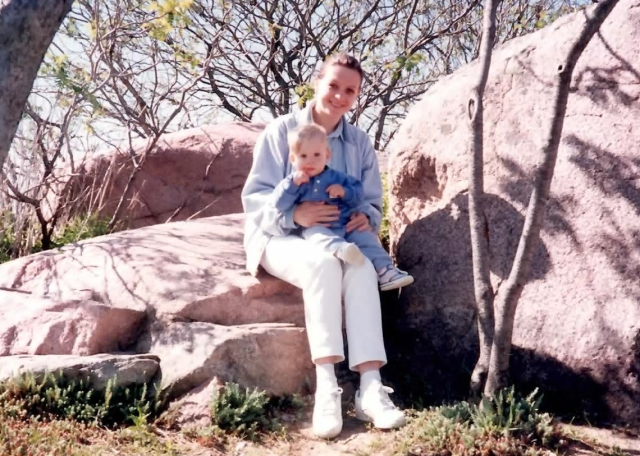

‘Tracey Foley’ with Tim at Toronto Zoo in 1991

Alex and Tim’s father was born Andrei Olegovich Bezrukov, in Krasnoyarsk region, in the heart of Siberia. Since his return to Moscow in 2010, he has given just a handful of interviews to Russian media outlets, mainly concerning the more recent work he has done as a geopolitical analyst. Details of his past, or that of his wife, Elena Vavilova, are scarce.

Alex tells me what he knows about his parents’ recruitment, based on the little they have told him: “They got recruited into it together, as a couple. They were promising, young, smart people, they were asked if they wanted to help their country and they said yes. They went through years of training and preparing.”

None of the 10 deportees has spoken publicly about their mission in the US, or their training by the SVR or KGB. Department S, which runs the illegals programme they were on, was the most secretive part of the KGB. One former “illegal” tells me his training in the late 1970s included two years in Moscow with daily English lessons, taught by an American woman who had defected. He was also trained in other basics such as communicating in code and surveillance. All the training was done on a one-to-one basis: he never met other agents.

The programme was the only one of its kind in international espionage. (Many assumed it had been stopped, until the 2010 FBI swoop.) Many intelligence agencies use agents operating without diplomatic cover; some have recruited second-generation immigrants already living abroad, but the Russians have been the only ones to train agents to pretend to be foreigners. Canada was a common place for the illegals to go, to build up their “legend” of being an ordinary western citizen before being deployed to target countries, often the US or Britain. During Soviet times, the illegals had two main functions: to aid in communications between embassy KGB officers and their US sources (an illegal would be less likely to be put under surveillance than a diplomat); and to be sleeper cells for a potential “special period” – a war between the US and the Soviet Union. The illegals could then spring into action.

The KGB sent the couple to Canada in the 80s. In June 1990, Vavilova, under the assumed identity of Tracey Foley, gave birth to Tim at the Women’s College hospital in Toronto. His first memories are of attending a French-language school in the city and visiting the warehouse of his dad’s company, Diapers Direct, a nappy delivery service. It was hardly James Bond, but the work of an agent has always been more tortoise than hare – years spent painstakingly building up the legend.

Andrei Bezrukov already had a degree from a Soviet university, but “Donald Heathfield” had no educational records. Between 1992 and 1995, he studied for a bachelor’s degree in international economics at York University in Toronto. In 1994, Alex was born; a year later the family moved to Paris. We don’t know whether this was on the orders of the SVR, but it seems a safe assumption. Donald studied for an MBA at the École des Ponts and the family lived frugally in a small flat not far from the Eiffel Tower; both brothers shared the only bedroom while the parents slept on the sofa.

As Bezrukov and Vavilova built up their story, the country that had recruited and trained them ceased to exist. The ideology of communism had failed; the fearsome spy agency that had dispatched agents across the globe was discredited and renamed. Under Boris Yeltsin, post-Soviet Russia seemed on the verge of becoming a failed state. But in 1999, as the family planned a move from France to the US, a new man entered the Kremlin who himself had a KGB background. In the subsequent years, he would work to make the KGB’s successors important and respected again.

With the legend of a hardworking, well-educated Canadian perfected over the years, Heathfield got into Harvard University’s Kennedy School of Government towards the end of that year, and was ready to deploy as an agent of the SVR. He would be spying not for the Soviet system that had trained him, but for the new Russia of Vladimir Putin.

Heathfield and Foley sent their sons to a bilingual French-English school in Boston, so they could maintain their French and stay in touch with European culture. They could not teach their children about Russia; perhaps the emphasis on French was a way of ensuring their children were not “ordinary” Americans without ringing alarm bells. At home, the family spoke a mixture of English and French. (An online video of Bezrukov, appearing in his post-deportation role as a political analyst, shows him speaking smooth North American with the faintest of twangs.) When he completed his postgraduate degree at Harvard, Heathfield got a job working for Global Partners, a business development consultancy.

I speak to Tim on a Sunday afternoon, talking to me on Skype from his kitchen. He has the same facial features and careful parting as his younger brother, but his hair is blond rather than dark. Looking back on his youth, he tells me his father worked hard, making frequent business trips. He encouraged his sons to read and educate themselves about the world, and “was like a best friend to us”. Foley, Tim says, was a “soccer mom”, picking her sons up from school and taking them to sports practice. When the boys were in their teens, she started work as a real estate agent.

In 2008, Tim got a place at George Washington University, in DC, to study international relations. He focused on Asia, taking Mandarin lessons and spending a semester in Beijing. The same year, the family became naturalised Americans, with US passports in addition to their Canadian nationality.

The brothers would never live in Canada again; Alex had been one when they left Toronto and Tim only five – but both felt Canadian. The family returned often to ski, and when the boys went on school trips from Boston to Montreal, they took pride in showing the other students around their “home” country. Alex made a big fuss about his Canadian background, because “at high school you always want to go counterculture”.

Tim describes their childhood as “absolutely normal”: the family was close and spent time together at weekends; his parents had many friends. He has no recollection of them discussing Russia or the Soviet Union; they never ate Russian food, and the closest Tim says he came to a Russian was a polite boy from Kazakhstan at school.

Their parents did not discuss their childhood much, but this was how they had always been and the boys had little reason to question it. “I never had anything close to a suspicion regarding my parents,” Alex says. In fact, he often felt disappointed by how boring and mundane they were: “It seemed all my friends’ parents led much more exciting and successful lives.”

Little did he know. Bezrukov and Vavilova had been put under FBI surveillance soon after they moved to the US, probably because of a mole in the Russian agency. Excerpts from their 2010 indictment suggest the couple lived with a level of intrigue most people would assume exists only within the pages of a spy novel. One paragraph recounts an intercepted communication from Moscow Centre (SVR headquarters), explaining how Vavilova should plan for a trip back to her motherland. She was to fly to Paris and take the train to Vienna, where she would pick up a fake British passport. “Very important: 1. Sign your passport on page 32. Train yourself to be able to reproduce your signature when necessary… In the passport you’ll get a memo with recommendation. Pls, destroy the memo after reading. Be well.”

Their father, meanwhile, was using his work as a consultant to penetrate US political and business circles. It is not clear whether he managed to access classified material, but FBI intercepts reported a number of contacts with former and current American officials.

In the few public remarks Bezrukov has made about his job, he makes it sound more like that of a thinktank analyst than a super-spy. “Intelligence work is not about risky escapades,” he told Expert magazine in 2012. “If you behave like Bond, you’ll last half a day, maybe a day. Even if there was an imaginary safe where all the secrets are kept, by tomorrow half of them will be outdated and useless. The best kind of intelligence is to understand what your opponent will think tomorrow, not find out what he thought yesterday.”

Bezrukov and Vavilova communicated with the SVR using digital steganography: they would post images online that contained messages hidden in the pixels, encoded using an algorithm written for them by the SVR. A message the FBI believes was sent in 2007 to Bezrukov by SVR headquarters was decoded as follows: “Got your note and signal. No info in our files about E.F., BT, DK, RR. Agree with your proposal to use ‘Farmer’ to start building network of students in DC. Your relationship with ‘Parrot’ looks very promising as a valid source of info from US power circles. To start working on him professionally we need all available details on his background, current position, habits, contacts, opportunities, etc.”

Way back in 2001, nearly a decade before her arrest, the FBI had searched a safe-deposit box belonging to Tracey Foley. There they found photographs of her in her 20s, one of which bore the Cyrillic imprint of the Soviet company that had printed it. The family home had been bugged, possibly for many years. The FBI knew the couple’s real identities, even if their own children did not, but the Americans preferred to keep an eye on the Russian spy ring, rather than make a move.

Why the FBI finally acted is unclear. One suggestion is that Alexander Poteyev, the SVR officer believed to have betrayed the group, felt his cover was blown. He reportedly fled Russia in the days before the arrests; in 2011, a Russian court sentenced him to 25 years in prison for treason in absentia. Another possibility is that one of the group was getting close to sensitive information. Whatever the reason, in June 2010 the FBI decided to wrap up Operation Ghost Stories and bust the Russian spy ring.


The house raided by the FBI in June 2010

I speak to Tim and Alex many times, in person, over Skype and email. They are not uncomfortable talking about their experiences, but neither do they enjoy it much. Initially, they want to speak only about their court case in Canada; but gradually they open up, answering all my questions about their extraordinary family life.

I have to admit there are some details that bother me. Did they really never suspect a thing?

In 2012, the Wall Street Journal reported that unnamed US officials claimed an FBI bug placed at the family’s Boston home had picked up the parents revealing their true identities to Tim long before the arrest. Furthermore, the officials said, his parents had told Tim they wanted to groom him as a Russian spy. A second-generation spy would be a much more impressive asset than first-generation illegals, who had built up personas that were solid but not impregnable to background checks. Tim, according to the unnamed officials, agreed he would travel to Moscow for SVR training and even “saluted Mother Russia”.

Tim strenuously denies the story, insisting it was a total fabrication. “Why would a kid who grew up his whole life believing himself to be Canadian, decide to risk life in prison for a country he had never been to nor had any ties to? Furthermore, why would my parents take a similar risk in telling their teenage son their identities?”

The claim that he saluted Mother Russia is “just as ridiculous as it sounds”, Tim says. He would be happy to answer the allegations in court, but it is impossible to argue with anonymous sources. When contacted by the Guardian, the FBI declined to comment on the Wall Street Journal article.

There was another thing that bothered me: was it really just coincidence that the family had planned to travel to Russia that summer, and that the brothers therefore had Russian visas? Yes, Alex says. “It was very much my idea to go to Russia. We had this world map at home and when you looked at the pins on it, you could see we’d been almost everywhere but Russia, so I was very curious and I was pushing for it. It was just going to be one part of our summer trip.”

In hindsight, surely, that summer trip to Paris, Turkey and Moscow must have looked rather different. When the family were reunited in Moscow in July 2010, did the boys ask their parents what the plan had been? Had they intended to reveal everything? Or were they really going to spend a week in Moscow pretending not to understand a word spoken around them?

“I actually think that was the plan,” Alex says. “That we would travel to Russia, and maybe they might go and meet people without us. But I don’t think there was a plan to tell us anything.”

Tim agrees. If their parents had revealed the truth, it would have made Tim and Alex a huge liability; “as professionals”, he says, it’s unlikely they would have taken the risk. They doubt their parents ever planned to tell them about their real identities. “Honestly,” Tim says, “I really don’t think so. It sounds strange, but yeah.”

Both brothers tell me they remember, as young children, seeing their grandparents. Where? On vacation, Alex says, “somewhere in Europe”; he can’t remember where, exactly. Asked if he was sure the people he met were his real grandparents, he says, “I think so.” Were they speaking Russian? “I was really young, I have no idea,” he says firmly.

I raise the question with Tim, who would have been older. He remembers seeing his grandparents every few years until he was around 11, when they disappeared from his life. “Obviously, now when I think back on it, I kind of understand how it worked. If I had seen them when I was older, I would have realised that they don’t speak English – they don’t seem very Canadian.”

At Christmas, the boys would receive gifts marked “from grandparents”. Their parents told them they lived in Alberta, far from Toronto, which was why they never saw them. Occasionally, new photographs would arrive of the grandparents against a snowy backdrop; it helped that the climates of Alberta and Siberia are not so different.

If Tim and Alex’s story sounds eerily familiar to fans of The Americans, the television drama about a KGB couple living in the US with their two children, that’s because it’s partly based on them. The show is set in the 1980s, providing a cold war backdrop, but the 2010 spy round-up served as an inspiration. The show’s creator, Joe Weisberg, trained to be a CIA case officer in the early 1990s and, when I speak to him on the phone, tells me he always wanted to put family at the heart of the plot. “One of the interesting things I saw when I worked at the CIA was people lying to their children. If you have young children, you can’t tell them you work for the CIA. And then, at some point, you have to pick an age and a time, and they find out that they’ve been lied to for most of their lives. It’s a difficult moment.”

When I meet Alex in Moscow, he has just finished watching the first season. (He had started on previous occasions, but found it too difficult; he and Tim joked that they should sue the creators.) His parents like the show, he tells me. “Obviously it’s glamorised, all this killing people and action everywhere. But it reminded them of when they were young agents, and how they felt about being in a strange new place.” Watching it, Alex says, has made him more curious: what set his parents off on this path, and why?

***

In 2010, the spies were welcomed back to Russia as heroes. After a debriefing at SVR headquarters, Bezrukov, Vavilova and the other deportees met with then-president Dmitry Medvedev to receive medals for their service. Later, they met with Putin, and the group reportedly sang the patriotic Soviet song From Where The Motherland Begins. The authorities put on a tour: the agents and their families travelled to St Petersburg, Lake Baikal in Siberia and Sochi on the Black Sea. The idea was to show off modern Russia, and to provide them with an opportunity to bond.

Do they still meet up, I ask Alex. “From time to time,” he says. He and Tim were the only adolescents; of the four couples arrested, two had younger children, while another had adult sons. Even so, the other families were probably the only people in the world who could even begin to understand their surreal situation.

Bezrukov and Vavilova found themselves back in a very different Russia from the one they had left. The oldest of the agents had been retired from active espionage work for a decade, Alex says, and barely remembered how to speak Russian. The group were told they would no longer work for the SVR, but jobs were found for them in state banks and oil companies. Anna Chapman was given a television series and now has her own fashion line. Bezrukov was given a job at MGIMO, a prestigious Moscow university, and has written a book on the geopolitical challenges facing Russia.

Tim and Alex were given Russian passports at the end of December 2010; suddenly, they became Timofei and Alexander Vavilov. The names were “completely new, foreign and unpronounceable for us”, Tim says. “A real identity crisis,” he adds with a hint of bitterness. Unable to return to university for his final year, he managed to transfer to a Russian university and complete his degree there, before doing an MBA in London.

Alex was less lucky. He finished high school at the British International School in Moscow, but did not want to stay in Russia. He applied to university in Canada, but was told he would first have to apply for a new birth certificate, and then a citizenship certificate; only then could he renew his Canadian passport. In 2012 he was admitted to the University of Toronto, and applied for a four-year student visa on his Russian passport. The visa was issued and he planned to depart for Canada on 2 September. But four days before he was due to leave, as he was packing his bags and exchanging emails with his future roommate, he received a phone call from the Canadian embassy in Moscow demanding he come for an urgent interview. The meeting was hostile; there were a lot of questions about his life and his parents. The visa was annulled before his eyes, and he lost his university place. Alex has since been rejected for French and British visas. Twice, he has been accepted to study at the London School of Economics, but both times did not get a visa. Eventually, he was able to get a visa to study elsewhere in Europe; Tim travels mainly in Asia, where many countries can be visited visa-free on a Russian passport.

The brothers’ battle to regain Canadian citizenship is not just about logistics. Moscow is not a city that embraces newcomers, and neither of them feels particularly Russian. “I feel like I have been stripped of my own identity for something I had nothing to do with,” Alex tells me. Both are keen to work in Asia for the time being, but want to move to Canada when they feel ready to start families. More than anything, their Canadian identity is the last straw they have left to grasp on to, after so much of the rest of their previous reality fell away.

“I lived for 20 years believing that I was Canadian and I still believe I am Canadian, nothing can change that,” Tim wrote in his affidavit to the Toronto court. “I do not have any attachment to Russia, I do not speak the language, I do not know many friends there, I have not lived there for any extended periods of time and I do not want to live there.”

Everyone who is born in Canada is eligible for Canadian citizenship, with one exception: those who are born to employees of foreign governments. But the brothers’ Toronto-based lawyer, Hadayt Nazami, argues that it is ridiculous to apply the provision to their case; the whole point of the law, he says, is to prevent those who don’t have the responsibilities of citizenship from enjoying its privileges.

Ultimately, the court seems to be operating as much on emotional as on legal grounds, possibly with the Wall Street Journal story about Tim’s apparent recruitment at the back of its mind. But even if the brothers knew about their parents’ activities (and there is no hard evidence of this), I wondered what the court expected of them. What is a 16-year-old who finds out he is the child of Russian spies supposed to do? Call the FBI?
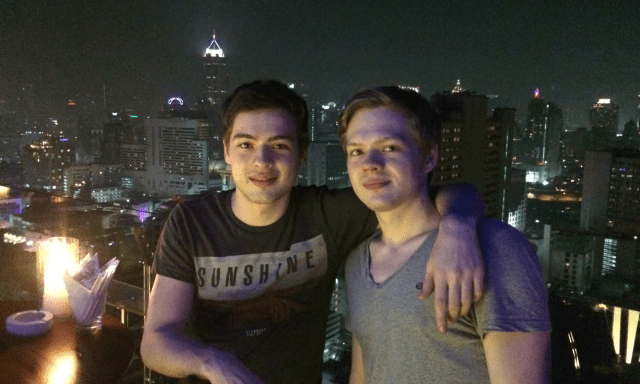

Alex and Tim in Bangkok in 2011

Tim and Alex have been through many months of questioning themselves and their identities, and of wondering whether they should be angry with their parents. They don’t want their childhood to define them as they grow older. Many of their close friends know, but most of their casual acquaintances don’t. When asked where they are from, the default response for both is “Canada”.

They remain friends with many people from their previous life in Boston, though Tim says some broke off contact, mainly those whose parents were friends with his parents and felt betrayed.

While they have no wish to live in Russia, both brothers visit Moscow every few months to see their parents. I ask them how hard it has been to keep that relationship going. Was there a confrontation? Tim and Alex choose their words carefully; they want to appear rational and pragmatic, rather than emotional, it seems. “Of course, there were some very difficult times,” Tim says. “But if I get angry with them, it’s not going to lead to any beneficial outcomes.” He admits it is sad that, even though he can now spend time with his grandparents, the language barrier means he will never know them properly. “In terms of family and keeping this whole thing together, it really doesn’t work out well when you choose this kind of path,” he says, his voice trailing off wistfully.

Alex tells me that he sometimes wonders why his parents decided to have children at all. “They live their lives like everyone else, making choices along the way. I am glad they had a cause they believed in so strongly, but their choices mean I feel no connection to the country they risked their lives for. I wish the world wouldn’t punish me for their choices and actions. It has been deeply unjust.”

A number of times, Alex tells me that it is not his place to judge his parents, but that six years ago he spent a long period wrestling with “the big question” of whether he hated them or felt betrayed. In the end, he came to one conclusion: that they were the same people who had raised him lovingly, whatever secrets they hid.

http://www.theguardian.com/world/2016/may/07/discovered-our-parents-were-russian-spies-tim-alex-foley?CMP=oth_b-aplnews_d-1

Movile Cave: 5.5-million-year-old sealed world that was discovered under Romania

by Michael d’Estries

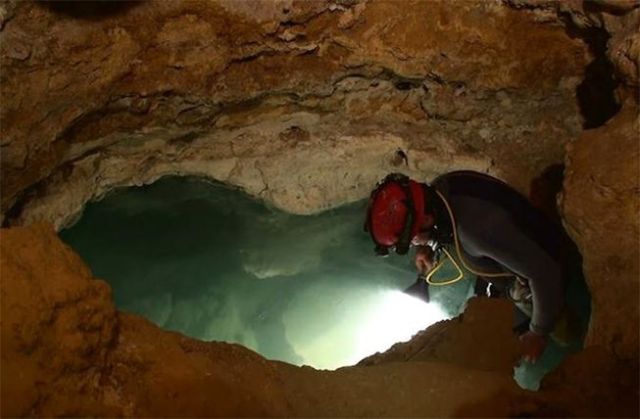
Back in 1986, during surveys for the location of a power plant near the Black Sea in Romania, construction workers digging more than 60 feet underground broke into a bizarre, previously untouched ecosystem.

Called the Movile Cave, this subterranean wonder has been sealed for an estimated 5.5 million years. The air is warm and deadly, with noxious gases and little oxygen, the tunnels narrow, the pure and utter darkness the stuff of nightmares. But what has shocked the few scientists who’ve entered this underground Middle Earth of Horrors is that the place is absolutely teeming with life.

More specifically, creepy-crawly life.

Water scorpions, worms, spiders, predatory leeches and previously unknown microbes are just a few of the creatures in Movile. In fact, of the 48 species that have been identified, a remarkable 33 are new to science.

“All the creatures we saw are completely white,” Microbiologist Rich Boden, one of only 30 people to have entered Movile, said in an interview. “None of them has any pigmentation in their body as there is no sunlight — you can see right through them.”

Most of the species also have no eyes, evolution having done away with that sense long ago in favor of longer antennae and arms.

“I thought it was odd that the spiders still spin webs down there because there are no flies, but then you see there are these little insects called spring-tails, which bounce into the air and are caught by the webs,” added Boden. “It really is the stuff of science-fiction.”

Because no organic matter from the surface makes its way into Movile, scientists were at first puzzled as to how an entire world could possibly flourish under such harsh conditions. The answer lies in vast “mats” on the surface of the cave’s waters and walls. These mats contain millions upon millions of tiny bacteria called autotrophs. Instead of photosynthesis, these autotrophs use a process called chemosynthesis, which obtains chemical energy from the oxidation of sulfur compounds and ammonia in the cave waters, explains the Murrell Lab, part of the University of East Anglia’s School of Environmental Sciences. The resulting milky film of microorganisms serves as the foundation for the rest Movile’s ecosystem.

“It’s very likely that the bacteria have been there a lot longer than 5 million years, but that the insects became trapped there around that time,” microbiologist J. Colin Murrell of University of East Anglia told the BBC. “They could have simply fallen in and become trapped when the limestone cast dropped, sealing the cave until it was discovered again in 1986.”

Movile’s unique conditions for life are so alien that the Romanian press quoted one scientist as saying that “if a nuclear war swept out life on Earth, that ecosystem would be a survivor.”

http://www.mnn.com/earth-matters/animals/blogs/55-million-year-old-alien-world-hiding-under-romania

Jane Little, world’s longest-serving orchestra musician, collapses and dies performing

Jane Little, who debuted as a bassist in Atlanta on Feb. 4, 1945, at age 16 and who never stopped playing, died during a performance of the Atlanta Symphony Orchestra on Sunday. She was said to be the longest tenured orchestra musician in the world. She was 87.

“We can say that Jane was fortunate to do what she loved until the very end of her storied life and career,” the symphony said in a Facebook post. “The Atlanta Symphony Orchestra was truly blessed to have Jane as part of our family for the past 71 years and we all miss her passion, vitality, spirit and incredible talent.”

“Her footprints are permanently etched on that stage,” wrote another admirer, Doug Ireland. “Everyone who ever attended a concert was amazed to see this tiny woman with that huge instrument!”

“Was at the performance today when Jane Little collapsed,” said a post by Rosemary Kord. “So sad to witness this tragedy. Happened in the last couple of minutes of the final song. I am still shakened and send my prayers to Jane’s family and to her musical family, The Atlanta Symphony. If there is a Requiem in her honor, I would like to be in attendance. RIP dear lady; you are an inspiration!”

The symphony was performing a pops concert called “Broadway’s Golden Age,” according to its schedule. A spokeswoman said the players were about 30 seconds from the last measures of “There’s No Business Like Show Business” from Irving Berlin’s “Annie Get Your Gun,” the encore to the concert when Little collapsed and was carried backstage by her fellow bassists. She never regained consciousness.

“She seemed to be made of bass resin and barbed wire. She was unstoppable,” bassist Michael Kurth, who was playing next to Little when she collapsed, told The Washington Post on Sunday night.

Kurth, 44, added that “I honestly thought I was going to retire before she did, honestly.”

“What an amazing way to go,” added Amanda Turner in a post on the ASO website.

The symphony did not provide a cause of death. Little had not been feeling well. She’s been undergoing chemotherapy for multiple myeloma, had missed the orchestra’s April concert in Carnegie Hall in New York, and told Russell Williamson, the ASO’s senior orchestra manager, during intermission at Saturday night’s concert that she felt weak and woozy. That night, violinist Ellie Kosek asked Little to call when she got home safely, which she did.

Little was not a physically imposing figure. She weighed 98 pounds and had battled through, in addition to the myeloma, a broken shoulder, elbow and pelvis in recent years. Last August, she fell and cracked her vertebra, leaving her unable to play.

But in February, after months of rehabilitation, Little took to the stage and passed the record set by Frances Darger, the Utah Symphony violinist who had retired in 2012 after 70 years of playing. Little took pride in her feat.

“I’d thumb through the Guinness book and say, ‘Wouldn’t it be neat?’” Little told The Post in February. “A lot of people do crazy things like sitting on a flagpole for three days. I just kept on. It was just me and the lady in Utah. So finally, I said, ‘I’m going to do this.’”

Though frail and injury-prone, the prospect of setting the record seemed to have helped keep her going, albeit not for every ASO concert. “I was competing with this woman out in Utah, who played 70 years, 69 of them with the Utah Symphony,” she told Atlanta Magazine. “When I heard she was retiring, I said, ‘I’m going for it.’”

“Seventy-one years ago,” Little told The Post during the intermission after a five-minute-long standing ovation earlier this year. “It’s hard to remember when I wasn’t here.”

By then, she had already said she would retire at the end of the season. Little, a widow with no children, planned to spend time at her house in North Carolina. Truth is, she hated the idea of walking away.

“She wanted to play,” Williamson said. “She certainly could have afforded to retire years and years ago. But this is what she did. This was her family.”

Little did not set out to play the bass when she first took an interest in music during the Great Depression. She wanted to be a ballerina, she recalled in an interview with Atlanta Magazine.

I always loved music from the time I was a kid. My aunt had a dancing school in Atlanta, and my mother was the piano accompanist. She played by ear; she could just sit down and play everything. I started dancing, and I wanted to be a ballerina, but to be a ballerina, you need to have these nice feet, and mine just weren’t right. So my dreams were shattered there. But I still loved music, and I taught myself to play the piano on my next-door neighbor’s piano. This was during the Depression, and we didn’t own one, even though my mother was a pianist.

Later, at Girls High School in Grant Park, I wanted to join the glee club, and I found out that freshmen had to take a musical aptitude test….I took the test along with all the other freshmen, and about a week later, I was called up to the orchestra room. I had scored really well, in the top percent of all the students. The orchestra leader asked me what instrument I played, and I told her I didn’t really play an instrument, I just wanted to join the glee club. She was shocked. She told me, you must play an instrument! You’ve obviously got the ear for it, and the rhythm for it.

She asked what I’d like to play, and I named a few small instruments like the clarinet and the violin. She said, “Actually, we really need bass players.” I was five-foot-three and weighed all of 98 pounds at the time, but she asked me to try it. She gave me lessons, and within a month, I was hooked. I loved it. It was awfully difficult to push those heavy strings down, and to carry the instrument around, but I just loved it.

According to her profile on the website of the American Federation of Musicians, “She struggled at first to hear the lowest pitches and could barely press down the thick E string — not to mention, even just carrying the bass around was no easy task. ‘I thought, ‘Oh my gosh, this is going to be a challenge!’ she says. ‘But I was back for the next lesson, and the next, and the next.’ After just a couple months of private lessons, Little was ready to join the orchestra — and not only did she join, but she was quickly appointed principal bass.”

While playing in the symphony, she met the man who would become her husband, Warren Little, who played the flute. Their first date was a performance by the legendary violinist David Oistrakh.

“’I must say that when I met Warren, I was very impressed that he played a small instrument,’” she commented in the profile, “‘so he could carry my bass around!’” He retired in 1992 and died in 2002.

There was no Atlanta Symphony Orchestra at that time. But there was an Atlanta Youth Symphony, for which she auditioned and joined in 1945. Three years later, that youth symphony became the Atlanta Symphony.

“It’s just mind-boggling,” Timothy Cobb, the principal bassist with the New York Philharmonic, told The Post in February. “It takes a tremendous amount of physical power, frankly, and just brute force to play in a big orchestra. I have had friends who have made it into their 70s but to be pumping it out in the orchestra is really something.”

Little took a fall last August, cracked a vertebra and was so weak and in such pain she could only practice for minutes at a time during her recovery. She was taking prescribed steroid pills to help her through performances.

Little, according to the ASO, played under all four of the orchestra’s music directors, as well as guest conductors including Igor Stravinsky, Aaron Copland, Pierre Montez, Leopold Stokowski, John Barbirolli and James Levine.

“To me, it seems like more than the end of an era,” Kurth said. “She outlasted every era of this orchestra. She outlasted three music directors. The next, most longest tenured member was here I think twenty years less than she was. There are no words to describe how remarkable she was. You think of superlatives and you just run out.”

There was great sadness among orchestra members Sunday night. There was also a sense that there was a poetic beauty to the timing of Little’s death, playing her bass during a performance of a classic from the “Great American Songbook.”

“Hollywood could not have scripted it better,” said Paul Murphy, the orchestra’s associate principal viola.

“For her to go out at the end of a concert, the golden age of Broadway, and it was during the encore,” said Williamson. “The words are ‘let’s go on with the show.’”

https://www.washingtonpost.com/news/morning-mix/wp/2016/05/16/what-an-amazing-way-to-go-bassist-jane-little-worlds-longest-serving-orchestra-musician-dead-at-87-after-collapsing-while-performing/?tid=pm_national_pop_b

The President of Molossia on how to run a micronation

by Vanessa Yurkevich

The best thing about starting your own micronation: You get to make up the rules.

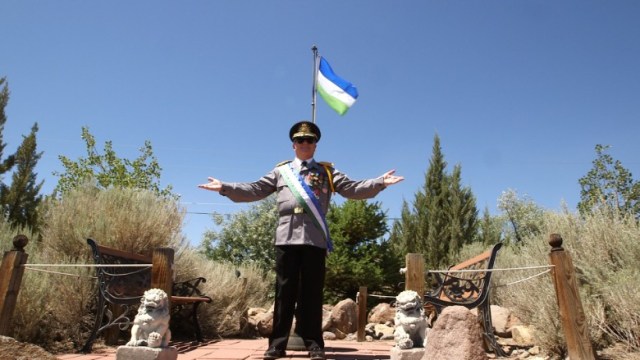
And in Molossia, the rule-making comes from the President, His Excellency, Kevin Baugh.

It cost Baugh just $10,000 to build Molossia, which sits on 1.3 acres about an hour outside of Reno, Nevada. It’s a tourist attraction with its own bank (with its own currency that you buy with U.S. dollars) and general store.

It’s kind of a joke, but also kind of real.

There are about 200 so-called micronations in the world, though they are recognized only by other other micronations, not any other country. There’s no official designation, just a collection of others that deem you legitimate.

The 22 human “citizens” of Molossia — all family members — are Americans first and foremost, including at tax time. (There are also 6 canine citizens.)

Still, when you live in Molossia, the rules are real.

Rule your country, your way

Molossia is a dictatorship, but according to Baugh, it’s important to be an honest dictator.

“I kind of rule with an iron fist. Not really, actually. I’m kind of a nice dictator. Velvet glove,” Baugh said.

He said he often consults with the First Lady of Molossia (his wife, Adrianne), and the Chief Constable (his 11-year old daughter, Alexis). But in the end, what he says goes.

Enact some fun laws

The following items are not allowed in Molossia: Spinach, tobacco, torpedoes, playing processional instruments in the bathroom, and catfish.

“Catfish are banned because we were going to be in a magazine called FHM which is kind of like Maxim magazine,” said Baugh. “They were going to publish an article about Molossia and instead they bumped it for an article about guys that catch catfish with their hands.”

Dress to impress

It’s important to look the part. Baugh is always in black pants, a naval jacket adorned with medals, sunglasses, and an official hat.

He wears this official uniform when he has visitors and also when he travels on behalf of Molossia.

“You will gain respect from your peers and gain greater standing in the micronational world.”

Have a national food

Molossia’s national food is cookie dough. The national delicacy is honored at Cookie Dough Fest, where “Molossians eat copious amounts of cookie dough and watch (usually bad) scary movies.”

Celebrate your country

The Republic of Molossia has 25 holidays. There’s Jack Day on February 4, in honor of the former First Dog.

And, of course, no micronation would be complete without President’s day. “It’s actually celebrated as many times as possible during July, culminating with a trip to the Olive Garden, on or about July 30th.” That’s His Excellency’s birthday.

http://money.cnn.com/2015/09/03/news/how-to-run-a-micronation/

New science research shows that most people have only about 50% of the friends that they think they have.

As it turns out, we can be pretty terrible at knowing who our friends are: In what may be among the saddest pieces of social-psychology research published in quite some time, a study in the journal PLoS One recently made the case that as many as half the people we consider our friends don’t feel the same way.

The study authors gave a survey to 84 college students in the same class, asking each one to rate every other person in the study on a scale of zero (“I do not know this person”) to five (“One of my best friends”), with three as the minimum score needed to qualify for friendship. The participants also wrote down their guesses for how each person would rate them.

Overall, the researchers documented 1,353 cases of friendship, meaning instances where one person rated another as a three or higher. And in 94 percent of them, the person doing the ranking guessed that the other person would feel the same way.

Which makes sense — you probably wouldn’t call someone a friend, after all, unless you thought that definition was mutual. That’s why we have terms to capture more one-sided relationships, like friend crush or hey, I don’t really know her but I think she’s neat. Both of which, come to think of it, might have been better descriptors of a lot of the relationships in the study. In reality, only 53 percent of the friendships — a small, sad, oh honey number of them — were actually reciprocal.

Some caveats: The study was small, and all the subjects were undergraduates; friendships change over the course of a lifetime, and it’s certainly possible that, over time, many tenuous lopsided friendships can dwindle to a more solid few. But the study authors also looked at a handful of previous surveys on friendship, ranging in size from 82 people to 3,160, and found similar results: Among those, the highest proportion of reciprocal friendships was 53 percent, and the lowest was a bummer, at 34 percent.

“These findings suggest a profound inability of people to perceive friendship reciprocity, perhaps because the possibility of non-reciprocal friendship challenges one’s self-image,” the study authors wrote.

http://nymag.com/scienceofus/2016/05/half-of-your-friends-probably-dont-think-of-you-as-a-friend.html