FDA approves first buprenorphine implant for treatment of opioid dependence

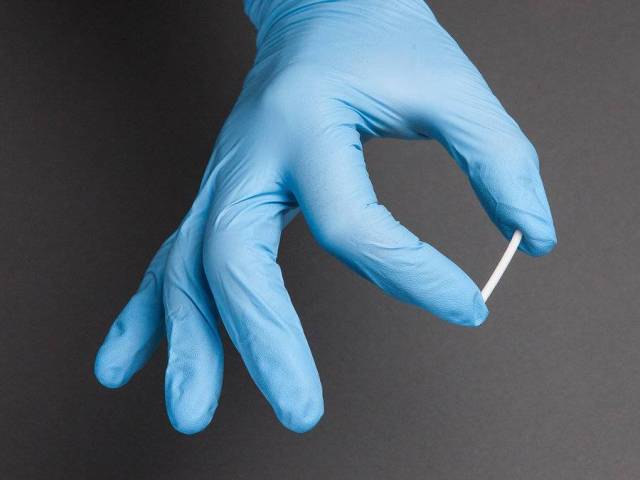
The U.S. Food and Drug Administration today approved Probuphine, the first buprenorphine implant for the maintenance treatment of opioid dependence. Probuphine is designed to provide a constant, low-level dose of buprenorphine for six months in patients who are already stable on low-to-moderate doses of other forms of buprenorphine, as part of a complete treatment program.
Until today, buprenorphine for the treatment of opioid dependence was only approved as a pill or a film placed under the tongue or on the inside of a person’s cheek until it dissolved. While effective, a pill or film may be lost, forgotten or stolen. However, as an implant, Probuphine provides a new treatment option for people in recovery who may value the unique benefits of a six-month implant compared to other forms of buprenorphine, such as the possibility of improved patient convenience from not needing to take medication on a daily basis. An independent FDA advisory committee supported the approval of Probuphine in a meeting held earlier this year.

“Opioid abuse and addiction have taken a devastating toll on American families. We must do everything we can to make new, innovative treatment options available that can help patients regain control over their lives,” said FDA Commissioner Robert M. Califf, M.D. “Today’s approval provides the first-ever implantable option to support patients’ efforts to maintain treatment as part of their overall recovery program.”

Expanding the use and availability of medication-assisted treatment (MAT) options like buprenorphine is an important component of the FDA’s opioid action plan and one of three top priorities for the U.S. Department of Health and Human Services’ Opioid Initiative aimed at reducing prescription opioid and heroin related overdose, death and dependence.

Opioid dependence is the diagnostic term used for the more common concept, “addiction,” in the Probuphine clinical trials. Addiction is defined as a cluster of behavioral, cognitive and physiological phenomena that may include a strong desire to take the drug, difficulties in controlling drug use, persisting in drug use despite harmful consequences, a higher priority given to drug use than to other activities and obligations, as well as the possibility of the development of tolerance or development of physical dependence. Physical dependence is not the same as addiction. Newer diagnostic terminology uses the term “opioid use disorder,” which includes both milder forms of problematic opioid use as well as addiction.

MAT is a comprehensive approach that combines approved medications (currently, methadone, buprenorphine or naltrexone) with counseling and other behavioral therapies to treat patients with opioid use disorder. Regular adherence to MAT with buprenorphine reduces opioid withdrawal symptoms and the desire to use, without causing the cycle of highs and lows associated with opioid misuse or abuse. At sufficient doses, it also decreases the pleasurable effects of other opioids, making continued opioid abuse less attractive. According to the Substance Abuse and Mental Health Services Administration, patients receiving MAT for their opioid use disorder cut their risk of death from all causes in half.

“Scientific evidence suggests that maintenance treatment with these medications in the context of behavioral treatment and recovery support are more effective in the treatment of opioid use disorder than short-term detoxification programs aimed at abstinence,” said Nora Volkow, M.D., director of the National Institute on Drug Abuse at the National Institutes of Health. “This product will expand the treatment alternatives available to people suffering from an opioid use disorder.”

Probuphine should be used as part of a complete treatment program that includes counseling and psychosocial support. Probuphine consists of four, one-inch-long rods that are implanted under the skin on the inside of the upper arm and provide treatment for six months. Administering Probuphine requires specific training because it must be surgically inserted and removed. Only a health care provider who has completed the training and become certified through a restricted program called the Probuphine Risk Evaluation and Mitigation Strategy (REMS) program should insert and remove the implants. If further treatment is needed, new implants may be inserted in the opposite arm for one additional course of treatment. The FDA is requiring postmarketing studies to establish the safety and feasibility of placing the Probuphine implants for additional courses of treatment.

The safety and efficacy of Probuphine were demonstrated in a randomized clinical trial of adults who met the clinical criteria for opioid dependence and were considered stable after prior buprenorphine treatment. A response to MAT was measured by urine screening and self-reporting of illicit opioid use during the six month treatment period. Sixty-three percent of Probuphine-treated patients had no evidence of illicit opioid use throughout the six months of treatment – similar to the 64 percent of those who responded to sublingual (under the tongue) buprenorphine alone.

The most common side effects from treatment with Probuphine include implant-site pain, itching, and redness, as well as headache, depression, constipation, nausea, vomiting, back pain, toothache and oropharyngeal pain. The safety and efficacy of Probuphine have not been established in children or adolescents less than 16 years of age. Clinical studies of Probuphine did not include participants over the age of 65.

Probuphine has a boxed warning that provides important safety information for health care professionals, including a warning that insertion and removal of Probuphine are associated with the risk of implant migration, protrusion, expulsion and nerve damage resulting from the procedure. Probuphine must be prescribed and dispensed according to the Probuphine REMS program because of the risks of surgical complications and because of the risks of accidental overdose, misuse and abuse if an implant comes out or protrudes from the skin. As part of this program, Probuphine can only be prescribed and dispensed by health care providers who are certified with the REMS program and have completed live training, among other requirements.

Probuphine implants contain a significant amount of drug that can potentially be expelled or removed, resulting in the potential for accidental exposure or intentional misuse and abuse if the implant comes out of the skin. Patients should be seen during the first week after insertion and a visit schedule of no less than once-monthly is recommended for continued counseling and psychosocial support.

Probuphine is marketed by San Francisco-based Titan Pharmaceuticals Inc. and Braeburn Pharmaceuticals based in Princeton, New Jersey.

The FDA, an agency within the U.S. Department of Health and Human Services, protects the public health by assuring the safety, effectiveness, and security of human and veterinary drugs, vaccines and other biological products for human use, and medical devices. The agency also is responsible for the safety and security of our nation’s food supply, cosmetics, dietary supplements, products that give off electronic radiation, and for regulating tobacco products.

http://www.fda.gov/NewsEvents/Newsroom/PressAnnouncements/ucm503719.htm

5 reasons we may actually be living in a multiverse

By Clara Moskowitz

The universe we live in may not be the only one out there. In fact, our universe could be just one of an infinite number of universes making up a “multiverse.”

Though the concept may stretch credulity, there’s good physics behind it. And there’s not just one way to get to a multiverse — numerous physics theories independently point to such a conclusion. In fact, some experts think the existence of hidden universes is more likely than not.

Here are the five most plausible scientific theories suggesting we live in a multiverse:

1. Infinite Universes

Scientists can’t be sure what the shape of space-time is, but most likely, it’s flat (as opposed to spherical or even donut-shape) and stretches out infinitely. But if space-time goes on forever, then it must start repeating at some point, because there are a finite number of ways particles can be arranged in space and time.

So if you look far enough, you would encounter another version of you — in fact, infinite versions of you. Some of these twins will be doing exactly what you’re doing right now, while others will have worn a different sweater this morning, and still others will have made vastly different career and life choices.

Because the observable universe extends only as far as light has had a chance to get in the 13.7 billion years since the Big Bang (that would be 13.7 billion light-years), the space-time beyond that distance can be considered to be its own separate universe. In this way, a multitude of universes exists next to each other in a giant patchwork quilt of universes.


Space-time may stretch out to infinity. If so, then everything in our universe is bound to repeat at some point, creating a patchwork quilt of infinite universes.

2. Bubble Universes

In addition to the multiple universes created by infinitely extending space-time, other universes could arise from a theory called “eternal inflation.” Inflation is the notion that the universe expanded rapidly after the Big Bang, in effect inflating like a balloon. Eternal inflation, first proposed by Tufts University cosmologist Alexander Vilenkin, suggests that some pockets of space stop inflating, while other regions continue to inflate, thus giving rise to many isolated “bubble universes.”

Thus, our own universe, where inflation has ended, allowing stars and galaxies to form, is but a small bubble in a vast sea of space, some of which is still inflating, that contains many other bubbles like ours. And in some of these bubble universes, the laws of physics and fundamental constants might be different than in ours, making some universes strange places indeed.

3. Parallel Universes

Another idea that arises from string theory is the notion of “braneworlds” — parallel universes that hover just out of reach of our own, proposed by Princeton University’s Paul Steinhardt and Neil Turok of the Perimeter Institute for Theoretical Physics in Ontario, Canada. The idea comes from the possibility of many more dimensions to our world than the three of space and one of time that we know. In addition to our own three-dimensional “brane” of space, other three-dimensional branes may float in a higher-dimensional space.

multiverse-art-3
Our universe may live on one membrane, or “brane” that is parallel to many others containing their own universes, all floating in a higher-dimensional space.

Columbia University physicist Brian Greene describes the idea as the notion that “our universe is one of potentially numerous ‘slabs’ floating in a higher-dimensional space, much like a slice of bread within a grander cosmic loaf,” in his book “The Hidden Reality” (Vintage Books, 2011).

A further wrinkle on this theory suggests these brane universes aren’t always parallel and out of reach. Sometimes, they might slam into each other, causing repeated Big Bangs that reset the universes over and over again.


4. Daughter Universes

The theory of quantum mechanics, which reigns over the tiny world of subatomic particles, suggests another way multiple universes might arise. Quantum mechanics describes the world in terms of probabilities, rather than definite outcomes. And the mathematics of this theory might suggest that all possible outcomes of a situation do occur — in their own separate universes. For example, if you reach a crossroads where you can go right or left, the present universe gives rise to two daughter universes: one in which you go right, and one in which you go left.

“And in each universe, there’s a copy of you witnessing one or the other outcome, thinking — incorrectly — that your reality is the only reality,” Greene wrote in “The Hidden Reality.”

5. Mathematical Universes

Scientists have debated whether mathematics is simply a useful tool for describing the universe, or whether math itself is the fundamental reality, and our observations of the universe are just imperfect perceptions of its true mathematical nature. If the latter is the case, then perhaps the particular mathematical structure that makes up our universe isn’t the only option, and in fact all possible mathematical structures exist as their own separate universes.

“A mathematical structure is something that you can describe in a way that’s completely independent of human baggage,” said Max Tegmark of MIT, who proposed this brain-twistin gidea. “I really believe that there is this universe out there that can exist independently of me that would continue to exist even if there were no humans.”

See more at: http://www.livescience.com/25335-multiple-universes-5-theories.html#sthash.KnoSu3sE.dpuf

Lick Your Cat With LICKI, A Giant Silicone Tongue On Kickstarter

If you’ve ever watched a cat lick itself or another cat and thought, “I wish I could lick that cat, too,” there’s a Kickstarter project just for you.

LICKI is a silicone brush shaped like a giant tongue that will supposedly allow you to bond with your cat by licking it.

“Cats groom each other as a form of social bonding,” the Kickstarter page from Jason O’Mara of PDX Pet Design stated. “There’s also evidence to suggest that cats view and treat their human captors as large cats. As a human, you’re left out of the intimate licking ritual. At best, you have a one-sided licking relationship with your cat.”

In theory, the LICKI would help the affection run both ways, no actual cat-licking necessary. On the other hand, it does look pretty weird.

http://www.huffingtonpost.com/entry/lick-your-cat-licki_us_574d21abe4b055bb1172936f

Opioids might worsen chronic pain, study finds

Written by Honor Whiteman

Anew study has questioned the benefits of opioid painkillers, after finding the drugs might worsen chronic pain rather than ease it.

Study co-leader Prof. Peter Grace, of the University of Colorado at Boulder (CU-Boulder), and colleagues recently published their findings in the Proceedings of the National Academy of Sciences.

Opioids are among the most commonly used painkillers in the United States; almost 250 million opioid prescriptions were written in 2013 – the equivalent to one bottle of pills for every American adult.

Previous studies have suggested opioids – such as codeine, oxycodone, morphine, and fentanyl – are effective pain relievers. They bind to proteins in the brain, spinal cord, and gastrointestinal tract called opioid receptors, reducing pain perception.

Increasing use and abuse of opioids, however, has become a major public health concern in the U.S.; opioid overdoses are responsible for 78 deaths in the country every day.

Now, Prof. Grace and colleagues have questioned whether opioids really work for pain relief, after finding the opioid morphine worsened chronic pain in rats.

Just 5 days of morphine treatment increased chronic pain in rats
According to Prof. Grace, previous studies assessing morphine use have focused on how the drug affects pain in the short term.

With this in mind, the researchers set out to investigate the longer-term effects of morphine use for chronic pain.

For their study, the team assessed two groups of rats with chronic nerve pain. One group was treated with morphine, while the other was not.

Compared with the non-treatment group, the team found that the chronic pain of the morphine group worsened with just 5 days of treatment. What is more, this effect persisted for several months.

“We are showing for the first time that even a brief exposure to opioids can have long-term negative effects on pain,” says Prof. Grace. “We found the treatment was contributing to the problem.”

Another ‘ugly side’ to opioids
According to the authors, the combination of morphine and nerve injury triggered a “cascade” of glial cell signaling, which increased chronic pain.

Glial cells are the “immune cells” of the central nervous system, which support and insulate nerve cells and aid nerve injury recovery.

They found that this cascade activated signaling from a protein called interleukin-1beta (IL-1b), which led to overactivity of nerve cells in the brain and spinal cord that respond to pain. This process can increase and prolong pain.

The researchers say their findings have important implications for individuals with chronic pain – a condition that is estimated to affect around 100 million Americans.

“The implications for people taking opioids like morphine, oxycodone and methadone are great, since we show the short-term decision to take such opioids can have devastating consequences of making pain worse and longer lasting. This is a very ugly side to opioids that had not been recognized before.”

Study co-leader Prof. Linda Watkins, CU-Boulder

It is not all bad news, however. The researchers found they were able to reverse morphine’s pain-increasing effect using a technique called “designer receptor exclusively activated by designer drugs” (DREADD), which involves the use of a targeted drug that stops glial cell receptors from recognizing opioids.

“Importantly, we’ve also been able to block the two main receptors involved in this immune response, including Toll-Like receptor 4 (TLR4) and another one called P2X7R, which have both been separately implicated in chronic pain before,” notes Prof. Grace.

“By blocking these receptors, we’re preventing the immune response from kicking in, enabling the painkilling benefits of morphine to be delivered without resulting in further chronic pain.”

He adds that drugs that can block such receptors are currently in development, but it is likely to be at least another 5 years before they are available for clinical use.

http://www.medicalnewstoday.com/articles/310645.php

Thanks to Kebmnodee for bringing this to the attention of the It’s Interesting community.

DESIGNING AI WITH A HEART: THE CHALLENGE OF GIVING MACHINES EMOTIONAL AWARENESS


ADVANCES IN EMOTIONAL TECHNOLOGIES ARE WARMING UP HUMAN-ROBOT RELATIONSHIPS, BUT CAN AI EVER FULFILL OUR EMOTIONAL NEEDS?

Science fiction has terrified and entertained us with countless dystopian futures where weak human creators are annihilated by heartless super-intelligences. The solution seems easy enough: give them hearts.

Artificial emotional intelligence or AEI development is gathering momentum and the number of social media companies buying start-ups in the field indicates either true faith in the concept or a reckless enthusiasm. The case for AEI is simple: machines will work better if they understand us. Rather than only complying with commands this would enable them to anticipate our needs, and so be able to carry out delicate tasks autonomously, such as home help, counselling or simply being a friend.

Assistant professor at Northwestern University’s Kellogg School of Management Dr Adam Waytz and Harvard Business School professor Dr Norton explain in the Wall Street Journal that: “When emotional jobs such as social workers and pre-school teachers must be ‘botsourced’, people actually prefer robots that seem capable of conveying at least some degree of human emotion.”

A plethora of intelligent machines already exist but to get them working in our offices and homes we need them to understand and share our feelings. So where do we start?

TEACHING EMOTION

“Building an empathy module is a matter of identifying those characteristics of human communication that machines can use to recognize emotion and then training algorithms to spot them,” says Pascale Fung in Scientific American magazine. According to Fung, creating this empathy module requires three components that can analyse “facial cues, acoustic markers in speech and the content of speech itself to read human emotion and tell the robot how to respond.”

Although generally haphazard, facial scanners will become increasingly specialised and able to spot mood signals, such as a tilting of the head, widening of the eyes, and mouth position. But the really interesting area of development is speech cognition. Fung, a professor of electronic and computer engineering at the Hong Kong University of Science and Technology, has commercialised part of her research by setting up a company called Ivo Technologies that used these principles to produce Moodbox, a ‘robot speaker with a heart’.

Unlike humans who learn through instinct and experience, AIs use machine learning – a process where the algorithms are constantly revised. The more you interact with the Moodbox, the more examples it has of your behaviour, and the better it can respond in the appropriate way.

To create the Moodbox, Fung’s team set up a series of 14 ‘classifiers’ to analyse musical pieces. The classifiers were subjected to thousands of examples of ambient sound so that each one became adept at recognising music in its assigned mood category. Then, algorithms were written to spot non-verbal cues in speech such as speed and tone of voice, which indicate the level of stress. The two stages are matched up to predict what you want to listen to. This uses a vast amount of research to produce a souped up speaker system, but the underlying software is highly sophisticated and indicates the level of progress being made.

Using similar principles is Emoshape’s EmoSPARK infotainment cube – an all-in-one home control system that not only links to your media devices, but keeps you up to date with news and weather, can control the lights and security, and also hold a conversation. To create its eerily named ‘human in a box’, Emoshape says the cube devises an emotional profile graph (EPG) on each user, and claims it is capable of “measuring the emotional responses of multiple people simultaneously”. The housekeeper-entertainer-companion comes with face recognition technology too, so if you are unhappy with its choice of TV show or search results, it will ‘see’ this, recalibrate its responses, and come back to you with a revised response.

According to Emoshape, this EPG data enables the AI to “virtually ‘feel’ senses such as pleasure and pain, and [it] ‘expresses’ those desires according to the user.”

PUTTING LANGUAGE INTO CONTEXT

We don’t always say what we mean, so comprehension is essential to enable AEIs to converse with us. “Once a machine can understand the content of speech, it can compare that content with the way it is delivered,” says Fung. “If a person sighs and says, ‘I’m so glad I have to work all weekend,’ an algorithm can detect the mismatch between the emotion cues and the content of the statement and calculate the probability that the speaker is being sarcastic.”

A great example of language comprehension technology is IBM’s Watson platform. Watson is a cognitive computing tool that mimics how human brains process data. As IBM says, its systems “understand the world in the way that humans do: through senses, learning, and experience.”

To deduce meaning, Watson is first trained to understand a subject, in this case speech, and given a huge breadth of examples to form a knowledge base. Then, with algorithms written to recognise natural speech – including humour, puns and slang – the programme is trained to work with the material it has so it can be recalibrated and refined. Watson can sift through its database, rank the results, and choose the answer according to the greatest likelihood in just seconds.

EMOTIONAL AI

As the expression goes, the whole is greater than the sum of its parts, and this rings true for emotional intelligence technology. For instance, the world’s most famous robot, Pepper, is claimed to be the first android with emotions.

Pepper is a humanoid AI designed by Alderaban Robotics to be a ‘kind’ companion. The diminutive and non-threatening robot’s eyes are high-tech camera scanners that examine facial expressions and cross-reference the results with his voice recognition software to identify human emotions. Once he knows how you feel, Pepper will tailor a conversation to you and the more you interact, the more he gets to know what you enjoy. He may change the topic to dispel bad feeling and lighten your mood, play a game, or tell you a joke. Just like a friend.

Peppers are currently employed as customer support assistants for Japan’s telecoms company Softbank so that the public get accustomed to the friendly bots and Pepper learns in an immersive environment. In the spirit of evolution, IBM recently announced that its Watson technology has been integrated into the latest versions, and that Pepper is learning to speak Japanese at Softbank. This technological partnership presents a tour de force of AEI, and IBM hopes Pepper will soon be ready for more challenging roles, “from an in-class teaching assistant to a nursing aide – taking Pepper’s unique physical characteristics, complemented by Watson’s cognitive capabilities, to deliver an enhanced experience.”

“In terms of hands-on interaction, when cognitive capabilities are embedded in robotics, you see people engage and benefit from this technology in new and exciting ways,” says IBM Watson senior vice president Mike Rhodin.

HUMANS AND ROBOTS

Paranoia tempts us into thinking that giving machines emotions is starting the countdown to chaos, but realistically it will make them more effective and versatile. For instance, while EmoSPARK is purely for entertainment and Pepper’s strength is in conversation, one of Alderaban’s NAO robots has been programmed to act like a diabetic toddler by researchers Lola Cañamero and Matthew Lewis at the University of Hertfordshire. Switching the roles of carer and care giver, children look after the bumbling robot Robin in order to help them understand more about their diabetes and how to manage it.

While the uncanny valley says that people are uncomfortable with robots that resemble humans, it is now considered somewhat “overstated” as our relationship with technology has dramatically changed since the theory was put forward in 1978 – after all, we’re unlikely to connect as strongly with a disembodied cube than a robot.

This was clearly visible at a demonstration of Robin, where he tottered in a playpen surrounded by cooing adults. Lewis cradled the robot, stroked his head and said: “It’s impossible not to empathise with him. I wrote the code and I still empathise with him.” Humanisastion will be an important aspect of the wider adoption of AEI, and developers are designing them to mimic our thinking patterns and behaviours, which fires our innate drive to bond.

Our interaction with artificial intelligence has always been a fascinating one; and this is only going to get more entangled, and perhaps weirder too, as AEIs may one day be our co-workers, friends or even, dare I say it, lovers. “It would be premature to say that the age of friendly robots has arrived,” Fung says. “The important thing is that our machines become more human, even if they are flawed. After all, that is how humans work.

http://factor-tech.com/

Do you think you’ll live to be 100? The answer may be in your genes.

By Marlene Cimons

Mary Harada’s father lived to 102, healthy and sharp to the end. She wouldn’t mind living that long, if she could stay as mentally and physically fit as he was. “He died sitting in his chair,’’ says Harada, 80, a retired history professor who lives in West Newbury, Mass. “He was in excellent shape until his heart stopped.’’

She may, in fact, have a good chance of getting there. Longevity experts believe that extreme old age — 100 or older — runs in families, and often is strikingly apparent in families where there are several siblings or other close relatives who have reached that milestone. (Harada’s great-aunt — her father’s aunt — also lived an extremely long life, to 104.)

Moreover, researchers are finding that many of those who live to extreme old age remain in remarkably good condition, delaying the onset of such chronic and debilitating age-related illnesses as cancer, heart disease and diabetes until close to the end of their lives, and a certain percentage don’t get them at all.

“It’s one thing to live to be 100 and quite another to live to be 100 and be in good shape,’’ says Winifred K. Rossi, deputy director of the Division of Geriatrics and Clinical Gerontology at the National Institute on Aging. The institute is sponsoring an ongoing study of more than 500 families with long-lived members that involves nearly 5,000 individuals. “Something is going on that has protected them from the bad stuff that causes problems for other people earlier in life.’’

Experts attribute healthy longevity to a combination of good genes and good behaviors. Good behaviors play a greater role than genes in getting you to your mid-to-late 80s — don’t smoke or drink alcohol, exercise regularly and eat healthfully — while getting beyond 90, and to 100 or even older, probably depends more heavily on genes, they say. Families with a cluster of members with exceptional longevity don’t occur by chance, they say, but probably from familial factors they all share.

Growing numbers

Centenarians have become a fast-growing group in this country. In 1980, there were 32,194 Americans age 100 or older. By 2010, the number had grown to 53,364, or 1.73 centenarians per 10,000 people, according to the Census Bureau. This represents a 65.8 percent increase during that period, compared with a 36.3 percent rise in the general population.

Moreover, the number of Americans 90 and older nearly tripled during the past three decades, reaching 1.9 million in 2010, and is expected to more than quadruple between 2010 and 2050, according to the bureau. Globally, the number of centenarians is expected to increase tenfold during that time, according to the aging institute.

This is probably due to numerous factors, among them improved health care, dietary changes and reduced rates of smoking.

“When I started practicing, it was rare to see someone of 100, but now it’s not that strange at all,’’ says Anne B. Newman, director of the Center for Healthy Aging at the University of Pittsburgh. “More people have had the opportunity to get there,’’ largely because of advances in public health and medicine.

But as the numbers of very old have increased and the examination of human genetics has become more sophisticated, researchers have been trying to discover the genetic and biological factors that contribute to a life span of 100 or older and why some centenarians stay healthy for so long. Not surprisingly, what they are finding is complicated and far from a one-size-fits-all answer.

“Aging is not simple,’’ says Thomas Perls, a professor of medicine at Boston University and director of the New England Centenarian Study at Boston Medical Center. “There are many different biological mechanisms involved in aging, so it makes sense that there are different genes involved. We are still in the infancy of figuring this out.’’

Nir Barzilai, director of the Institute for Aging Research at the Albert Einstein College of Medicine in New York, has been conducting several studies that focus on inherited genetic and biological influences that promote longevity.

In 2003, for example, his team discovered that centenarians, especially women, and their offspring have significantly higher HDL, or good cholesterol, which protects against heart disease, hypertension and metabolic syndrome, a series of risk factors that raise the chances of heart disease, diabetes and stroke.

Health & Science
Do you think you’ll live to be 100? The answer may be in your genes.
By Marlene Cimons December 14, 2015
Mary Harada’s father lived to 102, healthy and sharp to the end. She wouldn’t mind living that long, if she could stay as mentally and physically fit as he was. “He died sitting in his chair,’’ says Harada, 80, a retired history professor who lives in West Newbury, Mass. “He was in excellent shape until his heart stopped.’’

She may, in fact, have a good chance of getting there. Longevity experts believe that extreme old age — 100 or older — runs in families, and often is strikingly apparent in families where there are several siblings or other close relatives who have reached that milestone. (Harada’s great-aunt — her father’s aunt — also lived an extremely long life, to 104.)

Moreover, researchers are finding that many of those who live to extreme old age remain in remarkably good condition, delaying the onset of such chronic and debilitating age-related illnesses as cancer, heart disease and diabetes until close to the end of their lives, and a certain percentage don’t get them at all.

[Tech Titan’s Latest Project: Defying Death]

“It’s one thing to live to be 100 and quite another to live to be 100 and be in good shape,’’ says Winifred K. Rossi, deputy director of the Division of Geriatrics and Clinical Gerontology at the National Institute on Aging. The institute is sponsoring an ongoing study of more than 500 families with long-lived members that involves nearly 5,000 individuals. “Something is going on that has protected them from the bad stuff that causes problems for other people earlier in life.’’

( Martin Tognola for The Washington Post)
Experts attribute healthy longevity to a combination of good genes and good behaviors. Good behaviors play a greater role than genes in getting you to your mid-to-late 80s — don’t smoke or drink alcohol, exercise regularly and eat healthfully — while getting beyond 90, and to 100 or even older, probably depends more heavily on genes, they say. Families with a cluster of members with exceptional longevity don’t occur by chance, they say, but probably from familial factors they all share.

Growing numbers
Centenarians have become a fast-growing group in this country. In 1980, there were 32,194 Americans age 100 or older. By 2010, the number had grown to 53,364, or 1.73 centenarians per 10,000 people, according to the Census Bureau. This represents a 65.8 percent increase during that period, compared with a 36.3 percent rise in the general population.

Moreover, the number of Americans 90 and older nearly tripled during the past three decades, reaching 1.9 million in 2010, and is expected to more than quadruple between 2010 and 2050, according to the bureau. Globally, the number of centenarians is expected to increase tenfold during that time, according to the aging institute.

This is probably due to numerous factors, among them improved health care, dietary changes and reduced rates of smoking.

“When I started practicing, it was rare to see someone of 100, but now it’s not that strange at all,’’ says Anne B. Newman, director of the Center for Healthy Aging at the University of Pittsburgh. “More people have had the opportunity to get there,’’ largely because of advances in public health and medicine.

But as the numbers of very old have increased and the examination of human genetics has become more sophisticated, researchers have been trying to discover the genetic and biological factors that contribute to a life span of 100 or older and why some centenarians stay healthy for so long. Not surprisingly, what they are finding is complicated and far from a one-size-fits-all answer.

“Aging is not simple,’’ says Thomas Perls, a professor of medicine at Boston University and director of the New England Centenarian Study at Boston Medical Center. “There are many different biological mechanisms involved in aging, so it makes sense that there are different genes involved. We are still in the infancy of figuring this out.’’

The average American can expect to live for about 80 years. But that may change as scientists develop new ways to prolong human life. In this game, you will have access to seven promising tools. Play to learn more. Can you make it to 100 years or beyond? VIEW GRAPHIC
Nir Barzilai, director of the Institute for Aging Research at the Albert Einstein College of Medicine in New York, has been conducting several studies that focus on inherited genetic and biological influences that promote longevity.

In 2003, for example, his team discovered that centenarians, especially women, and their offspring have significantly higher HDL, or good cholesterol, which protects against heart disease, hypertension and metabolic syndrome, a series of risk factors that raise the chances of heart disease, diabetes and stroke.

The results, which found HDL levels of 60 and higher within this group — anything lower than 50 raises the risk of heart disease — suggest a heritable trait “that promotes healthy aging,’’ he says. This isn’t surprising, considering that women outlive men overall and — in 2010 — nearly 83 percent of centenarians were female, according to the Census Bureau.

Unusual chemistry

The Einstein researchers also have found that centenarians and their offspring often make unusually large amounts of a peptide (a short chain of amino acids) called humanin, which declines with age in most people and whose loss contributes to the development of Type 2 diabetes and Alzheimer’s disease. This may help explain why those who produce higher levels of humanin enjoy greater protection against those diseases and experience exceptionally long lives. For these individuals, humanin diminishes as they age, too, but the levels are much higher to start with than those of average people.

Barzilai believes the propensity for high levels of both HDL and humanin is heritable: “Offspring of centenarians have higher levels of humanin than their parents. Same with HDL. It declines with age, so it’s more apparent in the offspring.’’

Perls and his colleagues, in a study released almost four years ago, concluded there is no single common gene variant responsible for exceptional longevity. Rather, after examining about 280 gene variations, they discovered a series of gene combinations — nearly two dozen, in fact — that they believe contribute to long lives, “meaning there are different ways to get to these old ages,’’ Perls says. “It’s like playing the lottery. If you get all seven numbers, you’ll hit the jackpot.’’

These genetic groupings also seem to be involved in protecting against developing age-related diseases, since the scientists did not find an absence of disease-causing genes in their study group. “They have just as many as everybody else, which was a big surprise to us,’’ Perls says.

Also, the researchers found that the children of these healthy centenarians stay healthy longer than their same-age counterparts. The offspring of centenarians show 60 percent less heart disease, stroke, diabetes and hypertension, and 80 percent fewer overall deaths when they are in their early 70s, than those who were born at the same time but who do not have longevity in their families.

“They remain incredibly healthy into their 70s and 80s, and their mortality rate is very low, compared to others born at the same time,’’ Perls says.

Perls has studied 2,300 centenarians since 1995, including “super-centenarians’’ of 110 or older, and their offspring. He says about 45 percent of those who reach 100 manage to delay chronic age-related diseases until after they turn 80, and about 15 percent never get them at all.

Furthermore, he found that “semi-super-centenarians’’ — that is, those who are 105 to 109 — and super-centenarians don’t develop those diseases until roughly the final 5 percent of their very long lives. “They are dealing with diseases much better than the average person,’’ he says, who is more likely to develop these diseases in the 60s and 70s.

Many eventually die from the same diseases as non-centenarians, “but they do it 30 years later,’’ Barzilai says.

‘An additional 10 years’

Perls says that if you want to know whether you will live to 100, “you don’t have to do all this complicated genetic testing. Just look at your family and your health-related behaviors.’’ If you engage in healthful practices, you could reach your late 80s. “If you have the genes for longevity and you fight them [with risky behaviors], you will chop time off,’’ he says. “But if there is longevity in your family and you don’t do those things, you might get an additional 10 years past 90.’’

Newman agrees. “Don’t underestimate how powerful lifestyle is in longevity,’’ she says. “Even if longevity runs in your family, your life expectancy still will be more influenced by how you take care of yourself. If you have a centenarian parent, don’t count on living to 100 if you smoke, drink, eat a high-fat diet, and are sedentary and sleep-deprived.’’

Mary Harada thinks less about her genes and more about the unexpected event — breaking a bone, for example — that could make her a burden to her adult children.

“I don’t spend much time thinking about how long I’m going to live,’’ she says. “Whatever happens, happens. I spend more time thinking about how long I’m going to stay in my current house.’’

She has no age-related diseases and always has taken good care of herself. She has been a runner for 47 years, and she lifts weights. She shuns smoking and avoids most processed foods. She lives alone — her husband died last year — and she does most of the maintenance in and around her four-bedroom house, including leaf removal, routine yard work and spending two hours every 10 days in spring and summer mowing a very hilly lawn.

“I’ve lived here for 40 years, and I like living in this house and in this town,’’ she says. “If I could be like my father, and not break anything, I would stay here another five to 10 years. That would be wonderful.’’

https://www.washingtonpost.com/national/health-science/do-you-have-genes-that-will-let-you-live-to-age-100/2015/12/09/1460f234-953d-11e5-a2d6-f57908580b1f_story.html

Historic Health Push Aims To Wipe Out Elephantiasis, Disease That Causes Intense Social Stigma And Pain

by Eleanor Goldberg

Though nearly 1.4 billion people are at risk of developing a disfiguring disease that’s easily preventable, it remains one of the most overlooked conditions. But a powerful new campaign hopes to change that.

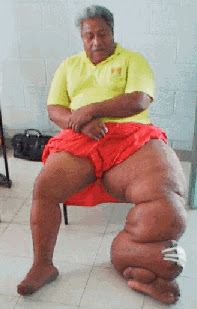
Lymphatic filariasis, also known as elephantiasis, is a neglected tropical disease (NTD) that causes a host of debilitating issues, including leading body parts, like limbs and genital organs, to swell to severe proportions, according to the World Health Organization. More than 120 million people worldwide are living with elephantiasis, and a group of advocates has hatched a plan to put an end to it.

India’s Ministry of Health and Family Welfare recently unveiled its mission to launch the largest mass drug administration in history to eliminate elephantiasis, a condition that leads to inescapable social stigma in addition to physical pain. Dubbed Hathipaon Mukt Bharat, which means –- Filaria Free India -– the initiative plans to dole out medication to more than 400 million people and hopes a PSA that features the effects of the disease will urge people to get involved.

According to WHO, preventing the spread of the disease requires just one annual dose of two medications.

India is an apt place to launch the program considering that more than a third of people who are affected by the world’s neglected tropical diseases live there. If the mission is successful, it could wipe out elephantiasis in India as early as next year, according to the campaign.

Eliminating elephantiasis could do much more than just keep people from developing the disabling condition. Experts say it’s critical in the fight to curb hunger, too, Reuters recently reported.

The 17 neglected diseases, which also include sleeping sickness, yaws and dengue fever, are most prevalent in rural communities in the poorest areas of the world.

While valiant efforts have been made to bring nutrition to people who are affected by such illnesses, experts say the diseases first need to be tackled before the sufferers can reap any true benefit from such programs.

“You can spend a lot of resources distributing protein supplements or vitamins, but in the end if you’re administering them to people infested with worms then that supplement is just being eaten by the worms,” Marianne Comparet, director of the International Society for Neglected Tropical Diseases, told Reuters.”We very much view the NTDs as an acute program to treat a disease, but also to ensure there’s a solid foundation for the other programs to grow from.”

http://www.huffingtonpost.com/2015/02/18/elephantiasis-india_n_6701478.html

Boat from 19th century found under New Jersey home

460x
Eileen Scanlon, left, steps across a 44-foot wooden boat on Wednesday, May 25, 2016, underneath a home she rents in Highlands, N.J. The 19th-century boat, likely used to transport coal and other goods, sat undisturbed until workers began raising the home to put it on pilings. (Thomas P. Costello/The Asbury Park Press via AP)

Workers raising a waterfront home in New Jersey made a nautical discovery: a 44-foot wooden boat from the 19th century.

The 12-foot wide vessel, its rudder fully intact, was found beneath Eileen Scanlon’s Highlands bungalow on Wednesday, the Asbury Park Press reported (http://on.app.com/1sRr5bR ). The boat likely was used to transport coal and other good along local waterways, and pieces of coal were found scattered along the floor.

Rumors of the vessel’s existence had circulated for years. Scanlon got a peek of what looked like a rudder through the home’s crawlspace shortly after buying it in 2010, but she didn’t anticipate the size and scope of the boat. It’s built from 3-inch-thick wooden plants and is held together with 18-inch iron nails.

Scanlon temporarily stopped construction under the house and called Russell Card of the Historical Society of Highlands.

“It was beyond amazing,” Card said. “I’ve heard about it before and the first time I ever saw it was yesterday. I never realized it was so big. I was amazed at the craftsmanship of it.”

The property was once a dock of sorts and people used to roll boats on wheels to get to and from the water, said Card, who believes someone left the boat and built the home around it.

The boat will be destroyed, but Scanlon plans to place the bow in her garden.

http://bigstory.ap.org/e476c90b094c472f98e21cca089e881b

King Tut’s dagger was made from a meteorite

Tutankhamun, the boy king of ancient Egypt who died at 18 and later exploded inside his own sarcophagus (http://gizmodo.com/king-tut-s-body-spontaneously-combusted-inside-its-sarc-1458705368), apparently owned—and was buried with—a literal space dagger made from meteoric iron.

Researchers from Milan Polytechnic, Pisa University, and the Egyptian Museum in Cairo used a X-ray fluorescence spectrometry to determine the composition of the knife without damaging it. The iron in the blade had high percentages of nickel, and trace amounts of cobalt, phosphorus, and other material that suggest the raw material was of extraterrestrial origin. That exact composition was traced to a specific meteorite nearby. Researcher Daniela Comelli told Discovery:

“Only one [meteorite], named Kharga, turned out to have nickel and cobalt contents which are possibly consistent with the composition of the blade,” she added.

The meteorite fragment was found in 2000 on a limestone plateau at Mersa Matruh, a seaport some 150 miles west of Alexandria.

Objects made from the metal of meteorites were probably considered extremely valuable in ancient Egypt, but they also reveal the sophistication of smithing during that era of human history. And the blade was not the only object in Tut’s tomb made from an unusual and rare material: a scarab necklace he was buried with is believe to be silica glass, caused by the impact of another space rock smashing into the Libyan desert and melting the nearby sand.

http://gizmodo.com/king-tut-had-a-space-dagger-1779709241

A type of rare coding machine Hitler used to communicate with his generals has been sold on eBay — for $14.

by Ivana Kottasova

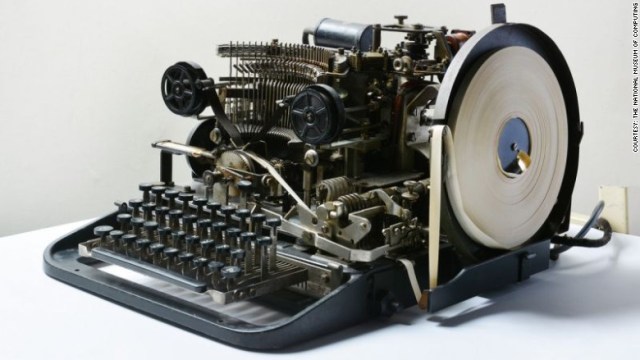
Volunteers at the National Museum of Computing at Bletchley Park in the U.K. found a part of an extremely rare Lorenz coding machine on eBay. The military-issue Lorenz teleprinter was advertised as a German telegram machine for £9.50 ($14).

“One of my colleagues was searching on eBay and came across what seemed to be a German Lorenz teleprinter, so we bought it and drove to Essex … and there it was in a garden shed under some rubbish, the Lorenz teleprinter in its carrying case,” said John Whetter, a volunteer at the museum.
The component looks a bit like an old typewriter and was used to transmit messages.

It connects to a Lorenz SZ42 cypher machine, one of which was used by Hitler and his closest associates to send top-secret strategic messages to the Nazi high command during the war.

The museum said that about 200 Lorenz SZ42 cypher machines were in existence during World War II. Only four are known to have survived.

The existence of the machines remained a secret until the 70s.

The museum is now trying to put together a complete Lorenz machine, using an SZ42 on loan from Norway, and replicate the process of encrypting and then deciphering a message using historical equipment. A motor for the machine is still missing. The story of the teleprinter’s discovery was first reported on the BBC.

The Lorenz machine uses a code in which each letter of the alphabet is represented by a series of five electrical impulses. Messages were enciphered by adding a series of letters to the original text. The letters were generated by 12 rotors.

To crack the code, code-breakers had to determine the starting position of the rotors. The code was first broken after the Germans made a mistake, sending two messages using the same setting.

Mathematician Bill Tutte then deduced the architecture of the machine, without ever seeing it.

“That has been described as one of the greatest intellectual feats of World War II,” Whetter said.

http://money.cnn.com/2016/05/31/news/ebay-world-war-two-coding-machine/index.html