This Man Will Get the World’s First Human Head Transplant Procedure

by Paul Ratner

Italian neurosurgeon Sergio Canavero is planning to perform the first-ever head transplant in December 2017. He will put the head of a terminally ill, wheelchair-bound Russian citizen Valery Spiridonov (31) on an entirely new body.

Spiridonov, a computer scientist, has Werdnig-Hoffman disease, a rare and incurable spinal muscular atrophy. As the disease is sure to kill him, Spiridonov sees the head transplant as his one shot to have a new body.

The controversial surgeon Canavero, dubbed by some “Dr. Frankenstein,” has been criticized for intending to do a possibly unethical and certainly dangerous operation. There are numerous things that could go wrong in such a medical feat that’s never been successfully carried out on humans. The main difficulty is seen in the fusion of the spinal cords.

One positive precedent has been set earlier this year by a team of Chinese surgeons, who successfully transplanted a monkey’s head. Dr. Xiaoping Ren, from Harbin Medical University, led that effort.

Canavero is raising around $18 million to pay for the procedure that he named “HEAVEN” (an acronym for “head anastomosis venture”). The details the doctor has given so far for the two-day operation first involve cooling the patient’s head to -15 C. Then the heads of both the patient and the donor would be severed and the patient’s head would be attached to the donor’s body. The spinal cords would be fused together while the muscle and blood supply would be attached. Spiridonov would then be placed into a coma for about a month to prevent movement and to allow for healing.

The donor of the body would be brain-dead, but otherwise healthy.

How does Spiridonov feel about doing the revolutionary surgery?

He says in an interview:

“If I manage to replace my body and if everything goes well, it will allow me to be free of the limitations I am experiencing. I am not rushing to go under the surgeon’s knife, I am not shouting – come and save me here and now. Yes, I do have a disease which often leads to death, but my first role in this project is not that of a patient. First of all, I am a scientist, I am an engineer, and I am keen to persuade people – medical professionals – that such operation is necessary. I am not going crazy here and rushing to cut off my head, believe me. The surgery will take place only when all believe that the success is 99% possible. In other words, the main task now is to get support for Canavero from the medical community, to let him go on with his methods and to improve them within these two coming years.

Canavero sees the potential use of his procedure not only in situations involving patients with severe disabilities like Spiridonov’s, but also to extend life.

“We are one step closer to extend life indefinitely because when I will be able to give a new body to an 80-year-old they could live for other 40 years,” said the Italian surgeon.

http://bigthink.com/paul-ratner/worlds-first-human-head-transplant-going-ahead

How the brain networks of psychopathic criminals functions differently

A strong focus on reward combined with a lack of self-control appears to be linked to the tendency to commit an offence. Brain scans show that this combination occurs in psychopathic criminals, say researchers from Nijmegen in an article in the journal Social Cognitive and Affective Neuroscience.

any criminal offenders display psychopathic traits, such as antisocial and impulsive behaviour. And yet some individuals with psychopathic traits do not commit offences for which they are convicted. As with any other form of behaviour, psychopathic behaviour has a neurobiological basis.

Researchers from the Donders Institute and the Department of Psychiatry at Radboudumc wanted to find out whether the way a psychopath’s brain works is visibly different from that of a non-psychopath. And whether there are differences between the brains of criminal and non-criminal psychopaths.

Reward center more strongly activated

Dirk Geurts, researcher in the Department of Psychiatry at Radboudumc: “We carried out tests on 14 convicted psychopathic individuals, and 20 non-criminal individuals, half of whom had a high score on the psychopathy scale. The participants performed tests while their brain activity was measured in an MRI scanner. We saw that the reward centre in the brains of people with many psychopathic traits (both criminal and non-criminal) were more strongly activated than those in people without psychopathic traits. It has already been proved that the brains of non-criminal individuals with psychopathic traits are triggered by the expectation of reward. This research shows that this is also the case for criminal individuals with psychopathic traits.”

Little self-control and sensitivity to reward

Another interesting difference was discovered between non-criminal people with multiple psychopathic traits and criminal people with psychopathic traits.

Geurts: “There is a difference in the communication between the reward centre and an area in the middle of the forebrain. Good communication between these areas would appear to be a condition for self-control. Our results seem to indicate that the tendency to commit an offence arises from a combination of a strong focus on reward and a lack of self-control. This is the first research project in which convicted criminals were actually examined.”

Predictors of criminal behaviour

Psychopathy consists of several elements. On the one hand, there is a lack of empathy and emotional involvement. On the other hand, we see impulsive and seriously antisocial, egocentric behaviour.

Professor of Psychiatry and coordinator of the research Robbert-Jan Verkes: “Especially the latter character traits seem to be connected with an excessively sensitive reward centre. The presence of these impulsive and antisocial traits predict criminal behaviour more accurately than a lack of empathy. The next relevant question would be: what causes these brain abnormalities? It is probably partly hereditary, but abuse and severe stress during formative years also play a significant role. Follow-up studies will provide more information.

Brain scans in courtrooms?

So what do these findings mean for the free will? If the brain plays such an important role, to what extent can an individual be held responsible for his/her crimes? Will we be seeing brain scans in the courtroom?

Verkes: “For the time being, these findings are only important at group level as they concern variations within the range of normal results. Of course if we can refine these and other types of examinations, we may well see brain scans being used in forensic psychiatric examinations of diminished responsibility in the future.”

http://www.psypost.org/2016/08/brain-network-of-psychopathic-criminal-functions-differently-44202#prettyPhoto

Book lovers live longer, scientists say.

By Amy Ellis Nutt

A recent study by Yale University researchers, published online in the journal Social Science & Medicine, concluded that “book readers experienced a 20 percent reduction in risk of mortality over the 12 years of follow-up compared to non-book readers.”

The data was obtained from a longitudinal Health and Retirement Study sponsored by the National Institute on Aging. The study looked at 3,635 subjects, all older than 50, whom the researchers divided into three groups: those who didn’t read books, those who read up to 3.5 hours a week and those who read more than 3.5 hours a week.

The findings were remarkable: Book readers survived almost two years longer than those who didn’t crack open a book.

Accounting for variables such as education level, income and health status, the study found that those who read more than 3.5 hours weekly were 23 percent less likely to die during that 12-year period. Those who read up to 3.5 hours — an average of a half-hour a day — were 17 percent less likely.

In other words, just like a healthy diet and exercise, books appear to promote a “significant survival advantage,” the authors concluded.

Why or how that’s the case remains unclear; the research showed only an association between book reading and longevity, not a causal relationship. But the findings are not so surprising. Other recent research showed that reading novels appears to boost both brain connectivity and empathy.

Book buying has increased annually during the past few years. At least 652 million print and electronic books were sold in the United States in 2015, according to Nielsen BookScan, the main data collector for the book publishing industry.

The bad news: Americans barely crack the top 25 when it comes to which countries read the most books. India, Thailand and China are ranked one, two and three by the World Culture Index, while the United States comes in 23rd, behind countries such as Egypt, Australia, Turkey and Germany.

The better news is that 80 percent of young adults in America read a book last year, compared with 68 percent of those between the ages of 50 and 64, according to a Pew Research Center survey.

Unfortunately, the Yale researchers said longevity was not increased by reading newspapers.

https://www.washingtonpost.com/news/to-your-health/wp/2016/08/09/the-best-reason-for-reading-book-lovers-live-longer-say-scientists/?campaign_id=A100&campaign_type=Email

Couple married 63 years die minutes apart in same room

By Doug Criss

It’s said that love is the strongest force in the world. If that’s true, then a married couple from South Dakota proves that not even death is strong enough to keep loved ones apart.

A funeral will be held in Platte, South Dakota, on Monday for a couple married for more than six decades who died just minutes apart on the same day and in the same room.

Henry and Jeanette De Lange both died on July 31, just 20 minutes apart in their room at a nursing home.

The De Langes had been married for 63 years.

Lee De Lange, one of their sons, told CNN affiliate KSFY there was a divine quality to having both parents pass at nearly the same time.

“We’re calling it a beautiful act of God’s providential love and mercy,” he said. “You don’t pray for it because it seems mean but you couldn’t ask for anything more beautiful.”

Jeanette De Lange, 87 and suffering from Alzheimer’s disease, died first at 5:10 p.m. Family gathered with her was reading the Bible at the time.

“We read Psalm 103. We didn’t quite get done,” said Lee De Lange. “She passed away very, very peacefully. Incredibly peacefully.”

Lee said his brother told his father, 86 and fighting prostate cancer, “mom’s gone to heaven” and that he didn’t have to fight anymore. He could let go and join her if he wished, the son added.

Twenty minutes later, at 5:30 p.m., Henry De Lange did just that. His children remember him briefly opening his eyes and looking at his wife before he died.

http://www.cnn.com/2016/08/08/us/married-couple-dies-minutes-apart-trnd/index.html

New research shows that hypnosis alters brain activity in several regions


By scanning the brains of subjects while they were hypnotized, researchers at the School of Medicine were able to see the neural changes associated with hypnosis.

By Sarah C.P. Williams

Your eyelids are getting heavy, your arms are going limp and you feel like you’re floating through space. The power of hypnosis to alter your mind and body like this is all thanks to changes in a few specific areas of the brain, researchers at the Stanford University School of Medicine have discovered.

The scientists scanned the brains of 57 people during guided hypnosis sessions similar to those that might be used clinically to treat anxiety, pain or trauma. Distinct sections of the brain have altered activity and connectivity while someone is hypnotized, they report in a study published online July 28 in Cerebral Cortex.

“Now that we know which brain regions are involved, we may be able to use this knowledge to alter someone’s capacity to be hypnotized or the effectiveness of hypnosis for problems like pain control,” said the study’s senior author, David Spiegel, MD, professor and associate chair of psychiatry and behavioral sciences.

A serious science

For some people, hypnosis is associated with loss of control or stage tricks. But doctors like Spiegel know it to be a serious science, revealing the brain’s ability to heal medical and psychiatric conditions.

“Hypnosis is the oldest Western form of psychotherapy, but it’s been tarred with the brush of dangling watches and purple capes,” said Spiegel, who holds the Jack, Samuel and Lulu Willson Professorship in Medicine. “In fact, it’s a very powerful means of changing the way we use our minds to control perception and our bodies.”

Despite a growing appreciation of the clinical potential of hypnosis, though, little is known about how it works at a physiological level. While researchers have previously scanned the brains of people undergoing hypnosis, those studies have been designed to pinpoint the effects of hypnosis on pain, vision and other forms of perception, and not the state of hypnosis itself.

“There had not been any studies in which the goal was to simply ask what’s going on in the brain when you’re hypnotized,” said Spiegel.

Finding the most susceptible

To study hypnosis itself, researchers first had to find people who could or couldn’t be hypnotized. Only about 10 percent of the population is generally categorized as “highly hypnotizable,” while others are less able to enter the trancelike state of hypnosis. Spiegel and his colleagues screened 545 healthy participants and found 36 people who consistently scored high on tests of hypnotizability, as well as 21 control subjects who scored on the extreme low end of the scales.

Then, they observed the brains of those 57 participants using functional magnetic resonance imaging, which measures brain activity by detecting changes in blood flow. Each person was scanned under four different conditions — while resting, while recalling a memory and during two different hypnosis sessions.

“It was important to have the people who aren’t able to be hypnotized as controls,” said Spiegel. “Otherwise, you might see things happening in the brains of those being hypnotized but you wouldn’t be sure whether it was associated with hypnosis or not.”

Brain activity and connectivity

Spiegel and his colleagues discovered three hallmarks of the brain under hypnosis. Each change was seen only in the highly hypnotizable group and only while they were undergoing hypnosis.

First, they saw a decrease in activity in an area called the dorsal anterior cingulate, part of the brain’s salience network. “In hypnosis, you’re so absorbed that you’re not worrying about anything else,” Spiegel explained.

Secondly, they saw an increase in connections between two other areas of the brain — the dorsolateral prefrontal cortex and the insula. He described this as a brain-body connection that helps the brain process and control what’s going on in the body.

Finally, Spiegel’s team also observed reduced connections between the dorsolateral prefrontal cortex and the default mode network, which includes the medial prefrontal and the posterior cingulate cortex. This decrease in functional connectivity likely represents a disconnect between someone’s actions and their awareness of their actions, Spiegel said. “When you’re really engaged in something, you don’t really think about doing it — you just do it,” he said. During hypnosis, this kind of disassociation between action and reflection allows the person to engage in activities either suggested by a clinician or self-suggested without devoting mental resources to being self-conscious about the activity.

Treating pain and anxiety without pills

In patients who can be easily hypnotized, hypnosis sessions have been shown to be effective in lessening chronic pain, the pain of childbirth and other medical procedures; treating smoking addiction and post-traumatic stress disorder; and easing anxiety or phobias. The new findings about how hypnosis affects the brain might pave the way toward developing treatments for the rest of the population — those who aren’t naturally as susceptible to hypnosis.

“We’re certainly interested in the idea that you can change people’s ability to be hypnotized by stimulating specific areas of the brain,” said Spiegel.

A treatment that combines brain stimulation with hypnosis could improve the known analgesic effects of hypnosis and potentially replace addictive and side-effect-laden painkillers and anti-anxiety drugs, he said. More research, however, is needed before such a therapy could be implemented.

The study’s lead author is Heidi Jiang, a former research assistant at Stanford who is currently a graduate student in neuroscience at Northwestern University.

Other Stanford co-authors are clinical assistant professor of psychiatry and behavioral sciences Matthew White, MD; and associate professor of neurology Michael Greicius, MD, MPH.

The study was funded by the National Center for Complementary and Integrative Health (grant RCIAT0005733), the National Institute of Biomedical Imaging and Bioengineering (grant P41EB015891), the Randolph H. Chase, M.D. Fund II, the Jay and Rose Phillips Family Foundation and the Nissan Research Center.

Stanford’s Department of Psychiatry and Behavioral Sciences and Department of Neurology and Neurological Sciences also supported the work.

Jiang H, White MP, Greicius MD, Waelde LC and Spiegel D. Brain Activity and Functional Connectivity Associated with Hypnosis. Cerebral Cortex. 2016 July 28;[Epub ahead of print].

http://med.stanford.edu/news/all-news/2016/07/study-identifies-brain-areas-altered-during-hypnotic-trances.html

The health benefits of tongue scraping

by Lambeth Hochwald

It’s been hammered into our heads to brush twice a day, floss once (though that’s up for debate) and maybe rinse with a fluoride mouthwash. But recently, another chore has been suggested as an addition to our dental routine: tongue scraping. But is this ayurvedic practice that dates back to ancient India really worth your while?

We went to two experts to find out if you should start your day scraping your tongue.

Dental hygienist Sam Williamson, owner of Teeth Whitening Belfast in Ireland, recommends the practice to all of his patients.

“Most of my clients don’t realize the effectiveness of tongue scraping until they actually do it and see all the gunk that comes off their tongue,” he says. “The tongue is the perfect breeding ground for bacteria, but although we take care of our teeth and our gums regularly, we don’t pay nearly as much attention to our tongue.”

The bacteria on your tongue is one of the main causes of bad breath, so scraping it regularly can significantly improve your breath over time. In fact, a recent study showed about 85 percent of all bad breath cases begin in the mouth and half are caused by bacteria residue on the tongue. Brushing your tongue is “the best way to ensure that your breath stays fresh throughout the day,” Williamson says.

Kimberly Harms, DDS, a dentist in Farmington, Minnesota, and a spokesperson for the American Dental Association, says “your taste buds in the back are made for bacteria to hide.” And when your mouth has a lot of bacteria in it, you can taste it. “That sour taste is often due to bacteria,” she says.

If you often suffer from dry mouth, this quick health routine can help that, too. “If you’re not producing enough saliva when you chew, you my have digestive issues,” Williamson says. “Scraping can help.”

How to do it

“A scraper is an efficient way to remove all that’s coating your tongue,” Harms says. Here are four things to keep in mind as you scrape:

1. Buy a dedicated tongue scraper (they cost as little as $6) that comes in plastic or metal and is usually shaped like the letter U.

2. Always be gentle — scraping your tongue should never hurt.

3. Scrape only five to 10 times, Harms suggests.

4. Don’t go too deep. “Since we have a gag reflex, be sure not to put the scraper too far back in your mouth,” she adds.

“It’s a wonderful thing,” Harms says. “We don’t like to praise things without research but tongue scraping makes sense. If you’re successful at brushing twice a day and flossing daily, great. Do that first. Consider tongue scraping a great adjunct to good oral hygiene.”

http://www.mnn.com/health/fitness-well-being/stories/what-you-need-know-about-tongue-scraping

The first human to live to be 1000 years old may be alive today

“The first person to live to be 1,000 years old is certainly alive today …whether they realize it or not, barring accidents and suicide, most people now 40 years or younger can expect to live for centuries,” claims Cambridge University geneticist Aubrey de Grey. “The only difference between my work and the work of the whole medical profession,” de Grey adds, “is that I think we’re in striking distance of keeping people so healthy that at 90 they’ll carry on waking up in the same physical state as they were at the age of 30, and their probability of not waking up one morning will be no higher than it was at the age of 30.”

The image above is one of 100 cast-iron life-size human figures by British sculptor Anthony Gormley that explore the place of humanity in nature. Gormley who has created and installed them high in the Alps, scattered over 150 sq km (58 sq miles) of some of Austria’s most dramatic scenery.

“I just don’t think [immortality] is possible,” countered Sherwin Nuland, a former professor of surgery at the Yale School of Medicine. “Aubrey and the others who talk of greatly extending lifespan are oversimplifying the science and just don’t understand the magnitude of the task. His plan will not succeed. Were it to do so, it would undermine what it means to be human.”

Perhaps de Gray is way too optimistic, but others have joined the search for a virtual fountain of youth. In fact, a growing number of scientists, doctors, geneticists and nanotech experts—many with impeccable academic credentials—are insisting that there is no hard reason why ageing can’t be dramatically slowed or prevented altogether. Not only is it theoretically possible, they argue, but a scientifically achievable goal that can and should be reached in time to benefit those alive today.

“I am working on immortality,” says Michael Rose, a professor of evolutionary biology at the University of California, Irvine, who has achieved breakthrough results extending the lives of fruit flies. “Twenty years ago the idea of postponing aging, let alone reversing it, was weird and off-the-wall. Today there are good reasons for thinking it is fundamentally possible.”

Even the US government finds the field sufficiently promising to fund some of the research. Federal funding for “the biology of ageing”, excluding work on ageing-specific diseases like heart failure and cancer – has been running at about $2.4 billion a year, according to the National Institute of Ageing, part of the National Institutes of Health.

So far, the most intriguing results have been spawned by the genetics labs of bigger universities, where anti-ageing scientists have found ways to extend live spans of a range of organisms—including mammals. But genetic research is not the only field that may hold the key to eternity.

“There are many, many different components of ageing and we are chipping away at all of them,” said Robert Freitas at the Institute for Molecular Manufacturing, a non-profit, nanotech group in Palo Alto, California. “It will take time and, if you put it in terms of the big developments of modern technology, say the telephone, we are still about 10 years off from Alexander Graham Bell shouting to his assistant through that first device. Still, in the near future, say the next two to four decades, the disease of ageing will be cured.”

But not everyone thinks ageing can or should be cured. Some say that humans weren’t meant to live forever, regardless of whether or not we actually can.

After all, we already have overpopulation, global warming, limited resources and other issues to deal with, so why compound the problem by adding immortality into the mix.

But anti-ageing enthusiasts argue that as our perspectives change and science and technology advance exponentially, new solutions will emerge. Space colonization, for example, along with dramatically improved resource management, could resolve the concerns associated with long life. They reason that if the Universe goes on seemingly forever—much of it presumably unused—why not populate it?

However, anti-ageing crusaders are coming up against an increasingly influential alliance of bioconservatives who want to restrict research seeking to “unnaturally” prolong life. Some of these individuals were influential in persuading President Bush in 2001 to restrict federal funding for embryonic stem cell research. They oppose the idea of life extension and anti-ageing research on ethical, moral and ecological grounds.

Leon Kass, the former head of Bush’s Council on Bioethics, insists that “the finitude of human life is a blessing for every human individual”. Bioethicist Daniel Callahan of the Garrison, New York-based Hastings Centre, agrees: “There is no known social good coming from the conquest of death.”

Maybe they’re right, but then why do we as humans strive so hard to prolong our lives in the first place? Maybe growing old, getting sick and dying is just a natural, inevitable part of the circle of life, and we may as well accept it.

“But it’s not inevitable, that’s the point,” de Grey says. “At the moment, we’re stuck with this awful fatalism that we’re all going to get old and sick and die painful deaths. There are a 100,000 people dying each day from age-related diseases. We can stop this carnage. It’s simply a matter of deciding that’s what we should be doing.”

http://www.dailygalaxy.com/my_weblog/2016/08/the-first-human-on-earth-to-live-to-be-1000-years-old-is-alive-today-weekend-feature-1.html?utm_source=feedburner&utm_medium=feed&utm_campaign=Feed%3A+TheDailyGalaxyNewsFromPlanetEarthBeyond+%28The+Daily+Galaxy+–Great+Discoveries+Channel%3A+Sci%2C+Space%2C+Tech.%29

The possibility of erasing negative memories

by Lauren Gravitz

Imagine you’re the manager of a café. It stays open late and the neighbourhood has gone quiet by the time you lock the doors. You put the evening’s earnings into a bank bag, tuck that into your backpack, and head home. It’s a short walk through a poorly lit park. And there, next to the pond, you realise you’ve been hearing footsteps behind you. Before you can turn around, a man sprints up and stabs you in the stomach. When you fall to the ground, he kicks you, grabs your backpack, and runs off. Fortunately a bystander calls an ambulance which takes you, bleeding and shaken, to the nearest hospital.

The emergency room physician stitches you up and tells you that, aside from the pain and a bit of blood loss, you’re in good shape. Then she sits down and looks you in the eye. She tells you that people who live through a traumatic event like yours often develop post-traumatic stress disorder (PTSD). The condition can be debilitating, resulting in flashbacks that prompt you to relive the trauma over and over. It can cause irritation, anxiety, angry outbursts and a magnified fear response. But she has a pill you can take right now that will decrease your recall of the night’s events – and thus the fear and other emotions associated with it – and guard against the potential effects of PTSD without completely erasing the memory itself.

Would you like to try it?

When Elizabeth Loftus, a psychologist at the University of California, Irvine, asked nearly 1,000 people a similar question, more than 80 per cent said: ‘No.’ They would rather retain all memory and emotion of that day, even if it came with a price. More striking was the fact that 46 per cent of them didn’t believe people should be allowed to have such a choice in the first place.

Every day, science is ushering us closer to the kind of memory erasure that, until recently, was more the province of Philip K Dick. Studies now show that some medications, including a blood-pressure drug called propranolol, might have the ability to do just what the ER doctor described – not just for new traumas, but past ones too.

Granted, that future is not yet here. Most of the time, we’re still better at subconsciously editing our own recollections than any new technology is. But with researchers working on techniques that can chisel, reconstruct and purge life’s memories, it becomes crucial to ask: do we need our real memories? What makes us believe that memory is so sacrosanct? And do memories really make us who we are?

Many would argue that humans are driven by their stories. We create our own narratives based on the memories we retain and those we choose to discard. We use memories to build an understanding of self. We lean on them to make decisions and direct our lives.

But what happens to our sense of self if we purge the most distasteful memories and cherry-pick the good ones? When some things are hard to think about, or so injurious to our self-image, are we better off creating a history in which they no longer exist? And if we do, are we doomed to repeat our mistakes without learning from them, doomed to fight the same wars? By finding ways to erase our memories, are we erasing ourselves?

Our memories aren’t fixed. We already edit them: sometimes intentionally, sometimes not. Sometimes by ourselves, and sometimes when other people’s recollections filter into our own. We forget. We ‘remember’ incorrectly. We can even train our brains to remember facts and moments with greater acumen.

Think about your first kiss. No, go back further, to the first time you rode a bike. How clear is that memory? Is it picture-perfect or has it acquired a sepia tint and become a bit tattered around the edges?

The first time I balanced on a two-wheeler was in front of our little ranch-style house on a quiet street in northern California. I was perched proudly, if hesitantly, on the flowered banana seat of a shiny purple Schwinn that my father had just separated from its training wheels. ‘Don’t let go,’ I told my mom before we pushed off. She nodded and I started peddling as she grasped the rounded chrome handle on the back of the seat. ‘Don’t let go!’ I yelled again, and glanced back to find that she had, in fact, let go and was now half a block away, laughing and looking oh-so proud. I promptly fell. And then, because I’d scraped my knees, I started to cry. She came running up and I screamed at her, feeling betrayed.

At least, I think that’s what happened. Thirty-five years later I’m not so sure. Perhaps adult-me has re-interpreted what five-year-old me was feeling. Or perhaps, over the years, every time I pulled this memory up to the surface and told the story, I changed it ever so slightly, until what I remember now is more fiction than fact.

For decades, most memory researchers compared memories to photographs, and our brains to albums or filing cabinets stuffed full of them. They believed that each photo required an initial development period – much the way that pictures are processed in a darkroom – and then was filed away for future reference.

But in the past few decades, scientists have discovered that memory is far more plastic than that. It doesn’t just fade like a photograph tucked away in an album. The details subtly morph and shift. It’s malleable. And some research suggests it might be erasable.

Individual neurons communicate using chemicals called neurotransmitters, which flow from one neuron to the next across synapses – small gaps between the nerve cells. When memories are formed, protein changes at the nerve synapses must be consolidated and translated into long-term circuits in the brain. If consolidation is interrupted, the memory dissolves.

Different types of memories are stored in different places in the brain, and each memory has a dedicated network of neurons. Short-term memories such as a grocery list or an address live, briefly, in the pre-frontal cortex – the foremost area of the folded grey matter that encases the brain. Fear and other intensely emotional memories exist in the amygdala, while facts and autobiographical events are located in the hippocampus. But memories aren’t isolated in these different areas – they overlap and intertwine and connect and diverge like the tangled branches of an old lilac tree. Even when a factual memory fades it can leave an emotional trace behind.

In 2000, two neuroscientists at New York University, Karim Nader and Joseph LeDoux were studying memory in rats when they discovered that the very act of recalling a memory puts it at risk of being altered or possibly erased. When a rat is afraid, it freezes in its tracks. Nader trained his rats to associate a particular tone with a mild electrical shock – every time he played it for them, they froze. As much as a year later, they still froze whenever they heard it, proof that the memory had consolidated and remained intact. Then, he injected a drug that blocked protein formation into each rat’s amygdala, the brain’s emotional strongbox, and played them the same sound but this time without the shock. The next day, the animals had no reaction at all to the tone.

The results were the first to prove how it might be possible to alter a memory that had already been stored, says Nader, who’s now at McGill University in Montreal. ‘We showed that just by recalling a year-old memory, a circuit can go back to being unstored and has to be stored again.’ With each recall, the memory was being reconsolidated – a process akin to pulling a picture out of that album, telling a story about it, then trying to reposition it exactly as it was. But the drug disrupted that process, as though someone had closed the album and spirited it away before the photo could be replaced. Now, with nothing to reinforce the rats’ memories upon recall, the memories appeared to evaporate as though they had never existed.

Upon hearing about Nader’s research, one of his colleagues at McGill, the psychologist Alain Brunet, began looking into whether the finding could be applied to people with PTSD. This condition is less a problem of remembering and more of not-forgetting, when the mind repeatedly plays back a disturbing chain of events, each time prompting the same feelings of fear and distress that were present the moment it happened.

The drug that Nader injected into his rats isn’t approved for most uses in humans. But another one that blocks protein formation in the amygdala is inexpensive, safe, and readily available: the blood pressure-lowering drug, propranolol.

Brunet has now performed a number of trials in people with PTSD – with as few as one session and as many as six – and seen some intriguing results. By administering the pill, waiting an hour, then asking his subjects to write down the traumatic story in as much detail as they could remember, Brunet found that some who had suffered PTSD for years began to look back at the event and remember most of the details while feeling… well, not much at all.

Scientists think it might work like this: norepinephrine is a stress hormone, a neurotransmitter that enhances emotional learning in the brain. Propranolol blocks its effects, preventing its involvement in reconsolidation of the retrieved memory. ‘The reconsolidation blockade has potential to become a universal treatment for PTSD. And PTSD is a universal problem,’ Brunet told me.

Other researchers have tried to repeat Brunet’s work, with greater or lesser success. In two separate studies, led by Brunet and the Harvard psychiatrist Roger Pitman, ER patients who took propranolol within six hours after a trauma appeared protected from experiencing intensely physical reactions when they recalled the event a few months later. It was these studies that Loftus referenced when she created her thought experiment – and that her subjects believed should not be allowed to go any further.

Because propranolol can seemingly erase emotional fear without affecting factual memory, it also holds promise for other anxiety-related disorders. Last year, Merel Kindt, a psychology researcher at the University of Amsterdam, used the drug to help people with arachnophobia to overcome their fear of spiders. Although they clearly remembered being afraid, Kindt’s subjects could now touch and even hold a tarantula.

New studies continue to reveal ways in which memory reconsolidation might be helpful, and multiple mechanisms that could be exploited for memory editing. By disassociating addicts’ memories of being high from their fond feelings toward the experience, scientists have looked at the potential of propranolol to cure alcohol addiction in people, and have even tested it for treating heroin and cocaine addiction in rats. Others are interested in a different drug, called Blebb, to slice out methamphetamine-related memories.

If this same memory-dampening pill could be used to help addicts, would Loftus’s subjects feel differently about its value? Could a judge ethically order this kind of therapy for chronically troubled addicts? When is memory expendable for the good of an individual or of society? And why is it less tolerable to use medication to erase or suppress a memory than it is to rely on our own brains to do the work?

The human brain is remarkably flexible. Its ability to selectively prune our memories’ errant branches is a necessary adaptation. If we remembered every moment of every day, most of us would get too bogged down in our own minds to be functional. Psychologists believe that the human brain has evolved to forget the trivial stuff and highlight important episodes, especially negative ones, so that we might better predict future events and know how to handle them.

That can make trauma harder to expunge, perhaps for good reason. ‘Traumatic experiences give you an opportunity to think about who you are in the moment that life really disrupts you. They make you ask: “What kind of person am I? How did I get out of it?”’ says Kate McLean, a psychologist who specialises in narrative identity at Western Washington University in Bellingham.

‘Dealing with trauma is like strengthening a muscle. If you’ve done your bicep curls, the next time you have to lift a heavy box you can do it more easily,’ she says. ‘People who don’t deal with or who forget [trauma] are not necessarily less happy, but will they be able to deal with the challenges that come next?’ She postulates that they might. But, she says, they could also discover that this kind of temporary coping strategy has consequences up the road.

I have no need to remember what I had for lunch last Wednesday, nor what I wore to that REM concert in 1995 (and I probably don’t want to). I do, however, clearly remember how I lost my footing at the top of the 57th Street subway entrance and bumped down a flight of stairs to land in a wet, embarrassed heap. I will never again forget that metal stair treads get slippery in the rain.

As mortified as I felt, however, the experience doesn’t seem like something I’d want to erase from my memory. Even the most red-faced, shameful moments of my life aren’t something I want to forget: they make me who I am. They are my cautionary tales, my forehead wrinkles. They help me navigate relationships more tactfully and better predict potential outcomes.

If someone were to ask me how I felt about scrubbing away emotional memories, I’d advise them to think hard about it. After all, that’s what I did, and I might never forgive myself.

I am one of the people McLean’s warning is meant for, one of those people who at some point made a conscious decision not to deal with one of life’s challenges. I have a gaping hole in my memory where my father should be, the result of a particularly effective attempt at not dealing by my adolescent brain.

My father had multiple sclerosis. It wasn’t something I thought much about growing up, other than dedicating a sixth-grade science-fair project to describing the disease. It’s an autoimmune disorder of the central nervous system, in which damage to the protective nerve sheaths disrupts neural signalling. It can cause everything from vision problems to paralysis. For my dad, at first, it mostly meant bouts of dizziness and occasional weakness.

One January afternoon when I was 12, however, I walked in after school to see both of my working parents at home in the middle of the day. Something was clearly wrong. My father had caused a car accident that morning and, while both he and the person he’d hit were uninjured, he had no memory of how he got there – a neighbourhood in the opposite direction from his office – and remained confused about the gender of the other driver. It was our first clue that his disease was about to take a rare, devastating turn, and steal not only his mobility but his mind.

In a way, it stole my mind, too.

Within six months, my father – a toxicologist and epidemiologist with a PhD in biochemistry – was spending his workdays staring vacantly out of his office window. He went from a sharp and quick-witted (if occasionally acerbic) debate partner to someone who was dull and vacuous (if mostly pleasant). He displayed all the joy and petulance of a four-year-old and had trouble holding up his end of anything but the simplest conversations.

His body soon followed. The medications he took to help him walk caused terrible convulsions that left him shaking on the floor. A lifelong smoker, he’d light a cigarette and then forget he was holding it, sometimes singeing the tips of his fingers or, once, dropping it in the bathroom where it melted a hole in the linoleum. Within months, he progressed from cane to walker to wheelchair, and eventually had so much trouble swallowing he required a gastric feeding tube for nutrition and a Styrofoam cup to spit into so he wouldn’t choke on his own saliva.

I remember all of this quite clearly. I remember that damned Styrofoam cup, the shiny blue of his wheelchair, the glassy look in his eyes. I remember how he hardly recognised me but how he lit up with the purest smile when my mother entered the room. And despite the fact that I was almost a teenager when the disease began to ravage my father, despite 12 years of prior history dense with family trips and holidays, despite a nightly tradition reading The Hobbit and other books aloud together before bed, I do not remember what my dad was like before he lost his mind.

It’s not that I don’t remember doing all those things – I do. I just can’t remember him. On the day of that first bike ride, even though he had just taken the training wheels off my purple Schwinn, I have no idea if he was standing next to my mother when I fell or if he was even there at all. It’s as if I have taken a scissor to my memories and sliced him right out of the photographs.

At the time, I did it quite intentionally. Every time my mother started to ask: ‘Do you remember when your father…’ I would cut her off abruptly. ‘I don’t want to talk about it,’ I’d say. Then I’d force my brain to bounce past it like a stone skipping off a pond and focus instead on something less painful, usually the man he had become. Rather than dwelling on the father I’d lost, my teenage brain lessened the heartbreak by replacing him with the man who sat in that blue wheelchair. Decades later, I can’t remember him as anything else, no matter how hard I’ve tried.

According to Michael Anderson, a neuroscientist at the University of Cambridge, I did something called ‘retrieval suppression’, in which someone intentionally takes mental action to prevent remembering something unpleasant – a process facilitated by the prefrontal cortex. So far, the emotional stronghold of the amygdala is what researchers understand best when it comes to memory suppression. Yet it’s my hippocampus, the area where factual memory lies, that seems to have the (figurative) holes. Intentional suppression works because we engage the brain’s prefrontal cortex to help us temporarily interrupt hippocampal function, briefly preventing it from encoding or consolidating memories.

Psychologists have long suggested that this kind of memory suppression takes a toll. According to Freud, memories pushed deep into the subconscious mind continue to influence a person’s thoughts and actions long into the future.

But Anderson has found that suppressing a memory also suppresses its subconscious effect on behaviour. He uses a procedure dubbed ‘think/no-think’ to better understand suppression in his study volunteers: first he shows them a picture or a word, then he directs them to either think about it or to intentionally shut down the retrieval process. To look specifically at its effect on behaviour, he and his colleagues asked volunteers to learn a set of word-picture pairs so that a word would prompt them to think of the coupled object (be it a motorcycle or a potted plant). But if the word itself was in red, they told participants to intentionally suppress any thought of the associated object when it popped to mind. When the researchers later showed them pictures of the objects, their subjects had a slightly harder time identifying them.

Some clinicians take the stance that memory suppression can be unhealthy, but this may be based on false assumptions, Anderson says. ‘Maybe it’s not a bad idea to suppress them after all. By giving unwanted memories undue attention, you could ensure they continue to stick around.’

Earlier this year, using the same think/no-think technique, he found that intentional suppression creates what he calls an ‘amnesic shadow’, one that spreads beyond the unwanted memory like a tree pruned a bit too enthusiastically. Participants in Anderson’s trial found that not only were they unable to remember objects they were trying to suppress, they were also less likely to remember objects they learned shortly before or after one they tamped down. It’s a finding that helps explain why people who experience harrowing car crashes and other distressing events often can’t remember what immediately preceded the trauma. It could also help explain why I have so few memories of doing anything at all with my father.

Those memories might not be gone forever. A recent study in the neurologically simple sea slug indicates that interrupting reconsolidation might not be erasing memories but instead simply blocking our access to them. David Glanzman, a neurobiologist at the University of California, Los Angeles, has found that when neurons of the sea hare known as Aplysia californica are transferred to a petri dish, they can be trained much like Nader’s shocked rats. And as with those rats, when Glanzman and his colleagues triggered a memory of the shock and then dosed them with a drug that blocks protein formation, a number of synapses disappeared. But the synapses that dissolved appeared to be random – they weren’t necessarily those associated with the shock. When the researchers went back to the intact animals to see if they could reinstate the shock memory, they found that just a few shocks were enough to restore memories that should have been completely erased. This told them that the memory was located outside the synapses; they traced it to the cell’s nucleus, a part of the neuron that remains intact even as synapses come and go. Deep within the brain, or at least in the brain cells of a sea hare, memories persist.

Yet knowing this, knowing someone could one day tell me that they had found a way to grant me access to my memories of my father, I’m no longer certain I would try.

I spent years trying to find those memories. I asked relatives and friends for stories. I stared at faded family pictures trying to infuse them with the personality and warmth that comes only from the act of reminiscing. But perhaps all this time I’ve been looking for the wrong thing. Perhaps it’s okay to let the memories go. Over time, my sliced-up memories have defined my personal understanding of self and have, ever so gradually, become part of a narrative I’m no longer sure I want to change.

Yes, my over-pruned tree is missing some branches and appears rather lopsided. Its flowers don’t always open the way they should. But it’s also sprouting new leaves in places I never expected, and its crooked visage is simply part of who I am. Rather than trying to fill those empty holes, I can now look at the negative space and see it – all of it – as a part of me.

Can the World Sustain 9 Billion People by 2050?

By Philip Perry

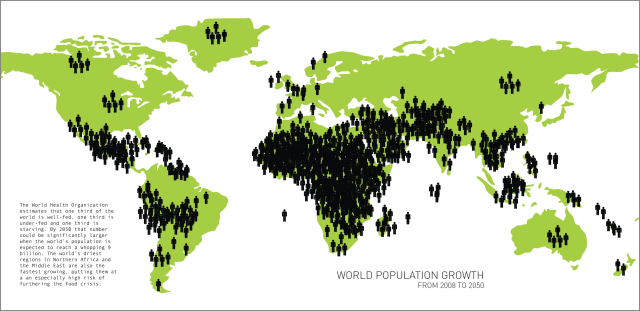
The world’s population is topsy-turvy, and its exponential and uneven growth could have disastrous consequences if we aren’t ready for it. Humanity recently hit a benchmark, a population of 7.9 billion in 2013. It is expected to reach 8.5 billion by 2030, and 9.6 billion by 2050. If that weren’t enough, consider 11.2 billion in 2100. Most of the growth is supposed to come from nine specific countries: India, Pakistan, the Democratic Republic of the Congo, Ethiopia, Tanzania, Nigeria, the United States, and Indonesia.

It isn’t fertility that is driving growth, but rather longer lifespans. World population growth peaked in the 1960s, and has been dropping steadily since the ’70s. 1.24% was the growth rate a decade ago, annually. Today, it is 1.18% per year. Populations in developed countries have slowed to a trickle. Here, it has gotten too expensive to have a child for a large segment of the populace, particularly in the wake of the Great Recession, when young people have to invest a lot of time in education and building a career, spending their most fertile years in lecture halls and office cubicles. Although overall, fertility has been dropping worldwide, the report says researchers used the “low-variant” scenario of population growth. It could be higher.


World population growth by continent.

Meanwhile, the enormous baby boomer generation is aging, and public health officials warn that a “Silver Tsunami” is coming. Worldwide, those age 60 and over are expected to double by 2050, and triple by 2100. As workers age, fewer young people are around to replace them, and that means less taxpayers for Medicare and abroad, for socialized medicine. In Europe, a staggering 34% of the population is projected to be over 60 by 2050. What’s more, Europe’s population is forecast to plummet 14%. It is already struggling, as is Japan, to provide for its aging population. But the birth deficit is likely to exacerbate the problem.

In the U.S., the number of Alzheimer’s patients alone is expected to bankrupt Medicare, if no cure is found, and the program remains as it is today. “Developed countries have largely painted themselves into a corner now,” according to Carl Haub. He is the senior demographer at the Population Reference Bureau.

According to a U.N. report, most of the growth will come from developing countries, with over half projected to take place in Africa, the poorest continent financially, whose resources are already under pressure. 15 highly fertile countries, mostly in sub-Saharan Africa, are expected to increase the number of children per woman at a rate of a little over five per cent, or five per female. Nigeria’s population will likely surpass that of the U.S. by 2050, becoming the third largest in terms of demographics.

The population in developed countries is expected to remain unchanged, holding steady at 1.3 billion. Some developing countries such as Brazil, South Africa, Indonesia, India, and China are seeing a swift fall in the average number of children per woman, which is expected to continue. This may be due to better economic prospects. We often think of China as the world’s most populous nation, but India is set to reach them by 2022, when both nations will contain 1.45 billion citizens. Afterward, India is predicted to surpass China. As India’s population grows, China’s will shrink.

As far as life expectancy, it is expected to increase in both developed and developing nations. Globally, life expectancy will likely be 76 years on average in the 2045-2050 period. It will reach 82 years of age in 2095-2100, if nothing changes. Nearing the end of the century, those in developing nations could expect to live to 81, while in developed nations, 89 will be the norm. Yet, there are concerns that the developing world will suffer even more than today due to this phenomenon.

“The concentration of population growth in the poorest countries presents its own set of challenges, making it more difficult to eradicate poverty and inequality, to combat hunger and malnutrition, and to expand educational enrollment and health systems,” according to John Wilmoth. He is the Director of the Population Division in the UN’s Department of Economic and Social Affairs.

Another worry is resource depletion. Minerals, fossil fuels, timber, and water may become scarce in several regions of the world. Since wars are often fought over resources, and water use is expected to increase 70-90% by mid-century, without improved farming methods and smarter use, water may become the next oil, in terms of driving nations into violent conflict. The world’s water in certain regions is already strained. India and China for instance have already fought two wars over water claims.

Climate change is also likely to eat up more arable land, contributing to fears of food scarcity, as well as the loss of biodiversity, which is likely to occur at a faster rate. To help tamp down the world population, UN researchers suggest investing in reproductive health and family planning, particularly in developing nations.

This report was made possible by 233 countries providing demographic data, as well as 2010 population censuses.

http://bigthink.com/philip-perry/can-the-world-sustain-9-billion-people-by-2050?utm_source=Big+Think+Weekly+Newsletter+Subscribers&utm_campaign=709f2481ff-Newsletter_072016&utm_medium=email&utm_term=0_6d098f42ff-709f2481ff-41106061