Cardinals are protecting people from West Nile Virus


The birds seem to buffer humans from West Nile virus, according to a new study, especially in cities with more patches of old-growth forest.

by Rusell McLendon

The northern cardinal is one of North America’s most familiar songbirds. From the scarlet feathers and pointed crest of males to the rich, rhythmic songs of both sexes, it’s an unmistakable icon of countless American forests, parks and backyards.

And as a new study demonstrates, northern cardinals are much more than just scenery and a soundtrack. As part of eastern North America’s native biodiversity, they can also play a key role in keeping ecosystems — including humans — healthy.

That’s according to new research from Atlanta, where a team of scientists wanted to figure out why more people don’t get sick with West Nile virus (WNV). The mosquito-borne virus is zoonotic, meaning it can be spread between humans and other animals by a “bridge vector,” a role played by Culex mosquitoes for WNV.

Since WNV was introduced to the U.S. in 1999, it has become the country’s most common zoonotic disease carried by mosquitoes, causing more than 780,000 infections and 1,700 deaths. But for some reason, the virus sickens people in some areas more than others. It’s abundant in both Georgia and Illinois, for example, showing up in nearly 30 percent of birds tested in Atlanta, compared with 18.5 percent in Chicago. Yet only 330 human cases have been reported throughout Georgia since 2001, while Illinois has seen 2,088 human cases since 2002.

“When West Nile virus first arrived in the United States, we expected more transmission to humans in the South, because the South has a longer transmission season and the Culex mosquitos are common,” says senior author Uriel Kitron, chair of environmental sciences at Emory University, in a statement. “But even though evidence shows high rates of the virus circulating in local bird populations, there is little West Nile virus in humans in Atlanta and the Southeast in general.”

The reason for that difference has remained a mystery for years, prompting a three-year study by a team of scientists from Emory, the University of Georgia, the Georgia Department of Transportation and Texas A & M University. They collected mosquitoes and birds from various sites across Atlanta, tested them for WNV, and analyzed DNA from their blood meals to learn which birds they’d been biting.

“We found that the mosquitoes feed on American robins a lot from May to mid-July,” says lead author Rebecca Levine, a former Emory Ph.D. student now working at the U.S. Centers for Disease Control and Prevention (CDC). “But for some unknown reason, in mid-July, during the critical time when the West Nile virus infection rate in mosquitos starts going up, they switch to feeding primarily on cardinals.”

Previous research has shown American robins act as “super spreaders” of WNV in some cities like Chicago, Levine adds. Something about their blood creates a favorable environment for WNV, so the virus amplifies wildly once a robin is infected, meaning the birds can more efficiently pass it to new mosquitoes when bitten.

But cardinals have the opposite effect. Their blood is like an abyss for WNV, leading the researchers to describe the birds as “super suppressors” of the virus.

“You can think of the cardinals like a ‘sink,’ and West Nile virus like water draining out of that sink,” Levine says. “The cardinals are absorbing the transmission of the virus and not usually passing it on.” Cardinals seem to be the top suppressors of WNV, the study found, but similar effects are seen in birds from the mimid family — namely mockingbirds, brown thrashers and gray catbirds, all of which are common in Atlanta.

http://www.mnn.com/health/healthy-spaces/blogs/why-cardinals-can-be-good-human-health
Movement to bring the Tug of War back to the Olympics

by Timothy Burke

Tug of war was contested as an official Olympic event from 1900 until 1920, when it was culled from the Summer Games program alongside sports like equestrian vaulting (jumping onto—and then off of—a horse), figure skating, and ice hockey. We think it’s time tug of war came back to the Olympics, and we have a solid plan to make it happen.

The IOC, after years of trying to stop the increasing bloat of events, is adding a ton of them in 2020. So any inherent institutional barrier to adding one more sport doesn’t seem to exist. Here’s how we’d do it:

The event would be competed in the main Olympic stadium, on the last day of competition—before the marathoners, who are traditionally the final competitors, arrive at the finish. Each country enters one ten-member team—with each member of the team being selected from that country’s existing delegation, and each team featuring five men and five women. (Countries that don’t have five men and women can join forces with other smaller delegations. Not that the IOC actually believes this, but it is in harmony with the Olympics’ theme of peace, and cooperation.)

Furthermore, teams can only select one competitor from each discipline. That means one weightlifter, one athletics competitor, one basketball player, et cetera. Matches are best of three, two-minute rounds, in a single-elimination bracket. The event would be incredibly cheap to execute, especially since there are no increased costs for additional athletes. And it would be great television!

What say you? Who would your dream tug of war team be? I’d pick:

Kendrick Farris (weightlifter)
Robby Smith (wrestler)
Rudy Winkler (athletics: hammer throw)
Draymond Green (basketball)
Clayton Laurent (boxing)
Katie Ledecky (swimming)
Hope Solo (soccer)
Mel Seidemann (water polo)
Kayla Harrison (judo)
Akalani Baravilala (rugby)

http://deadspin.com/a-legitimate-plan-to-restore-tug-of-war-as-an-olympic-e-1785130379

Dark treatment for people with mania

By James Phelps, MD

If light is an antidepressant (true) and antidepressants can make bipolar disorders worse (true), can darkness make bipolar disorders better? Might darkness be anti-manic?

This idea was explored over 2 decades ago, with a stunningly successful case report from the National Institute of Mental Health (NIMH) demonstrating that in at least 1 patient, darkness was indeed a mood stabilizer (1). But the protocol was arduous: 14 hours of enforced darkness every night.

It was so effective, they backed off to 10 hours, from 10 pm to 8 am, which kept the patient well with no medications for over a year. Yet, as clinicians know, patients still resist giving up their electric light, especially their TVs, tablets, and phones.

Hold that thought; and consider a completely separate line of research, which found that all wavelengths of light are not created equal. Blue light is by far the most powerful in setting circadian rhythm.

A new retinal photoreceptor, not a rod or cone, was discovered in 2001; it is sensitive primarily to blue light (2). These receptors connect not to the visual cortex but to the suprachiasmatic nucleus of the hypothalamus, wherein resides the primary biological clock. They are “circadian photoreceptors.”

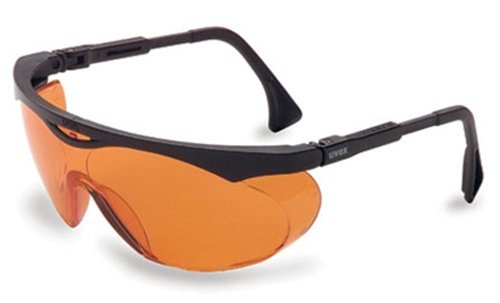
Now put these 2 lines of research together. At night, when evolutionarily we should have 8 to 14 hours of darkness, one can create “virtual darkness” by blocking just the blue wavelengths of light. This can be done at the source (F.lux for Windows; NightShift for recent Apple products; and lowbluelights.com for no-blue bulbs and nightlights) or by simply donning a pair of amber-colored safety glasses.

The latter are available as fit-over-glasses, # S0360X; or a stylish version for young people with good eyes, # 3S1933X (purchase from Amazon—or, in a fun twist, from your local Airgas welding shop, ~$9). These safety glasses have been shown to preserve melatonin production at night even in a fully lit environment.3 About 50% of patients responded to wearing the amber lenses with reduced sleep latency and improved sleep quality (4).

But now the acid test: if darkness is a mood stabilizer, and if amber lenses produce physiologic darkness, then can the lenses treat acute mania?

This has just been shown quite conclusively(5) (to the extent that a single randomized trial is conclusive; but note this is a replication of another small inpatient study that used real darkness and found similar, though slightly less robust results (6).

In the new study from Norway, patients being admitted with bipolar mania were randomized to wear amber lenses or control clear lenses whenever they were not in real darkness during the 14-hour period from 6 pm to 8 am.

Thus, they replicated the intervention from the NIMH case report, using either real or “virtual darkness” with the amber lenses. The intervention began near admission and continued for 7 days, during which all participants received other treatments, including anti-manic medications, per usual.

Young Mania Rating Scale (YMRS) scores plummeted in the amber lenses group while those of the control group diminished only slightly: starting from a mean YMRS of 25, reductions were 14.1 vs 1.7, respectively.

Unfortunately, the sample size was smaller than originally intended because of growing public awareness of the effects of blue light and blue light–blocking glasses and consequently the patients knew what effect to expect. Thus, this may be the only such study we’ll ever see, and it took 10 years to replicate the first inpatient study6 of dark therapy.

So I hope that this new Norwegian study will not be dismissed as a pilot. The data are in. Time to move dark therapy into regular practice, as has already been suggested in the latest bipolar-specific psychotherapy, “CBT-IB: A Bipolar-Specific, All-Around Psychotherapy.”

But patients are often hesitant to increase their exposure to darkness: it means giving up things they value, especially television and other electronic entertainment. Blue light blockade can be much more acceptable.

http://www.psychiatrictimes.com/bipolar-disorder/new-zero-risk-treatment-mania/page/0/2?GUID=C523B8FD-3416-4DAC-8E3C-6E28DE36C515&rememberme=1&ts=12082016

A metabolic shift in neurons may provide insight into neurodegenerative diseases


A key metabolic pathway must be switched off during neuron development or fewer neurons (green, on the right) survive.

by Jennifer Hicks

Researchers at the Salk Institute of Biological Studies released a study in the July 12 issue of eLife, which identifies the point at which there’s a dramatic metabolic shift in developing neurons. This discovery of the path a neuron takes during development could help provide insight into neurodegenerative diseases such as Alzheimer’s and Parkinson’s disease.

In a press release, Tony Hunter, American Cancer Society Professor, Salk Molecular and Cell Biology Laboratory said there’s relatively little understanding about how neuron metabolism is first established.

Oxidative stress leads to disruptions in neural cells which are key players in neurodegenerative diseases like Parkinson’s or ALS. The brain needs oxygen to survive but by knowing when and how neuron metabolism goes off track and mitochondria fail to function properly in these diseases, researchers can begin to devise ways to re-route metabolic processes to prevent degeneration.

“Aside from enabling us to understand this process during neuronal development, the work also allows us to better understand neurodegenerative disease,” added Hunter.

What the researchers found in the study was that while neurons shut off the aerobic glycolysis to survive during the metabolic process at the same time neurons also had to kick-start oxidative phosphorylation in order to survive. When the researchers stopped that metabolic process from happening, the neurons died. A neuron dysfunction of any kind can potentially lead to neurodegenerative disease for a number of reasons.

http://www.forbes.com/sites/jenniferhicks/2016/07/31/a-look-at-the-metabolic-shift-in-neurons-for-insight-into-neurodegenerative-disease/#14296174e07b

Rare 1938 Superman comic book sells at auction for almost 1 million dollars

A rare copy of a Superman comic book sold for nearly $1 million this week.

The 1938 comic book marks the first appearance of Superman, and is considered a gem among comic book fans, according to Heritage Auctions. It was expected to sell for $750,000 but fetched $956,000.

About 100 copies of the comic book are believed to exist decades after production.

“Few copies of this comic survive, let alone come to auction with such a bright cover,” said Lon Allen, managing director of comics and comic art at Heritage Auctions

The comic book sold Thursday was part of a collection owned by a fan who bought it in the 1990s for $26,000, Dallas-based Heritage Auctions said.

When it first came out in 1938, Action Comics #1 cost 10 cents.

X-Rays Reveal Hidden Portrait Under Painting By Edgar Degas


This photo provided by Australian Synchrotron and the National Gallery of Victoria, shows an image discovered with X-ray fluorescence microscopy, beneath Edgar Degas’ Portrait of a Woman. (Right) Degas’ painting Portrait of a Woman.

By Merrit Kennedy

Using specialized X-ray imaging, a team of researchers in Australia has revealed a striking painting of a woman’s face hidden under French Impressionist Edgar Degas’ Portrait of a Woman.

The researchers believe the auburn-haired woman in the hidden work — which they also attribute to Degas — is Emma Dobigny, who was reportedly one of Degas’ favorite subjects and modeled for him in 1869 and 1870.

It’s long been known that another painting lay beneath the image of an unknown woman in a black dress and bonnet, housed in the collection at the National Gallery of Victoria, Australia. Since at least 1922, the research team explains in Scientific Reports, another form has slowly become visible, discoloring the bonneted woman’s face.

“Degas painted directly on the underlying portrait with no intermediate ground paint layer using exceptionally thin paint layers, thus little pigment is present to provide hiding power,” the researchers wrote. “The hiding power of paint layers often decreases as oil paintings age.”

Even as the traces of a ghostly form emerged over the course of decades, conventional imaging technology could only provide hints of what the hidden portrait looked like.

Now, an enhanced process known as X-ray fluorescence elemental mapping gives a far better picture. The technique allowed the researchers to scan for the individual elements — such as iron, zinc and copper — found in different colors of paint. This chart shows maps of elements the researchers tested:


(Left) Eleven elemental maps providing an overview of the construction of the painting. (Right) Detail of zinc map.

The team said the maps “can be used to deduce pigment use based on the elements observed within the context of the painting.” For example, “Fe and Mn are co-located in the hidden sitter’s hair … strongly suggesting the use of the brown pigment umber.” The researchers detected cobalt in the face, and deduced that it is “probably present as a blue pigment, which is useful in defining flesh tones.”

By layering the elemental maps together, the researchers were able to create this representation of the hidden work:

It didn’t take long for them to identify Dobigny as the painting’s likely subject, study co-author Daryl Howard told the BBC: “Once the image had come through, basically what I did was to look up Degas’s catalogue of works. And I would say in under five minutes, it seemed that we had a good match. … I think the likeness is quite amazing.”

The researchers think at least seven years passed between the two portraits. The earlier work uses lighter and cooler tones, while the later painting is warmer and darker. This was helpful to the imaging process — as the researchers explained, “his change in palette provides exceptional elemental contrast.”

The X-ray fluorescence technique was previously used on Vincent Van Gogh’s Patch of Grass to reveal a portrait of a peasant woman, as NPR reported in 2008.

The team in Australia said the technology has advanced since then — it’s faster and can measure “spatial resolutions on the order of the size of a paint bristle.”

This technique, researchers concluded, “will significantly impact the ways cultural heritage is studied for authentication.”

http://www.npr.org/sections/thetwo-way/2016/08/05/488824963/x-rays-reveal-hidden-portrait-under-painting-by-edgar-degas

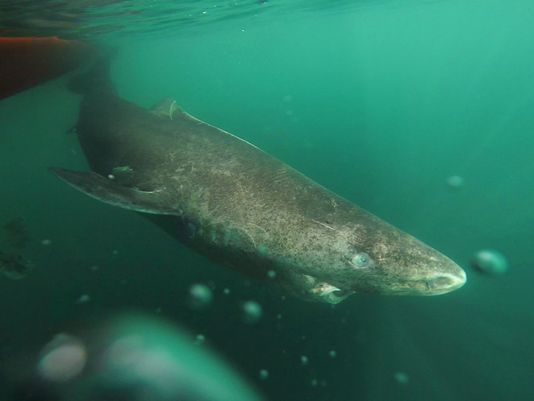
Some sharks alive today were born before George Washington


A new study discovers sharks in Greenland can live up to be 400-years-old, making them the longest-living vertebrates on the planet.

by Traci Watson

The Greenland shark has long been belittled as sluggish, homely and dim-witted. But now the species can demand respect: scientists say it is the planet’s longest-lived vertebrate, or animal with a backbone.

Eight of 28 Greenland sharks profiled in a new study in today’s Science were 200 years or older, by scientists’ best estimates. One enormous female was aged at least 270 when she was caught – and she may well have been 390. That would make her possible birth date in the era of Rembrandt and Galileo.

Even the study’s authors were astonished by the results, which allow the humble Greenland shark to steal the longevity prize from the bowhead whale, the previous record-holding vertebrate. The oldest bowhead reached a mere 211 years.

The study turned up such mind-boggling ages that the scientists “kept checking the math,” says study author Peter Bushnell of Indiana University South Bend. “Typically nothing except for trees lives this long.”

The Greenland shark has all the hallmarks of an animal that survives to extreme old age, says Jelle Boonekamp of the Netherlands’ University of Groningen, who was not associated with the study. For starters, females can stretch 15 feet, which is longer than a station wagon. Those proportions mean the shark has few predators.

The Greenland also has a low metabolism, befitting the ultra-cold northern waters where it’s most often found. It putters along at less than half a mile per hour, “the tortoise of the undersea world,” says Chris Harvey-Clark of Canada’s Dalhousie University, who wasn’t part of the study.

The biggest sharks probably “don’t have to eat every day. They might just have a big meal once or twice a year,” hypothesizes study co-author Julius Nielsen of Denmark’s University of Copenhagen. That meal most often consists of seal or large fish, but the Greenland is not above gulping down carrion, from dead reindeer to chunks of moose.

To reveal the shark’s age, Nielsen and his colleagues studied the eyes of almost 30 Greenland sharks, nearly all caught accidentally by fishing boats or scientific surveys. A section of the shark’s lens forms when the animal is in utero. The researchers measured this section’s levels of radioactive carbon, a method often used to date archaeological samples, and extrapolated to the year the sharks were born.

Serious researchers studied how sex is different with marijuana vs alcohol

By Christopher Ingraham

As acceptance of and usage of marijuana have become more widespread, a whole lot of interesting questions for public health researchers have been raised: How will legal marijuana affect our children? Our jobs? Our relationships?

Or how about our sex lives?

That latter question inspired a research project by Joseph Palamar and his colleagues at New York University. “Since the landscape is changing, and marijuana continues to increase in popularity, research is needed to continue to examine if and how marijuana use may influence risk for unsafe sexual behavior,” they write in the July issue of the journal Archives of Sexual Behavior.

To that end, Mr. Palamar and his colleagues recruited 24 heterosexual adults to take part in a series of in-depth interviews about prior sexual experiences that happened under the influence of either alcohol or marijuana. This was not meant to be a national sample. Rather, the purpose was to obtain a rigorous qualitative assessment of the different effects of alcohol and marijuana on people’s sexual behaviors and to use this as a jumping-off point for future quantitative research.

Here are a few of the observations the researchers drew from the interviews.

1. Beer goggles are real.

Respondents “overwhelmingly reported that alcohol use was more likely to [negatively] affect the partners they chose,” the study found. Both men and women were fairly likely to say that alcohol had the effect of lowering their standards for whom they slept with, in terms of character and appearance. With marijuana, this seemed to be much less of an issue.

“With weed I know who I’m waking up with. With drinking, you don’t know. Once you start drinking, everybody looks good,” a 34-year-old female said.

Marijuana use also was more associated with sex with people the respondents already knew — girlfriends and boyfriends, for instance. But alcohol “was commonly discussed in terms of having sex with strangers [or someone new],” the study found.

2. Drunk sex often leads to regret. Stoned sex typically doesn’t.

“The most commonly reported feeling after sex on alcohol was regret,” the study found. “Both males and females commonly reported that regret, shame, and embarrassment were associated with alcohol use, but this was rarely reported for marijuana.”

“I want to cook the person something to eat [after sex] when I’m high,” one male respondent said. “When I’m drunk, it’s like, ‘I’m out of here.’ Or get away from me.”

These negative emotions are seen as at least partly due to drunk sex being associated more with strangers.

3. Drunk sex can make you sick. Stoned sex can make you distracted.

“Nausea, dizziness, feeling sick [and vomiting], and blacking out were commonly reported to be associated with alcohol use,” the study found. One male said he accidentally fell asleep during sex while drunk. Another told of multiple instances where sex had to be interrupted because “I’ve had to stop and go hurl.”

There were fewer adverse effects reported with marijuana, and these tended to be more mental. One respondent said that marijuana use lessened his motivation to have sex. Another reported that being high distracted her from the experience.

“You’re so high [on marijuana] … you start thinking sex is weird. ‘What is sex?’ ” a female respondent reported.

4. The pleasure is usually better on marijuana.

The study found that “alcohol tended to numb sensations and marijuana tended to enhance sensations.”

“Alcohol tends to be a lot more numb,” a male respondent said. “Everything is sort of blunted and muted, whereas with marijuana it’s intensified.”

This “numbness” was associated with a longer duration of sex while drunk. But that wasn’t necessarily a good thing.

It “sometimes lasts too long,” one female respondent said. “Compared to when you’re high — it feels so great and it might be a little shorter.”

The study found that both men and women reported longer and more intense orgasms on marijuana, with one woman reporting hers were “magnified at least by five times.”

Also, marijuana led to “more tender, slow, and compassionate sexual acts, and to involve more sensation and sensuality than alcohol,” the report found.

5. Drunk sex is riskier overall.

“With regard to sexual risk behavior, the majority of participants felt that alcohol was riskier, sexually, than marijuana,” Mr. Palamar and his colleagues found. People typically said they exercised poorer judgment when drunk than when stoned, and were more likely to black out and forget whom they were with, what they were doing or whether they used protection.

Participants generally didn’t note this type of behavior with marijuana and said that while under its effects, they felt more in control overall. “One participant interestingly pointed out that marijuana use decreased his likelihood of engaging in risk behavior because while high he was too paranoid to give in,” the study found.

There were some take-homes viewed as useful from a public health perspective. First, the findings confirm one thing that numerous other studies have shown: Alcohol use seems to be closely associated with high-risk sexual behavior.

Aside from the link with unprotected sex and the corresponding risk of unexpected pregnancy or sexually transmitted diseases, studies have also drawn disturbing parallels between alcohol use and sexual assault. That link appeared even in the very small sample in Mr. Palamar’s study: One out of the 12 women interviewed reported an instance of sexual assault while under the effects of alcohol.

These negative consequences appear to be less pronounced with marijuana. Research found significantly lower incidences of domestic violence among couples who smoke marijuana, for instance.

http://www.post-gazette.com/news/health/2016/08/08/Serious-researchers-studied-how-sex-is-different-when-you-re-high-vs-when-you-re-drunk/stories/201608080044

Thanks to Michael Moore for bringing this to the It’s Interesting community.

Reduced activity of an important enzyme identified among suicidal patients

It is known that people who have attempted suicide have ongoing inflammation in their blood and spinal fluid. Now, a collaborative study from research teams in Sweden, the US and Australia published in Translational Psychiatry shows that suicidal patients have a reduced activity of an enzyme that regulates inflammation and its byproducts.

The study is the result of a longstanding partnership between the research teams of Professor Sophie Erhardt, Karolinska Institutet, Professor Lena Brundin at Van Andel Research Institute in Grand Rapids, USA, and Professor Gilles Guillemin at Macquarie University in Australia. The overall aim of the research is to find ways to identify suicidal patients.

Biological factors

“Currently, there are no biomarkers for psychiatric illness, namely biological factors that can be measured and provide information about the patient’s psychiatric health. If a simple blood test can identify individuals at risk of taking their lives, that would be a huge step forward”, said Sophie Erhardt, a Professor at the Department of Physiology and Pharmacology at the Karolinska Institutet, who led the work along with Lena Brundin.

The researchers analyzed certain metabolites, byproducts formed during infection and inflammation, in the blood and cerebrospinal fluid from patients who tried to take their own lives. Previously it has been shown that such patients have ongoing inflammation in the blood and cerebrospinal fluid. This new work has succeeded in showing that patients who have attempted suicide have reduced activity of an enzyme called ACMSD, which regulates inflammation and its byproducts.

“We believe that people who have reduced activity of the enzyme are especially vulnerable to developing depression and suicidal tendencies when they suffer from various infections or inflammation. We also believe that inflammation is likely to easily become chronic in people with impaired activity of ACMSD,” said Brundin

Important balance

The substance that the enzyme ACMSD produces, picolinic acid, is greatly reduced in both plasma and in the spinal fluid of suicidal patients. Another product, called quinolinic acid, is increased. Quinolinic acid is inflammatory and binds to and activates glutamate receptors in the brain. Normally, ACMSD produces picolinic acid at the expense of quinolinic acid, thus maintaining an important balance.

“We now want to find out if these changes are only seen in individuals with suicidal thoughts or if patients with severe depression also exhibit this. We also want to develop drugs that might activate the enzyme ACMSD and thus restore the balance between quinolinic and picolinic acid,” Erhardt said.

The study was funded with the support of the Swedish Research Council, Region Skåne and Central ALF funds. Additional support came from National Institute of Mental Health (NIMH), the American Foundation for Suicide Prevention, Van Andel Research Institute, Rocky Mountain MIRECC, the Merit Review CSR & D and the Joint Institute for Food Safety and Applied Nutrition (University of Maryland), and the Australian Research Council. Several of the researchers have indicated that they have business interests, which are recognized in the article.

Publication

An enzyme in the kynurenine pathway that governs vulnerability to suicidal behavior by regulating excitotoxicity and neuroinflammation
Lena Brundin, Carl M. Sellgren, Chai K. Lim, Jamie Grit, Erik Palsson, Mikael Landen, Martin Samuelsson, Christina Lundgren, Patrik Brundin, Dietmar Fuchs, Teodor T. Postolache, Lil Träskman-Bendz, Gilles J. Guillemin, Sophie Erhardt.
Translational Psychiatry, published online August 2, 2016, doi: 10.1038 / TP.2016.133.

http://ki.se/en/news/reduced-activity-of-an-important-enzyme-identified-among-suicidal-patients