World’s oldest human being discovered in Indonesia at the age of 145

by Elsa Vulliamy

The world’s oldest man has been named as Indonesian Mbah Gotho, who is 145 years old, with documentation that says he was born in 1870.

Mr Gotho said he began preparing for his death in 1992, even having a gravestone made, but 24 years later he is still alive.

He has now outlived all 10 of his siblings, his four wives and his children.

Though his age is impressive, Mr Gotho told a regional news network: “What I want is to die.

For the past three months he has needed to be bathed and spoon-fed, and is becoming increasingly frail.

Mr Gotho has official documentation which shows his age, and the Indonesian records office says it has confirmed his birth date as December 31 1870.

If this is correct, this would earn him the title of the oldest person ever, a title currently held by French centenarian Jeanne Calment, who was 122 when she died – 23 years younger than Mr Gotho.

If the documents cannot be independently verified, however, Mr Gotho will not go down in the record books.

There are a number of people who claim to have broken Jeanne Calment’s record, such as Nigerian James Olofintuyi, who claims to be 171, and Dhaqabo Ebba from Ethiopia, who claims to be 163, but without verifiable documents they cannot be given her title.

The centenarian, from Central Java, says he spends his time listening to the radio, as his eyesight is no longer good enough to watch television.

When asked the secret to a long life, he said: “The recipe is just patience”.

http://www.independent.co.uk/news/world/asia/worlds-oldest-person-man-mbah-gotho-indonesia-145-years-old-a7213191.html

Thanks to Jody Troupe for bringing this to the It’s Interesting community.

Man rescued from inside public lavatory in Norway

106828800_loo-xlarge_trans++7cRE2UJqV2Z90oWc06xXvLmdfI6nSQjVa0ve73eBB6s

By Agence France-Presse

Firemen in Norway came to the rescue Friday of a man who climbed into an outdoor public toilet to retrieve a friend’s cell phone, after he got stuck in the tank.

Cato Berntsen Larsen, 20, was able to climb through the toilet seat opening to recover the phone lying at the bottom of the outhouse, but was unable to climb back out again.

“First we tried to get the phone with a stick but that didn’t work. So I jumped in,” he told daily VG.

“I was down there an hour, I was panicking,” he said, adding there were “animals” crawling on his body.

Overcome by nausea and vomiting, he tried in vain to pull himself of the tank, and which is only emptied once a year, according to VG.

He ultimately decided to contact the fire brigade to help end his ordeal in the small town of Drammen outside Oslo.

“It was a fairly easy task for us. We sent a four-man crew with a chainsaw and they cut open the front of the (plastic) toilet,” fire brigade spokeswoman Tina Brock told AFP NEWS agency.

The rescue was a “first” for the local fire brigade, she acknowledged. “It was pretty full down there.”

The phone was not recovered.

http://www.telegraph.co.uk/news/2016/08/26/man-rescued-from-inside-public-lavatory/

Florida man survives lightning strike, spider, snake bites

944e8b2d30af413b93983a423dc2332f-944e8b2d30af413b93983a423dc2332_jpg_size_custom_crop_1086x765

Kyle Cook can’t decide whether he’s really unlucky or incredibly fortunate.

Over the past four years, the 31-year-old Florida man has survived a lightning strike, a bite by a venomous spider and — most recently — an attack by a rattlesnake in his backyard in Lakeland, southwest of Orlando.

“I need to get a (protective) bubble,” Cook said.

His father, Mike Cook, sees it another way. “He’s a walking Murphy’s law,” the elder Cook said. “I walk on the other side of the mall.”

http://bigstory.ap.org/def1c43cd4c4438690d5d6758624bd48

Woman jostled on NYC subway loses grip on crickets and worms

New York City subway riders are likely to get bugged over a lot of things — but a recent incident was one for the books.

The New York Post ( http://nyp.st/2c1fvpK ) says a woman trying to sell crickets and worms lost her grip on her odd cargo when she got jostled Wednesday evening on a “D” train.

Rider Chris Calabrese says startled passengers had crickets on their arms; his girlfriend was crying. The worms wriggled on the floor.

Passengers moved to the other end of the subway car. Someone pulled the emergency brake and the train halted on the Manhattan Bridge.

http://bigstory.ap.org/b7e35f4ddf6940f49a986fe1542c0fca

New fad of ‘unhurried television’


The cultural phenomenon of ‘unhurried television’ is now available to stream in more than 190 countries.

By Michael d’Estries

Need a break from the superhero trials and tribulations of “Jessica Jones” or the dark and twisted politics of “House of Cards?” If you’re addicted to Netflix but need a cleansing respite from the drama du jour, perhaps a little Slow TV is in order.

Netflix recently became the first streaming service to tap into the “unhurried television” phenomenon that has taken Nordic countries like Norway, Sweden, and Iceland by storm. The concept revolves around spotlighting a particular activity or trip through the countryside for hours on end. Examples of marathon broadcasts in the past have included a two-hour canal rides through Norway, a 24-hour car trip around Iceland, and a soul-stirring 60-hour broadcast of the “Hymn Book, minute by minute” involving more than 200 choirs and 4,000 singers.

“Slow TV is very different from the way everybody — including myself, to be honest — has always thought that TV should be made,” Norwegian broadcast producer Rune Moklebust remarked in 2014. “TV has mostly been produced the same way everywhere with just changes in subjects and themes. This is a different way of telling a story. It is more strange. The more wrong it gets, the more right it is.”

Introducing its 83 million subscribers in 190 countries to the concept, Netflix has decided to start off with a mix of programs ranging from less than an hour to about seven hours long. Among the more intriguing are Norway’s six-hour “National Firewood Night,” which covers chopping, and stacking firewood, a seven-hour beautiful “Train Ride Bergen to Oslo,” and the 3.5-hour “National Knitting Evening,” in which a group of knitting enthusiasts attempt to break the speed record for “shearing, spinning and knitting wool into a men’s sweater.”

Of course, if you’d rather just grab a cup of coffee and watch some wood burn, Netflix has you covered there too. The two-hour “National Firewood Morning” is just a bunch of logs slowly burning into glowing ash. For those who wait long enough, there’s even some marshmallow roasting. Sure, it’s no “Stranger Things,” but if you need a break from the world and can’t escape to somewhere green and quiet, Slow TV may just offer a relaxing getaway from the comfort of your couch.

Zika may hurt the adult brain.

By Meghan Rosen

Zika may harm grown-up brains.

The virus, which can cause brain damage in infants infected in the womb, kills stem cells and stunts their numbers in the brains of adult mice, researchers report August 18 in Cell Stem Cell. Though scientists have considered Zika primarily a threat to unborn babies, the new findings suggest that the virus may cause unknown — and potentially long-term — damage to adults as well.

In adults, Zika has been linked to Guillain-Barré syndrome, a rare neurological disorder (SN: 4/2/16, p. 29). But for most people, infection is typically mild: a headache, fever and rash lasting up to a week, or no symptoms at all. In pregnant women, though, the virus can lodge in the brain of a fetus and kill off newly developing cells (SN: 4/13/16).

If Zika targets newborn brain cells, adults may be at risk, too, reasoned neuroscientist Joseph Gleeson of Rockefeller University in New York City and colleagues. Parts of the forebrain and the hippocampus, which plays a crucial role in learning and memory, continue to generate nerve cells in adult brains.

In mice infected with Zika, the virus hit these brain regions hard. Nerve cells died and the regions generated one-fifth to one-half as many new cells compared with those of uninfected mice. The results might not translate to humans; the mice were genetically engineered to have weak immune systems, making them susceptible to Zika.

But Zika could potentially harm immunocompromised people and perhaps even healthy people in a similar way, the authors write.

Zika kills brain cells in adult mice

The secrets behind Japan’s coolest micro homes

By Kate Springer

A tiny scrap of land might not catch your eye.

But to Japanese architect Yasuhiro Yamashita of Atelier Tekuto, there’s nothing more beautiful.

A veteran designer of kyosho jutaku — or micro homes — Yamashita has built more than 300 houses, each uniquely shaped and packed full of personality.

All starkly different, the only thing these homes have in common is their size — Yamashita’s projects start at just 182 square feet.

Demand for small homes in Japan results partly from land scarcity, property prices and taxes, as well as the impending danger posed by the country’s regular earthquakes and typhoons.

But some residents simply prefer a smaller home, seeking a minimalist lifestyle.

“In Japan, there’s a saying (‘tatte hanjo nete ichijo’) that you don’t need more than half a tatami mat to stand and a full mat to sleep,” says Yamashita. “The idea comes from Zen — and a belief that we don’t need more than the fundamentals.”

Of course, the beauty of a well-designed micro home is that it doesn’t appear ‘fundamental’ at all.

Below, Yamashita divulges 10 strategies to make petite properties feel more spacious.

1. Embrace the awkward

“Asymmetrical pieces of land can often be obtained cheaper than others. And it is an architect’s job to work with the land and fulfill the client’s request,” says Yamashita.

“‘Lucky Drops’ — a house in downtown Tokyo — is a good example. It was a leftover scrap of land that was less expensive because of its irregular trapezoid shape. We had to be creative, but the result is beautiful. There’s a saying in Japanese, that the last drop of wine is considered to be lucky. That’s the inspiration.”

2. Build towards the sky

“When you look at an area in 2D, it might seem very small — perhaps the plot is just a few meters wide. But thinking in terms of volume, you can build the home higher and create more space. I try to make the house feel like it’s extending upwards into the sky, so it’s almost like the sky is part of the house. I also build high ceilings, so you don’t feel cramped.”


This Tokyo home, designed by Atelier Tekuto, takes the shape of a polyhedron in order to provide an enormous skylight above the living room.


Aptly named “Framing the Sky,” this Atelier Tekuto home was built on a polygon-shaped site. The architects focused on the relationship between nature and people, by incorporating a large skylight to make the home feel like it was extending upwards into the sky.

3. Incorporate nature

“In Japan, about 70% is mountains and forest and 30% of the land is rather flat, making it more suitable for residences and rice farms. Even so, we are not trying to fight against nature — we’re trying to live along with it. You can see this in the homes we design. Most of our homes incorporate natural materials and large windows to let in lots of natural light.”


A combination of a shop and private home, Wakka incorporates lots of natural touches, such as a small stone garden and a series of sliding doors that offer more alfresco space.


4. Think outside the box

“Instead of traditional square corners, I often cut the edges of the house into triangular shapes. This creates more surface area and more room for windows. There’s always a corner open to the sky. That way, as the sun moves, the home is always filled with natural light.”

Designed by Atelier Tekuto for a family of five, Iron Mask is steel-based house with a unique curving facade that made the most of the site’s shape.

5. Go monochrome

“What you see informs 60% of your perception of a space. Imagine that you’re inside an eggshell, with the same color and texture all over. There’s no real start or finish, no real corners.

It is a visual effect that will make the space expand. I think that the color white makes spaces look larger, but I prefer to use the natural colors of materials rather than painting.”


Designed by Atelier Tekuto for a family of five, Iron Mask is steel-based house with a unique curving facade that made the most of the site’s shape.


The color white can make spaces look larger, but any consistent palette can create a similar effect. Atelier Tekuto often incorporates natural materials and textures rather than painting.

6. Use reflective materials

“To trick the eye, I use polished stainless steel features. They reflect light and make an area seem larger. In ‘Reflection of Mineral,’ for example, I used stainless steel in the kitchen and in the bathroom to make the space feel more expansive.”

An industrial-style home designed by Atelier Tekuto, Wafers makes use of reinforced concrete, steel and highly reflective windows.

7. Hide Storage

“People tend to accumulate a lot of things over time. I want it all to be hidden away, out of sight, so I build a lot of invisible storage inside the house. If you keep the area wide open and uncluttered, then it’s hard for people to really comprehend the size of the space.”

The uncluttered space feels spacious and large, an effect that’s accentuated by floor-to-ceiling windows.


The owner of Cell Bricks, also a designer, requested an “out of the norm” home and Atelier Tekuto delivered. The house has lots of natural storage thanks to the stacked steel-box design, making it functional as well as visually engaging.

8. Stay close to home

“In the 20th century, architecture was meant for the masses, for the general public. Designs and buildings were constructed quickly and economically — all with the same materials and same appearance. We were in an era of globalization and everyone wanted the same thing.

But now, people are looking to their own regions, their own local traditions for inspiration. That’s where design is moving — closer to home.”

Using natural materials such as cedar wood and terrazzo floors, Atelier Tekuto created a nature-inspired abode for a Japanese family.


9. Invent new solutions

“I spend a lot of time developing new materials from what other people consider to be ‘waste.’ I’m like a garbage man. If I find materials that are not commonly used or have been discarded, then I get really excited.

If I can’t find the materials that go along with the structure, then I invent a new one. For example, I was unhappy with the cement used for homes in Japan, so I worked with Tokyo University to develop a new type. Our recyclable Shirasu Cement is made from volcanic ash deposits.”

Two chemists own R Torso C and they specifically requested a concrete design with an eco-friendly approach. Atelier Tekuto set out out to develop a new type of environmentally friendly cement, called Shirashu.

10. Personalize your home

“A few factors affect my designs — the specificities of the land, the way the light hits the property, the neighborhood, and the client’s personal requests. A home is very personal. In ‘Reflection of Mineral,’ the clients wanted a strong, sharp-looking design. From there, I choose materials based on the design, depending on what would be best for the space.”

Atelier Tekuto approached Reflection of Mineral with an open mind. The clients requested a strong design that would be a memorable piece of architecture while providing the maximum amount of livable space.

home 16

Also an architect, the owner of Layers requested a home that could accommodate multiple generations, as well as feature outdoor courtyards and connecting staircases. By using a mix of materials, Atelier Tekuto achieved a unique yet functional design.

http://www.cnn.com/2016/08/22/architecture/japan-micro-homes/index.html

Ford Promises Fleets of Driverless Cars Within Five Years


“Autonomous vehicles could have just as much significant impact on society as Ford’s moving assembly line did 100 years ago,” said Mark Fields, chief executive of Ford.

by NEAL E. BOUDETTE

In the race to develop driverless cars, several automakers and technology companies are already testing vehicles that pilot themselves on public roads. And others have outlined plans to expand their development fleets over the next few years.

But few have gone so far as to give a definitive date for the commercial debut of these cars of the future.

Now Ford Motor has done just that.

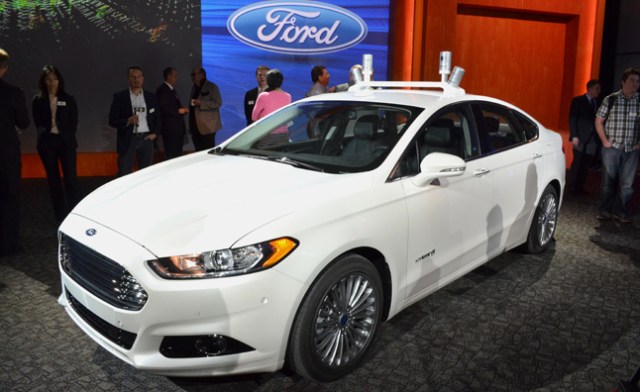
At a news conference on Tuesday at the company’s research center in Palo Alto, Calif., Mark Fields, Ford’s chief executive, said the company planned to mass produce driverless cars and have them in commercial operation in a ride-hailing service by 2021.

Beyond that, Mr. Fields’s announcement was short on specifics. But he said that the vehicles Ford envisioned would be radically different from those that populate American roads now.

“That means there’s going to be no steering wheel. There’s going to be no gas pedal. There’s going to be no brake pedal,’’ he said. “If someone had told you 10 years ago, or even five years ago, that the C.E.O. of a major automaker American car company is going to be announcing the mass production of fully autonomous vehicles, they would have been called crazy or nuts or both.”

The company also said on Tuesday that as part of the effort, it planned to expand its Palo Alto center, doubling the number of employees who work there over the next year, from the current 130.

Ford also said it had acquired an Israeli start-up, Saips, that specializes in computer vision, a crucial technology for self-driving cars. And the automaker announced investments in three other companies involved in major technologies for driverless vehicles.

For several years, automakers have understood that their industry is being reshaped by the use of advanced computer chips, software and sensors to develop cars designed to drive themselves. The tech companies Google and Apple have emerged as potential future competitors to automakers, while Tesla Motors has already proved a competitive threat to luxury brands like BMW and Mercedes-Benz with driver-assistance and collision-avoidance technologies.

More recently, ride-sharing service providers like Uber have raised the competitive concerns of the conventional auto industry. The ride-hailing services aim to operate fleets of driverless cars that, in the future, might provide ready transportation to anyone, making it easier for people to get around without owning a car or even having a driver’s license

A Barclays analyst, Brian Johnson, recently predicted that once autonomous vehicles are in widespread use, auto sales could fall as much as 40 percent as people rely on such services for transportation and choose not to own cars.

Mr. Fields said on Tuesday that the combination of driverless cars and ride-sharing services represented a “seismic shift” for the auto industry that would be greater than the advent of the moving production line was roughly a century ago.

“The world is changing, and it’s changing rapidly,” he said, adding that Ford now sees itself as not just a carmaker but a “mobility company.”

BMW and Mercedes-Benz are among the carmakers that have seized upon the concept of “transportation as a service,” as it is called, by starting ride-sharing services of their own. General Motors has teamed up with, and bought a stake in, Lyft, the main rival of Uber.

GM and Lyft plan to have driverless vehicles operating in tests within a year. Initially, at least, those tests will be conducted with a driver in the car to take control from the self-driving technology, if necessary.

Even some auto suppliers are focusing on ride-hailing services and driverless cars. This month, the components maker Delphi announced that it was working with the government of Singapore to develop a ride service to shuttle people to and from mass transit stations in the country’s business district.

Even though Ford has committed itself to a date for a commercial introduction of its driverless cars, several questions remain about how it will move forward, said Michelle Krebs, an analyst with AutoTrader.

For example, Ford does not have a ride-sharing partner as G.M. does in Lyft, Ms. Krebs said.

In a research note on Tuesday, Mr. Johnson noted that it remained unclear how auto companies would make money from ride-sharing services.

“These are a lot of promises, but we don’t yet know how they are going to evolve,” Ms. Krebs said. “There are still missing pieces.”

One of the investments Ford announced on Tuesday was a $75 million stake in Velodyne, which makes sensors that use lidar, a kind of radar based on laser beams. The Chinese internet company Baidu said it was making a comparable investment in Velodyne.

Ford also said it had made investments in Nirenberg Neuroscience, which is also developing machine vision technology, and Civil Maps, a start-up that is developing 3D digital maps for use by automated vehicles. Ford did not disclose the amount it invested in Nirenberg or Civil Maps.

http://outbr.in/3xtoe#http://www.nytimes.com/2016/08/17/business/ford-promises-fleets-of-driverless-cars-within-five-years.html?_r=0

John Oliver makes ‘TV history’ by forgiving $15 million in medical debt

by David Goldman

As part of a scathing takedown of the debt-purchasing industry, late night comedian John Oliver forgave nearly $15 million of medical debt with a tap of a giant red button on Sunday night.

Oliver called the giveaway the “largest one-time giveaway in television history.” He just about doubled the value of Oprah Winfrey’s famous “You get a car! You get a car! Everybody gets a car!” giveaway to her entire studio audience in 2004.

The stunt followed a long look at debt collectors on his HBO show “Last Week Tonight,” in which Oliver sharply rebuked debt purchasers for unscrupulous behavior that is limited by hardly any regulatory oversight. (HBO is owned by CNNMoney’s parent company, Time Warner.)

The segment included a hidden camera brought into a Debt Buyers Association conference by “Last Week Tonight” staffers, which showed panelists appearing to scoff at how Americans don’t understand their legal rights about paying their debts.

To further illustrate the lack of regulation and ease at which debt collectors can harass people over money they owe, Oliver said “Last Week Tonight” spent $50 to create its own debt collection agency, based in Mississippi.

“Any idiot can get into it, and I can prove that to you, because I’m an idiot and I started a debt buying company and it was disturbingly easy,” Oliver said.

Oliver named the company “Central Asset Recovery Professionals,” or CARP, “after a bottom-feeding fish.” He appointed himself chairman of the board.

After setting up a bare-bones website, Oliver said CARP was offered a portfolio of nearly $15 million in medical debt for just $60,000. “Last Week Tonight” was able to pay less than half a cent on the dollar for all that debt.

Oliver said CARP could have received a file that included the names, personal addresses and Social Security numbers of nearly 9,000 people who owed the debt it had purchased. He called that fact “absolutely terrifying, because I could legally have CARP take possession of that debt and have employees start calling people turning their lives upside down over medical debt.”

“There would be absolutely nothing wrong with except for the fact that absolutely everything is wrong with that,” Oliver continued. “We need much clearer rules and oversight.”

In the end, Oliver said “Last Week Tonight,” decided to forgive all that debt — not just because “it’s the right thing to do,” but also because it would trump Oprah’s $8 million giveaway.

With the tap of a giant red button, streams of confetti, dramatic music and strobe lights, Oliver transferred the file with the 9,000 debtors’ personal information to RIP Medical Debt, a nonprofit that forgives medical debt with no tax consequences for the debtor.

“It seems to me the least we can do for debt I cannot f—ing believe we’re allowed to own is to give it away,” Oliver said to close his show. “F— you, Oprah. I am the new queen of daytime talk!”

http://money.cnn.com/2016/06/06/technology/john-oliver-medical-debt/

Thanks to Kebmodee for bringing this to the It’s Interesting community.

How one family is sending 13 kids to college, living debt free — and still plans to retire early


Sam and Rob Fatzinger, second and third from right, of Bowie, Md., have 13 children, including, from left, Barbara, Robert, Kolbe, Alex, Mary, Cecelia and Dominic. (April Greer/For The Washington Post)

Sam Fatzinger prowls the aisles of an Aldi grocery store with an engineer’s precision. Workers greet her, mostly by name.

She puts several trays of chicken into a huge cart. Then it’s on to fresh blueberries for $1.79 a pint, in February. And she recalls the time the no-frills store had a sale on potatoes: 10 pounds for 99 cents. She bought 60 pounds. Her husband loves them.

To get these best buys, “it’s just watching and waiting and knowing,” Sam says.“Every cent counts.”

At the cashier, her groceries fill every inch of the conveyor belt. My silent guess: $250 in all. The bill: $127, half of my estimate.

Very impressive. But not as impressive as this:

Rob and Sam Fatzinger, lifelong residents of Bowie, Md., lead a single-income family in one of the country’s most expensive regions. Rob’s income never topped $50,000 until he was 40; he’s now 51 and earns just north of $100,000 as a software tester.

They have 13 children. Which means they require things like a seven-bedroom house and a 15-passenger van. Four children have graduated from college, three are undergrads and six are on the runway.

Yet they paid off their mortgage early four years ago. They have no debt — never have, besides mortgages. And Rob is on track to retire by 62.

This family gets the gold medal for being frugal. This family is the Einstein of economical.

These days, frugality is not about clipping coupons. It’s about rethinking your finances, and maybe your life.

Rob’s philosophy: “Spend money on what makes you truly happy and on what you enjoy. … The thing that people need to understand is that we don’t feel deprived or poor. … We pick and choose carefully.”

The Fatzingers are getting it done.

Could you?


A Fatzinger family portrait with, from left, Caleb, Kolbe, Alex, Mary, Joey, Cecilia, Barbara, Dominic, Lizzie, Robert, Rob, Eric, Sam and Ray. Not pictured: Joshua. (April Greer/For The Washington Post)

Frugality is hardly new. In 1789, George Washington wrote to Marquis de Lafayette, the French military officer who fought for the American Revolution: “Nothing but harmony, honesty, industry and frugality are necessary to make us a great and happy people.” And we were a frugal people well into the 20th century. Then came the era of instant credit, rampant consumerism and record personal bankruptcies.

Recently, frugality has gotten a boost thanks to hundreds of personal-finance bloggers, and no thanks at all to the Great Recession of 2007-2009. Many focus on FIRE, an acronym for financial independence/retire early.

Aspirants often strive to save at least 25 percent of their take-home pay over the years, or even twice that — or more — to feel financially secure or to pursue a new career. Others yearn to quit their jobs for the long haul, even in their 30s.

One leading blogger grew up on food stamps. Others learned about money from their parents, for good or ill. The best are innovative, funny and surprisingly philosophical as they chart a course for change and places unknown.

They’re about ideas and possibilities, not suffering. And millions are listening. Until a couple of years ago, Rob Fatzinger had a blog called Sardonic Catholic Dad, focusing on family, faith and frugality. Two of his hits: “College on the Cheap — How the Sardonic Family Does It” and “How to Retire Early With 13 Kids,” which he wrote as a guest post on the FIRE site Mad Fientist.

Frugalism is often about math, determinationand thinking a bit differently. A few key principles: How much you save, as a percentage of your paycheck, will foretell when you’ll be able to build your own business or retire. Small financial changes can make a big impact. And it’s not really about your income; it’s about your savings, says Pete Adeney, a lapsed engineer from outside Boulder, Colo., who created the popular Mr. Money Mustache blog.

And then there’s the “miracle” of compounding interest, the gift that keeps giving as your investment’s interest spawns its own interest, time and again.

The Fatzingers would never claim to be financial magicians. But to outsiders, it might look that way.

After marrying 27 years ago, Sam and Rob started a small Christian bookstore in Crofton, Md., and soon had a daughter. Rob said the couple never earned more than $36,000 a year in the business. Still, they saved 10 to 15 percent of their earnings. By the time they shuttered the store in 2000, they had seven kids.

About 10 years ago, Rob got the job testing software. Earnings of $40,000 gave way to $60,000 and are now about $110,000, counting a few thousand from mowing neighbors’ lawns and other tasks.

Back in 2000, they bought a five-bedroom house out of foreclosure and later added three bedrooms. Nine children, including the youngest, who is 4, live there now.

The good news: The home cost $150,000. The Fatzingers paid down $50,000, saving interest on the 15-year mortgage.

The bad news: Sam said their priest, visiting to bless the new home, “walked in and said: ‘Should I do an exorcism on this house?’ ” The place was in serious disrepair.

“Relatives gutted it and made it livable,” Sam said. “Youth groups were over here, ripping up carpet, taking down walls.” Someone gave them a wood stove. A relative gifted them a used couch. Later, another couch was left on a curb for anyone to take. Score.

Years later, they enlarged the kitchen, using two zero-percent finance offers good for 12 months. Eleven months later, they paid off the loan, without paying any interest. The project cost $28,000, with family members doing much of the demolition, painting and decorating.

Now they have two refrigerators, two stoves, two dishwashers and a welcoming, comfortable home. (Even the clothes washer is a champ. Sam estimates that the family cleans 42 loads a week, but never on Sundays. The only children who don’t do the wash are the 4- and 6-year-olds.)

Since the mortgage was paid off in 2012, Rob and Sam have turbo-charged their savings rate, now investing about $3,000 a month. Even so, they don’t go without. Sam has a $10 monthly gym membership, and Rob and Sam go out for lunch on the 20th of each month, maybe at Red Robin Gourmet Burgers and Brews in Bowie, marking the day of the month they got married.

Occasionally, Sam and Rob are annoyed by strangers at the grocery store. “People still say, “Oh my God, you have so many kids!” said Sam, a devout Catholic, as is Rob. “I have this ‘Don’t mess with me’ reaction. I’m not your typical, quiet, passive woman.”

Rob, 51, is soft-spoken, a work-from-home dad and a former “American Idol” fan. A few years back, he finished a 50-mile trail run — and kept going to 54.

Sam, who is 48, home-schools the children through high school and is certified to do so. The kids also get outside tutoring. Her nonacademic lessons extend to the rules and responsibility of money.

“My kids all get jobs as soon as they’re old enough,” she says, and they “learn to discern between needs and wants. They pay for their cellphones, they pay for college, they pay for their own gas.” Allowances? Nope.

Daughter Barbara, 20, a rising senior at the University of Maryland Baltimore County, started babysitting at 11. She got her first “real job” at Rita’s Italian Ice. Babysitting, she noted, “paid way more than Rita’s.”

When she was 15, Barbara bought a 1994 Ford Escort with 30,000 miles for $2,600 from her savings. “It sat in the driveway until I got my driver’s permit,” she said. Five years later, “I still drive it.”

The family shops at sales or secondhand stores and checks out the Freecycle Network, a site for giving away belongings.

Friends and strangers also chip in. “We always have someone dropping off a bike,” Sam said. “We would get things and not even know where they came from.”

Someone stuck an anonymous $500 gift card on the Fatzingers’ front door. And a pair of size 3 white shoes for church wound up on the doorstep for a young daughter who could use them.

“Bowie just does that,” Sam said. A friend from church gave them a used car, and Sam’s sister gave her a used red Chevrolet Suburban. And later, an older white Suburban.

Fine. Except this is America. Surely the kids are seething cauldrons of Nike-deprived resentment.

Or maybe not. “I always had a ton of clothes,” Barbara said. “I would go with Grandma and buy any cute clothes I wanted.”

Older brother Caleb: “I can see how some people would think … we might have been deprived. It was never like that.” He played soccer at a small Christian school, was a counselor at a summer camp and swam at a community pool. The kids had cable TV and high-speed Internet. In community college, Caleb said, he “knew I didn’t have what some other kids had, but it was never out of control.”

As for the givers: Sam’s sister, Joan Salvagno, who is 11 years older than Sam in a family of nine, said her sister’s family “needed the car more than we did. … You don’t really think of them as gifts. … We’ve gotten more than we’ve given.”

These days, even the childless can be terrified of college costs, so just imagine having 13 kids. But the Fatzingers have a strategy, and it’s working. The plan: Start in community college, don’t expect a handout from Mom and Dad, and graduate debt-free.

So far, Alexandria, the oldest at 26, graduated at 21 with a master’s degree in social work. Joshua, 25, graduated from the University of Maryland with a degree in kinesiology and became a missionary.

Caleb, 23, is in the last year of a doctoral program in physical therapy at the University of Maryland at Baltimore. And Lizzie, 21, graduated in May from the University of Maryland with a math major, while also cleaning houses and tutoring. All four graduated from college debt-free.

All five oldest Fatzingers have gone first to Anne Arundel Community College.

In Barbara’s first semester, her tuition, textbooks and gas money were covered by scholarships and other aid. In her second semester, she spent “probably $500” in tuition. The next year, she paid $700 to $1,000 per semester. After two years, she had paid about $2,500 at most. It came from savings and her job in a child-care center at a gym.

In September, Barbara started at UMBC, a public university with higher expenses. Her first year there cost about $15,000, after receiving a $5,800 scholarship based on grades and financial need. Money was tight. Again, she paid with her savings, which included money from a grandparent, who gives each child a one-time gift of $5,000 for college. Barbara used some of the gift money to stay in school, but she’s saving most of it.

She will soon begin her senior year at UMBC. She has a $7,500 stipend for tuition and five small scholarships “that will fill the holes.” In return for the stipend, she’ll work for a state child-welfare program.

Barbara has decided to live at home this year, which means she’ll be commuting and “won’t be spending at all,” she said in a text message. “And I WILL graduate debt-free.”

Next year, she’ll follow in oldest sister Alex’s footsteps, pursuing her master’s degree in social work at another school, which could take one or two years. A Maryland program will pay most of her tuition, and in exchange, she’ll work for a child-welfare agency for two or three years after she graduates.

In total, roughly speaking, Barbara has paid about $17,500 out of pocket for tuition, books, supplies and fees for four years of college.

I asked if she had paid for all her expenses in her first year at UMBC. The $15,000, she said, “was all of my money that I’ve been saving since I was 8 years old!”

But even the Fatzingers can’t outrun the college-cost steamroller.

Caleb was fine in community college, where he paid “essentially nothing,” in part because of his good grades and aid. And he graduated debt-free at Towson University, a public state school, where he worked in the admissions office.

But when he began the doctoral program in physical therapy two years ago, he had to take out a loan. With aid more scarce in grad school, he said he’ll end up owing almost $90,000.

“I think about it a good amount,” said Caleb, who started working as a physical therapy technician at 18. “I try not to worry too much.” He hopes to pay off the loan in 10 years.

He has one more year to go. He works at the school gym some days at 5:30 a.m. and slips into class at 9:30. “I think I’ve done the best I can,” he says.

The Fatzingers’ recent challenge: Joshua, the oldest son, is getting married in November — in Arizona. Could they all get there?

There was considerable concern. With 13 kids, the need to be frugal never takes a vacation.

At the end, they got three plane tickets for free, using air miles. Then they bit the bullet and bought 10. They’ll all be at the wedding.

https://www.washingtonpost.com/lifestyle/magazine/13-kids-13-college-educations-not-rich-retiring-early/2016/08/08/3abe7cec-38b4-11e6-a254-2b336e293a3c_story.html