Inside the Weird, Industry-Shaking World of Donald Glover

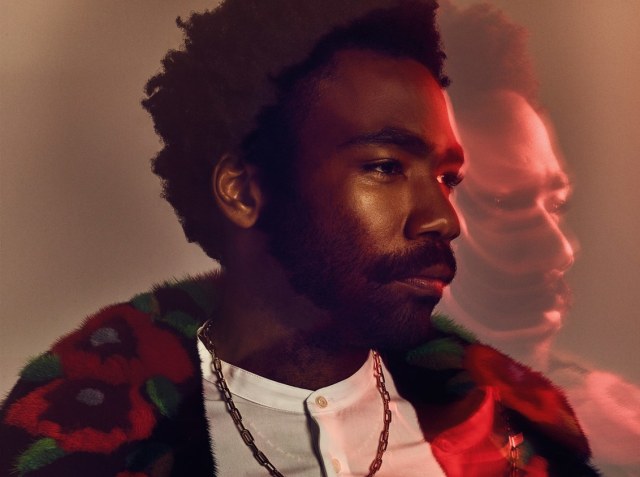
DONALD GLOVER WISHES people would clap more. Not that they should applaud—he gets enough applause when he performs stand-up or when he gets recognized from Atlanta, the TV show he both writes and stars in. No, Glover’s talking about clapping to a beat. “I was listening to Donny Hathaway’s album Live at the Troubadour,” he says. “You hear the crowd harmonizing with every song and clapping to the beat on time. You don’t hear that at concerts anymore.”

It’s an odd thing to notice, maybe, but Glover has been listening to a lot of Hathaway lately, and to Bill Withers too—another soulful ballad singer. This may be part of the reason his onstage persona, Childish Gambino, has drifted from hip hop to something else. His latest album, Awaken, My Love!, sounds more like James Brown or Sly and the Family Stone. Possibly with a little Pink Floyd.

But more than that, Glover has been thinking a lot about performance and the different ways a performer can interact with an audience. Maybe it’s like church, he says, like gospel music. In many African American churches, clapping hands and tapping feet were requirements for attendance.“I don’t think black people go to church like that anymore,” Glover says.

Glover’s giving audiences someplace new where they can clap along. Lots of new places, actually. There’s the Burning Man–ish three-day concert in the desert that teed up his new album. Or, if you didn’t make it there, you can grab the virtual reality experience that goes along with it. Or just stream the album itself.

He has, in other words, a lot going on. There’s his TV show Atlanta, the stand-up comedy, and the weird supporting roles in giant movies (Glover was a rocket scientist who came up with the plan to save Matt Damon in The Martian). Oh, and he’s going to play Lando Calrissian in the Han Solo prequel Star Wars movie, set to begin filming in early 2017.

How does a young hyphenate put together a career like that in a time of entertainment-industry turmoil? A team of creative advisers and managers helps, but Glover was early to the multiplatform artist party. All of his projects intersect in strange, intertextual ways. So amid all the different platforms, there’s also world-building going on (both metaphorically and, with his new project, virtually). Glover may not be as mass-culture as some of the other artists experimenting in this territory—Beyoncé, Drake—but his ambition is to create something entirely new.

GLOVER GREW UP in Stone Mountain, Georgia, about 20 miles east of Atlanta; his mother ran a day care center and didn’t much care for music, but his father, a Postal Service worker, played everything from Hall & Oates to Funka­delic to the Police. “I remember listening to some of my dad’s music as a kid, like Parliament. I’d hear a woman moaning and groaning, and it was so scary because she sounded terrified,” Glover says. “That music was filled with so many different real emotions and feelings that you could listen to it again and again.”

By day, Glover lived in his imagination. His Jehovah’s Witness upbringing meant no television. He’d listen to bootleg audio of Simpsons episodes in bed at night, though he did manage to sneak into a viewing of Star Wars: Episode I and catch the occasional Muppet movie. It was a little weird, and he translated that weirdness into his own puppet shows, performing for the foster kids his parents took care of. “Being a Jehovah’s Witness amplified my own alienness,” he says. “Jehovah’s Witnesses don’t celebrate Christmas. You don’t pledge allegiance to the flag. People don’t understand that.”

But Glover understands people. He has an almost preternatural emotional intelligence; when we meet for the second time I give him a hug, and he calls me out on it: “What’s up with that hug? That didn’t have any feeling! Where’s my hug?” I try again. Glover is happily missing much of the stifling bravado that weighed down far too many male African American performers in, say, the 1990s. He’s in touch with all his feelings, and he seems to think everyone else should be too.

Combine youth, empathy, alienation, and love of performance and you get a drama major. Glover went to college at New York’s Tisch School of the Arts, where he joined an improv comedy group. When Tina Fey saw some of the short videos Glover made there, she hired him to write for her popular TV show 30 Rock. He had never written for television; he was 23 years old.“I decided I wanted to write for television because of Tina,” Glover says. “She was always so happy, and I was like, I want to be happy like that too.”

It worked. He was happy. He did stand-up, made funny sketch comedy videos on YouTube, wrote for 30 Rock for three seasons, and eventually joined the cast of the cult-hit sitcom Community, playing the young, earnest, deeply nerdy Troy—the only mostly normal person (a plumber messiah, but still). It was starting to seem like Glover could make a career out of that kind of code switch, an African American cast before a mostly white audience.

In 2011 Glover donned the Childish Gambino identity he’d worn in a few comedy videos and mixtapes and released a rap album. It was more hipster than hip hop, to be honest, and earned mixed reviews, but it got him a whole new audience—and his second album got two Grammy nominations. Small but significant parts in The Martian and Magic Mike XXL did even more. Whatever Glover did, more and more people were starting to clap along to the beat. A team of managers, artists, and technologists—Glover calls them Royalty—has had a say in almost every move in his career since 2012. At the core are Glover’s younger brother Steve and Glover’s manager, Chad Taylor. Fam Udeorji joined when Taylor met him on the road with Childish Gambino. They formed a management company, Wolf and Rothstein—Wolf is Taylor’s nickname, and Udeorji named himself after Ace Rothstein, Robert De Niro’s character in Casino.

Taylor and Udeorji manage a few other musicians who often hang out with Royalty and offer input. Ibra Ake, a photographer and art director, is the visual and creative expert. Glover’s artist buddy Swank rounds out the group. Hiro Murai, who directed a bunch of Childish Gambino videos, and producer Ludwig Göransson often hang out too. Gathered together for drinks in a Beverly Hills café, the subset of Glover’s team who join us look a little like fraternity brothers—not the jerk kind, the cute, smart, and nerdy kind. They used to meet every day, before the responsibilities of fatherhood started to rule Glover’s time, in a house he rented from Chris Bosh of the Miami Heat. “We’d just roll out ideas while making a sandwich or talking about life,” Udeorji says.

That’s how the idea for Atlanta began to come together. It was Glover’s hometown region, of course, but he had more in mind than just depicting a city that has become a cultural center for African Americans—Glover also wanted to explore what it’s like to be young, talented, and black in the South. He had in mind two other African American–led TV programs, from the comedians Bernie Mac and Dave Chappelle. “Those shows were so honest and so true,” Glover says. “Bernie Mac had a sister who was a crack addict on the show. It wasn’t funny, but it was real.”

To the FX network, Glover pitched the idea of a black Ivy League dropout who returns to Atlanta and begins managing his drug-­dealing cousin’s fledging rap career. It’d have drama, comedy, and music but also deal with issues like mass incarceration, poverty, drug use, and fatherhood in the black community. “We like to sit down with artists a few times and listen to what they say about their project,” says John Landgraf, president and general manager of FX. “With Donald, he didn’t always articulate his vision in a way that we could see it, but his passions and ambition were clear. So we felt confident in the story he wanted to tell and how he wanted to tell it.”
The challenge would be in getting the language and tone of the show right. Mess that up and Atlanta would be considered irrelevant or—worse—totally wack. Glover solved the problem in a way that is, in retrospect, obvious but practically unheard of in Hollywood: an all-black writing team, which included a few names that had never written a script for television before. “It wasn’t a conscious decision, really,” Glover says. “I knew I wanted people with similar experiences who understood the language and the mindset of the characters and their environment.”

Still, television is an industry that has only recently begun to acknowledge the need for diversity in front of the camera,much less behind it. “Listen, even BET wouldn’t have given him that much freedom,” says one television and film executive.“An all-black writers’ room is one thing, but for me it’s the number of writers who hadn’t written on a show before at all. Most networks aren’t going to take that chance.”

And it’s true, says Udeorji—one of the writers—that other networks didn’t really get the concept. But even though there were times when FX wasn’t exactly sure where Glover’s team was headed, the network let them go there. “Donald’s a rapper who has unique experience, because he worked with Tina Fey and that crew early on. That gave him a lot of clout with the network,” Udeorji says. “He showed us the ropes of character development and story structure and took the leadership role in the room, and then we just let the ideas out.”

That dynamic has led to some genre-breaking storytelling. Atlanta is a half-hour comedy about black people that makes no extra effort to explain black people to its viewers. You either get it or you don’t. One episode, “Value,” spends an entire scene at a dinner with Van (ex-girlfriend of Earn, Glover’s character) and her best friend. It’s 10 minutes of the most nuanced dialog seen on television between two women of color as they land brutally honest viewpoints on each other’s complicated lives. “That scene blew me away,” said Cheo Hodari Coker, a longtime TV writer who runs the Netflix show Luke Cage. “You never see that amount of time given to straight dialog. It was so real, like you were eavesdropping on someone’s conversation. That’s good television.”

The crew even contributed visual flair. “I like it when black people are hit with a certain light, like purple,” Glover says. So he and Murai started experimenting.“It just felt good to play around with the look of the show.”

IN EARLY 2016, with Atlanta in production, Glover was also thinking about his next album.

Roughly, he already knew what he wanted. “He came into our offices with a five-year vision of his music and the visuals that were to go with it,” says Daniel Glass, president of Glassnote Records, Glover’s label. “There aren’t a lot of artists that have that kind of clarity about where their career is headed.”

But fatherhood had altered his course. Glover doesn’t live particularly publicly—he didn’t announce his son’s birth on social media, for example—but he acknowledges that being a dad changed his ideas about some things. He spent months returning to the sounds of his own childhood, listening to the music his father played, and the first single from the new album, “Me and Your Mama” is a highly charged, funked-out lullaby of sorts for his new little one.

More than that, he wanted to find yet another way to connect with fans—not a traditional concert but what Glover describes as a “shared vibration.” He called Udeorji and Taylor with the concept: a three-day camping trip/performance installation in the desert to debut new songs and show off wild new visuals. Glover called it Pharos, named for the lighthouse at Alexandria, one of the seven wonders of the ancient world. “We were inspired by Kanye and other artists, but the vision for most things comes from Donald,” Taylor says. “For us it became figuring out how to make it all happen.”

They watched concert films and talked about imagery they liked—for example, the digital mountain from Kanye’s Yeezus tour in 2013. But bringing fans in became Miles Konstantin’s job. The 22-year-old had started a fan site for Childish Gambino in high school that so impressed Glover, he hired the kid. Konstantin studied physics in college by day, and he and his two roommates worked on Glover’s website at night.

For Pharos, Konstantin designed an app with a countdown anda slowly approaching planet Earth—and the option to buy a ticket to something for $99, locked to the owner of the phone and therefore unscalpable. (Glover wanted to keep ticket prices down.)

Once you bought a ticket, you got a guidebook and an app-based mani­festo about the human condition during the digital age. The first shows sold out in six minutes; Glover added two more. But the concert came with a draconian rule: Members of the audience would have to surrender their phones on entry. “Today, kids’ idea of going to a concert is proving that they are there on Snapchat or Instagram,” Glover says. “We wanted to give them a complete show and have their attention.”

Even that didn’t dissuade anyone. “We weren’t completely sure how fans would handle that part, but Donald’s fans are very open-minded,” Konstantin says.

Step two: Build the set. The concerts would happen in a giant white dome in Joshua Tree, California. Dancing zombies and ghostlike creatures would sway to the tunes on screens and interact with sounds in their environments. Glover performed in a yellow grass skirt, long cornrows, and glow-in-the-dark tribal war paint. It was like a cross between Captain EO and Fantasia,complete with a grand finale flight through space, featuring planets moving to the beat.

To get it all right, Glover went to Microsoft. “He came in with his music and a story and asked how we could accommodate his ideas,” says Fred Warren, creative director for the company. When the computer-­generated characters planned for massive screens inside the performance dome weren’t moving the way Glover’s group envisioned, Warren’s team figured they had only one choice: Go to the source. “We decided the best way to showcase the moves on the screen was to have Donald create them and use Kinect sensors to capture his every dance move.” Glover spent a day at Microsoft’s New York office performing the movements of the zombies and ghosts, much like in those puppet shows he used to put on as a kid.

Beyond the high tech animation, the new Childish Gambino album is pretty great. Awaken, My Love! is a chaotic mix of funk, punk, and R&B infused with a new age vibe. On more than a few tracks, Glover uses falsetto like Luther Vandross—and Withers and Hathaway.

And once Microsoft had all that mo-capped performance and computer-­generated set design, the next step was almost self-­evident. You can buy Awaken, My Love! on old-school vinyl, but you can also watch the video in way-new-school virtual reality using your mobile device. 1 It’s not quite like seeing Pharos in Joshua Tree, but it’s close.

DAVE CHAPPELLE WALKED away from his wildly popular eponymous show on Comedy Central (and the $50 million that came with it) in 2005. He was arguably at the peak of his success, but the mercurial comedian had begun to feel that white audiences were laughing at his sketches and jokes about black people without absorbing them, without picking up the social message.

Glover has made himself a student of Chappelle’s, including trying to understand that specific kind of disconnect with the audience. “On some level, the situation Dave faced is probably already happening,” Glover says. “But that’s why it’s so good to have a room filled with people who understand what you’re trying to do. You’ve got to have someone willing to say ‘I don’t enjoy that.’ That makes you step back and rethink when someone says that shit doesn’t work.”

The parallel to Chappelle isn’t a perfect one. Both are influential African American comedians, but their MOs aren’t equivalent. Glover is much younger and fundamentally a well-adjusted, middle-class kid. When he performs, he’s not drawing from anger or a tough childhood. He’s connecting to a wider emotional spectrum, and that seems to give him a broader performance palette. Even Chappelle—a fan of Glover’s—acknowledges the differences. “I can’t keep up with all the shit he’s doing, but it’s all damn good. That he can do it all blows me away,” Chappelle says. “But my show was a sketch show, and Donald’s is more of a regular sitcom. And then we’re in a different time. Race is more nuanced today, and that helps the message. It’s been 10 years.”

A lot changes in a decade. If Chappelle and the late Bernie Mac opened up possibilities for a performer like Glover, now it’s Glover’s turn to rough out a frame for the next generation. Leveraging personal work to reach unpredictable audiences who stay loyal through unpredictable projects won’t be unusual—it’ll be the norm. And that’ll encourage more weird media, beyond live shows and VR, and even more unpredictability. Chappelle’s Show wore its politics on its sleeve—the things Chappelle wanted you to understand were text. Atlanta and the music and video work of Childish Gambino are about feelings and subtext, opening new worlds for creators to explore and audiences to experience. The worlds may be odd and their rhythms idiosyncratic—but you’re going to want to clap along.

https://www.wired.com/2017/01/childish-gambino-donald-glover/

Microsoft Thinks Machines Can Learn to Converse by Making Chat a Game

MICROSOFT IS BUYING a deep learning startup based in Montreal, a global hub for deep learning research. But two years ago, this startup wasn’t based in Montreal, and it had nothing to do with deep learning. Which just goes to show: striking it big in the world of tech is all about being in the right place at the right time with the right idea.

Sam Pasupalak and Kaheer Suleman founded Maluuba in 2011 as students at the University of Waterloo, about 400 miles from Montreal. The company’s name is an insider’s nod to one of their undergraduate computer science classes. From an office in Waterloo, they started building something like Siri, the digital assistant that would soon arrive on the iPhone, and they built it in much the same way Apple built the original, using techniques that had driven the development of conversational computing for years—techniques that require extremely slow and meticulous work, where engineers construct AI one tiny piece at a time. But as they toiled away in Waterloo, companies like Google and Facebook embraced deep neural networks, and this technology reinvented everything from image recognition to machine translations, rapidly learning these tasks by analyzing vast amounts of data. Soon, Pasupalak and Suleman realized they should change tack.

In December 2015, the two founders opened a lab in Montreal, and they started recruiting deep learning specialists from places like McGill University and the University of Montreal. Just thirteen months later, after growing to a mere 50 employees, the company sold itself to Microsoft. And that’s not an unusual story. The giants of tech are buying up deep learning startups almost as quickly as they’re created. At the end of December, Uber acquired Geometric Logic, a two-year old AI startup spanning fifteen academic researchers that offered no product and no published research. The previous summer, Twitter paid a reported $150 million for Magic Pony, a two-year-old deep learning startup based in the UK. And in recent months, similarly small, similarly young deep learning companies have disappeared into the likes of General Electric, Salesforce, and Apple.

Microsoft did not disclose how much it paid for Maluuba, but some of these deep learning acquisitions have reached hefty sums, including Intel’s $400 million purchase of Nervana and Google’s $650 million acquisition of DeepMind, the British AI lab that made headlines last spring when it cracked the ancient game of Go, a feat experts didn’t expect for another decade.

At the same time, Microsoft’s buy is a little different than the rest. Maluuba is a deep learning company that focuses on natural language understanding, the ability to not just recognize the words that come out of our mouths but actually understand them and respond in kind—the breed of AI needed to build a good chatbot. Now that deep learning has proven so effective with speech recognition, image recognition, and translation, natural language is the next frontier. “In the past, people had to build large lexicons, dictionaries, ontologies,” Suleman says. “But with neural nets, we no longer need to do that. A neural net can learn from raw data.”

The acquisition is part of an industry-wide race towards digital assistants and chatbots that can converse like a human. Yes, we already have digital assistants like Microsoft Cortana, the Google Search Assistant, Facebook M, and Amazon Alexa. And chatbots are everywhere. But none of these services know how to chat (a particular problem for the chatbots). So, Microsoft, Google, Facebook, and Amazon are now looking at deep learning as a way of improving the state of the art.

Two summers ago, Google published a research paper describing a chatbot underpinned by deep learning that could debate the meaning of life (in a way). Around the same time, Facebook described an experimental system that could read a shortened form of The Lord of the Rings and answer questions about the Tolkien trilogy. Amazon is gathering data for similar work. And, none too surprisingly, Microsoft is gobbling up a startup that only just moved into the same field.

Winning the Game
Deep neural networks are complex mathematical systems that learn to perform discrete tasks by recognizing patterns in vast amounts of digital data. Feed millions of photos into a neural network, for instance, and it can learn to identify objects and people in photos. Pairing these systems with the enormous amounts of computing power inside their data centers, companies like Google, Facebook, and Microsoft have pushed artificial intelligence far further, far more quickly, than they ever could in the past.

Now, these companies hope to reinvent natural language understanding in much the same way. But there are big caveats: It’s a much harder task, and the work has only just begun. “Natural language is an area where more research needs to be done in terms of research, even basic research,” says University of Montreal professor Yoshua Bengio, one of the founding fathers of the deep learning movement and an advisor to Maluuba.

Part of the problem is that researchers don’t yet have the data needed to train neural networks for true conversation, and Maluuba is among those working to fill the void. Like Facebook and Amazon, it’s building brand new datasets for training natural language models: One involves questions and answers, and the other focuses on conversational dialogue. What’s more, the company is sharing this data with the larger community of researchers and encouraging then\m to share their own—a common strategy that seeks to accelerate the progress of AI research.

But even with adequate data, the task is quite different from image recognition or translation. Natural language isn’t necessarily something that neural networks can solve on their own. Dialogue isn’t a single task. It’s a series of tasks, each building on the one before. A neural network can’t just identify a pattern in a single piece of data. It must somehow identify patterns across an endless stream of data—and a keep a “memory” of this stream. That’s why Maluuba is exploring AI beyond neural networks, including a technique called reinforcement learning.

With reinforcement learning, a system repeats the same task over and over again, while carefully keeping tabs on what works and what doesn’t. Engineers at Google’s DeepMind lab used this method in building AlphaGo, the system that topped Korean grandmaster Lee Sedol at the ancient game of Go. In essence, the machine learned to play Go at a higher level than any human by playing game after game against itself, tracking which moves won the most territory on the board. In similar fashion, reinforcement learning can help machines learn to carry on a conversation. Like a game, Bengio says, dialogue is interactive. It’s a back and forth.

For Microsoft, winning the game of conversation means winning an enormous market. Natural language could streamline practically any computer interface. With this in mind, the company is already building an army of chatbots, but so far, the results are mixed. In China, the company says, its Xiaoice chatbot has been used by 40 million people. But when it first unleashed a similar bot in the US, the service was coaxed into spewing racism, and the replacement is flawed in so many other ways. That’s why Microsoft acquired Maluuba. The startup was in the right place at the right time. And it may carry the right idea.

https://www.wired.com/2017/01/microsoft-thinks-machines-can-learn-converse-chats-become-game/

Brin-Jonathan Butler: A Modern Day Hemingway

In a glowing underpass in Central Park one night last month, a man and woman danced through a boxing routine. They skipped rope and sparred. He swung and she ducked. Echoing through the space, playing on a cellphone, was a piano composition by the Cuban composer Ernesto Lecuona. It had the feel of a dirge, possibly because Fidel Castro had died three nights earlier.

“I still don’t want to accept it,” the trainer, Brin-Jonathan Butler, said. “A year after from now, no one will believe it all ever existed.”

Mr. Butler, 37, is among his generation’s foremost boxing writers — the candidate pool for his anachronistic profession is admittedly small — and his book, “The Domino Diaries,” an immersion into Cuba’s boxing culture, positions him in a line of literary acolytes of Ernest Hemingway. But being a boxing writer now is a less viable career path than it was in Hemingway’s day, and the exotic Havana he visited is becoming a popular Instagram destination for JetBlue passengers.

So Mr. Butler makes ends meet by teaching boxing to a dozen or so clients at $90 a session in Central Park, no matter the weather. “When I came to New York, someone told me ‘You’re either rich or you have a second job,’” he said.

His book, which Picador published last year and recently came out in paperback, recounts his trip to Cuba in 2000 with little more than boxing gloves, a wad of cash and a vague plan to research Cuban boxing. He ended up living there on and off for a decade. His small apartment in an East Harlem walk-up is filled with tattered pictures of Che Guevara and Castro. “Some people have a feeling home is not where you were born,” he said. “I felt I’d come home when I went to Havana.”

For boxing fans, Cuba holds an outsize mystique. Since Castro took power in 1959, the island has won more Olympic gold medals in boxing than any other country, but its fighters have for the most part resisted the temptation to defect to the United States, turning down multimillion-dollar offers in apparent loyalty to the revolution. Mr. Butler found the paradox worth exploring, and his book argues that the sport is as entwined with Cuba’s narrative of defiance toward America as much as anything else.

His adventures over the years were plentiful. He interviewed Cuba’s most decorated boxers, finding them living in poverty: Several had sold their gold medals because they needed the money; another agreed to train him for $6 a day, and another decreed he chug a glass of vodka as a test of character. The book chronicles Mr. Butler’s fling with one of Castro’s granddaughters and the time he bet his life savings on a fight (he won). He also retraced Hemingway’s footsteps, talking his way into his literary idol’s home and traveling to a small fishing town to find the old man who inspired “The Old Man and the Sea,” who was then 102.

These days, you can find him in Central Park. Another tune started to play as his student agonized through push-ups. “You’d see these boxers dominate at the Olympics, and then they’d just disappear,” he said. “They were fighting for something more important than money. I had to go find out why.”

Mr. Butler was born in Vancouver, British Columbia, in 1979 and began boxing, he said, for the same reason everyone starts boxing. “When you get into the ring, you think everyone’s there for a different reason than you, but that’s not true,” he said. “It’s all the same reason: to reclaim respect.” In his case, classmates violently ambushed him on an empty field when he was 11. He retreated into reading Dostoyevsky and punching heavy bags.

He arrived in Havana when he was 20, around the time of the Elián González conflict. His book started writing itself on the plane. An antique bookseller seated beside him claimed to know the location of Gregorio Fuentes, the fisherman who inspired Hemingway; flight attendants had cut off the bookseller from more alcohol, however, and he agreed to help only if Mr. Butler ordered him more whiskey.

Soon after settling into Havana, Mr. Butler found himself knocking on a door in the quiet fishing village of Cojímar, east of the capital. He spent only 20 minutes with the wrinkled man who emerged. “He said that after Hemingway committed suicide, he never fished again,” Mr. Butler recalled. “He told me, ‘He was my friend, and I never wanted to fish again after that.’” Mr. Fuentes died two years later.

John Hemingway, one of Ernest Hemingway’s grandsons, became a fan of Mr. Butler’s writing and started a correspondence with him. “I really liked a piece he wrote about bullfighting in Spain, so I wrote him a letter,” Mr. Hemingway said in a phone call. “Brin looks at the corrida as the art form we consider it to be. We almost went to see José Tomás in Mexico City together. He’s the best bullfighter in the world right now. Anyone who gets the chance to see him before he retires or gets killed is in for a treat.”

But Mr. Butler spent most of his time in Cuba, living in a crumbling apartment on Neptune Street, exploring the thesis of his book. “Heroes weren’t for sale,” he wrote. “But how long could that last? How long could anyone resist not cashing in? And if no price was acceptable to sell out, what was the cost of that stance?”

He enlisted at Rafael Trejo, a historic boxing gym in the city’s old red-light district, where wrenches were banged against fire extinguishers as bells. “These old women guarded the door,” he said. “They reminded me of the sisters from ‘Macbeth.’ You had to pay them $2 to enter, but then you trained outside under the stars and punched tires instead of punching bags.”

Everything Mr. Butler thought he knew about boxing got turned backward: At government-funded stadium matches, there were no cameras, no concession stands, no corporate sponsorships, no ticket scalpers and no V.I.P. seating. There was also no air-conditioning.

“Without the incentive of money, I watched people fight harder than anywhere else I’d ever seen,” he wrote. “But I knew full well that most Cuban champions were so desperate for money that many had sold off all their Olympic medals, and even uniforms, to the highest tourist bidder. That part of the Cuban sports legacy was omitted from their tales.”

He found his first Olympian, Héctor Vinent, shortly after arriving. Mr. Vinent, who won Olympic gold medals in the 1990s, started training Mr. Butler at the gym for $6 a session. Mr. Butler then found Teófilo Stevenson, whom the BBC once described as Cuba’s “most famous figure after Fidel Castro.” Mr. Stevenson became a Cuban legend after winning three consecutive Olympic gold medals (’72, ’76, ’80) and turning down $5 million to fight Muhammad Ali in the United States. Tall and strapping, his refusal to defect made him a potent symbol of the revolution. When Mr. Butler found him, he was living in penury at 59, charging $130 to be interviewed on camera at his Havana home. He died a year later.

“He turned down millions to leave, and here was begging for $130 to talk about turning down millions,” Mr. Butler said. “He was the perfect canary in the coal mine because his situation reflected the health of the revolution.”

The cork board above Mr. Butler’s writing desk in Harlem. Credit Hilary Swift for The New York Times
The former champion was self-conscious of his living conditions, Mr. Butler said, and initially requested that the camera focus on a wall. He also made the unusual request, as it was 9 in the morning, that Mr. Butler consume a tall glass of vodka to establish trust. The conversation is believed to be the boxer’s last videotaped interview.

Mr. Butler also encountered Félix Savón and Guillermo Rigondeaux. Mr. Savón was similarly elevated to heroic status after winning three gold medals and refusing multimillion-dollar offers to fight Mike Tyson. He is said to have told the boxing promoter Don King, “What do I need $10 million for when I have 11 million Cubans behind me?” And when promoters came to his Havana home, Mr. Butler reported in his book, Mr. Savón’s wife boasted, “Félix is more revolutionary than Fidel.”

Mr. Rigondeaux, on the other hand, broke ranks while Mr. Butler was there, defecting to the United States in 2009. Indications of his rebelliousness, perhaps, were apparent when Mr. Butler encountered him: He claimed he had melted his two Olympic gold medals to wear as grills on his teeth. The Ring magazine now ranks him the No. 1 junior featherweight in the world.

Of course, Mr. Butler didn’t devote his every waking moment to studying Cuba’s sports system. At a New Year’s Eve party in 2006, he met one of Castro’s granddaughters. “She asked me for a cigarette,” he said. “She seemed impressed I didn’t care who she was.” In an unusual gesture of flirtation, she recited Castro’s personal phone number. A retelling of what followed was published on the sports website Deadspin with the cheeky headline: “The Time I Went to Havana and Hooked Up With Castro’s Granddaughter.”

He concluded his travels the same day Osama bin Laden was killed in 2011. Even as he headed to the airport, he said, the nation’s idiosyncrasies followed him. “No one in Cuba knew that he had been killed yet,” he said. “I only found out because I ran into a New Yorker who was yelling to everybody, ‘We got him!’ His hotel had a TV with an American news channel.”

In New York, a short-lived marriage ended in divorce. A documentary he made about his adventures left him $50,000 in debt (he has struggled to get the film released), and though “The Domino Diaries” received good reviews, it sold poorly. But Mr. Butler didn’t linger on the financial outcome of his travels. “J. D. Salinger said, ‘Write the book you want to read,’ and I got to do that,” he said. “Writing about Cuba was an honor.”

He prepped boxing gear at his East Harlem apartment before a lesson in Central Park last month. His library is cluttered with books by sportswriters like Jimmy Cannon and A. J. Liebling. A “private property” sign he said he pried off a tree from Salinger’s property hangs on a wall. The ticket to a fight at the Kid Chocolate Arena in Havana is pinned above his desk alongside a picture of a shirtless Castro doing a pull-up. His cat, Fidel, stared down from atop a pile of books.

Mr. Butler is aware that he writes about a sport that increasingly exists on the margins. “Fighters complain to me about boxing writers now,” he said. “‘You guys aren’t as good as you used to be.’ And I say, ‘There’s not the money there used to be.’” He continued, “‘I’m on Medicaid, I’m living below the poverty line, and I’m also in Vegas at the ring writing about your fight.’”

And in Manhattan, boxing is a lonely sport to love when even many of those he teaches cannot name the current heavyweight champion of the world. He is something of a holdout in that sense and has become a walking repository of the city’s boxiana.

The daughter of one the sport’s best writers, Mark Kram, is a student of Mr. Butler’s; his coffee companion and confidant, Thomas Hauser, is Ali’s official biographer; and he often passes Saturday evenings in the boxing-memorabilia-filled apartment of a widow in Hamilton Heights who tapes practically every televised fight. (“I can’t believe we paid $30 for that miserable pay-per-view out of Puerto Rico,” she lamented as she and Mr. Butler watched the recent Manny Pacquiao fight over wine and her homemade tacos.)

Mr. Butler calls his lessons “guerrilla style.” Of the trend of boxing as fitness for “Wall Street guys,” he said: “They do it to feel something. Anything. Boxing gyms are parks for rich people now. Black fighters are exotic as trainers to them. Gyms aren’t the lifelines they were to kids anymore.”

The gig is necessary to support his craft, he said, though he has written lengthy literary articles for publications like the The Paris Review, Esquire and ESPN the Magazine, and has been mentioned in the Best American Sports Writing anthology three times. He is working on a book about chess for Simon & Schuster. “I wrote well over a million words before I was paid for one,” he said.

“I’m having to struggle and grind like the fighters I write about,” he concluded. “That makes it easy for me to sympathize with them.”

But Mr. Butler tends to stay away from doom and gloom, focusing on the tale at hand. Indeed, he brightened at the park when he thought about Castro’s love for boxing. “He was a fanatic,” he said, starting to wind up another story: Félix Savón was battling the American boxer Shannon Briggs at the 1991 Pan-American Games. Castro was watching in the audience.

“Cuba is absolutely demolishing the U.S. in the ring,” Mr. Butler said. “Everyone in the stadium starts doing the wave and Fidel jumps up with them. Fidel Castro started doing the wave.”

A version of this article appears in print on December 18, 2016, on Page MB1 of the New York edition with the headline: The Trials of a Boxing Romantic.

Scientists are building an animal fart database

By Jason Bittel

Do baboons fart? What about salamanders? Millipedes?

These questions sound like the sort Bart Simpson might have asked to derail science class. But real-life scientists are now taking to Twitter to provide answers. So far, they’ve created a hashtag — #DoesItFart — and a Google Spreadsheet that details the flatulence habits of more than 60 animals.

So, which animals cut the proverbial cheese? Tons, it turns out. Bats do, according to David Bennett, a PhD candidate at Queen Mary University of London. And the bigger they are, the harder they honk.

Rats, zebras and bearded dragons are also among Those Creatures That Fart. Birds, on the other hand, do not seem to have a biological need for passing gas, but they could let one rip, theoretically. Marine invertebrates such as oysters, mussels and crabs? Alas, they are whoopee-impaired.

The science of farts is not just about potty humor, by the way. Cattle gas, for example, is a significant contributor to atmospheric methane that contributes to climate change. And fauna flatulence is also a hot topic among certain crowds — ones scientists want to engage.

“Does it fart?” is one of most frequent questions zoologists receive from kids, said Dani Rabaiotti of the Zoological Society of London. In fact, the whole #DoesItFart adventure started when her teenage brother asked if snakes ever experience flatulence. Rabaiotti knew from her own work that the wild dogs of Africa definitely fart, as do the extremely gassy seals that reside on the Atlantic island of South Georgia. But she wasn’t sure about snakes, so she consulted snake expert David Steen.

The short answer is yes, says Steen, a wildlife ecologist at Auburn University. “Snakes sometimes discharge feces and musk as a defensive strategy, and this is often accompanied by what I would consider classic fart noises,” he said.

Steen said this is far from the first time he’s fielded this question, as it seems to be a favorite of the preteen crowd.

“I don’t know if animal flatulence questions can serve as a significant gateway to a greater appreciation of biodiversity, but it is always fun to see what captures people’s attention,” he said. “It is at least an opportunity to engage with a larger audience and bring new folks into the conversation.”

And if engagement is the goal — or at least a byproduct — does it really matter what the topic is? “Just because it’s flatulence doesn’t mean it’s inherently silly,” said Adriana Lowe, a researcher of biological anthropology at the University of Kent in the United Kingdom. “The diets and digestive systems of animals are an important and fascinating field of study, and gas is just a part of that.”

Lowe studies chimpanzees in Uganda’s Budongo forest, animals whose gas appears to vary with their diet. “Fruit is tootier than leaves, and figs seem to be the worst offenders,” she said. On occasion, these bodily functions have even aided in her research. “Several times I have been with one or two chimps and not been aware others are nearby until the farts start,” says Lowe. “Some of them have that very long, air-being-released-from-a-balloon quality, which is handy because it gives you a bit longer to pinpoint where it’s coming from.”

https://www.washingtonpost.com/news/animalia/wp/2017/01/11/scientists-are-building-an-animal-fart-database/?utm_term=.f1296e0091da

A librarian in Florida went rogue to save 2,361 books from an algorithm

George Dore, a librarian in Orlando, Florida was suspended from his position as branch manager after an investigation revealed that he had created a fake identity to borrow library books that were falling out of fashion. His creation, the fictional Charles Finley, was given a career (ballplayer), a drivers license number, an address and a voracious appetite for reading. He was also endowed with a wide-ranging taste in literature.

Basically, Dore was gaming the system. Finley’s reading marathon was engineered to inflate the library’s data, tricking its algorithm by creating the appearance of popularity for books that were not being borrowed much. (Culling books that have not been read for a long time is a common practice at libraries.)

Finley borrowed more than 2,300 books over the course of 2015, increasing circulation at East Lake County branch by 3.9%. He was also a super-fast reader, checking books in and out within an hour. Nine months into Finley’s reading marathon, his speed-reading led to suspicion and an investigation, which began in November 2015.

The notion of rebel bibliophiles breaking the law to save books is undeniably charming to book lovers. But actually, the librarian is alleged to have committed fraud and authorities in Florida are not impressed. The inspector general’s report on Dore states that creation of a fake library card “amounts to the creation of a false public record.”

Dore was recommended for termination and put on administrative leave pending the outcome of the investigation. He says he was just trying to save the library time and money, as books that are not borrowed are deemed irrelevant by the software that the local library system uses to track circulation and taken off the shelves. Then they are often repurchased again later.

But there are several twists to this story. Circulation can influence annual funding. Nine city-run libraries in Lake country receive nearly $1 million based on circulation. Chuck Finley’s prolific reading not only made East Lake Country library books seem more popular, it cast doubt on whether other libraries were involved in similar book-checkout schemes. A county-wide audit is underway

Jeff Cole, director of the Lake County Public Resources Department that oversees library services, wouldn’t comment on whether other libraries were involved but he told the Orlando Sentinel, “I think we’d have to evaluate it if the [allegations] bear out.”

Meanwhile, Dore’s library was not among the nine receiving money from the County so funding was not an incentive. He says his aim was actually to save the library money in the long run, by not having to repurchase books which often go in and out of fashion with readers. One of Finley’s choices, for instance, was John Steinbeck’s “Cannery Row.”

If Dore is to be believed, he’s not the only renegade librarian fighting the algorithms. His colleague, library assistant Scott Amey, who helped dream up their fictional reader was reprimanded for being part of the scheme. And Dore told investigators that gaming the system with “dummy cards” is common, noting, “There was a lot of bad blood between the libraries because of money wars.”

https://qz.com/877961/librarians-in-florida-went-rogue-to-save-2361-books-from-an-algorithm/

Thanks to Tracy Lindley for bringing this to the It’s Interesting community.

Deep-space photo reveals thousands of supermassive black holes

A new deep-space study by NASA shows the vast void beyond our home is dotted not only with countless galaxies and stars, but also a stunning number of supermassive black holes.

Using data collected over 80 days of observations by NASA’s Chandra X-ray Observatory spacecraft, the agency released an image that shows the largest concentration of black holes ever seen. According to scientists, the density as viewed from Earth would be equivalent to about 5,000 objects that would fit into the area of the sky covered by the full moon.

“With this one amazing picture, we can explore the earliest days of black holes in the Universe and see how they change over billions of years,” study leader Niel Brandt of Pennsylvania State University in University Park, said in a statement.

The image above shows black holes emitting x-ray energy at a variety of intensities. Red indicates low energy, medium is green, and the highest-energy x-rays observed by Chandra are blue. About 70 percent of the objects in the image are supermassive black holes, with masses estimated to range anywhere from 100,000 to 10 billion times the mass of our sun. Many date back billions of years, forming just after the Big Bang.

While invisible to the naked eye, black holes emit x-rays due to captured matter heating up as it spins faster and faster towards the object’s all-consuming center or event horizon.

http://www.mnn.com/earth-matters/space/blogs/deep-space-photo-reveals-thousands-supermassive-black-holes

This 20-cent whirligig toy, the paperfuge, can replace a $1,000 medical centrifuge

paperfuge_hands

Centrifuges, which separate materials in fluids by spinning them at great speed, are found in medical labs worldwide. But a good one could run you a couple grand and, of course, requires electricity — neither of which are things you’re likely to find in a rural clinic in an impoverished country. Stanford researchers have created an alternative that costs just a few cents and runs without a charge, based on a children’s toy with surprising qualities.

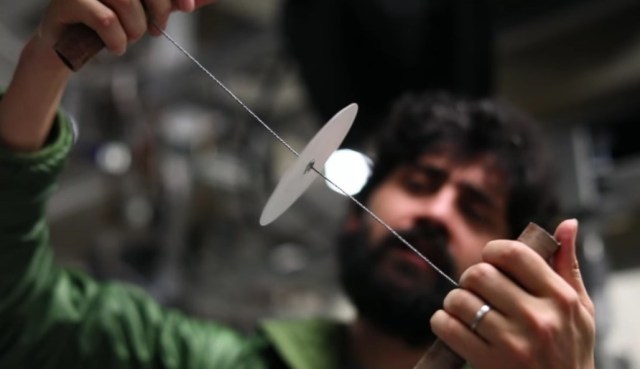
It’s a whirligig, and it’s a simple construction: a small disc, probably a button, through which you thread a piece of string twice. By pulling on the threads carefully, you can make the button spin quite quickly. You may very well have made one as a child — as Saad Bhamla, one of the creators of what they call the Paperfuge, did.

“This is a toy that I used to play with as a kid,” he says in a video produced by the university. “The puzzle was that I didn’t know how fast it would spin. So I got intrigued and I set this up on a high-speed camera — and I couldn’t believe my eyes.”

The whirligig was spinning at around 10,000 to 15,000 RPMs, right in centrifuge territory. The team then spent some time intensely studying the motion of the whirligig, which turns out to be a fascinatingly efficient way to turn linear motion into rotational motion.

The team then put together a custom whirligig with a disc of paper into which can be slotted a vial with blood or other fluids. By pulling on the strings (they added handles for ease of use) for a minute or two, less than a dollar’s worth of materials does a superb job of replicating the work of a device that costs thousands of times more. They’ve achieved RPMs of 125,000 and 30,000 G-forces.

“There is a value in this whimsical nature of searching for solutions, because it really forces us outside our own sets of constraints about what a product should actually look like,” said Manu Prakash.
They’ve just returned from field tests in Madagascar, where they tested the device and checked in with local caregivers. Up next will be more formal clinical trials of the Paperfuge’s already demonstrated ability to separate malaria parasites from blood for analysis.

If the concept of a simple, cheap alternative to existing lab equipment rings a bell, you might be remembering Foldscope, another project from Prakash. It put a powerful microscope in flatpack form for a few bucks, enabling scientific or medical examination at very low budgets.

The details of the Paperfuge and its development by Bhamla, Prakash and the rest of the team can be found in the most recent issue of Nature Biomedical Engineering: http://www.nature.com/articles/s41551-016-0009

This 20-cent whirligig toy can replace a $1,000 medical centrifuge

Thanks to Kebmodee for bringing this to the It’s Interesting community.

24 / 7 Robot Miners Working in Australia

by Tom Simonite

Each of these trucks is the size of a small two-story house. None has a driver or anyone else on board.

Mining company Rio Tinto has 73 of these titans hauling iron ore 24 hours a day at four mines in Australia’s Mars-red northwest corner. At this one, known as West Angelas, the vehicles work alongside robotic rock drilling rigs. The company is also upgrading the locomotives that haul ore hundreds of miles to port—the upgrades will allow the trains to drive themselves, and be loaded and unloaded automatically.

Rio Tinto intends its automated operations in Australia to preview a more efficient future for all of its mines—one that will also reduce the need for human miners. The rising capabilities and falling costs of robotics technology are allowing mining and oil companies to reimagine the dirty, dangerous business of getting resources out of the ground.

BHP Billiton, the world’s largest mining company, is also deploying driverless trucks and drills on iron ore mines in Australia. Suncor, Canada’s largest oil company, has begun testing driverless trucks on oil sands fields in Alberta.

“In the last couple of years we can just do so much more in terms of the sophistication of automation,” says Herman Herman, director of the National Robotics Engineering Center at Carnegie Mellon University, in Pittsburgh. The center helped Caterpillar develop its autonomous haul truck. Mining company Fortescue Metals Group is putting them to work in its own iron ore mines. Herman says the technology can be deployed sooner for mining than other applications, such as transportation on public roads. “It’s easier to deploy because these environments are already highly regulated,” he says.

Rio Tinto uses driverless trucks provided by Japan’s Komatsu. They find their way around using precision GPS and look out for obstacles using radar and laser sensors.

Rob Atkinson, who leads productivity efforts at Rio Tinto, says the fleet and other automation projects are already paying off. The company’s driverless trucks have proven to be roughly 15 percent cheaper to run than vehicles with humans behind the wheel, says Atkinson—a significant saving since haulage is by far a mine’s largest operational cost. “We’re going to continue as aggressively as possible down this path,” he says.

Trucks that drive themselves can spend more time working because software doesn’t need to stop for shift changes or bathroom breaks. They are also more predictable in how they do things like pull up for loading. “All those places where you could lose a few seconds or minutes by not being consistent add up,” says Atkinson. They also improve safety, he says.

The driverless locomotives, due to be tested extensively next year and fully deployed by 2018, are expected to bring similar benefits. Atkinson also anticipates savings on train maintenance, because software can be more predictable and gentle than any human in how it uses brakes and other controls. Diggers and bulldozers could be next to be automated.

Herman at CMU expects all large mining companies to widen their use of automation in the coming years as robotics continues to improve. The recent, sizeable investments by auto and tech companies in driverless cars will help accelerate improvements in the price and performance of the sensors, software, and other technologies needed.

Herman says many mining companies are well placed to expand automation rapidly, because they have already invested in centralized control systems that use software to coördinate and monitor their equipment. Rio Tinto, for example, gave the job of overseeing its autonomous trucks to staff at the company’s control center in Perth, 750 miles to the south. The center already plans train movements and in the future will shift from sending orders to people to directing driverless locomotives.

Atkinson of Rio Tinto acknowledges that just like earlier technologies that boosted efficiency, those changes will tend to reduce staffing levels, even if some new jobs are created servicing and managing autonomous machines. “It’s something that we’ve got to carefully manage, but it’s a reality of modern day life,” he says. “We will remain a very significant employer.”

https://www.technologyreview.com/s/603170/mining-24-hours-a-day-with-robots/

Thanks to Kebmodee for bringing this to the It’s Interesting community.

13+ Of The Most Evil-Looking Buildings That Could Easily Be Supervillain Headquarters

Compiled by Bored Panda, the list contains everything from a dancing house in Prague and a train station in Lyon to a congress centre in Hangzhou and a research institute in Berlin.

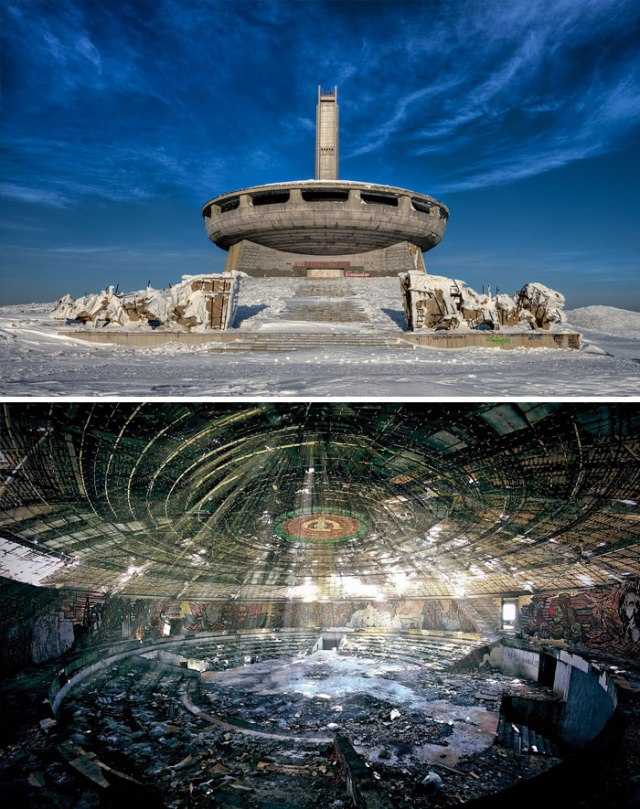
1. Buzludzha, Bulgaria

num-1

2. Philadelphia City Hall, Philadelphia, USA

3. Mahanakhon Tower, Bangkok, Thailand

num-3


4. Polygone Riviera, France

5. Riverside Museum, Glasgow, UK

6. Catholic Church, Paks, Hungary

7. Former Research Institute for Experimental Medicine, Berlin, Germany

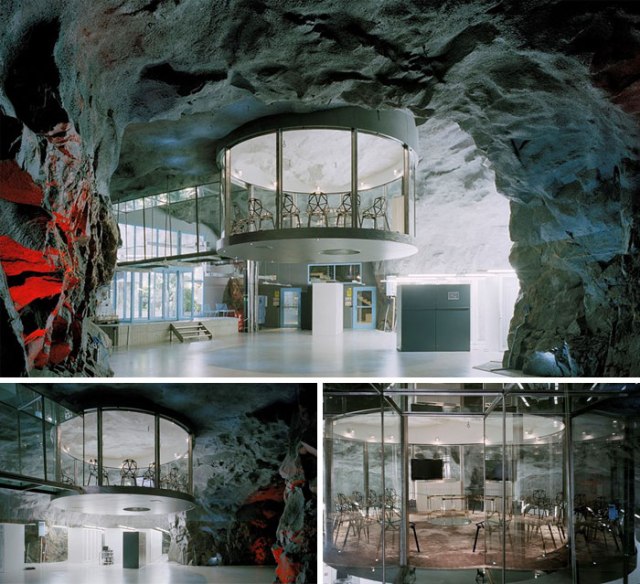
8. Bahnof OFfice in a former Atomic Shelter, Stockholm, Sweden

9. Maison St. Cyr, Brussels, Belgium

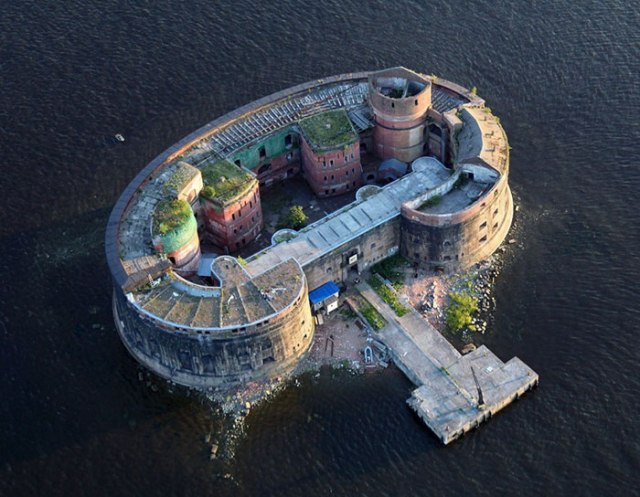
10. Fort Alexander (Plague fort), Saint Petersburg, Russia

11. Clermont-Ferrand Cathedral, Clermonr-Ferrand, France

12. Dc Tower I, Vienna, Austria


13. The National Library of Belarus, Minsk, Belarus

SONY DSC
SONY DSC