3D printer constructs house in 24 hours

By Vanessa Bates Ramirez

3D printing is being used to produce more and more novel items: tools, art, even rudimentary human organs. What all those items have in common, though, is that they’re small. The next phase of 3D printing is to move on to things that are big. Really big. Like, as big as a house.

In a small town in western Russia called Stupino, a 3D printed house just went up in the middle of winter and in a day’s time.

Pieces of houses and bridges have been 3D printed in warehouses or labs then transported to their permanent locations to be assembled, but the Stupino house was printed entirely on-site by a company called Apis Cor. They used a crane-sized, mobile 3D printer and a specially-developed mortar mix and covered the whole operation with a heated tent.

The 38-square-meter (409-square-foot) house is circular, with three right-angled protrusions allowing for additional space and division of the area inside. Counter-intuitively, the house’s roof is completely flat. Russia’s not known for mild, snow-free winters. Made of welded polymer membranes and insulated with solid plates, the roof was designed to withstand heavy snow loads.

Apis Cor teamed up with partners for the house’s finishing details, like insulation, windows, and paint. Samsung even provided high-tech appliances and a TV with a concave-curved screen to match the curve of the interior wall.

According to the company, the house’s total building cost came to $10,134, or approximately $275 per square meter, which equates to about $25 per square foot. A recent estimate put the average cost of building a 2,000 square foot home in the US at about $150 per square foot.

The homes of the future?

Since these houses are affordable and fast to build, is it only a matter of time before we’re all living in 3D printed concrete circles?

Probably not—or, at least, not until whole apartment buildings can be 3D printed. The Stupino house would be harder (though not impossible) to plop down in the middle of a city than in the Russian countryside.

While cities like Dubai are aiming to build more 3D printed houses, what many have envisioned for the homes of the future are environmentally-friendly, data-integrated ‘smart buildings,’ often clad with solar panels and including floors designated for growing food.

Large-scale 3D printing does have some very practical applications, though. Take disaster relief: when a hurricane or earthquake destroys infrastructure and leaves thousands of people without shelter, 3D printers like Apis Cor’s could be used to quickly rebuild bridges, roads, and homes.

Also, given their low cost and high speed, 3D printed houses could become a practical option for subsidized housing projects.

In the US, tiny houses have been all the rage among millennials lately—what if that tiny house could be custom-printed to your specifications in less than a week, and it cost even less than you’d budgeted?

Since software and machines are doing most of the work, there’s less margin for human error—gone are the days of “the subcontractor misread the blueprint, and now we have three closets and no bathrooms!”

While houses made by robots are good news for people looking to buy a basic, low-cost house, they could be bad news for people employed in the construction industry. Machines have been pouring concrete for decades, but technologies like Apis Cor’s giant printer will take a few more human workers out of the equation.

Nonetheless, the company states that part of their mission is “to change the construction industry so that millions of people will have an opportunity to improve their living conditions.”

See How This House Was 3D Printed in Just 24 Hours

This Neural Probe Is So Thin, The Brain Doesn’t Know It’s There

shutterstock_548067946-1068x601

by Edd Gent

Wiring our brains up to computers could have a host of exciting applications – from controlling robotic prosthetics with our minds to restoring sight by feeding camera feeds directly into the vision center of our brains.

Most brain-computer interface research to date has been conducted using electroencephalography (EEG) where electrodes are placed on the scalp to monitor the brain’s electrical activity. Achieving very high quality signals, however, requires a more invasive approach.

Integrating electronics with living tissue is complicated, though. Probes that are directly inserted into the gray matter have been around for decades, but while they are capable of highly accurate recording, the signals tend to degrade rapidly due to the buildup of scar tissue. Electrocorticography (ECoG), which uses electrodes placed beneath the skull but on top of the gray matter, has emerged as a popular compromise, as it achieves higher-accuracy recordings with a lower risk of scar formation.

But now researchers from the University of Texas have created new probes that are so thin and flexible, they don’t elicit scar tissue buildup. Unlike conventional probes, which are much larger and stiffer, they don’t cause significant damage to the brain tissue when implanted, and they are also able to comply with the natural movements of the brain.

In recent research published in the journal Science Advances, the team demonstrated that the probes were able to reliably record the electrical activity of individual neurons in mice for up to four months. This stability suggests these probes could be used for long-term monitoring of the brain for research or medical diagnostics as well as controlling prostheses, said Chong Xie, an assistant professor in the university’s department of biomedical engineering who led the research.

“Besides neuroprosthetics, they can possibly be used for neuromodulation as well, in which electrodes generate neural stimulation,” he told Singularity Hub in an email. “We are also using them to study the progression of neurovascular and neurodegenerative diseases such as stroke, Parkinson’s and Alzheimer’s.”

The group actually created two probe designs, one 50 microns long and the other 10 microns long. The smaller probe has a cross-section only a fraction of that of a neuron, which the researchers say is the smallest among all reported neural probes to the best of their knowledge.

Because the probes are so flexible, they can’t be pushed into the brain tissue by themselves, and so they needed to be guided in using a stiff rod called a “shuttle device.” Previous designs of these shuttle devices were much larger than the new probes and often led to serious damage to the brain tissue, so the group created a new carbon fiber design just seven microns in diameter.

At present, though, only 25 percent of the recordings can be tracked down to individual neurons – thanks to the fact that neurons each have characteristic waveforms – with the rest too unclear to distinguish from each other.

“The only solution, in my opinion, is to have many electrodes placed in the brain in an array or lattice so that any neuron can be within a reasonable distance from an electrode,” said Chong. “As a result, all enclosed neurons can be recorded and well-sorted.”

This a challenging problem, according to Chong, but one benefit of the new probes is that their small dimensions make it possible to implant probes just tens of microns apart rather than the few hundred micron distances necessary with conventional probes. This opens up the possibility of overlapping detection ranges between probes, though the group can still only consistently implant probes with an accuracy of 50 microns.

Takashi Kozai, an assistant professor in the University of Pittsburgh’s bioengineering department who has worked on ultra-small neural probes, said that further experiments would need to be done to show that the recordings, gleaned from anaesthetized rats, actually contained useful neural code. This could include visually stimulating the animals and trying to record activity in the visual cortex.

He also added that a lot of computational neuroscience relies on knowing the exact spacing between recording sites. The fact that flexible probes are able to migrate due to natural tissue movements could pose challenges.

But he said the study “does show some important advances forward in technology development, and most importantly, proof-of-concept feasibility,” adding that “there is clearly much more work necessary before this technology becomes widely used or practical.”

Chong actually worked on another promising approach to neural recording in his previous role under Charles M. Lieber at Harvard University. Last June, the group demonstrated a mesh of soft, conductive polymer threads studded with electrodes that could be injected into the skulls of mice with a syringe where it would then unfurl to both record and stimulate neurons.

As 95 percent of the mesh is free, space cells are able to arrange themselves around it, and the study reported no signs of an elevated immune response after five weeks. But the implantation required a syringe 100 microns in diameter, which causes considerably more damage than the new ultra-small probes developed in Chong’s lab.

It could be some time before the probes are tested on humans. “The major barrier is that this is still an invasive surgical procedure, including cranial surgery and implantation of devices into brain tissue,” said Chong. But, he said, the group is considering testing the probes on epilepsy patients, as it is common practice to implant electrodes inside the skulls of those who don’t respond to medication to locate the area of their brains responsible for their seizures.

This Neural Probe Is So Thin, The Brain Doesn’t Know It’s There

The longest-running personality study ever shows shows total transformation of personality as we age.

Look at a photo of yourself as a teenager and, mistaken fashion choices aside, it’s likely you see traces of the same person with the same personality quirks as you are today. But whether or not you truly are the same person over a lifetime—and what that notion of personhood even means—is the subject of ongoing philosophical and psychology debate.

The longest personality study of all time, published in Psychology and Aging and recently highlighted by the British Psychological Society, suggests that over the course of a lifetime, just as your physical appearance changes and your cells are constantly replaced, your personality is also transformed beyond recognition.

The study begins with data from a 1950 survey of 1,208 14-year-olds in Scotland. Teachers were asked to use six questionnaires to rate the teenagers on six personality traits: self-confidence, perseverance, stability of moods, conscientiousness, originality, and desire to learn. Together, the results from these questionnaires were amalgamated into a rating for one trait, which was defined as “dependability.” More than six decades later, researchers tracked down 635 of the participants, and 174 agreed to repeat testing.

This time, aged 77 years old, the participants rated themselves on the six personality traits, and also nominated a close friend or relative to do the same. Overall, there was not much overlap from the questionnaires taken 63 years earlier. “Correlations suggested no significant stability of any of the 6 characteristics or their underlying factor, dependability, over the 63-year interval,” wrote the researchers. “We hypothesized that we would find evidence of personality stability over an even longer period of 63 years, but our correlations did not support this hypothesis,” they later added.

The findings were a surprise to researchers because previous personality studies, over shorter periods of time, seemed to show consistency. Studies over several decades, focusing on participants from childhood to middle age, or from middle age to older age, showed stable personality traits. But the most recent study, covering the longest period, suggests that personality stability is disrupted over time. “The longer the interval between two assessments of personality, the weaker the relationship between the two tends to be,” the researchers write. “Our results suggest that, when the interval is increased to as much as 63 years, there is hardly any relationship at all.”

Perhaps those who had impulsive character flaws as a teenager would be grateful that certain personality traits might even out later in life. But it’s disconcerting to think that your entire personality is transformed.

“Personality refers to an individual’s characteristic patterns of thought, emotion, and behavior, together with the psychological mechanisms—hidden or not—behind those patterns,” note the authors, quoting psychology professor David Funder’s definition.

If your patterns of thought, emotions, and behavior so drastically alter over the decades, can you truly be considered the same person in old age as you were as a teenager? This question ties in with broader theories about the nature of the self. For example, there is growing neuroscience research that supports the ancient Buddhist belief that our notion of a stable “self” is nothing more than an illusion.

Perhaps this won’t surprise you if you’ve had the experience of running into a very old friend from school, and found a completely different person from the child you remembered. This research suggests that, as the decades go by, your own younger self could be similarly unrecognizable.

https://qz.com/914002/youre-a-completely-different-person-at-14-and-77-the-longest-running-personality-study-ever-has-found/

50,000 year old strange life found trapped inside giant cave crystals, now woken up by NASA

by Bec Crew

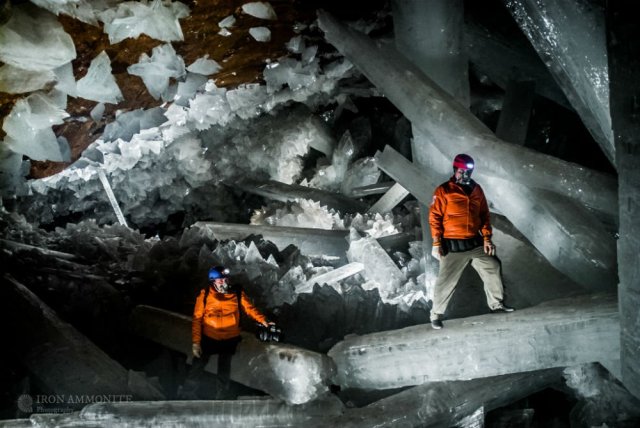
Strange microbes have been found inside the massive, subterranean crystals of Mexico’s Naica Mine, and researchers suspect they’ve been living there for up to 50,000 years.

The ancient creatures appear to have been dormant for thousands of years, surviving in tiny pockets of liquid within the crystal structures. Now, scientists have managed to extract them – and wake them up.

“These organisms are so extraordinary,” astrobiologist Penelope Boston, director of the NASA Astrobiology Institute, said on Friday at the annual meeting of the American Association for the Advancement of Science (AAAS) in Boston.

The Cave of Crystals in Mexico’s Naica Mine might look incredibly beautiful, but it’s one of the most inhospitable places on Earth, with temperatures ranging from 45 to 65°C (113 to 149°F), and humidity levels hitting more than 99 percent.

Not only are temperatures hellishly high, but the environment is also oppressively acidic, and confined to pitch-black darkness some 300 metres (1,000 feet) below the surface.

In lieu of any sunlight, microbes inside the cave can’t photosynthesise – instead, they perform chemosynthesis using minerals like iron and sulphur in the giant gypsum crystals, some of which stretch 11 metres (36 feet) long, and have been dated to half a million years old.

Researchers have previously found life living inside the walls of the cavern and nearby the crystals – a 2013 expedition to Naica reported the discovery of creatures thriving in the hot, saline springs of the complex cave system.

But when Boston and her team extracted liquid from the tiny gaps inside the crystals and sent them off to be analysed, they realised that not only was there life inside, but it was unlike anything they’d seen in the scientific record.

They suspect the creatures had been living inside their crystal castles for somewhere between 10,000 and 50,000 years, and while their bodies had mostly shut down, they were still very much alive.

“Other people have made longer-term claims for the antiquity of organisms that were still alive, but in this case these organisms are all very extraordinary – they are not very closely related to anything in the known genetic databases,” Boston told Jonathan Amos at BBC News.

What’s perhaps most extraordinary about the find is that the researchers were able to ‘revive’ some of the microbes, and grow cultures from them in the lab.

“Much to my surprise we got things to grow,” Boston told Sarah Knapton at The Telegraph. “It was laborious. We lost some of them – that’s just the game. They’ve got needs we can’t fulfil.”

At this point, we should be clear that the discovery has yet to be published in a peer-reviewed journal, so until other scientists have had a chance to examine the methodology and findings, we can’t consider the discovery be definitive just yet.

The team will also need to convince the scientific community that the findings aren’t the result of contamination – these microbes are invisible to the naked eye, which means it’s possible that they attached themselves to the drilling equipment and made it look like they came from inside the crystals.

“I think that the presence of microbes trapped within fluid inclusions in Naica crystals is in principle possible,” Purificación López-García from the French National Centre for Scientific Research, who was part of the 2013 study that found life in the cave springs, told National Geographic.

“[But] contamination during drilling with microorganisms attached to the surface of these crystals or living in tiny fractures constitutes a very serious risk,” she says. I am very skeptical about the veracity of this finding until I see the evidence.”

That said, microbiologist Brent Christner from the University of Florida in Gainesville, who was also not involved in the research, thinks the claim isn’t as far-fetched as López-García is making it out to be, based on what previous studies have managed with similarly ancient microbes.

“[R]eviving microbes from samples of 10,000 to 50,000 years is not that outlandish based on previous reports of microbial resuscitations in geological materials hundreds of thousands to millions of years old,” he told National Geographic.

For their part, Boston and her team say they took every precaution to make sure their gear was sterilised, and cite the fact that the creatures they found inside the crystals were similar, but not identical to those living elsewhere in the cave as evidence to support their claims.

“We have also done genetic work and cultured the cave organisms that are alive now and exposed, and we see that some of those microbes are similar but not identical to those in the fluid inclusions,” she said.

Only time will tell if the results will bear out once they’re published for all to see, but if they are confirmed, it’s just further proof of the incredible hardiness of life on Earth, and points to what’s possible out there in the extreme conditions of space.

http://www.sciencealert.com/ancient-life-has-been-found-trapped-inside-these-giant-cave-crystals

A small city in Iowa is devoting 1,000 acres of land to America’s vanishing bees

By Sarah Fecht

You’ve probably heard the news that our nation’s bees are in trouble. Pollinators have been disappearing for decades, and the population crash could threaten the global food supply. Now, a small city in Iowa has decided to do something about it.

This spring, Cedar Rapids (population: 130,000) will seed 188 acres with native prairie grasses and wildflowers. The city’s plan is to eventually create 1,000 acres of bee paradise by planting these pollinator-friendly foodstuffs.

Scientists think the pollinator crisis is caused by a variety of factors, including pesticides, pathogens, and climate change. Meanwhile, with farms, parking lots, mowed lawns, and other human developments replacing wildflower fields, bees have been losing habitat and their food supply. While many of the drivers behind bee population decline remain mysterious, the people of Cedar Rapids hope to at least give pollinators places to perch and plants to feed on.

The 1,000 Acre Pollinator Initiative (http://www.cedar-rapids.org/residents/parks_and_recreation/pollinator_and_natural_resources_initiatives.php#Acre) grew out of a partnership with the Monarch Research Project(MRP), whose goal is to restore monarch butterfly populations. It was Cedar Rapids Park Superintendent Daniel Gibbins who proposed converting 1,000 acres into pollinator habitat over five years. So far, the project has secured $180,000 in funding from the state and the MRP.

“With the agricultural boom around 100 years ago, about 99.9 percent of all the native habitat of Iowa has been lost,” says Gibbins, who is spearheading the project. “When you convert it back to what was originally native Iowa, you’re going to help a lot more than just native pollinators. You’re helping birds, amphibians, reptiles, mammals—everything that’s native here relies on native vegetation.”

Prairie revival

Cedar Rapids has developed a special mix of grasses and wildflowers to help restore that native habitat. The seed mix includes 39 species of wildflowers, and 7 species of native prairie grasses. While bees and butterflies are mostly attracted to the flowers, the hardy prairie grasses will prevent weeds and invasive species from moving in and choking out the flowers.

Gibbins and his team have catalogued all the unused public land where they could potentially plant the flowers and grasses. The list includes not only the rarely frequented corners of parks, golf courses, and the local airport, but also sewage ditches, water retention basins, and roadway right-of-ways, totaling nearly 500 acres. Cedar Rapids is working with other cities within the county to reach its 1,000-acre target.

Before they can seed the land with the special pollinator plant mix, Gibbins’ crew has to “knock back the undesirable vegetation.” That means mowing down, burning off, or in some cases applying herbicide to get rid of grass, weeds, and invasive species. They’ll lay down the special seed mixture in the spring and fall.

“You can’t just seed them and walk away,” says Gibbins. Although the pollinator habitat will be lower maintenance than a green turf that needs to be mown every week, the prairie grasses will require some care, including mowing once a year or burning every few years.

Everyone can help

You don’t need to have 1,000 spare acres to help bees and butterflies. Even devoting a few square feet of your garden—or even a few small planters—to wildflowers native to your area could make a difference, says Gibbins.

“When creating pollinator gardens, the most important thing is to have a big diversity of wildflowers and heirloom crops that bloom in the spring, summer, and fall,” says Stephen Buchmann, a pollination ecologist at the University of Arizona and author of The Reason for Flowers. (Buchmann isn’t involved in the 1,000 Acre Initiative.)

Buchmann recommends against using herbicides or insecticides, or, if necessary, applying them at night when bees aren’t active. Providing nesting sites for certain bee species can help, too.

“People think they’ll just plant the wildflowers and the bees will come,” he says. “And that’s true in some cases, but the smaller the bee is, the less far it can fly. Some can only fly a few hundred meters.”

Some species nest in hard substrates, like the bare ground (bees hate mulch, says Buchmann), or in holes that you can drill in adobe or earthen bricks. Others nestle in sand pits or dead wood that’s been tunneled through by beetles. And it helps to have mud and water on the premises. The Xerces Society has a handy how-to guide on creating homes for bees.

The 1,000 Acre Pollinator Initiative is still looking into funding for the next four years, and they don’t expect to see huge jumps in the number of pollinators immediately. But Cedar Rapids is confident it will help, and they hope the project will serve as a model for the rest of the country.

And if enough local businesses and private landowners get involved, there’s no reason to stop at 1,000 acres, says Gibbins. “There’s a big push to extend this initiative up to maybe 10,000 acres in Linn County.”

http://www.popsci.com/Cedar-Rapids-Iowa-save-bee-pollinator#page-4

Talking to a Computer May Soon Be Enough to Diagnose Illness

By Vanessa Bates Ramirez

In recent years, technology has been producing more and more novel ways to diagnose and treat illness.

Urine tests will soon be able to detect cancer: https://singularityhub.com/2016/10/14/detecting-cancer-early-with-nanosensors-and-a-urine-test/

Smartphone apps can diagnose STDs:https://singularityhub.com/2016/12/25/your-smartphones-next-big-trick-to-make-you-healthier-than-ever/

Chatbots can provide quality mental healthcare: https://singularityhub.com/2016/10/10/bridging-the-mental-healthcare-gap-with-artificial-intelligence/

Joining this list is a minimally-invasive technique that’s been getting increasing buzz across various sectors of healthcare: disease detection by voice analysis.

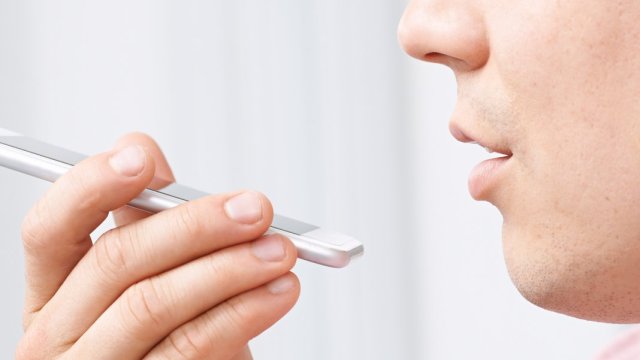
It’s basically what it sounds like: you talk, and a computer analyzes your voice and screens for illness. Most of the indicators that machine learning algorithms can pick up aren’t detectable to the human ear.

When we do hear irregularities in our own voices or those of others, the fact we’re noticing them at all means they’re extreme; elongating syllables, slurring, trembling, or using a tone that’s unusually flat or nasal could all be indicators of different health conditions. Even if we can hear them, though, unless someone says, “I’m having chest pain” or “I’m depressed,” we don’t know how to analyze or interpret these biomarkers.

Computers soon will, though.

Researchers from various medical centers, universities, and healthcare companies have collected voice recordings from hundreds of patients and fed them to machine learning software that compares the voices to those of healthy people, with the aim of establishing patterns clear enough to pinpoint vocal disease indicators.

In one particularly encouraging study, doctors from the Mayo Clinic worked with Israeli company Beyond Verbal to analyze voice recordings from 120 people who were scheduled for a coronary angiography. Participants used an app on their phones to record 30-second intervals of themselves reading a piece of text, describing a positive experience, then describing a negative experience. Doctors also took recordings from a control group of 25 patients who were either healthy or getting non-heart-related tests.

The doctors found 13 different voice characteristics associated with coronary artery disease. Most notably, the biggest differences between heart patients and non-heart patients’ voices occurred when they talked about a negative experience.

Heart disease isn’t the only illness that shows promise for voice diagnosis. Researchers are also making headway in the conditions below.

ADHD: German company Audioprofiling is using voice analysis to diagnose ADHD in children, achieving greater than 90 percent accuracy in identifying previously diagnosed kids based on their speech alone. The company’s founder gave speech rhythm as an example indicator for ADHD, saying children with the condition speak in syllables less equal in length.
PTSD: With the goal of decreasing the suicide rate among military service members, Boston-based Cogito partnered with the Department of Veterans Affairs to use a voice analysis app to monitor service members’ moods. Researchers at Massachusetts General Hospital are also using the app as part of a two-year study to track the health of 1,000 patients with bipolar disorder and depression.
Brain injury: In June 2016, the US Army partnered with MIT’s Lincoln Lab to develop an algorithm that uses voice to diagnose mild traumatic brain injury. Brain injury biomarkers may include elongated syllables and vowel sounds or difficulty pronouncing phrases that require complex facial muscle movements.
Parkinson’s: Parkinson’s disease has no biomarkers and can only be diagnosed via a costly in-clinic analysis with a neurologist. The Parkinson’s Voice Initiative is changing that by analyzing 30-second voice recordings with machine learning software, achieving 98.6 percent accuracy in detecting whether or not a participant suffers from the disease.
Challenges remain before vocal disease diagnosis becomes truly viable and widespread. For starters, there are privacy concerns over the personal health data identifiable in voice samples. It’s also not yet clear how well algorithms developed for English-speakers will perform with other languages.

Despite these hurdles, our voices appear to be on their way to becoming key players in our health.

Talking to a Computer May Soon Be Enough to Diagnose Illness

Radical plan proposed to re-freeze the Arctic

Physicist Steven Desch has come up with a novel solution to the problems that now beset the Arctic. He and a team of colleagues from Arizona State University want to replenish the region’s shrinking sea ice – by building 10 million wind-powered pumps over the Arctic ice cap. In winter, these would be used to pump water to the surface of the ice where it would freeze, thickening the cap.

The pumps could add an extra metre of sea ice to the Arctic’s current layer, Desch argues. The current cap rarely exceeds 2-3 metres in thickness and is being eroded constantly as the planet succumbs to climate change.

“Thicker ice would mean longer-lasting ice. In turn, that would mean the danger of all sea ice disappearing from the Arctic in summer would be reduced significantly,” Desch told the Observer.

Desch and his team have put forward the scheme in a paper that has just been published in Earth’s Future, the journal of the American Geophysical Union, and have worked out a price tag for the project: $500bn (£400bn).

It is an astonishing sum. However, it is the kind of outlay that may become necessary if we want to halt the calamity that faces the Arctic, says Desch, who, like many other scientists, has become alarmed at temperature change in the region. They say that it is now warming twice as fast as their climate models predicted only a few years ago and argue that the 2015 Paris agreement to limit global warming will be insufficient to prevent the region’s sea ice disappearing completely in summer, possibly by 2030.

“Our only strategy at present seems to be to tell people to stop burning fossil fuels,” says Desch. “It’s a good idea but it is going to need a lot more than that to stop the Arctic’s sea ice from disappearing.”

The loss of the Arctic’s summer sea ice cover would disrupt life in the region, endanger many of its species, from Arctic cod to polar bears, and destroy a pristine habitat. It would also trigger further warming of the planet by removing ice that reflects solar radiation back into space, disrupt weather patterns across the northern hemisphere and melt permafrost, releasing more carbon gases into the atmosphere.

Hence Desch’s scheme to use wind pumps to bring water that is insulated from the bitter Arctic cold to its icy surface, where it will freeze and thicken the ice cap. Nor is the physicist alone in his Arctic scheming: other projects to halt sea-ice loss include one to artificially whiten the Arctic by scattering light-coloured aerosol particles over it to reflect solar radiation back into space, and another to spray sea water into the atmosphere above the region to create clouds that would also reflect sunlight away from the surface.

All the projects are highly imaginative – and extremely costly. The fact that they are even being considered reveals just how desperately worried researchers have become about the Arctic. “The situation is causing grave concern,” says Professor Julienne Stroeve, of University College London. “It is now much more dire than even our worst case scenarios originally suggested.’

Last November, when sea ice should have begun thickening and spreading over the Arctic as winter set in, the region warmed up. Temperatures should have plummeted to -25C but reached several degrees above freezing instead. “It’s been about 20C warmer than normal over most of the Arctic Ocean. This is unprecedented,” research professor Jennifer Francis of Rutgers University told the Guardian in November. “These temperatures are literally off the charts for where they should be at this time of year. It is pretty shocking. The Arctic has been breaking records all year. It is exciting but also scary.”

Nor have things got better in the intervening months. Figures issued by the US National Snow and Ice Data Center (NSIDC), in Boulder, Colorado, last week revealed that in January the Arctic’s sea ice covered 13.38 million sq km, the lowest January extent in the 38 years since satellites began surveying the region. That figure is 260,000 sq km below the level for January last year, which was the previous lowest extent for that month, and a worrying 1.26 million sq km below the long-term average for January.

In fact, sea ice growth stalled during the second week of January – in the heart of the Arctic winter – while the ice cap actually retreated within the Kara and Barents seas, and within the Sea of Okhotsk. Similarly, the Svalbard archipelago, normally shrouded in ice, has remained relatively free because of the inflow of warm Atlantic water along the western part of the island chain. Although there has been some recovery, sea ice remains well below all previous record lows.

This paucity of sea ice bodes ill for the Arctic’s summer months when cover traditionally drops to its lower annual level, and could plunge to a record minimum this year. Most scientists expect that, at current emission rates, the Arctic will be reliably free of sea ice in summer by 2030.

By “free” they mean there will be less than 1m sq km of sea ice left in the Arctic, most of it packed into remote bays and channels, while the central Arctic Ocean over the north pole will be completely open. And by “reliably”, scientists mean there will have been five consecutive years with less than 1m sq km of ice by the year 2050. The first single ice-free year will come much earlier than this, however.

And when that happens, the consequences are likely to be severe for the human and animal inhabitants of the region. An ice-free Arctic will be wide open to commercial exploitation, for example. Already, mining, oil and tourism companies have revealed plans to begin operations – schemes that could put severe strain on indigenous communities’ way of life in the region.

Equally worrying is the likely impact on wildlife, says Stroeve. “Juvenile Arctic cod like to hang out under the sea ice. Polar bears hunt on sea ice, and seals give birth on it. We have no idea what will happen when that lot disappears. In addition, there is the problem of increasing numbers of warm spells during which rain falls instead of snow. That rain then freezes on the ground and forms a hard coating that prevents reindeer and caribou from finding food under the snow.”

Nor would the rest of the world be isolated. With less ice to reflect solar radiation back into space, the dark ocean waters of the high latitudes will warm and the Arctic will heat up even further.

“If you warm the Arctic you decrease the temperature difference between the poles and the mid-latitudes, and that affects the polar vortex, the winds that blow between the mid latitudes and the high latitudes,” says Henry Burgess, head of the Arctic office of the UK Natural Environment Research Council.

“Normally this process tends to keep the cold in the high north and milder air in mid-latitudes but there is an increasing risk this will be disrupted as the temperature differential gets weaker. We may get more and more long, cold spells spilling down from the Arctic, longer and slower periods of Atlantic storms and equally warmer periods in the Arctic. What happens up there touches us all. It is hard to believe you can take away several million sq km of ice a few thousand kilometres to the north and not expect there will be an impact on weather patterns here in the UK.”

For her part, Stroeve puts it more bleakly: “We are carrying out a blind experiment on our planet whose outcome is almost impossible to guess.”

This point is backed by Desch. “Sea ice is disappearing from the Arctic – rapidly. The sorts of options we are proposing need to be researched and discussed now. If we are provocative and get people to think about this, that is good.

“The question is: do I think our project would work? Yes. I am confident it would. But we do need to put a realistic cost on these things. We cannot keep on just telling people, ‘Stop driving your car or it’s the end of the world’. We have to give them alternative options, though equally we need to price them.”

THE BIG SHRINK
The Arctic ice cap reaches its maximum extent every March and then, over the next six months, dwindles. The trough is reached around mid-September at the end of the melting season. The ice growth cycle then restarts. However, the extent of regrowth began slackening towards the end of the last century. According to meteorologists, the Arctic’s ice cover at its minimum is now decreasing by 13% every decade – a direct consequence of heating triggered by increased levels of carbon dioxide in the atmosphere.

Climate change deniers claim this loss is matched by gains in sea ice around the Antarctic. It is not. Antarctic ice fluctuations are slight compared with the Arctic’s plummeting coverage and if you combine the changes at both poles, you find more than a million sq km of ice has been lost globally in 30 years.

https://www.theguardian.com/world/2017/feb/12/plan-to-refreeze-arctic-before-ice-goes-for-good-climate-change


Just Stand Inside this Room and it Will Wirelessly Charge Your Phone

Go to any airport and you’ll see wearied travelers huddled around outlets leeching out precious electricity to feed their devices. They aren’t alone in their need for power. With more than 3 billion smartphones alone in circulation in 2016, more people are experiencing the frustration of a phone dying when you’re using maps in an unfamiliar area or just watching the latest viral video.

In response, consumers are increasingly calling for bigger, longer-lasting batteries so that they spend less time looking for anywhere to plug in.

But those days may be coming to an end, thanks to new technology from Disney Research. The company has developed a method for wireless power transmission where the only thing you have to do to charge your phone is be in a specially-designed room.

This means airport outlet mobbing may soon be nothing but an unpleasant memory.

The new method, called quasistatic cavity resonance (QSCR, works by inducing electrical currents inside a room where the walls, floor and ceiling have been metalized. The electrical currents permeate the room with magnetic fields, enabling power to be transmitted to a device’s receiving coils operating at the same resonant frequency.

In the demonstration of QSCR detailed in their paper, researchers built a 16-by-16-foot room with aluminum walls, ceiling and floor bolted to an aluminum frame. The metal floor was covered with insulating carpet, and a capacitor-filled copper pole was placed in the center of the room. A spiral drive coil was used to stimulate the room.

They were able to safely transmit 1.9 kilowatts of power to a receiver at 90 percent efficiency—that’s equivalent to charging 320 phones at once.

As much as wireless charging sounds appealing, concerns about the health risks of electromagnetic fields abound. During their simulations, researchers tracked Specific Absorption Rate, which measures how much power is absorbed by biological tissue, and ensured the value stayed at or below an established threshold.

Though the research is still in early stages, researchers predict they’ll eventually be able to reduce the need for fully-metalized rooms, perhaps by retrofitting existing structures with modular panels or conductive paint. Larger spaces could be accommodated by using multiple copper poles.

“This new innovative method will make it possible for electrical power to become as ubiquitous as WiFi,” said Alanson Sample, associate lab director & principal research scientist at Disney Research.

Besides making our day-to-day lives easier, QSCR could accelerate the progress of electronic devices by reducing our dependence on batteries.

Many of us probably don’t realize that the devices we are carrying around in our purses and pockets are basically big batteries with a chip and a screen attached to them. For an iPhone 7, for example, the battery alone takes up two-thirds of the length, over half the width, and a fifth of the total weight. Our phones are essentially designed around the battery, thus power is a major limiting factor for smartphone technology as a whole.

But what if our devices didn’t need big batteries? How would that change their weight, their design, and their capabilities? Rather than being designed for the battery’s sake, they could be designed for the engagement we want.

Just Stand Inside This Room and It Will Wirelessly Charge Your Phone

To Boldly Cruise Where No Couple Has Cruised Before

by Fran Golden

On her left upper arm, Allison Holmes has a tattoo of an octopus with pointy Vulcan ears wrapping its tentacles around a spaceship that resembles an elongated VW camper. The “Spocktopus” is a tribute to Leonard Nimoy, who played the half-Vulcan, half-human Mr. Spock on the original Star Trek television series. “It was inspired by old science fiction posters,” says Holmes, 33, of San Antonio. Holmes is a self-described Trekkie, though that probably goes without saying if you’re showing off Spock-inspired body art. Especially if you’re showing it off in a hot tub aboard the Norwegian Pearl as it sails through the Western Caribbean on the first-ever Star Trek: The Cruise.

Joining Holmes in January were Trekkies from as far away as Australia and New Zealand, their suitcases full of costumes and body paint. Shorts and bathing suits were the favored daywear, but at night fans emerged from their cabins dressed as Vulcans, fierce-looking Klingons, antennaed blue Andorians, and green Orions. There were also several reptilian Gorn and Yeoman Rand look-alikes with beehive hairdos. Didn’t get any of these references? Then this cruise was definitely not for you.

You might not think of wannabe Klingons as people who leave their parents’ basements much, let alone as sun-and-fun types. But superfans such as Holmes make up one of the newest and most enthusiastic groups hitting the high seas. Music themes have dominated the industry for years, but cruises are increasingly embracing other forms of pop culture. In addition to the Star Trek trip, fans are filling ships for shows including The Walking Dead and Property Brothers, where the Scott brothers held Q&A sessions about design, signed autographs, and sang karaoke. Oprah is going to attend an O, The Oprah Magazine cruise to Alaska in July, and the publication, with partner Holland America line, is running four additional theme cruises this fall and next year. “There is a tremendous sense of camaraderie” on these cruises, says Howard Moses, a travel agent who also runs the website Theme Cruise Finder. “It’s nice to know that people you meet at dinner share your passion.”

It’s also nice for the cruise lines, which see themed events as a way to draw new clientele. Third-party production companies book entire ships, usually during what would otherwise be cruising’s fallow season; fans care more about the what of the experience than the when or where. And they’re willing to spend. The average fare paid by the 2,300 passengers on the six-day Star Trek cruise was $2,400 per person, more than double Norwegian Cruise Line’s typical January rate.

Since the first theme cruises set sail about 30 years ago, they’ve become a bigger and bigger part of the industry. Moses’ site recorded 150 in 2012. Today there are 600-plus listings. Included are small group gatherings and shipwide takeovers. Music and superfan charters have become such an attractive business that in 2012 Norwegian bought Sixthman, a production company in Atlanta that began staging Festivals at Sea each year; the 2017 lineup includes cruises featuring Pitbull, Kid Rock, Kiss, acts from the Warped Tour, outlaw country musicians, and the funny men of the TruTV show Impractical Jokers. “The purpose of a theme cruise is orange juice concentrate,” says Michael Lazaroff, executive director of Entertainment Cruise Productions and the mastermind behind the Star Trek voyage. “We are providing fans with a chance to experience their passion in the most intense possible way.”

Lazaroff and his team started talking with CBS, owner of the Star Trek franchise, in the summer of 2015. As it happened, CBS had been looking for ways to celebrate the 50th anniversary of Gene Roddenberry’s creation, which went on the air in 1966. “We considered developing a Star Trek cruise for fans for some time, and the 50th anniversary seemed ideal,” says Veronica Hart, senior vice president for CBS’s consumer-products division. She adds that the “stars aligned” when William Shatner, 85, Captain James T. Kirk in the original series, signed on to host. “He wasn’t cheap,” Lazaroff says.

That September, Lazaroff and his staff headed to the annual Las Vegas Star Trek convention to test fan reaction. “The website we had wasn’t ready to take reservations,” he says. Interest was overwhelming, and his team cobbled together an online sign-up. “We just threw it up, and next thing we knew—boom!—we were done.” The cruise sold out in three weeks, although many who booked had never attended a Star Trek convention, according to a precruise survey. Hart says the experiences aren’t mutually exclusive: “The cruise is a completely unique, immersive experience.”

The Pearl was tricked out with references to the shows—the original series, Next Generation, Deep Space Nine, Voyager, Enterprise, and Discovery, which is set to premiere this May—and films. Special signage transformed elevators into turbolifts. The ship’s specialty restaurants incorporated the names of characters into dishes such as Vic Fontaine’s chateaubriand, which was named for Deep Space Nine’s holographic lounge singer.

Programming included the Q&As and the autograph and photo sessions you’d find at a convention; autographs cost $25 to $35, depending on the actor, and photos were $40. Klingon foreheads ran $45. Shatner, whose contract mandated that he pose for one photo per cabin, joked to the crowd about how cute Chris Pine’s portrayal of Captain Kirk is in the latest Star Trek movies, talked physics and global warming, and attempted to answer fans’ requests for details about his experiences on set.

Passengers could also attend a no-fee yoga class hosted by Terry Farrell, aka Jadzia Dax, Deep Space Nine’s Starfleet science officer; play blackjack with Marina Sirtis, aka the half-human, half-Betazoid Deanna Troi on Next Generation; and attend a happy hour with Denise Crosby, aka Tasha Yar, briefly the USS Enterprise’s chief of security on Next Generation. Special actor-led shore excursions to Cozumel and the Bahamas, which cost $75, up from the normal $50, sold out before the ship set sail. A lecture by theoretical physicist Lawrence Krauss, author of The Physics of Star Trek (1995), drew a standing-room-only crowd. Former Saturday Night Live cast member Joe Piscopo, who guest-starred as a comic on an episode of Next Generation, got multiple standing ovations for a nighttime set.

If the Pearl wasn’t quite a floating Enterprise—the crew didn’t wear Starfleet uniforms—there were constant references to “boldly going” and “warp speed.” The mood was friendly and accepting. “It’s nice to be among your people,” says Holmes of the Spocktopus. “You see a lot of cool costumes and a lot of people really, really geeking out.” Her parents were also on board, and she and her husband, Allen, 33, have already booked a penthouse for the first of two more Star Trek cruises that will take place next year, both hosted by George Takei, who played Sulu, the helmsman on Kirk’s Enterprise.

The cruisers knew their stuff. At a trivia contest with Max Grodénchik, who played Rom, a large-eared Ferengi on Deep Space Nine, passengers rushed to call out answers to questions such as “In the ‘Enterprise Incident’ episode, the Romulan commander offers Spock what?” (Answer: “The Right of Statement.”) During a $40 pub crawl with Robert O’Reilly, Gowron from Deep Space Nine, passengers showed off their Klingon language skills. One man pounded his feet as he sang the words to several Klingon battle songs. O’Reilly was impressed.

In one session, Rabbi ElizaBeth Beyer, 57, and her husband Tom, 63, of Reno, Nev., renewed their wedding vows at a ceremony officiated by Deep Space Nine’s Farrell. Married 35 years and wearing Starfleet uniforms, they repeated vows written by Jordan Hoffman, host of Engage: The Official Star Trek Podcast. They referenced phasers and Tribbles and holodecks and, near the end, said, “You are the bridge to my Enterprise, you are the captain to my starship.”

https://www.bloomberg.com/news/features/2017-02-15/maniac-killers-of-the-bangalore-it-department