Self-Medicating Monkeys Gobble Painkilling Bark

By Jason G. Goldman

When a monkey has the sniffles or a headache, it doesn’t have the luxury of popping a few painkillers from the medicine cabinet. So how does it deal with the common colds and coughs of the wildlife world?

University of Georgia ecologist Ria R. Ghai and her colleagues observed a troop of more than 100 red colobus monkeys in Uganda’s Kibale National Park for four years to figure out whether the rain forest provides a Tylenol equivalent.

Monkeys infected with a whipworm parasite were found to spend more time resting and less time moving, grooming and having sex. The infected monkeys also ate twice as much tree bark as their healthy counterparts even though they kept the same feeding schedules. The findings were published in September in the journal Proceedings of the Royal Society B.

The fibrous snack could help literally sweep the intestinal intruder out of the simians’ gastrointestinal tracts, but Ghai suspects a more convincing reason. Seven of the nine species of trees and shrubs preferred by sick monkeys have known pharmacological properties, such as antisepsis and analgesia. Thus, the monkeys could have been self-medicating, although she cannot rule out other possibilities. The sick individuals were, however, using the very same plants that local people use to treat illnesses, including infection by whipworm parasites. And that “just doesn’t seem like a coincidence,” Ghai says.

University of Helsinki researchers recently announced the first evidence of self-medication in ants. When the biologists exposed hundreds of Formica fusca ants to a dangerous fungus, many of the infected insects chose to consume a 4 to 6 percent hydrogen peroxide solution made available for the experiment. Healthy ants avoided the household chemical, which can quash infections in small doses but is otherwise deadly. The sick ants that partook were less likely to succumb to the grips of the fungus. In the wild, they could perhaps acquire the compound by eating plants that release it to fight aphid infestations.

http://www.scientificamerican.com/article/self-medicating-monkeys-gobble-painkilling-bark/

This Bizarre Gunshot-Plugging Device Just Saved Its First Life


The XSTAT Rapid Hemostasis System

by George Dvorsky

An innovative sponge-filled dressing device recently saved the life of a coalition forces soldier who was shot in the leg. It’s the first documented clinical use of the product, known as XSTAT.

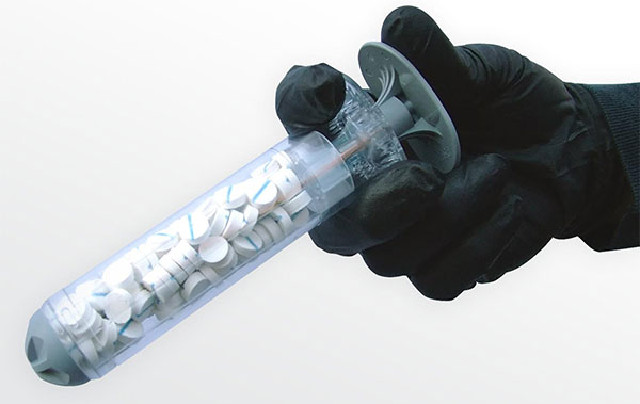
The device was approved for military use back in 2014, but this incident marks the first time the system has been used in a real-world situation. The hemostatic device, developed by RevMedx Inc., was used by a United States forward surgical team (FST) after it failed to stanch severe bleeding in a patient using standard techniques. The XSTAT Rapid Hemostasis System works by pumping expandable, tablet-sized sponges into a wound, stanching bleeding while a patient is rushed to hospital.

XSTAT is designed to treat severe bleeding in areas susceptible to junctional wounds, such as the axilla (the space below the shoulder where vessels and nerves enter and leave the upper arm) and groin. Once injected, the sponge-like tablets rapidly expand within the wound and exert hemostatic pressure to stop the bleeding. Each sponge contains an x-ray marker to confirm surgical removal after surgery.

In this first reported case, a soldier suffered a gunshot wound to the left thigh. After seven hours of unsuccessful surgery to stop the bleeding, the doctors decided to use XSTAT. Here’s a detailed description from the Journal of Emergency Medical Services:


The femoral artery and vein were transected and damage to the femur and soft tissue left a sizable cavity in the leg. After a self-applied tourniquet stopped the bleeding, the patient was transferred to an FST for evaluation and treatment. After proximal and distal control of the vessel was achieved, several hours were spent by the team trying to control residual bleeding from the bone and accessory vessels. Throughout the course of the roughly 7-hour surgery, multiple attempts at using bone wax and cautery on the bleeding sites were unsuccessfull and the patient received multiple units of blood and plasma. Eventually, the FST team opted to use XSTAT and applied a single XSTAT device to the femoral cavity— resulting in nearly immediate hemostasis. The patient was stabilized and eventually transported to a definitive care facility.

So in its first true test, the XSTAT system worked beautifully. Andrew Barofsky, the president and CEO of RevMedx, was clearly delighted in this initial result. “We are pleased to see XSTAT play a critical role in saving a patient’s life and hope to see significant advancement toward further adoption of XSTAT as a standard of care for severe hemorrhage in pre-hospital settings,” Barofsky said.

And it look likes Barofsky’s hope will soon come true. Late last year, the U.S. Food and Drug Administration approved XSTAT for use in the general population. Given this good first result, emergency responders should now have an added boost of confidence that this unorthodox device actually works.

http://gizmodo.com/this-bizarre-gunshot-plugging-device-just-saved-its-fir-1779606992?utm_source=feedburner&utm_medium=feed&utm_campaign=Feed%3A+gizmodo%2Ffull+%28Gizmodo%29

Fish trapped inside a jellyfish

This unlucky fish was swallowed by a roaming jellyfish in waters off Byron Bay, Australia. The shot was captured by ocean photographer Tim Samuel, who says the fish was still alive and fighting to escape. ‘It was able to propel the jellyfish forward and controlled its movement to an extent. The jellyfish threw it off balance, though, and they would wobble around, and sometimes get stuck doing circles.’ Tim said “It was a tough decision, I definitely thought about setting it free, but in the end decided to just let nature run its course.”

FDA approves first buprenorphine implant for treatment of opioid dependence

The U.S. Food and Drug Administration today approved Probuphine, the first buprenorphine implant for the maintenance treatment of opioid dependence. Probuphine is designed to provide a constant, low-level dose of buprenorphine for six months in patients who are already stable on low-to-moderate doses of other forms of buprenorphine, as part of a complete treatment program.
Until today, buprenorphine for the treatment of opioid dependence was only approved as a pill or a film placed under the tongue or on the inside of a person’s cheek until it dissolved. While effective, a pill or film may be lost, forgotten or stolen. However, as an implant, Probuphine provides a new treatment option for people in recovery who may value the unique benefits of a six-month implant compared to other forms of buprenorphine, such as the possibility of improved patient convenience from not needing to take medication on a daily basis. An independent FDA advisory committee supported the approval of Probuphine in a meeting held earlier this year.

“Opioid abuse and addiction have taken a devastating toll on American families. We must do everything we can to make new, innovative treatment options available that can help patients regain control over their lives,” said FDA Commissioner Robert M. Califf, M.D. “Today’s approval provides the first-ever implantable option to support patients’ efforts to maintain treatment as part of their overall recovery program.”

Expanding the use and availability of medication-assisted treatment (MAT) options like buprenorphine is an important component of the FDA’s opioid action plan and one of three top priorities for the U.S. Department of Health and Human Services’ Opioid Initiative aimed at reducing prescription opioid and heroin related overdose, death and dependence.

Opioid dependence is the diagnostic term used for the more common concept, “addiction,” in the Probuphine clinical trials. Addiction is defined as a cluster of behavioral, cognitive and physiological phenomena that may include a strong desire to take the drug, difficulties in controlling drug use, persisting in drug use despite harmful consequences, a higher priority given to drug use than to other activities and obligations, as well as the possibility of the development of tolerance or development of physical dependence. Physical dependence is not the same as addiction. Newer diagnostic terminology uses the term “opioid use disorder,” which includes both milder forms of problematic opioid use as well as addiction.

MAT is a comprehensive approach that combines approved medications (currently, methadone, buprenorphine or naltrexone) with counseling and other behavioral therapies to treat patients with opioid use disorder. Regular adherence to MAT with buprenorphine reduces opioid withdrawal symptoms and the desire to use, without causing the cycle of highs and lows associated with opioid misuse or abuse. At sufficient doses, it also decreases the pleasurable effects of other opioids, making continued opioid abuse less attractive. According to the Substance Abuse and Mental Health Services Administration, patients receiving MAT for their opioid use disorder cut their risk of death from all causes in half.

“Scientific evidence suggests that maintenance treatment with these medications in the context of behavioral treatment and recovery support are more effective in the treatment of opioid use disorder than short-term detoxification programs aimed at abstinence,” said Nora Volkow, M.D., director of the National Institute on Drug Abuse at the National Institutes of Health. “This product will expand the treatment alternatives available to people suffering from an opioid use disorder.”

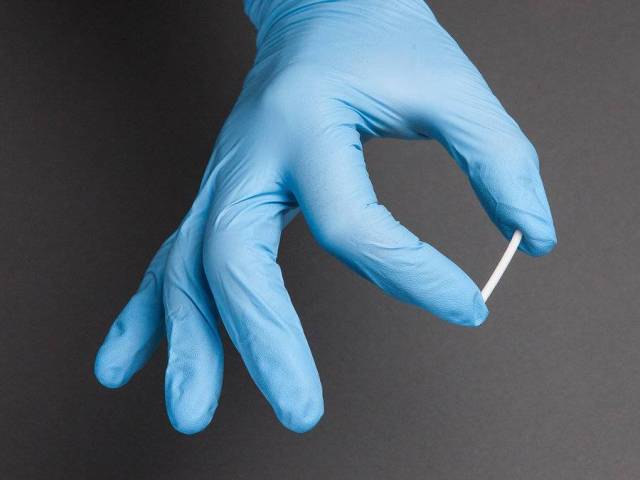
Probuphine should be used as part of a complete treatment program that includes counseling and psychosocial support. Probuphine consists of four, one-inch-long rods that are implanted under the skin on the inside of the upper arm and provide treatment for six months. Administering Probuphine requires specific training because it must be surgically inserted and removed. Only a health care provider who has completed the training and become certified through a restricted program called the Probuphine Risk Evaluation and Mitigation Strategy (REMS) program should insert and remove the implants. If further treatment is needed, new implants may be inserted in the opposite arm for one additional course of treatment. The FDA is requiring postmarketing studies to establish the safety and feasibility of placing the Probuphine implants for additional courses of treatment.

The safety and efficacy of Probuphine were demonstrated in a randomized clinical trial of adults who met the clinical criteria for opioid dependence and were considered stable after prior buprenorphine treatment. A response to MAT was measured by urine screening and self-reporting of illicit opioid use during the six month treatment period. Sixty-three percent of Probuphine-treated patients had no evidence of illicit opioid use throughout the six months of treatment – similar to the 64 percent of those who responded to sublingual (under the tongue) buprenorphine alone.

The most common side effects from treatment with Probuphine include implant-site pain, itching, and redness, as well as headache, depression, constipation, nausea, vomiting, back pain, toothache and oropharyngeal pain. The safety and efficacy of Probuphine have not been established in children or adolescents less than 16 years of age. Clinical studies of Probuphine did not include participants over the age of 65.

Probuphine has a boxed warning that provides important safety information for health care professionals, including a warning that insertion and removal of Probuphine are associated with the risk of implant migration, protrusion, expulsion and nerve damage resulting from the procedure. Probuphine must be prescribed and dispensed according to the Probuphine REMS program because of the risks of surgical complications and because of the risks of accidental overdose, misuse and abuse if an implant comes out or protrudes from the skin. As part of this program, Probuphine can only be prescribed and dispensed by health care providers who are certified with the REMS program and have completed live training, among other requirements.

Probuphine implants contain a significant amount of drug that can potentially be expelled or removed, resulting in the potential for accidental exposure or intentional misuse and abuse if the implant comes out of the skin. Patients should be seen during the first week after insertion and a visit schedule of no less than once-monthly is recommended for continued counseling and psychosocial support.

Probuphine is marketed by San Francisco-based Titan Pharmaceuticals Inc. and Braeburn Pharmaceuticals based in Princeton, New Jersey.

The FDA, an agency within the U.S. Department of Health and Human Services, protects the public health by assuring the safety, effectiveness, and security of human and veterinary drugs, vaccines and other biological products for human use, and medical devices. The agency also is responsible for the safety and security of our nation’s food supply, cosmetics, dietary supplements, products that give off electronic radiation, and for regulating tobacco products.

http://www.fda.gov/NewsEvents/Newsroom/PressAnnouncements/ucm503719.htm

Lick Your Cat With LICKI, A Giant Silicone Tongue On Kickstarter

If you’ve ever watched a cat lick itself or another cat and thought, “I wish I could lick that cat, too,” there’s a Kickstarter project just for you.

LICKI is a silicone brush shaped like a giant tongue that will supposedly allow you to bond with your cat by licking it.

“Cats groom each other as a form of social bonding,” the Kickstarter page from Jason O’Mara of PDX Pet Design stated. “There’s also evidence to suggest that cats view and treat their human captors as large cats. As a human, you’re left out of the intimate licking ritual. At best, you have a one-sided licking relationship with your cat.”

In theory, the LICKI would help the affection run both ways, no actual cat-licking necessary. On the other hand, it does look pretty weird.

http://www.huffingtonpost.com/entry/lick-your-cat-licki_us_574d21abe4b055bb1172936f

Boat from 19th century found under New Jersey home

460x
Eileen Scanlon, left, steps across a 44-foot wooden boat on Wednesday, May 25, 2016, underneath a home she rents in Highlands, N.J. The 19th-century boat, likely used to transport coal and other goods, sat undisturbed until workers began raising the home to put it on pilings. (Thomas P. Costello/The Asbury Park Press via AP)

Workers raising a waterfront home in New Jersey made a nautical discovery: a 44-foot wooden boat from the 19th century.

The 12-foot wide vessel, its rudder fully intact, was found beneath Eileen Scanlon’s Highlands bungalow on Wednesday, the Asbury Park Press reported (http://on.app.com/1sRr5bR ). The boat likely was used to transport coal and other good along local waterways, and pieces of coal were found scattered along the floor.

Rumors of the vessel’s existence had circulated for years. Scanlon got a peek of what looked like a rudder through the home’s crawlspace shortly after buying it in 2010, but she didn’t anticipate the size and scope of the boat. It’s built from 3-inch-thick wooden plants and is held together with 18-inch iron nails.

Scanlon temporarily stopped construction under the house and called Russell Card of the Historical Society of Highlands.

“It was beyond amazing,” Card said. “I’ve heard about it before and the first time I ever saw it was yesterday. I never realized it was so big. I was amazed at the craftsmanship of it.”

The property was once a dock of sorts and people used to roll boats on wheels to get to and from the water, said Card, who believes someone left the boat and built the home around it.

The boat will be destroyed, but Scanlon plans to place the bow in her garden.

http://bigstory.ap.org/e476c90b094c472f98e21cca089e881b

King Tut’s dagger was made from a meteorite

Tutankhamun, the boy king of ancient Egypt who died at 18 and later exploded inside his own sarcophagus (http://gizmodo.com/king-tut-s-body-spontaneously-combusted-inside-its-sarc-1458705368), apparently owned—and was buried with—a literal space dagger made from meteoric iron.

Researchers from Milan Polytechnic, Pisa University, and the Egyptian Museum in Cairo used a X-ray fluorescence spectrometry to determine the composition of the knife without damaging it. The iron in the blade had high percentages of nickel, and trace amounts of cobalt, phosphorus, and other material that suggest the raw material was of extraterrestrial origin. That exact composition was traced to a specific meteorite nearby. Researcher Daniela Comelli told Discovery:

“Only one [meteorite], named Kharga, turned out to have nickel and cobalt contents which are possibly consistent with the composition of the blade,” she added.

The meteorite fragment was found in 2000 on a limestone plateau at Mersa Matruh, a seaport some 150 miles west of Alexandria.

Objects made from the metal of meteorites were probably considered extremely valuable in ancient Egypt, but they also reveal the sophistication of smithing during that era of human history. And the blade was not the only object in Tut’s tomb made from an unusual and rare material: a scarab necklace he was buried with is believe to be silica glass, caused by the impact of another space rock smashing into the Libyan desert and melting the nearby sand.

http://gizmodo.com/king-tut-had-a-space-dagger-1779709241

New science research shows that most people have only about 50% of the friends that they think they have.

As it turns out, we can be pretty terrible at knowing who our friends are: In what may be among the saddest pieces of social-psychology research published in quite some time, a study in the journal PLoS One recently made the case that as many as half the people we consider our friends don’t feel the same way.

The study authors gave a survey to 84 college students in the same class, asking each one to rate every other person in the study on a scale of zero (“I do not know this person”) to five (“One of my best friends”), with three as the minimum score needed to qualify for friendship. The participants also wrote down their guesses for how each person would rate them.

Overall, the researchers documented 1,353 cases of friendship, meaning instances where one person rated another as a three or higher. And in 94 percent of them, the person doing the ranking guessed that the other person would feel the same way.

Which makes sense — you probably wouldn’t call someone a friend, after all, unless you thought that definition was mutual. That’s why we have terms to capture more one-sided relationships, like friend crush or hey, I don’t really know her but I think she’s neat. Both of which, come to think of it, might have been better descriptors of a lot of the relationships in the study. In reality, only 53 percent of the friendships — a small, sad, oh honey number of them — were actually reciprocal.

Some caveats: The study was small, and all the subjects were undergraduates; friendships change over the course of a lifetime, and it’s certainly possible that, over time, many tenuous lopsided friendships can dwindle to a more solid few. But the study authors also looked at a handful of previous surveys on friendship, ranging in size from 82 people to 3,160, and found similar results: Among those, the highest proportion of reciprocal friendships was 53 percent, and the lowest was a bummer, at 34 percent.

“These findings suggest a profound inability of people to perceive friendship reciprocity, perhaps because the possibility of non-reciprocal friendship challenges one’s self-image,” the study authors wrote.

http://nymag.com/scienceofus/2016/05/half-of-your-friends-probably-dont-think-of-you-as-a-friend.html

Creator of Dilbert explains why he thinks Trump will win the U.S. presidency in a landslide

By Michael Cavna

SCOTT ADAMS remembers just how the game turned. He was young and improving at chess, but the masterful kid across the board would outmaneuver Adams till the game seemed a runaway. Now, this kid didn’t want to just beat Adams; he wanted to embarrass him. “So after he’d picked away three-fourths of my pieces and I was discouraged,” Adams recounts, “he would offer to turn the board around and play with my pieces.” And then effectively “win” again.

On those occasions, Scott Adams, the creator of “Dilbert,” got insight into the type of personality that loves not only the challenge of game strategy, but also the thrill of overwhelming the competition. It is the sport of meticulously plotted domination.

And that is part of why Adams believes Donald Trump will win the presidency. In a landslide.

[‘The Simpsons’ predicted a Trump presidency 16 years ago. The writer illuminates the reasons]

Adams, in other words, believes that Trump himself has turned the campaign game around. On the stump, the real-estate mogul is not running on the knowledge of his numbers or the dissection of the data. He is running on our emotions, Adams says, and sly appeals to our own human irrationality. Since last August, in fact, when many were calling Trump’s entry a clown candidacy, the “Dilbert” cartoonist was already declaring The Donald a master in the powers of persuasion who would undoubtedly rise in the polls. And last week, Adams began blogging about how Trump can rhetorically dismantle Clinton’s candidacy next.

Adams, mind you, is not endorsing Trump or supporting his politics. (“I don’t think my political views align with anybody,” he tells The Post’s Comic Riffs, “not even another human being.”) And he is not saying that Trump would be the best president. What the Bay Area-based cartoonist recognizes, he says, is the careful art behind Trump’s rhetorical techniques. And The Donald, he says, is playing his competitors like a fiddle — before beating them like a drum.

Most simply put: Adams believes Trump will win because he’s “a master persuader.”

The Manhattan mogul is so deft at the powers of persuasion, Adams believes, that the candidate could have run as a Democrat and, by picking different hot-button issues, still won this presidency. In other words: Trump is such a master linguistic strategist that he could have turned the political chessboard around and still embarrassed the field.

Adams does not claim to be a trained political analyst. His stated credentials in this arena, says Adams — who holds an MBA from UC Berkeley — largely involve being a certified hypnotist and, as a writer and business author, an eternal student in the techniques of persuasive rhetoric. (His self-help memoir is titled “How to Fail at Almost Everything and Still Win Big: Kind of the Story of My Life.”)

“The most important thing when you study hypnosis is that you learn that humans are irrational,” Adams tells Comic Riffs. “Until you understand that, hypnosis is hard to do. … For me, it was this great awakening to understand that humans are deeply irrational, and it’s probably the greatest influence on me in terms of my writing.”

“This was a trick I learned from Bil Keane,” the late creator of “Family Circus,” Adams tells Comic Riffs. “He basically taught me to stop writing for myself, which I realized I had been doing — writing a comic that I wanted to read.”

So Adams pivoted to write more about the workplace, and the budding “Dilbert” in the early ’90s became “about this huge part of people’s lives that was invisible to the rest of the world and about suffering in a hundred different ways.”

“By simply mentioning that world,” Adams says, the comic connected with readers “on an emotional level.”

And isn’t that essentially, in turn, what Trump is doing? He is acknowledging the suffering of some, Adams says, and then appealing emotionally to that.

And he bolsters that approach, Adams says, by “exploiting the business model” like an entrepreneur. In this model, which “the news industry doesn’t have the ability to change … the media doesn’t really have the option of ignoring the most interesting story,” says Adams, contending that Trump “can always be the most interesting story if he has nothing to fear and nothing to lose.”

Having nothing to lose essentially then increases his chance of winning, because it opens up his field of rhetorical play. “Psychology is the only necessary skill for running for president,” writes Adams, adding: “Trump knows psychology.”
Within that context, here is what Candidate Trump is doing to win campaign hearts and minds, according to Scott Adams:

1. Trump knows people are basically irrational.

“If you see voters as rational you’ll be a terrible politician,” Adams writes on his blog. “People are not wired to be rational. Our brains simply evolved to keep us alive. Brains did not evolve to give us truth. Brains merely give us movies in our minds that keeps us sane and motivated. But none of it is rational or true, except maybe sometimes by coincidence.”

2. Knowing that people are irrational, Trump aims to appeal on an emotional level.

“The evidence is that Trump completely ignores reality and rational thinking in favor of emotional appeal,” Adams writes. “Sure, much of what Trump says makes sense to his supporters, but I assure you that is coincidence. Trump says whatever gets him the result he wants. He understands humans as 90-percent irrational and acts accordingly.”

Adams adds: “People vote based on emotion. Period.”

3. By running on emotion, facts don’t matter.

“While his opponents are losing sleep trying to memorize the names of foreign leaders – in case someone asks – Trump knows that is a waste of time … ,” Adams writes. “There are plenty of important facts Trump does not know. But the reason he doesn’t know those facts is – in part – because he knows facts don’t matter. They never have and they never will. So he ignores them.

“Right in front of you.”

And stating numbers that might not quite be facts nevertheless can anchor those numbers, and facts, in your mind.

4. If facts don’t matter, you can’t really be “wrong.”

Trump “doesn’t apologize or correct himself. If you are not trained in persuasion, Trump looks stupid, evil, and maybe crazy,” Adams writes. “If you understand persuasion, Trump is pitch-perfect most of the time. He ignores unnecessary rational thought and objective data and incessantly hammers on what matters (emotio“Did Trump’s involvement in the birther thing confuse you?” Adams goes on to ask. “Were you wondering how Trump could believe Obama was not a citizen? The answer is that Trump never believed anything about Obama’s place of birth. The facts were irrelevant, so he ignored them while finding a place in the hearts of conservatives. For later.

“This is later. He plans ahead.”

5. With fewer facts in play, it’s easier to bend reality.

Steve Jobs famously aimed to create “reality distortion fields” to meet his needs and achieve his ends. Trump employs similar techniques, and apparently can be similarly thin-skinned when his “reality” is challenged. “The Master Persuader will warp reality until he gets what he wants,” writes Adams, noting that Trump is “halfway done” already.

(Among the persuasive techniques that Trump uses to help bend reality, Adams says, are repetition of phrases; “thinking past the sale” so the initial part of his premise is stated as a given; and knowing the appeal of the simplest answer, which relates to the concept of Occam’s razor.)
6. To bend reality, Trump is a master of identity politics — and identity is the strongest persuader.

One way to achieve this is by deploying “linguistic kill shots” that land true, and alter perception through two ways.“Do you think it is a coincidence that Trump called Megyn Kelly a bimbo and then she got a non-bimbo haircut that is … well, Trumpian?” Adams writes. “It doesn’t look like a coincidence to this trained persuader.”

“The best Trump linguistic kill shots,” Adams writes,”have the following qualities: 1. Fresh word that is not generally used in politics; 2. Relates to the physicality of the subject (so you are always reminded).”

Writes Adams: “Identity is always the strongest level of persuasion. The only way to beat it is with dirty tricks or a stronger identity play. … [And] Trump is well on his way to owning the identities of American, Alpha Males, and Women Who Like Alpha Males. Clinton is well on her way to owning the identities of angry women, beta males, immigrants, and disenfranchised minorities.

“If this were poker, which hand looks stronger to you for a national election?”
Computers are able to determine if you are bored

Computers are able to read a person’s body language to tell whether they are bored or interested in what they see on the screen, according to a new study led by body-language expert Dr Harry Witchel, Discipline Leader in Physiology at Brighton and Sussex Medical School (BSMS).

The research shows that by measuring a person’s movements as they use a computer, it is possible to judge their level of interest by monitoring whether they display the tiny movements that people usually constantly exhibit, known as non-instrumental movements.

If someone is absorbed in what they are watching or doing — what Dr Witchel calls ‘rapt engagement’ — there is a decrease in these involuntary movements.

Dr Witchel said: “Our study showed that when someone is really highly engaged in what they’re doing, they suppress these tiny involuntary movements. It’s the same as when a small child, who is normally constantly on the go, stares gaping at cartoons on the television without moving a muscle.

The discovery could have a significant impact on the development of artificial intelligence. Future applications could include the creation of online tutoring programmes that adapt to a person’s level of interest, in order to re-engage them if they are showing signs of boredom. It could even help in the development of companion robots, which would be better able to estimate a person’s state of mind.

Also, for experienced designers such as movie directors or game makers, this technology could provide complementary moment-by-moment reading of whether the events on the screen are interesting. While viewers can be asked subjectively what they liked or disliked, a non-verbal technology would be able to detect emotions or mental states that people either forget or prefer not to mention.

“Being able to ‘read’ a person’s interest in a computer program could bring real benefits to future digital learning, making it a much more two-way process,” Dr Witchel said. “Further ahead it could help us create more empathetic companion robots, which may sound very ‘sci fi’ but are becoming a realistic possibility within our lifetimes.”

In the study, 27 participants faced a range of three-minute stimuli on a computer, from fascinating games to tedious readings from EU banking regulation, while using a handheld trackball to minimise instrumental movements, such as moving the mouse. Their movements were quantified over the three minutes using video motion tracking. In two comparable reading tasks, the more engaging reading resulted in a significant reduction (42%) of non-instrumental movement.

https://www.sciencedaily.com/releases/2016/02/160224133411.htm