Blue Brain Project demonstrates that the brain operates in up to 11 different dimensions


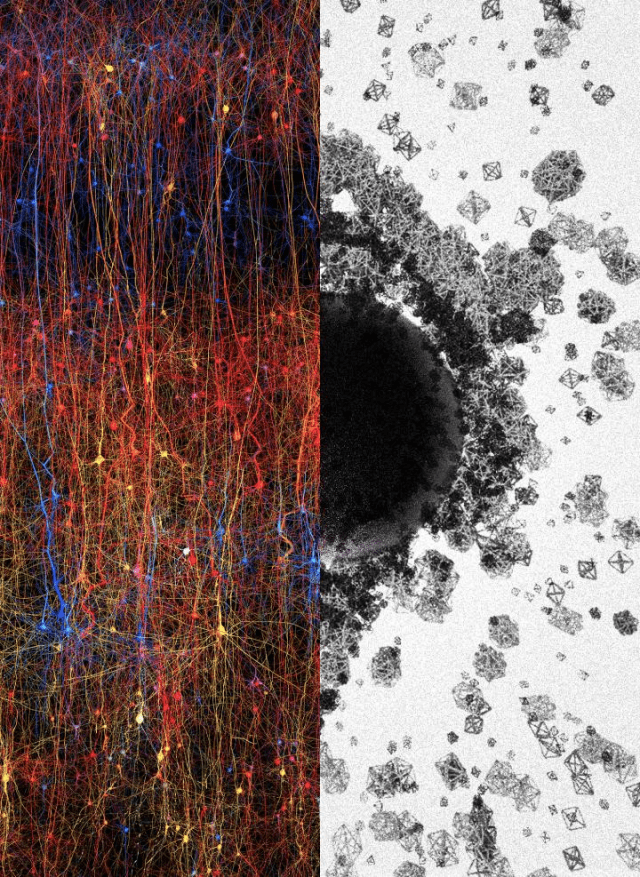
The image attempts to illustrate something that cannot be imaged — a universe of multi-dimensional structures and spaces. On the left is a digital copy of a part of the neocortex, the most evolved part of the brain. On the right are shapes of different sizes and geometries in an attempt to represent structures ranging from 1 dimension to 7 dimensions and beyond. The “black-hole” in the middle is used to symbolize a complex of multi-dimensional spaces, or cavities. Researchers at Blue Brain Project report groups of neurons bound into such cavities provide the missing link between neural structure and function, in their new study published in Frontiers in Computational Neuroscience.

For most people, it is a stretch of the imagination to understand the world in four dimensions but a new study has discovered structures in the brain with up to eleven dimensions – ground-breaking work that is beginning to reveal the brain’s deepest architectural secrets.

Using algebraic topology in a way that it has never been used before in neuroscience, a team from the Blue Brain Project has uncovered a universe of multi-dimensional geometrical structures and spaces within the networks of the brain.

The research, published in Frontiers in Computational Neuroscience, shows that these structures arise when a group of neurons forms a clique: each neuron connects to every other neuron in the group in a very specific way that generates a precise geometric object. The more neurons there are in a clique, the higher the dimension of the geometric object.

“We found a world that we had never imagined,” says neuroscientist Henry Markram, director of Blue Brain Project and professor at the EPFL in Lausanne, Switzerland, “there are tens of millions of these objects even in a small speck of the brain, up through seven dimensions. In some networks, we even found structures with up to eleven dimensions.”

Markram suggests this may explain why it has been so hard to understand the brain. “The mathematics usually applied to study networks cannot detect the high-dimensional structures and spaces that we now see clearly.”

If 4D worlds stretch our imagination, worlds with 5, 6 or more dimensions are too complex for most of us to comprehend. This is where algebraic topology comes in: a branch of mathematics that can describe systems with any number of dimensions. The mathematicians who brought algebraic topology to the study of brain networks in the Blue Brain Project were Kathryn Hess from EPFL and Ran Levi from Aberdeen University.

“Algebraic topology is like a telescope and microscope at the same time. It can zoom into networks to find hidden structures – the trees in the forest – and see the empty spaces – the clearings – all at the same time,” explains Hess.

In 2015, Blue Brain published the first digital copy of a piece of the neocortex – the most evolved part of the brain and the seat of our sensations, actions, and consciousness. In this latest research, using algebraic topology, multiple tests were performed on the virtual brain tissue to show that the multi-dimensional brain structures discovered could never be produced by chance. Experiments were then performed on real brain tissue in the Blue Brain’s wet lab in Lausanne confirming that the earlier discoveries in the virtual tissue are biologically relevant and also suggesting that the brain constantly rewires during development to build a network with as many high-dimensional structures as possible.

When the researchers presented the virtual brain tissue with a stimulus, cliques of progressively higher dimensions assembled momentarily to enclose high-dimensional holes, that the researchers refer to as cavities. “The appearance of high-dimensional cavities when the brain is processing information means that the neurons in the network react to stimuli in an extremely organized manner,” says Levi. “It is as if the brain reacts to a stimulus by building then razing a tower of multi-dimensional blocks, starting with rods (1D), then planks (2D), then cubes (3D), and then more complex geometries with 4D, 5D, etc. The progression of activity through the brain resembles a multi-dimensional sandcastle that materializes out of the sand and then disintegrates.”

The big question these researchers are asking now is whether the intricacy of tasks we can perform depends on the complexity of the multi-dimensional “sandcastles” the brain can build. Neuroscience has also been struggling to find where the brain stores its memories. “They may be ‘hiding’ in high-dimensional cavities,” Markram speculates.

https://eurekalert.org/pub_releases/2017-06/f-bbt060617.php

Quantum entanglement, science’s ‘spookiest’ phenomenon, achieved in space

By Sarah Kaplan

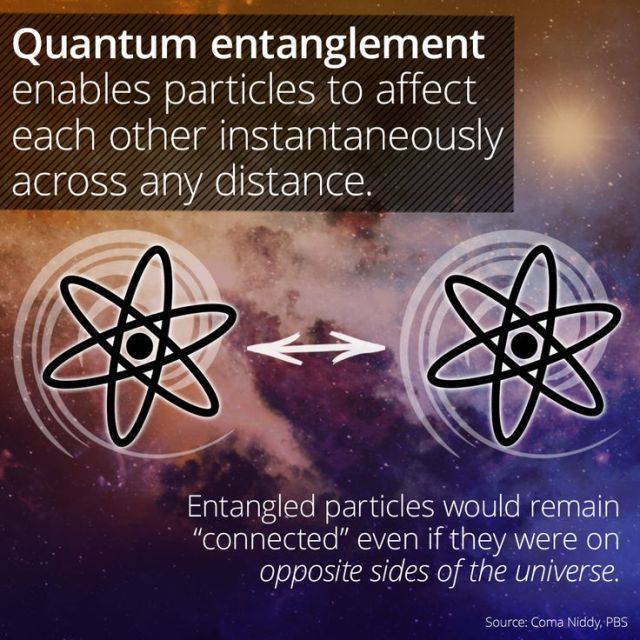
Imagine you are a photon, a packet of light. You are a tiny blip of energy, hurtling through the universe on your own. But you have a twin, another photon to whom you have been intimately connected since the day you were born. No matter what distance separates you, be it the width of a lab bench or the breadth of the universe, you mirror each other. Whatever happens to your twin instantaneously affects you, and vice versa. You are like the mouse siblings in “An American Tail”, wrenched apart by fate but feeling the same feelings and singing the same song beneath the same glowing moon.

This is quantum entanglement. To non-physicists it sounds about as fantastical as singing mice, and indeed, plenty of physicists have problems with the phenomenon. Albert Einstein, whose own research helped give rise to quantum theory, derisively called the concept “spooky action at a distance.” Quantum entanglement seems to break some of the bedrock rules of standard physics: that nothing can travel faster than light, that objects are only influenced by their immediate surroundings. And scientists still can’t explain how the particles are linked. Is it wormholes? An unknown dimension? The power of love? (That last one’s a joke.)

Luckily for quantum physicists, you don’t always need to explain a phenomenon in order to use it. Ancient humans didn’t know about friction before inventing the wheel; doctors in medieval China didn’t know about antibodies when they began inoculating people against smallpox 600 years ago. Not knowing what’s behind quantum entanglement didn’t stop Jian-Wei Pan, a physicist at the University of Science and Technology of China in Shanghai, from rocketing it into space.

In a new study in the journal Science, Pan and his colleagues report that they were able to produce entangled photons on a satellite orbiting 300 miles above the planet and beam the particles to two different ground-based labs that were 750 miles apart, all without losing the particles’ strange linkage. It is the first time anyone has ever generated entangled particles in space, and represents a 10-fold increase in the distance over which entanglement has been maintained.

“It’s a really stunning achievement, and I think it’s going to be the first of possibly many such interesting and exciting studies that this particular satellite will open up,” said Shohini Ghose, a physicist at Wilfrid Laurier University in Canada. “Who knows, maybe there’ll be a space entanglement race?”

There’s good a reason world governments may soon race to test out quantum theory in orbit, and it’s not just so they can claim the title of “spookiest.” Entangled particles could one day be used for “quantum communication” — a means of sending super secure messages that doesn’t rely on cables, wireless signals, or code. Because any interference with an entangled particle, even the mere act of observing it, automatically affects its partner, these missives can’t be hacked. To hear quantum physicists tell it, entangled particles could help build a “quantum internet,” give rise to new kinds of coding, and allow for faster-than-light communication — possibilities that have powerful appeal in an era where hospitals, credit card companies, government agencies, even election systems are falling victim to cyber attacks.

But until Pan and his colleagues started their experiments in space, quantum communication faced a serious limitation. Entangled photons don’t need wires or cables to link them, but on Earth it is necessary to use a fiber optic cable to transmit one of the particles to its desired location. But fibers absorb light as the photon travels through, so the quantum connection weakens with every mile the particle is transmitted. The previous distance record for what’s known as quantum teleportation, or sending information via entangled particles, was about 140 kilometers, or 86 miles.

But no light gets absorbed in space, because there’s nothing to do the absorbing. Space is empty. This means that entangled particles can be transmitted long distances across the vacuum and not lose information. Recognizing this, Pan proposed that entangled particles sent through space could vastly extend the distance across which entangled particles communicate.

On board the Chinese satellite Micius, which launched last year, a high energy laser was fired through a special kind of crystal, generating entangled photon pairs. This in itself was a feat: the process is sensitive to turbulence, and before the experiment launched scientists weren’t completely sure it would work. These photons were transmitted to ground stations in Delingha, a city on the Tibetan Plateau, and Lijiang, in China’s far southwest. The cities are about 750 miles apart — a bit farther than New York and Chicago. For comparison, the fiber optic method for quantum teleportation couldn’t get a New York photon much farther than Trenton, N.J.

Multiple tests on the ground confirmed that the particles from the Micius satellite were indeed still entangled. Now Pan wants to try even more ambitious experiments: sending quantum particles from the ground to the satellite; setting up a distribution channel that will allow for transmission of tens of thousands of entangled pairs per second. ”

“Then the satellite can really be used for quantum communication,” he said.

The Micius satellite can also be used to probe more fundamental questions, Pan added. The behavior of entangled particles in space and across vast distances offers insight into the nature of space-time and the validity of Einstein’s theory of general relativity. Plus there’s the whole issue of what is going on with these bizarre linked photons in the first place.

“Mathematically we know exactly how to describe what happens,” Ghose said. “We know how to connect, physically, these particles in the lab, and we know what to expect when we generate and manipulate and transmit them.”

But as for how it all happens, how entangled photons know what their partner is doing, “that is not part of the equation,” she continued. “That’s what makes it so mysterious and interesting.”

https://www.washingtonpost.com/news/speaking-of-science/wp/2017/06/15/quantum-entanglement-sciences-spookiest-phenomenon-achieved-in-space/?utm_term=.0fefcba180de

AI Can Now Predict Suicide with Remarkable Accuracy

When someone commits suicide, their family and friends can be left with the heartbreaking and answerless question of what they could have done differently. Colin Walsh, data scientist at Vanderbilt University Medical Center, hopes his work in predicting suicide risk will give people the opportunity to ask “what can I do?” while there’s still a chance to intervene.

Walsh and his colleagues have created machine-learning algorithms that predict, with unnerving accuracy, the likelihood that a patient will attempt suicide. In trials, results have been 80-90% accurate when predicting whether someone will attempt suicide within the next two years, and 92% accurate in predicting whether someone will attempt suicide within the next week.

The prediction is based on data that’s widely available from all hospital admissions, including age, gender, zip codes, medications, and prior diagnoses. Walsh and his team gathered data on 5,167 patients from Vanderbilt University Medical Center that had been admitted with signs of self-harm or suicidal ideation. They read each of these cases to identify the 3,250 instances of suicide attempts.

This set of more than 5,000 cases was used to train the machine to identify those at risk of attempted suicide compared to those who committed self-harm but showed no evidence of suicidal intent. The researchers also built algorithms to predict attempted suicide among a group 12,695 randomly selected patients with no documented history of suicide attempts. It proved even more accurate at making suicide risk predictions within this large general population of patients admitted to the hospital.

Walsh’s paper, published in Clinical Psychological Science in April, is just the first stage of the work. He’s now working to establish whether his algorithm is effective with a completely different data set from another hospital. And, once confidant that the model is sound, Walsh hopes to work with a larger team to establish a suitable method of intervening. He expects to have an intervention program in testing within the next two years. “I’d like to think it’ll be fairly quick, but fairly quick in health care tends to be in the order of months,” he adds.

Suicide is such an intensely personal act that it seems, from a human perspective, impossible to make such accurate predictions based on a crude set of data. Walsh says it’s natural for clinicians to ask how the predictions are made, but the algorithms are so complex that it’s impossible to pull out single risk factors. “It’s a combination of risk factors that gets us the answers,” he says.

That said, Walsh and his team were surprised to note that taking melatonin seemed to be a significant factor in calculating the risk. “I don’t think melatonin is causing people to have suicidal thinking. There’s no physiology that gets us there. But one thing that’s been really important to suicide risk is sleep disorders,” says Walsh. It’s possible that prescriptions for melatonin capture the risk of sleep disorders—though that’s currently a hypothesis that’s yet to be proved.

The research raises broader ethical questions about the role of computers in health care and how truly personal information could be used. “There’s always the risk of unintended consequences,” says Walsh. “We mean well and build a system to help people, but sometimes problems can result down the line.”

Researchers will also have to decide how much computer-based decisions will determine patient care. As a practicing primary care doctor, Walsh says it’s unnerving to recognize that he could effectively follow orders from a machine. “Is there a problem with the fact that I might get a prediction of high risk when that’s not part of my clinical picture?” he says. “Are you changing the way I have to deliver care because of something a computer’s telling me to do?”

For now, the machine-learning algorithms are based on data from hospital admissions. But Walsh recognizes that many people at risk of suicide do not spend time in hospital beforehand. “So much of our lives is spent outside of the health care setting. If we only rely on data that’s present in the health care setting to do this work, then we’re only going to get part of the way there,” he says.

And where else could researchers get data? The internet is one promising option. We spend so much time on Facebook and Twitter, says Walsh, that there may well be social media data that could be used to predict suicide risk. “But we need to do the work to show that’s actually true.”

Facebook announced earlier this year that it was using its own artificial intelligence to review posts for signs of self-harm. And the results are reportedly already more accurate than the reports Facebook gets from people flagged by their friends as at-risk.

Training machines to identify warning signs of suicide is far from straightforward. And, for predictions and interventions to be done successfully, Walsh believes it’s essential to destigmatize suicide. “We’re never going to help people if we’re not comfortable talking about it,” he says.

But, with suicide leading to 800,000 deaths worldwide every year, this is a public health issue that cannot be ignored. Given that most humans, including doctors, are pretty terrible at identifying suicide risk, machine learning could provide an important solution.

https://www.doximity.com/doc_news/v2/entries/8004313

Jay Z: For Father’s Day, I’m Taking On the Exploitative Bail Industry

by Shawn Carter, a.k.a. Jay Z

Seventeen years ago I made a song, “Guilty Until Proven Innocent.” I flipped the Latin phrase that is considered the bedrock principle of our criminal justice system, ei incumbit probatio qui dicit (the burden of proof is on the one who declares, not on one who denies). If you’re from neighborhoods like the Brooklyn one I grew up in, if you’re unable to afford a private attorney, then you can be disappeared into our jail system simply because you can’t afford bail. Millions of people are separated from their families for months at a time — not because they are convicted of committing a crime, but because they are accused of committing a crime.

Scholars like Ruthie Gilmore, filmmakers like Ava Duvernay, and formerly incarcerated people like Glenn Martin have all done work to expose the many injustices of the industry of our prison system. Gilmore’s pioneering book, The Golden Gulag, Duvernay’s documentary 13th and Martin’s campaign to close Rikers focus on the socioeconomic, constitutional and racially driven practices and polices that make the U.S. the most incarcerated nation in the world.

But when I helped produce this year’s docuseries, Time: The Kalief Browder Story, I became obsessed with the injustice of the profitable bail bond industry. Kalief’s family was too poor to post bond when he was accused of stealing a backpack. He was sentenced to a kind of purgatory before he ever went to trial. The three years he spent in solitary confinement on Rikers ultimately created irreversible damage that lead to his death at 22.

Sandra Bland was also forced to post bail after her minor traffic infraction in Prairie View, Texas, led to a false charge of assaulting a public servant (the officer who arrested her was later charged with perjury regarding the arrest). She was placed in a local jail in a pre-incarcerated state. Again, she was never convicted of a crime. On any given day over 400,000 people, convicted of no crime, are held in jail because they cannot afford to buy their freedom.

When black and brown people are over-policed and arrested and accused of crimes at higher rates than others, and then forced to pay for their freedom before they ever see trial, big bail companies prosper. This pre-incarceration conundrum is devastating to families. One in 9 black children has an incarcerated parent. Families are forced to take on more debt, often in predatory lending schemes created by bail bond insurers. Or their loved ones linger in jails, sometimes for months—a consequence of nationwide backlogs.

Every year $9 billion dollars are wasted incarcerating people who’ve not been convicted of a crime, and insurance companies, who have taken over our bail system, go to the bank. Last month for Mother’s Day, organizations like Southerners on New Ground and Color of Change did a major fundraising drive to bail out 100 mothers for Mother’s Day. Color of Change’s exposè on the for-profit bail industry provides deeper strategy behind this smart and inspiring action. This Father’s Day, I’m supporting those same organizations to bail out fathers who can’t afford the due process our democracy promises. As a father with a growing family, it’s the least I can do, but philanthropy is not a long fix, we have to get rid of these inhumane practices altogether. We can’t fix our broken criminal justice system until we take on the exploitative bail industry.

http://time.com/4821547/jay-z-racism-bail-bonds/

Rare Jackson Pollock painting found in garage

A long-lost Jackson Pollock painting once owned by a New York City socialite — and worth up to $15 million — was discovered in a dusty Arizona garage, according to a report Tuesday.

The splattered abstract art, which hits the auction block this week, was unearthed in January 2016, when retiree Gordon Cosgriff called an appraiser to his Scottsdale home.

Cosgriff hired the appraiser, Josh Levine, to size up how much a signed L.A. Lakers basketball poster was worth, according to the news site.

But an orange and green painting — featuring Pollock’s signature splatter — caught his eye under a pile of art, he said.

“As we’re going through the stack and we’re down to this last piece … I was like, ‘God, that looks like a Jackson Pollock,” Levine said.

Arizona is generally home to traditional southwest paintings, not big name New York City modern art, but it looked legit.

Levine then launched a borderline obsessive hunt — and even hired a private investigator — to prove it was the real thing.

Levine traced the owner’s history and learned that his late sister, Jenifer Gordon Cosgriff, once lived in the Big Apple in the 1950s. As the “black sheep” of her Midwestern family, she hobnobbed with provocative artists.

Her friends included writer Clement Greenberg, modern artist Hazel Guggenheim McKinley — and Jackson Pollock.

Levine forked over tens of thousands of dollars to authenticate the piece and to prove Gordon Cosgriff’s was at a Pollock art showing. And he hired experts to investigate the style and chemical make-up of the paint.

“All I was interested in was, was it executed before Jackson Pollock was dead, before 1956?” Levine said.

Experts soon confirmed it was one of Pollock’s missing “gouaches” — a style in which he used paint, water and a binding agent between 1945 and 1949.

Levine was thrilled.

“I actually felt weightless,” he said. “I was actually kind of worried I was having a panic attack or something.”

The painting, which faded and slightly damaged, needs to be restored at a price of $50,000, he said.

The piece will be auctioned off on June 20. Levine estimated it will sell for between $5 and $15 million.

By contrast, the Lakers poster he was at first called to appraise was valued at just $300.

http://nypost.com/2017/06/13/jackson-pollock-painting-worth-up-to-15m-found-in-dusty-garage/

A new third set of gravitational waves could show hints of extra dimensions

By Leah Crane

HIDDEN dimensions could cause ripples through reality by modifying gravitational waves – and spotting such signatures of extra dimensions could help solve some of the biggest mysteries of the universe.

Physicists have long wondered why gravity is so weak compared with the other fundamental forces. This may be because some of it is leaking away into extra dimensions beyond the three spatial dimensions we experience.

Some theories that seek to explain how gravity and quantum effects mesh together, including string theory, require extra dimensions, often with gravity propagating through them. Finding evidence of such exotic dimensions could therefore help to characterise gravity, or find a way to unite gravity and quantum mechanics – it could also hint at an explanation for why the universe’s expansion is accelerating.

But detecting extra dimensions is a challenge. Any that exist would have to be very small in order to avoid obvious effects on our everyday lives. Hopes were high (and still are) that they would show up at the Large Hadron Collider, but it has yet to see any sign of physics beyond our four dimensions.

In the last two years, though, a new hope has emerged. Gravitational waves, ripples in space-time caused by the motion of massive objects, were detected for the first time in 2015. Since gravity is likely to occupy all the dimensions that exist, its waves are an especially promising way to detect any dimensions beyond the ones we know.

“If there are extra dimensions in the universe, then gravitational waves can walk along any dimension, even the extra dimensions,” says Gustavo Lucena Gómez at the Max Planck Institute for Gravitational Physics in Potsdam, Germany.

Lucena Gómez and his colleague David Andriot set out to calculate how potential extra dimensions would affect the gravitational waves that we are able to observe. They found two peculiar effects: extra waves at high frequencies, and a modification of how gravitational waves stretch space.

As gravitational waves propagate through a tiny extra dimension, the team found, they should generate a “tower” of extra gravitational waves with high frequencies following a regular distribution.

But current observatories cannot detect frequencies that high, and most of the planned observatories also focus on lower frequencies. So while these extra waves may be everywhere, they will be hard to spot.

The second effect of extra dimensions might be more detectable, since it modifies the “normal” gravitational waves that we observe rather than adding an extra signal.

“If extra dimensions are in our universe, this would stretch or shrink space-time in a different way that standard gravitational waves would never do,” says Lucena Gómez.

As gravitational waves ripple through the universe, they stretch and squish space in a very specific way. It’s like pulling on a rubber band: the ellipse formed by the band gets longer in one direction and shorter in the other, and then goes back to its original shape when you release it.

But extra dimensions add another way for gravitational waves to make space shape-shift, called a breathing mode. Like your lungs as you breathe, space expands and contracts as gravitational waves pass through, in addition to stretching and squishing.

“With more detectors we will be able to see whether this breathing mode is happening,” says Lucena Gómez.

“Extra dimensions have been discussed for a long time from different points of view,” says Emilian Dudas at the École Polytechnique in France. “Gravitational waves could be a new twist on looking for extra dimensions.”

But there is a trade-off: while detecting a tower of high-frequency gravitational waves would point fairly conclusively to extra dimensions, a breathing mode could be explained by a number of other non-standard theories of gravity.

“It’s probably not a unique signature,” says Dudas. “But it would be a very exciting thing.”

https://www.newscientist.com/article/mg23431244-200-gravitational-waves-could-show-hints-of-extra-dimensions/

Faceless fish not seen since 1873 now re-discovered off the coast of Australia

A “faceless” deep-sea fish not seen for more than a century has been rediscovered by scientists trawling the depths of a massive abyss off Australia’s east coast, along with “amazing” quantities of rubbish.

The 40cm fish was rediscovered 4km below sea level in waters south of Sydney by scientists from Museums Victoria and the Australian government’s Commonwealth Scientific and Industrial Research Organisation (CSIRO) on the weekend.

Dr Tim O’Hara, the chief scientist and expedition leader, who is a senior curator of marine invertebrates at Museums Victoria, said it was the first time the fish had been seen in waters off Australia since 1873, when one was dredged up by a British ship near Papua New Guinea.

“This little fish looks amazing because the mouth is actually situated at the bottom of the animal so, when you look side-on, you can’t see any eyes, you can’t see any nose or gills or mouth,” O’Hara said via satellite phone from the research vessel Investigator on Wednesday. “It looks like two rear-ends on a fish, really.”

The world-first survey of commonwealth marine reserves stretching from northern Tasmania to central Queensland began on 15 May. On board the Investigator research vessel for the month-long voyage are 27 scientists, 13 technicians and 20 crew.

Samples of animals and sediment have been collected from the bottom of the abyss each day by a metal sled-style device attached to 8km of thick wire. A video camera has also been trailed behind the ship to capture footage from the depths.

Finds have included bright red spiky rock crabs, spectacular bioluminescent sea stars and gigantic sea spiders as big as a dinner plate.

“The experts tell me that about a third of all specimens coming on board are new totally new to science,” O’Hara said. “They aren’t all as spectacular as the faceless fish but there’s a lot of sea fleas and worms and crabs and other things that are totally new and no one has seen them ever before.”

Di Bray of Museums Victoria told the ABC that the rediscovery of the faceless fish was a highlight of the “awesome stuff” thrown up by the study so far.

“On the video camera we saw a kind of chimaera that whizzed by – that’s very, very rare in Australian waters,” she said. “We’ve seen a fish with photosensitive plates that sit on the top of its head, tripod fish that sit up on their fins and face into the current.”

“A lot” of the species found would prove to be previously undiscovered, she predicted.

“We’re not even scratching the surface of what we know about our abyssal plain fishes.”

Equally “amazing”, O’Hara said, was the quantity of rubbish that researchers had dredged up.

“There’s a lot of debris, even from the old steam ship days when coal was tossed overboard,” he said. “We’ve seen PVC pipes and we’ve trawled up cans of paints.

“It’s quite amazing. We’re in the middle of nowhere and still the sea floor has 200 years of rubbish on it.”

In February, scientists reported “extraordinary” levels of toxic pollution in the 10km-deep Mariana trench, one of the most remote and inaccessible places on the planet.

Data from the survey of the eastern abyss would allow scientists to collect baseline data about its biodiversity and would likely be used to measure the impacts of climate change in the coming decades.

The research voyage is due to conclude on 16 June.

https://www.theguardian.com/environment/2017/may/31/faceless-fish-missing-for-more-than-a-century-rediscovered-by-australian-scientists

How to Save Your Digital Soul


With a selfie and some audio, a startup called Oben says, it can make you an avatar that can say—or sing—anything.

by Rachel Metz

I’ve met Nikhil Jain in the flesh, and now, on the laptop screen in front of me, I’m looking at a small animated version of him from the torso up, talking in the same tone and lilting accented English—only this version of Jain is bald (hair is tricky to animate convincingly), and his voice has a robotic sound.

For the past three years, Jain has been working on Oben, the startup he cofounded and leads. It’s building technology that uses a single image and an audio clip to automate the construction of what are sort of like digital souls: avatars that look and sound a lot like anyone, and can be made to speak or sing anything.

Of course it won’t really be you—or Beyoncé, or Michael Jackson, or whomever an Oben avatar depicts—but it could be a decent, potentially fun approximation that’s useful for all kinds of things. Maybe, like Jain, you want a virtual you to read stories to your kids when you can’t be there in person. Perhaps you’re a celebrity who wants to let fans do duets with your avatar on a mobile or virtual-reality app, or the estate of a dead celebrity who wants to continue to keep that person “alive” with avatar-based performances. The opportunities are endless—and, perhaps, endlessly eerie.

Oben, based in Pasadena, California, has raised about $9 million so far. The company is planning to release an app late this year that lets people make their own personal avatar and share video clips of it with friends.

Oben is also working with some as-yet-unnamed bands in Asia to make mobile-based avatars that will be able to sing duets with fans, and last month it announced it will launch a virtual-reality-enabled version of its avatar technology with the massively popular social app WeChat, for the HTC Vive headset.

For now, producing the kind of avatar Jain showed me still takes a lot of time, and it doesn’t even include the body below the waist (Jain says the company is experimenting with animating other body parts, but mainly it’s “focusing on other things”). While the avatar can be made with just one photo and two to 20 minutes of reading from a phoneme-rich script (the more, the better), a good avatar still takes Oben’s deep-learning system about eight hours to create. This includes cleaning up the recorded audio, creating a voice print for the person that reflects qualities such as accent and timbre, and making the 3-D visual model (facial movements are predicted from the selfie and voice print, Jain says). While speaking sounds pretty good, the singing clips I heard sounded very Auto-Tuned.

The avatars in the forthcoming app will be less focused on perfection but much faster to build, he says. Oben is also trying to figure out how to match speech and facial expressions so that the avatars can speak any language in a natural-looking way; for now, they’re limited to English and Chinese.

If digital copies like Oben’s are any good, they will raise questions about what should happen to your digital self over time. If you die, should an existing avatar be retained? Is it disturbing if others use digital breadcrumbs you left behind to, in a sense, re-create your digital self?

Jain isn’t sure what the right answer is, though he agrees that, like other companies that deal with user data, Oben does have to address death. And beyond big questions, there are potentially big business opportunities in that issue. The company’s business model is likely to be, in part, predicated on it: he says Oben has been approached by the estates of numerous celebrities, some of them long dead, some recently deceased.

https://www.technologyreview.com/s/607885/how-to-save-your-digital-soul/

Julius Youngner, Polio Vaccine Pioneer, Dies at 96

By SAM ROBERTS

Julius Youngner, an inventive virologist whose nearly fatal childhood illness destined him to become a medical researcher and a core member of the team that developed the Salk polio vaccine in 1955, died on April 27 at his home in Pittsburgh. He was 96.

His death was confirmed by his son, Dr. Stuart Youngner.

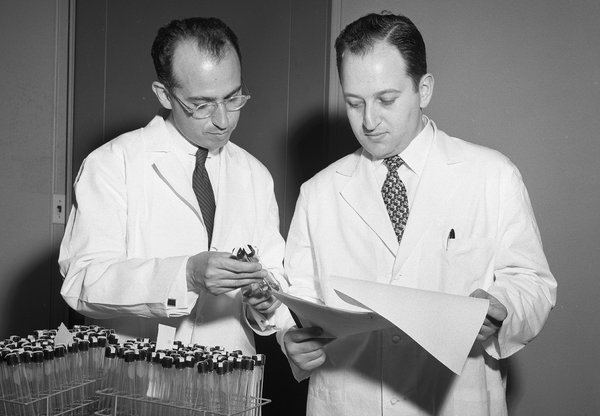
Dr. Youngner was the last surviving member of the original three-man research team assembled by Dr. Jonas Salk at the University of Pittsburgh to address the polio scourge, which peaked in the United States in the early 1950s when more than 50,000 children were struck by it in one year. Three other assistants later joined the group.

Dr. Salk credited his six aides with major roles in developing the polio vaccine, a landmark advance in modern medicine, which he announced on April 12, 1955.

The announcement — that the vaccine had proved up to 90 percent effective in tests on 440,000 youngsters in 44 states — was greeted with ringing churchbells and openings of public swimming pools, which had been drained for fear of contagion. Within six years, annual cases of the paralyzing disease had declined from 14,000 to fewer than 1,000.

By 1979, polio had been virtually eliminated in developed nations.

“I think it’s absolutely fair to say that had it not been for Dr. Youngner, the polio vaccine would not have come into existence,” Dr. Salk’s son, Peter L. Salk, president of the Jonas Salk Legacy Foundation and a visiting professor at the University of Pittsburgh Graduate School of Public Health, said in an email.

While Dr. Youngner, who was 34 at the time, remained at the university and made further advances in virology, he and other members of the team remained embittered that Dr. Salk had not singled them out for credit in his announcement speech.

The printed version was prefaced with the phrase “From the Staff of the Virus Research Laboratory by Jonas E. Salk, M.D.,” and a United Press account quoted him as crediting his original three assistants, who had joined him as early as 1949 — Dr. Youngner, Army Maj. Byron L. Bennett and Dr. L. James Lewis — as well as three others.

“The really important thing to recognize is that the development of the polio vaccine at the University of Pittsburgh was a team effort,” Dr. Peter Salk wrote.

He added, “There is no question that my father recognized the importance of the team, and if there were circumstances in which that wasn’t adequately expressed, I would feel that it needs to be expressed now and very clearly so.”

In 1993, Dr. Youngner crossed paths with Dr. Salk for the first time since Dr. Salk left for California in 1961. According to “Polio: An American Story” (2005), by David M. Oshinsky, Dr. Youngner raised the 1955 announcement speech in confronting Dr. Salk.

“Do you remember whom you mentioned and whom you left out?” the book quoted him as saying to Dr. Salk. “Do you realize how devastated we were at that moment and ever afterward when you persisted in making your co-workers invisible?”

Asked later, though, whether he regretted having worked for Dr. Salk, Dr. Youngner replied: “Absolutely not. You can’t imagine what a thrill that gave me. My only regret is that he disappointed me.”

Dr. Youngner’s contribution to the team was threefold.

He developed a method called trypsinization, using monkey kidney cells to generate sufficient quantities of the virus for experiments and production of the vaccine. He also found a way to deactivate the virus without disrupting its ability to produce antibodies. And he created a color test to measure polio antibodies in the blood to determine whether the vaccine was working.

He later contributed research to understanding interferon as an antiviral agent in the treatment of cancer and hepatitis; to the development (with Dr. Samuel Salvin) of gamma interferon, which is used against certain infections; and to advances that resulted in vaccines for Type A influenza and (with Dr. Patricia Dowling) equine influenza.

“As a direct result of his efforts, there are countless numbers of people living longer and healthier lives,” Dr. Arthur S. Levine, the University of Pittsburgh’s senior vice chancellor for the health sciences and dean of its medical school, said in a statement.

Julius Stuart Youngner was born on Oct. 24, 1920, in Manhattan and raised in the Bronx, where he survived lobar pneumonia, a severe infection of the lungs. His father, Sidney Donheiser, was a businessman. His mother was Bertha Youngner. He took her surname when his parents divorced.

After graduating from Evander Childs High School in the Bronx at 15, he earned a bachelor’s degree in English with a minor in biology from New York University in 1939 and a master’s and doctorate of science in microbiology from the University of Michigan.

Drafted into the Army in World War II, he worked on the Manhattan Project at Oak Ridge, Tenn., and at the University of Rochester, testing the toxicity of uranium salts. He said he learned of the project’s goal of building an atomic bomb only when it was dropped on Japan.

He was working at the National Cancer Institute, part of the National Institutes of Health, when the University of Pittsburgh hired him as an assistant professor in 1949 to assist Dr. Salk. He was a professor of microbiology and medical genetics at the university School of Medicine and chairman of the department of microbiology (biochemistry and microbiology were added later) from 1966 until his retirement in 1989.

His first wife, the former Tula Liakakis, died in 1963. Besides their son, Stuart, a psychiatry and bioethics professor at Case Western Reserve University in Cleveland, Dr. Youngner is survived by his wife, the former Rina Balter; a daughter, Lisa, an artist, also from his first marriage; three grandchildren; and a half brother, Alan Donheiser.

Dr. Youngner’s infectious curiosity, as a colleague characterized it, generated hundreds of scholarly papers and more than 15 patents. He was president of the American Society for Virology from 1986 to 1987.

When he was 7, Dr. Youngner nearly died from the pneumonia he had contracted when bacteria ate through his chest and infected a rib. An effective vaccine for pneumonia and antibiotics would not be invented for nearly two decades.

“So they strapped my legs to a table, and two nuns held my arms and another held my head and they prayed while they operated on me,” he recalled in an oral history interview in the early 1990s with the National Council of Jewish Women. “To this day I can remember the feeling of the saw on that rib.

“Later in life, when I had to have some minor surgery,” he said, “I put it off for years because I was so affected by this episode.”

Wild crows seem to obey ‘do not enter’ signs


Crows can’t read, but the signs have still apparently curbed their habit of stealing insulation material from a university building in Japan.

by Russell McLendon

Crows are incredibly clever birds. Some species use tools, for example. Some also recognize human faces, even “gossiping” about who’s a threat and who’s cool. Crows can hold long-term grudges against people they deem dangerous, or shower their allies with gifts. Oh, and they can solve puzzles on par with a 7-year-old human.

With wits like this, it’s little wonder crows have adapted to live in human cities around the world. Yet despite all their uncanny displays of intelligence, a recent example from Japan is eyebrow-raising even for these famously brainy birds.

Wild crows had learned to raid a research building in Iwate Prefecture, stealing insulation to use as nest material. But as the Asahi Shimbun reports, they abruptly quit after a professor began hanging paper signs that read “crows do not enter.”

The idea was suggested by a crow expert from Utsunomiya University, and has reportedly worked for the past two years. This doesn’t mean the crows can read Japanese, but it may still shed light on their complex relationship with people.

The building in question is the International Coastal Research Center (ICRC), part of the University of Tokyo’s Atmosphere and Ocean Research Institute in Otsuchi. The ICRC was founded in 1973 to promote marine research around the biodiverse Sanriku Coast, but its building was heavily damaged by the 2011 Great East Japan earthquake and tsunami, which flooded all three stories. Nearby houses were all destroyed, the Asahi Shimbun reports, and many residents have moved elsewhere.

Repairs later allowed temporary use of the third floor, but the first and second floors were just cleared for warehouse space. While the University of Tokyo has plans to rebuild the center and restart its research, that “is expected to cost a substantial amount of money and several years of time,” according to the ICRC website.

The crows began their raids on the damaged building in spring 2015, according to Katsufumi Sato, a behavioral ecologist and ethology professor at the University of Tokyo. Once inside, they would find insulated pipes, tear off chunks of insulation and then fly away, leaving behind feathers and droppings as clues of their crime.

“Crows take it for their nests,” Sato tells Shimbun staff writer Yusuke Hoshino.

Hoping for a simple solution, ICRC staff sought advice from Sato, who in turn asked his friend Tsutomu Takeda, an environmental scientist and crow expert at Utsunomiya University’s Center for Weed and Wildlife Management. When Takeda suggested making signs that tell crows to stay out, Sato says he thought it was a joke. But he gave it a try, and crows quit raiding the ICRC “in no time at all,” Hoshino writes.

Sato remained skeptical, assuming this was a temporary coincidence, but the crows stayed away throughout 2015, even though the building still had openings and still had insulation inside. He put up the paper signs again in 2016, and after another year without crow attacks, he kept up the tradition this spring. Crows can still be seen flying around nearby, Hoshino points out, but their raids seem to have ended.

So what’s going on? Crows can’t read, but could they still somehow be getting information from the signs? As the BBC documented a decade ago, some urban crows in Japan have learned to capitalize on traffic lights, dropping hard-to-crack nuts into traffic so cars will run over them, then waiting for the light to turn red so they can safely swoop down and grab their prize. That’s impressive, albeit not quite the same.

Takeda offers a different explanation. The crows aren’t responding to the signs at all, he says; they’re responding to people’s responses. People might normally ignore common urban wildlife like crows, but these warnings — while ostensibly directed at crows themselves — draw human attention to the birds. As ICRC staff, students and visitors see the strange signs, they often look up at the crows and even point at them.

“People gaze up at the sky [looking for crows], you know,” Takeda says.

For clever birds that pay close attention to people, that’s apparently eerie enough to make the ICRC seem unsafe. It’s worth noting this is anecdotal, not a scientific study, and there may be another reason why the crows stopped their raids. But given how closely it correlated with the new signs, and how perceptive crows can be, Takeda’s plan is being credited with cheaply and harmlessly keeping the birds at bay.

If nothing else, this is a reminder to appreciate these intelligent birds living all around us, even in cities we built for ourselves. But since crows are sometimes a little too good at exploiting urban environments, it’s also a helpful reminder of how much a dirty look can accomplish. Sato, now a believer in Takeda’s unorthodox strategy, hopes more people will come to the ICRC and gawk at the local crows.

http://www.mnn.com/earth-matters/animals/blogs/crows-do-not-enter-signs-japan