Graphene successfully interfaced with neurons in the brain

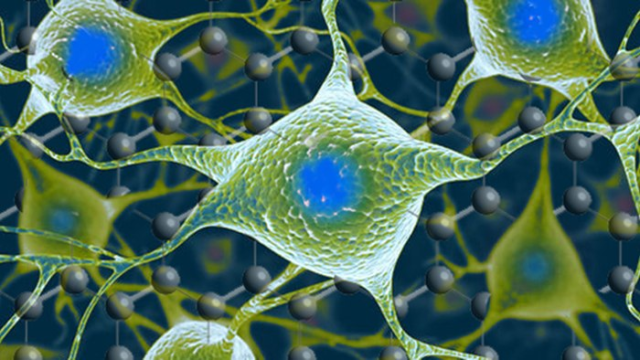
Scientists have long been on a quest to find a way to implant electrodes that interface with neurons into the human brain. If successful, the idea could have huge implications for the treatment of Parkinson’s disease and other neurological disorders. Last month, a team of researchers from Italy and the UK made a huge step forward by showing that the world’s favorite wonder-material, graphene, can successfully interface with neurons.

Previous efforts by other groups using treated graphene had created an interface with a very low signal to noise ratio. But an interdisciplinary collaborative effort by the University of Trieste and the Cambridge Graphene Centre has developed a significantly improved electrode by working with untreated graphene.

“For the first time we interfaced graphene to neurons directly,” said Professor Laura Ballerini of the University of Trieste in Italy. “We then tested the ability of neurons to generate electrical signals known to represent brain activities, and found that the neurons retained their neuronal signaling properties unaltered. This is the first functional study of neuronal synaptic activity using uncoated graphene based materials.”

Prior to experimenting with graphene-based substrates (GBS), scientists implanted microelectrodes based on tungsten and silicon. Proof-of-concept experiments were successful, but these materials seem to suffer from the same fatal flaws. The body’s reaction to the insertion trauma is to form scarring tissue, inhibiting clear electrical signals. The structures were also prone to disconnecting, due to the stiffness of the materials, which were unsuitable for a semi-fluid organic environment.

Pure graphene is promising because it is flexible, non-toxic, and does not impair other cellular activity.

The team’s experiments on rat brain cell cultures showed that the untreated graphene electrodes interfaced well with neurons, transmitting electrical impulses normally with none of the adverse reactions seen previously.

The biocompatibility of graphene could allow it to be used to make graphene microelectrodes that could help measure, harness and control an impaired brain’s functions. It could be used to restore lost sensory functions to treat paralysis, control prosthetic devices such a robotic limbs for amputees and even control or diminish the impact of the out-of-control electrical impulses that cause motor disorders such as Parkinson’s and epilepsy.

“We are currently involved in frontline research in graphene technology towards biomedical applications,” said Professor Maurizio Prato from the University of Trieste. “In this scenario, the development and translation in neurology of graphene-based high-performance bio-devices requires the exploration of the interactions between graphene nano and micro-sheets with the sophisticated signaling machinery of nerve cells. Our work is only a first step in that direction.”

The results of this research were recently published in the journal ACS Nano. The research was funded by the Graphene Flagship, a European initiative that aims to connect theoretical and practical fields and reduce the time that graphene products spend in laboratories before being brought to market.

http://www.cam.ac.uk/research/news/graphene-shown-to-safely-interact-with-neurons-in-the-brain

DARPA program aims to develop an implantable neural interface capable of connecting with one million neurons

A new DARPA program aims to develop an implantable neural interface able to provide unprecedented signal resolution and data-transfer bandwidth between the human brain and the digital world. The interface would serve as a translator, converting between the electrochemical language used by neurons in the brain and the ones and zeros that constitute the language of information technology. The goal is to achieve this communications link in a biocompatible device no larger than one cubic centimeter in size, roughly the volume of two nickels stacked back to back.

The program, Neural Engineering System Design (NESD), stands to dramatically enhance research capabilities in neurotechnology and provide a foundation for new therapies.

“Today’s best brain-computer interface systems are like two supercomputers trying to talk to each other using an old 300-baud modem,” said Phillip Alvelda, the NESD program manager. “Imagine what will become possible when we upgrade our tools to really open the channel between the human brain and modern electronics.”

Among the program’s potential applications are devices that could compensate for deficits in sight or hearing by feeding digital auditory or visual information into the brain at a resolution and experiential quality far higher than is possible with current technology.

Neural interfaces currently approved for human use squeeze a tremendous amount of information through just 100 channels, with each channel aggregating signals from tens of thousands of neurons at a time. The result is noisy and imprecise. In contrast, the NESD program aims to develop systems that can communicate clearly and individually with any of up to one million neurons in a given region of the brain.

Achieving the program’s ambitious goals and ensuring that the envisioned devices will have the potential to be practical outside of a research setting will require integrated breakthroughs across numerous disciplines including neuroscience, synthetic biology, low-power electronics, photonics, medical device packaging and manufacturing, systems engineering, and clinical testing. In addition to the program’s hardware challenges, NESD researchers will be required to develop advanced mathematical and neuro-computation techniques to first transcode high-definition sensory information between electronic and cortical neuron representations and then compress and represent those data with minimal loss of fidelity and functionality.

To accelerate that integrative process, the NESD program aims to recruit a diverse roster of leading industry stakeholders willing to offer state-of-the-art prototyping and manufacturing services and intellectual property to NESD researchers on a pre-competitive basis. In later phases of the program, these partners could help transition the resulting technologies into research and commercial application spaces.

To familiarize potential participants with the technical objectives of NESD, DARPA will host a Proposers Day meeting that runs Tuesday and Wednesday, February 2-3, 2016, in Arlington, Va. The Special Notice announcing the Proposers Day meeting is available at https://www.fbo.gov/spg/ODA/DARPA/CMO/DARPA-SN-16-16/listing.html. More details about the Industry Group that will support NESD is available at https://www.fbo.gov/spg/ODA/DARPA/CMO/DARPA-SN-16-17/listing.html. A Broad Agency Announcement describing the specific capabilities sought will be forthcoming on http://www.fbo.gov.

NESD is part of a broader portfolio of programs within DARPA that support President Obama’s brain initiative. For more information about DARPA’s work in that domain, please visit: http://www.darpa.mil/program/our-research/darpa-and-the-brain-initiative.

http://www.darpa.mil/news-events/2015-01-19

Thanks to Kebmodee for bringing this to the It’s Interesting community.

Uploading Our Minds into Digital Space


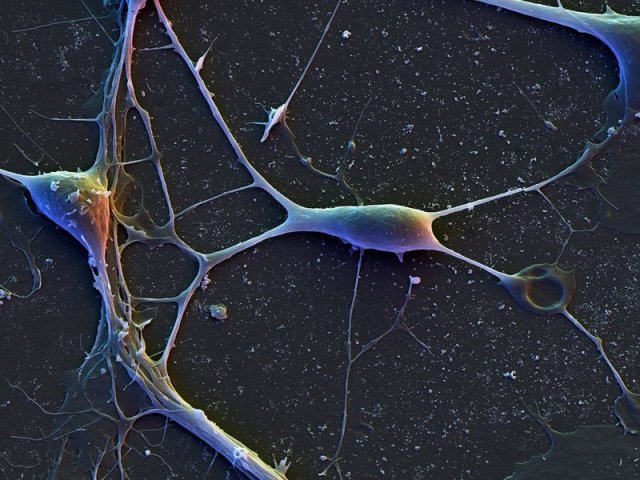
Human cortical neurons in the brain. (David Scharf/Corbis)

By Jerry Adler
Smithsonian Magazine

Ken Hayworth, a neuroscientist, wants to be around in 100 years but recognizes that, at 43, he’s not likely to make it on his own. Nor does he expect to get there preserved in alcohol or a freezer; despite the claims made by advocates of cryonics, he says, the ability to revivify a frozen body “isn’t really on the horizon.” So Hayworth is hoping for what he considers the next best thing. He wishes to upload his mind—his memories, skills and personality—to a computer that can be programmed to emulate the processes of his brain, making him, or a simulacrum, effectively immortal (as long as someone keeps the power on).

Hayworth’s dream, which he is pursuing as president of the Brain Preservation Foundation, is one version of the “technological singularity.” It envisions a future of “substrate-independent minds,” in which human and machine consciousness will merge, transcending biological limits of time, space and memory. “This new substrate won’t be dependent on an oxygen atmosphere,” says Randal Koene, who works on the same problem at his organization, Carboncopies.org. “It can go on a journey of 1,000 years, it can process more information at a higher speed, it can see in the X-ray spectrum if we build it that way.” Whether Hayworth or Koene will live to see this is an open question. Their most optimistic scenarios call for at least 50 years, and uncounted billions of dollars, to implement their goal. Meanwhile, Hayworth hopes to achieve the ability to preserve an entire human brain at death—through chemicals, cryonics or both—to keep the structure intact with enough detail that it can, at some future time, be scanned into a database and emulated on a computer.

That approach presumes, of course, that all of the subtleties of a human mind and memory are contained in its anatomical structure—conventional wisdom among neuroscientists, but it’s still a hypothesis. There are electrochemical processes at work. Are they captured by a static map of cells and synapses? We won’t know, advocates argue, until we try to do it.

The initiatives require a big bet on the future of technology. A 3-D map of all the cells and synapses in a nervous system is called a “connectome,” and so far researchers have produced exactly one, for a roundworm called Caenorhabditis elegans, with 302 neurons and about 7,000 connections among them. A human brain, according to one reasonable estimate, has about 86 billion neurons and 100 trillion synapses. And then there’s the electrochemical activity on top of that. In 2013, announcing a federal initiative to produce a complete model of the human brain, Francis Collins, head of the National Institutes of Health, said it could generate “yottabytes” of data—a million million million megabytes. To scan an entire human brain at the scale Hayworth thinks is necessary—effectively slicing it into virtual cubes ten nanometers on a side—would require, with today’s technology, “a million electron microscopes running in parallel for ten years.” Mainstream researchers are divided between those who regard Hayworth’s quest as impossible in practice, and those, like Miguel Nicolelis of Duke University, who consider it impossible in theory. “The brain,” he says, “is not computable.”

And what does it mean for a mind to exist outside a brain? One immediately thinks of the disembodied HAL in 2001: A Space Odyssey. But Koene sees no reason that, if computers continue to grow smaller and more powerful, an uploaded mind couldn’t have a body—a virtual one, or a robotic one. Will it sleep? Experience hunger, pain, desire? In the absence of hormones and chemical neurotransmitters, will it feel emotion? It will be you, in a sense, but will you be it?

These questions don’t trouble Hayworth. To him, the brain is the most sophisticated computer on earth, but only that, and he figures his mind could also live in one made of transistors instead. He hopes to become the first human being to live entirely in cyberspace, to send his virtual self into the far future.

Read more: http://www.smithsonianmag.com/innovation/quest-upload-mind-into-digital-space-180954946/#OBRGToqVzeqftrBt.99

Scientists encode memories in a way that bypasses damaged brain tissue

Researchers at University of South Carolina (USC) and Wake Forest Baptist Medical Center have developed a brain prosthesis that is designed to help individuals suffering from memory loss.

The prosthesis, which includes a small array of electrodes implanted into the brain, has performed well in laboratory testing in animals and is currently being evaluated in human patients.

Designed originally at USC and tested at Wake Forest Baptist, the device builds on decades of research by Ted Berger and relies on a new algorithm created by Dong Song, both of the USC Viterbi School of Engineering. The development also builds on more than a decade of collaboration with Sam Deadwyler and Robert Hampson of the Department of Physiology & Pharmacology of Wake Forest Baptist who have collected the neural data used to construct the models and algorithms.

When your brain receives the sensory input, it creates a memory in the form of a complex electrical signal that travels through multiple regions of the hippocampus, the memory center of the brain. At each region, the signal is re-encoded until it reaches the final region as a wholly different signal that is sent off for long-term storage.

If there’s damage at any region that prevents this translation, then there is the possibility that long-term memory will not be formed. That’s why an individual with hippocampal damage (for example, due to Alzheimer’s disease) can recall events from a long time ago – things that were already translated into long-term memories before the brain damage occurred – but have difficulty forming new long-term memories.

Song and Berger found a way to accurately mimic how a memory is translated from short-term memory into long-term memory, using data obtained by Deadwyler and Hampson, first from animals, and then from humans. Their prosthesis is designed to bypass a damaged hippocampal section and provide the next region with the correctly translated memory.

That’s despite the fact that there is currently no way of “reading” a memory just by looking at its electrical signal.

“It’s like being able to translate from Spanish to French without being able to understand either language,” Berger said.

Their research was presented at the 37th Annual International Conference of the IEEE Engineering in Medicine and Biology Society in Milan on August 27, 2015.

The effectiveness of the model was tested by the USC and Wake Forest Baptist teams. With the permission of patients who had electrodes implanted in their hippocampi to treat chronic seizures, Hampson and Deadwyler read the electrical signals created during memory formation at two regions of the hippocampus, then sent that information to Song and Berger to construct the model. The team then fed those signals into the model and read how the signals generated from the first region of the hippocampus were translated into signals generated by the second region of the hippocampus.

In hundreds of trials conducted with nine patients, the algorithm accurately predicted how the signals would be translated with about 90 percent accuracy.

“Being able to predict neural signals with the USC model suggests that it can be used to design a device to support or replace the function of a damaged part of the brain,” Hampson said.
Next, the team will attempt to send the translated signal back into the brain of a patient with damage at one of the regions in order to try to bypass the damage and enable the formation of an accurate long-term memory.

http://medicalxpress.com/news/2015-09-scientists-bypass-brain-re-encoding-memories.html#nRlv

Amazing photo technology

low mag

mag 3

Ever wonder how they ID’d the Boston bombers in a few days? This may help you to understand what the government is looking at. This photo was taken in Vancouver, Canada and shows about 700,000 people.

Hard to disappear in a crowd. Pick on a small part of the crowd click a couple of times — wait – then, click a few more times and see how clear each individual face will become each time. Or use the wheel on your mouse.

This picture was taken with a 70,000 x 30,000 pixel camera (2100 Mega Pixels.) These cameras are not sold to the public and are being installed in strategic locations. The camera can identify a face among a multitude of People.

Place your computer’s cursor in the mass of people and double-click a couple times. It is not so easy to hide in a crowd anymore.

http://www.gigapixel.com/mobile/?id=79995

Thanks to Pete Cuomo for bringing this to the It’s Interesting community.

Paralyzed man walks again, using only his mind.


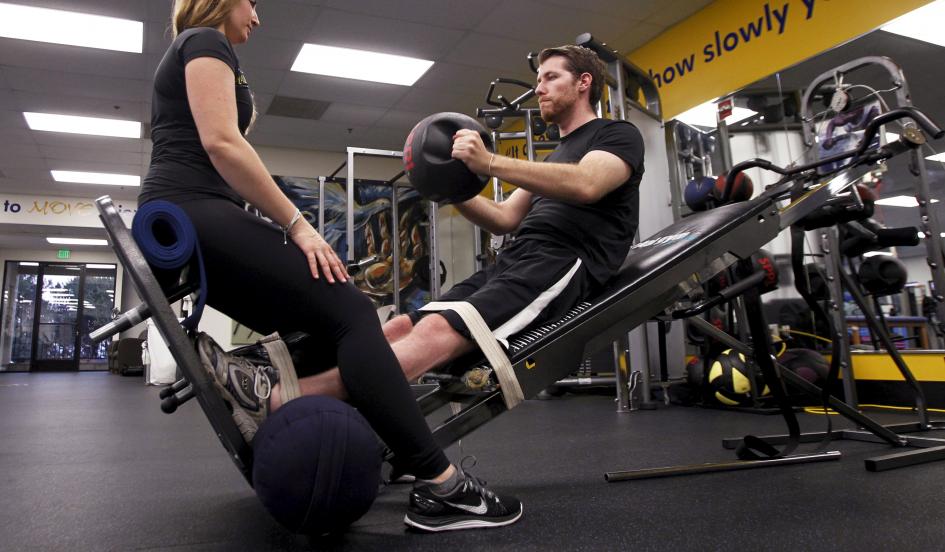
Paraplegic Adam Fritz works out with Kristen Johnson, a spinal cord injury recovery specialist, at the Project Walk facility in Claremont, California on September 24. A brain-to-computer technology that can translate thoughts into leg movements has enabled Fritz, paralyzed from the waist down by a spinal cord injury, to become the first such patient to walk without the use of robotics.

It’s a technology that sounds lifted from the latest Marvel movie—a brain-computer interface functional electrical stimulation (BCI-FES) system that enables paralyzed users to walk again. But thanks to neurologists, biomedical engineers and other scientists at the University of California, Irvine, it’s very much a reality, though admittedly with only one successful test subject so far.

The team, led by Zoran Nenadic and An H. Do, built a device that translates brain waves into electrical signals than can bypass the damaged region of a paraplegic’s spine and go directly to the muscles, stimulating them to move. To test it, they recruited 28-year-old Adam Fritz, who had lost the use of his legs five years earlier in a motorcycle accident.

Fritz first had to learn how exactly he’d been telling his legs to move for all those years before his accident. The research team fitted him with an electroencephalogram (EEG) cap that read his brain waves as he visualized moving an avatar in a virtual reality environment. After hours training on the video game, he eventually figured out how to signal “walk.”

The next step was to transfer that newfound skill to his legs. The scientists wired up the EEG device so that it would send electrical signals to the muscles in Fritz’s leg. And then, along with physical therapy to strengthen his legs, he would practice walking—his legs suspended a few inches off the ground—using only his brain (and, of course, the device). On his 20th visit, Fritz was finally able to walk using a harness that supported his body weight and prevented him from falling. After a little more practice, he walked using just the BCI-FES system. After 30 trials run over a period of 19 weeks, he could successfully walk through a 12-foot-long course.

As encouraging as the trial sounds, there are experts who suggest the design has limitations. “It appears that the brain EEG signal only contributed a walk or stop command,” says Dr. Chet Moritz, an associate professor of rehab medicine, physiology and biophysics at the University of Washington. “This binary signal could easily be provided by the user using a sip-puff straw, eye-blink device or many other more reliable means of communicating a simple ‘switch.’”

Moritz believes it’s unlikely that an EEG alone would be reliable enough to extract any more specific input from the brain while the test subject is walking. In other words, it might not be able to do much more beyond beginning and ending a simple motion like moving your legs forward—not so helpful in stepping over curbs or turning a corner in a hallway.

The UC Irvine team hopes to improve the capability of its technology. A simplified version of the system has the potential to work as a means of noninvasive rehabilitation for a wide range of paralytic conditions, from less severe spinal cord injuries to stroke and multiple sclerosis.

“Once we’ve confirmed the usability of this noninvasive system, we can look into invasive means, such as brain implants,” said Nenadic in a statement announcing the project’s success. “We hope that an implant could achieve an even greater level of prosthesis control because brain waves are recorded with higher quality. In addition, such an implant could deliver sensation back to the brain, enabling the user to feel their legs.

http://www.newsweek.com/paralyzed-man-walks-again-using-only-his-mind-379531

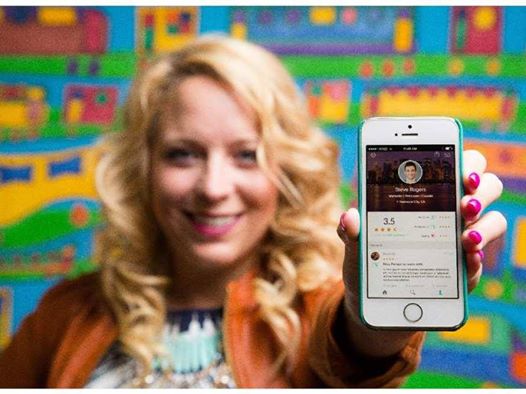
Soon everyone you know will be able to rate you on the new ‘Yelp for people.’

You can already rate restaurants, hotels, movies, college classes, government agencies and bowel movements online.

So the most surprising thing about Peeple — basically Yelp, but for humans — may be the fact that no one has yet had the gall to launch something like it.

When the app does launch, probably in late November, you will be able to assign reviews and one- to five-star ratings to everyone you know: your exes, your co-workers, the old guy who lives next door. You can’t opt out — once someone puts your name in the Peeple system, it’s there unless you violate the site’s terms of service. And you can’t delete bad or biased reviews — that would defeat the whole purpose.

Imagine every interaction you’ve ever had suddenly open to the scrutiny of the Internet public.

“People do so much research when they buy a car or make those kinds of decisions,” said Julia Cordray, one of the app’s founders. “Why not do the same kind of research on other aspects of your life?”

This is, in a nutshell, Cordray’s pitch for the app — the one she has been making to development companies, private shareholders, and Silicon Valley venture capitalists. (As of Monday, the company’s shares put its value at $7.6 million.)

A bubbly, no-holds-barred “trendy lady” with a marketing degree and two recruiting companies, Cordray sees no reason you wouldn’t want to “showcase your character” online. Co-founder Nicole McCullough comes at the app from a different angle: As a mother of two in an era when people don’t always know their neighbors, she wanted something to help her decide whom to trust with her kids.

Given the importance of those kinds of decisions, Peeple’s “integrity features” are fairly rigorous — as Cordray will reassure you, in the most vehement terms, if you raise any concerns about shaming or bullying on the service. To review someone, you must be 21 and have an established Facebook account, and you must make reviews under your real name.

You must also affirm that you “know” the person in one of three categories: personal, professional or romantic. To add someone to the database who has not been reviewed before, you must have that person’s cell phone number.

Positive ratings post immediately; negative ratings are queued in a private inbox for 48 hours in case of disputes. If you haven’t registered for the site, and thus can’t contest those negative ratings, your profile only shows positive reviews.

On top of that, Peeple has outlawed a laundry list of bad behaviors, including profanity, sexism and mention of private health conditions.

“As two empathetic, female entrepreneurs in the tech space, we want to spread love and positivity,” Cordray stressed. “We want to operate with thoughtfulness.”

Unfortunately for the millions of people who could soon find themselves the unwilling subjects — make that objects — of Cordray’s app, her thoughts do not appear to have shed light on certain very critical issues, such as consent and bias and accuracy and the fundamental wrongness of assigning a number value to a person.

To borrow from the technologist and philosopher Jaron Lanier, Peeple is indicative of a sort of technology that values “the information content of the web over individuals;” it’s so obsessed with the perceived magic of crowd-sourced data that it fails to see the harms to ordinary people.

Where to even begin with those harms? There’s no way such a rating could ever accurately reflect the person in question: Even putting issues of personality and subjectivity aside, all rating apps, from Yelp to Rate My Professor, have a demonstrated problem with self-selection. (The only people who leave reviews are the ones who love or hate the subject.) In fact, as repeat studies of Rate My Professor have shown, ratings typically reflect the biases of the reviewer more than they do the actual skills of the teacher: On RMP, professors whom students consider attractive are way more likely to be given high ratings, and men and women are evaluated on totally different traits.

“Summative student ratings do not look directly or cleanly at the work being done,” the academic Edward Nuhfer wrote in 2010. “They are mixtures of affective feelings and learning.”

But at least student ratings have some logical and economic basis: You paid thousands of dollars to take that class, so you’re justified and qualified to evaluate the transaction. Peeple suggests a model in which everyone is justified in publicly evaluating everyone they encounter, regardless of their exact relationship.

It’s inherently invasive, even when complimentary. And it’s objectifying and reductive in the manner of all online reviews. One does not have to stretch far to imagine the distress and anxiety that such a system would cause even a slightly self-conscious person; it’s not merely the anxiety of being harassed or maligned on the platform — but of being watched and judged, at all times, by an objectifying gaze to which you did not consent.

Where once you may have viewed a date or a teacher conference as a private encounter, Peeple transforms it into a radically public performance: Everything you do can be judged, publicized, recorded.

“That’s feedback for you!” Cordray enthuses. “You can really use it to your advantage.”

That justification hasn’t worked out so well, though, for the various edgy apps that have tried it before. In 2013, Lulu promised to empower women by letting them review their dates, and to empower men by letting them see their scores.

After a tsunami of criticism — “creepy,” “toxic,” “gender hate in a prettier package” — Lulu added an automated opt-out feature to let men pull their names off the site. A year later, Lulu further relented by letting users rate only those men who opt in. In its current iteration, 2013’s most controversial start-up is basically a minor dating app.

That windy path is possible for Peeple too, Cordray says: True to her site’s radical philosophy, she has promised to take any and all criticism as feedback. If beta testers demand an opt-out feature, she’ll delay the launch date and add that in. If users feel uncomfortable rating friends and partners, maybe Peeple will professionalize: think Yelp meets LinkedIn. Right now, it’s Yelp for all parts of your life; that’s at least how Cordray hypes it on YouTube, where she’s publishing a reality Web series about the app’s process.

“It doesn’t matter how far apart we are in likes or dislikes,” she tells some bro at a bar in episode 10. “All that matters is what people say about us.”

It’s a weirdly dystopian vision to deliver to a stranger at a sports bar: In Peeple’s future, Cordray’s saying, the way some amorphous online “crowd” sees you will be definitively who you are.

https://www.washingtonpost.com/news/the-intersect/wp/2015/09/30/everyone-you-know-will-be-able-to-rate-you-on-the-terrifying-yelp-for-people-whether-you-want-them-to-or-not/

Ethical and legal questions arising from developing sex robot technology

by Peter Mellgard

Back in the 80s there was a student at the Massachusetts Institute of Technology who confessed to a professor that he hadn’t quite figured out “this sex thing,” and preferred to spend time on his computer rather than with girls. For “Anthony,” computers were safer and made more sense; romantic relationships, he said, usually led to him “getting burned in some way.”

Years later, Anthony’s story made a big impression on David Levy, an expert in artificial intelligence, who was amazed that someone as educated as Anthony was developing an emotional attachment to his computer so long ago. Levy decided he wanted to give guys like Anthony a social and sexual alternative to real girls. The answer, he thinks, is sexbots. And he’s not talking about some blow-up doll that doesn’t talk.

Levy predicts that a lot of us, mostly but not exclusively shy guys like Anthony, will be having sex with robots sometime around the 2040s. By then, he says, robots will be so hot, human-like and mind-blowing under the sheets that a lot of people will find them sexually enjoyable. What’s more, Levy believes they will be able to engage and communicate with people in a meaningful, emotional way, so that guys like Anthony won’t need to worry about real girls if they don’t want to.

To give a robot the ability to communicate and provide the kind of emotional satisfaction someone would normally get from a human partner, Levy is improving an award-winning chat program called Do-Much-More that he built a few years ago. His aim is for it to become “a girlfriend or boyfriend chatbot that will be able to conduct amorous conversations with a user,” he told The WorldPost. “I’m trying to simulate the kind of conversation that two lovers might have.”

Levy admits that “this won’t come about instantly.” Eventually he wants his advanced conversation software embedded in a sexbot so that it becomes more than just a sexual plaything — a companion, perhaps. But it won’t be for everyone. “I don’t believe that human-robot relationships are going to replace human-human relationships,” he said.

There will be people, however, Levy said, people like Anthony maybe, for whom a sexbot holds a strong appeal. “I’m hoping to help people,” he said, then elaborated:

People ask me the question, ‘Why is a relationship with a robot better than a relationship with a human?’ And I don’t think that’s the point at all. For millions of people in the world, they can’t make a good relationship with other humans. For them the question is not, ‘Why is a relationship with a robot better?’ For them the question is, would it be better to have a relationship with a robot or no relationship at all?

The future looks bright if you’re into relationships with robots and computers.

Neil McArthur, a professor of philosophy and ethics at the University of Manitoba in Canada, imagines that in 10 to 15 years, “we will have something for which there is great consumer demand and that people are willing to say is a very good and enjoyable sexbot.”

For now, the closest thing we have to a genuine sexbot is the RealDoll. A RealDoll is the most advanced sex doll in the world — a sculpted “work of art,” in the words of Matt McMullen, the founder of the company, Abyss Creations, that makes them. For a few thousand dollars a pop, customers can customize the doll’s hair color, skin tone, eyes, clothing and genitalia (removable, exchangeable, flaccid, hard) — and then wait patiently for a coffin-sized box to arrive in the mail. For some people, that box contains a sexual plaything and an emotional companion that is preferable to a human partner.

“The goal, the fantasy, is to bring her to life,” McMullen told Vanity Fair.

Others already prefer virtual “people” to living humans as emotional partners. Love Plus is a hugely popular game in Japan that is played on a smartphone or Nintendo. Players take imaginary girls on dates, “kiss” them, buy them birthday cakes.

“Well, you know, all I want is someone to say good morning to in the morning and someone to say goodnight to at night,” said one gamer who has been dating one of the imaginary girls for years, according to TIME Magazine.

And there’s Invisible Girlfriend and Invisible Boyfriend, apps that connects you with a real, paid human who will text you so that you can prove you have a girlfriend or boyfriend to nosy relatives or disbelieving buddies. At least one user, a culture critic for the Washington Post, confessed she might actually being in love with the person on the other side who, remember, is being paid to satisfy customers’ desires. They’d never even met.

McArthur and others suspect that there might be people for whom a sexbot is no mere toy but a way to access something — sex — that for one reason or another was previously unattainable.

When it comes to the disabled, McArthur explained, there are two barriers to sexual activity: an external — “they’re not seen as valuable sexual partners” — and an internal anxiety. “Sexbots can give them access to partners. And they are sort of a gateway as well: disabled people could use a sexbot to build confidence and to build a sense of sexuality.”

“When it comes to sex,” he concluded, “more is better.”

It’s a new and emerging technology, but let’s nip in the bud,” Kathleen Richardson, a senior research fellow in the ethics of robotics at De Montfort University in England, told the Washington Post. Richardson released a paper this month titled “The Asymmetrical ‘Relationship’: Parallels Between Prostitution and the Development of Sex Robots.”

“I propose that extending relations of prostitution into machines is neither ethical, nor is it safe,” the paper reads.

And the ethical questions extend beyond machine “prostitution.” RealDoll, the sex doll company, refuses to make child-like dolls or animals. But what if another company does?

“It’s really a legal, moral, societal debate that we need to have about these systems,” said Matthias Scheutz, the director of the human-robot interaction laboratory at Tufts University. “We as a society need to discuss these questions before these products are out there. Because right now, we aren’t.”

If, in the privacy of your own home, you want to have sex with a doll or robot that looks like a 10-year-old boy or virtual children in porn apps, is that wrong? In most though not all countries in the world, it’s illegal to possess child pornography, including when it portrays a virtual person that is “indistinguishable” from a real minor. But some artistic representations of naked children are legal even in the U.S. Is a sexbot art? Is what a person does to a sexbot, no matter what it looks like, a legal question?

Furthermore, the link between viewing child pornography and child abuse crimes is unclear. Studies have been done on people incarcerated for those crimes that found that child pornography fueled the desire to abuse a real child. But another study on self-identified “boy-attracted pedosexual males” found that viewing child pornography acted as a substitute for sexual molestation.

“I think the jury is out on that,” said McArthur. “It depends on an empirical question: Do you think that giving people access to satisfaction of that kind is going to stimulate them to move on to actual contact crimes, or do you think it will provide a release valve?”

Scheutz explained: “People will build all sorts of things. Some people have made arguments that for people who otherwise would be sex offenders, maybe a child-like robot would be a therapeutic thing. Or it could have exactly the opposite effect.”
McArthur is most worried about how sexbots will impact perceptions about gender, body image and human sexual behavior. Sexbots will “promote unattainable body ideals,” he said. Furthermore, “you just aren’t going to make a robot that has a complicated personality and isn’t always in the mood. That’s going to promote a sense that, well, women should be more like an idealized robot personality that is a pliant, sexualized being.”

As sexbots become more popular and better at what they’re built to do, these questions will become more and more important. We, as a society and a species, are opening a door to a new world of sex. Social taboos will be challenged; legal questions will be raised.

And there might be more people — maybe people like Anthony — who realize they don’t need to suffer through a relationship with a human if they don’t want to because a robot provides for their emotional and sexual needs without thinking, contradicting, saying no or asking for much in return.

http://www.huffingtonpost.com/entry/robot-sex_55f979f2e4b0b48f670164e9

Thanks to Dr. Lutter for bringing this to the attention of the It’s Interesting community.

Chinese researchers report first-ever gene editing of human embryos

In an ethically charged first, Chinese researchers have used gene editing to modify human embryos obtained from an in-vitro fertilization clinic.

The 16-person scientific team, based at the Sun Yat-Sen University in Guangzhou, China, set out to see whether it could correct the gene defect that causes beta-thalassemia, a blood disease, by editing the DNA of fertilized eggs.

The team’s report showed the method is not yet very accurate, confirming scientific doubts around whether gene editing could be practical in human embryos, and whether genetically engineered people are going to be born anytime soon.

The authors’ report appeared on April 18 in a low-profile scientific journal called Protein & Cell. The authors, led by Junjiu Huang, say there is a “pressing need” to improve the accuracy of gene editing before it can be applied clinically, for instance to produce children with repaired genes.

The team did not try to establish a pregnancy and say for ethical reasons they did their tests only in embryos that were abnormal.

“These authors did a very good job pointing out the challenges,” says Dieter Egli, a researcher at the New York Stem Cell Foundation in Manhattan. “They say themselves this type of technology is not ready for any kind of application.”

The paper had previously circulated among researchers and had provoked concern by highlighting how close medical science may be to tinkering with the human gene pool.

n March, an industry group called for a complete moratorium on experiments of the kind being reported from China, citing risks and the chance they would open the door to eugenics, or changing nonmedical traits in embryos, such as stature or intelligence.

Other scientists recommended high-level meetings of experts, regulators, and ethicists to debate if there are acceptable uses for such engineering.

The Chinese team reported editing the genes of more than 80 embryos using a technology called CRISPR-Cas9. While in some cases they were successful, in others the CRISPR technology didn’t work or introduced unexpected mutations. Some of the embryos ended up being mosaics, with a repaired gene in some cells, but not in others.

Parents who are carriers of beta-thalassemia could choose to test their IVF embryos, selecting those that have not inherited the disease-causing mutation. However, gene editing opens the possibility of germline modification, or permanently repairing the gene in an embryo, egg, or sperm in a way that is passed onto the offspring and to future generations.

That idea is the subject of intense debate, since some think the human gene pool is sacrosanct and should never be the subject of technological alteration, even for medical reasons. Others allow that germline engineering might one day be useful, but needs much more testing. “You can’t discount it,” says Egli. “It’s very interesting.”

The Chinese team performed the gene editing in eggs that had been fertilized in an IVF clinic but were abnormal because they had been fertilized by two sperm, not one. “Ethical reasons precluded studies of gene editing in normal embryos,” they said.

Abnormal embryos are widely available for research, both in China and the U.S. At least one U.S. genetics center is also using CRISPR in abnormal embryos rejected by IVF clinics. That group described aspects of its work on the condition that it would not be identified, since the procedure remains controversial.

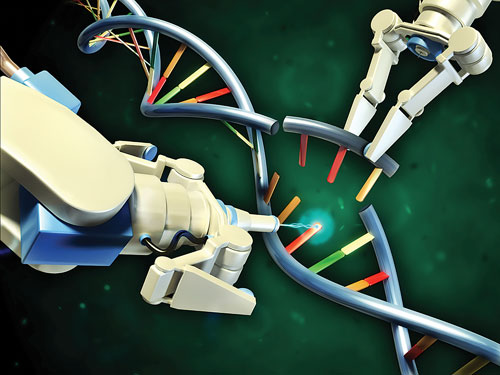
Making repairs using CRISPR harnesses a cell’s own DNA repair machinery to correct genes. The technology guides a cutting protein to a particular site on the DNA molecule, chopping it open. If a DNA “repair template” is provided—in this case a correct version of the beta-globin gene—the DNA will mend itself using the healthy sequence.

The Chinese group says that among the problems they encountered, the embryo sometimes ignored the template, and instead repaired itself using similar genes from its own genome, “leading to untoward mutations.”

Huang said he stopped the research after the poor results. “If you want to do it in normal embryos, you need to be close to 100 percent,” Huang told Nature News. “That’s why we stopped. We still think it’s too immature.”

http://www.technologyreview.com/news/536971/chinese-team-reports-gene-editing-human-embryo/

Thanks to Michael Moore for bringing this to the It’s Interesting community.