Common Bacteria Discovered to be Mind-Altering, Improving Mood and Reducing Anxiety

Hundreds of species of bacteria call the human gut their home. This gut “microbiome” influences our physiology and health in ways that scientists are only beginning to understand. Now, a new study suggests that gut bacteria can even mess with the mind, altering brain chemistry and changing mood and behavior.

John Cryan and colleagues at McMaster University in Canada fed mice a broth containing a benign bacterium, Lactobacillus rhamnosus. The scientists chose this particular bug partly because they had a handy supply and also because related Lactobacillus bacteria are a major ingredient of probiotic supplements and very little is known about their potential side effects, Cryan says.

In this case, the side effects appeared to be beneficial. Mice whose diets were supplemented with L. rhamnosus for 6 weeks exhibited fewer signs of stress and anxiety in standard lab tests, Cryan and colleagues reported yesterday in the Proceedings of the National Academy of Sciences.

http://news.sciencemag.org/sciencenow/2011/08/mind-altering-bugs.html
New Computer Chip Mimics the Human Brain

“Imagine traffic lights that can integrate sights, sounds and smells and flag unsafe intersections before disaster happens,” said Dharmendra Modha, the project leader for IBM Research. “Or imagine cognitive co-processors that turn servers, laptops, tablets and phones into machines that can interact better with their environments.”

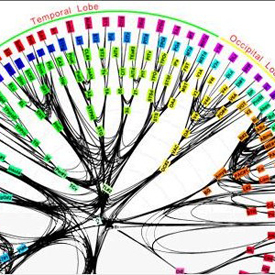
IBM on Thursday announced it has created a chip designed to imitate the human brain’s ability to understand its surroundings, act on things that happen around it and make sense of complex data.

Instead of requiring the type of programming that computers have needed for the past half-century, the experimental chip will let a new generation of computers, called “cognitive computers,” learn through their experiences and form their own theories about what those experiences mean.

The chips revealed Thursday are a step in a project called SyNAPSE (Systems of Neuromorphic Adaptive Plastic Scalable Electronics). The two chip prototypes are a step toward letting computers “reason” instead of reacting solely based on data that has been pre-programmed, IBM says.

read more here:  http://www.cnn.com/2011/TECH/innovation/08/18/ibm.brain.chip/index.html?hpt=hp_t2

http://www.pcmag.com/article2/0,2817,2391320,00.asp


Dieting Makes Some Brain Cells Eat Themselves

A report in the August issue of the Cell Press journal Cell Metabolism might help to explain why it’s so frustratingly difficult to stick to a diet. When we don’t eat, hunger-inducing neurons in the brain start eating bits of themselves. That act of self-cannibalism turns up a hunger signal to prompt eating.

http://www.sciencedaily.com/releases/2011/08/110802125546.htm

http://www.ibtimes.com/articles/191628/20110803/brain-cells-to-blame-for-failed-diets.htm

Fragmented Sleep May Disrupt Your Memory

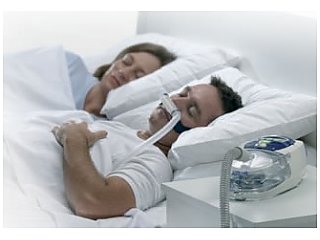
But when sleep is interrupted frequently–as it is in a wide range of disorders, including sleep apnea, alcoholism and Alzheimer’s disease–the ability to learn new things can be dramatically impaired, says a new studyconducted on mice and published this week in the Proceedings of the National Academy of Sciences. 

http://www.pnas.org/content/early/2011/07/20/1015633108.abstract?sid=400915e1-7405-4539-be26-06f6ac13ac4b

The researchers used a novel method to isolate the effects of sleep fragmentation from overall sleep quality. Studies to date have shown that when sleep is frequently interrupted, memory suffers. But no one really knew whether the memory problems they observed were the result of shorter cumulative sleep times, poor overall sleep quality, the degradation of some distinct part of the sleep cycle, or the sheer annoyance of being prodded awake repeatedly while sleeping. This study suggests that even when frequent waking doesn’t affect sleep quality and doesn’t cut into overall sleep time, memory takes a hit.

Read a summary of the study here:  http://articles.latimes.com/2011/jul/26/news/la-heb-sleep-memory-learning-20110726

Crossing your arms confuses the brain and relieves pain.

If your hand hurts, simply cross your arms to confuse your brain and reduce the perceived pain intensity. 

Researchers believe this happens because of conflicting information between two of the brain’s maps: the one for your body and the one for external space.

Since the left hand typically performs actions on the left side of space (and the right hand performs on the right side), these two maps work together to create powerful impulses in response to stimuli. When the arms are crossed, however, the two maps are mismatched and information processing becomes weaker — resulting in less pain.

http://psychcentral.com/news/2011/05/22/crossing-arms-confuses-brain-but-relieves-hand-pain/26390.html

Hearing Voices With Caffeine

Scholars at Australia’s La Trobe University just released a study showing a correlation between caffeine intake and auditory hallucinations.

In layman’s terms: Lots of coffee might make you more likely to hear things that aren’t there.

read about it here:  http://www.salon.com/news/feature/2011/06/08/coffee_hallucinations

and here is the study:  http://www.sciencedirect.com/science/article/pii/S019188691000591X

Summing up the results from the experiment, Professor Simon Crowe concluded:

There is a link between high levels of stress and psychosis, and caffeine was found to correlate with hallucination proneness. The combination of caffeine and stress affect the likelihood of an individual experiencing a psychosis-like symptom.

It would be prudent to note that correlation isn’t the same as causation, and this study merely suggests the former.

This isn’t the first instance of scientists finding a link between caffeine intake and hallucinations. An even more alarming study was published in 2009, claiming that individuals who drink the equivalent of 315 milligrams of caffeine — that’s three cups of brewed coffee, or seven of the instant variety — are three times more likely to hear and see things that aren’t actually there.

http://www.livescience.com/3230-caffeine-hallucinations.html

Thanks to H.G.P. for bringing this to the attention of the It’s Interesting community.

Lasting affect of parental fighting on sleeping patterns of their kids

Infants’ sleep patterns can be disrupted if their parents are constantly arguing, a new study finds.

Infants who heard regular blow-ups between parents when they were 9 months old continued to have troubled sleep patterns — marked by problems getting to sleep and staying asleep — even when they were 18-month-old toddlers.

More than 300 U.S. children and parents were stuydies, and all of the children were adopted at birth in order to control for any influence of genetics.

http://health.usnews.com/health-news/family-health/sleep/articles/2011/05/11/parents-fighting-can-even-affect-infants-study

Altered patterns of gene expression offer new clues in autism.

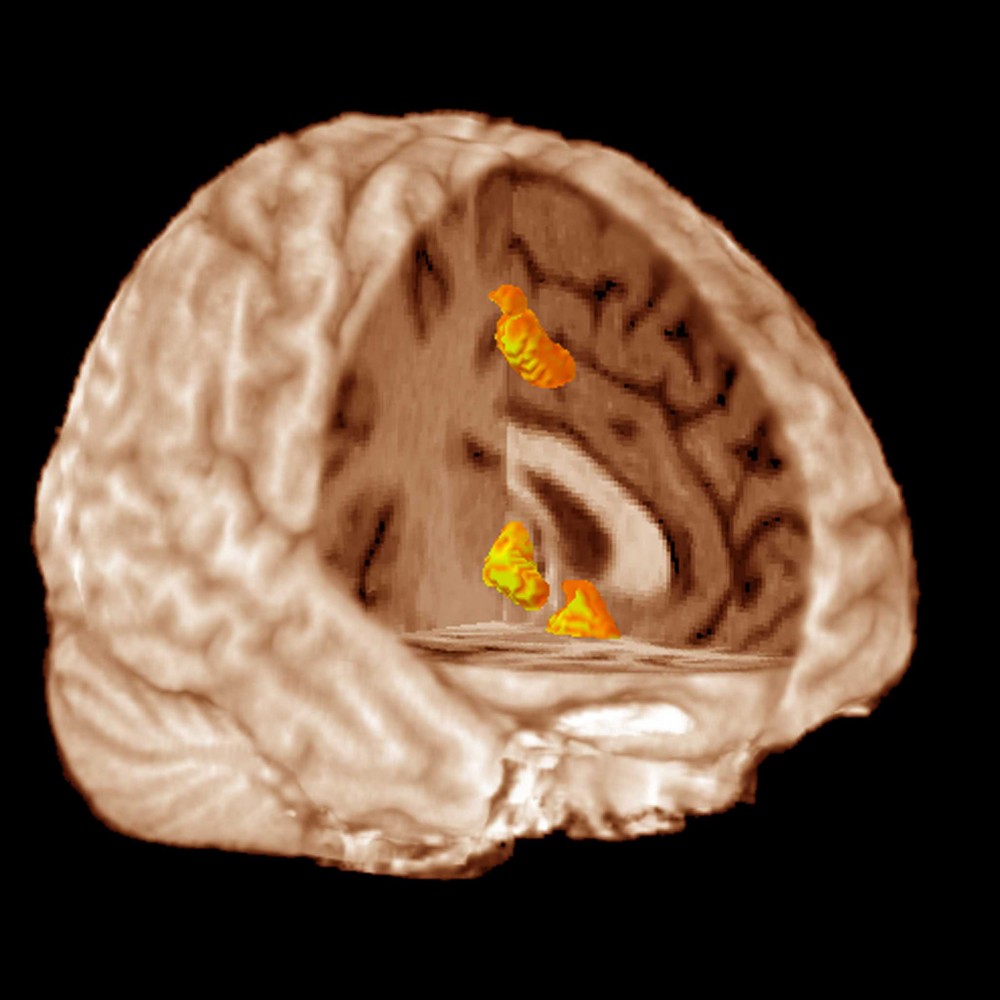
Dr. Dan Geschwind, director of the Center for Autism Research and Treatment at the University of California, Los Angeles (UCLA), and his team recently measured levels of gene expression — which determine the synthesis of various proteins, each with a specific task in the cell — in the brain tissue of 19 autistic people and 17 healthy ones.
 
They discovered certain patterns of expression common to the autistic brain. 
 
Autistic brains showed very little difference in gene expression between the frontal and temporal lobes, two regions responsible for language, decision-making and emotional responses.
 
Normally, marked differences in patterns of gene expression between these two areas begins in utero during fetal development.


The Optimism Bias – our brains may be hardwired for hope

The belief that the future will be much better than the past and present is known as the optimism bias. It abides in every race, region and socioeconomic bracket. A growing body of scientific evidence suggests that an optmistic outlook is hardwired into our brains.  People in good mental health expect the furure to be slightly better than it ends up being.  People with severe depression pessimistically predict things to turn out worse than they actually do.  Interestingly, people with mild depression are actually the most accurate in predicting the outcome of future events.    Read more: http://www.time.com/time/health/article/0,8599,2074067,00.html#ixzz1OMmtmfsW