DNA Evidence

One of the most active legal proponents of DNA testing to exonerate convicts is in Dallas, Texas. 

Read about it here:  http://www.washingtonpost.com/wp-dyn/content/article/2011/02/13/AR2011021303415.html?hpid=topnews

Thanks to ‘Da Brayn’ for bringing Texas justice to the attention of the It’s Interesting community.

DNA testing works.  Read here how DNA from a cigarette butt recently helped catch the ‘East Coast Rapist.’  http://www.cnn.com/2011/CRIME/03/05/connecticut.east.coast.rapist/index.html?hpt=T1
Shark Vision


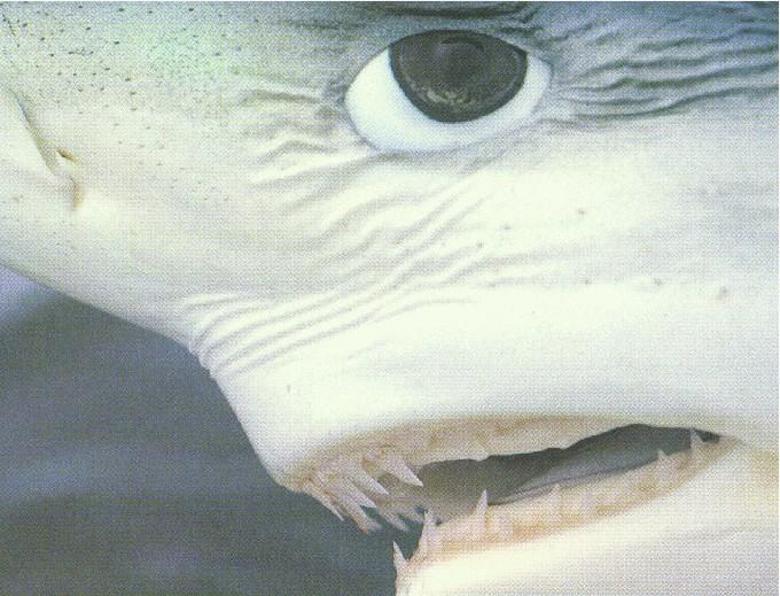
Scientists from Australia have used spectrophotometry to examine the light-sensitive cells in shark eyes.  In contrast to the 3 types of photoreceptors we humans have for red, green and blue, sharks only have one type of photoreceptor, suggesting that they can’t distinguish colors.   Sharks probably visualize their world in terms of assessing contrast against background.  Thus, it may be possible to design swimming gear, boats, and fishing gear that are less likely to catch a shark’s eye.

Read about it here in the news: http://latimesblogs.latimes.com/outposts/2011/01/sharks-are-color-blind-shark-attacks.html

and here is the original scientific article recently published:  http://www.springerlink.com/content/05427357r3uw8q35/

Here are a couple video clips showing shark attacks.  The 1st is of some idiots standing in shark infested water, and the 2nd is a scuba diver attacked by a Great White shark.


Update on the meteriorite bearing signs of extraterrestrial life….

NASA and its top scientists disavowed the work by noon Monday.

The holes interepreted as bacterial fossils could have been caused by contamination on Earth.

The study wasn’t reviewed by peers.

The editor of the journal acknowledged that they were prompted to publish it in hopes of attracting a buyer.

“There has been no one in the scientific community, certainly no one in the meteorite analysis community, that has supported these conclusions,” NASA Astrobiology Institute Director Carl Pilcher said Monday of the latest work.

http://m.apnews.com/ap/db_16026/contentdetail.htm?contentguid=r33uY5F7

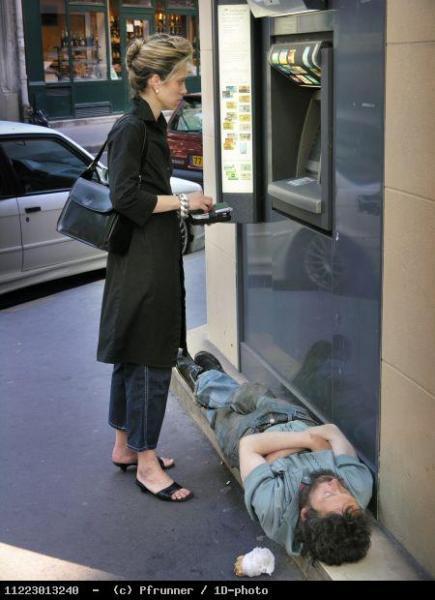
The Neurobiology of Attitudes Towards Homeless People


When faced with the prospect of marginalized, alienated people entering our community, our brains automatically categorize into “us” and “them,” and we perceive dangers with “them.”

We unconsciously view “us” in a better light, and rationalize away facts that might cast us in a negative light. 

Our brains also automatically prompt us to devalue “them,” and cherry-pick data to support this view. 

We then unconsciously work to emphasize ways that we are different from “them,” even when those differences are trivial.

This automatic, unconscious overvaluing of “us” and devaluation of “them” leads to discrimination.

Freud described this phenomenon long ago as “the narcissism of small differences.”

Read this fascinating and provocative article about the neurobiology of atttitudes towards homeless people, written by UT Southwestern Medical Center Dallas psychiatrist Adam Brenner.

http://www.dallasnews.com/opinion/sunday-commentary/20100910-Adam-Brenner-Why-not-in-3669.ece

Half of all cases of Alzheimer’s disease may be misdiagnosed.


It’s currently impossible to definitively diagnosis Alzheimer’s disease while the patient is alive.  Researchers recently analyzed around 800 brains from Alzheimer’s patients after they died, and learned that only about half of them actually had the disease.  The other half suffered from other forms of dementia.  A reliable way to diagnose the specific type of dementia from which patients are suffering is critical to guiding treatment for patients and for researching the disease processes.

http://pagingdrgupta.blogs.cnn.com/2011/02/23/half-of-alzheimers-cases-misdiagnosed/?hpt=T2

A bionic arm controlled by the patient’s own nerves


After an amputation, the nerves are left like programmed data cables floating in space.  Dr. Todd Kuiken, director of the Center for Bionic Medicine and director of Amputee Services at The Rehabilitation Institute of Chicago, has led a team that has made prosthetic limbs that utilize the body’s own remaining limb-controlling nerves after an amputation to allow them to control prosthetics just by thinking.  The person thinks about what they want to move, which send impulses to the salvaged nerves that have been implanted into chest muscle.  The resulting tiny changes in chest muscle activity are then translated into electical impulses that move the limb in the same manner that the person was thinking to move it.

http://pagingdrgupta.blogs.cnn.com/2011/02/17/bionic-arm-gives-hope-for-amputees/?hpt=C1

What’s Happening to the Scientific Method?

All sorts of well-established, repeatedly-confirmed findings have started to look increasingly uncertain in a wide range of scientific fields, from psychology to ecology.  This phenomenon is particularly widespread in the field of medicine. 
To read more about this, click on this article by Jonathan Lehrer in the The New Yorker: