Dried Meat ‘Resurrects’ Lost Species of Beaked Whale

sn-whales

A gift of dried whale meat—and some clever genetic sleuthing across almost 16,000 kilometers of equatorial waters—has helped scientists identify a long-forgotten animal as a new species of beaked whale. The “resurrection” raises new questions about beaked whales, the most elusive and mysterious of cetaceans.

“Literally nothing is known about most species of beaked whales; they are probably the least known family of large mammals,” says Robin Baird, a cetacean biologist at Cascadia Research Collective in Olympia. “So it’s exciting to have this study.”

The species, Mesoplodon hotaula, is a dark blue, Volkswagen-van-sized cetacean with the prominent snout that gives beaked whales their common name. It first came to scientists’ attention in 1963 when a single adult female stranded on the coast of Sri Lanka in the Indian Ocean. The director of the National Museums of Ceylon, P. E. P. Deraniyagala, decided that it was different from the other Mesoplodon species known at that time, and assigned it the name hotaula, meaning “pointed beak” in the local Sinhala language. But only 2 years later, M. hotaula was eliminated as a species when other researchers decided that it was identical to M. ginkgodens (another beaked whale which scientists know only from stranded carcasses and have never seen alive in the sea).

Forty years later, locals on an atoll in the Gilbert Islands, part of the Republic of Kiribati in the west Pacific, gave a visiting marine biologist dried strips of whale meat left over from a recent festival. The sample was turned over to cetacean geneticists at the University of Auckland in New Zealand who had assembled a database of the DNA of all known beaked whales. “It was a surprise, because the genetic sequences from the meat didn’t match any of the known species,” says Scott Baker, a cetacean geneticist now at Oregon State University’s Marine Mammal Institute in Newport, and one of the authors of the study. “We thought we had a new species.”

Then, in 2005, other co-authors collected some whale bone and teeth on Palmyra Atoll, which lies southeast of the Hawaiian Islands and 2600 kilometers northeast of the Gilbert Islands. The genetic sequences extracted from these specimens matched those of the dried meat. “We knew then we were on to something,” Baker says. Finally, in 2009, the body of a beaked whale was found in the Seychelles, in the western part of the Indian Ocean; its DNA also matched that of the dried meat sample, even though this whale lived tens of thousands of kilometers away from the Gilbert Islands.

That was the clue the researchers needed. “We immediately wondered, ‘Could it be Deraniyagala’s beaked whale?’ ” Baker says. It was. The team recently reported its resurrection of the forgotten M. hotaula in Marine Mammal Science. Counting M. hotaula, there are now 15 known species in this genus, making it by far the most species-rich genus of cetaceans.

Overall, the saga of M. hotaula shows “that there are probably even more species of beaked whales that we don’t know about,” says Phil Clapham, a marine mammalogist at the National Marine Mammal Laboratory in Seattle, Washington. “We don’t see them because they’re very deep-diving and live far from land.” They also live in a poorly surveyed part of the ocean, Baker says, where very few people dwell on remote atolls.

Intriguingly, it is the islanders who seem to know the most about M. hotaula and some other beaked whales. The Gilbert Islands residents who provided the original gift of dried meat reported that it came from one of seven whales they had driven onto the beach and killed. “That was something we didn’t know: that these beaked whales live in groups,” Baker says. “We thought they were solitary” because of the single, stranded individuals that are occasionally found. The scientists also believe that males of M. hotaula fight each other, because this behavior is known in other species of beaked whales, and because the teeth of two adult male specimens were broken. “Other than that, and knowing that Deraniyagala was right, M. hotaula is still pretty mysterious,” says Baker, who hopes to launch an expedition to learn more about them.

http://news.sciencemag.org/biology/2014/02/dried-meat-resurrects-lost-species-whale

Thanks to Dr. Rajadhyaksha for bringing this to the attention of the It’s Interesting community.

Video shows humpback whale almost capsizing kayaker in Norway

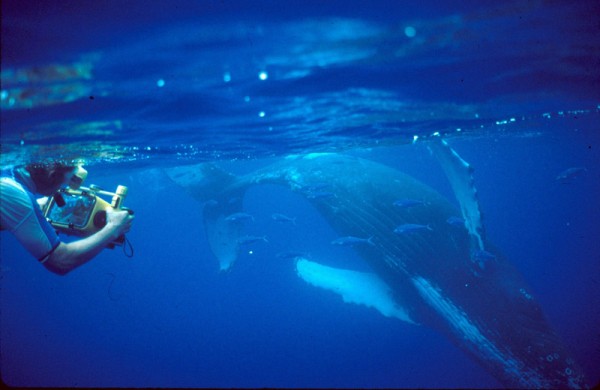
Incredible footage has emerged capturing the moment a humpback whale swam underneath a kayak and almost capsized the kayaker.
Berthold Hinrichs was kayaking in waters near Senja Island in northern Norway when he saw a pod of humpback whales breaching in the water nearby.

His camera shows as the whales swim closer and closer to his kayak. Finally a humpback whale surfaces right next to him.

“[It] did not capsize [the kayak] but me and my camera got wet,” Hinrichs told news.com.au. “Some minutes later it happened again and then I was on the back of the humpback,” he said.

The video shows the moment the whale swims beside him and then directly under his kayak, crashing into it and making Hinrichs’ kayak shake.

“I got a lot of water in my kayak which froze to ice, so I had to return to the harbour,” Hinrichs said.

According to Hinrichs, there were about 30 humpback whales and 50 orcas in Senja bay that day.

Hinrichs is an avid adventurer and nature enthusiast, whose Facebook page ( https://www.facebook.com/berthold.hinrichs#!/berthold.hinrichs ) contains magnificent photos and videos of many up-close encounters with sea creatures.

Humpbacks are a highly migratory species, found in oceans all around the world. There are estimated to be 6000-8000 humpback whales in the North Pacific and about 10,000 in the North Atlantic. Humpback whales are classified as endangered.

http://www.news.com.au/travel/world-travel/amazing-footage-shows-humpback-whale-almost-capsize-kayaker-in-norway/story-e6frfqbr-1226812210586

Rarely Seen Whale Courting Ritual Spotted Off SoCal Coast

whale+mating
A pair of gray whales is seen courting off the coast of Dana Point, Calif., on Sunday, Jan. 26, 2014, hundreds of miles north of their typical, protected breeding spots in the warm lagoons of Baja California

Not only are whales spyhopping more than usual off the SoCal coast this year, they’re putting on shows rarely seen in this part of the Pacific.

An amorous pair of gray whales was spotted rolling in the surf about 2 miles off the Dana Point coast Sunday — a ritual suggestive of courtship and possibly mating, and usually seen farther out in the ocean.

“It’s not often that we catch this behavior on film,” said Alisa Schulman-Janiger, director and coordinator for ACS/LA Gray Whale Census and Behavior Project.

Schulman-Janiger was hesitant to describe the behavior as mating since it wasn’t clear exactly what was happening underwater, but she said the whales rolling, breaching and touching certainly looks like courtship.

A camera on board Captain Dave’s Dolphin & Whale Watching Safari captured the moment, embedded below. Among the voyeurs witnessing the couple were a pod of curious bottlenose dolphins, kayakers and a stand-up paddle boarder.

“Apparently everyone was curious, especially the dolphin. We often see pacific white-sided dolphin interacting with these whales but to have bottlenose dolphin was extraordinary,” Captain Dave Anderson said.

Every year, gray whales migrate some 12,000 miles from their feeding grounds near Alaska and British Columbia to the warm, protected lagoons of Baja California — hundreds of miles south of Dana Point — to give birth and nurse their calves.

“We don’t know why these two whales chose to make a stop along the way,” Anderson said.

It’s also a mystery why this season has been particularly plentiful for whale watchers off the Southern California coast. Schulman-Janiger said gray whale sightings are the second-highest they’ve been in 31 years, and several factors could be contributing to the trend.

California’s extremely dry winter has made visibility along the coast consistently better, so watchers may be seeing more whales simply because conditions are clearer, Schulman-Janiger said.

“If you can see them, you can count them,” she said.
Another possibility lies in the whales’ arctic feeding grounds, which froze earlier than usual this year, forcing them to head south sooner than expected.

But that still doesn’t explain why so many whales are appearing to hug the shore, a route typically taken by young whales who aren’t in such a rush to get to the Baja lagoons and mate. Schulman-Janiger said scientists will need to see the whole picture of this year’s season before a conclusion can be reached.

So far, Captain Dave’s safaris have had 168 gray whale encounters this season, which runs from January to May. By comparison, the safaris recorded 78 sightings of gray whales last year, the group said.

About 50 miles north along the Palos Verdes Peninsula, where Schulman-Janiger’s whale census project is stationed, there have been about 738 gray whale sightings since Dec. 1, 2013. That’s up about 200 since last year and more than twice the average, according to data from the ACS/LA Gray Whale Census and Behavior Project, pictured above.

For those hoping to spot whales, the creatures will continue migrating south until about mid-February. At the end of April and beginning of May, mothers and their calves will start moving northward again.

To protect the still-vulnerable juveniles, these pairs tend to hug the shore so there’s a better chance of spotting them on their way back to arctic feeding grounds, Schulman-Janiger said.

Rare conjoined gray whale twins found in Mexico

whales 2

conjoined-whalex_75190_600x450

The Mexican government says fishermen found two rare conjoined gray whale calves that died shortly after being born.

Biologist Benito Bermudez says the whales were found alive in the Ojo de Liebre lagoon in the Baja California Peninsula but lived only a few hours.

Bermudez said Wednesday they were linked at the waist, with two full heads and tail fins.

Bermudez is a marine biologist with the National Natural Protected Areas Commission, or CONANP. He said scientists are collecting skin, muscle and baleen samples to study the creatures.

Every year more than 20,000 gray whales swim to Mexico from Alaska to mate and give birth.

http://www.cbsnews.com/news/rare-conjoined-gray-whale-twins-found-in-mexico/

When Whale Watching Turns Deadly

sn-whalecollisions

Humpback whales are facing new dangers in Hawaiian waters, where more than 10,000 of the cetaceans congregate from December to April to calve and breed. That’s the conclusion of an analysis of historical records of ship strikes on humpback whales (Megaptera novaeangliae) in the seas around the Hawaiian Islands between 1975 and 2011. In that 36-year period, 68 such strikes were reported, including the one that injured the humpback calf in the photo above. The scientists have not yet been able to quantify the number of whales lethally wounded or killed outright by such hits. Because more than 63% of the collisions involved calves and subadults, the scientists conclude that these younger animals are particularly susceptible to being struck, most likely because they spend more time at the surface to breathe than do adults. Worryingly, the number of strikes has steadily increased over the years, the team reports in the Journal of Cetacean Research and Management—and not because there are more whales. Instead, the increase is apparently due to tourism. The majority of vessels that have collided with whales in Hawaii are small- to medium-sized boats, less than 21.2 meters in length, the scientists say, which happens to be the size of commercial whale-watching vessels. Federal regulations require these boats to remain at least 100 yards distance from the humpbacks. They may be keeping their distance while observing the whales, but not when under way: The majority of collisions occurred when the vessels were travelling at 10 to 19 knots, the team reports—apparently, too fast to avoid colliding with the very animals the skippers and tourists have come out to watch.

http://news.sciencemag.org/plants-animals/2013/12/scienceshot-when-whale-watching-turns-deadly

Whales trapped in Everglades waters

whales-everglades-jpg

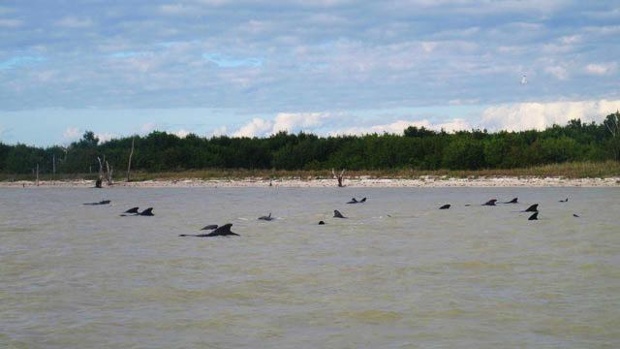
Wildlife workers in boats struggled Wednesday to coax nearly four dozen pilot whales out of dangerous shallow waters in Florida’s Everglades National Park, hoping to spare them the fate of 10 others that already have died.

Four of the whales had to be euthanized Wednesday, and six others already had died, said Blair Mase, the marine mammal stranding network coordinator for the National Oceanic and Atmospheric Administration. At least three could be seen on the beach, out of the water.

Park spokeswoman Linda Friar said rescuers were trying to surround the whales with boats about 75 feet from shore and nudge them out of the roughly 3-foot-deep salt water back to sea.

“They are trying to herd the animals out to sea,” Friar said. “They are not cooperating.”

Workers tried to nudge the whales out to sea a day earlier with no success. The whales are stranded in a remote area that takes more than an hour to reach by boat from the nearest boat ramp.

“This scenario is very challenging because of where they are,” Mase said. Officials typically have access to heavy equipment to rescue stranded whales, but that isn’t an option where the whales are now.

Furthermore, the area is so shallow that it’s difficult to get the mammals enough water to propel them back to sea. A team of biologists was still assessing the whales Wednesday.

Officials don’t know how long the whales been stranded or how they got there. The whales usually swim together in large groups and tend to follow a dominant male leader, so it’s not uncommon for multiple whales to get stranded at once.

At least one other group of whales has stranded in the park in the past 10 years.

“It’s not uncommon,” Friar said. “But it’s not something that happens a lot.”

Mase said the whales are known to inhabit deep water, “so they are very out of their home range.”

http://www.theguardian.com/environment/2013/dec/04/whales-trapped-everglades-florida-park

Thanks to Dr. D for bringing this to the attention of the It’s Interesting community.

How the Whale Became the Whale

whale

About 54 million years ago, a semiaquatic deerlike creature headed into the water for good, giving rise to whales and their relatives. The newly sequenced genome of the minke whale, a baleen whale found worldwide, tells the story of how stressful this move to live underwater was. An international team has decoded the genomes of four minke whales, a fin whale, a bottlenose dolphin, and a finless porpoise, comparing these cetaceans’ genes to the equivalent genes in other mammals. It found whale-specific mutations in genes important for the regulation of salt and of blood pressure and for antioxidants that get rid of charged oxygen molecules that can harm cells. These molecules increase in number as the whale uses up its oxygen supply during dives. Whales also had larger numbers of related genes, called gene families, for dealing with sustained dives, the team reports online today in Nature Genetics. Overall, 1156 gene families had expanded, and several increased the number of enzymes that help the whale cope with low-to-no oxygen conditions. A few of those expanded families are also expanded in naked mole rats, which live underground where oxygen is scarce. But the numbers of genes for body hair and for taste and smell had decreased. And of course, there were genes and gene families that help explain why whales look the way they do.

http://news.sciencemag.org/biology/2013/11/scienceshot-how-whale-became-whale

Thanks to Dr. Rajadhyaksha for bringing this to the attention of the It’s Interesting community.
Rare saber-tooth whale found dead on Venice Beach in Southern California

Stejneger's Beaked Whale, Heather Doyle

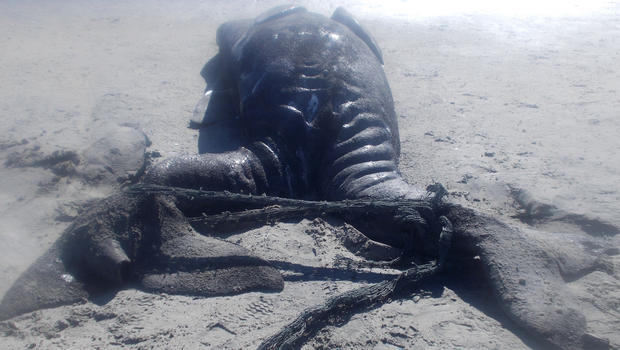
A rare whale that has a dolphin-shaped head and saber-like teeth has been found dead on Los Angeles’ Venice Beach, even though it prefers frigid subarctic waters.

The roughly 15-foot-long female Stejneger’s beaked whale washed ashore Tuesday night, the Los Angeles Times reported. A truck hauled away the mammal, which was being examined at the Los Angeles County Natural History Museum to determine how it died.

The Stejneger’s beaked whale is rarely seen in the wild. The species typically dives deep in subarctic waters to feed on squid and small fish. It is believed to migrate as far south as Northern California, and how the whale ended up so far south will probably remain a mystery.

“This is the best,” said Nick Fash, an education specialist for the Santa Monica-based environmental group Heal the Bay. “(Previous finds) aren’t anything like this. This is a treat.”

Males are known for their saber teeth that stick up midway from each side of the lower jaw. However, the teeth of females and their offspring remain hidden beneath the gum tissue.

The whale was alive when it washed ashore, said Peter Wallerstein of Marine Animal Rescue. Its body was covered in bites from so-called cookie-cutter sharks that feed by gouging round pieces of flesh from larger animals.

Because the species isn’t seen much anywhere, the autopsies of washed-up carcasses are the best source for scientists to gather information.

http://www.foxnews.com/us/2013/10/18/rare-saber-tooth-whale-found-dead-on-venice-beach-in-southern-california/

Built-up earwax taken from a blue whale carcass offers insights into the creature’s life

earqwax

Using built-up earwax taken from a blue whale carcass, researchers have been able to reconstruct a picture of its life by the chemicals and hormones in its ears.

The whale in question was a male blue whale that died after it was struck by a ship near Santa Barbara, Calif., in 2007. Researchers removed a 10-inch ear plug from the carcass during a necropsy. They did a careful chemical analysis of it to measure what the whale had been exposed to in its lifetime. The study appeared in a recent edition of the journal Proceedings of the National Academies of Science.

The scientific community has been excited about the possibilities raised by the new method “once they get past the ‘eew!’ factor of it being earwax,” says Stephen Trumble, lead author on the paper and a biology professor at Baylor University in Waco, Texas.

Baleen whales are known to accumulate layers of earwax in their ear canal. These create a waxy plug that can be over a foot long. The earwax is laid down in layers, a dark one when the animal is feeding and a light one when the animal is migrating and eats very little. The layers are routinely used to determine whale ages.

Now by analyzing the chemicals, pollutants and other matter that accumulated in that wax, researchers were able to build a very complete picture of the animal’s life and exposure to chemicals.

The whale was likely born around 1995. It was exposed to large concentrations of persistent organic pollutants such as DDT and other pesticides in the first six months of its life, most likely while it was still nursing. Many mammals are known to pass chemicals through milk and researchers believe that’s what happened to this whale.

DDT is one of a group of persistent organic pollutants that can take decades to break down in the environment. Although it was banned in the United States in 1972 it is still found in the world’s oceans, and was present at higher levels when this whale was born.
There were also two spikes in its exposure to mercury, around ages 5 and 10. The researchers think these might have occurred as the animal migrated past the coast of California, possibly exposing it to higher levels of pollution than it encountered in the open ocean and when passing less polluted land masses.

When it was about 10 years of age researchers believe it became sexually mature because of increases in testosterone. Its stress hormones spike right around that time, too, which the researchers believe might have been linked to breeding competition or social bonds it formed during this period.

The method offers researchers a much easier and more precise way of measuring what whales are exposed to than previous methods, which included examining whale blubber, blood, feces and blowhole spray, says Sascha Usenko, a professor of environmental chemistry and one of the Baylor researchers.

Since their paper was published they’ve been getting offers of whale earwax specimens, called plugs,from around the world. “We’re going to receive one hopefully this week that’s about three and a half feet long from a bowhead whale from Barrow, Alaska,” Trumble said.

http://www.usatoday.com/story/news/nation/2013/10/10/whale-earwax-gives-researchers-peek-whale-life/2861591/?utm_source=feedburner&utm_medium=feed&utm_campaign=Feed%3A+usatoday-NewsTopStories+(USATODAY+-+News+Top+Stories)

New research shows that male humpback whales sing in unison to attract females

sn-whalesong_0

The mournful, curiously repetitious yet ever-changing songs of male humpback whales have long puzzled scientists. The tunes are part of the males’ mating displays, but researchers don’t know their exact function, or which males in a population are doing the singing. Now, scientists who’ve been studying the giant marine mammals in Hawaii for almost 40 years report that even sexually immature males join older males in singing, apparently as a way to learn the music and to amplify the song. The beefed-up, all-male choruses may attract more females to the areas where the songsters hang out.

Scientists generally thought that only adult male humpbacks (Megaptera novaeangliae) sing, says Louis Herman, a marine mammal biologist emeritus at the University of Hawaii, Manoa, and the lead author of the new study. “But that’s just because you can’t easily tell which ones are mature and which ones are immature,” he says. “We know that mature males are larger than immature ones, so we had to figure out an unobtrusive way to measure them in the open ocean.”

Herman and his team hit on a technique by looking at 20th century whaling records. Biologists with whaling operations in the Southern Ocean had the opportunity to measure many humpbacks killed during the commercial hunts. They determined, based on the weight of males’ testes, that the whales reached sexual maturity at a body length of 11.2 meters. Working independently, whaling biologists in Japan, who also measured killed whales, reached a similar conclusion; they described 11.3 meters as the break point between adolescents and adults.

To determine the lengths of living male humpbacks, Herman’s group analyzed digital videos that they made between 1998 and 2008 of 87 of the whale singers. The males were recorded as they sang in the waters off the Hawaiian islands of Maui, Lanai, Molokai, and Kahoolawe during their winter mating season. A swimmer carried the camera in one hand and in the other hand carried a sonar device, which measured the distance from the camera to the whale. The swimmer began filming when the whale assumed a horizontal position (singing whales are typically canted with their heads downward), so that he or she could capture the full body length of the whale while keeping the camera’s axis perpendicular to the whale and close to its midline. The researchers calculated the whales’ body lengths from these images and the distance measurements.

The scientists found that the whales varied in length from 10.7 meters to 13.6 meters. Using 11.3 meters as the boundary for sexually mature adults, the researchers counted 74 humpback singers as mature and 13 as immature. The team has been following individual humpbacks (which are identified by the unique markings on their tail flukes) for decades, and its analysis also showed that some individual males have been singing for 17 to 20 years. “It is a lifelong occupation for them,” says Herman, who notes that male calves and probably 1-year-old males don’t join in.

During the winter months in Hawaii, the male humpbacks assemble in areas that the researchers call arenas, where the males sing and compete for females. Typically, the singers are widely dispersed around their arenas, which may help amp up the reach of the chorus. Males also sing in other social situations, such as while escorting a female humpback and her calf.

When chorusing at the arenas, immature and mature whales are engaged in an unintentional mutual benefits game, Herman and his colleagues argue. By singing with the big boys, the youngsters indirectly learn the songs and the social rules of the mating grounds. The older males, in turn, gain an extra voice in their asynchronous chorus, his team reports in an upcoming issue of Behavioral Ecology and Sociobiology. “We know that the females don’t respond to an individual male’s song,” Herman says. “It’s not like a songbird’s song, designed to attract a female and repel other males. The humpbacks’ songs are meant to attract females to the arena.” That is, they tell the gals where the boys are. And another voice, even one of a young, inexperienced male, may help carry the message, he says.

The findings strengthen the still controversial idea that gatherings of male humpback whales may be similar to some birds’ lek mating systems, such as those of the sage grouse, which also feature male assemblages. If proved, humpbacks would be the first whale known to have this type of system.

“This is great stuff,” says Phillip Clapham, a cetacean biologist at the National Marine Mammal Laboratory in Seattle, Washington. He applauds the idea of the males’ chorus serving to “collectively ‘call in’ the females.” He adds that “we’ve known for many years that only male humpbacks sing, but no one had ever managed to figure out a way to determine the maturational class of the singers, so this is a significant advance.”

Now all Herman and his team have to do is determine which of the male singers in the chorus a female actually mates with—an event the researchers have yet to see.

http://news.sciencemag.org/plants-animals/2013/08/mens-chorus%E2%80%94-whales

Thanks to Dr. Rajadhyaksha for bringing this to the attention of the It’s Interesting community.