Iowa Man Arrested for Drunk Driving With a Parrot and Zebra


An Iowa man arrested for drunk driving after he left a bar appears to have his “kids” to blame — a baby zebra and parrot that were with him and his girlfriend.

Jerald Reiter, 55, was charged with operating while under the influence and spent the night in jail before being released Monday.

He told KCRG.com that he suspects the only reason police were at the bar in Dubuque was that someone among the crowd taking pictures of the zebra and parrot contacted authorities.

“He was standing outside of his vehicle,” Reiter’s girlfriend, Vickey Teeters, told KCRG.com. “He was getting ready to switch drivers.”

“These are our kids,” Teeters added, in explaining why the animals were with them. 

The couple said they often take the animals with them, and had planned to bring them into the bar but were told they could not enter because food was being served that night.

Reiter, from nearby Cascade, was arrested after he, Teeters, the zebra and the parrot returned to his truck.

Police said Reiter had actually started driving away from the bar’s parking lot, but he insists he had not yet moved the vehicle. Under Iowa law, he can be charged with drunkenness for simply being behind the wheel, KCRG.com reported.

http://usnews.msnbc.msn.com/_news/2012/05/23/11829281-man-arrested-for-drunk-driving-with-zebra-parrot-in-truck?lite

Thanks to Mr. S.W. for bringing this to the attention of the It’s Interesting community.

Swimmer’s Urine Caused Mass-Death of Fish in German Lake


The mass death of fish in a lake near Hamburg has been blamed on swimmers’ urine causing an algal bloom that has poisoned the water.

Around 500 dead fish have been found in the picturesque Eichbaum lake near the northern port city, which attracts bathers in the summery weather. But now it seems those pleasure-seekers have blood on their hands.

“Swimmers who urinate in the lake are introducing a lot of phosphate,” Manfred Siedler, spokesman for the Hamburger Angling Association (ASV), told Bild newspaper. “We’re calculating half a litre of urine per swimmer per day.”

Phosphate contributes to a build-up of blue-green algae in the water, playing havoc with the lake’s eco-system and apparently poisoning the fish. According to Bild, authorities have already tipped some 148 tonnes of anti-phosphate agent Bentophos into the water, at a cost of €516,000, but to little effect.

The Local understands that there has also been a longstanding feud between the anglers and the bathers over the lake.

Bathers are currently banned from the lake due to the high levels of algae, but the city’s Urban Development and Environment Authority (BSU) is working to fight it and re-open the lake.

The BSU believes that the fish deaths are not particularly unusual, and have been caused by a combination of natural causes and ice-skaters, rather than pee.

“The ice-skaters make a noise that wakes the fish out of hibernation,” BSU spokeswoman Kerstin Graupner told the Local.

“Then they can’t breathe and freeze. That’s a very common phenomenon.”

She underlined that though the fish have only been found in the past two weeks, they must have been dead for some time, judging by the decomposition.

BSU has since called in Hamburg University to test the pee-death theory, and says that apart from the high level of algae, the water is clean. “It is very rich in fish,” Graupner added.

But according to Bild, the first water tests are not encouraging – with a pH level of 8.7 (as opposed to the neutral 7), the lake is very alkaline.

Scientists have reportedly also found anabaena algae blooms, unusual at this time of year, which produce anatoxin-a. This causes the lake’s ammonium to change into the poisonous ammonia, which restricts the fish’s breathing.


Neglected, rotting trees in New York City are killing people


Alexis Handwerker had been sitting on a bench beneath a towering elm in Stuyvesant Square Park in Manhattan — now she was pinned to the ground, bleeding, disoriented and smothered by leaves. One arm was rammed back unnaturally, broken. Panicked parkgoers struggled to free her from a huge tree limb that had plummeted 30 feet.

“I don’t want to die,” she screamed. “I don’t want to die.”

Ms. Handwerker, a 29-year-old social worker, survived the July 2007 accident with grievous injuries, and sued. Her lawyers pieced together evidence that untrained parks workers had missed signs that the elm was rotting — even though the 80-foot tree, one of the biggest in New York City, had sent limbs crashing down before. The city settled in February, paying $4 million.

Ms. Handwerker’s suit is just one of at least 10 stemming from deaths or injuries caused by falling limbs and branches in New York City that were quietly resolved over the last 10 years, or are now winding their way through the courts. The city has paid millions of dollars in damage claims, with far more expected. It all comes at a time of steep cutbacks in the amount of money the city dedicates to tree care and safety.


Read more here:  http://www.nytimes.com/2012/05/14/nyregion/in-new-york-neglected-trees-prove-deadly.html?_r=1


Thanks to Dr. Nakamura for bringing this to the attention of the It’s Interesting community.

53 year old Madrid man survives lightning strike to his scrotum


According to Spain’s El Mondo newspaper, the unnamed man lost consciousness after being struck by lightning in the groin on Thursday night, with the bolt travelling down his leg and striking the ground.

His son called paramedics who later treated him for burns to the scrotum and feet at the scene in Madrid’s suburb Tres Cantos.

He was then taken to Madrid’s Hospital de la Paz where tests showed his heart and brain functions were not affected by the lightning strike.

The man is said to be in a stable condition in hospital.

Read more: http://www.metro.co.uk/weird/898280-man-in-madrid-survives-being-struck-by-lightning-in-the-scrotum#ixzz1utrdpvEN

Zookeeper licks monkey’s butt to help it defecate

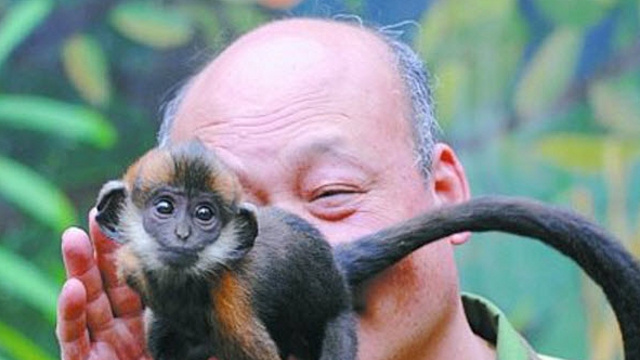
50-year-old Zhang Bangsheng used warm water to clean a small Francois’ Leaf Monkey’s buttocks, then began using his mouth to lick it, not stopping for over an hour, until the little monkey defecated a single peanut. Only after the peanut was defecated did Zhang Bangsheng laugh with satisfaction.

As it is understood, this small Francois’ langur is only 3 months old, and is the first Francois’ Leaf Monkey to be born in nearly 10 years at this animal park. The Francois’ langur is a rare primate from Guangxi and Guizhou and is amongst the nation’s most protected animals. Because it is so precious, the zoo gave it to model worker and high-level expert Zhang Bangsheng to care for and raise.

On the first day of the “May 1st” short holiday, Zhang Bangsheng let the small Francois langur enter the monkey exhibit for the first time to meet visitors so it can see more of the world. The next day, Old Zhang discovered that the little monkey had indigestion and difficulty defecating, and immediately became worried. Seeing peanut shells on the ground, Old Zhang immediately understood that visitors had definitely tossed peanuts to the small monkey, and the toothless monkey swallowed the peanut whole. If it does not quickly defecate it, it would endanger the little monkey’s life.

Because the monkey is too small, it wasn’t suitable to use medicine to let it defecate. The only way was to lick its butt, to prompt it to defecate the peanut.

http://bossip.com/581209/did-you-hear-the-one-about-the-zookeeper-that-licked-a-monkeys-butt-to-make-it-poo/

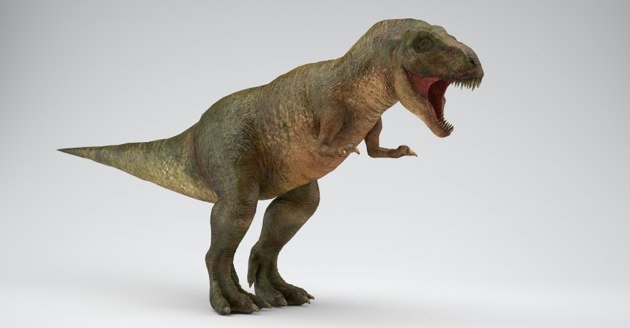
Entrepreneur legally changes his name to Tyrannosaurus Rex

Tyler Gold of York, Neb., is now officially named Tyrannosaurus Rex Joseph Gold, the local York News Times reports.

According to the News Times:

“In Gold’s official filing with the court, he said he wanted to change his name ‘because the (T-Rex designation) is cooler. Also, as an entrepreneur, name recognition is important and the new name is more recognizable.’ He verbally repeated his reasoning during the court proceedings, while on the witness stand [Monday].”

Another surprising name change:   Beezow Doo-Doo Zopittybop-Bop-Bop?

http://www.npr.org/blogs/thetwo-way/2012/05/08/152251210/nebraska-man-changes-his-name-to-tyrannosaurus-rex

Generating Power from Pig Feces


China’s love of pork presents a mountain of a problem for the environment, 1.4 million metric tons (1.5 million tons) of pig poo a year to be precise, but an Australian company believes it has part of the answer.

Why not turn the pig poo into power?

Using a bioreactor called “PooCareTM” and other technology, the pig manure is converted into biofuel for cooking and heating while the residual goes to farmers as nutrient-rich fertilizers.

“The benefits are energy and fuel for farmers as well as preventing further contamination of the environment,” said Ravi Naidu, chief scientist at CRC for Contamination Assessment and Remediation of the Environment (CRC Care), a South Australian-based firm involved in drawing up the technology.

“So it’s really a green technology from that perspective,” Naidu, a University of South Australia professor, told Reuters.

The process involves a bioreactor 30 m (98 ft) long, 10 m (33 ft) high and 4 m (13 ft) wide. It is set below ground and waste is fed through it slowly at a pre-determined temperature.

This converts solid waste into a biogas that is then pumped through gas tanks that can be delivered to the local community. The entire process takes about a month, with the first biogenerator already running at a farm in Wuhan, central China.

China has an estimated 700 million pigs, producing some two-thirds of the meat consumed there annually, so the scale of the problem can’t be underestimated.

Only one tenth of pig waste is used now as manure. It is estimated the nutrients lost in the waste of one pig alone are worth about A$50 ($52) per year. There is a vast disparity in rural and urban incomes with farmers earning around $75 per month.

The potential health hazards are worse.

“Pig waste contains a high level of nitrate, which in liquid form can contaminate ground water and in flake form can contaminate lakes, posing human health risks,” Naidu said.

Chinese scientists and Hong Kong-based technology firm HLM Asia Ltd also took part in developing the technology, which costs roughly A$35,000 ($36,400) for one bioreactor. Mass production would bring costs down, Naidu said.

http://news.yahoo.com/pig-poo-power-answer-chinas-porky-poser-053248474–finance.html

Food’s Biggest Scam: The Great Kobe Beef Lie

You cannot buy Japanese Kobe beef in this country. Not in stores, not by mail, and certainly not in restaurants. No matter how much you have spent, how fancy a steakhouse you went to, or which of the many celebrity chefs who regularly feature “Kobe beef” on their menus you believed, you were duped. If it wasn’t in Asia you almost certainly have never had Japan’s famous Kobe beef.

You may have had an imitation from the Midwest, Great Plains, South America or Australia, where they produce a lot of “Faux-be” beef. You may have even had a Kobe imposter from Japan before 2010. It is now illegal to import (or even hand carry for personal consumption) any Japanese beef. Before 2010 you could import only boneless fresh Japanese beef, but none was real Kobe. Under Japanese law, Kobe beef can only came from Hyogo prefecture (of which Kobe is the capital city), where no slaughterhouses were approved for export by the USDA. According to its own trade group, the Kobe Beef Marketing & Distribution Promotion Association in Japan, where Kobe Beef is a registered trademark, Macao is the only place it is exported to – and only since last year. If you had real Kobe beef in this country in recent years, someone probably smuggled it in their luggage.

“How is this possible?” you ask, when you see the virtues of Kobe being touted on television food shows, by famous chefs, and on menus all over the country? A dozen burger joints in Las Vegas alone offer Kobe burgers. Google it and you will find dozens of online vendors happy to take your money and ship you very pricey steaks. Restaurant reviews in the New York Times have repeatedly praised the “Kobe beef” served at high-end Manhattan restaurants. Not an issue of any major food magazine goes by without reinforcing the great fat Kobe beef lie.

Despite the fact that Kobe Beef, as well as Kobe Meat and Kobe Cattle, are patented terms and/or trademarks in Japan, these are neither recognized nor protected by U.S. law. As far as regulators here are concerned, Kobe beef, unlike say Florida Orange Juice, means almost nothing (the “beef” part should still come from cows). Like the recent surge in the use of the unregulated label term “natural,” it is an adjective used mainly to confuse consumers and profit from that confusion.

This matters because the reason food lovers and expense account diners want Kobe beef, and are willing to pay a huge premium for it, is because of the real Kobe’s longstanding reputation for excellence. The con the US food industry is running is leading you to believe that what you are paying huge dollars for – like the $40 NYC “Kobe” burger – is somehow linked to this heritage of excellence. It’s not.

Real Kobe beef is produced under some of the world’s strictest legal food standards, whereas “domestic Kobe” beef production, along with that in Australia and South America, is as regulated as the Wild West. In Japan, to be Kobe requires a pure lineage of Tajima-gyu breed cattle (not any old Japanese breed crossbred with American cattle as is the norm here). The animal must also have been born in Hyogo prefecture and thus raised on the local grasses and water and terroir its entire life. It must be a bull or virgin cow, and it takes considerably longer to raise a Tajima-gyu for consumption than most other breeds, adding to the cost. It must be processed in a Hyogo slaughterhouse – none of which export to the US – and then pass a strict government grading exam. There are only 3000 head of certified Kobe Beef cattle in the world, and none are outside Japan. The process is so strict that when the beef is sold, either in stores or restaurants, it must carry the 10-digit identification number so customers know what particular Tajima-gyu cow it came from.

In contrast, when you order “Kobe beef” here, you usually can’t even tell what kind of cow it came from – or where. Or what makes it “Kobe.”

The bottom line is that the only reason there is beef called Kobe beef sold in this country is because our government lets vendors call a lot of things Kobe beef. But the reason consumers buy it is because the cattle industry in Kobe spent lifetimes building a reputation for excellence, a reputation that has essentially been stolen.

There are two different parts to the broad misuse of the Kobe name. Historically in the US, restaurants and distributors have generically termed virtually any beef from anywhere in Japan Kobe, and many high-end restaurants did once get beef from Japan, and put it on the menus as Kobe, though it was not true Kobe beef. But in the past two years there has been no Japanese beef here. So the term Kobe today has even less meaning, and the meat can come from many different countries and have nothing in common with actual Kobe beef except that it comes from cows.  The argument often broached by the food industry that this non-Japanese Kobe is some sort of recreation of the real thing from the same breed of cows is also largely a myth.

Read about it in the USDA’s own words, about how as of early 2010 all beef from Japan including that “normally referred to as Kobe beef,” will “be refused entry,” “including in passenger luggage.” This is still the case, as you can see in the most recent Animal Product Manual, produced by the USDA’s Animal and Plant Health Inspection Service (APHIS), dated March 1, 2012 which specifically states that beef from Japan, fresh or frozen, whole or cut, bone-in or boneless, will be “Refused Entry.”

It is impossible to say exactly what you are getting in your Faux-be slider, or $100 Faux-be strip, but one thing is certain – it is not Japanese Kobe beef.  For the past two years, it has not been any kind of Japanese beef at all.

http://www.forbes.com/sites/larryolmsted/2012/04/12/foods-biggest-scam-the-great-kobe-beef-lie/

Illinois Man Drowned by Killer Swan


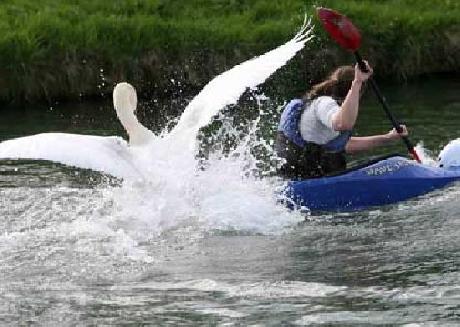
Anthony Hensley was a 37-year-old married father of two who worked for a company that uses dogs and swans to shoo pesky geese from properties in the area. Hensley had taken to a kayak Sunday morning to check on the swans in a Des Plaines-area pond when one of the larger birds turned on him, the Chicago Sun-Times reported.

Cook County sheriff’s investigators believe Hensley either got too close to the swan or the swan’s nesting area, the Sun-Times said. Hensley rolled off his kayak and landed in the water, and the swan kept up its relentless attack.

The Sun-Times reports that the swan continued to pursue Hensley as he tried to swim to shore. Hensley was submerged when emergency workers arrived, and an autopsy found that he died from drowning near the Bay Colony condominiums in unincorporated Des Plaines.

On Sunday, Hensley’s family members were grief-stricken, struggling to take it all in. Like many, they couldn’t understand how Hensley was unable to beat off the swan.

“Maybe he didn’t want to hurt the animal,” Hensley’s father-in-law, George Koutsogiannis, told the Sun-Times. “Maybe he didn’t fight back enough when the swan attacked him….I can’t understand how this was possible.”

There were no immediate details Monday about the swan that attacked Hensley, or its fate. Depending upon their size and breed, swans can be quite large with some standing 4 feet tall, weighing about 30 pounds and boasting a wing span of up to 8 feet wide.

Hensley reportedly did not have life insurance, and a memorial fund was set up to help his family.

http://amarillo.com/news/latest-news/2012-04-17/killer-swan-attacks-illinois-caretaker-until-he-drowns#comment-100109